


Product Monograph - Zaroxolyn
RECENT MAJOR LABEL CHANGES
| 7 WARNINGS AND PRECAUTIONS | 12/2022 |
TABLE OF CONTENTS
Sections or subsections that are not applicable at the time of authorization are not listed.
RECENT MAJOR LABEL CHANGES............................................................................................ 2
TABLE OF CONTENTS .............................................................................................................. 2
PART I: HEALTH PROFESSIONAL INFORMATION ..................................................................... 4
1 INDICATIONS .............................................................................................................. 4
1.1 Pediatrics .......................................................................................................... 4
1.2 Geriatrics........................................................................................................... 4
2 CONTRAINDICATIONS ................................................................................................. 4
4 DOSAGE AND ADMINISTRATION................................................................................. 4
4.1 Dosing Considerations ....................................................................................... 4
4.2 Recommended Dose and Dosage Adjustment..................................................... 4
4.5 Administration................................................................................................... 5
4.6 Missed Dose ...................................................................................................... 5
5 OVERDOSAGE ............................................................................................................. 5
6 DOSAGE FORMS, STRENGTHS, COMPOSITION AND PACKAGING ................................. 6
7 WARNINGS AND PRECAUTIONS .................................................................................. 6
7.1 Special Populations ............................................................................................ 8
7.1.1 Pregnant Women ......................................................................................... 8
7.1.2 Breast-feeding.............................................................................................. 8
7.1.3 Pediatrics ..................................................................................................... 8
7.1.4 Geriatrics ..................................................................................................... 8
8 ADVERSE REACTIONS .................................................................................................. 9
8.1 Adverse Reaction Overview................................................................................ 9
8.2 Clinical Trial Adverse Reactions .......................................................................... 9
8.5 Post-Market Adverse Drug Reactions ................................................................. 9
9 DRUG INTERACTIONS................................................................................................ 10
9.3 Drug-Behavioural Interactions.......................................................................... 10
9.4 Drug-Drug Interactions .................................................................................... 10
10 CLINICAL PHARMACOLOGY ....................................................................................... 11
10.1 Mechanism of Action.................................................................................. 11
10.2 Pharmacodynamics .................................................................................... 12
10.3 Pharmacokinetics ....................................................................................... 13
11 STORAGE, STABILITY AND DISPOSAL ......................................................................... 14
12 SPECIAL HANDLING INSTRUCTIONS........................................................................... 14
PART II: SCIENTIFIC INFORMATION ...................................................................................... 15
13 PHARMACEUTICAL INFORMATION............................................................................ 15
14 CLINICAL TRIALS........................................................................................................ 15
15 MICROBIOLOGY ........................................................................................................ 15
16 NON-CLINICAL TOXICOLOGY ..................................................................................... 15
PATIENT MEDICATION INFORMATION ................................................................................. 17
PART I: HEALTH PROFESSIONAL INFORMATION
1 INDICATIONS
ZAROXOLYN (metolazone tablets) is indicated for:
- the treatment of edema accompanying congestive heart failure and edema accompanying renal diseases including the nephrotic syndrome, and states of diminished renal function.
- the management of mild to moderate essential hypertension, alone or in combination with other antihypertensive drugs of a different class.
1.1 Pediatrics
Pediatrics (<18 years): Based on the data submitted and reviewed by Health Canada, the safety and efficacy of ZAROXOLYN in pediatric patients have not been established; therefore, Health Canada has not authorized an indication for pediatric use (see 7.1.3 Pediatrics).
1.2 Geriatrics
Geriatrics: Due to the greater frequency of decreased hepatic, renal, or cardiac function, and of concomitant disease or other drug therapy, elderly patients should be treated with caution, usually starting at the low end of the dosing range.
2 CONTRAINDICATIONS
ZAROXOLYN is contraindicated in patients:
- with anuria
- with hepatic coma or pre-coma
- who are hypersensitive to this drug or to any ingredient in the formulation, including any non-medical ingredient, or component of the container. For a complete listing, see 6 DOSAGE FORMS, STRENGTHS, COMPOSITION AND PACKAGING.
4 DOSAGE AND ADMINISTRATION
4.1 Dosing Considerations
Effective dosage of ZAROXOLYN should be individualized according to indications and patient response. A single daily dose is recommended. Therapy with ZAROXOLYN should be titrated to gain an initial therapeutic response and to determine the minimal dose possible to maintain the desired therapeutic response.
4.2 Recommended Dose and Dosage Adjustment
Edema
The recommended dose of ZAROXOLYN for treatment of edema of cardiac failure is 5-10 mg once daily and 20 mg once daily for treatment of edema of renal disease.
The time interval for the initial dosage to show effect may vary; diuresis and saluresis usually begin within one hour and persist for 12 to 24 hours, depending on dosage. When a desired therapeutic effect has been obtained, it may be advisable to reduce the dose, if possible. The daily dose depends on the severity of the patient’s condition, sodium intake and responsiveness. A decision to change the daily dose should be based upon the results of thorough clinical and laboratory determinations. If other antihypertensive drugs or diuretics are given concurrently with ZAROXOLYN, more careful dosage adjustment may be necessary. For patients with congestive cardiac failure who tend to experience paroxysmal nocturnal dyspnea, it is usually advisable to employ a dosage near the upper end of the range to ensure prolongation of diuresis and saluresis for a full 24-hour period.
Hypertension
Recommended dose of ZAROXOLYN for the treatment of mild to moderate essential hypertension is 2.5 to 5 mg, once daily.
The time interval required for the initial dosage regimen of ZAROXOLYN to show effect may vary from three to four days to three to six weeks, in the treatment of elevated blood pressure. Doses should be adjusted at appropriate intervals to achieve maximum therapeutic effect.
Drug discontinuation
When symptoms consistent with severe electrolyte imbalance appear rapidly, the drug should be discontinued, and supportive measures should be initiated immediately.
If azotemia and oliguria worsen during treatment of patients with severe renal disease, metolazone should be discontinued.
4.5 Administration
Take ZAROXOLYN as prescribed by your healthcare professional.
4.6 Missed Dose
Patients should be instructed to take ZAROXOLYN at the next scheduled dose and not take two doses at the same time if they miss a dose.
5 OVERDOSAGE
Signs and Symptoms: Orthostatic hypotension, dizziness, drowsiness, syncope, diuresis with accompanying electrolyte abnormalities, hemoconcentration and hemodynamic changes due to plasma volume depletion may occur. In some instances, depressed respiration may be observed. At high doses, lethargy of varying degree may appear and may progress to coma within a few hours. Also, GI irritation and hypermotility may occur. Temporary elevation of BUN has been reported, especially in patients with impairment of renal function.
Treatment: There is no specific antidote available, but immediate evacuation of the stomach contents is advised. Care should be taken when evacuating the gastric contents to prevent aspiration, especially in the stuporous or comatose patient. Dialysis is not likely to be effective. Supportive measures should be initiated as required to maintain hydration, electrolyte balance, respiration and cardiovascular and renal functions.
Serum electrolyte change, and cardiovascular and renal functions, should be closely monitored.
| For management of a suspected drug overdose, contact your regional poison control centre. |
6 DOSAGE FORMS, STRENGTHS, COMPOSITION AND PACKAGING
Table 1 – Dosage Forms, Strengths, Composition and Packaging
ZAROXOLYN 2.5 mg is available as a pink, slightly biconvex tablet, debossed with its numeric strength on one side and “ZAROXOLYN” on the other and contains 2.5 mg metolazone.
The tablets are available in high density polyethylene bottles of 100 tablets.
7 WARNINGS AND PRECAUTIONS
Cardiovascular
Particular care must be taken, especially during initial therapy when metolazone is used with other antihypertensive drugs of a different class, to avoid excessive reduction in blood pressure (see 9 DRUG INTERACTIONS).
Orthostatic hypotension may occur; this may be potentiated by alcohol, barbiturates, narcotics, or concurrent therapy with other antihypertensive drugs.
Endocrine and Metabolism
Use of diuretics similar to metolazone have been associated, on rare occasions, with pathologic changes in the parathyroid glands. This possibility should be kept in mind with clinical use of metolazone. Hypercalcemia has been noted in a few patients.
Metolazone may raise blood glucose concentrations, possibly causing hyperglycemia and glycosuria in patients with diabetes or latent diabetes.
Rarely, the rapid onset of severe hyponatremia and/or hypokalemia has been reported following initial doses of thiazide and non-thiazide diuretics. The appropriateness of therapy with this class of drug should be carefully re-evaluated.
All patients receiving metolazone should have serum electrolytes measured at appropriate intervals and be observed for clinical signs of fluid and/or electrolyte imbalance (namely, hyponatremia, hypochloremic alkalosis, and hypokalemia). Serum and urine electrolyte determinations are particularly important when the patient is vomiting excessively, has severe diarrhea, or is receiving parenteral fluids. Warning signs of electrolyte imbalance irrespective of cause are: dryness of mouth; thirst; weakness; lethargy; drowsiness; restlessness; muscle pains or cramps; muscular fatigue; hypotension;
| Route of Administration | Dosage Form / Strength/Composition | Non-medicinal Ingredients |
| Oral | Tablets, 2.5 mg | D&C Red #33 aluminum lake, magnesium stearate and microcrystalline cellulose. |
oliguria; tachycardia; and gastrointestinal disturbances such as nausea and vomiting.
Hyponatremia may occur at any time during long term therapy and, on rare occasions, may be life threatening (see 7 WARNINGS AND PRECAUTIONS).
Hypokalemia may occur, with consequent weakness, cramps, and cardiac arrhythmias. Hypokalemia is a particular hazard in digitalized patients or those who have had or have a ventricular arrhythmia; dangerous or fatal arrhythmias may be precipitated. Serum potassium should be determined at regular intervals, and dose reduction, potassium supplementation or addition of a potassium sparing diuretic instituted if indicated. Hypokalemia is dose related (see 7 WARNINGS AND PRECAUTIONS).
Azotemia and hyperuricemia may be noted or precipitated during the administration of ZAROXOLYN. Infrequently, gouty attacks have been reported in persons with a history of gout.
Unusually large or prolonged losses of fluid and electrolytes may result when metolazone is administered concomitantly to patients receiving furosemide.
The risk of hypokalemia is increased when larger doses are used; when diuresis is rapid; when severe liver disease is present; when corticosteroids are given concomitantly; when oral intake of potassium is inadequate or when excess potassium is being lost extra-renally, such as with vomiting or diarrhea.
Hepatic/Biliary/Pancreatic
Special caution should be used in treating patients with severe hepatic disease since metolazone may induce metabolic alkalosis in cases of potassium depletion which may precipitate episodes of hepatic encephalopathy (see 2 CONTRAINDICATIONS).
Immune
Sulfonamide derivatives have been reported to exacerbate or activate systemic lupus erythematosus.
Monitoring and Laboratory Tests
Periodic determination of serum electrolytes; blood urea nitrogen; uric acid, and glucose levels should be assessed at appropriate intervals during metolazone therapy (see 7 WARNINGS AND PRECAUTIONS, Endocrine and Metabolism
Ophthalmologic
Choroidal effusion, acute myopia and secondary angle-closure glaucoma related to thiazide-like diuretics:
Thiazide-like diuretics can cause an idiosyncratic reaction, resulting in choroidal effusion, acute transient myopia and acute angle-closure glaucoma. Symptoms include acute onset of decreased visual acuity, blurred vision or ocular pain and typically occur within hours to weeks of drug initiation. Untreated acute angle-closure glaucoma can lead to permanent vision loss.
The primary treatment is to discontinue the diuretic as rapidly as possible. Prompt medical or surgical treatments may need to be considered if the intraocular pressure remains uncontrolled. Risk factors for developing acute angle-closure glaucoma may include a history of sulphonamide or penicillin allergy.
Metolazone has not been associated with eye disorders. However, given the similar chemical structure of ZAROXOLYN to chlorthalidone and indapamide, the risks of choroidal effusion, acute myopia and acute angle-closure glaucoma with ZAROXOLYN use cannot be excluded.
Renal
Caution should be observed when administering metolazone to patients with severely impaired renal function. As most of the drug is excreted by the renal route, cumulative effects may be seen (see 2 CONTRAINDICATIONS).
Skin
Stevens-Johnson Syndrome (SJS) and Toxic Epidermal Necrolysis (TEN) have been reported with sulfonamide derivatives such as metolazone (see 8 ADVERSE REACTIONS).
7.1 Special Populations
7.1.1 Pregnant Women
Since metolazone crosses the placenta and appears in cord blood, its administration to women of childbearing age requires that the potential benefits of the drug be weighed against its possible hazards to the fetus. The potential effects on the fetus include fetal or neonatal jaundice, thrombocytopenia, and possibly other adverse reactions which have occurred in the adult. However, teratogenic studies in mice, rats and rabbits, have not shown teratologic effects in these animals.
7.1.2 Breast-feeding
Metolazone appears in breast milk. Thus, it is possible that the effects of metolazone may occur in the newborn under these circumstances. If the use of metolazone is deemed essential for a nursing mother, the patient should stop nursing.
7.1.3 Pediatrics
Based on the data submitted and reviewed by Health Canada, the safety and effectiveness in children have not been established; therefore, metolazone is not recommended for use in the pediatric age group.
7.1.4 Geriatrics
Due to the greater frequency of decreased hepatic, renal, or cardiac function, and of concomitant disease or other drug therapy, elderly patients should be treated with caution, usually starting at the low end of the dosing range.
8 ADVERSE REACTIONS
8.1 Adverse Reaction Overview
The following adverse reactions have been reported. Several are single or comparably rare occurrences. Adverse reactions are listed in decreasing order of severity within body systems.
8.2 Clinical Trial Adverse Reactions
Clinical trials are conducted under very specific conditions. The adverse reaction rates observed in the clinical trials; therefore, may not reflect the rates observed in practice and should not be compared to the rates in the clinical trials of another drug. Adverse reaction information from clinical trials may be useful in identifying and approximating rates of adverse drug reactions in real-world use.
Cardiovascular Disorders: Chest pain/discomfort, orthostatic hypotension, excessive volume depletion, hemoconcentration, venous thrombosis, palpitations.
Central and Peripheral Nervous System Disorders: Syncope, neuropathy, vertigo, paresthesias, psychotic depression, impotence, dizziness/lightheadedness, drowsiness, fatigue, weakness, restlessness (sometimes resulting in insomnia), headache.
Dermatologic Disorders/Hypersensitivity: Necrotizing angitis (cutaneous vasculitis), Stevens-Johnson Syndrome (SJS), Toxic Epidermal Necrolysis (TEN), purpura, dermatitis (photosensitivity), urticaria and skin rashes.
Gastrointestinal Disorders: Hepatitis, intrahepatic cholestatic jaundice, pancreatitis, vomiting, nausea, epigastric distress, diarrhea, constipation, anorexia, abdominal bloating.
Hematologic Disorders: Aplastic/hypoplastic anemia, agranulocytosis, leukopenia.
Metabolic Disorders: Hypokalemia, hyponatremia, hyperuricemia, hypochloremia, hypochloremic alkalosis, hyperglycemia, glycosuria, increase in serum urea nitrogen (BUN) or creatinine, hypophosphatemia (see 7 WARNINGS AND PRECAUTIONS).
Musculoskeletal Disorders: Joint pain, acute gouty attacks, muscle cramps or spasm.
Other: Transient blurred vision, chills.
In addition, adverse reactions reported with similar antihypertensive diuretics, but which have not been reported to date for ZAROXOLYN include: bitter taste, dry mouth, sialadenitis, xanthopsia, respiratory distress (including pneumonitis), thrombocytopenia and anaphylactic reactions. These reactions should be considered as possible occurrences with clinical usage of ZAROXOLYN.
Whenever adverse reactions are moderate or severe, ZAROXOLYN dosage should be reduced or therapy withdrawn.
8.5 Post-Market Adverse Drug Reactions
Eye Disorders: Choroidal effusion, acute myopia, acute angle-closure glaucoma (frequency unknown) have been reported with thiazide and thiazide-like diuretics.
9 DRUG INTERACTIONS
9.3 Drug-Behavioural Interactions
Alcohol, barbiturates, or narcotics: Risk of orthostatic hypotension may be potentiated by alcohol, barbiturates, or narcotics (see 7 WARNINGS AND PRECAUTIONS).
9.4 Drug-Drug Interactions
The drugs listed in this table are based on either drug interaction case reports or studies, or potential interactions due to the expected magnitude and seriousness of the interaction (i.e., those identified as contraindicated).
Table 2 – Established or Potential Drug-Drug Interactions
| Proper/Common name | Source of Evidence | Effect | Clinical comment |
|---|---|---|---|
| Antihypertensives | T | Interference with metolazone | When metolazone is used with other antihypertensive drugs, particular care must be taken, especially during initial therapy. Dosage of other antihypertensive agents, especially the ganglionic blockers and quanethidine, should be reduced. Hydralazine in therapeutic doses may interfere with the natruretic action of metolazone. See 7 WARNINGS AND PRECAUTIONS. |
| Corticosteroids or ACTH Therapy | T | Increased risk of side effects | May increase the risk of hypokalemia and increase salt and water retention. |
| Curariform Drugs | T | Increased risk of side effects | Diuretic-induced hypokalemia may enhance neuromuscular blocking effects of curariform drugs. The most serious effect would be respiratory depression which could proceed to apnea. Accordingly, it is advisable to discontinue metolazone tablets three days before elective surgery. |
| Digitalis | T | Increased risk of side effects | Hypokalemia is a particular hazard in digitalized patients or those who have had or have a ventricular arrhythmia; dangerous or fatal arrhythmias may be precipitated. See 7 WARNINGS AND PRECAUTIONS. |
| Drugs Used to Treat Gout | T | Interference with metolazone | Dosage adjustment of the gout medication may be necessary to control hyperuricemia and gout. See 7 WARNINGS AND PRECAUTIONS. |
| Proper/Common name | Source of Evidence | Effect | Clinical comment |
|---|---|---|---|
| Furosemide and Other Loop Diuretics | T | Increased risk of side effects | Unusually large or prolonged losses of fluids and electrolytes may result. See 7 WARNINGS AND PRECAUTIONS. |
| Insulin and Oral Antidiabetic Agents | T | Interference with metolazone | Adjustment of dosage may be necessary. See 7 WARNINGS AND PRECAUTIONS. |
| Lithium | T | Interference with metolazone | Serum lithium levels may increase. |
| Methenamine | T | Interference with metolazone | Efficacy may be decreased due to urinary alkalizing effect of metolazone. |
| Salicylates and Other Nonsteroidal Anti-inflammatory Agents | T | Interference with metolazone | May antagonize natruretic, diuretic and antihypertensive effects of metolazone. Patients should be monitored carefully. |
| Sympathomimetics | T | Interference with metolazone | May decrease the antihypertensive effect of metolazone. Metolazone may decrease arterial responsiveness to norepinephrine, but this diminution is not sufficient to preclude effectiveness of the pressor agent for therapeutic use. |
Legend: C = Case Study; CT = Clinical Trial; T = Theoretical
10 CLINICAL PHARMACOLOGY
10.1 Mechanism of Action
ZAROXOLYN is a diuretic antihypertensive drug for the treatment of edema.
ZAROXOLYN is a quinazoline diuretic, with properties generally similar to the thiazide diuretics. The actions of ZAROXOLYN result from interference with the renal tubular mechanism of electrolyte reabsorption. ZAROXOLYN acts primarily to inhibit sodium reabsorption at the cortical diluting site and to a lesser extent in the proximal convoluted tubule. Sodium and chloride ions are excreted in approximately equivalent amounts. The increased delivery of sodium to the distal-tubular exchange site results in increased potassium excretion.
ZAROXOLYN does not inhibit carbonic anhydrase. A proximal action has been shown in humans by increased excretion of phosphate and magnesium ions, and by a markedly increased fractional excretion of sodium in patients with severely compromised glomerular filtration.
The antihypertensive mechanism of action of metolazone is not fully understood but is presumed to be related to its saluretic and diuretic properties.
10.2 Pharmacodynamics
Animal Pharmacodynamics
The dominant pharmacologic actions of metolazone in animals are saluresis and diuresis. These effects have been demonstrated in rats and dogs and indicate an interference with the renal tubular mechanism of electrolyte reabsorption. The pattern of water and electrolyte excretion appears to be similar to that of some thiazides. Studies with desoxycorticosterone acetate saline-induced hypertension in rats have also demonstrated metolazone to be an effective antihypertensive agent; hypertension was reduced by metolazone, as well as inhibited by pretreatment with the drug.
Renal Effects
Metolazone interferes with the renal tubular mechanism of electrolyte reabsorption and acts primarily to inhibit sodium reabsorption at the cortical diluting site of the distal segment and in the proximal convoluted tubule. Sodium and chloride ions are excreted in approximately equivalent amounts. Metolazone may also evoke a significant increase of potassium excretion in an amount sufficient to produce hypokalemia. With inhibition of sodium reabsorption, a higher concentration of this cation reaches the distal segment of the nephron and provides a more favorable milieu for the exchange process.
Metolazone produces a decrease in free water clearance in man and animals. Following intravenous administration of metolazone in doses up to 1 mg/kg, in hydrated dogs, free water clearance decreased, solute-free water reabsorption increased markedly, while the clearance of creatinine and PAH did not change significantly. Free water clearance is a function of sodium reabsorption in the cortical segment of the ascending Loop of Henle or early distal convoluted tubule. In most of the clinical studies, free water clearance diminished although urine flow increased, establishing a distal tubular site of action for metolazone.
In addition to this primary site of action in the cortical diluting segment, micropuncture and simultaneous clearance studies in dogs indicate a second site of action in the proximal tubule. In humans, a proximal site of action is inferred from measurements of excreted magnesium, phosphate and bicarbonate in the urine of hydrated and hydropenic subjects, from markedly increased fractional excretion of sodium and from increased excretion of phosphate and magnesium ions in patients with severely compromised glomerular filtration rate.
Metolazone possesses some carbonic anhydrase inhibitory action, and probably has a very slight action on bicarbonate transport by the kidney. The inhibition occurs in vitro only at high concentrations and, therefore, would appear to play little, if any, part in the diuretic action of the drug. The renal effects of the drug are virtually independent of alterations in acid-base balance. Dogs made acidotic or alkalotic by oral administration of ammonium chloride or sodium bicarbonate respectively, responded to intravenous administration of metolazone. Urinary sodium, potassium and chloride excretion are increased.
Metolazone does not significantly decrease the glomerular filtration rate in man, although in animals the effect is variable under different experimental conditions.
The drug exerted its natriuretic and diuretic effects on both normal and adrenalectomized rats. Its action, therefore, does not depend on aldosterone inhibition.
10.3 Pharmacokinetics
Metolazone is absorbed rapidly. The table below shows that pharmacokinetic parameters of ZAROXOLYN is different from MYKROX (another product containing metolazone):
Table 3 – Pharmacokinetic Variables of Metolazone*
| Formulation | 0-48hr AUC ng.hr/mL | 0-4 AUC ng.hr/mL | CMAX ng/mL | TMAX hr |
|---|---|---|---|---|
| Metolazone soln 2.5 mg | 230.59 (61.96) | 235.4 (61.50) | 37.50 (9.91) | 1.25 (0.44) |
| Mykrox 2.5 mg | 199.40 (36.38) | 209.4 (41.00) | 18.75 (2.58) | 3.17 (1.03) |
| Zaroxolyn 2.5 mg | 99.74 (28.97) | 127.0 (37.08) | 3.63 (0.87) | 7.67 (6.65) |
* Values presented are means (∀SD)
Clinical studies have shown that ninety to nine-five percent of metolazone is bound to red blood cells and plasma protein. The prolonged duration of action of metolazone is attributed to its protein binding and allows for once a day dosing. Only a small amount of metolazone is metabolized. Most of the drug is excreted in the unconverted form in the urine.
When ZAROXOLYN is given, diuresis and saluresis usually begin within one hour and persist for 24 hours depending on the dose. The effect may be prolonged beyond 24 hours particularly at the higher recommended dosages.
Studies in several species of animals indicate that metolazone is readily absorbed with an onset of diuretic effect within one (1) hour. Absorption is dose related up to levels of 50 mg/kg orally; the maximum effect is attained within 3-6 hours of oral administration.
Within 48 hours of an oral dose, 95% of the administered dose of metolazone is eliminated in the urine and feces of rats, dogs and monkeys. An average of 50% is eliminated unchanged.
Rat studies have shown metolazone to be distributed mainly in the soft tissue with little, if any, in the nerves, brain, bones or eyes. Metolazone passes readily through the placental barrier to the fetus and is found in the milk of lactating animals.
11 STORAGE, STABILITY AND DISPOSAL
ZAROXOLYN should be stored at room temperature (15 to 30 °C) and protected from light. ZAROXOLYN should be dispensed in tight, light-resistant containers.
12 SPECIAL HANDLING INSTRUCTIONS
No special handling instructions are required for this product.
PART II: SCIENTIFIC INFORMATION
13 PHARMACEUTICAL INFORMATION
Drug Substance
Proper name: metolazone
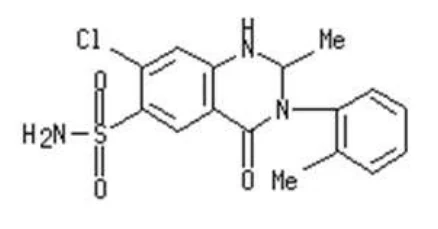
Chemical name: 7-chloro-1,2,3,4-tetrahydro-2-methyl-3-(2-methylphenyl)-4-oxo-6- quinazolinesulfonamide
Molecular formula: C16H16ClN3O3S
Molecular mass: 365.83
Structural formula:
Physicochemical properties: white to off-white crystalline powder
Solubility: in water (gm/mL): 2.4 x 10⁻⁵, 25°C
in 95% ethanol (gm/mL): 9 x 10⁻³, 25°C
in serum (gm/mL): 4.2 x 10⁻⁵, 37°C
pKa: 9.7
Melting Point: 253 - 259°C
Composition: ZAROXOLYN 2.5 mg tablets contain 2.5 mg of the active ingredient metolazone.
14 CLINICAL TRIALS
No clinical trial information is available for this drug product.
15 MICROBIOLOGY
No microbiological information is required for this drug product.
16 NON-CLINICAL TOXICOLOGY
General Toxicology:
Acute Toxicology
A single oral dose of 10 gm/kg was not lethal in rats, and a single intraperitoneal dose of 5 gm/kg was not lethal in mice. Acute effects in susceptible animals include electrolyte imbalance.
Administration of single high doses (100 to 200 mg/kg) of metolazone intraperitoneally to rats caused a hyperglycemic effect, a decrease in liver glycogen, and an increase in plasma-free fatty acids. Adrenalectomy, nephrectomy, or pretreatment with α- and β-adrenergic blocking agents reduced this hyperglycemia significantly, suggesting than an adrenergic mechanism (possibly stress), as well as a renal mechanism, were involved.
Chronic Toxicity
Daily doses up to 50 mg/kg given orally for one year did not produce noticeable toxic effects in rats, dogs, or monkeys. Mild hypokalemia and slight elevation of blood urea nitrogen occurred in some of the dogs. In the majority of these cases, the abnormal value returned to near normal before the study ended and while the animals were still under treatment.
Carcinogenicity:
Long-term animal studies with metolazone have not shown any evidence of carcinogenicity. Mice and rats given the drug for 18 months to 2 years at doses of 2, 10 and 50 mg/kg by stomach tube, showed no evidence that metolazone caused an increased number of tumors; however, the small number of animals examined histologically, and poor survival in the mice, limit conclusions that can be reached from these studies.
A mutagenicity study using Salmonella typhimurium strains TA1535, TA97, TA98, TA100, and TA102 as indicator organisms and concentrations of 100 to 10,000 mcg/plate of metolazone showed no evidence of mutagenic potential.
Reproductive and Developmental Toxicology:
Teratologic studies and studies of reproductive performance in mice, rats and rabbits (including a three-generation study with rats) treated with oral doses ranging from 0.2 to 50 mg/kg showed no evidence of teratologic effects. Reproductive studies in mice and rats have shown no evidence of altered reproductive capacity in mice; however, in a rat study in which males were treated orally with metolazone at doses of 2, 10 and 50 mg/kg for 127 days prior to mating with untreated females, an increased number of resorption sites were observed in dams mated with males from the 50 mg/kg group. In addition, the fetal weight was decreased and the pregnancy rate was reduced in dams mated with males from the 10 and 50 mg/kg group.