


Product Monograph - Jamp Indapamide
Clinical Pharmacology:
Comparative Bioavailability Studies
A randomized, two-treatment, two-period, single dose (1 × 2.5 mg), crossover, oral comparative bioavailability study of JAMP Indapamide (Indapamide) Tablets, 2.5 mg (JAMP Pharma Corporation), and MYLAN-INDAPAMIDE (Indapamide) Tablets, 2.5 mg (Mylan Pharmaceuticals ULC), was conducted in 24 healthy, adult, male and female subjects under fasting conditions. A summary of the bioavailability data from the 23 subjects (20 males and 3 female) who complete the study is presented in the following table.
SUMMARY TABLE OF THE COMPARATIVE BIOAVAILABILITY DATA
Indapamide (1 x 2.5 mg) Geometric Mean Arithmetic Mean (CV%) | ||||
| Parameter | Test1 | Reference2 | % Ratio of Geometric Means | 90% Confidence Interval |
AUCT (ng·h/mL) | 3269.39 3381.28 (26.79) | 3144.44 3225.41 (23.03) | 104.0 | 99.6 - 108.5 |
AUCI (ng·h/mL) | 3476.75 3628.46 (31.79) | 3336.36 3444.23 (26.41) | 104.2 | 99.5 - 109.2 |
Cmax (ng/mL) | 157.66 160.40 (18.75) | 140.44 142.48 (16.69) | 112.3 | 104.5 - 120.6 |
Tmax3 (h) | 1.75 (0.75 - 6.00) | 1.75 (1.00 -10.00) | ||
T½ 4 (h) | 17.03 (27.21) | 16.97 (21.78) | ||
1 JAMP Indapamide (Indapamide) Tablets, 2.5 mg (JAMP Pharma Corporation)
2 MYLAN-INDAPAMIDE (Indapamide) Tablets, 2.5 mg (Mylan Pharmaceuticals ULC), purchased in Canada
3 Expressed as median (range) only
4 Expressed as the arithmetic mean (CV%) only
INDICATIONS AND CLINICAL USE
JAMP Indapamide (indapamide) is indicated in the management of essential hypertension. It may be tried as a sole therapeutic agent in the treatment of mild to moderate hypertension. Normally indapamide, as other diuretics, is used as the initial agent in multiple drug regimens.
CONTRAINDICATIONS
Hypersensitivity to indapamide, to other sulfonamides or to any of the excipients, Severe renal failure (creatinine clearance below 30 ml/min),
Hepatic encephalopathy or severe impairment of liver function, Hypokalaemia,
Combinations with anti-arrhythmic agents causing torsade de pointes, Pregnancy,
Lactation,
Hereditary problems of galactose intolerance, glucose-galactose malabsorption, or total lactase deficiency as JAMP Indapamide contains lactose.
WARNINGS
Electrolyte changes observed with JAMP Indapamide (indapamide) may be severe. The recommended maximum daily dose of 2.5 mg/day should not be exceeded.
Hypokalaemia may occur at all doses with consequent weakness, cramps and cardiac dysrhythmias. Hypokalaemia is a particular hazard in digitalized patients; dangerous or fatal cardiac arrhythmias may be precipitated.
Hypokalaemia occurs commonly with diuretics; electrolyte monitoring is essential particularly in patients who would be at increased risk from hypokalaemia, such as patients with cardiac arrhythmias or those who are receiving concomitant cardiac glycosides.
Patients with renal insufficiency receiving JAMP Indapamide (indapamide) should be carefully monitored. If an increase of azotemia and oliguria occur during treatment, the diuretic should be discontinued.
Hyperuricemia may occur during administration of JAMP Indapamide (indapamide). Rarely gout has been reported. Blood uric acid levels should be monitored, particularly in patients with a history of gout who should continue to receive appropriate treatment.
When liver function is impaired, thiazide-related diuretics may cause, particularly in case of electrolyte imbalance, hepatic encephalopathy which can progress to hepatic coma. Administration of the diuretic should be stopped immediately if this occurs.
Cases of photosensitivity reactions have been reported with thiazides and thiazide-related diuretics (see Adverse Reactions). If photosensitivity reaction occurs during treatment, it is recommended to stop the treatment. If a re-administration of the diuretic is deemed necessary, it is recommended to protect exposed areas to the sun or to artificial UVA.
PRECAUTIONS
Patients receiving indapamide should be carefully observed and serum electrolytes monitored for signs and symptoms of fluid or electrolyte imbalance; namely hyponatremia, hypochloremia and hypokalaemia. Blood urea nitrogen, uric acid, and glucose levels should also be assessed during therapy. Hypokalaemia, an ever present hazard with most diuretics, will be more common in association with concomitant steroid or ACTH therapy and with inadequate electrolyte intake. The serum potassium should be determined at regular intervals and potassium supplementation instituted when indicated. (See Warnings).
The signs of electrolyte imbalance are: dryness of the mouth, thirst, weakness, lethargy, drowsiness, restlessness, muscle pains or cramps, muscle fatigue, hypotension, oliguria, gastrointestinal disturbances such as nausea and vomiting, tachycardia and ECG changes.
Potassium depletion with hypokalaemia is the major risk of thiazide and related diuretics. Hypokalaemia may cause muscle disorders. Cases of Rhabdomyolysis have been reported, mainly in the context of severe hypokalaemia. The risk of onset of hypokalaemia (< 3.4 mmol/l) must be prevented in certain high-risk populations, i.e. the elderly, malnourished and/or polymedicated, cirrhotic patients with oedema and ascites, coronary artery disease and cardiac failure patients. In this situation, hypokalaemia increases the cardiac toxicity of digitalis preparations and the risks of arrhythmias.
Individuals with a long QT interval are also at risk, whether the origin is congenital or iatrogenic. Hypokalaemia and bradycardia are both predisposing factors to the onset of severe arrhythmias, in particular, potentially fatal torsades de pointes among those individuals with long QT interval.
More frequent monitoring of plasma potassium is required in all the situations indicated above. The first measurement of plasma potassium should be obtained during the first week following the start of treatment. Detection of hypokalaemia requires its correction.
Plasma sodium must be measured before starting treatment, then at regular intervals subsequently. Any diuretic treatment may cause hyponatraemia, sometimes with very serious consequences. The fall in plasma sodium may be asymptomatic initially and regular monitoring is therefore essential, and should be even more frequent in the elderly and cirrhotic patients.
Calcium excretion is decreased by diuretics pharmacologically related to indapamide. However, after six to eight weeks of indapamide 1.25 mg treatment and in long-term studies of hypertensive patients with higher doses of indapamide, serum concentrations of calcium increased only slightly with indapamide.
Prolonged treatment with drugs pharmacologically related to indapamide may in rare instances be associated with hypercalcemia and hypophosphatemia secondary to physiologic changes in the parathyroid gland; however, the common complications of hyperparathyroidism, such as renal lithiasis, bone resorption, and peptic ulcer, have not been seen. Frank hypercalcaemia may be due to previously unrecognized hyperparathyroidism.
Treatment should be discontinued before tests for parathyroid function are performed. Like the thiazides, indapamide may decrease serum PBI levels without signs of thyroid disturbance.
The antihypertensive effect of the drug may be enhanced in the patient postsympathectomy.
Thiazide and related diuretics are fully effective only when renal function is normal or only minimally impaired (plasma creatinine below levels of the order of 25 mg/l, i.e. 220 mcmol/l in an adult) but are ineffective when the creatinine clearance is less than 30 mL/min.
In the elderly, this plasma creatinine must be adjusted in relation to age, weight and gender.
Hypovolaemia, secondary to the loss of water and sodium induced by the diuretic at the start of treatment causes a reduction in glomerular filtration. This may lead to an increase in blood urea and plasma creatinine. This transitory functional renal insufficiency is of no consequence in individuals with normal renal function but may worsen preexisting renal insufficiency.
JAMP Indapamide (indapamide) is contraindicated in patients with severe hepatic impairment since diuretics may induce metabolic alkalosis in cases of potassium depletion which may precipitate episodes of hepatic encephalopathy. (See Contraindications)
Orthostatic hypotension may occur and may be potentiated by alcohol, barbiturates, narcotics or concurrent therapy with other antihypertensives.
When JAMP Indapamide (indapamide) is given with other non-diuretic antihypertensive agents, the effects on blood pressure are additive.
Sulfonamide derivatives have been reported to exacerbate or activate systemic lupus erythematosus. These possibilities should be kept in mind with the use of indapamide although no case has been reported to date.
Severe dermatological adverse reactions, some accompanied by systemic manifestations, have been rarely reported with the use of indapamide. In the majority of cases, the condition subsided within 14 days following discontinuation of indapamide therapy (See Adverse Reactions).
Although indapamide exerts minimal effect on glucose metabolism, insulin requirements may be affected in diabetics. Monitoring of blood glucose is important in diabetics, in particular in the presence of hypokalaemia. Hyperglycemia and glycosuria may occur in patients with latent diabetes.
Athletes should note that this product contains an active substance which may cause a positive reaction in doping tests.
Choroidal effusion, acute myopia and secondary angle-closure glaucoma
Sulfonamide or sulfonamide derivative drugs can cause an idiosyncratic reaction resulting in choroidal effusion with visual field defect, transient myopia and acute angle-closure glaucoma. Symptoms include acute onset of decreased visual acuity or ocular pain and typically occur within hours to weeks of drug initiation. Untreated acute angle-closure glaucoma can lead to permanent vision loss. The primary treatment is to discontinue drug intake as rapidly as possible. Prompt medical or surgical treatments may need to be considered if the intraocular pressure remains uncontrolled. Risk factors for developing acute angle-closure glaucoma may include a history of sulfonamide or penicillin allergy.
Use in Pregnancy
As a general rule, the administration of diuretics should not be used by pregnant women nor used to treat physiological oedema of pregnancy. Diuretics can cause foetoplacental ischaemia, with a risk of impaired foetal growth (See Contraindications).
Use in Nursing Mothers
Breastfeeding is inadvisable (indapamide is excreted in human milk). (See Contraindications)
Use in Children
The safety and effectiveness of indapamide in children have not been established. Its use in this age group, therefore, is not recommended.
Use in Elderly
In the elderly, the plasma creatinine must be adjusted in relation to age, weight and gender. Elderly patients can be treated with indapamide 1.25 mg when renal function is normal or only minimally impaired.
Indapamide does not affect vigilance but different reactions in relation with the decrease in blood pressure may occur in individual cases, especially at the start of the treatment or when another antihypertensive agent is added. As a result the ability to drive vehicles or to operate machinery may be impaired.
Interactions with other medicinal products and other forms of interactions
Combinations that are not recommended:
Lithium:
Increased plasma lithium with signs of overdosage, as with a salt-free diet (decreased urinary lithium excretion). However, if the use of diuretics is necessary, careful monitoring of plasma lithium and dose adjustment are required.
Combinations requiring precautions for use:
Torsades de pointes-inducing drugs such as but not limited to:
class Ia antiarrhythmic agents (e.g. quinidine, hydroquinidine, disopyramide) and class Ic
(e.g. flecainide),
- class III antiarrhythmic agents (e.g. amiodarone, sotalol, dofetilide, ibutilide),
some antipsychotics:
phenothiazines (e.g. chlorpromazine, levomepromazine, trifluoperazine), benzamides (e.g. amisulpride) butyrophenones (e.g. haloperidol)
- other antipsychotics (e.g. pimozide),
- psychoanaleptic (e.g. donepezil),
- SSRIs (e.g. citalopram, escitalopram),
- antimicrobial agents: fluoroquinolones (e.g. moxifloxacin, ciprofloxacin), macrolides
- (e.g. erythromycin IV, clarithromycin), azole antifungals (e.g. fluconazole),
- antiparasitics (e.g. chloroquine, pentamidine),
- antihistamines,
- antiemetics (e.g. ondansetron, domperidone),
- antineoplastic and immunomodulating agents (e.g. vandetanib, oxaliplatin, anagrelide),
- anaesthetics (e.g. propofol, sevoflurane),
- other substances such as: bepridil, methadone, papaverine.
Increased risk of ventricular arrhythmias, particularly torsades de pointes (hypokalaemia is a risk factor). Monitor for hypokalaemia and correct, if required, before introducing this combination. Clinical, plasma electrolytes and ECG monitoring.
Use substances which do not have the disadvantage of causing torsades de pointes in the presence of hypokalaemia.
N.S.A.I.Ds. (systemic route) including COX-2 selective inhibitors, high dose salicylic acid (≥ 3 g/day):
Possible reduction in the antihypertensive effect of indapamide.
Risk of acute renal failure in dehydrated patients (decreased glomerular filtration). Hydrate the patient; monitor renal function at the start of treatment.
Antihypertensive medications (e.g. Angiotensin converting enzyme (A.C.E.) inhibitors): Risk of sudden hypotension and/or acute renal failure when treatment with an A.C.E. inhibitor is initiated in the presence of preexisting sodium depletion (particularly in patients with renal artery stenosis).
In hypertension, when prior diuretic treatment may have caused sodium depletion, it is necessary:
- either to stop the diuretic 3 days before starting treatment with the A.C.E. inhibitor, and restart a hypokalaemic diuretic if necessary;
- or give low initial doses of the A.C.E. inhibitor and increase the dose gradually.
In congestive heart failure, start with a very low dose of A.C.E. inhibitor, possibly after a reduction in the dose of the concomitant hypokalaemic diuretic.
In all cases, monitor renal function (plasma creatinine) during the first weeks of treatment with an A.C.E. inhibitor.
Other compounds causing hypokalaemia (e.g. amphotericin B (IV), corticosteroids (e.g. gluco and mineralo corticoids), ACTH (e.g. tetracosactide) and stimulant laxatives: Increased risk of hypokalaemia (additive effect).
Monitoring of plasma potassium and correction if required. Use non-stimulant laxatives.
Skeletal muscle relaxants (e.g. Baclofen):
Increased antihypertensive effect.
Hydrate the patient; monitor renal function at the start of treatment.
Digitalis preparations (e.g. Digoxin):
Hypokalaemia predisposing to the toxic effects of digitalis.
Monitoring of plasma potassium and ECG and, if necessary, adjust the treatment.
Citalopram:
Increased risk of hyponatraemia.
Allopurinol:
Concomitant treatment with indapamide may increase the incidence of hypersensitivity reactions to allopurinol.
Combinations to be taken into consideration:
Potassium-sparing diuretics (amiloride, spironolactone, triamterene):
Whilst rational combinations are useful in some patients, hypokalaemia or hyperkalaemia (particularly in patients with renal failure or diabetes) may still occur. Plasma potassium and ECG should be monitored and, if necessary, treatment reviewed.
Antihyperglycemic medications (e.g. Metformin):
Increased risk of metformin induced lactic acidosis due to the possibility of functional renal failure associated with diuretics and more particularly with loop diuretics. Do not use metformin when plasma creatinine exceeds 15 mg/l (135 mcmol/l) in men and 12 mg/l (110 mcmol/l) in women.
Iodinated contrast media:
In the presence of dehydration caused by diuretics, increased risk of acute renal failure, in particular when large doses of iodinated contrast media are used.
Rehydration before administration of the iodinated compound.
Anticholinergic and adrenergic antagonists (e.g. Imipramine-like antidepressants, neuroleptics in particular pimozide):
Antihypertensive effect and risk of orthostatic hypotension increased (additive effect).
Calcium (salts):
Risk of hypercalcaemia resulting from decreased urinary elimination of calcium.
Ciclosporin, tacrolimus:
Risk of increased plasma creatinine without any change in circulating cyclosporine levels, even in the absence of water/sodium depletion.
Corticosteroids:
Decreased antihypertensive effect (water/sodium retention due to corticosteroids).
ADVERSE REACTIONS
The safety data presented under this section involves two different databases and was obtained at two different time periods. For the earliest database (indapamide 2.5 mg), consisting mainly of European studies performed before 1980, adverse events were collected with respect to a possible causal relationship to treatment, whereas for the most recent database (indapamide 1.25 mg), consisting exclusively of North-American studies, adverse events were collected irrespective of such a causal relationship. This explains why the overall incidence of adverse events at the 2.5 mg dose appears to be lower than at the 1.25 mg dose (see below).
Most adverse events for both dosages, 1.25 mg and 2.5 mg, have been mild or moderate.
The adverse reactions represent data from clinical studies involving a total of 992 patients given indapamide 2.5 mg: 349 patients from 4 placebo controlled studies treated for 8 to 12 weeks; 356 patients from 6 active controlled studies treated for 6 up to more than 52 weeks; 287 patients from 4 uncontrolled studies treated for 6 up to 40 weeks.
The overall rate of adverse events, with respect to a possible causal relationship to the drug, was 29% and discontinuation of therapy due to adverse events was required in 5.6% of patients.
The most severe and common adverse event is the electrolyte imbalance. Electrolyte changes reported include hypokalaemia (14.2%; requiring potassium supplementation 6%; with clinical symptoms 1.2%), hypochloremia (9.4%) and hyponatremia (3.1%) (See Precautions).
The other changes observed in laboratory parameters are minor and infrequent: elevation in blood uric acid (8.6%), blood glucose (6.0%), BUN (5.7%) and blood creatinine (3.6%).
The most frequent adverse events (incidence ≥ 1%) reported for patients treated with indapamide
2.5 mg were: headache (3.4%), vertigo (2.2%), dizziness (1.9%), asthenia (1.7%) and muscle cramps (1.2%).
All other adverse events occurred at an incidence of less than 1% and included by body system:
Central Nervous: drowsiness, sleepiness, insomnia, weakness, lethargy and visual disturbance.
Gastrointestinal: nausea, anorexia, dryness of mouth, gastralgia, vomiting, diarrhoea and constipation.
Musculoskeletal: joint pain, back pain and weakness of legs.
Cardiovascular: orthostatic hypotension, tachycardia and ECG changes (non specific ST-T change, U waves, left ventricular strain).
Urogenital: impotence, modification of libido and polyuria.
Dermatological: rash and pruritus.
Endocrine: gout.
Other: tinnitus, malaise, fainting and sweat.
In placebo-controlled studies involving 306 patients given indapamide 1.25 mg and 319 given placebo for up to eight weeks, the overall incidence of adverse events, irrespective of causal relationship, was about 50% in both indapamide and placebo groups. In the indapamide 1.25 mg group, 4.2% of patients discontinued treatment because of adverse events.
In these studies 20% of patients treated with indapamide 1.25 mg had at least one potassium value below 3.4 mEq/L.
The most frequently reported adverse events (incidence ≥ 1%) in the indapamide 1.25 mg group were: headache (17%), infection (12%), pain (8%), dizziness (7%), back pain (5%), rhinitis
(5%), asthenia (4%), dyspepsia (4%), flu syndrome (3%), hypertonia (3%), sinusitis (3%), chest pain (2%), constipation (2%), cough (2%), diarrhoea (2%), edema (2%), nausea (2%), pharyngitis (2%), conjunctivitis (1%), nervousness (1%) and ECG abnormalities (non-specific ST-T changes (7%), sinus bradycardia (3%), arrhythmia (2%) or tachycardia (2%)).
All other clinical adverse events occurred at an incidence of less than 1%. These are the following:
Central Nervous: agitation, amnesia, anxiety, ataxia, coordination abnormality, depression, dream abnormality, hyperesthesia, insomnia, migraine, paresthesia, somnolence, twitching and vertigo.
Gastrointestinal: increased appetite, dry mouth, GI carcinoma, GI disorders, duodenitis, dysphagia, esophagitis, flatulence, gastritis, gastroenteritis, oral moniliasis, proctitis, rectal disorders, rectal hemorroïds, stomatitis, tooth disorders and vomiting.
Musculoskeletal: arthralgia, arthritis, bone disorders, joint disorders, bone fracture, bone pain, chondrodystrophy, myalgia, myasthenia and myopathy.
Cardiovascular: angina pectoris, bundle branch block, ventricular extrasystoles, atrial fibrillation, atrial flutter, hypertension, postural hypotension, palpitations, syncope, supraventricular tachycardia and vasodilation.
Urogenital: dysmenorrhea, dysuria, impotence, urinary tract infection, nocturia, oliguria, urinary frequency or urgency, renal pain or calculus, prostate disorders and vaginitis.
Respiratory: bronchitis, dyspnea, laryngitis, lung disorder and sputum increase.
Dermatological: acne, application site reaction, exfoliative dermatitis, nail disorder, skin nodule, rash, bullous eruption and sweat.
Metabolic and nutritional: diabetes mellitus and gout.
Special senses: amblyopia, ear disorders, ear pain, otitis, photophobia, taste perversion, tinnitus and vision abnormality.
Other: thyroid disorder, ecchymosis, allergic reaction, edema face, fever, hernia, malaise and monilia.
Postmarketing experience:
The most commonly reported adverse reactions are hypersensitivity reactions, mainly dermatological, in subjects with a predisposition to allergic and asthmatic reactions and maculopapular rashes.
Spontaneously reported adverse reactions, presented below, were reported voluntarily, and thus it is not always possible to reliably establish their frequency. Causal relationships of drug exposure to the adverse reactions are suspected, but have not been definitely established in all cases.
Nervous system disorders: fatigue
Cardiac disorders: electrocardiogram QT prolonged, torsade de pointes (potentially fatal)
Hepato-biliary disorders: hepatitis
Investigations: elevated liver enzyme levels
Metabolism and nutrition disorders:
Hypercalcaemia.
Hyponatraemia with hypovolaemia responsible for dehydration and orthostatic hypotension. Concomitant loss of chloride ions may lead to secondary compensatory metabolic alkalosis: the incidence and degree of this effect are slight.
Musculoskeletal and connective tissue disorders: myalgia, muscle spasms, muscular weakness
Eye disorders: blurred vision, visual impairment
Among the less common suspected adverse reactions reported in post-marketing experience, the following have been published in the medical literature and/or are classified as serious or potentially serious:
Blood and the lymphatic system disorders: agranulocytosis, aplastic and haemolytic anemia, leucopenia, thrombocytopenia
Cardiac disorders: ventricular arrhythmia
Eye disorders: acute myopia, cataract, optic neuritis, acute angle-closure glaucoma, choroidal effusion
Gastrointestinal disorders: pancreatitis
Hepato-biliary disorders: abnormal hepatic function, possibility of onset of hepatic encephalopathy in case of hepatic insufficiency
Metabolism and nutrition disorders: hyperosmolar coma
Musculoskeletal and connective tissue disorders: rhabdomyolysis
Nervous system disorders: stroke
Renal and urinary disorders: acute hypersensitivity reaction leading to interstitial nephritis and renal failure
Skin and subcutaneous tissue disorders: angioedema, epidermal necrolysis, erythema multiforme, erythroderma, photosensitivity with bullae, possible worsening of pre-existing acute disseminated lupus Erythematosus, purpura, Stevens-Johnson syndrome, urticaria
Vascular disorders: vasculitis
One case of synergetic effect of clofibrate with indapamide leading to hyponatremia, hypokalaemia, hypoosmolarity, nausea and progressive loss of consciousness.
Relationship with the administration of indapamide has not been proved in all cases.
SYMPTOMS AND TREATMENT OF OVERDOSAGE
Symptoms
There have been no reports of overdosage. Based on the pharmacological activities of indapamide, overdosage may lead to excessive diuresis with electrolyte depletion. In cirrhotic patients, overdosage might precipitate hepatic coma.
Treatment
There is no specific antidote. Treatment is symptomatic and supportive. Discontinue drug. Induce emesis or perform gastric lavage. Correct dehydration, electrolyte imbalance, hepatic coma and hypotension by established procedures.
For the most recent information in the management of a suspected drug overdose, contact your regional poison control centre or Health Canada's toll-free number, 1-844 POISON-X
(1-844-764-7669).
DOSAGE AND ADMINISTRATION
One 1.25 mg tablet per day taken in the morning as a single dose. If the response is not satisfactory after 4 to 8 weeks, the dose may be increased to a maximum of 2.5 mg as a single dose taken in the morning. If the antihypertensive response to JAMP Indapamide (indapamide) is insufficient, an increase in dosage is not recommended (see Warnings).
Instead, a non-diuretic antihypertensive agent should be added to the drug regimen. Alternatively, if in the opinion of the physician, an important diuretic effect is desirable for the patient's control, a different diuretic which allows for dose titration could be tried instead of indapamide.
PHARMACEUTICAL INFORMATION
Drug Substance
Proper Name: Indapamide
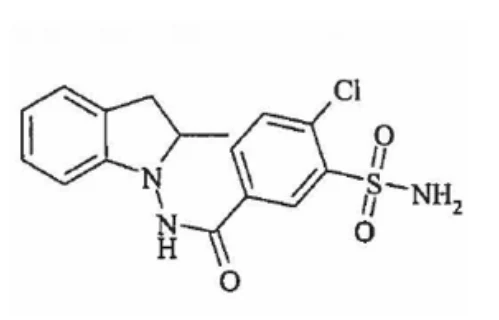
Molecular Formula C16H16ClN3O3S
Molecular Weight
365.83 g/mol
Chemical Name
4-chloro-N-[2-methyl-1-indolinyl]-3-sulfamoylbenzamide
Description
A white or almost white powder, practically insoluble in water, soluble in ethanol (96 per cent).
Composition
Each JAMP Indapamide 1.25 mg tablet contains indapamide 1.25 mg, and non-medicinal ingredients: Corn starch, D&C yellow no. 10 aluminum lake, FD&C yellow no. 6, hypromellose, lactose monohydrate, macrogol, magnesium stearate, microcrystalline cellulose, polydextrose, povidone, sodium starch glycolate, talc, titanium dioxide, and triacetin.
Each JAMP Indapamide 2.5 mg tablet contains indapamide 2.5 mg, and non-medicinal ingredients: Corn starch, FD&C blue no. 2, FD&C red no. 40, hypromellose, lactose monohydrate, macrogol, magnesium stearate, microcrystalline cellulose, polydextrose, povidone, sodium starch glycolate, talc, titanium dioxide, and triacetin.
Stability and Storage Recommendations
Store between 15-30°C. Protect from light.
Keep out of reach and sight of children.
AVAILABILITY OF DOSAGE FORMS
JAMP Indapamide tablets 1.25 mg are available in bottles of 100 tablets.
Each 6.5 mm, biconvex, orange, round, film-coated tablet, debossed with “JP” on one side and “1.25” on the other side.
JAMP Indapamide tablets 2.5 mg are available in bottles of 100 tablets.
Each 6.5 mm biconvex, pink, round, film-coated tablet, debossed with “JP” on one side and “2.5” on the other side.
PHARMACOLOGY
Indapamide is a non-thiazide sulfonamide derivative with an indole ring, possessing antihypertensive and diuretic properties.
Antihypertensive Action
In normal rats, cats and dogs, intravenous administration of 30 mcg to 30 mg/kg failed to change blood pressure or heart rate. No change in cardiac output, heart rate, peripheral or pulmonary resistance was seen. In rats, oral doses of up to 100 mg/kg did not change blood pressure over a 96-hour measurement period.
In hypertensive animals, single doses of 1 to 10 mg/kg, p.o., of indapamide elicited antihypertensive activity as follows:
- in desoxycorticosterone acetate (DOCA)/saline, hypertensive rats with unilateral nephrectomy, a single dose of 10 mg/kg indapamide produced a maximal fall in systolic blood pressure of 25 mmHg after 24 hours and the antihypertensive action lasted for 72 hours.
- similar results were observed in DOCA/saline rats without nephrectomy.
- higher doses up to 100 mg/kg produced only small increases in activity but the blood
pressure reduction continued for longer than 1 day.
Following repeated oral administration of indapamide (1 mg/kg) or trichlormethiazide (3 mg/kg) to DOCA/saline nephrectomized rats for 14 days, mean systolic blood pressure fell more with indapamide (33 mmHg) than with trichlormethiazide (23 mmHg). One week after indapamide treatment, the blood pressure had only partially returned towards pre-treatment value.
In the renal hypertensive dog, indapamide 5 mg/kg p.o., produces a maximal reduction (37 mmHg) in systolic blood pressure after 48 hours and an antihypertensive effect was still evident after 4 days.
Repeated administration of 0.5 mg/kg/day p.o. for 11 weeks prevented the onset of hypertension of DOCA/ saline hypertensive rats with unilateral nephrectomy, the effect was still apparent 5 weeks after interrupting treatment.
Hypertensive response induced by norepinephrine, tyramine or sympathetic stimulation were markedly reduced by indapamide (10 mg/kg p.o.) in amyelinated or DOCA/saline hypertensive rats.
Indapamide (10-5 and 10-4M) diminished vascular hyper-reactivity to epinephrine, norepinephrine and angiotensin in isolated organ preparations. Indapamide (10-6 g/mL) inhibited vascular smooth muscle cell contractility.
In renal hypertensive dogs, blood pressure was reduced at a dose of 1 mg/kg i.v. and cardiac output showed an increase after 2 hours and a slight decrease over 24 hours.
Action on the Kidney
Diuretic activity has been studied in rats and dogs. The parameters were modified differently depending on the dose: the natriuretic and chloruretic activity was observed after doses of 0.1 to
0.3 mg/kg p.o. or i.v., while increased urinary output was seen at 1 mg/kg p.o. or i.v.; and significant increases in urinary potassium excretion were reported after doses of 3 to 10 mg/kg p.o.
Indapamide did not alter glomerular filtration rate or renal haemodynamics in dogs, suggesting that it acts directly on renal tubules. Studies of positive and negative free water clearance suggested that diuresis may have resulted from inhibition of water, sodium and chloride reabsorption in the proximal portion of the distal tubule of the nephron.
TOXICOLOGY
Acute Toxicology (LD50)
| Route | Animals | No. Animals | LD50 (mg/kg) 48 hours | LD50 (mg/kg) 10 days | |||||||
|---|---|---|---|---|---|---|---|---|---|---|---|
| PO | mice | 10M | ) | ||||||||
| 10F | ) | ||||||||||
| rats | 10M | )>3000 (48 hr and 10d.) | |||||||||
| 10F | ) | ||||||||||
| guinea pigs | 4M | ) | |||||||||
| 4F | ) | ||||||||||
| IV | mice | 10M | 577 (538-618) | idem 48 hr | |||||||
| 10F | 635 (589-684) | 611 (575-648) | |||||||||
| rats | 10M | 440 (412-470) | 433 (404-463) | ||||||||
| 10F | 394 (368-421) | idem 48 hr | |||||||||
| guinea pigs | 4M | 358 (312-409) | 272 (176-421) | ||||||||
| 4F | 315 (249-397) | 285 (239-341) | |||||||||
Signs of Toxicity
Piloerection, bradypnea, hypotonia, diminished motor activity, hypersensitivity, mydriasis, and vasodilation at parenteral doses greater than 400 mg/kg.
Indapamide administered with hydralazine, methyldopa or propranolol did not modify the oral LD50 of the other antihypertensive agents.
Subacute Toxicity
4-Week Oral Toxicity Study in Rats (SPF/CFY Strain)
Rats (5 M, 5 F/group) received indapamide once daily, 7 days a week for 4 weeks at 50, 100 and 200 mg/kg, the findings were: dose-related increase in food consumption by females at 100 and 200 mg/kg; reduced body weight gain in males on high dose during the first two weeks and slight reduction in females at 200 mg/kg; increased number and prominence of foci of dystrophic mineralization at cortico-medullary function in 5/5 F at 200 mg/kg, considered to be due to increased urinary output.
Chronic Toxicity
6-Month Oral Toxicity Study in Beagle Dogs
Dogs (3 M, 3 F/ group) were treated with 0, 2, 20, 200 mg/kg doses, once daily, 7 days a week for 6 months. The drug-related findings were: food intake significantly reduced in males at 20 and 200 mg/kg and in females at 200 mg/kg; weight gain significantly reduced in males at 200 mg/kg dose.
At 200 mg/kg, hypothermia, increased susceptibility to injuries and infections, and increased urinary output were observed.
High neutrophil and low lymphocyte count in all drug-treated females at week 13, persisting in the 200 mg/kg group. High reticulocyte count was also noted.
Elevation of cholesterol and blood glucose, reduction of Na, K, Cl and Mg at week 13 in high dose group with persistence of the glucose abnormalities.
Significantly increased weight of liver and kidneys at 200 mg/kg and of adrenals at 20 and 200 mg/kg were seen. Sinusoidal congestion with central zone degeneration in the liver of one male of the 200 mg/kg group was noted. Slight congestion of adrenals in 3 dosed animals.
52-Week Oral Toxicity Study in Rats (SD/CR Strain)
Groups of 40 males and 40 females received indapamide at doses of 0, 1, 10 or 100 mg/kg once daily, 7 days a week for 52 weeks. The findings were:
Growth rates of treated males declined significantly during the first 6 weeks but terminal weights were comparable with controls.
Significant increases of plasma urea levels (still within the normal range) and of serum uric acid levels in males receiving the highest dose.
In females at high dose, significant weight increase of liver, kidneys and uterus and slight increase of adrenals were noted. Dose-related dystrophic mineralization at the cortico-medullary junction of kidneys of all drug-treated groups, particularly in females. Six females (2 at each dose) showing these changes died before the termination of the study. Calculi in the bladder of 3 females and bladder papilloma in one at 100 mg/kg dose.
56-Week Oral Toxicity Study in Beagle Dogs
Groups of 4 males and 4 females treated once daily, 7 days a week with 0, 1, 10 and 100 mg/kg of indapamide (the highest dose was reduced to 50 mg/kg on day 86). The findings were:
Excessive diuresis in all dosed animals. Reduction of body weight gain marked at 100 mg/kg; slight at 10 mg/kg. Reduction of food consumption in high dose group. ECG changes (alteration of ventricular repolarization) in 4 animals of the high dose group, 3 at week 11 and 1 at week 26. One of the 2 surviving females in the high dose group had a serum potassium of 2.6 mmol/L.
Hemoconcentration during the first half period of treatment. Abnormally low serum K levels after week 6 at middle and high doses and after week 17 in some low dose animals. High serum cholesterol levels at week 26 in the high dose group.
In high dose groups, about 50% weight reduction of uterus or prostate and ovaries, and weight increase of kidney and adrenals were seen. Replacement of cardiac muscle by adipose tissue in 4/8 animals at high dose. Apparent enlargement of adrenal cortex in 3/4 dogs in the high dose group. Flex dystrophic mineralization was observed in the renal medulla in all groups, including controls.
Carcinogenicity Studies
Indapamide was administered to 3 groups of 60 males and 60 females Charles River CDI rats and mice at dietary levels of 10, 30 and 100 mg/kg/day for 104 and 91 weeks respectively. A fourth group served as the negative control group. Both strains are susceptible to known carcinogens.
In both species, the incidence of nodules and masses observed at necropsy was comparable between the treated and control groups. Drug-related changes in the kidney (tubular nephrosis and mineralization of parenchyma) were seen in rats. Increased liver cytoplasmic vacuolization was seen in mice.
Under the conditions of testing, indapamide was not tumorigenic.
Teratogenicity Studies
The teratogenicity potential of indapamide was investigated in 3 animal species: mice, rats and rabbits.
- In mice CD/SPF (groups of 30 females), indapamide administered at doses of 0, 5 and 20 mg/kg/day p.o., 6 days a week, from the day of mating and throughout pregnancy did not induce abortions or increase percentage of deaths of the litters. No apparent teratogenic effect was noted.
- In rats SD/SPF: no embryo toxicity was noted in the foetuses of 3 females receiving a daily dose of 250 mg/kg p.o. from the 9th to the 16th day of gestation.
- In rats SD/SPF (groups of 60 females) receiving from the day of mating until the end of pregnancy 0, 10 and 30 mg/kg/day p.o., 6 days a week, indapamide had no effect on the abortion rate, the mean number of foetuses per litter or the incidence of abnormalities.
- In rats CR/CD (groups of 20 females) receiving 0, 1, 25 or 125 mg/kg, once daily from days 6 to 15 of gestation, no adverse effects were reported on abortion rate, implantation rate, mean litter size or fetal weight or fetal mortality. Slightly higher incidence of visceral abnormalities (thin walled heart, hydronephrosis) in treated animals (19-26% vs. 17% in controls).
- In the domestic rabbit (groups of 15 females) receiving 0, 1, 5, 10 and 50 mg/kg/day p.o., once daily, 6 days a week, from the 6th to the 18th day of gestation, increased resorption rate was seen at 50 mg/kg. No apparent teratogenic effect was noted.
- In the New Zealand white rabbit (groups of 13 females) receiving 0, 5, 30 and 180 mg/kg/day p.o., once daily from days 6 to 18 of gestation showed reduction in food consumption and weight gain at 180 mg/kg during the first 4 days of dosing. Total loss of litters occurred in 2 animals at high dose. In the other animals, abortion rate and litter size were unchanged. Incidence of major malformations and minor abnormalities were comparable for all groups and considered to be within the Laboratory standard range.
Fertility and Reproduction Study
Three generation tests, Wistar rats (SPF Strain).
Indapamide was administered at 0, 0.5, 2.5 and 25 mg/kg p.o., once daily to 20 males/group for 70 days before mating and 15 days after, and to 10 females/ group for 8 days before mating up to 30 days post-mating. Findings were as follows:
Reproductive performance was not changed. No changes in the mean weight, mean number of foetuses, the incidence of malformations or death rate among neonates were observed.
Behavior and reproductive performance of off-spring were unaffected, but the death rate of neonates (F2 generations) was adversely affected: 35% at the low dose and 47% at the high dose vs. 16% in controls (the lack of milk formation in the mothers may have been the cause).
No adverse effects of the F3 generation pups were observed.
REFERENCES
- 1. Acchiardo SR, Skoutakis VA. Clinical efficacy, safety and pharmacokinetics of indapamide in renal impairment. Am Heart J 1983; 106(Suppl.): 239-44.
- 2. Ames RP, Griffing E, Marbury T, et al. Effectiveness of indapamide versus enalapril as second-step therapy of systemic hypertension. Am J Cardiol 1992; 69: 267-70.
- 3. Brennan L, Wu MJ, Laquer UJ. A multicenter study of indapamide in hypertensive patients with impaired renal function. Clin Ther 1982; 5: 121-8.
- 4. Clarke RJ. Indapamide: a diuretic of choice for the treatment of hypertension? Am J Med Sci 1991; 301(3): 215-20.
- 5. Ferdinand K, Flamenbaum W, Hall WD et al. Lower dose indapamide therapy in the treatment of patients with mild to moderate hypertension. Am J Hypertens 1993; 6(5 part 2): 121A.
- 6. Harrower ADB, McFarlane G, Donnelly T, Gray CE. Effect of indapamide on blood pressure and glucose tolerance in non-insulin-dependent diabetes. Hypertension 1985; 7(Suppl II): 161-3.
- 7. Kocijancic M, Dimkovic S. Antihypertensive effect of indapamide given in conjunction with captopril in severe hypertension. Curr Med Res Opin 1986; 10: 313-8.
- 8. Leenen FHH, Smith DL, Boer WH, Marquez-Julio A. Diuretic and cardiovascular effects of indapamide in hypertensive subjects: A dose-response curve. Curr Med Res Opin 1983; 8(Suppl 3): 47-52.
- 9. Leenen FHH, Smith DL, Farkas RM et al. Cardiovascular effects of indapamide in hypertensive patients with or without renal failure. Am J Med 1988; 84(Suppl 1B): 76- 85.
- 10. Leonetti G, Rappelli A, Salvetti A et al. Long-term effects of indapamide: final results of a two-year Italian multicenter study in systemic hypertension. Am J Cardiol 1990; 65: 67H-71H.
- 11. Levine B. Treatment of hypertension in the elderly. Clin Ther 1994; 16(5): 732-51.
- 12. Newstead CG, Moore RH, Barnes AJ. Interstitial nephritis associated with indapamide. Br Med J 1990; 300: 1344.
- 13. Ocon J, Mora J. Twenty-four-hour blood pressure monitoring and effects of indapamide. Am J Cardiol 1990; 65: 58H-61H.
- 14. Plante GE, Dessurault DL. Hypertension in elderly patients. A comparative study between indapamide and hydrochlorothiazide. Am J Med 1988; 84(Suppl 1B): 98-103.
- 15.
Plante GE, Massry SG, et al. Comparison between the effects of indapamide and
- hydrochlorothiazide on creatinine clearance in patients with impaired renal function and hypertension. Am J Nephrol 1995; 15: 251-5.
- 16. Raggi U, Palumbo P, Bevilacqua M et al. Indapamide in the treatment of hypertension in non-insulin-dependent diabetes. Hypertension 1985; 7(Suppl II): 157-60.
- 17. Soltero I, Fuenmayor I, Colmenares A, et al. Comparative study of indapamide, beta- blockers, and diet. Curr Ther Res 1989; 46(2): 327-35.
- 18. Stricker BHCh, Biriell C. Skin reactions and fever with indapamide. Br Med J 1987; 295: 1313-14.
- 19. Van Hee W, Thomas J, Brems H. Indapamide in the treatment of essential arterial hypertension in the elderly. Postgrad Med J 1981; 57(Suppl 2): 29-33.
- 20. Waal-Manning HJ, Doesburg RMN, Spears GFS. Indapamide in hypertension. N Z Med J 1987; 100: 251-2.
- 21. Weiss R, Toth P, Miller E, et al. Clinical efficacy and safety of lower-dose indapamide therapy in the treatment of patients with mild to moderate hypertension. Am J Ther 1994; 1: 58-64.
- 22. Product Monograph - Lozide® (indapamide) 1.25 and 2.5 mg Tablets. Servier Canada Inc. Date of Revision: June 11, 2020. Control # 236979.
- 23. MYLAN-INDAPAMIDE, (Tablets, 1.25 mg and 2.5 mg), control 283896, Product Monograph, MYLAN PHARMACEUTICALS ULC, OCT 08, 2024