


Patient Medication Information: uses, side effects, how to take - Apo-Cyclosporine Oral Solution
ABOUT THIS MEDICATION
What the medication is used for:
Your doctor has prescribed the drug APO-CYCLOSPORINE ORAL SOLUTION. It is used after organ or bone marrow transplantations to help prevent organ rejection, or to treat autoimmune conditions such as severe psoriasis, severe rheumatoid arthritis and nephrotic syndrome.
APO-CYCLOSPORINE ORAL SOLUTION is a brand name for a drug called "cyclosporine". It belongs to a family of drugs known as "immunosuppressants". These drugs work to “suppress” or reduce the body's immune response.
What it does:
Your body's immune system normally works to protect you from infections and other foreign material. When you receive a transplant, this system does not recognize the new organ, and will try to reject it.
APO-CYCLOSPORINE ORAL SOLUTION works to reduce this response, so your body is more likely to accept the new organ.
APO-CYCLOSPORINE ORAL SOLUTION does not completely suppress the immune system, so your body will still have some infection-fighting ability.
APO-CYCLOSPORINE ORAL SOLUTION may be given alone, but is often given with other drugs which also suppress your immune system. Together these help prolong the life of an organ transplant, or to suppress certain function of your immune system to treat your psoriasis, rheumatoid arthritis or nephrotic syndrome.
When it should not be used:
Do not use APO-CYCLOSPORINE ORAL SOLUTION if you have ever had a bad, unusual or allergic reaction to cyclosporine or any of the non-medicinal ingredients of APO-CYCLOSPORINE ORAL SOLUTION. (See “What the important non-medicinal ingredients are”)
For the treatment of psoriasis, rheumatoid arthritis and nephrotic syndrome, do not take APO-CYCLOSPORINE ORAL SOLUTION if you have one of the following conditions:
- abnormal kidney function (except for nephrotic syndrome);
- uncontrolled blood pressure;
- any type of cancer (except a skin cancer which is not a melanoma);
- uncontrolled infection (not treated or cured);
- inherited or acquired immune deficiency.
Do not use APO-CYCLOSPORINE ORAL SOLUTION with bosentan.
What the medicinal ingredient is:
APO-CYCLOSPORINE ORAL SOLUTION is a microemulsion form of cyclosporine. This means almost the same amount will go into your body each time you take the drug, and that food will have less of an effect on the amount of cyclosporine that gets absorbed.
What the important non-medicinal ingredients are:
Non-medicinal ingredients for APO-CYCLOSPORINE ORAL SOLUTION are the following: acetylated monoglyceride, benzyl alcohol (4.73%), polyethylene glycol 200, polyoxyl 40 hydrogenated castor oil, and polysorbate 80.
What dosage forms it comes in:
APO-CYCLOSPORINE ORAL SOLUTION comes in 50 millilitre bottles.
WARNINGS AND PRECAUTIONS
Medicines which suppress the immune system, such as APO-CYCLOSPORINE ORAL SOLUTION may influence your body's ability to fight against infection and may increase the risk of developing cancers, particularly of the skin and lymphoid system. Therefore you should limit your exposure to sunlight and UV light by wearing appropriate protective clothing and frequently applying a sunscreen with a high protection factor.
Tell all health professionals you see (doctor, dentists, nurses, pharmacists) that you are taking APO-CYCLOSPORINE ORAL SOLUTION. It is also a good idea to wear a Medic-
Alert bracelet.
Before you use and because of the alcohol contained in APO-CYCLOSPORINE ORAL SOLUTION, talk to your doctor or pharmacist if:
- You have or had alcohol related problems
- You have epilepsy or have any liver problems
You are pregnant
- You breast-feed your child
- The medicine is given to a child
Before you use APO-CYCLOSPORINE ORAL SOLUTION talk to your doctor or pharmacist if:
- You have any current or have had past health conditions.
- You are taking other drugs: Do not take any other drugs without asking your doctor or pharmacist first including over-the-counter medicines and herbal or home remedies. APO-CYCLOSPORINE ORAL SOLUTION is often given with other medicines. Make sure you know if you are to stop, or to continue, other immunosuppressant drugs you had been taking.
- You are to receive vaccinations: APO-CYCLOSPORINE ORAL SOLUTION may make vaccinations less effective or increase your risk of getting an illness from a live vaccine. Always discuss this possibility with your doctor before you get any vaccinations or immunizations.
- You receive APO-CYCLOSPORINE ORAL SOLUTION the level of cyclosporine in your blood (especially for transplant patients), your liver and kidney function and your blood lipids should be checked regularly. Your blood pressure should be checked before initiation of therapy and regularly thereafter. If high blood pressure develops during therapy and cannot be controlled, treatment should be stopped.
- You have high levels of potassium in your blood.
- You suffer from gout.
- You have had a transplant or just after your operation, your doctor may give you magnesium supplements due to the fact that APO-CYCLOSPORINE ORAL SOLUTION may reduce the amount of magnesium in your body.
You are or become pregnant: There is an increased risk of difficult pregnancies (up to 25% of pregnancies) in patients who have taken cyclosporine during pregnancy. These difficult pregnancies have resulted in an increased risk to the babies during and immediately after birth. As well, some babies have been born with abnormalities.
For these reasons it is recommended that you do not take APO-CYCLOSPORINE ORAL SOLUTION if you are, or become, pregnant. During your treatment with APO-CYCLOSPORINE ORAL SOLUTION and for 2 months after stopping your APO-CYCLOSPORINE ORAL SOLUTION treatment, you must use a reliable method of birth control. Should you become pregnant during the time you are taking your APO-CYCLOSPORINE ORAL SOLUTION you should inform your doctor at once. You will want to discuss the possible benefits and risks of continuing with this drug.
- You are breast-feeding: Do not breast feed your baby if you are taking APO-CYCLOSPORINE ORAL SOLUTION as it passes into breast milk and may harm your baby.
There is a limited experience with cyclosporine in elderly. Your renal function should be monitored with particular care. If you are over the age of 65 years with psoriasis, you should only be treated in case of disabling disease.
Do not stop taking APO-CYCLOSPORINE ORAL SOLUTION on your own even if you have been taking it for several years. Transplant patients: Although you may not notice any symptoms of rejection for several weeks, missing even a few doses of APO-CYCLOSPORINE ORAL SOLUTION may lead to rejection of your transplanted organ.
INTERACTIONS WITH THIS MEDICATION
Make sure your doctor knows if you are taking, or begin to take, any other medicines, including drugs, or herbal (natural) products that you can buy without a prescription while you take APO-CYCLOSPORINE ORAL SOLUTION. Some medicines may interact with APO-CYCLOSPORINE ORAL SOLUTION such as:
- medicines that may impact your potassium levels such as potassium containing medicines or potassium sparing medicines (e.g. potassium sparing diuretics, angiotensin converting enzyme inhibitors, angiotensin II receptor antagonists)
- certain blood pressure reducing agents of the calcium antagonist type
- methotrexate, a medicine to treat tumors, severe psoriasis and severe rheumatoid arthritis
- medicines which may increase or reduce the blood levels of APO-CYCLOSPORINE ORAL SOLUTION. The doctor might check the cyclosporine concentration in your blood when initiating or discontinuing other medical treatment.
- medicines which may decrease the APO-CYCLOSPORINE ORAL SOLUTION concentrations: barbiturates (medicines used to help to sleep), certain anticonvulsives (e.g., carbamazepine, phenytoin), octreotide, antibacterial medicines used to treat tuberculosis, orlistat (used to help weight loss), herbal medicines containing St. John’s Wort, ticlopidine (used after stroke), certain blood pressure reducing agents
- (bosentan), and an antifungal medicine used to treat infections of the toes and nails (terbinafine).
- medicines which may increase APO-CYCLOSPORINE ORAL SOLUTION concentrations: antibiotics of the macrolides type (e.g erythromycin, azithromycin), antifungal medicine of the azole type (voriconazole, itraconazole), medicines used for heart problems or high blood pressure (diltiazem, nicardipine, verapamil, amiodarone), metoclopramide (used to stop sickness), oral contraceptives, danazol (used to treat menstrual disorders), medicines used to treat gout (allopurinol), cholic acid and derivatives (used to treat gallstones), protease inhibitors used to treat HIV, imatinib (used to treat leukaemia or tumors), colchicines
- other medicines which may affect the kidneys, such as antibacterial agents (gentamycine, tobramycine, ciprofloxacine), antifungal agents containing amphotericine B, antibacterial agents containing ciprofloxacin, agents against urinary tract infection containing trimetoprim, anti-cancer agents containing melphalan, medicines used to reduce the amount of acid in your stomach (acid secretion inhibitors of the H2-receptor antagonist type), tacrolimus, pain killers (non-steroid anti-inflammatory medicines such as diclofenac), fibric acid derivatives (e.g. bezafibrate, fenofibrate) used to lower fat in the blood.
- nifedipine (used to treat high blood pressure and heart pain), you might get swollen gums that spread over your teeth.
- medicines whose concentrations may increase when used together with APO-CYCLOSPORINE ORAL SOLUTION including aliskiren (to treat high blood pressure), digoxin (used to treat heart problems), cholesterol lowering agents (HMG-CoA reductase inhibitors (also called statins), prednisolone, etoposide (used to treat cancer), dabigatran (oral anticoagulant used to prevent stroke), repaglinide (oral antidiabetic agent), immunosuppressives (everolimus, sirolimus), ambrisentan and specific anticancer medicines called anthracyclines (e.g. doxorubicine).
- caspofungin
- lercanidipine
- oxcarbazepine
- nefazodone
Never take APO-CYCLOSPORINE ORAL SOLUTION with grapefruit juice.
APO-CYCLOSPORINE ORAL SOLUTION is also used in combination with other immunosuppressive agents. However, do not use it together with other calcineurin inhibitors such as tacrolimus.
Use of APO-CYCLOSPORINE ORAL SOLUTION with aliskiren is not recommended and use of APO-CYCLOSPORINE ORAL SOLUTION with dabigatran should be avoided.
PROPER USE OF THIS MEDICATION
Usual Dose:
- Always take APO-CYCLOSPORINE ORAL SOLUTION exactly as your doctor has told you. You should check with your doctor or pharmacist if you are unsure. Do not change the dose on your own, no matter how you are feeling. Blood tests are one of the ways your doctor tells how much APO-CYCLOSPORINE ORAL SOLUTION you need. Based on these tests, and on your response to this drug, your doctor may change your dose from time to time.
- Space your doses of APO-CYCLOSPORINE ORAL SOLUTION as evenly as you can throughout the day. For example, if you take the drug 2 times a day, leave about 12 hours between each dose.
- Try to take your dose(s) at the same time(s) each day. This will help keep a constant amount of drug in your body and will also help you remember each dose. APO-CYCLOSPORINE ORAL SOLUTION may be taken with or without food. But it is best to be consistent: once you decide when you are going to take it in relation to food, do it the same way each time.
- Never take APO-CYCLOSPORINE ORAL SOLUTION with grapefruit juice.
- If you were previously taking a different oral formulation of cyclosporine, your doctor will monitor you more closely for a short period following transfer from one oral formulation to another to ensure that cyclosporine blood levels are in the correct range. Never adjust the dose yourself unless the doctor has told you to.
APO-CYCLOSPORINE ORAL SOLUTION: If you have had an organ or bone marrow transplant, the total dose is usually within the range of 2 mg/kg body weight per day and 15 mg/kg body weight per day divided in two doses.
- For the treatment of nephrotic syndrome, the total daily dose is usually within the range of 2.5 mg/kg body weight per day and 5 mg/kg body weight per day.
- For the treatment of severe rheumatoid arthritis, the total daily dose is usually within the range of 3 mg/kg body weight per day and 5 mg/kg body weight per day divided in two doses.
- For the treatment of psoriasis and eczema, the total dose is usually within the range of 2.5 mg/kg body weight per day and 5.0 mg/kg body weight per day divided in two doses.
APO-CYCLOSPORINE ORAL SOLUTION
To open the bottle for the first time:
| 1) | Remove and discard the tamper-evident safety seal. | |
| 2) | Unscrew the cap counter clockwise. | |
| 3) | Insert tube with attached white stopper (not syringe) into APO-CYCLOSPORINE ORAL SOLUTION bottle until it snaps into place. | 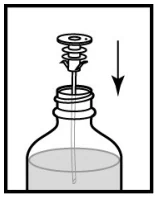 |
| 4) | Insert tip of syringe into opening at top of white stopper. | 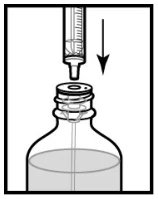 |
| 5) | Draw up prescribed volume of solution. | 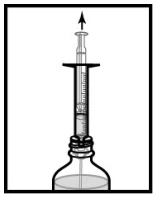 |
| 6) | Expel any large bubbles by depressing and withdrawing plunger a few times before removing syringe containing prescribed dose from bottle. The presence of a few tiny bubbles is of no importance, and will not affect the dose in any way. |  |
| Turn the syringe so the tip is pointing down. Place it over a cup about half-full of the drink you will be using.* Put your dose into the cup by pressing down on the syringe plunger. Do not let the syringe touch the liquid in the cup. Stir the solution well and drink it right away. | ||
| *Have the drink at room temperature. Do not use grapefruit juice as the drink. Most other drinks may be used - for example, apple juice, orange juice or a soft drink. Once you have chosen a drink, use the same one each time. | ||
| 7) | When you are finished, wipe only the outside of the syringe with a dry tissue. To ensure cleanliness for next use, place a blue tip cap on the syringe and put back in case. Close the bottle with the cap. | 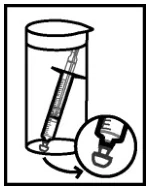 |
| The white stopper and tube should remain in the bottle. Do not rinse the syringe with water, alcohol or any other liquid. | 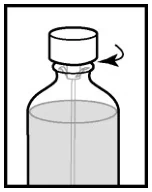 |
Once the bottle is opened the first time, you can start at point number 4 above for your next dose.
Each dose of APO-CYCLOSPORINE ORAL SOLUTION must be measured accurately. Be sure to ask your doctor, nurse or pharmacist if you have any questions about how to measure the solution.
Overdose:
If you think you have taken too much APO-CYCLOSPORINE ORAL SOLUTION, contact your healthcare professional, hospital emergency department or regional Poison Control Centre immediately, even if there are no symptoms.
Missed dose:
- For transplant patients, missing even a few doses of APO-CYCLOSPORINE ORAL SOLUTION may lead to rejection of your transplanted organ. That is why it is so important to take each of the doses your doctor prescribes.
- Talk to your doctor, nurse or pharmacist if you have trouble remembering doses, or if you are uncertain about how to take them. Also be sure to discuss any concerns you have about taking this drug as prescribed. These people can often suggest ways to overcome problems you have taking your medication.
- Never allow your medication to run out between refills. Plan to order your refills about one week ahead of time—that way you will always have a supply in case the pharmacy is closed or out of the drug. Also be sure to take enough medication with you when you go on a holiday.
If you forget to take a dose, take another one as soon as you remember, unless it is almost time for your next dose. Then go on as before. It is also a good idea to ask your doctor ahead of time what to do about missed doses.
Be sure to keep all appointments at your clinic. Some of these visits will be used to check the level of cyclosporine in your blood. For transplant patients, levels that are too low can cause transplant rejection, while levels that are too high may cause damage to other organs. It is therefore very important not to miss any tests or check-ups your doctor orders.
SIDE EFFECTS AND WHAT TO DO ABOUT THEM
Like all medicines, APO-CYCLOSPORINE ORAL SOLUTION can cause side effects, although not everybody gets them. Be sure to talk to your doctor if you have any concerns about this.
The most common side effects noted were:
- high blood pressure;
- kidney or liver problems;
- headache (including migraine);
- increased levels of lipids (e.g. cholesterol) in the blood;
- loss of appetite, nausea, vomiting, constipation or diarrhea;
- acne or oily skin;
- slight trembling of the hands;
- increased growth of fine hairs on the body;
- muscle or joint pains or cramping;
- weakness, anxiety;
- tingling in the fingers, toes or mouth;
- night sweats; hearing loss; swelling of the face;
- increased potassium in the body (your doctor may instruct you to avoid high dietary potassium intake);
- tender or swollen gums
- decreased ability to fight infection
- low level of white blood cells
- high level of sugar in the blood
- hot flushes
- stomach ulcer
- rash
- If you develop liver problems while taking this drug, which could occur with or without the following symptoms: jaundice (yellowing of the skin and/or eyes and/or dark urine), abdominal pain, vomiting and nausea, contact your doctor immediately.
- Because APO-CYCLOSPORINE ORAL SOLUTION reduces the function of your immune system, you are more likely to get bacterial, fungal or viral infections. To help reduce complications from these infections, tell your doctor right away about any cold or flu-like symptoms (such as a fever or sore throat), any boils on your skin, or pain when you urinate (pass your water).
The decreased function of your immune system may also increase your chances of developing cancer. Although very rare, cancers of the white blood cells (lymphomas) and
- other types of cancer have occurred in people taking cyclosporine. The following are some possible warning signs of cancer. To help detect any cancers as soon as possible, report any of these symptoms to your doctor right away: a change in your bowel or bladder habits; any sore that doesn't heal; unusual bleeding or discharge; the appearance of a lump or thickened areas in your breast or anywhere else on your body; unexplained stomach upset or any trouble with swallowing; an obvious change in a wart or a mole; a nagging cough or hoarseness; night sweats.
- If you experience vision changes, loss of coordination, clumsiness, memory loss, difficulty speaking or understanding what others say, and muscle weakness, these can be the signs and symptoms of an infection of the brain called progressive multifocal leukoencephalopathy. Contact your doctor right away if these symptoms occur.
- Vomiting or diarrhea may stop APO-CYCLOSPORINE ORAL SOLUTION from being absorbed (going) into your body.
Some side effects occurred with unknown frequency and were:
- Low levels of magnesium in the blood
- Vomiting and sensitivity to light
Inflammation of the pancreas with severe upper
stomach pain
- Muscle spasm
- Pain in legs and feet
- Breast enlargement in men
- Tiredness and weight gain
- High level of acid uric in the blood
Be sure to tell your doctor right away if you notice any of these symptoms listed above, and especially if they continue, bother you in any way, or seem to increase in intensity. Remember, only a doctor can tell if these symptoms might be from APO-CYCLOSPORINE ORAL SOLUTION. If you think you are having side effects, talk to your doctor right away. Do not stop taking this drug on your own.
| SERIOUS SIDE EFFECTS, HOW OFTEN THEY HAPPEN AND WHAT TO DO ABOUT THEM | |||||
| Symptom/effect | Talk with your doctor or pharmacist | Stop taking drug and call your doctor or pharmacist | |||
| Only if severe | In all cases | ||||
| Common | Tremor | † | |||
| High blood pressure | |||||
| Tingling | |||||
| Bacterial, fungal or viral infection | |||||
| Vomiting or diarrhea | |||||
| Muscle or joint pains or cramping | |||||
| Weakness | ||||
| Anxiety | ||||
| Swelling at the back of the eyes which may be associated with blurred vision and possible visual impairment due to an increase in pressure inside the head (benign intracranial hypertension) | ||||
| High level of potassium in the blood | ||||
| Low level of red blood cells or platelets; which may be associated with pale skin, tiredness, breathlessness, dark urine (sign of breakdown of red blood cells), bruising or bleed with no obvious reasons, confusion, disorientation, decreased alertness, and kidney problems | ||||
| Uncommon | Ulcers | † | ||
| Convulsions | ||||
| Brain disorder with signs such as seizures, confusion, disorientation, decreased responsiveness, personality changes, agitation, sleeplessness, sight disturbances, blindness, coma, paralysis of part or all of the body, stiff neck, loss of coordination with or without abnormal speech and eye movements | ||||
| Allergic reactions | ||||
| Rare | Abnormal menstrual cycle | |||
| Very rarely | Tumours/malignancies | † |
† Do not stop your medicines unless you have discussed this with your doctor first.
This is not a complete list of side effects. For any unexpected effects while taking APO-CYCLOSPORINE ORAL SOLUTION, contact your doctor or pharmacist.
HOW TO STORE IT
Keep APO-CYCLOSPORINE ORAL SOLUTION out of the reach and sight of children. A child who accidentally takes this drug may be seriously harmed. A locked drawer or cupboard is best if you have small children in the house.
APO-CYCLOSPORINE ORAL SOLUTION should be kept at room temperature (15°C to 30°C), preferably not below 20°C for prolonged periods. Do not put it in the fridge, and do not let it freeze. Once the bottle has been opened, the contents must be used within 2 months. Be sure to keep the solution in the original bottle.
- A jelly-like formation may occur if the oral solution goes below 20°C. This should go away when the solution is warmed to 30°C. Little flakes (or a slight sediment) may still be seen. Having this happen does not change the effectiveness or safety of the product, and dosing by means of the syringe remains accurate.
Reporting Side Effects
You can report any suspected side effects associated with the use of health products to Health Canada by:
NOTE: Contact your health professional if you need information about how to manage your side effects. The Canada Vigilance Program does not provide medical advice. |
MORE INFORMATION
If you want more information about APO-CYCLOSPORINE ORAL SOLUTION:
- Talk to your healthcare professional
- Find the full Product Monograph, prepared for health professionals and includes this Consumer Information by visiting the Health Canada website (https://health-products.canada.ca/dpd-bdpp/index-eng.jsp). Find the Consumer Information on the manufacturer’s website http://www.apotex.ca/ products or by calling: 1-800-667-4708.