


Product Monograph - Apo-Flecainide
Recent Major Label Changes
None at time of the most recent authorization
Table of Contents
Certain sections or subsections that are not applicable at the time of the preparation of the most recent authorized product monograph are not listed.
Recent Major Label Changes .................................................................................................... 2
Part 1: Healthcare Professional Information ............................................................................ 4
1 Indications ........................................................................................................................ 4
1.1 Pediatrics ................................................................................................................... 4
1.2 Geriatrics ................................................................................................................... 4
2 Contraindications ............................................................................................................. 4
3 Serious Warnings and Precautions Box ............................................................................. 5
4 Dosage and Administration ............................................................................................... 5
4.1 Dosing Considerations ............................................................................................... 5
4.2 Recommended Dose and Dosage Adjustment .......................................................... 6
4.5 Missed Dose .............................................................................................................. 7
5 Overdose .......................................................................................................................... 8
6 Dosage Forms, Strengths, Composition, and Packaging .................................................... 8
7 Warnings and Precautions ................................................................................................ 8
7.1 Special Populations ................................................................................................. 12
7.1.1 Pregnant Women .......................................................................................... 12
7.1.2 Breast-feeding .............................................................................................. 12
7.1.3 Pediatrics ...................................................................................................... 12
7.1.4 Geriatrics ...................................................................................................... 12
8 Adverse Reactions .......................................................................................................... 12
8.1 Adverse Reaction Overview ..................................................................................... 12
8.2 Clinical Trial Adverse Reactions ............................................................................... 12
8.3 Less Common Clinical Trial Adverse Reactions ........................................................ 14
9 Drug Interactions ............................................................................................................ 14
9.2 Drug Interactions Overview ..................................................................................... 14
9.4 Drug-Drug Interactions ............................................................................................ 14
9.5 Drug-Food Interactions............................................................................................ 15
9.6 Drug-Herb Interactions ............................................................................................ 15
9.7 Drug-Laboratory Test Interactions .......................................................................... 15
10 Clinical Pharmacology ..................................................................................................... 16
10.1 Mechanism of Action ............................................................................................... 16
10.2 Pharmacodynamics ................................................................................................. 16
10.3 Pharmacokinetics .................................................................................................... 17
11 Storage, Stability, and Disposal ....................................................................................... 18
12 Special Handling Instructions .......................................................................................... 19
Part 2: Scientific Information ................................................................................................. 20
13 Pharmaceutical Information ........................................................................................... 20
14 Clinical Trials ................................................................................................................... 20
14.2 Comparative Bioavailability Studies ........................................................................ 20
15 Microbiology .................................................................................................................. 22
16 Non-Clinical Toxicology ................................................................................................... 22
17 Supporting Product Monographs .................................................................................... 26
Patient Medication Information ............................................................................................ 27
Part 1: Healthcare Professional Information
1 Indications
In patients without structural heart disease and with disabling symptoms, APO-FLECAINIDE is indicated for the prevention of:
- paroxysmal supraventricular tachycardias (PSVT), including atrioventricular nodal re-entrant tachycardia, atrioventricular re-entrant tachycardia and other supraventricular tachycardias of unspecified mechanism,
- paroxysmal atrial fibrillation/flutter (PAF).
Patients treated with APO-FLECAINIDE for supraventricular arrhythmias having impaired left ventricular function (ejection fraction < 40) and/or ischemic heart disease may be at increased risk for cardiac adverse reactions. Use of APO-FLECAINIDE in chronic atrial fibrillation has not been adequately studied and is not recommended (see 3 Serious Warnings and Precautions Box).
APO-FLECAINIDE is also indicated for the treatment of:
- documented ventricular arrhythmias, such as sustained ventricular tachycardia (sustained VT), that in the judgement of the physician, are life-threatening.
- Because of the proarrhythmic effects of APO-FLECAINIDE, its use should be reserved for patients in whom, in the opinion of the physician, the benefits of treatment outweigh the risks. The use of APO-FLECAINIDE is not recommended in patients with less severe ventricular arrhythmias, even if the patients are symptomatic (see 7 Warnings and Precautions, Cardiovascular, Proarrhythmic Effects). Use of APO-FLECAINIDE for treatment of sustained ventricular tachycardia should be initiated in the hospital.
APO-FLECAINIDE should not be used in patients with recent myocardial infarction (see 3 Serious Warnings and Precautions Box).
1.1 Pediatrics
Pediatrics (< 18 years of age): No data are available to Health Canada; therefore, Health Canada has not authorized an indication for pediatric use.
1.2 Geriatrics
Geriatrics (> 65 years of age): Evidence from clinical studies and experience suggests that use in the geriatric population is associated with differences in safety or effectiveness (see 4.2 Recommended Dose and Dosage Adjustment, Dosage Adjustment in Renal Impairment, Geriatrics).
2 Contraindications
APO-FLECAINIDE is contraindicated:
- In patients who are hypersensitive to this drug or to any ingredient in the formulation, including any non-medicinal ingredient, or component of the container. For a complete listing, see 6 Dosage forms, strengths, composition and packaging.
- In patients with second- or third-degree AV block, unless a pacemaker is present to sustain rhythm.
- In patients with bifascicular or trifascicular bundle branch block, unless a pacemaker is present to sustain rhythm.
- In patients with cardiogenic shock.
3 Serious Warnings and Precautions Box
No antiarrhythmic drug has been shown to reduce the incidence of sudden death in patients with asymptomatic ventricular arrhythmias. Most antiarrhythmic drugs have the potential to cause dangerous arrhythmias; some have been shown to be associated with an increased incidence of sudden death. In light of the above, physicians should carefully consider the risks and benefits of antiarrhythmic therapy for all patients with ventricular arrhythmias.
Mortality
The results of the Cardiac Arrhythmia Suppression Trial (CAST) in post-myocardial infarction patients with asymptomatic ventricular arrhythmias showed a significant increase in mortality and in non-fatal cardiac arrest rate in patients treated with flecainide or flecainide compared with a matched placebo-treated group. This rate was 19/323 (5.8%) for flecainide and 7/318 (2.2%) for its matched placebo. The average duration of treatment with flecainide was 10 months. CAST was continued using a revised protocol with the moricizine and placebo arms only. The trial was prematurely terminated because of a trend towards an increase in mortality in the moricizine treated group.
The applicability of these results to other populations or other antiarrhythmic agents is uncertain, but at present it is prudent to consider these results when using any antiarrhythmic agent.
Ventricular Pro-arrhythmic Effects in Patients with Atrial Fibrillation/Flutter
A review of the world literature revealed reports of 568 patients treated with oral flecainide acetate tablets for paroxysmal atrial fibrillation/flutter (PAF). Ventricular tachycardia was experienced in 0.4% (2/568) of these patients. Of 19 patients in the literature with chronic atrial fibrillation, 10.5% (2/19) experienced ventricular tachycardia or ventricular fibrillation. APO-FLECAINIDE IS NOT RECOMMENDED FOR USE IN PATIENTS WITH CHRONIC ATRIAL FIBRILLATION. Case reports of ventricular proarrhythmic effects in patients treated with flecainide acetate tablets for atrial fibrillation/flutter have included increased premature ventricular contractions (PVCs), ventricular tachycardia (VT), ventricular fibrillation (VF), and death.
As with other class I agents, patients treated with flecainide acetate tablets for atrial flutter have been reported with 1:1 atrioventricular conduction due to slowing of the atrial rate. A paradoxical increase in the ventricular rate also may occur in patients with atrial fibrillation who receive flecainide acetate tablets. Concomitant negative chronotropic therapy such as digoxin or beta-blockers may lower the risk of this complication.
4 Dosage and Administration
4.1 Dosing Considerations
When APO-FLECAINIDE and amiodarone are to be co-administered (see 7 Warnings and Precautions, Cardiovascular, Concomitant Antiarrhythmic Therapy), the dose of APO-FLECAINIDE should be reduced by 50% and the patient should be monitored closely for adverse reactions.
APO-FLECAINIDE should be used cautiously in patients who are known to have a history of CHF or myocardial dysfunction. The initial dose should be no more than 100 mg bid in such patients.
Periodic monitoring of trough plasma levels may be useful in-patient management. Because elimination of flecainide from plasma may be markedly slower in patients with severe chronic renal failure or severe hepatic disease, plasma level monitoring is required in these patients. Plasma level monitoring is recommended in patients with congestive heart failure, moderate renal disease, and the elderly.
Any pre-existing hypokalemia or hyperkalemia should be corrected before administration of APO-FLECAINIDE (see 7 Warnings and Precautions, Cardiovascular, Electrolyte Disturbances).
The pacing threshold in patients with pacemakers should be determined prior to instituting therapy with APO-FLECAINIDE, again after one week of administration and at regular intervals thereafter (see 7 Warnings and Precautions, Cardiovascular, Effects on Pacemaker Thresholds).
If second- or third-degree AV block, or right bundle branch block associated with a left hemiblock occur, APO-FLECAINIDE therapy should be discontinued unless a temporary or implanted ventricular pacemaker is in place to ensure an adequate ventricular rate.
4.2 Recommended Dose and Dosage Adjustment
Supraventricular Arrhythmias
The recommended starting dose for patients with paroxysmal supraventricular tachycardias or patients with paroxysmal atrial fibrillation/flutter is 50 mg every 12 hrs. APO-FLECAINIDE may be increased in increments of 50 mg bid every 4 days until efficacy is achieved. The maximum recommended dose is 300 mg/day.
Ventricular Arrhythmias
For patients with sustained ventricular tachycardia, APO-FLECAINIDE should be started in the hospital with rhythm monitoring. The recommended starting dose for patients with ventricular arrhythmias is 100 mg every 12 hours. APO-FLECAINIDE may be increased in increments of 50 mg bid every 4 days until efficacy is achieved. Most patients do not require more than 150 mg every 12 hours (300 mg/day). The maximum dose is 400 mg/day.
Use of higher initial doses and more rapid dosage adjustments than recommended has resulted in an increased incidence of proarrhythmic events and CHF, particularly during the first few days of dosing (see 7 Warnings and Precautions, Cardiovascular, Proarrhythmic Effects). Therefore, a loading dose is not recommended.
An occasional patient not adequately controlled by (or intolerant to) a dose given at 12-hour intervals may be given APO-FLECAINIDE at 8-hour intervals.
Once adequate control of the arrhythmia has been achieved, it may be possible in some patients to reduce the dose as necessary to minimize side effects or effects on conduction. In such patients, efficacy at the lower dose should be evaluated.
In patients with a history of congestive heart failure (CHF) or myocardial dysfunction, the initial dose should be no more than 100 mg every 12 hours. If needed to achieve efficacy, the dosage may be increased cautiously in increments of 50 mg bid every 4 days, and the maximum dosage should not exceed 200 mg every 12 hours (400 mg/day), because higher doses are associated with a greater increase of worsened congestive heart failure (see 7 Warnings and Precautions, Cardiovascular, Heart Failure).
Dosage Adjustment in Renal Impairment
In patients with severe renal impairment (creatinine clearance of 35 mL/min/1.73 square meters or less), the initial dosage should be ½ the total daily dose recommended for the treatment indication, given as a single daily dose. When used in such patients, daily trough plasma flecainide level monitoring is required to guide dosage adjustments (see 4.2 Recommended Dose and Dosage Adjustment, Plasma Level Monitoring). In patients with less severe renal disease, the initial dosage need not be adjusted; however, plasma level monitoring is recommended in these patients during dosage adjustment. In both groups of patients, dosage increases should be made very cautiously when plasma levels have plateaued, observing the patient closely for signs of adverse cardiac effects or other toxicity. It should be born in mind that in these patients it is likely to take longer than 4 days before a new steady- state plasma level is reached following a dosage change. Therefore, the interval between dose increases should be longer than the 4 days recommended for patients with normal renal function.
Geriatrics (> 65 years of age): In elderly patients flecainide elimination from plasma is somewhat slower. The initial dosage need not be adjusted; however, daily trough plasma flecainide level monitoring is recommended during dosage adjustment (see 10.3 Pharmacokinetics, Special Populations and Conditions).
Plasma Level Monitoring
Therapeutic trough plasma flecainide levels were found to range between 0.2 and 1.0 mcg/mL. The probability of adverse experiences, especially cardiac, may increase with higher trough plasma levels, especially when these exceed 0.7 mcg/mL. Periodic monitoring of trough plasma levels may be useful in-patient management. Because elimination of flecainide from plasma may be markedly slower in patients with severe chronic renal failure or severe hepatic disease, plasma level monitoring is required in these patients. Plasma level monitoring is recommended in patients with congestive heart failure, moderate renal disease, and the elderly.
Based on theoretical considerations rather than experimental data, the following suggestion is made when transferring patients from another antiarrhythmic drug to APO-FLECAINIDE, or from APO-FLECAINIDE to another antiarrhythmic, allow at least two to four plasma half-lives to elapse for the drug being discontinued before starting the alternative at the usual dosage. In patients where withdrawal of a previous antiarrhythmic agent is likely to produce life-threatening arrhythmias, the physician should consider hospitalizing the patient.
When APO-FLECAINIDE and amiodarone are to be co-administered (see 7 Warnings and Precautions, Cardiovascular, Concomitant Antiarrhythmic Therapy), the dose of APO-FLECAINIDE should be reduced by 50% and the patient should be monitored closely for adverse reactions. Steady-state trough plasma flecainide level monitoring is strongly recommended to guide dosage with such combination therapy.
4.5 Missed Dose
If a patient misses a dose of APO-FLECAINIDE, he should take it as soon as possible. However, if it is almost time for next dose, he should skip the missed dose and go back to the regular dosing schedule. The patient should be advised not to take 2 doses on the same day to make up for a missed dose. The dose should not be doubled.
5 Overdose
No specific antidote has been identified for the treatment of flecainide acetate tablets overdosage. Animal studies suggest the following events might occur with overdosage of flecainide acetate tablets: lengthening of the PR interval; increase in the QRS duration, QT interval and amplitude of the T-wave; a reduction in myocardial rate and contractility; conduction disturbances; hypotension; and death from respiratory failure or asystole. Treatment of overdosage should be supportive and may include the following: removal of unabsorbed drug from the gastrointestinal tract, administration of inotropic agents or cardiac stimulants such as dopamine, dobutamine or isoproterenol; mechanically assisted respiration; circulatory assists such as intra-aortic balloon pumping; and transvenous pacing in the event of conduction block. Because of the long plasma half-life of flecainide (range from 12 to 27 hours in patients), and the possibility of markedly non-linear elimination kinetics at very high doses, these supportive treatments may need to be continued for extended periods of time.
Hemodialysis is not an effective means of removing flecainide from the body.
Since flecainide elimination is much slower when urine is very alkaline (pH 8 or higher), acidification of urine to promote drug excretion may, theoretically, be beneficial in overdose cases with very alkaline urine. There is no evidence that acidification from normal urinary pH increases excretion.
For the most recent information in the management of a suspected drug overdose, contact your regional poison control centre or Health Canada’s toll-free number, 1-844 POISON-X (1-844-764-7669).
6 Dosage Forms, Strengths, Composition, and Packaging
Table 1 – Dosage Forms, Strengths, and Composition
Description
50 mg Tablets: Round, white, biconvex tablets, engraved “FLE” over “50” on one side.
100 mg Tablets: Round, white, biconvex tablets, scored and engraved “FLE” over “100” one side.
Packaging
APO-FLECAINIDE 50 mg and 100 mg are available in bottles of 100 tablets.
7 Warnings and Precautions
Cardiovascular
Concomitant Antiarrhythmic Therapy
Due to limited exposure, the concomitant use of APO-FLECAINIDE and other antiarrhythmic agents is not recommended.
Both disopyramide and verapamil have negative inotropic properties and the effects of giving them with
| Route of Administration | Dosage Form/ Strength/Composition | Non-Medicinal Ingredients |
| Oral | tablet 50 mg, 100 mg | Colloidal silicon dioxide, croscarmellose sodium, magnesium stearate, methylcellulose and stearic acid. |
APO-FLECAINIDE are unknown. Therefore, neither disopyramide nor verapamil should be administered concurrently with APO-FLECAINIDE unless, in the judgement of the physician, the possible benefit of this combination therapy clearly outweighs the risks.
When APO-FLECAINIDE and amiodarone are to be co-administered, plasma flecainide levels may increase two-fold or more. If the combination therapy is required, the dose of APO-FLECAINIDE should be reduced (see 4.2 Recommended Dose and Dosage Adjustment, Plasma Level Monitoring).
Lidocaine has been used occasionally with APO-FLECAINIDE while awaiting the therapeutic effect of APO-FLECAINIDE. No adverse drug interactions were apparent. However, no studies have been performed to demonstrate the usefulness of this regimen.
Digitalis Intoxication
Flecainide acetate tablets has not been evaluated in the treatment of arrhythmias secondary to digitalis intoxication, and it increases the plasma level of digoxin. Therefore, it is not recommended for such use.
Effects on Cardiac Conduction
In most patients, flecainide slows cardiac conduction sufficiently to produce dose-related increase in the duration of the PR, QRS, and QT intervals on the electrocardiogram.
PR interval increases on average about 25% (0.04% seconds) and as much as 118% in some patients. Approximately one-third of the patients may develop new first-degree AV heart block (PR interval 0.20 seconds). The QRS complex increases on average about 25% (0.02 seconds) and as much as 150% in some patients. Many patients develop QRS complexes with a duration of 0.12 seconds or more. In one study, 4% of patients developed new bundle branch block while on flecainide acetate tablets. The degree of lengthening of PR and QRS intervals does not predict either efficacy or the development of cardiac adverse effects. In clinical trials, it was unusual for PR intervals to increase to 0.30 seconds or more, or for QRS intervals to increase to 0.18 seconds or more. Thus, caution should be used when such intervals occur, and dose reductions may be considered. The QT interval widens about 8%, but most of this widening (about 60% to 90%) is due to widening of the QRS duration. The JT interval (QT minus QRS) only widened about 4% on average. Significant JT prolongation occurs in less than 2% of patients. There have been a few rare cases of Torsade de Pointes-type arrhythmia associated with flecainide acetate tablets -induced QT prolongation and bradycardia.
Clinically significant conduction changes have been observed with these incidences: sinus node dysfunction such as sinus pause, sinus arrest and symptomatic bradycardia (1.2%); second-degree AV block (0.5%); and third-degree AV block (0.4%). An attempt should be made to manage the patient on the lowest effective dose in an effort to minimize these effects (see 4.2 Recommended Dose and Dosage Adjustment, Ventricular Arrhythmias). If second-or third-degree AV block, or right bundle branch block associated with a left hemiblock occur, APO-FLECAINIDE therapy should be discontinued unless a temporary or implanted ventricular pacemaker is in place to ensure an adequate ventricular rate.
Effects on Pacemaker Thresholds
Flecainide acetate tablets is known to increase endocardial pacing thresholds and may suppress ventricular escape rhythms. These effects are reversible if flecainide is discontinued. It should be used with caution in patients with permanent pacemakers or temporary pacing electrodes and should not be administered to patients with existing poor thresholds or nonprogrammable pacemakers unless suitable pacing rescue is available.
The pacing threshold in patients with pacemakers should be determined prior to instituting therapy with APO-FLECAINIDE, again after one week of administration and at regular intervals thereafter. Generally, threshold changes are within the range of multiprogrammable pacemakers and, when these occur, a doubling of either voltage or pulse width is usually sufficient to regain capture.
Electrolyte Disturbances
The presence of potassium excess or deficit may alter the effects of antiarrhythmic drugs. Any pre-existing hypokalemia or hyperkalemia should be corrected before administration of APO-FLECAINIDE.
Heart Failure
Because flecainide has a negative inotropic effect, it may cause or worsen congestive heart failure (CHF), particularly in patients with cardiomyopathy, pre-existing severe heart failure (NYHA functional class III or IV) or low ejection fractions (less than 40%). In patients with supraventricular arrhythmias new or worsened CHF developed in 0.4% (1/225) of patients. New or worsened CHF in ventricular patients, which might be attributed to treatment with flecainide acetate tablets, occurred in approximately 5% of patients studied in various trials. CHF developed rarely (1%) in patients who had no previous history of CHF. APO-FLECAINIDE should be used cautiously in patients who are known to have a history of CHF or myocardial dysfunction. The initial dose should be no more than 100 mg bid in such patients (see 4.2 Recommended Dose and Dosage Adjustment, Ventricular Arrhythmias) and they should be carefully monitored. Careful attention must be given to maintenance of cardiac function, including optimization of digitalis, diuretic or other therapy. In cases where CHF has occurred or worsened during flecainide therapy, the onset has ranged from a few hours to several months after starting therapy. Patients who develop evidence of reduced myocardial function while on flecainide should have their dose reduced or discontinued. It is recommended that plasma flecainide levels be monitored. Attempts should be made to keep trough plasma levels below 0.7 to 1.0 mcg/mL.
Proarrhythmic Effects
APO-FLECAINIDE, like other antiarrhythmic agents, can cause new or worsened supraventricular or ventricular arrhythmias. Ventricular proarrhythmic effects range from an increase in frequency of PVCs to the development of more severe ventricular tachycardia, (e.g., tachycardia that is more sustained or more resistant to conversion to sinus rhythm), with potentially fatal consequences.
In studies of 225 patients with supraventricular arrhythmia (108 with paroxysmal supraventricular tachycardia and 117 with paroxysmal atrial fibrillation), there were nine (4%) proarrhythmic events, eight of them in patients with paroxysmal atrial fibrillation. Of the nine, seven (including the one in a PSVT patient) were exacerbations of supraventricular arrhythmias (longer duration, more rapid rate, harder to reverse). Two were ventricular arrhythmias, including one fatal case of VT/VF and one wide complex VT (the patient showed inducible VT, however, after withdrawal of flecainide), both in patients with paroxysmal atrial fibrillation and known coronary artery disease.
In studies of patients with ventricular arrhythmias, flecainide acetate tablets proarrhythmic effects were reported in 6.8% of patients. Three-fourths of the proarrhythmic events were new or worsened ventricular tachyarrhythmias, the remainder being increased frequency of PVCs or new supraventricular arrhythmias.
In patients with complex ventricular arrhythmias, it is often difficult to distinguish a spontaneous variation in the patient's underlying rhythm disorder from drug-induced worsening, so that the following occurrence rates must be considered approximations. Their frequency appears to be related to dose and to the underlying cardiac disease. Among patients treated for sustained VT (who frequently also had heart failure, a low ejection fraction, a history of myocardial infarction and/or an episode of cardiac arrest), the incidence of proarrhythmic events was 13% when dosage was initiated at 200 mg/day with slow upward titration and did not exceed 300 mg/day in most patients. In early studies in patients with sustained VT utilizing a higher initial dose (400 mg/day) the incidence of proarrhythmic events was 26%; moreover, in about 10% of the patients treated, proarrhythmic events resulted in death, despite prompt medical attention. With lower initial doses, the incidence of proarrhythmic events resulting in death decreased to 0.5% of these patients. Accordingly, it is extremely important to follow the recommended dosage schedule (see 4.2 Recommended Dose and Dosage Adjustment, Ventricular Arrhythmias).
The relatively high frequency of proarrhythmic events in patients with sustained VT and serious underlying heart disease, and the need for careful titration and monitoring, requires that therapy of patients with sustained VT be started in the hospital (see 4.2 Recommended Dose and Dosage Adjustment, Ventricular Arrhythmias).
Sinus Node Dysfunction
In patients with sinus node dysfunction (e.g., sick sinus syndrome), APO-FLECAINIDE should be used with extreme caution because it may cause sinus bradycardia, sinus pause or sinus arrest.
Driving and operating machinery
Since APO-FLECAINIDE can cause dizziness, light headedness, faintness and visual disturbance, patients should be cautioned about engaging in activities requiring judgement and physical coordination (such as driving an automobile or operating dangerous machinery) when these effects occur.
Hematologic
There have been extremely rare reports of blood dyscrasias (pancytopenia, anemia, thrombocytopenia, leukopenia, granulocytopenia). Although no causal relationship has been established, it is advisable to discontinue APO-FLECAINIDE in patients who develop blood dyscrasias in order to eliminate APO-FLECAINIDE as the possible causative agent.
Hepatic/biliary/pancreatic
Since flecainide elimination from plasma can be markedly slower in patients with significant hepatic impairment, APO-FLECAINIDE should not be used in such patients unless the potential benefits clearly outweigh the risks. If used, early and frequent plasma level monitoring is required to guide dosage (see 4.2 Recommended Dose and Dosage Adjustment, Plasma Level Monitoring), dosage increases should be made very cautiously when plasma levels have plateaued (after more than four days).
Abnormalities of liver function have rarely occurred in patients treated with flecainide acetate tablets (see 8.3 Less Common Clinical Trial Adverse Reactions). In foreign post-marketing surveillance studies, there have been rare reports of hepatic dysfunction including reports of cholestasis and hepatic failure. Although no causal relationship has been established, periodic monitoring of liver function tests should be carried out during flecainide therapy. In patients who develop unexplained jaundice or signs of hepatic dysfunction, it is advisable to discontinue flecainide in order to eliminate the drug as the possible causative agent.
Reproductive Health
APO-FLECAINIDE should not be used during pregnancy unless as a drug of last resort in life-threatening arrhythmias (see 7.1 Special Populations, 7.1.1 Pregnant Women and 16 Non-Clinical Toxicology).
7.1 Special Populations
7.1.1 Pregnant Women
Flecainide has been shown to have teratogenic effects (e.g., club paws, sternebrae and vertebrae abnormalities, pale hearts with contracted ventricular septum) and an embryotoxic effect (e.g., increased resorptions) in one breed of rabbit (New Zealand White) (see 16 Non-Clinical Toxicology, Reproductive and Developmental Toxicology). There is no information about the effect on human fetus. APO-FLECAINIDE should not be used during pregnancy unless as a drug of last resort in life-threatening arrhythmias.
It is not known whether the use of APO-FLECAINIDE during labor or delivery has immediate or delayed adverse effects on the mother or fetus, affects the duration of labor or delivery, or increases the possibility of forceps delivery or other obstetrical intervention.
7.1.2 Breast-feeding
Flecainide is excreted in human milk. Because of the drug's potential for serious adverse reactions in nursing infants, a decision should be made whether to discontinue nursing or discontinue the drug, taking into account the importance of the drug to the mother.
7.1.3 Pediatrics
Pediatrics (< 18 years of age): No data are available to Health Canada; therefore, Health Canada has not authorized an indication for pediatric use.
7.1.4 Geriatrics
Geriatrics (> 65 years of age): Evidence from clinical studies and experience suggests that use in the geriatric population is associated with differences in safety or effectiveness (see 4.2 Recommended Dose and Dosage Adjustment, Dosage Adjustment in Renal Impairment, Geriatrics).
8 Adverse Reactions
8.1 Adverse Reaction Overview
In post-myocardial infarction patients, flecainide acetate tablets was found to be associated with a 5.8% rate of mortality and non-fatal cardiac arrest (see 3 Serious Warnings and Precautions Box).
8.2 Clinical Trial Adverse Reactions
Clinical trials are conducted under very specific conditions. Therefore, the frequencies of adverse reactions observed in the clinical trials may not reflect the frequencies observed in clinical practice and should not be compared to frequencies reported in clinical trials of another drug.
Flecainide acetate tablets has been evaluated in 225 patients with supraventricular arrhythmias. The most serious adverse reaction reported for flecainide acetate tablets in patients with supraventricular arrhythmias were new or worsened supraventricular or ventricular arrhythmias which were reported in 4% of patients (see 7 Warnings and Precautions, Cardiovascular, Proarrhythmic Effects), conduction disturbance which occurred in 2% of patients, and new or worsened congestive heart failure occurred in 0.4% of patients.
The most commonly reported non-cardiac adverse reactions for supraventricular patients remain consistent with those known for patients treated with flecainide acetate tablets for ventricular arrhythmias: vision disturbance 38%, dizziness 37%, headache 18%, nausea 18%, dyspnea 13%, fatigue 13%, chest pain 12%, palpitations 11%. Although these incidences are higher than those reported in ventricular patients it is difficult to compare supraventricular and ventricular data bases because many of the supraventricular patients were dosed to tolerance in the clinical trials.
Flecainide acetate tablets has been evaluated in 1224 patients which include both life-threatening and non-life-threatening ventricular arrhythmias. The separate figures for these two groups of patients are not available at this time. The possibility exists that the incidences of adverse reactions in patients with life-threatening ventricular arrhythmias for which this drug is indicated, might be different than that listed below.
The most serious adverse reactions reported for flecainide acetate in patients with ventricular arrhythmias were new or exacerbated ventricular arrhythmias which occurred in 6.8% of patients, and new or worsened congestive heart failure which occurred in 3.9% of patients (or 5.0% of 717 patients in controlled clinical studies). In some patients, flecainide acetate treatment has been associated with episodes of un-resuscitatable ventricular tachycardia or ventricular fibrillation. There have also been instances of second- (0.5%) or third-degree (0.4%) AV block. A total of 1.2% of patients developed sinus bradycardia, sinus pause, or sinus arrest (see 7 Warnings and Precautions, Cardiovascular, Sinus Node Dysfunction). The frequency of most of these serious adverse reactions probably increases with higher trough plasma levels, especially when these trough levels exceed 0.7 mcg/mL.
The most commonly reported non-cardiac adverse reactions experienced by patients with ventricular arrhythmias participating in clinical trials were dizziness 26.6%, visual disturbance 25.9% (including blurred vision, diplopia, visual field effects, photophobia), headache 10.4%, nausea 10.1%, and dyspnea 8.6%.
Other adverse reactions occurring in over 3% of the patients in clinical trials:
Body as a Whole: fatigue 7.4%, asthenia 4.7%
Cardiovascular: palpitations 6.0%, chest pain 6.0%
Gastrointestinal: constipation 4.2%, abdominal pain 3.3%
Nervous System: tremor 5.6%, nervousness 3.1%, paresthesia 3.1%
Skin: rash 4.1%.
Adverse reactions leading to discontinuation of therapy occurred in 18.5% of the patients. The two most common were non-cardiac adverse reactions 9.0% and new or worsened arrhythmias 6.8%.
8.3 Less Common Clinical Trial Adverse Reactions
The following additional adverse reactions, possibly related to flecainide acetate tablets therapy and occurring in 1 to less than 3% of patients:
Body as a Whole: pain, increased sweating, flushing, dry mouth, arthralgia, fever, myalgia
Cardiovascular: edema, syncope, tachycardia, angina pectoris, conduction disturbance
Gastrointestinal: vomiting, diarrhea, anorexia
Nervous System: hypoesthesia, somnolence, insomnia, ataxia
Skin: pruritus
Special Senses: tinnitus
Urinary System: micturition disorder (includes urinary retention, frequency, polyuria, dysuria).
The following additional adverse experiences, possibly related to flecainide acetate tablets, have been reported in less than 1% of patients:
Body as a Whole: impotence, decreased libido, gynecomastia, malaise
Cardiovascular: bradycardia, EC abnormality, hypertension, hypotension, heart disorder, myocardial infarction, peripheral ischemia, pulmonary edema
Gastrointestinal: dyspepsia, flatulence, GI hemorrhage
Laboratory Abnormalities: hyperglycemia, increased nonprotein nitrogen, increased serum alkaline phosphatase, increased serum SGPT and SGOT. Patients with elevations of liver function tests have been asymptomatic and no cause-and-effect relationship with flecainide acetate tablets has been established
Nervous System: anxiety, twitching, convulsions, nystagmus, stupor, dysphonia, speech disorder, coma, amnesia, confusion, depersonalization, hallucination, paranoid reaction, euphoria, apathy
Respiratory: bronchospasm, laryngismus, pneumonitis
Skin: dermatitis, hypertrichosis, photosensitivity reaction, skin discoloration
Special Senses: deafness, parosmia, loss of taste, taste perversion
Urinary System: renal failure, hematuria
9 Drug Interactions
9.2 Drug Interactions Overview
A potential pharmacodynamic interaction can be expected with beta-blockers, calcium antagonists and digitalis.
9.4 Drug-Drug Interactions
When APO-FLECAINIDE and amiodarone are to be co-administered (see 7 Warnings and Precautions, Cardiovascular, Concomitant Antiarrhythmic Therapy and 4.2 Recommended dose and dosage adjustment), the dose of APO-FLECAINIDE should be reduced by 50% and the patient should be monitored closely for adverse reactions. Steady-state trough plasma flecainide level monitoring is strongly recommended to guide dosage with such combination therapy.
Flecainide acetate tablets has been administered to patients receiving digitalis preparation or beta-adrenergic blocking agents without adverse effects. During multiple oral doses of flecainide acetate tablets to healthy subjects stabilized on a maintenance dose of digoxin, a 13% to 19% increase in plasma digoxin levels occurred at 6 hours post-dose.
In a study involving healthy subjects receiving flecainide acetate tablets and propranolol concurrently, plasma flecainide levels were increased about 20% and propranolol levels were increased about 30% compared with control values. In this study, flecainide acetate tablets and propranolol were each found to have negative inotropic effects; when the drugs were administered together, the effects were additive. The effects of concomitant administration of flecainide acetate tablets and propranolol on the PR interval were less than additive. In flecainide acetate tablets clinical trials, patients who were receiving beta blockers concurrently did not experience an increased incidence of side effects. Nevertheless, the possibility of additive negative inotropic effects of beta blockers and flecainide should be recognized.
Flecainide acetate tablets has been used in a large number of patients receiving diuretics without apparent interaction.
Interactions with antiarrhythmics
Limited data in patients receiving known enzyme inducers (phenytoin, phenobarbital, carbamazepine) indicate a 30% increase in the rate of flecainide elimination.
In healthy subjects receiving cimetidine (1.0 g daily) for one week, plasma flecainide levels increased by about 30% and half-life increased by about 10%.
Flecainide is not extensively bound to plasma proteins. In vitro studies with several drugs which may be administered concomitantly showed that the extent of flecainide binding to human plasma proteins is either unchanged or only slightly less.
Both disopyramide and verapamil have negative inotropic properties and the effects of giving them with APO-FLECAINIDE are unknown. Therefore, neither disopyramide nor verapamil should be administered concurrently with APO-FLECAINIDE unless, in the judgement of the physician, the possible benefit of this combination therapy clearly outweighs the risks (see 7 Warnings and Precautions, Cardiovascular, Concomitant Antiarrhythmic Therapy).
When APO-FLECAINIDE and amiodarone are to be co-administered, plasma flecainide levels may increase two-fold or more. If the combination therapy is required, the dose of APO-FLECAINIDE should be reduced (see 7 Warnings and Precautions, Cardiovascular, Concomitant Antiarrhythmic Therapy and 4.2 Recommended dose and dosage adjustment).
9.5 Drug-Food Interactions
Interactions with food have not been established.
9.6 Drug-Herb Interactions
Interactions with herbal products have not been established.
9.7 Drug-Laboratory Test Interactions
Interactions with laboratory tests have not been established.
10 Clinical Pharmacology
10.1 Mechanism of Action
Flecainide acetate belongs to the membrane stabilizing group of antiarrhythmic agents: it has electrophysiologic effects characteristic of the 1C class of the modified Vaughn-Williams classification. It also possesses local anesthetic properties.
In single cell preparations from canine cardiac tissues (Purkinje fibers) flecainide acetate decreased the rate of rise (Vmax, Phase 0) of the action potential without greatly affecting its duration; the duration of the effective refractory period was lengthened, and a small change was observed in the slope of Phase 4 depolarization. In ventricular muscle, some lengthening of the action potential duration has been observed.
In man, flecainide acetate produces a dose-related decrease in intracardiac conduction in all parts of the heart with the greatest effect on the His-Purkinje system (H-V conduction). Effects upon atrioventricular (AV) nodal conduction time and intra-atrial conduction times, although present, are less pronounced than those on ventricular conduction velocity. Significant effects on refractory periods were observed only in the ventricle. Sinus node recovery times (corrected) following pacing and spontaneous cycle lengths are somewhat increased. This latter effect may become significant in patients with sinus node dysfunction (see 7 Warnings and Precautions, Cardiovascular, Sinus Node Dysfunction). In patients with accessory AV connections, flecainide acetate has been shown to depress both anterograde and retrograde conduction over the bypass tract.
Hemodynamics
Decreases in ejection fraction, consistent with a negative inotropic effect, have been observed after a single administration of 200 to 250 mg of flecainide acetate; both increases and decreases in ejection fraction have been encountered during multidose therapy in patients as usual therapeutic doses (see 7 Warnings and Precautions, Cardiovascular, Heart Failure).
During long-term clinical studies, some patients have developed congestive heart failure (CHF) while taking flecainide acetate tablets (see 7 Warnings and Precautions, Cardiovascular, Heart Failure and 8.2 Clinical Trial Adverse Reactions).
Flecainide acetate does not usually alter heart rate, although bradycardia and tachycardia have been reported. In clinical studies, systolic and diastolic blood pressures increased slightly during therapy. A few patients have required changes in antihypertensive medication.
10.2 Pharmacodynamics
Animal studies
Flecainide demonstrated anti-fibrillatory action both orally (23 mg/kg) and parenterally
(5.4 mg/kg) in mice exposed to toxic concentrations of chloroform. Atrial and ventricular arrhythmias induced experimentally in dogs by hydrocarbon-epinephrine, ouabain and aconitine administration, as well as those induced by coronary ligation, were suppressed by flecainide at IV doses of 3.4, 1.0, 7.2 and 3.2 mg/kg respectively.
Studies in isolated Purkinje fibers show that flecainide at 1.0 mcg/mL decreased upstroke velocity, had no effect on action potential duration and lengthened the effective refractory period. Similar studies in isolated atrial and ventricular muscle fibers showed similar results, except that the duration of the ventricular action potential was increased.
Studies in dogs show that intravenous flecainide, 0.1 to 0.25 mg/kg/min, depressed conduction in all tissues of the heart; this was most pronounced in the His-Purkinje system and in the ventricular muscle. The degree of depression was related to flecainide plasma concentration (0.1 to 10.0 mcg/mL). Ventricular fibrillation threshold was increased. Mean aortic blood pressure was not greatly changed.
When tested in isolated guinea pig atria, the concentrations of flecainide, lidocaine, and quinidine which produced a 30% decrease in atrial contraction force were determined to be 5.5, 31 and 160 mcg/mL, respectively.
Evidence of depressed nerve conduction and/or ganglionic blockade was observed in anesthetized dogs where attenuation of responses to carotid occlusion, right vagal stimulation and cardiac nerve stimulation were demonstrated after 5 mg/kg of intravenous flecainide. These actions were probably due to the local anesthetic effect of flecainide.
Large cumulative intravenous doses (188.0 to 342.0 mg) of flecainide administered to dogs by constant infusion gradually depressed heart rate and blood pressure and finally caused respiratory failure and death.
No apparent vasodilatory activity was observed for flecainide given intra-arterially in doses up to 1.2 mg in perfused hind limb of the dog at constant blood flow. At 5.0 mg/kg intravenously, flecainide had no apparent effect on regional blood flow in carotid, femoral, renal and superior mesenteric vascular beds.
Local anesthetic action similar to lidocaine was demonstrated for flecainide (0.25 and 0.5% solutions) administered topically to the rabbit cornea. When given intramuscularly, flecainide (0.05 mL of 0.5 to 3.0% aqueous solutions) showed regional nerve block of equal intensity but of longer duration than lidocaine in the mouse sciatic nerve preparations.
10.3 Pharmacokinetics
Metabolism
Following oral administration, flecainide is nearly completely absorbed with bioavailability of 90 to 95%. Peak plasma levels are attained at about 3 hours in most individuals (range, 1 to 6 hours). Food and antacids do not affect absorption. Flecainide does not undergo any consequential pre-systemic biotransformation.
The plasma half-life averages about 20 hours (range, 12 to 27 hours) after multiple oral doses in patients with premature ventricular complexes and normal renal function; this is similar to that in patients with CHF (mean, 19 hours), but it is moderately longer than for healthy subjects (mean, 14 hours). In patients with renal impairment, the plasma half-life of flecainide is often prolonged and ranges from about
14 to 190 hours. Flecainide elimination from plasma is somewhat slower in healthy elderly subjects
(t½ = 18 hours) than in young healthy subjects.
Steady-state plasma levels are reached within 3 to 5 days; once steady-state is attained, no additional drug accumulation in plasma occurs. Therapeutic plasma concentrations of flecainide range from
0.2 to 1.0 mcg/mL. The plasma levels are not directly proportional to dose. Within the usual therapeutic dose range, plasma levels deviate upwards from direct proportionality (average deviation about
10 to 15 % per 100 mg).
The extent of flecainide binding to plasma proteins is about 40% and is independent of plasma drug level over the range of 0.015 to 3.4 mcg/mL.
In healthy subjects, about 30% of a single oral dose (range, 10% to 50%) is excreted in urine as unchanged flecainide. The two major metabolites are meta-O-dealkylated flecainide (active, but about one fifth as potent) and the meta-o-dealkylated lactam of flecainide (non-active metabolite). These two metabolites (primarily conjugated) account for most of the remaining portion of the dose in urine. Several minor metabolites (3% of the dose or less) are also found in urine; only 5% of an oral dose is excreted in feces. In patients, free (unconjugated) plasma levels of the two major metabolites are very low (less than 0.05 mcg/mL).
With increasing renal impairment, the extent of unchanged drug excretion in urine is reduced. Since flecainide is also extensively metabolized, there is no simple relationship between creatinine clearance and the rate of flecainide elimination from plasma (see 4.2 Recommended Dose and Dosage Adjustment, Dosage Adjustment in Renal Impairment). When urine is very alkaline (pH 8 or higher), as may occur in rare conditions (e.g., renal tubular acidosis, strict vegetarian diet), flecainide elimination from plasma is much slower.
Hemodialysis removes only about 1% of an oral dose as unchanged flecainide.
Special Populations and Conditions:
- Pediatrics: No data are available to Health Canada; therefore, Health Canada has not authorized an indication for pediatric use.
- Geriatrics: Evidence from clinical studies and experience suggests that use in the geriatric population is associated with differences in safety or effectiveness. Flecainide acetate elimination from plasma is somewhat slower in this age group (see 4.2 Recommended Dose and Dosage Adjustment, Dosage Adjustment in Renal Impairment, Geriatrics).
- Hepatic Insufficiency: Since flecainide acetate elimination from plasma can be markedly slower in patients with significant hepatic impairment, APO-FLECAINIDE should not be used in such patients unless the potential benefits clearly outweigh the risks. If used, early and frequent plasma level monitoring is required to guide dosage (see 4.2 Recommended Dose and Dosage Adjustment, Plasma Level Monitoring and 7 Warnings and Precautions, Hepatic/biliary/pancreatic), dosage increases should be made very cautiously when plasma levels have plateaued (after more than four days).
- Renal Insufficiency: The elimination of flecainide acetate from the body depends on renal function (e.g., 10 to 50% appears in urine as unchanged drug). With increasing renal impairment, the extent of unchanged drug excretion in urine is reduced and the plasma half-life of flecainide is prolonged. Different dosage regimens are recommended for patients with various degrees of renal insufficiency (see 4.2 Recommended Dose and Dosage Adjustment, Dosage Adjustment in Renal Impairment).
11 Storage, Stability, and Disposal
Store at room temperature (15°C - 30°C). Protect from light.
12 Special Handling Instructions
There are no special handling instructions for this product.
Part 2: Scientific Information
13 Pharmaceutical Information
Drug Substance
Proper name: Flecainide Acetate
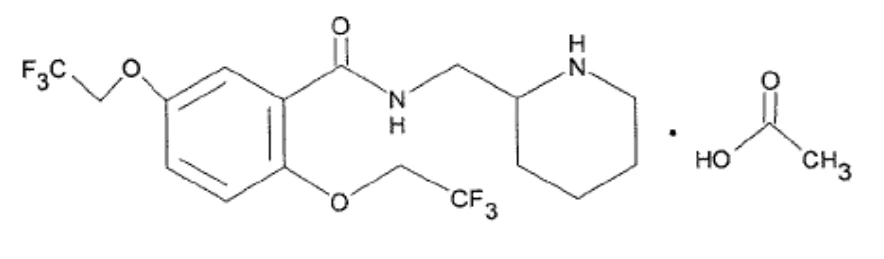
Chemical name(s): Benzamide, N-(2-piperidinylmethyl)-2,5-bis(2,2,2-trifluoro-ethoxy)-, monoacetate;
N-(2-Piperidylmethyl)-2,5-bis(2,2,2-trifluoroethoxy)benzamide monoacetate.
Molecular formula and molecular mass: C17H20F6N2O3 · C2H4O2 474.39 g/mol
Structural formula:
Physicochemical properties:
Description: Flecainide acetate is a white crystalline substance
Solubility: It is soluble in water with an aqueous solubility at 37°C of 48.4 mg/mL.
pKa: 9.3.
14 Clinical Trials
14.2 Comparative Bioavailability Studies
Fasting Study
A single-dose, two-way crossover, single dose (100 mg dose as 1 x 100 mg), comparative oral bioavailability study of APO-FLECAINIDE (Apotex Inc.) and Tambocor® (3M Pharmaceuticals) was conducted in healthy subjects under fasting conditions. Comparative bioavailability data from the 20 subjects that were included in the statistical analysis are presented in the following table:
SUMMARY TABLE OF THE COMPARATIVE BIOAVAILABILITY DATA
Flecainide (1 x 100 mg) Geometric Mean Arithmetic Mean (CV%) | ||||
|---|---|---|---|---|
| Parameter | Test1 | Reference2 | % Ratio of Geometric Means | 95% Confidence Interval |
AUCT (ng·h/mL) | 2216.0 2321.5 (30.3) | 2176.4 2264.1 (25.9) | 101.8 | 96.5 - 107.5 |
AUCI (ng·h/mL) | 2250.0 2359.9 (30.8) | 2208.5 2298.0 (26.1) | 101.9 | 96.4 - 107.6 |
CMAX (ng/mL) | 144.8 148.4 (21.4) | 147.6 151.8 (21.9) | 98.1 | 88.3 - 108.9 |
TMAX3 (h) | 4.0 (1.5 – 6.0) | 3.0 (0.67 – 6.0) | ||
T1/24 (h) | 11.2 (17.6) | 11.0 (17.1) | ||
1 PrAPO-FLECAINIDE (flecainide acetate) tablets, 100 mg (Apotex Inc.) 2 PrTAMBOCOR® (flecainide acetate) tablets, 100 mg (3M Pharmaceuticals) 3 Expressed as the median (range) only 4 Expressed as the arithmetic mean (CV%) only | ||||
Fed Study
A single-dose, two-way crossover, single dose (100 mg dose as 1 x 100 mg), comparative oral bioavailability study of APO-FLECAINIDE (Apotex Inc.) and Tambocor® (3M Pharmaceuticals) was conducted in healthy subjects under fed conditions. Comparative bioavailability data from the 18 subjects that were included in the statistical analysis are presented in the following table:
SUMMARY TABLE OF THE COMPARATIVE BIOAVAILABILITY DATA
Flecainide (1 x 100 mg) Geometric Mean Arithmetic Mean (CV%) | ||||
|---|---|---|---|---|
| Parameter | Test1 | Reference2 | % Ratio of Geometric Means | 95% Confidence Interval |
AUCT (ng·h/mL) | 2446.0 2507.9 (25.4) | 2493.8 2561.7 (24.9) | 98.2 | 93.9 - 102.7 |
AUCI (ng·h/mL) | 2520.7 2597.1 (28.0) | 2566.7 2646.7 (26.8) | 98.3 | 94.0 - 102.8 |
CMAX (ng/mL) | 138.1 139.7 (15.7) | 141.2 142.5 (13.7) | 98.6 | 91.6 - 106.1 |
| TMAX3 | 3.5 | 3.5 | ||
| (h) | (1.0- 6.0) | (1.0 – 5.0) | ||
T1/24 (h) | 13.5 (27.5) | 13.4 (20.4) | ||
1 PrAPO-FLECAINIDE (flecainide acetate) tablets, 100 mg (Apotex Inc.) 2 PrTAMBOCOR® (flecainide acetate) tablets, 100 mg (3M Pharmaceuticals) 3 Expressed as the median (range) only 4 Expressed as the arithmetic mean (CV%) only | ||||
15 Microbiology
No microbiological information is required for this drug product.
16 Non-Clinical Toxicology
General Toxicology
Table 2: Acute Toxicology
| Species | Route | Sex | LD50 (mg/kg) | (95% Confidence Interval) | |||||||||
|---|---|---|---|---|---|---|---|---|---|---|---|---|---|
| mouse | PO | male | 190 | (151-239) | mg/kg | ||||||||
| mouse | IP | male | 79 | (72-86) | mg/kg | ||||||||
| mouse | IV | male | 24 | (23-25) | mg/kg | ||||||||
| rat | PO | male | 498 | (452-549) | mg/kg | ||||||||
| rat | PO | female | 567 | (422-763) | mg/kg | ||||||||
| rat | IV | male | 20 | (17-23) | mg/kg | ||||||||
| rat | IV | female | 23 | (21-25) | mg/kg | ||||||||
| dog | PO | male & female | MLD50 | - | |||||||||
| dog | IV | male & female | MLD20a | - | |||||||||
| cat | PO | male & female | MLD50a | - | |||||||||
a = minimum lethal dose
Primary signs of acute toxicity were hypoactivity, ataxia, tremors, convulsions, prostration, salivation, emesis, apnea, tachypnea and dyspnea.
The studies performed are summarized in Table 3. For all studies, animals in each group were equally divided by sex.
Table 3: Subacute and Chronic Toxicity
| Species | Route of Dosing | Duration of Dosing | Daily Dose (mg/kg) | Number of Animals per Dose Group | Number of Deaths per Dose Group | Toxic Effects | ||||
|---|---|---|---|---|---|---|---|---|---|---|
| Species | Route of Dosing | Duration of Dosing | Daily Dose (mg/kg) | Number of Animals per Dose Group | Number of Deaths per Dose Group | Toxic Effects | ||||
| Rat | IV | 2 weeks | 0 | 20 | 0 | Dose-related ataxia and dyspnea were observed for one to five minutes following dosing at all treatment levels and apnea was observed for 15 to 20 seconds after dosing in the high-dose animals, Four control, three low-, one mid-, and two high-dose rats had focal microscopic inflammatory lesions in the lung consisting of perivascular lymphoid accumulations, foci of histiocytes in alveoli, slightly thickened alveolar walls, and foci of subacute to chronic pneumonia singly or in combination. One low-dose animal had chronic inflammation in the liver. | ||||
| 1 | 20 | 0 | ||||||||
| 5 | 20 | 0 | ||||||||
| 15 | 20 | 5 | ||||||||
| Rat | PO | 3 months | 0 | 20 | 0 | A significant decrease in body weight was observed in the mid and high-dose groups. Foreign body granulomatous pneumonia occurred in all groups (including controls) and small, microscopic foci (infiltration of lymphocytes and macrophages) were found in the myocardium of one control, one low-dose and three mid-dose rats. | ||||
| 20 | 20 | 4 | ||||||||
| 80 | 20 | 4 | ||||||||
| 160 | 20 | 9 | ||||||||
| Rat | PO | 3 months | 0 | 20 | 0 | A significant decrease in body weight gain occurred in the high-dose group. A significant increase in relative heart weights occurred in the males of all three treatment groups | ||||
| and in the high-dose females. The high-dose males also had significantly increased relative liver and adrenal weights. A few small, microscopic foci of chronic inflammation with fibrosis were found in the heart of one high-dose male. | ||||||||||
| 20 | 20 | 0 | ||||||||
| 40 | 20 | 0 | ||||||||
| 80 | 20 | 0 | ||||||||
| Dog | IV | 2 weeks | 0 | 4 | 0 | ECG changes (sinus tachycardia and 140 prolonged atrial and intraventricular conduction times) were noted in the high-dose group. Mild subacute to chronic pyelonephritis and/or mild chronic interstitial nephritis was present in the kidney of two control, one mid-dose and one high-dose dog. | ||||
| 1 | 20 | 0 | ||||||||
| 5 | 20 | 0 | ||||||||
| 15 | 20 | 5 | ||||||||
| Dog | PO | 3 months | 0 | 4 | 0 | ECG changes (prolonged atrial and atrioventricular conduction time, alterations in QRS morphology and "peaking" of the T-wave) were noted in the mid and high-dose groups. One mid-dose female had a small (microscopic) focus of mononuclear inflammatory cells in association with a few necrotic myofibrils in the cardiac papillary muscle. | ||||
| 20 | 20 | 4 | ||||||||
| 80 | 20 | 4 | ||||||||
| 160 | 20 | 9 | ||||||||
| Dog | PO | 18 months | 0 | 8 | 0 | ECG changes (prolongation in the duration of the P wave and the QT interval) were noted in the high-dose group. A group mean body weight loss or failure to gain weight occurred in the mid and high-dose groups during the last six months of the study. The high and mid-dose groups had | ||||
| 5 | 8 | 0 | ||||||||
| 10 | 8 | 0 | ||||||||
| 20 | 8 | 1 | ||||||||
Carcinogenicity
Carcinogenicity studies with flecainide in rats and mice at doses up to 60 mg/kg/day did not reveal any carcinogenic effects.
Mutagenicity studies (Ames test, mouse lymphoma and in vivo cytogenetics) did not reveal any mutagenic effects.
Reproductive and Developmental Toxicology
A rat reproduction study at dose up to 50 mg/kg/day did not reveal any adverse effect on male or female fertility.
No teratogenic effects were found in rats when given flecainide at doses up to 50 mg/kg/day and no teratogenic effects were found in mice when given flecainide at doses up to 80 mg/kg/day. Flecainide
| Species | Route of Dosing | Duration of Dosing | Daily Dose (mg/kg) | Number of Animals per Dose Group | Number of Deaths per Dose Group | Toxic Effects | |||
|---|---|---|---|---|---|---|---|---|---|
increased relative heart weights. One dog in the high-dose group had an increased relative pituitary weight caused by a pituitary cyst. Pulmonary subacute focal inflammation was present in the high and mid-dose groups. Several animals in the mid and high-dose groups had some of the following histologic findings: areas of chronic pneumonia, pneumonitis, increased numbers of macrophages (some of which contained hemosiderin) and condensation of alveolar walls with mild emphysema. | |||||||||
| Baboon | PO | 6 months | 0 | 4 | 0 | In the high-dose group there was a 24% increase in the relative heart weights compared to controls. All treatment groups had a 7-9% increase in relative liver weights compared to controls. Hyperplastic lymphoid follicles in the submucosal of the digestive tract were noted in control and high-dose animals. | |||
| 3 | 4 | 0 | |||||||
| 10 | 4 | 0 | |||||||
| 30 | 4 | 1 | |||||||
has been shown to be teratogenic in one breed of rabbit (New Zealand White). Increased resorption sites were noted at doses of 25, 30, and 35 mg/kg/day. Teratogenic effects (clubbed paws, heart changes, sternebrae and vertebrae abnormalities) were noted at doses of 30 and 35 mg/kg/day. No teratogenic effects were observed in another breed of rabbit (Dutch Belted) at doses up to 30 mg/kg/day.
17 Supporting Product Monographs
- 1. TAMBOCOR® (Flecainide Acetate Tablets, 50 and 100 mg), control 290045, product monograph, Bausch Health, Canada Inc. (2025-05-28)