


Product Monograph - Apo-Levomilnacipran
RECENT MAJOR LABEL CHANGES
Not applicable
TABLE OF CONTENTS
Certain sections or subsections that are not applicable at the time of the preparation of the most recent authorized product monograph are not listed.
RECENT MAJOR LABEL CHANGES ........................................................................................ 2
TABLE OF CONTENTS .......................................................................................................... 2
PART I: HEALTH PROFESSIONAL INFORMATION .................................................................. 4
1 INDICATIONS ............................................................................................................. 4
1.1 Pediatrics ............................................................................................................... 4
1.2 Geriatrics ............................................................................................................... 4
2 CONTRAINDICATIONS ................................................................................................ 4
3 SERIOUS WARNINGS AND PRECAUTIONS BOX ........................................................... 5
4 DOSAGE AND ADMINISTRATION ............................................................................... 5
4.1 Dosing Considerations ........................................................................................... 5
4.2 Recommended Dose and Dosage Adjustment ...................................................... 6
4.4 Administration ....................................................................................................... 7
4.5 Missed Dose .......................................................................................................... 7
5 OVERDOSAGE ............................................................................................................ 7
6 DOSAGE FORMS, STRENGTHS, COMPOSITION AND PACKAGING ............................... 8
7 WARNINGS AND PRECAUTIONS ................................................................................. 9
7.1 Special Populations .............................................................................................. 17
7.1.1 Pregnant Women ................................................................................................ 17
7.1.2 Breast-feeding ..................................................................................................... 18
7.1.3 Pediatrics ............................................................................................................. 18
7.1.4 Geriatrics ............................................................................................................. 18
8 ADVERSE REACTIONS ............................................................................................... 19
8.1 Adverse Reaction Overview ................................................................................. 19
8.2 Clinical Trial Adverse Reactions ........................................................................... 19
8.2.1 Clinical Trial Adverse Reactions - Pediatrics ......................................................... 22
8.3 Less Common Clinical Trial Adverse Reactions .................................................... 22
8.4 Abnormal Laboratory Findings: Hematologic, Clinical Chemistry and Other Quantitative Data ................................................................................................ 24
8.5 Post-Market Adverse Reactions .......................................................................... 24
9 DRUG INTERACTIONS .............................................................................................. 24
9.1 Serious Drug Interactions .................................................................................... 24
9.2 Drug Interactions Overview ................................................................................. 24
9.3 Drug-Behavioural Interactions ............................................................................. 25
9.4 Drug-Drug Interactions ........................................................................................ 25
9.5 Drug-Food Interactions ........................................................................................ 28
9.6 Drug-Herb Interactions ........................................................................................ 28
9.7 Drug-Laboratory Test Interactions ....................................................................... 28
10 CLINICAL PHARMACOLOGY ...................................................................................... 28
10.1 Mechanism of Action ........................................................................................... 28
10.2 Pharmacodynamics ............................................................................................. 29
10.3 Pharmacokinetics ................................................................................................ 30
11 STORAGE, STABILITY AND DISPOSAL........................................................................ 32
12 SPECIAL HANDLING INSTRUCTIONS ......................................................................... 32
PART II: SCIENTIFIC INFORMATION ................................................................................... 33
13 PHARMACEUTICAL INFORMATION .......................................................................... 33
14 CLINICAL TRIALS ...................................................................................................... 33
14.1 Clinical Trials by Indication .................................................................................. 33
Major Depressive Disorder ........................................................................................... 33
14.2 Comparative Bioavailability Studies..................................................................... 37
15 MICROBIOLOGY ....................................................................................................... 38
16 NON-CLINICAL TOXICOLOGY .................................................................................... 38
17 SUPPORTING PRODUCT MONOGRAPHS .................................................................. 42
PATIENT MEDICATION INFORMATION .............................................................................. 43
PART I: HEALTH PROFESSIONAL INFORMATION
1 INDICATIONS
APO-LEVOMILNACIPRAN (levomilnacipran extended release capsules) is indicated for the symptomatic relief of major depressive disorder (MDD).
1.1 Pediatrics
Pediatrics (< 18 years): Based on the data submitted and reviewed by Health Canada, the safety and efficacy of levomilnacipran extended release capsules in pediatric patients has not been established; therefore Health Canada has not authorized an indication for pediatric use. See 3 SERIOUS WARNINGS AND PRECAUTIONS BOX, 7 WARNINGS AND PRECAUTIONS, Potential association with behavioural and emotional changes, including self-harm and 7.1.3 Pediatrics.
1.2 Geriatrics
Caution should be exercised in treating the elderly. Clinical studies of levomilnacipran extended release capsules did not include sufficient numbers of subjects over 65 years of age to determine whether they respond differently from younger subjects. Dose selection for elderly patients should be cautious. See 7.1.4 Geriatrics.
2 CONTRAINDICATIONS
- Hypersensitivity: APO-LEVOMILNACIPRAN is contraindicated in patients who are hypersensitive to levomilnacipran, milnacipran or to any ingredient in the formulation, including any non-medicinal ingredient, or component of the container. For a complete listing, see 6 DOSAGE FORMS, STRENGTHS, COMPOSITION AND PACKAGING.
- Serotonin toxicity and Monoamine Oxidase Inhibitors (MAOIs): APO-LEVOMILNACIPRAN should not be used in combination with MAOIs, including linezolid, an antibiotic, methylene blue, a dye used in certain surgeries, or within two weeks of terminating treatment with MAOIs. Treatment with MAOIs should not be started until 2 weeks after discontinuation of APO-LEVOMILNACIPRAN therapy. Co-administration of MAOIs with selective serotonin reuptake inhibitor (SSRI) or serotonin norepinephrine reuptake inhibitor (SNRI) treatment or with other serotonergic drugs can lead to serious, sometimes fatal, drug interactions. Symptoms include tremor, myoclonus, diaphoresis, nausea, vomiting, flushing, dizziness, hyperthermia with features resembling neuroleptic malignant syndrome, seizures, rigidity, autonomic instability with possible rapid fluctuations of vital signs, and mental status changes that include extreme agitation progressing to delirium and coma. See 4.1 Dosing Considerations, 7 WARNINGS AND PRECAUTIONS, Serotonin toxicity / serotonin syndrome, and 9.4 Drug-Drug Interactions.
Cardiovascular: APO-LEVOMILNACIPRAN should not be used in patients with:
- myocardial infarction or cardiac intervention within the past 12 months
- NYHA Class III or IV congestive heart failure
- uncontrolled tachyarrhythmia
- uncontrolled hypertension
- a history of cerebrovascular accident
3 SERIOUS WARNINGS AND PRECAUTIONS BOX
Serious Warnings and Precautions
Increased risk of self-harm, harm to others, suicidal thinking and behavior with antidepressants use. Closely monitor all antidepressant-treated patients for clinical worsening and for emergence of agitation-type and/or suicidal thoughts and behaviors. See 7 WARNINGS AND PRECAUTIONS, Potential association with behavioural and emotional changes, including self-harm.
4 DOSAGE AND ADMINISTRATION
4.1 Dosing Considerations
Switching to or from Monoamine Oxidase Inhibitor (MAOI) Antidepressants
At least 14 days should elapse between discontinuation of an MAOI intended to treat psychiatric disorders and initiation of therapy with APO-LEVOMILNACIPRAN. Conversely, at least 14 days should be allowed after stopping APO-LEVOMILNACIPRAN before starting an MAOI antidepressant. See 2 CONTRAINDICATIONS and 9.4 Drug-Drug Interactions.
Use of APO-LEVOMILNACIPRAN with Other Drugs that Inhibit Monoamine Oxidase such as Linezolid or Methylene Blue
Do not start APO-LEVOMILNACIPRAN in a patient who is being treated with linezolid or intravenous methylene blue because there is an increased risk of serotonin toxicity. In a patient who requires more urgent treatment of a psychiatric condition, other interventions, including hospitalization, should be considered. See 2 CONTRAINDICATIONS, 9.4 Drug-Drug Interactions and 7 WARNINGS AND PRECAUTIONS, Serotonin toxicity / serotonin syndrome.
In some cases, a patient already receiving APO-LEVOMILNACIPRAN therapy may require urgent treatment with linezolid or intravenous methylene blue. If acceptable alternatives to linezolid or intravenous methylene blue treatment are not available and the potential benefits of linezolid or intravenous methylene blue treatment are judged to outweigh the risks of serotonin syndrome in a particular patient, APO-LEVOMILNACIPRAN should be stopped promptly, and linezolid or intravenous methylene blue can be administered. The patient should be monitored for symptoms of serotonin syndrome for two weeks or until 24 hours after the last dose of linezolid or intravenous methylene blue, whichever comes first. Therapy with APO-
LEVOMILNACIPRAN may be resumed 24 hours after the last dose of linezolid or intravenous methylene blue.
The risk of administering methylene blue by non-intravenous routes (such as oral tablets or by local injection) or in intravenous doses much lower than 1 mg/kg with APO-LEVOMILNACIPRAN is unclear. The clinician should, nevertheless, be aware of the possibility of emergent symptoms of serotonin syndrome with such use. See 7 WARNINGS AND PRECAUTIONS, Serotonin toxicity / serotonin syndrome.
4.2 Recommended Dose and Dosage Adjustment
Initiating Treatment
Adults: The recommended dose range for APO-LEVOMILNACIPRAN is 40 mg to 120 mg once daily. APO-LEVOMILNACIPRAN should be initiated at 20 mg once daily for 2 days and then increased to 40 mg once daily.
In clinical studies, added benefit was not consistently demonstrated for doses greater than 40 mg/day. If the physician, based on clinical judgment, decides a dose increase above 40 mg/day is warranted for an individual patient, the dose may be increased in increments of 40 mg. The maximum recommended dose should not exceed 120 mg/day.
Maintenance/Continuation/Extended Treatment
It is generally agreed that acute episodes of major depressive disorder require several months or longer of sustained pharmacologic therapy. Long-term efficacy of levomilnacipran extended release capsules for up to 26 weeks, following response during 20 weeks of acute, open-label treatment, was established in a placebo-controlled trial.
Physicians choosing to use APO-LEVOMILNACIPRAN should periodically reassess patients to determine the need for continued treatment.
Dosing in Special Populations and Conditions
Hepatic Impairment: No dose adjustment is required in patients with mild, moderate or severe hepatic impairment. See 10.3 Pharmacokinetics.
Renal Impairment: Based on a population pharmacokinetic analysis, no dose adjustment is necessary in patients with mild renal impairment (creatinine clearance of 60 to 89 mL/min). For patients with moderate renal impairment (creatinine clearance of 30 to 59 mL/min), the dose should not exceed 80 mg/day. For patients with more severe renal impairment (creatinine clearance of 15 to 29 mL/min) the dose should not exceed 40 mg/day. See 10.3 Pharmacokinetics. APO-LEVOMILNACIPRAN is not recommended for patients with end stage renal disease.
Geriatric Patients (> 65 years of age): No dose adjustment is required in geriatric patients on the basis of age. See 10.3 Pharmacokinetics.
In a multiple-dose clinical pharmacokinetic study, elderly subjects (> 65 years) had a slightly higher exposure (Cmax by 24% and AUC by 26%) of levomilnacipran than younger subjects (18 to 45 years).
Because levomilnacipran is predominately excreted by the kidney, renal clearance of levomilnacipran should be considered when determining the dose.
Pediatrics (< 18 years of age): Health Canada has not authorized an indication for pediatric use. See 3 SERIOUS WARNINGS AND PRECAUTIONS BOX, 7 WARNINGS AND PRECAUTIONS, Potential association with behavioural and emotional changes, including self-harm and 7.1.3 Pediatrics.
Sex: No dose adjustment is required based on sex. See 10.3 Pharmacokinetics.
Discontinuing Treatment
Discontinuation symptoms have been reported with discontinuation of serotonergic drugs such as levomilnacipran extended release capsules. Gradual dose reduction is recommended, instead of abrupt discontinuation, whenever possible. Monitor patients for these symptoms when discontinuing APO-LEVOMILNACIPRAN. If intolerable symptoms occur following a dose decrease or upon discontinuation of treatment, consider resuming the previously prescribed dose and decreasing the dose at a more gradual rate. See 7 WARNINGS AND PRECAUTIONS, Discontinuation Symptoms.
4.4 Administration
APO-LEVOMILNACIPRAN should be taken at approximately the same time each day. APO-LEVOMILNACIPRAN should be swallowed whole. Do not open, chew or crush the capsule. APO-LEVOMILNACIPRAN can be taken with or without food. See 9.5 Drug-Food Interactions.
4.5 Missed Dose
In the event that a dose is missed, the patient should take the missed dose as soon as they remember. If it is almost time for the next dose, the patient should skip the missed dose and take the next dose at the regular time. The patient should not take two doses of APO-LEVOMILNACIPRAN at the same time.
5 OVERDOSAGE
There is limited clinical experience with levomilnacipran extended release capsules overdose in humans. In clinical trials, cases of ingestions up to 360 mg daily were reported with none being fatal.
No specific antidotes for levomilnacipran extended release capsules are known. In case of an overdose, provide supportive care, including close medical supervision and monitoring. Treatment should consist of those general measures employed in the management of overdosage with any drug. Consider the possibility of multiple drug overdose. Ensure an adequate airway, oxygenation, and ventilation. Monitor cardiac rhythm and vital signs. General supportive and symptomatic measures are also recommended. Gastric lavage with a large-bore orogastric tube with appropriate airway protection, if needed, may be considered. The high volume of distribution of levomilnacipran suggests that dialysis will not be effective in reducing levomilnacipran plasma concentrations.
For the most recent information in the management of a suspected drug overdose, contact your regional poison control centre or Health Canada’s toll-free number, 1-844 POISON-X (1-844-764-7669).
6 DOSAGE FORMS, STRENGTHS, COMPOSITION AND PACKAGING
Table 1 - Dosage Forms, Strengths, Composition and Packaging
| Route of Administration | Dosage Form / Strength / Composition | Non-medicinal Ingredients |
|---|---|---|
| Oral | Extended Release Capsule 20 mg, 40 mg, 80 mg, 120 mg | Ethyl cellulose, hypromellose, iron oxide black, iron oxide red, iron oxide yellow, povidone, sugar spheres, talc, titanium dioxide and triethyl citrate. Pharmaceutical ink: Ammonium hydroxide, iron oxide black, potassium hydroxide, propylene glycol and shellac. |
APO-LEVOMILNACIPRAN is available as capsules for oral administration, containing levomilnacipran hydrochloride equivalent to 20 mg, 40 mg, 80 mg and 120 mg of levomilnacipran.
20 mg: Off white to pale yellow coloured pellets filled in HPMC capsules having opaque yellow cap and opaque white body imprinted 'LEV' on Cap and '20' on Body with Black ink.
40 mg: Off white to pale yellow coloured pellets filled in HPMC capsules having opaque yellow cap and opaque yellow body imprinted 'LEV' on Cap and '40' on Body with Black ink.
80 mg: Off white to pale yellow coloured pellets filled in HPMC capsules having opaque pink cap and opaque white body imprinted 'LEV' on Cap and '80' on Body with Black ink.
120 mg: Off white to pale yellow coloured pellets filled in HPMC capsules having opaque pink cap and opaque pink body imprinted 'LEV' on Cap and '120' on Body with Black ink.
Packaging: APO-LEVOMILNACIPRAN is supplied in the following configurations:
Blister packaging of 30 (3 x 10) tablets, and Bottles of 100 capsules: 20 mg, 40 mg, 80 mg and 120 mg.
7 WARNINGS AND PRECAUTIONS
Discontinuation Symptoms
Patients currently taking APO-LEVOMILNACIPRAN should NOT be discontinued abruptly, due to risk of discontinuation symptoms. At the time that a medical decision is made to discontinue an SSRI or other newer antidepressant drug, a gradual reduction in the dose rather than an abrupt cessation is recommended.
Discontinuation of treatment with APO-LEVOMILNACIPRAN:
There have been reports of adverse events occurring upon discontinuation of serotonergic antidepressants, particularly when discontinuation is abrupt, including the following: dysphoric mood, irritability, agitation, dizziness, sensory disturbances (e.g., paresthesia, such as electric shock sensations), anxiety, confusion, lethargy, emotional lability, insomnia, hypomania, tinnitus, and seizures. While these events are generally self-limiting, there have been reports of serious discontinuation symptoms.
Monitor patients for these symptoms when discontinuing APO-LEVOMILNACIPRAN. Reduce the dose gradually whenever possible. See 4.2 Recommended Dose and Dosage Adjustment, Discontinuing Treatment.
General
Bone Fracture Risk
Epidemiological studies show an increased risk of bone fractures following exposure to some antidepressants, including SSRIs/SNRIs. The risks appear to be greater at the initial stages of treatment, but significant increased risks were also observed at later stages of treatment. The possibility of fracture should be considered in the care of patients treated with levomilnacipran extended release capsules. Elderly patients and patients with important risk factors for bone fractures should be advised of possible adverse events which increase the risk of falls, such as dizziness and orthostatic hypotension, especially at the early stages of treatment but also soon after withdrawal. Preliminary data from observational studies show association of SSRIs/SNRIs and low bone mineral density in older men and women. Until further information becomes available, a possible effect on bone mineral density with long term treatment with SSRIs/SNRIs, including APO-LEVOMILNACIPRAN, cannot be excluded, and may be a potential concern for patients with osteoporosis or major risk factors for bone fractures.
Cardiovascular
Inhibition of the reuptake of norepinephrine (NE) and serotonin (5-HT) can lead to cardiovascular effects. Patients with severe cardiac function impairment or with an identified risk of a serious cardiac arrhythmia, uncontrolled hypertension, or severe or unstable coronary heart disease were excluded from clinical trials with levomilnacipran extended release capsules.
Elevated Blood Pressure and Hypertension
In short-term, placebo-controlled studies in patients with MDD, levomilnacipran extended release capsules (40 mg to 120 mg) was associated with mean increases of 3.0 mmHg in systolic blood pressure (SBP) and 3.2 mmHg in diastolic blood pressure (DBP) after 8 to 10 weeks of treatment, compared to a mean decrease of 0.4 mmHg SBP and no change in DBP in placebo-treated patients. Approximately 10% of levomilnacipran extended release capsules-treated patients experienced a categorical shift in blood pressure from normotensive/prehypertension to Stage I/Stage II hypertension, compared to 7% of placebo-treated patients.
In healthy subjects who had serial blood pressure assessments during steady-state treatment with 120 mg levomilnacipran, the mean difference from placebo in SBP ranged from 3.8 to 7.2 mmHg and the mean difference from placebo in DBP ranged from 6.1 to 8.1 mmHg. See 10.2 Pharmacodynamics.
In patients exposed to one-year, open-label treatment of levomilnacipran extended release capsules (doses from 40 to 120 mg/day), the mean increase from initiation of treatment in SBP was 3.9 mmHg and DBP was 3.3 mmHg. Upward shifts from normal or prehypertension to Stage 1 or 2 hypertension was experienced by 104/800 (13%) of patients.
Sustained Hypertension: Instances of sustained hypertension were more frequent in levomilnacipran extended release capsules-treated patients (see Table 2). Dose-dependency was not evident over the 40 to 120 mg dose range studied. For patients who experience a sustained increase in blood pressure while receiving levomilnacipran extended release capsules, discontinuation or other appropriate medical intervention should be considered.
Table 2 - Incidence of Patients with Sustained Hypertension for All Short-Term Clinical Studies
| Criteria | Placebo | Levomilnacipran extended release capsules (40-120 mg/day) |
|---|---|---|
Systolic Blood Pressure ≥ 140 mmHg and ≥ 15 mmHg above baseline for 3 consecutive visits | 0.2% | 0.8% |
Diastolic Blood Pressure ≥ 90 mmHg and ≥ 10 mmHg above baseline for 3 consecutive visits | 1.1% | 1.4% |
Levomilnacipran extended release capsules was associated with an increase in blood pressure in pediatric patients with MDD. These increases in blood pressure led to a higher proportion of pediatric patients developing new-onset and sustained hypertension when compared to adults. See 7.1.3 Pediatrics.
Concomitant use of levomilnacipran extended release capsules with drugs that increase blood pressure has not been evaluated and such combination should be used with caution. See 9.4 Drug-Drug Interactions.
Blood pressure should be measured prior to initiating treatment and periodically throughout APO-LEVOMILNACIPRAN treatment. See 7 WARNINGS AND PRECAUTIONS. Pre-existing hypertension and other cardiovascular disease should be treated and stabilized before starting therapy with APO-LEVOMILNACIPRAN. Centrally acting antihypertensives (clonidine, methyldopa, etc.) were not permitted in the clinical studies and may interact with levomilnacipran extended release capsules. See 9.4 Drug-Drug Interactions.
Elevated Heart Rate
SNRIs, including levomilnacipran extended release capsules, have been associated with increased heart rate.
In short-term placebo-controlled clinical studies in patients with MDD, with periodic steady-state ECG assessments at unspecified time points in relation to dosing, levomilnacipran extended release capsules treatment was associated with mean increases in heart rate of 7.2 beats per minute (bpm) for 40 mg and 80 mg/day and 9.1 bpm for 120 mg/day, compared to a mean decrease of 0.3 bpm in placebo-treated patients. In patients exposed to one-year, open-label treatment of levomilnacipran extended release capsules (doses from 40 to 120 mg/day), the mean change from initiation of treatment in heart rate was 9.1 bpm.
In an ECG assessment study in healthy subjects, with serial ECG data collection over the course of a dosing interval, levomilnacipran extended release capsules 120 mg/day was associated with a maximum placebo-adjusted increase from baseline in heart rate of 20.2 bpm. See 10.2 Pharmacodynamics.
Concomitant use of levomilnacipran extended release capsules with drugs that increase heart rate has not been evaluated and the possibility of additive effects should be considered. Levomilnacipran extended release capsules has not been systematically evaluated in patients with a cardiac rhythm disorder. Heart rate should be measured prior to initiating treatment and periodically measured throughout APO-LEVOMILNACIPRAN treatment. See 7 WARNINGS AND PRECAUTIONS, Monitoring and Laboratory Tests. Pre-existing tachyarrhythmias and other cardiac disease should be treated before starting therapy with APO-LEVOMILNACIPRAN. Patients with serious or uncontrolled tachyarrhythmias, ischemic heart disease, or congestive heart failure should not receive APO-LEVOMILNACIPRAN. See 2 CONTRAINDICATIONS. For patients who experience an increase in heart rate while receiving APO-LEVOMILNACIPRAN discontinuation or other appropriate medical intervention should be considered.
Dependence/Tolerance
Levomilnacipran extended release capsules has not been systematically studied in animals or humans for its potential for abuse or dependence. There was no evidence suggestive of drug-seeking behavior in the clinical studies. It is not possible to predict on the basis of clinical experience the extent to which a CNS active drug will be misused, diverted, and/or abused once marketed. Consequently, physicians should carefully evaluate patients for a history of drug abuse and follow such patients closely, observing them for signs of misuse or abuse of APO-LEVOMILNACIPRAN (e.g., development of tolerance or drug-seeking behavior).
Driving and Operating Machinery
Caution patients about operating hazardous machinery, including automobiles, until they are reasonably certain that APO-LEVOMILNACIPRAN therapy does not adversely affect their ability to engage in such activities.
Endocrine and Metabolism
Diabetic Patients
Levomilnacipran extended release capsules has not been systematically evaluated in diabetic patients. Insulin use was not permitted in premarket clinical trials. Treatment with antidepressants in patients with diabetes may alter glycemic control (hypoglycemia and hyperglycemia). APO-LEVOMILNACIPRAN should be used with caution in diabetic patients on insulin or other antidiabetic drugs. See 7 WARNINGS AND PRECAUTIONS, Monitoring and Laboratory Tests.
Genitourinary
Urinary Hesitation, Retention and Dysuria
The noradrenergic effect of SNRIs including APO-LEVOMILNACIPRAN, can affect urethral resistance. In the controlled short-term studies, rates of obstructive uropathies were higher in patients treated with levomilnacipran (8%) compared to the placebo arm (1%). Dose dependent increases in urinary hesitation (3.6% in 40 mg/day; 4.9% in 80 mg/day; 6.1% in 120 mg/day) were observed, compared to no patients in the placebo group.
Almost all events of dysuria and urinary hesitation occurred in male patients. Caution is advised in the use of APO-LEVOMILNACIPRAN with concomitant medications that may affect voiding (e.g., anticholinergics) and in patients with a history of obstructive urinary disorders and dysuria, notably in male patients with prostatic hypertrophy, prostatitis, and other lower urinary tract obstructive disorders.
If symptoms of urinary hesitation, urinary retention, or dysuria develop during treatment with APO-LEVOMILNACIPRAN, discontinuation or dose-reduction should be considered.
Hyponatremia
Hyponatremia may occur as a result of treatment with SSRIs and SNRIs. In many cases, hyponatremia appears to be the result of the syndrome of inappropriate antidiuretic hormone secretion (SIADH). Cases with serum sodium lower than 110 mmol/L have been reported. Elderly patients may be at greater risk of developing hyponatremia with SSRIs and SNRIs. Also, patients taking diuretics or who are otherwise volume depleted can be at greater risk. Discontinuation of APO-LEVOMILNACIPRAN in patients with symptomatic hyponatremia and appropriate medical intervention should be instituted. Signs and symptoms of hyponatremia include headache, difficulty concentrating, memory impairment, confusion, weakness, and unsteadiness, which can lead to falls. Signs and symptoms associated with more severe and/or acute cases have included hallucination, syncope, seizure, coma, respiratory arrest, and death.
Hematologic
Abnormal Bleeding
SSRIs and SNRIs, including levomilnacipran extended release capsules, may increase the risk of bleeding events by causing abnormal platelet aggregation. Concomitant use of acetylsalicylic acid (ASA), nonsteroidal anti-inflammatory drugs (NSAIDS), warfarin, and other anticoagulants may add to the risk. Case reports and epidemiological studies (case-control and cohort design) have demonstrated an association between use of drugs that interfere with serotonin reuptake and the occurrence of gastrointestinal bleeding. Bleeding events related to SSRIs and SNRIs have ranged from ecchymoses, hematomas, epistaxis, and petechiae to life-threatening hemorrhages. SSRIs/SNRIs, including levomilnacipran extended release capsules, may increase the risk of postpartum hemorrhage. See 7.1.1 Pregnant Women.
Patients should be cautioned about the risk of bleeding associated with the concomitant use of levomilnacipran extended release capsules and NSAIDs, ASA, or other drugs that affect coagulation. See 9.4 Drug-Drug Interactions. Caution is advised in patients with a history of bleeding disorder or predisposing conditions (e.g., thrombocytopenia).
Monitoring and Laboratory Tests
Self-Harm
Rigorous clinical monitoring for suicidal ideation or other indicators of potential for suicidal behaviour is advised in patients of all ages. This includes monitoring for agitation-type emotional and behavioural changes. See 3 SERIOUS WARNINGS AND PRECAUTIONS BOX and 7 WARNINGS AND PRECAUTIONS, Potential association with behavioural and emotional changes, including self-harm.
Heart Rate and Blood Pressure
Heart rate and blood pressure should be measured prior to initiating treatment with APO-LEVOMILNACIPRAN and periodically throughout treatment. For patients who experience a sustained increase in blood pressure or heart rate while receiving APO-LEVOMILNACIPRAN, discontinuation or other appropriate medical intervention should be considered.
Patients should be told to consult their doctors if they have symptoms associated with acute severe hypertension such as headache (particularly in the back of head/neck when waking up), stronger heartbeat and possibly more rapid, palpitations, dizziness, easy fatigability, blurred vision, chest pain. See 7 WARNINGS AND PRECAUTIONS, Cardiovascular.
Serum Cholesterol
Clinically relevant increases in total serum cholesterol were recorded in 5% of patients receiving 40 to 120 mg/day of levomilnacipran extended release capsules in short-term clinical trials, and in 7% of patients exposed to one-year, open-label treatment (doses from 40 to 120 mg/day). Periodic measurement of serum cholesterol levels (including a complete lipid profile/fractionation and an assessment of the patient’s individual risk factors) should be considered.
Serum Glucose
Cases of altered glycemic control and new onset diabetes mellitus have been reported in patients receiving antidepressants, including levomilnacipran extended release capsules. Patients should be monitored for signs and symptoms of glucose fluctuations. Diabetic patients especially should have their glycaemia carefully monitored.
Neurologic
Seizures
Levomilnacipran extended release capsules has not been systematically evaluated in patients with a seizure disorder. These patients were excluded from clinical studies. One case of encephalopathy and convulsion was reported in clinical studies with levomilnacipran extended release capsules. Like other antidepressants, APO-LEVOMILNACIPRAN should be prescribed with caution in patients with a seizure disorder.
Serotonin toxicity / serotonin syndrome
Serotonin toxicity also known as serotonin syndrome is a potentially life-threatening condition and has been reported with SSRIs and SNRIs, including levomilnacipran extended release capsules, particularly during combined use with other serotonergic drugs. See 2 CONTRAINDICATIONS, 9.4 Drug-Drug Interactions.
Serotonin toxicity is characterised by neuromuscular excitation, autonomic stimulation (e.g. tachycardia, flushing) and altered mental state (e.g. anxiety, agitation, hypomania). In accordance with the Hunter Criteria, serotonin toxicity diagnosis is likely when, in the presence of at least one serotonergic agent, one of the following is observed:
- Spontaneous clonus
- Inducible clonus or ocular clonus with agitation or diaphoresis
- Tremor and hyperreflexia
- Hypertonia and body temperature >38°C and ocular clonus or inducible clonus.
The concomitant use of APO-LEVOMILNACIPRAN with serotonin precursors (such as tryptophan) is not recommended. See 9.4 Drug-Drug Interactions. If concomitant treatment with APO-LEVOMILNACIPRAN and other serotonergic agents, including a 5-
hydroxytryptamine receptor agonist (triptan), is clinically warranted, careful observation of the patient is advised, particularly during treatment initiation and dose increases. See 9.4 Drug-Drug Interactions. If serotonin toxicity is suspected, discontinuation of the serotonergic agents should be considered.
The concomitant use of APO-LEVOMILNACIPRAN with MAOIs intended to treat psychiatric disorders is contraindicated. APO-LEVOMILNACIPRAN capsules should also not be started in a patient who is being treated with MAOIs such as linezolid or intravenous methylene blue. All reports with methylene blue that provided information on the route of administration involved intravenous administration in the dose range of 1 mg/kg to 8 mg/kg. No reports involved the administration of methylene blue by other routes (such as oral tablets or local tissue injection) or at lower doses. There may be circumstances when it is necessary to initiate treatment with a MAOI such as linezolid or intravenous methylene blue in a patient taking levomilnacipran extended release capsules. APO-LEVOMILNACIPRAN should be discontinued before initiating treatment with the MAOI. See 2 CONTRAINDICATIONS, 9.4 Drug-Drug Interactions, and 4.1 Dosing Considerations.
Ophthalmologic
Angle-Closure Glaucoma
As with other antidepressants, levomilnacipran extended release capsules can cause mydriasis which may trigger an angle-closure attack in patients with anatomically narrow ocular angles. Healthcare providers should inform patients to seek immediate medical assistance if they experience eye pain, changes in vision or swelling or redness in or around the eye.
Psychiatric
Potential Association with Behavioural and Emotional Changes, Including Self-Harm
- Pediatrics: Placebo-Controlled Clinical Trial Data
Recent analyses of placebo-controlled clinical trial safety databases from selective serotonin reuptake inhibitors (SSRIs) and other newer antidepressants suggest that use of these drugs in patients under the age of 18 may be associated with behavioural and emotional changes, including an increased risk of suicidal ideation and behaviour over that of placebo.
The small denominators in the clinical trials database, as well as the variability in placebo rates, preclude reliable conclusions on the relative safety profiles among these drugs.
- Adults and Pediatrics: Additional Data
There are clinical trial and post-marketing reports with SSRIs and other newer antidepressants, in both pediatrics and adults, of severe agitation-type adverse events coupled with self-harm or harm to others. The agitation-type events include: akathisia, agitation, disinhibition, emotional lability, hostility, aggression, depersonalization. In some cases, the events occurred within several weeks of starting treatment.
Rigorous clinical monitoring for suicidal ideation or other indicators of potential for suicidal behaviour is advised in patients of all ages. This includes monitoring for agitation-type emotional and behavioural changes.
An FDA meta-analysis of placebo-controlled clinical trials of antidepressant drugs in adult patients aged 18 to 24 years with psychiatric disorder showed an increased risk of suicidal behaviour with antidepressants compared to placebo.
Patients, their families, and their caregivers should be encouraged to be alert to the emergence of anxiety, agitation, panic attacks, insomnia, irritability, hostility, aggressiveness, impulsivity, akathisia (psychomotor restlessness), hypomania, mania, other unusual changes in behaviour, worsening of depression, and suicidal ideation, especially when initiating therapy or during any change in dose or dosage regimen. The risk of suicide attempt must be considered, especially in depressed patients.
Suicide
The possibility of a suicide attempt in seriously depressed patients is inherent to the illness and may persist until significant remission occurs. Close supervision of patients should accompany initial drug therapy, and consideration should be given to the need for hospitalization of high-risk patients.
The risk of suicide attempt must be considered, especially in depressed patients; the smallest quantity of drug, consistent with good patient management, should be provided to reduce the risk of overdose with this drug. See 3 SERIOUS WARNINGS AND PRECAUTIONS BOX and 7 WARNINGS AND PRECAUTIONS, Potential association with behavioural and emotional changes, including self-harm.
Activation of Mania/Hypomania
Symptoms of mania/hypomania were reported in 0.2% of levomilnacipran extended release capsules-treated patients and 0.2% of placebo-treated patients in clinical studies. Activation of mania/hypomania has also been reported in a small proportion of patients with mood disorders who were treated with other antidepressants. As with all antidepressants, use APO-LEVOMILNACIPRAN cautiously in patients with a history or family history of bipolar disorder, mania, or hypomania.
A major depressive episode may be the initial presentation of bipolar disorder. Patients with bipolar disorder may be at an increased risk of experiencing manic episodes when treated with antidepressants alone. Therefore, the decision to initiate symptomatic treatment of depression should be made only after patients have been adequately assessed to determine if they are at risk for bipolar disorder. It should be noted that APO-LEVOMILNACIPRAN is not approved for use in treating bipolar depression.
Renal
For patients with moderate to severe renal impairment, the pharmacokinetic disposition of levomilnacipran is significantly altered. Dosage adjustment is necessary in these patients. See 4.2 Recommended Dose and Dosage Adjustment, Dosing in Special Populations and Conditions.
Reproductive Health: Female and Male Potential
- Function
Serotonin-norepinephrine reuptake inhibitors (SNRIs) may cause symptoms of sexual dysfunction (see 8.2 Clinical Trial Adverse Reactions, Sexual Function). Patients should be informed that there have been reports of long-lasting sexual dysfunction where the symptoms have continued despite discontinuation of SSRIs/SNRIs. It is important for prescribers to inquire about sexual function prior to initiation of levomilnacipran extended release capsules and to inquire specifically about changes in sexual function during treatment, because sexual function may not be spontaneously reported.
7.1 Special Populations
7.1.1 Pregnant Women
There are no adequate and well-controlled studies in pregnant women. In pre-market clinical studies, serious adverse events were reported in two pregnant women exposed to levomilnacipran extended release capsules (one premature birth and one preeclampsia) out of 6 confirmed pregnancies with adequate follow-up. The causal relationship between levomilnacipran extended release capsules and the emergence of these events has not been established. APO-LEVOMILNACIPRAN should be used during pregnancy only if the potential benefit justifies the potential risk to the fetus.
Complications following late third trimester exposure to SNRIs
Observational data have provided evidence of an increased risk (less than 2-fold) of postpartum hemorrhage following SSRI/SNRI exposure within the month prior to birth. See 7 WARNINGS AND PRECAUTIONS, Hematologic.
Neonates exposed to SSRIs or SNRIs, late in the third trimester have developed complications requiring prolonged hospitalization, respiratory support, and tube feeding. Such complications can arise immediately upon delivery. Reported clinical findings have included respiratory distress, cyanosis, apnea, seizures, temperature instability, feeding difficulty, vomiting, hypoglycemia, hypotonia, hypertonia, hyperreflexia, tremor, jitteriness, irritability and constant crying. These features are consistent with either a direct toxic effect of these classes of drugs or, possibly, a drug discontinuation syndrome. It should be noted that, in some cases, the clinical picture is consistent with serotonin syndrome. See 7 WARNINGS AND PRECAUTIONS, Serotonin toxicity / serotonin syndrome.
Labour and Delivery
The effect of levomilnacipran extended release capsules on labour and delivery in humans is unknown. APO-LEVOMILNACIPRAN should be used during labour and delivery only if the potential benefits outweigh the potential risks.
7.1.2 Breast-feeding
There are no adequate and well-controlled studies in nursing mothers. It is not known if levomilnacipran is excreted in human milk. Studies have shown that levomilnacipran is excreted into the milk of lactating rats. Because many drugs are excreted in human milk and because of the potential for serious adverse reactions in nursing infants from levomilnacipran extended release capsules, a decision should be made whether to discontinue the drug, taking into account the importance of the drug to the mother. Breast feeding by women treated with APO-LEVOMILNACIPRAN should be considered only if the potential benefits outweigh the potential risks to the child.
7.1.3 Pediatrics
Pediatrics (< 18 years): Based on data submitted and reviewed by Health Canada, the safety and efficacy of levomilnacipran extended release capsules in pediatric patients has not been established; therefore Health Canada has not authorized an indication for pediatric use.
Levomilnacipran extended release capsules was not superior to placebo in two adequate and well-controlled 8-week studies conducted in pediatric Major Depressive Disorder patients; one in patients 7 to 17 years and the second in patients 12 to 17 years.
The most commonly observed adverse reactions with levomilnacipran extended release capsules-treated pediatric MDD patients were nausea, tachycardia, vomiting and decreased appetite. See 8.2.1 Clinical Trial Adverse Reactions - Pediatrics.
In these studies, treatment with levomilnacipran extended release capsules was associated with the occurrence of new-onset hypertension (two systolic and/or diastolic BP measurements in the stage I hypertension range and/or one measurement in the stage II range) in 36.2% of treated patients compared with 20.7% of patients randomized to placebo. Elevations in either systolic or diastolic BP leading to measures at or above the stage II hypertension threshold occurred in 12.1% of pediatric patients treated with levomilnacipran extended release capsules and 7.5% of patients randomized to placebo. Sustained hypertension (three or more consecutive systolic or diastolic BP measurements at or above the stage I hypertension threshold) occurred in 15% of pediatric patients treated with levomilnacipran extended release capsules and 4 % of patients randomized to placebo.
Antidepressants may increase the risk of suicidal thoughts and behaviours in pediatric patients. See 3 SERIOUS WARNINGS AND PRECAUTIONS BOX and 7 WARNINGS AND PRECAUTIONS, Potential association with behavioural and emotional changes, including self-harm.
7.1.4 Geriatrics
Of the total number of levomilnacipran extended release capsules-treated subjects in the short-term clinical studies, only 2.8% of patients were 65 or older.
SSRIs and SNRIs, have been associated with cases of clinically significant hyponatremia in elderly patients, who may be at greater risk for this adverse event. See 7 WARNINGS AND PRECAUTIONS, Hyponatremia and 10.3 Pharmacokinetics.
8 ADVERSE REACTIONS
8.1 Adverse Reaction Overview
The safety of levomilnacipran extended release capsules was evaluated in 3317 patients (18 to 78 years of age) diagnosed with MDD who participated in clinical studies. Among the 3317 levomilnacipran extended release capsules-treated patients, 1,583 were exposed to levomilnacipran extended release capsules in short-term, placebo-controlled studies.
A total of 895 patients were exposed to levomilnacipran extended release capsules for at least 6 months and 367 were exposed for one year. In these studies, levomilnacipran extended release capsules was given at doses ranging from 40 to 120 mg once daily and was given without regard to food.
The most commonly observed adverse events in levomilnacipran extended release capsules -treated MDD patients in placebo-controlled studies (incidence ≥ 5% and at least twice the rate of placebo) were: nausea, heart rate increased, erectile dysfunction, hyperhidrosis, constipation, tachycardia, vomiting, and palpitations.
Adverse Events Reported as Reasons for Discontinuation of Treatment
In the short-term placebo-controlled pre-marketing studies for MDD, 9% of the 1,583 patients who received levomilnacipran extended release capsules (40 to 120 mg) discontinued treatment due to an adverse event, compared with 3% of the 1,040 placebo-treated patients in those studies. The most common adverse event leading to discontinuation in at least 1% of levomilnacipran extended release capsules-treated patients in the short-term placebo-controlled studies was nausea (1.5%).
Blood Pressure and Heart Rate
In placebo-controlled clinical studies for change from baseline to endpoint, levomilnacipran extended release capsules treatment was associated with mean increases in blood pressure and heart rate. See 7 WARNINGS AND PRECAUTIONS, Cardiovascular. The most commonly reported cardiovascular adverse events among levomilnacipran extended release capsules-treated patients in the short-term clinical studies included heart rate increased, tachycardia, palpitations, hypertension, hypotension, and blood pressure increased (see Table 3).
8.2 Clinical Trial Adverse Reactions
Clinical trials are conducted under very specific conditions. The adverse reaction rates observed in the clinical trials; therefore, may not reflect the rates observed in practice and should not be compared to the rates in the clinical trials of another drug. Adverse reaction information from clinical trials may be useful in identifying and approximating rates of adverse drug reactions in real-world use.
Table 3 shows the incidence of adverse events that occurred in ≥ 2% of levomilnacipran extended release capsules-treated MDD patients (and greater than placebo-treated patients) in the short-term, placebo-controlled studies.
Table 3 - Adverse Events Occurring in ≥ 2% of levomilnacipran extended release capsules-Treated Patients and Greater than Placebo Treated Patients in Five, Short-term, Phase 3 Placebo-Controlled Studies
Levomilnacipran extended release capsules 40-120 mg/day N = 1583 (%) | Placebo N = 1040 (%) | |||
|---|---|---|---|---|
Levomilnacipran extended release capsules 40-120 mg/day N = 1583 (%) | Placebo N = 1040 (%) | |||
Gastrointestinal disorders Nausea Dry mouth Constipation Vomiting Abdominal Pain | 17 10 9 5 5 | 6 7 3 1 3 | ||
Nervous system disorders Headachea Dizziness | 17 8 | 14 5 | ||
Skin and subcutaneous tissue disorders Hyperhidrosis Rash | 9 2 | 2 <1 | ||
Cardiac disorders Tachycardiaa Palpitations | 6 5 | 2 1 | ||
Reproductive system and breast disordersb Erectile dysfunctionb Testicular painb Ejaculation disorderb | 6 4 5 | 1 <1 <1 | ||
Investigations Heart rate increaseda Blood pressure increaseda | 6 3 | 1 1 | ||
Psychiatric disorders Insomniaa Anxiety | 6 2 | 4 1 | ||
Infections and infestations Upper respiratory tract infectiona Nasopharyngitis | 5 4 | 4 3 | ||
Renal and urinary disorders Urinary hesitation | 4 | 0 | ||
Vascular disorders Hot flush Hypertensiona Hypotension | 3 3 3 | 1 1 1 | ||
Metabolism and nutrition disorders Decreased appetite | 3 | 1 | ||
a Similar adverse event terms were grouped together b Percentage is relative to the number of patients in the associated demographic sex category. N = number of patients in the Safety Population | ||||
Dose-Related Adverse Events
In pooled data from the short-term placebo-controlled fixed-dose studies, there were no dose-related adverse events (greater than 2% overall incidence) in patients treated with levomilnacipran extended release capsules across the dose range 40 to 120 mg/day, with the exception of erectile dysfunction and urinary hesitation (see Table 4).
Table 4 - Dose-Related Adverse Events in Two Fixed-Dose, Phase 3, Placebo-Controlled Studies
| Levomilnacipran extended release capsules | Placebo N = 362 (%) | ||||||||
|---|---|---|---|---|---|---|---|---|---|
40 mg/day N = 366 (%) | 80 mg/day N = 367 (%) | 120 mg/day N = 180 (%) | |||||||
| Urinary hesitation | 4 | 5 | 6 | 0 | |||||
| Erectile dysfunctiona | 6 | 8 | 10 | 2 | |||||
a Percentage is relative to the number of patients in the associated demographic sex category. N = number of patients in the Safety Population | |||||||||
Sexual Function
While sexual dysfunction is often part of depression and other psychiatric disorders, there is increasing evidence that treatment with selective serotonin reuptake inhibitors (SSRIs) and selective serotonin and norepinephrine-reuptake inhibitors (SNRIs) may induce sexual side effects. This is a difficult area to study because patients may not spontaneously report symptoms of this nature.
Table 5 shows the incidence of adverse events associated with sexual dysfunction in levomilnacipran extended release capsules-treated patients in placebo controlled short-term studies.
Table 5 - Adverse Events Associated With Sexual Dysfunction by Sex in Five, Short-term
Phase 3 Placebo-Controlled Studies
| Male | Female | |||||||||
|---|---|---|---|---|---|---|---|---|---|---|
| Preferred Terma | Levomilnacipran extended release capsules 40-120 mg/day N = 577 (%) | Placebo N = 374 (%) | Levomilnacipran extended release capsules 40-120 mg/day N = 1006 (%) | Placebo N = 666 (%) | ||||||
| Erectile dysfunction | 6 | 1 | — | — | ||||||
| Ejaculation disorder | 5 | <1 | — | — | ||||||
| Testicular pain | 4 | <1 | — | — | ||||||
| Libido disorder | 2 | 0 | <1 | <1 | ||||||
| Orgasm abnormal | 1 | 0 | <1 | <1 | ||||||
| Sexual dysfunction | 1 | 0 | <1 | 0 | ||||||
| Disturbance in sexual arousal | <1 | 0 | 0 | 0 | ||||||
a similar adverse event terms were grouped together N = number of patients in the Safety Population | ||||||||||
8.2.1 Clinical Trial Adverse Reactions - Pediatrics
Pediatrics (<18 years): Based on the data submitted and reviewed by Health Canada, the safety and efficacy of levomilnacipran extended release capsules in pediatric patients has not been established; therefore Health Canada has not authorized an indication for pediatric use.
Two adequate and well-controlled 8-week studies were conducted in pediatric MDD patients, one in patients 7 to 17 years and the second in patients 12 to 17 years. Both studies did not meet both primary and secondary endpoints.
The most commonly observed adverse reactions with levomilnacipran extended release capsules-treated pediatric MDD patients were nausea, tachycardia, vomiting and decreased appetite.
Levomilnacipran extended release capsules was associated with an increase in blood pressure in pediatric patients with MDD. These increases in blood pressure led to a higher proportion of pediatric patients developing new-onset and sustained hypertension when compared to adults. See 7.1.3 Pediatrics.
8.3 Less Common Clinical Trial Adverse Reactions
The following listing does not include reactions: 1) already listed in previous tables or elsewhere in labeling, 2) for which a drug cause was remote, 3) which were so general as to be uninformative, 4) which were not considered to have significant clinical implications, or 5) which occurred at a rate equal to or less than placebo.
Reactions are categorized by body system according to the following definitions: frequent adverse reactions are those occurring in at least 1/100 patients; infrequent adverse reactions are those occurring in 1/100 to 1/1000 patients; rare reactions are those occurring in fewer than 1/1000 patients:
Cardiac disorders: frequent: postural orthostatic tachycardia syndrome; infrequent: angina pectoris; supraventricular and ventricular extrasystoles
Eye disorders: infrequent: dry eye; mydriasis; vision blurred; rare: conjunctival hemorrhage
General disorders and administration site conditions: infrequent: chest pain; thirst; rare: drug withdrawal syndrome
Gastrointestinal disorders: frequent: flatulence; infrequent: hematochezia
Injury, poisoning and procedural complications: infrequent: ankle fracture; contusion; hand fracture; joint dislocation; joint injury; laceration; limb injury; post-traumatic neck syndrome; radius fracture; skeletal injury
Investigations: frequent: weight decreased; infrequent: blood cholesterol increased; liver function test abnormal
Nervous System disorders: frequent: migraine; paraesthesia; infrequent: syncope; rare: convulsion; extrapyramidal disorder
Psychiatric disorders: infrequent: agitation; anger; bruxism; worsening of depression; hypomania; panic attack; suicidality (including ideation, behavior, attempt); tension; rare: aggression; self-injurious behavior; mania
Renal and urinary disorder: frequent: dysuria; pollakiuria; urinary retention; infrequent: hematuria; rare: proteinuria
Reproductive system and breast disorders: rare: postmenopausal hemorrhage
Respiratory, thoracic and mediastinal disorders: infrequent: epistaxis; yawning
Skin and subcutaneous tissue disorders: frequent: rash; infrequent: dry skin; pruritus; urticaria; increased tendency to bruise
Vascular disorders: frequent: orthostatic hypotension; infrequent: hypotension; rare: orthostatic hypertension
Weight
In short-term clinical studies, levomilnacipran extended release capsules-treated patients experienced a mean weight loss of 0.59 kg compared to a gain of 0.02 kg for placebo-treated patients. The proportion of patients with a weight gain > 7% was 0.6% in the levomilnacipran extended release capsules group and 0.9% in the placebo group. No dose-related weight changes were observed. Results from a one-year open-label study were consistent with the findings from the placebo-controlled studies.
8.4 Abnormal Laboratory Findings: Hematologic, Clinical Chemistry and Other Quantitative Data
Clinical Trial Findings
Slight elevations of liver enzyme levels (ALT, AST, and ALP) were noted among levomilnacipran extended release capsules-treated patients in clinical studies. Mean increases (U/L) across all studies ranged from 2.1 to 2.7 for ALT, from 1.1 to 2.3 for AST, and from 1.9 to 3.6 for ALP. Few levomilnacipran extended release capsules-treated patients experienced potentially clinically significant (PCS) criteria for ALT (0.7%), compared to placebo (0.1%). While a few patients were discontinued due to changes in liver function parameters, other patients with elevations continued on levomilnacipran extended release capsules with enzyme levels returning to normal during on-going treatment. No patient had concurrent PCS elevations in ALT or AST and total bilirubin.
8.5 Post-Market Adverse Reactions
Cases of acute pancreatitis have been reported with SSRIs and SNRIs, including levomilnacipran. Although causality could not be established due to confounding factors, a role for levomilnacipran could not be excluded.
The following adverse reaction has been identified during post-approval use of levomilnacipran extended release capsules or other selective serotonin and norepinephrine reuptake inhibitors. Because these reactions are reported voluntarily from a population of uncertain size, it is not always possible to reliably estimate their frequency or establish a causal relationship to drug exposure.
Cardiac disorders: Takotsubo cardiomyopathy
9 DRUG INTERACTIONS
9.1 Serious Drug Interactions
Serious Drug Interactions
- Monoamine Oxidase Inhibitors (MAOIs): See 2 CONTRAINDICATIONS and 9.4 Drug-Drug Interactions- Monoamine Oxidase Inhibitors (MAOIs)
9.2 Drug Interactions Overview
In vitro and in vivo studies showed that levomilnacipran extended release capsules has low potential to be involved in clinically significant pharmacokinetic drug interactions.
9.3 Drug-Behavioural Interactions
Alcohol
As with other psychotropic medications, the use of alcohol by patients taking APO-LEVOMILNACIPRAN is not recommended.
9.4 Drug-Drug Interactions
Monoamine Oxidase Inhibitors (MAOIs)
APO-LEVOMILNACIPRAN is contraindicated in patients taking MAOIs, or within at least 14 days of discontinuation. See 2 CONTRAINDICATIONS, 7 WARNINGS AND PRECAUTIONS, Serotonin toxicity / serotonin syndrome and 4.1 Dosing Considerations.
Serotonergic Drugs
Based on the known mechanism of action of levomilnacipran and the potential for serotonin toxicity, also known as serotonin syndrome, caution is advised when APO-LEVOMILNACIPRAN is coadministered with other drugs that may affect the serotonergic neurotransmitter systems (e.g., SSRIs, SNRIs, tryptophan, triptans, fentanyl and its analogues, dextromethorphan, tramadol, tapentadol, meperidine, methadone and pentazocine). See 7 WARNINGS AND PRECAUTIONS, Serotonin toxicity / serotonin syndrome.
Drug that Increase Heart Rate and/or Blood Pressure
Levomilnacipran extended release capsules increase heart rate and blood pressure. Levomilnacipran extended release capsules may exacerbate the hemodynamic effects of other drugs that also increase heart rate and/or blood pressure (e.g., sympathomimetics).
Central Nervous System (CNS) Active Agents
The risk of using levomilnacipran extended release capsules in combination with other CNS-active drugs has not been systematically evaluated. Consequently, caution is advised when APO-LEVOMILNACIPRAN is prescribed in combination with other CNS-active drugs.
Drugs Affecting Platelet Function (e.g., NSAIDS, ASA and other anticoagulants)
Serotonin release by platelets plays an important role in hemostasis. Epidemiological studies of the case-control and cohort design have demonstrated an association between use of psychotropic drugs that interfere with serotonin reuptake and the occurrence of upper gastrointestinal bleeding have also shown that concurrent use of an NSAID, ASA or other anticoagulants may potentiate this risk of bleeding. Altered anticoagulant effects, including increased bleeding, have been reported when SSRIs and SNRIs are co-administered with warfarin. Patients receiving warfarin therapy should be carefully monitored when APO-
LEVOMILNACIPRAN is initiated or discontinued. See 7 WARNINGS AND PRECAUTIONS, Hematologic.
Potential for Other Drugs to Affect APO-LEVOMILNACIPRAN
Table 6 - Summary of Effect of Co-administered Drugs on Exposure to Levomilnacipran
| Co-administered drug | Source of Evidence | Effect | Clinical comment |
|---|---|---|---|
| Co-administered drug | Source of Evidence | Effect | Clinical comment |
| Ketoconazole (potent CYP3A4 inhibitor) | CT | Increased levomilnacipran plasma exposure (Cmax by 39% and AUC by 57%) | Concomitant use of APO-LEVOMILNACIPRAN with potent inhibitors of CYP3A4 may result in higher concentrations of levomilnacipran extended release capsules. |
| Carbamazepine (CYP3A4 inducer) | CT | Reduced levomilnacipran plasma exposure (Cmax by 26% and AUC by 29%) | No dosing adjustment is recommended when APO-LEVOMILNACIPRAN is co-administered with inducers of CYP3A4. |
| Alprazolam (substrate of CYP3A4) | CT | No significant effect on levomilnacipran plasma exposure | No dosing adjustment is recommended when APO-LEVOMILNACIPRAN is co-administered with substrates of CYP3A4. |
| Inhibitors of CYP2C8, CYP2C19, CYP2D6 and CYP2J2 | In vitro | Not expected to significantly alter plasma concentrations of levomilnacipran | In vitro studies have shown that these isoenzymes have minimal contributions to metabolism of levomilnacipran. |
| Alcohol | In vitro | Increased release of levomilnacipran at 2 hours by approximately 9.5%. 23 % and 56% in the | No in vivo study has been conducted for the effect of alcohol on drug exposure. |
| presence of 5%, 20% and 40% (v/v) alcohol respectively. Effect of 40% alcohol resulted in nearly complete drug release in 4 hours rather than a controlled release over 24 hours. | Concomitant use of APO-LEVOMILNACIPRAN and alcohol is not recommended. | ||
| Legend: CT = Clinical Trial | |||
Potential for APO-LEVOMILNACIPRAN to Affect Other Drugs
Table 7 - Summary of Effect of Levomilnacipran extended release capsules on Exposure to Co-administered Drugs
| Co-administered drug | Source of Evidence | Effect | Clinical comment |
|---|---|---|---|
| Co-administered drug | Source of Evidence | Effect | Clinical comment |
| Alprazolam, carbamazepine (substrates of CYP3A4) | in vitro | Levomilnacipran slightly inhibits CYP3A4 | No dosing adjustment recommended |
| CT | No significant effect on alprazolam or carbamazepine exposure | ||
| Substrates of CYP2C9 | In vitro | Levomilnacipran slightly inhibits CYP2C9 | No dosing adjustment is recommended when APO-LEVOMILNACIPRAN is co-administered with substrates of CYP2C9. |
| Substrates of CYP1A2, CYP2A6, CYP2C8, CYP2C19, CYP2D6, and CYP2E1 | In vitro | No significant effect | No dosing adjustment is recommended when APO-LEVOMILNACIPRAN is co-administered with substrates of CYP1A2, CYP2A6, CYP2C8, CYP2C19, CYP2D6 or CYP2E1. |
| Membrane Transporters | In vitro | No significant effect | In vitro evaluations indicated that levomilnacipran does not significantly interact with P-glycoprotein, BCRP, OATP1B1, OATP1B3, OAT1, OAT3 or OCT2. |
| Drugs Highly Bound to Plasma Protein | T | Interaction unlikely | Because levomilnacipran has low protein binding (22%), it is unlikely to interact with highly protein bound drugs. |
| Legend: CT = Clinical Trial; T = Theoretical | |||
9.5 Drug-Food Interactions
Food has no clinically meaningful effect on the bioavailability of levomilnacipran. APO-LEVOMILNACIPRAN may be taken with or without food. However, tolerability was improved when taken with food particularly with respect to gastrointestinal adverse events (vomiting and nausea were markedly reduced).
9.6 Drug-Herb Interactions
In common with other SSRIs and SNRIs, pharmacodynamic interactions between levomilnacipran extended release capsules and the herbal remedy St. John’s Wort may occur and may result in an increase in undesirable effects. Interactions with other herbs have not been established.
9.7 Drug-Laboratory Test Interactions
Interactions with laboratory tests have not been established.
10 CLINICAL PHARMACOLOGY
10.1 Mechanism of Action
Levomilnacipran is a potent and selective serotonin and norepinephrine reuptake inhibitor (SNRI). The exact mechanism of the antidepressant effect of levomilnacipran is unknown but is thought to be related to the potentiation of these neurotransmitters in the central nervous system.
10.2 Pharmacodynamics
Nonclinical studies have shown that levomilnacipran binds with high affinity to the norepinephrine (NE) and serotonin (5-HT) transporters (Ki = 71 to 91 nM and 11 nM respectively at human transporters). Levomilnacipran inhibits the uptake of both NE and 5-HT in vitro and in vivo; preferentially inhibiting reuptake of NE over 5-HT by approximately 2-fold. Levomilnacipran does not directly affect the uptake of dopamine or other neurotransmitters.
Levomilnacipran has no significant affinity for serotonergic (5-HT1 to 7), α- and β-adrenergic, muscarinic (M1 to 5), histamine (H1 to 4), dopamine (D1 to 5), opiate, benzodiazepine, and γ-aminobutyric acid (GABA) receptors in vitro.
Levomilnacipran has no significant affinity for Ca++, K+, Na+ and Cl– channels and does not inhibit the activity of human monoamine oxidases (MAO-A and MAO-B) or acetylcholinesterase.
Cardiac Electrophysiology and Hemodynamics
Levomilnacipran at 120 mg daily (maximum therapeutic dose) and 300 mg daily (supratherapeutic dose) was evaluated in a randomized, placebo-, and active-controlled (moxifloxacin 400 mg), parallel group, thorough ECG study in 170 healthy subjects. Subjects randomized to levomilnacipran treatment received escalating once-daily doses on Day 1 to Day 24. Serial ECG data were collected on Day -2 (baseline), Day 11 (120 mg dose) and Day 24 (300 mg dose) at predose, and 1, 2, 3, 4, 6, 8, 12, 16, 20, and 23 hours postdose.
No clinically significant changes in QTcF interval (QTcF = QT/RR0.33) were noted in this study.
Levomilnacipran caused an increase in heart rate. The mean change from baseline in heart rate in the levomilnacipran treatment group on Day 11 (120 mg dose) was significantly greater than the placebo group at multiple timepoints, ranging from 15 to 20 bpm with a maximum mean difference from placebo of 20.2 bpm (90% CI 18.0, 22.4) at 6 h. The effect was somewhat greater in the levomilnacipran treatment group on Day 24 (300 mg dose), with mean differences in heart rate ranging from 19 to 22 bpm with a maximum mean difference from placebo of 22.1 bpm (90% CI 19.8, 24.3) at 6 h.
On Day 11, the proportion of subjects with heart rate values >90 bpm at any recorded timepoint was 2.7% with placebo and 50.6% with levomilnacipran (120 mg dose). On Day 24, the corresponding values were 2.8% with placebo and 60.0% with levomilnacipran (300 mg dose).
None of the placebo-treated subjects had heart rate values >100 bpm on Days 11 or 24; however, heart rate values >100 bpm at any recorded timepoint were observed in 20.2% of subjects receiving levomilnacipran 120 mg on Day 11 and 26.3% receiving levomilnacipran 300 mg on Day 24.
Blood pressure in this thorough ECG study was measured using automatic blood pressure monitors at baseline (one measurement), and at predose, and 2, 3, 6, 8, and 24 hours postdose on Days 11 (120 mg dose), and 24 (300 mg dose). Levomilnacipran showed increases in blood pressure from baseline at recorded time points on Days 11 and 24.
As shown in Table 8, the difference from placebo in SBP ranged from 3.8 to 7.2 mmHg for levomilnacipran (120 mg dose) on Day 11. The mean difference from placebo in SBP ranged from 5.4 to 7.9 mmHg for levomilnacipran (300 mg dose) on Day 24.
The mean difference from placebo in DBP ranged from 6.1 to 8.1 mmHg for levomilnacipran (120 mg dose) on Day 11. The mean difference from placebo in DBP ranged from 7.9 to 10.6 mmHg for levomilnacipran (300 mg dose) on Day 24.
Table 8 - Change from Baseline in Blood Pressure
Day Time | Systolic BP (mmHg) Mean Change from Baseline (90% CI) | Diastolic BP (mmHg) Mean Change from Baseline (90% CI) | |||||||||||||||
|---|---|---|---|---|---|---|---|---|---|---|---|---|---|---|---|---|---|
| Placebo | LVMa | Difference | Placebo | LVMa | Difference | ||||||||||||
Day 11 Predose 2.0 3.0 6.0 8.0 24.0 | -3.6 (-5.0, -2.2) -4.6 (-6.0, -3.2) -5.9 (-7.4, -4.5) -1.5 (-3.0, -0.1) -4.9 (-6.4, -3.5) -5.4 (-6.8, -3.9) | 1.4 (0.1, 2.7) -0.1 (-1.4, 1.2) 0.3 (-1.0, 1.6) 2.2 (1.0, 3.5) -0.0 (-1.3, 1.3) 1.8 (0.5, 3.1) | 5.0b (3.0, 6.9) 4.5b (2.6, 6.4) 6.2b (4.3, 8.1) 3.8c (1.9, 5.7) 4.9b (3.0, 6.8) 7.2b (5.2, 9.1) | -3.9 (-5.1, -2.7) -3.6 (-4.8, -2.3) -3.2 (-4.4, -2.0) -4.2 (-5.4, -3.0) -5.6 (-6.8, -4.4) -5.3 (-6.5, -4.1) | 2.2 (1.1, 3.3) 3.8 (2.7, 4.9) 3.9 (2.8, 5.0) 2.5 (1.4, 3.6) 2.1 (1.0, 3.2) 2.7 (1.6, 3.8) | 6.1b (4.5, 7.7) 7.3b (5.7, 9.0) 7.1b (5.4, 8.7) 6.7b (5.1, 8.4) 7.8b (6.1, 9.4) 8.1b (6.4, 9.7) | |||||||||||
Day 24 Predose 2.0 3.0 6.0 8.0 24.0 | -3.9 (-5.4, -2.5) -5.9 (-7.3, -4.4) -6.6 (-8.1, -5.2) -3.8 (-5.3, -2.4) -6.1 (-7.5, -4.6) -6.0 (-7.5, -4.6) | 2.5 (1.2, 3.9) 0.9 (-0.5, 2.2) 1.3 (-0.1, 2.6) 1.6 (0.2, 2.9) 0.3 (-1.1, 1.6) 0.7 (-0.7, 2.0) | 6.5b (4.5, 8.4) 6.7b (4.7, 8.7) 7.9b (5.9, 9.9) 5.4b (3.4, 7.4) 6.4b (4.4, 8.3) 6.7b (4.7, 8.7) | -3.7 (-5.0, -2.5) -3.7 (-4.9, -2.5) -3.9 (-5.2, -2.7) -4.8 (-6.1, -3.6) -4.3 (-5.6, -3.1) -4.4 (-5.7, -3.2) | 4.1 (3.0, 5.3) 5.3 (4.1, 6.4) 6.7 (5.5, 7.8) 4.1 (2.9, 5.2) 4.4 (3.3, 5.6) 4.2 (3.1, 5.4) | 7.9b (6.2, 9.5) 8.9b (7.3, 10.6) 10.6b (8.9, 12.3) 8.9b (7.2, 10.6) 8.8b (7.1, 10.4) 8.7b (7.0, 10.3) | |||||||||||
a Levomilnacipran subjects were receiving 120 mg dose on Day 11 and 300 mg dose on Day 24 b p ≤ 0.0001 c p < 0.01 LVM = levomilnacipran; CI = Confidence Intervals | |||||||||||||||||
10.3 Pharmacokinetics
Following an oral administration, the mean apparent total clearance of levomilnacipran is 21 to 29 L/h and the apparent volume of distribution is 387 to 473 L. The pharmacokinetics of levomilnacipran (25 to 300 mg once daily) are dose-proportional. Steady-state concentrations of levomilnacipran are predictable from single-dose data. Elimination of levomilnacipran is predominantly by renal excretion with a terminal elimination half-life of approximately 12 hours. After daily dosing of levomilnacipran extended release capsules 120 mg, the mean Cmax value is 341 ng/mL, and the mean steady-state AUC value is 5196 ng·h/mL. Interconversion between levomilnacipran and its stereoisomer does not occur in humans.
Absorption
Peak concentration of levomilnacipran is reached at a median of 6 to 8 hours (Tmax) after oral administration. The absolute oral bioavailability of levomilnacipran is >80% and is not affected by food.
Distribution
Levomilnacipran is widely distributed with an apparent volume of distribution of 387 to 473 L; plasma protein binding is 22%.
Metabolism
Levomilnacipran undergoes desethylation to form desethyl levomilnacipran and hydroxylation to form p-hydroxy-levomilnacipran. Both oxidative metabolites undergo further conjugation with glucuronide to form conjugates. The desethylation is catalyzed primarily by CYP3A4 with minor contribution by CYP2C8, 2C19, 2D6, and 2J2. In human studies, ketoconazole, a potent inhibitor of CYP3A4, and carbamazepine, a potent inducer of CYP3A4, did not result in clinically significant drug-drug interactions when administered with levomilnacipran. See 9.4 Drug-Drug Interactions.
Elimination
Levomilnacipran and its metabolites are eliminated primarily by renal excretion. Following oral administration of 14C-levomilnacipran solution, approximately 58% of the dose is excreted in urine as unchanged levomilnacipran. N-desethyl levomilnacipran is the major metabolite excreted in the urine and accounted for approximately 18% of the dose. Other identifiable metabolites excreted in the urine are levomilnacipran glucuronide (4%), desethyl levomilnacipran glucuronide (3%), p-hydroxy levomilnacipran glucuronide (1%), and p-hydroxy levomilnacipran (1%). The metabolites are inactive.
Special Populations and Conditions
- Pediatrics: Based on the data submitted and reviewed by Health Canada, the safety and efficacy of levomilnacipran extended release capsules in pediatric patients has not been established; therefore Health Canada has not authorized an indication for pediatric use. See 3 SERIOUS WARNINGS AND PRECAUTIONS BOX, 7 WARNINGS AND PRECAUTIONS, Potential association with behavioural and emotional changes, including self-harm and 7.1.3 Pediatrics.
- Geriatrics: No dose adjustment is recommended on the basis of age. In a multiple-dose clinical pharmacokinetic study, elderly subjects (> 65 years) had a slightly higher exposure (Cmax by 24% and AUC by 26%) of levomilnacipran than younger subjects (18 to 45 years).
- Sex: The systemic exposure in females is slightly higher (Cmax by 17% and AUC by 14%) than that in males; however, no dose adjustment is necessary.
Hepatic Insufficiency: Hepatic elimination of levomilnacipran is low. In mild, moderate, and severe hepatic impairment, no dose adjustment is necessary.
The presence of mild (Child-Pugh A), moderate (Child-Pugh B), or severe (Child-Pugh C) hepatic impairment increased the apparent clearance of levomilnacipran by 7%, and decreased by 8% and 25%, respectively, without significant change in terminal elimination half-life.
- Renal Insufficiency: Renal excretion plays a predominant role in the elimination of levomilnacipran. In mild (creatinine clearance of 50 to 79 mL/min), moderate (creatinine clearance of 30 to 49 mL/min), or severe (creatinine clearance <30 mL/min) renal impairment, AUC increased by 23%, 93%, or 180%, respectively, the apparent clearance of levomilnacipran decreased by 19%, 49%, or 64%, respectively and terminal elimination half-life increased by 28%, 43%, or 105%, respectively, relative to healthy subjects with normal renal function. Dosing adjustment is necessary for patients with moderate or severe renal impairment. See 4.2 Recommended Dose and Dosage Adjustment, Dosing in Special Populations and Conditions.
11 STORAGE, STABILITY AND DISPOSAL
APO-LEVOMILNACIPRAN should be stored at room temperature 15°C to 30°C.
12 SPECIAL HANDLING INSTRUCTIONS
There are no special handling instructions.
PART II: SCIENTIFIC INFORMATION
13 PHARMACEUTICAL INFORMATION
Drug Substance
Non-proprietary name:
Levomilnacipran hydrochloride
Chemical name:
(1S,2R)-2-(Aminomethyl)-N,N-diethyl-1- phenylcyclopropanecarboxamide hydrochloride
Molecular formula and molecular mass:
C15H22N2O ·HCl and 282.81 g/mol
Structural formula:
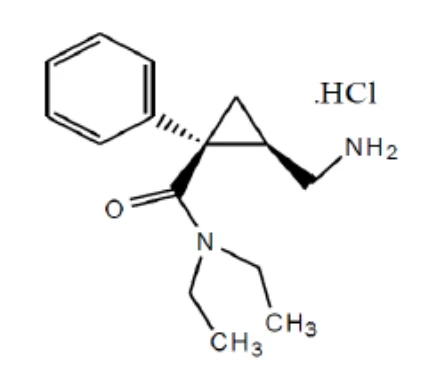
Physicochemical properties:
Levomilnacipran hydrochloride is a white to off-white crystalline powder that is freely soluble in methanol, water and ethanol insoluble in cyclohexane.
14 CLINICAL TRIALS
14.1 Clinical Trials by Indication
Major Depressive Disorder
Table 9 - Summary of patient demographics for clinical studies supporting efficacy of levomilnacipran extended release capsules in the Treatment of Major Depressive Disorder
| Study | Trial Design | Oral Dosage | Number of Study Subjects (N) [Male/Female (M/F)] | Mean Age (Range) | Mean Baseline MADRS Score |
|---|---|---|---|---|---|
| Study | Trial Design | Oral Dosage | Number of Study Subjects (N) [Male/Female (M/F)] | Mean Age (Range) | Mean Baseline MADRS Score |
| LVM-MD-01 | 8-week, multicentre, randomized, double-blind, placebo-controlled, parallel-group, fixed dose study | levomilnacipran 40 mg, 80 mg or 120 mg once daily or placebo | N=713 40 mg: n=178 80 mg: n=179 120 mg: n=180 placebo: n=176 [266M/447F] | 41 (18-65) | 36 |
| LVM-MD-10 | 8-week, multicentre, randomized, double-blind, placebo-controlled, parallel-group, fixed dose study | levomilnacipran 40 mg or 80 mg once daily or placebo | N=562 40 mg: n=188 80 mg: n=188 placebo: n=186 [205M/357F] | 43 (18-74) | 31 |
| LVM-MD-02 | 8-week, multicentre, randomized, double-blind, placebo-controlled, parallel-group flexible dose study | levomilnacipran 40 mg to 120 mg once daily or placebo | N=357 40-120 mg: n=175 placebo: n=182 [142M/215F] | 43 (19-78) | 36 |
| LVM-MD-03 | 8-week, multicentre, randomized, double-blind, placebo-controlled, parallel-group | levomilnacipran 40 mg to 120 mg once daily or placebo | N=434 40-120 mg: n=217 placebo: n=217 [151M/283F] | 45 (18-76) | 35 |
| flexible dose study | |||||
The efficacy of levomilnacipran extended release capsules for the treatment of major depressive disorder (MDD) was studied in four 8-week randomized, double-blind, placebo-controlled studies (at doses of 40 to 120 mg once daily) in adult (18 to 78 years of age) outpatients who met the Diagnostic and Statistical Manual of Mental Disorders (DSM-IV-TR) criteria for MDD. Of the total number of levomilnacipran extended release capsules-treated subjects in short-term clinical studies, only 2.8% of patients were 65 or older. Two of the studies were fixed dose (Study LVM-MD-01 and Study LVM-MD-10) and two were flexible dose (Study LVM-MD-02 and Study LVM-MD-03). The designs of the studies are summarized in Table 9.
The primary efficacy endpoint in all studies was mean change from baseline to Week 8-endpoint on the Montgomery Asberg Depression Rating Scale (MADRS). All studies included a 1-week single-blind placebo lead-in period, followed by an 8-week, double-blind treatment period.
In three of the four studies (LVM-MD-01, LVM-MD-10, and LVM-MD-03), levomilnacipran extended release capsules demonstrated statistical superiority over placebo in the improvement of depressive symptoms as measured by the mean change from baseline to Week 8 in the MADRS total score (see Table 10).
Table 10 - Summary of the Least Square Mean Difference from Placebo in Change from Baseline for MADRS Score, in Placebo-Controlled Studies for Major Depressive Disorder (ITT Population)
| Study | Levomilnacipran extended release capsules | |||
|---|---|---|---|---|
| Study | Levomilnacipran extended release capsules | |||
| 40 mg | 80 mg | 120 mg | 40-120 mg | |
| 40 mg | 80 mg | 120 mg | 40-120 mg | |
LVM-MD-01 (fixed-dose) LSMD 95% CI p-value | -3.23 (-5.92, -0.54) 0.0186 | -3.99 (-6.69, -1.29) 0.0038 | -4.86 (-7.59, -2.12) 0.0005 | NA |
LVM-MD-10 (fixed-dose) LSMD 95% CI p-value | -3.30 (-5.46, -1.15) 0.0027 | -3.14 (-5.29, -0.99) 0.0043 | NA | NA |
LVM-MD-03 (flexible-dose) LSMD | NA | NA | NA | -3.1 (-5.26, -0.94) 0.0051 |
95% CI p-value | ||||
| LSMD = Least Squares Mean Difference; CI = Confidence Interval; NA = Not applicable | ||||
Results from subgroup analyses by gender were not consistent across the pivotal trials; however, clinical studies with levomilnacipran extended release capsules were not designed with adequate power to detect a gender difference. Both fixed-dose trials showed better response to treatment in male subjects. Females in these studies either had a reduced treatment response at doses above 40 mg/day compared to males (Study LVM-MD-01) or failed to demonstrate clinically significant improvements in study outcomes over placebo (Study LVM-MD-10). Female subjects, however, outperformed male subjects in the positive flexible-dose study (Study LVM-MD-03).
Fixed-dose studies failed to demonstrate a clear dose-response relationship for either male or female subjects.
The key secondary instrument was the Sheehan Disability Scale (SDS), a validated scale that measures the extent emotional symptoms disrupt patients functioning in 3 life domains: (work/school, social life and family life).
Levomilnacipran extended release capsules demonstrated superiority over placebo in functional improvement as measured by mean change from baseline to Week 8 in the SDS total score in studies LVM-MD-01, LVM-MD-10 and LVM-MD-03.
Additional efficacy parameters in the studies included HAMD-17 (17 item Hamilton Rating Scale for Depression), CGI-S (Clinical Global Impressions - Severity Scale) and MADRS-CR (Montgomery-Åsberg Depression Rating Scale - Clinician Rated) response and remission rates. In addition CGI-I (Clinical Global Impressions - Improvement Scale) was assessed in studies LVM-MD-01 and LVM-MD-03 and MEI-SF (Motivation and Energy Inventory - Short Form) was assessed in Study LVM-MD-03. Results of the additional efficacy parameters were generally supportive of the primary efficacy result.
Maintenance Study
The efficacy of levomilnacipran extended release capsules for the maintenance treatment of MDD was demonstrated in a multicenter, randomized, double-blind, placebo-controlled trial of adult patients meeting DSM-V criteria for MDD (baseline MADRS total score of 32.2). Patients received flexible dose titration of levomilnacipran extended release capsules (40 mg, 80 mg, or 120 mg/day) during the first 8 weeks (run-in phase) of an open-label treatment phase (OLTP), responders were eligible to enter a 12-week, open-label, fixed-dose stabilization phase (SP). Three hundred twenty-four (324) patients who met the response criteria (MADRS of 12 or less) after 20 weeks of open-label treatment were randomized to the double-blind treatment phase (DBTP) (baseline mean MADRS total score of 4.7) for 26 weeks. The primary efficacy endpoint was the time to first relapse during the DBTP, defined as the number of days from the randomization date to the relapse date.
Recurrence of depressive episode was defined as a MADRS total score ≥ 18 at 2 consecutive visits or insufficient therapeutic response as judged by the investigator. Patients on levomilnacipran extended release capsules experienced a statistically significantly longer time to have recurrence of depressive episodes than did patients on placebo. In the placebo group 39 of 159 patients experienced relapse (24.5%) while 24 of 165 levomilnacipran extended release capsules-treated patients experienced relapse (14.5%).
14.2 Comparative Bioavailability Studies
Fasting Study
A double-blinded, randomized, single-dose, two-way, crossover, comparative bioavailability study of APO-LEVOMILNACIPRAN extended release capsules 120 mg (Apotex Inc.) and FETZIMA® extended release capsules 120 mg (Allergan Inc.) administered as a single oral dose (1 x 120 mg capsule) was conducted in healthy, adult, male subjects under fasting conditions.
Comparative bioavailability data from 16 subjects that were included in the statistical analysis are presented in the following table:
SUMMARY TABLE OF THE COMPARATIVE BIOVAILABILITY DATA
Levomilnacipran (1 x 120 mg) Geometric Mean Arithmetic Mean (CV%) | ||||
| Parameter | Test1 | Reference2 | % Ratio of Geometric Means | 90% Confidence Interval |
AUCT (ng·h/mL) | 6261.17 6398.21 (17.38) | 5976.59 6189.56 (25.14) | 104.8 | 95.0 – 115.6 |
AUCI (ng·h/mL) | 6374.10 6515.49 (17.54) | 6095.11 6321.25 (26.02) | 104.6 | 94.5 – 115.8 |
Cmax (ng/mL) | 306.07 312.22 (16.92) | 283.23 289.68 (19.58) | 108.1 | 97.1 – 120.3 |
Tmax3 (h) | 6.00 (4.50 – 11.00) | 6.25 (4.50 – 8.00) | ||
T1/24 (h) | 11.64 (14.14) | 11.66 (17.99) | ||
1 APO-LEVOMILNACIPRAN (as levomilnacipran hydrochloride) extended release capsules, 120 mg (Apotex Inc.) 2 FETZIMA® (levomilnacipran as levomilnacipran hydrochloride) extended release capsules, 120 mg (Allergan Inc.) were purchased in Canada. 3 Expressed as median (range) only. 4 Expressed as arithmetic mean (CV%) only. | ||||
Fed Study
A double-blinded, randomized, single-dose, two-way, crossover, comparative bioavailability study of APO-LEVOMILNACIPRAN extended release capsules 120 mg (Apotex Inc.) and FETZIMA® extended release capsules 120 mg (Allergan Inc.) administered as a single oral dose (1 x 120 mg capsule) was conducted in healthy, adult, male subjects under high-fat, high-calorie fed conditions.
Comparative bioavailability data from 24 subjects that were included in the statistical analysis are presented in the following table:
SUMMARY TABLE OF THE COMPARATIVE BIOVAILABILITY DATA
Levomilnacipran (1 x 120 mg) Geometric Mean Arithmetic Mean (CV%) | ||||
| Parameter | Test1 | Reference2 | % Ratio of Geometric Means | 90% Confidence Interval |
AUCT (ng·h/mL) | 7100.06 7513.53 (25.37) | 6562.87 6826.62 (25.36) | 108.2 | 95.0 – 123.2 |
AUCI (ng·h/mL) | 7261.29 7681.91 (25.63) | 6730.18 7003.26 (25.94) | 107.9 | 95.0 – 122.5 |
Cmax (ng/mL) | 340.99 358.61 (23.62) | 292.17 303.20 (23.74) | 116.7 | 102.5 – 132.8 |
Tmax3 (h) | 6.50 (5.00 – 12.00) | 6.50 (4.50 – 11.00) | ||
T1/24 (h) | 12.09 (13.96) | 12.43 (15.03) | ||
1 APO-LEVOMILNACIPRAN (as levomilnacipran hydrochloride) extended release capsules, 120 mg (Apotex Inc.) 2 FETZIMA® (levomilnacipran as levomilnacipran hydrochloride) extended release capsules 120 mg (Allergan Inc.) were purchased in Canada. 3 Expressed as median (range) only. 4 Expressed as arithmetic mean (CV%) only. | ||||
15 MICROBIOLOGY
No microbiological information is required for this drug product.
16 NON-CLINICAL TOXICOLOGY
Safety Pharmacology Studies
Levomilnacipran was studied in a core battery of acute, nonclinical safety pharmacology studies to determine the effects on CNS, respiratory, and cardiovascular function. Acute, nonclinical safety findings are described as follows:
- The effect of levomilnacipran on hERG K+ currents was studied in vitro in CHO-K1 cells stably expressing the hERG channel. Levomilnacipran (0.001, 0.01, 0.1, 1, and 10 mcM) produced a concentration-dependent inhibition of the maximum tail current amplitude, with an estimated IC50 > 10 mcM.
- The effect of levomilnacipran (0.01, 0.1, 1, and 10 mcM) on cardiac action potential physiology was assessed in vitro in canine Purkinje fiber preparations at both a normal stimulation rate (1 Hz) and a low stimulation rate (0.33 Hz). Levomilnacipran did not significantly affect the cardiac action potential parameters measured at any concentration tested with normal stimulation rate (1 Hz). When tested using the low stimulation rate (0.33 Hz), levomilnacipran produced a statistically significant increase in APD90 (+19 msec; p < 0.05) at a concentration of 1 mcM and in both APD70 (+22 msec; p < 0.01) and ADP90 (+37 msec; p < 0.01) at 10 mcM compared with the vehicle control.
- Levomilnacipran was also evaluated in conscious telemetry female Beagle dogs. Animals received oral administration of levomilnacipran (10 mg/kg/day) for 5 days in three series of experiments with a 4-day washout period. Cardiovascular measurements (blood pressure, heart rate, ECG) were noted 3 days before the beginning of test article administration, following a single dose (Day 1), and after 5 days of dosing. Levomilnacipran produced a significant increase in heart rate and diastolic blood pressure after both a single dose and after 5 days of dosing compared with the vehicle control.
- The effect of single oral doses of levomilnacipran on cardiovascular function was assessed in vivo in conscious cynomolgus monkeys. Cardiovascular function (arterial blood pressure, heart rate, ECG) was monitored by telemetry for 2 h before test substance administration and for 24 h after test substance administration. Levomilnacipran 5 and 15 mg/kg did not significantly affect the QT or QTc intervals or the QRS complex throughout the testing period, but levomilnacipran 45 mg/kg produced a significant increase in the QT (up to 48 msec from pretest) and QTc (up to 57 and 55 msec from pretest when corrected with Bazett’s and Fridericia’s formula, respectively) intervals. In addition, there was a small increase in the QRS complex duration (up to 6 msec from pretest) for up to 6 h after levomilnacipran administration. When compared with the vehicle group, levomilnacipran (5, 15, and 45 mg/kg) produced moderate, but statistically significant increases in arterial blood pressure (mean, systolic, diastolic), with the maximum increase at 30 min after levomilnacipran administration and returning to predose levels by 4 h. The increase in arterial blood pressure (about 15 to 21 mmHg from pretest) was not dose related. There were no clear drug-related changes in heart rate at doses of levomilnacipran up to 45 mg/kg. Compared to the 120 mg human dose, oral administration of 45 mg/kg levomilnacipran in monkeys produced >20-fold higher drug levels in the plasma.
- At therapeutically relevant concentrations, levomilnacipran is not expected to have an effect on respiratory function, but at concentrations ~26-fold greater than the 120 mg clinical dose, levomilnacipran increases respiratory rate, decreases peak inspiratory flow, decreases inspiration time, decreases expiration time, decreases tidal volume, decreases minute volume, and increases airway resistance index in rat.
- Levomilnacipran decreases motor activity and body temperature in rats at all doses tested after a single oral dose. At high doses (6- to 66- fold the plasma concentration of the 120 mg clinical dose), levomilnacipran also decreases arousal, alters posture and gait and induces palpebral ptosis.
General Toxicology:
The principal toxicology studies included single-dose and repeat-dose studies in rats and monkeys; genetic toxicology studies; 2-year carcinogenicity studies in transgenic mice and rats; and reproductive and developmental toxicology studies in rats and rabbits.
Single-Dose
The toxicological potential of levomilnacipran following single-dose (acute) oral administration was evaluated in rats and mice. Clinical signs of acute toxicity consisted primarily of tremors and convulsions. The approximate lethal dose was determined to be 140 mg/kg in mice and < 215 mg/kg in rats.
Repeat-Dose
The toxicological potential of levomilnacipran was evaluated in rats and monkeys for up to 6 months or 12 months, respectively.
Rats
In a 4-week toxicity study, rats were administered 0, 10, 35 or 120 mg/kg/day and the no- observed adverse -effect level (NOAEL) was 10 mg/kg/day based on decreases in body weight and food consumption and treatment-related centrilobular hepatocellular hypertrophy. In a 13-week toxicity study, rats were administered 0, 10, 35 or 120 mg/kg/day and based on centrilobular hepatocellular hypertrophy the NOAEL was determined to be 10 mg/kg/day a dose which represents an animal-to human exposure margin of 0.4-fold relative to the human exposure from 120 mg/day of levomilnacipran. Following 6-months of dose administration at 0, 10, 30 or 120 (males) or 100 (females) mg/kg/day the NOAEL was determined to be 30 mg/kg/day for males and 100 mg/kg/day for females based on decreased activity, body weight and food consumption and increases in urine volume and liver weight with correlated minimal to mild centrilobular hepatocellular hypertrophy. The NOAELs represent animal-to-human exposure margins of 2-fold (male) and 14-fold (female) relative to the human exposure from 120 mg/day of levomilnacipran.
Monkeys
The toxicological potential of levomilnacipran following repeat-dose oral administration for 13 weeks and 12 months was evaluated in cynomolgus monkeys at doses up to 45 mg/kg/day via direct dose or 90 mg/kg/day via dose escalation.
In a 13-week toxicity study, monkeys were administered 0, 5, 15, or 45 mg/kg/day; reversible decreases in body weight and food consumption were noted and the NOAEL was 15 mg/kg/day a dose which represents an animal-to-human exposure margin of 2-fold relative to the human exposure from 120 mg/day of levomilnacipran. In a 12-month toxicity study, monkeys were administered levomilnacipran via dose escalation at 0, 5/10, 15/30 or
45/70/90 mg/kg/day. All escalations were completed within two weeks of dose initiation. The NOAEL was determined to be 15/30 mg/kg/day based on emesis, decreases in activity, changes in clinical chemistry parameters (decreased albumin, albumin:globulin, cholesterol and increased GGT and ALT), and increased liver weights with correlates of minimal panlobular hepatocellular hypertrophy and minimal to mild midzonal vacuolation of hepatocytes. The NOAEL represents an animal-to-human exposure margin of 8-fold relative to the human exposure from 120 mg/day of levomilnacipran.
Genotoxicity:
Levomilnacipran was not mutagenic when evaluated in vitro in a bacterial mutagenicity study (Ames test) and not genotoxic in a mouse lymphoma study. It was not clastogenic in an in vivo micronucleus assay in rats.
Carcinogenicity:
The carcinogenic potential of levomilnacipran was evaluated in a 6-month carcinogenicity study in transgenic Tg.rasH2 mice and in a 2-year carcinogenicity study in rats.
Mice
In a 6-month carcinogenicity study, Tg.rasH2 transgenic mice were administered 0, 15, 50, 150 mg/kg/day levomilnacipran daily via oral gavage. With the exception of a small increase in splenic hemangiosarcoma in males which received 150 mg/kg/day (the highest dose tested) there was no increase in incidence of neoplastic lesions due to levomilnacipran. Splenic hemangiosarcomas are one of the most common spontaneous tumor types in the Tg.rasH2 transgenic mouse. Although the incidence observed in this study was slightly beyond the facility historical control values, it is comparable to the spontaneous incidences reported in the literature for this strain of transgenic mouse. In addition, since this slight numerical increase of a common spontaneous tumor occurred in only one gender in this study, and taken together with other assessments of the carcinogenic/mutagenic potential of levomilnacipran, the results are not regarded to represent a biologically-significant signal that would be meaningful for the purposes of carcinogenic risk assessment.
Rats
In a 2-year carcinogenicity study, rats were administered 0, 10, 30, or 90 mg/kg/day levomilnacipran daily via oral gavage. Survival incidence was similar across treatment groups and no increase in neoplastic lesions was noted, indicating that levomilnacipran is not carcinogenic.
Reproductive and Developmental Toxicology:
Impairment of Fertility
The potential effects of levomilnacipran on gonadal function, mating behavior, reproductive performance and early pregnancy were evaluated in rats at oral doses of 0, 10, 30, or 100 mg/kg/day. The NOAEL was 100 mg/kg/day based on reductions in body weight gain and food consumption. There were no levomilnacipran effects on male and female fertility parameters.
Teratogenic Effects
The potential effects of levomilnacipran on embryo/fetal development were evaluated in rats and rabbits at oral doses on 0, 10, 30 or 100 mg/kg/day.
In the rat and rabbit embryo/fetal development studies, decreases in maternal body weight gain and food consumption were noted. In the fetuses, increases in the incidence of ossification anomalies were noted but were of no toxicological significance. In both species, the NOAEL was determined to be 100 mg/kg/day, a dose which represents a rat or rabbit animal-to-human exposure margin of 9-fold and 4-fold, respectively relative to the human exposure from 120 mg/day of levomilnacipran.
When levomilnacipran was administered to pregnant rats at an oral dose of 60 mg/kg/day, 5 times the MRHD, during organogenesis and throughout pregnancy and lactation, there was an increase in early postnatal pup mortality; no pup mortality was seen at 20 mg/kg/day, 1.6 times the MRHD on a mg/m2 basis. Among the surviving pups, pre- and post-weaning pup weight gain was reduced up to at least 8 weeks of age; however, physical and functional development, including reproductive performance of the progeny, was not affected. The effects on body weight gain were not seen at 7 mg/kg/day, 0.6 times the MRHD on a mg/m2 basis.
17 SUPPORTING PRODUCT MONOGRAPHS
- 1) FETZIMA® (Levomilnacipran Extended Release Capsules, 20 mg, 40 mg, 80 mg and 120 mg), submission control 272055, Product Monograph, AbbVie Corporation. (AUG 11, 2023)