


Product Monograph - Zurzuvae
1. Indications
ZURZUVAE (zuranolone) is indicated for:
- the treatment of moderate or severe postpartum depression (PPD) in adults following childbirth.
The safety and efficacy of ZURZUVAE have only been studied as a single 14-day course of treatment with a 31-day follow-up period (see 14.1 Clinical Trials by Indication).
No data on retreatment with zuranolone in case of a relapse are available.
1.1. Pediatrics
Pediatrics (<18 years of age): No data are available to Health Canada; therefore, Health Canada has not authorized an indication for pediatric use.
1.2. Geriatrics
Geriatrics (>65 years of age): PPD is a condition associated with pregnancy; there is no geriatric experience with ZURZUVAE in patients with PPD.
2. Contraindications
ZURZUVAE is contraindicated in:
- Patients who are hypersensitive to this drug or to any ingredient in the formulation, including any non-medicinal ingredient, or component of the container. For a complete listing, see 6 Dosage Forms, Strengths, Composition, and Packaging.
- Pregnant women (see 7.1.1 Pregnancy).
3. Serious Warnings and Precautions Box
Addiction, Abuse and Misuse:
The use of ZURZUVAE, can lead to abuse, misuse, addiction, physical dependence and withdrawal reactions (see 7 WARNINGS AND PRECAUTIONS, Dependence, Tolerance and/or Abuse Liability). Abuse and misuse can result in overdose or death, especially when combined with other Central Nervous System (CNS) depressant medicines such as benzodiazepines, opioids, alcohol or illicit drugs.
- Assess each patient’s risk prior to prescribing ZURZUVAE.
- Monitor all patients regularly for the development of these behaviours or conditions.
- ZURZUVAE should be stored securely to avoid theft or misuse.
Impairment of Alertness and Motor Coordination:
ZURZUVAE can cause impairment of psychomotor performance, which can increase the risk of accidents while driving, operating machinery, or performing other activities requiring alertness or physical coordination, such as caring for children.
- Patients should be warned not to drive, operate machinery, or engage in other potentially hazardous activities for at least 12 hours after taking ZURZUVAE for the duration of the 14-day treatment course.
If the patient is caring for their child, they should consider arranging for alternative childcare until they understand how the drug affects them, as it may impair their ability to care for their
- child.
- Patients should be cautioned that impairment may persist beyond 12 hours in some individuals, and patients may not be able to reliably assess their own level of impairment (see 7 WARNINGS AND PRECAUTIONS, Driving and Operating Machinery; Childcare).
- Patients should be cautioned that CNS depressant effects of ZURZUVAE are amplified when taken with other CNS depressants, which can increase the severity of psychomotor performance impairment and sedative effects of ZURZUVAE. If concurrent use with another CNS depressant (e.g., alcohol, benzodiazepines, opioids) cannot be avoided, a dose reduction of ZURZUVAE may be necessary (see 4.2 Recommended Dose and Dosage Adjustment).
Suicidal thoughts and behaviour:
Antidepressants increased the risk of suicidal thoughts and behaviour in pediatric and young adult patients in short-term clinical trials.
- Closely monitor all antidepressant-treated patients for clinical worsening and for emergence of agitation type and/or suicidal thoughts and behaviors.
- ZURZUVAE is not indicated for pediatric use (see 7 WARNINGS AND PRECAUTIONS, Psychiatric, Potential Association with Behavioural and Emotional Changes, Including Self-harm; and 7.1.3 Pediatrics).
4. Dosage and Administration
4.1. Dosing Considerations
- Dosage adjustments are recommended in patients with moderate or severe renal impairment (see 4.2 Recommended Dose and Dosage Adjustment).
- Dosage adjustments are recommended in patients with severe hepatic impairment (see 4.2 Recommended Dose and Dosage Adjustment).
- Zuranolone is metabolized by CYP3A. Concomitant use with CYP3A inducers should be avoided (see 9.4 Drug-Drug Interactions). Dosage adjustments are recommended for concomitant use with strong inhibitors of CYP3A (see 4.2 Recommended Dose and Dosage Adjustment).
- Retreatment with ZURZUVAE is not recommended. This is based on its CNS depressant effects, potential for abuse, and the lack of efficacy and safety data beyond a single 14-day course of treatment with a 31-day follow-up period (see 7 Warnings and Precautions, Dependence, Tolerance and/or Abuse Liability; 7 Warnings and Precautions, CNS Depressant Effect; and 8 Adverse Reactions).
- In clinical trials, most patients received ZURZUVAE as monotherapy while others continued their stable baseline oral antidepressant therapy (at least 30 days prior to initiating ZURZUVAE); however, the trials were not designed or powered to compare ZURZUVAE versus placebo as an adjunctive therapy in patients with inadequate response to an antidepressant (see 14.1 Clinical Trials by Indication).
- Caution is required when ZURZUVAE is co-administered with other CNS depressants, such as benzodiazepines, due to the risk of additive impairment. If use with another CNS depressant is unavoidable, a dose reduction should be considered when concomitant use with a CNS depressant is necessary (see 4.2 Recommended Dose and Dosage Adjustment and 9 Drug Interactions).
4.2. Recommended Dose and Dosage Adjustment
- The recommended dose of ZURZUVAE is 50 mg (two 25 mg capsules) taken orally once daily for 14 days as a single course of treatment.
- The dose of ZURZUVAE may be reduced to 40 mg (two 20 mg capsules) taken orally once daily for the remainder of the 14-day period if the patient does not tolerate 50 mg (see 7 Warnings and Precautions, CNS Depressant Effects).
- If dose discontinuation is required, the single course 14-day treatment may be stopped without down-titration (see 7 Warnings and Precautions, Dependence, Tolerance and/or Abuse Liability).
- Patients with Renal Impairment: The recommended dose in patients with moderate (estimated glomerular filtration rate [eGFR] 30 to 59 mL/min/1.73 m2) or severe renal impairment (eGFR < 30 mL/min/1.73 m2 and not requiring dialysis) is 30 mg taken orally once daily during the 14-day treatment period. No dose adjustment is necessary in patients with mild renal impairment (eGFR 60 to 89 mL/min/1.73 m2) (see 10.3 Pharmacokinetics, Renal Insufficiency).
- Patients with Hepatic Impairment: The recommended dose in patients with severe hepatic impairment (Child-Pugh class C) is 30 mg taken orally once daily during the 14-day treatment period. No dose adjustment is necessary in patients with mild (Child-Pugh class A) or moderate hepatic impairment (Child-Pugh class B) (see 10.3 Pharmacokinetics, Hepatic Insufficiency).
- Concomitant use with CNS depressant medicinal product: Where use with a CNS depressant medicinal product is unavoidable, consider dose reduction based on a consideration of specific CNS depressant use and clinical evaluation of the patient (see sections 7 Warnings and Precautions, Neurologic and 9.4 Drug-Drug Interactions).
- Concomitant use with strong CYP3A inhibitors: The recommended dose is 30 mg taken orally once daily during the 14-day treatment period when used with strong CYP3A inhibitors. The effect of co-administration with moderate or weak CYP3A inhibitors has not been studied; therefore, caution is warranted, and no specific dose adjustment can be recommended. As grapefruit is a moderate CYP3A inhibitor, food or drink containing grapefruit should be avoided while taking ZURZUVAE (see 9.4 Drug-Drug Interactions).
- Pediatric (<18 years of age): The safety and efficacy of ZURZUVAE in postpubertal females less than 18 years old have not yet been established. No data are available. There is no relevant use of ZURZUVAE in prepubertal females.
- Geriatric (>65 years of age): There is no relevant use of ZURZUVAE in patients aged 65 years or older.
4.4. Administration
ZURZUVAE should be taken orally once daily in the evening, at approximately the same time each day.
ZURZUVAE should be taken with fat-containing food as either a meal or snack to ensure the medicine is properly absorbed (see section 10.3 Pharmacokinetics, Absorption). Typical fat-containing foods include:
- Cheese, whole milk, whole milk dairy products and yogurt
- Meats, oily fish
- Avocados, hummus, soy-based products (tofu)
- Nuts, peanut butter, chocolate, fat-containing nutritional bars or drinks
Capsules must be swallowed whole and should not be opened, crushed, or chewed.
4.5. Missed Dose
If a patient forgets to take a dose of ZURZUVAE, the patient should be instructed to skip the missed dose and take the next dose at their regular time the next day. The patient should not take additional capsules on the same day to make up for the missed dose. The patient should continue taking ZURZUVAE once daily until the full treatment course (14 days) is completed.
5. Overdose
One case of intentional overdose with zuranolone was reported during premarketing clinical trials. The patient took 330 mg (6.5 times the maximum recommended human dose) of zuranolone and was reported to be in an altered state of consciousness. The event resolved the following morning, following treatment with intravenous fluids.
Overdose with ZURZUVAE may result in excessive CNS depressant effects (see 7 Warnings and Precautions, Neurologic and 8.2 Clinical Trial Adverse Reactions).
There is no specific antidote for ZURZUVAE overdose. Appropriate supportive measures should be provided as dictated by the patient’s clinical status.
For the most recent information in the management of a suspected drug overdose, contact your regional poison control centre or Health Canada’s toll-free number, 1-844 POISON-X (1-844-764-7669).
- 6. Dosage Forms, Strengths, Composition, and Packaging
Table 1 – Dosage Forms, Strengths, and Composition
Description
| Route of Administration | Dosage Form/ Strength/Composition | Non-Medicinal Ingredients |
| Oral | Immediate release capsules / 20 mg, 25 mg, 30 mg | Capsule contents: Colloidal silicon dioxide; croscarmellose sodium, mannitol; microcrystalline cellulose; silica, colloidal anhydrous; sodium stearyl fumarate. Capsule shell: Gelatin, red iron oxide, titanium dioxide, and yellow iron oxide. Capsule print (black ink): Ammonium hydroxide, black iron oxide, propylene glycol, and shellac glaze. |
ZURZUVAE immediate release capsules
20 mg
Capsules: Size 1 hard capsule with a light-orange cap and an ivory to light--yellow body, printed with “S-217 20 mg” in black ink. The capsules are filled with white to off-white powder.
Packaging: High-density polyethylene (HDPE) bottle with a child-resistant closure containing 14 or 28 hard capsules.
25 mg
Capsules: Size 1 hard capsule with a light-orange cap and light-orange body, printed with “S217 25 mg” in black ink. The capsules are filled with white to off-white powder.
Packaging: High-density polyethylene (HDPE) bottle with a child-resistant closure containing 14 or 28 hard capsules.
30 mg
Capsules: Size 1 hard capsule with an orange cap and light-orange body, printed with “S-217 30 mg” in black ink. The capsules are filled with white to off-white powder.
Packaging: High-density polyethylene (HDPE) bottle with a child-resistant closure containing 14 hard capsules.
Not all pack sizes may be marketed.
7. Warnings and Precautions
Dependence, Tolerance and/or Abuse Liability
ZURZUVAE has potential for both abuse and physical dependence, carrying associated risks of misuse and substance use disorder.
The abuse potential of ZURZUVAE was demonstrated in a clinical study in recreational CNS depressant users. This study showed that ZURZUVAE has a dose-dependent abuse potential greater than placebo and comparable to the benzodiazepine alprazolam (see 10.2 Pharmacodynamics, Abuse Potential). Throughout the clinical development program of ZURZUVAE, dose-dependent, potential abuse-related adverse events, including euphoric mood, feeling drunk, and somnolence, were reported. One case of intentional overdose was reported in which a participant in a Major Depressive Disorder (MDD) study consumed 6.5 times the maximum recommended dose, resulting in hospitalization for an altered state of consciousness.
ZURZUVAE may produce physical dependence, which can result in a withdrawal reaction upon abrupt discontinuation. In a study of healthy subjects, abrupt discontinuation of ZURZUVAE after 5 to 7 days of exposure to therapeutic and supratherapeutic doses led to mild-to-moderate adverse events, including insomnia, palpitations, nightmare, paranoia, nausea, hyperhidrosis, and decreased appetite. Seizures are a known severe manifestation of withdrawal from GABAergic agents. The risk of developing physical dependence and a withdrawal syndrome with higher than recommended dosages or longer duration of use has not been evaluated in clinical studies. However, non-clinical studies in dogs showed that abrupt discontinuation of ZURZUVAE after 14 days at high exposures was associated with convulsions and potential withdrawal-related deaths (see 16 Nonclinical Toxicology).
Patients should be monitored for signs and symptoms of abuse and dependence. It is recommended to assess the risk for abuse prior to prescribing and to monitor for the development of these behaviours and conditions during treatment.
Driving and Operating Machinery; Childcare
ZURZUVAE causes CNS depressant effects, which can impair the ability to drive, operate machinery, and perform other hazardous activities. These effects include somnolence, dizziness, sedation, and confusion (see 8.2 Clinical Trial Adverse Reactions).
Driving Impairment:
Two clinical driving simulation studies demonstrated significant, dose-dependent impairment in healthy adults (see 10.2 Pharmacodynamics, Next-Day Driving Impairment). A single 50 mg dose administered at bedtime caused a statistically significant and clinically meaningful impairment in next-morning driving performance (9 hours after dosing), exceeding the safety threshold equivalent to a 0.05% blood alcohol concentration (BAC), with an effect nearly double that of the active comparator, zopiclone 7.5 mg. This impairment persisted after seven consecutive nightly 50 mg doses, and associated cognitive deficits, such as reduced processing speed, showed little to no improvement over treatment course.
A critical finding from these studies is that patients cannot reliably judge their own impairment. A majority of participants (70-74%) reported feeling safe to drive while objective measures showed they were significantly impaired. Impairment can be present even if a patient feels fully awake.
Impairment of Childcare Abilities:
While the ability to care for a child was not systematically evaluated in clinical trials, post-marketing reports include cases where patients felt their functional ability was impaired for more than 12 hours after a dose, necessitating assistance from others.
Patient Counselling Information:
Patients must be counselled on the following precautions for the entire 14-day treatment course:
- Patients should not drive, operate machinery, or engage in other hazardous activities requiring mental alertness for at least 12 hours after taking each dose of ZURZUVAE. While a pharmacometric modeling predicts that for a majority of patients, impairment typically falls below the 0.05% BAC-equivalent threshold by 12 hours, impairment may persist longer in some individuals. Therefore, patients should exercise caution when resuming such activities even after 12 hours have passed.
- Patients should be advised that they may not be able to accurately assess their own ability to perform these activities safely even if feeling fully awake and capable.
- Patients who are caring for their child should be informed that the CNS depressant effects may impair the ability to care for their child, and to consider arranging for alternative childcare until they understand how the drug affects them.
- Patients should be instructed to inform their healthcare provider right away if they experience excessive sedation or somnolence, as a dose reduction may be necessary (see 4.2 Recommended Dose and Dosage Adjustment).
Neurologic
CNS Depressant Effects:
ZURZUVAE can cause CNS depressant effects such as somnolence, dizziness, sedation and confusion (see 8.2 Clinical Trial Adverse Reactions). These effects can impair balance and coordination, leading to higher risk of falls or accidental injury. In clinical studies, a higher percentage of zuranolone-treated patients, compared to placebo-treated patients, experienced CNS depressant effects that required dosage reduction, interruption, or discontinuation (see 8.1 Adverse Reaction Overview). The ZURZUVAE dose should be reduced or permanently discontinued based on the severity of the adverse reaction and the individual sensitivity of the patient to these effects (see 4.2 Recommended Dose and Dosage Adjustment).
Co-administration with other CNS depressants (e.g., alcohol, benzodiazepines, opioids) may increase the risk and/or severity of these effects (see 9.3 Drug Behaviour Interactions; 9.4 Drug-Drug Interactions; 10.2 Pharmacodynamics, Drug Interactions).
A dose reduction of ZURZUVAE should be considered if use with a CNS depressant medicinal product is unavoidable (see 4.2 Recommended Dose and Dosage Adjustment).
Psychiatric
Potential Association with Behavioral and Emotional Changes, Including Self-Harm:
- Pediatrics: Placebo-Controlled Clinical Trial Data
Recent analyses of placebo-controlled clinical trial safety databases from Selective Serotonin Reuptake Inhibitors (SSRIs) and other newer anti-depressants suggest that use of these drugs in patients under the age of 18 may be associated with behavioral and emotional changes, including an increased risk of suicidal ideation and behavior over that of placebo. The small denominators in the clinical trial database, as well as the variability in placebo rates preclude reliable conclusions on the relative safety profiles among these drugs.
- Adults and Pediatrics: Additional data
There are clinical trial and post marketing reports with SSRIs and other newer antidepressants, in both pediatrics and adults, of severe agitation type adverse events coupled with self-harm and harm to others. The agitation-type events include: akathisia, agitation, disinhibition, emotional lability, hostility, aggression and depersonalization. In some cases, the events occurred within several weeks of starting treatment.
Rigorous clinical monitoring for suicidal ideation or other indicators of potential for suicidal behavior is advised in patients of all ages. This includes monitoring for agitation-type emotional and behavioral changes. An FDA meta-analysis of placebo-controlled clinical trials of antidepressant drugs in adult patients aged 18 to 24 years with psychiatric disorders showed an increased risk of suicidal behaviours with antidepressants compared to placebo.
ZURZUVAE does not directly affect monoaminergic systems. In pooled placebo-controlled studies in adults with PPD, the rate of events potentially related to suicidality in the ZURZUVAE group (0.6%) did not differ from that of placebo group (0.6%). In pooled placebo-controlled studies in adults with MDD, the rate of these events was 1.4% in the ZURZUVAE group versus 0.9% in the placebo group; these events included a serious suicide attempt in a participant receiving ZURZUVAE 30 mg that was assessed as possibly related to the investigational product and a serious suicidal ideation in a patient receiving placebo. Five serious events related to suicidality were reported in open-label MDD studies, one of which was considered related to ZURZUVAE. Uncertainty exists regarding ZURZUVAE use in patients with active suicidal behavior, psychosis and other mental health disorders as this population was excluded from the clinical trial program. In post-marketing evidence from the first year of US market introduction, suicidal ideation has been one of the most frequently reported serious adverse events, with one cumulative case assessed by a healthcare professional as "possibly related" to ZURZUVAE based on the temporal relationship and absence of other confounding factors.
Clinical Worsening and Suicide Risk Management:
Depression is associated with an increased risk of suicidal thoughts, self-harm and suicide. This risk persists until significant remission occurs, and it is general clinical experience that the risk of suicide may increase in the early stages of recovery. Therefore, careful monitoring during treatment is recommended, particularly for patients with a history of suicide-related events or those who exhibit significant suicidal ideation before starting therapy, as they are at a greater risk.
Patients and their caregivers must be alerted to the need to monitor for any clinical worsening, suicidal behaviour or thoughts, and unusual changes in behaviour. They should be instructed to seek medical advice immediately if these symptoms present.
If a patient’s depression worsens or if they experience emergent suicidal thoughts and behaviors, a change in the therapeutic regimen should be considered, including the discontinuation of ZURZUVAE.
Reproductive Health
ZURZUVAE is contraindicated during pregnancy (see 2 Contraindications). Women of child bearing potential should use highly effective contraception during treatment and for 7 days following discontinuation of treatment (see 7.1.1 Pregnancy).
Fertility
There are no human data on the effects of ZURZUVAE on human fertility. Data from male and female animal studies showed no zuranolone-related effects on fertility or reproduction function at clinically relevant doses (see 16 Non-Clinical Toxicology).
7.1. Special Populations
7.1.1. Pregnancy
There are limited data from the use of ZURZUVAE in pregnant women. Studies in animals have shown reproductive toxicity. Based on these findings, ZURZUVAE may cause fetal harm. Oral administration of zuranolone to rats and mice during pregnancy resulted in developmental toxicity in the offspring, including fetal malformations, lower body weight, and mortality. In a pre-postnatal study in rats, zuranolone administration resulted in total litter loss, inadequate nursing and increased pup mortality. A single administration to 7-day old pups resulted in increased neuronal death in the brain. The maternal and developmental toxicity findings were observed at doses resulting in exposures similar or up to 2-fold the exposures at the Maximum Recommended Human Dose (MRHD) in rats, and up to 6-fold in mice (see 16 Nonclinical Toxicology, Reproductive and development toxicology; and Juvenile toxicity).
Due to the risk of fetal harm, ZURZUVAE is contraindicated during pregnancy and not recommended in women of childbearing potential not using contraception (see 2 Contraindications). It is recommended to rule out pregnancy prior to administration of ZURZUVAE. Patients must be informed of this risk and should use highly effective contraception while taking ZURZUVAE and for at least 7 days after the last dose.
7.1.2. Breastfeeding
The distribution of ZURZUVAE into human breast milk was studied in a group of 14 healthy lactating women treated daily, for 5 days, with oral administration of zuranolone 30 mg. Zuranolone transfers to human breast milk at low levels. Results from the lactating study and from a population PK study indicated that the maximum relative infant dose (RID) was estimated to be less than 1%.
The effect of ZURZUVAE on breastfed newborns/infants and on maternal milk production is unknown. When administered to rats, ZURZUVAE was associated with inadequate nursing and pup mortality at doses resulting in exposure less than twice the exposure expected at the MRHD (see 16 Non-Clinical Toxicology, Reproductive and developmental toxicology).
Based on available data, it is recommended to discontinue breastfeeding during treatment with ZURZUVAE, unless in the judgement of the healthcare professional, in discussion with the patient, the potential benefits of breastfeeding clearly outweigh the potential risks to the infant.
This decision should consider the benefits of the treatment to the mother, the benefits of breastfeeding to the infant, the risks of the post-partum maternal condition, and the risks of adverse effects on the breastfed child.
If the clinical decision supports breastfeeding, the patient should closely monitor their infant for potential side effects, such as excessive sleepiness or poor feeding, and report them to their healthcare professional.
7.1.3. Pediatrics
Pediatrics (<18 years of age): No data are available to Health Canada; therefore, Health Canada has not authorized an indication for pediatric use.
7.1.4. Geriatrics
Geriatrics (>65 years of age): PPD is a condition associated with pregnancy; there is no geriatric experience with ZURZUVAE in patients with PPD.
8. Adverse Reactions
8.1. Adverse Reaction Overview
The most frequently reported (≥ 10% in ZURZUVAE and ≥ 2% greater than placebo) adverse drug reactions (ADRs) were somnolence (28%), dizziness (13%), and sedation (11%).
Most ADRs in subjects receiving ZURZUVAE were mild to moderate in intensity. Serious ADRs included confusional state (1%).
The frequency of ZURZUVAE-treated subjects who discontinued treatment due to ADRs was 2%. These ADRs were somnolence (2%) and sedation (1%). The frequency of ZURZUVAE-treated subjects who had a dose reduction or interruption due to ADRs was 14%. The most frequently reported ADRs leading to dose reduction or interruption were somnolence (8%), dizziness (6%) and sedation (3%) followed by one case (1%) of confusional state and one report (1%) of fatigue.
8.2. Clinical Trial Adverse Reactions
Clinical trials are conducted under very specific conditions. Therefore, the frequencies of adverse reactions observed in the clinical trials may not reflect frequencies observed in clinical practice and should not be compared to frequencies reported in clinical trials of another drug.
The safety of ZURZUVAE for the treatment of PPD was evaluated in two placebo-controlled clinical studies in 347 adult women with PPD treated with 50 mg of ZURZUVAE (study 217-PPD-301), or with another ZURZUVAE capsule formulation approximately equivalent to 35 mg of ZURZUVAE (study 217-PPD-201) once daily for 14 days (see 14 Clinical Trials). In total, 176 patients with PPD were exposed to ZURZUVAE.
Common and very common ADRs from Study 217-PPD-301 (ZURZUVAE 50 mg, with option to decrease to 40 mg for tolerability) are presented in Table 2.
Table 2 – Adverse Reactions During the 14-Day Treatment and Up to 3 Days After the End of Treatment that Occurred in ≥2% of Patients with PPD Treated with 50 mg of ZURZUVAE and Greater than in Patients Treated with Placebo from Study 217-PPD-301
| System organ class/preferred term | Zuranolone n = 98 (%) | Placebo n = 98 (%) | ||
| System organ class/preferred term | Zuranolone n = 98 (%) | Placebo n = 98 (%) | ||
| Gastrointestinal disorders | ||||
| Diarrhea | 6 (6%) | 2 (2%) | ||
| Abdominal pain1 | 3 (3%) | 0 (0 %) | ||
| General disorders and administration site conditions | ||||
| Fatigue2 | 5 (5%) | 2 (2%) | ||
| Infections and infestations | ||||
| Urinary tract infection | 5 (5%) | 4 (4%) | ||
| Musculoskeletal and connective tissue disorders | ||||
| Myalgia | 2 (2%) | 0 (0%) | ||
| Muscle twitching | 2 (2%) | 0 (0%) | ||
| Nervous system disorders | ||||
| Somnolence3 | 27 (28%) | 5 (5%) | ||
| Dizziness4 | 13 (13%) | 9 (9%) | ||
| Sedation | 11 (11%) | 1 (1%) | ||
| Hypoesthesia | 2 (2%) | 0 (0%) | ||
| Tremor | 2 (2%) | 0 (0%) | ||
| Psychiatric disorders | ||||
| Memory impairment | 3 (3%) | 0 (0%) | ||
| Anxiety | 2 (2%) | 1 (1%) | ||
| Skin and subcutaneous tissue disorders | ||||
| Rash | 2 (2%) | 1 (1%) | ||
1 Included abdominal pain and abdominal pain upper.
2 Included the following PTs: fatigue and asthenia.
3 Included the following preferred terms (PTs): somnolence and hypersomnia.
4 Included the following PTs: dizziness and vertigo.
Confusional state (1%) that was reported in subjects with PPD treated with ZURZUVAE 50mg does not meet the quantitative threshold but is considered an ADR based on qualitative review of nonclinical and clinical data.
The adverse drug reactions in Study 217-PPD-201B were consistent with those observed in Study 217-PPD-301.
Description of selected adverse reactions
Somnolence, dizziness and sedation:
These most frequently reported ADRs were dose-dependant and generally mild to moderate in severity; most appeared within the first two days of treatment and were limited to the on-treatment period. The median duration of an event in the PPD studies pool was 9 days for somnolence, 6 days for dizziness, and 11 days for sedation. Most of these ADRs resolved without intervention. In cases where dose reduction due to these ADRs was needed, most subjects (e.g., 14 out of 16 participants in the 50 mg group for Study 217-PPD-301) completed the treatment course at the reduced dose.
Confusional state:
Across the two clinical PPD studies, two subjects (1.1%) experienced confusional state. One subject who received zuranolone 50 mg experienced a non-serious, moderate ADR which led to dose reduction to 40 mg. The event resolved over 12 days. One subject who received zuranolone 30 mg had a serious ADR at Day 3. The serious ADR resolved the same-day and treatment was withheld for one day. The subject completed the treatment period on a reduced dose of zuranolone 20 mg without any further symptoms during the study.
Fatigue and Asthenia:
Events of fatigue and asthenia were reported more frequently in zuranolone-treated PPD patients (6%) than in those receiving placebo (2%) and were more common at the 50 mg dose. The reported events in the PPD population were mild or moderate and non-serious. One participant experienced mild asthenia concurrently with euphoric mood and memory impairment. In the separate, larger clinical studies in patients with MDD, two serious cases of asthenia were reported that also led to discontinuation of the investigational product.
Tremor:
In the PPD studies, tremor was reported in 1.1% of all patients treated with zuranolone, compared to none in the placebo group. The effect appeared to be dose-related, as all reported cases occurred exclusively in the group receiving the 50 mg dose, representing an incidence of 2.0% in that specific subgroup. Although tremor did not lead to dose adjustments in the PPD studies, its did require dose reduction or interruption for three participants in the larger MDD program. In this population, a clear dose-response relationship was also observed, with the incidence of tremor increasing with higher doses, reaching 4% in the 50 mg dose group.
Memory Impairment:
In the PPD studies, memory impairment was reported in 1.7% of all zuranolone-treated patients, compared to none in the placebo group. All reported cases occurred exclusively in patients receiving the 50 mg dose, resulting in an incidence of 3.1% within that specific dose group. The reported events of memory impairment were all considered non-serious and were rated as mild to moderate in severity. They did not lead to dose adjustments or discontinuation of the medication. This clinical finding is consistent with results from dedicated cognitive performance studies, which showed that zuranolone can cause dose-dependent impairment in working memory and attention.
8.3. Less Common Clinical Trial Adverse Reactions
An adverse reaction identified in the clinical studies in patients with PPD with a frequency below the cut-off for inclusion in Table 2 includes confusional state. The size of the safety database for this population (176 patients treated with zuranolone) may not be sufficient to detect uncommon or rare adverse reactions.
Adverse events without an established causal relationship with ZURZUVAE with a frequency below the cut-off for inclusion in Table 2 include: lethargy, peripheral oedema, pain in extremity, and irritability.
8.4. Abnormal Laboratory Findings: Hematologic, Clinical Chemistry, and Other Quantitative Data
Clinical Trial Findings
No clinically meaningful differences in laboratory values were observed between placebo and zuranolone groups.
8.5. Post-Market Adverse Reactions
Not applicable.
- 9. Drug Interactions
9.1. Serious Drug Interactions
CNS Depressants: Concomitant use of ZURZUVAE and other CNS depressants such as alcohol, benzodiazepines or opioids may result in additive impairment of psychomotor performance or CNS depressant effects.
- Reserve concomitant prescribing of CNS depressant drugs for use in patients for whom alternative treatment options are not possible.
If use with another CNS depressant is unavoidable, consider dosage reduction (see 3 Serious
- Warnings and Precautions Box, Impairment of Alertness and Motor Coordination; 4.2 Recommended Dose and Dosage Adjustment and 9.4 Drug-Drug Interactions).
9.2. Drug Interactions Overview
Clinically important drug interactions with CNS depressant medicinal products, alcohol, CYP3A inducers and strong CYP3A inhibitors have been observed (see 9.4 Drug-Drug Interactions).
Clinical drug interactions studies indicated that repeated administration of zuranolone prior to administration of simvastatin (CYP3A4 substrate) or bupropion (CYP2B6 substrate) did not alter the exposure of simvastatin or bupropion. Zuranolone is not expected to cause a drug interaction through CYP450 enzyme induction.
In vitro studies showed that zuranolone is not an inhibitor of CYP1A2, CYP2B6 or CYP2C9, and is not expected to be an inhibitor of CYP2B6, CYP2C8, CYP2C9, CYP2D6 or CYP3A4 at clinically relevant concentrations.
In vitro studies showed that zuranolone is not a substrate of P-glycoprotein and is not expected to inhibit BSEP, BCRP, MDR1, MATE1, MATE2-K, OAT1, OAT3, OATP1B1, OATP1B3, OCT1, or OCT2 at clinically relevant concentrations.
9.3. Drug-Behaviour Interactions
Co-administration of repeated 50 mg daily doses of zuranolone with alcohol led to increased impairment in psychomotor performance.
9.4. Drug-Drug Interactions
The drugs listed in this table are based on either drug interaction case reports or studies, or potential interactions due to the expected magnitude and seriousness of the interaction (i.e., those identified as contraindicated).
Table 3 – Established or Potential Drug-Drug Interactions
| Non-proprietary name(s) of the drug product(s) | Source of evidence | Effect | Clinical comment |
| Non-proprietary name(s) of the drug product(s) | Source of evidence | Effect | Clinical comment |
CNS depressants (e.g., opioids, benzodiazepines, non-benzodiazepine hypnotics, gabapentinoids and sedating antidepressants) | CT | Co-administration of repeated 50 mg daily doses of zuranolone with alprazolam led to increased impairment in psychomotor performance. | If use with another CNS depressant medicinal product is unavoidable, dose reduction of zuranolone should be considered (see 7 Warnings and Precautions, Neurologic; 4.2 Recommended Dose and Dosage Adjustment). |
Strong CYP3A inducers (e.g., rifampin) | CT | Rifampin decreased zuranolone AUCinf and Cmax by 85% and 69%, respectively. | Concomitant use may decrease the efficacy of zuranolone and should be avoided. |
Strong CYP3A inhibitors (e.g., itraconazole) | CT | Itraconazole increased zuranolone AUCinf by 62%. | Concomitant use may increase the risk of zuranolone associated adverse reactions. The dose of zuranolone should be reduced to 30 mg when used with a strong CYP3A inhibitor (see 4.2 Recommended Dose and Dosage Adjustment). |
Legend: CT = Clinical Trial
9.5. Drug-Food Interactions
When zuranolone was taken with a low- or high-fat meal, there was a significant increase in peak plasma concentration (Cmax) and extent of absorption (i.e. AUClast) compared with fasting conditions, in healthy subjects. Zuranolone is to be taken with fat-containing food (see 4.4 Administration and 10.3 Pharmacokinetics, Absorption).
Grapefruit products are inhibitors of CYP3A and should be avoided while taking zuranolone.
9.6. Drug-Herb Interactions
St. John’s wort may decrease the efficacy of zuranolone. Concomitant use with St. John’s wort or products containing St. John’s wort should be avoided.
9.7. Drug-Laboratory Test Interactions
Interactions with laboratory tests have not been established.
10. Clinical Pharmacology
10.1. Mechanism of Action
Zuranolone is an orally bioavailable, synthetic neuroactive steroid (NAS). Like the endogenous NAS allopregnanolone, zuranolone exhibits positive allosteric modulation of the gamma-aminobutyric acid-A (GABAA) receptor and enhances GABA activity at synaptic and extrasynaptic receptors. The mechanism of action of zuranolone in the treatment of PPD is not fully understood but is thought to be related to its positive allosteric modulation of GABAA receptors.
10.2. Pharmacodynamics
Effects on Cardiac Conduction
The effect of zuranolone on the QTc interval was evaluated in a randomized, double-blind, placebo- and active-controlled thorough QT study in healthy adult subjects. The study assessed the maximum recommended therapeutic dose (50 mg) and a supratherapeutic dose of 100 mg. The study included moxifloxacin as a positive control to establish assay sensitivity and evaluated effects on the QTcF interval as well as other ECG parameters, including heart rate (HR), PR interval, and QRS duration.
The model-predicted placebo-corrected change from baseline in QTcF (ΔΔQTcF) was 0.52 ms (90% CI: -4.10 to 5.13 ms) at the peak plasma concentration achieved with the 100 mg supratherapeutic dose. The upper bound of the confidence interval remained below the 10 ms regulatory threshold for concern. Furthermore, zuranolone had no clinically relevant effects on heart rate or cardiac conduction as measured by the PR and QRS intervals. Therefore, at up to two times the maximum recommended human dose, zuranolone does not cause clinically significant QTc interval prolongation nor any other clinically significant effect on other ECG parameters.
Next-Day Driving Impairment
The effect of zuranolone on next-morning driving ability was assessed in two randomized, double-blind, crossover studies in a total of 127 healthy adults. The studies differed slightly in their populations; one study enrolled participants aged 21 to 65, while the other enrolled participants aged 21 and older. Using a computer-based driving simulation, performance was measured approximately 9 hours after nighttime administration of zuranolone. The studies evaluated daily doses of 30 mg for 5 days and 50 mg for 7 days, respectively, as well as higher single supratherapeutic doses (60 mg and 100 mg). The primary endpoint in both studies was the Standard Deviation of Lateral Position (SDLP), a measure of driving impairment (i.e., vehicle weaving). Both studies were validated with zopiclone 7.5 mg as an active comparator, which produced the expected impairment.
The studies demonstrated that zuranolone causes dose-dependent impairment of next-morning driving performance. This impairment was observed across several objective measures, including increased lane exceedances, greater speed deviation, slower reaction times on a divided attention task, and an increase in collisions. After a single 50 mg nighttime dose, the impairment in SDLP was statistically significant and exceeded the threshold of concern equivalent to a 0.05% BAC, and was nearly double the effect of the active comparator, zopiclone 7.5 mg. With repeated nightly administration, the magnitude of this driving impairment decreased over time. However, a statistically significant impairment was still present on Day 8 of treatment with the recommended 50 mg dose, while the impairment from a lower 30 mg dose was no longer statistically significant after 5 nights. In contrast, associated cognitive deficits, measured by the Symbol Digit Coding (SDC) test, showed little to no improvement over the treatment course, with a persistent decline in processing speed. Supratherapeutic doses (60 mg and 100 mg) caused even greater impairment.
The studies found a significant discrepancy between participants' self-reported feelings and their actual driving ability. While a majority of participants (70-74%) reported feeling safe to drive, objective measures taken at the same time showed they were, in fact, significantly impaired.
Exposure-response modeling using data from both driving studies was conducted to project the time course of impairment. The modeling predicted that the median impairment falls below the threshold equivalent to a 0.05% BAC by 12 hours after a 50 mg dose. However, the model also showed significant inter-individual variability, predicting that approximately 20% of individuals may still experience clinically meaningful driving impairment at the 12-hour time point.
Abuse Potential
In a clinical study designed to assess the abuse potential of zuranolone, single oral doses of zuranolone (30 mg, 60 mg, and 90 mg) were compared to alprazolam (1.5 mg and 3 mg) and placebo in 60 healthy, non-dependent recreational users of CNS depressants. Participants had used CNS depressants (e.g., benzodiazepines, barbiturates, and zolpidem) for recreational, nontherapeutic reasons at least 10 times in their lifetime and at least once in the 12 weeks prior to screening. The study demonstrated that zuranolone has a dose-dependent abuse potential. On the primary endpoint, a subjective measure of "Drug Liking", all three doses of zuranolone produced scores that were statistically greater than placebo.
When compared to the active control, alprazolam (1.5 mg and 3 mg), zuranolone at doses of 30 mg and 60 mg demonstrated statistically lower "Drug Liking" scores. However, for the 60 mg dose of zuranolone, which produces exposures equivalent to the recommended 50 mg therapeutic dose, the difference in "Drug Liking" was small in magnitude, and its abuse potential was numerically similar to that of alprazolam 1.5 mg. At the supratherapeutic 90 mg dose, the "Drug Liking" scores for zuranolone were not statistically different from either dose of alprazolam, indicating a comparable abuse liability at higher exposures. This dose-dependent pattern was consistent across secondary measures, including "Overall Drug Liking," "Take Drug Again," and "High," with the 90 mg dose of zuranolone showing effects comparable to alprazolam. Abuse-related adverse reactions, such as euphoric mood and feeling drunk, were reported more frequently in both the zuranolone and alprazolam groups than in the placebo group. Furthermore, participants perceived the subjective effects of zuranolone to be similar to those of benzodiazepines. The study also identified dose-dependent sedative effects, with the 90 mg dose of zuranolone producing sedation that was comparable to or greater than that of alprazolam, as demonstrated by both the frequency of sedation-related adverse events reported and the intensity of sedation measured by objective observer assessments and subjective participant ratings.
Drug Interactions
The potential for pharmacodynamic interactions between ZURZUVAE and other CNS depressants was evaluated in two randomized, double-blind, crossover studies in healthy adults. These studies assessed neurocognitive effects using a computerized Cogstate Test Battery following the co-administration of zuranolone at 30 mg and the recommended 50 mg dose with single doses of alprazolam 1 mg or ethanol (0.7 g/kg [males]; 0.6 g/kg [females]).
At the recommended 50 mg dose, co-administration with alprazolam or ethanol resulted in a greater CNS depressant effect than with either agent alone. The combination of zuranolone and alprazolam led to a statistically significant greater decline in cognitive performance compared to both alprazolam alone and zuranolone alone. This was particularly evident in measures of visual memory (One Card Learning test) and complex attention (International Digit Symbol Substitution test). When combined with ethanol, the co-administration resulted in a greater decline in psychomotor performance compared to zuranolone alone. No clinically meaningful pharmacokinetic interactions were observed in the studies, indicating that the combined effects are pharmacodynamic in nature.
Reflecting this pharmacodynamic interaction, study discontinuations due to adverse events occurred exclusively in participants receiving zuranolone, with the majority occurring after co-administration with alprazolam. The adverse events leading to discontinuation were primarily CNS-related, including disorientation, vertigo, dizziness, and somnolence.
These findings demonstrate that co-administration of zuranolone with other CNS depressants, such as alprazolam and ethanol, leads to a greater impairment of cognitive and psychomotor performance than is observed with either agent alone (see 9.4 Drug-Drug Interactions and 9.3 Drug-Behaviour Interactions).
Exposure-Response Relationships
Model-based exposure-response analyses for zuranolone demonstrated relationships for both efficacy and safety. For efficacy, a linear relationship was shown between zuranolone plasma concentrations and improvement in depressive symptoms, as measured by the 17-item Hamilton Rating Scale for Depression (HAMD-17). The treatment effect increased with greater plasma exposure across the evaluated dose range of 20 mg to 50 mg once daily. For safety, the incidence of certain adverse events, including somnolence, sedation, dizziness, and tremor, was also found to be related to zuranolone exposure (Cmax and AUC0−24). While the likelihood of these events increased with higher exposure, the majority were mild in severity, and the overall incidence of moderate and severe adverse events remained low.
10.3. Pharmacokinetics
Zuranolone exposure (Cmax and AUC) is approximately proportional to dose. Once-daily administration of zuranolone 50 mg resulted in accumulation of approximately 1.5-fold in systemic exposures and steady-state was achieved in 3 to 5 days.
Table 4 – Summary of Zuranolone Pharmacokinetic Parameters in Fed State
| Cmax,ss (ng/mL)a | Tmax (h)b | t½ (h)b | AUCtau,ss (ng.h/nL) a | CL/F (L/h) a | Vd/F (L) a |
|---|---|---|---|---|---|
| 87.3 | 6.00 | 24.63 | 1360 | 38.1 | 1210 |
a Arithmetic mean population PK estimates and predicted steady state exposures for patients with PPD in study 217-PPD-301 (50 mg)
b Median Tmax and geometric mean t½ of healthy subjects after a low-fat meal in Study 217-CLP-109 (30 mg)
Absorption
Following oral administration, peak zuranolone concentrations occur at 5 to 6 hours.
Effect of food: Following administration of zuranolone 30 mg to healthy subjects, the maximum serum concentration (Cmax) increased by approximately 3.3-fold and the area under the curve (AUClast) increased by approximately 1.6-fold with a low-fat meal (400 to 500 calories, 25% fat) compared to fasted conditions. The Cmax increased by approximately 4.4-fold and the AUClast increased by approximately 1.9-fold with a high-fat meal (800 to 1000 calories, 50% fat) compared to fasted conditions. The time at maximum concentration (tmax) was not impacted by food. Exposure at doses up to 90 mg remained approximately dose linear with consumption of a moderate-fat meal (700 calories; 30% fat).
Distribution
The volume of distribution of zuranolone following oral administration is high (> 500 L) and was independent of dose. Zuranolone did not distribute preferentially into red blood cells.
Zuranolone highly binds to plasma proteins (> 99.5%).
Metabolism
Zuranolone undergoes extensive metabolism, primarily via CYP3A. There were no human metabolites circulating at greater than 10% of total drug-related material and none are considered to contribute to the therapeutic effects of zuranolone.
Elimination
The terminal half-life (t1/2) of zuranolone is approximately 19.7 to 24.6 hours in an adult population.
The mean apparent clearance (CL/F) of zuranolone is 32.7 L/h.
Following oral administration of radiolabelled zuranolone, 45% of the dose was recovered in urine as metabolites with negligible unchanged zuranolone and 41% of the dose was recovered in faeces as metabolites with less than 2% as unchanged zuranolone.
Special populations and conditions
- Pediatrics: Health Canada has not authorized an indication for pediatric use.
- Geriatrics: In a clinical pharmacokinetic study, healthy elderly participants (≥ 65 years of age) had a higher exposure to zuranolone (Cmax by 27% and AUC by 32%) than non-elderly participants (≥ 18 to ≤ 45 years of age).
- Pregnancy and breastfeeding: Zuranolone transfers to human breast milk at low levels (see 7.1.2 Breastfeeding). Lactation did not alter the pharmacokinetic profile of zuranolone, including the plasma protein bound fraction, in lactating women relative to non-lactating woman.
- Ethnic origin: Black or African American subjects had a 14% higher CL/F compared to subjects of other races (Asian, White, or other) but this increase was not clinically meaningful. No dose adjustments are necessary based on race.
- Hepatic Insufficiency: Cmax and AUCinf for zuranolone were unchanged in patients with mild (Child-Pugh class A) or moderate (Child-Pugh class B) hepatic impairment compared to matched healthy subjects. Cmax was 24% lower and AUCinf was 56% higher in patients with severe (Child-Pugh class C) hepatic impairment (see 4.2 Recommended Dose and Dosage Adjustment).
- Renal Insufficiency: Exposure to zuranolone was increased in patients with moderate (estimated glomerular filtration rate [eGFR] 30 to 59 mL/min/1.73 m2) and severe (eGFR 15 to 29 mL/min/1.73 m2) renal impairment or not requiring dialysis. Zuranolone has not been studied in patients with eGFR of < 15 mL/min/1.73 m2 or patients requiring dialysis (see 4.2 Recommended Dose and Dosage Adjustment).
- Obesity: No dose adjustments is necessary based on weight.
Figure 1: Zuranolone pharmacokinetics in specific populations
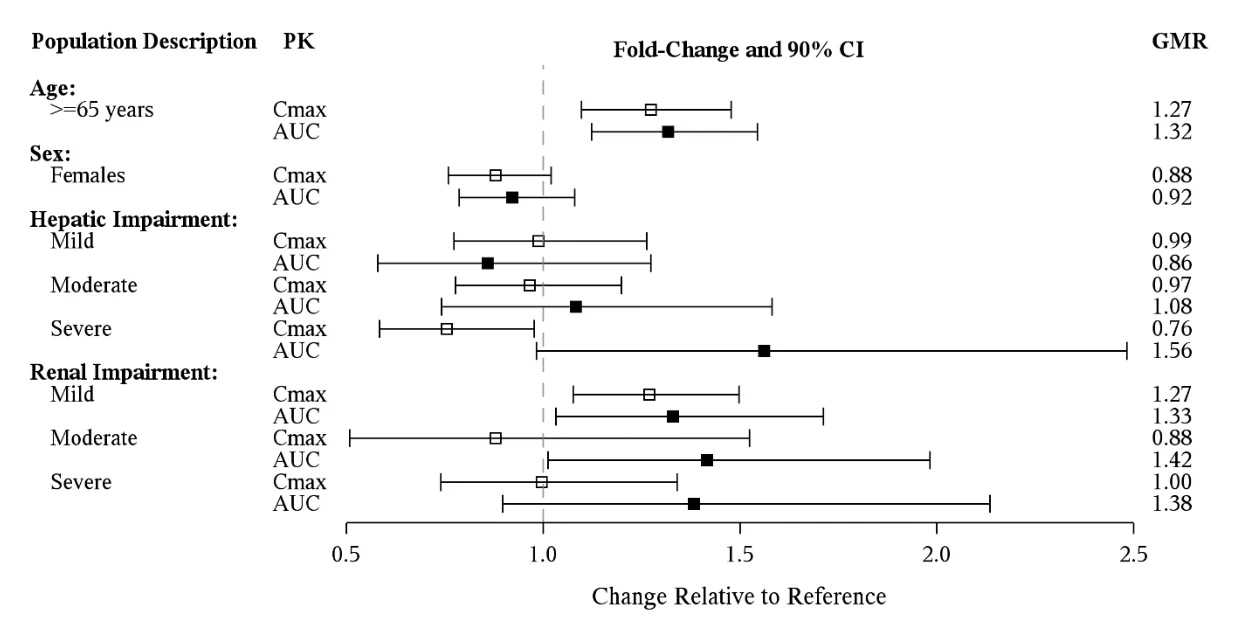
AUC = area under the concentration-time curve; CI = confidence interval; Cmax = maximum observed concentration; GMR = geometric mean ratio.
Data shown for participants ≥65 years are relative to younger participants (18 to 45 years).
Data shown for female participants are relative to male participants.
Data shown for renal and hepatic impairment are relative to participants with normal renal and hepatic function, respectively.
- 11. Storage, Stability, and Disposal
Store at room temperature 15°C to 25°C.
Keep out of the sight and reach of children.
Disposal via a pharmacy take back program is recommended.
Part 2: Scientific Information
13. Pharmaceutical Information
Drug Substance
Non-proprietary name of the drug substance(s): zuranolone
Chemical name: 1-[(3α,5β)-3-hydroxy-3-methyl-20-oxo-19-norpregnan-21-yl]-1H-pyrazole-4-carbonitrile
Molecular formula and molecular mass: C25H35N3O2 and 409.57 Da
Structural formula:
Physicochemical properties: Zuranolone is a white to off-white, non-hygroscopic, crystalline solid. It is slightly soluble to soluble in the organic solvents used in the manufacturing process and practically insoluble in water.
14. Clinical Trials
14.1. Clinical Trials by Indication
Indication: Treatment of Postpartum Depression
Table 5 – Summary of Patient Demographics for Clinical Trials in Postpartum Depression
| Study # | Study design | Dosage, route of administration and duration | Study subjects (n) | Mean age (range) | Sex |
| Study # | Study design | Dosage, route of administration and duration | Study subjects (n) | Mean age (range) | Sex |
| 217-PPD-301 | Randomized, double-blind, parallel-group, placebo-controlled, multi‑center study | 50 mg (Autofill formulation), oral, once daily for 14 days | N=98 zuranolone arm N=97 placebo arm | 30 (19 to 44) years | Female |
| 217-PPD-201 Part B | Randomized, double-blind, parallel-group, placebo-controlled, multi‑center study | 30 mg (Profill formulation- Another capsule formulation approximately equivalent to 35 mg of ZURZUVAE), oral, once daily for 14 days | N=76 zuranolone arm N=74 placebo arm | 28 (18 to 44) years | Female |
Table 6 - Population Characteristics
| Parameter | 217-PPD-301† | 217-PPD-201B§ | |||||||
|---|---|---|---|---|---|---|---|---|---|
| Taking a stable dose of oral antidepressants* for at least 30 days before baseline (%) | 15 | 19 | |||||||
| Race (%) | White | 70 | 56 | ||||||
| Black or African American | 22 | 41 | |||||||
| Asian | 1 | 1 | |||||||
| Other/Mixed | 7 | 2 | |||||||
| Ethnicity (%) | Hispanic or Latino | 39 | 23 | ||||||
| Body mass index (kg/m2) - mean (min, max) | 30 (19, 45) | 31 (17, 56) | |||||||
| Subjects with PPD onset within the first 4 weeks following delivery (%) | 67 | 58 | |||||||
| PPD episode duration at start of treatment (days) – mean (min, max) | 163.6 (28, 443) | 122.9 (28, 244) | |||||||
| HAMD-17 total score at baseline – mean (min, max) | 28.7 (21, 36) | 28.6 (26, 40) | |||||||
| MADRS total score at baseline – mean (min, max) | 35.3 (22, 49) | 35.6 (26, 50) | |||||||
HAMD-17: Hamilton depression rating scale; min = minimum; max = maximum
* Subjects taking stably dosed (≥ 30 days) antidepressant therapies (ADTs), with the exception of nefazodone, trazodone, or brexanolone, were eligible to enter the studies. The most common ADT used was sertraline.
† Full Analysis Set (FAS)
§ Efficacy set
The efficacy of zuranolone for the treatment of women with PPD was studied in two randomized, double-blind, parallel-group, placebo-controlled, multi‑center studies. In study 217‑PPD‑301, zuranolone 50 mg (ZURZUVAE) was taken orally with fat containing food once daily for 14 days, with the option to reduce the dosage, based on tolerability, to 40 mg for the remaining of the 14-day treatment period. In study 217-PPD-201B, zuranolone 30 mg (another capsule formulation with a higher relative bioavailability) was taken orally with food once daily for 14 days, with the option to reduce the dosage, based on tolerability, to 20 mg. Based on exposure estimates in the two studies, 30 mg of the formulation administered in 217-PPD-201B is approximately equivalent to 35 mg of formulation administered in 217-PPD-301.
Subjects enrolled in the studies had depressive symptoms represented by a total score ≥ 26 at baseline in the 17-item Hamilton Rating (HAMD17) Scale. Subjects also met criteria for Major Depression Episode (MDE) per DSM-5 (Diagnostic and Statistical Manual of Mental Disorders – 5th edition) but limited in both studies to onset of symptoms in the third trimester or within 4 weeks of delivery. Subjects started treatment up to 6 months and up to 12 months following childbirth for Study 201B and study 301, respectively. Subjects were followed for 4 weeks after the 14-day treatment course. In both studies, concomitant use of existing oral antidepressants was allowed for patients taking a stable dose of oral antidepressant for at least 30 days before baseline, and no changes to the concomitant antidepressant were allowed up to Day 45 (end of study follow-up) in Study 301 and Day 15 (end of treatment) in Study 201B. While a small proportion of patients (approximately 15-19%) in clinical trials continued on a stable dose of their oral antidepressant, the studies were not designed or powered to evaluate the effects of zuranolone versus placebo as an adjunctive therapy in patients with inadequate response to an antidepressant.
Both studies showed statistical superiority for the primary endpoint, the change from baseline at Day 15 (end of treatment day) in depressive symptoms as measured by the HAMD17 total score, compared to placebo.
Table 7 - Results of Study 217-PPD-301 and 217-PPD-201B in Treatment of PPD in Adults
| Primary Endpoints | Associated value and statistical significance for Zuranolone at specific dosages | Associated value and statistical significance for Placebo |
217-PPD-301 (zuranolone 50 mg): Change from baseline at Day 15 in the HAMD-17 total score | N = 98 Mean baseline score (SD): 28.6 (2.49) LS mean change from baseline (SE): -15.6 (0.82) | N = 97 Mean baseline score (SD): 28.8 (2.34) LS mean change from baseline (SE): -11.6 (0.82) |
Placebo-adjusted difference (95% CI): -4.0 (-6.3, -1.7) p† = 0.0007 | ||
217-PPD-201B (zuranolone 30 mg‡): Change from baseline at Day 15 in the HAMD-17 total score | N = 76 Mean baseline score (SD): 28.4 (2.09) LS mean change from baseline (SE): -17.8 (1.04) | N = 74 Mean baseline score (SD): 28.8 (2.32) LS mean change from baseline (SE): -13.6 (1.07) |
Placebo-adjusted difference (95% CI): -4.2 (-6.9, -1.5) p† = 0.0028 | ||
HAMD-17: Hamilton depression rating scale; N: number of subjects in the FAS (Study 217-PPD-301) and the Efficacy Set (Study 217-PPD-201B); SD: standard deviation; LS: least squares; SE: standard error; CI: confidence interval. A negative sign indicates improvement on postpartum depressive symptoms.
‡ Another capsule formulation with a higher relative bioavailability than ZURZUVAE – 30 mg was equivalent to 35 mg ZURZUVAE.
†Mixed model for repeated measures (MMRM) was used for the analysis.
Table 8. Results for Key Secondary Endpoints in Clinical Study 217-PPD-301
| Time point | Zuranolone 50 mg (N = 98) | Placebo (N = 97) | Placebo-adjusted difference (95% CI) p-value |
|---|---|---|---|
| Mean baseline score (SD) | LS mean change from baseline (SE) | Mean baseline score (SD) | LS mean change from baseline (SE) |
| Endpoint: change from baseline at Days 3, 28, and 45 in the HAMD-17 total score† | |||
| Day 3 | |||
| 28.6 (2.49) | (n = 98) -9.5 (0.70) | ||
| 28.8 (2.34) | (n = 96) -6.1 (0.71) | -3.4 (-5.4, -1.4) p = 0.0008 | |
| Day 28 | (n = 77) -16.3 (0.88) | (n = 85) -13.4 (0.88) | -2.9 (-5.4, -0.5) p = 0.0203 |
| Day 45 | (n = 84) -17.9 (0.90) | (n = 85) -14.4 (0.90) | -3.5 (-6.0, -1.0) p = 0.0067 |
| Endpoint: change from baseline at Day 15 in the CGI-S score† | |||
| Day 15 | |||
| 5.0 (0.66) | (n = 93) -2.2 (0.14) | ||
| 4.9 (0.58) | (n = 90) -1.6 (0.14) | -0.6 (-0.9, -0.2) p = 0.0052 | |
CGI-S: Clinical Global Impression Severity scale, HAMD-17: Hamilton depression rating scale; N: number of subjects in the FAS; n: number of subjects at the visit; SD: standard deviation; LS: least squares; SE: standard error; CI: confidence interval. Negative sign indicates improvement on postpartum depressive symptoms.
† Mixed model for repeated measures (MMRM) was used for the analyses.
16. Non-Clinical Toxicology
General toxicology:
Zuranolone was assessed in rat and dog toxicology models for up to 6 months (rat) or 9 months (dog) of daily administration. The no adverse effect limit of toxicity in rats was 3.4-fold higher and the no adverse effects limit of toxicity in dogs was 4.7-fold higher than the predicted steady state exposures in humans at the MRHD.
Abuse potential and dependence: One female dog was found dead four days after repeat dosing with 2.5 mg/kg for 9 months was stopped. One male dog was found dead two days after dosing with 2.5 mg/kg for 14 days was stopped, and one female was euthanized due to severe tremors and incoordination four days after dosing with 2.5 mg/kg for 14 days was stopped. Convulsions were observed in one male dog three days after repeat dosing with 2.5 mg/kg for 14 days was stopped, and the animal recovered. Convulsions leading to death/euthanasia were also noted in one male dog prior to daily dosing with 2 mg/kg, on Day 60 of a 90-day treatment period (3 months), and in one female dog prior to daily dosing with 2.5 mg/kg, on Day 30 of a 273-day treatment period (9 months). As the convulsions were noted prior to dosing, when zuranolone plasma concentrations were at their lowest, the events could possibly be related to withdrawal effects. Plasma exposure (AUC) at the no observed adverse effect level (NOAEL) after 9 months of repeat dosing was 4.7 times the human exposure at the MRHD, while after 14 days of dosing, it was approximately 3 times the human exposure at the MRHD.
Genotoxicity:
Zuranolone was not mutagenic or clastogenic in a standard battery of in vitro and in vivo genotoxicity assays.
Carcinogenicity:
Zuranolone did not exhibit any evidence of carcinogenicity in a 26-week oncogenicity study in transgenic mice or in a 104-week oncogenicity study in rats at plasma exposures approximately 4-fold higher than predicted steady state exposures in humans at the MRHD.
Reproductive and developmental toxicology:
There were no zuranolone related effects on fertility or reproductive function in pivotal fertility and early embryonic development studies in male rats. In female rats, persistent diestrus and post-implantation loss were increased at doses greater or equal to 3 mg/kg/day. In both these studies, dose-related increases in sedation and mortality were noted. Based on the exposure achieved at the no observed adverse effect level (NOAEL), the safety margins for female exposure for maternal toxicity and fertility were 1.7-fold and 3.8-fold, respectively, compared to the MRHD. In the male fertility study the exposure in males at the NOAEL values for male toxicity and female fertility were 1.2-fold and 2.6-fold, respectively, compared to the MRHD.
In the pivotal rat embryo-fetal development study, dose-related observations of decreased activity, sedation, loss of consciousness, hyperreactivity and convulsions were noted in all treated groups, extending to mortality in the highest dose group. Furthermore, increased resorptions and post-implantation loss and lower gravid uterine weight were noted at the highest dose (22.5 mg/kg). Decreased fetal weight (high dose only) and increases in fetal malformations were noted at all dose levels which were considered treatment-related at 7.5 and 22.5 mg/kg/day. The developmental NOAEL was 2.5 mg/kg/day, providing an exposure margin of 2.7-fold the exposure at the MRHD.
Oral administration of zuranolone (0, 30, 100, or 300 mg/kg/day) to pregnant mice during organogenesis resulted in maternal dose-dependent sedation which was severe at 300 mg/kg/day. Adverse reduced fetal body weight occurred at 300 mg/kg/day, which was associated with incomplete or no skeletal ossification. There was an increased incidence of cleft palate at 300 mg/kg/day (6 times the AUC exposure at the MRHD). The NOAEL for embryofetal development was 100 mg/kg/day with maternal exposures (AUC) approximately 4 times that in humans at the MRHD.
In a pre‑/postnatal development study in rats, oral administration of zuranolone during pregnancy and lactation resulted in maternal mortality and adverse clinical signs at 4 and 10 mg/kg/day. A dose-related increased incidence and severity in sedation, hyperreactivity, labored breathing, tremors and convulsions was also noted in surviving animals. Dams receiving zuranolone had higher numbers of stillborn pups, no liveborn pups, and 6 dams had their entire litters die during the first 4 days after birth. An increase in postnatal pup mortality occurred at doses ≥ 4 mg/kg/day as reflected in the lower viability indices in these groups. Lack of nursing and lower body weight gains during lactation and post-weaning were noted in pups from maternal treatment groups ≥ 4 mg/kg/day. There were no treatment-related effects on sexual maturation, neurobehavioral assessments, or reproductive capability in offspring at up to 4 mg/kg/day. The maternal and developmental toxicity NOAEL was 1 mg/kg/day, corresponding to maternal exposures that were 1.4-fold the MRHD.
Juvenile toxicity:
Zuranolone was administered once on post-natal day 7 to rats (which corresponds to a period of child brain development from third trimester of pregnancy to a few years after birth). Dose-related hypoactivity, sedation, labored breathing was noted at both doses tested, with one death in the high dose group. An increase in apoptotic neurodegeneration in the brain was observed at the highest dose tested. The no-effect dose (2.5 mg/kg) was associated with plasma exposures (AUC) comparable to that in humans at the MRHD.
In a juvenile toxicity study in rats, dose-related observations similar to those in adults were noted following zuranolone administration, including tremors, labored breathing, decreased activity, sedation, loss of consciousness and mortality in the highest dose tested. Reduced food intake and body weight gains were reported, without an impact on bone growth. The NOAEL was approximately 2-fold the exposure at the MRHD in mothers.