


Product Monograph - Apo-Perindopril-Indapamide
RECENT MAJOR LABEL CHANGES
| 2 CONTRAINDICATIONS | 05/2023 |
|---|---|
| 7 WARNINGS AND PRECAUTIONS | 05/2023 |
TABLE OF CONTENTS
Sections or subsections that are not applicable at the time of authorization are not listed.
RECENT MAJOR LABEL CHANGES .......................................................................................... 2
TABLE OF CONTENTS ............................................................................................................ 2
PART I: HEALTH PROFESSIONAL INFORMATION .................................................................... 4
1 INDICATIONS ................................................................................................................. 4
1.1 Pediatrics (< 18 Years Of Age) ....................................................................................... 4
1.2 Geriatrics (> 65 years of age)......................................................................................... 4
2 CONTRAINDICATIONS .................................................................................................... 4
3 SERIOUS WARNINGS AND PRECAUTIONS BOX ................................................................ 5
4 DOSAGE AND ADMINISTRATION .................................................................................... 6
4.1 Dosing Considerations ................................................................................................... 6
4.2 Recommended Dose and Dosage Adjustment.............................................................. 6
4.4 Administration ............................................................................................................... 6
4.5 Missed Dose .................................................................................................................. 7
5 OVERDOSAGE ................................................................................................................ 7
6 DOSAGE FORMS, STRENGTHS, COMPOSITION AND PACKAGING ..................................... 7
7 WARNINGS AND PRECAUTIONS ..................................................................................... 8
7.1 Special Populations ..................................................................................................... 18
7.1.1 Pregnant Women ........................................................................................................ 18
7.1.3 Pediatrics (<18 years of age) ....................................................................................... 19
7.1.4 Geriatrics (>65 years of age) ....................................................................................... 19
7.1.5 Diabetic patients ......................................................................................................... 19
7.1.6 Patients with impaired liver function .......................................................................... 20
8 ADVERSE REACTIONS ................................................................................................... 20
8.1 Adverse Reaction Overview ........................................................................................ 20
8.2 Clinical Trial Adverse Reactions ................................................................................... 21
8.3 Less Common Clinical Trial Adverse Reactions ........................................................... 23
8.4 Abnormal Laboratory Findings: Hematologic, Clinical Chemistry and Other Quantitative Data ........................................................................................................................... 24
8.5 Post-Market Adverse Reactions .................................................................................. 26
9 DRUG INTERACTIONS ................................................................................................... 27
9.2 Drug Interactions Overview ........................................................................................ 27
9.3 Drug- Behavioural Interactions ................................................................................... 27
9.4 Drug-Drug Interactions ................................................................................................ 28
9.5 Drug-Food Interactions ............................................................................................... 39
9.6 Drug-Herb Interactions................................................................................................ 39
9.7 Drug-Laboratory Test Interactions .............................................................................. 39
10 CLINICAL PHARMACOLOGY .......................................................................................... 39
10.1 Mechanism of Action .................................................................................................. 39
10.2 Pharmacodynamics ..................................................................................................... 40
10.3 Pharmacokinetics ........................................................................................................ 41
11 STORAGE, STABILITY AND DISPOSAL ............................................................................ 44
12 SPECIAL HANDLING INSTRUCTIONS .............................................................................. 44
PART II: SCIENTIFIC INFORMATION ..................................................................................... 45
13 PHARMACEUTICAL INFORMATION ............................................................................... 45
14 CLINICAL TRIALS ........................................................................................................... 45
14.1 Clinical Trials by Indication .......................................................................................... 45
14.2 Comparative Bioavailability Studies ............................................................................ 53
15 MICROBIOLOGY ........................................................................................................... 56
16 NON-CLINICAL TOXICOLOGY ........................................................................................ 56
17 SUPPORTING PRODUCT MONOGRAPHS ....................................................................... 66
PATIENT MEDICATION INFORMATION ................................................................................ 67
PART I: HEALTH PROFESSIONAL INFORMATION
1 INDICATIONS
APO-PERINDOPRIL-INDAPAMIDE 2 mg / 0.625 mg (perindopril erbumine / indapamide) is indicated for the initial treatment of mild to moderate essential hypertension.
APO-PERINDOPRIL-INDAPAMIDE 4 mg / 1.25 mg and 8 mg / 2.5 mg (perindopril erbumine / indapamide) are indicated in the treatment of mild to moderate essential hypertension in patients for whom combination therapy is appropriate.
APO-PERINDOPRIL-INDAPAMIDE 4 mg / 1.25 mg and 8 mg / 2.5 mg (perindopril erbumine / indapamide) are not indicated for initial therapy. Patients in whom perindopril and indapamide are initiated simultaneously can develop symptomatic hypotension (see 9.4 Drug-Drug Interactions - Concomitant ACE Inhibitor and Diuretic Therapy).
Patients should be titrated on the individual drugs. If the fixed combination represents the dosage determined by this titration, the use of APO-PERINDOPRIL-INDAPAMIDE 4 mg / 1.25 mg or 8 mg / 2.5 mg may prove to be more convenient in the management of patients. If during maintenance therapy dosage adjustment is necessary, it is advisable to use individual drugs (see 4 DOSAGE AND ADMINISTRATION).
The safety and efficacy of perindopril erbumine / indapamide in renovascular hypertension and in congestive heart failure have not been established and therefore, their use in this condition is not recommended.
1.1 Pediatrics (< 18 years of age)
The safety and effectiveness of perindopril erbumine / indapamide in children have not been established. Its use in this age group, therefore, is not recommended.
1.2 Geriatrics (> 65 years of age)
Although the blood pressure response and safety profile of perindopril erbumine / indapamide in patients >65 years old were comparable to those of the younger adult patients, greater sensitivity of some elderly patients cannot be ruled out.
2 CONTRAINDICATIONS
APO-PERINDOPRIL-INDAPAMIDE 8 mg / 2.5 mg is contraindicated in patients with moderate renal impairment (GFR = 30 to 59 mL/min/1.73m2).
APO-PERINDOPRIL-INDAPAMIDE is contraindicated in:
- Patients who are hypersensitive to this drug or to any ingredient in the formulation. For a complete listing, see the 6 DOSAGE FORMS, STRENGTHS, COMPOSITION AND PACKAGING of the product monograph.
- Patients who are hypersensitive to other sulfonamide derivatives.
- Patients with hereditary/idiopathic angioedema or a history of angioedema related to previous treatment with an angiotensin converting enzyme (ACE) inhibitor (see 7 WARNINGS AND PRECAUTIONS, General).
- Women who are pregnant, intend to become pregnant, or of childbearing potential who are not using adequate contraception (see 7.1.1 Pregnant Women).
- Nursing women (see 7.1.2 Breast-feeding).
- Patients with severe renal impairment (GFR <30 mL/min/1.73m2).
- Patients with hypokalemia.
- Patients with severe hepatic impairment.
- Patients with hepatic encephalopathy.
- Combination with anti-arrhythmic agents causing torsade de pointes (see 9.4 Drug-Drug Interactions).
- Patients with hereditary problems of galactose intolerance, glucose-galactose malabsorption, or the total lactase deficiency as APO-PERINDOPRIL-INDAPAMIDE contains lactose (see 7 WARNINGS AND PRECAUTIONS, Sensitivity/ Resistance).
- Combination with sacubitril/valsartan due to an increased risk of angioedema. APO-PERINDOPRIL-INDAPAMIDE must not be initiated earlier than 36 hours after the last dose of sacubitril/valsartan
- Combination with aliskiren-containing drugs in patients with diabetes mellitus (type 1 or type 2) or moderate to severe renal impairment (GFR <60 mL/min/1.73m2) (see 7 WARNINGS AND PRECAUTIONS, Dual Blockade of the Renin-Angiotensin System (RAS) and Renal, and 9.4 Drug-Drug Interactions, Dual Blockade of the Renin-Angiotensin-System (RAS) with ACE inhibitors, ARBs or aliskiren-containing drugs).
- Patients with extracorporeal treatments leading to contact of blood with negatively charged surfaces (see 9 DRUG INTERACTIONS),
- Patients with bilateral renal artery stenosis or renal artery stenosis in a single functioning kidney (see 7 WARNINGS AND PRECAUTIONS, Renal).
3 SERIOUS WARNINGS AND PRECAUTIONS BOX
Serious Warnings and Precautions
|
|---|
4 DOSAGE AND ADMINISTRATION
4.1 Dosing Considerations
Dosage of APO-PERINDOPRIL-INDAPAMIDE (perindopril erbumine/indapamide) must be individualized and adjustment is required in the elderly, and in case of renal impairment.
APO-PERINDOPRIL-INDAPAMIDE 4 mg / 1.25 mg and 8 mg / 2.5 mg are not for initial therapy and the dose should be determined by titration of the individual components.
4.2 Recommended Dose and Dosage Adjustment
Initiation of therapy requires consideration of recent antihypertensive drug treatment, the extent of blood pressure elevation and salt restriction. The dosage of other antihypertensive agents being used with APO-PERINDOPRIL-INDAPAMIDE may need to be adjusted. The presence of food in the gastrointestinal tract reduces the bioavailability of perindoprilat.
Pediatrics (< 18 years)
Health Canada has not authorized an indication for pediatric use.
4.4 Administration
APO-PERINDOPRIL-INDAPAMIDE should be taken once daily, preferably in the morning before a meal (see 9.5 Drug-Food Interactions).
APO-PERINDOPRIL-INDAPAMIDE (2 mg / 0.625 mg): 1 tablet per day as a single dose. In case of uncontrolled blood pressure, the dose may be increased to 2 tablets of APO-PERINDOPRIL-INDAPAMIDE 2 mg / 0.625 mg as a single dose or 1 tablet of APO-PERINDOPRIL-INDAPAMIDE 4 mg / 1.25 mg.
APO-PERINDOPRIL-INDAPAMIDE (4 mg / 1.25 mg) or (8 mg / 2.5 mg): Once the patient has been successfully titrated with the individual components, 1 tablet per day of APO-PERINDOPRIL-INDAPAMIDE 4 mg / 1.25 mg or 8 mg / 2.5 mg may be substituted if the titrated doses and dosing schedule can be achieved by the fixed combination (see 1 INDICATIONS and 7 WARNINGS AND PRECAUTIONS).
The elderly
Treatment should be initiated after considering blood pressure response and renal function.
Renal impairment
The use of APO-PERINDOPRIL-INDAPAMIDE is contraindicated in patients with severe renal impairment (GFR <30 mL/min/1.73m2) (see 2 CONTRAINDICATIONS).
APO-PERINDOPRIL-INDAPAMIDE 8 mg / 2.5 mg is contraindicated in patients with moderate renal impairment (GFR = 30 to 59 mL/min/1.73m2) (see 2 CONTRAINDICATIONS). Treatment with APO-PERINDOPRIL-INDAPAMIDE (2 mg / 0.625 mg) / (4 mg / 1.25 mg) should start with the adequate dosage of the combination of the individual components. Caution should be exercised especially in the elderly patients as greater sensitivity in the elderly cannot be ruled out.
In patients with GFR ≥60 mL/min/1.73m2, no dose modification is required. Usual medical follow-up will include frequent monitoring of creatinine and potassium levels.
4.5 Missed Dose
If a dose is missed, a double dose should not be taken; the patient should just carry on with the next dose at the normal time.
5 OVERDOSAGE
The most likely adverse event in case of APO-PERINDOPRIL-INDAPAMIDE overdose is hypotension with nausea, vomiting, cramps, dizziness, sleepiness, mental confusion, polyuria or oliguria which may progress to anuria. Electrolytes and water disturbances may occur.
The first measure is to rapidly eliminate ingested APO-PERINDOPRIL-INDAPAMIDE by gastric lavage and/or administration of activated charcoal. Fluid and electrolyte balance should then be restored.
If marked hypotension is produced, place the patient in a supine position with the head lower than the rest of the body. If necessary, give an IV infusion of 0.9% sodium chloride or use any other method of volume expansion.
Perindoprilat, the active form of perindopril, can be dialysed (see 10.3 Pharmacokinetics).
For management of a suspected drug overdose, contact your regional poison control centre.
6 DOSAGE FORMS, STRENGTHS, COMPOSITION AND PACKAGING
Table 1 – Dosage Forms, Strengths, Composition and Packaging
| Route of Administration | Dosage form / Strength / Composition | Non-Medicinal Ingredients |
| Oral | Tablet: 2 mg / 0.625 mg, 4 mg / 1.25 mg, and 8 mg / 2.5 mg | Anhydrous lactose and magnesium stearate. |
Dosage form
APO-PERINDOPRIL-INDAPAMIDE 2 mg / 0.625 mg: White to off-white colored, capsule shaped, biconvex tablets with “A bisect A” engraved on one side and “P bisect I” on the other side.
APO-PERINDOPRIL-INDAPAMIDE 4 mg / 1.25 mg: White, capsule-shaped, biconvex tablets engraved “4/1.25” on one side and “APO” on the other side.
APO-PERINDOPRIL-INDAPAMIDE 8 mg / 2.5 mg: White to off-white colored, round shaped, biconvex tablets with “APO” engraved on one side and “8 over 2.5” on the other side.
Packaging
APO-PERINDOPRIL-INDAPAMIDE is supplied in perforated blister packs of 30 tablets.
APO-PERINDOPRIL-INDAPAMIDE 8 mg / 2.5 mg is also supplied in bottles of 100 tablets.
APO-PERINDOPRIL-INDAPAMIDE 4 mg / 1.25 mg is also supplied in bottles of 100 tablets.
7 WARNINGS AND PRECAUTIONS
Please see 3 SERIOUS WARNINGS AND PRECAUTIONS BOX
General
Head and neck angioedema
Life-threatening angioedema has been reported with ACE inhibitors. The overall incidence is approximately 0.1 to 0.2%. The aetiology is thought to be non-immunogenic and may be related to accentuated bradykinin activity. Usually, the angioedema is non-pitting edema of the skin mucous membrane and subcutaneous tissue.
Angioedema involving the face, extremities, lips, tongue, glottis and / or larynx has been reported in patients treated with ACE inhibitors, including perindopril. Angioedema associated with laryngeal involvement may be fatal. If laryngeal stridor or angioedema of the face, tongue, or glottis occurs, APO-PERINDOPRIL-INDAPAMIDE should be discontinued immediately, the patient treated appropriately in accordance with accepted medical care, and carefully observed until the swelling disappears. In instances where swelling is confined to the face and lips, the condition generally resolves without treatment, although antihistamines may be useful in relieving symptoms.
Where there is involvement of the tongue, glottis or larynx, angioedema may be fatal due to airway obstruction, appropriate therapy (including but not limited to 0.3 to 0.5 mL of
| (as Perindopril Erbumine / Indapamide) |
subcutaneous epinephrine solution 1:1000 and oxygen) should be administered promptly (see 8 ADVERSE REACTIONS).
Treatment of progressive angioedema should be aggressive. Failing a rapid response to medical therapy, mechanical methods to secure an airway should be undertaken before massive oedema complicates oral or nasal intubation.
Patients who respond to medical treatment should be observed carefully for a possible rebound phenomenon. The onset of angioedema associated with the use of ACE inhibitors may be delayed for weeks or months.
Patients may have multiple episodes of angioedema with long symptom-free intervals. Angioedema may occur with or without urticaria. The incidence of angioedema during ACE inhibitor therapy has been reported to be higher in black than in non-black patients.
There are reports that switching a patient to another ACE inhibitor could be followed by a recurrence of angioedema. Because of the potential severity of this rare event, another ACE inhibitor should not be used in patients with a history of angioedema (see 2 CONTRAINDICATIONS).
Patients with a history of angioedema unrelated to ACE inhibitor therapy may be at increased risk of angioedema while receiving an ACE inhibitor (see 2 CONTRAINDICATIONS).
Concomitant use of mTOR inhibitors, DPP-IV inhibitors and NEP inhibitors
Patients taking a concomitant mTOR inhibitor (e.g. sirolimus, everolimus, temsirolimus), DPP-IV inhibitor (e.g. sitagliptin, linagliptin, saxagliptin) or neutral endopeptidase (NEP) inhibitor may be at increased risk for angioedema (e.g. swelling of the airways or tongue, with or without respiratory impairment). Caution should be used when initiating ACE inhibitor therapy in patients already taking a mTOR, DPP-IV or NEP inhibitor or vice versa (see 9 DRUG INTERACTIONS).
Intestinal Angioedema
Intestinal angioedema has been reported in patients treated with ACE inhibitors. These patients presented with abdominal pain (with or without nausea or vomiting); in some cases, there was no prior history of facial angioedema and C-1 esterase levels were normal.
Angioedema was diagnosed by procedures including abdominal CT scan or ultrasound, or at surgery, and symptoms resolved after stopping the ACE inhibitor. Intestinal angioedema should be included in the differential diagnosis of patients on ACE inhibitors presenting with abdominal pain.
Choroidal effusion, acute myopia and secondary angle-closure glaucoma
Sulfonamide or sulfonamide derivative drugs can cause an idiosyncratic reaction resulting in choroidal effusion with visual field defect, transient myopia and acute angle-closure glaucoma.
Symptoms include acute onset of decreased visual acuity or ocular pain and typically occur within hours to weeks of drug initiation. Untreated acute angle-closure glaucoma can lead to permanent vision loss. The primary treatment is to discontinue drug intake as rapidly as possible. Prompt medical or surgical treatments may need to be considered if the intraocular pressure remains uncontrolled. Risk factors for developing acute angle-closure glaucoma may include a history of sulfonamide or penicillin allergy.
Cardiovascular
Hypotension
Perindopril can cause symptomatic hypotension. Perindopril has been associated with hypotension in 0.3% of uncomplicated hypertensive patients in U.S. placebo-controlled trials. Symptoms related to orthostatic hypotension were reported in another 0.8% of patients. It is more likely to occur after the first or second dose or when the dose was increased and in patients who are volume depleted by diuretic therapy, dietary salt restriction, dialysis, diarrhoea, vomiting or with impaired renal function. Volume and /or salt depletion should be corrected before initiation of therapy with perindopril (see 4 DOSAGE AND ADMINISTRATION). In patients with ischemic heart or cerebrovascular disease and /or severe congestive heart failure, with or without associated renal insufficiency, ACE inhibitors may cause an excessive fall in blood pressure which could result in syncope, myocardial infarction, neurological deficits, oliguria and/or progressive azotemia and, rarely, in acute renal failure and/or death (see 8 ADVERSE REACTIONS).
Because of the potential fall in blood pressure in these patients, therapy with APO-PERINDOPRIL-INDAPAMIDE should be started under very close medical supervision. Such patients should be followed closely for the first 2 weeks of treatment.
If hypotension occurs, the patient should be placed in a supine position and, if necessary, receive an intravenous infusion of 0.9% sodium chloride. A transient hypotensive response is not a contraindication to further doses which usually can be given without difficulty once the blood pressure has increased after volume expansion. If hypotension recurs, treatment with APO-PERINDOPRIL-INDAPAMIDE should be discontinued.
Aortic or Mitral Valve Stenosis / Hypertrophic Cardiomyopathy
As with other ACE inhibitors, APO-PERINDOPRIL-INDAPAMIDE should be given with caution to patients with mitral valve stenosis and obstruction in the outflow of the left ventricle such as aortic stenosis or hypertrophic cardiomyopathy. There is concern on theoretical grounds that patients with aortic stenosis might be at particular risk of decreased coronary perfusion when treated with vasodilators including ACE inhibitors because they do not develop as much afterload reduction. Vasodilators may tend to drop diastolic pressure, and hence coronary pressure, without producing the concomitant reduction in myocardial oxygen demand that normally accompanies vasodilation.
Dual blockade of the Renin-Angiotensin System (RAS)
There is evidence that co-administration of angiotensin converting enzyme (ACE) inhibitors, such as the perindopril erbumine component of APO-PERINDOPRIL-INDAPAMIDE or of angiotensin receptor antagonists (ARBs) with aliskiren increases the risk of hypotension, syncope, stroke, hyperkalemia and deterioration of renal function, including renal failure, in patients with diabetes mellitus (type 1 or type 2) and/or moderate to severe renal impairment (GFR < 60 mL/min/1.73m2). Therefore, the use of APO-PERINDOPRIL-INDAPAMIDE in combination with aliskiren-containing drugs is contraindicated in these patients (see 2 CONTRAINDICATIONS).
Further, co-administration of ACE inhibitors, including the perindopril component of APO-PERINDOPRIL-INDAPAMIDE, with other agents blocking the RAS, such as ARBs or aliskiren-containing drugs, is generally not recommended in other patients, since such treatment has been associated with an increased incidence of severe hypotension, renal failure, and hyperkalemia.
Primary aldosteronism
Patients with primary aldosteronism generally will not respond to anti-hypertensive drugs acting through inhibition of the RAS. Therefore, the use of APO-PERINDOPRIL-INDAPAMIDE is not recommended in these patients.
Driving and Operating Machinery
Perindopril can have minor or moderate influence on the ability to drive and use machines. If patients suffer from dizziness, headache, fatigue, weariness or nausea, the ability to react may be impaired. Caution is recommended with APO-PERINDOPRIL-INDAPAMIDE especially at the start of treatment.
Hematologic
Neutropenia / Agranulocytosis / Thrombocytopenia / Anaemia
Neutropenia / agranulocytosis, thrombocytopenia and anaemia have been reported in patients receiving ACE inhibitors. In patients with normal renal function and no other complicating factors, neutropenia occurs rarely. Perindopril should be used with extreme caution in patients with collagen vascular disease such as systemic lupus erythematosus or scleroderma, and those on multiple drug therapy with agents known to be nephrotoxic or myelosuppressive (immunosuppressant therapy, treatment with allopurinol or procainamide), or a combination of these complicating factors, especially if there is pre-existing impaired renal function.
Some of these patients developed serious infections, which in a few instances did not respond to intensive antibiotic therapy. If perindopril is used in such patients, periodic monitoring of white blood cell counts is advised and patients should be instructed to report any sign of infection (see 7 WARNINGS AND PRECAUTIONS, Monitoring and Laboratory Tests, Hematological Monitoring and 9.4 Drug-Drug Interactions).
Hepatic/ Biliary/Pancreatic
Hepatic failure
Rarely, ACE inhibitors have been associated with a syndrome that starts with cholestatic jaundice and progresses to fulminant hepatic necrosis and (sometimes) death. The mechanism of this syndrome is not understood. Patients receiving ACE inhibitors who develop jaundice or marked elevations of hepatic enzymes should discontinue the ACE inhibitor and receive appropriate medical follow-up.
Immune
Anaphylactoid Reactions during Membrane Exposure (hemodialysis patients)
Anaphylactoid reactions have been reported in patients dialyzed with high-flux membranes (e.g. polyacrylonitrile (PAN)) and treated concomitantly with an ACE inhibitor. Dialysis should be stopped immediately if symptoms such as nausea, abdominal cramps, burning, angioedema, shortness of breath and severe hypotension occur. Symptoms are not relieved by antihistamines. In these patients, consideration should be given to using a different type of dialysis membrane or a different class of antihypertensive agent.
Anaphylactoid Reactions during LDL Apheresis
Rarely, patients receiving ACE inhibitors during low density lipoprotein apheresis with dextran sulphate absorption have experienced life-threatening anaphylactoid reactions. These reactions were avoided by temporarily withholding the ACE inhibitor therapy prior to each apheresis.
Anaphylactoid Reactions during Desensitization
There have been isolated reports of patients experiencing sustained, life-threatening anaphylactoid reactions while receiving ACE inhibitors during desensitization treatment with hymenoptera (bees, wasps) venom. In the same patients, these reactions have been avoided when ACE inhibitors were temporarily withheld for at least 24 hours, but they reappeared upon inadvertent rechallenge.
Nitritoid Reactions - Gold
Nitritoid reactions (symptoms include facial flushing, nausea, vomiting and symptomatic hypotension) have been reported rarely in patients on therapy with injectable gold (sodium aurothiomalate) and concomitant ACE inhibitor therapy including perindopril erbumine / indapamide (see 9 DRUG INTERACTIONS).
Metabolism
Calcium excretion is decreased by diuretics pharmacologically related to indapamide. However, after 6 to 8 weeks of indapamide 1.25 mg treatment and in long-term studies of hypertensive patients with higher doses of indapamide, serum concentrations of calcium increased only slightly with indapamide.
Prolonged treatment with drugs pharmacologically related to indapamide may in rare instances be associated with hypercalcemia and hypophosphatemia secondary to physiologic changes in the parathyroid gland; however, the common complications of hyperparathyroidism, such as renal lithiasis, bone resorption, and peptic ulcer, have not been seen. Treatment should be discontinued before tests for parathyroid function are performed. Like the thiazides, indapamide may decrease serum PBI levels without signs of thyroid disturbance. The antihypertensive effect of the drug may be enhanced in the patient post-sympathectomy.
Other metabolic parameters
Blood urea nitrogen (BUN), uric acid, and glucose levels should also be assessed during therapy. Hyperuricemia may occur during administration of indapamide. Rarely gout has been reported. Blood uric acid levels should be monitored, particularly in patients with a history of gout who should continue to receive appropriate treatment.
Monitoring and Laboratory Tests
Hematological Monitoring
Perindopril should be used with extreme caution and periodic monitoring of white blood cell counts is advised in patients with collagen vascular disease such as systemic lupus erythematosus or scleroderma, and those on multiple drug therapy with agents known to be nephrotoxic or myelosuppressive (immunosuppressant therapy, treatment with allopurinol or procainamide), or a combination of these complicating factors, especially if there is pre-existing impaired renal function (see 7 WARNINGS AND PRECAUTIONS, Hematologic, Neutropenia/ Agranulocytosis / Thrombocytopenia/ Anemia and 9.4 Drug-Drug Interactions).
Renal Function Monitoring
Routine monitoring of potassium and creatinine is part of normal medical practice for renal impairment patients (GFR = 30 to 59 mL/min/1.73m2). Particularly careful monitoring is required in hypertensive patients with renal artery stenosis. In such patients, renal function should be monitored during the first few weeks of therapy.
Potassium Monitoring
If concomitant use of potassium-sparing diuretics, potassium supplements, potassium-containing salt substitutes, drugs associated with increase in serum potassium, or other RAAS inhibitors is deemed appropriate, regular monitoring of serum potassium and urea is recommended.
Sodium Monitoring
Sodium levels should be tested before treatment is started, then at regular intervals. All diuretic treatment can cause a reduction in sodium levels, which may have serious consequences. Reduction in sodium levels can be initially asymptomatic and regular testing is therefore essential. Testing should be more frequent in elderly and cirrhotic patients (see 8 ADVERSE REACTIONS and 5 OVERDOSAGE).
Doping tests
Athletes should note that this product contains indapamide which may cause a positive reaction in doping tests.
Peri-Operative Considerations
ACE inhibitors may augment the hypotensive effects of anaesthetics and analgesics. In patients undergoing major surgery or during anaesthesia with agents that produce hypotension, perindopril may block the angiotensin II formation that could otherwise occur secondary to compensatory renin release. The treatment should be discontinued 1 day prior to the surgery. If hypotension occurs and is considered to be due to this mechanism, it can be corrected by volume expansion (see 9.4 Drug-Drug Interactions).
Renal
Impaired Renal Function
As a consequence of inhibiting the renin-angiotensin-aldosterone system (RAAS), changes in renal function may be anticipated in susceptible individuals.
Use of APO-PERINDOPRIL-INDAPAMIDE should include appropriate assessment of renal function.
The use of ACE inhibitors, including the perindopril erbumine component of APO-PERINDOPRIL-INDAPAMIDE, or ARBs with aliskiren-containing drugs is contraindicated in patients with moderate to severe renal impairment (GFR < 60 mL/min/1.73m2). (See 2 CONTRAINDICATIONS and 9 4 Drug-Drug Interactions, Dual Blockade of the Renin-Angiotensin-System (RAS) with ACE inhibitors, ARBs or aliskiren-containing drugs).
In patients with severe renal impairment (GFR <30 mL/min/1.73m2), all dosages are contraindicated (see 2 CONTRAINDICATIONS).
In patients with moderate renal impairment (GFR = 30 to 59 mL/min/1.73m2), APO-PERINDOPRIL-INDAPAMIDE 8 mg / 2.5 mg is contraindicated (see 2 CONTRAINDICATIONS), and the initial dosage of APO-PERINDOPRIL-INDAPAMIDE 2 mg / 0.625 mg and 4 mg / 1.25 mg should be adjusted according to the patient’s creatinine clearance and then as a function of the patient’s response to treatment. Routine monitoring of potassium and creatinine are part of normal medical practice for these patients.
In patients whose renal function may depend on the activity of the RAAS, such as patients with bilateral renal artery stenosis, unilateral renal artery stenosis to a solitary kidney, or severe congestive heart failure, treatment with agents that inhibit this system has been associated with oliguria, progressive azotemia, and rarely, acute renal failure and/or death. In susceptible patients, concomitant diuretic use may further increase risk.
Hypertensive Patients with Renal Artery Stenosis
In clinical trials in hypertensive patients with unilateral or bilateral renal artery stenosis, increases in blood urea nitrogen (BUN) and serum creatinine were observed in 20% of patients. Experience with ACE inhibitors suggests that these increases are usually reversible upon discontinuation of the drug. In such patients, renal function should be monitored during the first few weeks of therapy. ACE inhibitors should be avoided in patients with known or suspected renal artery stenosis.
When an ACE inhibitor is given to a patient with stenosis of the renal artery supplying a solitary kidney, or bilateral artery stenosis, acute renal insufficiency may occur. ACE inhibition may also cause a decrease in renal function in patients with stenosis of the artery supplying a transplanted kidney. It is believed that renal artery stenosis reduces the pressure in the afferent glomerular arteriole, and transglomerular hydrostatic pressure is then maintained by angiotensin II–induced constriction of the efferent arteriole. When an ACE inhibitor is given, the efferent arteriole relaxes, glomerular filtration falls, and renal failure may result. The thrombotic occlusion of a stenosed renal artery can be precipitated by ACE inhibitors.
Some hypertensive patients without apparent pre-existing renal vascular disease have developed increases in BUN and serum creatinine, usually minor and transient. These increases are more likely to occur in patients treated concomitantly with a diuretic and in patients with pre-existing renal impairment. Reduction of dosages of perindopril, the diuretic or both may be required. In some cases, discontinuation of either or both drugs may be necessary. Evaluation of hypertensive patients should always include an assessment of renal function (see 4 DOSAGE AND ADMINISTRATION). If deterioration in renal function has occurred after treatment with one ACE inhibitor, then it is likely to be precipitated by another and in these patient’s usage of another class of antihypertensive agent would be preferable. Patients with unilateral renal artery disease present a special problem as deterioration of function may not be apparent from measurement of blood urea and serum creatinine.
Proteinuria
Some ACE inhibitors have been associated with the occurrence (up to 0.7%) of proteinuria (<1 gram/ 24 hours) and/or decline in renal function in patients with one or more of the following characteristics: old age, pre-existing renal disease, concomitant treatment with potassium-sparing diuretics or high doses of other diuretics, limited cardiac reserve, or treatment with a non-steroidal anti-inflammatory drug. Perindoprilat, the active form of perindopril, is dialysable with a clearance of 70 mL/min.
Fluid and Electrolyte Imbalance
Electrolyte changes observed with indapamide may be severe. The recommended maximum daily dose of 2.5 mg/day should not be exceeded.
Hypokalemia may occur with consequent weakness, cramps and cardiac dysrhythmias. Hypokalemia is a particular hazard in digitalized patients; dangerous or fatal cardiac arrhythmias may be precipitated. Hypokalemia occurs commonly with diuretics; electrolyte monitoring is essential particularly in patients who would be at increased risk from hypokalemia, such as patients with cardiac arrhythmias or those who are receiving concomitant cardiac glycosides.
Subjects presenting with a long QT interval are also at risk, whether the origin is congenital or iatrogenic. Hypokalemia, as with bradycardia, acts as a factor which favours the onset of severe rhythm disorders, in particular torsades de pointes, which may be fatal.
Hypokalemia may cause muscle disorders. Cases of Rhabdomyolysis have been reported, mainly in the context of severe hypokalemia.
Hypokalemia found in association with low serum magnesium concentration can be refractory to treatment unless serum magnesium is corrected.
Patients with renal insufficiency receiving APO-PERINDOPRIL-INDAPAMIDE should be carefully monitored. If increased azotemia and oliguria occur during treatment, APO-PERINDOPRIL-INDAPAMIDE should be discontinued.
Patients receiving indapamide should be carefully observed for signs and symptoms of electrolyte imbalance, namely hypokalemia, hyponatremia and hypochloremia, and their serum electrolytes should be closely monitored. Hypokalemia will be more common in association with concomitant steroid or ACTH therapy and with inadequate electrolyte intake. Serum potassium should be determined at regular intervals. The first measurement of plasma potassium levels should be carried out during the first week following the start of treatment. Potassium supplementation should be instituted when indicated.
The signs of electrolyte imbalance are: dryness of the mouth, thirst, weakness, lethargy, drowsiness, restlessness, muscle pains or cramps, muscle fatigue, hypotension, oliguria, gastrointestinal disturbances such as nausea and vomiting, tachycardia and ECG changes.
Potassium Balance
Hypokalemia
In clinical trials with the perindopril/ indapamide combination, hypokalemia (serum potassium <3.4 mmol/L) occurred in an apparent dose-related fashion. Potassium supplementation should be given.
Hyperkalemia
In clinical trials with perindopril/ indapamide combination, hyperkalemia (serum potassium >5.5 mmol/L) occurred in approximately 1% of hypertensive patients. In most cases, these were isolated values which resolved despite continued therapy. Risk factors for development of hyperkalemia may include renal insufficiency, worsening of renal function, diabetes mellitus, elderly patients, intercurrent events, in particular dehydration, acute cardiac decompensation, metabolic acidosis and the concomitant use of potassium-sparing diuretics (e.g. spironolactone, eplerenone, triamterene, or amiloride), potassium supplements, potassium–containing salt substitutes or any drugs associated with increases in serum potassium (e.g. aliskiren, NSAIDs, heparin, cyclosporine, tacrolimus, trimethoprim and fixed dose combination with sulfamethoxazole, angiotensin receptor blockers) which should be used cautiously, if at all, with perindopril/indapamide. The use of potassium supplements, potassium-sparing diuretics, or potassium-containing salt substitutes particularly in patients with impaired renal function may lead to a significant increase in serum potassium. Hyperkalemia can cause serious, sometimes fatal arrhythmias (see 9.4 Drug-Drug Interactions).
Magnesium Balance
Hypomagnesaemia:
Thiazides and related diuretics including indapamide have been shown to increase the urinary excretion of magnesium, which may result in hypomagnesaemia (see 8 ADVERSE REACTIONS and 9 DRUG INTERACTIONS).
Renovascular hypertension
There is an increased risk of hypotension and renal insufficiency when patient with bilateral renal artery stenosis or stenosis of the artery to a single functioning kidney are treated with ACE inhibitors (see 2 CONTRAINDICATIONS). Treatment with diuretics may be a contributory factor. Loss of renal function may occur with only minor changes in serum creatinine even in patients with unilateral renal artery stenosis.
Respiratory
Cough
A dry persistent irritating cough, which usually disappears only after withdrawal or lowering of the dose of perindopril has been reported. Such possibility should be considered as part of the differential diagnosis of the cough.
The cough is often worse when lying down or at night and has been reported more frequently in women (who account for 2/3 of the reported cases). Patients who cough may have increased bronchial reactivity compared with those who do not. The observed higher frequency of this side-effect in non-smokers may be due to a higher level of tolerance of smokers to cough.
The cough is most likely due to stimulation of the pulmonary cough reflex by kinins (bradykinin) and / or prostaglandins, which accumulate because of ACE inhibition. Once a patient has developed intolerable cough, an attempt may be made to switch the patient to another ACE inhibitor; the reaction may recur, but this is not invariably the case. A change to another class of drugs may be required in severe cases.
Sensitivity / Resistance
Due to the presence of lactose, patients with hereditary problems of galactose intolerance, glucose-galactose malabsorption or the total lactase deficiency should not take APO-PERINDOPRIL-INDAPAMIDE (see 2 CONTRAINDICATIONS).
Photosensitivity
Cases of photosensitivity reactions have been reported with thiazides and thiazide-related diuretics (see 8 ADVERSE REACTIONS). If photosensitivity reaction occurs during treatment, it is recommended to stop the treatment. If a re-administration of the diuretic is deemed necessary, it is recommended to protect exposed areas to the sun or to artificial UVA.
Skin
Dermatological reactions
Dermatological reactions characterised by maculo-papular pruritic rashes and sometimes photosensitivity have been reported with ACE inhibitors. Rare and sometimes severe skin reactions (lichenoid eruptions, psoriasis, pemphigus like rash, rosacea, Stevens-Johnson syndrome, etc.) have occurred.
Patients who develop a cutaneous reaction with one ACE inhibitor might not when switched to another drug of the same class, but there are reports of cross-reactivity. Severe dermatological adverse reactions, some accompanied by systemic manifestations, have been rarely reported with the use of indapamide. In the majority of cases, the condition subsided within 14 days following discontinuation of indapamide therapy (see 8 ADVERSE REACTIONS).
Lupus Erythematosus
Sulfonamide derivatives have been reported to exacerbate or activate systemic lupus erythematosus. These possibilities should be kept in mind with the use of indapamide although no case has been reported to date.
7.1 Special Populations
7.1.1 Pregnant Women
ACE inhibitors can cause fetal and neonatal morbidity and mortality when administered to pregnant women. When pregnancy is detected, APO-PERINDOPRIL-INDAPAMIDE should be discontinued as soon as possible (see 2 CONTRAINDICATIONS).
The use of ACE inhibitors during the second and third trimesters of pregnancy has been associated with fetal and neonatal injury including hypotension, neonatal skull hypoplasia, anuria, reversible or irreversible renal failure, and death.
Oligohydramnios has also been reported, presumably resulting from decreased fetal renal function, associated with fetal limb contractures, craniofacial deformation, and hypoplastic lung development.
Prematurity and patent ductus arteriosus and other structural cardiac malformations, as well as neurologic malformations, have also been reported following exposure in the first trimester of pregnancy.
Infants with a history of in utero exposure to ACE inhibitors should be closely observed for hypotension, oliguria, and hyperkalemia. If oliguria occurs, attention should be directed toward support of blood pressure and renal perfusion. Exchange transfusion or dialysis may be required as a means of reversing hypotension and/or substituting for impaired renal function; however, limited experience with those procedures has not been associated with significant clinical benefit. Perindoprilat, the active form of perindopril, can be removed from the body by hemodialysis (see 10 CLINICAL PHARMACOLOGY, Special populations and conditions – Renal insufficiency).
Animal data: See Part II - Scientific information : 16 NON-CLINICAL TOXICOLOGY- Teratogenicity studies.
7.1.2 Breast-feeding
The presence of concentrations of ACE inhibitor have been reported in human milk. Use of APO-PERINDOPRIL-INDAPAMIDE is contraindicated during breast-feeding (see 2 CONTRAINDICATIONS).
7.1.3 Pediatrics (<18 years of age)
The safety and effectiveness of perindopril erbumine / indapamide in children have not been established. Its use in this age group, therefore, is not recommended.
7.1.4 Geriatrics (>65 years of age)
Although the blood pressure response and safety profile of perindopril erbumine / indapamide in patients >65 years old were comparable to those of the younger adult patients, greater sensitivity of some elderly patients cannot be ruled out.
7.1.5 Diabetic patients
In diabetic patients treated with oral antidiabetic agents or insulin, glycemic control should be closely monitored during the first month of treatment with an ACE inhibitor.
7.1.6 Patients with impaired liver function
Hepatitis (hepatocellular and/or cholestatic), elevations of liver enzymes and/or serum bilirubin have occurred during therapy with ACE inhibitors, in patients with or without pre-existing liver abnormalities. In most cases, the changes were reversed upon discontinuation of the drug.
Elevations of liver enzymes and/or serum bilirubin have been reported with perindopril (see 8 ADVERSE REACTIONS). Should the patient receiving APO-PERINDOPRIL-INDAPAMIDE experience any unexplained symptoms, particularly during the first weeks or months of treatment, it is recommended that a full set of liver function tests and any other necessary investigation be carried out. Discontinuation of APO-PERINDOPRIL-INDAPAMIDE should be considered when appropriate.
APO-PERINDOPRIL-INDAPAMIDE should be used with caution in patients with pre-existing liver abnormalities. In such patients, baseline liver function tests should be obtained before administration of the drug and close monitoring of response and metabolic effects should apply.
APO-PERINDOPRIL-INDAPAMIDE is contraindicated in patients with severe hepatic impairment since diuretics may induce metabolic alkalosis in cases of potassium depletion which may precipitate episodes of hepatic encephalopathy (see 2 CONTRAINDICATIONS) which can progress to hepatic coma.
8 ADVERSE REACTIONS
8.1 Adverse Reaction Overview
In controlled trials, the overall incidence of adverse events (AEs) reported with perindopril erbumine / indapamide 2 mg / 0.625 mg and 4 mg / 1.25 mg was comparable to placebo. The overall incidence of AEs reported with perindopril erbumine / indapamide 8 mg / 2.5 mg was comparable to perindopril erbumine / indapamide 4 mg / 1.25 mg. AEs were generally mild and transient and did not require discontinuation of therapy.
The most frequent clinical adverse drug reactions reported in patients treated with:-
- Perindopril erbumine / indapamide 2 mg / 0.625 mg: cough (3.7%), headache (1.8%), asthenia (1.3%), dizziness (0.9%) and nausea/vomiting (0.8%).
- Perindopril erbumine / indapamide 4 mg / 1.25 mg: cough (3.0%), headache (2.1%), asthenia (1.6%), nausea/vomiting (1.5%) and dizziness (1.2%).
- Perindopril erbumine / indapamide 8 mg/2.5 mg in the 2 long-term trials (137 patients): cough (3.9%) and headache (1.7%).
The most serious adverse drug reactions were isolated cases of worsening of heart failure due to atrial fibrillation, hyperglycaemia with renal failure, loss of consciousness, renal colic and transient cerebral ischemia.
Potential Adverse Events reported with ACE inhibitors
Taste disturbances (dysgeusia)
Taste disturbances were reported to be common (prevalence up to 12.5%) with high doses of an ACE inhibitor.
Taste disturbance with ACE inhibitors have been described as suppression of taste or a metallic sensation in the mouth. Any dysgeusia usually occurs in the first weeks of treatment and may disappear in most cases within 1 to 3 months.
8.2 Clinical Trial Adverse Reactions
Clinical trials are conducted under very specific conditions. The adverse reaction rates observed in the clinical trials; therefore, may not reflect the rates observed in practice and should not be compared to the rates in the clinical trials of another drug. Adverse reaction information from clinical trials may be useful in identifying and approximating rates of adverse drug reactions in real-world use.
Perindopril erbumine / indapamide 2 mg / 0.625 mg was evaluated for safety in 1974 patients with 1898 patients from controlled clinical trials. Long-term safety was assessed in 745 patients: 659 were treated for 3 months, 597 for 6 months and 385 for ≥1 year.
Perindopril erbumine / indapamide 4 mg / 1.25 mg was evaluated for safety in 1029 patients in controlled clinical trials. Long-term safety was assessed in 492 patients: 444 were treated for 3 months, 420 for 6 months and 245 for ≥1 year.
Perindopril erbumine / indapamide 8 mg / 2.5 mg was evaluated for safety in 199 patients in controlled clinical trials. Long-term safety was assessed in 137 patients in two 52-week trials for a mean duration of exposure of 6 ½ months.
Perindopril erbumine / indapamide 2 mg/0.625 mg and 4 mg/1.25 mg
Discontinuation of therapy due to adverse drug reactions was required in 2.3% of patients treated with perindopril erbumine / indapamide 2 mg / 0.625 mg, and in 2.5% of patients treated with perindopril erbumine / indapamide 4 mg / 1.25 mg versus 1.5% of patients treated with placebo. The main reasons for discontinuation were cough (0.5% perindopril erbumine / indapamide 2 mg / 0.625 mg and 0.6% perindopril erbumine / indapamide 4 mg / 1.25 mg), headache (0.4% and 0.5%) and nausea/vomiting (both 0.4%).
AEs reported in ≥1.0% of hypertensive patients treated with 1 tablet daily of perindopril erbumine / indapamide 2 mg / 0.625 mg or perindopril erbumine / indapamide 4 mg / 1.25 mg in short-term controlled trials are listed by body system in the following table. Their occurrence was always low, and they corresponded to those previously reported with perindopril and indapamide when used separately for the treatment of hypertension.
Table 2 - Drug-related adverse experience reported in ≥ 1% of patients (%)
| Adverse drug reaction | Perindopril erbumine / indapamide 2 mg / 0.625 mg (n=789) % | Perindopril erbumine / indapamide 4 mg / 1.25 (n=1029) % | Placebo (n=717) % |
|---|---|---|---|
| Asthenia | 1.0 | 1.9 | 2.0 |
| Dyspepsia | 0.5 | 1.1 | 0.6 |
| Nausea, vomiting | 0.1 | 1.5 | 0.4 |
| Joint pain | 1.1 | 0.4 | 0.6 |
| Headache | 2.5 | 3.7 | 5.7 |
| Dizziness | 1.3 | 1.6 | 0.6 |
| Cough | 5.4 | 3.4 | 2.1 |
| Rhinopharyngitis | 1.8 | 0.1 | 1.5 |
| Upper respiratory influenzal infection | 0.9 | 1.5 | 1.4 |
| Bronchitis | 1.0 | 0.7 | 0.7 |
The safety profile of perindopril erbumine / indapamide 2 mg / 0.625 mg in patients >65 years old was comparable to that in the younger adult patients; this was demonstrated in a specific 3-month placebo-controlled study involving 193 patients treated perindopril erbumine / indapamide 2 mg / 0.625 mg, and in a sub-population analysis on 618 elderly patients who received perindopril erbumine / indapamide 2 mg / 0.625 mg in all short-term studies combined, and confirmed in a 1-year follow-up study on 253 elderly patients (215 treated for 3 months, 177 for 6 months and 140 for ≥ 1 year).
The safety profile of perindopril erbumine / indapamide 4 mg / 1.25 mg in patients >65 years old was comparable to that in the younger adult patients; this was demonstrated in a sub-population analysis on 197 elderly patients who received perindopril erbumine / indapamide 4 mg/1.25 mg in all short term studies combined, and in a sub-population analysis on 87 elderly patients who received perindopril erbumine / indapamide 4 mg / 1.25 mg in a 1-year study.
Perindopril erbumine / indapamide 8 mg/2.5 mg
AEs reported in ≥ 1.0% of hypertensive patients treated with perindopril erbumine / indapamide 8 mg / 2.5 mg corresponded to those previously reported with perindopril erbumine / indapamide 4 mg / 1.25 mg and with perindopril and indapamide when used separately for the treatment of hypertension.
In a long-term study including 492 patients (444 treated for 3 months, 420 for 6 months and 245 for ≥ 1 year), the nature and frequency of AEs were similar to those listed in Table 2.
The safety profile of perindopril erbumine / indapamide 8 mg / 2.5 mg in patients >65 years old was comparable to that in the younger adult patients; this was demonstrated in a sub-population analysis in the elderly patients who received perindopril erbumine / indapamide 8 mg / 2.5 mg in the short-term and the 2 long-term studies.
8.3 Less Common Clinical Trial Adverse Reactions
AEs reported in < 1.0% of patients treated with perindopril erbumine / indapamide 2 mg / 0.625 mg, perindopril erbumine / indapamide 4 mg / 1.25 mg, perindopril erbumine / indapamide 8 mg / 2.5 mg in controlled clinical trials include the following:
Body as a Whole: bloating, chest pain, oedema, epistaxis, malaise, pallor and flushing, poisoning, pyrexia, tetany, weight loss;
Cardiovascular: abnormal ECG, angina pectoris, heart rate and rhythm disorders, hypertension, orthostatic hypotension, palpitations, Raynaud’s phenomenon, syncope and collapse, tachycardia; venous insufficiency;
Dermatological: contact dermatitis, dermatomycosis, eczema, herpes zoster, local infection of skin/subcutaneous tissues, pruritus, rash;
Ear / Nose / Throat: coryza, impacted cerumen, otitis media, laryngitis, pharyngitis, rhinitis, sinusitis, tonsillitis, tinnitus, tracheitis, upper respiratory tract infections;
Gastrointestinal: abdominal pain, colitis, constipation, diarrhoea, esophageal reflux, esophagitis, functional digestive disorders, gastritis, gastroduodenitis, infective and non-infective gastroenteritis, intestinal infection, nausea, periapical abscess, salivary secretion disturbance, vomiting;
Genitourinary: dysuria, enuresis, female genital neoplasm, penis disorders, polyuria, prostate hyperplasia, urinary frequency, urinary tract infection, cystitis, ureamia;
Hematological: blood creatinine increased;
Metabolic and Nutritional: gout, liver and biliary system disorders;
Musculoskeletal: backache, cervicalgia, cervicobrachial syndrome, enthesopathy of elbow region, injury, pain in limb, symptoms referable to limbs, lumbago, muscle / ligament / fascia disorders, localized osteoarthrosis, periarthritis / fibrositis of shoulder, sciatica, sprains of ankle / knee / leg;
Neurologic: anxiety, depression, drowsiness, fall, migraine, nervousness, sleep disturbance, somnolence, peripheral vertigo, smell and taste disturbances, skin sensation disturbances;
Ophthalmologic: conjunctivitis, visual disturbances;
Respiratory: allergic rhinitis, asthma, pharynx diseases, respiratory insufficiency;
Sexual Function: frigidity, impotence.
8.4 Abnormal Laboratory Findings: Hematologic, Clinical Chemistry and Other Quantitative Data
Clinical Trial Findings
Serum Electrolytes
The administration of perindopril inhibits the renin-angiotensin-aldosterone (RAAS) axis and tends to reduce the potassium loss caused by indapamide.
During 12-week studies, 1.8% of patients treated with 1 tablet daily of perindopril erbumine / indapamide 2 mg / 0.625 mg and 3.9% of patients treated with 1 tablet daily of perindopril erbumine / indapamide 4 mg / 1.25 mg experienced hypokalemia (potassium level <3.4 mmol/L, versus 0.3% in placebo-treated patients). These percentages were statistically significantly lower than in patients treated with indapamide alone at the usual therapeutic dose of 1.25 mg. The mean reduction of potassium level was 0.10 mmol/L with 1 tablet of perindopril erbumine / indapamide 2 mg / 0.625 mg and 0.20 mmol/L with 1 tablet of perindopril erbumine / indapamide 4 mg / 1.25 mg (versus 0.03 mmol/L under placebo).
During the 52-week studies, the maximum mean reduction of potassium level with perindopril erbumine / indapamide 8 mg / 2.5 mg was 0.16 mmol/L (versus 0.11 mmol/L with perindopril erbumine / indapamide 4 mg / 1.25 mg and versus 0.07 mmol/L with perindopril erbumine / indapamide 2 mg / 0.625 mg).
The incidence of potassium levels <3.4 mmol/L during long-term treatment was not significantly different from that observed during short-term studies and the probability to have potassium levels below this limit did not depend on the extent of exposure.
Of the 137 patients treated with perindopril erbumine / indapamide 8 mg / 2.5 mg in two 52-week trials, 9 (6.6%) presented with an emergent hypokalemia (see 7 WARNINGS AND PRECAUTIONS).
Increases in potassium levels >5.5 mmol/L occurred in 0.8% of patients treated with 1 tablet daily of perindopril erbumine / indapamide 2 mg / 0.625 mg and 1.0% of patients treated with 1 tablet daily of perindopril erbumine / indapamide 4 mg / 1.25 mg (versus 0.7% under placebo) (see 7 WARNINGS AND PRECAUTIONS). Similar percentages of potassium levels variations were observed in elderly patients.
Blood Urea / Serum Creatinine Levels
Elevations of blood urea (>10 mmol/L) or serum creatinine (>160 mcmol/L) were observed in 3.5% and 0.5% of patients treated with 1 tablet daily of perindopril erbumine / indapamide 2 mg / 0.625 mg and in 2.3% and 0.3% of patients treated with 1 tablet daily of perindopril erbumine / indapamide 4 mg / 1.25 mg (versus 1.5% and 0.14% under placebo), respectively. The mean increases in blood urea levels and serum creatinine levels were 0.4 mmol/L and 1.1 mcmol/L in patients treated with 1 tablet of perindopril erbumine / indapamide 2 mg / 0.625 mg, 0.5 mmol/L and 2.1 mcmol/L in patients treated with 1 tablet daily of perindopril erbumine / indapamide 4 mg / 1.25 mg (versus 0.1 mmol/L and 0.9 mcmol/L under placebo), respectively. The serum creatinine level was stable in patients with mild to moderate renal failure after 12 weeks of treatment.
Mean increases in blood urea levels and serum creatinine were observed in patients treated with perindopril erbumine / indapamide 8 mg / 2.5 mg, larger than the increases seen under perindopril erbumine / indapamide 4 mg / 1.25 mg.
Blood Uric Acid
Increases of uric acid level (>600 mcmol/L) were observed in 0.7% of patients treated with 1 tablet daily of perindopril erbumine / indapamide 2 mg/0.625 mg and in 0.5% of patients treated with 1 tablet daily of perindopril erbumine / indapamide 4 mg/1.25 mg (versus 0.1% under placebo). Uric acid level remained stable during the long-term studies including patients treated for ≤1 year.
As under perindopril erbumine / indapamide 4 mg / 1.25 mg, increase of uric acid level were observed in patients treated with perindopril erbumine / indapamide 8 mg / 2.5 mg.
Calcium
Calcium excretion is decreased by diuretics pharmacologically related to indapamide (see 7 WARNINGS AND PRECAUTIONS). Serum concentrations of calcium increased only slightly with indapamide.
Hematology
Minor decreases in haemoglobin (mean decrease of approximately 1 g/L) occurred in hypertensive patients treated with perindopril erbumine / indapamide 2 mg / 0.625 mg or perindopril erbumine / indapamide 4 mg / 1.25 mg (versus 0.1 g/L under placebo), but were rarely of clinical importance. In clinical trials, hematocrit was unaffected by treatment and no patients discontinued therapy due to anemia.
Minor changes in haemoglobin occurred in hypertensive patients treated with perindopril erbumine / indapamide 8 mg / 2.5 mg, but were not of clinical relevance. In clinical trials, haematocrit was mostly unaffected by treatment.
Liver Function
Rarely, elevations of liver enzymes have been reported (see 7 WARNINGS AND PRECAUTIONS).
8.5 Post-Market Adverse Reactions
Among the less common suspected adverse reactions the following have been reported:
Blood and lymphatic system disorders: aplastic anemia, hemolytic anemia, leucopenia, agranulocytosis, neutropenia, thrombocytopenia, anemia that has been reported with ACE inhibitors in specific circumstances (patients who have had kidney transplants, patients undergoing haemodialysis), eosinophilia
Cardiac disorders: arrhythmia including bradycardia, ventricular tachycardia, atrial fibrillation, torsade de pointes (potentially fatal), angina pectoris, myocardial infarction, palpitations
Ear and labyrinth disorders: tinnitus
Endocrine disorders: syndrome of inappropriate antidiuretic hormone secretion (SIADH)
Eye disorders: cataract, acute myopia, visual impairment, blurred vision, acute angle-closure glaucoma, choroidal effusion
Gastrointestinal disorders: pancreatitis, epigastric pain, anorexia, constipation, dry mouth, nausea, vomiting, abdominal pain, taste disturbance, dyspepsia, diarrhoea
General disorders and administration site conditions: fever, sweating, asthenia, chest pain, malaise, oedema peripheral
Hepato-biliary disorders: hepatitis either cytolytic or cholestatic; in case of hepatic insufficiency, there is a possibility of onset of hepatic encephalopathy
Injury, Poisoning and Procedural Complications: fall
Immune system disorders: hypersensitivity
Investigations: electrocardiogram QT prolonged, blood glucose increased, blood uric acid increased, elevated liver enzymes, slight increase in urea and in plasma creatinine levels (reversible when treatment is stopped)
Metabolism and nutrition disorders: hyperosmolar coma, metabolic alkalosis, dehydration, hypokalemia, hyperkalemia (usually transitory), hypercalcemia, hyponatremia with hypovolemia responsible for dehydration and orthostatic hypotension, hypochloremia, hypomagnesemia
Musculoskeletal, connective tissue and bone disorders: rhabdomyolysis, cramps, arthralgia, myalgia, muscle spasms, muscular weakness
Nervous system disorders: paresthesia, optic neuritis, stroke, headache, dizziness, vertigo, confusion, syncope, somnolence
Psychiatric disorders: mood disturbance, sleep disturbance, depression
Renal and urinary disorders: interstitial nephritis, acute renal failure, renal insufficiency, anuria/oliguria
Reproductive system and breast disorders: impotence, erectile dysfunction
Respiratory/ Thoracic and Mediastinal disorders: bronchospasm, eosinophilic pneumonia, dry cough, dyspnea, rhinitis
Skin and sub-cutaneous tissue disorders: rash, pruritus, hypersensitivity reactions (mainly dermatological), Stevens-Johnson syndrome, bullous eruption, maculopapular eruption, photosensitivity, erythroderma, purpura, toxic epidermal necrolysis, erythema multiforme, angioedema, possible aggravation of pre-existing acute disseminated lupus erythematosus, pemphigoid, pemphigus, psoriasis aggravation
Vascular disorders: hypotension whether orthostatic or not, vasculitis, Raynaud’s phenomenon, flushing
9 DRUG INTERACTIONS
9.2 Drug Interactions Overview
The combined use of perindopril and indapamide in APO-PERINDOPRIL-INDAPAMIDE 2 mg / 0.625 mg, 4 mg / 1.25 mg or 8 mg / 2.5 mg does not expose to any additional interactions with concomitant drugs other than those known for each of these components.
9.3 Drug- Behavioural Interactions
Lifestyle interactions have not been established.
9.4 Drug-Drug Interactions
Table 3 - Established or Potential Concomitant Drug-Drug Interactions
| Proper name | Source of Evidence | Effect | Clinical comment |
| Agents affecting sympathetic activity | CT C | Beta adrenergic blocking drugs add further antihypertensive effect to perindopril. | Agents affecting sympathetic activity (e.g. ganglionic blocking agents or adrenergic neuron blocking agents) may be used with caution. Beta adrenergic blocking drugs add further antihypertensive effect to perindopril / indapamide. |
| Agents causing renin release | CT C | The antihypertensive effect of perindopril is augmented by antihypertensive agents that cause renin release (e.g. diuretics). | |
| Agents increasing serum potassium | CT | Since perindopril decreases aldosterone production, elevation of serum potassium may occur. | Potassium-sparing diuretics such as spironolactone, eplerenone, triamterene or amiloride, or potassium supplements, potassium-containing salt substitutes, or any drugs associated with increase of serum potassium (aliskiren, NSAIDs, heparin, cyclosporine, tacrolimus, trimethoprim, angiotensin receptor blockers and others) should be given only for documented hypokalemia and with caution and frequent monitoring of serum potassium, since they may lead to a significant increase in serum potassium. Salt substitutes which contain potassium should also be used with caution (see 7 WARNINGS AND PRECAUTIONS, Renal, Potassium Balance). |
| Proper name | Source of Evidence | Effect | Clinical comment |
| Alcohol, barbiturates, narcotics | In the presence of indapamide, potentiation of orthostatic hypotension may occur. | ||
| Allopurinol | Concomitant treatment with indapamide may increase the incidence of hypersensitivity reactions to allopurinol. | Use with caution when APO-PERINDOPRIL-INDAPAMIDE is coadministered with allopurinol. | |
| Antihypertensive agents and vasodilators | Concomitant use of these agents may increase the hypotensive effects of perindopril. Concomitant use with nitroglycerin and other nitrates, or other vasodilators, may further reduce blood pressure. | ||
| Antidiabetic agents | Epidemiological studies have suggested that concomitant administration of ACE inhibitors and antidiabetic medicines (insulins, oral hypoglycaemic agents) may cause an increased blood-glucose lowering effect with risk of hypoglycaemia. | This phenomenon appeared to be more likely to occur during the first weeks of combined treatment and in patients with renal impairment. |
| Proper name | Source of Evidence | Effect | Clinical comment |
| Concomitant ACE inhibitor and diuretic therapy | Patients concomitantly taking ACE inhibitors and diuretics, and especially those in whom diuretic therapy was recently instituted and who are volume and/or salt depleted, may experience an excessive reduction of blood pressure after initiation of therapy. | The possibility of hypotensive effects after the first dose of perindopril / indapamide can be minimized by either increasing the volume or salt intake prior to initiation of treatment or reducing the starting dose of the combination. In this case, the patient should be closely observed for several hours following the initial dose and until blood pressure has stabilized (see 7 WARNINGS AND PRECAUTIONS and 4 DOSAGE AND ADMINISTRATION). | |
| Digoxin | C | A pharmacokinetic study has shown no effect on plasma digoxin concentration when coadministered with perindopril but an effect of digoxin on the plasma concentration of perindopril / perindoprilat has not been excluded. Thiazide-induced electrolyte disturbances, i.e. hypokalemia, hypomagnesemia, can increase the risk of digoxin | Concomitant administration of thiaziderelated diuretics, such as indapamide, and digoxin requires caution. Since thiazideinduced hypokalemia and/or hypomagnesemia may occur during therapy with APO-PERINDOPRIL-INDAPAMIDE, which may increase the risk of arrhythmia associated with digoxin therapy, close monitoring of plasma potassium, magnesium and ECG is advised. Adjust doses of digoxin or thiazide, as required |
| Proper name | Source of Evidence | Effect | Clinical comment |
| toxicity, which may lead to fatal arrhythmic events. | |||
| DDP-IV inhibitors (linagliptin, saxagliptin, sitagliptin) | Increased risk of angio-oedema in patients co-treated with an ACE inhibitor | Caution should be used when initiating APO-PERINDOPRIL-INDAPAMIDE in patients already taking a DPP-IV inhibitor or vice versa (see 7 WARNINGS AND PRECAUTIONS, General, Head and Neck Angioedema). | |
| Dual blockade of the Renin-Angiotensin-System (RAS) with ACE inhibitors, ARBs or aliskiren-containing drugs | CT | Dual Blockade of the Renin--Angiotensin-System (RAS) with ACE inhibitors, ARBs or aliskiren-containing drugs is contraindicated in patients with diabetes and/or renal impairment, and is generally not recommended in other patients, since such treatment has been associated with an increased incidence of severe hypotension, renal failure, and hyperkalemia. | (See 2 CONTRAINDICATIONS and 7 WARNINGS AND PRECAUTIONS, Dual Blockade of the Renin-Angiotensin-System (RAS)). |
| Estramustine | Risk of increased adverse effects such as angioneurotic oedema (angioedema). | Use with caution when APO-PERINDOPRIL-INDAPAMIDE is coadministered with estramustine. | |
| Extracorporeal treatments | Extracorporeal treatments leading to contact of blood | If such treatment is required, consideration should be given to using a different type of dialysis | |
| Proper name | Source of Evidence | Effect | Clinical comment |
| with negatively charged surfaces such as dialysis or haemofiltration with certain high-flux membranes (e.g. polyacrylonitril membranes) and low density lipoprotein apheresis with dextran sulphate due to increased risk of severe anaphylactoid reactions (see 2 CONTRAINDICATION S) | membrane or a different class of antihypertensive agent. | ||
| Gentamicin | Animal data have suggested the possibility of interaction between perindopril and gentamicin. However, this has not been investigated in human studies. | Co-administration of both drugs should proceed with caution. | |
| Insulin | Although indapamide exerts minimal effect on glucose metabolism, insulin requirements may be affected in diabetics and hyperglycemia and glycosuria may occur in patients |
| Proper name | Source of Evidence | Effect | Clinical comment |
| with latent diabetes. | |||
| Lithium | C | Increased serum lithium levels and symptoms of lithium toxicity have been reported in patients receiving concomitant lithium and ACE inhibitor therapy. If a diuretic is also used, it may further increase the risk of lithium toxicity. | Perindopril / indapamide should be co-administered with caution and frequent monitoring of serum lithium levels is recommended. |
| mTOR inhibitors (e.g. sirolimus, everolimus, temsirolimus) | Patients taking concomitant mTOR inhibitors may be at increased risk for angioedema. | Caution should be used when initiating APO-PERINDOPRIL-INDAPAMIDE in patients already taking mTOR inhibitors or vice versa (see 7 WARNINGS AND PRECAUTIONS, General, Head and Neck Angioedema). | |
| Non-steroidal anti-inflammatory drugs (NSAIDs) including aspirin ≥3g/day | The administration of a NSAID may reduce the antihypertensive effect of ACE inhibitors. NSAIDs also exert an additive effect on the increase in serum potassium and may result in a deterioration of renal function. | These effects are usually reversible. Rarely, acute renal failure may occur, especially in patients with compromised renal function such as those who are elderly or dehydrated. | |
| Neutral endopeptidase inhibitor | ACE inhibitors are known to cause angioedema. This risk may be | Caution should be used when initiating APO-PERINDOPRIL-INDAPAMIDE in patients already taking a neutral endopeptidase | |
| Proper name | Source of Evidence | Effect | Clinical comment |
| elevated when used concomitantly with a neutral endopeptidase inhibitor | inhibitor or vice versa (see 7 WARNINGS AND PRECAUTIONS, General, Head and Neck Angioedema). | ||
| Tricyclic antidepressants / Antipsychotic / Anesthetics | Concomitant use of certain anesthetics, tricyclic antidepressants and antipsychotics with ACE inhibitors may result in further reduction of blood pressure. | Use with caution when APO-PERINDOPRIL-INDAPAMIDE is co-administered with these drugs. | |
| Gold | CT | Nitritoid reactions (symptoms include facial flushing, nausea, vomiting and symptomatic hypotension) have been reported rarely in patients on therapy with injectable gold (sodium aurothiomalate) and concomitant ACE inhibitor therapy including perindopril. | Use with caution when APO-PERINDOPRIL-INDAPAMIDE is co-administered with gold. |
| Clofibrate | C | Synergetic effect of clofibrate with indapamide leading to hyponatremia, hypokalemia, hypoosmolarity, nausea and progressive loss of consciousness. |
| Proper name | Source of Evidence | Effect | Clinical comment |
| C | Torsade de pointes caused by excessive hypokalemia | Perindopril / indapamide should not be administered with medicinal products that induce torsade de pointes (see 2 CONTRAINDICATIONS). |
| Proper name | Source of Evidence | Effect | Clinical comment |
| |||
| Sympathomimetics | Sympathomimetics may reduce the antihypertensive effects of ACE inhibitors. | Use with caution when APO-PERINDOPRIL-INDAPAMIDE is co-administered with sympathomimetics. | |
| Skeletal muscle relaxants, including baclofen | Potentiation of antihypertensive effect. | Hydrate the patient, monitor blood pressure and renal function, and adapt the dose of the antihypertensive if necessary. | |
| Corticosteroids | Reduction in antihypertensive effect (salt and water retention due to corticosteroids). | ||
| Proper name | Source of Evidence | Effect | Clinical comment |
| Allopurinol, cytostatic or immunosuppressive agents, systemic corticosteroids or procainamide | Concomitant administration with ACE inhibitors may lead to an increased risk for leucopenia. | Monitor periodically white blood cell counts and instruct patients to report any sign of infection (e.g. sore throat, fever) (see 7 WARNINGS AND PRECAUTIONS, Hematologic, Neutropenia / Agranulocytosis / Thrombocytopenia / Anemia and Monitoring and Laboratory Tests, Hematological Monitoring). | |
| Anesthetic and analgesic drugs | ACE inhibitors may enhance the hypotensive effects of certain anesthetic and analgesic drugs. In patients undergoing major surgery or during anesthesia with agents that produce hypotension, perindopril may block the angiotensin II formation that could otherwise occur secondary to compensatory renin release. | The treatment should be discontinued 1 day prior to the surgery. If hypotension occurs and is considered to be due to this mechanism, it can be corrected by volume expansion (see 7 WARNINGS AND PRECAUTIONS, Peri-Operative Considerations). | |
| Potassium-lowering drugs : amphotericin B (IV route), glucocorticoids and mineralocorticoids, ACTH (tetracosactide), stimulant laxatives | There is an increased risk of low potassium levels (additive effect). | Monitor potassium levels, and correct if necessary; particular consideration is required in cases of treatment with cardiac glycosides. Non-stimulant laxatives should be used. | |
| Antihyperglycemic drugs, including metformin | There is an increased risk of metformin-induced | Do not use metformin when plasma creatinine levels are: |
| Proper name | Source of Evidence | Effect | Clinical comment |
| lactic acidosis caused by possible functional renal failure associated with diuretics and in particular with loop diuretics. | >15 mg/l (135 mcmol/l) in men and >12 mg/l (110 mcmol/l) in women. | ||
| Iodinated contrast media | In cases of dehydration caused by diuretics, there is an increased risk of acute renal failure, particularly when large doses of iodinated contrast media are used. | Rehydration should be carried out before the iodinated compound is administered. | |
| Calcium (salts) | There is a risk of hypercalcemia due to the reduced urinary elimination of calcium. | ||
| Ciclosporin, tacrolimus | There is a risk of increased plasma creatinine levels with no change in circulating levels of ciclosporin, even in the absence of sodium and water depletion. | ||
| Citalopram | There is an increased risk of hyponatremia. | ||
| Sacubitril/Valsartan | The combination of perindopril with sacubitril/valsartan is contraindicated due to the increased risk of angioedema (see 2 | Sacubitril/valsartan must not be initiated until 36 hours after taking the last dose of perindopril therapy. If treatment with sacubitril/valsartan is stopped, perindopril therapy must not be initiated until 36 hours after the |
| Proper name | Source of Evidence | Effect | Clinical comment | ||
| CONTRAINDICATIO NS) | last dose of sacubitril/valsartan (see 2 CONTRAINDICATIONS). | ||||
Legend: C= Case Study; CT= Clinical Trial; T= Theoretical
9.5 Drug-Food Interactions
The presence of food in the gastrointestinal tract does not affect the rate or extent of perindopril absorption. However, the extent of biotransformation of perindopril to perindoprilat is reduced resulting in a decrease of perindoprilat bioavailability by 35%. Therefore, it is recommended that APO-PERINDOPRIL-INDAPAMIDE be taken before a meal.
9.6 Drug-Herb Interactions
Interactions with herbal products have not been established.
9.7 Drug-Laboratory Test Interactions
Interactions with laboratory products / methods have not been established.
10 CLINICAL PHARMACOLOGY
10.1 Mechanism of Action
APO-PERINDOPRIL-INDAPAMIDE (perindopril erbumine/ indapamide) is a combination of perindopril erbumine, an angiotensin converting enzyme (ACE) inhibitor, and indapamide, a chlorosulphamoyl diuretic.
In APO-PERINDOPRIL-INDAPAMIDE 2 mg / 0.625 mg, the ACE inhibitor component is half the usual dose used for monotherapy and the diuretic component is 4x lower than the highest dose recommended for monotherapy.
In APO-PERINDOPRIL-INDAPAMIDE 4 mg / 1.25 mg, the ACE inhibitor component is the usual dose used for monotherapy and the diuretic component is half the highest dose recommended for monotherapy.
In APO-PERINDOPRIL-INDAPAMIDE 8 mg / 2.5 mg, the ACE inhibitor and the diuretic components are at the highest doses recommended for monotherapy.
The pharmacological properties are derived from those of each of the components taken separately, in addition to those due to the additive synergistic action of the two products when combined.
Perindopril erbumine/ indapamide exert a dose-dependent antihypertensive effect on diastolic and systolic arterial pressure whilst supine or standing in hypertensive patients regardless of age. This antihypertensive effect lasts for 24 hours. The reduction in blood pressure (BP) is obtained in <1 month without tachyphylaxis; stopping treatment has no rebound effects. During clinical trials, the concomitant administration of perindopril and indapamide produced synergistic antihypertensive effects compared to each of the products administered alone.
Perindopril is a nonsulphydryl ACE inhibitor used in the treatment of hypertension. Following oral administration, perindopril is rapidly hydrolysed to perindoprilat, its principal active metabolite.
ACE catalyses the conversion of angiotensin I to the vasoconstrictor substance, angiotensin II. Angiotensin II also stimulates aldosterone secretion by the adrenal cortex. Inhibition of ACE activity leads to decreased levels of angiotensin II, thereby resulting in decreased vasoconstriction and decreased aldosterone secretion. The latter change may result in a small increase in serum potassium (see 7 WARNINGS AND PRECAUTIONS). Decreased levels of angiotensin II and the accompanying lack of negative feedback on renal renin secretion results in increases in plasma renin activity.
Perindopril administration may interfere with the degradation of the vasodepressor peptide bradykinin. It is not known whether this effect contributes to the therapeutic activity of perindopril.
The mechanism through which perindopril lowers BP appears to result primarily from suppression of the RAAS.
Indapamide is a sulphonamide derivative with an indole ring, pharmacologically related to the thiazide group of diuretics. Indapamide inhibits the reabsorption of sodium in the cortical diluting segment. It increases the urinary excretion of sodium and chlorides and, to a lesser extent, the excretion of potassium and magnesium, thereby increasing urine output and having an antihypertensive action.
10.2 Pharmacodynamics
In most patients with mild to moderate essential hypertension, administration of 4 to 8 mg daily of perindopril results in a reduction of both supine and standing BP with little or no effect on heart rate. Antihypertensive activity commences within 1 hour with peak effects usually achieved by 4 to 6 hours after dosing. At recommended doses given once daily, antihypertensive effects persist over 24 hours. The BP reductions observed at trough plasma concentration were 75 to 100% of peak effects. When 1x and 2x daily dosing were compared,
Perindopril erbumine
Indapamide
the 2x daily regimen was slightly superior, but by no more than about 0.5 to 1.0 mmHg. Abrupt withdrawal of perindopril has not been associated with a rapid increase in BP.
In studies carried out in patients with mild to moderate essential hypertension, the reduction in BP was accompanied by a reduction in peripheral resistance with no change in glomerular filtration rate. When perindopril is given together with thiazide-type diuretics, the antihypertensive effects are additive. In uncontrolled studies in patients with insulin-dependent diabetes, long term use of perindopril had no effect on urinary protein excretion.
10.3 Pharmacokinetics
The co-administration of perindopril and indapamide in healthy volunteers and hypertensive patients did not change their pharmacokinetic properties compared to their separate administration. The bioavailabilities of perindopril and indapamide from a single dose administration of perindopril erbumine / indapamide 4 mg/1.25 mg fixed dose combination tablets or single dose concomitant administration of perindopril erbumine 4 mg tablets and indapamide 1.25 mg tablets were comparable under fasting conditions.
After repeated administration in elderly patients (69 to 97 years of age) and in patients with various degrees of renal failure, AUC of both indapamide and perindoprilat increased with renal failure, whereas Cmax and AUC of indapamide only increased with age (1.5x to 2x). The AUC ratio between indapamide and perindoprilat was not significantly affected by age and by creatinine clearance >30 mL/min.
| Perindopril erbumine |
|---|
Absorption
After oral administration, perindopril is rapidly absorbed with peak plasma concentrations occurring at about 1 hour, with a bioavailability of 24%.
Following absorption, perindopril is converted into perindoprilat, its active metabolite, with a mean bioavailability of 25%. The peak plasma concentration of perindoprilat is reached in about 4 hours after oral administration of perindopril erbumine.
The presence of food in the gastrointestinal tract does not affect the rate or extent of perindopril absorption after oral administration of perindopril erbumine. However, the extent of biotransformation of perindopril to perindoprilat is reduced resulting in a decrease of perindoprilat bioavailability by 35%. Therefore, it is recommended that perindopril erbumine be taken before a meal.
Distribution
Plasma protein binding of perindoprilat is low (10 to 35%), and concentration-dependent due to the saturable binding of perindoprilat to the circulating ACE. The volume of distribution is approximately 0.5 L/kg for unbound perindoprilat.
Metabolism
Perindopril is extensively metabolised following oral administration, with only 4 to 12% of the dose recovered unchanged in the urine. Six metabolites have been identified. They include perindoprilat, the active form, and 5 others that do not possess appreciable therapeutic activity. These are comprised of perindopril glucuronide, perindoprilat glucuronide, a perindopril lactam, and 2 perindoprilat lactams. The 2 main circulating metabolites of perindopril are perindoprilat and perindoprilat glucuronide.
Two different pathways identified and quantified for perindoprilat formation are the pre-systemic (first pass effect) and systemic hydrolysis of perindopril. Perindopril is indeed sensitive to a pre-systemic first-past effect, accounting for 63% of the perindoprilat formation. The systemic hydrolysis of perindopril into perindoprilat accounts for the remaining 37%.
Excretion
The clearance of perindoprilat and other metabolites is primarily by the renal pathway. The systemic clearance of perindopril (367 mL/min) can be split into 39% leading to perindoprilat formation and 61% to renal excretion or other biotransformations. The terminal plasma half-life of perindopril is very short (1.2 h), thus leading to no accumulation with a 1x daily oral dosing regimen. The terminal plasma half-life of unbound perindoprilat is about 17 hours resulting in a steady-state within 3 days.
| Indapamide |
|---|
Absorption
Indapamide is rapidly and completely absorbed after oral administration.
Distribution
Peak blood levels are obtained after 1 to 2 hours. Indapamide is distributed in the erythrocytes and is 79% bound to plasma proteins and to erythrocytes. It is taken up by the vascular wall in smooth vascular muscle according to its high lipid solubility.
Metabolism
Indapamide is metabolized to a marked degree, with approximately 5% of the total dose being recovered as unchanged drug in the urine within 48 hours after administration.
Excretion Seventy per cent of a single oral dose of indapamide is eliminated by the kidneys and 23% is excreted in feces. The decrease in plasma concentrations of indapamide is biphasic with a terminal half-life between 14 and 25 hours.
Special Populations and Conditions
- Pediatrics (<18 years of age) The safety and effectiveness of perindopril erbumine / indapamide in children have not been established. Therefore, its use in this age group is not recommended.
Geriatrics (>65 years of age) In a pharmacokinetic study with a single dose administration, mean peak plasma concentrations of perindoprilat were significantly higher in elderly healthy volunteers (32.5 ng/mL) than in younger volunteers (13.5 ng/mL) due to both higher bioavailability and reduced renal clearance in the elderly group.
Single and multiple dose pharmacokinetics of perindopril were evaluated in a study of elderly hypertensive patients (72 to 91 years of age). Cmax and AUC were found to be approximately 2x higher than in healthy younger subjects. The higher concentrations of perindoprilat observed in these patients were reflected by greater ACE inhibition (see 7.1.4 Geriatrics, and 4 DOSAGE AND ADMINISTRATION – The elderly).
- Sex The effectiveness of perindopril erbumine / indapamide was not influenced by gender.
- Genetic Polymorphism Pharmacokinetics differences due to genetic polymorphism have not been studied.
- Ethnic Origin The blood pressure lowering effects of ACE inhibitors are generally lower in black patients than in non-black patients.
Hepatic insufficiency The bioavailability of perindoprilat was increased in patients with impaired hepatic function. Plasma concentrations in patients with hepatic impairment were about 50% higher than those observed in healthy subjects or hypertensive patients with normal liver function.
APO-PERINDOPRIL-INDAPAMIDE is contraindicated in patients with severe hepatic impairment.
Renal insufficiency In patients with renal insufficiency, perindoprilat AUC increases with decreasing renal function. At GFR = 30 to 80 mL/min/1.73m2, AUC is about 2x that at 100 mL/min/1.73m2. When GFR drops <30 mL/min/1.73m2, AUC increases more markedly.
In patients with severe renal impairment (GFR <30 mL/min/1.73m2), APO-PERINDOPRIL-INDAPAMIDE is contraindicated (see 2 CONTRAINDICATIONS and 4 DOSAGE AND ADMINISTRATION).
APO-PERINDOPRIL-INDAPAMIDE 8 mg/2.5 mg is contraindicated in patients with moderate renal impairment (GFR = 30 to 59 mL/min/1.73m2) (see 2 CONTRAINDICATIONS and 4 DOSAGE AND ADMINISTRATION). Treatment with APO-PERINDOPRIL-INDAPAMIDE 2 mg/0.625 mg and 4 mg/1.25 mg should start with the adequate dosage of the combination of the individual components. Caution should be exercised especially in the elderly patients as greater sensitivity in the elderly cannot be ruled out (see 2 CONTRAINDICATIONS and 4 DOSAGE AND ADMINISTRATION).
In patients with GFR ≥60 mL/min/1.73m2, no dose modification is required (see 4 DOSAGE AND ADMINISTRATION). Usual medical follow-up will include frequent monitoring of creatinine and potassium levels.
Perindopril, and its active metabolite perindoprilat, are dialysable. In a limited number of patients studied, perindopril hemodialysis clearance ranged from 41.7 to 76.7 mL/min (mean 52.0 mL/min). Perindoprilat hemodialysis clearance ranged from 37.4 to 91.0 ml/min (mean 67.2 mL/min). (see 7 WARNINGS AND PRECAUTIONS and 4 DOSAGE AND ADMINISTRATION).
- Heart Failure Patients with heart failure have reduced perindoprilat clearance, which may result in a dose interval AUC that is increased up to 40%. Therefore, the initial dosage of perindopril should be reduced.
11 STORAGE, STABILITY AND DISPOSAL
Store: 15°C to 30°C. Protect from humidity.
Keep out of reach and sight of children.
12 SPECIAL HANDLING INSTRUCTIONS
No special requirements.
PART II: SCIENTIFIC INFORMATION
13 PHARMACEUTICAL INFORMATION
Drug Substance
| Perindopril erbumine | Indapamide | |
|---|---|---|
| Proper name: | Perindopril (INN) Perindopril erbumine (USAN) Perindopril tert-butylamine (Ph. Eur.) | Indapamide |
| Chemical name: | 2-Methylpropan-2-amine(2S,3aS,7aS)-1-[(2S)-2-[[(1S)-1-(ethoxycarbonyl)butyl] amino] propanoyl] octahydro-1H-indole-2-carboxylate | 4-Chloro-N-[(2RS)-2-methyl-2,3-dihydro-1H-indol-1-yl]-3-sulfamoylbenzamide |
| Molecular formula: | C23H43N3O5 | C16H16ClN3O3S |
| Molecular mass: | 441.60 g/mol | 365.83 g/mol |
| Structural formula: | ||
| Physicochemical properties: | White or almost white crystalline slightly hygroscopic powder. It is freely soluble in water and in alcohol, and sparingly soluble in methylene chloride. The pKa value of the acidic function is 3.5 and the pKa value of the amine function is 5.8. The water/octanol partition coefficient at pH 7.4 is equal to –0.8. | Indapamide is a white or almost white powder soluble in methanol, ethanol, acetic acid and ethyl acetate, very slightly soluble in ether, chloroform and benzene, and practically insoluble in water. pKa : Not significant for Indapamide being the product is insoluble in water. Partition coefficient: LogP: 2.957 |
14 CLINICAL TRIALS
14.1 Clinical Trials by Indication
| PERINDOPRIL ERBUMINE AND INDAPAMIDE 2 mg / 0.625 mg |
|---|
The efficacy of perindopril erbumine 2 mg / indapamide 0.625 mg in mild to moderate hypertension was based on 3 pivotal double-blind short-term (3 months) studies either against
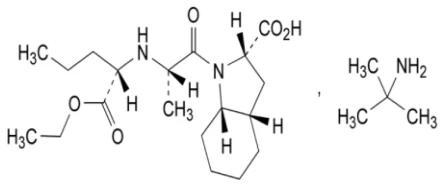 | 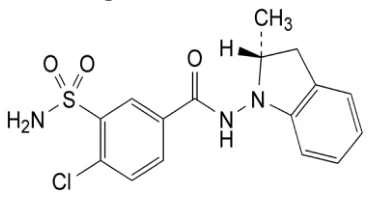 |
placebo (CL3-05590-018 and CL3-05590-007/3 months) or an active comparator (atenolol) (CL3-05590-009).
Table 4 – Summary of patient demographics for pivotal clinical trials in mild to moderate hypertension
| Study | Study design | Dosage, route of administration and duration | # Study subjects (n) randomized | Mean age (Range) | Sex (%) M/F |
|---|---|---|---|---|---|
| Efficacy placebo-controlled trials | |||||
| CL3-05590-018 | Multicenter, double -blind, randomized, placebo-controlled, six-way study preceded by a 4-week single-blind placebo run-in period | Per 2 / Ind 0.625 Placebo Per 2 Ind 0.625 Per 4 Ind 1.5 SR Oral route 12 weeks | 1748 | 55.7 (18-79) | 48.9/51.1 |
CL3-05590-007 / 3 months | Multicenter, double-blind, randomized, placebo-controlled, two-way study preceded by a 4-week single-blind placebo run-in period | Weeks 0-4: Placebo or Per 2 / Ind 0.625 (1 tablet) Weeks 4-12: Placebo or Per 2 / Ind 0.625 (2 tablets) Oral route 12 weeks | 383 | 72.4 (64-85) | 40.7/59.3 |
| Efficacy controlled trial versus reference drugs | |||||
| CL3-05590-009 | Multicenter, double-blind, randomized, controlled, parallel group, two-way study preceded by a 4-week single-blind placebo run-in period | Per 2 / Ind 0.625 Atenolol 50 Oral route 12 weeks | 446 | 55.8 (24-75) | 47.5/52.5 |
Per: Perindopril; Ind: Indapamide; SR: Slow Release
PERINDOPRIL ERBUMINE AND INDAPAMIDE 4 mg / 1.25 mg
The efficacy of perindopril erbumine 4 mg / indapamide 1.25 mg in mild to moderate hypertension was based on 4 pivotal double-blind short-term studies either against placebo (CL3-05590-007/ 3 months) or an active comparator (CL3-05590-003, CL3-05590-004/ 2 months and CL3-05590-008).
Table 5 - Summary of patient demographics for pivotal clinical trials in mild to moderate hypertension
| Study | Study design | Dosage, route of administration and duration | # Study subjects (n) randomized | Mean age (Range) | Sex (%) M/F |
|---|---|---|---|---|---|
| Efficacy placebo-controlled trials | |||||
CL3-05590-007 / 3 months | Multicenter, randomized, placebo-controlled, two-way study preceded by a 4-week single-blind placebo run-in period | Weeks 0 to 4: Placebo or Per 2 / Ind 0.625 (1 tablet) Weeks 4 to 12: Placebo or Per 2 / Ind 0.625 (2 tablets) Oral route 12 weeks | 383 | 72.4 (64-85) | 40.7/59.3 |
| Efficacy controlled trials versus reference drugs | |||||
| CL3-05590-003 | Multicenter, double-blind, randomized, controlled, parallel group, three-way study preceded by a 4-week single-blind placebo run-in period | Per 4 / Ind 1.25 Per 4 Ind 1.25 Oral route 12 weeks | 1633 | 53.7 (19-78) | 50.3/49.7 |
CL3-05590-004 / 2 months | Multicenter, double-blind, randomized, controlled, three-way study preceded by a 4 week | Per 4 / Ind 1.25 Captopril 50 / HCT 25 Enalapril 20 / HCT 12.5 Oral route 8 weeks | 527 | 54.5 (21-75) | 53.5/46.5 |
| Study | Study design | Dosage, route of administration and duration | # Study subjects (n) randomized | Mean age (Range) | Sex (%) M/F |
|---|---|---|---|---|---|
| single-blind placebo run-in period | |||||
| CL3-05590-008 | Multicenter, double-blind, randomized, controlled, parallel group, three-way study preceded by a 3-week single-blind placebo run-in period (wk –7 to wk – 4) and a 4-week single-blind treatment with Per 4mg (wk –4 to wk 0) | Per 4 / Ind 1.25 Per 4 Per 8 Oral route 4 weeks | 515 | 54.3 (19-77) | 52.4/47.6 |
Per: Perindopril; Ind: Indapamide; HCT: Hydrochlorothiazide; SR: Slow Release; wk: week; m: months
PERINDOPRIL ERBUMINE AND INDAPAMIDE 8 mg / 2.5 mg
The efficacy of perindopril erbumine 8 mg / indapamide 2.5 mg in mild to moderate hypertension was based on 2 pivotal double-blind, active control, long-term studies (CL3-05590-011 and CL3-05590-005).
Table 6 – Summary of patient demographics for pivotal clinical trials in mild to moderate hypertension
| Study | Study design | Dosage, route of administration and duration | # Study subjects (n) (randomized) | Mean age (Range) | Sex (%) (M/F) |
|---|---|---|---|---|---|
| CL3-05590-011 | Phase III, randomised, double blind, multicenter, 2 parallel groups, | Per2/Ind0.625 Per4/Ind1.25 (non-forced up titration) | N=481 Per/Ind: n = 244 Ena: n =237 | Total: 59.1 (30-78) Per/Ind: | Total: 61.1/38.9 Per/Ind: 57.0/43.0 |
| Study | Study design | Dosage, route of administration and duration | # Study subjects (n) (randomized) | Mean age (Range) | Sex (%) (M/F) |
|---|---|---|---|---|---|
| controlled versus enalapril trial in hypertensive type 2 diabetic patients with albuminuria | Per8/Ind2.5 (non-forced up titration) Oral 52 weeks | Maximal dosage Per8/Ind2.5: n = 72 | 58.3 (30-78) Maximal dosage Per8/Ind2.5: 57.7 (30-72) | Maximal dosage Per8/Ind2.5: 66.7/33.3 | |
| CL3-05590-005 | Phase III, randomised, double blind, multicenter, 2 parallel groups, controlled versus enalapril trial in hypertensive patients with LVH | Per2/Ind0.625 Per4/Ind1.25 (non-forced up titration) Per8/Ind2.5 (non-forced up titration) Oral 52 weeks | N=679 Per/Ind: n = 341 Ena: n=338 Maximal dosage Per8/Ind2.5: n = 65 | Total: 55.5 (18-93) Per/Ind: 54.8 (18-93) Maximal dosage Per8/Ind2.5: 53.5 (37-70) | Total: 47.1/52.9 Per/Ind: 46.9/53.1 Maximal dosage Per8/Ind2.5: 55.4/44.6 |
Per: Perindopril erbumine; Ind: Indapamide; Ena: Enalapril; LVH: Left Ventricular Hypertrophy
PERINDOPRIL ERBUMINE AND INDAPAMIDE 2 mg / 0.625 mg
Efficacy results
Table 7 - Efficacy results of pivotal placebo-controlled clinical studies in mild to moderate hypertension
| Endpoints | Associated value for Per / Ind (mmHg) | Associated value for placebo (mmHg) | p-value | ||||
|---|---|---|---|---|---|---|---|
| CL3-05590-018 | |||||||
Change from baseline (at trough) supine DBP supine SBP Responders* | Per2 / Ind0.625 (n=386) -10.8 ± 7.9 -15.2 ± 12.9 63.0% | Placebo (n=386) -5.6 ± 9.1 -6.7 ± 13.9 37.3% | < 0.001 < 0.001 < 0.001 | ||||
| Difference between Per2/Ind0.625 and Placebo after 12 weeks of treatment | |||||||
supine DBP supine SBP | -5.2 mmHg -8.5 mmHg | < 0.001 < 0.001 | |||||
| CL3-05590-007 | |||||||
| Change from baseline (at trough) | Per/Ind (n=193) -13.2 ± 8.0 | Placebo (n=190) -7.3 ± 9.0 | < 0.0001 | ||||
| Endpoints | Associated value for Per / Ind (mmHg) | Associated value for placebo (mmHg) | p-value | ||||
|---|---|---|---|---|---|---|---|
supine DBP supine SBP Responders** | -22.5 ± 13.9 81.3% | -12.3 ± 15.2 48.9% | < 0.0001 < 0.0001 | ||||
| Difference between Per2/Ind0.625 and Placebo after 12 weeks of treatment | |||||||
supine DBP supine SBP | -5.9 mmHg -10.2 mmHg | < 0.0001 < 0.0001 | |||||
In mmHg; Per: Perindopril; Ind: Indapamide; DBP: Diastolic Blood Pressure; SBP: Systolic Blood Pressure;
* sSBP < 140 mmHg and sDBP < 90 mmHg and/or decrease in sSBP ≥ 20 mmHg and/or decrease in sDBP ≥ 10 mmHg;
** (decrease in sDBP ≥ 10 mmHg and/or sDBP ≤ 90 mmHg if systole-diastolic hypertension) and (decrease in sSBP ≥ 20 mmHg and/or sSBP ≤ 150 mmHg if isolated diastolic hypertension)
Table 8 – Efficacy results of pivotal active-controlled clinical studies in mild to moderate hypertension
| Endpoints | Associated value for Per 2 / Ind 0.625 | Associated value for Atenolol 50 mg | p-value** | ||||
|---|---|---|---|---|---|---|---|
| CL3-05590-009 | |||||||
Change from baseline (at trough) supine DBP supine SBP Responders* | Per2/Ind0.625 (n=222) -15.3 ± 7.7 -20.4 ± 12.3 82% | Atenolol 50 (n=224) -16.0 ± 8.2 -20.1 ± 14.0 87% | < 0.001 < 0.001 - | ||||
| Difference between Per2/Ind0.625 and Atenolol after 12 weeks of treatment | |||||||
supine DBP supine SBP | 0.8 mmHg -0.4 mmHg | - - | |||||
In mmHg; Per: Perindopril; Ind: Indapamide; DBP: Diastolic Blood Pressure; SBP: Systolic Blood Pressure;
* sDBP ≤ 90 mmHg and/or decrease in sDBP ≥ 10 mmHg;
**p-value related to the equivalence between Per2/Ind0.625 and Atenolol 50 mg: two sided tests procedure
PERINDOPRIL ERBUMINE AND INDAPAMIDE 4 mg / 1.25 mg
Efficacy results
| Table 9 - Efficacy results of pivotal placebo-controlled clinical studies in mild to moderate hypertension | |||
|---|---|---|---|
| Endpoints | Associated value for Per / Ind | Associated value for placebo | p-value |
| CL3-05590-007 | |||
Change from baseline (at trough) supine DBP supine SBP Responders* | Per/Ind (n=193) -13.2 ± 8.0 -22.5 ± 13.9 81.3% | Placebo (n=190) -7.3 ± 9.0 -12.3 ± 15.2 48.9% | < 0.0001 < 0.0001 < 0.0001 |
| Difference between Per/Ind and Placebo after 12 weeks of treatment | |||
supine DBP supine SBP | -5.9 mmHg -10.2 mmHg | < 0.0001 < 0.0001 | |
Per: Perindopril; Ind: Indapamide; DBP: Diastolic Blood Pressure; SBP: Systolic Blood Pressure;
*(decrease in sDBP ≥ 10 mmHg and/or sDBP ≤ 90 mmHg if systole-diastolic hypertension) and (decrease in sSBP ≥ 20 mmHg and/or sSBP ≤ 150 mmHg if isolated diastolic hypertension)
Table 10 - Efficacy results of pivotal controlled clinical studies in mild to moderate hypertension
| Endpoints | Associated value for Per / Ind | Associated value for active control | p-value Per / Ind versus: | ||
|---|---|---|---|---|---|
| CL3-05590-003 | |||||
Change from baseline (at trough) supine DBP (whole population) | Per4/Ind1.25 -13.4 ± 8.6 (n=542) | Per 4 -11.2 ± 9.0 (n=551) | Ind 1.25 -11.5 ± 9.0 (n=540) | Per 4 < 0.001 | Ind 1.25 < 0.001 |
| supine DBP (elderly (> 65 years) | -14.7 ± 8.5 (n=92) | -10.7 ± 8.4 (n=96) | -11.9 ± 9.0 (n=85) | < 0.001 | 0.020 |
| supine SBP | -19.8 ± 14.7 (n=542) | -14.1 ± 14.4 (n=551) | -15.8 ± 14.4 (n=540) | < 0.001 | < 0.001 |
| Responders* | 74.5% (n=542) | 65.2% (n=551) | 64.8% (n=540) | < 0.001 | < 0.001 |
| Difference between Per4/Ind1.25 and Active Controls after 12 weeks of treatment | |||||
| Per 4 | Ind 1.25 | Per 4 | Ind 1.25 | ||
| supine DBP (whole population) | -2.2 mmHg | -2.0 mmHg | < 0.001 | < 0.001 | |
| supine DBP (elderly (> 65 years) | -4.0 mmHg | -2.7 mmHg | < 0.001 | 0.020 | |
| supine SBP | -5.6 mmHg | -4.0 mmHg | < 0.001 | < 0.001 | |
| CL3-05590-004 | |||||
| Endpoints | Associated value for Per / Ind | Associated value for active control | p-value Per / Ind versus: | ||
|---|---|---|---|---|---|
| Change from baseline (at trough) | Per4/Ind1.25 (n=175) | Cap/HCT (N=175) | Ena/HCT (n=177) | Cap/HCT | Ena/HCT |
| supine DBP | -13.1 ± 7.8 | -13.4 ± 8.0 | -14.2 ± 9.4 | < 0.001** | 0.001** |
| supine SBP | -18.7 ± 12.5 | -19.4 ± 13.3 | -21.1 ± 15.4 | < 0.001** | < 0.001** |
| Responders* | 73.0% | 75.0% | 80.0% | - | - |
| Difference between Per4/Ind1.25 and Active Controls after 8 weeks of treatment | |||||
| Cap/HCT | Ena/HCT | Cap/HCT | Ena/HCT | ||
| supine DBP | 0.3 mmHg | 1.1 mmHg | < 0.001** | 0.001** | |
| supine SBP | 0.7 mmHg | 2.4 mmHg | < 0.001** | < 0.001** | |
| CL3-05590-008 | |||||
Change from baseline supine DBP | Per4/Ind1.25 (n=173) -8.5 ± 8.2 | Per 4 (n=172) -6.4 ± 7.5 | Per 8 (n=170) -7.4 ± 7.8 | Per 4 0.008† | Per 8 < 0.001†† |
| supine SBP | -10.1 ± 12.0 | -7.8 ± 11.0 | -9.8 ± 12.3 | 0.035 | < 0.001 |
| Responders* | 62.4% | 55.2% | 60.6% | 0.106††† | - |
| Difference between Per4/Ind1.25 and Active Controls after 4 weeks of treatment | |||||
| Per 4 | Per 8 | Per 4 | Per 8 | ||
| supine DBP | -2.1 mmHg | -1.1 mmHg | 0.008† | < 0.001†† | |
| supine SBP | -2.2 mmHg | -0.3 mmHg | 0.035 | < 0.001 | |
Per: Perindopril; Ind: Indapamide; Cap: Captopril; Ena: Enalapril; HCT: Hydrochlorothiazide; DBP: Diastolic Blood Pressure; SBP: Systolic Blood Pressure; *∆ sDBP ≥ 10 mmHg and/or sDBP ≤ 90 mmHg;
**Research of equivalence in terms of the 90% confidence interval for the change on the difference between Per4/Ind1.25 and the active control;
†Research of superiority of Per4/Ind1.25 over Per 4: 95% confidence interval, one-sided Student t test;
††Research of equivalence between Per4/Ind1.25 and Per8: 90% confidence interval, two-sided tests procedure;
†††Research of superiority of Per4/Ind1.25 over Per4: one-sided Fischer exact test.
PERINDOPRIL ERBUMINE AND INDAPAMIDE 8 mg / 2.5 mg
Efficacy results
Table 11 – Efficacy results of pivotal clinical studies in mild to moderate hypertension
| Endpoints | Associated value for Per8/Ind2.5 | p-value | |
| CL3-05590-011 - Maximal Per8/Ind2.5 dose, n=69 | |||
| Change WEndPer8/Ind2.5 – W0 | |||
| DBP (mmHg) | -5.4 ± 9.1 | < 0.0001 | |
| SBP (mmHg) | -8.4 ± 16.9 | < 0.0001 | |||
| Change WEndPer8/Ind2.5 – WEndPer4/Ind1.25 | |||||
| DBP (mmHg) | -2.6 ± 8.1 | = 0.0088 | |||
| SBP (mmHg) | -2.5 ± 13.8 | = 0.1427 | |||
| BP normalised (last value under Per8/Ind2.5) | 17.4% (12/69) | - | |||
| Responders (last value under Per8/Ind2.5) | 44.9% (31/69) | - | |||
| CL3-05590-005 - Maximal Per8/Ind2.5 dose, n=63 | |||||
| Change WEndPer8/Ind2.5 – W0 | |||||
| DBP (mmHg) | -9.7 ± 9.6 | < 0.0001 | |||
| SBP (mmHg) | -27.7 ± 18.3 | < 0.0001 | |||
| Change WEndPer8/Ind2.5 – WEndPer4/Ind1.25 | |||||
| DBP (mmHg) | -8.1 ± 8.4 | < 0.0001 | |||
| SBP (mmHg) | -16.3 ± 16.5 | < 0.0001 | |||
| BP normalised (last value under Per8/Ind2.5) | 22.2% (14/63) | - | |||
| Responders (last value under Per8/Ind2.5) | 68.3% (43/63) | - | |||
Per: Perindopril; Ind: Indapamide; DBP: Diastolic Blood Pressure; SBP: Systolic Blood Pressure; W0: baseline
14.2 Comparative Bioavailability Studies
A randomized, single-dose, 2-way crossover comparative bioavailability study of APO-PERINDOPRIL-INDAPAMIDE 8 mg / 2.5 mg tablet (APOTEX INC.) and COVERSYL® PLUS HD 8 mg / 2.5 mg tablet (Servier Canada Inc.) was conducted in healthy adult male subjects under fasting conditions. The results obtained from the 21 subjects who completed the study are summarized in the following tables.
SUMMARY TABLE OF THE COMPARATIVE BIOAVAILABILITY DATA
Perindopril (1 x 8 mg perindopril / 2.5 mg indapamide) Geometric Mean Arithmetic Mean (CV%) | ||||
| PARAMETER | TEST1 | REFERENCE2 | % RATIO OF GEOMETRIC MEANS | 90% CONFIDENCE INTERVAL |
AUCT (ng·h/mL) | 165.33 169.53 (21) | 160.13 164.89 (26) | 103.3 | 98.8 – 107.9 |
AUCI (ng·h/mL) | 166.37 170.60 (21) | 161.15 165.89 (26) | 103.2 | 98.9 – 107.8 |
Perindopril (1 x 8 mg perindopril / 2.5 mg indapamide) Geometric Mean Arithmetic Mean (CV%) | ||||
| PARAMETER | TEST1 | REFERENCE2 | % RATIO OF GEOMETRIC MEANS | 90% CONFIDENCE INTERVAL |
Cmax (ng/mL) | 118.09 120.28 (18) | 123.27 125.21 (17) | 95.8 | 88.8 – 103.3 |
| Tmax 3 (h) | 0.91 (47) | 0.72 (51) | ||
| T1/2 3 (h) | 0.98 (33) | 1.06 (39) | ||
1 APO-PERINDOPRIL-INDAPAMIDE (perindopril erbumine/indapamide) 8 mg / 2.5 mg tablets (APOTEX INC.) 2 COVERSYL® PLUS HD (perindopril erbumine/indapamide) 8 mg / 2.5 mg tablets (Servier Canada Inc.). 3 Expressed as arithmetic means (CV%) only | ||||
SUMMARY TABLE OF THE COMPARATIVE BIOAVAILABILITY DATA
Indapamide (1 x 8 mg perindopril / 2.5 mg indapamide) Geometric Mean Arithmetic Mean (CV%) | ||||
| Parameter | TEST1 | REFERENCE2 | % Ratio of Geometric Means | 90% CONFIDENCE INTERVAL |
AUCT (ng·h/mL) | 3061.95 3133.26 (22) | 2891.54 2961.45 (22) | 105.9 | 103.2 – 108.7 |
AUCI (ng·h/mL) | 3292.30 3384.51 (24) | 3108.68 3199.63 (24) | 105.9 | 102.8 – 109.2 |
Cmax (ng/mL) | 148.15 151.15 (21) | 136.35 139.24 (22) | 108.7 | 102.6 – 115.0 |
| Tmax 3 (h) | 1.83 (48) | 1.82 (49) | ||
| T1/2 3 (h) | 18.63 (16) | 18.56 (17) | ||
1 APO-PERINDOPRIL-INDAPAMIDE (perindopril erbumine/indapamide) 8 mg / 2.5 mg tablets (APOTEX INC.) 2 COVERSYL® PLUS HD (perindopril erbumine/indapamide) 8 mg / 2.5 mg tablets (Servier Canada Inc.). 3 Expressed as arithmetic means (CV%) only | ||||
A randomized, single-dose, 2-way crossover comparative bioavailability study of APO-PERINDOPRIL-INDAPAMIDE 4 mg / 1.25 mg tablet (APOTEX INC.) and COVERSYL® PLUS 4 mg / 1.25 mg tablet (Servier Canada Inc.) was conducted in healthy adult male and female subjects under fasting conditions. The results obtained from the 17 subjects who completed the study are summarized in the following tables.
SUMMARY TABLE OF THE COMPARATIVE BIOAVAILABILITY DATA
Perindopril (1 x 4 mg perindopril / 1.25 mg indapamide) Geometric Mean Arithmetic Mean (CV%) | ||||
| PARAMETER | TEST1 | REFERENCE2 | % RATIO OF GEOMETRIC MEANS | 90% CONFIDENCE INTERVAL |
AUCT (ng·h/mL) | 39.01 39.84 (24) | 37.66 38.43 (23) | 103.6 | 97.6 – 109.9 |
AUCI (ng·h/mL) | 39.80 40.61 (23) | 38.45 39.21 (22) | 103.5 | 97.8 – 109.6 |
Cmax (ng/mL) | 34.46 36.21 (34) | 38.82 39.71 (26) | 88.8 | 79.1 – 99.6 |
| Tmax 3 (h) | 0.74 (35) | 0.60 (20) | ||
| T1/2 3 (h) | 0.70 (32) | 0.66 (22) | ||
1 APO-PERINDOPRIL-INDAPAMIDE (perindopril erbumine/indapamide) 4 mg / 1.25 mg tablets (APOTEX INC.) 2 COVERSYL® PLUS (perindopril erbumine/indapamide) 4 mg / 1.25 mg tablets (Servier Canada Inc.). 3 Expressed as arithmetic means (CV%) only. | ||||
SUMMARY TABLE OF THE COMPARATIVE BIOAVAILABILITY DATA
Indapamide (1 x 4 mg perindopril / 1.25 mg indapamide) Geometric Mean Arithmetic Mean (CV%) | ||||
| PARAMETER | TEST1 | REFERENCE2 | % RATIO OF GEOMETRIC MEANS | 90% CONFIDENCE INTERVAL |
AUCT (ng·h/mL) | 938.06 953.81 (20) | 973.31 988.88 (18) | 96.4 | 91.6 – 101.4 |
AUCI (ng·h/mL) | 971.64 989.86 (21) | 1008.43 1026.78 (20) | 96.4 | 91.5 – 101.5 |
Indapamide (1 x 4 mg perindopril / 1.25 mg indapamide) Geometric Mean Arithmetic Mean (CV%) | ||||
| PARAMETER | TEST1 | REFERENCE2 | % RATIO OF GEOMETRIC MEANS | 90% CONFIDENCE INTERVAL |
Cmax (ng/mL) | 55.11 55.77 (16) | 54.74 55.11 (13) | 100.7 | 95.7 – 105.9 |
| Tmax 3 (h) | 1.77 (36) | 1.74 (45) | ||
| T1/2 3 (h) | 14.85 (10) | 14.97 (12) | ||
1 APO-PERINDOPRIL-INDAPAMIDE (perindopril erbumine/indapamide) 4 mg / 1.25 mg tablets (APOTEX INC.) 2 COVERSYL® PLUS (perindopril erbumine/indapamide) 4 mg / 1.25 mg tablets (Servier Canada Inc.). 3 Expressed as arithmetic means (CV%) only. | ||||
15 MICROBIOLOGY
No microbiological information is required for this drug product.
16 NON-CLINICAL TOXICOLOGY
Perindopril erbumine
General Toxicology:
Acute toxicity studies
Single dose toxicity studies were carried out in the mouse and rat by oral and intravenous (I.V) routes. The acute toxicity was low: the LD50 by the oral route was >2500 mg/kg in the mouse and >3000 mg/kg in the rat. Following I.V administration, the LD50 was 323 mg/kg and 423 mg/kg in male and female rats, and 704 mg/kg and 679 mg/kg in male and female mice, respectively.
No mortality occurred during the oral studies carried out in the mouse and rat. Signs of toxicity observed in animals treated I.V were convulsive symptoms and severe dyspnea in mice, increase activity in rats, and death by respiratory arrest occurring within minutes of the injection.
Chronic toxicity studies
The chronic oral toxicity of perindopril was determined in the rat, dog and monkey during 3 to 18 months. The highest doses used were 30, 25 and 16 mg/kg/day in the rat, dog and monkey, respectively. The kidney was the organ most sensitive to perindopril. At high doses, perindopril induced osmotic nephrosis-type lesions and tubular dilatations. The reversibility of the renal lesions was demonstrated.
Carcinogenicity studies:
In two studies, B6C3F1 mice and Fischer 344 rats were given an oral treatment of 0.75, 2.0 and
7.5 mg/kg/day for 104 weeks. No evidence of carcinogenicity of perindopril was observed.
Genotoxicity:
Perindopril did not induce genic mutation (AMES test and mouse lymphoma test), chromosomal mutation (in vivo and in vitro clastogenicity tests and micronucleus test) in prokaryotes and eukaryotes, or primary changes in yeast DNA (gene conversion test).
Reproductive and Developmental Toxicology:
Fertility studies
Two studies were carried out in Wistar rats using oral doses of 1 to 10 mg/kg/day. In both cases, the body weight gain of the animals was reduced. Fertility of the males was reduced at doses of 2 and 4 mg/kg/day in 1 study, although there was no effect on fertility of the females or on embryonic and fetal development. The mortality of the G1 pups was increased at 4 mg/kg/day, and their growth and physical development were delayed. These changes did not affect the reproductive capacity of the G1 generation.
Teratogenicity Studies
In the mouse treated orally with doses ≤20 mg/kg/day, perindopril was not embryotoxic or teratogenic.
In the rat treated orally with doses ≤16 mg/kg/day, the in-utero development of the fetus was unchanged though there was a higher incidence of hydronephrosis, which appeared to be dose-dependent and a delayed ossification of the fetuses in the high dose group only. There was no sign of teratogenicity.
In the rabbit treated orally with doses ≤5 mg/kg/day (as drink water with 0.9% sodium chloride), there was no maternal toxicity and no embryotoxicity or teratogenicity on the fetuses, except for a slight increase in the post-implantation losses with the high dose.
In the monkey treated orally with doses ≤16 mg/kg/day, maternal toxicity at the high dose resulted in a reduction in the water consumption during the treatment period. Nevertheless, no adverse effects on the fetuses were noted.
Peri- and post-natal studies
A first study was carried out in pregnant Wistar rats that received orally 0, 1, 2 and 3 mg/kg/day of perindopril. At the high dose, there was a low but significant reduction in food consumption.
A second study was carried out with doses of 0, 1, 4 and 16 mg/kg. From 4 mg/kg/day, maternal toxicity was observed at the end of gestation and caused a reduction in food consumption and weight gain. Dystocia caused the death of 4 females during parturition at the high dose. There were also significantly fewer neonates born at all 3 doses, although the average weight of the G1 pups was unchanged. During the lactation period, doses of 4 and 16 mg/kg/day showed a dose-related reduction in the weight gain of the G0 dams and of the G1 pups, and an increase in post-natal mortality. At the highest dose, there were delayed physical and behavioural development in the G1 pups, reduced fertility in the G1 dams, polyuria in the G1 animals, and renal lesions in the G1 parents. No secondary effects were observed in the G2 generation.
A complementary study was carried out under the same conditions, on pregnant rats treated with a single dose of 16 mg/kg/day and fed rat-diet with a sodium enriched diet (1.9 g/kg). The correction of the dietary sodium intake reduced the general toxicity of perindopril for the dams and their progeny.
Indapamide
General Toxicology:
Acute toxicity studies
Single dose toxicity studies were carried in the mouse, rat and guinea pig by the oral and i.v. routes. Orally, toxicity was very low (LD50 >3000 mg/kg). I.V., the LD50 ranged between 272 mg/kg in guinea pigs to 635 mg/kg in mice. Signs of toxicity were piloerection, bradypnea, hypotonia, diminished motor activity, hypersensitivity, mydriasis, and vasodilation at parenteral doses >400 mg/kg. Indapamide administered with hydralazine, methyldopa or propranolol did not modify the oral LD50 of the other antihypertensive agents.
Chronic toxicity studies
In rats treated once daily for 4 weeks at 50, 100 and 200 mg/kg, there was a reduction in body weight gain and in food intake at 100 and 200 mg/kg. Renal dystrophic mineralization was detected in all females (5/5) at 200 mg/kg, which was considered to be due to increased urinary output.
In rats treated once daily for 52 weeks at 0, 1, 10 or 100 mg/kg, growth rates of treated males declined significantly during the first 6 weeks, but terminal weights were comparable with controls. Two females at each dose showing renal dystrophic mineralization died.
In dogs treated once daily for 6 months at 0, 2, 20, 200 mg/kg, the relevant findings were reduction in food intake, reduction in body weight gain in males at the high dose, decreased glucose tolerance and marked saliuretic effect.
In dogs treated once daily for 56 weeks with 0, 1, 10, and 100 mg/kg (the highest dose was reduced to 50 mg/kg on day 86), the findings were excessive diuresis in all dosed animals and reduction in body weight gain. In the high dose group, there were reductions in food consumption, ECG changes (alteration of ventricular repolarization) related to reduced levels of potassium, replacement of cardiac muscle by adipose tissue in 4/8 animals and apparent enlargement of adrenal cortex in 3/4 dogs.
Carcinogenicity studies:
Indapamide was administered to Charles River CDI rats and mice at dietary levels of 0, 10, 30 and 100 mg/kg/day for 104 and 91 weeks, respectively. Both strains are susceptible to known carcinogens. Drug-related changes in the kidney (tubular nephrosis and mineralization of parenchyma) were seen in rats. Increased liver cytoplasmic vacuolization was seen in mice. Under the conditions of testing, indapamide was not tumorigenic.
Reproductive and Developmental Toxicology:
Fertility Three generation tests were carried out on Wistar rats (SPF Strain). Indapamide was administered at 0, 0.5, 2.5 and 25 mg/kg per os once daily for 70 days. No effects were reported on reproductive functions. Behaviour and reproductive performance of off-spring were unaffected, but the death rate of neonates (F2 generations) was adversely affected: 35% at low dose and 47% at the high dose vs. 16% in controls (the lack of milk formation in the mothers may have been the cause). No adverse effects on the F3 generation pups were observed.
Teratogenicity studies
In the mouse and rat, no apparent teratological effects were noted with indapamide.
In the domestic rabbit receiving 0, 1, 5, 10 and 50 mg/kg per os once daily, increased resorption rate was seen at 50 mg/kg.
In the New Zealand white rabbit receiving 0, 5, 30 and 180 mg/kg/day per os once daily, there was a reduction in food consumption and weight gain at 180 mg/kg during the first 4 days of dosing. Total loss of litters occurred in 2 animals at high dose. In the other animals, abortion rate and litter size were unchanged.
Perindopril /Indapamide
The toxicology studies carried out on the combination of perindopril erbumine (76%) and indapamide (24%) are summarized below.
General Toxicology:
Acute toxicity studies
| Species | Route | Sex | LD50 (mg/kg) |
| Mouse | Oral | Male | > 3000 |
| Species | Route | Sex | LD50 (mg/kg) | |||||
| Female | > 3000 | |||||||
| Intravenous | Male | > 336 | ||||||
| Female | > 336 | |||||||
| Rat | Oral | Male | > 3000 | |||||
| Female | > 3000 | |||||||
| Intravenous | Male | > 336 | ||||||
| Female | > 336 | |||||||
| Dog | Oral | Male | 590* | |||||
| Female | 590* | |||||||
*Maximum Tolerated Dose
Signs of toxicity:
No mortality occurred during the oral and I.V studies in mice, and no signs of toxicity were observed.
Following oral administration to rats, signs of gastric toxicity and 1 female death (1/6) occurred. After IV administration to rats, most animals had a decreased spontaneous motor activity, half-closed eyes, curled-up position, tachypnoea, ventral posture, piloerection, with signs of gastric toxicity at autopsy in 2 males; 1 male (1/6) receiving 336 mg/kg died.
In the dog treated orally with increasing doses, induced neuromuscular effects, hypothermia, tachycardia and hypotension were observed (animals were sacrificed).
Chronic Toxicology Studies
| Species | Duration | No. of animals / group | Route | Dose (mg/kg/day) | Results |
|---|---|---|---|---|---|
| Rat | 13-Week | 10M + 10F | Oral | 0 0.88 2.63 7.90 | The most marked abnormalities were related to the action of perindopril and were dose-dependent: increased water intake, reduced blood pressure, increased blood levels of urea, creatinine, potassium, cholesterol, increased diuresis (also attributable to indapamide), increased weight of kidneys. Histological findings of renal impairment (from tubular abnormalities to fibrosis) were observed from intermediate dose |
| Species | Duration | No. of animals / group | Route | Dose (mg/kg/day) | Results | |||||
|---|---|---|---|---|---|---|---|---|---|---|
upwards and were identifiable as osmotic nephrosis, as in the case of perindopril. Proposed NOAEL: 0.88 mg/kg/day. | ||||||||||
| Rat | 26-Week + 8-Week recovery period | 30M + 30F (0 and 4.5 doses) 20M + 20F (0.5 and 1.5 doses) | Oral | 0 0.5 1.5 4.5 | A pattern of dose related changes was seen at dose levels between 0.5 to 4.5 mg/kg/day. All these changes concerned the kidney and were consistent with the pharmacological activity of the compounds. At high dose: increased excretion of calcium, chloride, urea and creatinine, from 13th week onwards, not reversible, indicating impairment in renal function. At high dose (both sexes) and intermediate dose (males): increased weight of kidney, irreversible at high dose. Histological findings: hypertrophy of juxtaglomerular apparatus and afferent arterioles with tubular lesions suggestive of osmotic nephrosis, at high dose (both sexes) and intermediate dose (males). Weight of heart decreased reversibly in females (high and intermediate doses), with no histological changes. Proposed NOAEL: 0.5 mg/kg/day. | |||||
| Dog | 13-Week | 4M + 4F | Oral | 0 1.31 5.25 21.0/10.5 | At high dose, animals were sacrificed for ethical reasons after 24 days of treatment (despite a 50% reduction of the dose at day 17): death was related to GI lesions, accompanied by dehydration and severe hypotension. Intermediate dose was the maximum tolerated non lethal dose, with clinical signs (anorexia, weight loss), hypotension, renal effects and digestive lesions (confirmed at histopathology). | |||||
| Species | Duration | No. of animals / group | Route | Dose (mg/kg/day) | Results | ||||
|---|---|---|---|---|---|---|---|---|---|
| Proposed NOAEL: 1.31 mg/kg/day, with signs related to the pharmacological properties of test compounds. | |||||||||
| Dog | 13-Week + 8-Week recovery period | 6M + 6F (0 and 3.93 doses) 4M + 4F (1.31 and 2.26 doses) | Oral | 0 1.31 2.26 3.93 | No mortality was detected. Changes observed were related to the pharmacological action of the products and were markedly dose-dependent. At the high dose: initial degree of toxicity on the gastric mucosa (1 male) and modification of RBC related parameters (males). No histopathological abnormality was observed at the end of the reversibility period. Proposed NOAEL: between 2.26 to 3.93 mg/kg/day. | ||||
| Dog | 26-Week + 8-Week recovery period | 6M + 6F (0 and 3.93 doses) 4M + 4F (1.31 and 2.26 doses) | Oral | 0 1.31 2.26 3.93 | The only abnormalities observed were related to the pharmacological action of the test substances: reduction in plasma electrolytes, reduction in weight of heart, increase in weight of kidney (females on high dose). No GI lesions and no histological lesions were reported. Proposed NOAEL: 3.93 mg/kg/day. | ||||
Carcinogenicity studies:
The carcinogenic potential of perindopril and indapamide was evaluated during long-term studies in 2 animal species (mouse and rat). Since these studies were found to be negative, no new studies were performed on the combination.
Mutagenicity studies:
As perindopril and indapamide tested separately were not shown to have any mutagenic potential in a battery of mutagenic and chromosomal aberration studies, no new investigation was carried out on their combination.
Reproductive and Developmental Toxicology:
Teratogenicity Studies
| Species | Duration | No. of animals / group | Route | Dose (mg/kg/day) | Results |
|---|---|---|---|---|---|
| Rat | Days 6 through 17 of gestation | 25 | Oral | 0 1.31 5.25 21.0 | No teratogenic effect was observed; a NOAEL of 21 mg/kg/day can therefore be suggested for this effect in this study. As in studies on indapamide and perindopril alone, body weight gain and food intake were reduced in a dose-dependent manner while water intake increased. These maternal effects did not affect the parameters relating to implantation and embryo development of the litters, but resulted in a decrease in the mean weight of fetuses and a delayed bone formation (at and above the low dose). |
| Rabbit | Days 6 through 18 of gestation | 20 (control group) 25 (treated groups) | Oral | 0 1.3 3.3 8.2 | Dose-dependent decreases in body weight gain, increases in fluid intake and episodes of diarrhoea were detected in the mothers at all doses. Post-implantation losses increased and fetal body weight was slightly reduced. The incidence of various malformations observed in the fetuses from the treated mothers was not statistically significantly different from control litters and was comparable to that of historical results for the strain and species used in this study. Proposed NOAEL: < 1.3 mg/kg/day for maternal effects and > 8.2 mg/kg/day for embryo-fetal toxicity and teratogenic potential. |
DETAILED PHARMACOLOGY
Perindopril erbumine
In Vitro Studies
Perindopril was an inhibitor of angiotensin converting enzyme (ACE) in both plasma and tissue. Perindoprilat, the diacid form of perindopril, exhibited greater inhibition of ACE activity than perindopril (IC50=2x10⁻⁹M and 800x10-9M, respectively). Perindoprilat and ramiprilat (the active diacid of ramipril) had a similar inhibitory potency against rat plasma converting enzyme (IC50 = 2 to 3x10⁻⁹M). Both diacids were more active than enalaprilat or captopril (IC50 = 1 to 6x10⁻⁸M).
In Vivo Studies
Following oral dosing of perindopril to normotensive (0.03 to 1 mg/kg) or hypertensive (0.3 to -3 mg/kg) rats, plasma ACE inhibition was assessed in vivo by the decrease in pressor response to intravenous (i.v.) angiotensin I. Orally administered to conscious dogs, perindopril produced a dose-dependent reduction (34% at 0.1 mg/kg, 60% at 0.3 mg/kg and 92% at 1 mg/kg) of angiotensin I (150 ng/kg i.v.) pressor response, but had no effect on angiotensin II (100 ng/kg i.v.) response. In normotensive rats, plasma ACE was maximally inhibited (≥ 90%) by perindopril (1, 4 or 8 mg/kg per os) 1 hour following administration, then returned to control levels 24 hours later. After 4 weeks of oral treatment (10 mg/kg) in stroke-prone spontaneously hypertensive rats, ACE inhibition was mostly demonstrated in kidney (96%), aorta (64%), heart (52%), lung (36%) and brain (26%). Perindopril orally administered at 1 mg/kg to sodium replete spontaneous hypertensive rats was more potent than enalapril (1 mg/kg) both in terms of intensity (91% of inhibition versus 64%, 4 hours after dosing) and duration of action (68% of inhibition versus 12%, 12 hours after dosing).
In human subjects, perindopril at single oral doses of 4 to 8 mg/day produced 80% inhibition of plasma ACE activity between 2 and 8 hours post dose, with 40 to 60% inhibition persisting at 24 hours post-dose. Multiple oral doses of perindopril over 7 days (4 to 8 mg/day) confirmed the inhibitory effect on plasma ACE and showed that it produced corresponding decreases in angiotensin II with significant increases in plasma renin activity.
Indapamide
Antihypertensive Action
In normal animals, indapamide had no antihypertensive effect.
In hypertensive animals, single oral doses of indapamide at doses of 1 to 10 mg/kg elicited antihypertensive activity as follows: In desoxycorticosterone acetate (DOCA)/saline hypertensive rats with unilateral nephrectomy, a single dose of 10 mg/kg indapamide produced a maximal fall in systolic blood pressure (SBP) of 25 mmHg after 24 hours and the antihypertensive action lasted for 72 hours. Similar results were observed without nephrectomy. Higher doses up to 100 mg/kg produced only small increases in activity but BP reduction continued for >4 days.
Following repeated oral administration of indapamide (1 mg/kg) or trichlormethiazide (3 mg/kg) to DOCA/saline nephrectomized rats for 14 days, mean SBP fell more with indapamide (33 mmHg) than with trichlormethiazide (23 mmHg). One week after indapamide treatment, BP had only partially returned towards pre-treatment value.
In the renal hypertensive dog, indapamide 5 mg/kg per os produces a maximal reduction (37 mmHg) in SBP after 48 hours and an antihypertensive effect was still evident after 4 days.
Repeated administration of 0.5 mg/kg/day per os for 11 weeks prevented the onset of hypertension of DOCA/saline hypertensive rats with unilateral nephrectomy; the effect was still apparent 5 weeks after interrupting treatment.
Hypertensive response induced by norepinephrine, tyramine or sympathetic stimulation were markedly reduced by indapamide (10 mg/kg per os) in amyelinated or DOCA/saline hypertensive rats.
Indapamide (10-5 and 10-4M) diminished vascular hyper-reactivity to epinephrine, norepinephrine and angiotensin in isolated organ preparations. Indapamide (10-6 g/mL) inhibited vascular smooth muscle cell contractility.
In renal hypertensive dogs, BP was reduced at a dose of 1 mg/kg I.V. and cardiac output showed an increase after 2 hours, and a slight decrease over 24 hours.
Action on the Kidney
Diuretic activity has been studied in rats and dogs. Parameters were modified differently depending on the dose: the natriuretic and chloruretic activity was observed after doses of 0.1 to 0.3 mg/kg per os or I.V.; while increased urinary output was seen at 1 mg/kg per os or I.V.; and significant increases in urinary potassium excretion were reported after doses of 3 to10 mg/kg per os.
Indapamide did not alter glomerular filtration rate or renal haemodynamics in dogs, suggesting that it acted directly on renal tubules. Studies of positive and negative free water clearance suggested that diuresis may have resulted from inhibition of water, sodium, and chloride reabsorption in the proximal portion of the distal tubule of the nephron.
Perindopril/Indapamide
Antihypertensive Effects of Perindopril/Indapamide
The antihypertensive effects of the combination of perindopril (76%) and indapamide (24%) was studied in normotensive rats (Wistar) and in rats with stable or developing hypertension, i.e. genetic (SHR) and mineralocorticoid (Dahl salt sensitive (DS)). The combination was administered orally at different doses between 0.3 to 6 mg/kg/day and for 1 day to 12 weeks. The studies showed that:
- at 1 mg/kg/day for 3 months, the combination induced a significant antihypertensive effect, with a mean decrease in SBP of 21% (24 hours after last administration);
- these effects were dose-related with averaged decreases of 17%, 28% and 47% after 6 weeks of treatment at doses of 0.3, 1 or 3 mg/kg/day respectively;
- in DS rats, a 6 mg/kg/day dose normalized BP (-31%) while the corresponding doses of perindopril and indapamide administered separately had no or limited effect on BP.
17 SUPPORTING PRODUCT MONOGRAPHS
- 1. COVERSYL® PLUS LD, COVERSYL® PLUS, COVERSYL® PLUS HD Tablets, 2 mg / 0.625, 4 mg / 1.25 mg, and 8 mg / 2.5 mg perindopril erbumine / indapamide, submission control 264225, Product Monograph, Servier Canada Inc. (OCT 21, 2022)