


Product Monograph - Apo-Teriparatide Injection
SUMMARY PRODUCT INFORMATION
| Route of Administration | Dosage Form / Strength | Clinically Relevant Nonmedicinal Ingredients |
|---|---|---|
| Subcutaneous Injection | Sterile Solution for Subcutaneous Injection, 250 mcg/mL in 2.4 mL prefilled pen | Glacial acetic acid, hydrochloric acid, mannitol, metacresol (preservative), sodium acetate (anhydrous), sodium hydroxide and water for injection. |
DESCRIPTION
APO-TERIPARATIDE INJECTION (teriparatide injection) contains human parathyroid hormone (1-34), [PTH(1-34)], which has an identical sequence to the 34 N-terminal amino acids (the biologically active region) of the 84-amino acid human parathyroid hormone. Teriparatide is manufactured using solid phase synthesis techniques.
INDICATIONS AND CLINICAL USE
APO-TERIPARATIDE INJECTION is indicated:
- For the treatment of postmenopausal women with severe osteoporosis who are at high risk of fracture or who have failed or are intolerant to previous osteoporosis therapy.
- To increase bone mass in men with primary or hypogonadal severe osteoporosis who have failed or are intolerant to previous osteoporosis therapy. The effects of teriparatide on risk for fracture in men have not been demonstrated.
- For the treatment of osteoporosis associated with sustained systemic glucocorticoid therapy in men and women who are at increased risk for fracture.
The diagnosis of severe osteoporosis may be confirmed by the finding of low bone mass or the presence or history of osteoporotic fracture. While non-vertebral fractures are usually clinically apparent, vertebral fractures also may be manifested by back pain, height loss, or kyphosis.
Geriatrics: Of the patients receiving teriparatide in the osteoporosis treatment trial of 1637 postmenopausal women, 75% were 65 and over and 23% were 75 and over. No significant differences in bone response and no new safety findings were seen in geriatric patients receiving teriparatide as compared with younger patients.
Of the patients receiving teriparatide in the osteoporosis treatment trial of 437 men, 39% were 65 and over and 13% were 75 and over. Fracture efficacy endpoints have not been evaluated in these patients. No significant differences in bone response and no new safety findings were seen in geriatric patients receiving teriparatide as compared with younger patients.
Of the 214 patients that received teriparatide in an active comparator trial of glucocorticoid-induced osteoporosis, 28% were 65 and over and 9% were 75 and over. No significant differences in bone response and no new safety findings were seen in geriatric patients (≥ 65) receiving teriparatide as compared with younger patients.
Pediatrics: The safety and efficacy of teriparatide have not been studied in pediatric populations. APO-TERIPARATIDE INJECTION is not indicated for use in pediatric patients or young adults with open epiphysis (see WARNINGS AND PRECAUTIONS, Special Populations, Pediatrics).
CONTRAINDICATIONS
APO-TERIPARATIDE INJECTION is contraindicated for:
- Hypersensitivity to teriparatide or any of its excipients.
- Pre-existing hypercalcemia.
- Severe renal impairment.
- Metabolic bone diseases other than primary osteoporosis (including hyperparathyroidism and Paget's disease of the bone).
- Unexplained elevations of alkaline phosphatase.
- Prior external beam or implant radiation therapy involving the skeleton.
- Bone metastases or a history of skeletal malignancies.
- Pregnancy and nursing mothers (see WARNINGS AND PRECAUTIONS, Special Populations).
- Pediatric patients or young adults with open epiphyses (see WARNINGS AND PRECAUTIONS, Special Populations).
WARNINGS AND PRECAUTIONS
Carcinogenicity
Two carcinogenicity bioassays were conducted in Fischer 344 rats. In these studies, rats were given daily subcutaneous teriparatide injections at doses that resulted in systemic exposures between 3 and 60 times higher than the systemic exposure observed in humans following a subcutaneous dose of 20 mcg (based on AUC comparison). Teriparatide treatment resulted in increases in the incidence of bone tumours, including osteosarcoma, that occurred in association with dose-dependant exaggerated increases in bone mass. The studies showed that the occurrence of bone tumours was dependent upon dose and duration of exposure.
Osteosarcoma was not observed in teriparatide clinical trials. Though osteosarcoma has been reported in a post-market setting, increased incidence of osteosarcoma has not been observed with teriparatide treatment in observational studies.
APO-TERIPARATIDE INJECTION should not be prescribed to patients who are at increased baseline risk for osteosarcoma (e.g. Paget’s disease, pediatric and young adult with open epiphyses, history of radiation therapy involving the skeleton, etc.).
General
The safety and efficacy of teriparatide have been evaluated up to 2 years in studies GHAC, GHAJ, GHBJ and GHCA (median 19 months in women in study GHAC and 10 months in men in study GHAJ). An additional clinical study (GHBZ) evaluated the safety and efficacy of teriparatide for up to 3 years. In general, the maximum lifetime exposure to APO-TERIPARATIDE INJECTION for an individual patient should be 24 months. Use of APO-TERIPARATIDE INJECTION for more than 24 months during a patient’s lifetime should only be considered if a patient remains at or has returned to having a high risk for fracture.
In clinical trials, the frequency of urolithiasis was similar in patients treated with teriparatide and placebo. However, teriparatide has not been studied in patients with active urolithiasis. If active urolithiasis or pre-existing hypercalciuria are suspected, measurement of urinary calcium excretion should be considered. APO-TERIPARATIDE INJECTION should be used with caution in patients with active or recent urolithiasis because of the potential to exacerbate this condition.
Hypotension
In short-term clinical studies with teriparatide, isolated episodes of transient orthostatic hypotension were observed. Typically, an event began within 4 hours of dosing and spontaneously resolved within a few minutes to a few hours. When transient orthostatic hypotension occurred, it happened within the first several doses, was relieved by placing subjects in a reclining position, and did not preclude continued treatment. Patients experiencing symptoms associated with hypotension should not drive or operate machinery until they become asymptomatic.
Information for Patients
For safe and effective use of APO-TERIPARATIDE INJECTION, the physician should inform patients about the following:
General: Physicians should instruct their patients to read the Consumer Information Leaflet and Pen User Manual before starting therapy with APO-TERIPARATIDE INJECTION and re-read them each time the prescription is renewed.
Osteosarcomas in rats: Patients should be made aware that teriparatide caused osteosarcomas in rats. Post-market data have not detected increased incidence of osteosarcoma in patients treated with teriparatide.
Orthostatic hypotension: Patients should be instructed that if they feel lightheaded after injection, they should sit or lie down until the symptoms resolve. If symptoms persist or worsen, patients should be instructed to consult a physician before continuing treatment. Patients experiencing symptoms associated with hypotension should not drive or operate machinery until they become asymptomatic (see WARNINGS AND PRECAUTIONS, Hypotension).
Hypercalcemia: Although symptomatic hypercalcemia was not observed in clinical trials, physicians should instruct patients to contact a health care provider if they develop persistent symptoms of hypercalcemia (i.e., nausea, vomiting, constipation, lethargy, muscle weakness).
Use of the pen: Patients should be instructed on how to properly use the prefilled delivery device (refer to Pen User Manual) and properly dispose of needles, and be advised not to share their pens with other patients.
Other Osteoporosis Treatment and Prevention Measures: Patients should be informed regarding the roles of supplemental calcium and/or vitamin D, weight-bearing exercise, and modification of certain behavioral factors such as cigarette smoking and/or alcohol/coffee consumption.
Special Populations
Pregnant Women and Women of Childbearing Potential: APO-TERIPARATIDE INJECTION should not be administered to women who are pregnant. The effect of teriparatide treatment on human fetal development has not been studied. Women of childbearing potential should use effective methods of contraception during use of APO-TERIPARATIDE INJECTION. Should pregnancy occur, APO-TERIPARATIDE INJECTION should be discontinued (see CONTRAINDICATIONS).
Nursing Women: There have been no clinical studies to determine if teriparatide is secreted into breast milk. APO-TERIPARATIDE INJECTION should not be administered to nursing mothers (see CONTRAINDICATIONS).
Pediatrics: Teriparatide has not been studied in pediatric populations. APO-TERIPARATIDE INJECTION should not be used in children or young adults with open epiphyses (see CONTRAINDICATIONS).
Premenopausal Women: Before initiating therapy with APO-TERIPARATIDE INJECTION in premenopausal women with glucocorticoid-induced osteoporosis, risk factors such as low BMD, length and dosage of glucocorticoid therapy, previous fractures, family history, high bone turnover, level of underlying disease activity, low sex steroid level or low body mass index, should be considered.
Geriatrics: Of the patients receiving teriparatide in the osteoporosis treatment trial of 1637 postmenopausal women, 75% were 65 and over and 23% were 75 and over. No significant differences in bone response and no new safety findings were seen in geriatric patients receiving teriparatide as compared with younger patients.
Of the patients receiving teriparatide in the osteoporosis treatment trial of 437 men, 39% were 65 and over and 13% were 75 and over. Fracture efficacy endpoints have not been evaluated in these patients. No significant differences in bone response and no new safety findings were seen in geriatric patients receiving teriparatide as compared with younger patients.
Of the 214 patients that received teriparatide in an active comparator trial of glucocorticoid-induced osteoporosis, 28% were 65 and over and 9% were 75 and over. No significant differences in bone response and no new safety findings were seen in geriatric patients (≥65) receiving teriparatide as compared with younger patients.
Monitoring and Laboratory Tests
Serum calcium - Teriparatide transiently increases serum calcium, with the maximal effect observed at approximately 4 to 6 hours post-dose. By 16 hours post-dose, serum calcium generally has returned to or near baseline. These effects should be kept in mind because serum calcium concentrations observed within 16 hours after a dose may reflect the pharmacologic effect of teriparatide. Persistent hypercalcemia was not observed in clinical trials with teriparatide. If persistent hypercalcemia is detected, treatment with APO-TERIPARATIDE INJECTION should be discontinued pending further evaluation of the cause of hypercalcemia.
Patients known to have an underlying hypercalcemic disorder, such as primary hyperparathyroidism, should not be treated with APO-TERIPARATIDE INJECTION (see CONTRAINDICATIONS).
Urinary calcium - Teriparatide increases urinary calcium excretion, but the frequency of hypercalciuria in clinical trials was similar for patients treated with teriparatide and placebo (see ACTION AND CLINICAL PHARMACOLOGY, Pharmacodynamics, Urinary calcium excretion).
Renal function - No clinically important adverse renal effects were observed in clinical studies. Assessments included creatinine clearance; measurements of blood urea nitrogen (BUN), creatinine, and electrolytes in serum; urine specific gravity and pH; and examination of urine sediment. Long-term evaluation of patients with severe renal insufficiency, patients undergoing acute or chronic dialysis, or patients who have functioning renal transplants has not been performed. Caution should be exercised in patients with moderate and severe renal impairment.
Serum uric acid - Teriparatide increases serum uric acid concentrations. In clinical trials, 2.8% of teriparatide patients had serum uric acid concentrations above the upper limit of normal compared with 0.7% of placebo patients. However, the hyperuricemia did not result in an increase in gout, arthralgia, or urolithiasis.
ADVERSE REACTIONS
Adverse Drug Reaction Overview
The safety of teriparatide has been evaluated in 24 clinical trials that enrolled over 2800 women and men. Four long-term, Phase 3 clinical trials included one large placebo-controlled, double-blind multicentre trial with 1637 postmenopausal women, one placebo-controlled, double-blind multicentre trial with 437 men, and two active-controlled trials including 393 postmenopausal women. Teriparatide doses ranged from 5 to 100 mcg/day in short-term trials and 20 to 40 mcg/day in the long-term trials. A total of 1943 of the patients studied received teriparatide, including 815 patients at 20 mcg/day and 1107 patients at 40 mcg/day. In the long-term clinical trials, 1137 patients were exposed to teriparatide for greater than 1 year (500 at 20 mcg/day and 637 at 40 mcg/day). The maximum exposure duration to teriparatide was 2 years. Adverse events associated with teriparatide usually were mild and generally did not require discontinuation of therapy.
The safety of teriparatide has also been evaluated in a Phase 3 randomized, double blind, double- dummy, active controlled clinical trial that enrolled 428 men and women with glucocorticoid- induced osteoporosis. Patients received either teriparatide 20 mcg/day plus oral placebo (n=214) or alendronate 10 mg/day plus injectable placebo (n=214) for up to 3 years.
An additional Phase 3, randomized, multinational, multicenter, open-label study that enrolled 868 patients evaluated safety and efficacy of up to 24 months continuous treatment with 20 mcg/day of teriparatide.
Clinical Trial Adverse Drug Reactions
In the two Phase 3, placebo-controlled clinical trials in men and postmenopausal women, early discontinuation due to an adverse event occurred in 5.6% of patients assigned to placebo and 7.1% of patients assigned to teriparatide.
Table 1 lists adverse events occurring in the Phase 3, placebo-controlled clinical trials in postmenopausal women and in men at a frequency ≥2.0% in the teriparatide groups and in more teriparatide-treated patients than in placebo-treated patients. Adverse events are shown without attribution of causality.
Table 1: Adverse Events in Placebo-Controlled Clinical Trials (Irrespective of Causality)a.
| Body System | % Patients | ||
|---|---|---|---|
| Teriparatide | Placebo | ||
| (N=691) | (N=691) | ||
| BODY AS A WHOLE | |||
| Pain | 21.3 | 20.5 | |
| Headache | 7.5 | 7.4 | |
| Asthenia | 8.7 | 6.8 | |
| Neck Pain | 3.0 | 2.7 | |
| CARDIOVASCULAR | |||
| Hypertension | 7.1 | 6.8 | |
| Angina Pectoris | 2.5 | 1.6 | |
| Syncope | 2.6 | 1.4 | |
| DIGESTIVE SYSTEM | |||
| Nausea | 8.5 | 6.7 | |
| Constipation | 5.4 | 4.5 | |
| Diarrhea | 5.1 | 4.6 | |
| Dyspepsia | 5.2 | 4.1 | |
| Vomiting | 3.0 | 2.3 | |
| Gastrointestinal Disorder | 2.3 | 2.0 | |
| Tooth Disorder | 2.0 | 1.3 | |
| METABOLIC | |||
| Hyperuricemia | 2.8 | 0.7 | |
| MUSCULOSKELETAL | |||
| Arthralgia | 10.1 | 8.4 | |
| Leg Cramps | 2.6 | 1.3 | |
| NERVOUS SYSTEM | |||
| Dizziness | 8.0 | 5.4 | |
| Depression | 4.1 | 2.7 | |
| Insomnia | 4.3 | 3.6 | |
| Vertigo | 3.8 | 2.7 | |
| RESPIRATORY SYSTEM | |||
| Rhinitis | 9.6 | 8.8 | |
| Cough Increased | 6.4 | 5.5 | |
| Pharyngitis | 5.5 | 4.8 | |
| Dyspnea | 3.6 | 2.6 | |
| Pneumonia | 3.9 | 3.3 | |
| SKIN AND APPENDAGES | |||
| Rash | 4.9 | 4.5 | |
| Sweating | 2.2 | 1.7 | |
a Treatment emergent adverse events that occurred at a frequency ≥2% in patients treated with teriparatide at 20 mcg/day irrespective of causality assessment by Clinical Study Investigators.
COSTART terminology.
Treatment emergent adverse events considered by Clinical Study Investigators to be causally related to teriparatide, reported by at least 1% of teriparatide-treated patients and reported in more teriparatide-treated patients than placebo-treated patients are: dizziness, nausea, arthralgia, asthenia and headache. Leg cramps is an adverse event that may also be causally related to teriparatide.
NOTE: The incidence of hypertension, syncope, dyspepsia, rhinitis, and pharyngitis in patients treated with teriparatide 40 mcg/day (twice the recommended dose) was lower than the incidence in placebo-treated patients.
During the 18-month primary phase of a double-blind, double-dummy, active comparator- controlled study in men and women with glucocorticoid-induced osteoporosis, early discontinuation due to treatment-emergent adverse events (TEAEs) occurred in 31 (15%) patients assigned to teriparatide (N=214) and in 25 (12%) patients assigned to alendronate (N=214).
Over 24 months, the early discontinuation due to TEAEs occurred in 35 (16.4%) patients assigned to teriparatide (N=214) and in 27 (12.6%) patients assigned to alendronate (N=214).
Table 2 lists drug-related adverse events reported in ≥ 1% of patients treated with teriparatide or alendronate 10 mg/day in a clinical trial of men and women with Glucocorticoid-induced Osteoporosis up to 24 months.
Table 2: Drug-Related* Adverse Events Reported in ≥ 1% of Patients Treated with Teriparatide 20 mcg/day or Alendronate 10 mg/day in a Principle Clinical Trial in Men and Women with Glucocorticoid-induced Osteoporosis. Study B3D-US-GHBZ, 24 Month data
Teriparatide (N=214) (%) | Alendronate (N=214) (%) | |
|---|---|---|
| Gastrointestinal disorders | ||
| Nausea | 7.0 | 2.3 |
| Abdominal pain upper | 3.3 | 3.3 |
| Vomiting | 2.8 | 3.3 |
| Abdominal pain | 1.4 | 0.9 |
| Dyspepsia | 1.4 | 0.9 |
| Gastric Ulcer | 0 | 1.4 |
| Nervous system disorders | ||
| Dizziness | 3.3 | 0.9 |
| Headache | 3.3 | 0.9 |
| Musculoskeletal and connective tissue disorders | ||
| Muscle spasms | 0.9 | 1.9 |
* Considered to be possibly related by Clinical Study Investigators.
MedDRA (version 10.0) terminology.
The 24-month study, B3D-EW-GHCA (EUROFORS), was a multinational, multicenter, prospective, open-label Phase 3/4 trial in postmenopausal women with osteoporosis. Study GHCA had 2 substudies in which all patients received teriparatide 20 mcg/day plus calcium and vitamin D during the first 12 months. In substudy 1, patients were randomized to receive an additional one year of therapy with either teriparatide 20 mcg/day or raloxifene 60 mg/day, or no treatment. In substudy 2, all patients received 24 months of teriparatide 20 mcg/day. All patients received supplemental calcium and Vitamin D.
Table 3 lists drug-related adverse events reported in ≥ 1% of patients. Most reports of possibly drug related TEAEs occurred in the first 6-month interval of the study.
Table 3: Drug-Related* Adverse Events Reported in ≥ 1% of Patients Treated with Teriparatide 20 mcg/day in a Clinical Trial in Women with Osteoporosis. Study B3D-EW-GHCA (EUROFORS), 24 Month Data
Teriparatide (N=866) (%) | |
|---|---|
| Gastrointestinal disorders | |
| Nausea | 8.0 |
| Vomiting | 1.3 |
| Diarrhea | 1.2 |
| Nervous System disorders | |
| Headache | 4.4 |
| Dizziness | 2.9 |
| Vertigo | 1.5 |
| Musculoskeletal and connective tissue disorders | |
| Muscle Cramp | 4.3 |
| Pain in extremity | 1.3 |
| Arthralgia | 1.7 |
| Back pain | 1.0 |
| Other | |
| Hypercalcemia | 3.1 |
| Injection site erythema | 1.3 |
* Considered to be possibly related by Clinical Study Investigators.
MedDRA (version 7.0) terminology.
Serum calcium - Teriparatide transiently increases serum calcium, with the maximal effect observed at approximately 4 to 6 hours post-dose. Serum calcium measured at least 16 hours post-dose was not different from pretreatment levels. In clinical trials, the frequency of at least 1 episode of transient hypercalcemia in the 4 to 6 hours after teriparatide administration was increased from 1.5% of women and none of the men treated with placebo to 11.1% of women and 6.0% of men treated with teriparatide. The number of patients treated with teriparatide whose transient hypercalcemia was verified on consecutive measurements was 3.0% of women and 1.3% of men.
Immunogenicity - In a large clinical trial, antibodies that cross reacted with teriparatide were detected in 2.8% of female patients receiving teriparatide. Generally, antibodies were first detected following 12 months of treatment and diminished after withdrawal of therapy. There were no effects of the antibodies on serum calcium or bone mineral density (BMD) response.
Post-Market Adverse Drug Reactions
Since global market introduction, adverse events reported have included:
- Possible allergic events soon after injection: acute dyspnea, oro/facial edema, generalized urticaria, chest pain (less than 1 in 1000 patients treated). Since first marketing in 2002, spontaneous reports of anaphylaxis (irrespective of causality assessment) have been reported very rarely (<1 in 25,000 patients treated). In these very rare case reports, patients typically had alternative diagnoses explaining the events or subsequent negative rechallenge.
- Cases of bone tumour and osteosarcoma have been reported rarely in the post-marketing period. Long-term osteosarcoma safety surveillance studies were conducted in patients using teriparatide (see ADVERSE REACTIONS, Observational Osteosarcoma Studies).
- In the post-marketing data analysis of benign, malignant and unspecified neoplasms, the ratio of cases reported for both men and women is equivalent.
- Hypercalcemia greater than 2.76 mmol/L (less than 1 in 100 patients treated).
- Hypercalcemia greater than 3.25 mmol/L (less than 1 in 1000 patients treated).
- Muscle spasms, such as of the leg or back, are reported commonly (≥1 in 100 and <1 in 10 patients treated), sometimes shortly after the first dose.
- Serious back spasms have been reported very rarely (less than 1 in 10,000 patients treated).
Observational Osteosarcoma Studies
Teriparatide’s post-marketing program included osteosarcoma surveillance safety studies designed to obtain data on the incidence rate of osteosarcoma among teriparatide-treated patients.
Two post-marketing observational studies identified three and zero osteosarcoma cases among 379,283 and 153,316 teriparatide users, respectively, in two U.S. claims-based databases. The study results suggest a similar risk for osteosarcoma between teriparatide users and patients not treated with teriparatide matched on demographic and other clinical characteristics. The interpretation of the study results calls for caution owing to the limitations of the data sources which do not allow for complete measurement and control for confounders.
DRUG INTERACTIONS
Drug-Drug Interactions
Hydrochlorothiazide - In a study of 20 healthy subjects, the co-administration of 25-mg hydrochlorothiazide with teriparatide did not affect the serum calcium response to teriparatide 40 mcg. The 24-hour urine excretion of calcium was reduced by a clinically insignificant amount (15%). The effect of co-administration of a higher dose of hydrochlorothiazide with teriparatide on serum calcium levels has not been studied.
Furosemide - In a study of 9 healthy subjects and 17 patients with mild, moderate, and severe renal insufficiency (creatinine clearance 13 to 72 mL/min), co-administration of intravenous furosemide (20 to 100 mg) with teriparatide 40 mcg resulted in small increases in the serum calcium (2%) and 24-hour urine calcium (37%) responses to teriparatide that did not appear to be clinically important.
Digoxin - In a study of 15 healthy people administered digoxin daily to steady state, a single teriparatide 20 mcg dose did not alter the effect of digoxin on the systolic time interval (from electrocardiographic Q-wave onset to aortic valve closure, a measure of digoxin's calcium-mediated cardiac effect). However, sporadic case reports have suggested that hypercalcemia may predispose patients to digitalis toxicity. Because teriparatide transiently increases serum calcium, APO-TERIPARATIDE INJECTION should be used with caution in patients taking digoxin.
DOSAGE AND ADMINISTRATION
APO-TERIPARATIDE INJECTION should be administered as a subcutaneous injection into the thigh or abdominal wall. The recommended dosage is 20 mcg once a day.
The safety and efficacy of teriparatide have been evaluated up to 2 years in studies GHAC, GHAJ, GHBJ and GHCA (median 19 months in women in study GHAC and 10 months in men in study GHAJ). An additional clinical study (GHBZ) evaluated the safety and efficacy of teriparatide for up to 3 years. In general, the maximum lifetime exposure to APO-TERIPARATIDE INJECTION for an individual patient should be 24 months. Use of APO-TERIPARATIDE INJECTION for more than 24 months during a patient’s lifetime should only be considered if a patient remains at or has returned to having a high risk for fracture.
APO-TERIPARATIDE INJECTION should be administered initially under circumstances in which the patient can sit or lie down if symptoms of orthostatic hypotension occur (see WARNINGS AND PRECAUTIONS, Information for Patients).
Patients should receive supplemental Calcium and vitamin D if dietary intake is inadequate.
APO-TERIPARATIDE INJECTION should not be used in patients with severe renal impairment (see CONTRAINDICATIONS).
APO-TERIPARATIDE INJECTION is a clear and colourless solution. Do not use if solid particles appear or if the solution is cloudy or coloured. The APO-TERIPARATIDE INJECTION pen should not be used past the stated expiration date.
No data are available on the safety or efficacy of intravenous or intramuscular injection of teriparatide.
OVERDOSAGE
No cases of overdose were reported during clinical trials with teriparatide. Teriparatide has been administered in single doses of up to 100 mcg and in repeated doses of up to 60 mcg/day for 6 weeks. The effects of overdose that might be expected include a delayed hypercalcemic effect and risk of orthostatic hypotension. Nausea, vomiting, dizziness, and headache might also occur.
In post-marketing spontaneous reports, there have been cases of medication error in which the entire contents (up to 800 mcg) of the teriparatide pen have been administered as a single dose. Transient events reported have included nausea, weakness/lethargy and hypotension. In some cases, no adverse events occurred as a result of the overdose. No fatalities associated with overdose have been reported.
Overdose management - There is no specific antidote for teriparatide. Treatment of suspected overdose should include discontinuation of APO-TERIPARATIDE INJECTION, monitoring of serum calcium and phosphorus, and implementation of appropriate supportive measures, such as hydration.
ACTION AND CLINICAL PHARMACOLOGY
Mechanism of Action
Endogenous 84-amino-acid parathyroid hormone (PTH) is the primary regulator of calcium and phosphate metabolism in bone and kidney. Physiological actions of PTH include regulation of bone metabolism, renal tubular reabsorption of calcium and phosphate, and intestinal calcium absorption. The biological actions of PTH and teriparatide are mediated through binding to specific high-affinity cell-surface receptors. Teriparatide and the 34 N-terminal amino acids of PTH bind to these receptors with the same affinity and have the same physiological actions on bone and kidney. Teriparatide is not expected to accumulate in bone or other tissues.
The skeletal effects of teriparatide depend upon the pattern of systemic exposure. Once-daily administration of teriparatide stimulates new bone formation on trabecular and cortical (periosteal and/or endosteal) bone surfaces by preferential stimulation of osteoblastic activity over osteoclastic activity. In monkey studies, teriparatide improved trabecular microarchitecture and increased bone mass and strength by stimulating new bone formation in both cancellous and cortical bone. In humans, the anabolic effects of teriparatide manifest as an increase in skeletal mass, an increase in markers of bone formation and resorption, and an increase in bone strength. By contrast, continuous excess of endogenous PTH, as occurs in hyperparathyroidism, may be detrimental to the skeleton because bone resorption may be stimulated more than bone formation.
Pharmacodynamics
Effects on mineral metabolism - Teriparatide affects calcium and phosphorus metabolism in a pattern consistent with the known actions of endogenous PTH (e.g., increases serum calcium and decreases serum phosphorus).
Serum calcium concentrations - When teriparatide 20 mcg is administered once daily, the serum calcium concentration increases transiently, beginning approximately 2 hours after dosing and reaching a maximum concentration between 4 and 6 hours (median increase, 0.1 mmol/L). The serum calcium concentration begins to decline approximately 6 hours after dosing and returns to baseline by 16 to 24 hours after each dose.
In a clinical study of postmenopausal women with osteoporosis, the median peak serum calcium concentration measured 4 to 6 hours after dosing with teriparatide was 2.42 mmol/L at 12 months. The peak serum calcium remained below 2.76 mmol/L in >99% of women at each visit. Sustained hypercalcemia was not observed.
In this study, 11.1% of women treated with teriparatide had at least 1 serum calcium value above the upper limit of normal (2.64 mmol/L) at the 4- to 6-hour post-dose peak measurement compared with 1.5% of women treated with placebo. The 24-hour post-dose trough serum calcium measurement was unchanged from baseline in both groups. The percentage of women treated with teriparatide whose serum calcium was above the upper limit of normal on consecutive 4- to 6-hour post-dose measurements was 3.0% compared with 0.2% of women treated with placebo. In these women, calcium supplements and/or teriparatide doses were reduced. The timing of these dose reductions was at the discretion of the investigator. Teriparatide dose adjustments were made at varying intervals after the first observation of increased serum calcium (median 21 weeks). During these intervals, there was no evidence of progressive increases in serum calcium.
In a clinical study of men with either primary or hypogonadal osteoporosis, the effects on serum calcium were similar to those observed in postmenopausal women. The median peak serum calcium concentration measured 4 to 6 hours after dosing with teriparatide was 2.35 mmol/L at 12 months. The peak serum calcium remained below 2.76 mmol/L in 98% of men at each visit. Sustained hypercalcemia was not observed.
In this study, 6.0% of men treated with teriparatide daily had at least 1 serum calcium value above the upper limit of normal (2.64 mmol/L) at the 4- to 6-hour post-dose peak measurement compared with none of the men treated with placebo. The 24-hour post-dose trough serum calcium measurement was unchanged from baseline in both groups. The percentage of men treated with teriparatide whose serum calcium was above the upper limit of normal on consecutive measurements was 1.3% (2 men) compared with none of the men treated with placebo. Although calcium supplements and/or teriparatide doses could have been reduced in these men, only calcium supplementation was reduced (see WARNINGS AND PRECAUTIONS and ADVERSE REACTIONS).
Teriparatide has not been studied in patients with pre-existing hypercalcemia. These patients should be excluded from treatment with APO-TERIPARATIDE INJECTION because of the possibility of exacerbating hypercalcemia (see CONTRAINDICATIONS).
Urinary calcium excretion - In a long-term (median of 19 months) study of postmenopausal women with osteoporosis, who received 1000 mg of supplemental calcium and at least 400 IU of vitamin D, teriparatide slightly increased urinary calcium excretion. The median values at 6 and 12 months were 0.76 mmol/day (30 mg/day) and 0.30 mmol/day (12 mg/day) higher, respectively, than those of placebo-treated patients. The median urinary excretion of calcium was 4.8 mmol/day (190 mg/day) at 6 months and 4.2 mmol/day (170 mg/day) at 12 months. The incidence of hypercalciuria (>7.5 mmol calcium/day or 300 mg/day) was not different from that in placebo-treated subjects.
In a long-term (median of 10 months) study of men with osteoporosis, who received 1000 mg of supplemental calcium and at least 400 IU of vitamin D, teriparatide had inconsistent effects on urinary calcium excretion. The median values at 1 and 6 months were 0.50 mmol/day (20 mg/day) higher and 0.20 mmol/day (8.0 mg/day) lower, respectively, than those of placebo-treated patients. The median urinary excretion of calcium was 5.6 mmol/day (220 mg/day) at 1 month and 5.3 mmol/day (210 mg/day) at 6 months. The incidence of hypercalciuria (>7.5 mmol Ca/day or 300 mg/day) was not different from that in placebo-treated subjects.
Phosphorus and vitamin D - In single-dose studies, teriparatide produced transient phosphaturia and mild transient reductions in serum phosphorus concentration. However, hypophosphatemia (<0.74 mmol/L or 2.4 mg/dL) was not observed in long-term (median of 10 and 19 months) clinical trials with teriparatide.
In clinical studies of daily teriparatide, the median serum concentration of 1,25-dihydroxyvitamin D at 12 months was increased by 19% in women and 14% in men, compared to baseline. In the placebo group, this concentration decreased by 2% in women and increased by 5% in men. The median serum 25-hydroxyvitamin D concentration at 12 months was decreased by 19% in women and 10% in men compared to baseline. In the placebo group, this concentration was unchanged in women and increased by 1% in men.
Effects on markers of bone turnover - Daily administration of teriparatide to men and postmenopausal women with osteoporosis stimulated bone formation, as shown by rapid increases in the formation markers: serum bone-specific alkaline phosphatase (BSAP) and procollagen I carboxy-terminal propeptide (PICP). Peak concentrations of PICP approximately 41% above baseline were observed at 1 month of treatment, followed by a decline to near-baseline values by 12 months. BSAP concentrations had increased by 1 month of treatment and continued to rise more slowly from 6 through 12 months. Maximum increases of BSAP achieved were 45% above baseline in women and 23% in men. After discontinuation of therapy, BSAP concentrations returned toward baseline. The increases in formation markers were accompanied by secondary increases in the markers of bone resorption: urinary N-telopeptide (NTX) and urinary deoxypyridinoline (DPD), consistent with the physiological coupling of bone formation and resorption in skeletal remodelling. Changes in BSAP, NTX, and DPD were somewhat lower in men than in women, possibly because of lower systemic exposure to teriparatide in men.
Pharmacodynamics in Men and Women with Glucocorticoid-Induced Osteoporosis Glucocorticoid-Induced Osteoporosis — The primary effect of glucocorticoids on bone is to inhibit osteoblastic bone-forming activity. Glucocorticoids also increase bone resorption.
Effects on markers of bone turnover — During 18 months (the primary phase) of therapy in a 36- month double-blind, double-dummy, active comparator-controlled study of patients with glucocorticoid-induced osteoporosis who received either teriparatide 20 mcg/day or alendronate 10 mg/day, daily administration of teriparatide stimulated new bone formation as shown by increases from baseline in the serum concentration of biochemical markers of bone formation including BSAP, PICP, and amino-terminal propeptide of type I collagen (PINP) (see Table 4). Teriparatide also stimulated bone resorption as shown by increases from baseline in serum concentrations of C-terminal telopeptide of type I collagen (CTX). Alendronate 10 mg/day induced decreases from baseline in the serum concentration of BSAP, PICP, PINP and CTX (see Table 4). The effects of teriparatide on bone turnover markers in patients with glucocorticoid-induced osteoporosis were qualitatively similar to the effects in postmenopausal women with osteoporosis not taking glucocorticoids.
Table 4: Median Percent Changes a, b from Baseline in Bone Biomarkers in Patients with Glucocorticoid-Induced Osteoporosis
| PINP mcg/L | BSAP mcg/L | PICP mcg/L | CTX pmol/L | |||||
|---|---|---|---|---|---|---|---|---|
Treatment Duration | Teriparatide | ALN | Teriparatide | ALN | Teriparatide | ALN | Teriparatide | ALN |
| 1 month | 64 | -17 | 19 | -5 | 36 | -12 | 11 | -46 |
| 6 month | 70 | -50 | 31 | -20 | 0 | -27 | 45 | -56 |
| 18 month | 35 | -48 | 16 | -21 | -11 | -28 | 9 | -64 |
a The median percent changes in teriparatide-treated patients were significantly different (p<0.01) compared with alendronate-treated (ALN) patients for each biomarker at all-time points.
b Values represent median percent changes with n=54 to 99 among the 4 biomarkers at the different time points.
Calcium and phosphorus concentrations — In the study of patients with glucocorticoid-induced osteoporosis, the effects of teriparatide on serum calcium and phosphorus were similar to those observed in postmenopausal women with osteoporosis not taking glucocorticoids.
Pharmacokinetics
Absorption: Teriparatide is extensively absorbed after subcutaneous injection; the absolute bioavailability is approximately 95% based on pooled data from 20-, 40-, and 80-mcg doses administered into the abdominal wall. The rates of absorption and elimination are rapid. The peptide reaches peak serum concentrations about 30 minutes after subcutaneous injection of a 20- mcg dose and declines to non-quantifiable concentrations within 3 hours. Peak molar concentrations of teriparatide briefly exceed the upper limit of normal for endogenous PTH by 4- to 5-fold.
Metabolism: No metabolism or excretion studies have been performed with teriparatide. However, the mechanisms of metabolism and elimination of PTH(1-34) and intact endogenous PTH have been extensively described in published literature. Peripheral metabolism of PTH is believed to occur by non-specific enzymatic mechanisms in the liver followed by excretion via the kidneys.
Distribution and Elimination: Systemic clearance of teriparatide (approximately 62 L/hr in women and 94 L/hr in men) exceeds the rate of normal liver plasma flow, consistent with both hepatic and extra-hepatic clearance. Volume of distribution, following intravenous injection, is approximately 0.12 L/kg. Inter-subject variability in systemic clearance and volume of distribution is 25% to 50%. The half-life of teriparatide in serum is 5 minutes when administered by intravenous injection and approximately 1 hour when administered by subcutaneous injection. The longer half-life following subcutaneous administration reflects the time required for absorption from the injection site.
Special Populations and Conditions
Pediatrics: The pharmacokinetics of teriparatide have not been evaluated in pediatric populations (see WARNINGS AND PRECAUTIONS, Special Populations, Pediatrics).
Geriatrics: No differences in teriparatide pharmacokinetics were detected with regard to age
(range 31 to 85 years).
Gender: Although systemic exposure to teriparatide is approximately 20% to 30% lower in men than in women, the recommended dose for both genders is 20 mcg/day.
Race: The populations included in the pharmacokinetic analyses were predominantly Caucasian (98.5%) with less than 1.5% representing Hispanic, Asian, and other origins. The influence of race on serum teriparatide concentrations has not been determined.
Hepatic Insufficiency: Non-specific proteolytic enzymes in the liver (possibly Kupffer cells) cleave PTH(1-34) and PTH(1-84) into fragments that are cleared from the circulation mainly by the kidney. No studies have been performed in patients with hepatic impairment.
Renal Insufficiency: No pharmacokinetic differences were identified in 11 patients with mild or moderate renal insufficiency [creatinine clearance (CrCl) 30 to 72 mL/min] when administered a single dose of teriparatide. In 5 patients with severe renal insufficiency (CrCl<30 mL/min), the AUC and T1/2 of teriparatide were increased by 73% and 77%, respectively. Maximum serum concentration of teriparatide was not increased. No studies have been performed in patients undergoing dialysis for chronic renal failure (see CONTRAINDICATIONS).
Heart failure: No clinically relevant pharmacokinetic, blood pressure, pulse rate, or other safety differences were identified in 13 patients with stable heart failure (New York Heart Association Class I to III and additional evidence of cardiac dysfunction) after administration of two 20 mcg doses of teriparatide. There are no data from patients with severe heart failure.
STORAGE AND STABILITY
The APO-TERIPARATIDE INJECTION pen should be stored under refrigeration at 2°C to 8°C at all times. During the use period, time out of the refrigerator should be minimized; the dose may be delivered immediately following removal from the refrigerator. When stored under refrigerated conditions, APO-TERIPARATIDE INJECTION is stable until date of expiry. Do not freeze. Do not use APO-TERIPARATIDE INJECTION if it has been frozen.
INSTRUCTIONS FOR PEN USE
Patients and caregivers who administer APO-TERIPARATIDE INJECTION should receive appropriate training and instruction on the proper use of the APO-TERIPARATIDE INJECTION pen from a qualified health professional. It is important to read, understand, and follow the instructions for using the pen in the APO-TERIPARATIDE INJECTION Pen User Manual. Failure to do so may result in inaccurate dosing. The 2.4 mL prefilled pen is not primed before each dose. Each APO-TERIPARATIDE INJECTION pen can be used for up to 28 days including the first injection. After the 28-day use period, discard the APO-TERIPARATIDE INJECTION pen, even if it still contains some unused solution. Never share a APO-TERIPARATIDE INJECTION pen.
DOSAGE FORMS, COMPOSITION AND PACKAGING
APO-TERIPARATIDE INJECTION is supplied as a sterile, colourless, clear, solution for injection in a 2.4 mL cartridge contained in a prefilled delivery device (pen). Each 1 mL of solution contains 250 mcg teriparatide (corrected for acetate, chloride, and water content) and 3 mg metacresol (preservative) in addition to glacial acetic acid, sodium acetate (anhydrous), mannitol, and water for injection. Hydrochloric acid solution and/or sodium hydroxide solution may have been added to adjust the product to pH 4. Each 2.4 mL prefilled injection pen delivers 20 mcg of teriparatide per dose.
PART II: SCIENTIFIC INFORMATION
PHARMACEUTICAL INFORMATION
Drug Substance
Proper or common name: teriparatide
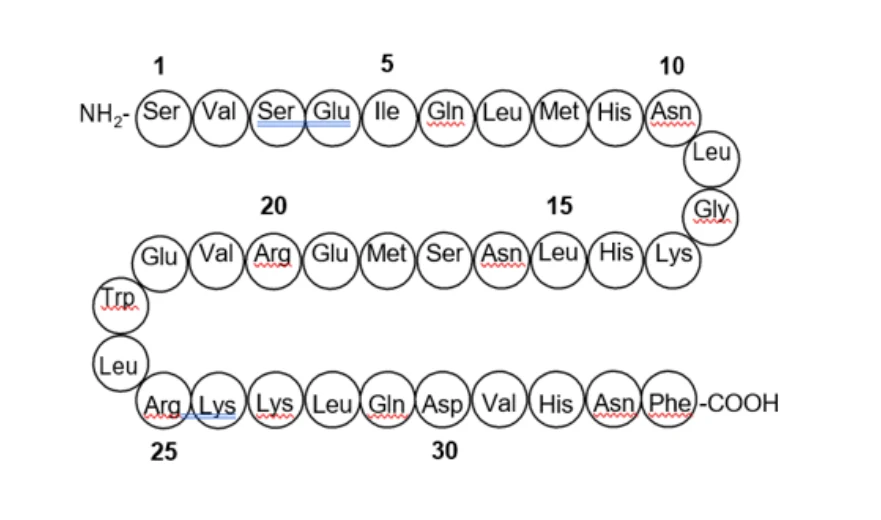
Chemical name: Teriparatide is identical to the 34 N-terminal amino acid sequence of natural human parathyroid hormone: human parathyroid hormone (1-34), [PTH(1-34)]
- 1) L-Phenylalanine, L-seryl-L-valyl-L-seryl-L- α -glutamyl-L-isoleucyl-L-glutaminyl-L- leucyl-L-methionyl-L-histidyl-L-asparaginyl-L-leucyl-L-glycyl-L-lysyl-L-histidyl-
L-leucyl-L-asparaginyl-L-seryl-L-methionyl-L- α -glutamyl-L-arginyl-L-valyl-
L- α -glutamyl-L-tryptophyl-L-leucyl-L-arginyl-L-lysyl-L-lysyl-L-leucyl-L-glutaminyl- L- α -aspartyl-L-valyl-L-histidyl-L-asparaginyl-, acetate salt
- 2) L-Seryl-L-valyl-L-seryl-L- α -glutamyl-L-isoleucyl-L-glutaminyl-L-leucyl-L- methionyl-L-histidyl-L-asparaginyl-L-leucyl-L-glycyl-L-lysyl-L-histidyl-L-leucyl-L- asparaginyl-L-seryl-L-methionyl-L- α -glutamyl-L-arginyl-L-valyl-L- α -glutamyl-
L-tryptophyl-L-leucyl-L-arginyl-L-lysyl-L-lysyl-L-leucyl-L-glutaminyl-L-
α-aspartyl-L-valyl-L-histidyl-L-asparaginyl-L-phenylalanine, acetate salt
Molecular formula and molecular mass: C181H291N55O51S2 y C2H4O2, 4117.7 Daltons (as free base)
Structural formula:
Product Characteristics
Teriparatide is manufactured using solid phase synthesis techniques.
CLINICAL TRIALS
Treatment of Osteoporosis in Postmenopausal Women
Study demographics and trial design
Table 5: Summary of Patient Demographics for Clinical Trials in Postmenopausal Women with Osteoporosis.
| Study # | Trial design | Dosage, route of administration and duration | Study subjects (n=number) | Mean age (Range) | Gender |
|---|---|---|---|---|---|
| B3D- MC- GHAC | Double-blind, placebo-controlled | Placebo, teriparatide 20 mcg, or teriparatide 40 mcg, subcutaneous injection, once daily. Up to 24 months (median: 19 months) | Postmenopausal osteoporosis (1637) | 69.5 years (42 to 86 years) | Women |
The safety and efficacy of teriparatide once-daily for up to 24 months (median: 19 months), were examined in a double-blind, placebo-controlled clinical study of 1637 postmenopausal women (mean age: 69.5 years) with severe osteoporosis (mean T- score: -2.6). Among these women, 541 received teriparatide 20 mcg. All women received 1000 mg of calcium per day and at least 400 IU of vitamin D per day. Ninety percent of the women in the study had 1 or more radiographically diagnosed vertebral fractures at baseline. The primary efficacy endpoint was the occurrence of new radiographically diagnosed vertebral fractures defined as changes in the height of previously undeformed vertebrae.
Effect on fracture incidence
New vertebral fractures - teriparatide, when taken with calcium and vitamin D and compared with calcium and vitamin D alone, significantly reduced the risk of 1 or more new vertebral fractures from 14.3% of women in the placebo group to 5.0% in the teriparatide group (p<0.001). The absolute reduction in risk was 9.3% and the relative reduction was 65%. Eleven women would need to be treated with teriparatide for a median of 19 months to prevent one or more new vertebral fractures. Teriparatide was effective in reducing the risk for vertebral fractures regardless of age, baseline rate of bone turnover, or baseline bone mineral density (BMD).
Table 6: Effect of Teriparatide on Vertebral Fracture Incidence in Postmenopausal Women with Osteoporosis.
| Placebo (N=448) (%) | Teriparatide (N=444) (%) | Absolute Risk Reduction (%) | 95% CI (%) | P-Value | |
|---|---|---|---|---|---|
| New fracture (≥ 1) | 14.3 | 5.0 | 9.3 | (5.3, 13.4) | <0.001 |
| Multiple fractures (≥ 2) | 4.9 | 1.1 | 3.8 | (1.3, 6.2) | 0.001 |
| Placebo (N=448) (%) | Teriparatide (N=444) (%) | Absolute Risk Reduction (%) | 95% CI (%) | P-Value | |
|---|---|---|---|---|---|
| Moderate or severe fracture (≥ 1) | 9.4 | 0.9 | 8.5 | (5.4, 11.5) | <0.001 |
Percentages compared between treatment groups using Fisher’s Exact Test.
Confidence Interval (CI) based on Fleiss Method (1981, p.29).
Effect on height loss - Both treatment groups lost height during the trial. The mean decreases were 3.61 and 2.81 mm in the placebo and teriparatide groups, respectively. For the 86 postmenopausal women who experienced vertebral fractures, those treated with teriparatide had significantly less height loss when compared to placebo (p = 0.001).
Effect on back pain - Teriparatide significantly reduced the incidence and severity of back pain. In women with postmenopausal osteoporosis, there was a 26% reduction (p = 0.017) in the spontaneous reports of new or worsened back pain compared to placebo.
New nonvertebral osteoporotic fractures - Table 7 shows the effect of teriparatide on the risk of nonvertebral fractures. Teriparatide significantly reduced the risk of any nonvertebral fracture from 5.5% in the placebo group to 2.6% in the teriparatide group (p<0.05). The absolute reduction in risk was 2.9% and the relative reduction was 53%.
Table 7: Effects of Teriparatide on Risk of New Nonvertebral Fractures in Postmenopausal Women with Osteoporosis.
Teriparatidea N=541 | Placeboa N=544 | Absolute Risk Reduction (%) | 95% CI (%) | P-Value | |
|---|---|---|---|---|---|
| Skeletal site | |||||
| Wrist | 2 (0.4%) | 7 (1.3%) | 0.9 | (-0.3, 2.2) | 0.178 |
| Ribs | 3 (0.6%) | 5 (0.9%) | 0.4 | (-0.8, 1.6) | 0.726 |
| Hip | 1 (0.2%) | 4 (0.7%) | 0.6 | (-0.4, 1.5) | 0.374 |
| Ankle/Foot | 1 (0.2%) | 4 (0.7%) | 0.6 | (-0.4, 1.5) | 0.374 |
| Humerus | 2 (0.4%) | 2 (0.4%) | -0.0 | (-0.9, 0.9) | 1.000 |
| Pelvis | 0 | 3 (0.6%) | 0.6 | (-0.3, 1.4) | 0.249 |
| Other | 6 (1.1%) | 8 (1.5%) | 0.4 | (-1.2, 1.9) | 0.789 |
| Total | 14 (2.6%) | 30 (5.5%) | 2.9 | (0.4, 5.5) | 0.020 |
a Data shown as number (%) of women with fractures.
Percentages compared between treatment groups using Fisher's Exact Test.
Confidence Interval (CI) based on Fleiss Method (1981, P.29).
The cumulative percentage of postmenopausal women with osteoporosis who sustained new nonvertebral fractures was lower in women treated with teriparatide than in women treated with placebo (see Figure 1).
Figure 1: Cumulative percentage of postmenopausal women with osteoporosis sustaining new nonvertebral osteoporotic fractures.*
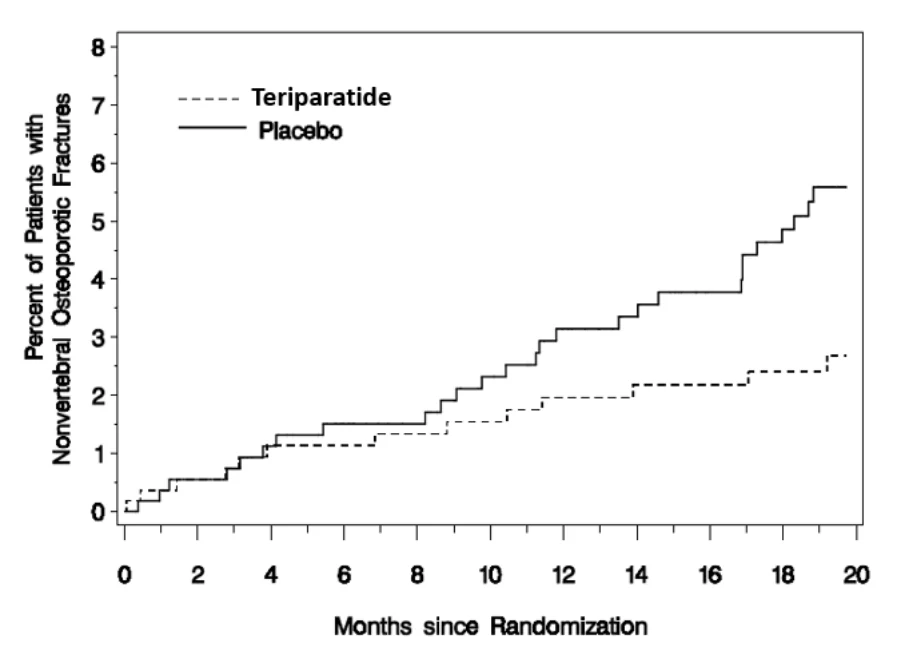
* This graph includes all fractures listed above in Table 7.
Post- treatment fracture efficacy - Following treatment with teriparatide, 1262 postmenopausal women from the pivotal trial enrolled in a post-treatment follow-up study. After 18 months, approximately 50% of the women in each former treatment group had begun an approved osteoporosis therapy (not including teriparatide) at the discretion of their physician. All women were offered 1000 mg of calcium per day and at least 400 IU of vitamin D per day.
During a median of 18 months following discontinuation of teriparatide treatment, there was a significant 40% reduction in relative risk for new vertebral fractures in women previously treated with teriparatide, compared to placebo. (The relative risk reduction was similar for women with and without osteoporosis treatment, 41% and 37%, respectively). During the same observation period, there was a 42% risk reduction for nonvertebral fragility fractures in women previously treated with teriparatide, compared with placebo.
Data from this study demonstrate that regardless of the follow-up treatment options, fracture risk was reduced for women previously treated with teriparatide.
Effect on bone mineral density (BMD)
Teriparatide increased lumbar spine BMD in postmenopausal women with osteoporosis. Statistically significant increases were seen at 3 months and continued throughout the treatment period, as shown in Figure 2.
Figure 2: Time course of change in lumbar spine BMD in postmenopausal women with osteoporosis treated with teriparatide vs placebo (women with data available at all time points).
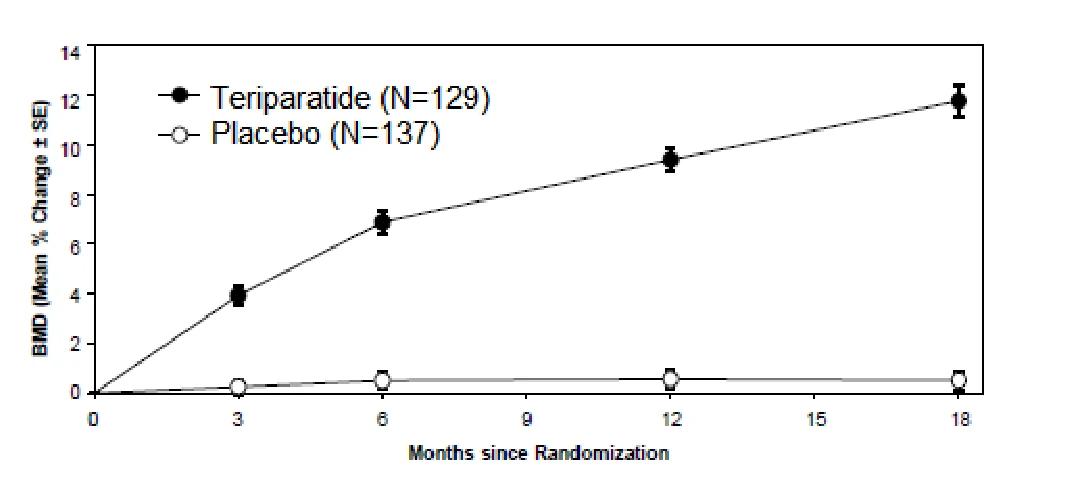
(p<0.001 for teriparatide compared with placebo at each post-baseline time point)
Postmenopausal women with osteoporosis who were treated with teriparatide also had statistically significant increases in BMD at the femoral neck, total hip, and total body (see Table 8).
Table 8: Mean Percent Change in BMD from Baseline to Endpoint* in Postmenopausal Women with Osteoporosis, Treated with Teriparatide or Placebo.
| Teriparatide N=541 | Placebo N=544 | Treatment Difference | 95% CI (%) | |
|---|---|---|---|---|
| Lumbar spine BMD | 9.7 | 1.1 | 8.6a | (7.8, 9.4) |
| Femoral neck BMD | 2.8 | -0.7 | 3.5b | (2.8, 4.2) |
| Total hip BMD | 2.6 | -1.0 | 3.6b | (2.8, 4.4) |
| Trochanter BMD | 3.5 | -0.2 | 3.7b | (2.9, 4.5) |
| Intertrochanter BMD | 2.6 | -1.3 | 3.9b | (3.0, 4.8) |
| Ward’s triangle BMD | 4.2 | -0.8 | 5.0b | (3.5, 6.5) |
| Total body BMD | 0.6 | -0.5 | 1.0b | (0.4, 1.7) |
| Distal 1/3 radius BMD | -2.1 | -1.3 | -0.8 | (-1.7, 0.0) |
| Ultradistal radius BMD | -0.1 | -1.6 | 1.5 | (-0.2, 3.3) |
* Intent-to-treat analysis, last observation carried forward.
a p<0.001 compared with placebo.
b p<0.05 compared with placebo.
Percentages compared between treatment groups using T-test
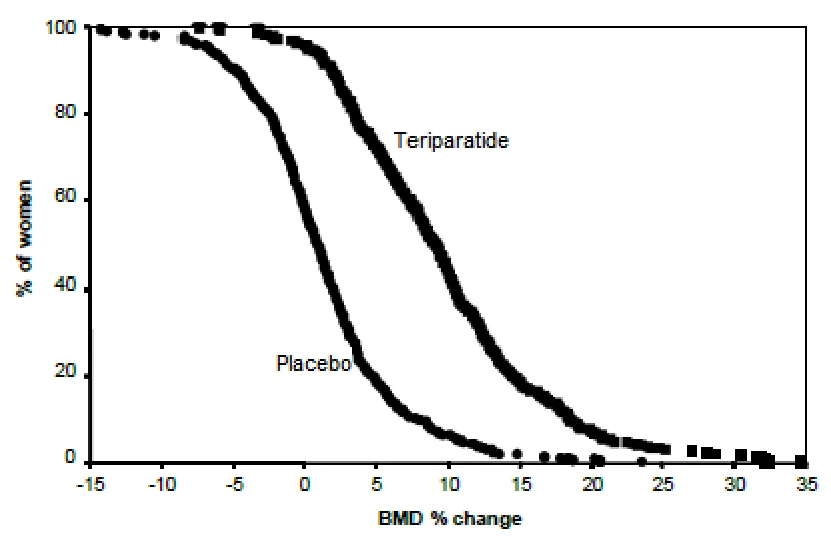
Figure 3 shows the cumulative distribution of the percentage change from baseline of lumbar spine BMD for the teriparatide and placebo groups. Teriparatide treatment increased lumbar spine BMD from baseline in 96% of postmenopausal women treated (see Figure 3). Seventy-two percent of patients treated with teriparatide achieved at least a 5% increase in spine BMD, and 44% gained 10% or more.
Figure 3: Percent of postmenopausal women with osteoporosis attaining a lumbar spine BMD percent change from baseline at least as great as the value on the x-axis (median duration of treatment 19 months).
Bone histology - The effects of teriparatide on bone histology were evaluated in iliac crest biopsies of 35 postmenopausal women treated for 12 to 24 months with calcium and vitamin D and teriparatide 20 or 40 mcg/day. Normal mineralization was observed with no evidence of cellular toxicity. The new bone formed with teriparatide was of normal quality (as evidenced by the absence of woven bone and marrow fibrosis). Teriparatide significantly increased cancellous bone volume and connectivity, improved trabecular morphology with a shift toward a more plate-like structure, and increased cortical bone thickness.
Treatment to Increase Bone Mass in Men with Primary or Hypogonadal Osteoporosis Study demographics and trial design
Table 9: Summary of Patient Demographics for Clinical Trials in Men with Primary or Hypogonadal Osteoporosis.
| Study # | Trial design | Dosage, route of administration and duration | Study subjects (n=number) | Mean age (Range) | Gender |
|---|---|---|---|---|---|
B3D-MC- GHAJ | Double-blind, placebo-controlled | Placebo, teriparatide 20 mcg, or teriparatide 40 mcg, subcutaneous injection, once daily. Up to 14 months (median: 10 months) | Primary (idiopathic) or hypogonadal osteoporosis (437) | 58.7 years (28 to 85 years) | Men |
The safety and efficacy of teriparatide once-daily for up to 14 months (median: 10 months) were examined in a double-blind, placebo-controlled clinical study of 437 men (mean age: 58.7 years) with either primary (idiopathic) or hypogonadal osteoporosis (teriparatide 20 mcg, n=151). All men received 1000 mg of calcium per day and at least 400 IU of vitamin D per day. The primary efficacy endpoint was change in lumbar spine bone mineral density (BMD).
Effect on bone mineral density (BMD)
Teriparatide increased lumbar spine BMD in men with primary or hypogonadal osteoporosis. Statistically significant increases were seen at 3 months and continued throughout the treatment period. After a median treatment period of 10 months, BMD in the spine increased on average by 5.4% and in the total hip by 0.7% compared to placebo. Teriparatide was effective in increasing lumbar spine BMD regardless of age, baseline rate of bone turnover, and baseline BMD. The effects of teriparatide at additional skeletal sites are shown in Table 10.
Table 10: Mean Percent Change in BMD from Baseline to Endpoint* in Men with Primary or Hypogonadal Osteoporosis, Treated with Teriparatide or Placebo for a Median of 10 Months
| Teriparatide N=151 | Placebo N=147 | Treatment Difference | 95% CI (%) | |
|---|---|---|---|---|
| Lumbar spine BMD | 5.9 | 0.5 | 5.3a | (4.4, 6.3) |
| Femoral neck BMD | 1.5 | 0.3 | 1.2b | (0.3, 2.2) |
| Total hip BMD | 1.2 | 0.5 | 0.6 | (-0.0, 1.3) |
| Trochanter BMD | 1.3 | 1.1 | 0.2 | (-0.7, 1.1) |
| Intertrochanter BMD | 1.2 | 0.6 | 0.6 | (-0.2, 1.3) |
| Ward’s triangle BMD | 2.8 | 1.1 | 1.8 | (-0.2, 3.7) |
| Total body BMD | 0.4 | -0.4 | 0.8 | (-0.1, 1.6) |
| Distal 1/3 radius BMD | -0.5 | -0.2 | -0.3 | (-0.9, 0.3) |
| Ultradistal radius BMD | -0.5 | -0.3 | -0.2 | (-1.1, 0.7) |
* Intent-to-treat analysis, last observation carried forward.
a p<0.001 compared with placebo.
b p<0.05 compared with placebo.
Percentages compared between treatment groups using T-test
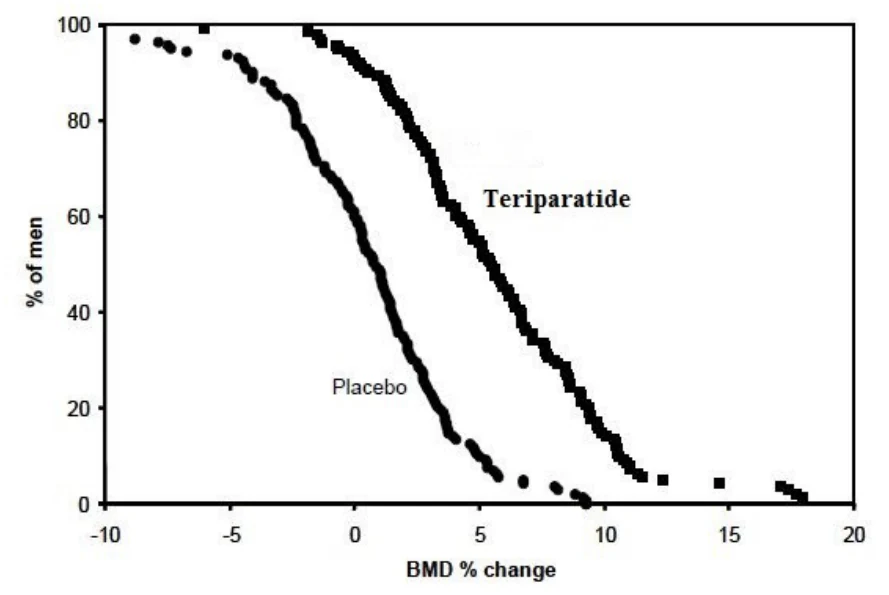
Figure 4 shows the cumulative distribution of the percentage change from baseline of lumbar spine BMD for the teriparatide and placebo groups. Teriparatide treatment for a median of 10 months increased lumbar spine BMD from baseline in 94% of men treated. Fifty-three percent of patients treated with teriparatide achieved at least a 5% increase in spine BMD, and 14% gained 10% or more.
Figure 4: Percent of men with primary or hypogonadal osteoporosis attaining a lumbar spine BMD percent change from baseline at least as great as the value on the x-axis (median duration of treatment 10 months).
Treatment of Men and Women with Glucocorticoid-Induced Osteoporosis Study demographics and trial design
Table 11: Summary of Patient Demographics for Clinical Trial in Men and Women with Glucocorticoid-Induced Osteoporosis
| Study # | Trial design | Dosage, route of administration and duration | Study subjects (n=number) | Mean age (range) | Gender |
|---|---|---|---|---|---|
| B3D-US- GHBZ | Double-blind, active comparator- controlled | Placebo (oral and injection), teriparatide 20 mcg/day by subcutaneous injection, once daily, Alendronate 10 mg/day, oral Duration 36 months: Primary phase - 18 months; continuation phase - 18 months | Glucocorticoid- induced osteoporosis (428) | 57 years (range 22- 89) | Men and Women |
Glucocorticoid-induced osteoporosis affects both men and women. Loss of BMD occurs early after the initiation of glucocorticoid therapy and may continue during sustained glucocorticoid therapy. The safety and efficacy of once-daily teriparatide were examined in a multicenter, randomized, double-blind, double-dummy, active comparator-controlled study of 83 men and 345 women taking systemic glucocorticoid medications (prednisone equivalent ≥5 mg/day for ≥3 consecutive months prior to screening) and had a BMD T-score of ≤-2 at the total hip, femoral neck, or lumbar spine, or had ≥1 fragility fracture and a BMD T-score of ≤-1 at the total hip, femoral neck, or lumbar spine. Patients received either teriparatide 20 mcg/day plus oral placebo (N=214) or alendronate 10 mg/day plus injectable placebo (N=214). Patients received supplemental calcium
1000 mg/day and vitamin D 800 IU/day.
The mean age of patients with glucocorticoid-induced osteoporosis was 57 years (range 22-89). The baseline median glucocorticoid dose (prednisone equivalent) was 7.5 mg and the median duration of glucocorticoid use was 1.3 years. The mean (SD) baseline lumbar spine BMD was 0.85 ± 0.13 g/cm2 and T-score was -2.5 ± 1. A total of 27% of patients had prevalent vertebral fracture(s) and 43% had prior non-vertebral fracture(s). The patients had chronic diseases that required sustained glucocorticoid therapy including 73% with rheumatologic or other joint and musculoskeletal disorders, and 14% with respiratory disorders. There was no significant difference in these baseline characteristics between the teriparatide and alendronate groups.
Effect on bone mineral density (BMD)
In patients with glucocorticoid-induced osteoporosis, both teriparatide and alendronate significantly increased lumbar spine BMD compared with baseline at 3 months through 24 months of treatment. Table 12 shows the mean change in lumbar spine, total hip, and femoral neck BMD from baseline to the primary 18-month endpoint in patients with glucocorticoid- induced osteoporosis who were treated with teriparatide or alendronate. The analysis in Table 12 included all patients with a baseline and at least one post baseline BMD measurement (last observation carried forward analysis).
Table 12: Least Squares Mean Change in BMD (g/cm2) from Baseline to Endpoint in Men and Women with Glucocorticoid-Induced Osteoporosis who had a Baseline and at Least One Post-baseline BMD Measurementa, 18 Month Data
Teriparatide 20 mcg/day (N=214) | Alendronate 10 mg/day (N=214) | ||||
|---|---|---|---|---|---|
| n | Change in BMD (%) | n | Change in BMD (%) | Treatment difference (95% CI) | |
| Lumbar Spine | 198 | 0.059 (7.2%) | 195 | 0.028 (3.4%) | 0.031 (0.021, 0.041)b |
| Total Hip | 185 | 0.026 (3.6%) | 176 | 0.017 (2.2%) | 0.009 (0.003, 0.015)c |
| Femoral Neck | 185 | 0.024 (3.7%) | 176 | 0.014 (2.1%) | 0.010 (0.002, 0.018)d |
a Within group actual changes (percent change) in BMD from baseline to endpoint (last observation carried forward, 18 months) were significant (p<0.01) at the lumbar spine, total hip, and femoral neck for both teriparatide and alendronate
b p<0.001, teriparatide versus alendronate
c p<0.01, teriparatide versus alendronate
d p<0.05, teriparatide versus alendronate
Between treatment group p values were obtained using the following analysis of variance model: Actual change in
BMD = treatment + region + prior bisphosphonate use + gender.
Figure 5 shows the mean percent changes from baseline in lumbar spine BMD in patients treated with teriparatide or alendronate who had BMD measurements at each time point. The increase in lumbar spine BMD induced by teriparatide was significantly greater compared with alendronate after 6, 12, 18 and 24 months of therapy (p<0.001 for teriparatide vs. alendronate). The relative treatment effects of teriparatide and alendronate were consistent in subgroups defined by gender, age, geographic region, body mass index, underlying disease, prevalent vertebral fracture, baseline glucocorticoid dose, prior bisphosphonate use, and glucocorticoid discontinuation during trial.
Figure 5: Percent change in lumbar spine BMD(g/cm2) in men and women with glucocorticoid-induced osteoporosis (patients with BMD measurements at each visit through 24 months)
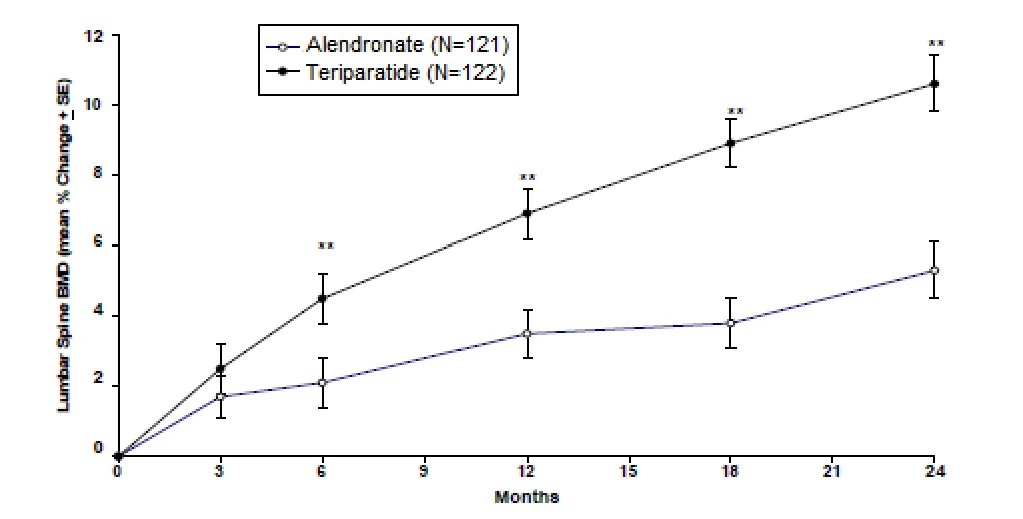
**p<0.001: teriparatide vs. alendronate
Between 18 and 24 months in patients with glucocorticoid-induced osteoporosis treated with teriparatide, the mean percent change in lumbar spine, total hip and femoral neck BMD increased by an additional (0.014 g/cm2) 1.7%, (0.007 g/cm2) 0.9%, and (0.002 g/cm2) 0.4%, respectively.
Effect on vertebral and non-vertebral fractures
During the 18-month primary phase of Study B3D-US-GHBZ, 18 patients in the alendronate group and 13 patients in the teriparatide group experienced vertebral and/or nonvertebral fracture(s). One patient in the alendronate group experienced both a vertebral and a nonvertebral fracture.
An analysis of 336 spinal X-rays, performed at 18 months, showed that 10 (6.1%) patients in the alendronate group compared to 1(0.6%) in the teriparatide group had experienced a new vertebral fracture. New nonvertebral fracture(s) were reported for 8 (3.7%) alendronate patients and 12 (5.6%) teriparatide patients. At 36 months, analysis of spinal X-rays showed that 13 of 169 patients (7.7%) in the alendronate group had experienced a new vertebral fracture compared with 3 of 173 patients in the teriparatide group (1.7%). Whereas, 15 of 214 patients in the alendronate group (7.0%) had experienced a nonvertebral fracture compared with 16 of 214 patients in the teriparatide group (7.5%).
2-Year Continuous Treatment of Osteoporosis in Postmenopausal Women with Teriparatide
Study demographics and trial design
Table 13: Summary of Patient Demographics for Clinical Trial of 24 month Continuous Treatment with Teriparatide
| Study # | Trial design | Dosage, route of administration and duration | Study subjects (n=number) | Mean age (range) | Gender |
|---|---|---|---|---|---|
B3D- EW- GHCA | Multicenter, prospective, open-label phase 3/4 trial, 2 substudies. Substudy 1: randomized with 3 treatment arms. Substudy 2: all patients receiving teriparatide for 24 months. | Teriparatide 20 mcg/day for 24 months in substudy 1 treatment arm 1 and substudy 2, and for 12 months in substudy 1 treatment arms 2 and 3. raloxifene HCL 60 mg/day for the second 12 months in substudy 1 treatment arm 2. All patients supplemented with 500 mg/day elemental calcium and 400 to 800 IU/day vitamin D; | Substudy 1: 632 Substudy 2: 234 (Total: 866) | 69.9 years (range 55-92.1) | Postmenopausal women |
The 24-month study, B3D-EW-GHCA (EUROFORS), was a multinational, multicenter, outpatient, prospective, open-label, Phase 3/4 trial in postmenopausal women with severe osteoporosis and ≥1 clinical fragility fracture (76% had received antiresorptive drugs). This study had 2 substudies in which all patients received teriparatide 20 mcg/day during the first 12 months.
Substudy 1 (parallel, controlled, and randomized) enrolled postmenopausal women with a BMD T-score 2.5 standard deviations (SDs) below the reference range for healthy premenopausal women at the lumbar spine, total hip, or femoral neck, and ≥1 preexisting clinical vertebral or nonvertebral fragility fracture within 3 years of screening. The 3 treatment arms of substudy 1 were:
- treatment arm 1 - teriparatide 20 mcg/day for 24 months
- treatment arm 2 - teriparatide 20 mcg/day for 12 months, followed by raloxifene 60 mg/day for 12 months
- treatment arm 3 - teriparatide 20 mcg/day for 12 months, followed by no treatment for 12 months
Substudy 2 (uncontrolled – all patients receive teriparatide 20 mcg/day for 24 months): patients had to meet the criteria of patients in substudy 1 plus have 1 of the following: (a) a new, documented clinical vertebral or nonvertebral fragility fracture despite prescription of antiresorptive therapy in the year prior to this fracture; or (b) had a lumbar spine, femoral neck, or total hip BMD T-score 3 SDs or more below the reference range for healthy premenopausal women despite prescription of antiresorptive treatment for the past 2 years; or (c) a BMD decrease of ≥3.5% at any site, despite prescription of antiresorptive treatment for the past 2 years. Thus, all patients in substudy 2 had an inadequate clinical response to prior osteoporosis therapy.
At baseline, the mean age in substudy 2 (N=234) was 70.2 years, 99.1% of patients had prior antiresorptive therapy, and 99.6% had a history of fragility fracture. Study GHCA differs from most clinical studies of teriparatide which enrolled treatment-naïve patients or patients with limited previous use of antiresorptive drugs. In addition, this study enrolled high risk osteoporotic patients who had failed to respond to other anti-osteoporosis drugs.
Effect on bone mineral density (BMD)
In study B3D-EW-GHCA, 503 postmenopausal women with severe osteoporosis and a fragility fracture within the previous 3 years (83% had received previous osteoporosis therapy) were treated with teriparatide for up to 24 months. At 24 months, the mean increase from baseline in lumbar spine, total hip and femoral neck BMD was 0.076 g/cm2 (10.5%), 0.018 g/cm2 (2.6%) and 0.024 g/cm2 (3.9%) respectively. The mean increase in BMD from 18 to 24 months was 0.011 g/cm2 (1.4%), 0.008 g/cm2 (1.2%), and 0.010 g/cm2 (1.6%) at the lumbar spine, total hip and femoral neck, respectively.
DETAILED PHARMACOLOGY
Endogenous 84-amino-acid parathyroid hormone (PTH) is the primary regulator of calcium and phosphate metabolism in bone and kidney. Physiological actions of PTH include regulation of bone metabolism, renal tubular reabsorption of calcium and phosphate, and intestinal calcium absorption. The biological actions of PTH and teriparatide are mediated through binding to specific high-affinity cell-surface receptors. Teriparatide and the 34 N-terminal amino acids of PTH bind to these receptors with the same affinity and have the same physiological actions on bone and kidney. Teriparatide is not expected to accumulate in bone or other tissues.
Teriparatide increased bone mass, resistance to fracture (bone strength), and improved skeletal architecture (e.g., cortical area and trabecular connectivity, number, thickness, and volume) in rats, monkeys, and rabbits. These effects resulted from activation of osteoblasts, which increased apposition of new bone at trabecular, endocortical, and periosteal surfaces, with minimal effect on bone resorption. Increases in trabecular bone mass did not occur at the expense of cortical bone. In short- and long-term studies in species that have cortical remodelling (rabbits and monkeys), teriparatide increased cortical bone thickness and had beneficial effects on cortical bone strength in parallel with an increase in Haversian remodelling.
The BMD and strength of the vertebra, femoral neck, proximal tibia, and femoral diaphysis were increased dose-dependently in male and female rats treated with teriparatide. Compared to monkeys, rabbits, and humans, rats showed an exaggerated response to the skeletal effects of teriparatide. Ovariectomized rats treated with teriparatide 40 mcg/kg/day for 1 year had an approximate BMD increase of 72% in the femoral midshaft with significant loss of marrow space and altered shape of femora and vertebrae. The greater response of the rat skeleton to teriparatide is consistent with known differences in bone physiology, such as the nearly continuous growth of the rat skeleton throughout life and the lack of Haversian remodelling in cortical bone.
In ovariectomized monkeys administered doses up to 5 mcg/kg/day for 18 months, teriparatide increased BMD and resistance to fracture of the proximal femur (hip) and vertebra. Treatment increased bone formation with normal mineralization, and improved bone architecture. Increased connectivity was observed at all trabecular bone sites examined. Increased bone density and bone strength achieved in monkeys after a 1-year treatment period were retained 6 months (2 remodelling periods, equivalent to approximately 1 to 1.5 years in humans) after teriparatide treatment was discontinued.
TOXICOLOGY
Acute Toxicity - Teriparatide is not acutely toxic (Table 14). No mortality occurred in rats given doses of 1000 mcg/kg (540 times the human dose) or in mice given 10,000 mcg/kg (2700 times the human dose).
Long-Term Toxicity - The primary effects produced by teriparatide in repeated-dose studies in rats and monkeys up to 1 year in duration were either directly or indirectly related to the known pharmacologic actions of PTH on bone metabolism and mineral ion regulation (Table 15). Systemic exposure of rats and monkeys to teriparatide at the NOAELs in the chronic studies were estimated to be 2 to 5 times greater than for humans given a dose of teriparatide Injection 20 mcg/day.
Carcinogenicity - Two carcinogenicity bioassays were conducted in Fischer 344 rats (Table 16). In the first study, male and female rats were given daily subcutaneous teriparatide injections of 5, 30, or 75 mcg /kg/day for 24 months from 2 months of age. These doses resulted in systemic exposures that were, respectively, 3, 20, and 60 times higher than the systemic exposure observed in humans following a subcutaneous dose of 20 mcg (based on AUC comparison). Teriparatide treatment resulted in a marked dose-related increase in the incidence of osteosarcoma, a rare malignant bone tumour, in both male and female rats. Osteosarcomas were observed at all doses and the incidence reached 40% to 50% in the high-dose groups. Teriparatide also caused a dose-related increase in osteoblastoma and osteoma in both sexes. No osteosarcomas, osteoblastomas or osteomas were observed in untreated control rats. The bone tumours in rats occurred in association with a large increase in bone mass and focal osteoblast hyperplasia.
The second 2-year study was carried out in order to determine the effect of treatment duration and animal age on the development of bone tumours. Female rats were treated for different periods between 2 and 26 months of age with subcutaneous doses of 5 and 30 mcg/kg (equivalent to 3 and 20 times the human exposure at the 20-mcg dose, based on AUC comparison). The study showed that the occurrence of osteosarcoma, osteoblastoma and osteoma was dependent upon dose and duration of exposure. Bone tumours were observed when immature 2-month old rats were treated with 30 mcg/kg/day for 24 months or with 5 or 30 mcg/kg/day for 6 months. Bone tumours were also observed when mature 6-month old rats were treated with 30 mcg/kg/day for 6 or 20 months. Tumours were not detected when mature 6-month old rats were treated with 5 mcg/kg/day for 6 or 20 months. The results did not demonstrate a difference in susceptibility to bone tumour formation, associated with teriparatide treatment, between mature and immature rats.
Osteosarcoma was not observed in teriparatide clinical trials. Though osteosarcoma has been reported in a post-market setting, increased incidence of osteosarcoma has not been observed with teriparatide treatment in observational studies.
Mutagenicity - Teriparatide was not genotoxic in any of the following test systems: the Ames test for bacterial mutagenesis; the mouse lymphoma assay for mammalian cell mutation; the chromosomal aberration assay in Chinese hamster ovary cells, with and without metabolic activation; and the in vivo micronucleus test in mice (Table 17).
Impairment of Fertility - Teriparatide had no effects on fertility of male or female rats at doses up to 300 mcg/kg (160 times the human dose based on surface area, mcg /m2).
Teriparatide produced no teratogenic effects in rats, mice, or rabbits (Table 18). No important effects on embryo/fetal development were seen in rats or mice given teriparatide at doses up to 1000 mcg/kg (270 to 540 times the human dose based on surface area, mcg/m2).
Embryo/fetal mortality and reduced litter size was observed in pregnant rabbits administered daily doses of 3 to 100 mcg/kg of teriparatide. The embryotoxicity observed in rabbits may be related to the increased levels of blood ionized calcium.
Developmental effects in a perinatal/postnatal study in rats were limited to mild growth retardation of the offspring at doses ≥ 225 mcg/kg (>120 times the human dose based on surface area, mcg /m2) and decreased motor activity in offspring at 1000 mcg/kg.
Special Toxicology Studies - Subcutaneous administration of teriparatide at a dose of 40 mcg/kg/day to monkeys for approximately 4 months caused renal histologic changes which were largely reversible and had a limited impact on kidney function (Table 19). However, no drug-related histopathologic changes were observed in the kidneys of mature, ovariectomized monkeys administered teriparatide doses up to 5 mcg/kg/day for 12 or 18 months.
Two limited repeated-dose studies were conducted in dogs: a 2-week study and an 8-week study. Treatment groups included daily subcutaneous injections of teriparatide, and transmucosal tablets of teriparatide, both at a dose of 2 mcg/kg in the 2-week study or 0.5 mcg/kg in the 8-week study. Slight-to-moderate transient increases in blood ionized calcium occurred in all teriparatide-treated groups of both studies. Minimal-to-moderate renal tubular lesions occurred only in dogs given teriparatide transmucosally for 8 weeks, with one dog showing signs of renal failure as evidenced by elevations in blood urea and creatinine that were accompanied by overt hypercalcemia. These findings are consistent with the high sensitivity of dogs to the known hypercalcemic effects of PTH.
Table 14: Acute Toxicity Studies with Teriparatide
| Species, Strain | Number/Sex/ Group; Age | Dose (mcg/kg) | Route of Administration | Duration of Observations | Parameters Evaluated | Observations |
|---|---|---|---|---|---|---|
Rat, Fischer 344 | 5; 9-10 weeks | 0, 100, 300, 1000 | Subcutaneous | 2 weeks | Mortality Clinical observations Body weight Gross pathology | Redness of extremities 15 minutes postdose (vasodilation). No compound-related lesions. Median Lethal Dose >1000 mcg /kg (M,F) |
Rat, Fischer 344 | 5; 9-10 weeks | 0, 300 | Intravenous | 2 weeks | Mortality Clinical observations Body weight Gross pathology | Redness of extremities 15 minutes postdose (vasodilation). No compound-related lesions. Median Lethal Dose >300 mcg/kg (M,F) |
Table 15: Long-Term Toxicity Studies with Teriparatide (Page 1 of 4)
| Species, Strain | Number/Sex/ Group; Age | Dose (mcg/kg/day) | Route of Administration | Duration of Treatment | Parameters Evaluated | Observations |
|---|---|---|---|---|---|---|
Rat, Fischer 344 | 10; 8-9 weeks | 0, 10, 30, 100, 300 | Subcutaneous | 6 weeks | Survival; Clinical observations; Body weight; Food consumption; Plasma concentrations; Hematology; Clinical chemistry; Organ weights; Pathology | Cmax, 2 ng/mL at 10 mcg/kg, 195 ng/mL at 300 mcg/kg; Redness of ears and paws vasodilation) in all groups; ⇑ Body weight gain, EFU in high-dose females; ⇑ Trabecular bone formation in femurs in all treated groups. ⇓ Erythrocytic parameters in all treated groups; ⇓ Neutrophil counts; ⇑ Spleen weight and extramedullary hematopoiesis in treated groups; ⇑ ALP, serum calcium, cholesterol, triglycerides, calcium excretion; ⇓ Testes and prostate weight in 1 to 3 males per treatment group with minimal degenerative testes changes. NOAEL <10 mcg/kg (M); 10 mcg/kg (F) |
Table 15: Long-Term Toxicity Studies with Teriparatide (Page 2 of 4)
| Species, Strain | Number/Sex/ Group; Age | Dose (mcg/kg/day) | Route of Administration | Duration of Treatment | Parameters Evaluated | Observations |
|---|---|---|---|---|---|---|
Rat, Fischer 344 | 15; 27-28 weeks | 0, 10, 30, 100 | Subcutaneous | 6 months | Survival; Clinical observations; Body weight; Food consumption; Plasma concentrations; Hematology; Clinical chemistry; Organ weights; Pathology | Cmax (Day 140), 3.1 ng/mL at 10 mcg/kg, 75 ng/mL at 100 mcg/kg; ⇓ Body weight and EFU in high-dose males; ⇑ Body weight and EFU in treated females; ⇑ Trabecular and cortical bone formation in femur and sternum in all treated groups; ⇑ Femur length in treated females; ⇓ Females with normal estrous cycles; ⇑ Serum inorganic phosphorus, calcium in all treated groups; ⇑ Excretion of calcium and inorganic phosphorus at ≥30 mcg/kg; ⇑ Serum globulin and [serum albumin in all treated groups; ⇓ Erythrocytic and leukocytic parameters in all treated groups; Extramedullary hematopoiesis in spleen in all treated groups and in liver of females at 100 mcg/kg; ⇑ Spleen weight in treated females; ⇓ Pituitary weight in females at >30 mcg/kg NOAEL = 10 mcg/kg |
Table 15: Long-Term Toxicity Studies with Teriparatide (Page 3 of 4)
| Species, Strain | Number/Sex/ Group; Age | Dose (mcg/kg/day) | Route of Administration | Duration of Treatment | Parameters Evaluated | Observations |
|---|---|---|---|---|---|---|
Cynomolgus Monkey | 3 or 4; Young adult, 2.5 years | 0, 2, 10, 20, 40 | Subcutaneous | 3 months | Survival; Clinical observations; Body weight; Food consumption; Plasma concentrations; Hematology; Clinical chemistry; Hepatic enzyme induction; Organ weights; Pathology | Cmax 0.51 to 0.70 ng/mL at 2 mcg/kg, 16.2 to 31.5 ng/mL at 40 mcg/kg; ⇑ Trabecular bone formation in femurs in all treated groups; ⇑ Blood ionized calcium in all treated groups; Minimal-to-moderate changes in renal tubules and medullary interstitium at doses >10 mcg/kg; Minimal expansion of medullary interstitium in females given 2 mcg/kg; ⇑ Relative kidney weight in females given 20 or 40 mcg/kg NOAEL = 2 mcg/kg |
Table 15: Long-Term Toxicity Studies with Teriparatide (Page 4 of 4)
| Species, Strain | Number/Sex/ Group; Age | Dose (mcg/kg/day) | Route of Administration | Duration of Treatment | Parameters Evaluated | Observations |
|---|---|---|---|---|---|---|
Cynomolgus Monkey | 4; Young adult 2 years | 0, 0.5, 2, 10 | Subcutaneous | 1 year | Survival; Clinical observations; Body weight; Food consumption; Plasma concentrations; Hematology; Clinical chemistry; Immunologic response; Organ weights; Pathology | Cmax, 0.15 ng/mL at 0.5 mcg/kg, 4.51 ng/mL at 10 mcg/kg; ⇑ Incidence of teriparatide-specific IgG levels (0 of 8 in control to 6 of 8 at 10 mcg/kg); ⇑ Trabecular bone formation in femurs in all treated groups; Slight ⇓ erythron parameters in females at10 mcg/kg; ⇑ Blood ionized calcium in high-dose group; Minimal-to-moderate changes in renal tubules and medullary interstitium with slight ⇑relative kidney weight in 6 of 8 animals at 10 mcg/kg and 1 female in each of 0.5 and 2mcg/kg groups. NOAEL = 2 mcg/kg |
Table 16: Carcinogenicity Studies with Teriparatide
| Species, Strain | Number/Sex/ Group; Age | Dose (mcg/kg/day) | Route of Administration | Duration of Treatment | Parameters Evaluated | Observations |
|---|---|---|---|---|---|---|
Rat, Fischer 344 | 60; 6-7 weeks | 0, 5, 30, 75 | Subcutaneous | 2 years | Survival; Clinical observations; Body weight; Food consumption; Plasma concentrations; Hematology; Clinical chemistry; Organ weights; Pathology | AUC, 0.9 ng-hr/mL at 5 mcg/kg, 17.1 ng-hr/mL at 75 mcg/kg. ⇑ Leg nodules, neurologic signs related to bone neoplasms at all doses; Exaggerated [in bone formation at all doses including reduction of marrow space, periosteal expansion with altered bone architecture; ⇑ Incidence of hyperplastic and neoplastic bone lesions, including osteosarcomas at all doses; No increase in neoplasms of non-osseous tissues. |
Rat, Fischer 344 | n = 30 or 60 Age = 6-7 weeks or 24- 26 weeks | 0, 5, 30 | Subcutaneous | 6 months 20 months 24 months | Survival; Clinical observations; Body weight; Food consumption; Plasma concentrations; Quantitative bone analyses; Bone histopathology | Plasma concentration at 5 mcg/kg = 1.12 to 1.36 ng/mL Plasma concentration at 30 mcg/kg = 7.39 to 11.40 ng/mL Exaggerated [in bone formation at all doses. No bone tumours detected when mature 6-month old rats were treated with 5 mcg/kg/day for 6 or 20 months; ⇑ Bone tumours were detected when immature 2-month old rats were treated with 30 mcg/kg/day for 24 months or 5 or 30 mcg/kg/day for 6 months; ⇑ Bone tumours were detected when mature 6-month old rats were treated with 30 mcg/kg/day for 6 or 20 months. |
Table 17: Mutagenicity Studies with Teriparatide
| Type of Study | Species, Cells | Route of Administration | Doses/Concentrations | Results |
|---|---|---|---|---|
| Ames | Escherichia coli Salmonella typhimurium | In vitro | 312.5 to 5000 mcg/plate with and without metabolic activation | Negative |
| Forward mutation at thymidine kinase locus | L5178Y TK+/- mouse lymphoma | In vitro | 39 to 5000 mcg/mL, with and without metabolic activation | Negative |
| Chromosome aberration | Chinese hamster ovary | In vitro | 1250 to 5000 mcg/mL, with and without metabolic activation | Negative |
| Micronucleus, in vivo | ICR Mouse, bone marrow | Subcutaneous injection | 1000 to 10,000 mcg/kg/day | Negative |
Table 18: Reproduction and Teratology Studies with Teriparatide (Page 1 of 3)
| Species, Strain/ Study Type | Number/ Group; Age | Dose (mcg/kg/day) | Route of Administration | Duration of Treatment | Parameters Evaluated | Observations |
|---|---|---|---|---|---|---|
Rat, CD Segment I | 20 Males 13 weeks 20 females 9 weeks | Males: 0, 30, 100, 300 Females: not treated | Subcutaneous | 7 weeks: 4 weeks prior to and during cohabitation until termination | Survival; Clinical observations; Body weight; Food consumption; Testicular weight and morphology; Sperm concentration and motility; Mating; Fertility | ⇓ Prostate weight in males at 300 mcg/kg; Redness of the extremities in all treated males; No adverse effects on body weight, food consumption, mating, fertility, testicular weight, testicular morphology, sperm concentration, or sperm motility NOAEL = 300 mcg/kg |
Rat, CD Segment I | 20 Males 20 females 9 weeks | Males: not treated Females: 0, 30, 100, 300 | Subcutaneous | 2 weeks prior to and during cohabitation until postmating Day 6 | Survival; Clinical observations; Body weight; Food consumption; Mating Fertility Gestation survival Fetal parameters | ⇑ Body weight and food consumption in females at 100 and 300 mcg/kg Redness of the extremities in all treated females; No effects on maternal reproductive or fetal parameters NOAEL = 300 mcg/kg |
Table 18: Reproduction and Teratology Studies with Teriparatide (Page 2 of 3)
| Species, Strain / Study Type | Number/ Group; Age | Dose (mcg/kg/day) | Route of Administration | Duration of Treatment | Parameters Evaluated | Observations |
|---|---|---|---|---|---|---|
Rat, CD Segment II | 25 Pregnant females; 12 weeks | 0, 30, 225, 1000 | Subcutaneous | Gestation Days 6 through 17 | Survival; Clinical observations; Body weight; Food consumption; Reproductive and uterine parameters; Fetal viability weight and morphology; | Redness of the extremities in all treated females; No treatment-related effects on maternal body weight; food consumption; reproductive and uterine parameters; or on fetal viability, weight, or morphology NOAEL = 1000 mcg/kg |
Mouse, CD-1 Segment II | 30 Pregnant females; 12 weeks | 0, 30, 225, 1000 | Subcutaneous | Gestation Days 6 through 15 | Survival; Clinical observations; Body weight; Food consumption; Reproductive and uterine parameters; Fetal viability, weight, and morphology. | ⇑ Food consumption at 225 and 1000 mcg/kg; Redness of the extremities in all treated females; No treatment-related effects on maternal body weight; reproductive and uterine parameters; or on fetal viability, weight, or morphology NOAEL = 1000 mcg/kg |
Table 18: Reproduction and Teratology Studies with Teriparatide (Page 3 of 3)
| Species, Strain / Study Type | Number/ Group; Age | Dose (mcg/kg/day) | Route of Administration | Duration of Treatment | Parameters Evaluated | Observations |
|---|---|---|---|---|---|---|
Rabbit, New Zealand White Segment II (pilot) | 5 Pregnant females; 7 months | 0, 3, 10, 30, 100 | Subcutaneous | Gestation Days 7 through 19 | Survival; Clinical observations; Body weight; Food consumption; Reproductive and uterine parameters; Fetal viability, weight and external morphology; | ⇓ Survival at 100 mcg/kg; ⇑ Blood ionized calcium in all treated groups; Totally resorbed fetuses in all surviving females at ≥10 mcg/kg and 1 female at 3 mcg/kg; ⇓ Live fetuses per litter at 3 mcg/kg NOAEL = < 3 mcg/kg |
Rat, CD Segment II/III | 25 Pregnant females; adult | 0, 30, 225, 1000 | Subcutaneous | Gestation Day 6 through Postpartum Day 20 | Survival; Clinical observations; Body weight; Food consumption; Gestation length; Litter size; Progeny survival, growth, development, behaviour, reproductive performance, external and gross internal examination. | Redness of the extremities in all treated females; ⇓ Pup body weight on PND 14 in F1 females at 1000 mcg/kg; ⇓ Motor activity on PND 23 and 60 for F1 at 1000 mcg/kg; Growth retardation in F1 males at 1000 mcg/kg and F1 females at >225 mcg/kg Maternal/Reproductive NOAEL = 1000 mcg/kg Developmental NOAEL = 30 mcg/kg |
Table 19: Special Toxicology Studies with Teriparatide (1 of 2)
| Study Type | Species, Strain | Number/Sex/ Group; Age | Dose (mcg/kg/day) | Route of Administration | Duration of Treatment | Observations |
|---|---|---|---|---|---|---|
| Special renal function study with reversibility | Cynomolgus Monkey | 4 or 8 females; Young adult | 0, 40 | Subcutaneous | 4 months with 3-month reversibility | Serum concentrations were 18.55 and 4.68 ng/mL after 1 and 3 months at 40 mcg/kg; ⇑ Blood ionized calcium in treated monkeys; Renal histologic changes in 7 of 8 monkeys given 40 mcg/kg for 4 months with changes partially reversed after 3-month reversibility; Renal function changes in 1 of 8 monkeys; Renal failure in 1 monkey on Day 78 (returned to baseline after cessation of treatment) |
| Histopathologic evaluation of kidneys | Cynomolgus Monkey | 21 or 22 Ovariectomized females; Skeletally mature | 1, 5 | Subcutaneous | 12 or 18 months | No teriparatide-related histopathologic changes observed in kidneys |
| Safety study | Dog, Beagle | 4 females; 7 to 28 months | 0, 600, 1800 mcg for transmucosal delivery 2 mcg/kg for s.c. route | Buccal (transmucosal), Subcutaneous | 16 days | ⇑ Blood ionized calcium (24% to 33% at 2 mcg/kg s.c.); 2 mcg/kg s.c. exceeded the MTD in dogs |
Table 19: Special Toxicology Studies with Teriparatide (2 of 2)
| Study Type | Species, Strain | Number/Sex/ Group; Age | Dose (mcg/kg/day) | Route of Administration | Duration of Treatment | Observations |
|---|---|---|---|---|---|---|
| Safety study | Dog, Beagle | 4 females; 6 to 12 months | 0, 600, 1800 mcg for transmucosal delivery; 0.5 mcg/kg for s.c. route | Buccal (transmucosal), Subcutaneous | 8 weeks | No accumulation with repeated dosing; ⇑ Blood ionized calcium; ⇑ Renal tubular lesions in dogs given 600 or 1800 mcg by buccal route; Azotemia accompanied by overt hypercalcemia in 1 dog given 1800 mcg by buccal route. |
REFERENCES
- 1. Boonen S, Marin F, Obermayer-Pietsch B, Simões ME, Barker C, Glass EV, Lyritis G, Oertel H, Nickelsen T, McCloskey EV for the EUROFORS Investigators. 2008. Effects of prior antiresorptive therapy on the bone mineral density response to two years of teriparatide treatment in postmenopausal women with osteoporosis. J Clin Endocrinol Metab 93(3):852-860.
- 2. Brown J, Josse R. 2002. 2002 clinical practice guidelines for the diagnosis and management of osteoporosis in Canada. CMAJ: 167 (10 suppl).
- 3. Christiansen C. 1994. Treatment of osteoporosis. In: Lobo R, editor. Treatment of the postmenopausal woman: basic and chemical aspects. New York (NY): Raven Press Ltd. p 183-195.
- 4. Cosman F, Nieves J, Woelfert L, et al, 1998. Parathyroid responsivity in postmenopausal women with osteoporosis during treatment with parathyroid hormone. J Clin Endocrinol Metab 83(3):788-790.
- 5. Cosman F, Nieves J, Woelfert L, et al, 1998b. Alendronate does not block the anabolic effect of PTH in postmenopausal osteoporotic women. J Bone Mineral Res 13(6):1051-1055.
- 6. Daugaard H. 1996. Peripheral metabolism of parathyroid hormone. Danish Medical Bulletin 43(3):203-215.
- 7. Dempster D, Cosman F, Parisien M, et al, 1995. Anabolic actions of parathyroid hormone on bone: update 1995. Endocr Rev 4(1):247-250.
- 8. Dempster DW, Cosman F, Kurland ES, Zhou H, Nieves J, Woelfert L, Shane E, Plavetic K, Muller R, Bilezikian J, Lindsay R. 2001. Effects of daily treatment with parathyroid hormone on bone microarchitecture and turnover in patients with osteoporosis: a paired biopsy study. J Bone Miner Res 16(10):1846-1853.
- 9. Deraska D, Neer RM. 1995. Parathyroid hormone (PTH) effects on osteoblast & osteoclast activity in postmenopausal osteoporosis. J Bone Miner Res 10 (1 Suppl):S456.
- 10. Ensrud K, Thompson D, Cauley J, et al, 2000. Prevalent vertebral deformities predict mortality and hospitalization in older women with low bone mass. Fracture Intervention Trial Research Group. J Am Geriatr Soc 48(3):241-249.
- 11. Genant HK, Wu CY, van Kuijk C, Nevitt MC. 1993. Vertebral fracture assessment using a semiquantitative technique. J Bone Miner Res 8(9):1137-1148.
- 12. Hodsman A, Fraher L. 1990. Biochemical responses to sequential human parathyroid hormone (1-38) and calcitonin in osteoporotic patients. Bone Miner 9(2):137-152.
- 13. Hodsman A, Papaioannou A, Cranney A, 2006. Clinical practice guidelines for the use of parathyroid hormone in the treatment of osteoporosis. CMAJ 175(1):48-51.
- 14. Hodsman A, Steer B, Fraher L, et al, 1991. Bone densitometric and histomorphometric responses to sequential human parathyroid hormone (1-38) and salmon calcitonin in osteoporotic patients. J Bone Miner Res 14(1):67-83.
- 15. Jiang Y, Zhao J, Mitlak B, et al, 2003. Recombinant Human Parathyroid Hormone (1-34) [Teriparatide] Improves Both Cortical and Cancellous Bone Structure. J Bone Miner Res 18:1932B1941.
- 16. Kado D, Browner W, Palermo L, et al, 1999. Vertebral fractures and mortality in older women: a prospective study. Study of Osteoporotic Fractures Research Group. Arch Intern Med 159(11):1215-1220.
- 17. Kiel D. 1996. The approach to osteoporosis in the elderly patient. In: Rosen, CJ, editor. Osteoporosis: diagnostic and therapeutic principles. Totowa (NJ): Humana Press p 225-238.
- 18. Kronenberg H. 1993. Parathyroid hormone: mechanisms of action. In: Favus M, editor. Primer on the metabolic bone diseases and disorders of mineral metabolism.2nd ed. New York(NY): Raven Press. p 58-60.
- 19. Kurland E, Cosman F, McMahon D, et al, 2000. Parathyroid hormone as a therapy for idiopathic osteoporosis in men: effects on bone mineral density and bone markers. J Clin Endocrinol Metab 85:3069-3076.
- 20. Lindsay R, Nieves J, Formica C, et al, 1997. Randomised controlled study of effect of parathyroid hormone on vertebral-bone mass and fracture incidence among postmenopausal women on oestrogen with osteoporosis. Lancet 350:550-555.
- 21. McClung MR, San Martin J, Miller PD, et al, 2005. Opposite bone remodeling effects of teriparatide and alendronate in increasing bone mass. Arch Intern Med 165:1762-1768.
- 22. Minne H, Audran M, Simoes ME et al, 2008. Bone density after teriparatide in patients with or without prior antiresorptive treatment: one-year results from the EUROFORS study. Curr Med Res Opin 24(11):3117-3128.
- 23. Neer RM, Arnaud CD, Zanchetta JR, et al, 2001. Effect of parathyroid hormone (1-34) on fractures and bone mineral density in postmenopausal women with osteoporosis. N Engl J Med. 344:1434-1441.
- 24. NIH Consensus Conference. 2001. Osteoporosis prevention, diagnosis, and therapy. JAMA 285(6):785-795.
- 25. Obermayer-Pietsch BM, Marin F, McCloskey EV et al. 2008. Effects of Two Years of Daily Teriparatide Treatment on BMD in Postmenopausal Women With Severe Osteoporosis With and Without Prior Antiresorptive Treatment. J Bone Miner Res 23(10):1591-1600.
- 26. Orwoll E, Klein R. 1995. Osteoporosis in men. Endocrine Reviews 16:87-115.
- 27. Orwoll E, Scheele W, Paul S, et al, 2003. The Effect of Teriparatide [Human Parathyroid Hormone (1-34)] Therapy on Bone Density in Men With Osteoporosis. J Bone Miner Res: 18:9-17.
- 28. Podbesek R, Eduoard C, Meunier PJ, Parsons JA, Reeve J, Stevenson RW, Zanelli JM. 1983. Effects of two treatment regimes with synthetic human parathyroid hormone fragment on bone formation and the tissue balance of trabecular bone in greyhounds. Endocrinology 112:1000-1006.
- 29. Podbesek RD, Mawer EB, Zanelli GD, Parsons JA, Reeve J. 1984. Intestinal absorption of calcium in greyhounds: the response to intermittent and continuous administration of human synthetic parathyroid hormone fragment 1-34 (hPTH 1-34). Clin Sci 67(6):591-599.
- 30. Riggs B, Melton L. 1992. The prevention and treatment of osteoporosis. N Engl J Med 327(9):620-627.
- 31. Roe E, Sanchez S, del Puerto G, Pierini E, Bacchetti P, Cann CE, Arnaud CD. 1999. Parathyroid hormone 1-34 (hPTH 1-34) and estrogen produce dramatic bone density increases in postmenopausal osteoporosis- results from a placebo-controlled randomized trial. J Bone Miner Res 14(1 Suppl):S137.
- 32. Saag K, Shane E, Boonen S et al, 2007. Teriparatide or Alendronate in Glucocorticoid- Induced Osteoporosis. N Engl J Med 357(20):2028-2039.
- 33. Smith J, Huvos A, Chapman M, et al, 1997. Hyperparathyroidism associated with sarcoma of bone. Skeletal Radiol 26(2):107-112.
- 34. Vahle J, Sato M, Long G et al, 2002. Skeletal Changes in Rats Given Daily Subcutaneous Injections of Recombinant Human Parathyroid Hormone (1-34) for 2 Years and Relevance to Human Safety. Toxicologic Pathology 30(3): 312-321.
- 35. Zanchetta J, Bogado C, Ferretti J et al, 2003. Effects of Teriparatide [Recombinant Human Parathyroid Hormone (1-34)] on Cortical Bone in Postmenopausal Women With Osteoporosis. J Bone Miner Res:18:539-543.
- 36. [WHO] World Health Organization. 1994. Assessment of fracture risk and its application to screening for postmenopausal osteoporosis. Report of a WHO Study Group. Geneva: World Health Organization. WHO Technical Report Series 843.
- 37. FORTEO (Solution, 250 mcg/mL), submission control 242741, Product Monograph, Eli Lilly Canada Inc. (AUG 12, 2021)