


Product Monograph - Arnuity Ellipta
RECENT MAJOR LABEL CHANGES
Not applicable
TABLE OF CONTENTS
Sections or subsections that are not applicable at the time of authorization are not listed.
RECENT MAJOR LABEL CHANGES .......................................................................................... 2
TABLE OF CONTENTS ............................................................................................................ 2
PART I: HEALTH PROFESSIONAL INFORMATION .................................................................... 4
1 INDICATIONS ............................................................................................................. 4
1.1 Pediatrics .................................................................................................................. 4
1.2 Geriatrics .................................................................................................................. 4
2 CONTRAINDICATIONS ................................................................................................ 4
4 DOSAGE AND ADMINISTRATION ................................................................................ 4
4.1 Dosing Considerations ............................................................................................. 4
4.2 Recommended Dose and Dosage Adjustment ........................................................ 5
4.4 Administration ......................................................................................................... 5
4.5 Missed Dose ............................................................................................................. 5
5 OVERDOSAGE ............................................................................................................ 6
6 DOSAGE FORMS, STRENGTHS, COMPOSITION AND PACKAGING ................................ 6
7 WARNINGS AND PRECAUTIONS ................................................................................. 7
7.1 Special Populations ................................................................................................ 11
7.1.1 Pregnant Women ............................................................................................. 11
7.1.2 Breast-feeding .................................................................................................. 11
7.1.3 Pediatrics .......................................................................................................... 11
7.1.4 Geriatrics .......................................................................................................... 11
8 ADVERSE REACTIONS............................................................................................... 11
8.1 Adverse Reaction Overview .................................................................................. 11
8.2 Clinical Trial Adverse Reactions ............................................................................ 12
8.3 Less Common Clinical Adverse Reactions ............................................................. 14
8.5 Post-Market Adverse Reactions ............................................................................. 15
9 DRUG INTERACTIONS .............................................................................................. 15
9.4 Drug-Drug Interactions .......................................................................................... 15
9.5 Drug-Food Interactions .......................................................................................... 15
9.6 Drug-Herb Interactions .......................................................................................... 15
9.7 Drug-Laboratory Test Interactions......................................................................... 16
10 CLINICAL PHARMACOLOGY ...................................................................................... 16
10.1 Mechanism of Action ....................................................................................... 16
10.2 Pharmacodynamics .......................................................................................... 16
10.3 Pharmacokinetics ............................................................................................. 18
11 STORAGE, STABILITY AND DISPOSAL ........................................................................ 20
12 SPECIAL HANDLING INSTRUCTIONS .......................................................................... 20
PART II: SCIENTIFIC INFORMATION ..................................................................................... 21
13 PHARMACEUTICAL INFORMATION .......................................................................... 21
14 CLINICAL TRIALS ...................................................................................................... 21
14.1 Clinical Trials by Indication .............................................................................. 21
Once-daily maintenance treatment of steroid-responsive bronchial asthma ................ 21
15 MICROBIOLOGY ...................................................................................................... 26
16 NON-CLINICAL TOXICOLOGY .................................................................................... 26
17 SUPPORTING PRODUCT MONOGRAPHS ................................................................... 27
PATIENT MEDICATION INFORMATION ................................................................................ 28
PART I: HEALTH PROFESSIONAL INFORMATION
1 INDICATIONS
ARNUITY ELLIPTA (fluticasone furoate) is indicated for the once-daily maintenance treatment of steroid-responsive bronchial asthma in patients aged 12 years and older.
ARNUITY ELLIPTA is not indicated for the relief of acute bronchospasm (see 7 WARNINGS AND PRECAUTIONS, General, Acute Asthma episodes).
1.1 Pediatrics
Pediatrics (< 12 years of age):
The safety and efficacy of ARNUITY ELLIPTA have not been established in children less than 12 years of age.
1.2 Geriatrics
Geriatrics (≥ 65 years of age):
No dosage adjustment is required in patients over 65 years of age.
2 CONTRAINDICATIONS
- ARNUITY ELLIPTA is contraindicated in patients who are hypersensitive to fluticasone furoate or to any ingredient in the formulation or component of the container (see 6 DOSAGE FORMS, STRENGTHS, COMPOSITION AND PACKAGING).
- ARNUITY ELLIPTA is contraindicated in patients with severe hypersensitivity to milk proteins (see 7 WARNINGS AND PRECAUTIONS, Hypersensitivity).
- ARNUITY ELLIPTA is contraindicated in the primary treatment of status asthmaticus or other acute episodes of asthma.
4 DOSAGE AND ADMINISTRATION
4.1 Dosing Considerations
- Patients should be made aware that for optimum benefit, ARNUITY ELLIPTA must be used regularly, even when asymptomatic.
- Patients should be regularly reassessed by a healthcare professional so that the dose of ARNUITY ELLIPTA they are receiving remains optimal and is only changed on medical advice.
- After asthma stability has been achieved, it is desirable to titrate to the lowest effective dosage to help reduce the possibility of side effects.
- The maximum benefit may not be achieved for up to 2 weeks or longer after starting treatment. Individual patients may experience a variable time to onset and degree of symptom relief.
4.2 Recommended Dose and Dosage Adjustment
The recommended dose is one inhalation of ARNUITY ELLIPTA 100 mcg or 200 mcg once daily.
The starting dose is based on the patient’s asthma severity. The usual recommended starting dose for patients not on an inhaled corticosteroid is 100 mcg. For other patients, the starting dose should be based on previous asthma drug therapy and disease severity. For patients who do not respond adequately to one inhalation of ARNUITY ELLIPTA 100 mcg once daily, switching to one inhalation of ARNUITY ELLIPTA 200 mcg once daily may provide additional asthma control.
The highest recommended dose is one inhalation of ARNUITY ELLIPTA 200 mcg once daily. The safety and efficacy of ARNUITY ELLIPTA when administered in excess of the recommended dose have not been established.
For break-through symptoms, an inhaled, short-acting beta2-agonist (rescue medicine, e.g., salbutamol) should be taken as prescribed by a physician for immediate relief.
Geriatrics
No dosage adjustment is required in patients over 65 years of age (see 10 CLINICAL PHARMACOLOGY, Special Populations and Conditions, Geriatrics).
Pediatrics
The safety and efficacy of ARNUITY ELLIPTA have not been established in children less than 12 years of age. ARNUITY ELLIPTA is not recommended in children less than 12 years of age.
Hepatic Insufficiency
A clinical pharmacology study in subjects with mild, moderate and severe hepatic impairment showed up to 3-fold increase in systemic exposure to fluticasone furoate (both Cmax and AUC) (see 10 CLINICAL PHARMACOLOGY, Special Populations and Conditions, Hepatic Insufficiency). Caution should be exercised when dosing patients with hepatic impairment as patients with hepatic impairment may be more at risk of systemic adverse reactions associated with corticosteroids.
For patients with moderate or severe hepatic impairment, the maximum dose is ARNUITY ELLIPTA 100 mcg once daily.
Renal Insufficiency
No dose adjustment is required for patients with renal impairment (see 10 CLINICAL PHARMACOLOGY, Special Populations and Conditions, Renal Insufficiency).
4.4 Administration
ARNUITY ELLIPTA is for oral inhalation only.
ARNUITY ELLIPTA should be administered once daily at the same time every day. Do not use ARNUITY ELLIPTA more than once every 24 hours. After inhalation, the patient should rinse their mouth with water (without swallowing) to help reduce the risk of oropharyngeal candidiasis.
4.5 Missed Dose
If a dose is missed, the patient should be instructed to take the next dose when it is due. The patient should be instructed not to take an extra dose.
5 OVERDOSAGE
An overdose of ARNUITY ELLIPTA may produce signs and symptoms consistent with the known inhaled corticosteroid class effects (see 7 WARNINGS AND PRECAUTIONS). Chronic overdosage (use at excessive doses for prolonged periods) may result in signs/symptoms of hypercorticism (see 7 WARNINGS AND PRECAUTIONS, Endocrine and Metabolism).
There is no specific treatment for an overdose with ARNUITY ELLIPTA. If overdose occurs, the patient should be treated supportively with appropriate monitoring as necessary. Further management should be as clinically indicated or as recommended by the regional Poison Control Centre, where available.
The potential for acute toxic corticosteroid effects following overdosage with ARNUITY ELLIPTA is low. Because of low systemic bioavailability (13.9%) and an absence of acute drug-related systemic findings in clinical trials, overdosage of fluticasone furoate is unlikely to require any treatment other than observation.
Single- and repeat-dose trials of fluticasone furoate at doses of 50 mcg to 4,000 mcg have shown fluticasone furoate to be well tolerated. Decreases in mean serum cortisol were observed at dosages of 500 mcg or higher given once daily for 14 days.
| For management of a suspected drug overdose, contact your regional poison control centre. |
|---|
6 DOSAGE FORMS, STRENGTHS, COMPOSITION AND PACKAGING
Table 1 Dosage Forms, Strengths, Composition and Packaging
ARNUITY ELLIPTA consists of an inhaler with a plastic light grey body, dose counter and orange mouthpiece cover. The inhaler encompasses a foil strip with 14 or 30 blisters. Each blister contains a white powder mixture of micronized fluticasone furoate (100 mcg or 200 mcg) and lactose monohydrate for inhalation administration. The lactose monohydrate contains milk proteins.
The actual amount of drug delivered to the lungs will depend on patient factors, such as inspiratory flow rate and inspiratory time.
| Route of Administration | Dosage Form / Strength/Composition | Non-Medicinal Ingredients |
| Oral Inhalation | Dry powder for oral inhalation/ 100 mcg fluticasone furoate 200 mcg fluticasone furoate | Lactose monohydrate (which contains milk protein) |
7 WARNINGS AND PRECAUTIONS
General
Acute Asthma Episodes
ARNUITY ELLIPTA is not a bronchodilator and is not indicated for rapid relief of bronchospasm. An inhaled, short-acting beta2-agonist, not ARNUITY ELLIPTA, should be used to relieve acute symptoms such as shortness of breath. When prescribing ARNUITY ELLIPTA, the physician must provide the patient with an inhaled, short-acting beta2-agonist for treatment of acute symptoms, despite regular once-daily use of ARNUITY ELLIPTA. Patients should be instructed to contact their physician immediately if episodes of asthma not responsive to their usual doses of bronchodilators occur during the course of treatment with ARNUITY ELLIPTA. During such episodes, patients may require therapy with oral corticosteroids.
Carcinogenesis and Mutagenesis
Animal data only (see 16 NON-CLINICAL TOXICOLOGY).
Ear/Nose/Throat
Oropharyngeal Candidiasis
Localized infections of the mouth and pharynx with Candida albicans, which are associated with the use of inhaled glucocoticosteroids, have occurred in patients treated with ARNUITY ELLIPTA during clinical studies. Patients should therefore be advised to rinse their mouth with water (without swallowing) after inhalation of ARNUITY ELLIPTA to reduce the risk of oropharyngeal candidiasis.
When such an infection develops, it should be treated with appropriate local or systemic (i.e., oral) antifungal therapy while treatment with ARNUITY ELLIPTA continues. However, at times, therapy with ARNUITY ELLIPTA may need to be interrupted for the treatment of severe infections (see 9.4 Drug-Drug Interactions).
Endocrine and Metabolism
Systemic Effects
Systemic effects may occur with any inhaled corticosteroid, particularly at high doses prescribed for prolonged periods. These effects are much less likely to occur with inhaled corticosteroids than with oral corticosteroids. Possible systemic effects include: Cushing’s syndrome, Cushingoid features, hypothalamic-pituitary-adrenal (HPA) axis suppression, decrease in bone mineral density (BMD), growth retardation in children and adolescents, cataracts, glaucoma and central serous chorioretinopathy. It is important therefore, that the dose of inhaled corticosteroid is titrated to the lowest dose at which effective control is maintained (see 7 WARNINGS AND PRECAUTIONS, Monitoring and Laboratory Tests).
Hypercorticism and Adrenal Suppression
Inhaled fluticasone furoate is absorbed into the circulation and can be systemically active (see 10.2 Pharmacodynamics). Effects of fluticasone furoate on the HPA axis are not observed with the therapeutic dose of ARNUITY ELLIPTA. However, exceeding the recommended dosage or co-administration with a strong cytochrome P450 3A4 (CYP3A4) inhibitor may result in HPA dysfunction (see 9.4 Drug-Drug Interactions).
It is possible that systemic corticosteroid effects, such as hypercorticism and adrenal suppression (including adrenal crisis), may appear in a small number of patients who are sensitive to these effects. In light of the possibility of systemic absorption of inhaled corticosteroids, patients treated with ARNUITY ELLIPTA should be observed carefully for any evidence of systemic corticosteroid effects. Particular care should be taken in observing patients postoperatively or during periods of stress for evidence of inadequate adrenal response. If such effects occur, ARNUITY ELLIPTA should be reduced slowly, consistent with accepted procedures for reducing systemic corticosteroids and other treatments for management of asthma symptoms should be considered.
Systemic Steroid Replacement by Inhaled Steroid
Particular care is needed for patients who have been transferred from systemically active corticosteroids to inhaled corticosteroids because deaths due to adrenal insufficiency have occurred in patients with asthma during and after transfer from systemic corticosteroids to less systemically available inhaled corticosteroids. After withdrawal from systemic corticosteroids, a number of months are required for recovery of HPA function.
Patients who have been previously maintained on 20 mg or more of prednisone (or its equivalent) may be most susceptible, particularly when their systemic corticosteroids have been almost completely withdrawn. During this period of HPA suppression, patients may exhibit signs and symptoms of adrenal insufficiency when exposed to trauma, surgery, or infection (particularly gastroenteritis) or other conditions associated with severe electrolyte loss. Although ARNUITY ELLIPTA may control asthma symptoms during these episodes, in recommended doses it supplies less than normal physiological amounts of glucocorticoid systemically and does NOT provide the mineralocorticoid activity that is necessary for coping with these emergencies.
During periods of stress or a severe asthma attack, patients who have been withdrawn from systemic corticosteroids should be instructed to resume oral corticosteroids immediately and to contact their physicians for further instruction. These patients should also be instructed to carry a warning card indicating that they may need supplementary systemic corticosteroids during periods of stress or a severe asthma attack.
Patients requiring oral corticosteroids should be weaned slowly from systemic corticosteroid use after transferring to ARNUITY ELLIPTA. Prednisone reduction can be accomplished by reducing the daily prednisone dose by 2.5 mg on a weekly basis during therapy with ARNUITY ELLIPTA. Lung function (mean forced expiratory volume in 1 second [FEV1] or morning peak expiratory flow [AM PEF]), beta-agonist use, and asthma symptoms should be carefully monitored during withdrawal of oral corticosteroids. In addition to monitoring asthma signs and symptoms, patients should be observed for signs and symptoms of adrenal insufficiency, such as fatigue, lassitude, weakness, nausea and vomiting, and hypotension.
Transfer of patients from systemic corticosteroid therapy to ARNUITY ELLIPTA may unmask (allergic) conditions previously suppressed by the systemic corticosteroid therapy (e.g., rhinitis, conjunctivitis, eczema, arthritis, eosinophilic conditions).
During withdrawal from oral corticosteroids, some patients may experience symptoms of systemically active corticosteroid withdrawal (e.g., joint and/or muscular pain, lassitude, depression), despite maintenance or even improvement of respiratory function.
Reduction in Bone Mineral Density
Decreases in BMD have been observed with long-term administration of products containing inhaled corticosteroids. The clinical significance of small changes in BMD with regard to long-term consequences such as fracture is unknown. Patients with major risk factors for decreased bone mineral content, such as prolonged immobilization, family history of osteoporosis, postmenopausal status, tobacco use, advanced age, poor nutrition, or chronic use of drugs that can reduce bone mass (e.g., anticonvulsants, oral corticosteroids) should be monitored and treated with established standards of care.
Effect on Growth
Orally inhaled corticosteroids may cause a reduction in growth velocity when administered to pediatric and adolescent patients (see 10.3CLINICAL PHARMACOLOGY, Special Populations and Conditions, Pediatrics). Monitor the growth of adolescent patients receiving ARNUITY ELLIPTA (e.g., via stadiometry). To minimize the systemic effects of orally inhaled corticosteroids, including ARNUITY ELLIPTA, titrate to the lowest dose that effectively controls symptoms (see 4.2 Recommended Dose and Dosage Adjustment).
Hepatic/Biliary/Pancreatic
Fluticasone furoate systemic exposure increased by up to 3-fold in subjects with mild, moderate and severe hepatic impairment compared with healthy subjects. Use ARNUITY ELLIPTA with caution in patients with hepatic impairment. Patients should be monitored for corticosteroid-related side effects. For patients with moderate or severe hepatic impairment, the maximum dose is ARNUITY ELLIPTA 100 mcg once daily (see 4 DOSAGE AND ADMINISTRATION).
Immune
Immediate Hypersensitivity Reactions
As with all medications, immediate hypersensitivity reactions may occur after administration of ARNUITY ELLIPTA. If signs suggesting allergic reactions (in particular, difficulties in breathing or swallowing, swelling of tongue, lips and face, urticaria, skin rash) occur, ARNUITY ELLIPTA should be discontinued immediately and alternative therapy instituted. The patient should NOT be re-challenged with ARNUITY ELLIPTA if this is identified as the cause of the hypersensitivity reaction (see 2 CONTRAINDICATIONS).
There have been reports of anaphylactic reactions in patients with severe milk protein allergy after inhalation of other powder products containing lactose; therefore, patients with severe milk protein allergy should not use ARNUITY ELLIPTA (see 2 CONTRAINDICATIONS).
Patients who are using drugs that suppress the immune system are more susceptible to infections than healthy individuals. Chickenpox and measles, for example, can have a more serious or even fatal course in susceptible patients using corticosteroids. In such patients who have not had these diseases or been properly immunized, particular care should be taken to avoid exposure. How the dose, route, and duration of corticosteroid administration affect the risk of developing a disseminated infection is not known. The contribution of the underlying disease and/or prior corticosteroid treatment to the risk is also not known. If a patient is exposed to chickenpox, prophylaxis with varicella zoster immune globulin (VZIG) may be indicated. If a patient is exposed to measles, prophylaxis with pooled intramuscular immunoglobulin (IG) may be indicated. (See the respective package inserts for complete VZIG and IG prescribing information.) If chickenpox develops, treatment with antiviral agents may be considered.
As with all medications containing a corticosteroid, ARNUITY ELLIPTA should be administered with caution, and only if necessary, in patients with active or quiescent tuberculosis infections of the respiratory tract; chronic or untreated infections, such as systemic fungal, bacterial, viral, or parasitic; or ocular herpes simplex.
Monitoring and Laboratory Tests
Patients with hepatic impairment should be monitored for corticosteroid effects due to potentially increased systemic exposure of fluticasone furoate.
Physicians should monitor the growth of children and adolescents taking corticosteroids by any route.
For patients at risk, monitoring of bone and ocular effects (cataract, glaucoma, and central serous chorioretinopathy) should also be considered in patients receiving maintenance therapy with ARNUITY ELLIPTA.
Ophthalmologic
Glaucoma, increased intraocular pressure, and cataracts have been reported in patients following the long-term administration of inhaled corticosteroids. Long-term administration of inhaled corticosteroids may result in central serous chorioretinopathy (CSCR). Therefore, close monitoring is warranted in patients with a change in vision or with a history of increased intraocular pressure, glaucoma, cataracts, and/or CSCR.
Renal
There were no significant increases in fluticasone furoate exposure in subjects with severe renal impairment (CrCl<30 mL/min) compared with healthy subjects. No dosage adjustment is required in patients with renal impairment (see 4 DOSAGE AND ADMINISTRATION).
Respiratory
Paradoxical bronchospasm
As with other inhalation therapies, paradoxical bronchospasm may occur with an immediate increase in wheezing after dosing. This should be treated immediately with a rapid onset, short-acting inhaled bronchodilator such as salbutamol. ARNUITY ELLIPTA should be discontinued immediately, the patient assessed and alternative therapy instituted if necessary.
Pneumonia
In studies in patients with asthma, no difference was observed in the incidence of pneumonia with ARNUITY ELLIPTA 100 mcg compared to placebo. An increased incidence of pneumonia in asthmatic patients with higher doses of inhaled corticosteroids cannot be excluded.
An increase in the incidence of pneumonia has been observed in patients with Chronic Obstructive Pulmonary Disease (COPD) receiving inhaled corticosteroids.
7.1 Special Populations
7.1.1 Pregnant Women
There are no adequate and well-controlled studies with ARNUITY ELLIPTA in pregnant women. Corticosteroids have been shown to be teratogenic in laboratory animals when administered systemically at relatively low dosage levels. Because animal studies are not always predictive of human response, ARNUITY ELLIPTA should be used during pregnancy only if the potential benefit justifies the potential risk to the fetus. Women should be advised to contact their physicians if they become pregnant while taking ARNUITY ELLIPTA.
Labour and Delivery: There are no adequate and well-controlled human studies that have investigated the effects of ARNUITY ELLIPTA during labour and delivery.
7.1.2 Breast-feeding
It is not known whether fluticasone furoate is excreted in human breast milk. However, other corticosteroids have been detected in human milk. A risk to breastfed newborns/infants cannot be excluded. Since there are no data from controlled trials on the use of ARNUITY ELLIPTA by nursing mothers, caution should be exercised when it is administered to a nursing woman, the use of ARNUITY ELLIPTA by breast-feeding women should only be considered if the expected benefit to the woman is greater than any possible risk to the infant.
7.1.3 Pediatrics
The safety and efficacy of ARNUITY ELLIPTA have not been established in children less than 12 years of age.
7.1.4 Geriatrics
Geriatrics (> 65 years of age): Based on available data, no adjustment of the dosage of ARNUITY ELLIPTA in geriatric patients is necessary, but greater sensitivity in some older individuals cannot be ruled out.
8 ADVERSE REACTIONS
8.1 Adverse Reaction Overview
Systemic and local corticosteroid use may result in the following:
- Candida albicans infection
- Immunosuppression
- Hypercorticism and adrenal suppression
- Reduction in BMD
- Growth effects in pediatrics
- Glaucoma and cataracts
8.2 Clinical Trial Adverse Reactions
Clinical trials are conducted under very specific conditions. The adverse reaction rates observed in the clinical trials; therefore, may not reflect the rates observed in practice and should not be compared to the rates in the clinical trials of another drug. Adverse reaction information from clinical trials may be useful in identifying and approximating rates of adverse drug reactions in real-world use.
The clinical program for fluticasone furoate in the ELLIPTA inhaler included 10 double-blind, parallel-group, controlled studies (7 with placebo) in 6,219 patients with asthma who ranged in age from 12 to 84 years. The studies ranged in duration from 8 to 76 weeks. Doses of fluticasone furoate studied ranged from 25 to 800 mcg. ARNUITY ELLIPTA 100 mcg was studied in 1,663 patients and ARNUITY ELLIPTA 200 mcg was studied in 608 patients. The majority of the patients who received ARNUITY ELLIPTA were female (66% of the group receiving the 100 mcg strength and 62% of the group receiving the 200 mcg strength).
The safety profile of fluticasone furoate was generally consistent with the known class effects of an inhaled corticosteroid.
12-week and 24-week Studies
The incidence of adverse events associated with ARNUITY ELLIPTA in
Table 2 is based on one 12-week (HZA106827) and three 24-week studies (FFA112059, FFA114496 and HZA106829) of ARNUITY ELLIPTA 100 mcg and ARNUITY ELLIPTA 200 mcg in 1,378 adolescent and adult patients with asthma. Two of the studies had a placebo arm (HZA106827 and FFA112059). Patients received one inhalation once daily of ARNUITY ELLIPTA 100 mcg or 200 mcg. Other treatments included fluticasone propionate 250 mcg and 500 mcg twice daily. Subject withdrawals due to adverse events was low across all treatment groups (<1% to 2%). Adverse events observed in the other studies were consistent with those described below.
Adverse events in subjects receiving ARNUITY ELLIPTA reported with a frequency of equal to or greater than 1%, and exceeding the rate in subjects receiving placebo are listed in
Table 2.
Table 2 Adverse Events With ≥1% Incidence and More Common than Placebo with ARNUITY ELLIPTA in Subjects with Asthma
| Adverse Event | ARNUITY ELLIPTA 200 mcg (n=313) % | ARNUITY ELLIPTA 100 mcg (n=438) % | Placebo (n=318) % |
| Infections and Infestations | |||
| Nasopharyngitis | 13 | 8 | 7 |
| Bronchitis | 4 | 5 | 3 |
| Upper respiratory tract infection | 3 | 3 | 2 |
| Sinusitis | 4 | 3 | <1 |
| Pharyngitis | 2 | 3 | 2 |
| Influenza | 5 | 1 | 0 |
| Respiratory tract infection viral | 3 | <1 | 0 |
| Oral candidiasis | 2 | 1 | 0 |
| Rhinitis | 2 | <1 | 0 |
| Oropharyngeal candidiasis | <1 | 1 | 0 |
| Gastroenteritis | <1 | 1 | <1 |
| Cystitis | 1 | <1 | <1 |
| Respiratory, Thoracic and Mediastinal Disorders | |||
| Oropharyngeal pain | 4 | 2 | <1 |
| Cough | 3 | <1 | 1 |
| Dysphonia | 2 | 1 | 0 |
| Rhinitis allergic | <1 | 1 | <1 |
| Nasal congestion | <1 | 1 | <1 |
| Respiratory disorder | 1 | 0 | 0 |
| Nervous System Disorders | |||
| Headache | 9 | 6 | 4 |
| Gastrointestinal Disorders | |||
| Toothache | 1 | 2 | <1 |
| Abdominal pain | 2 | 0 | <1 |
| Abdominal pain upper | <1 | 1 | <1 |
| Diarrhea | 1 | <1 | <1 |
| Injury, Poisoning and Procedural Complications | |||
| Procedural pain | 1 | <1 | <1 |
| Musculoskeletal and Connective Tissue Disorders | |||
| Back pain | 3 | 3 | <1 |
| Vascular Disorders | |||
| Hypertension | 1 | <1 | 0 |
Studies FFA112059, FFA114496, HZA106827 and HZA106829
8.3 Less Common Clinical Adverse Reactions
The following adverse events were seen at a frequency of <1%.
Cardiac Disorders: palpitations, angina pectoris, congestive cardiomyopathy, ventricular extrasystoles.
Ear and Labyrinth Disorders: eustachian tube obstruction.
Endocrine Disorders: hypothyroidism.
Eye Disorders: eyelid edema, cataract, conjunctivitis, conjunctivitis allergic, eye pruritus.
Gastrointestinal Disorders: gastritis, dry mouth, cheilitis, constipation, Crohn’s disease, diverticulum, irritable bowel syndrome, odynophagia, oral mucosa erosion, pancreatitis.
General Disorders and Administration Site Conditions: influenza like illness, asthenia, chills, facial pain, edema peripheral.
Hepatobiliary disorders: cholecystitis acute.
Immune System Disorders: seasonal allergy, food allergy, iodine allergy.
Infections and Infestations: oral herpes, respiratory tract infection, vaginal infection, viral infection, abscess, herpes zoster, otitis externa, tooth abscess, tooth infection, viral pharyngitis, vulvovaginal mycotic infection, bacterial rhinitis, Escherichia bacteraemia, folliculitis, gastrointestinal viral infection, gingivitis, haemophilus infection, infection, laryngitis viral, localised infection, lower respiratory tract infection, nail infection, otitis media, pharyngotonsilitis, pulpitis dental, skin infection, tonsillitis bacterial, viral rhinitis, viral tracheitis, viral upper respiratory tract infection.
Injury, Poisoning and Procedural Complications: ligament sprain, hand fracture, rib fracture, animal bite, forearm fracture, joint dislocation, laceration, meniscus lesion, nail injury, post-traumatic neck syndrome.
Investigations: body temperature increased, blood glucose increased, blood pressure increased, hepatic enzyme increased.
Metabolism and Nutrition Disorders: diabetes mellitus, hypercholesterolemia.
Musculoskeletal and Connective Tissue Disorders: arthralgia, chest pain, osteoarthritis, chondromalacia, chondropathy, fibromyalgia, intervertebral disc degeneration, intervertebral disc protrusion, osteitis, osteochondrosis, osteoporosis, spondylolisthesis.
Neoplasms Benign, Malignant and Unspecified (including cysts and polyps): oral papilloma, prostate cancer, thymoma.
Nervous System Disorders: intercostal neuralgia, syncope, migraine, tremor, presyncope, sciatica, somnolence.
Psychiatric Disorders: insomnia, sleep disorder, anxiety disorder, depression.
Reproductive System and Breast Disorders: breast pain, epididymal cyst, metrorrhagia.
Renal and Urinary Disorders: cystitis haemorrhagic, renal colic.
Respiratory, Thoracic and Mediastinal Disorders: rhinitis seasonal, respiratory tract congestion, epistaxis, interstitial lung disease, snoring, vocal cord inflammation, asthma exercise induced.
Skin and Subcutaneous Tissue Disorders: acne, blister, rash generalised.
Skin and Subcutaneous Tissue Disorders: dermatitis allergic, dermatitis atopic, dermatitis.
Social Circumstances: stress at work.
Vascular Disorders: thrombophlebitis, hypertensive crisis, venous thrombosis.
8.5 Post-Market Adverse Reactions
Immune System Disorders: hypersensitivity reactions including anaphylaxis (rare), angioedema (rare), rash (rare) and urticaria (rare).
9 DRUG INTERACTIONS
9.4 Drug-Drug Interactions
The drugs listed in this table are based on either drug interaction case reports or studies, or potential interactions due to the expected magnitude and seriousness of the interaction (i.e., those identified as contraindicated).
Table 3 Established or Potential Drug-Drug Interactions
| Drug Class | Ref | Effect | Clinical comment |
| Inhibitors of Cytochrome P450 3A4 | CT | Fluticasone furoate is rapidly cleared by extensive first pass metabolism mediated by the liver enzyme CYP3A4. CYP3A4 inhibitors may increase the systemic exposure to fluticasone furoate, which could lead to an increase in potential for adverse reactions. | Caution should be exercised when considering the co-administration of ARNUITY ELLIPTA with long-term ketoconazole and other known strong CYP3A4 inhibitors (e.g., ritonavir, clarithromycin, conivaptan, indinavir, itraconazole, lopinavir, nefazodone, nelfinavir, saquinavir, telithromycin, troleandomycin, voriconazole). |
| Inhibitors of P-glycoprotein (P-gp) | T | Unlikely to alter fluticasone furoate systemic exposure | Clinical pharmacology studies with selective P-gp inhibitors and fluticasone furoate have not been conducted. |
Abbreviations: CT = Clinical Trial, T = Theoretical
9.5 Drug-Food Interactions
Interactions with food have not been established. No clinically relevant effect of food would be expected and therefore a food interaction study was not conducted.
9.6 Drug-Herb Interactions
Interactions with herbal products have not been established.
9.7 Drug-Laboratory Test Interactions
Interactions with laboratory tests have not been established.
10 CLINICAL PHARMACOLOGY
10.1 Mechanism of Action
Fluticasone furoate is a synthetic trifluorinated corticosteroid with potent anti-inflammatory activity. Inflammation is an important component in the pathogenesis of asthma. The precise mechanism through which fluticasone furoate affects asthma symptoms is not known. Corticosteroids have been shown to have a wide range of actions on multiple cell types (e.g., mast cells, eosinophils, neutrophils, basophils, macrophages, lymphocytes) and mediators (e.g., histamine, eicosanoids, leukotrienes, cytokines) involved in inflammation. Specific effects of fluticasone furoate demonstrated in in vitro and in vivo models included activation of the glucocorticoid response element, inhibition of pro-inflammatory transcription factors, such as NFkB resulting in inhibition of pro-inflammatory cytokines, and inhibition of antigen-induced lung eosinophilia in sensitized rats. These anti-inflammatory actions of corticosteroids may contribute to their efficacy in asthma.
Fluticasone furoate has been shown in vitro to exhibit a binding affinity for the human glucocorticoid receptor that is approximately 29.9 times that of dexamethasone and 1.7 times that of fluticasone propionate. In vitro studies have shown that translocation of the glucocorticoid receptor into the cell nucleus (essential for anti-inflammatory activity) is both more rapid and more prolonged with fluticasone furoate compared with fluticasone propionate. Nuclear localization of the glucocorticoid receptor was observed at 30 hours post-exposure with fluticasone furoate but not with fluticasone propionate. The clinical relevance of these findings is unknown.
Though effective for the treatment of asthma, corticosteroids may not affect symptoms immediately. Individual patients will experience a variable time to onset and degree of symptom relief. Maximum benefit may not be achieved for 1 to 2 weeks or longer after starting treatment. When corticosteroids are discontinued, asthma stability may persist for several days or longer.
10.2 Pharmacodynamics
The pharmacodynamics of fluticasone furoate were characterized in studies of fluticasone furoate given as a single component and also in studies of fluticasone furoate given in combination with vilanterol.
HPA Axis Effects: Effects on HPA-axis function are known to occur with systemic administration of corticosteroids and this systemic side effect has also been reported with inhaled and intranasal corticosteroid use. Based on both clinical pharmacology and clinical data, inhaled fluticasone furoate at repeat doses up to 400 mcg was not consistently associated with statistically significant decreases in serum or urinary cortisol in healthy subjects. At higher doses, above the therapeutic range, corticosteroid class-related decreases in serum and urine cortisol levels were observed. Population PK/PD meta-analyses to assess the effects of fluticasone furoate AUC on serum cortisol (n=372) and urinary cortisol (n=597) in adult healthy subjects and asthmatic patients indicated that to decrease serum/urinary cortisol by 50%, fluticasone furoate systemic exposure approximately 4-fold higher than that observed at the therapeutic dose of 200 micrograms would be required. In line with the increased fluticasone furoate systemic exposure, serum cortisol was reduced by approximately a third in subjects with moderate hepatic impairment after fluticasone furoate/vilanterol 200/25 mcg administration and a similar effect would be anticipated in subjects with severe hepatic impairment at this dose.
Cardiac Effects: A QT/QTc trial did not demonstrate an effect of fluticasone furoate administration on the QTc interval. The effect of a single dose of 4,000 mcg of orally inhaled fluticasone furoate on the QTc interval was evaluated over 24 hours in 40 healthy male and female subjects in a placebo-and positive-controlled (a single dose of 400 mg oral moxifloxacin) cross-over trial. The QTcF maximal mean change from baseline following fluticasone furoate was similar to that observed with placebo with a treatment difference of 0.788 msec (90% CI: -1.802, 3.378). In contrast, moxifloxacin given as a 400-mg tablet resulted in prolongation of the QTcF maximal mean change from baseline compared with placebo with a treatment difference of 9.929 msec (90% CI: 7.339, 12.520).
Clinical Pharmacology
Dose-ranging trials
Eight doses of fluticasone furoate ranging from 25 to 800 mcg once daily were evaluated in 3 randomized, double-blind, placebo-controlled, 8-week trials in subjects with asthma (FFA109687, FFA109685, and FFA109684). Across the 3 trials, subjects were uncontrolled at baseline on treatments of short-acting beta2-agonist and/or non-inhaled corticosteroid controller medications (FFA109687), low-dose inhaled corticosteroid (FFA109685), or medium doses of inhaled corticosteroid (FFA109684). The trials in Figure 1were dose-ranging trials of ARNUITY ELLIPTA not designed to provide comparative effectiveness data and should not be interpreted as evidence of superiority/inferiority to fluticasone propionate. A dose-related increase in trough FEV1 at Week 8 was seen for doses from 25 to 200 mcg with no consistent additional benefit for doses above 200 mcg as seen in Figure 1.
Figure 1 Dose-Ranging Trials
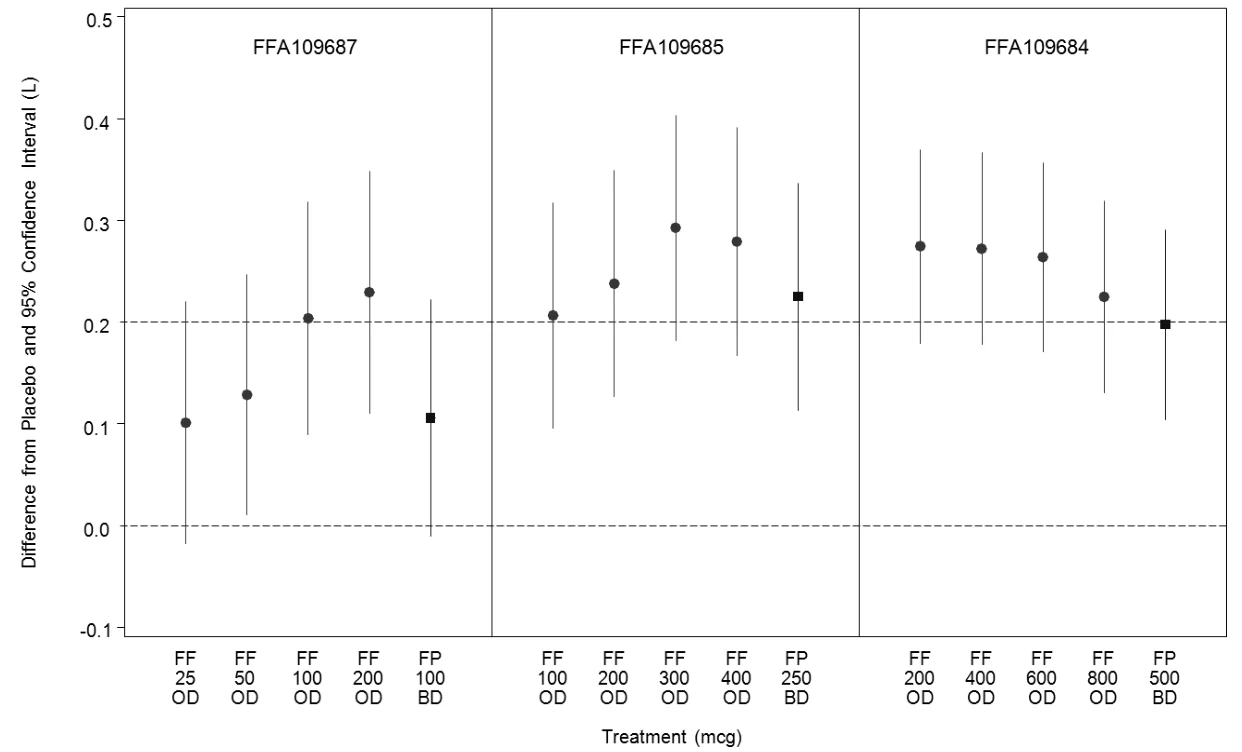
FF = Fluticasone furoate; FP = Fluticasone propionate; OD = Once daily; BD = Twice daily
To evaluate dosing frequency, a separate trial (FFA112202) compared fluticasone furoate 200 mcg once daily, fluticasone furoate 100 mcg twice daily, fluticasone propionate 100 mcg twice daily, and fluticasone propionate 200 mcg once daily. The results of this trial supported the selection of the once-daily dosing frequency.
10.3 Pharmacokinetics
Table 4 Summary of Fluticasone Furoate Pharmacokinetic Parameters in Healthy Subjects
| ARNUITY ELLIPTA | Cmax (pg/mL) | AUC(0-24) (pg.h/mL) | Tmax (h) | ||||
|---|---|---|---|---|---|---|---|
| Geometric Mean (CV%) | Geometric Mean (CV%) | Median (range) | |||||
| Fluticasone Furoate 100 mcg | 28.8 (42.3) | 373 (39.4) | 0.50 (0.25, 3.00) | ||||
| Fluticasone Furoate 200 mcg | 49.0 (37.6) | 643 (30.4) | 0.75 (0.25, 3.00) | ||||
Table 5 Summary of Fluticasone Furoate (Cmax and AUC(0-24)) in Subjects with Asthma (Geometric Mean [95% CI])
| ARNUITY ELLIPTA | Cmax (pg/mL) | AUC(0-24) (pg.h/mL) |
|---|---|---|
| Fluticasone Furoate 100 mcg | 27.0 [15.4, 50.3] | 180.7 [117.4, 292.0] |
| Fluticasone Furoate 200 mcg | 55.1 [32.6, 98.2] | 394.5 [194.4, 917.8] |
Absorption
Fluticasone furoate acts locally in the lung; therefore, plasma levels do not predict therapeutic effect. The absolute bioavailability for fluticasone furoate when administered by inhalation was, on average, 14%. The oral bioavailability of fluticasone furoate was low, on average, 1.3%. Given this low oral bioavailability, systemic exposure for fluticasone furoate following inhaled administration is primarily due to absorption of the inhaled portion of the dose delivered to the lung.
Distribution
Following intravenous administration to healthy subjects, the mean volume of distribution at steady state was 661 L. The binding of fluticasone furoate to human plasma proteins was high (99.6%).
Metabolism
Following intravenous administration to healthy subjects, fluticasone furoate was cleared from systemic circulation principally by hepatic metabolism via CYP3A4 (total plasma clearance of 65.4 L/hr). Fluticasone furoate undergoes fast first pass metabolism and is primarily metabolized through hydrolysis of the S-fluoromethyl carbothioate group to metabolites with significantly reduced corticosteroid activity. There was no in vivo evidence for cleavage of the furoate moiety resulting in the formation of fluticasone.
Elimination
Fluticasone furoate and its metabolites are eliminated primarily in the feces, accounting for approximately 101% and 90% of the orally and intravenously administered dose, respectively. Urinary excretion accounted for approximately 1% and 2% of the orally and intravenously administered doses, respectively. Following repeat-dose inhaled administration, the plasma elimination phase half-life averaged 24 hours.
Special Populations and Conditions
Pediatrics: In adolescents (12 to 17 years of age), there are no recommended dose modifications. The safety and efficacy of ARNUITY ELLIPTA have not been established in children less than 12 years of age.
Orally inhaled corticosteroids may cause a reduction in growth velocity when administered to pediatric patients. A reduction of growth velocity in children or teenagers may occur as a result of poorly controlled asthma or from use of corticosteroids, including inhaled corticosteroids. The effects of long-term treatment of children and adolescents with inhaled corticosteroids, including fluticasone furoate, on final adult height are not known.
Controlled clinical trials have shown that inhaled corticosteroids may cause a reduction in growth in pediatric subjects. In these trials, the mean reduction in growth velocity was approximately 1 cm/year (range: 0.3 to 1.8 cm/year) and appears to be related to dose and duration of exposure. This effect has been observed in the absence of laboratory evidence of HPA axis suppression, suggesting that growth velocity is a more sensitive indicator of systemic corticosteroid exposure in pediatric subjects than some commonly used tests of HPA axis function. The long-term effects of this reduction in growth velocity associated with orally inhaled corticosteroids, including the impact on final adult height, are unknown. The potential for “catch-up” growth following discontinuation of treatment with orally inhaled corticosteroids has not been adequately studied. The growth of children and adolescents receiving orally inhaled corticosteroids, including ARNUITY ELLIPTA, should be monitored (e.g., via stadiometry). The potential growth effects of prolonged treatment should be weighed against the clinical benefits obtained and the risks associated with alternative therapies. To minimize the systemic effects of orally inhaled corticosteroids, including ARNUITY ELLIPTA, each patient should be titrated to the lowest dose that effectively controls symptoms (see 4.2 Recommended Dose and Dosage Adjustment).
A randomized, double-blind, parallel-group, multicenter, 1-year, placebo-controlled trial evaluated the effect of once-daily treatment with 110 mcg of fluticasone furoate in the nasal spray formulation on growth velocity assessed by stadiometry. The subjects were 474 prepubertal children (girls aged 5 to 7.5 years and boys aged 5 to 8.5 years). Mean growth velocity over the 52-week treatment period was lower in the patients receiving fluticasone furoate nasal spray (5.19 cm/year) compared with placebo (5.46 cm/year). The mean reduction in growth velocity was 0.27 cm/year (95% CI: 0.06 to 0.48) (see 7 WARNINGS AND PRECAUTIONS, Endocrine and Metabolism).
Geriatrics: There was no evidence for age (up to 84 years) to affect the pharmacokinetics of ARNUITY ELLIPTA in subjects with asthma.
Clinical trials of ARNUITY ELLIPTA for asthma included 285 subjects aged 65 and older (216 were treated with ARNUITY ELLIPTA 100 mcg or 200 mcg) and 32 subjects aged 75 and older (22 were treated with ARNUITY ELLIPTA 100 mcg or 200 mcg). No overall differences in safety or effectiveness were observed between these subjects and younger subjects, and other reported clinical experience has not identified differences in responses between the elderly and younger subjects.
- Gender: A population pharmacokinetic analysis showed that no dose adjustment is required for fluticasone furoate based on the effect of gender.
- Ethnic Origin: In subjects with asthma, estimates of fluticasone furoate AUC(0-24) for East Asian, Japanese and South East Asian subjects were up to 43% higher, on average, compared with Caucasian subjects. However, there was no evidence for the higher systemic exposure in these populations to be associated with a greater effect on adverse events such as HPA-axis suppression.
- Hepatic Insufficiency: Following repeat dosing of fluticasone furoate/vilanterol 200 mcg/25 mcg (100 mcg/12.5 mcg in the severe impairment group) for 7 days, there was an increase in fluticasone furoate systemic exposure (up to three-fold as measured by AUC(0–24) in subjects with hepatic impairment compared with healthy subjects (Child-Pugh A, B or C). The increase in fluticasone furoate systemic exposure in subjects with moderate hepatic impairment (fluticasone furoate/vilanterol 200/25 mcg) was associated with an average 34% reduction in serum cortisol compared with healthy subjects (Child-Pugh B). Dose-normalized fluticasone furoate systemic exposure was similar in subjects with moderate and severe hepatic impairment (Child-Pugh B or C). For patients with moderate or severe hepatic impairment the maximum dose is 100 mcg.
- Renal Insufficiency: A clinical pharmacology study of fluticasone furoate/vilanterol showed that severe renal impairment (creatinine clearance <30 mL/min) did not result in significantly greater exposure to fluticasone furoate or more marked corticosteroid systemic effects compared with healthy subjects. No dose adjustment is required for patients with renal impairment. The effects of hemodialysis have not been studied.
11 STORAGE, STABILITY AND DISPOSAL
Do not store above 25°C. Store in a dry place away from direct heat or sunlight. If stored in a refrigerator, the inhaler should be allowed to return to room temperature for at least one hour before use.
Keep out of sight and reach of children.
12 SPECIAL HANDLING INSTRUCTIONS
ARNUITY ELLIPTA is provided in a foil laminate tray containing a desiccant sachet and the tray is sealed with a peelable foil lid, which together, with the desiccant provides moisture protection. The lid should only be opened when the inhaler is ready to be used for the first time. Once the tray is opened, the desiccant package should be discarded.
Patients should be instructed to write the date the inhaler should be discarded on the label in the space provided. The date should be added as soon as the inhaler has been removed from the tray.
ARNUITY ELLIPTA should be safely discarded when the dose counter reads “0” or 6 weeks after it was removed from the foil tray, whichever comes first.
PART II: SCIENTIFIC INFORMATION
13 PHARMACEUTICAL INFORMATION
Drug Substance
Proper name: fluticasone furoate
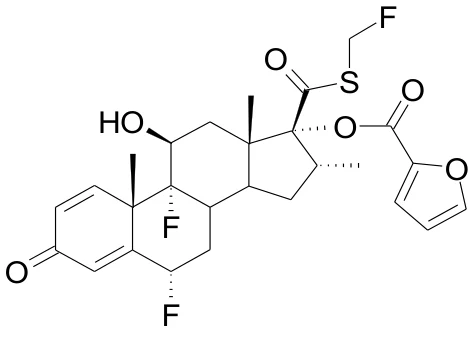
Chemical name: (6α,11β,16α,17α)-6,9-difluoro-17-{[(fluoro-methyl)thio]carbonyl}-11-hydroxy-16-methyl-3-oxoandrosta-1,4-dien-17-yl 2-furancarboxylate
Molecular formula and molecular mass: C27H29F3O6S 538.6
Structural formula:
Physicochemical properties: fluticasone furoate is a white powder. It is practically insoluble in water.
14 CLINICAL TRIALS
14.1 Clinical Trials by Indication
Once-daily maintenance treatment of steroid-responsive bronchial asthma
Trial Design and Demographics
The efficacy of ARNUITY ELLIPTA 100 mcg and 200 mcg in the treatment of asthma has been evaluated in four randomized, double blind, parallel-group clinical trials of between 12 and 24 weeks in duration (FFA112059, HZA106827, FFA114496 and HZA106829) in patients aged 12 years and older with persistent asthma. These pivotal trials were designed to evaluate the efficacy of ARNUITY ELLIPTA 100 mcg and 200 mcg, given once daily in the evening, on lung function in subjects who were not controlled on their current treatments of inhaled corticosteroids, or combination therapy consisting of an inhaled corticosteroid plus a long-acting beta2-adrenergic agonist (LABA).
Two of these studies (FFA112059 and HZA106829) included a comparator group in order to compare the relative benefits of ARNUITY ELLIPTA with the established inhaled corticosteroid fluticasone propionate.
Study treatments were delivered as inhalation powders. The primary endpoint in all pivotal trials was change from baseline in evening trough FEV1 measured approximately 24 hours after the final dose of study medication. Trough FEV1 (assessed at approximately 24 hours after the previous dose) was also assessed at clinic visits throughout the trials. Studies HZA106827 and HZA106829 had a co-primary endpoint of change from baseline in weighted mean serial FEV1 measured after the final dose of study medication at 5, 15, and 30 minutes and 1, 2, 3, 4, 5, 12, 16, 20, 23, and 24 hours post-dose in a subset of patients. Details of the design and patient demographics of the pivotal trials are described in Table 6.
Table 6 Summary of Trial Design and Patient Demographics for Pivotal Trials
| Study # | Trial Design, Route of Administration and Study Duration | Treatment and Dosage | Study Subjects Mean Age (Range) Gender (%) | Primary Efficacy Endpoint(s) |
| FFA112059 | 24 week, multicenter, randomized, placebo-controlled (with rescue medication) double-blind, double-dummy, parallel group study to evaluate the efficacy and safety of FF 100 mcg administered once daily in the evening in adolescent and adult subjects 12 years of age and older with persistent bronchial asthma. | FF 100 mcg OD FP 250 mcg BD Placebo | Total:343 40.6 years (12-84) Male: 41% Female: 59% | Trough FEV1 at Week 24 |
| HZA106827 | 12 week, multicenter, stratified, randomized, double-blind, placebo-controlled (with rescue medication), parallel group study to compare the efficacy and safety of FF/VI 100/25 mcg and FF 100 mcg both administered once daily in the evening in adolescent and adult subjects 12 years of age and older with persistent bronchial asthma. | FF 100 mcg OD FF/VI 100/25 mcg OD Placebo | Total: 609 39.7 years (12-84) Male: 42% Female: 58% | Trough FEV1 at Week 12 Weighted mean FEV1 (0-24 hours) at Week 12 |
| FFA114496 | 24 week, multicenter, randomized, double-blind, parallel-group study to evaluate the efficacy and safety of inhaled FF 100 mcg and 200 mcg administered once daily in the evening in adolescent and adult subjects 12 years of age and older with persistent asthma. | FF 100 mcg OD FF 200 mcg OD | Total: 238 45.9 years (12-76) Male: 33% Female: 67% | Trough FEV1 at Week 24 |
| HZA106829 | 24 week, multicenter, stratified, randomized, double-blind, double-dummy, parallel group, active controlled study to compare the efficacy and safety of FF/VI 200/25 mcg administered once daily each evening to FF 200 mcg administered alone once daily each evening in adolescent and adult subjects 12 years of age and older with persistent bronchial asthma. | FF 200 mcg OD FF/VI 200/25 mcg OD FP 500 mcg BD | Total: 586 46.2 years (12-76) Male: 41% Female: 59% | Trough FEV1 at Week 24* Weighted mean FEV1 (0-24 hours) at Week 24 |
Notes:
FF: fluticasone furoate; FP: fluticasone propionate; VI: vilanterol; OD: once daily; BD: twice daily
*FF vs. FP comparison was performed only for Trough FEV1
Study Results
FFA112059 evaluated the efficacy of ARNUITY ELLIPTA 100 mcg once daily and fluticasone propionate 250 mcg twice daily on lung function in subjects with asthma compared to placebo. The trial included a 4-week run-in period during which subjects were symptomatic while taking their usual low to mid-dose inhaled corticosteroid therapy (i.e., fluticasone propionate 100 mcg to 500 mcg daily or equivalent). Mean baseline percent predicted FEV1 was approximately 73% overall and was similar across the 3 treatment groups. Thirty-five percent of subjects on placebo and 19% of subjects on ARNUITY ELLIPTA 100 mcg failed to complete the 24-week trial.
Compared with placebo, at Week 24, the change from baseline in trough FEV1 was significantly greater for ARNUITY ELLIPTA 100 mcg once daily (146 mL) and for fluticasone propionate 250 mcg twice daily (145 mL) (Table 7). Further, subjects receiving ARNUITY ELLIPTA 100 mcg once daily had a statistically significantly greater improvement from baseline in percentage of 24-hour periods without the need of beta2-agonist rescue medication use than subjects receiving placebo (treatment difference 14.8%, 95% CI: 6.9, 22.7, p<0.001, which equates to an additional 1 day per week without need for rescue medication).
Table 7 Statistical Analysis of Change from Baseline in Trough FEV1 (mL) at Week 24 (FFA112059, ITT Population)
| Trough FEV1 (mL) at Week 24 | Placebo (n=113) | ARNUITY ELLIPTA 100 mcg OD (n=111) | Fluticasone Propionate 250 mcg BD (n=107) |
|---|---|---|---|
| Least Squares Mean | 2,372 | 2,519 | 2,517 |
| Least Squares Mean Change from Baseline (SE) | 15 (39.4) | 161 (39.8) | 159 (40.6) |
| Comparison vs. Placebo | |||
| Difference | 146 | 145 | |
| 95% CI | 36, 257 | 33, 257 | |
| p-value | 0.009 | 0.011 | |
Analysis performed using ANCOVA with covariates of baseline, region, sex, age and treatment
HZA106827 evaluated the efficacy of ARNUITY ELLIPTA 100 mcg once daily in the evening on lung function in subjects with asthma compared with placebo. The combination of fluticasone furoate 100 mcg and vilanterol 25 mcg was also included as a treatment arm. The trial included a 4-week run-in period during which the subjects were symptomatic while taking their usual low to mid-dose inhaled corticosteroid, (i.e., fluticasone propionate 200 mcg/day to 500 mcg/day or equivalent). LABA use was discontinued during the run-in. Mean baseline percent predicted FEV1 was approximately 70% in both treatment groups. Twenty-six percent of subjects on placebo and 10% of subjects on ARNUITY ELLIPTA 100 mcg failed to complete the 12-week trial.
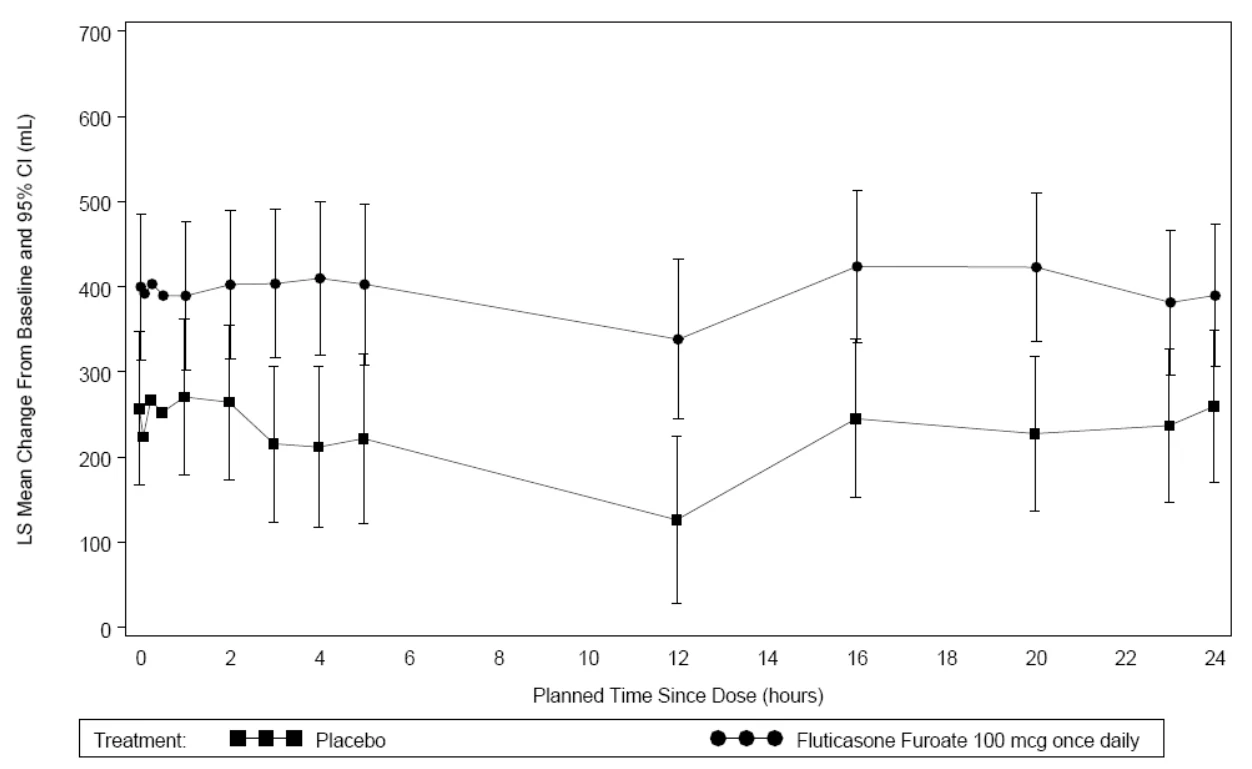
ARNUITY ELLIPTA 100 mcg once daily had greater changes from baseline than placebo throughout the study. At Week 12, the change from baseline in trough FEV1 for ARNUITY ELLIPTA 100 mcg once daily was significantly greater than placebo (136 mL, 95% CI: 51, 222, p=0.002). At Week 12, the change from baseline in weighted mean FEV1 (measured in a subset of patients (n=201)) was significantly greater for ARNUITY ELLIPTA 100 mcg compared with placebo (186 mL; 95% CI: 62, 310, p=0.003).
Lung function improvements were sustained over 24 hours (Figure 222).
Figure 22 Change from Baseline in Individual Serial FEV1 (mL) Assessments after 12 Weeks of Treatment (HZA106827)
FFA114496 evaluated the relative efficacy of ARNUITY ELLIPTA in doses of 100 mcg and 200 mcg on lung function in patients with asthma. The trial included a 4-week run-in period during which the subjects were symptomatic while taking their usual mid- to high-dose inhaled corticosteroid therapy (i.e., fluticasone propionate 250 mcg/day to 1,000 mcg/day or equivalent). LABA use was discontinued during the run-in period. Mean baseline percent predicted FEV1 was approximately 68% overall and similar in the two treatment groups. About 16% of subjects on ARNUITY ELLIPTA 100 mcg and 13% of subjects on ARNUITY ELLIPTA 200 mcg failed to complete the 24-week trial.
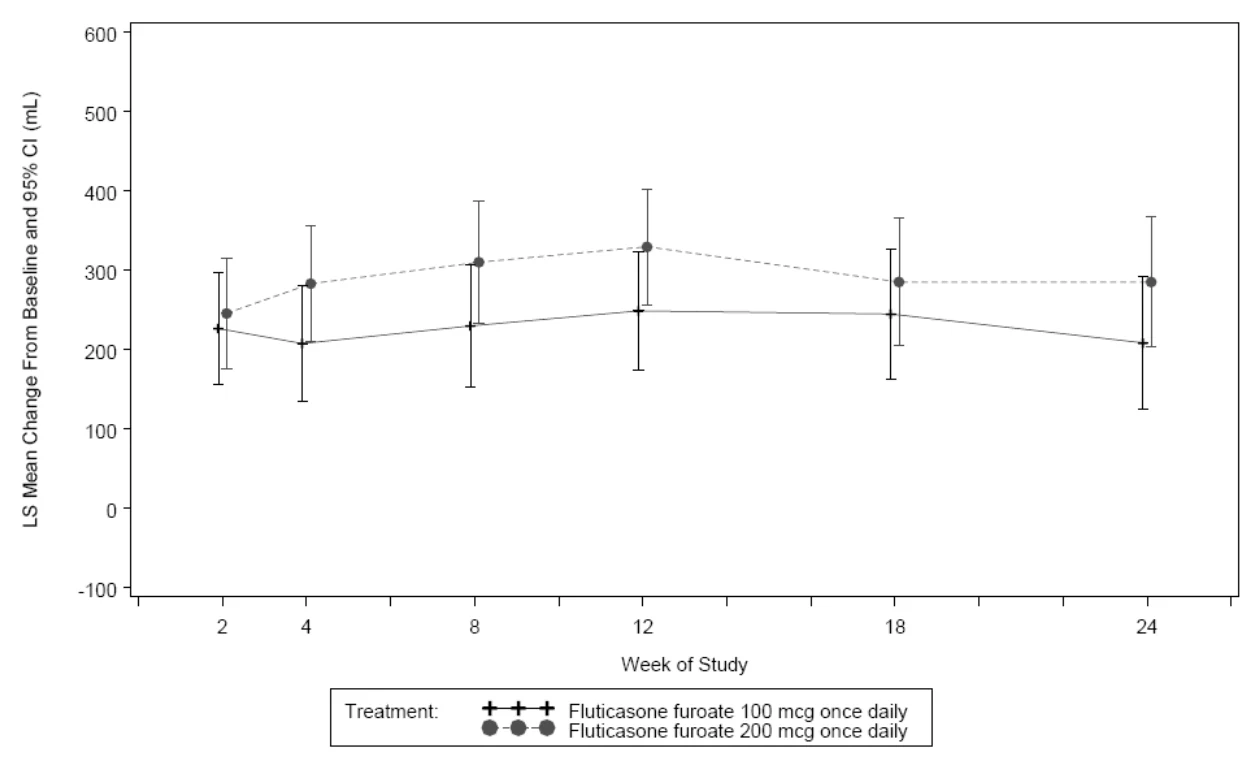
The group receiving ARNUITY ELLIPTA 200 mcg had generally numerically greater changes from baseline than the group receiving ARNUITY ELLIPTA 100 mcg throughout the study (Figure 3). At Week 24, the change from baseline in trough FEV1 was 208 mL for ARNUITY ELLIPTA 100 mcg and 284 mL for ARNUITY ELLIPTA 200 mcg, a difference of 77 mL (95% CI: -39, 192).
Figure 33 Change from Baseline in Trough FEV1 (mL) Over Time (FFA114496)
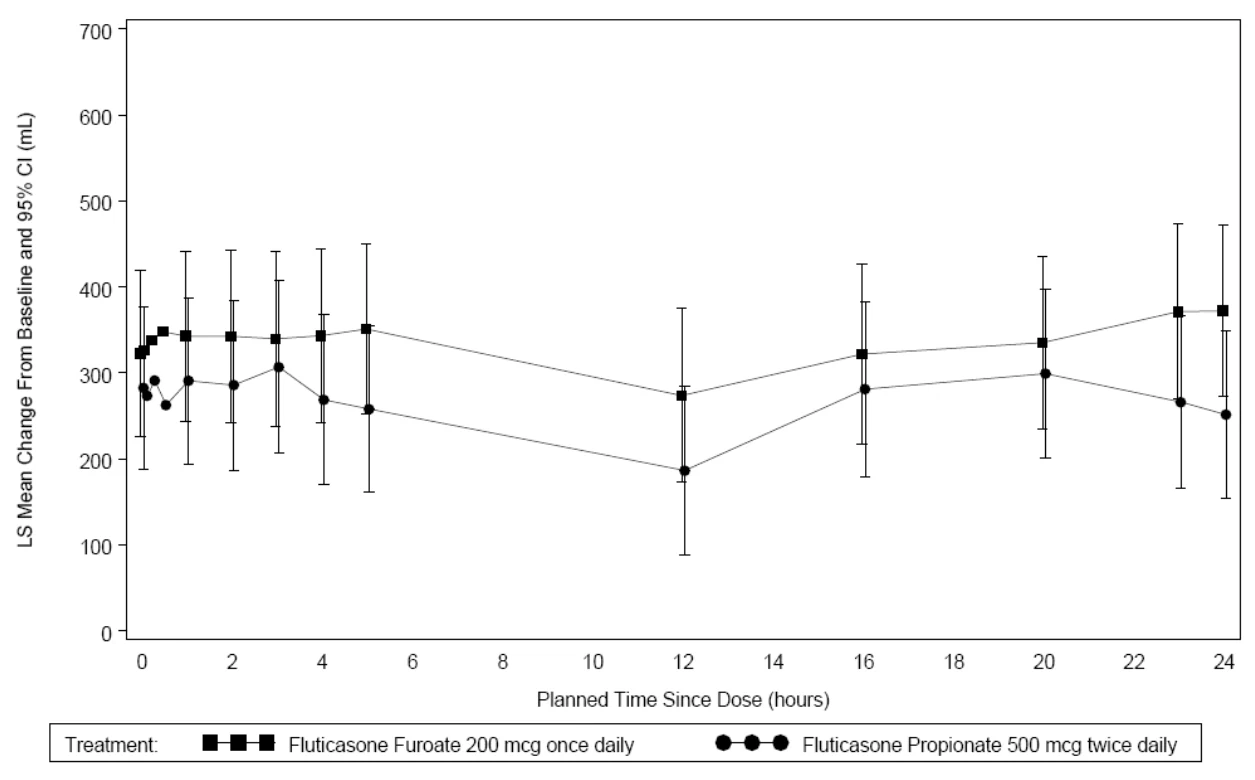
HZA106829 evaluated the efficacy of ARNUITY ELLIPTA 200 mcg once daily in the evening, and fluticasone propionate 500 mcg twice daily on lung function in subjects with asthma. The combination of fluticasone furoate 200 mcg and vilanterol 25 mcg was also included as a treatment arm. The trial included a 4-week run-in period during which the subjects were symptomatic while taking their usual mid- to high-dose inhaled corticosteroid (fluticasone propionate 500 mcg/day to 1,000 mcg/day or equivalent). LABA use was discontinued during the run-in period. Mean baseline percent predicted FEV1 was approximately 67% in both treatment groups.
Similar improvements from baseline in lung function were observed for both ARNUITY ELLIPTA 200 mcg once daily and fluticasone propionate 500 mcg twice daily. At Week 24, the change from baseline in trough FEV1 was 201 mL for ARNUITY ELLIPTA 200 mcg once daily and 183 mL for fluticasone propionate 500 mcg twice daily (treatment difference of 18 mL; 95% CI: -66, 102).
Lung function improvements were sustained over 24 hours as seen by change in weighted mean FEV1 (Figure ). At Week 24, the change from baseline in weighted mean FEV1 (measured in a subset of patients (n=169)) was 328 mL for ARNUITY ELLIPTA 200 mcg once daily and 258 mL for fluticasone propionate 500 twice daily (treatment difference of 70 mL; 95% CI: -67, 208).
Figure 4 Change from Baseline in Individual Serial FEV1 (mL) Assessments after 24 Weeks of Treatment (HZA106829)
15 MICROBIOLOGY
No microbiological information is required for this drug product.
16 NON-CLINICAL TOXICOLOGY
General Toxicology: Pharmacological and toxicological effects seen with fluticasone furoate in nonclinical studies were those typically associated with glucocorticoids.
Fluticasone furoate has undergone a comprehensive toxicological evaluation. In the majority of studies, fluticasone furoate was administered by the inhaled route which resulted in systemic exposure. The major findings were typically associated with systemic exposure to glucocorticoids, and are commonly reported for other marketed inhaled corticosteroids. In patients following repeated inhaled doses of 100 or 200 mcg/day plasma concentrations of fluticasone furoate were typically lower than those achieved in animal toxicology studies (see 10.3 Pharmacokinetics).
Carcinogenicity: There was no evidence of treatment-related increases in tumour incidence in two-year inhalation studies in rats and mice.
Genotoxicity: Fluticasone furoate did not cause gene mutation in bacteria or chromosomal damage in mammalian cells in vitro. There was no evidence of genotoxicity in the in vivo micronucleus tests in rats.
Reproductive and Developmental Toxicity: There were no effects on mating performance or fertility of male or female rats. Developmental toxicity in rats was confined to an increased incidence of incompletely ossified sternabrae in association with lower fetal weight. High doses in rabbits (46.6 mcg/kg/day) induced abortion. There were no major skeletal or visceral abnormalities in either rats or rabbits, and no effect on pre- or post-natal development in rats treated with fluticasone furoate during gestation and lactation.
The developmental NOAEL in female rats achieved systemic exposures approximately 4-fold greater than in patients with asthma receiving fluticasone furoate 200 mcg/day(based on AUC =0.395 ng.h/mL); this dose is similar to the NOAEL in the male fertility and PPN studies in which TK data were not collected; AUC data for the NOAEL could not be calculated for the rabbit EFD study, but, at NOAEL, Cmax was approximately 2-fold greater than in patients with asthma receiving fluticasone furoate, 200 mcg/day (Cmax =0.0551 ng/mL).
Juvenile Toxicity: In juvenile rats and dogs findings were consistent with the corticosteroid effects of fluticasone furoate seen in adult animals. Although the majority of changes were also seen in inhalation toxicity studies in adult animals, some findings in kidney, eyes, bone, lungs and teeth associated with luticasone furoate treatment, were only seen in juvenile dogs dosed for 13 weeks.
Local Tolerance: Fluticasone furoate was non-irritating following single dose application to the skin, and practically non-irritating following application of the intranasal clinical formulation to the eye.
17 SUPPORTING PRODUCT MONOGRAPHS
ANORO ELLIPTA (Dry powder for oral inhalation, 62.5/25 mcg umeclidinium (as bromide)/vilanterol (as trifenatate)), Control No. 268656, Product Monograph, GlaxoSmithKline Inc. (March 8, 2023)
BREO ELLIPTA (Dry powder for oral inhalation, 100/25 mcg and 200/25 mcg fluticasone furoate/vilanterol (as trifenatate)), Control No. 213290, Product Monograph, GlaxoSmithKline Inc. (January 7, 2019)
TRELEGY ELLIPTA (Dry powder for oral inhalation, 100/62.5/25 mcg and 200/62.5/25 mcg fluticasone furoate/umeclidinium (as bromide)/vilanterol (as trifenatate)), Control No. 274281, Product Monograph, GlaxoSmithKline Inc. (July 18, 2023)