


Product Monograph - Qvar
ACTION AND CLINICAL PHARMACOLOGY
Beclomethasone dipropionate is a diester of beclomethasone, a synthetic corticosteroid chemically related to dexamethasone. Beclomethasone differs from dexamethasone in having a chlorine at the 9-alpha carbon in place of a fluorine, and in having a 16 beta-methyl group instead of a 16 alpha-methyl group.
Bronchial inflammation is known to be an important component in the pathogenesis of asthma, occurring in both large and small airways. Glucocorticoids have multiple anti-inflammatory effects, inhibiting both inflammatory cells and release of inflammatory mediators. It is presumed that these anti-inflammatory actions play an important role in the efficacy of beclomethasone dipropionate (BDP) in controlling symptoms and improving lung function in asthma. Inhaled BDP probably acts as a topical anti-inflammatory agent at the site of deposition in the bronchial tree.
In two studies evaluating the deposition pattern of technetium-99m labeled QVAR (beclomethasone dipropionate), approximately 50-60% of the dose from the actuator (40% of the dose from the valve) of QVAR was deposited in the lungs. The imaging data suggest that QVAR, beclomethasone dipropionate formulated in hydrofluoroalkane-134a (HFA-BDP), deposited widely throughout the central, intermediate, and peripheral airways. In contrast, approximately 4-7% dose from the actuator (5% of the dose from the valve) of beclomethasone dipropionate formulated in chlorofluorocarbons (CFC-BDP) was deposited in the lungs, and deposition was limited to the central airways. Over 90% of the CFC-BDP dose was deposited in the oropharynx. The smaller particle size of QVAR explains the different deposition patterns compared with CFC-BDP. This accounts for the dosage adjustment recommended when switching patients from CFC-BDP to QVAR (please refer to DOSAGE AND ADMINISTRATION).
INDICATIONS AND CLINICAL USE
QVAR (beclomethasone dipropionate) is indicated for the prophylactic management of steroid-responsive bronchial asthma in patients 5 years and older.
QVAR may be effective in the management of asthmatics dependent or maintained on systemic corticosteroids and may permit replacement or significant reduction in the dosage of systemic corticosteroids.
Beclomethasone dipropionate is NOT indicated for the relief of acute bronchospasm.
CONTRAINDICATIONS
QVAR (beclomethasone dipropionate) is contraindicated in the primary treatment of status asthmaticus or other acute episodes of asthma or in patients with moderate to severe bronchiectasis where intensive measures are required.
QVAR is contraindicated in patients with untreated fungal, bacterial or tuberculous infections of the respiratory tract.
Hypersensitivity to any of the ingredients of this preparation contraindicates its use.
WARNINGS
For the transfer of patients being treated with oral corticosteroids, QVAR (beclomethasone dipropionate) should first be added to the existing oral steroid therapy, which is then gradually withdrawn.
After withdrawal from systemic corticosteroids, a number of months are required for recovery of hypothalamic-pituitary-adrenal (HPA) function. Particular care is needed in patients who are transferred from systemically active corticosteroids to inhaled corticosteroids. Deaths due to adrenal insufficiency have occurred in asthmatic patients during and after transfer from systemic corticosteroids to less systemically available inhaled corticosteroids.
Patients who have been previously maintained on 20 mg or more per day of prednisone (or its equivalent) may be most susceptible to problems associated with adrenal insufficiency, particularly when their systemic corticosteroids have been almost completely withdrawn. During this period of HPA suppression, patients may exhibit signs and symptoms of adrenal insufficiency when exposed to trauma, surgery, or infections, particularly gastroenteritis or other conditions with severe electrolyte loss. Although inhaled corticosteroids may provide control of asthmatic symptoms during these episodes, they do NOT provide systemically available steroid which is necessary for coping with these emergencies.
Transfer of patients from systemic steroid therapy to inhaled corticosteroids may unmask allergic conditions previously suppressed by the systemic steroid therapy, e.g., rhinitis, conjunctivitis, and eczema.
During periods of stress or severe asthmatic attack, patients who have been withdrawn from systemic corticosteroids should be instructed to resume systemic steroids (in large doses) immediately and to contact their physician for further instruction. These patients should also be instructed to carry a warning card indicating that they may need supplementary systemic steroids during periods of stress or severe asthma attack.
As with other inhalation therapy, paradoxical bronchospasm may occur characterized by an immediate increase in wheezing after dosing. This should be treated immediately with a fast-acting inhaled bronchodilator to relieve acute asthmatic symptoms. QVAR should be discontinued immediately, the patient assessed, and if necessary, alternative therapy instituted.
Increasing use of short-acting inhaled bronchodilators to control symptoms indicates deterioration of asthma control. Sudden and progressive deterioration in asthma control is potentially life-threatening and consideration should be given to increasing corticosteroid dosage. Patients should be instructed to contact their physicians if they find that relief with short-acting bronchodilator treatment becomes less effective or they need more inhalations than usual. During such episodes, patients may require therapy with systemic corticosteroids.
QVAR is not indicated for rapid relief of bronchospasm but for regular daily treatment of the underlying inflammation. Patients will require a fast and short acting inhaled bronchodilator to relieve acute asthmatic symptoms. There is no evidence that control of bronchial asthma can be achieved by the administration of QVAR in amounts greater than the recommended dosages.
Lack of response or severe exacerbations of asthma should be treated by increasing the dose of QVAR and, if necessary, by giving a systemic steroid and/or an antibiotic if there is an infection.
Persons who are on drugs that suppress the immune system are more susceptible to infections than healthy individuals. Chickenpox and measles, for example, can have a more serious or even fatal course in non-immune children or adults on corticosteroids. In children or adults who have not had these diseases, particular care should be taken to avoid exposure. It is not known how the dose, route and duration of corticosteroid administration affects the risk of developing a disseminated infection. Nor is the contribution of the underlying disease and/or prior corticosteroid treatment known. If exposed to chickenpox, prophylaxis with varicella-zoster immune globulin (VZIG) may be indicated. If exposed to measles, prophylaxis with pooled intramuscular immunoglobulin (IG) may be indicated (see the respective package inserts for complete VZIG and IG prescribing information.) If chickenpox develops, treatment with antiviral agents may be considered.
Therapeutic dosages frequently cause the appearance of Candida albicans (thrush) in the mouth and throat. The development of pharyngeal and laryngeal candidiasis is a cause for concern because the extent of its penetration into the respiratory tract is unknown. Patients may find it helpful to rinse out their mouths with water after using beclomethasone dipropionate. Symptomatic candidiasis can be treated with topical antifungal therapy while still continuing to use QVAR (see PRECAUTIONS, Drug Interaction).
PRECAUTIONS
General
It is essential that the patients be instructed that QVAR (beclomethasone dipropionate) is a preventative agent which must be taken daily at the intervals recommended by their doctors and is not to be used as acute treatment for an asthmatic attack.
Patients should be advised to inform subsequent physicians of the prior use of corticosteroids.
Treatment with QVAR should not be stopped abruptly but tapered off gradually.
The replacement of a systemic steroid with inhaled steroid must be gradual and carefully supervised by the physician since upon withdrawal systemic symptoms (e.g. joint and/or muscular pain, lassitude, depression) may occur despite maintenance or improvement of respiratory function (see DOSAGE AND ADMINISTRATION for details.)
Doses of QVAR up to 800 mcg/day may permit control of asthmatic symptoms without clinically meaningful suppression of HPA function. Doses of QVAR exceeding 800 mcg/day may cause clinically meaningful HPA suppression.
Systemic effects may occur with any inhaled corticosteroid, particularly at high doses prescribed for long periods; these effects are much less likely to occur than with oral corticosteroids. Possible systemic effects include adrenal suppression, growth retardation in children and adolescents, decrease in bone mineral density, cataract and glaucoma. It is important, therefore, that the dose of QVAR is titrated to the lowest dose at which effective control is maintained (see ADVERSE REACTIONS).
Certain individuals can show greater susceptibility to the effects of inhaled corticosteroid than do most patients.
The long-term and systemic effects of BDP in human subjects are still not fully known. In particular, the effects resulting from chronic use of the agent on developmental or immunologic processes in the mouth, pharynx, trachea, and lung are unknown. During long-term therapy, HPA-axis function and hematological status should be assessed periodically.
Rare instances of glaucoma increased intraocular pressure, and cataracts have been reported following the administration of very high doses of inhaled corticosteroids.
Eosinophilic Conditions
In rare cases, patients on inhaled beclomethasone dipropionate may present with systemic eosinophilic conditions, with some patients presenting with clinical features of vasculitis consistent with Churg-Strauss syndrome, a condition that is often treated with systemic corticosteroid therapy. These events usually, but not always, have been associated with the reduction and/or withdrawal of oral corticosteroid therapy following the introduction of beclomethasone dipropionate. Cases of serious eosinophilic conditions have also been reported with other inhaled corticosteroids in this clinical setting. Physicians should be alert to eosinophilia, vasculitic rash, worsening pulmonary symptoms, cardiac complications, and/or neuropathy presenting in their patients. A causal relationship between beclomethasone dipropionate and these underlying conditions has not been established.
Pediatric Use
Eight-hundred and forty-three (843) children between the ages of 5 and 12 were treated with HFA beclomethasone dipropionate (HFA-BDP) in clinical trials.
Pregnancy
There are no adequate and well controlled studies of BDP in pregnant women. The use of BDP in pregnancy, nursing mothers, or women of childbearing potential requires that the possible benefits of the drug be weighed against the potential hazards to the mother, embryo, or fetus. Infants born of mothers who have received substantial doses of corticosteroids during pregnancy should be carefully observed for hypoadrenalism.
Labor and Delivery
Use of QVAR during labor and delivery has not been studied.
Nursing Mothers
Glucocorticoids are secreted in human milk. Because of the potential for serious adverse reactions in nursing infants from BDP, a decision should be made whether to discontinue nursing or to discontinue the drug, taking into account the importance of the drug to the mother.
Carcinogenesis, Mutagenesis, Impairment of Fertility
Glucocorticoids are known teratogens in rodent species and BDP is no exception. Teratology studies were done in rats, mice, and rabbits treated with subcutaneous BDP. Beclomethasone dipropionate was found to produce fetal resorptions, cleft palate, agnathia, microstomia, absence of tongue, delayed ossification, and partial agenesis of the thymus in these species. Well-controlled trials relating to fetal risk in humans are not available.
Effect on Infection
Corticosteroids may mask some signs of infections and new infections may appear. A decreased resistance to localised infection has been observed during corticosteroid therapy. This may require treatment with appropriate therapy or stopping the administration of beclomethasone dipropionate until the infection is eradicated.
Hypothyroidism and Cirrhosis
There is an enhanced effect of corticosteroids on patients with hypothyroidism and in those with cirrhosis.
Use of Corticosteroids and Acetylsalicylic Acid
Acetylsalicylic acid should be used cautiously in conjunction with corticosteroids in hypoprothrombinemia.
Proper Use of the Inhalation Device
To ensure the proper dosage and administration of the drug, the patient must be instructed by a physician or other health professional in the use of the inhalation aerosol (see INFORMATION FOR THE CONSUMER). Inhaler actuation should be synchronised with inspiration to ensure optimum delivery of the drug to the lungs.
Oral Hygiene
In some patients, corticosteroids may cause hoarseness or candidiasis of the mouth and throat (thrush). Adequate oral hygiene is of primary importance in minimizing overgrowth of micro-organisms such as Candida albicans. Patients may find it helpful to rinse out their mouth with water after using the inhaler (see DOSAGE AND ADMINISTRATION). Symptomatic candidiasis can be treated with topical anti-fungal therapy while still continuing treatment with QVAR (see PRECAUTIONS, Drug Interaction).
Information to be Provided to the Patient
See the illustrated INFORMATION FOR THE CONSUMER insert that is dispensed with the product. For patients switching from a CFC-BDP inhaler, the following should be mentioned:
You may notice a different taste or spray force with QVAR compared to beclomethasone dipropionate aerosol inhalers that contain CFC propellants. Laboratory tests using instruments (not on people) show that QVAR delivers a softer spray force (less than 1/3 the maximum impact force) and warmer spray temperature (more than 30°C warmer) than beclomethasone dipropionate aerosol inhalers containing CFC propellants.
There is no tail-off phenomenon observed for QVAR since the propellant and drug exhaust simultaneously, providing consistent dosing from priming through to a few sprays beyond the planned maximum number of doses. Tail-off means that as most inhalers approach empty, the delivered dose becomes unpredictable and subject to wide variation.
ADVERSE REACTIONS
In general, inhaled corticosteroid therapy may be associated with dose dependent increases in the incidence of ocular complications, reduced bone density, suppression of HPA-axis responsiveness to stress, and inhibition of growth velocity in children.
Glaucoma may be exacerbated by inhaled corticosteroid treatment for asthma or rhinitis. In patients with established glaucoma who require long-term inhaled corticosteroid treatment, it is prudent to measure intraocular pressure before commencing the inhaled corticosteroid and to monitor it subsequently. In patients without established glaucoma, but with a potential for developing intraocular hypertension (e.g. the elderly), intraocular pressure should be monitored at appropriate intervals.
In elderly patients treated with inhaled corticosteroids, the prevalence of posterior subcapsular and nuclear cataracts is probably low but increases in relation to the daily and cumulative lifetime dose. Cofactors such as smoking, ultraviolet B exposure, or diabetes may increase the risk. Children may be less susceptible.
A reduction of growth velocity in children or teenagers may occur as a result of inadequate control of chronic diseases such as asthma or from use of corticosteroids for treatment. Physicians should closely follow the growth of adolescents taking corticosteroids by any route and weigh the benefits of corticosteroid therapy and asthma control against the possibility of growth suppression if any adolescent’s growth appears slowed. (see “Clinical Trials”)
Osteoporosis and fracture are the major complications of long-term asthma treatment with parenteral or oral steroids. Inhaled corticosteroid therapy is also associated with dose-dependent bone loss although the degree of risk is very much less than with oral steroid. This risk may be offset by estrogen replacement in post-menopausal women, and by titrating the daily dose of inhaled steroid to the minimum required to maintain optimal asthma control. It is not yet known whether the peak bone density achieved during youth is adversely affected if substantial amounts of inhaled corticosteroid are administered prior to 30 years of age. Failure to achieve maximal bone density during youth could increase the risk of osteoporotic fracture when those individuals reach 60 years of age and older.
Eosinophilic conditions
See PRECAUTIONS, Eosinophilic Conditions.
The following reporting rates of common adverse experiences are based upon three clinical trials in which 940 patients (544 female and 396 male adults previously treated with as-needed bronchodilators and/or inhaled corticosteroids) were treated with QVAR (beclomethasone dipropionate) (doses of 50, 100, 200, or 400 mcg twice daily) or CFC-BDP (doses of 50, 200, or 400 mcg twice daily) or placebo. The table below includes all events reported by patients taking QVAR (whether considered drug related or not) that occurred at a rate over 3% and more frequently than placebo, or at a rate that significantly differed across treatment groups.
Adverse events reported in ≥ 3% of the patients in the QVAR group (%)
Adverse events
QVAR N=453 | CFC-BDP N=283 | HFA-placebo N=204 | Overall N=940 | Overall P-valuea | |
|---|---|---|---|---|---|
Inhalation route effects Oral symptoms | 7 3 | 11d 6 | 4 2 | 7 4 | 0.028 0.085 |
General Pain | 8 3 | 11 3 | 8 <1 | 9 2 | 0.290 0.143 |
Central & peripheral nervous system Headache | 20 17 | 20 15 | 16 11 | 19 15 | 0.442 0.213 |
Gastro-intestinal Nausea Vomiting | 6 2 <1b | 9 3d 2 | 4 0 <1 | 6 2 <1 | 0.771 0.032 0.022 |
| Musculo-skeletal | 4 | 5 | 2 | 4 | 0.275 |
Reproductive disorders Dysmenorrhea | 4 3 | 2 <1 | 2 2 | 3 2 | 0.545 0.131 |
Respiratory system Increased asthma symptoms Pharyngitis Respiratory disorder Sinusitis | 30bc 4bc 10 0 4 | 37 8d 10 1 4 | 45 22e 5 0 2 | 36 9 9 <1 4 | 0.001 <0.001 0.054 0.037 0.599 |
| Skin and appendage | 5 | 5 | 2 | 5 | 0.254 |
| Adverse events | QVAR N=453 | CFC-BDP N=283 | HFA-placebo N=204 | Overall N=940 | Overall P-valuea |
|---|---|---|---|---|---|
Vision Eye abnormality | 0 | 1 | 0 | <1 | 0.037 |
a. The p-value for the overall comparison is a two-sided Fisher’s Exact Test.
b. The pairwise comparison between HFA-BDP and CFC-BDP was statistically significant (p ≤ 0.05) based on the two-sided Fisher’s Exact Test.
c. The pairwise comparison between HFA-BDP and HFA-placebo was statistically significant (p ≤ 0.05) based on the two-sided Fisher’s Exact Test.
d. The pairwise comparison between CFC-BDP and HFA-placebo was statistically significant (p ≤ 0.05) based on the two-sided Fisher’s Exact Test.
e. The higher incidence of increased asthma symptoms for the placebo-treated patients is not unexpected in a population requiring inhaled corticosteroids.
No patients treated with QVAR in the clinical program developed symptomatic oropharyngeal candidiasis. If such an infection develops, treatment with appropriate antifungal therapy or discontinuance of treatment with QVAR may be required.
Rare cases of immediate and delayed hypersensitivity reactions, including urticaria, angioedema, rash, and bronchospasm, have been reported following the oral and intranasal inhalation of BDP.
Pediatric Studies
In two 12-week placebo-controlled studies in pediatric patients 5 to 12 years of age, no clinically relevant differences were found in the pattern, severity, or frequency of adverse events compared with those reported in adults, with the exception of conditions which are more prevalent in a pediatric population generally.
During post-marketing experience, psychiatric events and behavioural changes such as aggression, depression, sleep disorders, psychomotor hyperactivity, and suicidal ideation have been reported (primarily in children). Because these events are reported voluntarily from a population of uncertain size, it is not always possible to reliably estimate their frequency or establish a causal relationship to drug exposure.
SYMPTOMS AND TREATMENT OF OVERDOSAGE
Chronic overdosage of inhaled steroids, as a class, may cause manifestation of Cushing’s syndrome, including truncal obesity, hypertension, fatigability and weakness, menstrual irregularities, hirsutism, purplish abdominal striae, edema, glucosuria, osteoporosis, etc. Managing chronic overdosage requires gradual reduction of the dose of inhaled steroid. Gradual reduction is emphasized, because chronic overdosage with inhaled steroids must be recognized as possibly causing suppression of endogenous adrenal production of corticosteroids. Careful titration downward of inhaled steroids, with monitoring of asthma control, is required. Periodic evaluation of the function of the hypothalamic-pituitary-adrenal axis is prudent during this down titration process to ensure that endogenous production of adrenal corticosteroids has resumed. It is expected that HFA-BDP will have the same potential for causing chronic overdosage as other inhaled steroids.
DOSAGE AND ADMINISTRATION
It is important that children be adequately instructed in the correct use of the pressurised metered-dose inhaler.
General
The lowest dose of beclomethasone dipropionate required to maintain good asthma control should be used. When the patient’s asthma is well controlled, a reduction in the dose of beclomethasone dipropionate should be attempted in order to identify the lowest possible dose required to maintain control. Such an attempt at dose reduction should be carried out on a regular basis.
QVAR (beclomethasone dipropionate) Inhalation Aerosol is to be administered by oral inhalation only.
Since the effect of QVAR depends on its regular use and on the proper technique of inhalation, the patient should be made aware of the prophylactic nature of therapy with inhaled beclomethasone dipropionate, and that for optimum benefit QVAR should be taken regularly, even when the patient is asymptomatic. Improvement in asthma symptoms should be expected within the first or second week of starting treatment.
If patients find that relief with short-acting bronchodilator treatment becomes less effective or they need more inhalations than usual, medical attention should be sought.
Patients using inhaled bronchodilators should be advised to use the bronchodilator before the QVAR in order to enhance the penetration of QVAR into the bronchial tree. Several minutes should lapse between the use of the two inhalers to allow for some bronchodilation to occur.
In the presence of excessive mucous secretion, the drug may fail to reach the bronchioles. Therefore, if an obvious response is not obtained after ten days, attempts should be made to remove the mucous with expectorants and/or with a short course of systemic corticosteroid treatment.
As a general rule, rinsing the mouth and gargling after each inhalation with water can help in preventing the occurrence of candidiasis. Cleansing dentures has the same effect.
Treatment with QVAR should not be stopped abruptly but tapered off gradually.
Dosage
QVAR (beclomethasone dipropionate) is indicated for the prophylactic management of steroid-responsive bronchial asthma in patients 5 years and older. More clinical safety and efficacy studies are required to support an indication for use in younger children.
The recommended dosing range for QVAR is 100 to 800 mcg/day. Each actuation of QVAR 50 mcg delivers 50 mcg of BDP from the valve, equivalent to 40 mcg of BDP from the actuator. Each actuation of QVAR 100 mcg delivers 100 mcg of BDP from the valve, equivalent to 80 mcg of BDP from the actuator.
Pediatric patients (5-11 years old)
Previous therapy Recommended Highest
starting dose recommended dose
Bronchodilators alone 50 mcg of QVAR 100 mcg of QVAR
twice daily twice daily
Inhaled corticosteroids 50 mcg of QVAR 100 mcg of QVAR
twice daily twice daily
Oral corticosteroids The highest recommended dose in children is
100 mcg of QVAR twice daily
Patients 12 years and older
Mild asthma patients: 50 to 100 mcg of QVAR twice daily (total daily dose of 100 to 200 mcg).
Moderate asthma patients: 100 to 250 mcg of QVAR twice daily (total daily dose of 200 to 500 mcg).
In more severe cases: 300 to 400 mcg twice daily of QVAR (total daily dose of 600 to 800 mcg).
The recommended total daily dose of QVAR is lower than that recommended for current CFC-BDP products because of increased lung deposition. Dosage should be adjusted to the individual patient.
Suggested Conversion of Doses for Patients Switching from CFC-BDP to QVAR:
CFC-BDP Dose (mcg/day) | 200 | 400-500 | 600-750 | 800-1000 |
|---|---|---|---|---|
| ⇓ | ⇓ | ⇓ | ⇓ | |
QVAR Dose (mcg/day) | 100 | 200 | 300 | 400 |
Note: The conversion to the QVAR dose should be based on the dose of CFC-BDP that would be appropriate for the patient at the time of the switch. Symptomatic patients may require an increased dose of CFC-BDP, and this increased dose should be considered in transferring patients to QVAR
Patients Switched From Systemic to Inhaled Corticosteroids
Patients who require maintenance therapy of their asthma may benefit from treatment with QVAR at the doses recommended above. In patients who respond to QVAR, improvement in pulmonary function is usually apparent within 1 to 4 weeks after the start of therapy. Once the desired effect is achieved, consideration should be given to tapering to the lowest effective dose.
Particular care is needed in patients who are transferred from systemic corticosteroids to inhaled corticosteroids mainly because recovery from impaired adrenocortical function caused by prolonged systemic steroid therapy is slow.
The patient's asthma should be stable before treatment with QVAR is started. Initially, QVAR should be used concurrently with the patient's usual maintenance dose of systemic corticosteroids. After approximately one-week, gradual withdrawal of the systemic corticosteroids is started by reducing the daily or alternate daily dose. Reductions may be made after an interval of one or two weeks, depending on the response of the patient. A slow rate of withdrawal is strongly recommended. Gradual withdrawal of the systemic steroid is started by reducing the daily dose by 1.0 mg of prednisone, or its equivalent of other corticosteroid, at not less than weekly intervals, if the patient is under close observation. During withdrawal, some patients may experience symptoms of systemic corticosteroid withdrawal, e.g. joint and/or muscular pain, lassitude and depression, despite maintenance or even improvement in pulmonary function. Such patients should be encouraged to continue with the inhaler but should be monitored for objective signs of adrenal insufficiency. If evidence of adrenal insufficiency occurs, the systemic corticosteroid doses should be increased temporarily and thereafter withdrawal should continue more slowly.
During periods of stress or a severe asthma attack, patients who have been withdrawn from systemic corticosteroid should be instructed to resume systemic steroids immediately and to contact their physician for further instruction. These patients should also be instructed to carry a warning card indicating that they may need supplementary systemic steroid during periods of stress or a severe asthma attack.
Patients who have been treated with systemic steroids for long periods of time or at high dose may have adrenocortical suppression. In these patients, adrenocortical function should be monitored regularly, and their dose of systemic steroid reduced cautiously.
There are some patients who cannot completely discontinue the oral steroid. In these cases, a minimum maintenance dosage should be given in addition to QVAR.
Administration
QVAR should be administered by the oral inhaled route in patients 5 years of age and older. The onset and degree of symptom relief will vary in individual patients. Improvement in asthma symptoms should be expected within the first or second week of starting treatment, but maximum benefit should not be expected until 3-4 weeks of therapy. After asthma stability has been achieved at the starting dose, it is always desirable to titrate to the lowest effective dose to reduce the possibility of side effects. For patients who do not respond adequately to the starting dose after 3-4 weeks of therapy, higher doses may provide additional asthma control. The safety and efficacy of QVAR when administered in excess of recommended doses has not been established.
As with all inhalation aerosol medications, it is recommended that patients "test spray" QVAR into the air before using for the very first time after purchase. If QVAR has not been used for over 14 days, four "test sprays" are again recommended prior to use (see INFORMATION FOR THE CONSUMER.)
QVAR is a solution aerosol that does not require shaking. Consistent dose delivery is assured, whether using 50 or 100 mcg strengths, due to good proportionality of the solution aerosol. Dose proportionality means that the 100 mcg/actuation strength provides twice as much medication as the 50 mcg/actuation strength. Consistent dosing can be assured as doses are adjusted and different product strengths are used. QVAR provides consistent medication delivery actuation to actuation regardless of storage position. This allows reliable dosing with a single actuation. Consistent medication delivery is also ensured throughout the labeled product life. When the canister is nearly empty, the spray from the mouthpiece will decrease sharply and will be obvious to the patient.
No clinical trials have been conducted using a spacer with QVAR; however, in vitro studies indicate that AEROCHAMBER® is compatible with QVAR.
Use of a spacer: QVAR has been developed to be used without a spacer device being necessary. Where a spacer is considered necessary the AEROCHAMBER® is a suitable device for use with QVAR MDI as the extra fine particle fraction is maintained.
PHARMACEUTICAL INFORMATION
Drug Substance
Common name: Beclomethasone dipropionate
Chemical name: 9-Chloro-11β,17,21-trihydroxy-16β-methylpregna-1,4-diene-3,20- dione-17,21-dipropionate
Structural formula:
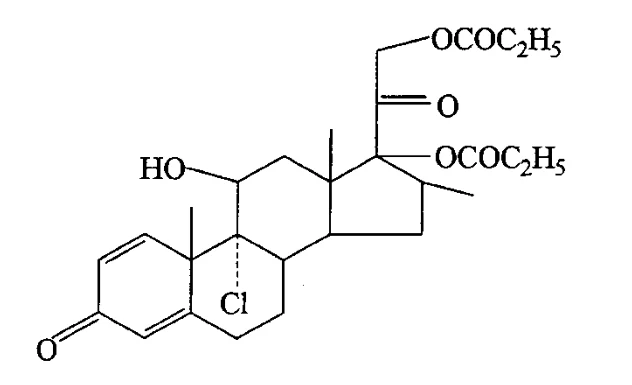
Molecular formula: C28H37ClO7
Molecular weight: 521.1 g/mol
Physicochemical Properties
Physical form: White to creamy white, odorless powder.
Solubility: Slightly soluble in water, very soluble in chloroform and freely soluble in acetone and in alcohol.
Melting point: 205-215°C
Composition
QVAR is a pressurized, metered-dose inhaler intended for oral inhalation only. Each unit contains a solution of beclomethasone dipropionate in propellant HFA-134a (hydrofluoroalkane-134a or 1,1,1,2 tetrafluororethane) and ethanol. This product does not contain CFCs.
The mean particle size of the emitted aerosol spray for both QVAR 50 mcg and QVAR 100 mcg is finer (1 to 1.2 microns) than that of BDP formulated in chlorofluorocarbon (CFC) propellant (3.5 to 4 microns).
Stability and storage recommendations
CONTENTS UNDER PRESSURE. Do not puncture. Do not use or store near heat or open flame. Exposure to temperatures above 50°C may cause bursting. Never throw container into fire or incinerator. Keep out of reach of children.
Store between 15° and 30°C. If the canister is subjected to cold temperatures (as low as -10°C), it will not adversely effect delivery of medication.
AVAILABILITY OF DOSAGE FORMS
QVAR (beclomethasone dipropionate) is supplied in two strengths, each having two presentations:
QVAR 50 mcg is supplied in a 12.4 g canister containing 200 actuations with a beige plastic oral actuator and Patient's Instructions; box of one.
QVAR 100 mcg is supplied in a 12.4 g canister containing 200 actuations with a dark mauve plastic oral actuator and Patient's Instructions; box of one.