


Product Monograph - Asparlas
RECENT MAJOR LABEL CHANGES
Not applicable
TABLE OF CONTENTS
Sections or subsections that are not applicable at the time of authorization are not listed .
RECENT MAJOR LABEL CHANGES..............................................................................................2
TABLE OF CONTENTS ................................................................................................................2
PART I: HEALTH PROFESSIONAL INFORMATION .......................................................................4
1 INDICATIONS ................................................................................................................4
1.1 Pediatrics ............................................................................................................4
1.2 Geriatrics.............................................................................................................4
2 CONTRAINDICATIONS ...................................................................................................4
4 DOSAGE AND ADMINISTRATION...................................................................................4
4.1 Dosing Considerations .........................................................................................4
4.2 Recommended Dose and Dosage Adjustment.......................................................5
4.4 Administration.....................................................................................................6
5 OVERDOSAGE ...............................................................................................................7
6 DOSAGE FORMS, STRENGTHS, COMPOSITION AND PACKAGING ...................................7
7 WARNINGS AND PRECAUTIONS ....................................................................................7
7.1 Special Populations ............................................................................................ 12
7.1.1 Pregnant Women .........................................................................................12
7.1.2 Breast-feeding..............................................................................................12
7.1.3 Pediatrics .....................................................................................................12
7.1.4 Geriatrics .....................................................................................................12
8 ADVERSE REACTIONS .................................................................................................. 12
8.1 Adverse Reaction Overview................................................................................ 12
8.2 Clinical Trial Adverse Reactions .......................................................................... 14
8.2.1 Clinical Trial Adverse Reactions – Pediatrics ..................................................18
8.3 Less Common Clinical Trial Adverse Reactions .................................................... 18
8.3.1 Less Common Clinical Trial Adverse Reactions – Pediatrics ............................20
8.4 Abnormal Laboratory Findings: Hematologic, Clinical Chemistry and Other Quantitative Data ........................................................................................................ 20
8.5 Post-Market Adverse Reactions.......................................................................... 20
9 DRUG INTERACTIONS.................................................................................................. 21
9.4 Drug-Drug Interactions ...................................................................................... 21
9.5 Drug-Food Interactions ...................................................................................... 23
9.6 Drug-Herb Interactions ...................................................................................... 23
9.7 Drug-Laboratory Test Interactions ...................................................................... 23
10 CLINICAL PHARMACOLOGY ......................................................................................... 23
10.1 Mechanism of Action.................................................................................... 23
10.2 Pharmacodynamics ...................................................................................... 23
10.3 Pharmacokinetics ......................................................................................... 23
11 STORAGE, STABILITY AND DISPOSAL ........................................................................... 25
12 SPECIAL HANDLING INSTRUCTIONS............................................................................. 25
PART II: SCIENTIFIC INFORMATION ........................................................................................ 26
13 PHARMACEUTICAL INFORMATION.............................................................................. 26
14 CLINICAL TRIALS.......................................................................................................... 27
14.1 Clinical Trials by Indication............................................................................ 27
14.3 Immunogenicity ........................................................................................... 28
15 MICROBIOLOGY .......................................................................................................... 28
16 NON-CLINICAL TOXICOLOGY ....................................................................................... 28
PATIENT MEDICATION INFORMATION ................................................................................... 30
PART I: HEALTH PROFESSIONAL INFORMATION
1 INDICATIONS
ASPARLAS ® (calaspargase pegol for injection) is indicated as:
- A component of a multi-agent chemotherapeutic regimen for the treatment of acute lymphoblastic leukaemia (ALL) in pediatric and young adult patients age 1 to 21 years.
1.1 Pediatrics
Pediatrics (1 to <18 years): The safety and efficacy of ASPARLAS were evaluated in pediatric patients ≥ 1 year of age in ASPARLAS clinical trials (see 14.1 Clinical Trials by Indication). Health Canada has authorized an indication for pediatric use (see 1 INDICATIONS).
1.2 Geriatrics
Geriatrics (> 65 years): No data are available to Health Canada. Health Canada has not authorized an indication for geriatric use.
2 CONTRAINDICATIONS
ASPARLAS is contraindicated in patients with:
- Anaphylactic or severe hypersensitivity reactions to the active substance (including pegylated L-asparaginase) or to any of the excipients (see 6 DOSAGE FORMS, STRENGTHS, COMPOSITION AND PACKAGING; 7 WARNINGS AND PRECAUTIONS, Hypersensitivity);
- History of serious thrombosis during previous L-asparaginase therapy (see 7 WARNINGS AND PRECAUTIONS, Thrombosis/Coagulopathy);
- History of serious pancreatitis during previous L-asparaginase therapy (see 7 WARNINGS AND PRECAUTIONS, Pancreatitis);
- History of serious hemorrhagic events during previous L-asparaginase therapy (see 7 WARNINGS AND PRECAUTIONS, Thrombosis/Coagulopathy);
- Severe hepatic impairment (see 7 WARNINGS AND PRECAUTIONS, Hepatotoxicity).
4 DOSAGE AND ADMINISTRATION
4.1 Dosing Considerations
ASPARLAS is used as part of combination chemotherapy protocols with other antineoplastic agents. ASPARLAS is not a bioequivalent alternative to pegaspargase (see 10 CLINICAL PHARMACOLOGY). In a multi-agent chemotherapeutic regimen, ASPARLAS at the same dose and
- as pegaspargase may increase toxicities due to the longer half-life of calaspargase pegol (see 8 ADVERSE REACTIONS; 14 CLINICAL TRIALS).
ASPARLAS is for intravenous infusion only (see 4.4 Administration).
Premedication: Premedicate patients with acetaminophen, an H-1 receptor blocker (such as diphenhydramine), and an H-2 receptor blocker (such as famotidine) 30-60 minutes prior to administration of ASPARLAS to decrease the risk and severity of both infusion and hypersensitivity reactions. Steroid administration may also be considered in the premedication regimen.
4.2 Recommended Dose and Dosage Adjustment
The recommended dose of ASPARLAS is 2,500 units/m2 administered as intravenous infusion no more frequently than every 21 days.
Therapeutic drug monitoring may be considered to assess silent inactivation of asparaginase per institutional guidelines. If premedication is administered, therapeutic drug monitoring may be measured per institutional guidelines or based on trough asparaginase activity levels before the next administration of ASPARLAS. If asparaginase activity values fail to reach target levels, the use of a different asparaginase preparation could be considered (see 7 WARNINGS AND PRECAUTIONS, Resistance/Silent Inactivation).
Monitor patients at least weekly, e.g., with bilirubin, transaminases, glucose and clinical examinations until recovery from the cycle of therapy (see 7 WARNINGS AND PRECAUTIONS, Monitoring and Laboratory Tests). If an adverse reaction should occur, modify treatment according to Table 1.
Table 1. Recommended Dosage Modifications for ASPARLAS
| Adverse Reaction | Severity* | Action |
|---|---|---|
| Infusion Reaction or Hypersensitivity Reaction (see 7 WARNINGS AND PRECAUTIONS, Hypersensitivity) | Grade 1 |
|
| Grade 2 |
| |
| Grade 3 to 4 |
| |
| Thrombosis (see 7 WARNINGS AND PRECAUTIONS, Thrombosis/Coagulopathy) | Uncomplicated deep vein thrombosis |
|
| Adverse Reaction | Severity* | Action |
|---|---|---|
| Severe or life- threatening thrombosis |
| |
| Pancreatitis (see 7 WARNINGS AND PRECAUTIONS, Pancreatitis) | Grades 3 to 4 |
|
| Hemorrhage (see 7 WARNINGS AND PRECAUTIONS, Thrombosis/Coagulopathy) | Grade 3 to 4 |
|
| Hepatotoxicity (see WARNINGS AND PRECAUTIONS, Hepatotoxicity) | Total bilirubin more than 3 times to no more than 10 times the upper limit of normal |
|
| Total bilirubin more than 10 times the upper limit of normal |
|
*NCI – CTCAE grading system used for grading the ADRs. Grade 1 is mild, grade 2 is moderate, grade 3 is severe, and grade 4 is life-threatening
4.4 Administration
|
5 OVERDOSAGE
In case of overdose, patients must be carefully monitored for signs and symptoms of adverse reactions, and appropriately managed with symptomatic and supportive treatment.
| For management of a suspected drug overdose, contact your regional poison control centre. |
|---|
6 DOSAGE FORMS, STRENGTHS, COMPOSITION AND PACKAGING
Table 2 – Dosage Forms, Strengths, Composition and Packaging
7 WARNINGS AND PRECAUTIONS
General
ASPARLAS should be prescribed and administered by physicians and health care personnel experienced in the use of antineoplastic products. It should only be given in a hospital setting where appropriate resuscitation equipment is available. Patients should be closely monitored and carefully observed for any adverse reactions throughout the infusion period.
ASPARLAS is not a bioequivalent alternative to pegaspargase (see 10 CLINICAL PHARMACOLOGY). In a multi-agent chemotherapeutic regimen, ASPARLAS at the same dose and frequency as pegaspargase may increase toxicities due to the longer half-life of calaspargase pegol (see 8 ADVERSE REACTIONS; 14 CLINICAL TRIALS).
Carcinogenesis and Mutagenesis
Carcinogenicity and mutagenicity studies have not been conducted with ASPARLAS.
Driving and Operating Machinery
| Route of Administration | Dosage Form / Strength/Composition | Non-medicinal Ingredients |
| Intravenous infusion | Concentrate for solution for infusion / 3 750 units/5 mL (750 units/mL) | Monobasic Sodium Phosphate, Dibasic Sodium Phosphate Heptahydrate, Sodium Chloride, Water for Injection |
Exercise caution when driving a vehicle or a potentially dangerous machinery.
Endocrine disorders
Glucose Intolerance
Alterations in endocrine pancreatic function are observed commonly with asparaginase products and are expressed mainly in the form of abnormal glucose metabolism. Both diabetic ketoacidosis and hyperosmolar hyperglycaemia have been described, which generally respond to administration of exogenous insulin.
Glucose intolerance can occur in patients receiving asparaginase products. Glucose intolerance can be irreversible. Inhibition of insulin production may lead to clinical hyperglycemia, which requires treatment with insulin, in 2-3% of patients treated with asparaginase products. Therefore, monitor patients for hyperglycemia as well as signs and symptoms of hyperglycemia (see 7 WARNINGS AND PRECAUTIONS, Monitoring and Laboratory Tests).
Hematologic
Thrombosis/Coagulopathy
Serious thrombotic events, including sagittal sinus thrombosis, have been reported in clinical trials with ASPARLAS with an incidence of 9 to 12%. Discontinue ASPARLAS in patients experiencing serious thrombotic events (see 4 DOSAGE AND ADMINISTRATION; 8 ADVERSE REACTIONS).
Hemorrhage associated with increased prothrombin time (PT), increased partial thromboplastin time (PTT), and hypofibrinogenemia have been reported in patients receiving ASPARLAS (see 8 ADVERSE REACTIONS). Evaluate patients with signs and symptoms of hemorrhage with coagulation parameters including PT, PTT, fibrinogen. Consider appropriate replacement therapy in patients with severe or symptomatic coagulopathy (see 4 DOSAGE AND ADMINISTRATION).
Patients receiving asparaginase products are at increased risk of bleeding (see 9 DRUG INTERACTIONS). Regular monitoring of the coagulation profile is necessary. Fibrinogen can be regarded as a parameter of the pro- and anticoagulatory system. When there is a marked drop in fibrinogen or antithrombin III (ATIII) deficiency, consider appropriate replacement therapy.
Immune
Hypersensitivity
Hypersensitivity reactions to ASPARLAS, such as life-threatening anaphylaxis and serious allergic reactions, can occur in patients receiving ASPARLAS.
Grade 3 and 4 hypersensitivity reactions including anaphylaxis have been reported in clinical trials with ASPARLAS with an incidence between 7 to 21% (see 2 CONTRAINDICATIONS, 8 ADVERSE REACTIONS). Hypersensitivity reactions observed with other asparaginases include angioedema, lip swelling, eye swelling, erythema, blood pressure decreased, bronchospasm, dyspnea, pruritus and rash (see 8 ADVERSE REACTIONS).
Premedicate patients 30-60 minutes prior to administration of ASPARLAS (see 4 DOSAGE AND ADMINISTRATION). Because of the risk of serious allergic reactions (e.g., life-threatening anaphylaxis), administer ASPARLAS in a clinical setting with resuscitation equipment and other agents necessary to treat anaphylaxis (e.g., epinephrine, oxygen, intravenous steroids, antihistamines) (see 4 DOSAGE AND ADMINISTRATION) and observe patients for 1 hour after administration. Discontinue ASPARLAS in patients with serious hypersensitivity reactions (see 2 CONTRAINDICATIONS and 8 ADVERSE REACTIONS).
Resistance /silent inactivation
Therapeutic drug monitoring may be considered for assessing silent inactivation. Low L-asparaginase activity levels may be accompanied by the appearance of anti-L-asparaginase antibodies. In such cases, consider switching to a different L-asparaginase preparation.
Infections
Cases of serious infections, including fatal cases of sepsis have been reported in clinical trials with ASPARLAS as a component of multi-agent chemotherapeutic regimens for ALL. Simultaneous vaccination with live vaccine increases the risk of severe infections (see 9 DRUG INTERACTIONS). Monitor closely patient’s peripheral blood count (see 7 WARNINGS AND PRECAUTIONS, Monitoring and Laboratory Tests).
Hepatic/Biliary/Pancreatic
Pancreatitis
Cases of pancreatitis have been reported in clinical trials with ASPARLAS with an incidence between 12 to 16% (see 8 ADVERSE REACTIONS). There have been reported adverse reactions of pancreatitis with asparaginase products, in few cases with a fatal outcome. Patients should be informed of the characteristic symptom of pancreatitis that, if left untreated, could become fatal: persistent abdominal pain that could be severe, which may radiate to the back. If pancreatitis occurs permanently discontinue ASPARLAS. Appropriate investigations should be performed. As the precise pathogenesis is unknown, only supportive measures can be recommended as per local clinical practice. Disturbances of exocrine pancreatic function can result in diarrhoea.
Hemorrhagic or necrotizing pancreatitis have been reported with other asparaginases. The monitoring of glucose and triglycerides levels need to be monitored in both blood and urine during treatment with asparaginase products as they may rise.
Inform patients of the signs and symptoms of pancreatitis, which, if left untreated, could be fatal.
Assess serum amylase and/or lipase levels to identify early signs of pancreatic inflammation. Discontinue ASPARLAS if clinical pancreatitis is suspected; if pancreatitis is confirmed, do not resume ASPARLAS (see 4 DOSAGE AND ADMINISTRATION).
Hepatotoxicity and Abnormal Liver Function
Combination therapy with asparaginase products can result in severe hepatic toxicity. Caution is required when asparaginase products are given in combination with other hepatotoxic substances especially if there is pre-existing hepatic impairment. In this case, patients should be monitored for liver impairment. Asparaginase products may worsen pre-existing liver impairment. Because of this, there is a possibility that asparaginase products may increase toxicity of other concomitant medication, which are hepatically metabolized.
There is an increased risk of hepatic effects (such as increase in transaminases, bilirubin increased, hypofibrinogenaemia) among patients >18 years of age using asparaginase products.
Hepatotoxicity and abnormal liver function, including elevations of transaminase, bilirubin (direct and indirect), reduced serum albumin, and plasma fibrinogen can occur. Appropriate monitoring should be performed. Evaluate bilirubin and transaminases at least weekly, during cycles of treatment that include ASPARLAS through 6 weeks after the last dose of ASPARLAS. In the event of serious liver toxicity, discontinue treatment with ASPARLAS and provide supportive care (see 4 DOSAGE AND ADMINISTRATION, 2 CONTRAINDICATIONS, 8 ADVERSE REACTIONS).
In the presence of symptoms of hyperammonemia (e.g. nausea, vomiting, lethargy, irritation), ammonia levels might be monitored closely.
Hepatic veno-occlusive disease
Hepatic veno-occlusive disease (VOD), also known as sinusoidal obstruction syndrome (SOS), is a rare, life-threatening, disease that can cause hepatic damage and is a complication of certain chemotherapy regimens, typically pre-transplant chemotherapy. Adverse events of hepatic VOD have been observed with ASPARLAS in combination with standard chemotherapy (see 8.5 Post-market Adverse Reactions ).
Signs and symptoms of hepatic VOD include rapid weight gain, fluid retention with ascites, hepatomegaly, and rapid increase of bilirubin. The identification of risk factors (e.g., pre-existing liver disease or history of VOD) is essential for its prevention. Patients who experience this condition should be treated according to standard medical practice.
Monitoring and Laboratory Tests
As with all therapeutic proteins, there is potential for immunogenicity. Measurement of the L-asparaginase activity level in serum or plasma may be undertaken in order to rule out an accelerated reduction of L-asparaginase activity.
Low L-asparaginase activity levels may be accompanied by the appearance of anti-L-asparaginase antibodies. In such cases, a switch to a different L-asparaginase preparation should be considered.
The decrease in the number of circulating lymphoblasts is often quite marked with asparaginases product, and normal or too low leukocyte counts are often seen in the first days after the start of therapy. To monitor the therapeutic effect, the peripheral blood count and the patient’s bone marrow should be monitored closely.
Anaphylaxis and serious allergic reactions may occur. Patients should be monitored for one hour after administration, having resuscitation equipment and other means required for the treatment of anaphylaxis (epinephrine, oxygen, IV steroids, etc.)
Monitor coagulation parameters at baseline and periodically during and after treatment, particularly when used simultaneously with other coagulant/anticoagulant medicinal products such as methotrexate, daunorubicin, corticosteroids, acetylsalicylic acid and nonsteroidal anti-inflammatory medicinal products.
Monitor liver function tests, including: AST, ALT, ALP, bilirubin (direct and indirect), serum albumin as ASPARLAS can result in hepatotoxicity.
In the presence of symptoms of hyperammonemia (e.g. nausea, vomiting, lethargy, irritation), ammonia levels should be monitored closely.
Serum amylase and/or lipase measurements should be carried out frequently to identify early signs of inflammation of the pancreas.
Blood and urine glucose levels should be monitored during treatment with ASPARLAS as they may rise.
ASPARLAS may result in central nervous system toxicities. As such, patients should be monitored for signs of central nervous system dysfunctions, including but not limited to: convulsions, somnolence, and confusion.
Closely monitor patient’s uric acid levels, particularly during induction therapy as tumor lysis syndrome may result in uric acid nephropathy with asparaginases products.
Neurologic
Central Nervous System Toxicity
Combination therapy with ASPARLAS can result in central nervous system toxicity. ASPARLAS may cause central nervous system dysfunctions manifesting as convulsion, and less frequently confusional state and somnolence (mildly impaired consciousness). If ASPARLAS is used in association with neurotoxic products (such as vincristine and methotrexate), the patient should be closely monitored (see 9 DRUG INTERACTIONS).
Encephalopathy and Reversible Posterior Leukoencephalopathy syndrome have been reported in clinical trial with Asparlas as a component of multi-agent chemotherapeutic regimen for ALL.
Renal
Decrease in the number of circulating lymphoblasts and leukocyte counts can be associated with a marked rise in the serum uric acid level in patients receiving asparaginase products. Uric acid nephropathy may develop. Monitor closely patient’s uric acid levels (see 7 WARNINGS AND PRECAUTIONS, Monitoring and Laboratory Tests).
Reproductive Health: Female and Male Potential
Fertility
Fertility studies have not been conducted with ASPARLAS.
Teratogenic Risk
ASPARLAS can cause fetal harm when administered to a pregnant woman (see 7.1 Special Populations, Pregnant Women).
Pregnancy Testing
Pregnancy testing is recommended in females of reproductive potential prior to initiating ASPARLAS.
Contraception
Advise females of reproductive potential to use effective non-hormonal contraceptive methods during treatment with ASPARLAS and for at least 3 months after the last dose (see 9.4 Drug-Drug Interactions).
7.1 Special Populations
7.1.1 Pregnant Women
Based on published literature studies with L-asparaginase in pregnant animals, ASPARLAS can cause fetal harm when administered to a pregnant woman. There are no available data on ASPARLAS use in pregnant women to evaluate for a drug-associated risk of major birth defects, miscarriage, or adverse maternal or fetal outcomes. In animal reproduction studies, intravenous administration of calaspargase pegol to pregnant rats during organogenesis at doses 0.2 to 1 times the maximum recommended human doses did not result in adverse developmental outcomes. Published literature studies in pregnant rabbits, however, suggest asparagine depletion may cause harm to the animal offspring. Advise pregnant women of the potential risk to a fetus.
7.1.2 Breast-feeding
There are no data on the presence of calaspargase pegol in human milk, the effects on the breastfed child, or the effects on milk production. Because of the potential for adverse reactions in the breastfed child, advise women not to breastfeed during treatment with ASPARLAS and for 3 months after the last dose.
7.1.3 Pediatrics
The safety and efficacy of ASPARLAS were evaluated in pediatric patients ≥ 1 year of age in ASPARLAS clinical trials (see 14.1 Clinical Trials by Indication). Health Canada has authorized an indication for pediatric use (see 1 INDICATIONS).
7.1.4 Geriatrics
No data are available to Health Canada. Health Canada has not authorized an indication for geriatric use.
8 ADVERSE REACTIONS
8.1 Adverse Reaction Overview
The safety of ASPARLAS was evaluated in two multi-center, randomized, controlled clinical trials of pediatric and young adult patients with newly diagnosed ALL.
Study DFCI 11-001
The safety of ASPARLAS was investigated in Study DFCI 11-001, an open-label, randomized, active-controlled multicenter clinical trial that treated 237 children and adolescents aged 1 year to 21 years with newly-diagnosed ALL or lymphoblastic lymphoma, with ASPARLAS 2,500 international units (IU)/m2
(n=118) or pegaspargase 2,500 IU/m2 (n=119) as part of a Dana Farber Cancer Institute (DFCI) ALL Consortium backbone therapy. The median age on enrollment was 5 years (range, 1-20 years), with the majority of patients aged < 10 years (75%). The majority of patients were male (62%) and white (71%). Most patients were considered standard risk (SR, 59%) and had B-cell lineage ALL (87%).
The median number of doses during the study was 11 doses for ASPARLAS (administered every three weeks) and 16 doses for pegaspargase (administered every two weeks). The median duration of exposure was 8 months for both ASPARLAS and pegaspargase.
The most common treatment-emergent adverse events (TEAEs) in the ASPARLAS arm (in ≥ 20% of patients) were hypoalbuminemia, alanine aminotransferase (ALT) increased, aspartate aminotransferase (AST) increased, blood bilirubin increased, hypokalemia, febrile neutropenia, hyperglycemia, hypoglycemia, hypertriglyceridemia, stomatitis, bilirubin conjugated increased, blood fibrinogen decreased, and hyponatremia.
Serious TEAEs were reported in 24.6% of patients in the ASPARLAS arm, and 23.5% of patients in the pegaspargase arm. The most common serious TEAES reported in the ASPARLAS arm (in ≥ 2% of patients) were pancreatitis (5.9%), lipase increased (4.2%), sepsis (2.5%), hyperglycemia (2.5%), ALT increased (2.5%), blood bilirubin increased (2.5%), AST increased (2.5%), and neutropenic colitis (2.5%).
There was 1 fatal treatment-related serious adverse event (multi-organ failure in the setting of pancreatitis associated with a pancreatic pseudocyst).
There were 33 patients (28%) with TEAEs leading to ASPARLAS discontinuation, and the most common events occurring in 2 or more patients were hypersensitivity (8.5%), lipase increased (6.8%), pancreatitis (5.9%), drug hypersensitivity (5.1%), amylase increased (4.2%) and anaphylactic reaction (1.7%), and stomatitis (1.7%).
A total of 21 (17.8%) ASPARLAS-treated patients (19 due to drug hypersensitivity or hypersensitivity and 2 due to silent inactivation) were switched to alternative Erwinia asparaginase treatment.
Study AALL07P4
The safety of ASPARLAS was also evaluated in Study AALL07P4, an open-label, randomized, active-controlled, multicenter clinical trial that treated patients with newly-diagnosed high-risk B-precursor ALL using ASPARLAS (calaspargase pegol) 2,500 IU/m2 (n=43), or pegaspargase 2,500 IU/m2 (n=52), as a component of an augmented Berlin-Frankfurt-Münster (BFM) therapy regimen (see 14.1 Clinical Trials by Indication). Same number of doses were to be administered for ASPARLAS and pegaspargase. The median number of doses was 4 for ASPARLAS 2500 IU/m2 and 4.5 for pegaspargase 2500 IU/m2. The median duration of exposure was 7 months for both ASPARLAS and pegaspargase.
The most common TEAEs in the ASPARLAS arm (in ≥ 20% of patients) were hyperglycemia, blood bilirubin increased, neutrophil count decreased, febrile neutropenia, white blood cell count decreased, ALT increased, platelet count decreased, abdominal pain, activated partial thromboplastin time prolonged, hypokalemia, peripheral motor neuropathy, hypoalbuminemia, anemia, anaphylactic reaction, AST increased, decreased appetite, and lipase increased.
Serious adverse events were not defined in the study. Adverse Grade 3 or 4 TEAEs were reported in 97.7% of patients in the ASPARLAS arm, and 90.4% of patients in the pegaspargase arm. The most common grade 3/4 TEAEs in the ASPARLAS (in ≥ 10% of patients) were neutrophil count decreased, febrile neutropenia, hyperglycemia, white blood cell count decreased, platelet count decreased, ALT increased, hypokalemia, anaphylactic reaction, hypoalbuminemia, anemia, blood bilirubin increased, AST increased, abdominal pain, lipase increased, decreased appetite, hyponatremia, staphylococcal bacteremia, gamma-glutamyltransferase increased, pancreatitis, hypotension, stomatitis, dehydration, weight decreased, hypertriglyceridemia, and acidosis. The induction mortality of patients treated with ASPARLAS was 1 (2.4%); there were no induction deaths among the patients treated with pegaspargase.
Thirteen (31.7%) and 14 (25.9%) patients discontinued study treatment in the ASPARLAS and pegaspargase arms, respectively. Reasons for discontinuation in the ASPARLAS arm included grade 3 systemic allergic reactions (17.1%), grade 4 systemic allergic reactions (7.3%), and other reasons 3 (7.3%) patients (2 patients had pancreatitis and one patient was being treated on another study).
There were 8 (19.5%) patients in the ASPARLAS arm and 9 (16.7%) patients in the pegaspargase arm who switched to alternative Erwinia asparaginase due to systemic or recurrent local allergic reaction to study drug.
8.2 Clinical Trial Adverse Reactions
Clinical trials are conducted under very specific conditions. The adverse reaction rates observed in the clinical trials; therefore, may not reflect the rates observed in practice and should not be compared to the rates in the clinical trials of another drug. Adverse reaction information from clinical trials may be useful in identifying and approximating rates of adverse drug reactions in real-world use.
Table 3 –Adverse Reactions in ≥ 5% Patients in Any Treatment Group in Study DFCI 11-001*
MedDRA Standard System Organ Class Preferred Term | Asparlas 2500 IU/m2 (All Grades) (N=118) n (%) | Pegaspargase 2500 IU/m2 (All Grades) (N=119) n (%) | Asparlas 2500 IU/m2 (≥Grade 3) (N=118) n (%) | Pegaspargase 2500 IU/m2 (≥Grade 3) (N=119) n (%) | ||||||||
|---|---|---|---|---|---|---|---|---|---|---|---|---|
| Blood and lymphatic system disorders | ||||||||||||
| Febrile neutropenia | 40 (33.9) | 48 (40.3) | 40 (33.9) | 48 (40.3) | ||||||||
| Gastrointestinal disorders | ||||||||||||
| Stomatitis | 30 (25.4) | 24 (20.2) | 30 (25.4) | 24 (20.2) | ||||||||
| Pancreatitis | 14 (11.9) | 20 (16.8) | 12 (10.2) | 14 (11.8) | ||||||||
| Neutropenic colitis | 8 (6.8) | 3 (2.5) | 8 (6.8) | 3 (2.5) | ||||||||
| Immune system disorders | ||||||||||||
| Hypersensitivity | 11 (9.3) | 7 (5.9) | 6 (5.1) | 4 (3.4) | ||||||||
| Drug hypersensitivity | 6 (5.1) | 7 (5.9) | 1 (0.8) | 2 (1.7) | ||||||||
| Infections and infestations | ||||||||||||
| Staphylococcal infection | 7 (5.9) | 4 (3.4) | 7 (5.9) | 4 (3.4) | ||||||||
MedDRA Standard System Organ Class Preferred Term | Asparlas 2500 IU/m2 (All Grades) (N=118) n (%) | Pegaspargase 2500 IU/m2 (All Grades) (N=119) n (%) | Asparlas 2500 IU/m2 (≥Grade 3) (N=118) n (%) | Pegaspargase 2500 IU/m2 (≥Grade 3) (N=119) n (%) | |||||||||
|---|---|---|---|---|---|---|---|---|---|---|---|---|---|
| Sepsis | 6 (5.1) | 6 (5.0) | 6 (5.1) | 6 (5.0) | |||||||||
| Investigations | |||||||||||||
| Alanine aminotransferase increased | 93 (78.8) | 92 (77.3) | 58 (49.2) | 72 (60.5) | |||||||||
| Aspartate aminotransferase increased | 63 (53.4) | 70 (58.8) | 31 (26.3) | 36 (30.3) | |||||||||
| Blood bilirubin increased | 54 (45.8) | 52 (43.7) | 21 (17.8) | 21 (17.6) | |||||||||
| Bilirubin conjugated increased | 26 (22.0) | 38 (31.9) | 10 (8.5) | 16 (13.4) | |||||||||
| Blood fibrinogen decreased | 26 (22.0) | 32 (26.9) | 15 (12.7) | 21 (17.6) | |||||||||
| Amylase increased | 21 (17.8) | 22 (18.5) | 13 (11.0) | 15 (12.6) | |||||||||
| Lipase increased | 20 (16.9) | 29 (24.4) | 18 (15.3) | 25 (21.0) | |||||||||
| Activated partial thromboplastin time prolonged | 14 (11.9) | 18 (15.1) | 7 (5.9) | 8 (6.7) | |||||||||
| International normalised ratio increased | 14 (11.9) | 7 (5.9) | 4 (3.4) | 1 (0.8) | |||||||||
| Blood alkaline phosphatase increased | 10 (8.5) | 8 (6.7) | 4 (3.4) | 1 (0.8) | |||||||||
| Blood culture positive | 6 (5.1) | 6 (5.0) | 6 (5.1) | 6 (5.0) | |||||||||
| Metabolism and nutrition disorders | |||||||||||||
| Hypoalbuminaemia | 96 (81.4) | 98 (82.4) | 32 (27.1) | 33 (27.7) | |||||||||
| Hypokalaemia | 54 (45.8) | 47 (39.5) | 51 (43.2) | 43 (36.1) | |||||||||
| Hyperglycaemia | 40 (33.9) | 34 (28.6) | 28 (23.7) | 29 (24.4) | |||||||||
| Hypoglycaemia | 36 (30.5) | 43 (36.1) | 8 (6.8) | 14 (11.8) | |||||||||
| Hypertriglyceridaemia | 33 (28.0) | 43 (36.1) | 25 (21.2) | 36 (30.3) | |||||||||
| Hyponatraemia | 26 (22.0) | 27 (22.7) | 23 (19.5) | 23 (19.3) | |||||||||
| Hyperkalaemia | 9 (7.6) | 19 (16.0) | 1 (0.8) | 2 (1.7) | |||||||||
| Nervous system disorders | |||||||||||||
| Seizure | 6 (5.1) | 2 (1.7) | 0 | 1 (0.8) | |||||||||
| Vascular disorders | |||||||||||||
| Hypertension | 6 (5.1) | 14 (11.8) | 4 (3.4) | 7 (5.9) | |||||||||
*Adverse reactions are based on treatment-emergent adverse events observed with ASPARLAS as a component of multi-agent combination chemotherapy regardless of causal relationship.
MedDRA version 19.0; NCI -CTCAE Version 4.0; IU: international unit
Table 4 – Adverse Reactions in ≥ 5% Patients in Any Treatment Group* in Study AALL07P4
MedDRA Standard System Organ Class Preferred Term | Asparlas 2500 IU/m2 (All Grades) (N=43) n (%) | Pegaspargase 2500 IU/m2 (All Grades) (N=52) n (%) | Asparlas 2500 IU/m2 (≥Grade 3) (N=43) n (%) | Pegaspargase 2500 IU/m2 (≥Grade 3) (N=52) n (%) |
|---|---|---|---|---|
| Blood and lymphatic system disorders | ||||
| Febrile neutropenia | 24 (55.8) | 22 (42.3) | 24 (55.8) | 22 (42.3) |
| Anaemia | 11 (25.6) | 14 (26.9) | 11 (25.6) | 14 (26.9) |
| Gastrointestinal disorders | ||||
| Abdominal pain | 14 (32.6) | 6 (11.5) | 9 (20.9) | 6 (11.5) |
| Pancreatitis | 8 (18.6) | 4 (7.7) | 7 (16.3) | 3 (5.8) |
| Stomatitis | 6 (14.0) | 6 (11.5) | 6 (14.0) | 6 (11.5) |
| Vomiting | 5 (11.6) | 6 (11.5) | 4 (9.3) | 5 (9.6) |
| Diarrhoea | 3 (7.0) | 2 (3.8) | 3 (7.0) | 2 (3.8) |
| Nausea | 3 (7.0) | 2 (3.8) | 3 (7.0) | 2 (3.8) |
| General disorders and administration site conditions | ||||
| Pyrexia | 4 (9.3) | 4 (7.7) | 3 (7.0) | 1 (1.9) |
| Immune system disorders | ||||
| Anaphylactic reaction | 11 (25.6) | 10 (19.2) | 11 (25.6) | 10 (19.2) |
| Infections and infestations | ||||
| Staphylococcal bacteraemia | 8 (18.6) | 1 (1.9) | 8 (18.6) | 1 (1.9) |
| Cellulitis | 4 (9.3) | 1 (1.9) | 4 (9.3) | 1 (1.9) |
| Bacteraemia | 3 (7.0) | 2 (3.8) | 3 (7.0) | 2 (3.8) |
| Investigations | ||||
| Blood bilirubin increased | 27 (62.8) | 26 (50.0) | 10 (23.3) | 6 (11.5) |
| Neutrophil count decreased | 24 (55.8) | 27 (51.9) | 24 (55.8) | 27 (51.9) |
| White blood cell count decreased | 16 (37.2) | 15 (28.8) | 16 (37.2) | 15 (28.8) |
| Alanine aminotransferase increased | 15 (34.9) | 20 (38.5) | 14 (32.6) | 19 (36.5) |
MedDRA Standard System Organ Class Preferred Term | Asparlas 2500 IU/m2 (All Grades) (N=43) n (%) | Pegaspargase 2500 IU/m2 (All Grades) (N=52) n (%) | Asparlas 2500 IU/m2 (≥Grade 3) (N=43) n (%) | Pegaspargase 2500 IU/m2 (≥Grade 3) (N=52) n (%) |
|---|---|---|---|---|
| Platelet count decreased | 15 (34.9) | 13 (25.0) | 15 (34.9) | 13 (25.0) |
| Activated partial thromboplastin time prolonged | 13 (30.2) | 10 (19.2) | 3 (7.0) | 2 (3.8) |
| Aspartate aminotransferase increased | 10 (23.3) | 11 (21.2) | 9 (20.9) | 11 (21.2) |
| Lipase increased | 10 (23.3) | 5 (9.6) | 9 (20.9) | 5 (9.6) |
| Gamma-glutamyl transferase increased | 7 (16.3) | 4 (7.7) | 7 (16.3) | 4 (7.7) |
| International normalised ratio increased | 7 (16.3) | 5 (9.6) | 3 (7.0) | 0 |
| Weight decreased | 7 (16.3) | 1 (1.9) | 6 (14.0) | 1 (1.9) |
| Blood fibrinogen decreased | 6 (14.0) | 3 (5.8) | 4 (9.3) | 2 (3.8) |
| Amylase increased | 4 (9.3) | 3 (5.8) | 2 (4.7) | 3 (5.8) |
| Blood cholesterol increased | 4 (9.3) | 5 (9.6) | 2 (4.7) | 3 (5.8) |
| Lymphocyte count decreased | 4 (9.3) | 0 | 4 (9.3) | 0 |
| Metabolism and nutrition disorders | ||||
| Hyperglycaemia | 34 (79.1) | 26 (50.0) | 16 (37.2) | 9 (17.3) |
| Hypoalbuminaemia | 12 (27.9) | 3 (5.8) | 11 (25.6) | 2 (3.8) |
| Hypokalaemia | 12 (27.9) | 6 (11.5) | 12 (27.9) | 6 (11.5) |
| Decreased appetite | 10 (23.3) | 4 (7.7) | 9 (20.9) | 4 (7.7) |
| Hyponatraemia | 8 (18.6) | 7 (13.5) | 8 (18.6) | 7 (13.5) |
| Hypertriglyceridaemia | 7 (16.3) | 6 (11.5) | 5 (11.6) | 5 (9.6) |
| Dehydration | 6 (14.0) | 5 (9.6) | 6 (14.0) | 5 (9.6) |
| Acidosis | 5 (11.6) | 1 (1.9) | 5 (11.6) | 1 (1.9) |
| Hypophosphataemia | 3 (7.0) | 2 (3.8) | 3 (7.0) | 2 (3.8) |
| Musculoskeletal and connective tissue disorders | ||||
| Pain in extremity | 4 (9.3) | 3 (5.8) | 4 (9.3) | 2 (3.8) |
MedDRA Standard System Organ Class Preferred Term | Asparlas 2500 IU/m2 (All Grades) (N=43) n (%) | Pegaspargase 2500 IU/m2 (All Grades) (N=52) n (%) | Asparlas 2500 IU/m2 (≥Grade 3) (N=43) n (%) | Pegaspargase 2500 IU/m2 (≥Grade 3) (N=52) n (%) |
|---|---|---|---|---|
| Back pain | 3 (7.0) | 1 (1.9) | 2 (4.7) | 1 (1.9) |
| Nervous system disorders | ||||
| Peripheral motor neuropathy | 12 (27.9) | 10 (19.2) | 4 (9.3) | 6 (11.5) |
| Peripheral sensory neuropathy | 8 (18.6) | 5 (9.6) | 4 (9.3) | 2 (3.8) |
| Headache | 5 (11.6) | 4 (7.7) | 4 (9.3) | 4 (7.7) |
| Seizure | 4 (9.3) | 3 (5.8) | 2 (4.7) | 1 (1.9) |
| Encephalopathy | 3 (7.0) | 0 | 3 (7.0) | 0 |
| Syncope | 3 (7.0) | 3 (5.8) | 3 (7.0) | 3 (5.8) |
| Psychiatric disorders | ||||
| Depression | 3 (7.0) | 0 | 2 (4.7) | 0 |
| Respiratory, thoracic and mediastinal disorders | ||||
| Cough | 3 (7.0) | 2 (3.8) | 0 | 1 (1.9) |
| Hypoxia | 3 (7.0) | 6 (11.5) | 3 (7.0) | 5 (9.6) |
| Vascular disorders | ||||
| Hypotension | 6 (14.0) | 2 (3.8) | 6 (14.0) | 0 |
*Adverse reactions are based on treatment-emergent adverse events observed with ASPARLAS as a component of multi-agent combination chemotherapy regardless of causal relationship.
MedDRA version 19.0; NCI -CTCAE Version 4.0; IU: international unit
8.2.1 Clinical Trial Adverse Reactions – Pediatrics
See section 8.2.
8.3 Less Common Clinical Trial Adverse Reactions
Below are described less common (<5%) treatment-emergent adverse events observed with ASPARLAS as a component of multi-agent combination chemotherapy regardless of study drug relationship from Studies DFCI-11-001 and AALL07P4.
Blood and lymphatic system disorders: Disseminated intravascular coagulation
Cardiac disorders: Atrioventricular block complete, Cardiac arrest, Intracardiac thrombus, Left ventricular dysfunction, Sinus tachycardia
Eye Disorders: Vision Blurred
Gastrointestinal disorders: Anal Incontinence, Anal Inflammation, Ascites, Colitis, Duodenal Perforation, Enterocolitis, Ileus, Large Intestine Perforation, Lower Gastrointestinal Haemorrhage, Malabsorption, Oesophagitis, Oral Pain, Pancreatic Necrosis, Pneumatosis Intestinalis, Proctalgia, Rectal Hemorrhage, Small Intestinal Obstruction
General disorders and administration site conditions: Fatigue, Generalised Oedema, Localised Oedema, Non-cardiac chest pain, Oedema peripheral, Pain
Hepatobiliary disorders: Cholecystitis, Cholestasis, Drug-induced Liver Injury, Hepatic Failure, Hepatitis acute, Hyperbilirubinaemia
Infections and infestations: Abdominal Infection, Appendicitis Perforated, Acinetobacter Bacteraemia, Bacterial Infection, Bacillus Infection, Clostridium Bacteraemia, Clostridium difficile colitis, Clostridium difficile infection, Cryptosporidiosis infection, Cystitis, Cystitis Escherichia, Device-Related Infection, Enterobacter Bacteraemia, Enterococcal Bacteraemia, Enterocolitis Infectious, Enterococcal Infection, Escherichia Bacteraemia, Escherichia Infection, Eye Infection, Fungal Infection, Fungal Sepsis, Herpes Simplex, Herpes Zoster, Infection, Infective Myositis, Influenza, Kidney Infection, Klebsiella Bacteraemia, Klebsiella Infection, Lung Infection, Mastoiditis, Mycotic Endophthalmitis, Perirectal Abscess, Peritoneal Candidiasis, Peritonitis, Pneumonia, Pneumonia Staphylococcal, Respiratory Syncytial Virus Infection, Respiratory tract infection fungal, Rhinovirus Infection, Scedosporium Infection, Septic Shock, Skin Candida, Skin Infection, Splenic infection fungal, Staphylococcal Scalded Skin Syndrome, Staphylococcal Sepsis, Systemic Candida, Upper Respiratory Tract Infection, Urinary Tract Infection Bacterial, Urinary Tract Infection Pseudomonal, Viral Rhinitis, Viral Upper Respiratory Tract Infection, Viraemia, Wound infection bacterial, Wound Infection Staphylococcal.
Injury, poisoning and procedural complications: Anaphylactic Transfusion Reaction, Femur Fracture, Foot Fracture, Pubis Fracture, Spinal Compression Fracture, Spinal Fracture, Stress Fracture, Tibia Fracture, Tracheal Obstruction, Wound dehiscence
Investigations: Blood antidiuretic hormone abnormal, Blood creatinine increased, Blood creatine phosphokinase increased, Blood sodium abnormal, Culture stool positive, Fungal test positive, Herpes simplex test, Laboratory test, Investigation abnormal, Respiratory syncytial virus test, Staphylococcus test positive, Transaminases increased
Metabolism and nutrition disorders: Alkalosis, Glucose Tolerance Impaired, Hypernatraemia,
Hypocalcaemia, Hypomagnesaemia
Musculoskeletal and connective tissue disorders: Osteonecrosis, Bone Pain, Muscular Weakness,
Musculoskeletal Chest Pain, Myalgia
Nervous system disorders: Arachnoiditis, Cerebral Ischaemia, Cerebrovascular Accident, Depressed Level of Consciousness, Haemorrhage Intracranial, Hemiparesis, Intracranial Venous Sinus Thrombosis, Peroneal nerve palsy, Posterior Reversible Encephalopathy Syndrome, Superior Sagittal Sinus Thrombosis, Tremor, Vocal Cord Paralysis
Product issues: Thrombosis in device
Psychiatric disorders: Agitation, Anxiety, Confusional State, Insomnia, Psychotic Disorder
Renal and urinary disorders: Acute kidney injury, Chromaturia, Urinary retention
Reproductive system and breast disorders: Menorrhagia, Pelvic pain
Respiratory, thoracic and mediastinal disorders: Acute Respiratory Distress Syndrome, Aspiration, Dyspnoea, Epistaxis, Pleural Effusion, Pneumonitis, Pneumothorax, Pulmonary Oedema, Respiratory Failure
Skin and subcutaneous tissue disorders: Dermatitis Acneiform, Erythema Multiforme, Pruritus, Purpura, Rash Maculo-Papular, Skin ulcer, Urticaria
Vascular disorders: Deep vein thrombosis, Embolism, Haematoma, Subclavian Vein Thrombosis, Vena Cava Embolism, Venous Thrombosis
8.3.1 Less Common Clinical Trial Adverse Reactions – Pediatrics
See section 8.3.
8.4 Abnormal Laboratory Findings: Hematologic, Clinical Chemistry and Other Quantitative Data
Clinical Trial Findings
See section 8.2.
8.5 Post-Market Adverse Reactions
The following adverse reactions have been identified during post approval use of ASPARLAS. Because these reactions are reported voluntarily from a population of uncertain size, it is not always possible to reliably estimate their frequency or establish a causal relationship to drug exposure.
Hepatic: Veno-occlusive disease
9 DRUG INTERACTIONS
9.4 Drug-Drug Interactions
No formal drug interaction studies have been conducted with ASPARLAS and other drugs. The following drug interactions have been observed with other asparaginase products and may occur with ASPARLAS, see Table 5.
- The decrease in serum proteins caused by asparaginase products (including ASPARLAS) can increase the toxicity of other medicinal products that are protein bound.
Table 5. Potential Drug-Drug Interactions
Drug Category Names | Source of Evidence | Effect | Clinical Comment |
|---|---|---|---|
Antimetabolites Methotrexate, cytarabine, etc. | T* | Methotrexate and cytarabine can interact differently: Prior administration of these substances can increase the action of asparaginase products synergistically. If these substances are given subsequently, the effect of asparaginase products can be weakened antagonistically. In addition, by inhibiting protein synthesis and cell division, asparaginase products can disturb the mechanism of action of other substances which require cell division for their effect, e.g. methotrexate. | Caution should be exercised. |
Glucocorticoids Prednisolone Dexamethasone, etc. (See 7 WARNINGS AND PRECAUTIONS, Hematologic) | T* | The concomitant use of ASPARLAS with glucocorticoids can alter coagulation parameters (e.g., fall in fibrinogen and antithrombin III deficiency). A decreased glucocorticoid elimination by ASPARLAS may result in higher exposure to glucocorticoids. Asparaginase may increase the risk of glucocorticoid-induced osteonecrosis in children >10 years of age, with a higher incidence seen in girls. | Patients should be closely monitored. Monitor coagulation parameters and manage bleeding/thromboti c risk. |
| Antineoplastic agents that are substrates for CYPs | T* | ASPARLAS might have effects on protein synthesis in the liver and accompanying reduced clearance, which may interfere with metabolism and clearance of antineoplastic agents that are substrates for CYPs. | Caution should be exercised. |
| Neurotoxic Products | T* | Asparaginase products can cause central nervous dysfunction manifesting as | Monitor patient closely. |
Drug Category Names | Source of Evidence | Effect | Clinical Comment |
|---|---|---|---|
| e.g. Vincristine, Methotrexate | convulsion and less frequently confusional state and somnolence (mildly impaired consciousness), if asparaginases are used in association with neurotoxic products. Asparaginase-induced CNS dysfunction in the form of agitation, depression, hallucination, confusion and somnolence is possibly due to hyperammonaemia. | ||
Pro-coagulant/ Methotrexate, Daunorubicin Anticoagulants Coumadin, potassium, Heparin, acetylsalicylic acid, etc. Dipyridamole Other drugs impacting coagulation: Nonsteroidal anti-inflammatory drugs | T* | ASPARLAS can lead to fluctuation in coagulation factors. The concomitant use of ASPARLAS with anticoagulants can promote the tendency to bleeding and/or thrombosis. | Caution should be exercised. Monitor coagulation parameters, adjust pro-coagulant/ anticoagulant dosage if needed, and manage bleeding/ thrombotic risk. |
Oral contraceptives (see 7 WARNINGS and PRECAUTIONS, Reproductive Health: Female and Male Potential, Contraception) | T* | ASPARLAS may reduce the hepatic clearance of oral contraceptives. The concomitant use of ASPARLAS with oral contraceptives should be avoided. | Alternative methods of contraception other than oral contraception should be used in women of childbearing potential. |
Live vaccines (See 7 WARNINGS AND PRECAUTIONS, Infections) | T* | The concomitant use of live vaccines may increase the risk of severe infections attributable to the immunosuppressive activity of ASPARLAS, the underlying disease, and the use of combination chemotherapy. | Live vaccines should not be given for at least 3 months after termination of the entire antileukaemic treatment. |
Legend: T = Theoretical
* Observed with other Asparaginase products.
9.5 Drug-Food Interactions
Interactions with food have not been established.
9.6 Drug-Herb Interactions
Interactions with herbal products have not been established.
9.7 Drug-Laboratory Test Interactions
Interactions with laboratory tests have not been established.
10 CLINICAL PHARMACOLOGY
10.1 Mechanism of Action
L-asparaginase is an enzyme that catalyzes the conversion of the amino acid L-asparagine into aspartic acid and ammonia. The pharmacological effect of calaspargase pegol is thought to be based on the killing of leukemic cells due to depletion of plasma asparagine. Leukemic cells with low expression of asparagine synthetase have a reduced ability to synthesize asparagine, and therefore depend on an exogenous source of asparagine for survival.
10.2 Pharmacodynamics
Calaspargase pegol pharmacodynamic (PD) response is related to a sustained L-asparagine depletion. The PD response was assessed through measurement of plasma and cerebrospinal fluid (CSF) asparagine concentrations via an LC-MS/MS assay.
Asparagine concentrations in plasma (N=41) in patients (1 to 26 years) were maintained below the assay limit of quantification for more than 18 days following a single dose of ASPARLAS 2,500 IU/m2 during the induction phase in Study AALL07P4 (see 14.1 Clinical Trials by Indication). Mean CSF asparagine concentrations decreased from a pre-treatment concentration of 0.8 µg/mL (N=10) to 0.2 µg/mL on Day 4 (N=37) and remained decreased at 0.2 µg/mL (N=35) 25 days after the administration of a single dose of ASPARLAS 2,500 IU/m2 in the induction phase.
The exposure-response of calaspargase pegol is uncertain; however, it cannot be excluded that the higher number of asparaginase-associated AEs in the ASPARLAS 2500 IU/m² arm is related to the higher systemic exposure to asparaginase activity when compared to pegaspargase 2500 IU/m² arm in study AALL07P4 (see 8 ADVERSE REACTIONS), where the two drugs were administered at the same dosage and frequency.
Cardiac Electrophysiology
The effect of calaspargase pegol following dose of 2500 U/m2 on the QTc interval is unclear.
10.3 Pharmacokinetics
Calaspargase pegol pharmacokinetics (PK) were assessed through measurement of plasma asparaginase activity (PAA) via a coupled enzymatic assay.
The plasma asparaginase activity pharmacokinetics were characterized in 43 patients (1 to 26 years) with newly diagnosed high risk B-precursor ALL treated with a multidrug backbone therapy. Table 6 summarizes the plasma asparaginase activity pharmacokinetic parameters after a single dose of ASPARLAS 2,500 IU/m2 in the induction phase.
Table 6 - Summary of Calaspargase pegol Pharmacokinetic Parameters After a Single Dose of ASPARLAS 2,500 IU/m2 in Patients (1 to 26 years) with newly diagnosed high risk B-precursor ALL in Study AALL07P4
Cmax (IU/mL) | Tmax† (h) | t½ (day)§ | AUC0-25d (day·IU/mL) | AUC0-∞ (day·IU/mL) | CL (L/Day) | Vd (L) | |
| Single dose mean (%CV) | 1.62 (23.0) | 1.17 (1.05, 5.47)‡ | 16.1 (51.9)* | 16.9 (23.2)* | 25.5 (30.4)* | 0.147 (76.1)* | 2.96 (84.3)* |
Parameters are presented as arithmetic mean values (%CV) based on non-compartmental analysis.
AUC: area under the curve; CL: clearance; Cmax: maximum concentration; CV: coefficient of variation; t½: half-life; Tmax: time to reach Cmax; Vd: volume of distribution
† Tmax generally near end of a 1 hour calaspargase pegol intravenous (IV) infusion.
‡ Median (10th, 90th percentiles).
§ Plasma asparaginase activity pharmacokinetics are nonlinear following ASPARLAS administration.
* N = 42 evaluable patients
PK comparability between 2500 IU/m2 and pegaspargase 2500 IU/m2 showed comparable AUC(0-25d) and Cmax in the induction phase (i.e., 90% CI within 80-125%). In the consolidation phase, only Cmax was found comparable between ASPARLAS 2500 IU/m2 and pegaspargase 2500 IU/m2. In terms of AUC(0-inf), which was supposed to be the most discriminating PK parameter reflecting the difference in half-lives between calaspargase pegol and pegaspargase, systemic exposure was substantially greater for ASPARLAS 2500 IU/m2 compared with pegaspargase 2500 IU/m2 with the upper limit of the 90% CI of the GMR exceeding 125% in both the induction and consolidation phases.
Based on these results, calaspargase pegol is not a bioequivalent alternative to pegaspargase. In a multi-agent chemotherapeutic regimen, calaspargase pegol at the same dose and frequency as pegaspargase may result in higher asparaginase activity exposures, which may increase toxicities.
Absorption
Calaspargase pegol is administered via the intravenous route and therefore is expected to be completely bioavailable.
Distribution
Based on the non-compartmental analysis, the mean (CV%) volume of distribution parameter of calaspargase pegol after a single dose of ASPARLAS 2,500 IU/m2 in the induction phase is 2.96 L (84.3%). Steady state was not reached in Study AALL07P4 due to study design.
Metabolism
Elimination pathways of calaspargase pegol have not been clearly defined.
Elimination
Based on the non-compartmental analysis, calaspargase pegol mean (CV%) clearance after a single dose of ASPARLAS 2,500 IU/m2 in the induction phase is approximately 0.147 L/day (76.1%). Based on the population pharmacokinetic analysis, the pharmacokinetics of calaspargase pegol is nonlinear due to a time-dependent elimination. Asparaginase activity time profiles following calaspargase pegol administration typically showed first a linear elimination, followed by a faster decline in asparaginase activity levels. PK parameters provided in Table 6 are based on PAA levels up to 25 days post-dose in study AALL07P4, i.e., on the linear portion of the PAA-time profiles.
Special Populations and Conditions
Hepatic Insufficiency
The impact of hepatic impairment on the PK of calaspargase pegol is unknown.
Renal Insufficiency
The impact of renal impairment on the PK of calaspargase pegol is unknown.
11 STORAGE, STABILITY AND DISPOSAL
Storage and Stability
Store ASPARLAS refrigerated at 2°C to 8°C in the original carton to protect from light. Do not shake or freeze product. Unopened vials may be stored at room temperature (15°C to 25°C) for no more than 48 hours.
Diluted solution may be stored for up to 4 hours at room temperature (15°C to 25°C) or refrigerated at 2°C to 8°C for up to 24 hours. Discard any unused portion left in a vial.
Disposal
Keep refrigerated prior to use at 2°C to 8°C. Do not freeze or shake. Store vials in the original package to protect from light.
Discard any unused portion.
Do not use beyond the expiration date printed on the carton or vial.
12 SPECIAL HANDLING INSTRUCTIONS
None.
PART II: SCIENTIFIC INFORMATION
13 PHARMACEUTICAL INFORMATION
Drug Substance
Proper name: calaspargase pegol
Chemical name: [27-alanine, 64-aspartic acid, 252-threonine, 263-asparagine]-l-asparaginase 2 (EC 3.5.1.1, l-asparagine amidohydrolase II), tetramer α4, Escherichia coli (strain K12), carbamates with α-carboxy-ω-methoxypoly(oxyethylene)
Molecular formula and molecular mass: The molecular weight is approximately 313 kDa.
Calaspargase pegol is a tetrameric pegylated L-asparaginase protein.
Its total molecular mass is ca 313 kDa and the molecular formula of each subunit is C1516H2423N415O492S8
Structural formula: Calaspargase pegol is a tetrameric pegylated L-asparaginase protein composed of 4 subunits to which methoxy polyethylene glycol polymers are bound via succinimidyl carbonate (SC) linker. SC-(m)PEG is composed of Monomethoxypolyethylene glycol (mPEG or PEG) and a succinimidyl carbonate (SC) linker that reacts with the Ɛ-amino group of exposed lysine residues and the primary amine on the N-terminal leucine on the L-asparaginase enzyme.
SC-PEG reacts with the available free primary amines of the protein to form a covalent amido bond, as illustrated in Figure 1.
Figure 1. Reaction between SC-PEG and a Protein
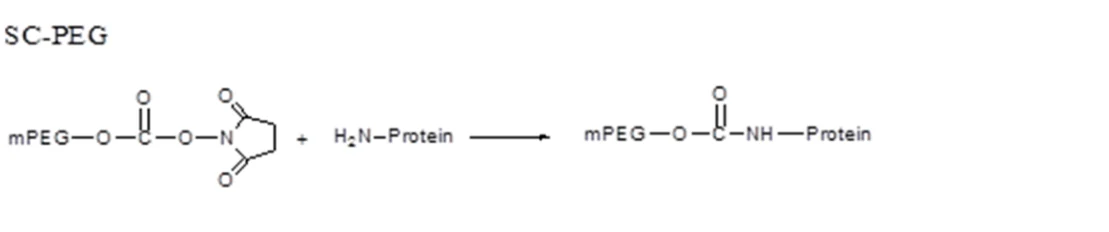
Structural studies on L-asparaginase showed that PEG is only attached to the N-terminal amino acid (i.e. leucine) and to the Ɛ-amino acid groups of lysine. Approximately 31-39 PEG molecules are covalently bound to one molecule of L-asparaginase to give a molecular mass of approximately 313 kDa for calaspargase pegol.
Physicochemical properties: Appearance: clear, colorless solution; pH: 7.2-7.4 (calaspargase pegol).
ASPARLAS, concentrate for solution for intravenous infusion is supplied as a preservative-free, isotonic sterile, clear and colorless solution in single-use vials. Each vial contains 3 750 units of calaspargase pegol in 5 mL of solution.
14 CLINICAL TRIALS
14.1 Clinical Trials by Indication
Acute Lymphoblastic Leukemia (ALL)
Table 7 - Summary of patient demographics for clinical trials of ASPARLAS 2500 IU/m2 in Acute Lymphoblastic Leukemia (ALL)
| Study # | Study design | Dosage, route of administration and duration | Study patients (n) | Median age (Range) | Sex |
| AALL07P4 | Multicenter, open-label, randomized, active-controlled | Randomization ASPARLAS: 2500 IU/m2 or pegaspargase: 2500 IU/m2 IV infusion, during
| ASPARLAS 2500 IU/m2 group: N=42; Pegaspargase 2500 IU/m2 group: N=55 | 11 years (1 to 26 years) 11 years (1 to 23 years) | Female (N= 28), Male (N=14) Female (N=23), Male (N=32) |
IU: international unit
Study AALL07P4 was a multicenter, open-label, randomized, active-controlled, parallel-design clinical pilot study conducted to evaluate the PK, PD, safety, immunogenicity, and efficacy of ASPARLAS in comparison with pegaspargase as part of an augmented Berlin-Frankfurt-Münster (BFM) therapy regimen in patients aged >1 to <31 years newly diagnosed with high-risk B-precursor ALL.
A total of 41 and 54 patients were treated with ASPARLAS 2500 IU/m2 and pegaspargase, respectively. The majority of enrolled patients were White (82.2%), followed by Black or African American (6.7%), Unknown (6.7%), Asian (3.1%), and Native Hawaiian or Other Pacific Islander (1.2%). All patients had high risk B-cell ALL; no Philadelphia chromosome positive patients were enrolled.
The determination of efficacy was based on a demonstration of the achievement and maintenance of nadir asparaginase activity ≥ 0.1 IU/mL using ASPARLAS 2500 IU/m2 intravenously, measured either in plasma (NPAA) or serum (NSAA) (assuming a 1:1 asparaginase activity relationship between these two matrices). This specified therapeutic threshold of asparaginase activity either after a single dose or at steady state is considered to be associated with complete asparagine depletion based on in vitro data and clinical studies. In Study AALL07P4, the majority of patients had PAA ≥ 0.1 IU/mL through 18 days following the Induction dose (100% for ASPARLAS 2500 IU/m2 and 95.3% for pegaspargase 2500 IU/m2). By 25 days following the Induction dose, the proportion of patients with PAA ≥ 0.1 IU/mL was 92.9% in the ASPARLAS 2500 IU/m2 group and 29.5% in the pegaspargase 2500 IU/m2 group.
Based on modelling and simulation in patients with evaluable PK samples in Studies AALL07P4 and DFCI 11-001 (N=124), the proportion of patients expected to maintain NSAA ≥ 0.1IU/m2 was 99% at weeks 6, 12, 18, 24, and 30 using ASPARLAS 2500 IU/m2 intravenously every 3 weeks.
14.3 Immunogenicity
As with all therapeutic proteins, there is a potential for immunogenicity.
Immunogenicity was assessed using enzyme linked immunosorbent assays (ELISA) in Study DFCI 11-001. Of 98 evaluable patients treated with ASPARLAS, 15 (15%) patients developed new or an increased titer of anti-drug antibodies (ADA) during treatment; 14 of these 15 patients were positive for anti-PEG antibodies. The presence of ADA correlated with the occurrence of hypersensitivity reactions. There is insufficient information to determine whether the development of antibodies is associated with altered pharmacokinetics (i.e., loss of asparaginase activity).
The detection of antibody formation is highly dependent on the sensitivity and specificity of the assay. Additionally, the observed incidence of antibody (including neutralizing antibody) positivity in an assay may be influenced by several factors, including assay methodology, sample handling, timing of sample collection, concomitant medications, and underlying disease. For these reasons, comparison of the incidence of antibodies to ASPARLAS with the incidence of antibodies in other studies or to other asparaginase products may be misleading.
15 MICROBIOLOGY
No microbiological information is required for this drug product.
16 NON-CLINICAL TOXICOLOGY
Carcinogenicity: Carcinogenicity studies have not been conducted with calaspargase pegol.
Genotoxicity: Mutagenicity studies have not been conducted with calaspargase pegol.
Reproductive and Developmental Toxicology:
In an embryofetal development study, calaspargase pegol was administered intravenously at doses of 75, 150, and 300 IU/kg (0.2, 0.6 and 1 times the recommended human dose, respectively, based on AUC) to pregnant rats during the period of organogenesis. Maternal toxicity characterized by decreased body weight and food consumption was seen at all dose levels resulting in slight reductions in gravid uterine weight. There were adverse effect on placental weights and total fetal body weights in all treated groups. No evidence of structural abnormalities or embryo-fetal mortality was observed in this study at any of the doses tested. Published literature studies in which pregnant rabbits were administered L-asparaginase suggested harm to the animal offspring.