


Product Monograph - Auro-Eletriptan
SUMMARY PRODUCT INFORMATION
Route of Administration | Dosage Form / Strength | All Nonmedicinal Ingredients |
| oral | Tablets 20 mg , 40 mg | Cellulose Microcrystalline, Lactose Monohydrate, Croscarmellose Sodium, Magnesium stearate, Aquarius BT 13200 and Aquarius BT 13202 Orange contain Hypromellose, Titanium dioxide, Triacetin, Lactose monohydrate and FD&C Yellow 6 Aluminium Lake. |
INDICATIONS AND CLINICAL USE
Adults
Auro-Eletriptan (eletriptan hydrobromide) is indicated for the acute treatment of migraine with or without aura in adults.
Auro-Eletriptan tablets are not intended for the prophylactic therapy of migraine or for use in the management of hemiplegic, ophthalmoplegic or basilar migraine (see CONTRAINDICATIONS). Safety and effectiveness of Auro-Eletriptan tablets have not been established for cluster headache, which is present in an older, predominantly male population.
Pediatrics (< 18 years of age)
The safety and efficacy of Auro-Eletriptan in children has not been established and its use in this age group is not recommended. (See WARNINGS and PRECAUTIONS).
Geriatrics (> 65 x years of age)
Experience of the use of eletriptan hydrobromide in patients aged over 65 years is limited. Therefore the use of Auro-Eletriptan in patients over 65 years is not recommended. (See WARNINGS and
PRECAUTIONS).
CONTRAINDICATIONS
Auro-Eletriptan (eletriptan hydrobromide) tablets are contraindicated in patients with history, symptoms, or signs of ischemic cardiac, cerebrovascular or peripheral vascular syndromes, valvular heart disease or cardiac arrhythmias (especially tachycardias). In addition, patients with other significant underlying cardiovascular diseases (eg, atherosclerotic disease, congenital heart disease) should not receive eletriptan. Ischemic cardiac syndromes include, but are not restricted to, angina pectoris of any type (eg, stable angina of effort and vasospastic forms of angina such as the Prinzmetal’s variant), all forms of myocardial infarction, and silent myocardial ischemia. Cerebrovascular syndromes include, but are not limited to, strokes of any type as well as transient ischemic attacks (TIAs). Peripheral vascular disease includes, but is not limited to, ischemic bowel disease, or Raynaud’s syndrome (see WARNINGS AND PRECAUTIONS).
Because Auro-Eletriptan may increase blood pressure it is contraindicated in patients with uncontrolled or severe hypertension (see WARNINGS AND PRECAUTIONS).
CYP3A4 Inhibitors: Auro-Eletriptan is contraindicated within 72 hours of treatment with the following potent CYP3A4 inhibitors: ketoconazole, itraconazole, nefazodone, troleandomycin, clarithromycin, ritonavir, and nelfinavir. Auro-Eletriptan is contraindicated within 72 hours with drugs that have demonstrated potent CYP3A4 inhibition and have this potent effect described in the CONTRAINDICATIONS, or WARNINGS AND PRECAUTIONS sections of their labeling (see WARNINGS AND PRECAUTIONS, DRUG INTERACTIONS and DOSAGE AND ADMINISTRATION).
Auro-Eletriptan is contraindicated within 24 hours of treatment with another 5 HT1 agonist, an ergotamine containing or ergot type medication such as dihydroergotamine (DHE) or methysergide.
Auro-Eletriptan is contraindicated in patients with hemiplegic ophthalmoplegic or basilar migraine
Auro-Eletriptan tablets are contraindicated in patients with severe hepatic impairment.
Auro-Eletriptan tablets are contraindicated in patients with known hypersensitivity to eletriptan or to any of its inactive ingredients.
WARNINGS AND PRECAUTIONS
General
Auro-Eletriptan (eletriptan hydrobromide) tablets should only be used where a clear diagnosis of migraine has been established.
Medication Overuse Headache: Overuse of acute migraine treatments has been associated with the exacerbation of headache (medication overuse headache, MOH) in susceptible patients. Withdrawal of the treatment may be necessary.
CYP3A4 Inhibitors
Eletriptan is metabolized by the CYP3A4 enzyme. Auro-Eletriptan is contraindicated within 72 hours of treatment with the following potent CYP3A4 inhibitors: ketoconazole, itraconazole, nefazodone, troleandomycin, clarithromycin, ritonavir, and nelfinavir. Auro-Eletriptan is contraindicated within 72 hours with drugs that have demonstrated potent CYP3A4 inhibition and have this potent effect described in the CONTRAINDICATIONS or WARNINGS AND PRECAUTIONS sections of their labeling (see DRUG INTERACTIONS and DOSAGE AND ADMINISTRATION).
Cardiovascular
Risk of Myocardial Ischemia and/or Infarction and Other Cardiac Events
As with other triptans, eletriptan has been associated with transient pain or pressure sensation in the chest or throat. Because of the potential of 5-HT1 agonists to cause coronary vasospasm, eletriptan should not be given to patients with documented ischemic or vasospastic coronary artery disease (CAD) (see CONTRAINDICATIONS). It is strongly recommended that eletriptan not be given to patients in whom unrecognized CAD is predicted by the presence of risk factors (eg, hypertension, hypercholesterolemia, smoker, obesity, diabetes, strong family history of CAD, female with surgical or physiological menopause, or male over 40 years of age) unless a cardiovascular evaluation provides satisfactory clinical evidence that the patient is reasonably free of coronary artery and ischemic myocardial disease, or other significant underlying cardiovascular disease. The sensitivity of cardiac diagnostic procedures to detect cardiovascular disease or predisposition to coronary artery vasospasm is modest, at best. If, during the cardiovascular evaluation, the patient’s medical history, electrocardiographic, or other investigations reveal findings indicative of, or consistent with coronary artery vasospasm or myocardial ischemia, eletriptan should not be administered (see CONTRAINDICATIONS).
These evaluations, however, may not identify every patient who has cardiac disease, and in very rare cases, serious cardiac events, such as myocardial infarction or coronary ischemia have occurred in patients without evidence of underlying cardiovascular disease.
For patients with risk factors predictive of CAD who are determined to have a satisfactory cardiovascular evaluation, it is strongly recommended that administration of the first dose of eletriptan take place in the setting of a physician’s office or similar medically staffed and equipped facility unless the patient has previously received eletriptan. Because cardiac ischemia can occur in the absence of clinical symptoms, consideration should be given to obtaining, on the first occasion of use, an electrocardiogram (ECG) during the interval immediately following administration of eletriptan, in patients with risk factors. However, an absence of drug-induced cardiovascular effects on the occasion of the initial dose does not preclude the possibility of such effects occurring with subsequent administrations.
It is recommended that patients who are intermittent long-term users of 5-HT1 agonists including eletriptan, and who have or acquire risk factors predictive of CAD, as described above, undergo periodic cardiovascular evaluation as they continue to use eletriptan.
If symptoms consistent with angina occur after the use of eletriptan, ECG evaluation should be carried out to look for ischemic changes.
The systematic approach described above is intended to reduce the likelihood that patients with unrecognized cardiovascular disease will be inadvertently exposed to therapy with eletriptan.
Discomfort in the chest, neck, throat and jaw (including pain, pressure, heaviness, and tightness) has been reported after administration of eletriptan. Because 5-HT1 agonists may cause coronary vasospasm, patients who experience signs or symptoms suggestive of angina following eletriptan should be evaluated for the presence of CAD or a predisposition to variant angina before receiving additional doses, and should be monitored electrocardiographically if dosing is resumed and similar symptoms recur. Similarly, patients who experience other symptoms or signs suggestive of decreased arterial flow, such as ischemic bowel syndrome or Raynaud’s syndrome following eletriptan should be evaluated for atherosclerosis or predisposition to vasospasm (see CONTRAINDICATIONS and WARNINGS and PRECAUTIONS and ADVERSE DRUG REACTIONS, Clinical Trial Adverse Drug Reactions).
Cardiac Events and Fatalities Associated with 5-HT1 Agonists
| As with other triptans, eletriptan may cause coronary artery vasospasm. Serious adverse cardiac events, | |||
| including acute myocardial infarction, life-threatening disturbances of cardiac rhythm, and death have | |||
| been reported within a few hours following the administration of other 5-HT1 agonists. Considering the | |||
| extent of use of 5-HT1 agonists in patients with migraine, the incidence of these events is extremely | |||
| low. | |||
Patients with symptomatic Wolff-Parkinson-White syndrome or arrhythmias associated with other cardiac accessory conduction pathway disorders should not receive Auro-Eletriptan.
As with other 5-HT1 agonists, sensations of tightness, pain, pressure, and heaviness have been reported after treatment with eletriptan hydrobromide tablets in the precordium, throat and jaw. Events that are localized to the chest, throat, neck and jaw have not been associated with arrhythmias or ischemic ECG changes in clinical trials.
Premarketing experience with eletriptan: In a clinical pharmacology study, in subjects undergoing diagnostic coronary angiography, a subject with a history of angina, hypertension and hypercholesterolemia, receiving intravenous eletriptan (Cmax of 127 ng/mL equivalent to 60 mg oral eletriptan), reported chest tightness and experienced angiographically documented coronary vasospasm with no ECG changes indicative of ischemia. There was also 1 report of atrial fibrillation in a patient with a past history of atrial fibrillation.
Because 5-HT1 agonists may cause coronary artery vasospasm, patients who experience signs or symptoms suggestive of angina following dosing should be evaluated for the presence of CAD or a predisposition to Prinzmetal’s variant angina before receiving additional doses of medication, and should be monitored electrocardiographically if dosing is resumed and similar symptoms recur. Similarly, patients who experience other symptoms or signs suggestive of decreased arterial flow, such as ischemic bowel syndrome or Raynaud’s syndrome, following the use of any 5-HT1 agonist are candidates for further evaluation (see CONTRAINDICATIONS)
In another coronary angiography study, supratherapeutic doses of eletriptan (comparable to 2 X 80 mg in the presence of a potent CYP3A4 inhibitor), administered as a rapid intravenous infusion, were compared with a standard formulation and dose of sumatriptan (6mg sc) and placebo. There were 8 subjective reports of vasoconstriction in the eletriptan group (compared with no cases in the sumatriptan or placebo groups); however, mean change in coronary artery diameter, as determined by quantitative coronary angiography, did not differ in the 3 treatment groups.
Postmarketing experience with eletriptan: Cases of myocardial infarction and cardiac death have been reported in patients with cardiovascular risk factors (e.g. hypertension, hyperlipidemia, strong family
history of CAD) or with inappropriate concomitant use of therapeutic doses of eletriptan and other triptans.
The uncontrolled nature of postmarketing surveillance, however, makes it impossible to determine definitively if the cases were actually caused by eletriptan or to reliably assess causation in individual cases.
Cerebrovascular Events and Fatalities Associated with 5-HT1 Agonists
Cerebral hemorrhage, subarachnoid hemorrhage, stroke, and other cerebrovascular events have been reported in patients treated with 5-HT1 agonists, and some have resulted in fatalities. In a number of cases, it appears possible that the cerebrovascular events were primary, the agonist having been administered in the incorrect belief that the symptoms experienced were a consequence of migraine, when they were not. It should be noted that patients with migraine may be at increased risk of certain cerebrovascular events (eg, stroke, hemorrhage, transient ischemic attack).
Special Cardiovascular Pharmacology Studies with Another 5-HT1 Agonist
In subjects (n=10) with suspected coronary artery disease undergoing angiography, a 5-HT1 agonist at a subcutaneous dose of 1.5 mg produced an 8% increase in aortic blood pressure, an 18% increase in pulmonary artery blood pressure, and an 8% increase in systemic vascular resistance. In addition, mild chest pain or tightness was reported by 4 subjects. Clinically significant increases in blood pressure were experienced by 3 of the subjects (2 of whom also had chest pain/discomfort). Diagnostic angiogram results revealed that 9 subjects had normal coronary arteries and 1 had insignificant coronary artery disease.
In an additional study with this same drug, migraine patients (n=35) free of cardiovascular disease were subjected to assessments of myocardial perfusion by positron emission tomography while receiving a subcutaneous 1.5 mg dose in the absence of a migraine attack. Reduced coronary vasodilatory reserve (~10%), increased coronary resistance (~20%), and decreased hyperaemic myocardial blood flow (~10%) were noted. The relevance of these findings to the use of the recommended oral dose of this 5-HT1 agonist is not known.
Other Vasospasm-Related Events
5-HT1 agonists may cause vasospastic reactions other than coronary artery spasm. Both peripheral vascular ischemia and colonic ischemia with abdominal pain, and bloody diarrhea have been reported with 5-HT1 agonists.
Increase in Blood Pressure
Significant elevation in blood pressure, including hypertensive crisis, has been reported on rare occasions in patients receiving 5-HT1 agonists, including eletriptan, with and without a history of hypertension, and at recommended doses.
Auro-Eletriptan tablets are contraindicated in patients with uncontrolled or severe hypertension (see CONTRAINDICATIONS).
In clinical pharmacology studies on healthy volunteers oral eletriptan (at single doses of 60 mg or greater) was shown to cause small transient dose-related increases in blood pressure, predominantly diastolic, consistent with its mechanism of action and with other 5-HT1B/1D agonists. The effect was
more pronounced in renally impaired and elderly subjects. (see WARNINGS AND PRECAUTIONS, Renal; ACTION AND CLINICAL PHARMACOLOGY, Renal Insufficiency) A single patient with hepatic cirrhosis received eletriptan 80 mg and experienced a blood pressure of 220/96 mmHg 5 hours after dosing. The treatment-related event persisted for 7 hours.
Selective Serotonin Reuptake Inhibitors/Serotonin Norepinephrine Reuptake Inhibitors and Serotonin Syndrome
Cases of life-threatening serotonin syndrome have been reported during combined use of selective serotonin reuptake inhibitors (SSRIs)/serotonin norepinephrine reuptake inhibitors (SNRIs) and triptans. If concomitant treatment with Auro-Eletriptan and SSRIs (e.g., fluoxetine, paroxetine, sertraline) or SNRIs (e.g., venlafaxine) is clinically warranted, careful observation of the patient is advised, particularly during treatment initiation and dose increases. Serotonin syndrome symptoms may include mental status changes (e.g., agitation, hallucinations, coma), autonomic instability (e.g., tachycardia, labile blood pressure, hyperthermia), neuromuscular aberrations (e.g., hyperreflexia, incoordination) and/or gastrointestinal symptoms (e.g., nausea, vomiting, diarrhea) (see DRUG INTERACTIONS).
Dependence/Tolerance
Although the abuse potential of eletriptan hydrobromide tablets has not been assessed, no abuse of, tolerance to, or withdrawal from, or drug-seeking behavior was observed in patients who received eletriptan hydrobromide in clinical trials or their extensions. The 5-HT1B/1D agonists, as a class, have not been associated with drug abuse.
Hepatic
The effects of severe hepatic impairment on eletriptan metabolism were not evaluated. Auro-Eletriptan tablets should not be given to patients with severe hepatic impairment (see CONTRAINDICATIONS).
Subjects with mild or moderate hepatic impairments demonstrated an increase in AUC (34%), Cmax (18%) and in half-life. No dose adjustment is necessary in mild to moderate impairment (see ACTION AND CLINICAL PHARMACOLOGY: Pharmacokinetics, and DOSAGE AND ADMINISTRATION).
Neurologic
Care should be taken to exclude other potentially serious neurologic conditions before treating headache in patients not previously diagnosed with migraine headache or who experience a headache that is atypical for them. There have been rare reports where patients received 5-HT1 agonists for severe headaches that were subsequently shown to have been secondary to an evolving neurologic lesion. For newly diagnosed patients or patients presenting with atypical symptoms, the diagnosis of migraine should be reconsidered if no response is seen after the first dose of eletriptan.
Seizures: Caution should be observed if eletriptan is to be used in patients with a history of seizures or other risk factors, such as structural brain lesions, which lower the convulsion threshold.
Ophthalmologic
Corneal Opacities: Transient corneal opacities were seen in dogs receiving oral eletriptan at 5 mg/kg and above. They were observed during the first week of treatment, but were not present thereafter despite continued treatment. Exposure at the no-effect dose level of 2.5 mg/kg exceeded that achieved in humans at the maximum recommended daily dose.
Preclinical Toxicology
Binding to Melanin-Containing Tissues: In rats treated with a single intravenous (3 mg/kg) dose of radiolabelled eletriptan, elimination of radioactivity from the retina was prolonged, suggesting that eletriptan and/or its metabolites may bind to the melanin of the eye. Because there could be accumulation in melanin-rich tissues over time, this raises the possibility that eletriptan could cause toxicity in these tissues after extended use. There were, however, no adverse ophthalmologic changes related to treatment with eletriptan in the 1-year dog toxicity study. Although no systematic monitoring of ophthalmologic function was undertaken in clinical trials, and no specific recommendations for ophthalmologic monitoring are offered, prescribers should be aware of the possibility of long-term ophthalmologic effects.
Psychomotor Effect
Patients should be advised to avoid driving a car or operating hazardous machinery until they are reasonably certain that Auro-Eletriptan does not affect them adversely.
Renal
In patients with mild or moderate renal impairment, a total daily dose of greater than 20 mg should be administered with caution due to elevations in blood pressure in clinical trial database. Auro-Eletriptan is not recommended for patients with severe renal impairment.
In a single-dose PK study, there was no significant change in eletriptan clearance observed in subjects with mild, moderate or severe renal impairment. In some of these patients, an elevation in blood pressure was observed (see WARNINGS AND PRECAUTIONS, Increase in Blood Pressure; ACTION AND CLINICAL PHARMACOLOGY: Pharmacokinetics, and DOSAGE AND ADMINISTRATION).
Sensitivity/Resistance
Hypersensitivity: Rare hypersensitivity (anaphylaxis/anaphylactoid) reactions have occurred in patients receiving other 5-HT1 agonists. Such reactions can be life-threatening or fatal. In general, hypersensitivity reactions to drugs are more likely to occur in individuals with a history of sensitivity to multiple allergens. Owing to the possibility of cross-reactive hypersensitivity reactions, Auro-Eletriptan should not be used in patients having a history of hypersensitivity to chemically-related 5-HT1 receptor agonists. (see ADVERSE REACTIONS).
Special Populations
Pregnant Women: The safety of eletriptan in pregnant women has not been established. Administration of Auro-Eletriptan tablets should only be considered if the expected benefit to the mother is greater than any possible risk to the fetus.
In reproductive toxicity studies in rats and rabbits, oral administration of eletriptan was associated with developmental toxicity (decreased fetal and pup weights) and an increased incidence of fetal structural abnormalities).
Nursing Women: Caution should be exercised when Auro-Eletriptan tablets are administered to nursing women.
Eletriptan is excreted in human breast milk. In 1 study of 8 women given a single dose of 80 mg, the mean total amount of eletriptan in breast milk over 24 hours in this group was approximately 0.02% of the administered dose. The ratio of eletriptan mean concentration in breast milk to plasma was 1:4, but there was great variability. The resulting eletriptan concentration-time profile was similar to that seen in the plasma over 24 hours, with very low concentrations of drug (mean 1.7 ng/ml) still present in the milk 18-24 hours post-dose. The N-desmethyl active metabolite was not measured in the breast milk.
Pediatrics (< 18 years of age): Safety and effectiveness of Auro-Eletriptan tablets in pediatric patients have not been established; therefore, Auro-Eletriptan is not recommended for use in patients under 18 years of age.
The efficacy of eletriptan hydrobromide tablets (40 mg) in patients 11-17 was not established in a randomized, placebo-controlled trial of 274 adolescent migraineurs, there were no statistically significant differences between treatment groups. The headache response rate at 2 hours was 57% for both eletriptan hydrobromide 40 mg tablets and placebo. Adverse events observed were similar in nature to those reported in clinical trials in adults. Auro-Eletriptan is not recommended for use in patients under 18 years of age.
Geriatrics (> 65 years of age): Eletriptan hydrobromide has been given to only 50 patients over the age of 65. Blood pressure was increased to a greater extent in elderly subjects than in young subjects. The pharmacokinetic disposition of eletriptan in the elderly is similar to that seen in younger adults. There is a statistically significant increase in half-life (from about 4.4 hours to 5.7 hours) between elderly (65 to 93 years of age) and younger adult subjects (18 to 45 years of age) (see
ACTION AND CLINICAL PHARMACOLOGY: Special Populations and Conditions). Experience of the use of eletriptan hydrobromide in patients aged over 65 years is limited. Therefore the use of Auro-Eletriptan in patients over 65 years is not recommended.
ADVERSE REACTIONS
Adverse Drug Reaction Overview
Serious cardiac events, including some that have been fatal, have occurred following the use of other 5-HT1 agonists. These events are extremely rare and most have been reported in patients with risk factors of CAD. Events reported have included coronary artery vasospasm, transient myocardial ischemia, myocardial infarction, ventricular tachycardia, and ventricular fibrillation (see CONTRAINDICATIONS and WARNINGS AND PRECAUTIONS). Typical 5-HT1 Agonist Adverse Reactions
As with other 5-HT1 agonists, eletriptan hydrobromide has been associated with sensations of heaviness, pressure, tightness or pain which may be intense. These may occur in any part of the body including the chest, throat, neck, jaw and upper limbs.
Increases in Blood Pressure
Significant elevations in systemic blood pressure, including hypertensive crisis, have been reported on rare occasions in patients with and without a history of hypertension treated with other 5-HT1 agonists. Auro-Eletriptan is contraindicated in patients with uncontrolled hypertension (see CONTRAINDICATIONS).
Clinical Trial Adverse Drug Reactions
In the clinical program, 7,483 subjects have received eletriptan hydrobromide tablets and 1,595 have received placebo.
In Phase 2/3 clinical trials for the treatment of migraine, safety data were obtained for 6,954 subjects treated with eletriptan and 1,376 subjects treated with placebo. In the clinical pharmacology program, 529 subjects received eletriptan and 219 received placebo.
Among 5,984 patients who treated a single migraine headache with eletriptan hydrobromide 20, 40 or 80 mg tablets in short-term, placebo-controlled trials, the most common and dose-related adverse events reported with treatment with eletriptan hydrobromide were asthenia (7.2%), nausea (7.8%), dizziness (5.7%) and somnolence (5.2%).
Table 1 lists the most common adverse events that occurred in the subset of 7,131 patients with migraine who received eletriptan doses of 20 mg, 40 mg, 80 mg or placebo in worldwide, placebo-controlled clinical trials. Adverse events that were more frequent in a eletriptan hydrobromide treatment group compared to the placebo group with an incidence greater than 1% are included in Table 1. The events cited reflect experience gained under closely monitored conditions of clinical trials in a highly selected patient population. In actual clinical practice or in other clinical trials, those frequency estimates may not apply, as the conditions of use, reporting behavior, and the kinds of patients treated may differ.
Eletriptan hydrobromide tablets are generally well tolerated. Across all doses, most adverse reactions were mild and transient. The frequency of adverse events in clinical trials did not increase when up to 2 doses of eletriptan hydrobromide tablets were taken within 24 hours. The incidence of adverse events in controlled clinical trials was not affected by gender, age, or race of patients. Adverse event frequencies were also unchanged by concomitant use of drugs commonly taken for migraine prophylaxis, (eg, beta-blockers, calcium channel blockers, tricyclic antidepressants), estrogen replacement therapy and oral contraceptives.
Table 1: Treatment-Emergent Adverse Events by initial oral dose of Eletriptan Hydrobromide and Placebo Reported by at least 1% Patients with Migraine from Controlled Clinical Trials
| Placebo | 20 mg | 40 mg | 80 mg | |
| Number of Patients | 1559 | 536 | 2951 | 2085 |
| Symptoms of Potentially Cardiac Origin | ||||
| Chest Sensations* | 1.1 | 0.4 | 2.2 | 4.4 |
| Neck/throat/jaw sensations* | 0.2 | 0.2 | 1.4 | 2.2 |
| Palpitations | 0.9 | 0.7 | 1.3 | 1.8 |
| Upper Limb sensations* | 0.1 | 0.2 | 0.6 | 1.1 |
| Neurological | ||||
| Dizziness | 2.8 | 2.4 | 5.1 | 7.2 |
| Drowsiness | 2.8 | 1.9 | 4.9 | 5.9 |
| Head/face sensations* | 0.7 | 1.5 | 1.2 | 1.8 |
| Headache | 2.4 | 2.8 | 2.8 | 3.5 |
| Hypertonia | 0.2 | 0.9 | 0.6 | 1.8 |
| Vertigo | 0.5 | 0.2 | 0.4 | 1.8 |
| Digestive | ||||
| Abdominal discomfort & pain | 0.7 | 0.9 | 1.7 | 2.2 |
| Diarrhea | 0.9 | 1.1 | 1.1 | 1.4 |
| Gastrointestinal discomfort & pain | 0.8 | 1.9 | 1.6 | 2.3 |
| Hyposalivation | 1.5 | 2.1 | 3.0 | 3.7 |
| Nausea | 7.8 | 3.9 | 6.9 | 10.4 |
| Vomiting | 5.7 | 0.6 | 3.0 | 4.0 |
| Musculoskeletal | ||||
| Muscle atrophy, weakness & tiredness | 0.5 | 0.2 | 0.8 | 3.0 |
| Muscle pain | 0.4 | 1.1 | 1.5 | 2.9 |
| Ear, nose & throat | ||||
| Nasal signs & symptoms | 0.6 | 0.9 | 1.0 | 1.5 |
| Throat & tonsil symptoms | 0.4 | 1.3 | 1.4 | 2.4 |
| Respiratory | ||||
| Viral infection | 0.8 | 0.6 | 1.1 | 1.3 |
| Non-site specific | ||||
| Chills | 1.3 | 0.2 | 0.8 | 1.2 |
| Malaise/fatigue | 1.9 | 2.6 | 4.5 | 9.4 |
| Sensations | 2.1 | 2.6 | 3.6 | 5.6 |
| Sweating | 0.6 | 0.4 | 1.1 | 1.6 |
*The term “sensations” encompasses adverse events described as pain & discomfort, pressure, heaviness, constriction, tightness, heat/burning sensation, paresthesia, numbness, tingling and strange sensations.
Other Events Observed in Association with the Administration of Eletriptan Hydrobromide Tablets
The frequencies of less commonly reported adverse clinical events are listed below by body system in order of decreasing frequency. Because the reports include events observed in open studies, the role of eletriptan hydrobromide tablets in their causation cannot be reliably determined. Furthermore, variability associated with adverse event reporting, the terminology used to describe adverse events, etc., limit the value of the quantitative frequency estimates provided. Event frequencies are calculated as the number of patients reporting an event divided by the total number of patients (N=4,719) exposed to eletriptan hydrobromide. All reported events are included except those already listed in Table 1, those too general to be informative, and those not reasonably associated with the use of the drug. Frequent adverse events are those occurring in at least 1/100 patients, infrequent adverse events are those occurring in 1/100 to 1/1,000 patients, and rare adverse events are those occurring in fewer than 1/1,000 patients.
General: Frequent: back pain, chills and pain. Infrequent: face edema and malaise. Rare: abdomen enlarged, abscess, accidental injury, allergic reaction, fever, flu syndrome, halitosis, hernia, hypothermia, lab test abnormal, moniliasis, rheumatoid arthritis and shock.
Cardiovascular: Frequent: palpitation. Infrequent: hypertension, migraine, peripheral vascular disorder and tachycardia. Rare: angina pectoris, arrhythmia, atrial fibrillation, AV block, bradycardia, hypotension, syncope, thrombophlebitis, cerebrovascular disorder, vasospasm and ventricular arrhythmia.
Digestive: Infrequent: anorexia, constipation, diarrhea, eructation, esophagitis, flatulence, gastritis, gastrointestinal disorder, glossitis, increased salivation and liver function tests abnormal. Rare: gingivitis, hematemesis, increased appetite, rectal disorder, stomatitis, tongue disorder, tongue edema and tooth disorder.
Endocrine: Rare: goiter, thyroid adenoma and thyroiditis.
Hemic and Lymphatic: Rare: anemia, cyanosis, leukopenia, lymphadenopathy, monocytosis and purpura.
Metabolic: Infrequent: creatine phosphokinase increased, edema, peripheral edema and thirst. Rare: alkaline phosphatase increased, bilirubinemia, hyperglycemia, weight gain and weight loss.
Musculoskeletal: Infrequent: arthralgia, arthritis, arthrosis, bone pain, myalgia and myasthenia. Rare: bone neoplasm, joint disorder, myopathy and tenosynovitis.
Neurological: Frequent: hypertonia, hypesthesia and vertigo. Infrequent: abnormal dreams, agitation, anxiety, apathy, ataxia, confusion, depersonalization, depression, emotional lability, euphoria, hyperesthesia, hyperkinesia, incoordination, insomnia, nervousness, speech disorder, stupor, thinking abnormal and tremor. Rare: abnormal gait, amnesia, aphasia, catatonic reaction, dementia, diplopia, dystonia, hallucinations, hemiplegia, hyperalgesia, hypokinesia, hysteria, manic reaction, neuropathy, neurosis, oculogyric crisis, paralysis, psychotic depression, sleep disorder and twitching.
Respiratory: Frequent: pharyngitis. Infrequent: asthma, dyspnea, respiratory disorder, respiratory tract infection, rhinitis, voice alteration and yawn. Rare: bronchitis, choking sensation, cough increased, epistaxis, hiccup, hyperventilation, laryngitis, sinusitis and sputum increased.
Skin and Appendages: Frequent: sweating. Infrequent: pruritus, rash and skin disorder. Rare: alopecia, dry skin, eczema, exfoliative dermatitis, maculopapular rash, psoriasis, skin discolouration, skin hypertrophy and urticaria.
Special Senses: Infrequent: abnormal vision, conjunctivitis, ear pain, eye pain, lacrimation disorder, photophobia, taste perversion and tinnitus. Rare: abnormality of accommodation, dry eyes, ear disorder, eye hemorrhage, otitis media, parosmia and ptosis.
Urogenital: Infrequent: impotence, polyuria, urinary frequency and urinary tract disorder. Rare: breast pain, kidney pain, leukorrhea, menorrhagia, menstrual disorder and vaginitis.
Post-Market Adverse Drug Reactions
In postmarketing experience, the following additional undesirable effects have been reported:
Gastrointestinal Disorders: Ischaemic colitis
Nervous System Disorders: Syncope
Immune System Disorders: Allergic reaction, some of which may be serious, including angioedema.
Skin and Subcutaneous Tissue Disorders: Pruritus, rash, urticaria.
Cardiac Disorders: Myocardial ischemia or infarction, arteriospasm coronary (see WARNINGS AND PRECAUTIONS, Cardiac)
DRUG INTERACTIONS
Effects of Other Drugs on Eletriptan
CYP3A4 Inhibitors: In vitro studies have shown that eletriptan is metabolized by the CYP3A4 enzyme. A clinical study demonstrated about a 3-fold increase in Cmax and about a 6-fold increase in the AUC of eletriptan when combined with ketoconazole. The half-life increased from 5 hours to 8 hours and the Tmax increased from 2.8 hours to 5.4 hours. Another clinical study demonstrated about a 2-fold increase in Cmax and about a 4-fold increase in AUC when erythromycin was co-administered with eletriptan. It has also been shown that co-administration of verapamil and eletriptan yields about a 2-fold increase in Cmax and about a 3-fold increase in AUC of eletriptan, and that co-administration of fluconazole and eletriptan yields about a 1.4-fold increase in Cmax and about a 2-fold increase in AUC of eletriptan.
Auro-Eletriptan is contraindicated within 72 hours of treatment with the following potent CYP3A4 inhibitors: ketoconazole, itraconazole, nefazodone, troleandomycin, clarithromycin, ritonavir and nelfinavir. Auro-Eletriptan is contraindicated within 72 hours with drugs that have demonstrated potent CYP3A4 inhibition and have this potent effect described in the CONTRAINDICATIONS or WARNINGS AND PRECAUTIONS sections of their Product Monograph (see CONTRAINDICATIONS, WARNINGS AND PRECAUTIONS and DOSAGE AND ADMINISTRATION).
Ketoconazole: A clinical study demonstrated about a 3-fold increase in Cmax and about a 6-fold increase in the AUC of eletriptan when co-administered with ketoconazole. The half-life of eletriptan increased from 5 hours to 8 hours and the Tmax increased from 2.8 hours to 5.4 hours (see ACTION AND CLINICAL PHARMACOLOGY: Pharmacokinetics).
Erythromycin: A clinical study demonstrated about a 2-fold increase in eletriptan Cmax and about a 4-fold increase in AUC when erythromycin was co-administered with eletriptan. This increased exposure was associated with an increase in eletriptan t½ from 4.6 hours to 7.1 hours (see ACTION AND CLINICAL PHARMACOLOGY: Pharmacokinetics).
Fluconazole: Co-administration of fluconazole and eletriptan yields about a 1.4-fold increase in Cmax and about a 2-fold increase in AUC of eletriptan.
Verapamil: It has also been shown that co-administration of verapamil and eletriptan yields about a 2-fold increase in Cmax and about a 3-fold increase in AUC of eletriptan.
Ergot-containing drugs: Ergot-containing drugs have been reported to cause prolonged vasospastic reactions. Because these effects may be additive, use of ergotamine-containing or ergot-type medications (like dihydroergotamine [DHE] or methysergide) and Auro-Eletriptan tablets within 24 hours is not recommended (see ACTION AND CLINICAL PHARMACOLOGY: Pharmacokinetics and CONTRAINDICATIONS).
Other 5-HT1 Agonists: Concomitant use of other 5-HT1 agonists within 24 hours of Auro-Eletriptan treatment is not recommended (see CONTRAINDICATIONS).
Selective Serotonin Reuptake Inhibitors (SSRIs)/Serotonin Norepinephrine Reuptake Inhibitors (SNRIs):
Cases of life-threatening serotonin syndrome have been reported during combined use of selective serotonin reuptake inhibitors (SSRIs) or serotonin norepinephrine reuptake inhibitors (SNRIs) and triptans (see WARNINGS AND PRECAUTIONS).
Propranolol: The Cmax and AUC of eletriptan were increased by 10% and 33%, respectively, following an 80 mg BID dose of propranolol administered for 7 days. No interactive increases in blood pressure were observed. No dose adjustment is necessary for patients also taking propranolol.
MAO Inhibitors: Eletriptan is not a substrate for monoamine oxidase (MAO) enzymes. Therefore there is no expectation of an interaction between Auro-Eletriptan and MAO inhibitors.
The effect of eletriptan on other drugs
The effect of eletriptan on enzymes other than cytochrome P-450 has not been investigated. In vitro human liver microsome studies suggest that eletriptan has little potential to inhibit CYP1A2, 2C9, 2E1 and 3A4 at concentrations up to 100 μM. While eletriptan has an effect on CYP2D6 at high concentration (IC50 of about 41 μM), this effect should not interfere with metabolism of other drugs when eletriptan is used at recommended doses. There is no in vitro or in vivo evidence that clinical doses of eletriptan will induce drug metabolizing enzymes. Therefore, eletriptan is unlikely to cause clinically important drug interactions mediated by these enzymes.
Drug-Food Interactions
The AUC and Cmax of eletriptan are increased by approximately 20 to 30% following oral administration with a high fat meal.
Drug-Herb Interactions
Interactions with herbal products have not been established.
Drug-Laboratory Interactions
Interactions with laboratory tests have not been established.
DOSAGE AND ADMINISTRATION
Dosing Considerations
Auro-Eletriptan (eletriptan hydrobromide) tablets should be taken as early as possible after the onset of a migraine attack, but are also effective if taken at a later stage. Auro-Eletriptan tablets should not be used prophylactically.
Recommended Dose and Dosage Adjustment
Adult (18-65 years of age):
In controlled clinical trials, single doses of 20 mg and 40 mg were effective for the acute treatment of migraine in adults. A greater proportion of patients had a response following a 40 mg dose than following a 20 mg dose. Individuals may vary in response to doses of Auro-Eletriptan tablets.
When initiating treatment with Auro-Eletriptan, a starting dose of 20 mg or 40 mg may be considered. Patients who do not obtain satisfactory efficacy after an initial trial of 20 mg may be effectively treated with 40 mg in subsequent migraine attacks. The choice of dose should therefore be made on an individual basis, according to the clinical status of the patient and weighing the possible risk/benefit of the 40 mg dose. A minimal effective dose should be used.
If after an initial dose of 20 mg, headache improves but then returns a repeat dose of 20 mg may be beneficial and should be taken at least 2 hours after the initial dose. If an initial dose of 40 mg is taken, a second dose is not recommended.
If the initial dose is ineffective, controlled clinical trials have not shown a benefit of a second dose to treat the same attack.
The maximum daily dose should not exceed 40 mg.
The safety of treating an average of more than 3 headaches in a 30-day period has not been established.
Patients Receiving Potent CYP3A4 Inhibitors
Auro-Eletriptan tablets are contraindicated within 72 hours of treatment with the following potent CYP3A4 inhibitors, due to potential for significant increases in eletriptan hydrobromide blood levels: ketoconazole, itraconazole, clarithromycin, troleandomycin, ritonavir, nelfinavir and nefazodone. Auro-Eletriptan is also contraindicated within 72 hours with any other drugs that have demonstrated potent CYP3A4 inhibition and have this potent effect described in the CONTRAINDICATIONS or WARNINGS AND PRECAUTIONS sections of their labeling (see WARNINGS AND PRECAUTIONS, DRUG INTERACTIONS and CONTRAINDICATIONS).
Patients with Hepatic Impairment
No dose adjustment is required in patients with mild or moderate hepatic impairment. As eletriptan hydrobromide has not been studied in patients with severe hepatic impairment, it is contraindicated in these patients (see ACTION AND CLINICAL PHARMACOLOGY and
CONTRAINDICATIONS).
Patients with Renal Impairment
In some patients with renal impairment, an elevation in blood pressure was observed. A total daily dose of greater than 20 mg should be administered with caution. Auro-Eletriptan is not recommended for patients with severe renal impairment (see ACTION AND CLINICAL PHARMACOLOGY and WARNINGS AND PRECAUTIONS).
Administration
Auro-Eletriptan tablets should be swallowed whole with water.
OVERDOSAGE
Symptoms: No significant overdoses in clinical trials have been reported. Twenty-one (21) subjects have received single doses of 120 mg in Phase 1 trials and 427 in Phase 2/3 trials without significant adverse effects. Based on the pharmacology of 5-HT1 agonists, hypertension or other more serious cardiovascular symptoms could occur on overdose.
Treatment: In case of overdose, standard supportive measures should be adopted. The elimination half-life of eletriptan is about 4 hours (see ACTION AND CLINICAL PHARMACOLOGY), and therefore monitoring of patients after overdose with eletriptan should continue for at least 20 hours, or longer should symptoms or signs persist.
There is no specific antidote to eletriptan. In cases of severe intoxication, intensive care procedures are recommended, including establishing and maintaining a patent airway, ensuring adequate oxygenation and ventilation, and monitoring and support of the cardiovascular system.
It is unknown what effect hemodialysis or peritoneal dialysis has on the serum concentration of eletriptan.
For management of a suspected drug overdose, contact your regional Poison Control Centre immediately.
ACTION AND CLINICAL PHARMACOLOGY
Mechanism of Action
Eletriptan binds with high affinity to 5-HT1B, 5-HT1D and 5-HT1F receptors, has modest affinity for 5-HT1A, 5-HT1E, 5-HT2B and 5-HT7 receptors, and little or no affinity for 5-HT2A, 5-HT2C, 5-HT3, 5-HT4, 5-HT5A and 5-HT6 receptors.
Eletriptan has no significant affinity or pharmacological activity at adrenergic alpha1, alpha2, or beta; dopaminergic D1 or D2; muscarinic; or opioid receptors.
Two theories have been proposed to explain the efficacy of 5-HT receptor agonists in migraine. One theory suggests that activation of 5-HT1 receptors located on intracranial blood vessels, including those on the arteriovenous anastomoses, leads to vasoconstriction, which is correlated with the relief of migraine headache. The other hypothesis suggests that activation of 5-HT1
receptors on sensory nerve endings in the trigeminal system results in the inhibition of pro-inflammatory neuropeptide release.
In the anesthetized dog, eletriptan has been shown to reduce carotid arterial blood flow, with only a small increase in arterial blood pressure at high doses. While the effect on blood flow was selective for the carotid arterial bed, decreases in coronary artery diameter were observed. Eletriptan has also been shown to inhibit trigeminal nerve activity in the rat.
Pharmacokinetics
Absorption: Eletriptan is rapidly and well absorbed after oral administration with peak plasma levels occurring approximately 1.5 hours after dosing to healthy subjects. In patients with moderate to severe migraine, the median Tmax is 2.0 hours. The mean absolute bioavailability of eletriptan is approximately 50%. The oral pharmacokinetics are slightly more than dose proportional over the clinical dose range. The AUC and Cmax of eletriptan are increased by approximately 20 to 30% following oral administration with a high fat meal.
Distribution: The volume of distribution following IV administration is 138L. Plasma protein binding is moderate and approximately 85%.
Metabolism: The N-demethylated metabolite of eletriptan is the only known active metabolite. This metabolite causes vasoconstriction similar to eletriptan in animal models. Though the half-life of the metabolite is estimated to be about 13 hours, the plasma concentration of the N-demethylated metabolite is 10-20% of that of parent drug and is unlikely to contribute significantly to the overall effect of the parent compound. In vitro studies indicate that eletriptan is primarily metabolized by cytochrome P-450 enzyme CYP3A4 (see CONTRAINDICATIONS, WARNINGS AND PRECAUTIONS and DRUG INTERACTIONS).
Excretion: The elimination half-life of eletriptan is approximately 4 hours. Mean-renal clearance (CLR) following oral administration is approximately 3.9 L/h. Non-renal clearance accounts for about 90% of the total clearance. The pharmacokinetic parameters while fasting are summarized in Table 2.
Table 2: Single Dose Pharmacokinetics of Eletriptan (N=18 patients, 9 Males and 9 Females)
| Pharmacokinetic Parameter | Meansa | ||
| 20 mg | 40 mg | 80 mg | |
| Cmax (ng/mL) | 37 | 82 | 188 |
| AUC (ng•h/mL) | 240 | 573 | 1218 |
| AUCt (ng•h/mL) | 235 | 563 | 1198 |
| Tmax (h) | 1.5 | 1.8 | 2.1 |
| Kel (/h) | 0.194 | 0.181 | 0.183 |
| t½ (h) | 3.6 | 3.8 | 3.8 |
| a Means are geometric for AUC, AUCt and Cmax arithmetic for Tmax and kel, and harmonic for t½. | |||
Special Populations and Conditions
Pediatrics: The volume of distribution following oral administration is lower in children <12 years of age resulting in higher plasma concentrations than would be predicted following the same dose in adults. Auro-Eletriptan is not recommended for use in patients under 18 years of age (see WARNINGS AND PRECAUTIONS: Special Populations).
Geriatrics: Eletriptan hydrobromide has been given to only 50 patients over the age of 65. There is a statistically significant increase in half-life (from about 4.4 hours to 5.7 hours) in the elderly compared to younger adult subjects based on population pharmacokinetic analysis (see WARNINGS AND PRECAUTIONS: Special Populations).
Blood pressure was increased to a greater extent in elderly subjects than in young subjects.
Gender: The pharmacokinetics of eletriptan are unaffected by gender.
Race: A comparison of the pharmacokinetic studies conducted in western countries and those conducted in Japan have indicated an approximate 35% reduction in the exposure of eletriptan in Japanese male volunteers compared to western males.
Population pharmacokinetic analysis of 2 clinical studies indicates no evidence of pharmacokinetic differences between Caucasians and non-Caucasian patients.
Menstrual Cycle: In a study of 16 healthy females, the pharmacokinetic profile of eletriptan remained consistent throughout the phases of the menstrual cycle.
Hepatic Insufficiency: The effects of severe hepatic impairment on eletriptan metabolism have not been evaluated. Subjects with mild or moderate hepatic impairment demonstrated an increase of eletriptan in AUIncrease in C (34%), Cmax (18%) and half-life (see CONTRAINDICATIONS, WARNINGS AND PRECAUTIONS and DOSAGE AND ADMINISTRATION for severe hepatic impairment).
Renal Insufficiency: In a clinical pharmacology study, a single oral 80 mg dose was administered to normal (n=6) subjects and to subjects with severe (n=5), moderate (n=5) and mild (n=6) degrees of renal impairment. There was no significant change in clearance observed in subjects with mild, moderate or severe renal impairment, though blood pressure elevations were observed in this population. The maximum blood pressure increase from baseline in subjects with renal impairment ranged from 14 to 17 mmHg for systolic blood pressure and 14 to 21 mmHg for diastolic blood pressure and was greater than that observed in the normal subjects (3 – 4 mmHg) (see WARNINGS AND PRECAUTIONS and DOSAGE AND ADMINISTRATION).
STORAGE AND STABILITY
Store at room temperature 15°C to 30°C. Protect from moisture.
DOSAGE FORMS, COMPOSITION AND PACKAGING
| Dosage form | Tablets | |
| Strength | 20 mg | 40 mg |
| Description | Orange colored, round, biconvex, film coated tablets debossed with ‘EL’ on one side and ‘20’ on the other side. | Orange colored, round, biconvex, film coated tablets debossed with ‘EL’ on one side and ‘40’ on the other side. |
| Composition | Cellulose Microcrystalline, Lactose Monohydrate, Croscarmellose Sodium, Magnesium stearate and Aquarius BT 13200 Orange. Aquarius BT 13200 Orange contains: Hypromellose 2910, Titanium dioxide, Triacetin, Lactose monohydrate and FD&C Yellow 6 Aluminium Lake. | Cellulose Microcrystalline, Lactose Monohydrate, Croscarmellose Sodium, Magnesium stearate and Aquarius BT 13202 Orange. Aquarius BT 13202 Orange contains: Hypromellose 2910, Titanium dioxide, Triacetin, Lactose monohydrate and FD&C Yellow 6 Aluminium Lake. |
| Packaging | Blister pack 1 x 6’s and 2 x 3’s, HDPE bottles of 30 and 100 tablets. | |
PART II: SCIENTIFIC INFORMATION
PHARMACEUTICAL INFORMATION
Drug Substance
Proper name: Eletriptan Hydrobromide
Chemical name: (R)-3-[(1-METHYL-2-PYRROLIDINYL)METHYL]-5-[2-
(PHENYLSULPHONYL)ETHYL]-1H-INDOLE MONOHYDROBROMIDE
Molecular formula: C22H26N2O2S.HBr
Molecular weight: 463.43 g/mol
Structural formula:
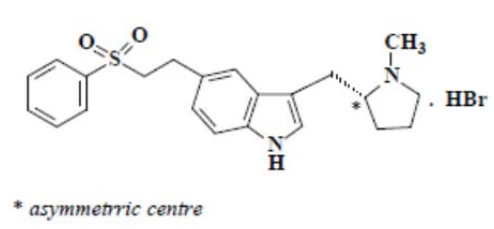
Physicochemical properties: Eletriptan an off-white to brown color powder. Freely soluble in methanol and very slightly soluble in water.
CLINICAL TRIALS
Comparative Bioavailability Studies
A double blind, randomized, two-treatment, two-sequence, two-period, crossover, single-dose oral bioequivalence study of Auro-Eletriptan Tablets 40 mg [Test; Aurobindo Pharma Limited, India manufactured for Auro Pharma Inc. (Canada)] versus RELPAX® (Eletriptan Hydrobromide Tablets) 40 mg [Reference: Pfizer Canada inc., Canada] was conducted in 36 healthy, adult, male, human subjects under fasting conditions. A summary of the bioavailability data of 36 subjects who completed the study is presented in the following table.
SUMMARY TABLE OF THE COMPARATIVE BIOAVAILABILITY DATA
| Eletriptan | ||||||
| (1 X 40 mg) | ||||||
| From measured data | ||||||
| Geometric Mean | ||||||
| Arithmetic Mean (CV %) | ||||||
| Parameter | Test* | Reference† | % Ratio of Geometric Means | 90% Confidence Interval | ||
| AUC0→t (hr. ng/mL) | 1272.3 1346.0 (33.7) | 1244.7 1326.2 (36.3) | 102.2 | 98.4 – 106.2 | ||
| AUC0→∞ (hr. ng/mL) | 1327.7 1411.9 (35.5) | 1293.4 1385.5 (38.2) | 102.6 | 98.8 – 106.6 | ||
| Cmax (ng/mL) | 187.1 202.3 (39.4) | 190.0 203.5 (36.6) | 98.5 | 91.9 – 105.5 | ||
| Tmax§ (hr) | 1.0 (0.5 – 4.0) | 1.0 (0.3 – 4.0) | ||||
| T½$ (hr) | 6.7 (31.7) | 6.5 (4.0 – 9.4) | ||||
* Auro-Eletriptan (Eletriptan hydrobromide Tablets) 40 mg, by Auro Pharma Inc.
† RELPAX® (Eletriptan hydrobromide Tablets) 40 mg, of Pfizer Canada Inc were purchased from Canada. § Expressed as the median (range) only.
$ Expressed as arithmetic mean (% CV) only.
The efficacy of eletriptan hydrobromide tablets in the acute treatment of migraine was evaluated in 7 double-blind, placebo-controlled studies in adults (n=5,992). All 7 studies used 40 mg. Six studies evaluated an 80 mg dose and 2 studies included a 20 mg dose.
In all 7 studies, randomized adult patients treated their headaches as outpatients. Patients treated in these studies were predominantly female (85%) and Caucasian (94%) with a mean age of 40 years (range 18-78). In all studies, patients were instructed to treat a moderate to severe headache. Headache response, defined as a reduction in headache severity from moderate or severe pain to mild or no pain, was assessed up to 2 hours after dosing. Secondary endpoints included pain-free response and associated symptoms (nausea, vomiting, photophobia and phonophobia).
Maintenance of response was assessed for up to 24 hours post-dose. A second dose of eletriptan hydrobromide tablets or other medication (rescue medication) was allowed 2 to 24 hours after the initial treatment for both persistent and recurrent headaches. The incidence and time to use of these additional treatments were also recorded.
In all studies, the percentage of patients achieving headache response 2 hours after treatment was significantly greater among patients receiving eletriptan hydrobromide tablets at all doses compared to those who received placebo. Headache response occurred as early as 30 minutes following dosing. The 2-hour response rates from these controlled clinical studies are summarized in Table 3.
Table 3: Percentage of Adult Patients with Headache Response (Mild or No Headache) 2 Hours
Following Treatment, from 7 Controlled Clinical Studies in Adults
| Placebo | Eletriptan hydrobromide 20 mg | Eletriptan hydrobromide 40 mg | Eletriptan hydrobromide 80 mg | |
| Study 160-314 | 23.8% (n=126) | 54.3%* (n=129) | 65.0%* (n=117) | 77.1%* (n=118) |
| Study 160-305 | 19.0% (n=232) | NA | 61.6%* (n=430) | 64.6%* (n=446) |
| Study 160-102 | 21.7% (n=276) | 47.3%* (n=273) | 61.9%* (n=281) | 58.6%* (n=290) |
| Study 160-104 | 39.5% (n=86) | NA | 62.3%* (n=175) | 70.0%* (n=170) |
| Study 160-307 | 20.6% (n=102) | NA | 53.9%* (n=206) | 67.9%* (n=209) |
| Study 160-318 | 31.3% (n=80) | NA | 63.9%* (n=169) | 66.9%* (n=160) |
| Study 160-103 | 29.5% (n=122) | NA | 57.5%* (n=492) | NA |
| * p value < 0.05 vs placebo NA Not Applicable | ||||
Comparisons of drug performance based upon results obtained in different clinical trials are never reliable. Because studies are conducted at different times, with different samples of patients, by different investigators, employing different criteria and/or different interpretations of the same criteria, under different conditions (dose, dosing regimen, etc.), quantitative estimates of treatment response and the timing of response may be expected to vary considerably from study to study.
The efficacy of eletriptan hydrobromide tablets was unaffected by the duration of attack; gender of the patient; relationship to menses; or concomitant use of estrogen replacement therapy/oral contraceptives, or frequently used migraine prophylactic drugs.
The proportion of patients achieving pain-free status (decrease in pain from moderate to severe at baseline to absence of pain) at 2 hours was statistically significant compared to placebo for patients receiving eletriptan hydrobromide at doses of either 20 or 40 mg. For patients with migraine-associated photophobia, phonophobia, and nausea, at baseline, there was a decreased incidence of these symptoms following administration of eletriptan hydrobromide tablets as compared to placebo.
Data from the placebo-controlled studies (160-102, 160-104, 160-305, 160-307, 160-314 and 160-318) showed that patients receiving eletriptan hydrobromide 20 mg, 40 mg and 80 mg, who did not
experience recurrence of headache between 2 and 24 hours post-dosing was 72%, 77% and 79%, respectively.
DETAILED PHARMACOLOGY
In Vitro Studies
In radioligand-binding studies, eletriptan has been shown to have high affinity for the human 5-HT1B (pKis of 8.00), 5-HT 1D (pKis 8.4) and 5-HT1F (pKis 7.44) receptors. Eletriptan has a 4-8 fold higher affinity for the human 5-HT1D receptors with similar affinity for the 5-HT1F receptor.
In functional studies, eletriptan is a potent partial agonist at the 5-HT1D-like receptor mediating vasoconstriction in the dog isolated vein and basilar artery. Eletriptan is a potent constrictor of the basilar artery (pEC50 7.16); it also demonstrated a 3-fold selectivity in constricting the basilar artery. The constrictor response of eletriptan was antagonized by the selective 5-HT1B/1D antagonist, GR 125, 743 at similar potency. Eletriptan contracted the human isolated cerebral (middle meningeal) artery (pEC50 7.6), however was significantly less potent in contracting the human isolated coronary artery (pEC50 5.60).
Animal Studies
As anticipated from the above effects, eletriptan displays potent 5-HT1D-like/1B agonist activity in vivo with selectivity for carotid as opposed to coronary and femoral vascular beds. Following IV 1 to 1000 μg/kg administration to the anesthetized dog, eletriptan caused dose-related decreases in carotid artery blood flow with a mean ED50 of 12 μg/kg IV (maximum reduction of 44% at 1000 μg/kg IV). In this preparation, eletriptan at doses of 1 to 1000 μg/kg IV has no-effect on coronary artery blood flow (mean ED50 62.8 μg/kg IV), it has modest selectivity for carotid over coronary blood vessels. Similarly, eletriptan does not affect femoral artery blood flow at doses which cause significant falls in carotid artery blood flow.
Eletriptan did not cause any significant change in heart rate at the doses studied, and only at the top dose of 1000 μg/kg IV did it induce a modest (13.3 mmHg) increase in blood pressure.
Hemodynamic Effects
Consistent with the high affinity of eletriptan for 5-HT1D and 5-HT1F receptors, studies in the anesthetized rat have demonstrated that eletriptan reduces neurogenic inflammation in the dura mater and, therefore, may prevent an effect which may give rise to the pain and symptoms experienced by migraineurs. In the rat, eletriptan at doses of 100 to 300 μg/kg IV, but not 30 μg/kg IV, significantly inhibits the plasma protein extravasation (PPE) induced in the dura mater by electrical stimulation of the trigeminal ganglion. In addition, eletriptan (100 μg/kg IV) reverses an ongoing PPE in the dura mater.
In anesthetized and conscious dogs, eletriptan is hemodynamically bland at doses which effectively reduce carotid artery blood flow. At substantially higher doses (eg, 1000 μg/kg IV bolus injection, 750 μg/kg over 15 min IV infusion and 1.5 mg/kg PO), eletriptan increases systolic and diastolic blood pressures, heart rate, cardiac output and dP/dt max. Overall, eletriptan produces little or no change in a number of ECG parameters measured, although some small changes in T-wave height are observed in some animals after IV but not PO administration. The opposite effects - decreases in mean arterial blood pressure, heart rate, left ventricular pressure and cardiac contractility - are observed in the anesthetized cat after IV administration of 1000 μg/kg eletriptan. This most probably reflects a species variation in response to this class of compound.
In the dog, IV-infused glyceryl trinitrate (GTN) (3 μg/kg/min for 10 min) effectively reverses the coronary artery constriction induced by the IV infusion of a high dose (20 μg/kg/min for 10 min) of eletriptan. Thus, GTN appears to be a suitable antidote should coronary artery constriction be unexpectedly or inadvertently associated with eletriptan exposure.
Eletriptan is well tolerated by mice (30 mg/kg PO and 10 mg/kg IV) and rats (30 mg/kg PO). Moreover, in a range of general pharmacological studies, eletriptan, at doses up to and including 10 mg/kg PO and 1 mg/kg IV, and concentrations of 10 μM for in vitro experiments, did not produce any sedative activity, interaction with alcohol or pentobarbitone, or affect somatic function. Eletriptan did not block beta-adrenoreceptors or cholinergic and serotonergic, or display ganglionic blocking activity.
Oral absorption of eletriptan is rapid and high in all species. Volume of distribution in rodents and dog is higher than in man, probably reflecting the higher plasma protein binding in man. Tissue distribution of drug-related radioactivity in rat is as expected for a moderately lipophilic base. In all species studied, clearance of eletriptan is via the same primary pathways of oxidative metabolism and no human-specific metabolites have been identified. In all species, including man, the majority of the dose is excreted within 48 hours, with both feces and urine being important routes of excretion. Plasma metabolite profiles are similar in animals and man with unchanged eletriptan a major component in all species.
TOXICOLOGY
Acute Toxicity
| Single Dose Studies in Mice and Rats | |||
| Route | Species & Strains | No. of Animals/Sex | Minimum Lethal Dose - mg/kg |
| IV | Swiss CD-1 Mice | 5/dose | 12.5-20 |
| IV | Sprague-Dawley CD Rats | 5/dose except 12.5 mg/kg where there were 2M | 12.5-20 |
| Oral | CD-1 Mice | 2-5/dose | 100-100 |
| Oral | Sprague-Dawley Rats | 2-5/dose | 100-100 |
Comments
In the intravenous study, 20 and 30 mg/kg in mice produced mortality in 1/10 and 2/4 animals, respectively, while the dose of 20 mg/kg was lethal to the 2 treated rats. No mortality was observed at other doses and there were no findings at necropsy.
In the oral study, an oral dose of 100 mg/kg was well tolerated by both mice and rats; there were no deaths. An oral dose of 1000 mg/kg was lethal to all the animals of both species. Death occurred within 7 minutes of dosing in mice and between 25 and 100 minutes in rats, and was preceded by a wide range of severe clinical signs, including convulsions, dyspnea and tremors in mice and dyspnea, prostration, salivation, mydriasis and tremors in rats. The only necropsy findings were gastric hemorrhage found in 3/4 rats treated with 1000 mg/kg, associated with a focus of necrosis in 1 of them.
Long-Term Toxicity
Repeated-dose studies in rats and mice produced clinical signs consistent with those seen in the single-dose studies and isolated cases of delayed death at doses of and above 200 mg/kg. Moderate adverse effects were seen at 100 mg/kg (reduction in body weight gain). From 25 mg/kg, eletriptan produced liver weight increase which was at higher doses associated with centrilobular hypertrophy. A thyroid follicular hypertrophy was seen from 5 mg/kg upwards. No adverse effects were seen in rats treated with 50 mg/kg for 6 months. The plasma exposure at this dose was at least 6.3-fold that seen at the human maximum single dose of 80 mg.
Many drugs, including 5-HT1 agonists bind reversibly at melanin-rich sites in pigmented rats, including the retina of the eye. In whole body autoradiography (WBA) studies, residual radioactivity was found in the retina of rats 24 hours after single intravenous administration of radiolabelled eletriptan (3 mg/kg), demonstrating an affinity of eletriptan and/or its metabolites to melanin.
Eletriptan did not cause mortality in dogs. Typical clinical signs were incoordination of hind limbs, hyperventilation, hyperthermia and barking, indicative, as in rodents, of a central effect of eletriptan. Transient, diffuse or focal, mostly unilateral corneal opacities were observed during the first days of studies lasting up to 1 month, but not in the subsequent 6- and 12-month studies. Exposure at the no-effect dose level of 2.5 mg/kg was approximately equal to that achieved in humans at the maximum recommended daily dose. The treatment produced dose-related increases in systolic blood pressure, which returned to near normal values over the course of the chronic studies, and heart rate increases seen throughout the treatment period.
A minimal to mild myocardial fibrosis was diagnosed histologically in 2 dogs at 5 mg/kg after 1 month and in 1 dog at 7.5 mg after 2 weeks, but was not observed in the 6- and 12-month studies. Analysis of ECGs showed inversion of negative T-waves to a more normal positive morphology in a number of studies including the 6-month study, where control dogs were also affected. In the 12-month study, increase in the height of the T-wave was recorded. In the 6-and 12-month studies, dosing was halved during the first week to avoid the cardiovascular changes seen in the 1-month study. In the 6-month study, 1/8 dogs each at 2.5 and 5 mg/kg had gastric ulceration. This was felt to be the result of high local concentrations of eletriptan released from the capsule formulation of dry powder. No mucosal changes were seen in the subsequent 12-month study when the tablet (clinical) formulation was used.
A no-effect dose level was established at 4 mg/kg, approximately 4.6 times the human exposure at the maximum single dose of 80 mg.
Carcinogenicity: Lifetime carcinogenicity studies, 104 weeks in duration, were carried out in mice and rats by administering eletriptan in the diet at doses of up to 400 mg/kg/day. In rats, the incidence of testicular interstitial cell adenomas was increased at the high dose of 75 mg/kg/day. The estimated exposure (AUC) to parent drug at that dose was approximately 6 times that achieved in humans receiving the maximum recommended daily dose (MRDD) of 80 mg, and at the no-effect dose of 15 mg/kg/day it was approximately 2 times the human exposure at the MRDD. In mice, the incidence of hepatocellular adenomas was increased at the high dose of 400 mg/kg/day. The exposure to parent drug (AUC) at that dose was approximately 18 times that achieved in humans receiving the MRDD, and the AUC at the no-effect dose of 90 mg/kg/day was approximately 7 times the human exposure at the MRDD.
Mutagenicity: Eletriptan was not mutagenic in bacterial or mammalian cell assays in vitro, testing negative in the Ames reverse mutation test and the hypoxanthineguanine phosphoribosyl transferase (HGPRT) mutation test in Chinese hamster ovary cells. It was not clastogenic in 2 in vivo mouse micronucleus assays. Results were equivocal in in vitro human lymphocyte clastogenicity tests, in which the incidence of polyploidy was increased in the absence of metabolic activation (-S9 conditions), but not in the presence of metabolic activation.
Reproduction /Sexual Function
Effects on fetal and pup weights were observed at doses that were, on a mg/m2 basis, 6 to 12 times greater than the clinical MRDD of 80 mg. The increase in structural alterations occurred in the rat and rabbit at doses that, on a mg/m2 basis, were 12 times greater than (rat) and approximately equal to (rabbit) the MRDD.
When pregnant rats were administered eletriptan during the period of organogenesis at doses of 10, 30 or 100 mg/kg/day, fetal weights were decreased and the incidences of vertebral and sternebral variations were increased at 100 mg/kg/day (approximately 12 times the MRDD on a mg/m2 basis). The 100 mg/kg dose was also maternally toxic, as evidenced by decreased maternal body weight gain during gestation. The no-effect dose for developmental toxicity in rats exposed during organogenesis was 30 mg/kg, which is approximately 4 times the MRDD on a mg/m2 basis.
When doses of 5, 10 or 50 mg/kg/day were given to New Zealand White rabbits throughout organogenesis, fetal weights were decreased at 50 mg/kg, which is approximately 12 times the MRDD on a mg/m2 basis. The incidences of fused sternebrae and vena cava deviations were increased in all treated groups. Maternal toxicity was not produced at any dose. A no-effect dose for developmental toxicity in rabbits exposed during organogenesis was not established, and the 5 mg/kg dose is approximately equal to the MRDD on a mg/m2 basis.
When female rats were treated with 5, 15 or 50 mg/kg/day during late gestation and lactation, in utero deaths were increased and pup weights were decreased postnatally at 50 mg/kg/day. The effect on pup weights persisted to adulthood. Exposure to parent drug (AUC) at that dose was approximately 4 times that achieved in humans receiving the MRDD. The 50 mg/kg/day dose was mildly maternally toxic, as evidenced by minimally decreased maternal body weight gain during gestation. The no-effect dose for developmental effects was 15 mg/kg, a dose that produced an AUC for parent drug approximately equal to that achieved in humans receiving the MRDD.
Impairment of Fertility: In a rat fertility and early embryonic development study, doses tested were 50, 100 and 200 mg/kg/day, resulting in systemic exposures to parent drug in rats, based on AUC, that were 4, 8, and 16 times MRDD, respectively, in males and 7, 14, and 28 times MRDD, respectively, in females. There was a prolongation of the estrous cycle at the 200 mg/kg/day dose due to an increase in duration of estrus, based on vaginal smears. There were also dose-related, statistically significant decreases in mean numbers of corpora lutea per dam at all 3 doses, resulting in decreases in mean numbers of implants and viable fetuses per dam. This suggests a partial inhibition of ovulation by eletriptan. There was no-effect on fertility of males and no other effect on fertility of females.
REFERENCES
- 1. Diener HC, Jansen JP, Reches A, et al. Efficacy, tolerability and safety of oral eletriptan and ergotamine plus caffeine [Cafergot®] in the acute treatment of migraine: A multicentre, randomised, double-blind, placebo-controlled comparison. Eur Neurol 2002;47:99-107.
- 2. Goadsby PJ, Ferrari MD, Olesen J, et al. Eletriptan in acute migraine: a double-blind, placebo-controlled comparison to sumatriptan. Neurology 2000;54:156-163.
- 3. Gupta P, Butler MD, Shepperson NB, et al. The in vivo pharmacological profile of eletriptan (UK-116,004): A potent and novel 5-HT(1B/1D) receptor agonist. Eur J Pharmacol 2000;398(1):73-81.
- 4. Gupta P, Scatchard J, Napier C. Characterisation of the contractile activity of eletriptan at the canine vascular 5-HT1B receptor. Eur J Pharmacol 1999;367(2-3):283-290.
- 5. Jackson NC. Experience with eletriptan (RelpaxTM). In: Humphrey P, Ferrari M, Oleson J, editors. The triptans: novel drugs for migraine (Frontiers in headache research series; v. 10). New York: Oxford University Press, 2001.
- 6. Johnson DE, Rollema H, Schmidt AW. Serotonergic effects and extracellular brain levels of eletriptan, zolmitriptan and sumatriptan in rat brain. Eur J Pharmacol 2001;425(3):203-210.
- 7. Maassen Van Den Brink AM, van den Broek RWM, De Vries R, et al. Craniovascular selectivity of eletriptan and sumatriptan in human isolated blood vessels. Neurology 2000;55(10):1524-1530.
- 8.
Matthew N, Schoenen J, Winner P, et al. Comparative Efficacy of Eletriptan 40 mg versus
Sumatriptan 100 mg. Headache 2003;43:214-222.
- 9.
Milton KA, Scott NR, Allen MJ, et al. Pharmacokinetics, pharmacodynamics, and safety of the
5-HT1B/1D agonist eletriptan following intravenous and oral administration. J Clin Pharmacol 2002;42(5):528-539.
- 10. Morgan P, McCleverty P, McHarg A, et al. The relevance of hepatic intrinsic clearance and brain penetration on the doses used for 5-HT agonists (triptans) in the treatment of migraine. In: Humphrey P, Ferrari M, Oleson J, editors. The triptans: novel drugs for migraine (Frontiers in headache research series; v. 10). New York: Oxford University Press, 2001.
- 11. Napier C, Stewart M, Melrose H, et al. Characterisation of the 5-HT receptor binding profile of eletriptan and kinetics of [sup 3H]eletriptan binding at human 5-HT(1B) and 5-HT(1D) receptors. Eur J Pharmacol 1999;368(2-3):259-268.
- 12. Sandrini G, Färkkilä M, Burgess G, et al. Eletriptan vs sumatriptan. A double-blind, placebo-controlled, multiple migraine attack study. Neurology 2002;59:1210-1217.
- 13. Shah AK, Harris SC, Greenhalgh C, et al. The pharmacokinetics and safety of single escalating oral doses of eletriptan. J Clin Pharmacol 2002;42(5):520-527.
- 14. Shah AK, LaBoy-Goral L, Scott N, et al. Pharmacokinetics and safety of oral eletriptan during different phases of the menstrual cycle in healthy volunteers. J Clin Pharmacol 2001;41(12):1339-1344.
- 15. Sheftell F, Ryan R and Pitman V. Efficacy, safety and tolerability of oral eletriptan for treatment of acute migraine: a multicenter, double-blind, placebo-controlled study conducted in the U.S. Headache 2003;43:202-213.
- 16. Stark R, Dahlöf C, Haughie S, et al. Efficacy, safety and tolerability of oral eletriptan in the acute treatment of migraine: results of a phase III, multicentre, placebo-controlled study across three attacks. Cephalalgia 2002;22(1):23-32.
- 17.
Product Monograph – PrRELPAX® (eletriptan hydrobromide). Pfizer Canada Inc. Control No.
167621 Date of Revision: November 26, 2013.