


Product Monograph - Auro-Famotidine 10 mg
RECENT MAJOR LABEL CHANGES
| 9: Drug Interactions, Section 9.4: Drug-Drug Interactions | [06/2025] |
|---|
TABLE OF CONTENTS
Sections or subsections that are not applicable at the time of authorization are not listed.
RECENT MAJOR LABEL CHANGES…………………………………………………………………………………………..2
TABLE OF CONTENTS ............................................................................................................... 2
PART I: HEALTH PROFESSIONAL INFORMATION ................................................................... 4
1 INDICATIONS ..................................................................................................................... 4
1.1 Pediatrics ................................................................................................................. 4
1.2 Geriatrics ................................................................................................................. 4
2 CONTRAINDICATIONS ....................................................................................................... 4
4 DOSAGE AND ADMINISTRATION ....................................................................................... 4
4.1 Dosing Considerations ............................................................................................. 4
4.2 Recommended Dose and Dosage Adjustment ......................................................... 4
5 OVERDOSAGE .................................................................................................................... 5
6 DOSAGE FORMS, STRENGTHS, COMPOSITION AND PACKAGING ....................................... 6
7 WARNINGS AND PRECAUTIONS ........................................................................................ 7
7.1 Special Populations .................................................................................................. 8
7.1.1 Pregnant Women .................................................................................................. 8
7.1.2 Breast-feeding ...................................................................................................... 8
7.1.3 Pediatrics .............................................................................................................. 8
7.1.4 Geriatrics .............................................................................................................. 8
8 ADVERSE REACTIONS ........................................................................................................ 9
8.1 Adverse Reaction Overview ..................................................................................... 9
8.2 Clinical Trial Adverse Reactions ............................................................................... 9
8.3 Less common clinical Trial Adverse Drug Reactions ................................................. 9
8.4 Abnormal Laboratory Findings: Hematologic, Clinical Chemistry and Other Quantitative Data .............................................................................................. 10
8.5 Post-Market Adverse Reactions ............................................................................. 10
9 DRUG INTERACTIONS ...................................................................................................... 12
9.2 Drug Interactions Overview ................................................................................... 12
9.3 Drug-Behavioural Interactions ............................................................................... 12
9.4 Drug-Drug Interactions .......................................................................................... 12
9.5 Drug-Food Interactions .......................................................................................... 13
9.6 Drug-Herb Interactions .......................................................................................... 13
9.7 Drug-Laboratory Test Interactions ......................................................................... 13
10 CLINICAL PHARMACOLOGY ........................................................................................... 13
10.1 Mechanism of Action ........................................................................................... 13
10.2 Pharmacodynamics .............................................................................................. 14
10.3 Pharmacokinetics ................................................................................................. 15
11 STORAGE, STABILITY AND DISPOSAL ............................................................................. 17
PART II: SCIENTIFIC INFORMATION .................................................................................... 18
13 PHARMACEUTICAL INFORMATION ................................................................................ 18
14 CLINICAL TRIALS ............................................................................................................ 19
14.1 Trial Design and Study Demographics .................................................................. 19
14.2 Study Results ....................................................................................................... 19
14.3 Comparative Bioavailability Studies ..................................................................... 19
15 MICROBIOLOGY ............................................................................................................. 21
16 NON-CLINICAL TOXICOLOGY .......................................................................................... 21
- 17. SUPPORTING PRODUCT MONOGRAPH ......................................................................... 22
PATIENT MEDICATION INFORMATION ............................................................................... 23
PATIENT MEDICATION INFORMATION ............................................................................... 27
PART I: HEALTH PROFESSIONAL INFORMATION
1 INDICATIONS
Auro-Famotidine 10 mg, Auro-Famotidine 20 mg and Auro-Famotidine Mint 20 mg (famotidine tablets USP) is indicated for:
- the treatment of conditions where a controlled reduction of gastric secretion is required, such as acid indigestion, heartburn, sour or upset stomach;
- the prevention of acid indigestion, heartburn, sour or upset stomach when associated with the consumption of food and/or beverage including nocturnal symptoms associated with the evening meal and expected to cause sleep disturbance.
1.1 Pediatrics
Pediatrics (<12 years of age):
Safety and effectiveness in children have not been established. Famotidine tablets USP should not be administered to children under 12 years of age.
1.2 Geriatrics
No dosage adjustment is required based on age (see 10.3 Pharmacokinetics).
2 CONTRAINDICATIONS
- Famotidine is contraindicated in patients who are hypersensitive to this drug or to any ingredient in the formulation, including any non-medicinal ingredient, or component of the container. For a complete listing, see 6 DOSAGE FORMS, STRENGTHS, COMPOSITION AND PACKAGING.
- Cross-sensitivity has been observed between H2-receptor antagonists. Therefore, Famotidine tablets USP should not be taken by individuals with a history of hypersensitivity to other drugs in this class of compounds.
4 DOSAGE AND ADMINISTRATION
4.1 Dosing Considerations
- Antacids may be given concomitantly if needed. It is not appropriate to use this product and other H2 Receptor Antagonists concomitantly
4.2 Recommended Dose and Dosage Adjustment
Adult and children 12 years of age or older:
| Auro-Famotidine 10 mg (10 mg Famotidine) | For symptom relief: one tablet (10 mg), as required. For prevention of acid-related symptoms associated with the consumption of food and/or beverage: one tablet (10 mg) 10 – 15 minutes before eating food or drinking beverages that cause heartburn. Tablet to be swallowed whole with a glass of water. Repeat if symptoms return, up to a maximum of 2 tablets (20 mg in total) in a 24-hour period. Therapy should not exceed two weeks of continuous treatment without medical consultation. |
|---|---|
| Auro-Famotidine 20 mg and Auro-Famotidine Mint 20 mg (20 mg Famotidine) | For relief of heartburn, acid indigestion and sour or upset stomach: The patient should take one tablet (20 mg). To prevent these symptoms, one tablet should be taken 10 – 15 minutes before eating food or drinking beverages that cause heartburn. Tablet to be swallowed whole with a glass of water. The patient should not take more than 1 tablet at a time and the patient should not take more than two tablets (40 mg in total) in 24 hours. Therapy should not exceed two weeks of continuous treatment without medical consultation. |
Dosage Adjustment for Patients with Moderate or Severe Renal Insufficiency:
Patients with severe kidney disease should consult a physician before commencing therapy with Famotidine tablets USP. A dosage adjustment may be necessary in patients with moderate or severe renal impairment (creatinine clearance less than 60 mL/min/1.48m2). In patients with moderate (creatinine clearance 30 – 50 mL/min), the elimination half-life of famotidine is increased. For patients with severe renal insufficiency, it may exceed 20 hours, reaching approximately 24 hours in anuric patients. Since CNS adverse reactions have been reported in patients with moderate and severe renal insufficiency, to avoid excess accumulation of the drug in patients with moderate or severe renal insufficiency, the dose of famotidine may be reduced to half the dose or the dosing interval may be prolonged to 36-48 hours as indicated by the patient's clinical response. Health Canada has not authorized an indication for pediatric use. See 1.1 Pediatrics above.
5 OVERDOSAGE
There is no experience to date with deliberate overdosage. Doses of up to 800 mg/day have been employed in patients with pathological hypersecretory conditions with no serious adverse effects. In the event of overdosage, treatment should be symptomatic and supportive. Unabsorbed material should be removed from the gastrointestinal tract, the patient should be monitored, and supportive therapy should be employed.
The oral LD50 of famotidine in male and female rats and mice was >5000 mg/kg.
Intentional exposure is defined as a purposeful action in patients who use a substance inappropriately for self-destructive or manipulative reasons, including suicides, suicide gestures, and attempts. The inappropriate use of famotidine (single agent) or with other agents for suicide attempts is very uncommon. There have been no reports that identified an overdose fatality with famotidine (single agent) or taken with other agents. For all overdose exposures, the duration of clinical effects, considered moderate or major, resolved in ≤3 days, the large majority and single- agent famotidine exposures resolved in ≤ 24 hours.
According to data from the Toxic Exposure Surveillance System (TESS) of the American Association of Poison Control Centers (AAPCC), of the single-agent famotidine exposures, the most common cardiovascular symptom was tachycardia (0.3%). For neurological symptoms, the proportions of subjects who experienced drowsiness/lethargy was 1.5%; headache, 0.6%; dizziness/vertigo, 1.0%; and agitated/irritable, 0.5%. Abdominal pain (1.9%), nausea (1.2%), vomiting (1.6%), and diarrhea (1.0%) were observed as gastrointestinal side effects. It is not known the extent to which the use of an emetic in hospital emergency rooms may have contributed to the occurrence of the symptoms nausea and vomiting.
For management of a suspected drug overdose, contact your regional poison control centre.
6 DOSAGE FORMS, STRENGTHS, COMPOSITION AND PACKAGING
Table – Dosage Forms, Strengths, Composition and Packaging
| Route of Administration | Dosage Form / Strength/Composition | Non-medicinal Ingredients |
|---|---|---|
| Oral | Film Coated Tablets 10 mg, 20 mg and 20 mg cool mint flavor | 10 mg: Carnauba wax, corn starch, hydroxypropylcellulose, hypromellose, iron oxide red magnesium stearate, microcrystalline cellulose, sodium starch glycolate, talc, titanium dioxide 20 mg: Carnauba wax, corn starch, hydroxy propyl cellulose, hypromellose, iron oxide red, iron oxide yellow, magnesium stearate, microcrystalline cellulose, sodium starch glycolate, talc, titanium dioxide. 20 mg cool mint: Cooling flavor QJ-739-475-8, corn starch, hypromellose (Substitution type 2910) methocel E5 premium LV, magnesium stearate, microcrystalline cellulose, mint flavor SC564257, sodium starch glycolate and sucralose. Coating material: FD&C blue # 1/brilliant blue FCF aluminum lake, FD&C yellow #5/Tartrazine Aluminum Lake, HPMC 2910/ Hypromellose, hydroxypropyl cellulose, talc and titanium Dioxide. |
Auro-Famotidine 10 mg (famotidine) 10 mg film-coated tablets are pink, round shaped, biconvex, film coated tablets debossed with ‘CC’ on one side and ‘58’ on the other side. Available in HDPE bottle packs: 30’s, 50’s, 70’s, 2x70’s, 85’s, 90’s, 100’s, 140’s and 500’s count and Blister packs: 1x8’s, 5x6’s, 10x6’s, 3x10’s and 6x10’s.
Auro-Famotidine 20 mg (famotidine) 20 mg film-coated tablets yellow, rounded square shaped, biconvex, film coated tablets debossed with ‘CC’ on one side and ‘59’ on the other side. Available in HDPE bottle packs: 25’s, 30’s, 50’s, 70’s, 2x70’s, 85’s, 90’s, 100’s, 140’s and 500’s count and Blister packs: 1x8’s, 5x5’s, 10x5’s, 1x10’s and 5x10’s.
Auro-Famotidine Mint 20 mg (famotidine) 20 mg film-coated tablets Bluish-green, rounded square shaped, biconvex, film coated tablets debossed with ‘FC’ on one side and ‘20’ on other side of tablet. Tablets are free from physical defects. Available in HDPE bottle packs: 25’s, 48’s, 50’s, 365’s, & 1000’s count. and Blister packs: 22x8’s.
7 WARNINGS AND PRECAUTIONS
General
In clinical trials, patients with other underlying acid gastrointestinal diseases (e.g. duodenal ulcer, gastric ulcer) did not experience complications; in general, they did not exhibit a clinically significant deterioration in their condition. However, if patients have difficulty swallowing, pain on swallowing, unexpected weight loss, severe vomiting, melaena (black stools), choking, chest pain, or if abdominal discomfort persists, patients should consult a physician to determine the underlying cause. Symptomatic response to therapy with Famotidine tablets USP does not preclude the presence of gastric malignancy.
Patients with severe coexisting illness should consult a physician before commencing therapy with Auro-Famotidine 10 mg, Auro-Famotidine 20 mg and Auro-Famotidine Mint 20 mg.
Patients consuming nonsteroidal anti-inflammatory drugs may have dyspepsia as a side effect of these medicines and should consult a physician or a pharmacist before taking Famotidine tablets USP.
Patients over 40 who are experiencing heartburn for the first time and patients who have noticed unintentional weight loss should consult a physician before using the product.
Further medical evaluation is required if therapy exceeds two weeks of continuous treatment, if two 14- day courses of treatment are needed at intervals of less than 6 weeks, or if heartburn is frequent (>3 times per week) and/or severe.
Driving and Operating Machinery
In very rare cases, some patients have experienced adverse reactions such as dizziness and somnolence while taking famotidine. Patients should be informed that they should avoid driving vehicles, operating machinery or doing activities which require prompt vigilance if they experience these symptoms.
Gastrointestinal
Patients with a previous history of ulcer disease complications, those who are experiencing unintended weight loss in association with dyspeptic symptoms, and those who are middle-aged or older with new or recently changed dyspeptic symptoms should consult a physician before commencing therapy with Famotidine tablets USP.
Renal
Patients with severe kidney disease should consult a physician before commencing therapy with Famotidine tablets USP. A dosage adjustment may be necessary in patients with moderate or severe renal impairment (creatinine clearance less than 60 mL/min/1.48m2).
Since CNS adverse effects have been reported in patients with moderate and severe renal insufficiency, longer intervals between doses or lower doses may need to be used in patients with moderate (creatinine clearance 30-50 mL/min) or severe (creatinine clearance <30 mL/min) renal insufficiency to adjust for the longer elimination half-life of famotidine (see 10.3 Pharmacokinetics, 4 DOSAGE AND ADMINISTRATION, Dosage Adjustment for Patients with Moderate or Severe Renal Insufficiency).
7.1 Special Populations
7.1.1 Pregnant Women
Reproductive studies have been performed in rats and rabbits at oral doses of up to 2000 and 500 mg/kg/day, respectively (approximately 2500 and 625 times the maximum recommended prescription human dose [80 mg], respectively), and have revealed no evidence of impaired fertility or harm to the fetus due to famotidine.
There are, however, no adequate or well-controlled studies in pregnant women. Since the safe use of famotidine tablets in pregnant women has not been established, pregnant women should not use Famotidine 10 mg, Auro-Famotidine 20 mg and Auro-Famotidine Mint 20 mg unless directed otherwise by a physician. This product should not be used during pregnancy unless the potential benefit of treatment to the mother outweighs the possible risks to the developing fetus.
7.1.2 Breast-feeding
Famotidine is detectable in human milk. Nursing mothers should either stop this drug or should stop nursing.
7.1.3 Pediatrics
Safety and effectiveness in children have not been established. Famotidine tablets USP should not be administered to children under 12 years of age.
7.1.4 Geriatrics
No dosage adjustment is required based on age (see 10.3 Pharmacokinetics). This drug is known to be substantially excreted by the kidney, and the risk of toxic reactions to this drug may be greater in patients with impaired renal function. Because elderly patients are more likely to have decreased renal function, care should be taken in dose selection, and it may be useful to monitor renal function. (see 7 WARNINGS AND PRECAUTIONS – Renal and 4.2 Dosage Adjustment for Patients with Moderate or Severe Renal Insufficiency).
8 ADVERSE REACTIONS
8.1 Adverse Reaction Overview
Famotidine has been demonstrated to be generally well tolerated.
8.2 Clinical Trial Adverse Reactions
Clinical trials are conducted under very specific conditions. The adverse reaction rates observed in the clinical trials; therefore, may not reflect the rates observed in practice and should not be compared to the rates in the clinical trials of another drug. Adverse reaction information from clinical trials may be useful in identifying and approximating rates of adverse drug reactions in real-world use.
Famotidine 10 mg: Adverse reactions reported in > 1% of patients were headache and dizziness. These occurred with comparable frequency in patients treated with placebo. Adverse Drug Reactions were evaluated in 28 clinical trials with more than 13, 000 patients.
Famotidine 20 mg: The following adverse reactions have been reported in >=1% of patients using Famotidine 20 mg, in controlled clinical trials (prevention or treatment): headache (6.9%), diarrhea (2.9%), upper respiratory infection (2.9%), vomiting (2.4%), constipation (2.0%), nausea (2.0%), pharyngitis (2.0%), flu-like illness (1.6%), back pain (1.2%) and rash (1.2%). These occurred with comparable frequency across treatment groups and control groups.
8.3 Less common clinical Trial Adverse Drug Reactions
Other reactions reported in patients using famotidine 20 mg in controlled clinical trials at rates <1%. These observations are listed.
Body as a Whole / Site Unspecified 1.0%
Asthenia/Fatigue 0.1%
Pain -abdominal 0.3%
Pain -chest 0.1%
Each of the following at <0.1%: fever, infection-viral, pain-pelvic
Cardiovascular System 0.2%
Each of the following at <0.1%: extravasation, premature atrial contraction, premature ventricular contraction
Digestive System 1.7%
Dyspepsia 0.1%
Each of the following at <0.1%: erosive esophagitis, esophagitis, gingivitis and glossodynia
Musculoskeletal System 0.5%
Myalgia 0.1%
Pain - shoulder 0.1%
Each of the following at <0.1%: pain-foot, pain-knee, pain-neck
Nervous System and Psychiatric 2.4%
Anxiety 0.1%
Dizziness 0.1%
Each of the following at <0.1%: agitation, migraine
Respiratory System 1.3%
Sinusitis 0.1%
Each of the following at <0.1%: bronchitis, congestion -nasal, cough, dry throat, influenza, sinus disorder, sneezing, wheezing.
Skin and Skin Appendages 0.4%
Each of the following at <0.1% edema - angioneurotic, infection -skin, laceration, measles.
Special Senses 0.2%
Each of the following at <0.1%: eustachian tube disorder, hemorrhage- corneal, pain-ear.
Urogenital System 0.4%
Mass, breast 0.1%
Each of the following at <0.1%: benign prostatic hypertrophy, dysuria, hematuria, impotence, menstruation disorder, urinary frequency
8.4 Abnormal Laboratory Findings: Hematologic, Clinical Chemistry and Other Quantitative Data
Clinical Trial Findings
Laboratory parameters may be affected during treatment with famotidine 10 mg, but the changes are usually not considered serious. Among the laboratory changes that were reported during clinical trials were increases in AST, ALT, BUN, and WBC count and serum creatinine, and decreases in hemoglobin and hematocrit. These changes were rarely of clinical significance. No famotidine-treated patients/subjects had to be discontinued from therapy because of laboratory adverse experiences.
8.5 Post-Market Adverse Reactions
During marketed use of prescription doses of famotidine, the following adverse reactions have been reported: urticaria, liver enzymes abnormalities, cholestatic jaundice, asthenia, fatigue, abdominal discomfort and pain, abdominal pain upper, diarrhea, dry mouth, nausea, vomiting, rash, hypersensitivity, anaphylaxis, angioedema, malaise, and somnolence. Toxic epidermal necrolysis has been reported very rarely with H2 receptor antagonists. As with other H2-receptor antagonists, cases of bradycardia, A-V block and other arrhythmia have been reported rarely in patients treated with famotidine.
The following adverse reactions have been reported, however, a causal relationship to therapy with famotidine 10 mg has not been established: agitation, confusion, hallucinations, depression, disorientation, mental disorder, insomnia, psychotic disorder, pruritus, alopecia, photosensitivity, Steven Johnson syndrome, hypotrichosis, neutropenia, anaemia, paraesthesia, dysgeusia, convulsions, syncope, grand mal seizures, rare cases of impotence, thrombocytopenia, pancytopenia, leukopenia, bone marrow depression and agranulocytosis.
Gynecomastia has been reported rarely. In most cases that were followed up, it was reversible after discontinuing treatment.
Adverse drug reactions (ADRs) identified during Post-marketing experience with famotidine are included in Table 1 below. The frequencies are provided according to the following convention based on spontaneous reporting rates:
Very common ≥1/10
Common ≥1/100 and <1/10
Uncommon ≥ 1/1000 and < 1/100
Rare ≥1/10,000 and < 1/1,000
Very rare <1/10,000
Not known (cannot be estimated from the available data)
Table 1: Adverse Drug Reactions Identified during Post-Marketing Experience with Famotidine for OTC use by Frequency Category Estimated from Clinical Trials
SOC
Adverse Event Preferred Term Frequency Category
Clinical Trials Spontaneous Reporting Rates
Nervous System Disorders
Dizziness
Asthenia, Fatigue
Somnolence
Uncommon* Uncommon*
Rare*
Very rare
Very rare
Very rare
Gastrointestinal Disorders
Abdominal discomfort and pain
Uncommon*
Very rare
Abdominal pain upper
Not known
Very rare
Diarrhea
Uncommon*
Very rare
Dry mouth
Rare*
Very rare
Nausea
Uncommon*
Very rare
Vomiting
Uncommon
Very rare
Skin and Subcutaneous Tissue Disorders
Pruritus
Rash
Urticaria
Rare*
Uncommon*
Not known
Very rare
Very rare
Very rare
Immune System Disorders
Hypersensitivity
Not known
Very rare
Anaphylactic reaction
Not known
Very rare
Angioedema
Not known
Very rare
General Disorders and Administrative Site Conditions
Malaise Not known Very rare
*not significantly greater than Placebo (p<0.05)
In the above table, ADRs in the first frequency category column are presented based on incidence in adequately designed clinical trials or epidemiology studies, if available, or when incidence is unavailable, frequency category is listed as ‘Not known’. In the second frequency category column the same ADRs are presented frequency categories estimated from spontaneous reporting rates where the numerator represents total number reported Company Adverse Events under given Preferred Terms or medical concept and denominator represents exposure data calculated from sales data.
9 DRUG INTERACTIONS
9.2 Drug Interactions Overview
Studies with famotidine in man, in animal models, and in vitro have shown no significant interference with the disposition of compounds metabolized by the hepatic microsomal enzymes, e.g., cytochrome P450 system. Compounds tested in man have included warfarin, theophylline, phenytoin, diazepam, aminopyrine and antipyrine. Indocyanine green as an index of hepatic blood flow and/or hepatic drug extraction has been tested and no significant effects have been found.
Concomitant use of aluminum hydroxide/magnesium hydroxide at commonly used doses, does not influence the pharmacodynamics or bioavailability of famotidine tablets USP. Famotidine does not affect gastric alcohol dehydrogenase and, consequently, blood ethanol levels.
9.3 Drug-Behavioural Interactions
Interactions with behaviour have not been established.
9.4 Drug-Drug Interactions
Patients should consult a physician before using this product together with any of the following drugs:
Posaconazole oral suspension and Itraconazole:
Concomitant use of famotidine with antifungal agents posaconazole oral suspension and itraconazole results in significantly reduced peak and trough plasma concentrations of posaconazole oral suspension and itraconazole, which may result in reduced antifungal efficacy.
Calcium carbonate:
The hypophosphatemic effect of calcium carbonate is attenuated with concomitant use of H2- antagonists in patients undergoing chronic hemodialysis.
Tyrosine kinase inhibitors (TKIs):
Co–administration of famotidine with the TKIs dasatinib, erlotinib, gefitinib, pazopanib may decrease plasma concentrations of TKIs resulting in lower efficacy, therefore co-administration of famotidine with these TKIs is not recommended. For further specific recommendations please refer to the product information of individual TKI medicinal products
9.5 Drug-Food Interactions
Interactions with food have not been established.
9.6 Drug-Herb Interactions
Interactions with herbal products have not been established.
9.7 Drug-Laboratory Test Interactions
Interactions with laboratory tests have not been established.
10 CLINICAL PHARMACOLOGY
10.1 Mechanism of Action
Famotidine is a competitive inhibitor of histamine H2-receptors. The primary clinically important pharmacologic activity of famotidine tablets USP is inhibition of gastric juice secretion. Famotidine tablets USP reduces the acid and pepsin content, as well as the volume, of basal, nocturnal, and stimulated gastric secretion.
In Vitro & Animal Data:
Famotidine is a specific, competitive, H2 receptor antagonist. There was no effect in vitro on responses mediated by H1-histamine, beta1-adrenergic, or cholinergic receptors. Famotidine was inactive in radioligand binding to dopaminergic, neuroleptic, serotonergic, adrenergic, cholinergic, and purinergic sites. Famotidine was also inactive in an androgen receptor assay.
The interaction between famotidine and H2-receptors is tissue-dependent. In guinea pig lungs and rabbit gastric glands the effects of famotidine were surmountable and readily reversible on washout, indicating classic competitive inhibition at the H2 receptor sites. However, in guinea pig atria, famotidine acted as a non-competitive H2 antagonist, and recovery after washout of famotidine was retarded.
10.2 Pharmacodynamics
In both normal volunteers and hypersecretors, famotidine inhibited basal nocturnal and daytime gastric secretion. The duration of effect is up to 12 hours. In addition famotidine inhibits acid secretion stimulated by a variety of stimuli, such as pentagastrin and food.
Famotidine 10 mg: After oral administration, a dose-response relationship was clearly demonstrated from 0.5 and 10 mg famotidine in terms of raising gastric pH between and after meals.
Famotidine doses of 2.5 to 10 mg were demonstrated to produce a statistically significant effect on gastric pH as compared to placebo. The onset of effect for the 5 and 10 mg doses was seen at approximately 1.5 hours postdose while that of the 2.5 mg dose was not seen until 2.5 hours postdose. The maximum effect, as measured by peak mean pH value, occurred at 3.5 hours. Famotidine was well-tolerated at these dose levels. Pharmacodynamic data from nighttime studies show that the activity of the 10 mg dose continues for up to 12 hours postdose.
Fasting and postprandial serum gastrin levels may be slightly elevated during periods of drug antisecretory effect, and with chronic therapy an increase in gastric bacterial flora may occur. Gastric emptying and exocrine pancreatic function are not affected by famotidine.
Famotidine 20 mg: After oral administration, a dose-response relationship was clearly demonstrated from 10 mg and 20 mg famotidine in terms of raising gastric pH between and after meals. Famotidine doses of 10 mg and 20 mg were demonstrated to produce a statistically significant effect on gastric pH as compared to placebo. The maximum effect as measured by AUC (intragastric pH/hour) was seen with famotidine 20 mg. The mean AUC for 20 mg famotidine, 10mg famotidine and placebo were 2.64, 2.13 and 1.35 respectively. The maximum effect as measured by percentage of intragastric pH values >3 (12 hour interval) was seen with famotidine 20mg. The values for 20mg famotidine, 10mg famotidine and placebo were 32.65%, 21.37% and 5.83% respectively. Famotidine was well-tolerated at all dose levels.
Fasting and postprandial serum gastrin levels may be slightly elevated during periods of drug antisecretory effect, and with chronic therapy an increase in gastric bacterial flora may occur. It has been postulated that H2RAs and proton pump inhibitors (PPIs) could increase susceptibility to pulmonary infections by increasing gastric pH. However the safety surveillance database does not support this issue would be a concern when famotidine 20mg is used acutely as directed in the management of heartburn. Gastric emptying and exocrine pancreatic function are not affected by famotidine.
Systemic pharmacologic effects of famotidine involving the CNS, cardiovascular, respiratory or endocrine systems have not been found to date.
Animal Data:
Famotidine inhibits gastric secretion evoked by histamine and other secretagogues. In dogs, the ED50 was 0.03 mg/kg after oral or intravenous administration of famotidine. An oral dose of 2.1 mg/kg in dogs inhibited gastric secretion for at least 24 hours. An oral dose of 3 mg/kg one hour prior to feeding inhibited the acid response in dogs during a 4-hour post-feeding period by an average of 96%.
Gastrointestinal Effects other than Antisecretory: Famotidine prevented gastric erosions induced in rats by cold restraint, water immersion, pyloric ligation, or drugs such as acetylsalicylic acid, histamine or prednisolone; also duodenal ulcers caused by cysteamine and mepirizole. It also significantly accelerated the healing of the gastric lesions induced by acetic acid and the duodenal ulcers produced by mepirizole.
The antiulcer effect of famotidine plus magnesium and aluminum hydroxides was greater than the sum of the effects of these drugs used separately.
Famotidine inhibited the gastric lesions and hemorrhage resulting from blood removal and histamine injection in anesthetized rats.
In normal rats, famotidine had no effect on the concentration of gastric mucosal histamine, but it did reduce the levels of cAMP, particularly in response to histamine stimulation.
In anaesthetized cats, famotidine had no effect on the intragastric electropotential when tested at intragastric doses more than ten-fold greater than those required to block gastric secretion maximally.
Cardiorenal Effects: The cardiorenal effects of famotidine were studied in dogs and rats. Ten mg/kg of famotidine administered orally were without effect on the blood pressure of spontaneously hypertensive rats. In anaesthetized dogs, intravenous administration of 1.0 and 4.0 mg/kg of famotidine was without effect on cardiovascular parameters relating to the autonomic nervous system, blood pressure, heart rate, or respiratory function. In conscious dogs, an oral dose of 10 mg/kg was without diuretic effect.
Central Nervous System Effects: The effects of famotidine on the central nervous system were studied in squirrel monkeys, mice, and cats. In monkeys famotidine had a bidirectional effect on lever pressing (avoidance response) causing an increase at the low dose (1.0 mg/kg p.o.) and a small decrease at 9 mg/kg. In mice following intraperitoneal administration of 6 to 150 mg/kg no overt behavioral signs or symptoms of central nervous system activity were observed. In mice famotidine was not active as an antagonist of the CNS actions of TRH, neurotensin, substance P, or amphetamine.
Famotidine was free of major or minor tranquilizing, anticonvulsant, anticholinergic, ganglionic blocking, or dopaminergic activity. In cats, famotidine did not affect the EEG or arousal response but did prolong the duration of hippocampal after-discharge. Only 4% of the plasma concentration of the drug was detected in the cerebrospinal fluid.
10.3 Pharmacokinetics
Absorption
Famotidine is incompletely absorbed.
Famotidine exhibits a linear pharmacokinetic profile for AUC and gastric pH in the 5- to 40-mg range. In this same range, associations have been demonstrated between mean plasma famotidine concentrations and mean inhibition of meal-stimulated acid secretion. However “area under the gastric pH-time curve” has not been shown to be directly associated or correlated with heartburn relief.
Clinical studies have demonstrated that: famotidine 20 mg prevents heartburn in patients with moderate to severe symptoms when taken before a meal. A dose response is demonstrated between 10 mg famotidine and 20 mg famotidine in successfully preventing acid-related symptoms and effectively relieving heartburn.
Animal Data:
The absorption of famotidine was studied in two animal species. Absorption was 28% in the rat and 43% in the dog.
Distribution:
The bioavailability of oral doses is 40-45%. Bioavailability of famotidine may be slightly increased by food; however, this effect is of no clinical significance.
Animal Data:
The distribution of famotidine was studied in two animal species. The plasma half-life in dogs was 2.5 hours, which was unchanged after repeated doses, indicating no tendency for the drug to accumulate. In rats, the highest levels of radioactivity after an oral dose of famotidine were found in the gastrointestinal tract, kidneys, liver, submandibular glands, arteries, epiphyseal membrane, fascia, and uvea. The distribution pattern was not affected on repeated dosing.
Famotidine did not effectively cross the blood-brain or placental barrier of rats. It was present in rat milk.
Metabolism:
Famotidine undergoes minimal first-pass metabolism. After oral doses, peak plasma levels occur in 1-3 hours. Cmax values of 41 ng/mL and 40 ng/mL for the 10 mg film-coated tablets and the 10 mg chewable tablets, respectively, were found in one bioequivalence study.
Plasma levels after multiple doses are similar to those after single doses in studies where patients received 20 mg famotidine b.i.d. (8 a.m. and 5 p.m.) intravenously for a total of 15 doses, the last dose being administered in the morning of Day 8. Fifteen to 20% of famotidine in plasma is protein bound.
In Vitro & Animal Data:
The only metabolite of famotidine in rat and dog urine was the sulfoxide derivative, which was present in minor amounts.
Effects on Liver Microsomal Drug-Metabolizing Enzymes:
Famotidine did not affect pentobarbital or hexobarbital sleeping times and it did not affect ascorbic acid excretion, suggesting that famotidine does not induce drug-metabolizing enzymes. Famotidine caused none of the changes induced by cimetidine on the pharmacokinetics of diazepam, warfarin, and propranolol. Famotidine produced only minimal suppression of aminopyrine and diazepam N-demethylase activity in vitro, and showed little affinity for testosterone hydroxylases of mouse liver in vitro.
Elimination
Famotidine has an elimination half-life of 2.5-3.5 hours. Famotidine is eliminated by renal (65- 70%) and metabolic (30-35%) routes. Renal clearance is 250-450 mL/min., indicating some tubular excretion.
Twenty-five to 30% of an oral dose and 65-70% of an intravenous dose are recovered in the urine as unchanged compound. The only metabolite identified in man is the S-oxide. There is a close relationship between creatinine clearance values and the elimination half-life of famotidine.
Animal Data:
Urinary and fecal excretion of radioactivity in rats accounted for 28% and 70%, respectively, of an oral dose, compared to 83% and 17% respectively, of an intravenous dose. About 2.4% of the dose in rats was excreted in the bile. Dogs excreted 45% of an oral dose in the urine, compared to 100% of an intravenous dose.
Special Populations and Conditions
- Geriatrics: In elderly patients, there are no clinically significant age-related changes in the pharmacokinetics of famotidine. However, in elderly patients with decreased renal function, the clearance of the drug may be decreased (see 7 WARNINGS AND PRECATIONS– Renal and 4.2 Dosage Adjustment for Patients with Moderate or Severe Renal Insufficiency).
- Sex: Serum prolactin levels do not rise after intravenous bolus doses of 20 mg of famotidine and no antiandrogenic effects have been detected.
Renal Insufficiency: In patients with severe renal insufficiency, i.e., creatinine clearance less than 30mL/min., elimination half-life of famotidine may exceed 20 hours (see 4 DOSAGE AND ADMINISTRATION).
Since renal excretion is the principal route of elimination, toxic concentrations may occur in persons with renal failure (see 4 DOSAGE AND ADMINISTRATION).
11 STORAGE, STABILITY AND DISPOSAL
Store at room temperature (15ºC - 30ºC). Protect from moisture.
PART II: SCIENTIFIC INFORMATION
13 PHARMACEUTICAL INFORMATION
Drug Substance
Proper name: Famotidine
Chemical name: [1-amino-3-[[[2-[(diaminomethylene) amino]-4-thiazolyl] methyl]thio]propylidene]sulfamide
(or)
Propanimidamide, N’-(aminosulfonyl)-3-[[[2-[(diaminomethylene) amino]-4-thiazolyl] methyl] thio]-
(or)
3-[[2-(diaminomethyleneamino) thiazol-4-yl] methylthio]-N’ -sulfamoylpropanimidamide
Molecular formula and molecular mass: C8H15N7O2S3 / 337.45 g/mol
Structural formula:
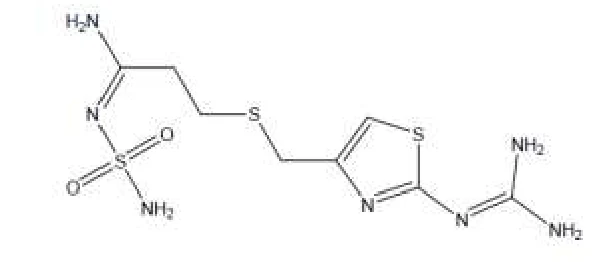
Physicochemical properties: White to pale yellowish white crystalline powder. Freely soluble in dimethyl formamide, glacial acetic acid, slightly soluble in methanol, very slightly soluble in water, practically insoluble in acetone, in alcohol, in chloroform, in ether and in ethyl acetate.
14 CLINICAL TRIALS
14.1 Trial Design and Study Demographics
Two treatment studies were conducted. In these studies, P017 and P019 involving 552 patients and 500 patients respectively, 20 mg famotidine, 10mg famotidine or placebo was taken to treat episodic heartburn. For P017 the probability of achieving complete relief of a heartburn episode within 1 hour of dosing was 0.379 for famotidine 20mg, 0.344 for famotidine 10mg and 0.235 for placebo. For P019 the probability of achieving complete relief within 1 hour of dosing was 0.362 for 20mg famotidine, 0.325 for 10mg famotidine and 0.217 for placebo. For both of these studies the patients in the famotidine 20mg group had a numerically greater probability of complete relief within 1 hour than patients in the famotidine 10mg group.
Three prevention studies were conducted. In one study (P117) involving 1227 patients, 20 mg or 10 mg of famotidine or placebo was taken 10 minutes before a provocative meal of chili, cola and chocolate. The percentage of subjects, who reported no heartburn in the 3 hour interval after eating, was 37.9% (185 of 488 patients) for 20 mg famotidine, 30.0% (147 of 490 patients) for 10 mg famotidine and 18.9% (47 of 249 patients) for placebo.
In a second study (P128) involving 1332 patients, conducted under the same conditions, the percentage of subjects who reported no heartburn in the 3 hour interval after eating, was 41.2% (219 of 531 patients) for 20 mg famotidine, 35.4% (190 of 537 patients) for 10 mg famotidine and 26.9% (71 of 264 patients) for placebo. The difference between the response to the 20 mg dose and the 10 mg dose in both of these trials was statistically significant.
In a third study (P114) of similar, but not identical design, involving 794 subjects who suffer severe heartburn, the percentage of subjects who reported no heartburn in the 3 hour interval after eating, was 10.7% (28 of 261 patients) for 20 mg famotidine, 7.7% (21 of 271 patients) for 10 mg famotidine and 4.2% (11 of 262 patients) for placebo. In this trial there was no significant difference between the response to 20 mg and 10 mg famotidine. The response to 20 mg famotidine was significantly different from placebo, whereas the response to 10 mg famotidine was not.
14.2 Study Results
When the results of these clinical trials were analyzed in terms of peak heartburn severity in the period 3 hours after the meal (based on the percentages of patients reporting none, mild, moderate or severe heartburn), in study P117, the peak heartburn severity for 20 mg famotidine was significantly less than that for 10 mg famotidine and for placebo. The mean heartburn severity for 10 mg famotidine was also significantly less than placebo. In study P128, the mean heartburn severity for both 20 and 10 mg famotidine were both significantly less than placebo, but were not significantly different from one another. In P114 there was a significant difference among treatments for the 20 mg famotidine group versus placebo. The peak heartburn severity of those patients who took 10 mg famotidine was not significantly different from either the placebo group or from the group that took 20 mg famotidine.
14.3 Comparative Bioavailability Studies
A double blind, randomized, two-way, single dose, crossover comparative oral bioavailability study of Auro-Famotidine 20 mg tablets (Auro Pharma Inc.) with MAXIMUM STRENGTH PEPCID® AC 20 mg tablets (McNeil Consumer Healthcare, division of Johnson & Johnson Inc., Canada) was conducted in healthy, adult, male subjects under fasting conditions. Comparative bioavailability data from 40 subjects that were included in the statistical analysis are presented in the following table
Summary Table of Comparative Bioavailability Data
Famotidine (1 x 20 mg) Geometric Mean Arithmetic Mean (CV %) | ||||
| Parameter | Test1 | Reference2 | % Ratio of Geometric Means | 90% Confidence Interval |
AUCT (ng•h/mL) | 603.4 625.4 (28.21) | 569.7 594.4 (30.5) | 105.9 | 99.5 – 112.7 |
AUCI (ng•h/mL) | 620.0 642.7 (28.4) | 585.5 611.5 (31.0) | 105.9 | 99.7 – 112.5 |
Cmax (ng/mL) | 88.6 92.3 (28.9) | 86.3 90.0 (30.2) | 102.7 | 94.1 – 112.0 |
Tmax3 (h) | 2.0 (1.0 -6.0) | 2.0 (0.7 – 4.0) | ||
T½4 (h) | 4.7 (19.9) | 4.7 (18.8) | ||
1 Auro-Famotidine (famotidine) tablets, 20 mg (Auro Pharma Inc.)
2 MAXIMUM STRENGTH PEPCID® AC (famotidine) tablets, 20 mg (McNeil Consumer Healthcare, division of Johnson & Johnson Inc. Canada).
3 Expressed as the median (range) only.
4 Expressed as the arithmetic mean (CV %) only.
Both a 10 mg chewable tablet and gelcap famotidine 10 mg was found to be bioequivalent to a 10 mg film-coated tablet famotidine. Bioavailability may be slightly increased by food; however, this effect is of no clinical significance. Bioavailability of famotidine at recommended doses is not affected by customary doses of antacids. Cmax values of 41 ng/mL and 40 ng/mL for the 10 mg film-coated tablets and the 10 mg chewable tablets, respectively, were found in one bioequivalence study. Cmax values of 28.93 ng/mL and 31.71 ng/mL for the 10 mg film-coated tablets and the 10 mg gelcaps, respectively, were found in another bioequivalence study as outlined in the table below.
Table 2 – Summary of Comparative Bioequivalence Data (Study #085) famotidine 10 mg Gelcaps (Test), versus famotidine 10 mg film-coated tablets (Reference)
| Parameter | Geometric Mean | Arithmetic Mean (%CV) | Ratio of Geometric Means (90% C.I.)* | ||||||||
|---|---|---|---|---|---|---|---|---|---|---|---|
| Test | Reference | Test | Reference | ||||||||
AUC(0-24 hr) (ng.h/mL) | 195.7 | 187.0 | 204.7 (30%) | 195.3 (31%) | 1.05 (0.94, 1.16) | ||||||
AUC(0-infinity) (ng.h/mL) | 196.9 | 188.3 | 205.9 (30%) | 196.6 (31%) | 1.05 (0.94, 1.16) | ||||||
Cmax (ng/mL) | 31.4 | 29.3 | 33.6 (35%) | 32.0 (49%) | 1.07 (0.95, 1.21) | ||||||
Tmax (h) | 2.2 (33%) | 2.4 (48%) | --- | ||||||||
T1/2 (h) | 3.6 (35%) | 3.6 (30%) | --- | ||||||||
* Geometric ratios not potency-adjusted
15 MICROBIOLOGY
No microbiological information is required for this drug product.
16 NON-CLINICAL TOXICOLOGY
General Toxicology:
Acute Toxicity:
| Species | Sex | Route | LD50 (mg/kg) |
|---|---|---|---|
| Mouse | M F | P.O.* P.O.* | 4,684 3,233 |
| Mouse | M F | I.V. (4%) I.V. (4%) | 254 358 |
| Rat | M F | P.O.* P.O.* | 4,907 4,049 |
| Rat | M F | I.P I.P | 987 814 |
*In solution (acidic, 50-55◦C deionized water)
I.V. = intravenous;
I.P. = intraperitoneal; P.O. = oral
Subacute and Chronic Toxicity:
Famotidine is well tolerated by both rats and dogs at doses of 2 g/kg twice a day orally in subacute studies and at doses up to 1000 or 2000 mg/kg/day for one year in these species. Eosinophilic cytoplasmic granularity of gastric chief cells was seen at a higher incidence in rats given 200 mg/kg/day or more of the compound compared to controls. This is considered as a secondary effect due to the exaggerated pharmacologic activity of the compound at these extremely high dosage levels and is considered of no toxicologic significance. In a 106-week study in rats designed to study the carcinogenic potential of the compound, this gastric change did not progress to hyperplasia or neoplasia. Similarly, mice (given the compound for 92 weeks) showed no evidence of a neoplastic potential. Based on the results from studies performed using pharmacologically-related compounds, this change was fully reversible.
Intravenous administration of famotidine was well tolerated by rats for 13 weeks at dosage levels of up to 20 mg/kg/day and by dogs, except for occasional emesis, at dosage levels of up to 10 mg/kg/day for 5 to 26 weeks.
Carcinogenicity: A 92-week oral carcinogenicity study was conducted in mice at doses of 20, 200 and 2000 mg/kg/day. No evidence of a carcinogenic potential was seen. A 106-week oral carcinogenicity study in rats given doses of 20, 200 and 2000 mg/kg/day did not reveal any carcinogenic potential for famotidine.
Genotoxicity: Famotidine was tested in a reverse-mutation test (Ames test) using Salmonella typhimurium and Escherichia coli with and without metabolic activation. No mutagenic potential was seen. These same studies were performed with famotidine/sodium nitrite reaction mixture and C-nitroso derivatives of famotidine and they were also negative.
Famotidine and C-nitroso derivatives of famotidine were tested in the rec-assay using Bacillus subtilis H17 and M45 and the tests were negative for DNA-damaging capacity of the compounds. In in vivo studies in mice, a micronucleus test and a chromosomal aberration test, no evidence of a mutagenic effect was seen.
Reproductive and Developmental Toxicology: In studies with rats given oral doses of up to 2000 mg/kg/day or intravenous doses of up to 200 mg/kg/day (approximately 2500 and 250 times the maximum recommended prescription human dose, respectively), fertility and reproductive performance were not affected.
Famotidine given orally to pregnant rats up to 2000 mg/kg/day or intravenously at dosage levels up to 200 mg/kg/day, from Days 7 to 17 of pregnancy did not reveal any evidence of embryolethality or teratogenicity.
Oral administration of famotidine to pregnant rabbits from Days 6 to 18 of pregnancy at dosage levels up to 500 mg/kg/day revealed no evidence of embryolethality or teratogenicity.
Special Toxicology: The effects of famotidine on the thyroid of rats were evaluated after five weeks of oral administration at doses up to 2000 mg/kg/day. No evidence of treatment- related alterations of serum thyroid hormone levels, thyroid weight or the microscopic appearance were seen after administration of famotidine.
In immunogenicity studies, no effect on the production of IgE antibodies was seen in the sera of mice which were injected, once intraperitoneally, with famotidine alone (up to 2 mg/8 mL/kg) or coupled with either mouse serum albumin or ovalbumin. The sera were used to measure passive cutaneous anaphylaxis in rats which were then challenged with solutions of antigens similar to those antigens used for the initial dose in mice. Similarly, no evidence of an anaphylactic reaction was seen in guinea pigs challenged intravenously with famotidine after initiating doses (three times, subcutaneously, at six-day intervals) of up to 10 mg/mL.
- 17. SUPPORTING PRODUCT MONOGRAPH
- 1. Product Monograph PEPCID AC®/MAXIMUM STRENGTH PEPCID® AC, famotidine tablets, Date of Revision: March 06, 2025, Submission Control No: 284010.