


Product Monograph - Tagamet Prevent
RECENT MAJOR LABEL CHANGES
None.
TABLE OF CONTENTS
Sections or subsections that are not applicable at the time of authorization are not listed.
RECENT MAJOR LABEL CHANGES ............................................................................................ 2
TABLE OF CONTENTS .............................................................................................................. 2
PART I: HEALTH PROFESSIONAL INFORMATION ...................................................................... 4
1 INDICATIONS ............................................................................................................... 4
1.1 Pediatrics ................................................................................................................ 4
1.2 Geriatrics ................................................................................................................ 4
2 CONTRAINDICATIONS ................................................................................................. 4
3 SERIOUS WARNINGS AND PRECAUTIONS BOX ............................................................ 4
4 DOSAGE AND ADMINISTRATION ................................................................................. 4
4.1 Dosing Considerations ............................................................................................ 4
4.2 Recommended Dose and Dosage Adjustment ....................................................... 5
4.5 Missed Dose ........................................................................................................... 5
5 OVERDOSAGE .............................................................................................................. 5
6 DOSAGE FORMS, STRENGTHS, COMPOSITION AND PACKAGING ................................. 6
7 WARNINGS AND PRECAUTIONS .................................................................................. 6
7.1 Special Populations................................................................................................. 7
7.1.1 Pregnant Women ............................................................................................. 7
7.1.2 Breast-feeding .................................................................................................. 7
7.1.3 Pediatrics .......................................................................................................... 7
7.1.4 Geriatrics .......................................................................................................... 7
8 ADVERSE REACTIONS .................................................................................................. 7
8.1 Adverse Reaction Overview .................................................................................... 7
8.2 Clinical Trial Adverse Reactions .............................................................................. 8
8.2.1 Clinical Trial Adverse Reactions – Pediatrics ..................................................... 8
8.3 Less Common Clinical Trial Adverse Reactions ....................................................... 8
8.3.1 Less Common Clinical Trial Adverse Reactions – Pediatrics .............................. 8
8.4 Abnormal Laboratory Findings: Hematologic, Clinical Chemistry and Other Quantitative Data ............................................................................................................. 9
8.5 Post-Market Adverse Reactions ............................................................................. 9
9 DRUG INTERACTIONS .................................................................................................. 9
9.1 Serious Drug Interactions ....................................................................................... 9
9.2 Drug Interactions Overview .................................................................................... 9
9.3 Drug-Behavioural Interactions ................................................................................ 9
9.4 Drug-Drug Interactions ........................................................................................... 9
9.5 Drug-Food Interactions ......................................................................................... 13
9.6 Drug-Herb Interactions ......................................................................................... 13
9.7 Drug-Laboratory Test Interactions ........................................................................ 13
10 CLINICAL PHARMACOLOGY ....................................................................................... 13
10.1 Mechanism of Action ...................................................................................... 13
10.2 Pharmacodynamics ........................................................................................ 14
10.3 Pharmacokinetics ................................................................................................. 16
11 STORAGE, STABILITY AND DISPOSAL ......................................................................... 17
12 SPECIAL HANDLING INSTRUCTIONS ........................................................................... 17
PART II: SCIENTIFIC INFORMATION ....................................................................................... 17
13 PHARMACEUTICAL INFORMATION ............................................................................ 17
14 CLINICAL TRIALS ........................................................................................................ 18
15 MICROBIOLOGY ........................................................................................................ 18
16 NON-CLINICAL TOXICOLOGY ..................................................................................... 18
17 SUPPORTING PRODUCT MONOGRAPHS .................................................................... 19
PATIENT MEDICATION INFORMATION .................................................................................. 21
PART I: HEALTH PROFESSIONAL INFORMATION
1 INDICATIONS
TAGAMET® PREVENT (200 mg Cimetidine Tablets) is indicated for:
- the relief of episodic heartburn, acid indigestion, sour stomach and upset stomach
- prevention of nocturnal heartburn and acid indigestion
- prevention of meal-related symptoms of stomach discomfort, heartburn and acid indigestion
1.1 Pediatrics
Pediatrics (<18 years of age): No data are available to Health Canada; therefore, Health Canada has not authorized an indication for pediatric use.
1.2 Geriatrics
Geriatrics (>65 years of age): No data are available to Health Canada; therefore, Health Canada has not authorized an indication for geriatric use.
2 CONTRAINDICATIONS
- TAGAMET® PREVENT is contraindicated in patients who are hypersensitive to this drug or to any ingredient in the formulation, including any non-medicinal ingredient, or component of the container. For a complete listing, see 6 DOSAGE FORMS, STRENGTHS, COMPOSITION AND PACKAGING.
3 SERIOUS WARNINGS AND PRECAUTIONS BOX
Serious Warnings and Precautions
|
|---|
4 DOSAGE AND ADMINISTRATION
4.1 Dosing Considerations
- Because cimetidine is excreted by the kidney, a reduced dosage should normally be administered to patients with impaired renal function (see 7 WARNINGS AND PRECAUTIONS). When liver impairment is also present, further reductions in dosage may be necessary.
- Hemodialysis reduces the level of circulating cimetidine. Greater than 80% of a 300 mg intravenous dose is cleared in a single 4 hour period of hemodialysis. It is completely cleared in an 8 hour period. Ideally, the dosage schedule should be adjusted so that the timing of a scheduled dose is administered after dialysis treatment.
- Peritoneal Dialysis: Peritoneal dialysis does not appear to remove cimetidine to any appreciable extent.
4.2 Recommended Dose and Dosage Adjustment
Relief and/or Prevention of Stomach Discomfort
- For relief of episodic heartburn, acid indigestion, sour stomach and upset stomach and the symptoms that accompany these conditions: Take one tablet (200 mg cimetidine) with water as symptoms occur, or as directed by a physician.
- For prevention of nighttime heartburn and acid indigestion: take one tablet (200 mg cimetidine) with water 60 minutes before bedtime.
- For prevention of meal related heartburn and acid indigestion: take one tablet (200 mg cimetidine) with water 30 minutes prior to consumer a symptom provoking meal.
- Do not take more than two tablets in a 24-hour period. Do not use continuously for more than two weeks except under the advice and supervision of a physician.
Pediatrics
Health Canada has not authorized an indication for pediatric use. See 1.1 PEDIATRICS.
Geriatrics
Geriatrics (>65 years of age): Health Canada has not authorized an indication for geriatric use. See 1.2 GERIATRICS.
4.5 Missed Dose
If the patient misses a dose, instruct the patient to take the dose as soon as they remember. If it is almost time for the next dose, inform the patient to skip the missed dose and continue the regular dosing schedule.
5 OVERDOSAGE
- In cases reported to date, involving oral ingestion of up to 20 grams of cimetidine, transient adverse effects similar to those encountered in normal clinical experience were noted and recovery has been uneventful.
- There have been reports of severe CNS symptoms, including unresponsiveness, following ingestion of between 20 and 40 mg of Cimetidine, and extremely rare reports following concomitant use of multiple CNS-active medications and ingestion of Cimetidine at doses less than 20 mg.
- Two deaths were reported in adults who ingested over 40 mg orally on a single occasion.
- Treatment of overdose: The usual measures to remove unabsorbed material from the gastrointestinal tract, clinical monitoring and supportive therapy should be employed. Studies in animals indicate that assisted respiration and the administration of a beta-blocker may be of value.
| For management of a suspected drug overdose, contact your regional poison control centre. |
|---|
6 DOSAGE FORMS, STRENGTHS, COMPOSITION AND PACKAGING
Table – Dosage Forms, Strengths, Composition and Packaging
TAGAMET® PREVENT (200 mg Cimetidine tablets) are packaged in PVC/foil blisters with 24 tablets in each carton.
7 WARNINGS AND PRECAUTIONS
Please see 3 SERIOUS WARNINGS AND PRECAUTIONS BOX.
General
In clinical trials, patients with other underlying acid gastrointestinal diseases (e.g. duodenal ulcer, gastric ulcer) did not experience complications; in general, they did not exhibit a clinically significant deterioration in their condition. However, if patients have difficulty swallowing, pain on swallowing, unexpected weight loss, severe vomiting, melaena (black stools), choking, chest pain, or if abdominal discomfort persists, patients should consult a physician to determine the underlying cause.
Gastrointestinal Symptomatic response to cimetidine does not preclude the presence of a gastric malignancy. Cimetidine treatment can mask the symptoms and allow transient healing of gastric cancer. The potential delay in diagnosis should be borne in mind in patients of middle age or older with new or recently changed dyspeptic symptoms.
Patients with severe coexisting illness should consult a physician before commencing therapy with TAGAMET® PREVENT.
Patients consuming nonsteroidal anti-inflammatory drugs may have dyspepsia as a side effect of these medicines and should consult a physician or a pharmacist before taking TAGAMET® PREVENT.
Patients over 40 who are experiencing heartburn for the first time and patients who have noticed unintentional weight loss should consult a physician before using the product.
Further medical evaluation is required if therapy exceeds two weeks of continuous treatment, if two 14 day courses of treatment are needed at intervals of less than 6 weeks, or if heartburn is frequent (>3 times per week) and/or severe.
Gastrointestinal
Patients with a previous history of ulcer disease complications, those who are experiencing unintended
| Route of Administration | Dosage Form / Strength/Composition | Non-medicinal Ingredients |
Oral (TAGAMET® PREVENT) | Tablet, 200 mg | Corn starch, hypromellose, magnesium stearate, microcrystalline cellulose, polyethylene glycol, polysorbate 80, povidone, sodium lauryl sulfate, sodium starch glycolate, titanium dioxide |
weight loss in association with dyspeptic symptoms, and those who are middle-aged or older with new or recently changed dyspeptic symptoms should consult a physician before commencing therapy with TAGAMET® PREVENT.
Renal
Because cimetidine is excreted by the kidney, patients with impaired renal function should consult a physician before commencing therapy with TAGAMET® PREVENT. A reduced dosage should normally be administered to patients with impaired renal function (See 4 DOSAGE AND ADMINISTRATION).
7.1 Special Populations
7.1.1 Pregnant Women
Experience to date with use of cimetidine in pregnant patients is limited. No significant adversities have been reported. Reproduction studies performed in rats, mice and rabbits have revealed no evidence of impaired fertility or harm to the fetus due to cimetidine. Studies have demonstrated that cimetidine crosses the placental barrier. Since the safe use of cimetidine in pregnant women has not been established, TAGAMET® PREVENT should be used in pregnant or women of child-bearing potential only when, in the judgement of the physician, the anticipated benefits outweigh the potential risks.
Cimetidine has been used in clinical trials for the prevention of acid aspiration pneumonitis in women undergoing caesarean section or vaginal delivery without harm to the fetus.
7.1.2 Breast-feeding
Cimetidine is secreted in human milk. TAGAMET® PREVENT should be used in lactating patients or women of child-bearing potential only when, in the judgement of the physician, the anticipated benefits outweigh the potential risks.
7.1.3 Pediatrics
Pediatrics (<18 years of age): No data are available to Health Canada; therefore, Health Canada has not authorized an indication for pediatric use.
7.1.4 Geriatrics
Geriatrics (>65 years of age): No data are available to Health Canada; therefore, Health Canada has not authorized an indication for geriatric use.
8 ADVERSE REACTIONS
8.1 Adverse Reaction Overview
Mild and transient diarrhea, tiredness, and dizziness have been reported in a small number of patients during treatment with cimetidine. Skin rashes, sometimes severe, including Stevens-Johnson syndrome, epidermal necrolysis, erythema multiforme, exfoliative dermatitis and generalized exfoliative erythroderma have been reported with H2-receptor antagonists. Reversible alopecia has also been reported.
There have been reports that a few patients have developed reversible non-progressive gynecomastia during prolonged treatment.
No evidence of induced endocrine dysfunction was found, and the condition remained unchanged or returned toward normal with continuing cimetidine treatment. No effect of cimetidine (in recommended doses) on spermatogenesis, sperm count, motility or morphology has been found in double blind controlled studies. Fertilizing capacity has not been affected in vitro. Blood levels of androgen and gonadotropin were unchanged. Reversible impotence has been reported in rare instances.
H2 antagonist administration has been associated with the occurrence of leukopenia (including agranulocytosis), thrombocytopenia, pancytopenia, and aplastic anemia, as well as extremely rare reports of immune hemolytic anemia.
A few cases of reversible confusional states have been reported, usually in elderly and/or severely ill patients, such as those with renal insufficiency or organic brain syndrome. These confusional states generally cleared within a few days of drug withdrawal.
Small increases of plasma creatine have been reported. These did not progress with continued therapy and disappeared at the end of therapy. Some increases in serum transaminase and rare cases of hepatitis, fever, hypersensitivity vasculitis, interstitial nephritis, urinary retention and pancreatitis, which cleared on withdrawal of the drug, have been reported. Rare occurrences of sinus bradycardia, tachycardia, heart block and anaphylaxis have been reported in patients treated with H2 antagonists.
Concomitant NSAID administration does not alter the incidence of adverse reactions resulting from therapy with cimetidine for those NSAID's that have been tested.
Reported adverse reactions in children include neurotoxicity, and inhibition of hepatic microsomal metabolism. No change in adenohypophyseal secretion has been noted in studies in children receiving cimetidine. Cimetidine may produce transient cholestasis.
There have been rare reports of reversible athralgia and myalgia; exacerbation of joint symptoms in patients with pre-existing arthritis has also been reported. Such symptoms have usually been alleviated by a reduction in cimetidine dosage. Rare cases of polymyositis have been reported, but no causal relationship has been established.
8.2 Clinical Trial Adverse Reactions
Information is not available.
8.2.1 Clinical Trial Adverse Reactions – Pediatrics
Information is not available.
8.3 Less Common Clinical Trial Adverse Reactions
Information is not available.
8.3.1 Less Common Clinical Trial Adverse Reactions – Pediatrics
Information is not available.
8.4 Abnormal Laboratory Findings: Hematologic, Clinical Chemistry and Other Quantitative Data
Clinical Trial Findings
Information is not available.
Post-Market Findings
Information is not available.
8.5 Post-Market Adverse Reactions
Information is not available.
9 DRUG INTERACTIONS
9.1 Serious Drug Interactions
Serious Drug Interactions
|
|---|
9.2 Drug Interactions Overview
Cimetidine apparently through an effect on certain microsomal enzyme systems, has been reported to, at prescription doses, reduce the hepatic metabolism of warfarin-type anticoagulants, phenytoin, propranolol, chlordiazepoxide, lidocaine, diazepam, theophylline, and nifedipine; thereby delaying elimination and increasing blood levels of these drugs.
Benzodiazepines that are metabolized other than via the hepatic system do not exhibit this effect. Since clinically significant effects have been reported with the warfarin anticoagulants, close monitoring of prothrombin time is recommended, and adjustment of the anticoagulant dose may be necessary when cimetidine is administered concomitantly. Interaction with phenytoin has also been reported to produce adverse clinical effects.
Dosage of the drugs mentioned above and other similarly metabolized drugs, may require adjustment when starting or stopping concomitantly administered cimetidine, to maintain safe, optimum therapeutic blood levels. Such combinations should be administered with caution and patients should be observed closely.
9.3 Drug-Behavioural Interactions
Interactions with behaviour have not been established.
9.4 Drug-Drug Interactions
Numerous additional drug interaction studies were completed using a wide variety of drugs in combination with low (non-prescription) doses of cimetidine recommended for the non-prescription indications of relief and prevention of stomach discomfort. Overall, the majority were not clinically relevant.
The frequency and severity of cimetidine drug interactions appears to be related to the dose and duration of cimetidine administration as well as the therapeutic window and half-life of the other drug.
Non-prescription labelling limits the daily dose to 400 mg cimetidine per day and to no more than two continuous weeks of use. Potential drug-drug interactions of note, at non-prescription doses of cimetidine, involve drugs with narrow therapeutic windows which, like cimetidine, bind to one or more of the cytochrome P450 isozymes. In particular are those binding to the heme component, resulting in a dose dependent, reversible inhibition of a variety of P450 isozyme (i.e. IA2, HC, HD, HEI and IIIA4). Such drugs include theophylline, warfarin and phenytoin.
A two-way crossover study was conducted in 12 patients on chronic warfarin therapy. Cimetidine 100 and 200 mg q.i.d. was co-administered for 15 days. Compared to baseline periods when patients received warfarin alone, both cimetidine doses exerted minor effects on the pharmacokinetics of R- and S-warfarin (< 18% decrease in clearance or increase in Cmax). The effect of the 200 mg regimen on the plasma clearance and Cmax of the less active R-warfarin enantiomer was significantly greater than the effect on that of S-warfarin (p<0.05). The 100 and 200 mg regimens had little effect on prothrombin time ratio (1 and 9% increase, respectively). These effects were not considered to be clinically significant.
In one study, subjects received low dose cimetidine, 200 mg b.i.d. or matching placebo, b.i.d., for 8 days. On study days 1, 4 and 8, subjects received a single oral dose of triazolam, 0.25 mg, prior to the second dose of cimetidine. The study showed that concurrent treatment with cimetidine resulted in an increase of approximately 30% in AUC for triazolam. Concurrent administration with cimetidine resulted also in an increased Cmax for triazolam, but to a lesser extent than AUC. There was no apparent change in Tmax or T1/2 for triazolam. The extent of the cimetidine-triazolam interaction was similar on Day 1 and on Days 4 and 8. The adverse event profiles were similar whether the subject took cimetidine or placebo and triazolam.
In another study subjects were given a sustained release theophylline preparation every 12 hours for 4 days to achieve an average steady state theophylline concentration of 8 – 15 ug/mL. Subjects were then randomized to receive either cimetidine 200 mg b.i.d. or matching placebo for 7 days. The study showed that concurrent administration of oral cimetidine 200 mg, b.i.d., and therapeutic doses of theophylline resulted in mean increases of 5% and 14%, in theophylline AUC (0-24) following Day 1 and following Days 4 and 7 of dosing, respectively. Similar increases were observed for mean theophylline Cmax (0-24) with cimetidine administration relative to placebo. The concomitant use of low dose cimetidine and theophylline was well tolerated and did not result in a greater number or worsening severity of the symptoms than with theophylline alone.
The overall conclusions of these studies were that the small pharmacokinetic interaction observed between cimetidine, at non-prescription doses, and theophylline and triazolam would not be expected to be of clinical relevance in patients, whether non-prescription cimetidine was used intermittently or as chronic therapy.
The possibility of clinically significant drug interactions in non-prescription over-the-counter use is quite unlikely due to the low doses of cimetidine given in TAGAMET® PREVENT and intermittent use of the drug. Even so, TAGAMET® PREVENT labeling includes precautions regarding the concomitant use of medications such as warfarin, theophylline and phenytoin, with non-prescription cimetidine.
The concomitant administration of cimetidine and NSAIDs does not result in any impairment of the efficacy of a number of NSAIDs; however, not all currently marketed NSAIDS were tested.
The drugs listed in the table below are based on either drug interaction case reports or studies, or potential interactions due to the expected magnitude and seriousness of the interaction (i.e., those identified as contraindicated).
Table - Established or Potential Drug-Drug Interactions
| Common name | Source of Evidence | Effect | Clinical comment |
|---|---|---|---|
| Chlordiazepoxide, Diazepam | C | Cimetidine has been shown to inhibit the liver microsomal metabolism of the benzodiazepines diazepam resulting in an increase in half-life and decrease in the clearance of the drug. The interaction with diazepam and chlordiazepoxide results in increased sedation. | Benzodiazepines that are metabolized other than via the hepatic system do not exhibit this effect. |
| Lidocaine | T | Elimination half-life, peak serum concentration, free drug concentration were all significantly increased when cimetidine was combined with lidocaine. Cimetidine also reduces hepatic blood flow and therefore may reduce the clearance of lidocaine. | This drug combination should be administered with caution and patients should be observed closely. |
| Nifedipine | C | Cimetidine significantly impairs nifedipine elimination and can produce greater physiologic responses to a given nifedipine dose. | This drug combination should be administered with caution and patients should be observed closely. |
| NSAIDs | T | No effect. | The concomitant administration of cimetidine and NSAIDs does not result in any impairment of the efficacy of a number of NSAIDs; however, not all currently marketed NSAIDs were tested. |
| Phenytoin | C | Interaction with phenytoin has been reported to produce adverse clinical effects. Cimetidine increases serum phenytoin concentration, probably by inhibiting its metabolism. | Care should be taken in the concomitant use of cimetidine and phenytoin, and the dose of phenytoin should be modified according to the clinical symptoms and serum phenytoin |
| concentrations. | |||
| Propranolol | C | Clearance of propranolol is decreased by concomitant cimetidine use. Resting pulse rates were also significantly lower during concomitant use. | This drug combination should be administered with caution and patients should be observed closely. |
|---|---|---|---|
| Theophylline | C | Cimetidine was found to slow the clearance of theophylline and extend its half-life. | This drug combination should be administered with caution and patients should be observed closely. |
| Warfarin anticoagulants | C | Clinically significant effects have been reported with the warfarin anticoagulants. The dose of cimetidine used may inhibit warfarin metabolism. Using warfarin together with cimetidine can cause you to bleed more easily. | Close monitoring of prothrombin time is recommended, and adjustment of the anticoagulant dose may be necessary when cimetidine is administered concomitantly. |
Legend: C = Case Study; CT = Clinical Trial; T = Theoretical
9.5 Drug-Food Interactions
Interaction with food have not been established.
9.6 Drug-Herb Interactions
Interaction with herbal products have not been established.
9.7 Drug-Laboratory Test Interactions
Interaction with laboratory tests have not been established.
10 CLINICAL PHARMACOLOGY
10.1 Mechanism of Action
Cimetidine competitively inhibits the action of histamine at the histamine H2 – receptor and thus represents a new class of pharmacological agents, the histamine H2 – receptor antagonists.
Cimetidine is not an anticholingeric agent. Studies have shown that cimetidine inhibits both daytime and nocturnal basal gastric acid secretion. Cimetidine also inhibits gastric acid secretion stimulated by food, histamine, pentagastrin, caffeine and insulin. Its ability to inhibit gastric acid secretion via this unique mechanism of action permits a new approach to the treatment of acid-related gastrointestinal disorders. In addition to its antisecretory effects, cimetidine also has cytoprotective properties.
In therapeutic studies, patients with NSAID-induced lesions or ulcers had symptomatic relief and healing when cimetidine was co-administered with the existing NSAID therapy.
Cimetidine is absorbed rapidly after oral administration. The plasma half-life is approximately two hours. The principal route of excretion is the urine.
The degree and duration of inhibition of basal and stimulated gastric acid secretion are dose - related; the data suggest that 80% or higher inhibition throughout a 24-hour period can be achieved by a dosage regimen of 1.2 g daily given in divided doses. Cimetidine 300 mg reduced total pepsin output as a result of the decrease in volume of gastric juice. The drug had no effect on the rate of gastric emptying or lower esophageal sphincter (LES) pressure.
10.2 Pharmacodynamics
Animal Pharmacology:
Cimetidine is a potent H2-receptor antagonist in vitro and in vivo. It reduces basal gastric secretion in the rat and antagonizes histamine- and pentagastrin-stimulated secretion in the rat, cat and dog. In the Heidenhain pouch dog, blood levels correlated closely with inhibition of maximally stimulated gastric acid secretion, with values of 1-2 μM necessary for a 50% inhibitory effect. Administered to rats by intravenous infusion at dose levels (0.25 mg/kg/min) which produced up to 96% inhibition of basal gastric secretion, cimetidine had no effect on stomach motility; at ten times this dose, however, it abolished or caused marked reduction in motility. The drug has no effect on secretin stimulated pancreatic secretion in the cat.
Detailed cardiovascular studies have shown that increased heart rate occurs in dogs at doses much higher than those which inhibit gastric secretion, and relatively much higher than the human dose. Propranolol prevented or reversed the increase in heart rate, suggesting that the mechanism by which cimetidine acts in this regard is an increase in sympathetic drive specifically involving P-adrenergic receptors. Cimetidine had no effect on renal function.
Cimetidine has demonstrated a weak anti-androgenic effect. In animal studies, this was manifested as reduced prostate and seminal vesicle weights. However, there was no impairment of mating performance or fertility, nor any harm to the fetus in these animals at doses 9 to 56 times the full therapeutic dose of cimetidine, as compared with controls.
Withdrawal of the drug in the adult animals resulted in recovery to control levels within 114 days. It has been concluded that his effect does not represent a potential clinical hazard. The drug exhibited no estrogenic activity in rats.
Human Pharmacology:
A) Anti-secretory activity:
- 1) Acid Secretion
Basal:
Cimetidine 300 mg inhibited basal gastric acid secretion by 100% for at least two hours and by at least 90% throughout the 4 hour study in fasting duodenal ulcer patients. The gastric pH in all subjects was increased to 5.0 or greater for at least 2-1/4 hours.
Two studies done in healthy fasted subjects measured intragastric pH, one comparing placebo versus 30 mL Maalox, 100 mg, 200 mg and 400 mg of cimetidine and the other comparing placebo with 50 mg, 150 mg and 800 mg of cimetidine over a four hour period. Results of both studies showed that all of the cimetidine strengths used increased the mean post-treatment pH as well as the percentage of time the pH is a least 3.5 compared with placebo.
Nocturnal:
Nighttime basal secretion in fasting duodenal ulcer patients was inhibited by a 300 mg dose of cimetidine by 100% for at least one hour and by a mean of 89% over a seven hour period. Gastric pH was increased to 5.0 or greater in most of the patients for three to four hours.
In another study, nocturnal gastric acid secretion was statistically significantly different from placebo following treatment with both 100 mg and 200 mg cimetidine. There were statistically and clinically significant elevations in pH and decreases in acid output following both doses of cimetidine over the 7 hour period. Mean hourly pH was consistently above pH 3 for 100% of the time for both doses of cimetidine, whereas mean pH failed to reach this value at any time on placebo. Statistically significant decreases in hydrogen ion concentration and volume of gastric secretion were also seen for both 100 mg and 200 mg doses of cimetidine.
Food stimulated:
During the first hour after a standard experimental meal, cimetidine 300 mg inhibited gastric acid secretion in duodenal ulcer patients by at least 50% more than placebo and for the remaining two hours cimetidine inhibited gastric acid secretion by at least 75% more than placebo.
The effect of a 300 mg breakfast dose of cimetidine continued for at least four hours and suppressed the early rise in gastric acid secretion following the luncheon meal in duodenal ulcer patients. This suppression of gastric acid output was maintained by another 300 mg dose of cimetidine given with lunch.
In another study, cimetidine 300 mg given with the meal increased gastric pH as compared with placebo.
MEAN GASTRIC pH
CIMETIDINE PLACEBO
1 hour 3.5 2.6
2 hours 3.1 1.6
3 hours 3.8 1.9
4 hours 6.1 2.2
The effect of cimetidine 300 mg vs propantheline bromide on food-stimulated gastric acid secretion was studied in duodenal ulcer patients. Propantheline bromide was titrated to maximally tolerated dosages - the average dose was 45 mg. Compared with placebo, cimetidine 300 mg reduced gastric acid output by 67% vs 27% for propantheline bromide.
Cimetidine 600 mg taken twice daily, at breakfast and bedtime, inhibited gastric acid secretion in duodenal ulcer patients over a 24 hour period to a significantly greater extent than 300 mg given four times daily.
Chemically Stimulated:
Cimetidine significantly inhibited gastric acid secretion stimulated by exogenous histamine, pentagastrin, caffeine and insulin as follows:
Stimulant Stimulant Dose Cimetidine % Inhibition
Betazole 1.5 mg/kg (i.m.) 300 mg (p.o.) 85% at 2-1/2 hrs
Pentagastrin 6 mg/kg/hr (i.v.) 100 mg/hr (i.v.) 60% at 1 hr
Caffeine 5 mg/kg/hr (i.v.) 300 mg (p.o.) 100% at 1 hr
Insulin 0.03 units/kg/hr (i.v.) 100 mg/hr (i.v.) 82% at 1 hr
The action of cimetidine on acid secretion is accomplished by reducing both acid concentration and the volume of gastric juice.
- 2) Pepsin
Cimetidine 300 mg reduced total pepsin output as a result of the decrease in volume of gastric juice,
- 3) Intrinsic Factor
Intrinsic factor secretion was studied with betazole as the stimulant. Cimetidine 300 mg inhibited the rise in intrinsic factor concentration produced by betazole, but some intrinsic factor was secreted at all times.
- 4) Serum Gastrin
A single oral dose of 300 mg cimetidine augments the normal serum gastrin increase in response to a meal. This effect is probably attributable to the action of the drug in inhibiting food-stimulated gastric acid secretion. Cimetidine does not increase nocturnal serum gastrin levels in fasting patients. Studies of serum gastrin levels in short-term therapy have shown a slight or no increase. Studies are continuing for evaluation of the long-term effects, if any, of cimetidine on serum gastrin.
B) Other Activities
- 1) Gastric Mucosal Potential Difference
When normal volunteers were given cimetidine (300 mg) alone, there was a significant rise in gastric mucosal potential difference.
Acetylsalicylic acid (ASA) generally causes gastric potential difference to drop below basal levels. However, when volunteers were given cimetidine, gastric potential difference remained at or above basal levels even after the ingestion of ASA. Gastric mucosal biopsy of the control group revealed that at the time when ASA had caused the greatest drop in gastric potential difference, 20% of the cells were damaged. In subjects given cimetidine and then given ASA, gastric biopsy demonstrated that only 4% of the cells were damaged.
The significance of these observations is not clearly understood, but some experts believe the changes in gastric mucosal potential difference reflect corresponding changes in the integrity of the gastric mucosal potential difference reflect corresponding changes in the integrity of the gastric mucosal barrier.
- 2) Lower Esophageal Sphincter Pressure and Gastric Emptying
Cimetidine has no effect on the rate of gastric emptying or lower esophageal sphincter (LES) pressure.
10.3 Pharmacokinetics
Absorption:
Cimetidine is absorbed rapidly after oral administration.
Cimetidine is well absorbed from the gut in rats and dogs. In the dog, peak blood levels were reached in one to four hours following a single oral dose. The half-life in blood was estimated to be about 2 hours; measurable concentrations were still present after 24 hours. In rats, peak blood levels (lower than those observed in dogs) occurred within 1-2 hours after dosing. Percentage of drug bound to plasma proteins was 24.9% in the rat, 16.2% in the dog, and 22.5% in human blood.
Distribution:
Distribution and residue studies in the rat indicated that, following oral dosing, the highest early drug concentrations were found in the liver and kidney. A small amount of label was found in the testes only on the first day after dosing. All tissues were substantially free of label by Day 7. Following intravenous dosing, cimetidine was rapidly eliminated from most body tissue, with little residual radioactivity being detected 24 hours after dosing.
Metabolism:
The plasma half-life is approximately two hours.
Cimetidine failed to show significant enzyme-inducing activity in rats or dogs.
Elimination:
Most of the drug is excreted unchanged in the urine; the principal metabolite in both rats and dogs is the sulfoxide, representing about 10% of recovered radioactivity in the dog, and 30% and 12% in male and female rats, respectively. Significant fecal excretion has been observed in the rat.
The principal route of excretion is the urine.
Special Populations and Conditions:
Cimetidine crosses the placental barrier to enter the developing fetus and is secreted in the milk of lactating rats. Following cessation of dosing, drug concentration in milk falls rapidly.
11 STORAGE, STABILITY AND DISPOSAL
Store at 15°-30°C.
12 SPECIAL HANDLING INSTRUCTIONS
None.
PART II: SCIENTIFIC INFORMATION
13 PHARMACEUTICAL INFORMATION
Drug Substance
Proper name: Cimetidine
Chemical name: N"-Cyano-N-methyl-N'-[2[[(5-methyll-1H-imidazol-4-ylmethyl]thio]ethyl]guanidine
Molecular formula and molecular mass: C10H16N6S; 252.343 g/mol
Structural formula:
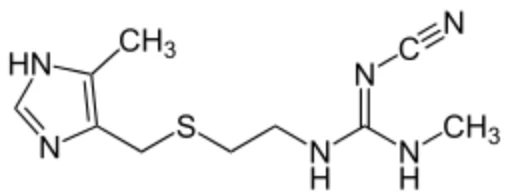
Physicochemical properties: Description: white crystals with a slight sulfur-mecaptan odour. Bitter taste. Melting point: 140 to 143.3 °C (284 to 290 °F). Solubility: 5 mg/mL at 20 °C (68 °F).
Pharmaceutical standard: USP.
14 CLINICAL TRIALS
The clinical trial data on which the original indication was authorized is not available.
15 MICROBIOLOGY
No microbiological information is required for this drug product.
16 NON-CLINICAL TOXICOLOGY
General Toxicology:
Acute Toxicity Studies:
The oral LD50 in rats and hamsters is over 3 g/kg; in mice the oral LD50 is over 2 g/kg. In dogs, the oral minimum lethal dose is 672 mg/kg, and the estimated median lethal dose is 2.6 g/kg.
Intravenous LD50s are: in mice - males 137 mg/kg, females 162 mg/kg; in rats - 113 mg/kg, females 99 mg/kg.
Intraperitoneal LD50s are: in mice - males 431 mg/kg, females 378 mg/kg; in rats - males 686 mg/kg, females 543 mg/kg; and in hamsters - males 790 mg/kg, females 920 mg/kg.
Long-Term Toxicity Studies:
In oral toxicity studies in rats and dogs for periods up to one year, similar species effects have been observed in all studies. Increased heart rate in dogs receiving the two top doses, 504 and 336 mg/kg, was observed early in the studies; this effect diminished as the studies progressed. In both species reduction in prostate weights was attributed to the weak antiandrogenic activity of the compound. In twelve-month studies, this effect in rats occurred at all dose levels (950, 378 and 150 mg/kg); in dogs it was observed at the three highest doses (504, 336, 144 mg/kg) but not at 41 mg/kg. Top dose rats also had smaller testes and seminal vesicles but no histopathological changes were observed in these tissues.
In the one-year study in rats the livers of top dose males and females were heavier than those of controls, and this is presumed to be due to increased metabolic work load. This effect was not associated with any biochemical or histological abnormalities. The dosed rats showed no significant differences from controls with regard to body weight, food consumption, hematology, clinical chemistry, urinalysis, or ophthalmoscopy.
In the one-year study in dogs, weight gain curves showed a dose-related depression; the curve for the lowest dose was very close to that of controls. Two dogs were killed before the end of the study (one in week 4, the other in week 33). Both had lost considerable weight, and histological examination showed nephropathy and centrilobular inflammatory cell infiltration in the liver in both dogs. Dogs killed at the end of one year showed no treatment-related changes in their livers. Occasional, but not progressive, elevations of some serum enzyme levels were seen in dogs given 504 and 336 mg/kg doses. The mean levels of serum enzymes in dosed groups were no significantly different from controls. There were no changes in hematology, urinalysis, ophthalmoscopy, or electrocardiography which could be related to drug treatment.
Carcinogenicity:
A 24-month oral toxicity and carcinogenicity study was carried out in rats, again using dose levels of 950, 378, and 150 mg/kg. Results were similar to those in the one-year study, except that rats at all three dose levels had smaller seminal vesicles; and rats dosed at 950 mg/kg had a low incidence of centrilobular hepatocellular vacuolation and hepatocellular enlargement, as well as higher incidences of atrophy of the seminiferous tubules, empty seminal vesicles and epididymes, and diminished secretory activity in the prostate. Cimetidine had no detectable effect of the histological appearance of the stomach or any other part of the gastrointestinal tract; this is of particular interest since the top-dose group had received, from the age of 8 weeks to 106 weeks, daily doses of cimetidine sufficient to prevent acid secretion for 24 hours. Lower incidences of pituitary (benign) and mammary tumours (benign and malignant) and a higher incidence of benign Leydig-cell tumours of the testes were found in treated rats than in controls. Exposure to cimetidine did not increase the risk of any kind of malignant neoplasm.
In these toxicity tests, the highest daily dose in rats was 950 mg/kg, and in dogs 504 mg/kg; the lowest doses were 150 and 41 mg/kg respectively. For comparison, a daily dose of 1200 mg in a 70 kg man is equivalent to 17 mg/kg.
Genotoxicity:
Information is not available.
Reproductive and Developmental Toxicology:
Cimetidine did not affect reproduction or fertility in female or male rats; the lack of effect in males indicates that the mild antiandrogenic action of the drug did not impair reproduction. Studies in three species (rat, mouse, rabbit) have shown no teratogenic effect attributable to cimetidine; and in peri- and post-natal studies in rats, the drug did not affect various litter parameters, or the early development of the young.
Special Toxicology:
Information is not available.
Juvenile Toxicity:
Information is not available.
17 SUPPORTING PRODUCT MONOGRAPHS
1). TAGAMET® Product Monograph. GlaxoSmithKline Consumer Healthcare ULC, Submission Control # 072427, Date of initial authorization: Jul 12, 2001
- 2) PrCIMETIDINE Product Monograph. AA Pharma Inc., Submission Control # 256184, Date of revision: Feb 10, 2022.