


Product Monograph - Ranitidine (Pharmascience)
SUMMARY PRODUCT INFORMATION
| Route of Administration | Dosage Form / Strength | All Non-medicinal Ingredients |
| Oral | Tablet / 75 mg | Colloidal Silicon Dioxide, Croscarmellose Sodium, Lecithin, Magnesium Stearate, Microcrystalline Cellulose, Polyvinyl Alcohol Red Iron Oxide, Talc, Titanium Dioxide and Xanthan Gum. |
INDICATIONS AND CLINICAL USE
RANITIDINE (ranitidine hydrochloride) Tablets are:
- For fast and effective relief, treatment, and prevention, day or night, of the burning, pain and discomfort of acid indigestion (dyspepsia), heartburn, hyperacidity, sour stomach, and upset stomach associated with excess stomach acid.
These symptoms may be brought on by consuming food and beverages.
CONTRAINDICATIONS
RANITIDINE is contraindicated for patients known to have hypersensitivity to any component of the preparation. RANITIDINE should not be administered to patients with a history of hypersensitivity to other histamine H2-receptor antagonists. For a complete listing, see the Dosage Forms, Composition and Packaging section of the product monograph. See also Warnings and Precautions.
WARNINGS AND PRECAUTIONS
Gastrointestinal
Treatment with a histamine H2-antagonist may mask symptoms associated with carcinoma of the stomach and, therefore, may delay diagnosis of that condition. Accordingly, patients should be advised to consult a physician if they have difficulty or pain on swallowing, experience choking or persistent abdominal discomfort or if symptoms get worse or persist for more than 2 weeks or new symptoms develop.
The administration of H2 receptor antagonists promotes intragastric bacterial growth by reducing gastric acidity.
Regular medical supervision is recommended to patients receiving NSAIDs in concurrent treatment with ranitidine, especially if with a history of peptic ulcer.
Hematologic
Rare clinical reports suggest that ranitidine may precipitate acute porphyric attacks. Therefore, ranitidine should be avoided in patients with a history of acute porphyria.
Hepatic/Biliary/Pancreatic
In case of severe hepatocellular impairment, especially if associated renal impairment exists, it is preferable to reduce the dosage.
Immune
In patients such as the elderly, subjects with chronic lung disease, diabetes, or immunocompromised people, there may be an increased risk of developing community acquired pneumonia.
Renal
Ranitidine is excreted via the kidneys and, in the presence of severe renal impairment, plasma levels of ranitidine are increased and elimination prolonged. In case of renal impairment, it is recommended to reduce the dosage based on creatinine clearance or creatinine levels. In elderly patients with renal impairment, interrupt treatment if a state of mental confusion arises.
Accordingly, RANITIDINE should be used under physician supervision for these patients.
Special Populations
Pregnant Women
The safety of ranitidine hydrochloride in the treatment of conditions where a controlled reduction of gastric secretion is required during pregnancy has not been established. Reproduction studies performed in rats and rabbits at higher doses have revealed no evidence of ranitidine induced impaired fertility or harm to the fetus. In the absence of any teratogenic effect in animals, malformations are not expected in humans. Clinically, the use of ranitidine in a limited number of pregnancies have apparently not revealed any specific malformations or fetotoxic effects to date. Nevertheless, if the administration of ranitidine is considered to be necessary, its use requires that the potential benefits be weighed against possible hazards to the patient and to the fetus.
Nursing Women
The passage of H2 antagonists through breast milk is documented, with an elevated milk/plasma concentration ratio, but the doses ingested by the child remain low (about 1% of the maternal dose). Nonetheless, only kinetic data are available. The a fortiori tolerance in the child in case of prolonged or high-dose maternal treatment is unknown. Consequently, as a precautionary measure, it is best to avoid this medication while breastfeeding.
Pediatrics (< 16 years of age)
The safety of ranitidine has been assessed in children aged 0 to 16 years with acid-related disease. Ranitidine has an undesirable effect profile resembling that in adults. There are limited long-term
safety data available, in particular regarding growth and development. Children under 16 years of age should be supervised by a physician.
Geriatrics (> 65 years of age)
Since malignancy is more common in the elderly, particular consideration must be given to this before therapy with RANITIDINE is instituted. Elderly patients receiving NSAIDs concomitantly with RANITIDINE should be closely supervised. As with all medication, in the elderly, consideration should be given to concurrent drug therapy.
Driving a vehicle or performing other hazardous tasks
If, during treatment, dizziness, drowsiness or vertigo would be noticed, avoid driving or operating machinery or tasks that require prompt vigilance.
ADVERSE REACTIONS
Adverse Drug Reaction Overview
Ranitidine hydrochloride has been shown to be generally very well-tolerated. In various clinical trials involving either 75 mg or 150 mg of ranitidine hydrochloride the adverse reaction rates were comparable with the most frequently reported adverse events being: headache, nausea, vomiting, and diarrhea: common [frequent] > 1% and < 10%. Overall adverse event incidence among ranitidine-treated subjects was comparable to that seen in placebo-treated subjects, (no statistical difference) independent of demographic characteristics.
The following adverse reactions have been reported as events in clinical trials, in post-marketing surveillance, or in the routine management of patients treated with prescription doses of ranitidine hydrochloride. The majority of these events have been observed following oral administration of higher prescription doses of ranitidine, and a causal relationship to ranitidine hydrochloride has not always been established.
Blood and Lymphatic System Disorders
Blood count changes (anemia, leukopenia, granulocytopenia and thrombocytopenia) have occurred in a few patients. These are usually reversible. Rare cases of agranulocytosis, pancytopenia, or
neutropenia, sometimes with marrow hypoplasia or marrow aplasia, aplastic anemia and cases of acquired immune hemolytic anemia have been reported.
Cardiac Disorders
As with other H2 receptor antagonists, there have been rare reports of arrhythmias such as tachycardia, premature ventricular beats, sinus bradycardia, asystole, extrasystole, atrioventricular block with sinus pauses, premature ventricular beats and state of shock and very rare reports of
blood pressure increases and palpitations.
Central Nervous System
Headache (sometimes severe); malaise, dizziness, somnolence, insomnia, vertigo, dystonia, nervousness, meningitis. Rare cases of reversible involuntary motor disturbances have been reported (tremors, myoclonus or involuntary eye movements).
Endocrine Disorders
No clinically significant interference with endocrine or gonadal function has been reported. There have been rare reports of breast symptoms and hyperprolactinemia in men taking ranitidine.
Eye Disorders
Reversible blurred vision suggestive of a change in accommodation has been reported. Rare cases of intraocular pressure changes have been reported.
Gastrointestinal Disorders
Constipation, diarrhea, nausea/vomiting, abdominal discomfort/pain, dysgeusia, acute pancreatitis and dry mouth. Rebound hypersecretion has been reported upon withdrawal of ranitidine therapy.
General Disorders and Administration Site Conditions
Very rare reports of asthenia.
Hepatobiliary Disorders
Transient and reversible changes in liver function tests can occur (increase in ALT and AST values). With oral administration, there have been occasional reports of hepatitis, hepatocellular or hepatocanalicular or mixed with or without jaundice and cholestatic jaundice. In such circumstances, ranitidine should be discontinued immediately. These are usually reversible, but in exceedingly rare circumstances, death has occurred. Cases of liver failure have also been reported.
Immune System Disorders
Rare cases of hypersensitivity reactions (including angina, chest pain, hypotension, bronchospasm, fever, rash, eosinophilia, anaphylaxis (anaphylactic shock) urticarial, angioneurotic edema (Quincke's edema), hypotension, bullous dermatitis, eczema and dyspnea). These events have been reported after administration of a single dose of ranitidine.
Musculoskeletal and Connective Tissue Disorders
Rare reports of arthralgia and myalgia.
Psychiatric Disorders
Isolated cases of reversible mental confusion, depression, hallucinations and agitation, reported predominantly in severely ill and elderly patients or those with renal impairment. In such cases, treatment must be discontinued.
Renal and Urinary Disorders
Acute interstitial nephritis and small increase in serum creatinine have occasionally occurred after a single dose. Nephrotoxicity has been reported rarely.
Reproductive System and Breast Disorders
Reversible impotence, loss of libido, breast symptoms and conditions including gynecomastia and galactorrhea.
Skin and subcutaneous tissue disorders
Pruritis, skin rash, including cases suggestive of mild erythema multiforme. Alopecia, contact dermatitis, photosensitivity.
Vascular disorders
Vasculitis
DRUG INTERACTIONS
Overview
Although ranitidine has been reported to bind weakly to cytochrome P450 in vitro, recommended doses of the drug do not inhibit the action of the hepatic cytochrome P450-linked oxygenase enzymes. A review of selected publications of controlled clinical drug interaction studies, at the level of hepatic elimination has indicated ranitidine is unlikely to cause clinically significant potentiation of actions of drugs which are inactivated by the hepatic cytochrome P450 enzyme system; these drugs may include: diazepam, lidocaine, phenytoin, propranolol, theophylline, and warfarin. Sporadic cases (approximately 1 case per 4 million patient treatments) of drug interactions have been reported in elderly patients involving both hypoglycemic drugs and theophylline. The significance of these reports cannot be determined at present, as controlled clinical trials have not shown interactions. These reports are based on use for prescription indications and dosage. Patients consuming NSAIDs may have dyspepsia as a side effect of these medicines and should consult a physician or a pharmacist before taking RANITIDINE.
Drug-Drug Interactions
Antacids
Concurrent administration of high-dose antacids (75 mEq) with ranitidine is not recommended. The absorption of ranitidine may be decreased. Patients should be cautioned not to take antacids within ½ to 1 hour of ranitidine ingestion.
Cyanocobalamine
Risk of cyanocobalamin deficiency after prolonged treatment (several years), as the reduction of gastric acid by these medications may reduce digestive absorption of vitamin B12.
Erlotinib
Risk of reduction of plasma concentrations of erlotinib.
Ethanol
Consumption of moderate amounts of alcohol is unlikely to result in clinically important alterations in blood alcohol concentrations and/or alcohol metabolism. The co- administration of a single oral dose of ranitidine 75 mg and ethanol 0.15 g/Kg has no clinically relevant effect on ethanol
pharmacokinetics as shown in a double-blind placebo-controlled, crossover study in 25 healthy subjects.
Procainamide
Ranitidine is believed to compete for active renal tubular secretion and/or inhibit the absorption of procainamide. Data indicates adjustment of procainamide doses in the elderly, patients with renal insufficiency, and patients receiving high doses of ranitidine are warranted.
These reports are based on use for prescription indications and dosage. Ranitidine, a substrate of the renal organic cation transport system, may affect the clearance of other drugs eliminated by this
route. High doses of ranitidine (e.g., such as those used in the treatment of Zollinger-Ellison syndrome) have been shown to reduce the renal excretion of procainamide and N-acetylprocainamide resulting in increased plasma levels of these drugs. Although this interaction is unlikely to be clinically relevant at usual ranitidine doses, it may be prudent to monitor for procainamide toxicity when administered with oral ranitidine at a dose exceeding 300 mg per day.
Topical Gastrointestinal Agents, Magnesium hydroxide, Aluminum and Charcoal
Reduction of digestive absorption of histamine H2 antagonists.
This effect does not occur if these substances are administered after an interval of 2 hours.
Interactions with the following drugs have been reported with prescription strength ranitidine:
- Alendronate: The interaction between ranitidine and alendronate is not clinically significant.
- Amoxicillin and clavulanic acid: Co-administration of ranitidine does not appear to affect the bioavailability of amoxicillin or amoxicillin-clavulanic acid.
- Enoxacin: The clinical impact of interaction between ranitidine and enoxacin is not established.
- Diltiazem: The clinical significance of interaction between ranitidine and diltiazem is unknown.
- Triamterene: The interaction between ranitidine and triamterene is not clinically relevant.
- Fluvastatin: The interaction between ranitidine and fluvastatin is not clinically relevant.
- Fosphenytoin: No interaction has been documented between fosphenytoin and ranitidine.
- Glyburide: The clinical significance of pharmacodynamic interaction between ranitidine and glyburide is not well-established.
- Metformin: Ranitidine is considered as a weak inhibitor of MATE1. The interaction between ranitidine and metformin does not appear to have clinical relevance.
- Pancreatin: No interaction has been documented between pancreatin and ranitidine.
- Pancuronium: No interaction has been documented between pancuronium and ranitidine.
- Pentoxifylline: No interaction has been documented between pentoxifylline and ranitidine.
- Tubocurarine: No interaction has been documented between tubocurarine and ranitidine.
Sucralfate
If high doses of sucralfate (two grams) are co-administered with RANITIDINE, the absorption of
RANITIDINE may be reduced. This effect is not seen if sucralfate is taken at least two hours after ranitidine hydrochloride administration. These reports are based on use of prescription indications and dosage.
Triazolam
In a ranitidine-triazolam drug-drug interaction study, triazolam plasma concentrations were higher during b.i.d. dosing of ranitidine than triazolam given alone. The mean area under the triazolam concentration-time curve (AUC) values in 18- to 60-year-old subjects were 10% and 28% higher following administration of 75 mg and 150 mg ranitidine tablets, respectively, than triazolam given alone. In subjects older than 60 years of age, the mean AUC values were approximately 30% higher following administration of 75 mg and 150 mg ranitidine tablets. It appears that there were no changes in pharmacokinetics of triazolam and (alpha)-hydroxytriazolam, a major metabolite, and in their elimination. Reduced gastric acidity due to ranitidine may have resulted in an increase in the availability of triazolam. The clinical significance of this triazolam and ranitidine pharmacokinetic interaction is unknown.
Use of ranitidine may result in clinically important interactions if administered together with other medications. Ranitidine should be administered concomitantly with the following drugs only under medical supervision:
Atazanavir
Ranitidine significantly reduces the absorption of atazanavir.
Gefitinib
The bioavailability of gefitinib may be affected. This can lead to a decrease in
absorption.
Antifungals (Itraconazole, Ketoconazole, Posaconazole)
Reduction of digestive absorption of azole antifungals, due to increased intragastric pH caused by inhibiting acid secretion.
Midazolam
The bioavailability of midazolam may be affected. This can lead to an increase in absorption.
Warfarin
There have been reports of altered prothrombin time with coumarin anticoagulants (e.g., warfarin). Because of the narrow therapeutic index of warfarin, it is recommended to carefully monitor the
increases and decreases in the prothrombin time during concomitant treatment with ranitidine.
Drug-Laboratory Test Interactions: False-positive tests for urine protein with urinalysis strips may occur during therapy with ranitidine, and therefore testing with sulfosalicylic acid is recommended.
DOSAGE AND ADMINISTRATION
Dosing Considerations
- Patients with severe renal impairment should only use this product under physician supervision.
- Patients should be cautioned not to take antacids within ½ to 1 hour of this product.
- Patients taking NSAIDs may have dyspepsia as a side effect and so should consult their physician before initiating therapy with RANITIDINE.
- Patients should be advised to stop use and consult their physician if symptoms get worse or continue or new symptoms develop after 14 days of treatment.
Recommended Dose and Dosage Adjustment
Adults and Children 16 Years of Age and Older
One tablet should be taken when symptoms appear, day or night. If symptoms persist for more than 1 hour or return after 1 hour, a second tablet may be taken.
For prevention of symptoms brought on by consuming food or beverages
One tablet should be taken 30 to 60 minutes before eating a meal or consuming beverages expected to cause symptoms.
Tablets should be swallowed whole with water. The maximum dosage is 2 tablets (150 mg ranitidine) in a 24-hour period. Patients are advised to stop use and consult their physician if symptoms get worse or continue or new symptoms develop after 14 days of treatment.
Children Under 16 Years of Age
Children under 16 years of age should be supervised by a physician.
Elderly
No dosage adjustment is required in the elderly. Since malignancy is more common in the elderly, particular consideration must be given to this before therapy with RANITIDINE is instituted. Elderly patients receiving NSAIDs concomitantly with RANITIDINE should be closely supervised. As with all medication, in the elderly, consideration should be given to concurrent drug therapy.
OVERDOSAGE
Signs and Symptoms
There is no experience to date with deliberate overdosage.
Orals doses of up to 6 g per day have been administered without untoward effect in Zollinger-
Ellison Syndrome.
Management
The usual measures to remove unabsorbed drug from the gastrointestinal tract (including activated charcoal or syrup of ipecac), clinical monitoring and supportive therapy should be employed. Also, if need be, the drug can be removed from the plasma by hemodialysis.
| For management of a suspected drug overdose, contact your regional Poison Control Centre. |
ACTION AND CLINICAL PHARMACOLOGY
Mechanism of Action
Ranitidine is an antagonist of histamine at gastric H2-receptor sites. Thus, ranitidine inhibits both basal gastric secretion and gastric acid secretion induced by histamine, pentagastrin and other secretagogues. Inhibition of gastric acid secretion has been observed following intravenous, intraduodenal and oral administration of ranitidine. This response is dose-related, a maximum response being achieved at an oral dose of 300 mg/day.
Pepsin secretion is also inhibited but secretion of gastric mucus is not affected. Ranitidine does not alter the secretion of bicarbonate or enzymes from the pancreas in response to secretin and pancreozymin.
Pharmacodynamics
Ranitidine is rapidly absorbed after oral administration; peak plasma concentrations being achieved within 2 to 3 hours. These plasma concentrations are not significantly influenced by the presence of food in the stomach at the time of the oral administration nor by regular doses of antacids.
Bioavailability of oral ranitidine is approximately 50%. Serum protein binding of ranitidine in man is in the range 10 to 19%. The elimination half-life is approximately 3 hours. The principal route of excretion is the urine (40% recovery of free and metabolized drug in 24 hours).
There is a significant linear correlation between the dose administered and the inhibitory effect upon gastric acid secretion for single oral doses up to 300 mg. In healthy subjects a single 75 mg dose of ranitidine significantly reduced meal-stimulated intragastric acidity ([H+] AUC) compared with placebo. The effect of ranitidine on intragastric acidity and pH is also dose-related.
The important pharmacologic activity of ranitidine is inhibition of gastric acid and fluid secretion in basal and stimulated states, which increases the pH and decreases the volume of secretions. A single 75 mg dose, compared to placebo, has an early onset of action; significantly elevating gastric pH within one hour, and lasting for up to 13 hours post dosing. After correcting for onset of action (within one hour), the duration of acid suppression for ranitidine 75 mg is up to 12 hours (i.e., all day or all night). In the same multicenter, randomized, cross-over study, the onset of acid suppression effect for ranitidine 75 mg was statistically superior to famotidine 10 mg at only one and two hours post-dosing. The duration and degree of acid suppression of ranitidine 75 mg (63.1%, n = 75) were superior to cimetidine 200 mg (37.8%, n = 52) over the 10-hour daytime evaluation period.
Table 1: Summary of weighted mean hydrogen ion activity (H+AUC mmol/L·h)
| Time Period | Placebo N = 75 subjects | Ranitidine 75 mg N = 75 subjects | Cimetidine 200 mg N = 52 subjects | Famotidine 10 mg N = 22 subjects |
| Total (20-h) | 30.89 | 18.21 * † | 25.08* | 19.32* |
| Day (11.00h – 22.30h) | 32.76 | 18.19* † | 22.06* | 13.23* |
| Night (22.30h – 08.30h) | 28.83 | 23.23*† | 28.09 | 25.41* |
*p < 0.05 compared with paired placebo group
†p < 0.05 compared with paired cimetidine group
Table 2: Changes in intragastric acidity and pH
| Median percentage decrease in acidity | Median intragastric pH | |||||||||
| total | daya | nighta | daya | nighta | ||||||
Ranitidine 75 mg (N = 75) | 44.1% † | 63.1% † | 21.2% † | 2.10* | 1.80* | |||||
Famotidine 10 mg (N = 22) | 38.9% | 58.9% | 20.1% | 2.06* | 1.90 | |||||
Cimetidine 200 mg (N = 52) | 23.0% | 37.8% | 1.8% | 1.69* | 1.77 | |||||
Placebo (N = 75) | 1.48 | 1.70 | ||||||||
*p< 0.05 compared with paired placebo group
†p< 0.05 compared with paired cimetidine group
aday = 12.30h to 22.30h; night = 22.30h to 8.30h
In a large, multicenter, dose-ranging, placebo-controlled trial in patients with episodic heartburn, a single 75 mg dose, relieved symptoms within 30 minutes and provided relief for the duration of the 4-hour evaluation period.
Volunteers treated with an oral dose of ranitidine have reported no significant gastrointestinal or central nervous system side effects; moreover, pulse rate, blood pressure, electrocardiogram and electroencephalogram are not significantly affected in man following ranitidine administration. In healthy human volunteers and patients, ranitidine, when administered orally did not influence plasma levels of the following hormones: cortisol, testosterone, estrogens, growth hormone, follicle-stimulating hormone, luteinizing hormone, thyroid-stimulating hormone, aldosterone or gastrin; although like cimetidine, ranitidine reduced vasopressin output. Treatment for up to 6 weeks with ranitidine 150 mg twice daily by mouth did not affect the human hypothalamic-pituitary-testicular-ovarian or- adrenal axes.
The safety and efficacy of 75 mg ranitidine for treatment of episodic heartburn were established in two large replicate Phase III studies involving 2,985 patients. These two pivotal studies demonstrated that one ranitidine 75 mg tablet was statistically and clinically superior to placebo in providing relief of episodic heartburn beginning at 30 minutes.
In two subsequent heartburn treatment trials evaluating total pain relief, both the 75 mg and 150 mg strengths of ranitidine were demonstrated to be statistically significantly superior to placebo as shown in the table below.
Table 3 presents pooled data for the primary efficacy variable of total pain relief for the first treated episode (TOTPAR) along with its associated p values.
Table 3: Pooled Treatment Data Primary Variable (Intent-to-Treat Subjects)
Efficacy Variable | Ranitidine 150 mg (N = 637) | Ranitidine 75 mg (N = 637) | Placebo (N = 635) | Ranitidine 75 mg vs placebo (p value) | Ranitidine 150 mg vs placebo (p value) | Ranitidine 150 mg vs Ranitidine 75 mg (p value) |
TOTPAR for 1st drug treated episode (mean) | 20.8 | 20.4 | 18.3 | < 0.001 | 0.004 | 0.673 |
The safety and efficacy of 150 mg ranitidine for the prevention or reduction of severity of meal-induced heartburn when taken immediately before consuming food and beverages anticipated to provoke heartburn was studied in two pivotal and one supporting large replicate Phase III well-controlled, multi-center, double-blind, randomized, placebo-controlled studies involving 2,484 patients. The results of the 2 pivotal and supporting studies are summarized below.
Table 4: Pooled Prevention Data for Key Efficacy Variables (Intent-to-Treat Subjects) Pivotal Studies
| Efficacy Variable | Ranitidine 150 mg (N = 518) | Ranitidine 75 mg (N = 524) | Placebo (N = 521) |
|---|---|---|---|
| Treatment Meal AUC (mm•hr) | 87.0 ± 3.96*† | 91.1 ± 3.84*a | 107.5 ± 4.17 |
| Reduction in Treatment Meal AUC (%) | 49.1 ± 2.44* | 44.0 ± 2.29*b | 32.7 ± 2.93 |
| Treatment Meal peak heartburn severity (mm) | 40.2 ± 1.29* | 41.6 ± 1.23*c | 47.0 ± 1.28 |
| Peak heartburn reduction (%) | 42.6 ± 1.78* | 38.7 ± 1.73*d | 31.2 ± 1.79 |
| Largest consecutive time points with no heartburn | 5.3 ± 0.24* | 4.7 ± 0.23 | 4.2 ± 0.22 |
*p < 0.05 versus placebo, † p < 0.05 versus ranitidine 75 mg, aN = 520, bN = 518, cN = 521, dN = 519
Table 5: Prevention Data for Key Efficacy Variables (Intent-to-Treat Subjects) Supporting Study
| Efficacy Variable | Ranitidine 150 mg (N = 306) | Ranitidine 75 mg (N = 309) | Placebo (N = 306) |
|---|---|---|---|
| Treatment Meal AUC (mm•hr) | 94.6 ± 5.91 | 88.6 ± 4.97 | 98.8 ± 4.83 |
| Reduction in Treatment Meal AUC (%) | 45.4 ± 3.08 | 43.4 ± 3.20 | 39.2 ± 3.05 |
| Treatment Meal peak heartburn severity (mm) | 42.4 ± 1.80 | 43.4 ± 1.60 | 46.8 ± 1.61 |
| Peak heartburn reduction (%) | 39.7 ± 2.47 | 37.4 ± 2.30 | 32.8 ± 2.29 |
| Largest consecutive time points with no heartburn | 5.5 ± 0.32* | 5.2 ± 0.30 | 4.4 ± 0.29 |
*p ≤ 0.05 versus placebo
In pooled data of the 2 studies reflected in Table 4, ranitidine 150 mg was effective in preventing meal-related heartburn. Ranitidine 75 mg was statistically significantly better than placebo for the primary endpoint in one of the 2 pivotal clinical trials and in the pooled analysis, but was less consistently effective than ranitidine 150 mg in the prevention pivotal trials.
Pharmacokinetics
Absorption
Serum concentrations necessary to inhibit 50% of stimulated gastric acid secretion are estimated to be 36 to 94 ng/mL. Following a single oral dose of 150 mg, serum concentrations of ranitidine are in this range for up to 12 hours. There is a relationship between plasma concentrations of ranitidine and suppression of gastric acid production but wide interindividual variability exists.
Ranitidine is 50% absorbed after oral administration compared to an IV injection with mean peak levels of 440 to 545 ng/mL occurring two to three hours after a 150-mg dose. The elimination half-life is 1.5 to 3 hours.
Lower than prescription doses of ranitidine significantly reduce meal-stimulated intragastric acidity in human subjects. The effect is dose-related, and acidity declines linearly with increasing doses of ranitidine.
Ranitidine is absorbed very rapidly after an intramuscular injection. Mean peak levels of 576 ng/mL occur within 15 minutes or less following a 50-mg intramuscular dose. Absorption from intramuscular sites is virtually complete, with a bioavailability of 90% to 100% compared with intravenous administration.
Distribution
The volume of distribution is 1.4 L/kg. Serum protein binding averages 15%.
Metabolism
The gastric antisecretory activity of ranitidine metabolites has been examined. In man, both the principal metabolite in the urine, the N-oxide (4% of the dose) and the S-oxide (1%) possess weak H2-receptor blocking activity but desmethylranitidine (1%) is only 4 times less potent than ranitidine in the rat and half as potent as ranitidine in the dog.
Excretion
The principal route of excretion is the urine, with approximately 30% of the orally-administered dose collected in the urine as unchanged drug in 24 hours. Renal clearance is about 530 mL/min, indicating active tubular excretion, with a total clearance of 760 mL/min.
Special Populations and Conditions
Hepatic Insufficiency
Studies in patients with hepatic dysfunction (compensated cirrhosis) indicate that there are minor, but clinically insignificant alterations in ranitidine half-life, distribution, clearance and bioavailability.
Renal Insufficiency
Ranitidine is excreted via the kidneys and, in the presence of severe renal impairment, plasma levels of ranitidine are increased and elimination prolonged. Accordingly, RANITIDINE should be used under physician supervision for these patients.
STORAGE AND STABILITY
Store between 15°C and 30°C. Protect from light, excessive heat and moisture.
DOSAGE FORMS, COMPOSITION AND PACKAGING
RANITIDINE Tablets (75 mg) | Medicinal Ingredients: Each tablet contains 75 mg of ranitidine as ranitidine hydrochloride. | Non-medicinal Ingredients: Colloidal silicon dioxide, croscarmellose sodium, magnesium stearate, microcrystalline cellulose. Film-coating: lecithin, polyvinyl alcohol, red iron oxide, talc, titanium dioxide and xanthan gum. |
Pink, pentagonal, biconvex, coated tablet is debossed with “75” on one side and nothing on the other side. Available in blister packs of 10, 30, 40 and 60 tablets.
PART II: SCIENTIFIC INFORMATION
PHARMACEUTICAL INFORMATION
Drug Substance
Proper Name: ranitidine hydrochloride
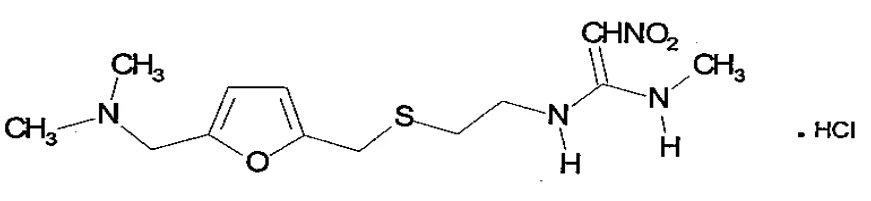
Chemical Name: (n-{2-[({5-[(dimethylamino)-methyl]-2-furanyl}-methyl) thio] ethyl}-n-methyl-2-nitro-l,l-ethenediamine, hydrochloride.
Molecular Formula: C13H22N4O3S HCl
Molecular Mass: 350.87 g/mol (as hydrochloride salt)
Structural Formula:
Physicochemical Properties:
Description: Ranitidine hydrochloride is a practically odorless white to pale yellow crystalline powder.
Solubility: At room temperature, ranitidine hydrochloride is soluble in water, methanol, ethanol, and chloroform.
CLINICAL TRIALS
Comparative Bioavailability Studies
A single center, randomized, single-dose, blinded, 2-period, 2-sequence crossover comparative bioavailability study was performed under fasting conditions on Ranitidine Hydrochloride tablets using Pharmascience Inc. pms-RANITIDINE 300 mg tablets versus the reference product, ZANTAC® 300 mg Tablets, by GlaxoSmithKline Inc. Canada. Twenty-two healthy male volunteers took part in the study. The pharmacokinetic data calculated for the pms-RANITIDINE 300 mg and ZANTAC® 300 mg tablets formulation are tabulated below:
SUMMARY TABLE OF THE COMPARATIVE BIOAVAILABILITY DATA
Ranitidine (1 x 300 mg tablet) From measured data Geometric Mean Arithmetic Mean (CV %) | ||||
|---|---|---|---|---|
| Parameter | pms-RANITIDINE | ZANTAC† | % Ratio of Geometric Means | Confidence Interval (90%) |
AUCT (ng·h/mL) | 4656.9 4801.8 (25.2) | 4636.2 4775.4 (23.1) | 100.45 | 94.03 – 107.31 |
AUCI (ng·h/mL) | 4781.1 4929.1 (25.0) | 4759.3 4901.2 (23.0) | 100.46 | 94.15 – 107.19 |
Cmax (ng/mL) | 987.2 1032.4 (30.5) | 915.9 961.8 (32.4) | 107.79 | 98.86 – 117.52 |
Tmax§ (h) | 2.84 (1.33 – 4.00) | 3.00 (1.67 – 4.00) | ||
T½2 (h) | 2.79 (11.7) | 2.85 (16.4) | ||
† ZANTAC was manufactured by GlaxoSmithKline Inc., Canada, and was purchased in Canada. Sanofi Consumer Health Inc. is the current manufacturer for ZANTAC.
§ Expressed as the median (range)
2 Expressed as the arithmetic mean (CV %)
DETAILED PHARMACOLOGY
Animal Pharmacology
Ranitidine is a potent competitive reversible, selective antagonist of histamine at H2-receptors in vitro and in vivo. Thus, ranitidine antagonized the actions of histamine at H2-receptors in the rat isolated uterus and in the guinea-pig isolated atrium. Ranitidine is not an anticholinergic agent. On a molar basis, ranitidine is 4 to 5 times more active than cimetidine with a pA2 value of 7.2. In concentrations 1,000 times greater than those required to block H2-receptors, it failed to block either H1-receptors or muscarinic receptors in the guinea-pig isolated ileum. The beta-adrenoceptor responses of the rat uterus and guinea pig atrium to isoprenaline were also unaffected by ranitidine.
Blockade of histamine H2-receptors in the stomach in vivo is the pharmacological action of ranitidine with greatest immediate clinical relevance. Ranitidine inhibits gastric secretion induced by various secretagogues in both the rat and dog.
In the conscious dog with a Heidenhain pouch, ranitidine given orally or intravenously antagonized gastric acid secretion induced by histamine, pentagastrin and bethanechol. Ranitidine was 5 to 10 times more active than cimetidine. However, both ranitidine and cimetidine had similar time curves of action. Ranitidine also inhibited the gastric secretory response to food in the conscious fistulated dog.
Ranitidine inhibited acid secretion in the perfused stomach of the anaesthetized rat, and acetylsalicylic acid-induced gastric lesion formation in the conscious rat, both in the presence and absence of excess hydrochloric acid. Measurements of the ratio of mucosal blood flow to acid secretion show that the inhibitory action of ranitidine upon gastric acid secretion cannot be attributed to changes in blood flow.
There were no behavioral effects in the mouse and rat after oral administration of 800 mg/kg ranitidine. Cats and dogs dosed with ranitidine 80 mg/kg orally, exhibited no behavioral effects indicative of an action on the central nervous system, although at this high dose level in the dog there was an indication of peripheral vasodilation and skin irritation due to released histamine. Ranitidine, when co-administered with the following CNS modulating preparations; codeine, hexobarbitone, ethyl alcohol, chlordiazepoxide, chlorpromazine, imipramine, -methyldopa, reserpine, apomorphine or pentylenetetrazol, did not alter the pharmacological effects of either preparation.
At a dose level 45 times the antisecretory ED50, intravenous infusion of ranitidine had no effect on the heart rate, blood pressure or electrocardiogram of the anaesthetized dog. The respiratory system was unaffected by ranitidine after oral doses in the mouse, rat, rabbit, cat and dog and after intravenous doses in the dog.
In the conscious dog, ranitidine had no appreciable effect on blood pressure or heart rate when administered orally at 10 mg/kg. There were short-lived falls in diastolic blood pressure after an intravenous dose of 10 mg/kg, 370 times the antisecretory dose level. There was no evidence of arrhythmia nor of any electrocardiographic abnormality.
Long-term toxicity studies have shown that ranitidine does not possess antiandrogenic activity nor does it displace dihydrotestosterone from the androgen binding sites.
Metoclopramide, atropine and acetylsalicylic acid in the rat produced no change in the antisecretory activity of ranitidine.
The effect of ranitidine on anti-inflammatory drugs was varied. There was no effect on the anti-inflammatory action of prednisolone, but the anti-inflammatory action of indomethacin was enhanced. Administration of ranitidine reduced the frequency of acetylsalicylic acid- and indomethacin-induced gastric erosions. The antinociceptive action of acetylsalicylic acid was reduced after ranitidine treatment.
Ranitidine, unlike cimetidine, does not inhibit the hepatic mixed function oxygenase system. Spectral interaction studies have shown that whilst cimetidine binds strongly to cytochrome P450, ranitidine has only weak affinity for this enzyme. Cimetidine is known to impair the metabolism of pentobarbitone and warfarin. In doses of up to 166 mg/kg in the rat, ranitidine had no effect on the pentobarbitone sleeping time or the pharmacokinetics and pharmacodynamics of warfarin.
Metabolism, Distribution and Excretion
The metabolism of ranitidine hydrochloride has been studied in four species of laboratory animal (mouse, rat, rabbit and dog) using radio-labelled drug. The drug was rapidly absorbed after oral administration. In the mouse, rat and rabbit between 30% and 60% of the administered radioactivity was excreted in the urine, the remainder being recovered in the feces.
In the mouse 47% was excreted in the urine within 24 hours. In the rat, N-demethylation of ranitidine was the major route of metabolism. 30% of the administered dose was excreted in the urine as unchanged drug, up to 14% as desmethylranitidine, 3 – 6% as the N-oxide and 4% as the S-oxide. In rat bile the major radioactive components were ranitidine and an unidentified metabolite known as “Fast-Running Metabolite” (FRM) which is thought to be a charge transfer complex of ranitidine with bile pigments.
In the rabbit, sulphoxidation of ranitidine was the major route of metabolism, 18% of the administered dose being excreted in the urine as unmetabolized ranitidine, 8% as S-oxide, 2 – 4% as the N-oxide, and 2 – 4% as desmethylranitidine.
In the dog up to 70% of the administered dose was excreted in the first 24 hours. About 40% of the drug was excreted in the urine as unchanged ranitidine and up to 30% as the N-oxide, N-oxidation being the main route of metabolism of ranitidine in the dog. The N-oxide was also the major radioactive component present in dog bile together with small amounts of unchanged ranitidine and FRM.
In the rat, rabbit and dog, less than 10.1% of ranitidine in plasma is protein bound. Within one to seven days of administration of radio-labelled drug in the rat and dog over 99% of the radioactivity was cleared from the body. In common with many drugs, radioactivity persisted in the uveal tract of these two species, the half-life in the dog uveal tract being of the order of 6 months. Ranitidine and its S-oxide have greater affinity for melanin than the desmethyl metabolite; the N-oxide is bound only to a small extent.
The placental transfer of radioactive ranitidine and its metabolites has been studied in the pregnant rat and rabbit. Whole body autoradiography of rat and rabbit fetuses showed that small amounts of radioactivity were present in the uveal tract of the fetal eye in both species, in the gall bladder and intestine of the rabbit fetus and in the bladder of the rat fetus. Radioactivity was also detected in the salivary and mammary glands of the maternal rat and at very low concentration, in the milk.
Human Pharmacokinetics
Serum concentrations necessary to inhibit 50% of stimulated gastric acid secretion are estimated to be 36 to 94 ng/mL. Following a single oral dose of 150 mg, serum concentrations of ranitidine are in this range for up to 12 hours. There is a relationship between plasma concentrations of ranitidine and suppression of gastric acid production but wide interindividual variability exists.
Lower than prescription doses of ranitidine significantly reduce meal-stimulated intragastric acidity in human subjects. The effect is dose-related, and acidity declines linearly with increasing doses of ranitidine.
Ranitidine is 50% absorbed after oral administration compared to an IV injection with mean peak levels of 440 to 545 ng/mL occurring two to three hours after a 150-mg dose. The elimination half-life is 1.5 to 3 hours.
The pharmacokinetics of lower doses of ranitidine have also been studied. Peak plasma concentrations and AUC showed a linear relationship over the dose range 20 – 80mg; Tmax, t1/2 and clearance were independent of dose.
Ranitidine is absorbed very rapidly after an intramuscular injection. Mean peak levels of 576 ng/mL occur within 15 minutes or less following a 50-mg intramuscular dose. Absorption from intramuscular sites is virtually complete, with a bioavailability of 90% to 100% compared with intravenous administration.
The principal route of excretion is the urine, with approximately 30% of the orally-administered dose collected in the urine as unchanged drug in 24 hours. Renal clearance is about 530 mL/min, indicating active tubular excretion, with a total clearance of 760 mL/min. The volume of distribution is 1.4 L/kg. Serum protein binding averages 15%.
Studies in patients with hepatic dysfunction (compensated cirrhosis) indicate that there are minor, but clinically insignificant alterations in ranitidine half-life, distribution, clearance and bioavailability.
The gastric antisecretory activity of ranitidine metabolites has been examined. In man, both the principal metabolite in the urine, the N-oxide (4% of the dose) and the S-oxide (1%) possess weak H2-receptor blocking activity but desmethylranitidine (1%) is only 4 times less potent than ranitidine in the rat and half as potent as ranitidine in the dog.
TOXICOLOGY
Animals
Toxicology, Impairment of Fertility, Carcinogenesis and Mutagenesis
Ranitidine hydrochloride has been subjected to exhaustive toxicological testing which has demonstrated the lack of any specific target organ or any special risk associated with its clinical use.
Acute Toxicity Studies
In mice and rats, the intravenous LD50 is of the order of 75 mg/kg, whereas orally, even doses of 1,000 mg/kg are not lethal. In dogs, the oral minimum lethal dose is 450 mg/kg/day. High single doses of ranitidine (up to 80 mg/kg orally) show only minimal and reversible signs of toxicity, some of which are related to transitory histamine releases.
Long-Term Toxicity Studies
In the long-term toxicity and carcinogenicity studies, very high doses of ranitidine were given daily to mice (up to 2,000 mg/kg/day) throughout their normal life-span, and to dogs (up to 450 mg/kg/day) for periods of up to one year.
These doses produced massive plasma ranitidine concentrations far in excess of those found in human patients receiving ranitidine at the recommended therapeutic dose. For example, in the dogs, peak plasma concentrations were in excess of 115 mcg/mL and in mice basal plasma levels were in the range of 4 – 9 mcg/mL. In man, after oral administration of 150 mg ranitidine, the mean peak plasma concentration (Cmax) was between 360 and 650 ng/mL. In the rat, doses as high as 2,000 mg/kg/day were well-tolerated, the only morphological change seen was the increased incidence of accumulations of foamy alveolar macrophages in the lungs. The accumulations of these cells is a natural phenomena in aging rats and chronic administration of a wide variety of drugs has been known to contribute to this process. Therefore, it is unlikely that the pharmacologic concentrations of ranitidine administered to these rats contributed to this natural process.
In the six-week and six-month oral studies in the dog (100 mg/kg/day) loose feces were occasionally detected, while in the six-month study loose stools were accompanied on eight occasions by mucus-like material and sometimes by blood, mostly from one dog. Loose feces, salivation and vomiting were observed in the 54-week dog study.
In isolated cases, dogs passed red-stained feces which occasionally tested positive for occult blood. When the dose level was increased from 100 mg/kg/day to 225 – 450 mg/kg/day, no further red-stained feces were seen, suggesting that any relationship to ranitidine is unlikely. Post-mortem examination of the dogs revealed no ranitidine-induced changes in the alimentary tract.
One dog had marginally raised levels of plasma alanine aminotransferase and alkaline phosphatase during the six-week study. This same dog also showed some necrotic foci in the liver. Small lesions of focal necrosis and fibrosis were also seen in one piece of liver from one female dog treated with 100 mg/kg for six months. No other differences were detected by light and electron microscopic examination of the treated and control livers. Since the focal lesions were seen in only one dog and were restricted to one piece of liver, it suggests that they were not caused by ranitidine.
Muscular tremors, an inability to stand, and rapid respiration were seen on occasion in dogs treated with 225 mg/kg/day in the 54-week study. The prevalence of these observations was increased when the dose was increased to a toxic level of 450 mg/kg/day. One dog died: no specific pathological changes or reason for the death was discovered.
Changes in the color or granularity of the tapetum lucidum of the eye were detected in three dogs receiving the highest dose of ranitidine (450 mg/kg/day) during the 54-week study. In one dog this change was considered to be related to treatment. The change, a pallor of the tapetum, was reversible. No changes were seen with light or electron microscopic examination of the eye. The changes in the tapetum are of no clinical significance in humans since (i) humans do not have a tapetum lucidum and (ii) the changes were only seen at toxic pharmacological concentrations of ranitidine.
The mean serum glutamic pyruvic transaminase values for dogs treated at 450 mg/kg/day were significantly greater, albeit marginally, than the control values. These enzyme increases were not accompanied by any histological changes.
Studies in which ranitidine was administered parenterally were performed. No sign of specific local irritation attributable to ranitidine was detected. In the rat, no biochemical or histopathological changes were observed at intravenous dose levels as high as 20 mg/kg. Specifically, no significant changes were found in the veins or subcutis. Mild lesions in some muscle samples were observed: usually, the cells were basophilic and smaller than normal; and the nuclei were swollen, more numerous, and sometimes had migrated to the center of the cell. In the rabbit, slight infiltration of the pannicular muscle by mononuclear cells were noted. This minor subcutaneous reaction was uncommon and showed no group related distribution. There was no apparent difference in irritancy between ranitidine injection and placebo injection. In the rat, intravenous ranitidine at dose levels of 5.0 and 10.0 mg/kg daily for 15 days and 28 days produced no treatment related changes of biological importance in the hematopoietic system.
In Beagle dogs, intravenous ranitidine injection in doses up to 10 mg/kg/day for 28 and 42 days, produced no drug-related change in circulating erythrocytes or leukocytes and had no adverse effects on the hematopoietic system. No dose related changes were seen in electrocardiograms of Beagle dogs receiving up to 10 mg/kg ranitidine by intravenous injection. At dosage levels of up to 30 mg/kg, administered twice daily to Beagle dogs for 14 or 15 days, intravenous ranitidine injection produced no changes of biological significance in hematology, clinical chemistry or urinalysis.
No changes were observed in the eyes of dogs (specifically the tapetum lucidum) receiving ranitidine in doses up to 30 mg/kg twice daily for 15 days. At intravenous doses above 1.25 mg/kg, ranitidine injection produced immediate and transient reactions in the Beagle dog. The following reactions were typically produced by the administration of 1.25 mg/kg: bloodshot eyes, closing and watering of eyes, defecation, diarrhea, erythema, flatus, licking of lips, running nose, salivation, subdued behaviour, swallowing, tachycardia, and trembling. The range and severity of the effects was aggravated by increased dosage.
Reproduction Studies (Impairment of Fertility)
Reproduction studies were carried out in the rat and rabbit. Rats were exposed to ranitidine before and during mating, throughout pregnancy, lactation and during the weaning period. No effects on the reproductive process were seen and there was no evidence of an anti-androgenic effect.
A total of 2,297 fetuses from rats treated with ranitidine were examined. There was no evidence that ranitidine is a rat teratogen. Cleft palates occurred in fetuses from both treatment groups, however, there were significantly more in the control rat population.
A total of 944 fetuses from rabbits treated with ranitidine were examined; no drug-related adverse events or abnormalities in the fetuses were observed.
Rabbits receiving a bolus intravenous injection of ranitidine (10 mg/kg) once daily on gestation days 7 – 16 exhibited a reduction in weight gain. Their fetuses weighed significantly less than fetuses of untreated controls. In addition, 12.4% of ranitidine exposed fetuses had cleft palates. Reanalysis of this and a companion study performed to assess reproducibility demonstrated a lack of data reproducibility. Therefore, the effects observed in the first trial are aberrant, and should not form the basis for maternal or fetal toxicity.
In the subsequent study, no evidence of maternal or fetal toxicity was observed in rabbits dosed with 100 mg/kg ranitidine orally during days 2 – 29 of pregnancy. The peak plasma levels of ranitidine after a 100 mg/kg oral dose are similar to those obtained one minute after a 10 mg/kg dose administered intravenously (20 – 25 mcg/mL). Therefore, no teratogenic effects of ranitidine have been demonstrated at doses of 10 mg/kg (IV) and 100 mg/kg (Tablets) in rabbits.
Carcinogenicity Studies
There is no evidence that ranitidine is a carcinogen. Long-term toxicity and carcinogenicity studies have involved the treatment of 600 mice and 636 rats at doses up to 2,000 mg/kg for two years and 129 weeks respectively and 42 dogs at doses up to 450 mg/kg/day for periods up to one year. These dose levels are far in excess of those to be used therapeutically in man. None of these animals had any intestinal metaplasia. There was no evidence of a tumorigenic effect of ranitidine in any other tissue.
Mutagenesis
Ranitidine is not mutagenic at doses as great as 30 mg/plate in the Ames Assay utilizing Salmonella typhimurium (TA 1538, TA 98, TA 100 and TA 1537) or in doses of 9 mg/plate utilizing Escherichia coli (WP2 and WP2 uvrA) with or without activation.
Ranitidine at concentrations of 20-30 mg/plate had a weak direct mutagenic action in S. typhimurium TA 1535 and at 9 mg/plate in E. coli WP67. Ranitidine hydrochloride was not mutagenic at a concentration of 2 mg/mL in E. coli or S. typhimurium in the more sensitive Oral Solution microtitre fluctuation assay method. This weak direct mutagenic effect is of no clinical significance; the magnitudes of ranitidine concentration used in these assays are thousands of times greater than that attained therapeutically in human plasma.
The principal metabolites of ranitidine in man were not significantly mutagenic. This conclusion is supported by the following experiment. A test solution obtained by interacting ranitidine (10 mM) and sodium nitrite (40 mM) was mutagenic in S. typhimurium (TA 1535) but not in S. Typhimurium (TA 1537) or in E. Coli (WP67 or WP2 uvrA). This positive result is attributable to the presence of a nitrosonitrolic acid derivative AH 23729, which was mutagenic. When the sodium nitrite concentration was reduced to 15 mM or less, the solution was not mutagenic in any of the test microorganisms. The formation of AH 23729 requires concentrations of nitrous acid far in excess of those encountered in any probable physiological conditions. The other nitrosation products were not mutagenic in any of the microorganisms tested. There is no reason, therefore, for supposing that ranitidine is likely to be mutagenic in animals or man as a consequence of nitrosation in the stomach.
There is no evidence from long-term toxicology, carcinogenicity and mutagenicity studies in animals to suggest that ranitidine is likely to have any deleterious effects in man when administered at therapeutic dose levels.
REFERENCES
- 1. Andersen M, Schou JS. Adverse reactions to H2-receptor antagonists in Denmark before and after transfer of cimetidine and ranitidine to over-the-counter status. Pharmacol Toxicol 1991; 69: 253-8.
- 2. Boehning W. Effect of cimetidine and ranitidine on plasma theophylline in patients with chronic obstructive airways disease treated with theophylline and corticosteroids. Eur J Clin Pharmacol 1990; 38: 43-5.
- 3. Bye A, Lacey LF, Lettis S, Dixon JS, Felgate LA. Effect of ranitidine (150mg bd) on the pharmacokinetics of increasing doses of alcohol (0.15, 0.3, 0.6g/kg). Am J Gastroenterol 1993; 88: 1590 A437.
- 4. Callaghan JT, Nyhart EH. Drug interactions between H2-blockers and theophylline or warfarin. Pharmacologist 1988; 30: A14.
- 5. Das AF, Freston JW, Jacobs J, Fox NA, Morton RE. An evaluation of safety in 37,252 patients treated with cimetidine or ranitidine. Internal Medicine 1990; 11: 127-49
- 6. Dent J, Dodds WJ, Friedman RH et al,. Mechanism of gastroesophageal reflux in recumbent asymptomatic human subjects. J Clin Invest 1980; 65: 256-67.
- 7. Desmond PV, Mashford ML, Harman PJ et al. Decreased oral warfarin clearance after ranitidine and cimetidine. Clin Pharmacol Ther 1984; 35: 338-41.
- 8. Eandi M, De Carli GF, Recchia G, Colonna CV. Ranitidine: Eight years of post-marketing drug surveillance. Post Marketing Surveillance 1990; 4: 1-8.
- 9. Furman D, Mensh R, Winan G et al: A double-blind trial comparing high dose liquid antacid to placebo and cimetidine in improving symptoms and objective parameters in gastroeosophageal reflux. Gastroenterol 1982; 82: 1062.
- 10. Garcia - Rodriguez LA, Jick H. Risk of gynaecomastia associated with cimetidine, omeprazole,and other anti-ulcer drugs. Brit Med J 1994; 308: 503-6.
- 11. Graham DY, Patterson DJ. Double-blind comparison of liquid antacid and placebo in the treatment of symptomatic reflux oesophagitis. Dig Dis Sci 1983; 28: 559-63.
- 12. Graham DY, Smith JL, Patterson DJ. "Why do apparently healthy people use antacid tablets?". Am J Gastroenterol 1983; 78: 257-60.
- 13. Hansten PD. 1994 Drug Interaction of H2-receptor antagonists.
- 14.
Inman WAW. Drug Surveillance Research Unit. University of Southampton PEM.
Prescription Event Monitoring News 1983; 1: 9-13.
- 15. Grove O, Bekker C, Jeppe-Hansen MG et al. Ranitidine and high-dose antacid in reflux oesophagitis. Scand J Gastroenterol 1985; 20: 457-61.
- 16. Johnsen R, Bernersen B, Straume B, Førde OH, Bostad L, Burhol PG. Prevalences of endoscopic and histological findings in subjects with and without dyspepsia. Brit Med J 1991; 302: 749-52.
- 17. Johnson CD, Milward-Sadler GH, Jones R. Endoscopic findings in patients with heartburn who have not sought medical advice. Hellenic J Gastroenteral 1992; 5(Suppl): 141(A563).
- 18. Jones RH, Lydeard SE, Hobbs FDR et al. Dyspepsia in England and Scotland. Gut 1990; 31: 401-5.
- 19. Jones R, Lydeard S. Prevalence of symptoms of dyspepsia in the community. Brit Med J 1989; 298: 30-2.
- 20. Kelly HW, Powell JR, Donohue JF. Ranitidine at very large doses does not inhibit theophylline elimination. Clin Pharmacol Ther 1986; 39: 577-81.
- 21. Klauser AG, Schindlbeck NE, Müller-Lissner SA. Symptoms in gastro-oesophageal reflux disease. Lancet 1990; 335: 205-8.
- 22. Koss MA, Hogan DL, Lane J, Steinbach JH, Isenberg JI. Anti-secretory effects and pharmacokinetics of low dose ranitidine. Aliment Pharmacol Ther 1993; 7: 417-22.
- 23. Levitt MD. Lack of clinical significance of the interaction between H2-receptor antagonists and ethanol. Aliment Pharmacol Ther 1993; 7: 131-8.
- 24. Mills JG, Clancy A, Bond B et al. A comparison of the effects of cimetidine, ranitidine, oxmetidine and placebo on the metabolism and clearance of racemic warfarin. Br J Clin Pharmacol 1986; 21: 566P-567P.
- 25. Mitchard M, Harris A, Mullinger BM. Ranitidine drug interactions: a literature review. Pharmacol Ther 1987; 32: 293-325.
- 26. Müller-Lissner SA, Koch EMW, Geerke H. Uncomplicated gastro-oesophageal reflux disease. Symptomatic treatment with ranitidine. Münch Med Wschr 1992; 134: 212-5.
- 27. Murdoch RH, Pappa KA, Giefer EE, Payne JE, Sanders M, Sirgo M. Endoscopic findings in a target population for over-the-counter treatment of heartburn. Gastroenterology 1994; 106(4, pt2): A146.
- 28.
Nebel OT, Fornes MF, Castell DO. Symptomatic gastroesophageal reflux: incidence and
precipitating factors. Dig Dis 1976; 21: 953-6.
- 29. O’Reilly RA. Comparative interaction of cimetidine and ranitidine with racemic warfarin in man. Arch Intern Med 1984; 144: 989-91.
- 30. Perrin VL. Safety evaluation of ranitidine in The Clinical Use of Ranitidine - Proceedings of an International Symposium Ed Wesdorp ICE Theracom 1982; pp48-54.
- 31. Ruth M, Månsson I, Sandberg N. The prevalence of symptoms suggestive of oesophageal disorders. Scand J Gastroenterol 1991; 26: 73-81.
- 32. Serlin MJ, Sibeon RG, Breckenridge AM. Lack of effect of ranitidine on warfarin action. Br J Clin Pharmacol 1981; 12: 791-4.
- 33. Smith SR, Kendall MJ. Ranitidine versus cimetidine. A comparison of their potential to cause clinically important drug interactions. Clin Pharmacokinet 1988; 15: 44-56.
- 34. Sontag S, Robinson M, McCallum RW et al. Ranitidine therapy for gastro-oesophageal reflux disease. Results of a large double-blind trial. Arch Int Med 1987; 147: 1485-92.
- 35. Toon S, Hopkins KJ, Garstang FM, Rowland M. Comparative effects of ranitidine and cimetidine on the pharmacokinetics and pharmacodynamics of warfarin in man. Eur J Clin Pharmacol 1987; 32: 165-72.
- 36. Watts RW, Hetzel DJ, Bochner F et al. Lack of interaction between ranitidine and phenytoin. Brit J Clin Pharmacol 1983; 15: 499-500.
- 37. Weberg R, Berstad A, Osnes M. Comparison of low-dose antacids, cimetidine and placebo on 24-hour intragastric acidity in healthy volunteers. Dig Dis Sci 1992; 37: 1810-14.
- 38. Weberg R, Berstad A. Symptomatic effect of a low-dose antacid regimen in reflux esophagitis. Scand J Gastronenterol 1989; 24: 401-6.
- 39. Wienbeck M, Berges W. Oesophageal disorders in the aetiology and pathophysiology of dyspepsia. Scand J Gastroenterol 1985; 20(suppl 109): 133-43.
- 40. Gertz B, Holland S, Kline W, Matuszewski B, Freeman A, Quan H, Lasseter K, Mucklow J, Porras A. Studies of the oral bioavailability of alendronate. Clin Pharmacol Ther. 1995;58:288- 98.
- 41. Deppermann K-M, Lode H, Hoffken G, Tschink G, Kalz C, Koeppe P. Influence of ranitidine, pirenzepine, and aluminum magnesium hydroxide on the bioavailability of various antibiotics, including amoxicillin, cephalexin, doxycycline, and amoxicillin-clavulanic acid. Anti Microb Chem. 1989;33(11):1901-1907.
- 42. Grasela T, Schentag J, Sedman A, Wilton J, Thomas D Schultz R, Lebsack M, Kinkel A. Inhibition of enoxacin absorption by antacids or ranitidine. Antimicrob Agents Chemother. 1989;33(5):615-617.
- 43. Lebsack M, Nix D, Ryerson B, Toothaker R, Welage L, Norman A, Schentag J, Sedman A. Effect of gastric acidity on enoxacin absorption. Clin Pharmacol Ther. 1992;52:252-56.
- 44. Winship L, McKenney J, Wright J, Wood J, Goodman R. The effect of ranitidine and cimetidine on single-dose diltiazem pharmacokinetics. Pharmacotherapy. 1985;5:16-19.
- 45. Muirhead M, Bochner F, Somogyi A. Parmacokinetic drug interactions between triamterene and ranitidine in humans: alterations in renal and hepatic clearances and gastrointestinal absorption. J Pharmacol Exp Ther. 1987 ;244(2):734-739.
- 46. Williams D, Feely J. Pharmacokinetic-pharmacodynamic drug interactions with HMG-CoA reductase inhibitors. Clin Pharmacokinet. 2002;41(5):343-370.
- 47. Chatzizisis Y, Koskinas K, Misirli G, Vaklavas C, Hatzitolios A, Giannoglou. Risk factors and drug interactions predisposing to statin-induced myopathy: implications for risk assessment, prevention and treatment. Drug Saf. 2010;33(3):171-187.
- 48. Product Monograph for ZANTAC® and ZANTAC® Maximum Strength Non-Prescription, Sanofi Consumer Health Inc.; Date of revision: December 5, 2019; Control No. 231962.