


Product Monograph - PMS-Nizatidine
1 INDICATIONS
pms-NIZATIDINE (nizatidine capsules) is indicated for:
- the treatment of conditions where a controlled reduction of gastric acid secretion is required such as for ulcer healing and/or pain relief: acute duodenal ulcer, acute benign gastric ulcer, gastroesophageal reflux disease and prophylactic use in duodenal ulcer.
1.1 Pediatrics
Pediatrics (under 18 years of age): No data are available to Health Canada; therefore, Health Canada has not authorized an indication for pediatric use.
1.2 Geriatrics
Geriatrics (over 65 years of age): Evidence from clinical studies and experience do not suggest that use in the geriatric population is associated with differences in safety or effectiveness.
Age alone is not an important factor in determining the disposition of nizatidine; however elderly patients may have reduced renal function. See 4 DOSAGE AND ADMINISTRATION; 7.4 WARNINGS AND PRECAUTIONS, Geriatrics; and 10.3 CLINICAL PHARMACOLOGY, Pharmacokinetics, Elimination.
2 CONTRAINDICATIONS
- pms-NIZATIDINE is contraindicated in patients who are hypersensitive to this drug or to any ingredient in the formulation, including any non-medicinal ingredient, or component of the container. For a complete listing, see 6 DOSAGE FORMS, STRENGTHS, COMPOSITION AND PACKAGING.
- pms-NIZATIDINE is contraindicated in patients with a history of previous hypersensitivity to other H2-receptor antagonist agents (cross sensitivity in this class of compounds has been observed).
4 DOSAGE AND ADMINISTRATION
4.2 Recommended Dose and Dosage Adjustment
Duodenal or Gastric Ulcer: One 300 mg capsule or two 150 mg capsules once daily at bedtime. Alternatively, 150 mg twice daily may be used. Healing occurs within 4 weeks in most cases of
duodenal ulcer; but if healing is not documented or has not occurred, therapy should be given for 8 weeks.
Maintenance Therapy in Duodenal Ulcer: One 150 mg capsule once daily at bedtime for 6 - 12 months depending on the severity of the condition.
Gastroesophageal Reflux Disease: One 150 mg capsule twice daily for the treatment of erosions, ulcerations and associated heartburn.
Antacids may be given concomitantly if needed.
Dose Adjustment in Renal Impairment
| Renal Function | Creatinine Clearance (mL/min.) | Dosage | |
| Acute | Maintenance | ||
| Normal | > 50 | 300 mg/day | 150 mg/day |
| Moderate Impairment | 20-50 | 150 mg/day | 150 mg/2nd day |
| Severe Impairment | < 20 | 150 mg/2nd day | 150 mg/3rd day |
4.4 Administration
Take this medicine with a full glass of water.
4.5 Missed Dose
Take the missed dose as soon as you remember. Skip the missed dose if it is almost time for your next scheduled dose. Do not take extra medicine to make up the missed dose.
5 OVERDOSAGE
There is little clinical experience with deliberate overdosage of nizatidine in humans. Test animals that received large doses of nizatidine have exhibited cholinergic-type effects, including lacrimation, salivation, emesis, miosis, and diarrhea. Should overdosage occur, use of activated charcoal, emesis, or lavage should be considered along with clinical monitoring and supportive therapy. Renal dialysis does not substantially increase clearance of nizatidine due to its large volume of distribution.
For management of a suspected drug overdose, contact your regional poison control centre.
6 DOSAGE FORMS, STRENGTHS, COMPOSITION AND PACKAGING
Table 1 – Dosage Forms, Strengths, Composition and Packaging
Capsules 150 mg: Hard gelatin size #2 capsules with an opaque yellow cap and a lighter yellow opaque body. Capsules are printed in black ink; the cap is printed “ab” and the body is printed “N 150”. Capsules are filled with light yellow powder. Capsules contain 150 mg nizatidine and are available in natural HDPE bottles of 100.
Capsules 300 mg: Hard gelatin size#1 capsules with an opaque brown cap and an opaque yellow body. Capsules are printed in black ink with “AXID over 300 mg” on one half and “AXID over 3145” on the other. Capsules are filled with light yellow powder. Capsules contain 300 mg nizatidine and are available in natural HDPE bottles of 100.
| Route of | Dosage Form / | Non-medicinal Ingredients | ||||
| Administration | Strength/Composition | |||||
| Oral | Capsules 150 mg | Corn starch, magnesium stearate, pregelatinized starch and silicon fluid. The printed capsule shells contain also benzyl alcohol, butylparaben, calcium disodium edetate, carboxy-methylcellulose sodium, gelatin, iron oxide black, iron oxide yellow, methylparaben, potassium hydroxide, propylparaben, shellac, sodium lauryl sulfate, sodium propionate and titanium dioxide | ||||
| Oral | Capsules 300 mg | Corn starch, carboxymethylcellulose sodium, pregelatinized starch, povidone, silicon fluid and talc. The printed capsule shells contain also benzyl alcohol, butylparaben, calcium disodium edetate, gelatin, iron oxide black, iron oxide red, iron oxide yellow, methylparaben, potassium hydroxide, propylparaben, shellac, sodium lauryl sulfate, sodium propionate and titanium dioxide | ||||
7 WARNINGS AND PRECAUTIONS
Endocrine and Metabolism
The prolonged use of H2-receptor antagonists may impair the absorption of protein-bound Vitamin B12 and may contribute to the development of cyanocobalamin (vitamin B12) deficiency.
Gastrointestinal
Where gastric ulcer is suspected the possibility of malignancy should be excluded before therapy with pms-NIZATIDINE is instituted.
Hepatic/Biliary/Pancreatic
Nizatidine is partially metabolized in the liver; however, in patients with mild to moderate hepatic dysfunction, disposition of nizatidine is similar to that of normal subjects.
Monitoring and Laboratory Tests
False-positive tests for urobilinogen with Multistix® may occur during therapy with nizatidine.
Renal
As nizatidine is excreted via the kidney, dosage should be adjusted in patients with moderately or severely impaired renal function (see 4 DOSAGE AND ADMINISTRATION and 10 CLINICAL PHARMACOLOGY, 10.3 Pharmacokinetics, Elimination).
7.1 Special Populations
7.1.1 Pregnant Women
The safety of nizatidine during pregnancy has not been established. Reproduction studies performed in rats and rabbits at doses up to 300 times the human dose have revealed no evidence of impaired fertility or teratogenicity. If the administration of pms-NIZATIDINE is considered to be necessary, its use requires that the potential benefits be weighed against possible hazards to the patient and to the fetus.
7.1.2 Breast-feeding
Nizatidine is secreted in human breast milk in proportion to maternal plasma concentrations (<0.1%); therefore, pms-NIZATIDINE should not be used in lactating women except when the anticipated benefits clearly outweigh the potential risks to the infant. Caution should be exercised when pms-NIZATIDINE is administered to nursing mothers.
7.1.3 Pediatrics
Pediatrics (under 18 years of age): No data are available to Health Canada; therefore, Health Canada has not authorized an indication for pediatric use.
7.1.4 Geriatrics
Geriatrics (over 65 years of age): Ulcer healing rates in elderly patients are similar to those in younger age groups. The incidence rates of adverse events and laboratory test abnormalities are also similar to those seen in other age groups. Age alone is not an important factor in determining the disposition of nizatidine. However elderly patients may have reduced renal function (see 4 DOSAGE AND ADMINISTRATION and 10.3 CLINICAL PHARMACOLOGY, Pharmacokinetics, Elimination).
8 ADVERSE REACTIONS
8.1 Adverse Reaction Overview
The following common adverse events were reported by patients taking nizatidine in clinical trials: sweating, urticaria and somnolence.
8.2 Clinical Trial Adverse Reactions
Clinical trials are conducted under very specific conditions. The adverse reaction rates observed in the clinical trials; therefore, may not reflect the rates observed in practice and should not be compared to the rates in the clinical trials of another drug. Adverse reaction information from clinical trials may be useful in identifying and approximating rates of adverse drug reactions in real-world use.
Worldwide, controlled clinical trials of nizatidine included over 6,000 patients given nizatidine in studies of varying durations. Placebo-controlled trials in the United States and Canada included over 2,600 patients given nizatidine and over 1,700 given placebo. Among the adverse events in these placebo-controlled trials, anemia (0.2% vs 0%) and urticaria (0.5% vs 0.1%) were significantly more common in the nizatidine group.
Table 2 lists adverse events that occurred at a frequency of 1% or more among nizatidine-treated patients who participated in placebo-controlled trials in the United States and Canada.
Table 2 Incidence of Treatment-Emergent Adverse Events in Placebo-
Controlled Clinical Trials in the United States and Canada
| Body System/ Adverse Event* | Nizatidine | Placebo | ||||
| n = 2,694 | n = 1,729 | |||||
| (%) | (%) | |||||
| Body as a whole | ||||||
| Headache | 16.6 | 15.6 | ||||
| Abdominal Pain | 7.5 | 12.5 | ||||
| Pain | 4.2 | 3.8 | ||||
| Asthenia | 3.1 | 2.9 | ||||
| Back Pain | 2.4 | 2.6 | ||||
| Chest Pain | 2.3 | 2.1 | ||||
| Infection | 1.7 | 1.1 | ||||
| Fever | 1.6 | 2.3 | ||||
| Surgical Procedure | 1.4 | 1.5 | ||||
| Injury, accident | 1.2 | 0.9 | ||||
| Digestive | ||||||
| Diarrhea | 7.2 | 6.9 | ||||
| Nausea | 5.4 | 7.4 | ||||
| Flatulence | 4.9 | 5.4 | ||||
| Vomiting | 3.6 | 5.6 | ||||
| Dyspepsia | 3.6 | 4.4 | ||||
| Constipation | 2.5 | 3.8 | ||||
| Dry mouth | 1.4 | 1.3 | ||||
| Nausea and Vomiting | 1.2 | 1.9 | ||||
| Anorexia | 1.2 | 1.6 | ||||
| Gastrointestinal Disorder | 1.1 | 1.2 | ||||
| Tooth disorder | 1.0 | 0.8 | ||||
| Musculoskeletal | ||||||
| Myalgia | 1.7 | 1.5 | ||||
| Nervous | ||||||
| Dizziness | 4.6 | 3.8 | ||||
| Body System/ Adverse Event* | Nizatidine | Placebo | ||||
| n = 2,694 | n = 1,729 | |||||
| (%) | (%) | |||||
| Insomnia | 2.7 | 3.4 | ||||
| Abnormal dreams | 1.9 | 1.9 | ||||
| Somnolence | 1.9 | 1.6 | ||||
| Anxiety | 1.6 | 1.4 | ||||
| Nervousness | 1.1 | 0.8 | ||||
| Respiratory | ||||||
| Rhinitis | 9.8 | 9.6 | ||||
| Pharyngitis | 3.3 | 3.1 | ||||
| Sinusitis | 2.4 | 2.1 | ||||
| Cough, increased | 2.0 | 2.0 | ||||
| Skin and Appendages | ||||||
| Rash | 1.9 | 2.1 | ||||
| Pruritus | 1.7 | 1.3 | ||||
| Special Senses | ||||||
| Amblyopia | 1.0 | 0.9 | ||||
*Events reported by at least 1% of nizatidine-treated patients are included.
8.3 Less Common Clinical Trial Adverse Reactions
A variety of less common events were also reported; it was not possible to determine whether these were caused by nizatidine.
Body as a Whole: Serum sickness-like reactions have occurred rarely in conjunction with nizatidine use.
Cardiovascular: In clinical pharmacology studies, short episodes of asymptomatic ventricular tachycardia occurred in 2 individuals administered nizatidine and in 3 untreated subjects.
Central Nervous System: Rare cases of reversible mental confusion have been reported.
Endocrine: Clinical pharmacology studies and controlled clinical trials showed no evidence of antiandrogenic activity due to nizatidine. Impotence and decreased libido were reported with equal frequency by patients who received nizatidine and by those given placebo. Rare reports of gynecomastia occurred.
Genitourinary: Reports of impotence have occurred.
Hematologic: Anemia was reported significantly more frequently in nizatidine- than in
placebo-treated patients. Fatal thrombocytopenia was reported in a patient who was treated with nizatidine and another H2-receptor antagonist. On previous occasions, this patient had experienced thrombocytopenia while taking other drugs. Rare cases of thrombocytopenic purpura have been reported.
Hepatic: Hepatocellular injury, evidenced by elevated liver enzyme tests (SGOT [AST], SGPT [ALT], or alkaline phosphatase), occurred in some patients and was possibly or probably related to nizatidine. In some cases, there was marked elevation of SGOT, SGPT enzymes (greater than 500 IU/L) and, in a single instance, SGPT was greater than 2,000 IU/L. The overall rate of occurrences of elevated liver enzymes and elevations to 3 times the upper limit of normal, however, did not significantly differ from the rate of liver enzyme abnormalities in placebo-treated patients. All abnormalities were reversible after discontinuation of nizatidine. Since market introduction, hepatitis and jaundice have been reported. Rare cases of cholestatic or mixed hepatocellular and cholestatic injury with jaundice have been reported with reversal of the abnormalities after discontinuation of nizatidine.
Hypersensitivity: As with other H2-receptor antagonists, rare cases of anaphylaxis following administration of nizatidine have been reported. Rare episodes of hypersensitivity reactions (e.g., bronchospasm, laryngeal edema, rash, and eosinophilia) have been reported. Because cross sensitivity in this class of compounds has been observed, H2-receptor antagonist should not be administered to individuals with a history of previous hypersensitivity to these agents.
Integumental: Sweating and urticaria were reported significantly more frequently in nizatidine- than in placebo-treated patients. Rash and exfoliative dermatitis were also reported. Vasculitis has been reported rarely.
Other: Hyperuricemia unassociated with gout or nephrolithiasis was reported. Eosinophilia, fever, and nausea related to nizatidine administration have been reported.
9 DRUG INTERACTIONS
9.2 Drug Interactions Overview
No interactions have been observed between nizatidine and:
- theophylline
- chlordiazepoxide
- lorazepam
- lidocaine
- phenytoin
- warfarin
- aminophylline
- diazepam
- metoprolol
Nizatidine does not inhibit the cytochrome P-450-linked drug-metabolizing enzyme system; therefore, drug interactions mediated by inhibition of hepatic metabolism are not expected to occur.
Nizatidine may interact with the use of high doses of aspirin.
9.4 Drug-Drug Interactions
In patients given very high doses (3,900 mg) of ASA daily, increases in serum salicylate levels were seen when nizatidine, 150 mg b.i.d., was administered concurrently.
Interactions with other drugs have not been established.
9.5 Drug-Food Interactions
Absorption of nizatidine is unaffected by food timing (see 10.3 CLINICAL PHARMACOLOGY, Pharmacokinetics, Absorption).
Interactions with specific foods have not been studied.
9.6 Drug-Herb Interactions
Interactions with herbal products have not been established.
9.7 Drug-Laboratory Test Interactions
False-positive tests for urobilinogen with Multistix® may occur during therapy with nizatidine.
10 CLINICAL PHARMACOLOGY
10.1 Mechanism of Action
Nizatidine is a competitive, reversible inhibitor of the histamine H2-receptor of gastric-acid secreting cells. Nizatidine is not an anticholinergic agent. It inhibits nocturnal gastric-acid secretion as well as gastric-acid secretion stimulated by food, caffeine, betazole and pentagastrin. Pepsin output is reduced in proportion to the reduced volume of gastric secretions. Nizatidine has little or no effect on basal serum gastrin or food induced hypergastrinemia.
In animal studies, nizatidine was a competitive, reversible, selective antagonist of the histamine H2 receptors of the rat uterus and the oxyntic cells of the dog stomach. In the conscious dog with a Heidenhain pouch, nizatidine given orally or intravenously antagonized gastric acid secretion induced by histamine, gastrin and methacholine. It was 5 to 10 times more active than cimetidine in this respect.
10.2 Pharmacodynamics
Gastric acid suppression correlates directly with nizatidine doses from 75 to 350 mg. Oral doses of 100 mg or 1.3 mg/kg suppressed gastric acid secretion in sham fed volunteers for 3 hours after the dose. The duration of acid suppression directly correlates with the nizatidine dose. 300 mg nizatidine suppressed acid secretion almost entirely early in the day, and the suppression persisted about 10 hours. Nocturnal acid was suppressed for 10 to 12 hours after 300 mg nizatidine.
Nizatidine was well absorbed from all segments of the dog's small intestine; the ratio of ED50 P.O. to ED50 I.V. for inhibition of maximal response to histamine was 2.2. Identical molar doses of nizatidine given I.V., I.M., or S.C. were equal in peak effect against histamine-induced gastric acid secretion. Nizatidine was more active and exhibited a longer duration of action than cimetidine on food-induced gastric secretion in the dog.
At equi-potent doses of cimetidine and nizatidine, both the binding affinity of nizatidine for the histamine H2 receptors of the gastric mucosa of the bullfrog and the duration of inhibition of histamine-stimulated acid secretion were significantly greater than those of cimetidine.
The correlations between peak inhibition of histamine-induced acid secretion and log-dose of nizatidine (R = 0.93), and peak plasma concentration and log-dose of nizatidine (R = 0.88) were highly significant.
Dogs receiving nizatidine at oral doses of 5 µmol/kg twice daily did not develop tolerance to the antisecretory effects in a 15-day study.
The N-desmethylated metabolite of nizatidine had 61% of the activity of nizatidine on maximal gastric response to histamine. The sulfoxide derivative of nizatidine was inactive.
On a molar basis, the cytoprotective effect of nizatidine on gastric lesions induced by pyloric ligation and aminoguanidine, or HCl and ASA was at least 5 times greater than cimetidine.
Nizatidine does not stimulate receptors in isolated smooth and cardiac muscle preparations of the guinea pig and rat. In anesthetized dogs given I.V. nizatidine, heart rate and cardiac output were slightly decreased, while stroke volume was slightly increased. Other cardiovascular and respiratory parameters were not altered. Nizatidine given orally to rats is devoid of effects on renal function as estimated by changes in the excretion of urine, electrolytes, and creatinine. Nizatidine given orally or I.P. had no effect on extensor convulsions induced by pentylenetetrazole or electric shock, acetic acid-induced writhing, or hexobarbital sleeping time in mice.
Nizatidine has no competitive binding to high affinity, low capacity androgen receptor sites. Nizatidine as tested in rats does not have anti-androgen activity, nor an effect on plasma concentrations of androgen, nor any significant effect on prolactin release.
10.3 Pharmacokinetics
Absorption
Nizatidine is absorbed rapidly after oral administration. Peak plasma concentrations occur from 0.5 to 3 hours after the dose. Absorption is unaffected by food or propantheline. The absolute oral bioavailability of nizatidine is 70.9% + 6.4. Approximately 35% of nizatidine is bound to plasma protein, primarily α-1-glyco-protein. This binding is not influenced by other drugs such as warfarin, diazepam, acetaminophen, propranolol, or phenobarbital.
Antacids consisting of aluminum and magnesium hydroxides with simethicone decrease absorption of nizatidine by about 10%. With food the AUC and Cmax increase by approximately 10%.
Treatment for up to 2 weeks with nizatidine 600 mg daily did not influence the serum concentrations of gonadotropins, prolactin, growth hormone, antidiuretic hormone, cortisol, triiodothyronine, thyroxin, testosterone, 5-α-dihydro-testosterone, androstenedione or estradiol.
Animal pharmacokinetic studies using radiocarbon-labelled drug have shown nizatidine to be rapidly absorbed from the gastrointestinal tracts of fasted rats and dogs. Maximum plasma concentrations of nizatidine were achieved within 30 minutes of oral administration of 10 mg/kg to rats and 5 mg/kg to dogs. The apparent plasma half-life of nizatidine in these species was 1.1 and 1.5 hours, respectively, while the half-life of total radiocarbon, representing unaltered nizatidine and metabolites was 3.4 and 2.8 hours, respectively. Food hindered nizatidine absorption in the rat. The half-life of nizatidine in the fed animal was 2.6 hours. The absolute bioavailability of nizatidine in the dog for a 5 mg/kg dose was 82%.
Distribution
Radiocarbon levels in male rats after oral administration of a single dose of 10 mg/kg of 14C-nizatidine, in all tissues with the exception of liver and kidney (organs involved directly in metabolism and elimination) were comparable to levels found in the plasma. The half-life of radiocarbon in most tissues was not significantly different than that achieved in the plasma.
Metabolism
Nizatidine has no significant effect on the liver weight or cytochrome P-450 content in rats. Nizatidine weakly inhibits N-demethylation of ethylmorphine by hepatic microsomes by means of non-competitive inhibition kinetics. Cimetidine is a potent inhibitor characterized by mixed inhibition kinetics.
Elimination
In humans, approximately 90% of an oral dose of nizatidine is excreted in the urine within 12 hours. The elimination half-life is one to two hours and the systemic plasma clearance is about 50 L/hour. The volume of distribution is 0.8 to 1.5 L/kg. About 60% of an oral dose and about 77% of an I.V. dose of nizatidine is excreted as unchanged drug.
In animals, nizatidine was excreted by both renal and biliary routes, the former being the major route in the rat and dog. Unaltered nizatidine was the major component in the urine and bile of rats and in the urine of dogs. Minor metabolites eliminated by the rat included N-desmethyl nizatidine, nizatidine sulfoxide and nizatidine N-oxide. The minor metabolites in dog urine were nizatidine N-oxide, nizatidine N-desmethyl and nizatidine sulfoxide.
Since nizatidine is primarily excreted in the urine, renal impairment significantly prolongs the half-life and decreases the clearance of nizatidine. In anephric individuals with creatinine clearance less than 10 mL/min., the half-life is 3.5 to 11 hours and the plasma clearance is 7 to 14 L/hour.
Special Populations and Conditions
- Geriatrics: The pharmacokinetic profile for nizatidine in the elderly was not significantly different from the profile in younger normal subjects. However elderly patients may have reduced renal function.
- Hepatic Insufficiency: In patients with mild to moderate hepatic dysfunction, disposition of nizatidine is similar to that of normal subjects.
- Renal Insufficiency: Renal impairment significantly prolongs the half-life and decreases the clearance of nizatidine.
11 STORAGE, STABILITY AND DISPOSAL
Store at room temperature (15°C to 30°C).
Keep out of reach and sight of children. Bring unused and expired prescription drugs to your local pharmacist for proper disposal.
PART II: SCIENTIFIC INFORMATION
13 PHARMACEUTICAL INFORMATION
Drug Substance
Proper name: Nizatidine
Chemical name: N-[2-[[[2-[(Dimethylamino) methyl]-4-thiazolyl]-methyl]thio]ethyl]-N'-methyl-
2-nitro-1,1-ethenediamine
Molecular formula and molecular mass: C12H21N5O2 S2 / 331.46
Structural formula:
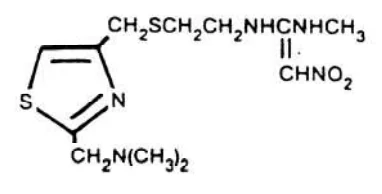
Physicochemical properties: Nizatidine is a lipophobic, off-white to buff crystalline solid.
Melting Point: 30-131.5°C
pKa: Dimethylformamide 66%: 6.25, 8.4; Water: 2.1, 6.8 pH: Aqueous 1% Solution: 9.0
14 CLINICAL TRIALS
The clinical trial data on which the original indication was authorized is not available.
15 MICROBIOLOGY
No microbiological information is required for this drug product.
16 NON-CLINICAL TOXICOLOGY
General Toxicology
Acute Toxicity
| Species | Route | Sex | No. of Animals | Nizatidine LD50 (mg/kg) |
| Mouse | Oral | M | 50 | 1689 |
| F | 50 | 1630 | ||
| I.V. | M | 60 | 236 | |
| F | 50 | 232 | ||
| S.C. | M | 50 | 1174 | |
| F | 50 | 1082 | ||
| Rat | Oral | M | 60 | 2240 |
| F | 50 | 1653 | ||
| I.V. | M | 40 | 301 | |
| F | 50 | 301 | ||
| S.C. | M | 20 | >2000 (LD0) | |
| F | 20 | |||
| Dog | Oral | M | 4 | >800 (LD0) |
| F | 4 | |||
| I.V. | M | 2 | >75 (LD0) | |
| F | 2 | |||
| I.M. | M | 2 | >225(LD0) | |
| F | 2 | |||
| Monkey | Nasogastric | M | 2 | >1200 (LD0) |
| F | 2 | |||
| I.V. | M | 2 | >200(LD0) | |
| F | 2 |
Signs of toxicity included: vomiting, salivation, vasodilation, ptosis, tremors, hypoactivity, diarrhea, ataxia and lacrimation.
Subacute Toxicity
Mice (5/sex/dose) were maintained on diets containing 0, 0.225, 0.45, 0.9, or 1.8% nizatidine for 14 days. All animals survived. There were no physical signs of toxicity, or toxicologically significant changes in hematologic or serum chemistry parameters. There was a slight increase in liver weight at the 1.8% treatment level.
Mice were maintained for 3 months on diets containing 0, 0.05, 0.3 or 1.5% nizatidine. All mice receiving nizatidine survived. Female mice had slight dose-related decreases in mean
body weight gains. An increase in liver weight at the 1.5% treatment level was seen.
Rats fed nizatidine at doses of 0.225% or 1.0% (ca. 169, or 773 mg/kg/day) for three months had minor toxicological changes including decreased body weight gain, food consumption, and efficiency of food utilization. There was no evidence of adverse effects in rats receiving 0.05% (ca. 38 mg/kg/day) for three months.
Dogs given up to 800 mg/kg/day orally for two weeks experienced vasodilatation, lacrimation, and vomiting. One dog receiving 800 mg/kg/day had an elevated leukocyte count and an increased serum alanine transaminase activity.
Dogs survived oral doses up to 800 mg/kg/day of nizatidine for three months without significant impairment of tissue or organ systems. Treatment-related effects included slight decreases in hemoglobin and associated erythrocytic parameters, decreased hepatic p-nitroanisole O-demethylase activity, and a significant reduction in body weight for one female at the 800 mg/kg/day nizatidine treatment level.
Chronic Toxicity
Nizatidine was given daily to rats (20/sex/dose) for six months at dietary levels of 0, 0.05%, 0.225%, or 1.0% (ca. 0, 30, 136 and 617 mg/kg). Physical signs of toxicity were perineal soiling in females receiving 0.225% and 1.0%, and decreased mean body weight gains for females receiving 0.225% and both sexes receiving 1% nizatidine. Efficiency of food utilization was decreased for rats at the 1% treatment level. Increases occurred in the weights of livers from males receiving 0.225%, and in the livers and kidneys from males and females at the 1% nizatidine treatment level.
Rats were maintained for 1 year at dietary levels of 0, 0.05%, 0.225% and 1.0% nizatidine (ca. 0, 27, 121, and 544 mg/kg/day). The highest dose was approximately 110 times the recommended human dose. The minor toxicological changes that occurred were similar to the three and six-month studies.
Beagle dogs (4/sex/dose) received daily oral doses of 0, 50, 140 or 400 mg/kg/day for one year. The highest dose was 80 times the recommended human dose. Physical signs of toxicity were similar to those seen in previous subchronic studies. Additional signs of toxicity were diarrhea, blood in feces, miosis with or without increased pupillary light reflex, decreased thrombocyte counts, and decreased hepatic microsomal enzyme activity and cytochrome P-450 content
Carcinogenicity
Two-year oral carcinogenicity studies with nizatidine in rats and mice revealed no carcinogenic response at doses up to 2175 mg/kg. These dose levels are equivalent to approximately 800 times the maintenance dose in man.
Genotoxicity
The mutagenicity of nizatidine was evaluated in a battery of in vitro and in vivo tests utilizing bacterial mutation (Ames and Modified Ames tests), unscheduled DNA synthesis, sister chromatid exchange (I.P. and P.O. administration), and the mouse lymphoma assay. Nizatidine was found to have no mutagenic effect in each study.
Reproductive and Developmental Toxicology
Adult female Fischer 344 rats (10/dose) received daily dietary doses of 0, 0.05, 0.225, or 1.0% nizatidine (ca. 0, 27, 119, or 506 mg/kg) for a two-week premating period and throughout breeding and gestation. Approximately double these dietary doses were provided during lactation. The females were mated with males from corresponding treatment groups that were assigned to the three-month subacute study. Food consumption and body weights decreased, as did progeny body weights. Coolness, dehydration and stickiness were observed in the progeny of treated dams. Due to the small sample sizes, lack of a dose-responsive relationship and high inter-litter variability, meaningful evaluation of progeny survival data was not possible.
Adult female Wistar rats (10/dose) received daily dietary doses of 0, 0.01, 0.05, 0.225, and 1.0% (ca. 0, 7, 35, 155 and 680 mg/kg) for a two-week premating period. During gestation, approximately 1.3-2 times those doses were administered during lactation. The females were mated with previously untreated males that received treated diets only during the mating period. Parental toxicity was expressed at the 1% treatment level as decreased food consumption and body weights. Progeny body weights were decreased only at the 1% treatment level. Progeny survival was not affected.
A two-generation fertility, perinatal, and postnatal study was conducted with 80 male and 160 female Wistar rats. The dose levels were 0, 0.05, 0.225 and 1.0% (ca. 0, 33, 143 and 648 mg/kg/day). Females of the F0 generation showed decreased food consumption, body weight, and/or body weight gain. F1 animals had slightly decreased body weights and food consumption.
Teratology
Nizatidine was administered by oral gavage to 25 mated Wistar rats per dose level at doses of 0, 50, 275, and 1500 mg/kg/day on gestation days 6-15. Maternal effects were reduced food consumption and net body weight gain. There were no reproductive or fetal effects.
Groups of 20 pregnant Dutch Belted rabbits were given daily oral doses of 0, 50, 275, or 1500 mg/kg on gestation days 6-18. Two females from the 1500 mg/kg/day group died during the study. Loose stools, and/or bloody discharges, decreased body weight gain and decreased food consumption occurred at the 1500 mg/kg/day treatment level. Six animals from the 1500 mg/kg group aborted between gestation days 18 and 26 following anorexia and loss of body weight. The mean percent of live fetuses was decreased at the 1500 mg/kg dose level. Decreased fetal body weights and increased percent of abnormal fetuses attributed to runting were also noted, this indicated fetal growth retardation associated with severe maternal toxicity. There was no evidence of a teratogenic effect as defined as an increase in the incidence of frank structural malformations.
Nizatidine was administered by gavage to mated female New Zealand White rabbits (20 animals/group) at dose levels of 0, 50, 275, and 1000 mg/kg/day on gestation days 6 through
- 18. Maternal toxicity was indicated by decreased body weight and food consumption and an increased incidence of transient diarrhea or soft stool in the high-dose group. The no-effect level for maternal toxicity was 275 mg/kg/day. Fetal toxicity was indicated by decreased fetal weights, an increased incidence of fetal runts, and a trend toward increased fetal resorptions in the high dose group. The no effect level for developmental toxicity was 275 mg/kg/day. There was no indication of nizatidine-induced teratogenicity.