


Product Monograph - Balversa
Recent Major Label Changes
| 1 Indications | 2024-09 |
|---|---|
| 1 Indications, 1.2 Geriatrics | 2024-09 |
| 4 Dosage and Administration, 4.2 Recommended Dose and Dosage Adjustment | 2025-12 |
| 4 Dosage and Administration, 4.2 Recommended Dose and Dosage Adjustment, Geriatrics | 2024-09 |
| 7 Warnings and Precautions, Driving and Operating Machinery | 2025-12 |
| 7 Warnings and Precautions, Endocrine and Metabolism | 2025-12 |
| 7 Warnings and Precautions, Gastrointestinal | 2024-09 |
| 7 Warnings and Precautions, Monitoring and Laboratory Tests, Ocular Monitoring | 2024-09 |
| 7 Warnings and Precautions, Ophthalmologic | 2024-09 |
| 7 Warnings and Precautions, 7.1.1 Pregnancy | 2025-12 |
| 7 Warnings and Precautions, 7.1.2 Breastfeeding | 2025-12 |
| 7 Warnings and Precautions, 7.1.4 Geriatrics | 2024-09 |
Table of Contents
Certain sections or subsections that are not applicable at the time of the preparation of the most recent authorized product monograph are not listed.
Recent Major Label Changes .................................................................................................... 2
Table of Contents .................................................................................................................... 2
Part 1: Healthcare Professional Information ............................................................................ 5
- 1.
Indications ............................................................................................................. 5
1.1. Pediatrics ............................................................................................................. 5
1.2. Geriatrics ............................................................................................................. 5
- 2. Contraindications ................................................................................................... 5
- 4.
Dosage and Administration .................................................................................... 5
4.1. Dosing Considerations ......................................................................................... 5
4.2. Recommended Dose and Dosage Adjustment ..................................................... 5
4.4. Administration ................................................................................................... 11
4.5. Missed Dose ....................................................................................................... 11
- 5. Overdose .............................................................................................................. 11
- 6. Dosage Forms, Strengths, Composition, and Packaging ........................................ 11
- 7.
Warnings and Precautions .................................................................................... 12
General ..................................................................................................................... 12
Driving and Operating Machinery ............................................................................. 12
Endocrine and Metabolism ....................................................................................... 13
Gastrointestinal ......................................................................................................... 13
Monitoring and Laboratory Tests .............................................................................. 13
Ophthalmologic ......................................................................................................... 14
Reproductive Health ................................................................................................. 14
7.1. Special Populations ............................................................................................ 14
7.1.1. Pregnancy ................................................................................................ 14
7.1.2. Breastfeeding ........................................................................................... 15
7.1.3. Pediatrics ................................................................................................. 15
7.1.4. Geriatrics .................................................................................................. 15
- 8.
Adverse Reactions ................................................................................................ 16
8.1. Adverse Reaction Overview ............................................................................... 16
8.2. Clinical Trial Adverse Reactions .......................................................................... 16
8.3. Less Common Clinical Trial Adverse Reactions ................................................... 18
8.4. Abnormal Laboratory Findings: Hematologic, Clinical Chemistry, and Other Quantitative Data ...................................................................................................... 19
8.5. Post-Market Adverse Reactions ......................................................................... 19
- 9.
Drug Interactions ................................................................................................. 20
9.2. Drug Interactions Overview ............................................................................... 20
9.4. Drug-Drug Interactions ...................................................................................... 20
9.5. Drug-Food Interactions ...................................................................................... 23
9.6. Drug-Herb Interactions ...................................................................................... 23
9.7. Drug-Laboratory Test Interactions ..................................................................... 23
- 10.
Clinical Pharmacology .......................................................................................... 23
10.1. Mechanism of Action .................................................................................... 23
10.2. Pharmacodynamics ....................................................................................... 23
10.3. Pharmacokinetics .......................................................................................... 24
- 11. Storage, Stability, and Disposal ............................................................................ 26
Part 2: Scientific Information ................................................................................................. 27
- 13. Pharmaceutical Information ................................................................................. 27
- 14.
Clinical Trials ........................................................................................................ 27
14.1. Clinical Trials by Indication ............................................................................ 27
Locally Advanced or Metastatic Urothelial Carcinoma with Select FGFR3 Alterations ......................................................................................................... 27
- 15. Microbiology ........................................................................................................ 34
- 16. Non-Clinical Toxicology ........................................................................................ 34
Patient Medication Information ............................................................................................ 36
Part 1: Healthcare Professional Information
1. Indications
BALVERSA (erdafitinib) is indicated for the treatment of adult patients with locally advanced unresectable or metastatic urothelial carcinoma (UC), harbouring susceptible fibroblast growth factor receptor (FGFR)3 genetic alterations, who have disease progression during or following at least one line of prior therapy including within 12 months of neoadjuvant or adjuvant therapy.
BALVERSA should not be used for the treatment of patients who are eligible for and have not received prior programmed death receptor-1 (PD-1) or programmed death-ligand 1(PD-L1) inhibitor therapy (see 14 Clinical Trials).
Treatment with BALVERSA should be initiated following confirmation of a susceptible FGFR genetic alteration using a validated test (see 14 Clinical Trials).
1.1. Pediatrics
Pediatrics (<18 years of age): No data are available to Health Canada; therefore, Health Canada has not authorized an indication for pediatric use (see 7.1.3 Pediatrics).
1.2. Geriatrics
Geriatrics (≥65 years of age): In BALVERSA clinical studies, patients 65 years of age and older experienced a higher incidence of adverse reactions requiring treatment interruption or discontinuation compared to patients younger than 65 years (see 7.1.4 Geriatrics). No overall differences in efficacy were observed between elderly patients and younger patients.
2. Contraindications
BALVERSA is contraindicated in patients who are hypersensitive to this drug or to any ingredient in the formulation, including any non-medicinal ingredient, or component of the container. For a complete listing, see 6 Dosage Forms, Strengths, Composition and Packaging.
4. Dosage and Administration
4.1. Dosing Considerations
Before taking BALVERSA, patients must have confirmation of a susceptible FGFR3 gene alteration by a validated test (see 7 Warnings and Precautions, General and 14 Clinical Trials).
4.2. Recommended Dose and Dosage Adjustment
The recommended starting dose of BALVERSA is 8 mg orally once daily, with a dose increase to 9 mg once daily based on serum phosphate levels and tolerability, as assessed between 14 and 21 days after initiating BALVERSA treatment (see 4.4 Administration and 4.2 Recommended Dose and Dosage Adjustment, Dose Modifications).
Dose increase based on serum phosphate concentrations
Measure serum phosphate levels between days 14 and 21 after starting treatment. If the serum phosphate is below 9.0 mg/dL and there are no drug-related toxicities, increase the BALVERSA dose to 9 mg once daily. If the phosphate level is 9.0 mg/dL or higher, refer to the dose modification guidelines in Table 2. Avoid co-administration of agents that alter serum phosphate levels with BALVERSA prior to the initial dose adjustment period based on phosphate levels. After day 21, serum phosphate should not be used to guide further dose increases.
An increase in serum phosphate concentration is an expected effect of BALVERSA; therefore, subsequent to the serum phosphate assessment performed between 14 and 21 days after treatment initiation, serum phosphate concentrations in patients should be monitored monthly. (see 10.2 Pharmacodynamics). For all patients, phosphate intake should be restricted to 600-800 mg daily (see 7 Warnings and Precautions, Endocrine and Metabolism, Hyperphosphatemia and soft tissue mineralization). For patients with elevated phosphate concentrations (≥7.0 mg/dL), follow the dose modification guidelines in Table 2, and addition of a non-calcium containing phosphate binder (e.g., sevelamer carbonate) should be considered.
Dose Modifications
For possible dose reductions and management of adverse reactions see Tables 1 to 4.
Table 1: BALVERSA dose reduction schedule
| Dose | 1st dose reduction | 2nd dose reduction | 3rd dose reduction | 4th dose reduction | 5th dose reduction |
|---|---|---|---|---|---|
| 9 mg → | 8 mg | 6 mg | 5 mg | 4 mg | Stop |
| 8 mg → | 6 mg | 5 mg | 4 mg | Stop |
Table 2: Recommended dose modifications based on serum phosphate concentrations with use of BALVERSA after up-titration
| Serum phosphate concentration | BALVERSA Dose Managementa |
|---|---|
| Serum phosphate concentration | BALVERSA Dose Managementa |
<6.99 mg/dL (<2.24 mmol/L) | Continue BALVERSA at current dose. |
7.00-8.99 mg/dL (2.25-2.90 mmol/L) | Continue BALVERSA treatment. Start phosphate binder with food until phosphate level is <7.00 mg/dL. A dose reduction should be implemented for a sustained serum phosphate level of ≥7.00 mg/dL for a period of 2 months or if clinically necessary. |
9.00-10.00 mg/dL (2.91-3.20 mmol/L) | Withhold BALVERSA treatment until serum phosphate level returns to ≤7.00 mg/dL (weekly testing recommended). Start phosphate binder with food until serum phosphate level returns to <7.00 mg/dL. Re-start treatment at the same dose level. |
| A dose reduction should be implemented for sustained serum phosphate level of ≥9.00 mg/dL for a period of 1 month or if clinically necessary. | |
>10.0 mg/dL (>3.2 mmol/L) | Withhold BALVERSA treatment until serum phosphate level returns to <7.00 mg/dL (weekly testing recommended). Re-start treatment at the first reduced dose level. If serum phosphate level of ≥10.00 mg/dL is sustained for >2 weeks, BALVERSA should be discontinued permanently. Medical management of symptoms as clinically appropriate. |
| Significant alteration from baseline renal function or Grade 3 hypocalcemia due to hyperphosphatemia. | BALVERSA should be discontinued permanently. |
| a For all patients, restrict phosphate intake to 600-800 mg/day. | |
Eye disorder management
Ocular disorders, including central serous retinopathy/retinal pigment epithelial detachment (CSR/RPED), may occur with the administration of BALVERSA. Prior to initiating BALVERSA, perform a baseline ophthalmological exam including an Amsler grid test, fundoscopy, visual acuity and, if available, an optical coherence tomography (OCT). Examine patients monthly thereafter using an Amsler grid test, and if abnormal or if any visual abnormality is observed, follow the management guidelines in Table 3 (see 7 Warnings and Precautions, Monitoring and Laboratory Tests, Ocular monitoring).
To prevent and treat dry eyes, use artificial tear substitutes, hydrating or lubricating eye gels or ointments frequently, at least every 2 hours during waking hours. Severe treatment-related dry eye should be evaluated by an eye care professional (optometrist or ophthalmologist).
Table 3: Guideline for management of eye disorders with use of BALVERSA
| Severity Grading | BALVERSA Dose Management |
|---|---|
| Severity Grading | BALVERSA Dose Management |
| Grade 1: Asymptomatic or mild symptoms; clinical or diagnostic observations only, or abnormal Amsler grid test. | Refer for an ophthalmologic examination (OE). If an OE cannot be performed within 7 days, withhold BALVERSA until an OE can be performed. If no evidence of eye toxicity on OE, continue BALVERSA at same dose level. If diagnosis from OE is keratitis or retinal abnormality (i.e., CSRa), withhold BALVERSA until resolution. If reversible in 4 weeks on OE, resume at next lower dose. |
| Upon restarting BALVERSA continue to monitor for recurrence every 1-2 weeks for a month. Consider dose re-escalation if no recurrence. | |
| Grade 2: Moderate; limiting age appropriate instrumental activities of daily living (ADL). | Immediately withhold BALVERSA and refer for an OE. Resume BALVERSA at the next lower dose level once signs and symptoms resolve. If diagnosis from OE is keratitis or retinal abnormality (i.e. CSR), withhold BALVERSA until resolution. If resolved (complete resolution and asymptomatic) within 4 weeks on OE, resume BALVERSA at the next lower dose level. Upon restarting BALVERSA continue to monitor for recurrence every 1 to 2 weeks for a month. |
| Grade 3: Severe or medically significant but not immediate sight-threatening; limiting self-care ADL. | Immediately withhold BALVERSA until resolution. If resolved (complete resolution and asymptomatic) within 4 weeks, then BALVERSA may be resumed at 2 dose levels lower. Monitor for recurrence every 1 to 2 weeks for a month. If there is recurrence, consider permanent discontinuation of BALVERSA. |
| Grade 4: Sight-threatening consequences; blindness (20/200 or worse). | Permanently discontinue BALVERSA. Monitor until complete resolution or stabilization. |
| a CSR-central serous retinopathy | |
Dose modification for other adverse reactions
For nail disorders, dry skin and skin toxicity, oral mucositis and dry mouth, follow dose modification guidelines in Table 4.
Table 4: Recommended dose modifications for nail disorder, dry skin and skin toxicity, oral mucositis and dry mouth with use of BALVERSA
| Adverse Reaction | Severity of Adverse Reaction | BALVERSA Dose Management |
|---|---|---|
| Adverse Reaction | Severity of Adverse Reaction | BALVERSA Dose Management |
| Adverse Reaction | Severity of Adverse Reaction | BALVERSA Dose Management |
| Nail Disorder | Grade 1 | Continue at current dose. |
| Grade 2 | Consider holding BALVERSA with reassessment in 1-2 weeks. If first occurrence and it resolves to ≤ Grade 1 or baseline within 2 weeks, restart at same dose. If recurrent event or takes >2 weeks to resolve to ≤ Grade 1 or baseline, then restart at 1 dose level lower. | |
| Grade 3 | Hold BALVERSA, with reassessment in 1-2 weeks. When resolves to ≤ Grade 1 or baseline, restart at 1 dose level below. | |
| Grade 4 | Discontinue BALVERSA | |
| Dry Skin and Skin Toxicity | Grade 1 | Continue at current dose. |
| Grade 2 | Continue at current dose. | |
| Grade 3 | Hold BALVERSA (for up to 28 days), with weekly reassessments of clinical condition. When resolves to ≤ Grade 1 or baseline, restart at 1 dose level lower. | |
| Grade 4 | Discontinue BALVERSA | |
| Oral Mucositis | Grade 1 | Continue at current dose. |
| Grade 2 | Consider holding BALVERSA if the subject has other drug related concomitant Grade 2 adverse events. Hold BALVERSA if the subject was already on symptom management for more than a week. If the BALVERSA is withheld, reassess in 1-2 weeks. If this is the first occurrence of toxicity and resolves to ≤ Grade 1 or baseline within 2 weeks, restart at same dose. If recurrent event or takes >2 weeks to resolve to ≤ Grade 1 or baseline, then restart at 1 dose level below. | |
| Grade 3 | Hold BALVERSA, with reassessments of clinical condition in 1-2 weeks. When resolves to ≤ Grade 1 or baseline, restart at 1 dose level below. | |
| Grade 4 | Discontinue BALVERSA | |
| Dry Mouth | Grade 1 | Continue at current dose. |
| Grade 2 | Continue BALVERSA at current dose. | |
| Grade 3 | Hold BALVERSA (for up to 28 days), with weekly reassessments of clinical condition. When resolved to ≤ Grade 1 or baseline, restart at 1 dose level lower. | |
| Grade 4 | Discontinue BALVERSA |
For all other adverse reactions, follow the dose modification guidelines in Table 5.
Table 5: Recommended dose modifications for other adverse reactions with use of BALVERSA
| Severity of Adverse Reactiona | BALVERSA Dose Management |
|---|---|
| Grade 1 | Continue at current dose. |
| Grade 2b | Continue at current dose. |
| Grade 3 | Withhold BALVERSA When resolves to ≤ Grade 1 or baseline, restart BALVERSA at 1 dose level lower. |
| Grade 4 | Permanently discontinue BALVERSA. |
a Dose adjustment graded using the National Cancer Institute Common Terminology Criteria for Adverse Events (NCI CTCAE). b For Grade 2 nail disorders and oral mucositis consider withholding BALVERSA. Follow dose modification in Table 4. | |
Pediatrics (<18 years of age): Health Canada has not authorized an indication for pediatric use.
Geriatrics (≥65 years of age): No overall differences in efficacy were observed between elderly patients and younger patients. In BALVERSA clinical studies, patients 65 years of age and older experienced a higher incidence of adverse reactions requiring treatment interruption or discontinuation compared to patients younger than 65 years; however, no specific dose adjustments are considered necessary for elderly patients (see 10.3 Pharmacokinetics).
Renal impairment: Based on population pharmacokinetic (PK) analyses, no dose adjustment is required for patients with mild (eGFR-MDRD 60 to 89 mL/min/1.73 m²) or moderate renal impairment (eGFR-MDRD 30 to 59 mL/min/1.73 m²) (see 10.3 Pharmacokinetics). Limited data are available in patients with severe renal impairment; therefore, caution should be used in these patients.
Hepatic impairment: No dose adjustment is required for patients with mild (Child-Pugh A) or moderate (Child-Pugh B) hepatic impairment (see 10.3 Pharmacokinetics). Limited data are available in patients with severe (Child-Pugh C) hepatic impairment; therefore, caution should be used in these patients.
4.4. Administration
The tablets should be swallowed whole with or without food, at approximately the same time every day (see 10.3 Pharmacokinetics).
4.5. Missed Dose
If a dose of BALVERSA is missed, it can be taken as soon as possible, on the same day. Resume the regular daily dose schedule for BALVERSA the next day. Extra tablets should not be taken to make up for the missed dose.
If vomiting occurs any time after taking BALVERSA, the next dose should be taken at the next scheduled time.
5. Overdose
There is no information on overdosage with BALVERSA. There is no known specific antidote for BALVERSA overdose. The treatment of overdose of BALVERSA should consist of general supportive measures.
For the most recent information in the management of a suspected drug overdose, contact your regional poison control centre or Health Canada’s toll-free number, 1-844 POISON-X (1-844-764-7669).
- 6. Dosage Forms, Strengths, Composition, and Packaging
Table 6: Dosage Forms, Strengths, Composition and Packaging
BALVERSA 3 mg tablets are yellow, round biconvex shaped, film-coated tablets, debossed with “3” on one side; and “EF” on the other side.
BALVERSA 4 mg tablets are orange, round biconvex shaped, film-coated tablets, debossed with “4” on one side; and “EF” on the other side.
| Route of Administration | Dosage Form/ Strength/Composition | Non-Medicinal Ingredients |
| oral | tablet 3 mg, 4 mg, 5 mg | Tablet Core: Croscarmellose sodium, Magnesium stearate (from vegetable source), Mannitol, Meglumine, and Microcrystalline cellulose. Film coating: Ferrosoferric oxide/iron oxide black (for the brown tablets only), Glycerol monocaprylocaprate Type I, Iron oxide yellow, Iron oxide red (for the orange and brown tablets only), Polyvinyl alcohol partially hydrolyzed, Sodium lauryl sulfate, Talc, Titanium dioxide |
BALVERSA 5 mg tablets are brown, round biconvex shaped, film-coated tablets, debossed with “5” on one side; and “EF” on the other side.
Description
BALVERSA (erdafitinib) tablets are supplied in child-resistant blisters packs and bottles in 28 days or 7 days supply as follows:
3 mg tablets:
- Bottle of 56-tablets [28 days supply of 6 mg daily dose]
- Bottle of 84-tablets [28 days supply of 9 mg daily dose]
- Blister packs of 28 tablets, two blisters per box (56 tablets total) [28 days supply of 6 mg daily dose]
- Blister packs of 42 tablets, two blisters per box (84 tablets total) [28 days supply of 9 mg daily dose]
4 mg tablets:
- Bottle of 28-tablets [28 days supply of 4 mg daily dose]
- Bottle of 56-tablets [28 days supply of 8 mg daily dose]
- Blister pack of 14 tablets (Starter pack) [7 days supply of 8 mg daily dose]
- Blister pack of 28 tablets [28 days supply of 4 mg daily dose]
- Blister packs of 28 tablets, two blisters per box (56 tablets total) [28 days supply of 8 mg daily dose]
5 mg tablets:
- Bottle of 28-tablets [28 days supply of 5 mg daily dose]
- Blister pack of 28 tablets [28 days supply of 5 mg daily dose]
7. Warnings and Precautions
General
Before taking BALVERSA, patients must have confirmation of a susceptible FGFR3 gene alteration by a validated test. Patients enrolled in Study BLC3001 had confirmation of at least one of the following genetic alterations in tumour tissues:
- Mutations: FGFR3-S249C, FGFR3-Y373C, FGFR3-R248C, FGFR3-G370C,
- Fusions: FGFR3-TACC3, FGFR3-BAIAP2L1
(see 14 Clinical Trials)
Driving and Operating Machinery
No studies to establish the effects of erdafitinib on the ability to drive and use machines have been conducted. However, eye disorders such as central serous retinopathy or keratitis, and other adverse reactions such as fatigue and asthenia have been noted with FGFR inhibitors and with BALVERSA treatment. For patients who experience these symptoms, due caution should be exercised when driving or operating a vehicle or potentially dangerous machinery. If patients experience any of these symptoms, it is recommended that they do not drive or use machines until the effect subsides.
Endocrine and Metabolism
Hyperphosphatemia and soft tissue mineralization
BALVERSA can cause hyperphosphatemia. Prolonged hyperphosphatemia can lead to soft tissue mineralization, cutaneous calcinosis, non-uremic calciphylaxis, pruritus, hypocalcemia, anemia, secondary hyperparathyroidism, muscle cramps, seizure activity, QT interval prolongation, arrhythmias and vascular calcification. Increases in phosphate levels are a pharmacodynamic effect of BALVERSA (see 10.2 Pharmacodynamics). Hyperphosphatemia was reported as an adverse event in 79% of patients, and vascular calcification has been observed in 0.3% of patients treated with BALVERSA. The median time to onset for any grade event of hyperphosphatemia was 16 days (range: 6-449 days) after initiating BALVERSA. Hyperphosphatemia was managed by dose modifications and treatment with phosphate binders. Dose interruption was reported for 10% of patients, dose reduction for 5.2% of patients, and 24% of patients received phosphate binders during treatment with BALVERSA.
Patients should adhere to a low phosphate diet (600 to 800 mg/day) while taking BALVERSA, and the use of drugs that can increase serum phosphate levels (such as potassium phosphate supplements, vitamin D supplements, antacids, and phosphate-containing enemas and laxatives) should be avoided. Serum phosphate concentrations in patients should be monitored monthly.
If serum phosphate is above 7.0 mg/dL, consider adding an oral phosphate binder until serum phosphate level returns to <7.0 mg/dL. Withhold, dose reduce, or permanently discontinue BALVERSA based on duration and severity of hyperphosphatemia, follow the dose modification guidelines according to Table 2 (see 4.2 Recommended Dose and Dosage Adjustment, Dose Modifications and 4.4 Administration).
Gastrointestinal
Stomatitis
Stomatitis was reported by 53% of patients treated with BALVERSA, with Grade 3 events reported by 11% of patients. Dose interruptions and dose reductions were reported for 19% and 15% of patients, respectively. If stomatitis is experienced, follow 4.2 Recommended Dose and Dosage Adjustment, Dose Modifications and 4.4 Administration.
Monitoring and Laboratory Tests
Serum phosphate
Phosphate concentrations should be assessed 14 to 21 days after initiating BALVERSA treatment and monitored monthly thereafter. For elevated phosphate concentrations in patients treated with BALVERSA, follow dose modification guidelines in Table 2 (see 4.2 Recommended Dose and Dosage Adjustment, Dose Modifications and 4.4 Administration).
Ocular monitoring
Prior to initiating BALVERSA, perform a baseline ophthalmological exam. Perform monthly ophthalmological examinations during the first 4 months of treatment and every 3 months afterwards, and urgently at any time for visual symptoms. Ophthalmological examination should include assessment of visual acuity, slit lamp examination, fundoscopy, and OCT. For ocular adverse reactions, follow the management guidelines in Table 3 (see 4.2 Recommended Dose and Dosage Adjustment, Dose Modifications and 4.4 Administration). Patients should also be provided instructions to self-administer the Amsler grid test to detect visual abnormalities between physician visits.
Ophthalmologic
Ocular disorders, including central serous retinopathy (CSR) (a grouped term including retinal pigment epithelial detachment [RPED]) resulting in visual field defect, have been reported in patients receiving BALVERSA.
CSR was reported in 22% patients treated with BALVERSA, with a median time to first onset of 45 days. Grade 3 or 4 CSR was reported in 2.3% of patients. At the time of data cutoff, CSR had resolved for 65 of 103 (63%) of patients, while the remaining 38 (37%) patients had unresolved events. The most commonly reported CSR events among patients treated with BALVERSA were chorioretinopathy (6%), detachment of retinal pigment epithelium (RPE) (5%), retinal detachment (3%), retinopathy (2%) and subretinal fluid (2%). In clinical studies, CSR was primarily managed by dose modification, and led to dose interruptions and reductions in 9% and 12% of patients, respectively. There were 3% of patients who discontinued BALVERSA due to CSR; most commonly due to detachment of RPE (1.7%).
Eye disorders other than CSR were reported in 43% of patients treated with BALVERSA. The most commonly reported events were dry eye and vision blurred. Of subjects treated with BALVERSA, 7.5% had dose reductions, 9.2% had dose interruptions, and 2.1% discontinued BALVERSA due to eye disorders. The median time to first onset for eye disorders was 49 days. Dry eye symptoms occurred in 17% of patients during treatment with BALVERSA. All patients should receive dry eye prophylaxis with ocular demulcents as needed.
Perform monthly ophthalmological examinations during the first 4 months of treatment and every 3 months afterwards, and urgently at any time for visual symptoms. Ophthalmological examination should include assessment of visual acuity, slit lamp examination, fundoscopy, and OCT.
Withhold BALVERSA when CSR occurs and permanently discontinue if it does not resolve within 4 weeks or if Grade 4 in severity. For ocular adverse reactions, follow the management guidelines in Table 3 (see 4.2 Recommended Dose and Dosage Adjustment, 4.4 Administration and 7 Warnings and Precautions, Monitoring and Laboratory Tests, Ocular monitoring).
Reproductive Health
Fertility
No human data on the effect of BALVERSA on fertility are available. Based on findings from animal studies, BALVERSA may impair fertility of females of reproductive potential (see 16 Non-Clinical Toxicology, Reproductive and developmental toxicology).
7.1. Special Populations
7.1.1. Pregnancy
BALVERSA should not be used during pregnancy or in women of childbearing potential who are not using effective contraception. If BALVERSA is used during pregnancy, or if the patient becomes pregnant while taking BALVERSA, advise the patient of the potential hazard to the fetus and counsel the patient about the clinical and therapeutic options. Advise patients to contact their healthcare professional if they become pregnant or suspect pregnancy while being treated with BALVERSA and for up to 1 month afterward.
BALVERSA can cause fetal harm when administered to a pregnant woman. Advise female patients of reproductive potential to use highly effective contraception prior to and during treatment, and for 1 month after the last dose of BALVERSA. Pregnancy testing using a highly sensitive assay is recommended for females of reproductive potential prior to initiating BALVERSA.
Male patients must use effective contraception (e.g., condom) and not donate or store semen during treatment and for 1 month after the last dose of BALVERSA.
Teratogenic risk
There are no human data available regarding the risks associated with erdafitinib. In animal studies, erdafitinib was shown to be embryo-fetal toxic and teratogenic in pregnant rats, even in the absence of maternal toxicity (see 16 Non-Clinical Toxicology, Reproductive and developmental toxicology). Based on these findings and its mechanism of action, BALVERSA can cause fetal harm when administered to a pregnant woman.
7.1.2. Breastfeeding
It is unknown if BALVERSA is excreted in human milk. Precaution should be exercised because many drugs can be excreted in human milk. Because of the potential for serious adverse reactions from BALVERSA in breast-fed infants, advise women not to breast-feed during treatment with BALVERSA and for 1 month following the last dose of BALVERSA.
7.1.3. Pediatrics
Pediatrics (<18 years of age): No data are available to Health Canada; therefore, Health Canada has not authorized an indication for pediatric use.
In repeat-dose toxicology studies in rats and dogs, toxicities in bone and teeth were observed at exposures less than the human exposures at the maximum recommended clinical dose (see 16 Non-Clinical Toxicology, General toxicology). Chondroid dysplasia/metaplasia were reported in multiple bones in both species, and tooth abnormalities included abnormal/irregular dentin in rats and dogs and discoloration and degeneration of odontoblasts in rats.
7.1.4. Geriatrics
In BALVERSA clinical studies, patients 65 years of age and older experienced a higher incidence of adverse reactions requiring treatment interruption or discontinuation compared to patients younger than 65 years. In Study BLC3001, the incidence of treatment discontinuations of BALVERSA due to adverse events was 8.5% (5/59) for patients <65 years, 12% (6/50) for patients ≥65 to <75 years, and 31% (8/26) for patients ≥75 years of age.
No overall differences in efficacy were observed between elderly patients and younger patients.
8. Adverse Reactions
8.1. Adverse Reaction Overview
The safety profile is based on pooled data from 479 patients with locally advanced unresectable or metastatic urothelial carcinoma and FGFR alterations who were treated with BALVERSA at the recommended dose (8 to 9 mg daily) in clinical studies, with a median duration of treatment of 4.8 months (range: 0.1 to 43 months).The most commonly reported treatment emergent adverse events (TEAEs) (≥20%) were hyperphosphatemia, diarrhea, stomatitis, dry mouth, decreased appetite, anemia, constipation, dry skin, dysgeusia, palmar-plantar erythrodysesthesia syndrome, alopecia, asthenia, ALT increased, onycholysis, and fatigue (see 7 Warnings and Precautions, Endocrine and Metabolism, Hyperphosphatemia and soft tissue mineralization).
Serious TEAEs occurred in 43% of patients, including eye disorders in 5% of patients (see 7 Warnings and Precautions, Ophthalmologic). Other serious TEAEs (≥2%) in patients treated with BALVERSA included urinary tract infection (3.8%), hematuria (2.9%), intestinal obstruction (2.5%), and acute kidney injury (2.3%).
Grade 3-4 TEAEs were experienced by 67% of patients. The most common Grade 3-4 adverse reactions (≥2%) were: stomatitis, hyponatremia, palmar-plantar erythrodysesthesia syndrome, anaemia, onycholysis, asthenia, urinary tract infection, diarrhea, hyperphosphatemia, decreased appetite, nail dystrophy, hematuria, intestinal obstruction, aminotransferase increased and fatigue.
Dose interruptions and dose reductions due to TEAEs occurred in 72% and 60% of patients, respectively. Stomatitis was the most common adverse event leading to both dose interruption (19%) and dose reduction (15%), followed by palmar-plantar erythrodysesthesia syndrome (10% for both dose interruption and dose reduction). TEAEs leading to treatment discontinuation occurred in 19% of patients. Detachment of retinal pigment epithelium (1.7%) was the most common adverse event leading to treatment discontinuations.
An adverse event with a fatal outcome, acute myocardial infarction, occurred in 1 patient.
8.2. Clinical Trial Adverse Reactions
Clinical trials are conducted under very specific conditions. The adverse reaction rates observed in the clinical trials; therefore, may not reflect the rates observed in practice and should not be compared to the rates in the clinical trials of another drug. Adverse reaction information from clinical trials may be useful in identifying and approximating rates of adverse drug reactions in real-world use.
The safety data described below reflect exposure to BALVERSA in Cohort 1 of Study BLC3001. This was a Phase 3 study that included patients with locally advanced unresectable or metastatic urothelial carcinoma harbouring susceptible FGFR3 genetic alterations who had progressed after 1 or 2 prior treatments, at least 1 of which included a PD-1 or PD-L1 inhibitor. Patients were treated either with BALVERSA (8 mg orally once daily with individualized up-titration to 9 mg) or chemotherapy (docetaxel 75 mg/m2 once every 3 weeks or vinflunine 320 mg/m2 once every 3 weeks). The median duration of treatment for patients receiving BALVERSA was 4.9 months (range: 0.2 to 39 months).
Table 7 presents TEAEs reported in ≥10% of patients treated with BALVERSA 8 or 9 mg once daily versus chemotherapy in Study BLC3001 Cohort 1.
Table 7: Treatment Emergent Adverse Events Reported in ≥10% of Patients Treated with BALVERSA in Study BLC3001 Cohort 1
| System organ class/preferred Term | Erdafitinib (N=135) | Chemotherapy (N=112) | ||||||||
| All Grades (%) | Grade 3-4 (%) | All Grades (%) | Grade 3-4 (%) | |||||||
| Blood and lymphatic system disorders | ||||||||||
| Anemia | 26 | 7 | 32 | 8 | ||||||
| Eye disorders | ||||||||||
| Dry eyea | 25 | 0.7 | 3.6 | 0 | ||||||
| Central Serous Retinopathyb | 18 | 2.2 | 0 | 0 | ||||||
| Vision blurredc | 16 | 0 | 0.9 | 0 | ||||||
| Gastrointestinal disorders | ||||||||||
| Diarrhead | 63 | 3 | 17 | 2.7 | ||||||
| Stomatitise | 56 | 10 | 18 | 1.8 | ||||||
| Dry mouth | 39 | 0 | 3.6 | 0 | ||||||
| Constipation | 27 | 0 | 28 | 1.8 | ||||||
| Nausea | 15 | 1.5 | 24 | 1.8 | ||||||
| Vomiting | 10 | 2 | 14 | 3 | ||||||
| General disorders and administration site conditions | ||||||||||
| Fatiguef | 29 | 1.5 | 42 | 7 | ||||||
| Pyrexia | 15 | 0.7 | 13 | 1.8 | ||||||
| Infections and infestations | ||||||||||
| Urinary tract infection | 11 | 4.4 | 7 | 2.7 | ||||||
| Investigations | ||||||||||
| Alanine aminotransferase increased | 27 | 3 | 3.6 | 0.9 | ||||||
| Weight decreased | 22 | 2.2 | 2.7 | 0 | ||||||
| Aspartate aminotransferase increased | 22 | 2.2 | 2.7 | 0 | ||||||
| Blood creatinine increased | 14 | 0 | 6 | 0 | ||||||
| Blood alkaline phosphatase increased | 10 | 2.2 | 3.6 | 0.9 | ||||||
| Metabolism and nutrition disorders | ||||||||||
| Hyperphosphatemia | 80 | 5 | 0 | 0 | ||||||
| Decreased appetite | 27 | 3 | 21 | 2.7 | ||||||
| Hyponatremia | 12 | 7 | 3.6 | 1.8 | ||||||
| Musculoskeletal and connective tissue disorders | ||||||||||
| Arthralgia | 10 | 1.5 | 8 | 0.9 | ||||||
| Nervous system disorders | ||||||||||
| Dysgeusiag | 30 | 0.7 | 7 | 0 | ||||||
8.3. Less Common Clinical Trial Adverse Reactions
The following are adverse reactions reported in less than or equal to 10% of patients receiving BALVERSA in clinical trials:
Endocrine Disorders: Hyperparathyroidism (3%)
Eye Disorders: Conjunctivitis (10%), Keratitis (5%), Blepharitis (3%), Ulcerative keratitis (1%)
Gastrointestinal Disorders: Abdominal pain (10%), Dyspepsia (7%)
General Disorders and administration site conditions: Mucosal dryness (1%)
Hepatobiliary Disorders: Hyperbilirubinemia (3%), Hepatic function abnormal (2%), Hepatic cytolysis (1%)
Metabolism and nutrition Disorders: Hypercalcemia (6%)
Renal and urinary Disorders: Acute kidney injury (5%), Renal impairment (5%), Renal failure (3%)
| System organ class/preferred Term | Erdafitinib (N=135) | Chemotherapy (N=112) | ||||||||
| All Grades (%) | Grade 3-4 (%) | All Grades (%) | Grade 3-4 (%) | |||||||
| Renal and urinary disorders | ||||||||||
| Haematuria | 12 | 2.2 | 9 | 1.8 | ||||||
| Respiratory, thoracic and mediastinal disorders | ||||||||||
| Epistaxis | 13 | 0 | 2.7 | 0 | ||||||
| Skin and subcutaneous tissue disorders | ||||||||||
| Nail disordersh | 70 | 12 | 5 | 0 | ||||||
| Palmar-plantar erythrodysaesthesia syndrome | 30 | 10 | 0.9 | 0 | ||||||
| Dry skini | 27 | 1.5 | 6 | 0 | ||||||
| Alopecia | 25 | 0.7 | 24 | 0 | ||||||
Key: AE = adverse event Note: Subjects are counted only once for any given event, regardless of the number of times they actually experienced the event. Adverse events are coded using MedDRA Version 24.1. a includes dry eye, lacrimation increased and xerophthalmia. b includes choroidal effusion, chorioretinitis, chorioretinopathy, detachment of macular retinal pigment epithelium, detachment of retinal pigment epithelium, macular detachment, maculopathy, retinal detachment, retinal function test abnormal, retinal oedema, retinal thickening, retinopathy, serous retinal detachment, serous retinopathy, subretinal fluid and vitreous detachment. c includes vision blurred, visual acuity reduced and visual impairment. d includes colitis, colitis microscopic, diarrhoea, diarrhoea haemorrhagic, enteritis, enterocolitis and frequent bowel movements. e includes angular cheilitis, aphthous stomatitis, aphthous ulcer, cheilitis, gingival erosion, gingival pain, gingivitis, gingival ulceration, glossitis, glossodynia, mouth ulceration, mucosal hyperaemia, mucosal inflammation, oral mucosal blistering, oral mucosal erythema, oral pain, oropharyngeal pain, pharyngeal inflammation, pharyngitis, stomatitis, tongue discomfort and tongue ulceration. f includes fatigue and asthenia. g includes dysgeusia and ageusia. h includes onycholysis, onychomadesis, nail discolouration, nail disorder, nail dystrophy, paronychia, nail ridging, nail infection, nail toxicity, onychalgia, onychoclasis, nail discomfort and nail injury. i includes dry skin, xerosis and xeroderma. | ||||||||||
Respiratory, thoracic and mediastinal Disorders: Nasal dryness (5%)
Skin and subcutaneous tissue Disorders: Pruritus (4%), Rash (4%), Skin fissures (4%), Hyperkeratosis (3%), Skin exfoliation (3%), Eczema (2%), Skin lesion (1%), Skin toxicity (1%), Nail bed bleeding (<1%), Palmar erythema (<1%), Skin atrophy (<1%)
Vascular Disorders: Vascular calcification (<1%)
8.4. Abnormal Laboratory Findings: Hematologic, Clinical Chemistry, and Other Quantitative Data
Table 8 presents laboratory abnormalities observed in ≥10% (All Grades) of subjects in BLC3001 Cohort 1 who received at least 1 dose of BALVERSA.
Table 8: Laboratory Abnormalities Reported in ≥10% (All Grades) of Patients Treated with BALVERSA in BLC3001 Cohort 1
| Erdafitiniba | Chemotherapyb | |||||||||||
| All Grades (%) | Grade 3-4 (%) | All Grades (%) | Grade 3-4 (%) | |||||||||
| Laboratory Abnormality | ||||||||||||
| Chemistry | ||||||||||||
| Increased phosphate | 76 | 5 | 0 | 0 | ||||||||
| Increased alkaline phosphatase | 54 | 4.7 | 29 | 1 | ||||||||
| Increased alanine aminotransferase | 46 | 3.8 | 15 | 1 | ||||||||
| Increased aspartate aminotransferase | 44 | 3.1 | 13 | 0 | ||||||||
| Decreased sodium | 44 | 16 | 25 | 6 | ||||||||
| Increased creatinine | 43 | 1.5 | 17 | 0 | ||||||||
| Decreased phosphate | 34 | 8 | 25 | 3.6 | ||||||||
| Decreased albumin | 29 | 0 | 33 | 6 | ||||||||
| Increased calcium(corrected) | 27 | 8 | 9 | 0 | ||||||||
| Increased potassium | 24 | 0 | 21 | 0 | ||||||||
| Decreased magnesium | 24 | 0 | 17 | 0 | ||||||||
| Hematology | ||||||||||||
| Decreased hemoglobin | 50 | 12 | 57 | 12 | ||||||||
| Decreased white blood cell | 26 | 0 | 40 | 20 | ||||||||
| Decreased platelet count | 17 | 1.5 | 18 | 1 | ||||||||
| Decreased neutrophil count | 16 | 0.8 | 40 | 26 | ||||||||
aThe denominator used to calculate the rate varied from 52 to 131 based on the number of patients with a baseline value and at least one post-treatment value. bThe denominator used to calculate the rate varied from 11 to 102 based on the number of patients with a baseline value and at least one post-treatment value. Note: Severity graded per NCI CTCAE v4.03. | ||||||||||||
8.5. Post-Market Adverse Reactions
The following adverse reactions have been reported during post-marketing experience:
Eye Disorders: Cataract
9. Drug Interactions
9.2. Drug Interactions Overview
Erdafitinib is primarily metabolized in humans by CYP2C9 and CYP3A4 to form the O-demethylated major metabolite. The contribution of CYP2C9 and CYP3A4 in the total clearance of erdafitinib is estimated to be 39% and 20% respectively. Unchanged erdafitinib was the major drug-related moiety in plasma, there were no circulating metabolites.
CYP2C9 or CYP3A4 inhibitors
Co-administration of moderate CYP2C9 or strong CYP3A4 inhibitors is predicted to increase the steady-state exposure of erdafitinib. Co-administration of BALVERSA with moderate CYP2C9 or strong CYP3A4 inhibitors should be avoided.
CYP3A4 / CYP2C9 inducers
Co-administration with carbamazepine, a strong CYP3A4 and weak CYP2C9 inducer leads to decreased erdafitinib exposure. Avoid co-administration of strong CYP3A4 inducers with BALVERSA.
Acid lowering agents
Erdafitinib exhibits adequate solubility across the pH range of 1 to 7.4. Acid lowering agents (e.g., antacids, H2-antagonists, or proton pump inhibitors) are not expected to affect the bioavailability of erdafitinib.
Drugs affecting transporters
Erdafitinib is a substrate for P-gp but not for BCRP, OATP1B1, and OATP1B3. P-gp inhibitors are not expected to affect the PK of erdafitinib in a clinically relevant manner.
Sevelamer
No clinically meaningful differences in the pharmacokinetics of erdafitinib were observed in patients taking sevelamer (non-calcium, phosphate scavenger).
Drug metabolizing enzymes
Erdafitinib is a time dependent inhibitor and inducer of CYP3A4 in vitro. Erdafitinib does not have a clinically meaningful effect on midazolam (a sensitive CYP3A4 substrate). Erdafitinib is not an inhibitor of other major CYP isozymes at clinically relevant concentrations.
Drug transporters
Erdafitinib is an inhibitor of OCT2 and P-Glycoprotein (P-gp) in vitro. Erdafitinib does not have a clinically meaningful effect on metformin (a sensitive OCT2 substrate). Erdafitinib does not inhibit BCRP, OATP1B1, OATP1B3, OAT1, OAT3, OCT1, MATE1 or MATE-2K at clinically relevant concentrations.
9.4. Drug-Drug Interactions
The drugs listed in Table 9 below are based on either drug interaction studies, or potential interactions due to the expected magnitude and seriousness of the interaction.
Table 9: Established or Potential Drug-Drug Interactions
| Drug name | Source of Evidence | Effect | Clinical comment |
|---|---|---|---|
| Effect of moderate CYP2C9 or strong CYP3A4 inhibitors on erdafitinib such as: | |||
Fluconazole (moderate CYP2C9 and CYP3A4 inhibitor) | CT | ↑ erdafitinib exposure
May lead to increased drug-related toxicity | Co-administration of BALVERSA with moderate CYP2C9 or strong CYP3A4 inhibitors should be avoided. If co-administration of a moderate CYP2C9 or strong CYP3A4 inhibitor is unavoidable, monitor closely for adverse reactions, and reduce the BALVERSA dose as recommended in Table 5 (see 4.2 Recommended Dose and Dosage Adjustment, Dose Modifications and 4.4 Administration). If the moderate CYP2C9 or strong CYP3A4 inhibitor is discontinued, the BALVERSA dose may be adjusted, in the absence of drug-related toxicity. |
Itraconazole (strong CYP3A4 inhibitor and P-gp inhibitor) | CT | ↑ erdafitinib exposure
May lead to increased drug-related toxicity | |
| Effect of CYP2C9 or CYP3A4 inducers on erdafitinib such as: | |||
|---|---|---|---|
Rifampin (strong CYP3A4 inducer and moderate CYP2C9 inducer) | T | ↓ erdafitinib exposure May lead to decreased activity | Avoid co-administration of strong CYP3A4 inducers with BALVERSA. If a moderate CYP3A4 inducer must be co-administered at the start of BALVERSA treatment, initiate BALVERSA at 9 mg once daily with clinical monitoring for adverse reactions and serum phosphate levels. If a moderate CYP3A4 inducer must be introduced during ongoing BALVERSA treatment, gradually uptitrate BALVERSA by increasing the dose by 1 to 2 mg, not to exceed 9 mg once daily, based on clinical monitoring for adverse reactions (see 4.2 Recommended Dose and Dosage Adjustment). When a moderate CYP3A4 inducer is discontinued, reassess the BALVERSA dose considering serum phosphate levels and overall tolerability. |
Carbamazepine (strong CYP3A4 inducer and weak CYP2C9 inducer) | CT | ↓ erdafitinib exposure
May lead to decreased activity | |
| Effect of erdafitinib on substrates of CYP3A4 such as: | |||
| Midazolam | CT | No clinically meaningful effect
| No dose adjustment is required when co-administering with BALVERSA. |
| Effect of erdafitinib on substrates of OCT2 such as: | |||
| Metformin | CT | No clinically meaningful effect
| No dose adjustment is required when co-administering with BALVERSA. |
| Effect of erdafitinib on substrates of P-Glycoprotein(P-gp) such as: | |||
| Digoxin | T | P-gp substrates systemic exposure may be increased. | Oral narrow therapeutic index P-gp substrates should be taken at least 6 hours before or after erdafitinib to minimize the potential for interactions. |
Legend: CT = Clinical Trial; T = Theoretical (simulation)
9.5. Drug-Food Interactions
BALVERSA can be administered with or without food (see 10.3 Pharmacokinetics).
9.6. Drug-Herb Interactions
Drug-herb interactions have not been studied (see 9.4 Drug-Drug Interactions). Avoid concomitant use of St. John’s Wort, as this herb is a strong inducer of CYP3A.
9.7. Drug-Laboratory Test Interactions
Interactions with laboratory test have not been established.
10. Clinical Pharmacology
10.1. Mechanism of Action
Erdafitinib is an oral pan-fibroblast growth factor receptor (FGFR) tyrosine kinase inhibitor that binds to and inhibits all FGFR family members, FGFR 1, 2, 3 and 4. Erdafitinib inhibited FGFR phosphorylation and signaling and decreased cell viability in cancer cell lines expressing activating FGFR genetic alterations, including point mutations, amplifications, and fusions. In FGFR pathway activated cancer cell lines, the concentration required for 50% tumor growth inhibition (IC50) is in the low nanomolar range 0.1 to 129.2 nM.
Erdafitinib demonstrated antitumor activity in FGFR-driven cell lines and xenograft models derived from multiple tumor types, including bladder cancer.
10.2. Pharmacodynamics
Cardiac electrophysiology
Based on evaluation of QTc interval in an open-label, dose escalation and dose expansion study in 187 patients with cancer, erdafitinib had no large effect (i.e., >20 ms) on the QTc interval.
In vitro, erdafitinib was demonstrated to be an intrinsic human ether-a-go-go-related gene (hERG) blocker with an IC50 of 183 ng/mL, and to have a potential to induce arrhythmia in rabbit ventricular wedge preparations starting at 44.7 ng/mL. In animal studies, erdafitinib increased QTc intervals after single intravenous dosing in anesthetized dogs and guinea pigs and after single oral dosing in conscious dogs. Idioventricular rhythm, ventricular escape rhythm, and decreased heart rate were also observed in conscious dogs. The unbound Cmax values for erdafitinib after single doses in animals were at least 2.4 times higher than the human unbound exposures at the maximum recommended clinical dose.
Serum phosphate
A population pharmacokinetic/pharmacodynamic (Pop PK/PD) model demonstrated that erdafitinib increased serum phosphate concentration, a pharmacodynamic biomarker of FGFR inhibition. Continuous daily dosing of BALVERSA within the recommended dose range should be used to achieve target serum phosphate concentrations of 7 mg/dL to 9 mg/dL, as assessed between 14 and 21 days after initiation of therapy (see 4.2 Recommended Dose and Dosage Adjustment).
10.3. Pharmacokinetics
Table 10: Arithmetic Mean (SD) Pharmacokinetic Parameters of Erdafitinib at Steady-State Following Administration of 8 mg QD BALVERSA in Patients with Cancer
| Moiety | Cmax (µg/mL) | AUCtau (µg.h/mL) | tmax (h)a | Peak-to-trough ratio | Vd/F (L) | CL/F (L/h) | Effective t1/2 (h) |
|---|---|---|---|---|---|---|---|
| Erdafitinib | 1.4 (0.71) | 29 (18) | 2.5 (2-6) | 1.47 (0.34) | 28.8 | 0.362 | 58.9 |
a Median and range for tmax, under fasting conditions
Following single and repeat once daily dosing, erdafitinib exposure (maximum observed plasma concentration [Cmax] and area under the plasma concentration time curve [AUC]) increased in a dose-proportional manner across the dose range of 0.5 to 12 mg. Steady state was achieved after 2 weeks with once daily dosing and the mean accumulation ratio was 4-fold relative to a single dose.
Food Effect
Administration of erdafitinib to healthy subjects under fasting conditions and with a high-fat meal did not result in clinically relevant changes in Cmax and AUC. Median time to reach tmax was delayed about 1.5 hours with food.
Absorption
After single dose oral administration, median time to achieve peak plasma concentration (tmax) was 2.5 hours (range: 2 to 6 hours).
Distribution
The mean apparent volume of distribution of erdafitinib in subjects with cancer was 28.8 L, demonstrating limited distribution outside the extravascular space. In patients with cancer, erdafitinib was 99.7% bound to human plasma proteins, preferentially to α1-acid glycoprotein AGP.
Metabolism
Metabolism is the main route of elimination for erdafitinib. Erdafitinib is primarily metabolized in human by CYP2C9 and CYP3A4 to form the O-demethylated major metabolite. The contribution of CYP2C9 and CYP3A4 in the total clearance of erdafitinib is estimated to be 39% and 20% respectively. Unchanged erdafitinib was the major drug-related moiety in plasma, there were no circulating metabolites.
Elimination
Mean total apparent clearance (CL/F) of erdafitinib was 0.362 L/h in patients. The mean effective half-life of erdafitinib in patients was 58.9 hours.
Up to 16 days following a single oral administration of radiolabeled [14C]-erdafitinib, 69% of the dose was recovered in feces (14-21% as unchanged erdafitinib) and 19% in urine (13% as unchanged erdafitinib).
Special populations and conditions
No clinically meaningful differences in the pharmacokinetics of erdafitinib were observed based on age (21 to 92 years), sex, race (White, Hispanic or Asian), body weight (36 to 166 kg), mild or moderate renal impairment and mild or moderate hepatic impairment.
Pediatrics (<18 years of age)
Pharmacokinetics of erdafitinib has not been studied in pediatric patients.
Geriatrics (≥65 years of age)
In the population PK analysis, age was identified as a significant covariate on erdafitinib clearance. Erdafitinib clearance was lower by 15% in the 65 to 75 years old group, and lower by 21% in the >75 years old group as compared to the <65 years old group. This decreased clearance with increasing age did not lead to a clinically meaningful effect on erdafitinib exposure.
Sex
In the population PK analysis, no clinically meaningful differences in the pharmacokinetics of erdafitinib were observed based on sex.
Genetic polymorphism
CYP2C9 poor metabolizer
Simulation suggested that the exposure of erdafitinib is predicted to increase in subjects of CYP2C9 *3/*3 genotype. Patients known to have this genotype should be monitored for increased adverse reactions.
Ethnic origin
The potential effects of race/ethnicity on the PK of erdafitinib were investigated as part of the population PK analysis and in clinical studies. In the population PK analysis dataset, most erdafitinib-treated subjects were White (Caucasian, Hispanic or Latino, 58.5%). Hispanic accounted for 4.3%, and Asian 25.6%. No statistically significant association between race/ethnicity (White, Hispanic, Asian) and PK parameters of erdafitinib was observed.
Hepatic insufficiency
No clinically meaningful differences in the pharmacokinetics of erdafitinib were observed in subjects with mild (Child-Pugh A) or moderate (Child-Pugh B) hepatic impairment and subjects with normal hepatic function. Limited data are available in patients with severe (Child-Pugh C) hepatic impairment; therefore, BALVERSA should be administered with caution when used in these patients. Monitor closely for adverse reactions and reduce the BALVERSA dose as recommended in Table 5 (see 4.4 Administration).
Renal insufficiency
Based on population PK analysis, no clinically meaningful differences in the pharmacokinetics of erdafitinib were observed between subjects with normal renal function (eGFR-MDRD [estimated glomerular filtration rate modification of diet in renal disease] ≥90 mL/min/1.73 m²), and subjects with mild (eGFR‑MDRD 60 to 89 mL/min/1.73 m²) and moderate renal impairment (eGFR‑MDRD 30 to 59 mL/min/1.73 m²). Limited data are available in patients with severe renal impairment; therefore BALVERSA should be administered with caution in these patients. Monitor closely for adverse reactions and reduce the BALVERSA dose as recommended in Table 5 (4.4 Administration).
Obesity
In population PK analysis, no clinically meaningful differences in the pharmacokinetics of erdafitinib were observed based on body weight (range 36 to 166 kg).
- Storage, Stability, and Disposal
Store at room temperature (15ºC - 30ºC). Keep out of sight and reach of children.
Part 2: Scientific Information
13. Pharmaceutical Information
Drug Substance
Non-proprietary name of the drug substance(s): erdafitinib
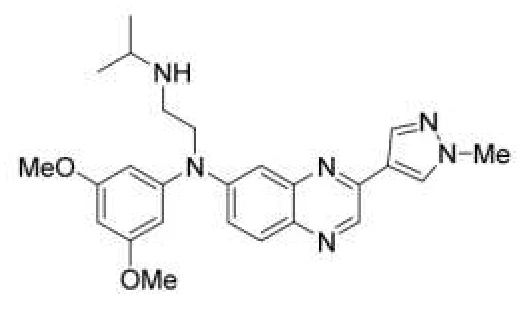
Chemical name: N-(3,5-dimethoxyphenyl)-N’-(1-methylethyl)-N-[3-(1-methyl-1H-pyrazol-4-yl) quinoxalin-6-yl]ethane-1,2-diamine
Molecular formula and molecular mass: C25H30N6O2; 446.56
Structural formula:
Physicochemical properties: The drug substance is a yellow powder. It is in a crystalline form and does not exhibit polymorphism. The drug substance is practically insoluble, or insoluble to freely soluble in organic solvents and slightly soluble to practically insoluble, or insoluble in aqueous media over the physiological pH range. The drug substance has 2 dissociation constants, a pKa1 of 9.2 (basic amine moiety) and a pKa2 of 1.9 (basic pyrazole moiety).
14. Clinical Trials
14.1. Clinical Trials by Indication
Locally Advanced or Metastatic Urothelial Carcinoma with Select FGFR3 Alterations
The efficacy of BALVERSA was evaluated in Study BLC3001 Cohort 1, a phase 3, randomized, open-label, multicenter study in patients with advanced urothelial cancer harboring selected FGFR alterations. Patients who had progressed after 1 or 2 prior treatments, at least 1 of which included a PD-1 or PD-L1 inhibitor, were randomized 1:1 to receive BALVERSA or chemotherapy (docetaxel or vinflunine). Patients who received neoadjuvant or adjuvant chemotherapy and showed disease progression within 12 months of the last dose were considered to have received systemic therapy in the metastatic setting (Table 11).
Supportive efficacy of BALVERSA was evaluated in Study BLC2001, a multicentre Phase 2 study in patients with locally advanced or metastatic urothelial carcinoma whose disease progressed on or after at least one prior chemotherapy (Table 11).
Table 11: Summary of Patient Demographics for Clinical Trials in Patients with Urothelial Carcinoma
| Study # | Trial Design | Dosage, route of administration and duration | Study subjects (n) | Median age (Range) | Sex |
|---|---|---|---|---|---|
| BLC3001 (Cohort 1) | Randomized (1:1), multi-centre, open-label, active-controlled Phase 3 study in patients with advanced urothelial carcinoma harbouring select FGFR alterations. | BALVERSA: 8 mg orally once daily, with individualized up-titration to 9 mg orally once daily. Chemotherapy: Docetaxel 75 mg/m2 once every 3 weeks or Vinflunine 320 mg/m2 once every 3 weeks | 136 130 | 66 (32-85) 69 (35-86) | M: 71% F: 29% M: 72% F: 28% |
| BLC2001 | Multi-centre Phase 2 study in patients with locally advanced or metastatic urothelial carcinoma harbouring select FGFR alterations. | BALVERSA: 8 mg orally once daily, with individualized up-titration to 9 mg orally once daily. | 87 | 67 (36-87) | M: 79% F: 21% |
BLC3001 Cohort 1
A total of 266 patients previously treated with an anti-PD-(L)1 agent were randomized to receive either erdafitinib or chemotherapy (docetaxel or vinflunine). Randomization was stratified by region (North America vs. Europe vs. rest of world), Eastern Cooperative Oncology Group (ECOG) performance status (0 or 1 vs. 2) and presence or absence of visceral or bone metastases. Patients were treated until disease progression, intolerable toxicity, withdrawal of consent, decision by the investigator to discontinue treatment, or the end of the study, whichever occurred first.
FGFR3 genetic alterations were identified by a Polymerase Chain Reaction (PCR) test at the central laboratory for 74% of patients, and by local next generation sequencing (NGS) tests in 25% of patients. Two subjects (1%) did not have FGFR alterations.
Eighty-one percent of patients had FGFR3 mutations, 17% had FGFR3 fusions, and 2% had both FGFR3 mutations and fusions. No patients had FGFR2 alterations.
The summary of key patient demographics and baseline disease characteristics is provided in Table 12 below.
Table 12: Key Demographics and Baseline Disease Characteristics – Study BLC3001: Cohort 1
| Patient Demographics and Baseline Disease Characteristics | BALVERSA | Chemotherapy | |||
|---|---|---|---|---|---|
| N | 136 | 130 | |||
| Age (years) | |||||
| Mean | 65 | 68 | |||
| Median (range) | 66 (32, 85) | 69 (35, 86) | |||
| < 65 | 59 (43.4%) | 45 (34.6%) | |||
| ≥ 65 | 77 (56.6%) | 85 (65.4%) | |||
| Sex | |||||
| Female | 40 (29.4%) | 36 (27.7%) | |||
| Male | 96 (70.6%) | 94 (72.3%) | |||
| Type of histology | |||||
| Transitional Cell Carcinoma | 128 (94.1%) | 124 (95.4%) | |||
| Transitional Cell Carcinoma with minor components (<50% overall) of variant histology | 8 (5.9%) | 6 (4.6%) | |||
| Primary tumor location | |||||
| Upper tract (Renal Pelvis, Ureter) | 41 (30.1%) | 48 (36.9%) | |||
| Lower tract (Bladder, Urethra, Prostate) | 95 (69.9%) | 82 (63.1%) | |||
| ECOG | |||||
| 0 | 63 (46.3%) | 51 (39.2%) | |||
| 1 | 61 (44.9%) | 66 (50.8%) | |||
| 2 | 12 (8.8%) | 13 (10.0%) | |||
| Prior Anti-PD-(L)1 therapy | |||||
| Pembrolizumab | 47 (34.6%) | 47 (36.2%) | |||
| Avelumab | 31 (22.8%) | 28 (21.5%) | |||
| Atezolizumab | 26 (19.1%) | 26 (20.0%) | |||
| Prior Chemotherapy | |||||
| Platinum-based therapy | 122 (89.7%) | 111 (85.4%) | |||
| No platinum-based therapy | 1 (0.7%) | 3 (2.3%) | |||
The primary efficacy endpoint was Overall Survival (OS). Assessment of radiographic response was performed by investigators according to RECIST (Response Evaluation Criteria in Solid Tumours Version 1.1). Progression-Free Survival (PFS) and Objective Response Rate (ORR) were included as secondary efficacy endpoints.
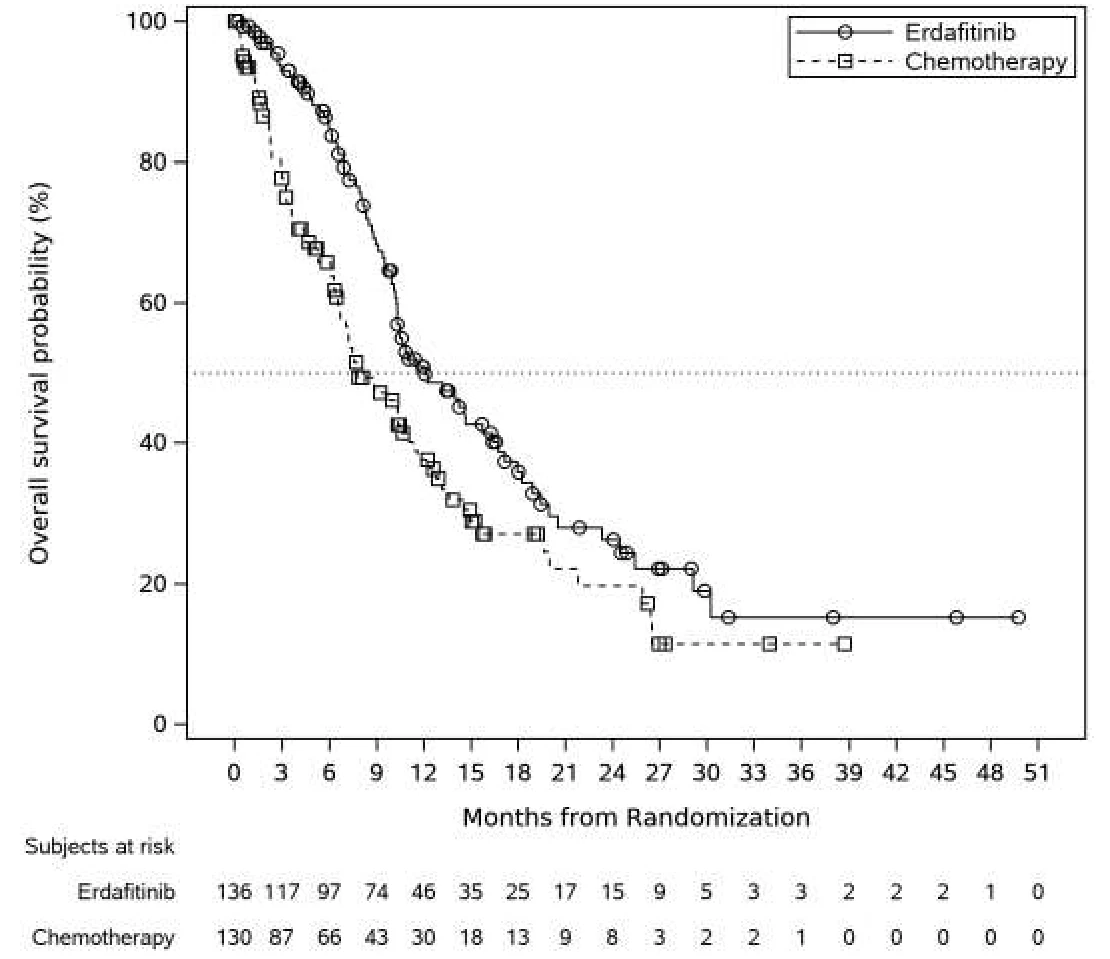
The key efficacy is based on data from 136 patients who were treated with the BALVERSA 8-9 mg daily regimen in Study BLC3001 Cohort 1. A statistically significant improvement in OS was demonstrated for patients treated with BALVERSA compared to chemotherapy (HR=0.64; 95% CI: 0.47, 0.88; p-value=0.0050). Statistically significant improvements in the key secondary endpoints of PFS and ORR were also demonstrated for BALVERSA compared with chemotherapy.
Efficacy results are summarized in Table 13.
Table 13: Efficacy Results for Study BLC3001, Cohort 1
The Kaplan-Meier OS curve for the two treatment arms is presented in Figure 1.
Erdafitinib (N=136) | Chemotherapy (N=130) | |||||||||||
|---|---|---|---|---|---|---|---|---|---|---|---|---|
| Overall Survival (OS) | ||||||||||||
| Number of events (%) | 77 (56.6%) | 78 (60.0%) | ||||||||||
| Median, months (95% CI) | 12.06 (10.28, 16.36) | 7.79 (6.54, 11.07) | ||||||||||
| HR (95% CI) | 0.64 (0.47, 0.88) 0.0050 | |||||||||||
| P-value | ||||||||||||
| Progression-free survival (PFS) | ||||||||||||
| Number of events (%) | 101 (74.3%) | 90 (69.2%) | ||||||||||
| Median, months (95% CI) | 5.55 (4.40, 5.65) | 2.73 (1.81, 3.68) | ||||||||||
| HR (95% CI) | 0.58 (0.44, 0.78) 0.0002 | |||||||||||
| P-value | ||||||||||||
| Objective response rate (ORR), confirmed | ||||||||||||
| ORR (95% CI) | 35.3% (27.3, 43.9) | 8.5% (4.3, 14.6) | ||||||||||
| P-value | <0.001 | |||||||||||
| Complete response, CR (%) | 7 (5.1%) | 1 (0.8%) | ||||||||||
| Partial response, PR (%) | 41 (30.1%) | 10 (7.7%) | ||||||||||
| All p-values reported are 2-sided. | ||||||||||||
Figure 1: Kaplan-Meier Plot of Overall Survival for Study BLC3001, Cohort 1
BLC3001 Cohort 2
Study BLC3001 had a Cohort 2, which enrolled patients who had progressed on or after 1 prior treatment not containing an anti-PD-(L)-1 agent. In Cohort 2, a total of 351 patients were randomized to BALVERSA (8 mg with individualized guided up-titration to 9 mg) versus pembrolizumab (200 mg every 3 weeks).
The pre-specified final analysis of Cohort 2 did not meet its primary efficacy endpoint for superiority of OS of BALVERSA compared to pembrolizumab. In subjects with locally advanced unresectable or metastatic bladder cancer who had progressed on or after 1 prior line of systemic therapy and no prior PD-1 or PD-L1 inhibitor, the OS hazard ratio (HR) was 1.18 (95% CI: 0.92, 1.51; p-value=0.18), median 10.9 (95% CI: 9.2, 12.6) months for BALVERSA versus 11.1 (95% CI: 9.7, 13.6) months for pembrolizumab.
Study BLC2001
Study BLC2001 was a multicenter, open-label Phase 2 study designed to evaluate the efficacy and safety of BALVERSA in patients with locally advanced or metastatic urothelial carcinoma. All patients were enrolled based on investigator assessment of measurable disease and were required to have tumor tissues with at least 1 of the following FGFR3 gene mutations: R248C, S249C, G370C, Y373C or 1 of the following FGFR gene fusions: FGFR3-TACC3, FGFR3-BAIAP2L1, FGFR2-BICC1, FGFR2-CASP7, as determined by a clinical trial assay performed at a central laboratory.
The efficacy analysis was based on 87 patients whose disease progressed on or after at least one prior chemotherapy. Patients received a starting dose of BALVERSA at 8 mg once daily with a dose increase to 9 mg once daily in patients whose serum phosphate levels, measured between days 14 and 17, were below the target of 5.5 mg/dL. This dose increase occurred in 41% of patients. BALVERSA was administered until disease progression or unacceptable toxicity.
The summary of key patient demographics and baseline disease characteristics is provided in Table 14 below.
Table 14: Key Demographics and Baseline Disease Characteristics: Chemo-relapsed/refractory Urothelial Carcinoma Patients in the 8-mg Daily Regimen in Study BLC2001
| Patient Demographics and Baseline Disease Characteristics | BALVERSA | |||
| Patient Demographics and Baseline Disease Characteristics | BALVERSA | |||
| N | 87 | |||
| Age (years) | ||||
| Mean | 65 | |||
| Median (range) | 67 (36, 87) | |||
| <65 | 34 (39.1%) | |||
| ≥65 | 53 (60.9%) | |||
| Sex | ||||
| Female | 18 (20.7%) | |||
| Male | 69 (79.3%) | |||
| Race | ||||
| White | 64 (73.6%) | |||
| Non-white | 7 (8.0%) | |||
| Unknown/Not reported | 16 (18.4%) | |||
| ECOG Performance Status Score | ||||
| 0 | 44 (50.6%) | |||
| 1 | 36 (41.4%) | |||
| 2 | 7 (8.0%) | |||
| Hemoglobin Level | ||||
| <10 g/dL | 14 (16.1%) | |||
| ≥10 g/dL | 73 (83.9%) | |||
| Creatinine Clearance (mL/min) | ||||
| <60 | 41 (47.1%) | |||
| ≥60 | 46 (52.9%) | |||
| Primary Tumour Location | ||||
| Upper tract (renal pelvis, ureter) | 22 (25.3%) | |||
| Lower tract (bladder, urethra, prostatic urethra) | 65 (74.7%) | |||
| Visceral Metastases (lung, liver and bone) | ||||
| Present | 69 (79.3%) | |||
| Liver | 18 (20.7%) | |||
| Lung | 49 (56.3%) | |||
| Bone | 18 (20.7%) | |||
| Absent | 18 (20.7%) | |||
| Number of Lines of Prior Systemic Therapies* | ||||
| 1 | 44 (50.6%) | |||
| 2 | 29 (33.3%) | |||
| ≥3 | 14 (16.0%) | |||
Note: * Prior therapies include gemcitabine/gemcitabine HCl, cisplatin, carboplatin, anti-PD-(L)1’s.
Study Results
The major efficacy outcome measures were objective response rate (ORR) and duration of response (DoR), as determined by the investigator using Response Evaluation Criteria in Solid Tumors (RECIST) v1.1. Efficacy outcomes were also assessed by independent radiologic review committee (IRRC).
The median duration of therapy was 5.3 months, and the median duration of efficacy follow-up was 11.3 months.
The reported efficacy results are summarized in Table 15 and Table 16 below.
Table 15: Efficacy Results for Study BLC2001
| Endpoint | Investigator assessment | |||||
|---|---|---|---|---|---|---|
| N=87 | ||||||
| Objective response rate (ORR) (%) | 40.2 | |||||
| 95% CI (%) | (29.9, 50.5) | |||||
| Complete response (CR) (%) | 3.4 | |||||
| Partial response (PR) (%) | 36.8 | |||||
Median Duration of Response (months) 95% CI (months) | 5.6 (4.2, 7.0) | |||||
ORR = CR+PR
CI = Confidence Interval
IRRC assessment was supportive, with an ORR of 32.2% (95% CI: 22.4, 42.0), including CRs in 2.3% of patients. IRRC-assessed DoR was determined to be 5.4 months (95% CI: 4.2, 6.9).
Table 16: Efficacy Results by FGFR Genetic Alteration
| Investigator assessment | |
|---|---|
| Investigator assessment | |
FGFR3 mutationa (N=64) ORR (95% CI) | 48.4% (36.2, 60.7) |
FGFR3 fusionb (N=18) ORR (95% CI) | 22.2% (3, 41.4) |
FGFR2 fusionc (N=6) ORR (95% CI) | 0 |
a FGFR3-S249C, FGFR3-Y373C, FGFR3-R248C, FGFR3-G370C
b FGFR3-TACC3_V1, FGFR3-TACC3_V3, FGFR3-BAIAP2L1, FGFR2-CASP7/FGFR3_TACC3_V3
c FGFR2-CASP7, FGFR2-BICC1, FGFR2-CASP7/FGFR3_TACC3_V3
15. Microbiology
No microbiological information is required for this drug product.
16. Non-Clinical Toxicology
General toxicology
Repeated-dose toxicity studies were conducted in rats and dogs for up to 3 months. The highest doses tested in rats (32 mg/kg, intermittent dosing schedule 7 days on/7 days off) and dogs (1.5 mg/kg, intermittent dosing schedule 7 days on/7 days off) were approximately 1.4 and 1.3 times the maximum recommended clinical dose based on unbound AUC comparisons, respectively. In both species, disturbance of phosphate homeostasis, characterized by elevated serum concentrations of mainly phosphate, FGF-23 and 1,25 dihydroxyvitamin D3 were observed. Chondroid dysplasia/metaplasia and soft tissue mineralization, associated with hyperphosphatemia, were observed as primary drug-related toxicities in rats and dogs.
Chondroid dysplasia/metaplasia was evident in growth plates or synchondroses of multiple bones (sternum, femur) causing clinical signs of limping and sternum/tail deformations (rats). Soft tissue mineralizations were observed in multiple organs and tissues, including heart, aorta, and stomach. The death of a male rat at 32 mg/kg (intermittent dosing schedule 7 days on/7 days off) was due to aorta and myocardial mineralizations.
Tooth abnormalities were observed, including abnormal/irregular dentin in rats and dogs and discoloration and degeneration of odontoblasts in rats. Eye-related findings notably atrophy (thinning) of the corneal epithelium (rats) and lacrimal gland atrophy (rats and dogs) were seen. Additional atrophy of glandular tissues (mammary, salivary, and Harderian gland) and epithelial structures (tongue and oral mucosa) and changes in haircoat (piloerection, rough, thin or local hair loss) and nails (malformed, discolored or broken) were observed in rats or dogs.
Soft tissue mineralizations (except for the aorta mineralization in dogs) and chondroid dysplasia in rats and dogs and mammary gland atrophy in rats were partially to fully recovered at the end of a 4-week drug-free recovery period. In a mechanistic study, when rats were given a diet supplemented with the phosphate scavenger sevelamer, the soft tissue mineralizations were reduced.
In a 1-month rat oral toxicity study that included assessment of neurofunctional integrity by the modified Irwin’s test after single dose, erdafitinib induced minimal neurofunctional aberrations (impaired wire maneuvers and flaccid body tone) at ≥8 mg/kg. At the dose level of 8 mg/kg, the Cmax of erdafitinib was less than the human exposures at the recommended clinical dose.
Genotoxicity
Erdafitinib did not induce mutations in the bacterial reverse mutation (Ames) assay and was not genotoxic in either in vitro micronucleus or the in vivo rat bone marrow micronucleus assay.
Carcinogenicity
Long-term animal studies have not been conducted to evaluate the carcinogenic potential of erdafitinib.
Reproductive and developmental toxicology
Fertility
Dedicated animal fertility studies have not been conducted with erdafitinib. However, in the 3-month repeat-dose rat toxicity study, erdafitinib showed effects on female reproductive organs (necrosis of the corpora lutea) in rats at an exposure approximating 7.3 times the unbound AUC in patients at the maximum recommended clinical dose.
Embryo-fetal toxicity
Erdafitinib was teratogenic and embryo-fetal toxic in rats, in the absence of maternal toxicity. Pregnant rats were administered erdafitinib at oral doses of 1, 4, or 8 mg/kg/day during the period of organogenesis. No maternal toxicity was observed, but a significant decrease in fetal survival and reduced fetal weight were observed at 8 mg/kg/day. Doses ≥ 4 mg/kg/day were associated with increased fetal malformations and variations, including limb/paw defects (ectrodactyly, absent or misshapen long bones), malformed thoracic and lumbar vertebrae, great blood vessel abnormalities (high arched/retroesophageal aorta, retroesophageal subclavian artery), and retarded ossifications. At 4 mg/kg/day and 8 mg/kg/day in rats, the maternal systemic exposures were less than human exposures at the recommended clinical dose based on unbound AUC.