


Product Monograph - Baqsimi
1 INDICATIONS
BAQSIMI is indicated for the treatment of severe hypoglycemic reactions which may occur in the management of insulin treated patients with diabetes mellitus, when impaired consciousness precludes oral carbohydrates.
1.1 Pediatrics
Pediatrics (<18 years of age): BAQSIMI is indicated in children 4 years and above. BAQSIMI has not been studied in pediatric patients less than 4 years of age. The number of pediatric patients (4 to <18 years) included in the clinical trials is limited (n=48) (see WARNINGS AND PRECAUTIONS, Special Populations, DOSAGE AND ADMINISTRATION, ACTION AND CLINICAL PHARMACOLOGY, and CLINICAL TRIALS).
1.2 Geriatrics
Geriatrics (≥65 years of age): Clinical studies of BAQSIMI did not include sufficient numbers of subjects aged 65 and over. Limited clinical trial experience with BAQSIMI has not identified differences in responses between the elderly and younger patients (see WARNINGS AND PRECAUTIONS, Special Populations; DOSAGE AND ADMINISTRATION; and ACTION AND CLINICAL PHARMACOLOGY).
2 CONTRAINDICATIONS
BAQSIMI is contraindicated in patients with:
- Known hypersensitivity to glucagon or to any ingredient in the formulation, including any non-medicinal ingredient, or component of the container. For a complete listing, see DOSAGE FORMS, STRENGTHS, COMPOSITION AND PACKAGING.
- Pheochromocytoma
- Insulinoma
3 SERIOUS WARNINGS AND PRECAUTIONS BOX
4 DOSAGE AND ADMINISTRATION
4.1 Recommended Dose and Dosage Adjustment
The recommended dose of BAQSIMI is 3 mg given intranasally in both adult and pediatric patients.
Serious Warnings and Precautions
BAQSIMI should be given only in patients where impaired consciousness precludes oral carbohydrates. After intranasal administration the patient will normally respond within 15 minutes. If the patient does not respond within 15 minutes, intravenous (IV) glucose must be administered as soon as IV access can be established.
Because glucagon is of little or no help in states of starvation, adrenal insufficiency, or chronic hypoglycemia, intravenous glucose should be used for the treatment of hypoglycemia in these conditions.
4.2 Administration
Instruct the patient or caregiver to read the package leaflet at the time they receive BAQSIMI.
Because BAQSIMI is designed to be administered in emergency situations to the patient by caregiver(s), where a high level of stress is likely, it is therefore important that the patient is instructed to make sure that family, friends and co-workers know where, when and how to use BAQSIMI.
Specific instructions on the use of BAQSIMI should be given to patients at risk of hypoglycemia unawareness, including elderly.
Emphasize the following instructions to the patient and/or caregiver:
- BAQSIMI is for intranasal use only. The recommended dose of BAQSIMI is 3 mg administered as one actuation of the intranasal device into one nostril.
- Read and follow the instructions on the package leaflet enclosed with BAQSIMI.
- Do not push the plunger or test the device prior to administration.
- Administer the dose by inserting the tip into one nostril and pressing the device plunger all the way in until the green line is no longer showing. The dose does not need to be inhaled.
- Call for medical help right away after giving the dose.
- Give oral carbohydrates when the patient responds to treatment.
- If the patient does not respond within 15 minutes, intravenous glucose must be administered as soon as IV access can be established. Medical consultation is required for all patients with severe hypoglycemia so that the dose of insulin and oral antidiabetic medication may be adjusted more accurately.
- Each BAQSIMI device contains one dose of glucagon and cannot be reused.
5 OVERDOSAGE
If overdose occurs, the patient may experience nausea, vomiting, diarrhea, inhibition of GI tract motility or an increase in blood pressure and pulse rate.
In case of suspected overdosing, the serum potassium may decrease and should be monitored and corrected if needed.
If the patient develops a dramatic increase in blood pressure, phentolamine mesylate has been shown to be effective in lowering blood pressure for the short time that control would be needed.
For management of a suspected drug overdose, contact your regional poison control centre.
6 DOSAGE FORMS, STRENGTHS, COMPOSITION AND PACKAGING
Table 1: Dosage Forms, Strengths, Composition and Packaging
| Route of Administration | Dosage Form / Strength/Composition | Non-medicinal Ingredients |
| Intranasal | Powder / 3 mg glucagon per device | Betadex and dodecylphosphocholine (DPC) |
BAQSIMI is a single use nasal dosing device containing 3 mg of glucagon administered as one actuation of the intranasal device into one nostril.
A BAQSIMI single-pack contains 1 shrink wrapped tube that contains 3 mg of glucagon in a single use nasal dosing device.
A BAQSIMI two-pack contains 2 shrink wrapped tubes that each contain 3 mg of glucagon in a single use nasal dosing device.
Not all pack sizes may be marketed.
7 WARNINGS AND PRECAUTIONS
Please see the SERIOUS WARNINGS AND PRECAUTIONS BOX, Part I: Health Professional Information.
General
BAQSIMI 3 mg by intranasal administration, is helpful in treating hypoglycemia only if sufficient liver glycogen is present.
To prevent relapse of hypoglycemia, oral carbohydrates should be given to restore the liver glycogen when the patient has responded to the treatment.
Carcinogenesis and Mutagenesis
(see NON-CLINICAL TOXICOLOGY)
Cardiovascular
In high concentrations, glucagon exerts positive inotropic and chronotropic effect and may therefore cause tachycardia and acute hypertensive reactions (see CONTRAINDICATIONS AND WARNINGS AND PRECAUTIONS, Endocrine and Metabolism).
Driving and Operating Machinery
No studies on the effects of glucagon on the ability to drive and use machines have been performed. The patient’s ability to concentrate and react may be impaired as a result of hypoglycemia. This may present a risk in situations where these abilities are especially important, such as driving or operating machinery.
Endocrine and Metabolism
Pheochromocytoma
BAQSIMI is contraindicated in patients with pheochromocytoma (see CONTRAINDICATIONS). In the presence of pheochromocytoma, glucagon may stimulate the release of catecholamines from the tumor which results in a sudden and marked increase in blood pressure. If the patient develops a dramatic increase in blood pressure, 5 to 10 mg of phentolamine mesylate, administered intravenously, has been shown to be effective in lowering blood pressure (see WARNINGS AND PRECAUTIONS, Cardiovascular).
Insulinoma
BAQSIMI is contraindicated in patients with insulinoma (see CONTRAINDICATIONS). Glucagon administration may directly or indirectly (through an initial rise in blood glucose) stimulate exaggerated insulin release from an insulinoma and cause hypoglycemia.
Sensitivity/Resistance
BAQSIMI is contraindicated in patients with a prior hypersensitivity reaction (see CONTRAINDICATIONS). Generalized allergic reactions including urticaria, respiratory distress, and hypotension (anaphylactic reaction/shock), have been reported in patients who received glucagon.
7.1 Special Populations
7.1.1 Pregnant Women
No clinical studies with BAQSIMI have been performed in pregnant women. Glucagon does not cross the human placental barrier.
7.1.2 Breast-feeding
No clinical studies have been performed in nursing mothers. Safe use of BAQSIMI during lactation has not been established, and it is not known whether glucagon is excreted in human milk. Intact glucagon is not absorbed from the GI tract. Therefore, even if the infant ingested glucagon it would be unlikely to have any metabolic effect on the infant.
7.1.3 Pediatrics
Pediatrics (4 to <18 years of age): BAQSIMI has not been studied in pediatric patients below the age of 4. The number of pediatric patients (4 to <18 years) included in the clinical trials is limited (n=48). Based on the data submitted to and reviewed by Health Canada, BAQSIMI is safe and effective in pediatric patients (see DOSAGE AND ADMINISTRATION, ACTION AND CLINICAL PHARMACOLOGY, and CLINICAL TRIALS).
7.1.4 Geriatrics
Clinical studies of BAQSIMI did not include sufficient numbers of subjects aged 65 and over to determine whether they respond differently from younger subjects. Limited clinical trial experience has not identified differences in responses between the elderly and younger patients.
7.1.5 Patients with type 2 diabetes
When deciding about the use of BAQSIMI for the patient with type 2 diabetes, consider those with a long duration of diabetes and/or insulin treatment. Those with advanced type 2 diabetes have a similar decline in counter-regulatory hormones as do those with type 1 diabetes.
BAQSIMI has not been studied for treatment of hypoglycemia in patients treated with sulfonylureas and should not be used in these patients (See Drug-Drug Interactions).
7.1.6 Use with alcohol
Alcohol can suppress hepatic gluconeogenesis and chronic alcoholism can deplete liver glycogen stores. Therefore BAQSIMI may be less effective in presence of acute or chronic alcohol ingestion.
7.1.7 Monitoring and Laboratory Tests
Blood glucose determinations should be obtained to follow the patient with hypoglycemia until the patient is asymptomatic.
8 ADVERSE REACTIONS
8.1 Adverse Reaction Overview
The safety profile of BAQSIMI has been assessed in 9 clinical studies in adult patients with and without diabetes mellitus, and 2 studies in pediatric patients (4 to <18 years of age) with diabetes mellitus.
The most common (≥10%) adverse reactions associated with BAQSIMI in adults were nausea, vomiting, headache, and upper respiratory tract irritation, which includes rhinorrhea, nasal discomfort, nasal congestion, cough, epistaxis and oropharyngeal pain. Adverse reactions were typically mild to moderate in severity and none were serious.
The adverse reactions were similar in adult and pediatric patients.
8.2 Clinical Trial Adverse Reactions (Adults)
Because clinical trials are conducted under very specific conditions, the adverse reaction rates observed in the clinical trials may not reflect the rates observed in practice and should not be compared to the rates in the clinical trials of another drug. Adverse reaction information from clinical trials is useful for identifying drug-related adverse events and for approximating rates.
Two similarly designed comparator-controlled trials (IGBC and IGBI) evaluated the safety of a single 3 mg dose of BAQSIMI compared to a 1 mg dose of intra-muscular glucagon (IMG) in adult patients with diabetes. Table 2 provides a listing of the adverse reactions reported with a frequency of ≥2% in studies IGBC and IGBI.
Table 2: Adverse Reactions with an incidence ≥2% occurring in Adult Patients with Diabetes in Study IGBC and Study IGBI
Adverse Reaction System Organ Class Preferred Term | IGBC Type 1 and Type 2 Diabetes | IGBI Type 1 Diabetes | ||
BAQSIMI 3 mg (n=83) % | IMG 1 mg (n=82) % | BAQSIMI 3 mg (n=70) % | IMG 1 mg (n=69) % | |
| Ear and Labyrinth Disorders | ||||
| Ear pain | 2.4 | 1.2 | 0 | 0 |
| Eye Disorders | ||||
| Lacrimation increased | 8.4 | 1.2 | 0 | 0 |
| Eye pruritus | 2.4 | 1.2 | 0 | 0 |
| Gastrointestinal Disorders | ||||
| Nausea | 21.7 | 26.8 | 31.4 | 42.0 |
| Vomiting | 15.7 | 11.0 | 14.3 | 17.4 |
| General Disorders and Administration Site Conditions | ||||
| Fatigue | 8.4 | 8.5 | 0 | 0 |
| Facial pain | 2.4 | 0 | 0 | 0 |
| Infections and Infestations | ||||
| Nasopharyngitis | 0 | 0 | 5.7 | 2.9 |
| Musculoskeletal and Connective Tissue Disorders | ||||
| Muscular weakness | 2.4 | 0 | 0 | 0 |
| Nervous System Disorders | ||||
| Headache | 20.5 | 8.5 | 15.7 | 10.1 |
| Head discomfort | 2.4 | 0 | 0 | 0 |
| Somnolence | 2.4 | 0 | 0 | 0 |
| Respiratory, Thoracic, and Mediastinal Disorders | ||||
| Nasal discomfort | 9.6 | 0 | 0 | 0 |
| Nasal congestion | 8.4 | 1.2 | 0 | 0 |
| Rhinorrhea | 2.4 | 1.2 | 0 | 0 |
| Oropharyngeal pain | 0 | 0 | 2.9 | 0 |
| Skin and Subcutaneous Tissue Disorders | ||||
| Pruritus | 3.6 | 1.2 | 0 | 0 |
8.3 Clinical Trial Adverse Reactions (Pediatrics)
A single 3 mg dose of BAQSIMI was compared to weight based doses of 0.5 mg or 1 mg of IMG in pediatric patients with type 1 diabetes. Table 3 presents adverse reactions that occurred in the pediatric study IGBB at an incidence of ≥2%.
Table 3: Adverse Reactions with an Incidence ≥2% occurring in Pediatrics Patients with Type 1 Diabetes in Study IGBB
Adverse Reaction System Organ Class Preferred Term | IGBB Type 1 Diabetes | |
BAQSIMI 3 mg (n=36) % | IMG (weight based) (n=24) % | |
| Eye Disorders | ||
| Eye irritation | 2.8 | 0 |
| Ocular discomfort | 2.8 | 0 |
| Gastrointestinal Disorders | ||
| Vomiting | 30.6 | 37.5 |
| Nausea | 16.7 | 33.3 |
| Abdominal pain upper | 2.8 | 4.2 |
| Diarrhea | 0 | 4.2 |
| General Disorders and Administration Site Conditions | ||
| Injection site discomfort | 0 | 20.8 |
| Catheter site pain | 0 | 4.2 |
| Metabolism and Nutrition Disorders | ||
| Hypoglycemia | 0 | 4.2 |
| Nervous System Disorders | ||
| Headache | 25.0 | 12.5 |
| Dizziness | 0 | 4.2 |
| Respiratory, Thoracic, and Mediastinal Disorders | ||
| Nasal discomfort | 8.3 | 0 |
| Nasal congestion | 5.6 | 0 |
| Sneezing | 2.8 | 0 |
8.4 Less Common Clinical Trial Adverse Reactions
Other clinically relevant findings observed with BAQSIMI treated patients across clinical trials IGBC, IGBI and IGBB, were:
Cardiac Disorders: tachycardia
Eye Disorders: eye pain, ocular hyperemia
Gastrointestinal Disorders: abdominal discomfort
Metabolism and Nutrition Disorders: hyperglycemia, hypoglycemia Musculoskeletal and Connective Tissue Disorders: neck pain Nervous System Disorders: disturbance in attention
Psychiatric Disorders: anxiety, confusional state
Respiratory, Thoracic and Mediastinal Disorders: cough, epistaxis, nasal edema, upper-airway cough syndrome
Skin and Subcutaneous Tissue Disorders: hyperhidrosis
Clinically relevant findings observed across other clinical trials with BAQSIMI were: Dysgeusia, nasal pruritus, hypertension, throat irritation, and parosmia.
8.5 Abnormal Laboratory Findings: Hematologic, Clinical Chemistry and Other
Quantitative Data
Vital Signs
Glucagon exerts positive inotropic and chronotropic effects and may, therefore, cause a temporary increase in both blood pressure and pulse rate.
Immunogenicity
As with all therapeutic proteins, there is the potential for immunogenicity.
In 3 clinical trials, 3/124 (2%) of BAQSIMI-treated patients had treatment-emergent anti-drug antibodies as detected by an affinity capture elution (ACE) ligand-binding immunogenicity assay. No neutralizing antibodies were detected.
9 DRUG INTERACTIONS
9.1 Overview
No formal drug-drug interactions studies were performed on BAQSIMI.
Published literature has shown the following interactions.
9.2 Drug-Drug Interactions
Beta-blockers: Patients taking beta-blockers might be expected to have a greater increase in both pulse and blood pressure when given glucagon, an increase of which will be temporary because of glucagon’s short half-life. The increase in blood pressure and pulse rate may require therapy in patients with coronary artery disease.
Indomethacin: When used with indomethacin, glucagon may lose its ability to raise blood glucose or may even produce hypoglycemia.
Insulin: Reacts antagonistically towards glucagon.
Sulfonylureas: The pharmacokinetic characteristics of sulfonylureas will result in remaining systemic concentrations for a long time and thus can cause significant and prolonged hypoglycemia. The preferred treatment of severe hypoglycemia in patients taking sulfonylureas is therefore the administration of glucose by IV bolus injection followed by continuous IV infusion until the end of the pharmacologic effects of the sulfonylureas. BAQSIMI has not been studied for treatment of hypoglycemia in patients treated with sulfonylureas and should not be used in these patients.
Warfarin: Glucagon may increase the anticoagulant effect of warfarin.
9.3 Drug-Food Interactions
Interactions with food have not been studied.
9.4 Drug-Herb Interactions
Interactions with herbal products have not been studied.
9.5 Drug-Laboratory Test Interactions
Interactions with laboratory tests have not been studied.
9.6 Drug-Lifestyle Interactions
Interactions with lifestyle have not been studied.
Alcohol induced hypoglycemia is associated with a failure of blood glucose levels to rise normally after glucagon administration.
10 ACTION AND CLINICAL PHARMACOLOGY
10.1 Mechanism of Action
Glucagon increases blood glucose concentration by activating hepatic glucagon receptors, thereby stimulating glycogen breakdown and release of glucose from the liver. Hepatic stores of glycogen are necessary for glucagon to produce an antihypoglycemic effect.
10.2 Pharmacodynamics
After administration of BAQSIMI in adult patients with type 1 diabetes the mean maximum glucose increase from baseline was 7.8 mmol/L as shown in Figure 1.
Figure 1 Mean glucose concentration over time in adult Type 1 Diabetes patients with insulin induced hypoglycemia treated with BAQSIMI.
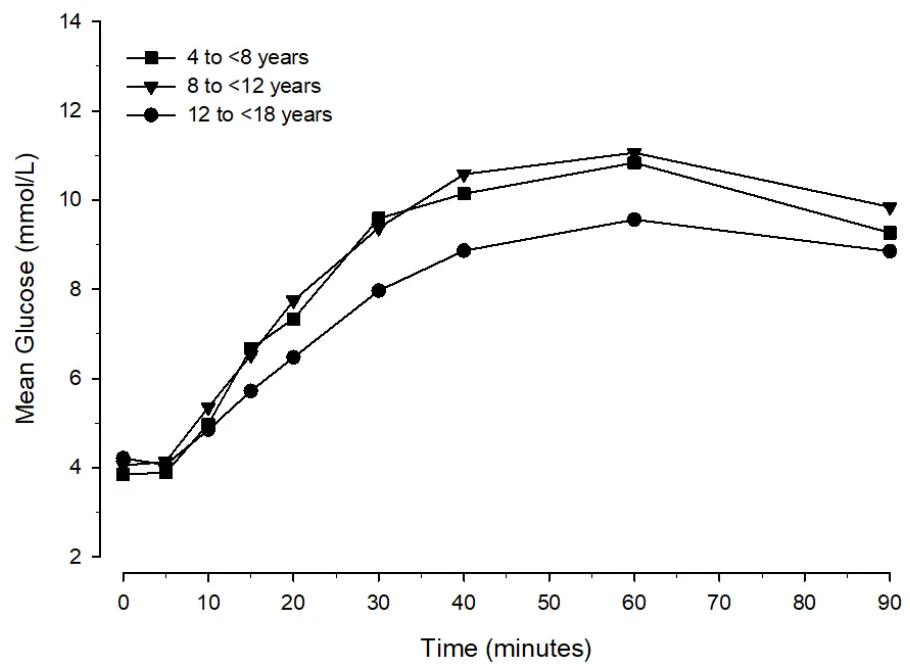
In pediatric patients with type 1 diabetes (4 to <18 years), after administration of BAQSIMI, the mean maximum glucose increase from baseline was 7.6 mmol/L (4 to <8 years), 7.4 mmol/L (8 to <12 years), and 5.7 mmol/L (12 to <18 years), shown in Figure 2.
Figure 2 Mean glucose concentration over time in pediatric Type 1 Diabetes patients treated with BAQSIMI
Sex and body weight had no clinically meaningful effects on the pharmacodynamics of BAQSIMI.
Common cold with nasal congestion tested with or without use of decongestant did not impact pharmacodynamics of BAQSIMI. 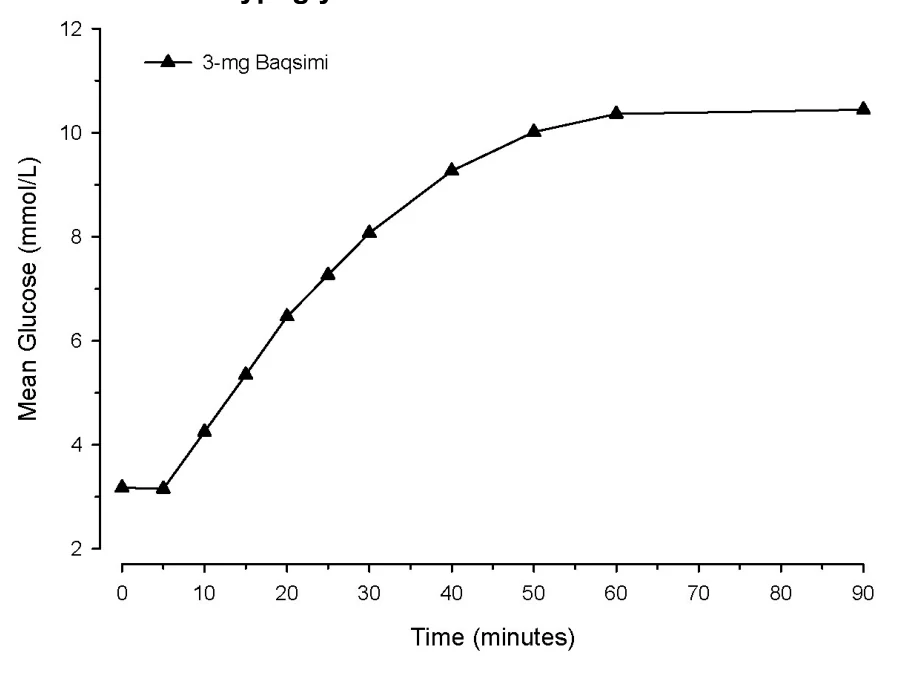
10.3 Pharmacokinetics
Table 4: Summary of Glucagon Pharmacokinetic Parameters in Adult Type 1 Diabetes Patients Treated with BAQSIMI
| Cmax | Tmaxa | t1/2a | AUC0-4 | CL/F | Vd/F | |
Single dose geometric mean | 6.1 ng/mL | 0.25 h | 0.585 h | 2.7 ng*h/mL | 981 L/h | 885 L |
a Median
Absorption: Glucagon absorption via the intranasal route, achieved mean peak plasma levels of 6.1 ng/mL at around 15 minutes.
Distribution: The apparent volume of distribution was approximately 885 L.
Metabolism: Glucagon is known to be degraded in the liver, kidneys, and plasma. Urinary excretion of intact glucagon has not been measured.
Elimination: The median half-life was approximately 35 minutes.
Special Populations and Conditions
Pediatrics: In pediatric patients (4 to <18 years), glucagon via the intranasal route achieved mean peak plasma levels between 15 and 20 minutes. The median half-life was 21 to 31 minutes.
Common Cold and Use of Decongestant: Common cold with nasal congestion or use of decongestant did not impact the pharmacokinetics of BAQSIMI.
11 STORAGE, STABILITY AND DISPOSAL
Store BAQSIMI in the shrink wrapped tube at temperatures up to 30ºC (86ºF).
Discard the used device and tube after use.
12 SPECIAL HANDLING INSTRUCTIONS
Keep BAQSIMI in the shrink wrapped tube until ready to use.
If the tube has been opened, BAQSIMI may have been exposed to moisture. This could cause BAQSIMI to not work as expected.
PART II: SCIENTIFIC INFORMATION
13 PHARMACEUTICAL INFORMATION
Drug Substance
Proper name: Glucagon
Chemical name: Glucagon
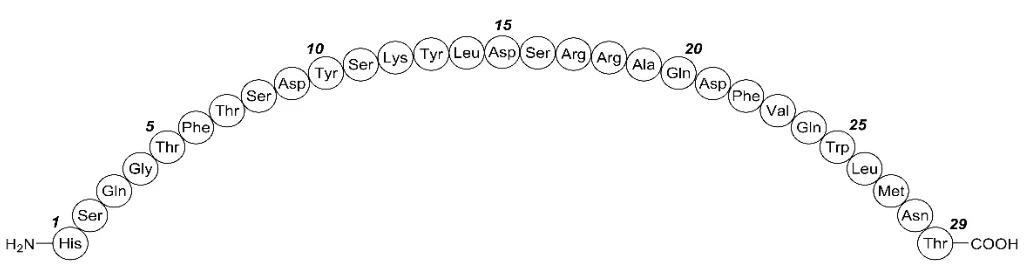
Molecular formula and molecular mass: The empirical formula is C153H225N43O49S with a molecular weight of 3483.
Structural formula:
Physicochemical properties: Glucagon nasal powder is a preservative free, white powder.
14 CLINICAL TRIALS
14.1 Trial Design and Study Demographics
Table 5: Summary of Trial Design and Patient Demographics
| Study # | Trial design | Dosage, route of administration and duration | Study subjects (n) | Mean age (Range) | Sex |
| Adult Study in patients with Type 1 and Type 2 Diabetes | |||||
| IGBC | Randomized, multicenter, open-label, 2-period, crossover study | Single 3 mg dose of BAQSIMI intranasally Or Single 1 mg dose of intra-muscular glucagon | Type 1 Diabetes n=77 Type 2 Diabetes n=6 | Type 1 Diabetes 32.9 (18-64) years Type 2 Diabetes 47.8 (18-63) years | Type 1 Diabetes 58% Female 42% Male Type 2 Diabetes 67% Female 33% Male |
| Adult Study in patients with Type 1 Diabetes | |||||
| IGBI | Randomized, multicenter, open-label, 2-period, crossover study | Single 3 mg dose of BAQSIMI intranasally Or Single 1 mg dose of intra-muscular glucagon | Type 1 Diabetes n=70 | 41.7 (20-64) years | 39% Female 61% Male |
| Pediatric Study in patients with Type 1 Diabetes | |||||
| IGBB | Randomized, multicenter, open-label, clinical studya | Single dose of BAQSIMI 3 mg intranasallya Or Single 0.5 or 1 mg dose of intra- muscular glucagon (based upon body weight) | Type 1 Diabetes n=18 n=18 n=12 | Young children cohort 6.5 (4 to <8) years Children cohort 11.1 (8 to <12) years Adolescent cohort 14.6 (12 to <18) years | 17% Female 83% Male 44% Female 56% Male 42% Female 58% Male |
a Patients in the Young children and Children cohorts were randomly assigned 2:1 to receive single doses of BAQSIMI 2 mg and 3 mg in a crossover manner or a single dose weight-based intramuscular glucagon (0.5 or 1 mg). Patients in the Adolescent cohort were randomly assigned 1:1 to receive a single dose of BAQSIMI 3 mg and 1 mg intramuscular glucagon in a crossover manner. The 2 mg and 3 mg doses in Young children and Children cohorts were blinded; all other dosing was open-label.
Adult Patients:
Study IGBC was a randomized, multicenter, open-label, 2-period, crossover study in adult patients with type 1 diabetes or type 2 diabetes. The primary objective was to compare the efficacy of a single 3 mg dose of BAQSIMI against a 1 mg dose of intra-muscular glucagon (IMG) in adult patients with type 1 diabetes. Insulin was used to reduce blood glucose levels to the hypoglycemic range with a target blood glucose nadir of <2.8 mmol/L. The primary efficacy outcome was the proportion of patients achieving treatment success, which was defined as either an increase in blood glucose to ≥3.9 mmol/L or an increase of ≥1.1 mmol/L from glucose nadir within 30 minutes after receiving study glucagon, without receiving additional actions to increase the blood glucose level. Glucose nadir was defined as the minimum glucose measurement at the time of, or within 10 minutes, following glucagon administration.
Study IGBC enrolled 83 total patients 18 to 64 years of age. Seventy-seven patients had type 1 diabetes, with a mean age of 32.9 years and a mean diabetes duration of 18.1 years, and 45 (58%) patients were female and 74 (96%) patients were white. The mean age of patients with T2D (N=6) was 47.8 years, with a mean diabetes duration of 18.8 years, 4 (67%) patients were female and 1 (17%) patient was white.
Study, IGBI was a randomized, multicenter, open-label, 2-period, crossover study in adult patients with type 1 diabetes. The efficacy of a single 3 mg dose of BAQSIMI was compared to a 1 mg dose of intra-muscular glucagon (IMG). Insulin was used to reduce blood glucose levels to the hypoglycemic range with a target blood glucose nadir of <3.3 mmol/L. The primary efficacy outcome was identical to the primary efficacy outcome defined in Study IGBC. Seventy patients with type 1 diabetes were enrolled, with a mean age of 41.7 years and a mean diabetes duration of 19.8 years. Twenty-seven (39%) patients were female.
Pediatric Patients
Study IGBB was a randomized, multicenter, open-label clinical study that assessed BAQSIMI compared to intra-muscular glucagon (IMG) in pediatric patients aged 4 years and older with type 1 diabetes. Insulin was used to reduce blood glucose levels, and glucagon was administered after glucose reached <4.4 mmol/L on the dosing day. The primary objective was to assess the PK and PD of BAQSIMI compared to a weight-based dose of intra-muscular glucagon. Efficacy was assessed based on percentage of patients with a glucose increase of ≥1.1 mmol/L from glucose nadir within 30 minutes following glucagon administration.
Forty-eight patients were enrolled and received at least one dose of study drug. The mean age in the Young Children cohort (4 to <8 years) was 6.5 years. In the Children cohort (8 to <12 years), mean age was 11.1 years and in the Adolescent cohort (12 to <18 years) mean age was 14.6 years. In all age cohorts, the population was predominantly male and white.
14.2 Study Results
Adult Patients
Study IGBC in Adult Patients with Type 1 and Type 2 Diabetes
For patients with type 1 diabetes (n=75), the mean nadir blood glucose was 2.5 mmol/L for BAQSIMI and 2.7 mmol/L for IMG. BAQSIMI demonstrated non-inferiority to IMG in reversing insulin-induced hypoglycemia with 98.7% of BAQSIMI-treated patients and 100% of IMG-treated patients achieving treatment success within 30 minutes. All patients met glucose treatment success criteria within 40 minutes. The mean time to treatment success, which did not include glucagon preparation time, for type 1 diabetes was 16.2 and 12.2 minutes in the BAQSIMI 3 mg and IMG 1 mg treatment groups, respectively. The difference in mean time to treatment success was statistically significant.
For patients with type 2 diabetes (n=5), the mean nadir blood glucose was 3.0 mmol/L for BAQSIMI and 2.9 mmol/L for IMG. All patients with type 2 diabetes (100%) achieved treatment success. The mean time to treatment success, which did not include glucagon preparation time, for type 2 diabetes was 11 and 10 minutes in the BAQSIMI and IMG 1 mg treatment groups, respectively.
Table 6: Patients Meeting Treatment Success and Other Glucose Criteria in Study IGBC
Type 1 Diabetes (N=75)a | Type 1 and Type 2 Diabetes (N=80)a | |||
| BAQSIMI 3 mg | IMG 1 mg | BAQSIMI 3 mg | IMG 1 mg | |
| Treatment Success – n (%) | 74 (98.7%) | 75 (100%) | 79 (98.8%) | 80 (100%) |
| Treatment Difference (1-sided upper 97.5% confidence limit) b, c | 1.3% (4.0%) | 1.3% (3.7%) | ||
Glucose criterion met – n (%)d (i) ≥3.9 mmol/L (ii) Increase by ≥1.1 mmol/L from nadir Both (i) and (ii) | 72 (97%) 74 (100%) 72 (97%) | 74 (99%) 75 (100%) 74 (99%) | 77 (97%) 79 (100%) 77 (97%) | 79 (99%) 80 (100%) 79 (99%) |
a The Efficacy Analysis Population consisted of all patients who received both doses of the Study Drug with evaluable primary outcome.
b Difference calculated as (percentage with success in IMG) – (percentage with success in BAQSIMI). c 1-sided confidence interval (CI) from a 1-sample mean of the paired differences in occurrence of outcome; non-inferiority margin = 10%.
d Percentage based on number of patients meeting treatment success.
Study IGBI in Adult Patients with Type 1 Diabetes
For the IGBI study the mean nadir blood glucose was 3.0 mmol/L for BAQSIMI and 3.1 mmol/L for IMG. BAQSIMI demonstrated non-inferiority to IMG in reversing insulin-induced hypoglycemia with 100% of BAQSIMI-treated patients and 100% of IMG-treated patients achieving treatment success. All patients achieved both the pre-defined treatment success of an increased plasma glucose to ≥3.9 mmol/L and an increase in glucose of ≥1.1 mmol/L from nadir within 30 minutes after receiving BAQSIMI or IMG. The mean time to treatment success was 11.4 and 9.9 minutes in the BAQSIMI and IMG 1 mg treatment groups, respectively.
Pediatric Patients
Study IGBB in Pediatric Patients with Type 1 Diabetes
In study IGBB, across all age groups, BAQSIMI 3 mg and IMG 0.5 mg or 1 mg (based upon body weight), demonstrated similar glycemic responses. All (100%) patients in both treatment arms across all age groups achieved an increase in glucose ≥1.1 mmol/L from glucose nadir within 20 minutes of glucagon administration. The mean time to reach a glucose increase of ≥1.1 mmol/L is shown in Table 7 below.
Table 7: Mean Time to Reach Glucose Increase of ≥1.1 mmol/L from Nadir in Pediatric
Study IGBB
| Increase from Nadir | Mean Time Post-Glucagon Administration (minutes) | |||||
| Young Children (4 to <8 years old) | Children (8 to <12 years old) | Adolescents (12 to <18 years old) | ||||
BAQSIMI 3 mg N=12 | IMGa N=6 | BAQSIMI 3 mg N=12 | IMGa N=6 | BAQSIMI 3 mg N=12 | IMGa N=12 | |
| ≥1.1 mmol/L | 10.8 | 10.0 | 11.3 | 12.5 | 14.2 | 12.5 |
a 0.5 mg or 1 mg of IMG (based upon body weight)
15 NON-CLINICAL TOXICOLOGY
Repeat-Dose Toxicology
Rats were dosed by intranasal (IN) instillation with a solubilized formulation of nasal glucagon at 0.1 and 0.2 mg/rat/day (20.9- and 29.1-fold, respectively, the glucagon AUC in patients with diabetes following a 3 mg IN dose of nasal glucagon) for 28 consecutive days. Daily dosing over 28 days in rats was well tolerated; there were no nasal glucagon-related adverse effects on survival, clinical signs, body weights, food consumption, ophthalmoscopy, clinical pathology, or systemic anatomic pathology. Adverse effects were limited to local effects in the nasal cavity at the highest dose only (0.2 mg/day). Reversible mild to moderate erosion/ulceration of the olfactory epithelium occurred, frequently accompanied by minimal to mild, acute to subacute inflammation of the lamina propria at the dorsal turbinates of the nasal cavity in the 0.2 mg/day group. The placebo (15% DPC and 85% beta-cyclodextrin) produced no changes to the olfactory epithelia of rats after daily intranasal dosing for 28 days. The no-observed-adverse-effect level (NOAEL) for systemic target organ toxicity was considered to be 0.2 mg/day in rats (29.1-fold the human AUC following a 3 mg IN dose).
In dogs, the intended clinical nasal dosing device was used to administer the dry powder formulation of nasal glucagon at 2 and 4 mg/dog/day (139- and 194-fold, respectively, the glucagon AUC in patients with diabetes following a 3 mg IN dose of BAQSIMI) for 28 consecutive days. There were no test article-related adverse effects on body weight, food consumption, ophthalmology, electrocardiography, hematology, coagulation parameters, clinical chemistry, urinalysis, organ weights, or systemic anatomic pathology. With the exception of transient salivation and some sneezing in most dogs immediately after IN dosing, daily nasal glucagon dosing for 28 days was well tolerated. As in rats, adverse effects were limited to local effects in the nasal cavity. Microscopically, reversible mild to moderate atrophy/degeneration of the olfactory epithelium was observed in the nasal cavity of the placebo (15% DPC and 85% beta-cyclodextrin), 2 mg/day and 4 mg/day groups, with an increased incidence and severity in the nasal glucagon-treated dogs. The NOAEL for systemic target organ toxicity was considered to be 4 mg/day in dogs (194-fold the human AUC following a 3 mg IN dose).
Carcinogenicity
Because nasal glucagon is a single-use product indicated as rescue treatment for severe hypoglycemia, carcinogenicity studies have not been conducted.
Genotoxicity
Because nasal glucagon is a biotherapeutic peptide, no genetic toxicity studies were conducted.
DPC was not genotoxic in in vitro bacterial reverse mutation and chromosome aberration assays and the in vivo micronucleus assay in rats.
Reproductive and Developmental Toxicology
No reproductive and developmental toxicology studies have been conducted with nasal glucagon. Reproductive and developmental toxicology studies have been conducted previously with marketed recombinant glucagon products as well as animal-sourced glucagon products and revealed no evidence of harm to the fetus or impaired fertility. In addition, glucagon has been shown not to cross the human placenta further lowering the level of concern for potential fetal effects.
DPC did not adversely affect male or female reproductive performance or early embryonic development of rats dosed IV daily with up to 3 mg/kg/day prior to and throughout cohabitation until implantation (approximately 4 to 6 weeks, depending on gender).
DPC did not adversely affect embryo-fetal development in rats and rabbits dosed IV daily throughout organogenesis with up to 2.5 and 1 mg/kg/day, respectively.
DPC did not adversely affect maternal (F0) growth and reproduction or offspring (F1) growth, behaviour, and reproduction following daily IV doses up to 1 mg/kg/day to maternal rats from Gestation Day 6 through Postnatal Day 20.
Special Toxicology Studies
A single ocular instillation via powder dosing devices pre-filled with 30 mg nasal glucagon to male New Zealand White rabbits was well tolerated, with minimal ocular irritation limited to slight erythema and edema localized to the conjunctiva and palpebral membrane.
Juvenile Toxicology
No juvenile animal toxicology studies have been conducted with nasal glucagon.