


Product Monograph - Lupin-Glucagon
RECENT MAJOR LABEL CHANGES
This section is not applicable
TABLE OF CONTENTS
Sections or subsections that are not applicable at the time of authorization are not listed.
RECENT MAJOR LABEL CHANGES ............................................................................................. 2
TABLE OF CONTENTS ............................................................................................................... 2
PART I: HEALTH PROFESSIONAL INFORMATION ....................................................................... 4
1 INDICATIONS ................................................................................................................ 4
1.1 Pediatrics ..................................................................................................................... 4
1.2 Geriatrics ..................................................................................................................... 4
2 CONTRAINDICATIONS .................................................................................................. 4
3 SERIOUS WARNINGS AND PRECAUTIONS BOX ............................................................. 4
4 DOSAGE AND ADMINISTRATION .................................................................................. 5
4.1 Dosing Considerations ................................................................................................. 5
4.2 Recommended Dose and Dosage Adjustment ............................................................ 5
4.3 Reconstitution ............................................................................................................. 6
4.4 Administration ............................................................................................................. 6
5 OVERDOSAGE ............................................................................................................... 6
6 DOSAGE FORMS, STRENGTHS, COMPOSITION AND PACKAGING .................................. 7
7 WARNINGS AND PRECAUTIONS ................................................................................... 7
7.1 Special Populations ..................................................................................................... 9
7.1.1 Pregnancy .......................................................................................................... 9
7.1.2 Breastfeeding .................................................................................................... 9
7.1.3 Pediatrics ........................................................................................................... 9
7.1.4 Geriatrics ........................................................................................................... 9
8 ADVERSE REACTIONS ................................................................................................. 10
8.1 Adverse Reaction Overview ................................................................................. 10
8.2 Clinical Trial Adverse Reactions ........................................................................... 10
8.4 Abnormal Laboratory Findings: Hematologic, Clinical Chemistry and Other Quantitative Data ............................................................................................................ 10
8.5 Post-Market Adverse Reactions .......................................................................... 10
9 DRUG INTERACTIONS ................................................................................................. 10
9.1 Overview ............................................................................................................. 10
9.4 Drug-Drug Interactions ........................................................................................ 10
9.5 Drug-Food Interactions ........................................................................................ 12
9.6 Drug-Herb Interactions ........................................................................................ 12
9.7 Drug-Laboratory Test Interactions ....................................................................... 12
10 CLINICAL PHARMACOLOGY ........................................................................................ 12
10.1 Mechanism of Action ........................................................................................... 12
10.2 Pharmacodynamics ............................................................................................. 12
10.3 Pharmacokinetics ................................................................................................ 13
11 STORAGE, STABILITY AND DISPOSAL .......................................................................... 14
PART II: SCIENTIFIC INFORMATION ........................................................................................ 15
13 PHARMACEUTICAL INFORMATION ............................................................................. 15
14 CLINICAL TRIALS ......................................................................................................... 15
15 MICROBIOLOGY ......................................................................................................... 15
16 NON-CLINICAL TOXICOLOGY ...................................................................................... 15
Patient Medication Information ............................................................................................ 17
PART I: HEALTH PROFESSIONAL INFORMATION
1 INDICATIONS
LUPIN-GLUCAGON (glucagon for injection) is indicated:
- for emergency treatment of severe hypoglycemia in pediatric and adult patients with diabetes mellitus, when impaired consciousness precludes oral carbohydrates.
- as a diagnostic aid for use during radiologic examinations to temporarily diminish motility of the gastrointestinal tract in adult patients.
1.1 Pediatrics
Pediatrics (<18 years of age):
- Based on the data submitted and reviewed by Health Canada, the safety and efficacy of glucagon for injection in pediatric patients has been established. Therefore, Health Canada has authorized an indication for pediatric use for the treatment of severe hypoglycemia.
- For use as a diagnostic aid, no data are available to Health Canada; therefore, Health Canada has not authorized an indication of use as a diagnostic aid for pediatric use.
1.2 Geriatrics
Geriatrics (≥60 years of age): Limited clinical studies and experience suggests that use in the geriatric population is not associated with differences in safety or effectiveness.
2 CONTRAINDICATIONS
LUPIN-GLUCAGON is contraindicated in patients with:
- known hypersensitivity to this drug or to any ingredient in the formulation, including any non-medicinal ingredient, or component of the container. For a complete listing, see 6 Dosage Forms, Strengths, Composition, and Packaging.
- pheochromocytoma
- insulinoma
- glucagonoma, when used as a diagnostic aid
3 SERIOUS WARNINGS AND PRECAUTIONS BOX
LUPIN-GLUCAGON should be given only in patients where impaired consciousness precludes oral carbohydrates. After intramuscular injection, a glycemic response should occur within 10 minutes. If the patient does not demonstrate a glycemic response within 10 minutes, intravenous (IV) glucose must be administered as soon as an IV access can be established.
Because glucagon is of little or no help in states of starvation, adrenal insufficiency, or chronic hypoglycemia, IV glucose should be used for treatment of hypoglycemia in those conditions.
4 DOSAGE AND ADMINISTRATION
4.1 Dosing Considerations
- Read and follow the instructions on the package insert enclosed with LUPIN-GLUCAGON.
- LUPIN-GLUCAGON should be reconstituted with the accompanying diluent following the detailed directions contained within the Instructions for Use.
- LUPIN-GLUGAGON should not be used at concentrations greater than 1 mg/mL (1 unit/mL).
4.2 Recommended Dose and Dosage Adjustment
For the Treatment of Hypoglycemia
The doses of LUPIN-GLUCAGON listed in the following table are recommended for treatment of hypoglycemia.
| Population | Recommended dose | |
|---|---|---|
| Adults | 1 mg (1 unit) by subcutaneous or intramuscular injection | |
| Pediatric patients | Weighing ≥ 20 kg | 1 mg (1 unit) by subcutaneous or intramuscular injection |
| Weighing < 20 kg | 0.5 mg (0.5 unit), or dose equivalent to 25 mcg/kg, by subcutaneous or intramuscular injection | |
- The patient will usually awaken within 15 minutes. Give oral carbohydrate when the patient responds to restore the liver glycogen and prevent relapse of hypoglycemia.
If there is no clinical response (awakening) after 15 minutes:
- administer an additional dose from a new LUPIN-GLUCAGON vial while waiting for emergency assistance
- intravenous glucose must be administered by a healthcare professional
For Use as a Diagnostic Aid
LUPIN-GLUCAGON may be administered for relaxation of the gastrointestinal tract, with doses and administration route depending on the onset and duration of effect required for the examination (see 10.3 Pharmacokinetics).
Recommended doses:
- Stomach: 0.5 mg (0.5 units) IV or 2 mg (2 units) intramuscularly (IM)
- Colon: 2 mg (2 unit) IM approximately 10 minutes prior to initiation of the procedure
Administration of 2 mg (2 unit) doses produces a higher incidence of nausea and vomiting than do lower doses.
.
4.3 Reconstitution
LUPIN-GLUCAGON solutions should be used only if they are clear and of a water-like consistency.
Reconstitute the vial of LUPIN-GLUCAGON with the accompanying 1 mL diluent following the detailed directions in the Instructions for Use. The diluent is provided for use only in the preparation of LUPIN-GLUCAGON.
LUPIN-GLUCAGON should be used immediately after reconstitution. Discard any unused portion.
4.4 Administration
For treatment of severe hypoglycemia
Patients and their caregivers should be instructed on the signs and symptoms of severe hypoglycemia. LUPIN-GLUCAGON should be administered as soon as possible when severe hypoglycemia is recognized.
It is advisable for the patient and caregiver(s) to become familiar with the technique of preparing LUPIN-GLUCAGON for injection before an emergency arises.
Instruct the patient or caregiver(s) to read the package insert and Instructions for Use at the time they receive LUPIN-GLUCAGON.
Emphasize the following instructions to the patient and/or caregiver(s):
- After reconstitution, the solution should appear clear and colourless and be free of particles.
- Immediately after reconstitution, withdraw the correct dose of LUPIN-GLUCAGON from the vial into the syringe, and inject subcutaneously or intramuscularly into the buttock, thigh or upper arm.
- Call for emergency assistance immediately after administering the dose.
- Discard any unused portion of LUPIN-GLUCAGON.
- If the patient does not awaken in 15 minutes, a second dose of LUPIN-GLUCAGON can be administered.
For use as a Diagnostic Aid
LUPIN-GLUCAGON can be administered by IM or IV (see 4.2 Recommended Dose and Dose Adjustment).
5 OVERDOSAGE
If overdosage occurs, the patient may experience nausea, vomiting, gastric hypotonicity, diarrhea, increase in blood pressure and pulse rate.
In case of suspected overdosing, serum potassium may decrease and should be monitored and corrected if needed.
If the patient develops a dramatic increase in blood pressure, phentolamine has been shown to be effective in lowering blood pressure for the short time that control would be needed.
For the most recent information in the management of a suspected drug overdose, contact your regional poison control centre or Health Canada’s toll-free number, 1-844 POISON-X (1-844-764-7669).
6 DOSAGE FORMS, STRENGTHS, COMPOSITION AND PACKAGING
Table 1– Dosage Forms, Strengths, Composition and Packaging
7 WARNINGS AND PRECAUTIONS
Please see 3 SERIOUS WARNINGS AND PRECAUTIONS BOX.
General
LUPIN-GLUCAGON (glucagon for injection, synthetic) is helpful in treating hypoglycemia only if sufficient liver glycogen is present. Patients in states of starvation, with adrenal insufficiency or chronic hypoglycemia may not have adequate levels of hepatic glucagon for LUPIN-GLUCAGON to be effective. Patients with these conditions should be treated with glucose.
To prevent relapse of hypoglycemia and to restore the liver glycogen, oral carbohydrate should be given when the patient has responded to the treatment.
Alcohol can suppress hepatic gluconeogenesis and chronic alcoholism can deplete liver glycogen stores. Therefore, glucagon may be less effective in presence of acute or chronic alcohol ingestion.
Carcinogenesis and Mutagenesis
See 16 Non-Clinical Toxicology.
Cardiovascular
In high concentrations, glucagon exerts positive inotropic and chronotropic effect and may therefore cause tachycardia and acute hypertensive reactions. (See 2 Contraindications and 7 Warnings and Precautions, Endocrine and Metabolism)
Cardiac monitoring is recommended in patients with cardiac disease during use of LUPIN-GLUCAGON as a diagnostic aid. An increase in blood pressure and pulse rate may require
| Route of Administration | Dosage Form / Strength/Composition | Non-medicinal Ingredients |
| Subcutaneous, intramuscular, or intravenous injection | Lyophilized powder (synthetic) /1 mg (1.0 units) glucagon per vial along with diluting solution | Each vial of glucagon contains 49.0 mg of lactose monohydrate, hydrochloric acid to adjust pH and water for injection. The diluent syringe contains 1 mL of 1.2% glycerin. |
therapy.
Driving and Operating Machinery
No studies on the effects of glucagon on the ability to drive and use machines have been performed. The patient’s ability to concentrate and react may be impaired as a result of hypoglycemia. This may present a risk in situations where these abilities are especially important, such as driving or operating machinery.
Endocrine and metabolism
Patients with Diabetes Mellitus when Used as a Diagnostic Aid
LUPIN-GLUCAGON may cause hyperglycemia when used as a diagnostic aid in patients with diabetes mellitus. Monitor for changes in blood glucose levels during treatment and treat hyperglycemia, if indicated.
Glucagonoma
LUPIN-GLUCAGON is contraindicated as a diagnostic aid in patients with glucagonoma (see 2 Contraindications). Glucagon administered to patients with glucagonoma may cause secondary hypoglycemia. Test patients suspected of having glucagonoma for blood levels of glucagon prior to use as a diagnostic aid. If a patient develops symptoms of hypoglycemia after administration of LUPIN-GLUCAGON, administer glucose orally or intravenously.
Insulinoma
LUPIN-GLUCAGON is contraindicated in patients with insulinoma (see 2 Contraindications). Glucagon administration may directly or indirectly (through an initial rise in blood glucose) stimulate exaggerated insulin release from an insulinoma and cause hypoglycemia. A patient developing symptoms of hypoglycemia after a dose of glucagon should be given glucose orally, intravenously, or by gavage.
Pheochromocytoma
LUPIN-GLUCAGON is contraindicated in patients with pheochromocytoma (see 2 Contraindications). In the presence of pheochromocytoma, glucagon may stimulate the tumour to release catecholamines, which results in a sudden and marked increase in blood pressure. If a patient suddenly develops a marked increase in blood pressure and pheochromocytoma is suspected, 5 to 10 mg of phentolamine mesylate administered intravenously has been shown to be effective in lowering blood pressure (see 7 WARNINGS AND PRECAUTIONS, Cardiovascular).
Immune
LUPIN-GLUCAGON is contraindicated in patients with a prior hypersensitivity reaction (see 2 CONTRAINDICATIONS). Generalized allergic reactions, including urticaria, respiratory distress, and hypotension, have been reported in patients who received glucagon.
Monitoring and Laboratory Tests
Blood glucose determinations should be obtained to follow the patient with hypoglycemia until the patient is asymptomatic.
Reproductive Health
Reproduction studies have been performed in rats at doses up to 2 mg/kg glucagon administered two times a day (up to 120 times the human dose) and have revealed no evidence of impaired fertility (See 16 NON-CLINICAL TOXICOLOGY, 7.1.1 Pregnant Women).
Skin
Necrolytic Migratory Erythema (NME) cases have been reported post marketing in patients receiving continuous infusion of glucagon. LUPIN-GLUCAGON is not approved for continuous infusion. Should NME occur, consider whether the benefits of continuous glucagon infusion outweigh the risks.
7.1 Special Populations
7.1.1 Pregnancy
Reproduction studies have not been performed with synthetic glucagon; however, studies with animal sourced glucagon have been performed in rats at doses up to 2 mg/kg administered two times a day (up to 120 times the human dose), and have revealed no evidence of harm to the fetus due to glucagon.
There are no adequate and well-controlled studies in pregnant individuals. Because animal reproduction studies are not always predictive of human response, this drug should be used during pregnancy only if oral carbohydrates cannot be administered.
7.1.2 Breastfeeding
No clinical studies have been performed in breastfeeding individuals. Safe use of LUPIN-GLUCAGON during lactation has not been established, and it is not known whether glucagon is excreted in human milk. Precaution should be exercised because many drugs can be excreted in human milk.
7.1.3 Pediatrics
For the treatment of hypoglycemia: The use of glucagon in pediatric patients has been reported to be safe and effective.
For use as a diagnostic aid: No data are available to Health Canada; therefore, Health Canada has not authorized this indication for pediatric use (see 1.1 Pediatrics).
7.1.4 Geriatrics
Differences in responses between the elderly and younger patients have not been identified.
8 ADVERSE REACTIONS
8.1 Adverse Reaction Overview
Severe adverse reactions are rare.
Common adverse reactions include nausea, vomiting, injection site reactions, headache, dizziness, asthenia, pallor, diarrhea, somnolence, and hypokalemia.
Generalized allergic reactions, including urticaria, respiratory distress, and hypotension (decreased blood pressure) have been reported in patients who received glucagon (see 7 Warnings And Precautions, Immune).
8.2 Clinical Trial Adverse Reactions
There were no Clinical Trials performed with LUPIN-GLUCAGON.
8.4 Abnormal Laboratory Findings: Hematologic, Clinical Chemistry and Other Quantitative Data
- Vital Signs. Glucagon exerts positive inotropic and chronotropic effects and may cause a temporary increase in both blood pressure and pulse rate.
- Immunogenicity. As with all therapeutic proteins, there is the potential for immunogenicity.
8.5 Post-Market Adverse Reactions
Cardiac and Vascular disorders: Hypertension and tachycardia; Hypotension in patients receiving glucagon as premedication for upper gastrointestinal endoscopy procedures.
Metabolism: Hypoglycemia and hypoglycemic coma. Patients taking indomethacin may be more likely to experience hypoglycemia following glucagon administration.
Skin disorders: Necrolytic Migratory Erythema (NME).
9 DRUG INTERACTIONS
9.1 Overview
No formal drug interaction studies were performed with LUPIN-GLUCAGON.
9.4 Drug-Drug Interactions
Drug-drug interactions supported by animal or in-vitro studies have not been established.
The drugs listed in this table are based on published literature.
Table 2 – Established or Potential Drug-Drug Interactions
| Non-proprietary name(s) of the drug product(s) | Source of evidence | Effect | Clinical comment |
| Anticholinergic drugs | Published literature | Additive effects on inhibition of smooth muscle contractions, including gastrointestinal motility, increase the risk of gastrointestinal adverse reactions. | Concomitant use of anticholinergic drugs with Lupin-Glucagon for use as a diagnostic aid is not recommended. |
| Beta blockers | Published literature | Patients taking beta-blockers might be expected to have a greater increase in both pulse and blood pressure, an increase of which will be temporary because of glucagon’s short half-life. | The increase in blood pressure and pulse rate may require therapy in patients with coronary artery disease. |
| Indomethacin | Published literature | Glucagon may lose its ability to raise blood glucose or paradoxically may even produce hypoglycemia. | Caution is warranted and blood glucose concentration monitoring is recommended |
| Insulin | Published literature | Insulin acts antagonistically towards glucagon. | Monitor blood glucose when glucagon is used as a diagnostic aid |
| Sulfonylurea | Published literature | Use of glucagon in patients taking a sulfonylurea is not generally recommended. Due to the pharmacokinetics profile, sulfonylurea medications remain in the system for a long time and therefore can cause significant and prolonged hypoglycemia. | IV glucose bolus followed by continuous IV infusion until the effects of the sulfonylurea are gone is the preferred treatment of severe hypoglycemia for those taking sulfonylureas. |
| Warfarin | Published literature | Glucagon may increase the anticoagulant effect of warfarin. | Monitor patients for unusual bruising or bleeding, as adjustments in warfarin dosage may be required |
9.5 Drug-Food Interactions
Interactions with food have not been established.
9.6 Drug-Herb Interactions
Interactions with herbs have not been established.
9.7 Drug-Laboratory Test Interactions
Interactions with laboratory tests have not been established.
10 CLINICAL PHARMACOLOGY
10.1 Mechanism of Action
LUPIN-GLUCAGON is a synthetic polypeptide hormone with the same sequence as human glucagon.
Glucagon increases blood glucose concentration by activating hepatic glucagon receptors to stimulate breakdown of glycogen and release of glucose from the liver. Hepatic stores of glycogen are necessary for glucagon to produce an antihypoglycemic effect. Extrahepatic effects of glucagon include relaxation of smooth muscle of the stomach, duodenum, small bowel, and colon.
10.2 Pharmacodynamics
Treatment of Severe Hypoglycemia
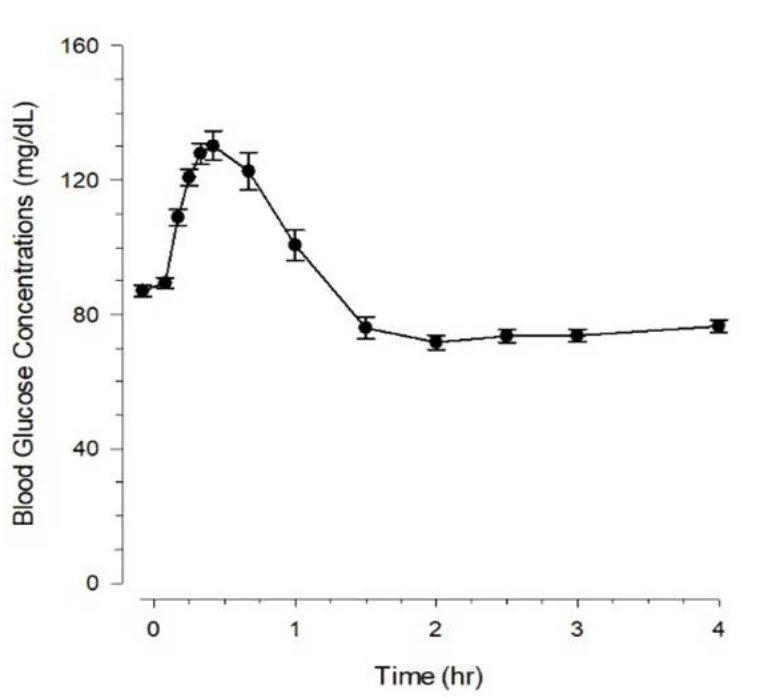
Blood glucose concentrations rise within 10 minutes of subcutaneous injection and mean maximal concentration of 136 mg/dL is attained 30 minutes after injection (see Figure 1). Similarly, following intramuscular injection, the mean peak glucose level was 138 mg/dL, which occurred at 26 minutes after injection.
Figure 1: Mean (SE) Blood Glucose Concentrations after Subcutaneous Injection of Glucagon (1 mg) in 25 Normal Volunteers
Diagnostic Aid
Table 3 displays the dose and pharmacodynamics properties of glucagon for injection as a diagnostic aid during radiological examination.
Table 3: Dose and Pharmacodynamic Properties of Glucagon for Injection as a Diagnostic Aid
| Dose | Route of Administration | Time of Onset of Action | Approximate Duration of Effect |
|---|---|---|---|
| 0.25 to 0.5 mg | Intravenous | 1 minute | 9 to 17 minutes |
| 1 mg | Intramuscular | 8 to 10 minutes | 12 to 27 minutes |
| 2 mg* | Intravenous | 1 minute | 22 to 25 minutes |
| 2 mg* | Intramuscular | 4 to 7 minutes | 21 to 32 minutes |
*Administration of 2 mg doses produces a higher incidence of nausea and vomiting than do lower doses
10.3 Pharmacokinetics
Absorption
Glucagon has been studied following intramuscular, subcutaneous, and intravenous administration in adult volunteers. Administration of the intravenous Glucagon showed dose proportionality of the pharmacokinetics between 0.25 and 2.0 mg.
Distribution:
Calculations from a 1 mg dose showed a small volume of distribution (mean, 0.25 L/kg) and a moderate clearance (mean, 13.5 mL/min/kg). The half-life ranged from 8–18 minutes.
Maximum plasma concentrations of 7.9 ng/mL were achieved approximately 20 minutes after subcutaneous administration. With intramuscular dosing, maximum plasma concentrations of 6.9 ng/mL were attained approximately 13 minutes after dosing.
Metabolism:
Glucagon is extensively degraded in liver, kidney, and plasma.
Elimination
Urinary excretion of intact glucagon has not been measured.
11 STORAGE, STABILITY AND DISPOSAL
Prior to reconstitution, LUPIN-GLUCAGON should be stored at controlled room temperature between 15° to 30°C.
Do not refrigerate or freeze LUPIN-GLUCAGON.
Keep in its original package and away from light.
Reconstituted LUPIN-GLUCAGON should be used immediately after reconstitution. Dispose of any unused portion and waste material in accordance with local requirements.
If the reconstituted solution appears cloudy or shows the presence of insoluble matter, it should be discarded.
Do not use past expiry date.
PART II: SCIENTIFIC INFORMATION
13 PHARMACEUTICAL INFORMATION
Drug Substance
LUPIN-GLUCAGON (glucagon for injection, synthetic) is a polypeptide hormone identical to human glucagon that increases blood glucose and relaxes smooth muscle of the gastrointestinal tract.
LUPIN-GLUCAGON is produced by solid-phase peptide synthesis.
Proper name: glucagon
Chemical name: glucagon
Molecular formula and molecular mass: C153H225N43O49S and 3,480.6 Da
Structural formula: Glucagon is a single-chain polypeptide containing 29 amino acid residues. The structure of glucagon is shown below.

Physicochemical properties: Crystalline
Product Characteristics: Crystalline glucagon is a white to off-white powder. It is relatively insoluble in water but is soluble at a pH of less than 3 or more than 9.5.
14 CLINICAL TRIALS
No clinical trials were conducted for LUPIN-GLUCAGON.
15 MICROBIOLOGY
No microbiological information is required for this drug product.
16 NON-CLINICAL TOXICOLOGY
Non-clinical studies were not performed with LUPIN-GLUCAGON.
Non-clinical data in the literature with recombinant glucagon reveal no concerning hazard based on conventional studies of safety pharmacology, repeated dose toxicity, genotoxicity, toxicity to reproduction and development.
Genotoxicity:
Mutagenicity studies have not been performed with synthetic glucagon. However, the potential for genotoxicity of glucagon of rDNA origin was evaluated using a series of recognized in vitro and in vivo assays for mutagenic-genotoxic activity and results indicate that glucagon should be considered non-mutagenic.
Carcinogenicity:
No studies have been performed for glucagon regarding carcinogenesis.
Reproductive and Development:
Reproduction studies performed in rats at doses up to 2 mg/kg glucagon administered two times a day (up to 120 times the human dose) revealed no evidence of impaired fertility and no evidence of harm to the fetus due to glucagon.