


Product Monograph - Baxdela
RECENT MAJOR LABEL CHANGES
None at the time of the current authorization.
TABLE OF CONTENTS
Sections or subsections that are not applicable at the time of authorization are not listed.
RECENT MAJOR LABEL CHANGES............................................................................................. 2
TABLE OF CONTENTS ............................................................................................................... 2
PART I: HEALTH PROFESSIONAL INFORMATION ...................................................................... 4
- 1.
INDICATIONS ................................................................................................................... 4
1.1 Pediatrics............................................................................................................... 4
1.2 Geriatrics............................................................................................................... 4
- 2. CONTRAINDICATIONS...................................................................................................... 5
- 3. SERIOUS WARNINGS AND PRECAUTIONS BOX ................................................................. 5
- 4.
DOSAGE AND ADMINISTRATION ..................................................................................... 6
4.1 Dosing Considerations ........................................................................................... 6
4.2 Recommended Dose and Dosage Adjustment ......................................................... 6
4.3 Reconstitution........................................................................................................ 8
4.4 Administration....................................................................................................... 9
4.5 Missed Dose .......................................................................................................... 9
- 5. OVERDOSAGE .................................................................................................................10
- 6. DOSAGE FORMS, STRENGTHS, COMPOSITION AND PACKAGING.....................................10
- 7.
WARNINGS AND PRECAUTIONS......................................................................................11
7.1 Special Populations.............................................................................................. 15
7.1.1. Pregnant Women ............................................................................................ 15
7.1.2. Breast-feeding................................................................................................. 16
7.1.3. Pediatrics ........................................................................................................ 16
7.1.4. Geriatrics ........................................................................................................ 16
- 8.
ADVERSE REACTIONS......................................................................................................17
8.1 Adverse Reaction Overview ................................................................................. 17
8.2 Clinical Trial Adverse Drug Reactions ................................................................. 18
8.3 Less Common Clinical Trial Adverse Reactions ................................................... 21
8.4 Abnormal Laboratory Findings: Hematologic, Clinical Chemistry and Other Quantitative Data .......................................................................................................... 21
- 9.
DRUG INTERACTIONS .....................................................................................................22
9.2 Drug Interactions Overview ................................................................................. 22
9.4 Drug-Drug Interactions ........................................................................................ 23
9.5 Drug-Food Interactions ........................................................................................ 24
- 10.
CLINICAL PHARMACOLOGY.............................................................................................24
10.1 Mechanism of Action........................................................................................... 24
10.2 Pharmacodynamics .............................................................................................. 24
10.3 Pharmacokinetics................................................................................................. 24
- 11. STORAGE, STABILITY AND DISPOSAL...............................................................................28
- 12. SPECIAL HANDLING INSTRUCTIONS ................................................................................28
PART II: SCIENTIFIC INFORMATION ........................................................................................29
- 13. PHARMACEUTICAL INFORMATION .................................................................................29
- 14.
CLINICAL TRIALS .............................................................................................................30
14.1 Clinical Trials by Indication ................................................................................. 30
Acute Bacterial Skin and Skin Structure Infections (ABSSSI) ........................................ 30
Community-Acquired Bacterial Pneumonia (CABP)...................................................... 34
- 15. MICROBIOLOGY..............................................................................................................37
- 16. NON-CLINICAL TOXICOLOGY ...........................................................................................41
PATIENT MEDICATION INFORMATION ...................................................................................43
PATIENT MEDICATION INFORMATION ...................................................................................52
PART I: HEALTH PROFESSIONAL INFORMATION
1. INDICATIONS
Acute Bacterial Skin and Skin Structure Infections
BAXDELA is indicated in adults for the treatment of acute bacterial skin and skin structure infections (ABSSSI) caused by the following susceptible microorganisms: Staphylococcus aureus (including methicillin-resistant [MRSA] and methicillin-susceptible [MSSA] isolates), Staphylococcus haemolyticus, Staphylococcus lugdunensis, Streptococcus agalactiae, Streptococcus anginosus Group (including Streptococcus anginosus, Streptococcus intermedius, and Streptococcus constellatus), Streptococcus pyogenes, Enterococcus faecalis, Escherichia coli, Enterobacter cloacae, Klebsiella pneumoniae, and Pseudomonas aeruginosa.
Community-Acquired Bacterial Pneumonia
BAXDELA is indicated in adults for the treatment of community-acquired bacterial pneumonia (CABP) caused by the following susceptible microorganisms: Streptococcus pneumoniae, Staphylococcus aureus (methicillin-susceptible [MSSA] isolates only), Klebsiella pneumoniae, Escherichia coli, Pseudomonas aeruginosa, Haemophilus influenzae, Haemophilus parainfluenzae, Chlamydia pneumoniae, Legionella pneumophila, and Mycoplasma pneumoniae.
To reduce the development of drug-resistant bacteria and maintain the effectiveness of BAXDELA and other antibacterial drugs, BAXDELA should be used only to treat infections that are proven or strongly suspected to be caused by susceptible bacteria. When culture and susceptibility information are available, they should be considered in selecting or modifying antibacterial therapy. In the absence of such data, local epidemiology and susceptibility patterns may contribute to the empiric selection of therapy.
1.1 Pediatrics
Pediatrics (<18 years of age): No data are available to Health Canada; therefore, Health Canada has not authorized an indication for pediatric use. Fluoroquinolones cause arthropathy in juvenile animals.
1.2 Geriatrics
Geriatric patients are at increased risk for developing severe tendon disorders including tendon rupture when being treated with a fluoroquinolone. This risk is further increased in patients receiving concomitant corticosteroid therapy. Epidemiologic studies report an increased rate of aortic aneurysm and dissection within two months following use of fluoroquinolones, particularly in elderly patients (see 7 WARNINGS AND PRECAUTIONS, 7.1 Special Populations, 7.1.4 Geriatrics).
2. CONTRAINDICATIONS
BAXDELA is contraindicated in patients with known hypersensitivity to delafloxacin, to any of the fluoroquinolone class of antibacterial drugs, or to any ingredient in the formulation, including any non-medicinal ingredient, or component of the container. For complete listing, see 6 DOSAGE FORMS, STRENGTHS, COMPOSITION AND PACKAGING and 7 WARNINGS AND PRECAUTIONS.
- 3. SERIOUS WARNINGS AND PRECAUTIONS BOX
Serious Warnings and Precautions
|
4. DOSAGE AND ADMINISTRATION
4.1 Dosing Considerations
BAXDELA Tablets
Administer BAXDELA at least 2 hours before or 6 hours after antacids containing magnesium, or aluminum, with sucralfate, with metal cations such as iron, or with multivitamin preparations containing zinc or iron, or with didanosine buffered tablets for oral suspension (see 9 DRUG INTERACTIONS, 9.4 Drug-Drug Interactions).
BAXDELA tablets can be taken with or without food (see 10 CLINICAL PHARMACOLOGY, 10.3 Pharmacokinetics).
BAXDELA for Injection
Do NOT administer BAXDELA for Injection with any solution containing multivalent cations, e.g., calcium and magnesium, through the same intravenous line (see 9 DRUG INTERACTIONS, 9.4 Drug-Drug Interactions). Do NOT co-infuse BAXDELA for Injection with other medications.
4.2 Recommended Dose and Dosage Adjustment
For treatment of adults with ABSSSI or CABP, the recommended dosage regimen of BAXDELA is described in Table 1 below.
Table 1 – Dosage of BAXDELA in Adult ABSSSI or CABP Patients
| Infection | Dosage and Route of Administration | Total Duration (days) |
|---|---|---|
| ABSSSI | 300 mg of BAXDELA for Injection every 12 hours over 60 minutes by intravenous infusion Or 300 mg of BAXDELA for Injection every 12 hours over 60 minutes by intravenous infusion, then switch to a 450 mg BAXDELA tablet orally every 12 hours at the discretion of the physician Or 450 mg BAXDELA tablet orally every 12 hours. | 5 to 14 |
| CABP | 5 to 10 | |
Health Canada has not authorized an indication for pediatric use.
Dosage in Patients with Renal Impairment
Table 2 below describes the dosage modification based on the estimated glomerular filtration rate (eGFR) that is recommended in patients with renal impairment. Dosage adjustment is required for patients with severe renal impairment (eGFR 15-29 mL/min/1.73 m2). BAXDELA is not recommended for patients with end stage renal disease (ESRD).
In patients with moderate (eGFR 30-59 mL/min/1.73 m2) and severe (eGFR 15-29 mL/min/1.73 m2) renal impairment, accumulation of the intravenous vehicle sulfobutylether-β-cyclodextrin (SBECD) occurs; therefore, serum creatinine levels should be closely monitored in these patients receiving intravenous BAXDELA. If serum creatinine level increases occur, consideration should be given to changing to oral BAXDELA. If eGFR decreases to <15 mL/min/1.73 m2, BAXDELA should be discontinued.
Efficacy and safety data for BAXDELA tablets used in patients with severe renal impairment (eGFR 15-29 mL/min/1.73 m2) are limited. Adult patients with severe renal impairment demonstrated elevated serum level of delafloxacin; therefore, these patients should be closely monitored during treatment with oral BAXDELA.
Table 2 – Dosage Adjustment of BAXDELA in Patients with Renal Impairment
| Estimated Glomerular Filtration Rate (eGFR) (mL/min/1.73 m2)a | Recommended Dosage Regimenc | |
|---|---|---|
| BAXDELA Tablets | BAXDELA for Injectionb | |
| 30-89 | No dosage adjustment | No dosage adjustment |
| 15-29 | No dosage adjustment | 200 mg intravenously every 12 hours Or 200 mg intravenously every 12 hours, then switch to a 450 mg BAXDELA tablet orally every 12 hours at the discretion of the physician |
| End stage renal disease (ESRD) (<15), including patients on hemodialysis (HD) | Not Recommendedd | |
| ||
Dosage in Patients with Hepatic Impairment
No dosage adjustment is necessary for BAXDELA in patients with hepatic impairment (see 10 CLINICAL PHARMACOLOGY, 10.3 Pharmacokinetics).
4.3 Reconstitution
- 1. BAXDELA must be reconstituted and then further diluted under aseptic conditions. Reconstitute the powder in the BAXDELA vial using 10.5 mL of 5% Dextrose Injection (D5W) or 0.9% Sodium Chloride Injection for each 300 mg vial (see 9 DRUG INTERACTIONS, 9.4 Drug-Drug Interactions). Shake the vial vigorously until contents are completely dissolved. The reconstituted vial contains 300 mg per 12 mL (25 mg/mL) of BAXDELA as a clear yellow to amber colored solution.
- 2. The reconstituted solution must then be diluted to a total volume of 250 mL using either 0.9% Sodium Chloride or D5W, prior to administration. Prepare the required dose for intravenous infusion by withdrawing the appropriate volume from the reconstituted vial per Table 3 below:
Table 3 – Preparation of BAXDELA Doses
| BAXDELA for Injection Dose | Volume of Reconstituted Solution to Withdraw |
|---|---|
| 300 mg | 12 mL |
| 200 mg | 8 mL |
- 3. Aseptically transfer the required volume of BAXDELA reconstituted solution from the vial to an intravenous bag to achieve a 250 mL volume of infusion solution. Discard any unused portion of the reconstituted solution.
- 4. Parenteral drug products should be inspected visually for particulate matter and discoloration prior to administration, whenever solution and container permit.
Table 4 – Reconstitution and Dilution for use
| Step | Vial Size | Volume of Diluent to be Added to Vial / Intravenous bag | Approximate Available Volume | Concentration per mL | Dose |
|---|---|---|---|---|---|
| 1 | 300 mg of Delafloxacin | 10.5 mL of 5% Dextrose Injection (D5W) OR 10.5 mL 0.9% Sodium Chloride Injection | 12 mL (clear yellow to amber colored solution) | 25 mg/mL | - |
| 2A | 12 mL of step 1 solution (reconstituted solution) | 238 mL of 5% Dextrose Injection (D5W) OR 238 mL 0.9% Sodium Chloride Injection | 250 mL | 1.2 mg/mL | 300 mg Delafloxacin/ intravenous infusion |
|---|---|---|---|---|---|
| 2B | 8 mL of step 1 solution (reconstituted solution) | 242 mL of 5% Dextrose Injection (D5W) OR 242 mL 0.9% Sodium Chloride Injection | 250 mL | 0.8 mg/mL | 200 mg Delafloxacin/ intravenous infusion |
Storage of the Reconstituted and Diluted Solutions
Reconstituted vials, as described above, may be stored either refrigerated at 2°C to 8°C (36°F to 46°F), or at controlled room temperature 20°C to 25°C (68°F to 77°F) for up to 24 hours. Do not freeze (see 11 STORAGE, STABILITY AND DISPOSAL).
Once diluted into the intravenous bag, as described above, BAXDELA may be stored either refrigerated at 2°C to 8°C (36°F to 46°F) or at a controlled room temperature of 20°C to 25°C (68°F to 77°F) for up to 24 hours. Do not freeze.
4.4 Administration
After reconstitution and dilution, administer BAXDELA by intravenous infusion, using a total infusion time of 60 minutes (see 4 DOSAGE AND ADMINISTRATION, 4.3 Reconstitution).
The compatibility of reconstituted BAXDELA with intravenous medications, additives, or substances other than D5W or 0.9% Sodium Chloride Injection has not been established. If a common intravenous line is being used to administer other drugs in addition to BAXDELA the line should be flushed before and after each BAXDELA infusion with 0.9% Sodium Chloride Injection or D5W.
4.5 Missed Dose
BAXDELA Tablets
If patients miss a dose, they should take it as soon as possible anytime up to 8 hours prior to their next scheduled dose. If less than 8 hours remain before the next dose, wait until their next scheduled dose.
5. OVERDOSAGE
Treatment of overdose with BAXDELA should consist of observation and general supportive measures. Hemodialysis removed about 19% of delafloxacin and 56% of SBECD (Sulfobutylether-β-cyclodextrin) after intravenous administration of BAXDELA (see 10 CLINICAL PHARMACOLOGY).
| For management of a suspected drug overdose, contact your regional poison control centre. |
|---|
6. DOSAGE FORMS, STRENGTHS, COMPOSITION AND PACKAGING
Table 5 – Dosage Forms, Strengths, Composition and Packaging
| Formulation | Route of Administration | Dosage Form / Strength/Composition | Non-medicinal Ingredients |
|---|---|---|---|
| BAXDELA, Powder for solution | Intravenous infusion | Powder for solution, 300 mg delafloxacin (equivalent to 433 mg delafloxacin meglumine) in a single-dose vial | Edetate disodium (EDTA); meglumine; sulfobutylether-β-cyclodextrin. Sodium hydroxide and/or hydrochloric acid may have been used to adjust the pH. |
| BAXDELA, Tablet | Oral | Tablet, 450 mg delafloxacin (equivalent to 649 mg delafloxacin meglumine). | Citric acid anhydrous; crospovidone; magnesium stearate; microcrystalline cellulose; povidone; sodium bicarbonate; sodium phosphate monobasic monohydrate. |
BAXDELA for Injection
A sterile, lyophilized powder containing 300 mg delafloxacin (equivalent to 433 mg delafloxacin meglumine) in a single-dose vial, which must be reconstituted and further diluted prior to intravenous infusion. The lyophilized powder is a light yellow to tan cake, which may exhibit cracking and shrinkage and slight variation in texture and colour. BAXDELA for Injection is supplied with 10 single dose vials per carton. The vials are clear colorless tubular type I injection glass (20R), closed with a rubber stopper colour gray and sealed with a 20 mm aluminum with polypropylene dark gray flip cap.
BAXDELA Tablets
Modified capsule shaped tablets in beige to mottled beige color with RX3341 debossed on one side containing 450 mg delafloxacin (equivalent to 649 mg delafloxacin meglumine). BAXDELA Tablets is supplied in a white high-density polyethylene (HDPE) bottle. The bottle is heat-induction sealed and closed with a child resistant HDPE screw cap. Each bottle contains 20 tablets.
7. WARNINGS AND PRECAUTIONS
Please see 3 SERIOUS WARNINGS AND PRECAUTIONS BOX.
Cardiovascular
Aortic Aneurysm and Aortic Dissection
Epidemiologic studies report an increased risk of aortic aneurysm and aortic dissection after intake of fluoroquinolones, particularly in the older population.
Therefore, fluoroquinolones should only be used after careful benefit-risk assessment and after consideration of other therapeutic options in patients with positive family history of aneurysm disease, or in patients diagnosed with pre-existing aortic aneurysm and/or aortic dissection, or in presence of other risk factors for aortic aneurysm and aortic dissection (e.g., Marfan syndrome, vascular Ehlers-Danlos syndrome, Takayasu arteritis, giant cell arteritis, Behcet’s disease, hypertension, atherosclerosis).
In case of sudden severe abdominal, chest or back pain, patients should be advised to immediately consult a health professional in an emergency department.
Driving and Operating Machinery
Some adverse reactions (e.g., fatigue, asthenia, visual disturbances, dizziness, convulsions) may impair a patient’s ability to concentrate and react. Therefore, patients should know how they react to BAXDELA before they operate an automobile or machinery or engage in other activities requiring mental alertness and coordination. Patients who experience such symptoms should be advised not to drive or use machines. Patients need to notify their physician if a persistent headache with or without blurred vision occurs.
Endocrine and Metabolism
Blood Glucose Disturbances
Fluoroquinolones have been associated with disturbances of blood glucose, including symptomatic hyperglycemia and hypoglycemia, usually in diabetic patients receiving concomitant treatment with an oral hypoglycemic agent (e.g., glyburide) or with insulin. In these patients, careful monitoring of blood glucose is recommended. Severe cases of hypoglycemia resulting in coma or death have been reported with other fluoroquinolones. If a hypoglycemic reaction occurs in a patient being treated with BAXDELA, discontinue BAXDELA immediately and initiate appropriate therapy (see 8 ADVERSE REACTIONS).
Gastrointestinal
Clostridium difficile-associated disease
Clostridium difficile-associated disease (CDAD) has been reported with use of many antibacterial agents, including BAXDELA. CDAD may range in severity from mild diarrhea to fatal colitis. It is important to consider this diagnosis in patients who present with diarrhea or symptoms of colitis, pseudomembranous colitis, toxic megacolon, or perforation of the colon subsequent to the administration of any antibacterial agent. CDAD has been reported to occur over 2 months after the administration of antibacterial agents.
Treatment with antibacterial agents may alter the normal flora of the colon and may permit overgrowth of Clostridium difficile. C. difficile produces toxins A and B, which contribute to the development of CDAD. CDAD may cause significant morbidity and mortality. CDAD can be refractory to antimicrobial therapy.
If the diagnosis of CDAD is suspected or confirmed, appropriate therapeutic measures should be initiated. Mild cases of CDAD usually respond to discontinuation of antibacterial agents not directed against Clostridium difficile. In moderate to severe cases, consideration should be given to management with fluids and electrolytes, protein supplementation, and treatment with an antibacterial agent clinically effective against Clostridium difficile. Surgical evaluation should be instituted as clinically indicated since surgical intervention may be required in certain severe cases (see 8 ADVERSE REACTIONS).
Hematologic
Patients with Glucose-6-phosphate Dehydrogenase Deficiency
Patients with latent or actual defects in glucose-6-phosphate dehydrogenase activity may be prone to hemolytic reactions when treated with quinolone antibacterial agents. Therefore, if BAXDELA has to be used in these patients, potential occurrence of hemolysis should be monitored.
Immune
Hypersensitivity
Serious and occasionally fatal hypersensitivity and/or anaphylactic reactions have been reported in patients receiving systemic therapy with quinolones, including delafloxacin. These reactions often occurred following the first dose. Some reactions have been accompanied by cardiovascular collapse, hypotension/shock, seizure, loss of consciousness, tingling, angioedema (including tongue, laryngeal, throat or facial edema/swelling), airway obstruction (including bronchospasm, shortness of breath, and acute respiratory distress), dyspnea, urticaria, itching, and other serious skin reactions. Delafloxacin should be discontinued immediately at the first appearance of a skin rash or any other sign of hypersensitivity. Serious acute hypersensitivity reactions may require treatment with epinephrine and other resuscitative measures, including oxygen, intravenous fluids, antihistamines, corticosteroids, pressor, amines and airway management, as clinically indicated (see 8 ADVERSE REACTIONS).
Serious and sometimes fatal events, some due to hypersensitivity and some due to uncertain etiology, have rarely been reported in patients receiving systemic therapy with quinolones. These events may be severe, and generally occur following the administration of multiple doses. Clinical manifestations may include one or more of the following: fever; rash or severe dermatologic reactions (e.g., toxic epidermal necrolysis, Stevens-Johnson syndrome); vasculitis; arthralgia; myalgia; serum sickness; allergic pneumonitis; interstitial nephritis; acute renal insufficiency or failure; hepatitis, including acute hepatitis; jaundice; acute hepatic necrosis or failure; anemia, including hemolytic and aplastic; thrombocytopenia, including thrombotic thrombocytopenic purpura; leukopenia; agranulocytosis; pancytopenia; and/or other hematologic abnormalities. The administration of BAXDELA should be discontinued immediately, at the first appearance of a skin rash or any other sign of hypersensitivity, and supportive measures instituted.
Musculoskeletal
Tendinitis and Tendon Rupture
Rupture of the shoulder, hand and Achilles tendons that required surgical repair or resulted in prolonged disability have been reported in patients receiving quinolones. BAXDELA should be discontinued if the patient experiences pain, inflammation or rupture of a tendon. Patients should rest and refrain from exercise until the diagnosis of tendinitis or tendon rupture has been confidently excluded. The risk of developing fluoroquinolone-associated tendinitis and tendon rupture is further increased in older patients usually over age 60 years of age, in patients taking corticosteroid drugs, and, in patients with kidney, heart, and lung transplants. Factors, in addition to age and corticosteroid use, that may independently increase the risk of tendon rupture include strenuous physical activity, renal failure, and previous tendon disorders such as rheumatoid arthritis. Tendinitis and tendon rupture have also occurred in patients taking fluoroquinolones who do not have the above risk factors. Tendon rupture can occur during (within hours to weeks) or after completion of therapy; cases occurring up to several months after completion of therapy have been reported.
BAXDELA should be discontinued immediately if the patient experiences pain, swelling, inflammation or rupture of a tendon. Patients should be advised to rest at the first sign of tendinitis or tendon rupture, and to promptly contact their health professional regarding changing to a non-quinolone antimicrobial drug. BAXDELA should not be used in patients with a history of tendon disease/disorder related to previously quinolone treatment.
Myasthenia Gravis
Fluoroquinolones have neuromuscular blocking activity and may exacerbate muscle weakness in persons with myasthenia gravis. Post-marketing serious adverse reactions, including deaths and requirement for ventilator support, have been associated with fluoroquinolone use in persons with myasthenia gravis. Avoid BAXDELA in patients with known history of myasthenia gravis.
Neurologic
Peripheral Neuropathy
Peripheral neuropathy has been reported in patients receiving BAXDELA during clinical trials.
Rare cases of sensory or sensorimotor axonal polyneuropathy affecting small and/or large axons resulting in paresthesias, hypoesthesias, dysesthesias, and weakness have been reported in patients receiving fluoroquinolones, including BAXDELA. Symptoms may occur soon after initiation of treatment and may be irreversible in some patients (see 7 WARNINGS AND PRECAUTIONS and 8 ADVERSE REACTIONS). BAXDELA should be discontinued immediately if the patient experiences symptoms of neuropathy including pain, burning, tingling, numbness, and/or weakness or other alterations of sensation including light touch, pain, temperature, position sense, and vibratory sensation and/or motor strength in order to prevent the development of an irreversible condition. Avoid fluoroquinolones, including BAXDELA in patients who have previously experienced peripheral neuropathy (see 8 ADVERSE REACTIONS, 8.1 Adverse Reaction Overview).
Central Nervous System Adverse Reactions
Fluoroquinolones have been associated with an increased risk of seizures (convulsions), increased intracranial pressure (including pseudotumor cerebri), tremors, and light-headedness. As with all fluoroquinolones, BAXDELA should be used with caution in patients with known or suspected central nervous system (CNS) disorders that may predispose them to seizures or lower the seizure threshold (e.g., severe cerebral arteriosclerosis, epilepsy) or in the presence of other risk factors that may predispose to seizures or lower the seizure threshold (e.g., certain drug therapy, renal dysfunction). If these reactions occur in patients receiving BAXDELA, discontinue BAXDELA immediately and institute appropriate measures.
Ophthalmologic
If vision disorder occurs in association with the use of BAXDELA, consult an eye specialist immediately.
Psychiatric
Fluoroquinolones, including BAXDELA, have been associated with an increased risk of psychiatric adverse reactions, including: toxic psychosis; hallucinations, or paranoia; depression, or suicidal thoughts or acts; anxiety, agitation, restlessness, or nervousness; confusion, delirium, disorientation, or disturbances in attention; insomnia or nightmares; and memory impairment. These adverse reactions may occur following the first dose. If these reactions occur in patients receiving BAXDELA, discontinue BAXDELA immediately and institute appropriate measures.
Sensitivity/Resistance
Development of Drug-Resistant Bacteria
Prescribing BAXDELA in the absence of a proven or strongly suspected bacterial infection is unlikely to provide benefit to the patient and risks the development of drug-resistant bacteria.
Skin
Phototoxicity
Moderate to severe phototoxicity reactions have been observed in patients exposed to direct sunlight or ultraviolet (UV) light while receiving drugs in this class. Excessive exposure to sunlight or UV light should be avoided. Therapy should be discontinued if phototoxicity (e.g., skin eruption) occurs.
7.1 Special Populations
7.1.1. Pregnant Women
Risk Summary
The limited available data with BAXDELA use in pregnant women are insufficient to inform a drug-associated risk of major birth defects and miscarriages. Women of childbearing potential have to use effective contraception during treatment with delafloxacin.
The background risk of major birth defects and miscarriage for the indicated population is unknown.
Data
Animal Data
In embryo-fetal studies, oral administration of delafloxacin to pregnant rats during the period of major organogenesis resulted in maternal toxicity and reduced fetal body weights at the highest dose (1600 mg/kg/day) and fetal ossification delays at all doses. No malformations were reported up to the highest dose tested (approximately 7 times the estimated human plasma exposure based on AUC). The lowest dose, 200 mg/kg/day (approximately 2.5 times the estimated human plasma exposure based on AUC), was still toxic to the fetus, based on ossification delays. In rabbits, a species known to be extremely sensitive to maternal toxicity of antibacterial drugs, no embryo-fetal developmental toxicity was observed up to the highest dose which induced maternal toxicity (1.6 mg/kg/day, or approximately 0.01 times the estimated human plasma exposure based on AUC). In a pre-postnatal study in rats of IV administered delafloxacin, dams at the highest dose tested (120 mg/kg/day) exhibited slightly lower body weights and slightly longer gestation length than control animals. Exposure at that dose was estimated to be approximately 5 times human plasma exposure based on AUC, as determined in a separate shorter term study at an earlier stage of pregnancy. Effects on pups at that dose included increased mortality during lactation, small stature, and lower body weights, but no changes in learning and memory, sensory function, locomotor activity, developmental landmarks, or reproductive performance were reported. The No Observed Adverse Effect Level (NOAEL) for maternal toxicity and pup development in that study was 60 mg/kg/day (approximately 580 mg/day IV for a 60 kg patient, or just below the clinical IV dose).
7.1.2. Breast-feeding
Risk Summary
There are no data available on the presence of delafloxacin in human milk, the effects on the breast-fed infant, or the effects on milk production. Delafloxacin is excreted in the breast milk of rats. The developmental and health benefits of breastfeeding should be considered along with the mother’s clinical need for BAXDELA and any potential adverse effects on the breast-fed child from BAXDELA or from the underlying maternal condition.
Data
After single oral dose of 20 mg/kg (approximately 194 mg for a 60 kg patient) 14C-labeled delafloxacin on post-natal day 11, the radioactivity was transferred into the milk of lactating rats. The mean milk/plasma radioactivity concentration ratios in dams at 4 and 8 hours after dosing were 8.5 and 4.0, respectively, and essentially background by 24 hours. The rate of elimination of radioactivity was similar in milk and plasma. Absorption of radioactive drug by rat pups following nursing was observed.
7.1.3. Pediatrics
Pediatrics (<18 years of age): No data are available to Health Canada; therefore, Health Canada has not authorized an indication for pediatric use. Fluoroquinolones cause arthropathy in juvenile animals.
7.1.4. Geriatrics
Geriatrics (>65 years of age): Of the 754 adult ABSSSI patients treated with BAXDELA, in RX-3341-302 and RX-3341-303, 101/754 (13.4%) were >65 years of age. The clinical response rates at 48-72 hours for the BAXDELA-treated and comparator-treated patients were 75/101(74.3%) and 67/95 (70.5%), respectively in ABSSSI patients aged >65 years compared to 538/653 (82.4%) and 543/661 (82.1%), respectively in ABSSSI patients aged ≤65 years of age. In the safety population, of the 741 adult patients treated with BAXDELA, 16/101 (15.8%) patients aged >65 years and 148/640 (23.1%) patients aged ≤65 years had at least one adverse drug reaction.
Of the 431 adult CABP patients treated with BAXDELA, in ML-3341-306, 203/431 (47.1%) were ≥65 years of age, while 85/431 (19.7%) were ≥75. The clinical response rates at 72-120 hours for the BAXDELA-treated and moxifloxacin-treated patients were 177/203 (87.2%) and 161/179 (89.9%), respectively in the CABP patients aged ≥65 years compared to 206/228 (90.4%) and
220/249 (88.4%), respectively in patients aged <65 years. In the safety population, of the 429 adult patients treated with BAXDELA, 10/84 (11.9%) patients aged ≥75 years, 27/202 (13.4%) patients aged ≥65 years and 38/227 (16.7%) patients aged <65 years had at least one adverse drug reaction.
Geriatric patients are at increased risk for developing severe tendon disorders including tendon rupture when being treated with a fluoroquinolone. This risk is further increased in patients receiving concomitant corticosteroid therapy. Tendinitis or tendon rupture can involve the Achilles, hand, shoulder, or other tendon sites and can occur during or after completion of therapy; cases occurring up to several months after fluoroquinolone treatment have been reported. Caution should be used when prescribing BAXDELA to elderly patients especially those on corticosteroids. Patients should be informed of this potential adverse reaction and advised to discontinue BAXDELA and contact their health professional if any symptoms of tendinitis or tendon rupture occur (see 7 WARNINGS AND PRECAUTIONS).
Epidemiologic studies report an increased rate of aortic aneurysm and dissection within two months following use of fluoroquinolones, particularly in elderly patients (see 7 WARNINGS AND PRECAUTIONS).
In elderly patients (≥65 years), the mean Cmax and AUC∞ of delafloxacin were about 35% higher compared with young adults, which is not considered clinically significant (see 10 CLINICAL PHARMACOLOGY).
- 8. ADVERSE REACTIONS
8.1 Adverse Reaction Overview
The following serious adverse reactions are discussed in greater detail in other sections of the product monograph:
- Tendinitis and Tendon Rupture (see 7 WARNINGS AND PRECAUTIONS)
- Peripheral Neuropathy (see 7 WARNINGS AND PRECAUTIONS)
- Central Nervous System Effects (see 7 WARNINGS AND PRECAUTIONS)
- Hypersensitivity Reactions (see 7 WARNINGS AND PRECAUTIONS)
- Clostridium difficile-associated disease (see 7 WARNINGS AND PRECAUTIONS)
- Blood Glucose Disturbances (see 7 WARNINGS AND PRECAUTIONS)
Serious Adverse Reactions and Adverse Reactions Leading to Discontinuation in ABSSSI clinical trials
Serious adverse reactions occurred in 2/741 (0.3%) of patients treated with BAXDELA and in 4/751 (0.5%) of patients treated with the comparator.
BAXDELA was discontinued due to an adverse reaction in 6/741 (0.8%) patients and the comparator was discontinued due to an adverse reaction in 18/751 (2.4%) patients.
The most commonly reported adverse reactions leading to study discontinuation in the BAXDELA arm included urticaria (2/741; 0.3%) and hypersensitivity (2/741; 0.3%); whereas, the most commonly reported adverse reactions leading to study discontinuation in the comparator arm included urticaria (5/751; 0.7%), rash (4/751; 0.5%), hypersensitivity and infusion site extravasation (2/751; 0.3%).
Serious Adverse Reactions and Adverse Reactions Leading to Discontinuation in CABP clinical trials
Serious adverse reactions occurred in 3/429 (0.7%) of patients treated with BAXDELA and in 0/427 (0%) of patients treated with moxifloxacin. Discontinuation due to an adverse reaction occurred in 9/429 (2.1%) patients treated with BAXDELA and in 4/427 (0.9%) treated with moxifloxacin. The most commonly reported adverse reactions leading to study drug discontinuation in the BAXDELA arm were related to hepatobiliary disorders, reported in 2/429 (0.5%) patients and included hepatic enzyme increased, reported in 1/428 (0.2%) patient and transaminase elevations, reported in 1/429 (0.2%) patient. The most commonly reported adverse reactions leading to study drug discontinuation in the comparator arm were skin and subcutaneous tissue disorders (2/427; 0.5%) and included dermatitis allergic (1/427; 0.2%) and urticaria (1/427; 0.2%).
8.2 Clinical Trial Adverse Drug Reactions
Clinical trials are conducted under very specific conditions. The adverse reaction rates observed in the clinical trials; therefore, may not reflect the rates observed in practice and should not be compared to the rates in the clinical trials of another drug. Adverse reaction information from clinical trials may be useful in identifying and approximating rates of adverse drug reactions in real-world use.
Overview of the Safety Evaluation of BAXDELA
BAXDELA was evaluated in three Phase 3 multicenter, multinational, randomized, double-blind clinical trials. These trials included two trials in ABSSSI patients (RX-3341-302 and RX-3341-303) and one trial in CABP (ML-3341-306). A total of 1170 patients were treated with BAXDELA across all Phase 3 trials (741 patients in the two ABSSSI trials and 429 patients in the CABP trial).
Acute Bacterial Skin and Skin Structure Infections (ABSSSI)
BAXDELA was evaluated in two multicenter, multinational, randomized, double-blind, double-dummy, non-inferiority trials (RX-3341-302 and RX-3341-303) in adults with ABSSSI. In RX-3341-302 patients received BAXDELA 300 mg by intravenous infusion every 12 hours and in RX-3341-303 the patients received BAXDELA 300 mg by intravenous infusion every 12 hours for 6 doses then were switched to BAXDELA 450 mg tablets every 12 hours. The total treatment duration was 5 to 14 days. Adverse reactions were evaluated for 741 patients treated with BAXDELA and 751 patients treated with comparator antibacterial drugs. The median age of patients treated with BAXDELA was 49 years, ranging between 18 and 94 years old; 13.6% were aged >65 years. Patients treated with BAXDELA were predominantly male (61.9%) and Caucasian (85.8%). The BAXDELA treated population included 44.1% obese patients (BMI ≥30 kg/m2), 11.3% with diabetes, and 16.3% with baseline renal impairment (calculated creatinine clearance ˂90 mL/min).
Most Common Adverse Reactions
The most common adverse reactions in patients treated with BAXDELA were diarrhea (7.8%), nausea (7.6%), infection (5.9%), infusion site extravasation (5.5%), transaminase, AST and ALT elevations (3.6%), and headache (3.2%). Table 6 lists selected adverse reactions occurring in ≥1% of patients receiving BAXDELA in the pooled adult Phase 3 clinical trials.
Table 6 – Selected Adverse Reactions Occurring in ≥1% of Patients Receiving BAXDELA in the Pooled Adult Phase 3 ABSSSI Clinical Trials
Adverse Reactions
| BAXDELA n = 741 (%) | Vancomycin/aztreonam n = 751 (%) | |
|---|---|---|
| Gastrointestinal disorders | ||
Diarrhea Nausea Vomiting | 58 (7.8%) 56 (7.6%) 17 (2.3%) | 24 (3.2%) 47 (6.3%) 18 (2.4%) |
| General disorders and administration site conditions | ||
Infusion site extravasation Pyrexia | 41 (5.5%) 17 (2.3%) | 54 (7.2%) 17 (2.3%) |
| Infusion site pain | 9 (1.2%) | 10 (1.3%) |
| Hepatobiliary disorders | ||
| Transaminase elevations* | 27 (3.6%) | 33 (4.5%) |
| Blood creatine phosphokinase elevation | 8 (1.1%) | 15 (2.0%) |
| Infections and infestations | ||
| Infection | 44 (5.9%) | 38 (5.1%) |
| Nervous system disorders | ||
|---|---|---|
| Headache# | 24 (3.2%) | 41 (5.5%) |
| Dizziness | 11 (1.5%) | 8 (1.1%) |
# The data are not an adequate basis for comparison of rates between the study drug and the active control.
*Pooled reports include increased transaminases and increased ALT and AST.
Community-Acquired Bacterial Pneumonia
BAXDELA was evaluated in one multicenter, multinational, randomized, double-blind trial in adults with CABP (ML-3341-306). Patients received BAXDELA 300 mg over 60 minutes every 12 hours for a minimum of 6 doses with an option to switch to oral BAXDELA tablet 450 mg every 12 hours for the remaining doses (total of 10 to 20 doses of intravenous infusion and oral combined). Adverse reactions were evaluated for 429 patients treated with BAXDELA and 427 patients treated with moxifloxacin. The median age of patients treated with BAXDELA was 63 years, ranging between 18 and 89 years old; 47.1% were ≥65 years of age and 19.6% were ≥75 years of age. Patients treated with BAXDELA were predominantly male (58.3%) and white (92.3%). The BAXDELA-treated population included patients with obesity (BMI ≥30 kg/m2) (24.0%), COPD/asthma (14.2%), cardiac disease (24.2%), diabetes (16.3%), and baseline renal impairment including 36.4% with moderate renal impairment (CrCl 30-59 mL/min), and 4.0% with severe renal impairment (CrCl <29 mL/min). Overall, approximately 12.4% of patients were in PORT Risk Class II, 60.1% were in PORT Risk Class III, 26.6% were in PORT Risk Class IV, and 0.9% were in PORT Risk Class V.
Most Common Adverse Reactions
The most common adverse reactions in patients treated with BAXDELA were diarrhea (4.7%) and transaminase elevations (3.0%). Table 7 lists selected adverse reactions occurring in ≥1% of patients receiving BAXDELA in the adult Phase 3 CABP clinical trial.
Table 7 – Selected Adverse Reactions Occurring in ≥1% of Patients Receiving BAXDELA in the Adult Phase 3 CABP Clinical Trial
| Adverse Reactions | BAXDELA n = 429 | Moxifloxacin n = 427 |
|---|---|---|
| Gastrointestinal disorders | ||
| Diarrhea | 20 (4.7%) | 14 (3.0%) |
| Nausea | 5 (1.2%) | 5 (1.2%) |
| Hepatobiliary disorders | ||
|---|---|---|
| Transaminase elevations | 13 (3.0%) | 6 (1.4%) |
| Metabolism and nutrition disorders | ||
| Hypokalemia | 8 (1.9%) | 2 (0.5%) |
| Nervous system disorders | ||
| Headache | 8 (1.9%) | 11 (2.6%) |
8.3 Less Common Clinical Trial Adverse Reactions
The following selected adverse reactions were reported in BAXDELA-treated patients at a rate of <1% in the ABSSSI (RX-3341-302 and RX-3341-303) and CABP (ML-3341-306) clinical trials:
Cardiac Disorders: sinus tachycardia, palpitations, bradycardia, ventricular extrasystoles
Ear and Labyrinth Disorders: tinnitus, vertigo, vestibular disorder
Eye Disorders: vision blurred
General disorders and administration site conditions: fatigue, infusion site swelling, infusion site phlebitis, chills, infusion site erythema
Gastrointestinal Disorders: abdominal pain, dyspepsia
Immune System Disorders: hypersensitivity
Infections and Infestations: Clostridium difficile infection, fungal infection, oral candidiasis, vulvovaginal candidiasis
Metabolism and Nutrition Disorders: hyperglycemia, hypoglycemia
Musculoskeletal and Connective Tissue Disorders: myalgia
Nervous System Disorders: dizziness, hypoesthesia, paraesthesia, dysgeusia, presyncope, syncope
Psychiatric Disorders: agitation, anxiety, confusional state, insomnia, abnormal dreams
Renal and Urinary: renal impairment, renal failure
Skin and Subcutaneous Tissue Disorders: pruritus, urticaria, dermatitis, rash
Vascular Disorders: flushing, hypotension, hypertension
8.4 Abnormal Laboratory Findings: Hematologic, Clinical Chemistry and Other Quantitative Data
The following selected adverse reactions related to laboratory investigations and blood and lymphatic system disorders were at a rate of <1% in the ABSSSI (RX-3341-302 and RX-3341-303) and CABP (ML-3341-306) clinical trials:
- Laboratory Investigations: blood alkaline phosphatase increased, blood creatinine increased, blood creatine phosphokinase increased
- Blood and Lymphatic System Disorders: agranulocytosis, anemia, leukopenia, neutropenia
9. DRUG INTERACTIONS
9.2 Drug Interactions Overview
Drug Metabolizing Enzymes
Delafloxacin at clinically relevant concentrations does not inhibit the cytochrome P450 isoforms CYP1A2, CYP2A6, CYP2B6, CYP2C8, CYP2C9, CYP2C19, CYP2D6, CYP2E1 and CYP3A4/5 in vitro in human liver microsomes.
In human hepatocytes, delafloxacin showed no potential for in vitro induction of CYP1A2, CYP2B6, CYP2C19, or CYP2C8 but was a mild inducer of CYP2C9 at a concentration of 100 μM and CYP3A4 at a clinically relevant concentration. At a delafloxacin concentration (500 μM) well above clinically relevant exposures, the activity of CYP2E1 was increased.
Administration of delafloxacin 450 mg every 12 hours for 5 days to healthy male and female participants (n = 22) prior to and on Day 6 with a single oral 5 mg dose of midazolam (a sensitive CYP3A substrate), did not affect the Cmax and AUC values for midazolam or 1-hydroxy midazolam compared to administration of midazolam alone.
Transporters
At clinically relevant concentrations delafloxacin does not inhibit the transporters MDR1, BCRP, OAT1, OAT3, OCT1, OCT2, OATP1B1, OATP1B3, MATE1, MATE2K and BSEP. Delafloxacin was not a substrate of OAT1, OAT3, OCT1, OCT2, OATP1B1 or OATP. Delafloxacin was shown to be a substrate of P-gp and BCRP in vitro. The clinical relevance of co-administration of delafloxacin and P-gp and/or BCRP inhibitors is unknown.
9.4 Drug-Drug Interactions
Table 8 – Established or Potential Drug-Drug Interactions
| Proper/Common name | Source of Evidence | Effect | Clinical comment |
| Chelation Agents: Antacids, Sucralfate, Metal Cations, Multivitamins | T | BAXDELA systemic concentrations considerably lower than desired | Fluoroquinolones form chelates with alkaline earth and transition metal cations. Oral administration of BAXDELA with antacids containing aluminum or magnesium, with sucralfate, with metal cations such as iron, or with multivitamins containing iron or zinc, or with formulations containing divalent and trivalent cations such as didanosine buffered tablets for oral suspension or the pediatric powder for oral solution, may substantially interfere with the absorption of BAXDELA, resulting in systemic concentrations considerably lower than desired. Therefore, BAXDELA should be taken at least 2 hours before or 6 hours after these agents (see 4 DOSAGE AND ADMINISTRATION). There are no data concerning an interaction of intravenous BAXDELA with oral antacids, sucralfate, multivitamins, didanosine, or metal cations. However, BAXDELA should not be co-administered with any solution containing multivalent cations, e.g., magnesium, through the same intravenous line (see 4 DOSAGE AND ADMINISTRATION). |
Legend: C = Case Study; CT = Clinical Trial; T = Theoretical
9.5 Drug-Food Interactions
BAXDELA Tablets may be taken with or without food and without any dietary restrictions.
10. CLINICAL PHARMACOLOGY
10.1 Mechanism of Action
BAXDELA is an antibacterial drug. The antibacterial activity of delafloxacin is due to the inhibition of both bacterial topoisomerase IV and DNA gyrase (topoisomerase II) enzymes which are required for bacterial DNA replication, transcription, repair, and recombination (see 15 MICROBIOLOGY).
10.2 Pharmacodynamics
The antibacterial activity of delafloxacin appears to best correlate with the ratio of area under the concentration-time curve of free plasma delafloxacin to minimal inhibitory concentration (fAUC/MIC) for gram-positive organisms such as Staphylococcus aureus and gram-negative organisms such as Escherichia coli based on animal models of infection.
Cardiac Electrophysiology
In a randomized, positive- and placebo-controlled, crossover cardiac electrophysiology study, 51 healthy participants received BAXDELA 300 mg IV, BAXDELA 900 mg IV, oral moxifloxacin 400 mg, or placebo. Neither BAXDELA 300 mg IV nor BAXDELA 900 mg IV (three times the intravenous therapeutic dose) administered as single doses infused over 60 min caused prolongation of the QTc interval.
The supratherapeutic 900 mg IV dose of BAXDELA caused an increase in heart rate. The largest baseline-adjusted difference from placebo in heart rate was 2.72 bpm (90% CI 1.04, 4.39) at the therapeutic 300 mg IV dose and 15.13 bpm (90% CI 13.45, 16.81) at the supratherapeutic 900-mg IV dose, both occurring at the end of the 60 min infusion.
Photosensitivity Potential
A study of photosensitizing potential to ultraviolet (UVA and UVB) and visible radiation was conducted in 52 healthy volunteers (originally 13 participants per treatment group). BAXDELA, at 200 mg/day and 400 mg/day (0.22 and 0.44 times the approved recommended daily oral dosage, respectively) for 6 days, and placebo did not demonstrate clinically significant phototoxic potential at any wavelengths tested (295 nm to 430 nm), including solar simulation. The active comparator (lomefloxacin) demonstrated a moderate degree of phototoxicity at UVA 335 nm and 365 nm and solar simulation wavelengths (see 7 WARNINGS AND PRECAUTIONS).
10.3 Pharmacokinetics
The pharmacokinetic parameters of delafloxacin following single- and multiple-dose (every 12 hours) oral (450 mg) and intravenous (300 mg) administration are shown in Table 9. Steady-state was achieved within approximately three days with accumulation of approximately 10% and 36% following IV and oral administration, respectively.
Table 9 – Mean (SD) Delafloxacin Pharmacokinetic Parameters Following Single and Multiple Oral and Intravenous Administration
| Formulation | Cmax (µg/mL) | Tmax (h)† | t½ (h) | AUC (µg•h/mL)‡ | CL or CL/F (L/h)& |
|---|---|---|---|---|---|
BAXDELA Tablet Single Dose 450 mg | 7.17 (2.01) | 0.75 (0.5, 4.0) | 2.46 (0.51) | 22.7 (6.21) | 20.6 (6.07) |
BAXDELA Tablet Steady State 450 mg Q12h§ | 7.45 (3.16) | 1.00 (0.5, 6.0) | 2.92 (0.74) | 30.8 (11.4) | 16.8 (6.54) |
BAXDELA Powder for Solution for Injection (IV) Single Dose 300 mg | 8.94 (2.54) | 1.00 (1.0, 1.2) | 5.61 (1.70) | 21.8 (4.54) | 14.1 (2.81) |
BAXDELA Powder for Solution for Injection (IV) Steady State 300 mg Q12h§ | 9.29 (1.83) | 1.00 (1.0, 1.0) | - | 23.4 (6.90) | 13.8 (3.96) |
Cmax = maximum concentration; Tmax = time to reach Cmax; t½ = terminal elimination half-life; AUC = area under the concentration-time curve; CL = systemic clearance; CL/F = apparent oral clearance.
† Median (range).
‡ AUC is AUCτ (AUC from time 0 to 12 hours) for single dose and multiple-dose administration.
& CL is reported for intravenous injection. CL/F is reported for tablet.
§ Q12h is every 12 hours.
Absorption
The absolute bioavailability for BAXDELA 450 mg oral tablet administered as a single dose was 58.8%. The AUC of delafloxacin following administration of a single 450 mg oral (tablet) dose was comparable to that following a single 300 mg intravenous dose. The Cmax of delafloxacin was achieved within about 1 hour after oral administration under fasting condition. Food (kcal:
917, Fat: 58.5%, Protein: 15.4%, Carbohydrate: 26.2%) did not affect the bioavailability of delafloxacin (see 4 DOSAGE AND ADMINISTRATION).
Distribution
The steady state volume of distribution of delafloxacin is 30-48 L which approximates total body water. The plasma protein binding of delafloxacin is approximately 84%; delafloxacin primarily binds to albumin. Plasma protein binding of delafloxacin is not significantly affected by renal impairment.
Following IV administration of 7 doses of 300 mg of BAXDELA to 30 healthy volunteers, the mean BAXDELA AUC0-12 (3.6 µg•h/mL) in alveolar macrophages was 83% of the free-plasma AUC0-12, and the mean BAXDELA AUC0-12 (2.8 µg•h/mL) in epithelial lining fluid was 65% of the free-plasma AUC0-12.
Metabolism
Glucuronidation of delafloxacin is the primary metabolic pathway with oxidative metabolism representing about 1% of an administered dose. The glucuronidation of delafloxacin is mediated mainly by UGT1A1, UGT1A3, and UGT2B15. Unchanged parent drug is the predominant component in plasma. There are no significant circulating metabolites in humans.
Elimination
In a mass balance study, the mean half-life for delafloxacin was 3.7 hours (SD 0.7 hour) after a single dose intravenous administration. Following administration of a single 300 mg intravenous dose of BAXDELA, the mean clearance (CL) of delafloxacin was 16.3 L/h (SD 3.7 L/h), and the renal clearance (CLr) of delafloxacin accounts for 35-45% of the total clearance. After a single intravenous dose of 14C-labeled delafloxacin, 65% of the radioactivity was excreted in urine as unchanged delafloxacin and glucuronide metabolites and 28% was excreted in faeces as unchanged delafloxacin. Following a single oral dose of 14C-labeled delafloxacin, 50% of the radioactivity was excreted in urine as unchanged delafloxacin and glucuronide metabolites and 48% was excreted in faeces as unchanged delafloxacin.
Special Populations and Conditions
No clinical significance in the pharmacokinetics of delafloxacin was observed based on age, sex, race, weight, body mass index, and disease state (ABSSSI and CABP).
- Pediatrics: The pharmacokinetics of delafloxacin in pediatric patients ˂18 years of age have not been evaluated.
Geriatrics: Following single oral administration of 250 mg delafloxacin (approximately 0.6 times the approved recommended oral dose), the mean delafloxacin Cmax and AUC∞ values in elderly participants (≥65 years) were about 35% higher compared to values
- years). This difference is not considered clinically relevant. A population pharmacokinetic analysis of patients with ABSSSI or CABP indicated that patients over the age of 65 years have slower clearance than younger patients. However, the overall impact on delafloxacin pharmacokinetics is not considered clinically significant and dose adjustment in elderly patients is not warranted.
- Sex: Following single oral administration of 250 mg delafloxacin (approximately 0.6 times the approved recommended oral dose), the mean delafloxacin Cmax and AUC∞ values in male participants were comparable to female participants. Results from a population pharmacokinetic analysis showed that females have a 24% lower AUC than males. This difference is not considered clinically relevant.
- Ethnic Origin: Based on population pharmacokinetic analyses, there is no difference in delafloxacin pharmacokinetics based on race.
- Hepatic Insufficiency: No clinically meaningful changes in delafloxacin Cmax and AUC were observed, following administration of a single 300 mg intravenous dose of BAXDELA to patients with mild, moderate or severe hepatic impairment (Child-Pugh Class A, B, and C) compared to matched healthy control participants.
Renal Insufficiency: Following a single intravenous (300 mg) administration of delafloxacin to patients with mild (eGFR = 51-80 mL/min/1.73 m2), moderate (eGFR = 31-50 mL/min/1.73 m2), severe (eGFR = 15-30 mL/min/1.73 m2) renal impairment, and ESRD on hemodialysis receiving intravenous delafloxacin within 1 hour before and 1 hour after hemodialysis, mean total exposure (AUCt) of delafloxacin was 1.3, 1.7, 2.1, 3.5, and 4.1-fold higher, respectively than that for normal control participants. The mean dialysate clearance (CLd) of delafloxacin was 4.21 L/h (SD 1.54 L/h). After about 4 hours of hemodialysis, the mean fraction of administered delafloxacin recovered in the dialysate was about 19.2%.
Following a single oral (400 mg) administration of delafloxacin to patients with mild (eGFR = 51-80 mL/min/1.73 m2), moderate (eGFR = 31-50 mL/min/1.73 m2), or severe (eGFR = 15-30 mL/min/1.73 m2) renal impairment, the mean total exposure (AUCt) of delafloxacin was about 1.5-fold higher for patients with moderate and severe renal impairment compared with healthy participants, whereas total systemic exposures of delafloxacin in patients with mild renal impairment were comparable with healthy participants.
In patients with moderate (eGFR = 31-50 mL/min/1.73 m2), or severe (eGFR = 15-30 mL/min/1.73 m2) renal impairment or ESRD on hemodialysis, accumulation of the intravenous vehicle SBECD occurs. The mean systemic exposure (AUC) increased 2.2-fold, 5.3-fold, 8.5-fold, and 29.8-fold for patients with moderate impairment, severe impairment, ESRD on hemodialysis receiving intravenous delafloxacin within 1 hour before, and 1 hour after hemodialysis respectively, compared to the healthy control group. In patients with ESRD undergoing hemodialysis, SBECD is dialyzed with a mean CLd of 4.74 L/h (SD 2.55 L/h). When hemodialysis occurred 1 hour after the BAXDELA infusion in patients with ESRD, the mean fraction of SBECD recovered in the dialysate was 56.1% over approximately 4 hours.
11. STORAGE, STABILITY AND DISPOSAL
BAXDELA Tablets and BAXDELA for Injection should be stored at 15°C-30°C. Keep out of reach and sight of children.
The reconstituted powder may be stored for up to 24 hours under refrigerated (2°C to 8°C) or controlled room temperature (20°C to 25°C) and then further diluted for intravenous infusion. Do not freeze.
The reconstituted solution in the infusion bag may be stored under refrigerated (2°C to 8°C) or controlled room temperature conditions (20°C to 25°C) for up to 24 hours (see 4 DOSAGE AND ADMINISTRATION). Do not freeze.
12. SPECIAL HANDLING INSTRUCTIONS
There are no special handling requirements for this product.
PART II: SCIENTIFIC INFORMATION
13. PHARMACEUTICAL INFORMATION
Drug Substance
Proper/common name: Delafloxacin meglumine
Chemical name: 1-Deoxy-1-(methylamino)-D-glucitol, 1-(6-amino-3,5-difluoropyridin-2-yl)-8-chloro-6-fluoro-7-(3-hydroxyazetidin-1-yl)-4-oxo-1,4-dihydroquinoline-3-carboxylate (salt)
Structural formula:
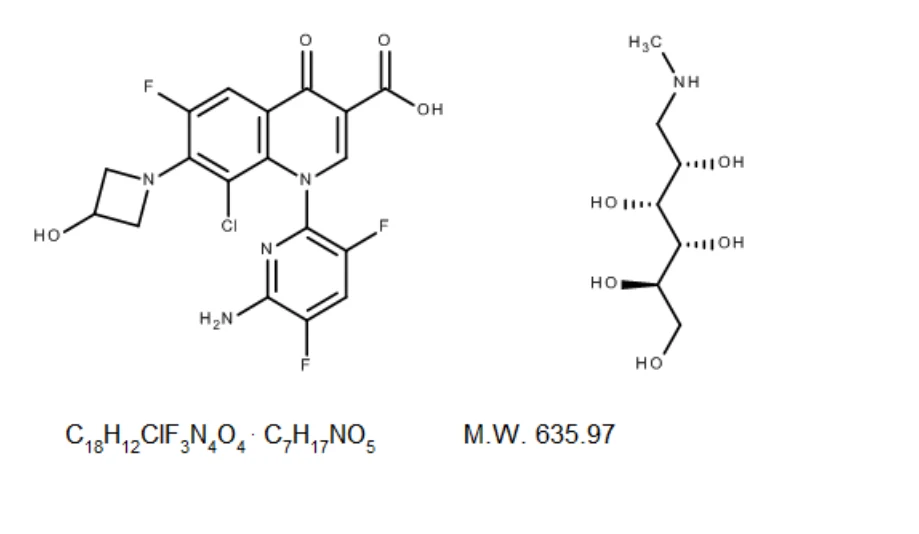
Physicochemical properties: Delafloxacin meglumine is a white to tan powder. The solubility of delafloxacin meglumine (Form 1A) in water at 25 °C was determined to be 35.5 mg acid (delafloxacin)/mL, with the pH after equilibration being ~9.1. The melting point by DSC of delafloxacin meglumine is 170.9 °C.
14. CLINICAL TRIALS
14.1 Clinical Trials by Indication
Acute Bacterial Skin and Skin Structure Infections (ABSSSI)
| Table 10 – Summary of patient demographics for clinical trials in ABSSSI | ||||||
|---|---|---|---|---|---|---|
| Study # | Study design | Dosage, route of administration and duration | Study patients (n) | Mean age (Range) | Sex | |
| RX-3341-302 | Multicenter, double-blind, randomized, active-controlled study | Delafloxacin 300 mg IV Q12hr1 Vancomycin 15 mg/kg IV Q12hr plus aztreonam 2 g IV Q12hr (aztreonam discontinued if no gram-negative organism in cultures) Duration of treatment: 5 to 14 days | Patients with ABSSSI Delafloxacin: n=331 Vancomycin: n=329 | 46 years (18 to 94) | Male (62.9%) | |
| RX-3341-303 | Multicenter, double-blind, randomized, active-controlled study | Delafloxacin 300 mg IV Q12hr for 6 doses then 450 mg oral Q12hr1 Vancomycin 15 mg/kg IV Q12hr plus aztreonam 2 g IV Q12hr (aztreonam discontinued if no gram-negative organism in cultures) Duration of treatment: 5 to 14 days | Patients with ABSSSI Delafloxacin: n=423 Vancomycin: n=427 | 51 years (18 to 93) | Male (63.3%) | |
ABSSSI = acute bacterial skin and skin structure infections, IV = intravenous, Q12hr = every 12 hours
(1) Plus aztreonam 2 g placebo IV infusion, Q12h for 5 to 14 days (discontinued if no gram-negative organism in cultures)
Patients in trial RX-3341-302 had the following infections: cellulitis (38.8%), wound infection (35.2%), major cutaneous abscess (25.3%), and burn infection (0.8%). The overall mean surface area of the infected lesion as measured by digital planimetry was 307 cm2. Patients were predominately male (62.9%) and white (91.1%); 32.4% had a BMI ≥30 kg/m2. The population studied in RX-3341-302 included a distribution of patients with associated comorbidities such as hypertension (21.1%) and diabetes (8.6%). Current or recent history of drug abuse, including IV drug abuse, was reported by 55.2% of patients. Bacteremia was documented at baseline in 2.3% of patients.
Patients in trial RX-3341-303 had the following infections: cellulitis (48.0%), wound infection (26.2%), major cutaneous abscess (24.9%), and burn infection (0.8%). The overall mean surface area of the infected lesion, as measured by digital planimetry was 353 cm2. Patients were predominately male (63.3%) and white (82.7%); 50.0% had a BMI ≥30 kg/m2. The population studied in RX-3341-303 included a distribution of patients with associated comorbidities such as hypertension (30.6%) and diabetes (12.7%). Current or recent history of drug abuse, including IV drug abuse, was reported by 32.6% of patients. Bacteremia was documented at baseline in 2.2% of patients.
In both trials, objective clinical response at 48 to 72 hours post initiation of treatment was defined as a ≥20% reduction in lesion size as determined by digital planimetry of the leading edge of erythema. Table 11 summarizes the objective clinical response rates in both of these trials.
Table 11 – Clinical Response at 48–72 hours* in the ITT Population with ABSSSI in RX-3341-302 and RX-3341-303
| Trial | BAXDELA (300 mg IV) | Vancomycin 15 mg/kg + Aztreonam | Treatment Difference† (2-sided 95% CI) |
|---|---|---|---|
| RX-3341-302 | |||
| Total N | 331 | 329 | |
| Responder, n (%) | 259 (78.2%) | 266 (80.9%) | -2.6 (-8.8, 3.6) |
| BAXDELA (300 mg IV and 450 mg oral) | Vancomycin 15 mg/kg + Aztreonam | ||
| RX-3341-303 | |||
| Total N | 423 | 427 | |
| Responder, n (%) | 354 (83.7%) | 344 (80.6%) | 3.1 (-2.0, 8.3) |
CI = Confidence Interval; ITT = Intent-To-Treat and includes all randomized patients
*Objective clinical response was defined as a ≥20% reduction in lesion size as determined by digital planimetry of the leading edge of erythema at 48 to 72 hours after initiation of treatment without any reasons for failure (<20% reduction in lesion size, administration of rescue antibacterial therapy, use of another antibacterial or surgical procedure to treat for lack of efficacy, or death). Missing patients were treated as failures.
†Treatment difference, expressed as percentage, and CI based on Miettinen and Nurminen method without stratification.
In both trials, an investigator assessment of response was made at Follow-up (Day 14±1) in the ITT and clinically evaluable (CE) populations. The cure and success rates in the ITT and CE populations are shown in Table 12.
The investigator assessment of cure was defined as complete resolution of signs and symptoms at the FU visit. Success was defined as “cure + improved”, where patients had complete or near resolution of signs and symptoms, with no further antibacterial needed. Delafloxacin was comparable to vancomycin + aztreonam when using the broader success (cure + improved) definition.
Table 12 – Investigator-Assessed Cure and Success at the Follow-up Visit in ABSSSI — ITT Population and CE Population in RX-3341-302 and RX-3341-303
| Trial | BAXDELA (300 mg IV) | Vancomycin 15 mg/kg + Aztreonam | Treatment Difference† (2-sided 95% CI) |
|---|---|---|---|
| RX-3341-302 | |||
| Cure#, n/N (%) ITT | 172/331 (52.0%) | 166/329 (50.5%) | 1.5 (-6.1, 9.1) |
| Success*, n/N (%) ITT | 270/331 (81.6%) | 274/329 (83.3%) | -1.7 (-7.6, 4.1) |
| Cure#, n/N (%) CE | 142/240 (59.2%) | 142/244 (58.2%) | 1.0 (-7.8, 9.7) |
| Success*, n/N (%) CE | 233/240 (97.1%) | 238/244 (97.5%) | -0.5 (-3.8, 2.7) |
| BAXDELA (300 mg IV and 450 mg Oral) | Vancomycin 15 mg/kg + Aztreonam | ||
| RX-3341-303 | N=423 | N=427 | |
| Cure#, n/N (%) ITT | 244/423 (57.7%) | 255/427 (59.7%) | -2.0 (-8.6,4.6) |
| Success, n/N (%) ITT | 369/423 (87.2%) | 362/427 (84.8%) | 2.5 (-2.2, 7.2) |
| Cure#, n/N (%) CE | 220/353 (62.3%) | 224/329 (68.1%) | -5.8 (-12.9, 1.4) |
| Success, n/N (%) CE | 340/353 (96.3%) | 319/329 (97.0%) | -0.6 (-3.5, 2.2) |
CI = Confidence Interval; ITT = Intent To Treat and includes all randomized patients; CE = Clinically Evaluable consisted of all ITT patients who had a diagnosis of ABSSSI, received at least 80% of expected doses of study drug, did not have any protocol deviations that would affect the assessment of efficacy and had investigator assessment at the Follow-Up Visit.
#Cure was when all signs and symptoms of infection were resolved.
*Success was cure + improved where patients had complete or near resolution of signs and symptoms with no further antibacterial needed.
†Treatment difference, expressed as percentage, and CI based on Miettinen and Nurminen method without stratification.
Across the pooled Phase 3 ABSSSI studies, the investigator assessments of clinical success rates were also similar between treatment groups at the Late Follow-up visit (LFU, day 21-28).
Objective clinical response and investigator-assessed cure and success by baseline pathogens from the primary infection site or blood cultures for the microbiological ITT (MITT) patient population pooled across RX-3341-302 and RX-3341-303 are presented in Table 13.
Table 13 – Outcomes by Baseline Pathogen (Pooled across RX-3341-302 and RX-3341-303; MITT* Population)
| Pathogen | Clinical Responsea at 48–72 hours | Investigator-Assessed Cure# at Follow-up | Investigator-Assessed Success@ at Follow-up | |||||||||||||||||
|---|---|---|---|---|---|---|---|---|---|---|---|---|---|---|---|---|---|---|---|---|
BAXDELA n/N (%) | Comparator n/N (%) | BAXDELA n/N (%) | Comparator n/N (%) | BAXDELA n/N (%) | Comparator n/N (%) | |||||||||||||||
| Staphylococcus aureus | 271/319 (85.0) | 269/324 (83.0) | 163/319 (51.1) | 161/324 (49.7) | 275/319 (86.2) | 269/324 (83.0) | ||||||||||||||
| Methicillin-susceptibleb | 149/177 (84.2) | 148/183 (80.9) | 97/177 (54.8) | 99/183 (54.1) | 154/177 (87.0) | 153/183 (83.6) | ||||||||||||||
| Methicillin-resistantb | 125/144 (86.8) | 121/141 (85.8) | 67/144 (46.5) | 62/141 (44.0) | 122/144 (84.7) | 116/141 (82.3) | ||||||||||||||
| Streptococcus pyogenes | 17/23 (73.9) | 9/18 (50.0) | 12/23 (52.2) | 11/18 (61.1) | 21/23 (91.3) | 16/18 (88.9) | ||||||||||||||
| Staphylococcus haemolyticus | 11/15 (73.3) | 7/8 (87.5) | 7/15 (46.7) | 3/8 (37.5) | 13/15 (86.7) | 7/8 (87.5) | ||||||||||||||
| Streptococcus agalactiae | 10/14 (71.4) | 9/12 (75.0) | 9/14 (64.3) | 5/12 (41.7) | 12/14 (85.7) | 11/12 (91.7) | ||||||||||||||
| Streptococcus anginosus Group | 59/64 (92.2) | 55/61 (90.2) | 33/64 (51.6) | 27/61 (44.3) | 54/64 (84.4) | 47/61 (77.0) | ||||||||||||||
| Staphylococcus lugdunensis | 8/11 (72.7) | 6/9 (66.7) | 9/11 (81.8) | 6/9 (66.7) | 10/11 (90.9) | 8/9 (88.9) | ||||||||||||||
| Enterococcus faecalis | 11/11 (100.0) | 12/16 (75.0) | 7/11 (63.6) | 12/16 (75.0) | 9/11 (81.8) | 14/16 (87.5) | ||||||||||||||
| Escherichia coli | 12/14 (85.7) | 16/20 (80.0) | 9/14 (64.3) | 12/20 (60.0) | 12/14 (85.7) | 18/20 (90.0) | ||||||||||||||
| Enterobacter cloacae | 10/14 (71.4) | 8/11 (72.7) | 4/14 (28.6) | 8/11 (72.7) | 12/14 (85.7) | 10/11 (90.9) | ||||||||||||||
| Klebsiella pneumoniae | 19/22 (86.4) | 22/23 (95.7) | 11/22 (50.0) | 12/23 (52.2) | 20/22 (90.9) | 21/23 (91.3) | ||||||||||||||
| Pseudomonas aeruginosa | 9/11 (81.8) | 11/12 (91.7) | 7/11 (63.6) | 8/12 (66.7) | 11/11 (100.0) | 12/12 (100.0) | ||||||||||||||
a Objective clinical response was defined as a ≥20% reduction in lesion size as determined by digital planimetry of the leading edge of erythema at 48 to 72 hours after initiation of treatment.
*Microbiological ITT (MITT) consists of all randomized patients who had a baseline pathogen identified that is known to cause ABSSSI.
b Discrepancy in the total numbers is due to the multiple patients having both MRSA and MSSA isolates.
#Cure was when all signs and symptoms of infection were resolved.
@Success was cure + improved where patients had complete or near resolution of signs and symptoms with no further antibacterial needed.
Community-Acquired Bacterial Pneumonia (CABP)
| Table 14 – Summary of patient demographics for clinical trial in CABP | ||||||
|---|---|---|---|---|---|---|
| Study # | Study design | Dosage, route of administration and duration | Study patients (n) | Mean age (Range) | Sex | |
| ML-3341-306 | Multicenter, double-blind, randomized, active-controlled study | Delafloxacin 300 mg IV Q12hr (at least 6 doses); followed by delafloxacin 450 mg oral Q12hr1 Moxifloxacin 400 mg IV QD (at least 3 doses); followed by moxifloxacin tablet 400 mg oral QD2 Optional alternative therapy for MRSA (moxifloxacin group only): linezolid solution/600 mg BID/IV Duration: 5-10 days | Patients with CABP Delafloxacin: n=431 Moxifloxacin: n=428 | 60 years (18 to 93) | Male (58.7%) | |
BID = twice daily; CABP = community-acquired bacterial pneumonia; IV = intravenous; MRSA = methicillin-resistant Staphylococcus aureus; QD = once daily.
(1) plus placebo moxifloxacin orally QD (every 24 hours) (10-20 active doses total)
(2) plus placebo delafloxacin orally BID (every 12 hours) (5-10 active doses total)
Patient demographic and baseline characteristics were balanced between the treatment arms. In this trial, 12.9% of patients were in PORT Risk Class II, 60.3% were in PORT Risk Class III, 25.4% were in PORT Risk Class IV, and 1.4% were in PORT Risk Class V. Patients were predominantly male (58.7%) and white (91.5%); mean BMI was 26.9 kg/m2. Associated comorbidities included infections and infestations including pneumonia, bronchitis, respiratory tract infection (15.4%), hypertension (45.9%) and diabetes (10.4%). Bacteremia was documented at baseline in 1.5% of patients. The majority of sites were in Eastern Europe, which accounted for 82.8% of enrollment. One subject (0.2%) was enrolled in the BAXDELA arm and 5 (1.2%) in the moxifloxacin arm from the United States.
Early clinical response (ECR) at 72-120 hours after the first dose was defined as survival with improvement in at least two of four symptoms (cough, sputum production, chest pain, dyspnea) from baseline without deterioration in any of these symptoms, and without use of additional antimicrobial therapy for treatment of the current CABP infection due to lack of efficacy.
Table 15 – Early Clinical Response* at 72 to 120 hours in the ITT Population with CABP (ML-3341-306)
| ML-3341-306 | BAXDELA (300 mg IV and 450 mg oral) | Moxifloxacin (400 mg IV and 400 mg oral) | Treatment Difference† (2-sided 95% CI) |
|---|---|---|---|
| Total N | 431 | 428 | |
| Responder n (%) | 383 (88.9) | 381 (89.0) | -0.2 (-4.4, 4.1) |
CI = Confidence Interval; ITT = Intent To Treat includes all randomized patients
* Early Clinical Response (ECR) at 72-120 hours after the first dose, was defined as survival with improvement in at least two of four symptoms (cough, sputum production, chest pain, dyspnea) from baseline without deterioration in any of these symptoms, and without use of additional antimicrobial therapy for treatment of the current CABP infection due to lack of efficacy.
†Treatment difference, expressed as percentage, and CI based on Miettinen and Nurminen method without stratification.
Clinical response was also assessed by the investigator at the test of cure (TOC) visit and defined as survival with resolution or near resolution of the symptoms of CABP present at study entry, and no use of additional antimicrobial therapy for the current CABP infection, and no new symptoms associated with the current CABP infection.
Clinical response rates at the TOC visit for the ITT and clinically evaluable (CE) populations are presented in Table 16.
Table 16 – Investigator-Assessed Success at the TOC Visit in CABP — ITT Population and CE Population in ML-3341-306
| ML-3341-306 | BAXDELA (300 mg IV and 450 mg oral) | Moxifloxacin (400 mg IV and 400 mg oral) | Treatment Difference† (2-sided 95% CI) |
|---|---|---|---|
| Success*, n/N (%) ITT | 390/431 (90.5) | 384/428 (89.7) | 0.8 (-3.3, 4.8) |
| Success*, n/N (%) CE | 376/397 (94.7) | 373/394 (94.7) | 0.0 (-3.2, 3.3) |
CI = Confidence Interval; ITT = Intent To Treat and includes all randomized patients; CE = Clinically Evaluable
Clinically Evaluable consisted of all ITT patients who had evidence of acute CABP, received at least 80% of expected doses of the correct study drug, did not receive any concomitant, systemic antibacterial therapy except for lack of efficacy, and did not have any protocol deviations that would affect the assessment of efficacy.
*Success was survival with resolution or near resolution of the symptoms of CABP present at study entry, and no use of additional antimicrobial therapy for the current infection, and no new symptoms associated with the current CABP infection.
†Treatment difference, expressed as percentage, and CI based on Miettinen and Nurminen method without stratification.
Early clinical response and investigator-assessed clinical response at the TOC visit is presented in Table 17 by baseline pathogen for the Microbiological ITT (MITT) population which comprised all randomized patients who had a baseline pathogen identified that is known to cause CABP.
Table 17 – Outcome by Baseline Pathogen (CABP, ML-3341-306, MITT Population)
| Pathogen | Early Clinical Responsea at 72-120 hours | Investigator-Assessed Successb at Test-of-Cure (TOC) | |||||||||
|---|---|---|---|---|---|---|---|---|---|---|---|
BAXDELA n/N (%) | Moxifloxacin n/N (%) | BAXDELA n/N (%) | Moxifloxacin n/N (%) | ||||||||
| Staphylococcus aureus | 25/27 (92.6) | 27/30 (90) | 25/27 (92.6) | 28/30 (93.3) | |||||||
| Methicillin-susceptible | 23/25 (92) | 27/30 (90) | 23/25 (92) | 27/30 (93.3) | |||||||
| Streptococcus pneumoniae | 109/120 (90.8) | 92/106 (86.8) | 108/120 (90.0) | 95/106 (89.6) | |||||||
| Haemophilus influenzae | 26/27 (96.3) | 31/35 (88.6) | 25/27 (92.6) | 31/35 (88.6) | |||||||
| Haemophilus parainfluenzae | 33/35 (94.3) | 34/41 (82.9) | 32/35 (91.4) | 34/41 (82.9) | |||||||
| Escherichia coli | 15/16 (93.8) | 8/11 (72.7) | 15/16 (93.8) | 10/11 (90.9) | |||||||
| Klebsiella pneumoniae | 13/17 (76.5) | 15/16 (93.8) | 14/17 (82.4) | 16/16 (100.0) | |||||||
| Pseudomonas aeruginosa | 12/13 (92.3) | 10/11 (90.9) | 11/13 (84.6) | 11/11 (100.0) | |||||||
| Chlamydia pneumoniae | 24/25 (96.0) | 14/16 (87.5) | 25/25 (100.0) | 16/16 (100.0) | |||||||
| Legionella pneumophilia | 27/29 (93.1) | 28/33 (84.8) | 27/29 (93.1) | 32/33 (97.0) | |||||||
| Mycoplasma pneumoniae | 30/35 (85.7) | 29/30 (96.7) | 34/35 (97.1) | 30/30 (100.0) | |||||||
a Early Clinical Response (ECR) at 72-120 hours after the first dose, was defined as survival with improvement in at least two of four symptoms (cough, sputum production, chest pain, dyspnea) from baseline without deterioration in any of these symptoms, and without use of additional antimicrobial therapy for treatment of the current CABP infection due to lack of efficacy.
b Investigator-assessed success was defined as survival with resolution or near resolution of the symptoms of CABP present at study entry, and no use of additional antimicrobial therapy for the current infection, and no new symptoms associated with the current CABP infection at Test of Cure (TOC) visit at (5 to 10 days after last dose of study drug).
15. MICROBIOLOGY
Mechanism of Action
Delafloxacin belongs to the fluoroquinolone class of antibacterial drugs and is anionic in nature. The antibacterial activity of delafloxacin is due to the inhibition of both bacterial topoisomerase IV and DNA gyrase (topoisomerase II) enzymes which are required for bacterial DNA replication, transcription, repair, and recombination. Delafloxacin exhibits a concentration-dependent bactericidal activity against gram-positive and gram-negative bacteria in vitro.
Resistance
Resistance to fluoroquinolones, including delafloxacin, can occur due to mutations in defined regions of the target bacterial enzymes topoisomerase IV and DNA gyrase referred to as Quinolone-Resistance Determining Regions (QRDRs), or through other resistance mechanisms such as altered efflux. Plasmid-mediated resistance elements including Qnr quinolone resistance proteins, Oqx efflux pumps, and aminoglycoside acetyltransferase AAC-6'-IB-CR were also associated with elevated delafloxacin MIC values in clinical study isolates, however, experiments expressing these proteins in isogenic strains with a clean background need to be performed.
In vitro resistance to delafloxacin develops by multiple step mutations in the QRDRs of gram-positive and gram-negative bacteria. Delafloxacin-resistant mutants were selected in vitro at a frequency of <10-9.
Although cross-resistance between delafloxacin and other fluoroquinolone-class antibacterial agents has been observed, some isolates resistant to other fluoroquinolone-class antibacterial agents may be susceptible to BAXDELA including some S. aureus isolates carrying mutations in the QRDR (gyrA, parC and parE).
Additionally, delafloxacin has activity against some isolates of beta-lactamase positive H. influenzae and H. parainfluenzae.
Interaction With Other Antimicrobials
In vitro drug combination studies with delafloxacin and amoxicillin/clavulanate, azithromycin, aztreonam, ceftaroline, ceftazidime, ceftriaxone, colistin, daptomycin, doxycycline, linezolid, meropenem, penicillin, rifampin, tigecycline, trimethoprim/sulfamethoxazole and vancomycin demonstrated neither synergy nor antagonism.
Antimicrobial Activity
BAXDELA has been shown to be active against most isolates of the following microorganisms, both in vitro and in clinical infections (see 1 INDICATIONS).
Acute Bacterial Skin and Skin Structure Infections (ABSSSI)
Aerobic bacteria
Gram-positive bacteria Staphylococcus aureus (including methicillin-resistant and methicillin-susceptible isolates) Staphylococcus haemolyticus Staphylococcus lugdunensis Streptococcus pyogenes Streptococcus agalactiae Streptococcus anginosus Group (including S. anginosus, S. intermedius, and S. constellatus) Enterococcus faecalis
Gram-negative bacteria Escherichia coli Klebsiella pneumoniae Enterobacter cloacae Pseudomonas aeruginosa
Community-Acquired Bacterial Pneumonia (CABP)
Aerobic bacteria
Gram-positive bacteria
Streptococcus pneumoniae
Staphylococcus aureus (methicillin-susceptible isolates only)
Gram-negative bacteria
Escherichia coli
Haemophilus influenzae
Haemophilus parainfluenzae
Klebsiella pneumoniae
Pseudomonas aeruginosa
Other microorganisms
Chlamydia pneumoniae
Legionella pneumophila
Mycoplasma pneumoniae
The following in vitro data are available, but their clinical significance is unknown. At least 90 percent of the following bacteria exhibit an in vitro minimum inhibitory concentration (MIC) less than or equal to the susceptible breakpoint of delafloxacin against isolates of similar genus or organism group. However, the efficacy of BAXDELA in treating clinical infections caused by these bacteria has not been established in adequate and well-controlled clinical trials.
Aerobic bacteria
Gram-positive bacteria
Streptococcus dysgalactiae
Gram-negative bacteria
Klebsiella oxytoca
Moraxella catarrhalis
Susceptibility Test Methods
When available, the results of in vitro susceptibility tests for antimicrobial drugs used in resident hospitals should be provided to the physician as periodic reports which describe the susceptibility profile of nosocomial and community-acquired pathogens. These reports should aid the physician in selecting the most effective antimicrobial.
Susceptibility breakpoints for MICs were determined from MIC distributions, PK-PD data and simulations, and clinical results.
Dilution Techniques
Quantitative methods are used to determine antimicrobial MICs. These MICs provide estimates of the susceptibility of bacteria to antimicrobial compounds. The MICs should be determined using a standardized procedure, such as broth microdilution as described by Clinical Laboratory Standards Institute (CLSI). The MIC interpretive criteria are shown in Tables 18 and 19.
Delafloxacin agar dilution MIC values exhibited good correlation with broth microdilution MIC values for S. aureus, beta-hemolytic streptococci, S. anginosus Group and Enterobacteriaceae. Agar dilution susceptibility testing of delafloxacin for S. pneumoniae is not currently recommended and requires further evaluation. Delafloxacin dry-form broth microdilution panels have been developed and show good correlation for MIC testing relative to reference standard frozen broth microdilution panels in preliminary testing. Testing using dry-form panels versus frozen panels and the use of automatic reading platforms (Sensititre) for determining susceptibility of gram-positive and fastidious organisms yielded equivalent results.
Diffusion Techniques
Quantitative methods (Kirby-Bauer disk testing, disk diffusion testing) that require measurement of zone diameters also provide reproducible estimates of the susceptibility of bacteria to antimicrobial compounds. The zone size should be determined using a standardized method. This procedure used paper disks impregnated with 5 µg delafloxacin. The disk diffusion interpretive criteria are shown in Tables 18 and 19.
Table 18: MIC Susceptibility Test Interpretive Criteria for ABSSSI
| Pathogen | Minimum Inhibitory Concentrations (µg/mL) | Disk Diffusion (zone diameter in mm) | |||||||||||
|---|---|---|---|---|---|---|---|---|---|---|---|---|---|
| S | I | R | S | I | R | ||||||||
| Staphylococcus aureus (methicillin-resistant and methicillin-susceptible isolates) | ≤0.25 | 0.5 | ≥1 | ≥23 | 20-22 | ≤19 | |||||||
| Staphylococcus haemolyticus | ≤0.25 | 0.5 | ≥1 | ≥24 | 21-23 | ≤20 | |||||||
| Staphylococcus lugdunensisa | ≤0.03 | - | - | ≥31 | - | - | |||||||
| Streptococcus pyogenesa | ≤0.06 | - | - | ≥20 | - | - | |||||||
| Streptococcus agalactiae | ≤0.06 | 0.12 | ≥0.25 | - | - | - | |||||||
| Streptococcus anginosus Groupa,b | ≤0.06 | - | - | ≥25 | - | - | |||||||
| Enterococcus faecalis | ≤0.12 | 0.25 | ≥0.5 | ≥21 | 19-20 | ≤18 | |||||||
| Enterobacteralesc | ≤0.25 | 0.5 | ≥1 | ≥22 | 19-21 | ≤18 | |||||||
| Pseudomonas aeruginosa | ≤0.5 | 1 | ≥2 | ≥23 | 20-22 | ≤19 | |||||||
S = Susceptible; I = Intermediate; R = Resistant
a The current absence of resistant isolates precludes defining any results other than "Susceptible". b includes: S. anginosus, S. constellatus and S. intermedius c E. coli, K. pneumoniae, and E. cloacae only.
Table 19: MIC Susceptibility Test Interpretive Criteria for CABP
| Pathogen | Minimum Inhibitory Concentrations (µg/mL) | Disk Diffusion (zone diameter in mm) | ||||||||||||
|---|---|---|---|---|---|---|---|---|---|---|---|---|---|---|
| S | I | R | S | I | R | |||||||||
| Streptococcus pneumoniae* | ≤0.03 | - | - | ND | ND | ND | ||||||||
| Staphylococcus aureus (methicillin-susceptible isolates) | ≤0.12 | 0.25 | ≥0.5 | ≥25 | 21-24 | ≤20 | ||||||||
| Haemophilus influenzae* | ≤0.004 | - | - | ≥29 | - | - | ||||||||
| Haemophilus parainfluenzae* | ≤0.06 | - | - | ≥28 | - | - | ||||||||
| Escherichia coli | ≤0.25 | 0.5 | ≥1 | ≥22 | 19-21 | ≤18 | ||||||||
| Klebsiella pneumoniae | ≤0.25 | 0.5 | ≥1 | ≥22 | 19-21 | ≤18 | ||||||||
| Pseudomonas aeruginosa | ≤0.5 | 1 | ≥2 | ≥23 | 20-22 | ≤19 | ||||||||
S = Susceptible; I = Intermediate; R = Resistant; ND = not determined
*The current absence of resistant isolates precludes defining any results other than "Susceptible".
Quality Control
Quality control (QC) limits for broth microdilution testing and disk diffusion have been established with CLSI and are shown in Table 20, below.
Table 20: CLSI-Approved QC Ranges for Delafloxacin
| Quality Control Strain | MIC Range (µg/mL) | Disk Diffusion (zone diameter in mm) |
|---|---|---|
| Staphylococcus aureus ATCC 29213 | 0.001-0.008 | - |
| Staphylococcus aureus ATCC 25923 | - | 32-40 |
| Enterococcus faecalis ATCC 29212 | 0.016-0.12 | - |
| Streptococcus pneumoniae ATCC 49619 | 0.004-0.016 | 28-36 |
| Escherichia coli ATCC 25922 | 0.008-0.03 | 28-35 |
| Pseudomonas aeruginosa ATCC 27853 | 0.12-0.5 | 23-29 |
| Haemophilus influenzae ATCC 49247 | 0.00025-0.001 | 40-51 |
ATCC = American Type Culture Collection
16. NON-CLINICAL TOXICOLOGY
Carcinogenicity
Long-term carcinogenicity studies have not been conducted with BAXDELA.
Genotoxicity
Delafloxacin was not mutagenic in a bacterial reverse mutation (Ames) assay and was not clastogenic in a mouse bone marrow micronucleus test at ≥15 times the estimated human plasma exposure based on AUC. In an in vitro clastogenicity assay using isolated human lymphocytes, delafloxacin was negative in short incubations (~3 hours) and, at high cytotoxic concentrations (>1.0 mM), was positive in a long incubation (~19 hours).
Reproductive and Developmental Toxicology
Delafloxacin did not affect the fertility of male and female rats up to the highest intravenous dose tested (120 mg/kg/day); female rats were dosed 2 weeks prior to mating and through gestation day 7 and male rats were treated for 28 days prior to mating and beyond for a total of 58-59 days.
Toxicokinetics of delafloxacin were studied to determine exposure in pregnant, from gestation day 6 through 13, and non-pregnant female rats by administering delafloxacin for 1 hour via IV infusion at dose levels of 10 and 120 mg/kg, once daily for 7 days. On study day 7/gestation day
13, plasma exposures increased with increasing dose at a much higher than dose-proportional rate. For the 12-fold increase in dose between 10 and 120 mg/kg, Cmax for the mean data increased 87- and 57-fold in non-pregnant and pregnant rats, respectively, and AUClast increased 51- and 22-fold, respectively. However, exposures were not markedly different between pregnant and non-pregnant rats. In the 10 mg/kg groups, the pregnant/non-pregnant ratios were 1.4 and 1.6 for Cmax and AUC0-8hr, respectively; and 0.91 and 0.87 for Cmax and AUClast in the 120 mg/kg groups, respectively. A study to determine the potential adverse effects of maternal delafloxacin exposure from implantation to weaning on pregnancy, parturition, and lactation of the maternal animals and on the growth, viability, and development of the F1 neonates was performed. The reproductive performance of the F1 generation was also assessed. Delafloxacin was administered by IV infusion over a 1-hour period once daily from gestation day 6 through 20 and from lactation day 5 through 20 for a total of 31 doses. Dosage levels were 10, 60, and 120 mg/kg/day. All F0 females were allowed to deliver and rear their offspring to lactation day 21. F1 animals were mated, allowed to deliver and rear their pups. Based on lower body weights, body weight gains, and food consumption during gestation during gestation in F0 maternal females at 120 mg/kg/day, the no-observed-adverse-effect level (NOAEL) for F0 maternal systemic toxicity was considered to be 60 mg/kg/day. No adverse effects were noted on F1 reproductive parameters or the F2 pups at any dosage level; therefore, a dosage level of 120 mg/kg/day was considered the NOAEL for F1 reproductive toxicity and F2 neonatal/early postnatal toxicity.
Local Tolerance
Local tolerance studies showed that delafloxacin was not hemolytic in rat, dog, rabbit, or human blood, but produced local (subplantar), venous, and peri-venous irritation. Several histopathologic changes occurred at the injection sites (inflammation, thrombosis, muscle degeneration/regeneration) of control and treated animals and were attributed to the dosing procedure.
Juvenile Toxicology
Fluoroquinolone antibacterials are associated with degenerative changes in articular cartilage and arthropathy in skeletally immature animals. In a toxicology study of the formulated tablet in dogs, the femoral head of one of three high dose (480 mg/kg/day) females had minimal focal degeneration of the superficial articular cartilage and a small focal cleft in the articular cartilage. No other joints were examined.
In another study, RD-02-792, delafloxacin was orally administered to juvenile dogs up to the maximum tolerated dose of 320 mg/kg/day for 2 weeks. There were no adverse effects seen in this study, including no arthropathy. The NOAEL was 320 mg/kg/day.