


Product Monograph - Bezalip SR
SUMMARY PRODUCT INFORMATION
| Route of Administration | Dosage Form / Strength | Nonmedicinal Ingredients |
| oral | Sustained release tablet 400 mg | Colloidal silicon dioxide, Hydroxypropyl methylcellulose 2208 & 2910, Lactose, Magnesium stearate, Methyl methacrylate, Polyethyl acrylate, Polyethylene glycol 10000, Polysorbate 80, Povidone K25, Sodium citrate, Sodium lauryl sulphate, Talc, and Titanium dioxide |
INDICATIONS AND CLINICAL USE
BEZALIP SR (bezafibrate) is indicated as an adjunct to diet and other therapeutic measures for:
- Treatment of patients with hypercholesterolemia Type IIa and IIb mixed hyperlipidemia, to regulate lipid and apoprotein levels (reduce serum TG, LDL cholesterol and apolipoprotein B, increase HDL cholesterol and apolipoprotein A).
- Treatment of adult patients with high to very high triglyceride levels, Fredrickson classification Type IV and V hyperlipidemias, who are at a high risk of sequelae and complications (i.e. pancreatitis) from their dyslipidemia.
BEZALIP SR may not be adequate therapy in some patients with familial combined hyperlipidemia with type IIb and type IV hyperlipoproteinemia. Initial therapy for dyslipidemia should include at least an equivalent of the American Heart Association (AHA) step 1 diet.
There is evidence from coronary angiographic studies to show that triglyceride-rich lipoproteins are an important factor in the progression of coronary artery disease (see REFERENCES (6)). A 5-year double-blind, placebo-controlled intervention trial (bezafibrate coronary atherosclerosis intervention trial (BECAIT)) has demonstrated that bezafibrate retards or prevents the progression of atheroma in young post-infarction patients (<45 years). The results show that long-term treatment with bezafibrate, can retard the progression of focal atheroma resulting in a reduced cardiac morbidity. Analysis of treatment effect at each patient’s last assessment showed that the change in minimum lumen diameter (MLD) was 0.13 mm less in the bezafibrate group than the placebo group (p=0.049). The 5-year cumulative coronary event rate (defined as sudden coronary death, fatal or non-fatal reinfarction, CABG or PTCA) was significantly lower for bezafibrate (3/47; 6.4%) versus placebo (11/45; 24.4%) treated patients (p=0.02).
CONTRAINDICATIONS
- Hepatic impairment, including primary biliary cirrhosis.
- Renal impairment (serum creatinine levels >1.5 mg/100 mL, i.e., >135 μmol/L, or creatinine clearance <60 mL/min or in patients undergoing dialysis) (see WARNINGS and PRECAUTIONS: Skeletal muscle, ACTIONS and CLINICAL PHARMACOLOGY, Pharmacokinetics: Renal Insufficiency)
- Pre-existing gallbladder disease (see WARNINGS and PRECAUTIONS).
- Hypersensitivity to bezafibrate, to any component of the product or to other fibrates.
- Photoallergic or phototoxic reactions to fibrates.
- Pregnancy or lactation.
- BEZALIP SR (bezafibrate) is not indicated for the treatment of Type I hyperlipoproteinemia.
- Combination therapy of BEZALIP SR 400 mg with HMG CoA reductase inhibitors in patients with predisposing factors for myopathy e.g. preexisting renal impairment, severe infection, trauma, surgery, disturbances of the hormonal or electrolyte balance (see DRUG INTERACTIONS).
WARNINGS AND PRECAUTIONS
General
Bezafibrate clinically, pharmacologically and chemically shows similarities with clofibrate. Physicians prescribing BEZALIP SR (bezafibrate) should also be familiar with the risks and benefits of clofibrate (see REFERENCES).
If BEZALIP SR is chosen for treatment, the prescribing physician should discuss the proposed therapy and inform the patient of the expected benefits and potential risks associated with long-term administration. (see WARNINGS and PRECAUTIONS).
Carcinogenesis and Mutagenesis
See TOXICOLOGY
Drug Interactions
See DRUG INTERACTIONS
Hematologic
Mild hemoglobin, leucocyte and platelet decreases have occurred occasionally following initiation of BEZALIP SR therapy. However, these levels stabilize during long-term administration. Periodic blood counts are recommended during the first 12 months of BEZALIP SR administration.
Hepatic/Biliary/Pancreatic
Liver function: Abnormal liver function tests have been observed occasionally during BEZALIP SR administration, including elevated transaminases, and decreased or, rarely, increased alkaline phosphatase. However, these abnormalities are reversible upon discontinuation of the drug. Therefore, periodic liver function tests (AST [SGOT], ALT, [SGPT], and GGT [if originally elevated]) in addition to other baseline tests are recommended after 3 to 6 months and at least yearly thereafter. BEZALIP SR therapy should be terminated if drug related abnormalities persist.
Hepatobiliary disease: In patients with a past history of jaundice or hepatic disorder, BEZALIP SR should be used with caution.
Cholelithiasis: BEZALIP SR may increase cholesterol excretion into the bile, and may lead to cholelithiasis. Appropriate diagnostic procedures should be performed if cholelithiasis-related signs and symptoms should occur. BEZALIP SR therapy should be discontinued if gallstones are found.
Musculoskeletal/Skeletal
Treatment with drugs of the fibrate class including bezafibrate has been associated on rare occasions with myositis or rhabdomyolysis, usually in patients with impaired renal function (see CONTRAINDICTIONS). Myopathy should be considered in any patient with diffuse myalgias, muscle tenderness/weakness, or marked elevations in creatine phosphokinase levels. Patients should be advised to report unexplained muscle pain, tenderness or weakness promptly, particularly if accompanied by malaise or fever. CPK levels should be assessed in patients reporting these symptoms, and BEZALIP SR therapy should be discontinued if markedly elevated CPK levels (10 times the upper limit of normal) occur or myopathy is diagnosed.
Teratology
Standard tests for teratology, fertility and peri- and post-natal effects in animals have shown a relative absence of risk, however, embryotoxicity has occurred in animals at toxic doses.
Special Populations
Pregnant Women: Strict birth control procedures must be exercised by women of childbearing potential. If pregnancy occurs despite birth control procedures, BEZALIP SR should be discontinued. Women planning a pregnancy should discontinue BEZALIP SR several months prior to conception (see CONTRAINDICATIONS).
Nursing Women: In the absence of data concerning the presence of bezafibrate in human breast milk, BEZALIP SR should not be used by nursing mothers (see CONTRAINDICATIONS).
Paediatrics: Limited experience is available in children at a dose of 10 - 20 mg/kg/day. Therefore, in the absence of adequate information concerning the long-term safety, BEZALIP SR should be used with caution in treating children.
Geriatrics (> 70 years of age): BEZALIP SR 400 mg sustained release tablets should not be used in elderly patients as the creatinine clearance after 70 years of age is normally lower than 60 mL/min. (see DOSAGE and ADMINISTRATION).
Monitoring and Laboratory Tests
Adequate pretreatment laboratory studies should be performed to ensure patients have elevated serum cholesterol and/or triglycerides with or without low HDL levels. Periodic determinations of serum lipids, fasting glucose, creatinine, ALT (SGPT), CGT and CPK should be considered during BEZALIP SR treatment, particularly during the first months of therapy.
ADVERSE REACTIONS
Clinical Trial Adverse Drug Reactions
In 2 separate double-blind placebo controlled trials, a total of 88 patients on 200 mg bezafibrate tid and 87 patients on placebo were evaluated for adverse events. Listed in Table 1-a are those adverse events with a positive induced risk occurring during the first 2 months of bezafibrate treatment.
A double-blind, placebo controlled study was undertaken in young patients (<45 years) who had previously suffered a myocardial infarction. Patients were evaluated for safety during 5 years of treatment with either 200 mg tid bezafibrate (n=47) or placebo (n=45). Table 1-b lists the cumulative incidence of the most common adverse events at 1, 2 and 5 years, irrespective of relationship to study drug.
Table 1-a
| System Organ Class | 2-month cumulative incidence (%) | Induced risk (%) |
Bezafibrate 200 mg tid (n=88) | Placebo (n=87) | |
Blood and lymphatic system disorders Anaemia Gastrointestinal disorders Dyspepsia Flatulence Gastritis General disorders and administration site conditions Pain Immune system disorders Hypersensitivity Nervous system disorders Migraine Dizziness Psychiatric Disorders Insomnia Skin and subcutaneous tissue disorders Eczema Pruritus | 1.1 3.4 4.5 5.7 1.1 1.1 1.1 2.3 1.1 1.1 3.4 | |
--- --- --- 4.6 --- --- --- --- --- --- --- | + 1.1 + 3.4 + 4.5 + 1.1 +1.1 + 1.1 + 1.1 + 2.3 + 1.1 + 1.1 + 3.4 | |
Table 1-b
| Cumulative incidence rate (%) at | ||||||||||||||||
| 1 year | 2 years | 5 years | ||||||||||||||
Bezafibrate (n=47) | Placebo (n=45) | Bezafibrate (n=47) | Placebo (n=45) | Bezafibrate (n=47) | Placebo (n=45) | |||||||||||
Aspartate aminotransferase increased Alanine aminotransferase increased Gastritis Blood creatine phosphokinase increased Dyspepsia Abdominal Pain Headache Diarrhoea Upper respiratory tract infection. Rash Pharyngitis Bronchitis Tenosynovitis Influenza | 24 21 13 11 6 6 4 9 4 4 4 2 0 0 | 18 22 13 2 2 13 2 4 4 7 2 0 2 2 | 37 33 15 15 9 9 4 11 9 9 4 7 5 7 | 23 34 16 9 2 13 2 4 12 7 5 0 5 2 | 49 57 14 30 11 14 4 16 14 14 12 16 12 22 | 46 66 24 52 10 13 2 12 14 9 7 3 5 5 | ||||||||||
Clinical Trial and Post-Market Adverse Drug Reactions
The adverse drug reactions observed in clinical trial patients treated for up to 5 years with bezafibrate and from post-marketing experiences in countries where bezafibrate has been marketed since as early as 1978 and up until 2009:
Frequency of reporting for adverse drug reactions: Common (≥ 1/100 and <1/10), Uncommon (≥ 1/1,000 and <1/100), Rare (≥ 1/10,000 and <1/1000), Very rare (<1/10,000)
Blood and lymphatic system disorders: Very rare: Pancytopenia, thrombocytopenia.
Gastrointestinal disorders: Common: Gastrointestinal disorder. Uncommon: Abdominal distension, abdominal pain, constipation, diarrhoea, dyspepsia, flatulence, nausea. Rare: Pancreatitis
Hepatobiliary disorders: Uncommon: Cholestasis. Very rare: Cholelithiasis (see WARNINGS and PRECAUTIONS).
Immune system disorders: Uncommon: Hypersensitivity reactions including anaphylactic reactions.
Metabolism and nutrition disorders: Common: Decreased appetite.
Musculoskeletal and connective tissue disorders: Uncommon: Muscular weakness, myalgia, muscle cramp. Very rare: In patients with existing renal failure, if dosage recommendations are not followed, myositis and rhabdomyolysis may develop (see WARNINGS and PRECAUTIONS).
Nervous system disorders: Uncommon: Dizziness, headache. Rare: Neuropathy peripheral, paraesthesia.
Psychiatric disorders: Rare: Depression, insomnia.
Renal and urinary disorders: Uncommon: Acute renal failure.
Reproductive system and breast disorders: Uncommon: Erectile dysfunction Not Otherwise Specified (NOS).
Respiratory, thoracic and mediastinal disorders: Very rare: Interstitial lung disease.
Skin and subcutaneous tissue disorders: Uncommon: Pruritus, urticaria, photosensitivity reaction, alopecia, rash. Very rare: Thrombocytopenic purpura, erythema multiforme, Stevens-Johnson syndrome, toxic epidermal necrolysis.
Investigations: Uncommon: Blood creatine phosphokinase increased, blood creatinine increased, blood alkaline phosphatase increased. Very rare: Haemoglobin decreased, platelet count increased, red blood cell count decreased, white blood cell count decreased, gamma-glutamyltransferase increased, transaminases increased.
Laboratory abnormalities: Uncommon: Blood creatine phosphokinase increased, platelet count increased, haemoglobin decreased, haematocrit decreased, red blood cell count decreased, white blood cell count decreased, transaminases increased, blood alkaline phosphatase decreased, gamma-glutamyltransferase decreased and in parallel blood alkaline phosphatase could be used as an indicator of patient compliance.
Bezafibrate also has the potential to provoke blood creatine phosphokinase increased which generally subsides when the drug is discontinued (see WARNINGS and PRECAUTIONS)
After five years of placebo-controlled double-blind therapy, the cumulative event rates for aspartate aminotransferase increased and alanine aminotransferase increased were similar between the placebo and bezafibrate groups (see Table 1-b).
Some epidemiological studies and case reports support paradoxical HDL-C lowering with bezafibrate.
DRUG INTERACTIONS
Drug-Drug Interactions
Concomitant anticoagulants: Caution should be exercised when oral anticoagulants are given with BEZALIP SR (bezafibrate). The dosage of anticoagulants should be reduced up to 50% to maintain the prothrombin time at the desired level to prevent bleeding complications. Careful frequent (perhaps weekly) monitoring of prothrombin time is therefore recommended until it has been definitely determined that the prothrombin level has been stabilized.
HMG CoA reductase inhibitors: Interaction between fibrates and HMG Co A reductase inhibitors (statins) may vary in nature and intensity depending on the combination of the administered drugs.
Due to the risk of rhabdomyolysis, bezafibrate should only be administered together with HMG CoA reductase inhibitors in exceptional cases when strictly indicated. Patients receiving this combination therapy must be informed carefully of the symptoms of myopathy and monitored closely. Combination therapy must be discontinued immediately at the first signs of myopathy. This combination therapy must not be used in patients with predisposing factors for myopathy (impaired renal function, severe infection, trauma, surgery, disturbances of the hormonal or electrolyte balance and a high alcohol intake).
Cyclosporine: Severe myositis and rhabdomyolysis have occurred when a cyclosporine was administered with a fibrate. Therefore, the benefits and risks of using BEZALIP SR concomitantly with cyclosporine should be carefully considered.
Immuno-suppressant therapies: In isolated cases, reversible impairment of renal function (accompanied by a corresponding increase in the serum creatinine level) has been reported in organ transplant patients receiving immuno-suppressant therapy and concomitant bezafibrate. Renal function should be closely monitored in these patients and in the event of relevant significant changes in laboratory parameters, bezafibrate should be discontinued.
Insulin and sulphonylurea: serious hypoglycaemia may result in the combinatory use of bezafibrate and hypoglycaemic agents
MAO-inhibitors: MAO-inhibitors (with hepatotoxic potential) must not be administered together with BEZALIP SR.
Resins: When bezafibrate is used concurrently with cholestyramine or any other resin, an interval of at least 2 h should be maintained between the two drugs, since the absorption of bezafibrate is impaired by cholestyramine.
Estrogens: Since estrogens may lead to a rise in lipid levels, the prescribing of BEZALIP SR in patients taking estrogens or estrogen-containing contraceptives must be critically considered on an individual basis.
Rosiglitazone: Some epidemiologic studies and case reports suggest that markedly decreased HDL-C in some patients involve the interaction of rosiglitazone with fenofibrate or bezafibrate.
Drug-Food Interactions
The rate and degree of absorption of bezafibrate is reduced by approximately 50% in the presence of cholestyramine but is only slightly reduced in the presence of food.
DOSAGE AND ADMINISTRATION
Dosing Considerations
- Since a reduction of total mortality has not been established, BEZALIP SR (bezafibrate) should be administered only to those patients described in INDICATIONS and CLINCAL USE. If a significant serum lipid response is not obtained in three months, BEZALIP SR should be discontinued.
- In patients with impaired renal function (serum creatinine >1.5 mg/100 mL, i.e. >135 µmol/L or creatinine clearance <60 mL/min), the BEZALIP SR 400 mg sustained release tablet should not be used.
- Initial therapy: Before instituting BEZALIP SR therapy, attempts should be made to control serum lipids with appropriate diet, exercise and weight loss in obese patients, as well as other medical problems, such as diabetes mellitus and hypothyroidism. In patients at high risk, consideration should be given to the control of other risk factors such as smoking, excessive alcohol intake, hormonal contraceptive use, and inadequately controlled hypertension.
- Long-term therapy: Since long-term administration of BEZALIP SR is recommended, the potential risks and benefits should be carefully weighed.
Recommended Dose and Dosage Adjustment
The dosage is one BEZALIP SR 400 mg sustained release tablet once daily.
Missed Dose
Take the missed dose as soon as you remember it. However, if it is almost time for the next dose, skip the missed dose and continue your regular dosing schedule. Do not take 2 doses at the same time.
Administration
The 400 mg sustained-release tablet should be taken in the morning or evening with or after meals. The sustained release tablet should be swallowed without chewing with sufficient fluid.
When BEZALIP SR 400 mg tablets are administered concurrently with resins, an interval of 2 hours should be maintained between the two drugs (see WARNINGS and PRECAUTIONS).
OVERDOSAGE
While there has been no reported case of overdosage, symptomatic and supportive measures should be taken. Because bezafibrate is highly bound to plasma proteins, hemodialysis should not be considered.
In patients with existing impaired renal function, if dosage recommendations are not followed, overdosage may occur and severe rhabdomyolysis may develop. Administration of BEZALIP SR (bezafibrate) must be stopped immediately and renal function must be carefully monitored (see WARNINGS and PRECAUTIONS).
ACTION AND CLINICAL PHARMACOLOGY
Mechanism of Action
The fibrates, including BEZALIP SR (bezafibrate) , lower elevated serum lipids by decreasing the low density lipoprotein (LDL) fraction rich in cholesterol and the very low density lipoprotein (VLDL) fraction rich in triglycerides. In addition, fibrates (including BEZALIP SR) increase the high density lipoprotein (HDL) cholesterol fraction.
The mechanisms of action of the fibrates have not been definitely established. Work carried out to date, including the information derived from animal studies, suggests that the major modes of action of the fibrates likely encompass the following:
- VLDL catabolism by increased lipoprotein and hepatic triglyceride lipase activities
- attenuation of triglyceride biosynthesis by acetyl-CoA carboxylase enzyme inhibition
- attenuation of cholesterol biosynthesis by inhibition of the rate-limiting 3-hydroxy-3-methylglutaryl-coenzyme A reductase (HMG-CoA reductase).
Pharmacodynamics
Due to their major action on lipoprotein and hepatic triglyceride lipase, the fibrates appear to produce a greater reduction on the VLDL than on the LDL fraction. Therapeutic doses of BEZALIP SR (bezafibrate) produce variable elevations of HDL cholesterol, a reduction in the content of LDL cholesterol, and a substantial reduction in the triglyceride content of the VLDL fraction. In the course of the intensified degradation of triglyceride-rich lipoproteins (chylomicrons, VLDL) precursors for the formation of HDL are formed which explains an increase in HDL. Furthermore, cholesterol biosynthesis is reduced by bezafibrate, which is accompanied by a stimulation of the LDL-receptor-mediated lipoprotein catabolism.
For management of a suspected drug overdose, contact your regional Poison Control Centre.
Changes by BEZALIP SR in the lipid components (VLDL-triglycerides, VLDL-cholesterol, LDL-cholesterol, HDL-cholesterol) are usually paralleled by changes in the corresponding apolipoproteins: apolipoprotein B is reduced, while apolipoprotein A1 and A2 may be increased.
Bezafibrate also exerts an effect on thrombogenic factors: in addition to an inhibition of platelet aggregation, a significant decrease in elevated plasma fibrinogen levels as well as a reduction of blood viscosity can be achieved.
Some data may indicate that a reduction in blood glucose concentration due to an increase in glucose tolerance may be observed in diabetic patients. In the same patients, the concentration of fasting and postprandial free fatty acids may be reduced by bezafibrate.
Pharmacokinetics
Absorption: A peak concentration of about 6 mg/L is reached after 3-4 h with the 400 mg sustained release tablet.
Distribution: In human serum, 94 - 96% of bezafibrate is bound to protein. The apparent volume of distribution is about 17 L. There is no accumulation of the drug following repeated administration for periods of 28 days to 1 year.
Metabolism: After administration of 14C-labelled bezafibrate, 95% of the administered dose was excreted within 48 hours in the urine and the remainder was found in the feces. In the urine, about 50% was present as unchanged bezafibrate, about 25% as bezafibrate glucuronide and the remainder as metabolites, one of which was identified as hydroxy-bezafibrate, which does not have any lipid-lowering properties in animals. Clofibric acid was not found as a metabolite.
Excretion: The elimination is rapid, with excretion almost exclusively renal. Within 48 h, 95% of the activity of the 14C-labelled drug is recovered in the urine and 3% in the feces. The rate of renal clearance ranges from 3.4 to 6.0 L/h. The elimination half life of bezafibrate is 1-2 h. The elimination of bezafibrate is reduced in patients with renal insufficiency. BEZALIP SR 400 mg tablets are contraindicated in patients with renal impairment (see CONTRAINDICATIONS).
Special Populations and Conditions
Pediatrics: Limited experience is available in children.
Geriatrics: Pharmacokinetic investigations in the elderly suggest that elimination may be delayed in cases of impaired liver function. Liver disease (except fatty liver) is a contra-indication. (see Hepatic Insufficiency below)
Hepatic Insufficiency: Liver disease (except fatty liver) is a contra-indication.
Renal Insufficiency: In patients with severe renal failure, important accumulation of fibrates are observed with large increases in the half-life. There is a correlation between creatinine clearance and the elimination half-life of bezafibrate. Because bezafibrate is highly bound to plasma proteins, hemodialysis should not be considered. Bezafibrate is contraindicated in patients with renal impairment (serum creatinine levels > 1.5 mg /100 mL, i.e. > 135 μmol/L, or creatinine clearance < 60 mL/min) including in patients undergoing dialysis (See CONTRAINDICATIONS, WARNINGS AND PRECAUTIONS).
STORAGE AND STABILITY
BEZALIP SR (bezafibrate) tablets should be stored at room temperature (15-30°C). Protect from high humidity.
DOSAGE FORMS, COMPOSITION AND PACKAGING
BEZALIP SR (bezafibrate) 400 mg sustained release film-coated tablets are round white tablets printed on one side: D9. The 400 mg tablets are supplied in blister packs of 30.
Qualitative composition of tablet:
Colloidal silicon dioxide, Hydroxypropyl methylcellulose 2208 & 2910, Lactose, Magnesium stearate, Methyl methacrylate, Polyethyl acrylate, Polyethylene glycol 10000, Polysorbate 80
Povidone K25, Sodium citrate, Sodium lauryl sulphate, Talc, and Titanium dioxide.
PART II: SCIENTIFIC INFORMATION
PHARMACEUTICAL INFORMATION
Drug Substance
Bezafibrate is a lipid lowering drug chemically related to clofibrate.
Proper name: Bezafibrate
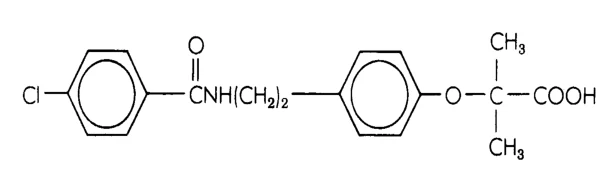
Chemical name: 2-[4-[2-(4-chlorobenzamiso) ethyl] phenoxy]-2-methyl-propionic acid
Molecular formula and molecular mass: C19H20ClNO4, 361.8
Structural formula:
Physicochemical properties:
Description: Bezafibrate is a white, odourless crystalline powder
Solubility: Moderately soluble in water (alkaline salt). Readily soluble in ethanol.
pKa (25oC): 3.61
Melting Point: 183 – 186oC
CLINICAL TRIALS
In humans, the complete mode of action of bezafibrate has not been fully elucidated.
In clinical trials, bezafibrate has been used predominantly to treat lipid abnormalities in patients with hyperlipoproteinemia Types IIa, IIb or IV. In these patients, bezafibrate administered at dosages of 200 mg tid or 400 mg qd significantly reduced plasma cholesterol and triglyceride concentrations (Table 2).
Reductions in total cholesterol ranged from 5% to 40% while reductions in triglycerides ranged from 25% to 55%. The HDL-cholesterol concentrations were increased by bezafibrate in all types of hyperlipoproteinemia with increases ranging from 6% to 35%.
The results of a long-term study (42 weeks) have shown that bezafibrate 400 mg qd significantly reduced Lp(A) concentrations but only after long-term therapy. The effect is best in patients with high baseline Lp(A) values (see REFERENCES).
There is evidence from coronary angiographic studies to show that triglyceride-rich lipoproteins are an important factor in the progression of coronary artery disease. A 5-year double-blind, placebo-controlled intervention trial (bezafibrate coronary atherosclerosis intervention trial (BECAIT)) has demonstrated that bezafibrate retards or prevents the progression of atheroma in young post-infarction patients (<45 yrs). Results show that long-term treatment with bezafibrate, can retard the progression of focal atheroma resulting in a reduced cardiac morbidity. Analysis of treatment effect at each patient’s last assessment showed that the change in minimum lumen diameter (MLD) was 0.13 mm less in the bezafibrate group than the placebo group (p=0.049). The 5-year cumulative coronary event rate (defined as sudden coronary death, fatal or non-fatal reinfarction, CABG or PTCA) was significantly lower for bezafibrate (3/47; 6.4%) versus placebo (11/45; 24.4%) treated patients (p=0.02). This result was independent of a net change in LDL cholesterol. In this study, intervention with bezafibrate increased HDL-cholesterol, while lowering total serum cholesterol, total triglycerides, VLDL-cholesterol, VLDL-triglycerides, and plasma fibrinogen levels.
In association with the significant reductions in VLDL-TG, VLDL-C and LDL-C and significant increases in HDL-C, bezafibrate 400 mg qd and 200 mg tid significantly reduced Apolipoprotein-B (Table 3). Percentage reductions ranged from 5% to 28%. Bezafibrate also significantly increases apolipoproteins A-I and A-II. Percentage increases range from 5 to 26% for Apo A-I and 3 to 30% for Apo A-II.
| Table 2: Effect of bezafibrate on plasma lipids in patients with types II and IV hyperlipoproteinemia. |
References
Type of HLP (no. of patients) | Treatment | Duration (months) | Percent change from baselinea | |||||||||||||||
| total-C | total-TG | LDL-C | HDL-C | |||||||||||||||
| Avogaro et al. (1989) | IIb (20) | 400 mg qd | 2 |
|
|
| + 25 | |||||||||||
| Beil et al. (1990) | IIb (20) | 400 mg qd | 3 |
|
|
| + 20**b | |||||||||||
| Bo et al. (1991) | IIa (18) | 400 mg qd | 3 |
|
|
| + 15* | |||||||||||
| Bittolo Bon et al. (1990) | IIb (20) | 400 mg qd | 3 |
|
| - | + 30 | |||||||||||
| Fischer et al. (1990) | IIa (35) or IIb (12) | 400 mg qd | 4.5 |
|
|
| + 24*b | |||||||||||
| Kremer et al. (1989) | IIa (11) IIb (17) | 200 mg tid 200 mg tid | 4 |
|
|
| + 35 + 14 | |||||||||||
| Lageder & Irsigler (1980) | IIb (9) | 200 mg tid | 2 |
|
| - | - | |||||||||||
| Lageder & Irsigler (1980) | IV (13) | 200 mg tid | 2 |
|
| - | - | |||||||||||
| Lecerf et al. (1988) | IIa (8) | 200 mg tid | 3 |
|
|
| + 23 | |||||||||||
| Mordasini et al. (1982) | IIa or IIb (22) | 200 mg tid | 12 |
|
|
| + 29** | |||||||||||
| Nakandakare et al. (1990) | Primary (22) | 200 mg tid | 3 |
|
|
| + 38* | |||||||||||
| Olsson et al. (1977) | IIa(6) or IIb(5) | 200 mg tid | 1 |
|
|
| - | |||||||||||
| Olsson et al. (1977) | IV (15) | 200 mg tid | 1 |
|
| + 6 | + 6 | |||||||||||
| Schwartzkopff et al. (1982) | IIa (12) IIb (19) | 200 mg tid 200 mg tid | 1.5 |
|
|
| - + 27*c | |||||||||||
| Schwartzkopff et al. (1982) | IV (31) | 200 mg tid | 1.5 |
|
| - | + 19**d | |||||||||||
| Vinazzer & Farine (1983) | IIa(13) or IIb(2) | 200 mg tid | 2 |
|
|
| + 20** | |||||||||||
| Vinazzer & Farine (1983) | IV (5) | 200 mg tid | 2 |
|
|
| + 13 | |||||||||||
| Weisweiler (1988b) | IIe (8) | 200 mg tid | 3 |
|
|
| + 7* | |||||||||||
a In each study, baseline was taken as the end of the placebo run-in period or the placebo washout period between treatments (mean values reported); b Median values; c n=7; d n=16; e HLP Type IIa or IIb not specified;. Statistically significant changes from baseline (*, p < 0.05; **, p < 0.01) | ||||||||||||||||||
| Table 3: Influence of Bezafibrate on plasma apolipoproteins | ||||||||||||
Percentage change (compared to control§) | ||||||||||||
| References | Type of HLP Treatment (# pts) | Duration of Treatment (months) | Apo B | Apo A-I | Apo A-II | |||||||
Gavish et al. (1986) | IIA(12) 200 tid IIB(8) 200 tid | 3 | -16a -24a | - - | - - | |||||||
Kazumi et al. (1988) | IV(17) 400 qd | 6 | -26b | +22b | +22 | |||||||
Kloer & Alaupovic (1982) | II(5) 200 tid IV(7) 200 tid | - - | -17§§ - | +17§§ +7§§ | +18§§ +14§§ | |||||||
Martini et al. (1982) | IIa(10) 200 tid | 3 | -19a | +7 | - | |||||||
Melloni et al. (1985) | IIa(15); IIb(13); 200 tid IV(2) | 2 | -19a | +26a | - | |||||||
Mordasini et al. (1982) | IIa or IIb(22) 200 tid | 12 | 9a | +6a | +10a | |||||||
Prager et al. (1982) | IIb(4); 200 tid IV(12)§§§ | 2 | -7 | +5 | +30a | |||||||
Rouffy et al. (1985) | IIa(5); IIb(5) 400 qd | 1 | -18a | +26a | +29a | |||||||
Vessby et al. (1980) | IIb(9); III(1); 200 tid IV(5) | 2 | -28a | +15a | +30a | |||||||
Vinazzer & Farine (1983) | IIa(2); IIb(13) 200 tid IV(5) 200 tid | 2 2 | -14b -23a | - - | - - | |||||||
Weisweiler & Schwandt (1982) | IV(10) 200 tid | 2 | -5 | +9b | +3 | |||||||
Weisweiler (1988) | II(8) 200 tid | 4 | -11b | +9b | +6c | |||||||
§ Control values were recorded either after a pretreatment or comparative control period on placebo. Most studies were not blind but several included comparative treatment groups. §§ No statistical analyses available. §§§ All type II diabetics. Statistical Analysis: a p<0.01; b p<0.05; c p<0.02. | ||||||||||||
Studies evaluating the combined treatment effects of bezafibrate with bile acid sequestering resins have shown that in patients with hyperlipoproteinemia there may be a further significant reduction in total cholesterol, LDL-C cholesterol and Apo-B (Table 4). In particular this combination may be useful in patients with severe hypercholesterolemia. Some patients however, may not respond adequately to this combination.
| Table 4: Percent change in lipids, lipoproteins and apolipoproteins following treatment with bezafibrate and the combination bezafibrate and bile acid sequestering resins | |||||||||||||||||||||||||||||||
| BEZAFIBRATE | BEZAFIBRATE & CHOLESTYRAMINE COMBINATION | ||||||||||||||||||||||||||||||
| References | HPL Type (# pts) | Dose | TC | LDL-C | TG | HDL-C | APO-A I | APO-B | DOSE | TC | LDL-C | TG | HDL-C | APO-A I | APO-B | ||||||||||||||||
da Col & Cattin(1) (1986) Curtis et al(2) (1988) Fischer et al(3) (1990) Sommariva et al(4) (1986) Series et al(5) (1989) | Familial (9) Familial (16) Primary (47) IIA (18) II (21) | 200 mg/tid 200 mg/tid 400 mg/qd 200mg/bid 400 mg/qd | -17 -20 -15 -21 -17 | -20 -20 -21 -23 -25 | -7 -12 -37 -11 -43 | +6 +1 +24 +4(a) +15 | - + 18 +21 - - | -20 -13 -16 - - | 200 mg/tid & 4 g/tid 200 mg/tid & 24 g/qd 400 mg/qd & 12 g/bid 200mg/bid(b) & 16 g/qd 400 mg/qd & 8 g/bid | -30 -39 -24 -33 -28 | -37 -30 -36 -37 -37 | -20 -19 -22 -20 -43 | +19 +1 +31 +1 +15 | - +23 +10 - - | -37 -21 -28 - - | ||||||||||||||||
| BEZAFIBRATE | BEZAFIBRATE & COLESTIPOL COMBINATION | ||||||||||||||||||||||||||||||
Klosiewicz-Latoszek et al(6) (1987) | IIB (10) III (9) | 200 mg/tid 200 mg/tid | -28 -17 | -28 +19 | -39 -49 | +32 +3 | - - | -18 +13 | 200 mg/tid(c) & 5 g/tid 200 mg/tid(c) & 5 g/tid | -7 -9 | -14 -26 | +10 +7 | +5 -41 | - - | -16 -18 | ||||||||||||||||
| (a) HDL3-C; (b) only 6 patients received combination; (c) Percent changes are from values following bezafibrate treatment alone. | |||||||||||||||||||||||||||||||
DETAILED PHARMACOLOGY
Preclinical Pharmacology:
In normolipidemic animals and in animals with induced hyperlipidemia bezafibrate has been shown dose-dependently to inhibit cholesterol and triglyceride synthesis in the liver. In rats, bezafibrate inhibits the rate-determining enzyme [beta-hydroxy-beta-methyl-glutaryl-CoA reductase] for cholesterol synthesis probably as the result of enzyme inhibition. In vitro studies using rat and chicken liver have shown that bezafibrate also inhibits acetyl-CoA-carboxylase, the rate-determining enzyme for fatty acid synthesis, and thus triglyceride synthesis since the latter is dependent upon the availability of free fatty acids.
Pharmacokinetic studies in rats, mice and dogs showed that there is virtual complete absorption of bezafibrate following oral administration. In rats, absorption occurs largely in the intestine with 72% of the dose entering the enterohepatic circulation within two (2) hours.
In the rat, maximum plasma level (Cmax) were achieved within one (1) hour of oral dosing with 1 to 30 mg/kg 14C labelled bezafibrate. The plasma concentration curve (AUC 0 - 24 hours) increased proportionally with dose. Half life (T½), maximum plasma level (Cmax) and plasma concentration curve (AUC) were higher in male than female rats.
A 21-day feeding study in mice showed that males receiving average doses of 143.6 and 267.7 mg/kg/day had steady state plasma concentrations (Cssmax) of 8.2 and 14.7 mg/L while females receiving average doses of 141.7 and 284.9 mg/kg/day showed (Cssmax) of 4.6 and 8.8 mg/L. AUC for both males and females were proportional to the dose. Total body clearance was higher in females (27.9 mL min-1kg-1) than males (18.7 mL min-1kg-1).
The serum half life of a single 20 mg/kg oral dose in monkeys was 2 - 3 hours. This is comparable to T½ in man.
Tissue distribution studies in animals found the highest bezafibrate concentration in the liver and intestine 8 hours after oral dosing. Serum protein binding ranges from 88.4 to 93.5% after 0.5 to 8 hours respectively.
Male and female beagle dogs receiving oral bezafibrate at 30 mg/kg had only slightly differing values for Cmax=0.8 and 1.0 hour, T½=3 and 2.7 hours and AUC(-24hr)=131.0 and 137.4 μg/hr/mL, respectively.
The primary route of excretion is in the urine, mostly as unchanged bezafibrate and bezafibrate glucuronides with a small fraction of the hydroxy-bezafibrate being identified.
TOXICOLOGY
Acute Toxicity
The acute toxicity of bezafibrate administered by several routes has been performed in mice, rats, rabbits, dogs and Rhesus monkeys. For mice and rats, the LD50 values of the drug given by the oral, intraperitoneal, or subcutaneous routes are:
| Table 5: Bezafibrate: LD50 (mg/kg) | ||||||||||
| Species | Sex | LD50 (mg/kg) | ||||||||
| po | ip | sc | ||||||||
| Mouse | M | 759 | 625 | 1643 | ||||||
| F | 722 | 603 | 1714 | |||||||
| Rat | M | 1087 | 609 | 1579 | ||||||
| F | 1081 | 638 | 2363 | |||||||
In separate studies, no acute minimum lethal dose could be determined for rabbits or beagle dogs; all animals survived oral doses of up to 2500 mg/kg bezafibrate with no adverse clinical signs. Solubility limitations prevented testing of higher dosages.
Acute studies of bezafibrate were also conducted in the Rhesus monkey. The acute lethal dose determined was in the range of 1000 - 2000 mg/kg.
Acute toxicity study of three principal synthesis impurities and one degradation product of bezafibrate were conducted using male mice receiving material by intraperitoneal administration. The three impurities were identified as ethyl-1[p-[2-(p-chlorobenzamido) ethyl] phenoxy]-2-methylpropionate (I-1), N-(p-chlorobenzoyl) tyramine (I-2) and 2-[p-[2-(3, 4-dichlorobenzamido) ethylphenoxy]-2-methylpropionic acid (I-3). A degradation product of bezafibrate hydrolysis (D-1), 2-[p-(2-aminoethyl) phenoxy]-2-methylpropionic acid hydrochloride was also tested intravenously. LD50 values are:
Bezafibrate: LD50 (mg/kg) Impurities and Degradation Products
Ethanolic impurity (I-1) 3,028
Process intermediate (I-2) >5,000
Dichloro impurity (I-3) 874
Hydrolytic product (D-1) 819
The acute toxicity of each of these four substances was less than that of the parent compound. The few histopathology findings were mostly attributed to intraperitoneal treatment and systemic organ congestion. Clinical symptoms generally included shallow respiration, fecal changes and initial body weight decrease which normalized for survivors.
Subchronic Toxicity
The significant findings from subchronic toxicity studies in rats, dogs and monkeys are summarized in Table 6.
The two gavage studies in rats employing doses over 1000 mg/kg/day resulted in mortalities of 63% or greater. While a similar mortality rate was not observed in the feeding experiment with a high dose of over 1000 mg/kg/day, the animals showed significant drug related toxic effects as noted above. Animals treated in the dose range of 320 to 381 mg/kg/day for the three studies tolerated drug but exhibited some increase in alkaline phosphatase levels and showed some histopathological evidence of liver effects.
While dogs were unable to tolerate the highest doses in subchronic studies, Rhesus monkeys treated with up to 500 mg/kg/day bezafibrate survived throughout a 13-week study with some toxic effects which normalized during the recovery period. It should be noted that the monkey most resembles man in its response to bezafibrate.
| Table 6: Subchronic Toxicity | ||||||||
|---|---|---|---|---|---|---|---|---|
| Species | Strain | Sex/Group M F | Dose mg/kg/day | Route | Duration | Effects | ||
| Rat | Sprague -Dawley | 20 | 20 | 140, 349 1028 | Oral as food additive | 3 months | Deaths: 14F, 11M at 1028 mg/kg/day. Observations: High dose (1028 mg/kg) produced a 63% mortality rate. Animals receiving the high dose displayed decreased appetite and weight loss and elevated AP and SGPT. Histology of organs revealed increased liver-cell size with marked prominence of Kupffer cells. Reduced cell number in the bone marrow with conversion to fatty rich marrow. Inhibition of sperm development in half of males. Mid dose (349 mg/kg) produced only slight increase of AP. No toxic symptoms at lowest dose (140 mg/kg/day). | |
| Rat | Sprague -Dawley | 15 | 15 | 100,320, 1000 | Oral gavage | 13 weeks | Deaths: 14/15M, 11/15F at 1000 mg/kg. Death due to acute respiratory or cardiovascular failure 1/15F at 100 mg/kg and 1/15M at 320 mg/kg died of viral pneumonia. Observations: Impaired growth in males at 1000 mg/kg. High AP activity in all tested male groups and surviving high dose females. Slight, significant reduction in brain weight of high dose females. For mid and high dose group, a dose dependent decrease in hematocrit, hemoglobin and erythrocytes. Slight, significant non-dose dependent increases in albumin and total protein levels for mid and high dose groups. Liver histology showed cellular swelling and cytoplasmic granulation of dose-dependent severity. Size increase in adrenal cortical lipids for 5 mid dose males and 3 surviving high dose females. | |
| Table 6: Subchronic Toxicity |
|---|
| Species | Strain | Sex/Group M F | Dose mg/kg/day | Route | Duration | Effects | ||
|---|---|---|---|---|---|---|---|---|
| Rats | Sprague -Dawley | 35-39, 110-115, 380-381, 1098-1135 | 3-month & 5-week withdrawal | Observations: High dose group showed a significant reduction in body weight correlated with reduced food intake. Only partial recovery during withdrawal. Significant increase in urine volume and specific gravity in high dose males and females. Most red cell parameters decreased in high dose groups. Most other hematologic variables were normal except for lower plasma fibrinogen in high dose groups. Dose dependent reduction in serum TG and free fatty acids. Modest increases in serum albumin and albumin/globulin ratio. Dose dependent increase in AP. Histopathologically, increased eosinophilic hepatocytes, nucleolar enlargement, glycogen depletion, increased pigmentation and some bile duct proliferation in liver in the 2 highest doses. In the 2 highest doses, there was decrease in zymogen granules in the pancreas, hypoplasia of papillary ducts and epithillium covering papilla of the kidney. Dose-dependent increase in number and size of peroxisome. | ||||
| Dogs | Beagles | 3 | 3 | 20, 40, 80, 200, 500 | 3-month & 5-week recovery | Deaths: all dogs died in 200 mg/kg and 500 mg/kg groups. These animals showed reduced food intake, cachexia, GI lesions and jaundice. Histomorphology revealed toxic liver injury. Disturbed spermiogenesis and atrophy of prostate granular cells in some animals. One dog in the 80 mg/kg dose died. One death on 40 mg/kg unassociated to treatment. Observations: In the 80 mg/kg dose increase SGPT (M/F) and SGOT (M). Liver histology revealed increased incidence of cholestasis cell degeneration, dissociation of liver cell trabeculae. In the 20 - 40 mg/kg dose increased SGPT (M/F) and norphologic liver changes (40 mg only). During recovery, reversible transamination elevation irreversible liver cell degeneration and fibrosis. Histology revealed liver cell swelling and eosinophilic liver cell degeneration in some animals. | ||
| Monkeys | Rhesus | 4 | 4 | 30, 125, 500 | 13-week & 30-day recovery* | Observations: No deaths occurred. In the high dose group 1M/1F showed marked weight loss without corresponding loss of appetite. Significant reduction in red cell parameters. Partial thromboplastia time was elevated at week 6, not week 13. Decreased AP, increased mean urea levels, increased urinary volume, decreased specific gravity in high dose groups. All chemistry and urinalysis changes reverted during recovery. Principal pathological changes observed in thymus and kidney. | ||
| * One (1) animal from each sex and group followed during recovery. | ||||||||
Chronic Toxicity
The significant findings from chronic toxicity studies in rats and monkeys are summarized in Table 7:
| Table 7: Chronic Toxicity | ||||||||||
|---|---|---|---|---|---|---|---|---|---|---|
| Species | Strain | Sex/Group M F | Dose mg/kg/ day | Route | Duration | Effects | ||||
| Rat | Sprague -Dawley | 30 | 30 | 77, 185, 379 | Oral | 18-month & 4-week recovery * | Deaths: No deaths occurred in either bezafibrate treatment groups. 13M/8F died in the clofibrate group. Observations: Bezafibrate groups: Dose dependent decrease in weight gain. No hematological changes occurred. Physiological decrease in AP normally seen in maturing rats failed to occur. AP increased in high dose females dose dependent increase in SGPT. Increased BUN and serum creatinine in high dose group. Dose-dependent elevation of relative liver and kidney weights (reversible). Pigmented liver inclusions and necrosis of liver parenchyma-forming cells in lungs of most animals. | |||
| Monkey | Rhesus | 5 | 5 | 80, 170, 350 | Oral | 6 months | High dose group displayed only slight blood chemistry changes. Lower doses well tolerated. | |||
| Monkey | Rhesus | 10 | 10 | 125, 250, 500 | Oral | 12 months | Deaths: High dose was toxic with 4/10 animals dying after 6 months. Clinical symptoms included vomiting, sedation, ataxia, reduced body weight, food intake and heart rate. Observations: High dose group showed alterations in hematologic, clinical chemistry and urinary values. Necropsy examination revealed frequent yellow foci in lungs, liver and spleen. Microscopic examination revealed granular degeneration of the exocrine part of pancreas and kidney parenchyma. | |||
| * One (1) animal from each sex and group followed during recovery. | ||||||||||
In rhesus monkeys, the dose of 500 mg/kg/day was toxic but dosages up to 350 mg/kg/day were within the tolerated ranges.
Albino rats developed signs of tolerance during the 18-month administration period. Increases occurred in the serum enzymes, substrates and in the relative organ weights, and in particular hepatomegaly due to a proliferation of peroxisomes.
Male animals reacted with greater sensitivity than females. The findings obtained were reversible during the subsequent observation period. A hepatoma was demonstrated in one (1) animal on the highest dose.
Antigenicity
Results of antigenicity studies using mice and guinea pigs showed no indication of antigenicity for bezafibrate.
Mutagenicity
In vitro mutagenicity has been evaluated in the following test systems:
- The Ames test using salmonella typhimisirium strains TA 1535, TA 1537, TA 1538, TA 98, TA 100 and E. Coli strain WP 2 μvra in the presence and absence of S-9 rat liver enzyme
- Chromosome aberration test using Chinese hamster cells
- Unscheduled DNA synthesis (UDS) test in primary rat hepatocytes
- In vivo mutagenicity has been evaluated in the following test systems:
- DNA synthesis inhibition tests in male mice
- Sister chromatid exchange test in Chinese hamsters
- Micronuclei test in mice and rats
- Dominant lethal and chromosome aberration test in female mice
- Cytogenetic (bone marrow) test in the rat and Chinese hamster
- Spermatogonia test in the mouse
- Host-mediated assay test in the mouse
Results of studies designed to fully assess the genotoxic potential of bezafibrate provides no evidence of long mutagenic effect for the drug.
Reproductive Toxicity and Teratogenicity
Segment I: Fertility and Reproductive Function
Male rats were dosed with an average of 70 or 363 mg/kg/day for 15 weeks and then were mated with untreated females. There were no treatment related effects on fertility nor on the ratios of male to female offspring, dead to live young or on the development of offspring at the first, 5th and 21st day birth.
In the female fertility phase, female rats were administered 150 or 700 mg/kg/day for two weeks and were then mated with untreated males. Dosing with bezafibrate continued through the pregnancy and to the 12th post-natal day. Some litters were delivered by cesarean section on the 13th day of pregnancy and examined. A lower mean fetal weight of pups was observed at the highest dose. Among dams allowed to litter, the litter size was reduced in the high dose and survival was impaired. Pups had evidence of hematomas on the skull, the back and limbs and tended to hemorrhage easily. Body weights and the gestational index of the high dose group were also below those of the control group. These fetotoxic effects were attributed to the maternal toxicity at high doses of drug. There were no differences in the 150 mg/kg dose litters relative to the control.
In a third fertility study in female rats, the animals were given 600, 60 and 5 mg/kg/day bezafibrate for 14 days prior to the mating period. The low and mid doses did not show any substance-related side-effects, but the high dose was toxic for the dams and fetuses. The postnatal development of the young was also impaired. There was, however, no indication of reduced fertility even at high dose.
Segment II: Development Toxicity and Teratology
Segment II studies were performed in both rats and rabbits.
Female rats were dosed from the 7th to 16th day of pregnancy with 150, 300 or 600 mg/kg/day bezafibrate. Ninety-six (96) mated animals produced 84 pregnancies resulting in 1050 live and dead offspring. Aside from a dose-dependent and treatment related increase in mean placental weight in the mid and high dose group, there were no findings of treatment related feticidal, embryocidal or teratogenic actions.
In a second rat study, males and females were dosed with 50, 100, 200, 400 or 600 mg/kg/day bezafibrate. Males received treatment for 63 days prior to and then through the 14th day of the mating term while females were treated for 15 days prior to mating through the seventh day of pregnancy.
In the high dose groups, the death of 9 males and 5 females were considered treatment related and the high dose was judged to be in excess of the maximum tolerated dose.
There were some slight to significant increases in mean fetal weight for treatment groups at and above 100 mg/kg. The only significant difference of treatment groups compared to control was in the mean number of ossified caudal vertebrae and this finding was not dose-dependent. There appeared to be no inhibition of fetal development and no teratogenic effects in this study.
The effects of oral bezafibrate administration were also studied in rabbits at dose levels of 37.5, 75, 150 or 300 mg/kg/day. There was no significant differences between the control and low dose groups (37.5) in any evaluated parameter that would be an indication of toxicity to the embryo or fetus.
Other than a high fetal death rate for the 300 mg group of one study, there were no findings of significance regarding fetal effects. External, internal and skeletal features and degree of ossification were within the range considered normal.
Segment III: Pre-natal and Post-natal toxicity
Female rats were dosed from day 16 of the pre-natal period through day 21 of lactation with 4, 40 and 400 mg/kg/day bezafibrate.
At the highest dose, which was near the toxic level for rats, there was a significant reduction in the number of live offspring as well as an increase in pups lost during lactation. The high dose group offspring had lower birth weights and showed a retardation of neuromuscular coordination. Liver weights of offspring from the high dose treatment group were increased relative to control.
In a second study, female rats were dosed from the 17th to the 21st gestational day and the lactation period with 50, 100, 200, 400 and 600 mg/kg/day of bezafibrate. The high doses of 400 and 600 mg were considered to be in excess of the maximum tolerated dose.
Fo animals were sacrificed on day 22 postpartum. Increases were observed in liver and kidney weight in the high dose groups.
F1 neonates from the 200 mg/kg and above groups had significantly lower birth weights and these lower body weight levels persisted among the two high dose groups for up to 70 days postpartum. No external anomalies presented and there was only one case of used cervical vertebral arches from the 200 mg/kg group. The 600 mg/kg groups showed an increase in the number of F1 rats with delayed talus ossification but no other skeletal ossification changes were notable. Differentiation time was increased significantly over the control for separation of eyelids in groups from 100 mg/kg and above. The high dose group also had delayed budding of incisors and opening of vagina but other developmental differentiation times were comparable among all groups. The reproductive stability of F1 animals was normal. The F2 generation exhibited comparable birth weights and there were no external anomalies. The number of newborns with delayed talus ossification was increased in the 600 mg/kg group but there were no other notable skeletal observations.
In a third study, pregnant female rats were dosed during the period of organogenesis with 50, 100, 200, 400 and 800 mg/kg/day bezafibrate. About 60% of Fo animals were sacrificed on the 20th gestational day. The remaining Fo animals were followed through delivery of offspring and nursing to the 21st postpartum day.
A single death in each of the 400 and 800 mg/kg/day groups appeared related to treatment. During the Fo gestational period there was some reduction of body weight gain among treated groups but this finding was not dose-dependent and not related to food intake. At autopsy, significant, dose-dependent changes in liver weight were seen in the animals receiving 200 mg/kg/day or more.
Fetal skeletal variations included a statistically significant increased incidence of lumbar rib in all treated groups although the values observed were all within the expected range for Sprague Dawley rats. With the 200 mg/kg dose and above, the number of ossified caudal vertebrae was significantly higher than controls while there was a significant delay in sternum nucleus ossification in the treated groups up to and including 200 mg/kg. Visceral anomalies occurred as single instances in diverse groups.
Pregnant F1 females were allowed to deliver and nurse the F2 neonates through the fourth postpartum day. In the F2 offspring delivered and allowed to develop, there were no differences in viability or weaning at 21 days. In liveborn F2 offspring sacrificed at day 4, the mean number of skeletal anomalies of the lumbar rib was significant for groups treated with 400 and 800 mg/kg bezafibrate, anomalous cervical ribs were increased at 800 mg/kg.
Carcinogenicity
A 33-month chronic oral (diet) carcinogenicity study of bezafibrate [3000 ppm (122-142 mg/kg/day, or 6000 ppm (256-306 mg/kg/day)] was conducted in the Caw-Hoe-Wiga strain of Sprague Dawley rats (100 animals/sex/dose). The impact of treatment on body weight was significant.
Increases observed in alkaline phosphatase in both sexes and those in SGPT in male rats at treatment termination were observed. Slight increases in blood creatinine in both sexes and BUN in male rats may have been attributable to treatment. All of these biochemical changes, however, normalized upon cessation of treatment.
Hematologic changes apparent at the termination of the treatment phase were confined to the red blood cell. RBC counts were depressed in male rats but not significantly; hemoglobin concentrations and packed cell volume were significantly reduced and MCHC increased at treatment termination. All of these parameters subsequently reverted to normal upon treatment discontinuation. These changes were indicative of a toxic effect of drug at the high doses.
Differences in non-neoplastic pathology included a lesser incidence of bile duct and liver parenchymal hyperplasia among the treated male rats than the controls. However, hepatic peliosis was observed more frequently in treated animals of both sexes.
There was no generalized tumorigenic response to bezafibrate. The total number of tumors and the number of malignant, metastasizing, and multiple site tumors were comparable between groups. However, the treated groups revealed a slight decrease in the incidence of tumor bearers. When tumors were analyzed by affected sites, the only organ displaying a clear relationship between increased tumor incidence and bezafibrate treatment was the testis.
A second 24-month chronic oral (diet) carcinogenicity study was conducted in the Sprague Dawley rat. Animals received diet only (control) or diet admixed with bezafibrate: 300 ppm (12-26 mg/kg/day), 750 ppm (30-35 mg/kg/day average) or 1500 ppm (62-135 mg/kg/day) for the duration of the study.
The impact of treatment on body weight was significant. Treated females exhibited a significant reduction in RBC parameters from control. MCV, packed cell volume, hemoglobin concentration, MCH, and MCHC were all slightly but significantly reduced among the female animals.
Biochemically, treatment was associated with elevations of alkaline phosphatase in both sexes. In addition, terminal BUN values and total serum protein were higher in treated males than the corresponding control animals.
No non-specific or generalized tumorgenic response to bezafibrate was observed. Although there was evidence of dose-dependent hepatic enzyme and tissue changes with bezafibrate treatment no increases in tumor incidence were observed at any dose in either sex.
In a third study bezafibrate was administered orally (diet) to NMRI mice (60/sex-dose) for a period of 18 months. The dietary concentrations of bezafibrate (0, 300, 600 and 1500 ppm) corresponded to chronic dose ranges of 0 (control), 33-42, 83-120 and 170-225 mg/kg/day.
Hematologic evaluations revealed significant increases in mean hemoglobin concentration at all dose levels. Mean corpuscular volume was reduced and mean corpuscular hemoglobin increased at the two highest doses and erythrocyte counts were increased at the highest dose. Alkaline phosphatase was increased dose-dependently but intergroup statistical significance was achieved only at the two highest doses. Serum creatinine was lower than control in all treated mice.
Non-neoplastic lesions included an increase in focal liver cell hyperplasia animals in all groups treated with bezafibrate. Iron-free pigment deposits in parenchymal and storage cells were also increased dose-dependently. Foam cells were more prominent at the higher dose and eosimophilia of the liver cells was present in most treated groups. Cellular hyperplasia in the testes (Leydig cells), ovaries, and adrenals were observed more often among the bezafibrate-treated mice.
No significant drug related tumorigenic effect was observed for either sex.
In long-term animal toxicity and carcinogenicity studies, bezafibrate has been shown to be hepatotoxic and possibly tumorigenic for the liver of rats. A drug related dose dependent increase in Leydig cell tumors was also observed in male rats. Administration of lipid lowering agents of the fibrate class may cause peroxisome proliferation in animals. The phenomenon is species related and is more pronounced in small rodents.
REFERENCES
- 1. Bimmerman A, et al. Effective therapeutic measures for reducing lipoprotein (A) in patients with dyslipidemia. Lipoprotein (a) reduction with sustained release bezafibrate. Current Therapeutic Research 49 (4): 635-643, 1991.
- 2. Bittolo Bon G, et al. Efficacy and tolerability of bezafibrate slow-release formulation vs fenofibrate in the treatment of patients with type IIB hyperlipoproteinemia. Current Therapeutic Research 47: 735-742, 1990.
- 3. Deslypere JP, et al. Addition of fibrates to simvastatin in hyperlipidemic patients: Results and side effects. Control of Blood Cholesterol. Meeting of the European Atherosclerosis Society, Brugge (Belgium) (1990). Abstract No. 210.
- 4. Ericsson C-G, et al. Angiographic assessment of effect of bezafibrate on progression of coronary artery disease in young male postinfarction patients. Lancet 347:849-853, 1996.
- 5. Fischer S, et al. Efficacy of a combined bezafibrate retard - Colestyramine treatment in patients with hypercholesterolemia. Drug Research 40 (1): 469-472, 1990.
- 6. Hodis HN, Mack WJ. Triglyceride-rich lipoproteins and the progression of coronary artery disease. Curr Opin Lipidol 6:209-214, 1995.
- 7. Jones IR, et al. Lowering plasma glucose concentration with bezafibrate in patients with moderately controlled NIDDM. Diabetes Care 13 (8): 855-863, 1990.
- 8. Kanterewicz E, et al. Bezafibrate induced rhabdomyolysis. Ann. Rheumat. Dis. 51:536-538, 1992.
- 9. Kremer P, et al. Therapeutic effects of bezafibrate and gemfibrozil in hyperlipoproteinaemia type IIa and IIb. Current Medical Research and Opinion 11: 293-303, 1989.
- 10. Kyrklund C, et al. Plasma concentrations of active lovastatin acid are markedly increased by gemfibrozil but not by bezafibrate. Clin Pharmacol Ther 69(5): 340-345, 2001.
- 11. Mikhailidis DP, et al. Bezafibrate retard in type II diabetic patients; effects on hemostasis and glucose homeostasis. Journal of Cardiovascular Pharmacology 16 (Suppl. 9): S26-S29, 1990.
- 12. Monk JP, Todd PA. Bezafibrate: A review of its pharmacodynamic and pharmacokinetic properties, and therapeutic use in hyperlipidaemia. Drugs (Adis International) 33: 539-576, 1987 (updated in 1991).
- 13. Nakandakare E, et al. Effects of simvastatin, bezafibrate and gemfibrozil on the quantity and composition of plasma lipoproteins. Atherosclerosis 85: 211-217, 1990.
- 14. Report of the Committee of Principal Investigators. WHO cooperative trial on primary prevention of ischaemic heart disease with clofibrate to lower serum cholesterol: final mortality follow-up. Lancet 11, 600-4, 1984.
- 15. Saku K, et al. Effects of slow-release bezafibrate on serum lipids, lipoproteins, apolipoproteins, and postheparin lipolytic activities in patients with type IV and type V hypertriglyceridemia. Clinical Therapeutics 11: 331-340, 1989.
- 16. Smud R, Sermukslis B. Bezafibrate and fenofibrate in type II diabetics with hyperlipoproteinaemia. Current Medical Research and Opinion 10: 612-624, 1987.
- 17. Vessby B, Lithell H. Interruption of long-term lipid-lowering treatment with bezafibrate in hypertriglyceridaemic patients. Atherosclerosis 82: 137-143, 1990.
- 18. Winocour PH, et al. Double-blind placebo controlled study of the effects of bezafibrate on blood lipids, lipoproteins and fibrinogen in hyperlipidaemic type I diabetes mellitus. Diabetic Medicine 7: 736-743, 1990.
- 19. Wirth A, Lang PD. Effects of once daily administration of bezafibrate retard on diurnal lipid and lipoprotein profiles in primary hypertriglyceridemia. In C. Lenfant et al. (Eds) Biotechnology of dyslipoproteinemias: applications in diagnosis and control, pp. 303-309, Raven Press, New York, 1990.