


Product Monograph - Bivalirudin for Injection (Fresenius Kabi Canada)
SUMMARY PRODUCT INFORMATION
| Route of Administration | Dosage Form / Strength | Nonmedicinal Ingredients |
| Intravenous injection | 250 mg / vial | Mannitol, trifluoroacetate and sodium hydroxide For a complete listing, see DOSAGE FORMS, COMPOSITION AND PACKAGING section. |
INDICATIONS AND CLINICAL USE
Bivalirudin for Injection is indicated for use as an anticoagulant in patients undergoing percutaneous coronary intervention and in the treatment of patients with moderate to high risk acute coronary syndromes due to unstable angina or non-ST-segment elevation in whom early percutaneous coronary intervention is planned [see DOSAGE AND ADMINISTRATION- USE SUBSEQUENT TO UNFRACTIONATED HEPARIN (UFH) OR LOW MOLECULAR WEIGHT HEPARIN (LMWH)].
Bivalirudin for Injection is also indicated for the treatment of patients with acute coronary syndromes due to ST-segment elevation myocardial infarction (STEMI) undergoing percutaneous coronary intervention (PCI).
Bivalirudin for Injection is intended for use with acetylsalicylic acid (ASA) and has been studied only in patients receiving concomitant ASA. Clopidogrel can also be administered.
Bivalirudin for Injection is also indicated in patients with or at risk of heparin induced thrombocytopenia or heparin induced thrombocytopenia thrombosis syndrome (HIT/TS) undergoing PCI or cardiac surgery. Bivalirudin for Injection may be administered with or without ASA in patients undergoing cardiac surgery.
The safety and effectiveness of bivalirudin have not been established in patients with acute coronary syndromes who are not undergoing PCI.
Pediatrics (< 18 years of age): No studies in patients under 18 years of age have been conducted with bivalirudin.
CONTRAINDICATIONS
Bivalirudin for Injection is contraindicated in patients with:
- Hypersensitivity to this drug or to any ingredient in the formulation or component of the container. For a complete listing, see DOSAGE FORMS, COMPOSITION AND PACKAGING
- Uncontrollable active bleeding
- Major blood clotting disorders
- Acute gastric or duodenal ulcer
- Cerebral hemorrhage
- Severe cerebro-spinal trauma
- Bacterial endocarditis
- Severe uncontrolled hypertension
- Diabetic or hemorrhagic retinopathy
- Proximal use of spinal/epidural anesthesia
WARNINGS AND PRECAUTIONS
General
Bivalirudin for Injection should not be administered intramuscularly.
There is no known antidote to bivalirudin. Bivalirudin is hemodialysable (see ACTION AND CLINICAL PHARMACOLOGY, Pharmacokinetics).
Acute Stent Thrombosis: Acute stent thrombosis (< 24 hours) has been observed in patients with STEMI undergoing primary PCI and has been managed by Target Vessel Revascularisation (TVR) (see ADVERSE REACTIONS, HORIZONS and CLINICAL TRIALS, HORIZONS). Patients should remain for at least 24 hours in a facility capable of managing ischemic complications and should be carefully monitored following primary PCI for signs and symptoms consistent with myocardial ischemia.
An increased incidence of acute stent thrombosis has been mainly observed in STEMI patients undergoing primary PCI. The majority of these cases were non-fatal. This increased risk of acute stent thrombosis was observed during the first 4 hours following the end of the procedure among patients who either discontinued the infusion of bivalirudin at the end of the procedure or received a continued infusion at the reduced dose of 0.25 mg / kg / hour.
Brachytherapy: To date, no formal clinical trials have been conducted with bivalirudin as the principal anticoagulant when performing catheter-based brachytherapy (beta or gamma) to reduce the risk of in-stent restenosis. Therefore, Bivalirudin for Injection is not recommended for use in brachytherapy procedures.
An increased risk of thrombus formation has been associated with the use of bivalirudin in gamma brachytherapy, including fatal outcomes.
Cardiac Surgery: When Bivalirudin for Injection is used in cardiac surgery, techniques that allow blood or blood-based solutions to lie stagnant should be avoided. Local bivalirudin levels may decrease due to metabolism by proteases from blood exposed to wound or foreign surfaces, potentially leading to local clot formation. During surgery, blood should not be allowed to stand in grafts, and grafts should preferably be stored and tested for flow and leakage with saline, instead of blood. Care should be taken to avoid stasis in the internal mammary artery after harvest. Circulation throughout the cardiopulmonary bypass (CPB) circuit must be ensured with particular attention paid to bypass lines that are blood-filled and then clamped off, or lines that are intermittently used for perfusion.
Hematologic
Hemorrhage: Bleeding may occur in conjunction with use of any anticoagulant drug. As with other anticoagulants, Bivalirudin for Injection should be used with extreme caution in patients at increased risk of hemorrhage. Bleeding can occur at any site during therapy with Bivalirudin for Injection. An unexpected drop in hematocrit or blood pressure should lead to a search for a bleeding site (see DRUG INTERACTIONS and ADVERSE REACTIONS, Bleeding ).
Immune
Immunogenicity/Re-exposure: In in vitro studies, bivalirudin exhibited no platelet aggregation response against sera from patients with a history of HIT/TS.
Among 494 patients who received bivalirudin in clinical trials and were tested for antibodies, two had treatment-emergent positive bivalirudin antibody tests. Neither patient demonstrated clinical evidence of allergic or anaphylactic reactions, and repeat testing was not performed. Nine other patients who had initial positive tests were negative on repeat testing. Of fifteen healthy volunteers who were exposed to bivalirudin twice, none developed antibodies.
Laboratory Test Interference
Bivalirudin affects International Normalized Ratio (INR), therefore INR measurements made in patients who have been treated with bivalirudin may not be useful for determining the appropriate dose of warfarin.
Special Populations
Pregnant Women: There are no studies available evaluating bivalirudin in pregnant women.
Studies in rats and rabbits have demonstrated no evidence of impaired fertility or harm to the fetus attributable to bivalirudin at clinically relevant doses. Because animal reproduction studies are not always predictive of human response, Bivalirudin for Injection should be used during pregnancy only if clearly indicated.
In PCI, Bivalirudin for Injection is intended for use with ASA (see INDICATIONS AND CLINICAL USE). Because of possible adverse effects on the neonate and the potential for increased maternal bleeding, particularly during the third trimester, bivalirudin and ASA should be used together during pregnancy only with caution and if benefit is thought to outweigh risk.
Nursing Women: It is not known whether bivalirudin is excreted in human milk. Because many drugs are excreted in human milk, caution should be exercised when Bivalirudin for Injection is administered to a nursing woman.
Pediatrics (< 18 years of age): The safety and efficacy of bivalirudin in children have not been established.
Geriatrics (> 65 years of age): Across studies approximately 45% of patients were ≥ 65 years of age and 18% of patients were ≥ 75 years old. Elderly patients experienced more bleeding events than younger patients.
ADVERSE REACTIONS
Adverse Drug Reaction Overview
As with any antithrombotic treatment, hemorrhagic manifestations can occur. Risk factors for bleeding identified with the use of bivalirudin include elderly status, female gender, and the concomitant use of drugs known to cause bleeding, such as heparin, warfarin and thrombolytics. These risks are comparable to those seen in heparin-treated patients. Petechiae or easy bruising may precede frank hemorrhage. The early signs of bleeding may include epistaxis, hematuria, or melena. Bleeding may occur at any site and be difficult to detect, for example, retroperitoneal bleeding. Bleeding may also occur at surgical sites. Major hemorrhage, including retroperitoneal or intracranial bleeding, has been associated with bivalirudin use, in some cases leading to a fatal outcome.
ACUITY (UA/NSTEMI): The type and severity of adverse events observed in the ACS trials were similar between the bivalirudin and other treatment groups, and were typical of ACS trials. Few patients discontinued due to an adverse event, and the overall incidence and types of events that led to discontinuation were balanced between treatment groups. Very few of these events were associated with bleeding.
HORIZONS (STEMI undergoing primary PCI): During the first 30 days of the study, 0.7% of bivalirudin patients and 0.6% of heparin patients reported a serious adverse event leading to study discontinuation. The types of events reported in each arm were similar and the one adverse event reported by > 0.1% of patients in either treatment arm was cardiogenic shock.
REPLACE-2 (PCI): Adverse events observed in clinical trials are similar between the bivalirudin-treated patients and the control groups. Adverse events seen are those typical of PCI trials. In clinical trials, adverse events leading to discontinuation occurred in 2% of bivalirudin patients and 7% of heparin patients.
CHOOSE and EVOLUTION (Cardiac Surgery): Pleural effusion, atelectasis and atrial fibrillation were the most frequent adverse events observed in the clinical trials in both the bivalirudin group and the control group; these events are common following cardiac surgery.
Clinical Trial Adverse Drug Reactions
Because clinical trials are conducted under very specific conditions the adverse reaction rates observed in the clinical trials may not reflect the rates observed in practice and should not be compared to the rates in the clinical trials of another drug. Adverse drug reaction information from clinical trials is useful for identifying drug-related adverse events and for approximating rates.
Bleeding:
ACUITY (UA/NSTEMI)
In 13 819 patients with ACS treated in the ACUITY trial, patients administered bivalirudin monotherapy exhibited statistically significantly lower rates of bleeding, and transfusions when compared to those patients who received heparin+GPI (Glycoprotein IIb/IIIa Inhibitor). There was no statistical difference in bleeding rates when bivalirudin+GPI was compared to heparin+GPI (Table 1).
| Table 1: Bleeding Rates ACUITY Study | |||
Bivalirudin1 alone (N = 4612) | Bivalirudin + GPI (N = 4606) | Heparin* + GPI* (UFH or enoxaparin) (N = 4603) | |
| ACUITY-defined bleeding | |||
| 3% | 5.3% | 5.7% |
| 12.9% | 21.8% | 21.6% |
| TIMI-defined bleeding4 | |||
| 0.9% | 1.6% | 1.9% |
| 3.7% | 6.1% | 6.4% |
| Transfusions | 1.6% | 2.6% | 2.7% |
1 GPIs were administered to < 7% of patients in the bivalirudin group for procedural complications. 2 Defined as the occurrence of any of the following: intracranial bleeding, retroperitoneal bleeding, intraocular bleeding, a transfusion of any units of blood/blood products, a fall in hemoglobin (Hgb) ≥ 4 g / dL, whether or not bleeding site is identified, spontaneous or non-spontaneous blood loss with a decrease in Hgb ≥ 3 g / dL, reoperation for bleeding, access site bleeding requiring surgical or radiological intervention, or a hematoma ≥ 5 cm at puncture site. 3 Defined as observed bleeding that does not meet the criteria for major bleeding. 4 Thrombolysis in Myocardial Infarction (TIMI) major bleeding is defined as: intracranial, or a fall in adjusted Hgb > 5 g / dL or hematocrit (Hct) of > 15%; TIMI minor bleeding is defined as a fall in adjusted Hgb of 3 to < 5 g / dL or a fall in adjusted Hct of 9 to < 15%, with a bleeding site such as hematuria, hematemesis, hematomas, retroperitoneal bleeding or a decrease in Hgb of > 4 g / dL with no bleeding site. * Heparin was either unfractionated heparin (UFH) or enoxaparin. | |||
HORIZONS (STEMI undergoing primary PCI):
The following adverse reaction data are based on a clinical study of bivalirudin in patients with STEMI undergoing PCI; 1800 patients were randomized to receive bivalirudin alone, 1802 were randomized to unfractionated heparin plus GP IIb/IIIa inhibitor. The major bleeding rate (ACUITY-scale) in the bivalirudin arm was statistically superior compared to rate in the unfractionated heparin plus GP IIb/IIIa arm (p < 0.0001) (Table 2). Major bleeding occurred most frequently at the sheath puncture site. The most frequent event was a hematoma < 5 cm at puncture site. Thrombocytopenia was reported in 26 (1.6%) of bivalirudin-treated patients and in 67 (3.9%) of patients treated with unfractionated heparin + GP IIb/IIIa inhibitor.
| Table 2: Bleeding Rates HORIZONS Study | ||
Bivalirudin (N = 1800) | UFH + GP IIb/IIIa Inhibitor (N = 1802) | |
| ACUITY-defined bleeding | ||
| 5.1% | 8.8% |
| TIMI-defined bleeding | ||
| 1.8% | 3.2% |
| -Minor3 | 2.3% | 4.3% |
| GUSTO-defined bleeding4 | ||
| 0.5% | 0.6% |
| 3.2% | 5.2% |
| 3.4% | 5.8% |
1 Defined as the occurrence of any of the following: intracranial bleeding, intraocular bleeding, retroperitoneal bleeding, access site hemorrhage requiring surgery or a radiologic or interventional procedure, hematoma ≥ 5 cm in diameter at the puncture site, reduction in hemoglobin concentration of ≥ 4 g / dL without an overt source of bleeding, reduction in hemoglobin concentration of ≥ 3 g / dL with overt bleeding, re-operation for bleeding, or any blood product transfusion. 2 Thrombolysis in Myocardial Infarction (TIMI) major bleeding is defined as: Intracranial bleeding or bleeding associated with a decrease in hemoglobin ≥ 5 g / dL (or ≥ 15% of hematocrit). 3 TIMI minor bleeding is defined as: Observed bleeding: ≥ 3 g / dL decrease in the hemoglobin concentration (or ≥ 9% decrease in hematocrit); No bleeding observed: ≥ 4 g / dL decrease in the hemoglobin concentration (or ≥ 12% decrease in hematocrit) 4 Global use of strategies to open occluded coronary arteries (GUSTO) bleeding defined as: Severe or life-threatening: Either intracranial hemorrhage or bleeding that causes hemodynamic compromise and requires intervention; Moderate: Bleeding that requires blood transfusion but does not result in hemodynamic compromise. | ||
REPLACE-2 (PCI) and BAT (PTCA)
In 6010 patients undergoing PCI treatment in a double-blind trial, bivalirudin patients plus provisional GPI (7.2%; see CLINICAL TRIALS) exhibited statistically significant lower rates of bleeding, transfusions, and thrombocytopenia than patients receiving heparin plus a glycoprotein IIb/IIIa (GPIIb/IIIa) inhibitor, as noted in Table 3. Major bleeding was seen in 2.4% of patients treated with bivalirudin+GPI compared to 4.1% in the patients treated with heparin+GPI.
| Table 3: Major Hematologic Outcomes REPLACE-2 Study (Safety Population) | |||
|---|---|---|---|
Bivalirudin N = 2914 | Heparin+GPIIb/IIIa Inhibitor N = 2987 | P Value | |
| % Patients with Major Hemorrhage1 | 2.3% | 4% | < 0.001 |
| Non-Access Site Bleeding: | |||
| 0.2% | 0.5% | 0.069 |
| < 0.1% | 0.1% | 1 |
| 1.5% | 2.5% | 0.009 |
| Access Site Bleeding: | |||
| 0.9% | 2.4% | < 0.001 |
| % Patients with Minor Hemorrhage2 | 13.6% | 25.8% | < 0.001 |
| TIMI-Definition Bleeding3: | |||
| 1.9% | 3.8% | < 0.001 |
| Thrombocytopenia4: | |||
| < 100 000 mm3 | 0.7% | 1.7% | < 0.001 |
| < 50 000 mm3 | 0.3% | 0.6% | 0.039 |
1 Defined as the occurrence of any of the following: intracranial bleeding, retroperitoneal bleeding, a transfusion ≥ 2 units of blood/blood products, a fall in hemoglobin > 4 g / dL, whether or not bleeding site is identified, spontaneous or non-spontaneous blood loss with a decrease in hemoglobin ≥ 3 g / dL. 2 Defined as observed bleeding that does not meet the criteria for major hemorrhage. 3 Defined as: intracranial, a fall in adjusted Hgb > 5 g / dL, spontaneous gross hematuria or hematemesis, bleeding associated with a fall in adjusted Hgb > 3 g / dL, a fall in adjusted Hgb > 4g / dL with no bleeding. 4 If platelets < 100 000 and > 25% reduction from baseline, or < 50 000. | |||
In two randomised, double-blind studies that evaluated 4312 patients with unstable angina undergoing percutaneous transluminal coronary angioplasty (PTCA), bivalirudin patients exhibited lower rates of major bleeding and lower requirements for blood transfusions than patients treated with heparin (Table 4). It should be noted that the comparator dose of heparin used in these studies was 175 IU / kg, a dose significantly higher than generally used currently (see CLINICAL TRIALS).
| Table 4: Major Bleeding and Transfusions in BAT Trial: All Patients1 during Hospitalization Period | ||
Bivalirudin N = 2161 | Heparin N = 2151 | |
| Number (%) of Patients with Major Hemorrhage2 | 79 (3.7) | 199 (9.3) |
| 41 (1.9) | 124 (5.8) |
| 14 (< 1) | 47 (2.2) |
| 5 (< 1) | 15 (< 1) |
| 1 (< 1) | 2 (< 1) |
| 43 (2) | 123 (5.7) |
1 No monitoring of ACT (or PTT) was done after a target ACT was achieved. 2 Major hemorrhage was defined as the occurrence of any of the following: intracranial bleeding, retroperitoneal bleeding, clinically overt bleeding with a decrease in hemoglobin ≥ 3 g / dL or leading to a transfusion of ≥ 2 units of blood. This table includes data from entire hospital period. | ||
CHOOSE and EVOLUTION (Cardiac Surgery)
In the CHOOSE and EVOLUTION studies the incidence of blood product transfusions was lower in the bivalirudin treatment group (Table 5). The incidence of major bleeding and median total postoperative blood loss volumes were similar.
Other Adverse Reactions:
ACUITY (UA/NSTEMI)
In 13 819 patients with UA/NSTEMI in the ACUITY study, those treated with bivalirudin had similar rates of non-bleeding adverse events compared to the patients who received heparin plus GPI. No individual adverse reaction occurred with a frequency higher than 0.1% in the bivalirudin population.
HORIZONS (STEMI undergoing primary PCI)
In the HORIZONS study, 55.1% of all patients receiving bivalirudin experienced at least one adverse event and 8.7% experienced an adverse drug reaction. The most frequently reported adverse events were the same in both treatment arms and included hypotension, ventricular tachycardia, chest pain, and bradycardia.
| Table 5: Summary of Bleeding Related Safety Data at Day 7/discharge in the CHOOSE Studies and in Pooled On- and Off-pump Studies in Cardiac Surgery (Safety Population) | ||||||||
| Parameter | CHOOSE Studies (HIT/TS)1 | Pooled Studies (HIT/TS and Non-HIT/TS)1 | ||||||
| On-pump | Off-pump | On-pump | Off-pump | |||||
Bivalirudi n N = 49 n (%) | Historic al control N = 75 n (%) | Bivalirudi n N = 51 n (%) | Historic al control N = 36 n (%) | Bivalirudi n N = 147 n (%) | Heparin/ protami ne N = 121 n (%) | Bivalirudi n N = 152 n (%) | Heparin/ protami ne N = 88 n (%) | |
| Incidence of transfusions | 41 (83.7) | 69 (92) | 27 (52.9) | 32 (88.9) | 98 (66.7) | 94 (77.7) | 73 (48) | 61 (69.3) |
| Patients with major bleeding events | 2 (4.1) | 6 (8) | 2 (3.9) | 3 (8.3) | 8 (5.4) | 6 (5) | 11 (7.2) | 5 (5.7) |
| Patients with persistent hemorrhage requiring repeat operation | 2 (4.1) | 4 (5.3) | 2 (3.9) | 3 (8.3) | 8 (5.4) | 5 (4.1) | 10 (6.6) | 5 (5.7) |
| Median total postoperati ve blood loss (mL) up to 24 hours | N = 47 | N = 62 | N = 51 | N = 35 | N = 143 | N = 106 | N = 131 | N = 75 |
| 880 | 797.5 | 780 | 990 | 815 | 750 | 713 | 750 | |
| 1 10 historical patients from the CHOOSE studies were administered an anticoagulant other than heparin/protamine and are excluded from this analysis. | ||||||||
Table 6 summarises the most frequently reported (in > 2% of patients in either treatment arm) individual adverse events during the first 30 days of the HORIZONS study, irrespective of relationship to study drug. None of the adverse events were reported by more than 8% of patients in the safety population.
The incidence of stent thrombosis within the first 24 hours was 1.5% in patients receiving bivalirudin versus 0.3% in patients receiving unfractionated heparin plus GP IIb/IIIa inhibitor (p = 0.0002). Two deaths occurred after acute stent thrombosis, 1 in each arm of the study. The incidence of stent thrombosis between 24 hours and 30 days was 1.2% in patients receiving bivalirudin versus 1.9% in patients receiving unfractionated heparin plus GP IIb/IIIa inhibitor (p = 0.1481). A total of 17 deaths occurred after subacute stent thrombosis, 3 in the bivalirudin arm and 14 in the UFH plus GP IIb/IIIa arm. There was no statistically significant difference in the rates of stent thrombosis between the two arms at 30 days (p = 0.3257) and 1 year (p = 0.7754).
Table 6: Adverse Events Reported by > 2% of Patients in Either Treatment Arm in the HORIZONS study (Safety Population) | |||
|---|---|---|---|
| Preferred Term | Number (%) of patients | ||
| Bivalirudin (N = 1749) | UFH + GP IIb/IIIa Inhibitor (N = 1818) | Total (N = 3567) | |
| Any AE | 964 (55.1) | 1,060 (58.3) | 2,024 (56.7) |
| Hypotension | 134 (7.7) | 142 (7.8) | 276 (7.7) |
| Ventricular tachycardia | 109 (6.2) | 122 (6.7) | 228 (6.4) |
| Chest pain | 114 (6.5) | 114 (6.3) | 228 (6.4) |
| Bradycardia | 82 (4.7) | 97 (5.3) | 179 (5) |
| Atrial fibrillation | 67 (3.8) | 87 (4.8) | 154 (4.3) |
| Hematoma | 42 (2.4) | 87 (4.8) | 129 (3.6) |
| Ventricular fibrillation | 68 (3.9) | 57 (3.1) | 125 (3.5) |
| Hemorrhage | 38 (2.2) | 75 (4.1) | 113 (3.2) |
| Back pain | 44 (2.5) | 59 (3.2) | 103 (2.9) |
| Headache | 50 (2.9) | 55 (3) | 105 (2.9) |
| Cardiac failure | 56 (3.2) | 48 (2.6) | 104 (2.9) |
| Nausea | 42 (2.4) | 52 (2.9) | 94 (2.6) |
| Pyrexia | 37 (2.1) | 48 (2.6) | 85 (2.4) |
| Hemoglobin decreased | 39 (2.2) | 50 (2.8) | 89 (2.5) |
| Cardiovascular disorder | 48 (2.7) | 31 (1.7) | 79 (2.2) |
| Injection site hemorrhage | 24 (1.4) | 52 (2.9) | 76 (2.1) |
| Reperfusion injury | 40 (2.3) | 28 (1.5) | 68 (1.9) |
| Anemia | 24 (1.4) | 39 (2.1) | 63 (1.8) |
REPLACE-2 (PCI) and BAT (PTCA)
In the REPLACE-2 trial similar non-bleeding adverse events were reported in the two treatment groups as shown below in Table 7.
Table 7: Adverse Events Other than Bleeding Occurring in ≥ 2% of Patients in Either Treatment Group in REPLACE-2 | |||
| Treatment Group | |||
Bivalirudin (n = 2914) | Heparin + GPIIb/IIIa Inhibitor (n = 2987) | ||
| Event | Number of Patients (%) | ||
| Cardiovascular | |||
| Hypotension | 91 (3.1) | 120 (4) | |
| Angina Pectoris | 155 (5.3) | 156 (5.2) | |
| Gastrointestinal | |||
| Nausea | 86 (3) | 96 (3.2) | |
| Miscellaneous | |||
| Back pain | 268 (9.2) | 263 (8.8) | |
| Pain | 98 (3.4) | 72 (2.4) | |
| Chest Pain | 68 (2.3) | 69 (2.3) | |
| Headache | 75 (2.6) | 83 (2.8) | |
| Injection site pain | 80 (2.7) | 80 (2.7) | |
All adverse events other than bleeding reported for ≥ 5% of patients in either treatment group in the BAT trial are shown below in Table 8.
Table 8: Adverse Events Other than Bleeding Occurring in ≥ 5% of Patients in Either Treatment Group in BAT Trial | |||
|---|---|---|---|
| Treatment Group | |||
Bivalirudin (n = 2161) | Heparin (n = 2151) | ||
| Event | Number of Patients (%) | ||
| Cardiovascular | |||
| Hypotension | 262 (12) | 371 (17) | |
| Hypertension | 135 (6) | 115 (5) | |
| Bradycardia | 118 (5) | 164 (8) | |
| Gastrointestinal | |||
| Nausea | 318 (15) | 347 (16) | |
| Vomiting | 138 (6) | 169 (8) | |
| Dyspepsia | 100 (5) | 111 (5) | |
| Genitourinary | |||
| Urinary retention | 89 (4) | 98 (5) | |
| Miscellaneous | |||
| Back pain | 916 (42) | 944 (44) | |
Table 8: Adverse Events Other than Bleeding Occurring in ≥ 5% of Patients in Either Treatment Group in BAT Trial |
|---|
| Treatment Group |
|---|
Bivalirudin (n = 2161) | Heparin (n = 2151) |
|---|
| Event | Number of Patients (%) | ||||
|---|---|---|---|---|---|
| Pain | 330 (15) | 358 (17) | |||
| Headache | 264 (12) | 225 (10) | |||
| Injection site pain | 174 (8) | 274 (13) | |||
| Insomnia | 142 (7) | 139 (6) | |||
| Pelvic pain | 130 (6) | 169 (8) | |||
| Anxiety | 127 (6) | 140 (7) | |||
| Abdominal pain | 103 (5) | 104 (5) | |||
| Fever | 103 (5) | 108 (5) | |||
| Nervousness | 102 (5) | 87 (4) | |||
CHOOSE and EVOLUTION (Cardiac Surgery)
All adverse events other than bleeding reported for ≥ 5% of patients in either treatment group are shown below in Table 9. Adverse events were not collected for the historical cohort in the CHOOSE studies. Prolongations of activated partial thromboplastin time (aPTT) and prothrombin time (PT) were reported more frequently in the bivalirudin group. This is expected with bivalirudin due to absence of a reversal agent, and was reported as an adverse event by a single site. All other differences in adverse event rates that were statistically significant occurred in the heparin/protamine group.
Table 9: Adverse Events Other Than Bleeding Occurring in ≥ 5% of Patients in Either Treatment Group in the Pooled Cardiac Surgery Studies | ||
|---|---|---|
| Adverse Event | Bivalirudin N = 379 | Heparin/protamine1 N = 158 |
| Number of patients with any common adverse event | 256 (67.5) | 115 (72.8) |
| Pleural effusion | 94 (24.8) | 55 (34.8) |
| Atrial fibrillation | 59 (15.6) | 28 (17.7) |
| Atelectasis | 49 (12.9) | 37 (23.4) |
| Nausea | 44 (11.6) | 29 (18.4) |
| Anemia NOS | 41 (10.8) | 15 (9.5) |
| Hypotension NOS | 34 (9) | 12 (7.6) |
| Activated partial thromboplastin time | 26 (6.9) | 0 (0) |
| Pain NOS | 26 (6.9) | 23 (14.6) |
| Edema peripheral | 26 (6.9) | 12 (7.6) |
| Prothrombin time prolonged | 24 (6.3) | 0 (0) |
| Pericardial effusion | 23 (6.1) | 12 (7.6) |
| Constipation | 21 (5.5) | 13 (8.2) |
Table 9: Adverse Events Other Than Bleeding Occurring in ≥ 5% of Patients in Either Treatment Group in the Pooled Cardiac Surgery Studies |
|---|
| Adverse Event | Bivalirudin N = 379 | Heparin/protamine1 N = 158 | |||
|---|---|---|---|---|---|
| Wound secretion | 20 (5.3) | 19 (12) | |||
| Oliguria | 20 (5.3) | 12 (7.6) | |||
| Vomiting NOS | 18 (4.7) | 13 (8.2) | |||
| Anxiety | 15 (4) | 14 (8.9) | |||
| Hypertension NOS | 13 (3.4) | 8 (5.1) | |||
| Chest pain | 12 (3.2) | 10 (6.3) | |||
| 1 Does not include data from the historical cohort of the CHOOSE studies | |||||
Less Common Clinical Trial Reactions
Rarely, the following have been reported with bivalirudin use, without attribution to cause: thrombocytopenia, urticaria, rash.
Post-Market Adverse Drug Reactions
The following events have been reported: fatal bleeding; hypersensitivity and allergic reactions including very rare reports of anaphylaxis, thrombus formation during PCI with and without intracoronary brachytherapy, including reports of fatal outcomes, respiratory tract hemorrhages, cardiac tamponade, and INR increased.
DRUG INTERACTIONS
Overview
In clinical trials in patients undergoing PCI, co-administration of bivalirudin with heparin, warfarin or thrombolytics was associated with increased risk of major bleeding events compared to patients not receiving these concomitant medications.
The safety and effectiveness of bivalirudin have not been formally established when used in conjunction with GPIIb/IIIa inhibitors. In two clinical trials, however, it was noted that the apparent bleeding advantage of bivalirudin over heparin plus planned GPIIb/IIIa inhibitor (Tables 1, 3 and 12; see also ADVERSE REACTIONS, Bleeding) was practically nullified when a GPIIb/IIIa inhibitor was added to bivalirudin therapy.
No formal drug interaction studies have been carried out with bivalirudin. Clinical studies evaluating pharmacodynamic effects and providing preliminary safety information of various products when used in combination with bivalirudin have been carried out, including the adenosine diphosphate antagonist, ticlopidine, and the GPIIb/IIIa inhibitors, abciximab, tirofiban and eptifibatide. Although data are limited, precluding conclusions regarding efficacy and safety in combination with these agents, the results do not suggest interaction between bivalirudin and the individual drugs studied in respect of their pharmacodynamic activities. These results are not sufficient to conclude definitively that no interaction exists.
DOSAGE AND ADMINISTRATION
DOSING CONSIDERATIONS
- Bivalirudin for Injection should be administered with ASA. Clopidogrel can also be administered.
- Patients can be started with Bivalirudin for Injection 30 minutes after discontinuation of UFH given intravenously, or 8 hours after discontinuation of LMWH given subcutaneously.
UA/NSTEMI
In patients presenting with unstable angina (UA)/non-ST-segment elevation myocardial infarction (NSTEMI), the recommended dose of Bivalirudin for Injection is an initial intravenous bolus of 0.1 mg / kg bivalirudin followed by an infusion of 0.25 mg / kg / hr prior to angiography and continued through angiography and as long as needed. The dose should be administered before assignment to a procedure (PCI, CABG, or drug therapy management).
Patients who are to be medically managed may continue the infusion of 0.25 mg / kg / hr for up to 72 hours. No dosage adjustment is needed for these patients.
If the patient proceeds to PCI, an additional bolus of 0.5 mg / kg should be administered and the infusion increased to 1.75 mg / kg / hr for the duration of the procedure. Following PCI, the reduced infusion dose of 0.25 mg / kg / hr may be resumed for 4 to 12 hours as clinically necessary.
For patients who proceed to CABG surgery off-pump, the intravenous infusion of Bivalirudin for Injection should be continued until the time of surgery. Just prior to surgery, a 0.5 mg / kg bolus dose should be administered followed by a 1.75 mg / kg / hr infusion for the duration of the surgery.
For patients who proceed to CABG surgery on-pump, the intravenous infusion of Bivalirudin for Injection should be continued until 1 hour prior to surgery after which the infusion should be discontinued and the patient treated with unfractionated heparin.
PCI, including Primary PCI
The recommended dosage of Bivalirudin for Injection is an intravenous bolus of 0.75 mg / kg. This should be followed by an infusion of 1.75 mg / kg / hr for the duration of the PCI procedure (see Table 10). Five (5) minutes after the bolus dose has been administered, an ACT (Activated Clotting Time) should be performed and an additional bolus of 0.3 mg / kg should be given if needed. GPI administration should be considered in the event that any of the conditions listed in CLINICAL TRIALS, REPLACE-2 is present.
Continuation of the infusion following PCI for up to 4 hours post-procedure is optional, at the discretion of the treating physician. After cessation of the 1.75 mg / kg / hr infusion, a reduced infusion dose of 0.25 mg / kg / hr may be continued for 4 – 12 hours as clinically necessary.
Bivalirudin for Injection is intended for use with aspirin (300 – 325 mg daily) and has only been studied in patients receiving concomitant aspirin.
In STEMI patients undergoing primary PCI, standard pre-PCI adjunctive therapy should include clopidogrel and may include the early administration of UFH (see CLINICAL TRIALS, HORIZONS).
Patients should be carefully monitored following PCI for signs and symptoms consistent with myocardial ischemia.
CARDIAC SURGERY (see Table 10)
On-pump Cardiac Surgery
The recommended dosage of Bivalirudin for Injection is an intravenous bolus of 1 mg / kg immediately followed by a 2.5 mg / kg / hr intravenous infusion. Bivalirudin for Injection infusion may be terminated approximately 15 minutes prior to the anticipated end of cardiopulmonary bypass (CPB). The ACT may be used to check that the patient is anticoagulated following administration of Bivalirudin for Injection. Infusion dose adjustment should not be necessary. For patients in whom hemofiltration is required during bypass, periodic ACT monitoring may be used (see DOSAGE AND ADMINISTRATION, Dosing Pre- and Post-Cardiac Surgery, Medical Management Guidelines for Cardiac Surgery). If CPB is not terminated within 20 minutes or in patients who need to go back on bypass, a bivalirudin intravenous bolus of 0.5 mg / kg should be administered and a 2.5 mg / kg / hr intravenous infusion restarted and continued until 15 minutes prior to the anticipated end of CPB (see DOSAGE AND ADMINISTRATION, Dosing Pre- and Post-Cardiac Surgery, Medical Management Guidelines for Cardiac Surgery for dosing of the CPB pump with Bivalirudin for Injection).
Off-pump Cardiac Surgery
The recommended dosage of Bivalirudin for Injection is an intravenous bolus of 0.75 mg / kg immediately followed by a 1.75 mg / kg / hr intravenous infusion for the duration of the procedure. The ACT may be used to check that the patient is anticoagulated following administration of Bivalirudin for Injection. In clinical trials, investigators had the option to administer additional boluses of 0.1 – 0.5 mg / kg or make adjustments to the infusion rate in 0.25 mg / kg / hr increments if a higher level of anticoagulation was desired. The data suggest that infusion dose adjustments should not be necessary.
For patients who may need to go on-pump, an additional Bivalirudin for Injection intravenous bolus dose of 0.25 mg / kg should be administered to the systemic circulation and the infusion rate should be increased to 2.5 mg / kg / hr. In addition, see DOSAGE AND ADMINISTRATION, Dosing Pre- and Post-Cardiac Surgery, Medical Management Guidelines for Cardiac Surgery for dosing of the pump.
Dosing Pre- and Post-Cardiac Surgery
Bivalirudin for Injection may be used for anticoagulation up to 48 hours prior to surgery or in the postoperative phase up to 14 days after the procedure. A Bivalirudin for Injection intravenous bolus of 0.1 mg / kg followed by an intravenous infusion of 0.2 mg / kg / hr may be administered, with aPTT monitoring to attain the clinically desired range of 1.5 ‒ 2.5 times the baseline value.
Medical Management Guidelines for Cardiac Surgery:
CPB
Use of Bivalirudin for Injection for anticoagulation during CPB requires little modification to the conventional bypass circuit setup. Before initiation of CPB, a bolus dose of 50 mg Bivalirudin for Injection should be added to the circuit regardless of patient weight or volume of the prime. Either an open system or a closed system may be used for venous drainage. A closed system with venous reservoir bags generally has better flow characteristics with more internal mixing than a hardshell open venous reservoir. After completion of CPB, once it is clear that return to bypass support will not be needed, processing of the remaining circuit volume with a cell saver prior to a readministration to the patient is recommended. Provision to allow recirculation of the circuit following termination from CPB may be provided by administration of 50 mg of Bivalirudin for Injection to the circuit followed by a continuous infusion of 50 mg / hr.
Cardioplegia
Crystalloid or blood-based cardioplegia may be used. If blood-based cardioplegia is used, blood should be obtained directly from the circuit and, after mixing with cardioplegia solution, should be immediately infused into the coronary system. If there are non-circulating portions of line between the pump and the patient, these lines should be flushed prior to cardioplegia administration. The cardioplegia setup can be circulated continuously by use of a connector. The volume of the cardioplegia circuit is typically 250 mL; for this volume, a continuous infusion of Bivalirudin for Injection of 6.25 mg / hr will maintain anticoagulation within the circuit.
Hemofiltration
It is recommended that the ACT be measured frequently during hemofiltration to ensure the adequacy of anticoagulation.
Cell Saver
If a cell saver is used, an anticoagulant is necessary. A citrate-based solution [citrate phosphate dextrose (CPD), acid citrate dextrose (ACD), sodium citrate] is recommended.
DOSAGE ADJUSTMENT FOR PATIENTS WITH RENAL IMPAIRMENT
No reduction in the bolus dose of Bivalirudin for Injection is needed regardless of the patient’s baseline renal function.
No infusion dose adjustment is required for patients with mild or moderate renal impairment undergoing either PCI or cardiac surgery. In PCI patients, reduction of the infusion rate to 1 mg / kg / hr should be considered if the creatinine clearance is less than 30 mL / min. If a PCI patient is dependent on hemodialysis, the infusion rate should be reduced to 0.25 mg / kg / hr. Patients with creatinine clearance below 30 mL / min have not been studied in cardiac surgery. See ACTION AND CLINICAL PHARMACOLOGY, Pharmacokinetics for details regarding bivalirudin pharmacokinetics in patients with renal impairment.
In patients with renal impairment, the ACT should be monitored with any dose alterations. ACT should be checked at 5 and 45 minutes. If the ACT is ≤ 250 seconds for renally-impaired patients, administer a second bolus (0.3 mg / kg) and double the infusion rate to maintain the ACT at approximately 350 seconds. If the ACT is 250 ‒ 300 seconds in renally-impaired patients, re-bolus (0.3 mg / kg) to maintain the ACT approximately 350 seconds. Bivalirudin for Injection is hemodialysable (see ACTION AND CLINICAL PHARMACOLOGY, Pharmacokinetics).
USE SUBSEQUENT TO UNFRACTIONATED HEPARIN (UFH) OR LOW MOLECULAR WEIGHT HEPARIN (LMWH)
Patients can be started with Bivalirudin for Injection 30 minutes after discontinuation of UFH given intravenously, or 8 hours after discontinuation of LMWH given subcutaneously.
ADMINISTRATION
Bivalirudin for Injection is intended for intravenous injection and infusion after dilution (see Reconstitution). The dose to be administered is adjusted according to the patient's weight (see Table 10).
| Table 10: Bivalirudin for Injection Weight Based Dosing Table for Patients Undergoing PCI or Cardiac Surgery* | ||||||||||||
| Using 5 mg / mL Concentration | Using 0.5 mg / mL Concentration | |||||||||||
| PCI and Off-pump Cardiac Surgery | On-pump Cardiac Surgery | |||||||||||
Weight (kg) | Bolus (0.75 mg / kg) (mL) | Infusion (1.75 mg / kg / hr) (mL / hr) | Bolus (1 mg / kg) (mL) | Infusion (2.5 mg / kg / hr) (mL / hr) | Subsequent Low-Rate Infusion (0.2 mg / kg / hr) (mL / hr) | |||||||
| 33 ‒ 37 | 5 | 12 | 7 | 18 | 14 | |||||||
| 38 ‒ 42 | 6 | 14 | 8 | 20 | 16 | |||||||
| 43 ‒ 47 | 7 | 16 | 9 | 23 | 18 | |||||||
| 48 ‒ 52 | 7.5 | 17.5 | 10 | 25 | 20 | |||||||
| 53 ‒ 57 | 8 | 19 | 11 | 28 | 22 | |||||||
| 58 ‒ 62 | 9 | 21 | 12 | 30 | 24 | |||||||
| 63 ‒ 67 | 10 | 23 | 13 | 33 | 26 | |||||||
| 68 ‒ 72 | 10.5 | 24.5 | 14 | 35 | 28 | |||||||
| 73 ‒ 77 | 11 | 26 | 15 | 38 | 30 | |||||||
| 78 ‒ 82 | 12 | 28 | 16 | 40 | 32 | |||||||
| 83 ‒ 87 | 13 | 30 | 17 | 43 | 34 | |||||||
| 88 ‒ 92 | 13.5 | 31.5 | 18 | 45 | 36 | |||||||
| 93 ‒ 97 | 14 | 33 | 19 | 48 | 38 | |||||||
| 98 ‒ 102 | 15 | 35 | 20 | 50 | 40 | |||||||
| 103 ‒ 107 | 16 | 37 | 21 | 53 | 42 | |||||||
| 108 ‒ 112 | 16.5 | 38.5 | 22 | 55 | 44 | |||||||
| 113 ‒ 117 | 17 | 40 | 23 | 58 | 46 | |||||||
| 118 ‒ 122 | 18 | 42 | 24 | 60 | 48 | |||||||
| 123 ‒ 127 | 19 | 44 | 25 | 63 | 50 | |||||||
| 128 ‒ 132 | 19.5 | 45.5 | 26 | 65 | 52 | |||||||
| 133 ‒ 137 | 20 | 47 | 27 | 68 | 54 | |||||||
| 138 ‒ 142 | 21 | 49 | 28 | 70 | 56 | |||||||
| 143 ‒ 147 | 22 | 51 | 29 | 73 | 58 | |||||||
| 148 ‒ 152 | 22.5 | 52.5 | 30 | 75 | 60 | |||||||
| 153 ‒ 157 | 23 | 54 | 31 | 78 | 62 | |||||||
| 158 ‒ 162 | 24 | 56 | 32 | 80 | 64 | |||||||
| 163 ‒ 167 | 25 | 58 | 33 | 83 | 66 | |||||||
| 168 ‒ 172 | 25.5 | 59.5 | 34 | 85 | 68 | |||||||
| 173 ‒ 177 | 26 | 61 | 35 | 88 | 70 | |||||||
| 178 ‒ 182 | 27 | 63 | 36 | 90 | 72 | |||||||
| 183 ‒ 187 | 28 | 65 | 37 | 93 | 74 | |||||||
| 188 ‒ 192 | 28.5 | 66.5 | 38 | 95 | 76 | |||||||
| 193 ‒ 197 | 29 | 68 | 39 | 98 | 78 | |||||||
| 198 ‒ 202 | 30 | 70 | 40 | 100 | 80 | |||||||
| 203 ‒ 207 | 31 | 72 | 41 | 103 | 82 | |||||||
| 208 ‒ 212 | 31.5 | 73.5 | 42 | 105 | 84 | |||||||
| 213 ‒ 217 | 32 | 75 | 43 | 108 | 86 | |||||||
| 218 ‒ 222 | 33 | 77 | 44 | 110 | 88 | |||||||
| 223 ‒ 227 | 34 | 79 | 45 | 113 | 90 | |||||||
| *If patients have undergone treatment with bivalirudin for ACS prior to PCI and/or CABG, see above for dosing recommendations. | ||||||||||||
Bivalirudin for Injection should be administered via an intravenous line. No incompatibilities have been observed with glass bottles or polyvinyl chloride bags and administration sets. The following nine drugs should not be administered in the same intravenous line with Bivalirudin for Injection, since they resulted in haze formation, micro-particulate formation, or gross precipitation when mixed with Bivalirudin for Injection: alteplase, amiodarone HCl, amphotericin B, chlorpromazine HCl, diazepam, prochlorperazine edisylate, reteplase, streptokinase, and vancomycin HCl.
The following six drugs show dose-concentration physical incompatibilities with bivalirudin (i.e., gross precipitation, turbidity changes visible in normal diffuse room light with the unaided eye, increases in measured turbidity, and micro-precipitation) during Y-site co-administration at room temperature (23 °C): dobutamine HCl, famotidine, haloperidol lactate, labetalol HCl, lorazepam, promethazine HCl. Therefore, the administration of these medicinal products in the same intravenous line as bivalirudin is not recommended.
As with all parenteral drug products, intravenous mixtures should be inspected visually for clarity, particulate matter, precipitate, discolouration and leakage prior to administration whenever solution and container permit. Solutions showing haziness, particulate matter, precipitate, discolouration or leakage should not be used. Discard unused portion.
Reconstitution
Bivalirudin for Injection is to be reconstituted with Water for Injection, USP as summarized below.
| Vial Size | Volume of Diluent to be Added to Vial | Approximate Available Volume | Nominal Concentration per mL |
| 250 mg | 5 mL | 5.5 mL | 50 mg / mL |
To each 250 mg vial add 5 mL of Sterile Water for Injection, USP. Gently swirl until all material is dissolved. Each reconstituted vial should be further diluted in 50 mL of 5% Dextrose in Water or 0.9% Sodium Chloride for Injection to yield a final concentration of 5 mg / mL (e.g., 1 vial in 50 mL; 2 vials in 100 mL; 5 vials in 250 mL). The dose to be administered is adjusted according to the patient’s weight, see Table 10.
If the low-rate infusion is to be used after the initial infusion, a lower concentration bag should be prepared. In order to prepare this bag, reconstitute the 250 mg vial with 5 mL of Sterile Water for Injection, USP. Gently swirl until all material is dissolved. Each reconstituted vial should be further diluted in 500 mL of 5% Dextrose in Water or 0.9% Sodium Chloride for Injection to yield a final concentration of 0.5 mg / mL. The infusion rate to be administered should be selected from the right-hand column in Table 10.
Do not freeze reconstituted or diluted Bivalirudin for Injection. Reconstituted material may be stored between 2 °C and 8 °C for up to 24 hours. Diluted Bivalirudin for Injection with a concentration of between 0.5 mg / mL and 5 mg / mL is stable at room temperature for up to 24 hours.
OVERDOSAGE
Bleeding has been reported in some cases of overdose with single bolus doses of bivalirudin up to 7.5 mg / kg. Discontinuation of bivalirudin leads to a gradual reduction in anticoagulant effects due to metabolism of the drug. There has been no experience of overdosage in human clinical trials. In case of overdosage, Bivalirudin for Injection should be discontinued and the patient should be closely monitored for signs of bleeding. Supportive therapy should be instituted, as necessary. There is no known antidote to Bivalirudin for Injection. Bivalirudin for Injection is hemodialysable (see ACTION AND CLINICAL PHARMACOLOGY, Pharmacokinetics).
For management of a suspected drug overdose, contact your regional Poison Control Centre.
ACTION AND CLINICAL PHARMACOLOGY
Mechanism of Action
Bivalirudin is a specific and reversible direct thrombin inhibitor. The active substance is a synthetic peptide composed of twenty amino acids. Bivalirudin directly inhibits thrombin by specifically binding both to the catalytic site and to the anion-binding exosite of circulating and clot-bound thrombin. Thrombin is a serine proteinase that plays a central role in the thrombotic process, acting to cleave fibrinogen into fibrin monomers and to activate Factor XIII to Factor XIIIa, which allows fibrin to develop a covalently cross-linked framework, thus stabilising formed thrombus. Thrombin also activates Factors V and VIII, promoting further thrombin generation; and activates platelets, stimulating aggregation and granule release. The binding of bivalirudin to thrombin is reversible as thrombin slowly cleaves the bivalirudin-Arg3-Pro4 bond, resulting in recovery of thrombin active site functions.
In in vitro studies, bivalirudin inhibited both soluble (free) and clot-bound thrombin, and was not neutralized by products of the platelet release reaction. The clinical relevance of these findings is unknown. It also prolonged the aPTT, thrombin time (TT), and PT of normal human plasma in a concentration-dependent manner.
Pharmacodynamics
In healthy volunteers and patients undergoing routine angioplasty, bivalirudin exhibits linear dose-dependent and concentration-dependent anticoagulant activity as evidenced by prolongation of the ACT, aPTT, PT, and TT. Intravenous administration of bivalirudin produces a prompt anticoagulant effect. Coagulation times return to the normal range approximately 1 ‒ 2 hours following cessation of bivalirudin administration in patients with normal renal function.
In 291 patients undergoing routine angioplasty, a positive correlation was observed between the dose of bivalirudin and the proportion of patients achieving ACT values of 300 or 350 seconds. In the subset of patients receiving bivalirudin at a dose of 1 mg / kg intravenous bolus plus 2.5 mg / kg / hr intravenous infusion for 4 hours, then followed by 0.2 mg / kg / hr, all patients reached maximal ACT values > 300 seconds.
The correlation of various clotting tests with bivalirudin plasma concentration was studied in patients undergoing cardiac surgery. The data confirmed that, as during PCI, the activated clotting times were prolonged in a concentration-dependent manner during cardiac surgery.
Pharmacokinetics
Absorption: Bivalirudin exhibits linear pharmacokinetics following intravenous administration to patients undergoing PTCA. In these patients, a mean steady state bivalirudin concentration of 12.3 ± 1.7 mcg / mL is achieved after administration of an intravenous bolus of 1 mg / kg followed by a 2.5 mg / kg / hr intravenous infusion given for 4 hours.
Distribution: Bivalirudin does not bind to plasma proteins other than thrombin, or to red blood cells.
Excretion: Bivalirudin is cleared from plasma by a combination of renal mechanisms and proteolytic cleavage, with a half-life in patients with normal renal function of about 25 minutes. Bivalirudin is hemodialysable, with approximately 25% cleared by hemodialysis.
Special Populations and Conditions
Renal Insufficiency: The disposition of bivalirudin was also studied in PTCA patients with mild and moderate renal impairment and in patients with severe renal impairment. Drug elimination was related to glomerular filtration rate (GFR), see Table 11.
| Table 11: Pharmacokinetics in Patients with Renal Impairment* | ||
| Renal Function (GFR, mL / min) | Clearance (mL / min / kg) | Half-life (minutes) |
Normal renal function (≥ 90 mL / min) | 3.4 | 25 |
Mild renal impairment (60 ‒ 89 mL / min) | 3.4 | 22 |
Moderate renal impairment (30 ‒ 59 mL / min) | 2.7 | 34 |
Severe renal impairment (10 ‒ 29 mL / min) | 2.8 | 57 |
Dialysis-dependent patients (off dialysis) | 1 | 3.5 hours |
| * The ACT should be monitored in renally-impaired patients. | ||
For patients with renal impairment, the ACT should be monitored. In patients with renal impairment, the initial bolus dose should not be adjusted, however, a reduction of the infusion dose to be administered may be required (see DOSAGE AND ADMINISTRATION, DOSAGE ADJUSTMENTS FOR PATIENTS WITH RENAL IMPAIRMENT).
Cardiac Surgery: In a population of patients undergoing cardiac surgery utilizing CPB with normal renal function or mild/moderate renal dysfunction at baseline, the mean plasma bivalirudin concentration 5 minutes after administration of an intravenous bolus dose of 1 mg / kg followed by a 2.5 mg / kg / hr intravenous infusion was 13.3 ± 2.4 mcg / mL. Bivalirudin levels were maintained at or above this concentration for the duration of infusion. Bivalirudin was eliminated with a clearance of 198 mL / min (2.34 mL / min / kg). Following termination of infusion, plasma bivalirudin concentrations declined biexponentially with an initial half-life of
27 minutes and a terminal half-life of 77 minutes. Temperature had no detectable effect on bivalirudin clearance. The clearance of bivalirudin was reduced by 20 ‒ 30% in patients with mild or moderate renal impairment. The pharmacokinetics of bivalirudin in off-pump cardiac surgery patients was similar to that in on-pump surgery patients.
STORAGE AND STABILITY
Bivalirudin for Injection dosage units are to be shipped and stored at controlled room temperature (15 °C to 30 °C). Do not freeze. Discard any unused portion of reconstituted solution remaining in the vial.
Do not freeze reconstituted or diluted Bivalirudin for Injection. Reconstituted material may be stored between 2 °C and 8 °C for up to 24 hours. Diluted Bivalirudin for Injection with a concentration of between 0.5 mg / mL and 5 mg / mL is stable at room temperature for up to 24 hours.
DOSAGE FORMS, COMPOSITION AND PACKAGING
Bivalirudin for Injection is supplied as a sterile, lyophilized product in single-use, glass vials. Each vial of Bivalirudin for Injection contains 250 mg of bivalirudin. Reconstitution of Bivalirudin for Injection with 5 mL Water for Injection, USP yields a solution of pH 5 ‒ 6 with the following composition: bivalirudin, 50 mg / mL; mannitol, 25 mg / mL; bound trifluoroacetate, 4 ‒ 6 mg / mL; and sodium hydroxide to adjust pH to 5 ‒ 6. Reconstituted material will be a clear to slightly opalescent, colourless to slightly yellow solution. Discard any unused portion of reconstituted solution remaining in the vial.
PART II: SCIENTIFIC INFORMATION
PHARMACEUTICAL INFORMATION
Drug Substance
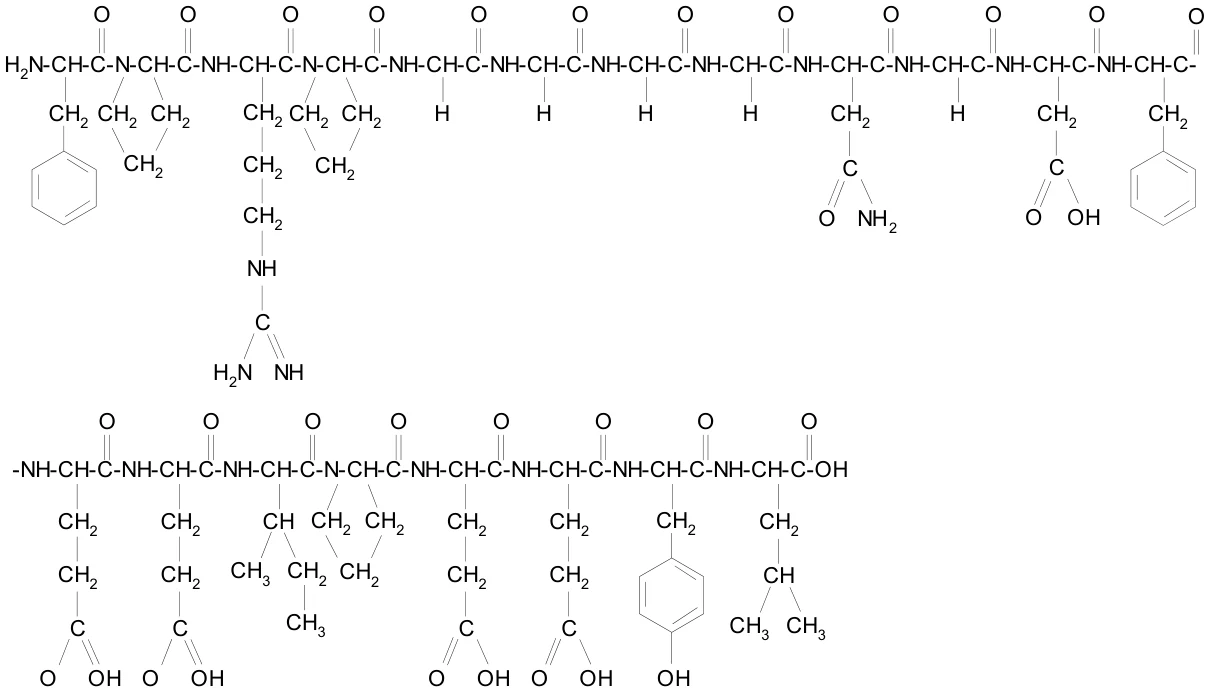
Bivalirudin is a synthetic peptide with the following attributes:
Proper name: Bivalirudin
Chemical name: D-phenylalanyl-L-prolyl-L-arginyl-L-prolyl-glycyl-glycyl-glycyl- glycyl-L-asparagyl-glycyl-L-aspartyl-L-phenylalanyl-L-glutamyl-L-glutamyl-L-isoleucyl-L-prolyl-L-glutamyl-L-glutamyl-L-tyrosyl-L-leucine trifluoracetate (salt) hydrate
Molecular formula and molecular mass: C98H138N24O33•(C2HF3O2)x•(H2O)y
2180 daltons (anhydrous free base peptide)
Structural formula:
Physicochemical properties: Bivalirudin is a white to off-white powder, with a pH of approximately 3 when dissolved in water without buffering.
The compound’s solubility is ≥ 140 mg / mL at pH 4.6 ‒ 5.6.
Bivalirudin is insoluble (≤ 0.1 mg / mL) in acetonitrile, chloroform, octanol and ethyl acetate. It is sparingly soluble (≥ 0.1 mg / mL, ≤ 1 mg / mL) in acetone and sec-butanol, and soluble (≥ 1 mg / mL, ≤ 10 mg / mL) in water, pH 3.3 ‒ 4. It is freely soluble (≥ 10mg / mL) in methanol (gels), ethanol (gels), and water at pH of 2.2 (gels), 2.4 ‒ 3.1, 4.3 ‒ 4.5, 4.6 ‒ 5.6.
CLINICAL TRIALS
ACUITY (UA/NSTEMI)
Study demographics and trial design
The ACUITY trial was carried out in 13 819 patients with moderate or high risk acute coronary syndromes due to unstable angina or non-ST-segment elevation myocardial infarction who were undergoing an early invasive strategy using a PROBE design (Prospective Randomized Open-label Blinded Endpoint) to determine the non-inferiority and/or superiority of bivalirudin with or without glycoprotein IIb/IIIa inhibitors (GPI) to heparin or enoxaparin with GPI. Additional anti-platelet therapy utilised in the study included aspirin and clopidogrel.
Patients were equally randomized to treatment in one of three arms: bivalirudin alone, bivalirudin plus planned use of GPI (abciximab, eptifibatide, or tirofiban), or heparin (either UFH or enoxaparin) plus planned use of GPI. Rescue GPIs were used during PCI for procedural complications in 6.6% of patients who were randomized to bivalirudin alone due to any of the following circumstances:
- 1. new or persistent thrombus formation during or after PCI;
- 2. slow or no reflow;
- 3. distal embolization;
- 4. side branch closure;
- 5. other reasons for which the operator feels patient safety requires a GPI.
There were no significant differences in baseline characteristics between the three treatment groups. Patients ranged in age from 20 ‒ 95 years (median 63 years); 45% were ≥ 65 years; weight ranged from 34 ‒ 195 kg (median 83 kg); 30.1% were female; 59% had abnormal cardiac markers (Creatine Kinase – MB [CK-MB], troponin T or I); and 38% had ST segment deviations. In the bivalirudin arm, 2078 patients had received prior heparin (UFH, LMWH) prior to being randomized to receive bivalirudin. Angiography was performed in 99% of the patients. Patients were subsequently triaged to either PCI (56%), CABG (11%) or medical management (33%). Stents were deployed in 85% of patients who underwent PCI (drug-eluting stents in 60%). Ninety-six percent of patients received ASA.
Bivalirudin was administered as a 0.1 mg / kg bolus followed by an infusion of 0.25 mg / kg / hr. For the patients who underwent PCI, an additional bolus of 0.5 mg / kg was administered and the infusion rate increased to 1.75 mg / kg / hr for the duration of the procedure. At investigator discretion, the infusion was continued following the procedure at a dose of 0.25 mg / kg / hr.
For patients being medically managed or planned for CABG, a dose of 0.25 mg / kg / hr was continued at physician discretion. Heparin was administered as a 60 U / kg bolus followed by a 12 U / kg / hr infusion through angiography; dosing was adjusted appropriately for PCI and CABG. Enoxaparin and GPIs were administered according to manufacturers’ instructions.
Study Results
The primary analysis and results for ACUITY at 30-days and 1 year for the overall (ITT) population and for the patients that received aspirin and clopidogrel as per protocol (pre-angiography or pre-PCI) are shown in Tables 12 and 13.
Table 12: ACUITY trial; 30-day and 1-year Risk Differences for the Composite Ischemic Endpoint and its Components for the Overall Population (ITT)
| Overall Population (ITT) | |||||||||||||
Arm A UFH/enox +GPI (N = 4603) %* | Arm B bival +GPI (N = 4604) %* | B – A Risk diff. (95% CI) | Arm C Bival alone (N = 4612) %* | C – A Risk diff. (95% CI) | |||||||||
| 30-day | |||||||||||||
| Composite ischemia | 7.3 | 7.7 | 0.48 (-0.6, 1.55) | 7.8 | 0.55 (-0.53, 1.63) | ||||||||
| Death | 1.3 | 1.5 | 0.17 (-0.31, 0.66) | 1.6 | 0.26 (-0.23, 0.75) | ||||||||
| MI | 4.9 | 5 | 0.04 (-0.84, 0.93) | 5.4 | 0.45 (-0.46, 1.35) | ||||||||
| Unplanned revasc. | 2.3 | 2.7 | 0.39 (-0.24, 1.03) | 2.4 | 0.1 (-0.51, 0.72) | ||||||||
| 1-year | |||||||||||||
| Composite ischemia | 15.3 | 15.9 | 0.65 (-0.83, 2.13) | 16 | 0.71 (-0.77, 2.19) | ||||||||
| Death | 3.9 | 3.8 | 0.04 (-0.83, 0.74) | 3.7 | -0.18 (-0.96, 0.6) | ||||||||
| MI | 6.8 | 7 | 0.19 (-0.84, 1.23) | 7.6 | 0.83 (-0.22, 1.89) | ||||||||
| Unplanned revasc. | 8.1 | 8.8 | 0.78 (-0.36, 1.92) | 8.4 | 0.37 (-0.75, 1.5) | ||||||||
UFH = unfractionated heparin; enox = enoxaparin; bival = bivalirudin; GPI = glycoprotein IIb/IIIA inhibitor;
revasc = revascularization
* % represents the incidence of observed events
Table 13: ACUITY Trial; 30-day and 1-year Risk Differences for the Composite Ischemic Endpoint and its Components for Patients that Received Aspirin and Clopidogrel as per Protocol**
| Patients Receiving Aspirin & Clopidogrel as per Protocol** | ||||||||||||||
Arm A UFH/enox +GPI (N = 2842) %* | Arm B bival +GPI (N = 2924) %* | B – A Risk diff. (95% CI) | Arm C Bival alone (N = 2911) %* | C – A Risk diff. (95% CI) | ||||||||||
| 30-day | ||||||||||||||
| Composite ischemia | 7.4 | 7.4 | 0.03 (-1.32, 1.38) | 7 | -0.35 (-1.68, 0.99) | |||||||||
| Death | 1.4 | 1.4 | -0 (-0.6, 0.6) | 1.2 | -0.14 (-0.72, 0.45) | |||||||||
| MI | 4.8 | 4.9 | 0.04 (-1.07, 1.14) | 4.7 | -0.08 (-1.18, 1.02) | |||||||||
| Unplanned revasc. | 2.6 | 2.8 | 0.23 (-0.61, 1.08) | 2.2 | -0.41 (-1.2, 0.39) | |||||||||
| 1-year | ||||||||||||||
| Composite ischemia | 16.1 | 16.8 | 0.68 (-1.24, 2.59) | 15.8 | -0.35 (-2.24, 1.54) | |||||||||
| Death | 3.7 | 3.9 | 0.2 (-0.78, 1.19) | 3.3 | -0.36 (-1.31, 0.59) | |||||||||
| MI | 6.7 | 7.3 | 0.6 (-0.71, 1.91) | 6.8 | 0.19 (-1.11, 1.48) | |||||||||
| Unplanned revasc. | 9.4 | 10 | 0.59 (-0.94, 2.12) | 8.9 | -0.53 (-2.02, 0.96) | |||||||||
UFH = unfractionated heparin; enox = enoxaparin; bival = bivalirudin; GPI = glycoprotein IIb/IIIA inhibitor;
revasc = revascularization
* % represents the incidence of observed events
**clopidogrel pre-angiography or pre-PCI
ACUITY major bleeding was defined as any one of the following: intracranial, retroperitoneal, intraocular, access site hemorrhage requiring radiological or surgical intervention, ≥ 5 cm diameter hematoma at puncture site, reduction in hemoglobin concentration of ≥ 4 g / dl without an overt source of bleeding, reduction in hemoglobin concentration of ≥ 3 g / dl with an overt source of bleeding, re-operation for bleeding or use of any blood product transfusion. Minor bleeding was defined as any observed bleeding event that did not meet the criteria as major.
Major bleeding rates are shown in Table 14 for the IIT population (patients receiving clopidogrel and aspirin). Both major and minor bleeds were significantly less frequent with bivalirudin alone than the heparin plus GP IIb/IIIa inhibitor and bivalirudin plus GP IIb/IIIa inhibitor groups. Similar reductions in bleeding were observed in patients who were switched to bivalirudin from heparin-based therapies (N = 2078).
The incidence of both ACUITY-scale and TIMI-scale bleeding events to day 30 for the per protocol population are presented in Table 15.
The advantage of bivalirudin over UFH/enoxaparin plus GP IIb/IIIa inhibitor in terms of bleeding events was only observed in the bivalirudin monotherapy arm.
Table 14: ACUITY Trial: Major Bleeding Rates at 30 Days for Intent-to-treat Population
Bivalirudin (%*) | Bivalirudin + GPI (%*) | UFH/Enox + GPI (%*) | ||||||||
| N = 4612 | N = 4604 | N = 4603 | ||||||||
| Protocol defined major bleeding | 3 | 5.3 | 5.7 | |||||||
TIMI Major (non-CABG) Bleeding | 0.9 | 1.8 | 1.9 | |||||||
UFH = unfractionated heparin; enox = enoxaparin; GPI = glycoprotein IIb/IIIA inhibitor
* % represents the incidence of observed events
Table 15: ACUITY Trial; Bleeding Events up to Day 30 for the Population of Patients
Who Received Aspirin and Clopidogrel as per Protocol**
UFH/enox + GPI (N = 2842) %* | Bival + GPI (N = 2924) %* | Bival alone (N = 2911) %* | |
| ACUITY scale major bleeding | 5.9 | 5.4 | 3.1 |
| TIMI scale major bleeding | 1.9 | 1.9 | 0.8 |
UFH = unfractionated heparin; enox = enoxaparin; bival = bivalirudin; GPI = glycoprotein IIb/IIIA inhibitor;
* % represents the incidence of observed events
**clopidogrel pre-angiography or pre-PCI
HORIZONS (STEMI undergoing primary PCI)
Study Demographics and Trial Design
The HORIZONS trial was a prospective, dual arm, single blind, randomised, multi-centre trial to establish the safety and efficacy of bivalirudin in patients with STEMI undergoing a primary PCI strategy with stent implantation with either a slow release paclitaxal-eluding stent (TAXUSTM) or an otherwise identical uncoated bare metal stent (Express2TM). A total of 3602 patients were randomised to receive either bivalirudin (1800 patients) or unfractionated heparin plus a GP IIb/IIIa inhibitor (1802 patients). All patients received aspirin and clopidogrel, with twice as many patients (approximately 64%) receiving a 600 mg loading dose of clopidogrel than a 300 mg loading dose of clopidogrel. Approximately 66% of patients were pre-treated with unfractionated heparin.
The dose of bivalirudin used in HORIZONS was the same as that used in the REPLACE-2 study (0.75 mg / kg bolus followed by 1.75 mg / kg / hr infusion). A total of 92.9% of patients treated underwent primary PCI as their primary management strategy.
Study Results
In the HORIZONS study, the key efficacy endpoint of MACE (Major Adverse Ischaemic Cardiac Events) included any death, reinfarction, ischemic TVR, or stroke. The primary analysis and results for HORIZONS at 30 days and 1 year for the overall (ITT) population are shown in Table 16. Results at 1 year were consistent with results at 30 days.
| Table 16: HORIZONS Trial: 30-day and 1-year Results for the Composite Endpoint (MACE) and its Components for the Overall Population (ITT) | |||||
| Overall Population (ITT) | |||||
| n/N (%) of patients | Estimate [95% CI] | ||||
| Bivalirudin | UFH + GP IIb/IIIa | Difference | Relative Risk | P-valuea | |
| 30-day | |||||
| MACE | 98/1800 (5.4) | 100/1802 (5.5) | -0.1 [-1.6, 1.4] | 0.98 [0.75, 1.29] | 0.8901 |
| Death | 37/1800 (2.1) | 56/1802 (3.1) | -1.1 [-2.1, 0] | 0.66 [0.44, 1] | 0.0465 |
| Reinfarction | 34/1800 (1.9) | 32/1802 (1.8) | 0.1 [-0.8, 1] | 1.06 [0.66, 1.72] | 0.8003 |
| Ischemic TVR | 45/1800 (2.5) | 35/1802 (1.9) | 0.6 [-0.5, 1.6] | 1.29 [0.83, 1.99] | 0.2561 |
| Stroke | 14/1800 (0.8) | 12/1802 (0.7) | 0.1 [-0.5, 0.7] | 1.17 [0.54, 2.52] | 0.6917 |
| 1-year | |||||
| MACE | 209/1800 (11.6) | 210/1802 (11.7) | -0 [2.2, 2.1] | 1 [0.83, 1.19] | 0.9682 |
| Death | 61/1800 (3.4) | 86/1802 (4.8) | -1.4 [-2.7, 0] | 0.71 [0.51, 0.98] | 0.0359 |
| Reinfarction | 62/1800 (3.4) | 76/1802 (4.2) | -0.8 [-2.1, 0.5] | 0.82 [0.59, 1.13] | 0.2268 |
| Ischemic TVR | 123/1800 (6.8) | 100/1802 (5.5) | 1.3 [-0.3, 2.9] | 1.23 [0.95, 1.59] | 0.1099 |
| Stroke | 20/1800 (1.1) | 20/1802 (1.1) | 0.[-0.7, 0.7] | 1 [0.54, 1.85] | 0.9972 |
a Superiority p-value.
REPLACE-2 (Randomized Evaluation of PCI Linking ANGIOMAX (Bivalirudin) Reduced Clinical Events)
Study Demographics and Trial Design
Bivalirudin has been evaluated in five interventional cardiology trials reporting 19 211 patients. Stents were deployed over 13 224 of the patients in these trials - mainly in trials performed since 1995. PTCA, atherectomy or other procedures were performed in the remaining patients.
Bivalirudin plus provisional platelet GPIIb/IIIa inhibition was evaluated versus heparin plus planned GPIIb/IIIa inhibition in 6010 patients undergoing PCI in the double-blind, randomized, multi-centre REPLACE-2 trial (Randomized Evaluation in PCI linking bivalirudin to reduced Clinical Events).
Patients were aged 25 ‒ 95 years with body weights 35 ‒ 199 kg. Indications for PCI included unstable angina (35% of patients), myocardial infarction (MI) within 7-days prior to intervention (8%), stable angina (25%) and positive ischemic stress test (24%). Stents were deployed in 85% of patients, balloon angioplasty, atherectomy and other procedures were performed in 15%. Pre-treatment with ASA (given in 99%) and thienopyridines (86%) was based on protocol recommendations. Pre-treatment with other anticoagulants was allowed by protocol.
Bivalirudin was administered as a 0.75 mg / kg bolus followed by a 1.75 mg / kg / hr infusion for the duration of the procedure. At investigator discretion, the infusion could be continued following the procedure for up to 4 hours. The median infusion duration was 44 minutes. Heparin was administered as a 65 U / kg bolus. Abciximab and eptifibatide were given according to manufacturers' instructions. Both randomised groups could be given "provisional" treatments with GPIIb/IIIa inhibitors during the PCI at investigator discretion, but under double-blind conditions. Provisional treatment with GPIIb/IIIa inhibitors was requested in 5.2% of patients randomised to heparin plus GPIIb/IIIa (they were given placebo) and in 7.2% patients randomised to bivalirudin (they were given abciximab or eptifibatide according to pre-randomisation investigator choice and patient stratification). Reasons for provisional treatment included new or suspected thrombus, dissection with decreased flow and decreased Thrombosis In Myocardial Infarction (TIMI) flow (0 ‒ 2) or slow reflow.
The ACT (measured by a Hemochron® device) was checked 5 minutes after the first bolus of study medication. For patients randomised to bivalirudin, the median 5-minute ACT was 358 seconds (interquartile range 320 ‒ 400 seconds) and the ACT was < 225 seconds in 3%. For patients randomised to heparin plus GPIIb/IIIa inhibitors, the median 5-minute ACT was 317 seconds (interquartile range 263 ‒ 373 seconds) and the ACT was < 225 seconds in 12%. At the end of the procedure, median ACT values were 344 seconds (bivalirudin group) and 276 seconds (heparin plus GPIIb/IIIa inhibitor group).
Bivalirudin was also evaluated in patients with unstable angina undergoing PTCA in two randomised, double-blind, multicenter studies with identical protocols (the BAT trial, Bivalirudin Angioplasty Trial). Overall, 4312 patients with unstable angina, including 741 patients (17%) with post-MI angina, were treated in a 1:1 randomised fashion with bivalirudin or heparin. Patients evaluated had a median age of 63 years (range 29 ‒ 90 years) and a median weight of 80 kg (range 39 ‒ 120 kg), with 68% male, and 91% Caucasian. Twenty-three percent of patients were treated with open-label heparin within one hour prior to randomisation. All patients were administered ASA 300 ‒ 325 mg prior to PTCA, and daily thereafter.
Patients randomised to bivalirudin were started on an Intravenous infusion of bivalirudin of 2.5 mg / kg / hr in a double-blind fashion. Within 5 minutes after starting the infusion, and prior to PTCA, a 1 mg / kg loading dose was administered as an intravenous bolus. The infusion was continued for 4 hours, then the infusion was changed, under double-blind conditions, to bivalirudin at 0.2 mg / kg / hr for up to an additional 20 hours, with patients receiving this infusion for an average of 14 hours. The ACT was checked at 5 minutes and at 45 minutes following commencement of the bivalirudin infusion. If on either occasion the ACT was < 350 seconds, an additional double-blinded bolus of placebo was administered. The bivalirudin dose was not titrated to ACT. Median ACT values (and observed values between the 5th and 95th percentile) were: 345 seconds (240 ‒ 595 seconds) at 5 minutes, and 346 seconds (269 ‒ 583 seconds) at 45 minutes after initiation of dosing.
Patients randomised to heparin were given a loading dose of 175 IU / kg in a double-blind fashion as an intravenous bolus 5 minutes before the planned procedure, after commencement of an initial infusion of heparin at 15 IU / kg / hr. The infusion was continued for 4 hours. After 4 hours, the heparin infusion was changed, under double-blind conditions, to remain at heparin 15 IU / kg / hr for up to 20 additional hours. The ACT was checked at 5 minutes and at 45 minutes following commencement of the infusion. If on either occasion the ACT was < 350 seconds, an additional double-blind bolus of heparin at 60 IU / kg was administered. Once the target ACT was achieved for heparin patients, no further ACT measurements were performed. The protocol allowed use of open-label heparin at the discretion of the investigator after discontinuation of blinded study medication, whether or not an endpoint event, pre-defined as “procedural failure”, had occurred. The use of open-label heparin after administration of test drug was similar between bivalirudin and heparin treatment groups, at about 20% in both groups.
Study Results
In the REPLACE-2 trial, the primary protocol endpoint was a composite of three efficacy variables measured 30 days post-procedure, (death, MI, and urgent revascularization), and one safety variable, (in-hospital major hemorrhage), adjudicated under double-blind conditions. The rates of this composite endpoint were similar in the bivalirudin and heparin plus GPIIb/IIIa inhibitor treatment groups. The secondary composite ischemic endpoint of death, MI or urgent revascularisation was reported with similar incidence in both groups. Major hemorrhage was reported significantly less frequently in patients randomised to bivalirudin. Study outcomes are shown in Table 17.
| Table 17: Incidences of Clinical Endpoints at 30 days for REPLACE-2 in Patients Undergoing PCI | ||||||
|---|---|---|---|---|---|---|
| Intention-to-treat Population | Per-protocol Population | |||||
Bivalirudin (N = 2994) [%] | Heparin + GPIIb/IIIa inhibitor (N = 3008) [%] | O.R (95% C.I.) | Bivalirudin (N = 2902) [%] | Heparin + GPIIb/IIIa inhibitor (N = 2882) [%] | O.R. (95% C.I.) | |
| Primary(quadruple) endpoint | 9.2 | 10 | 0.92 (0.77 ‒ 1.09) | 9.2 | 10 | 0.91 (0.77 ‒ 1.09) |
| Secondary (triple) endpoint | 7.6 | 7.1 | 1.09 (0.9 ‒ 1.32) | 7.8 | 7.1 | 1.1 (0.9 ‒ 1.34) |
Endpoint components Death Myocardial Infarction Urgent revascularization Major bleeding | 0.2 7 1.2 2.4# | 0.4 6.2 1.4 4.1 | 0.59 (0.23 ‒ 1.49) 1.13 (0.92 ‒ 1.39) 0.84 (0.53 ‒ 1.31) 0.57 (0.42 ‒ 0.77) | 0.2 7.1 1.2 2.2# | 0.4 6.4 1.3 4 | 0.5 (0.19 ‒ 1.32) 1.12 (0.91 ‒ 1.37) 0.91 (0.57 ‒ 1.46) 0.56 (0.41 ‒ 0.76) |
#: p < 0.001 vs. heparin + GPIIb/IIIa inhibitor
BAT (Bivalirudin Angioplasty Trial)
In the BAT trial, the studies were designed to demonstrate the safety and efficacy of bivalirudin in patients undergoing PTCA as a treatment for unstable angina. The primary pre-specified endpoint was a composite endpoint called “procedural failure”, which included both clinical and angiographic elements measured during hospitalisation. The clinical elements were the occurrence of death, MI, or urgent revascularisation, while the angiographic elements were identified as impending or abrupt vessel closure. The pre-specified safety endpoint was major hemorrhage.
The median duration of hospitalisation was 4 days for both bivalirudin and heparin treatment groups. The rates of so-called procedural failure were similar in the bivalirudin and heparin treatment groups. Study outcomes are shown in Table 18 below for the intent-to-treat population.
| Table 18: Incidence of In-hospital Clinical Endpoints in BAT Trial Occurring within 7 Days | |||
| All Patients | BIVALIRUDIN n = 2161 | HEPARIN n = 2151 | P-value |
| Efficacy Endpoints: | |||
| Procedural Failure1 | 7.9% | 9.3% | 0.108 |
| Death, MI, Revascularisation | 6.2% | 7.9% | 0.039 |
| Death | 0.2% | 0.2% | 0.987 |
| MI2 | 3.3% | 4.2% | 0.126 |
| Revascularisation3 | 4.2% | 5.6% | 0.03 |
| Safety Endpoint: | |||
| Major Hemorrhage4 | 3.5% | 9.3% | < 0.001 |
1 The protocol specified primary endpoint (a composite of death or MI or clinical deterioration of cardiac origin requiring revascularisation or placement of an aortic balloon pump or angiographic evidence of abrupt vessel closure).
2 Defined as: Q-wave MI; CK-MB elevation ≥ 2xULN, new ST- or T-wave abnormality, and chest pain ≥ 30 min; OR new LBBB with chest pain ≥ 30 min and/or elevated CK-MB enzymes; OR elevated CK-MB and new ST- or T-wave abnormality without chest pain; OR elevated CK-MB.
3 Defined as: any revascularisation procedure, including angioplasty, CABG, stenting, or placement of an intra-aortic balloon pump.
4 Defined as the occurrence of any of the following: intracranial bleeding, retroperitoneal bleeding, clinically overt bleeding with a decrease in hemoglobin ≥ 3 g / dL or leading to a transfusion of 2 units of blood.
In evaluating the efficacy and safety of bivalirudin in these clinical studies, the relatively high initial bolus dose of heparin (175 IU / kg) used in the comparator group should be noted. This is reflected by the mean ACT values reported in these studies of 377 seconds for bivalirudin-treated patients at 5 minutes after initiation of therapy, compared to 414 seconds with heparin; and 380 seconds for bivalirudin-treated patients at 45 minutes after initiation, compared to 418 seconds in those treated with heparin. Mean baseline ACT values were virtually identical for both groups at 145 and 144 seconds, respectively.
CHOOSE (CABG/HIT/TS On- and Off-pump Safety and Efficacy) and EVOLUTION (EValuation of patients during coronary artery bypass graft Operation: Linking UTilization of bivalirudin to Improved Outcomes and New anticoagulant strategy)
Study Demographics and Trial Design
The results of four trials provided clinical substantiation that bivalirudin is a safe and effective anticoagulant for use in patients with or at risk of HIT/TS undergoing cardiac surgery. Each of the two CHOOSE efficacy studies in patients with or at risk of HIT/TS undergoing on- or off-pump cardiac surgery included 50 prospective patients administered bivalirudin compared to approximately 50 historical control patients. Patients were considered to be with or at risk of HIT/TS if they had a new diagnosis or a documented history of HIT/TS. This was defined by a positive platelet aggregation assay, functional assay, or immunoassay for HPF-4 antibodies, and/or thrombocytopenia (platelet count decreased 50% or more from baseline) associated with heparin use. In addition patients with HIT plus any evidence of arterial or venous thrombosis (HITTS) were eligible for inclusion. The two EVOLUTION safety studies were each conducted in 150 non-HIT/TS patients undergoing on- or off-pump cardiac surgery, randomized 2:1, bivalirudin to heparin/protamine.
Patients in the CHOOSE and EVOLUTION studies had a median age ranging from 64 ‒ 67 years, 69 ‒ 74% were male and 87 ‒ 93% were Caucasian in the two treatment groups. The median weight ranged from 77 ‒ 88 kg with a corresponding Body Mass Index (BMI) of 27 ‒ 29.
In the on-pump studies, patients were dosed with a bivalirudin intavenous bolus of 1 mg / kg followed by an intravenous infusion of 2.5 mg / kg / hr; patients undergoing off-pump surgery were dosed with an intravenous bolus of 0.75 mg / kg followed by an intravenous infusion of 1.75 mg / kg / hr.
Study Results
In the CHOOSE and EVOLUTION trials, the primary endpoint was procedural success, defined as the absence of death, Q-wave MI, repeat coronary revascularization, and stroke at Day 7 or discharge, whichever occurred first. Procedural success rates were similar in the bivalirudin and the comparator groups in the CHOOSE and EVOLUTION studies at Day 7/discharge and at Day 30 (see Table 19). The incidences of death, Q-wave MI, revascularization and stroke were few and were similar in the treatment groups. The clinical trial data indicated that any of the commonly used activated clotting tests may be used to ensure that the patient is adequately anti-coagulated following administration of bivalirudin.
Table 19: Procedural Success for the CHOOSE (patients with or at risk of HIT/TS) and EVOLUTION (non-HIT/TS patients) Studies in Cardiac Surgery (ITT Population) | ||||||||
| Paramete r | CHOOSE Studies (HIT/TS)1 | EVOLUTION Studies (Non-HIT/TS)2 | ||||||
| On-pump | Off-pump | On-pump | Off-pump | |||||
BIVALIRUDI N n/N (%) | HISTORICA L CONTROL n/N (%) | BIVALIRUDI N n/N (%) | HISTORICA L CONTROL n/N (%) | BIVALIRUDI N n/N (%) | HEPARIN/ PROTAMIN E n/N (%) | BIVALIRUDI N n/N (%) | HEPARIN/ PROTAMIN E n/N (%) | |
| Procedural success3: | ||||||||
| Day 7/ discharge | 46/50 (92) | 69/75 (92) | 50/52 (96.2) | 35/36 (97.2) | 96/101 (95) | 47/49 (95.9) | 101/105 (96.2) | 49/52 (94.2) |
| Day 30 | 45/50 (90) | 68/75 (90.7) | 48/51 (94.1) | 32/36 (88.9) | 95/101 (94.1) | 47/49 (95.9) | 97/104 (93.3) | 48/52 (92.3) |
1 Investigator-reported Q-wave MI data were used for the CHOOSE studies because data from the historical cohort could not be adjudicated
2 Q-wave MI data adjudicated by an independent Clinical Events Committee are used for these studies
3 Defined as absence of death, Q-wave MI, stroke and revascularization
DETAILED PHARMACOLOGY
Human Pharmacokinetics: In healthy volunteers, bivalirudin was administered as a 15 minute intravenous infusion at a range of doses.
| Table 20: Bivalirudin intravenous Infusion in Healthy Volunteers over 15 minutes | ||||
Infusion Dose (mg / kg / hr) | Mean Volume of Distribution (L / kg) | Mean Clearance (mL / min / kg) | Mean Half-Life (min) | Mean Percentage Urinary Excretion (%) |
| 0.2 | N/D | N/D | N/D | N/D |
| 0.3 | N/D | N/D | N/D | N/D |
| 0.6 | N/D | N/D | N/D | N/D |
| 1.2 | 0.24 | 7.79 | 22.5 | 9.9 |
| 2.4 | 0.24 | 6.74 | 24.6 | 13.4 |
N/D: not detectable
Bivalirudin plasma concentrations were measured using an ELISA antibody based assay that detected bivalirudin and some bivalirudin metabolites.
Further studies have been carried out in patients with varying degrees of renal impairment undergoing PTCA at the dose of 1 mg / kg intravenous bolus, plus 2.5 mg / kg / hr intravenous infusion for 4 hours followed by 0.5 mg / kg / hr for a further 4 hours, and in severely renally impaired patient volunteers where a bolus of 1 mg / kg and infusion of 0.5 mg / kg / hr for 10 hours was given, see Table 21 below. Plasma and urine levels of bivalirudin were detected by an LC/MS based method validated to quantify only intact bivalirudin.
| Table 21: Pharmacokinetics of Bivalirudin in Healthy Volunteers and Patients with Renal Impairment | |||
|---|---|---|---|
| Renal Function | Intravenous Infusion Dose (mg / kg / hr) | Mean Clearance (mL / min / kg) | Elimination Half-Life (min) |
Normal Renal Function GFR ≥ 90 mL / min | 2.5 (4 hr) | 3.4 ± 0.5 | 24.9 ± 12.1 (modeled) |
| 0.5 (4 hr) | 3.7 ± 1 | ||
Mild Renal Impairment GFR 60 ‒ 89 mL / min | 2.5 (4 hr) | 3.4 ± 0.7 | 22.2 ± 8 (modeled) |
| 0.5 (4 hr) | 3.2 ± 0.9 | ||
Moderate Renal Impairment GFR 30 ‒ 59 mL / min | 2.5 (4 hr) | 2.7 ± 0.4 | 33.5 ± 6.8 (modeled) |
| 0.5 (4 hr) | 2.5 ± 0.2 | ||
Severe Renal Impairment GFR < 30 mL / min | 0.5 (10 hr) | 2.8 ± 0.7 | 56.8 ± 24 |
These data indicate that patients with moderate and severe renal impairment exhibit about 20% reduction in renal clearance. The half-life was prolonged in these patients. Therefore, in patients with severe renal impairment (GFR < 30 mL / min), ACT should be monitored and a reduction in the infusion dose should be considered (see DOSAGE AND ADMINISTRATION, DOSAGE ADJUSTMENT FOR PATIENTS WITH RENAL IMPAIRMENT).
An additional study of subjects with normal to severely impaired renal function (as determined by insulin clearance), demonstrated that plasma clearance of bivalirudin is proportional to glomerular filtration rate at all levels of renal function. The study also demonstrated that bivalirudin is hemodialysable.
TOXICOLOGY
Bivalirudin was administered to animals for up to 28 days by continuous intravenous infusion at dose levels of up to 80 times the clinically recommended dose of 15 mg / kg / day. Toxicological effects observed were directly related to the route of administration and to the anticoagulant activity of bivalirudin, such as local injection site phlebitis and hemorrhage, and internal organ hemorrhage. Bivalirudin caused no signs of toxicity at clinically relevant doses administered by either repeated intravenous injection or continuous infusion for up to 28 days.
The relative anticoagulant activity of various species is reported below in Table 22.
Table 22: Estimates in Several Species of Bivalirudin Concentration Required to Prolong aPTT to 3 Times Baseline | ||
|---|---|---|
| Species | Effective Conc. (mcg / mL)* | Relative to Human |
| Human | 0.82 | 1 |
| Baboon | 0.35 | 0.4 |
| Monkey | 0.9 | 1.1 |
| Rat | 1.8 | 2.3 |
| Dog | 3.5 | 4.3 |
| Rabbit | 14 | 17.1 |
| Pig | 24 | 29.3 |
| *Required to prolong aPTT to 3 times baseline. | ||
Acute Toxicity:
Mouse: No overt toxicity was observed within a 14-day observation period at intravenous and subcutaneous (s.c.) doses up to and including 200 mg / kg.
Rat: An acute single dose intravenous study in rats assessed doses up to 200 mg / kg, when administered in 10 mL / kg saline infusion, and included a 14-day observation period. This study showed enlargement of the thymus gland and submandibular lymph nodes in both sexes. Acute toxicity was also observed, including death, respiratory distress, piloerection and vascular congestion of the lungs. Findings were observed at all dose levels.
Another study, examining a 100 mg / kg single intravenous dose, administered in 2 mL / kg saline infusion, with a 14-day follow-up observation period, reported no adverse effects.
Monkey: No mortality or adverse effects attributable to bivalirudin were observed in two monkeys administered doses up to 42 mg / kg over a four hour period by intravenous infusion.
Subchronic and Chronic Toxicity:
Rat: Continuous intravenous infusion for 7 to 28 days at doses from 25 to 1200 mg / kg / day caused no adverse effects at 25 mg / kg / day. Mortality was observed at doses of 250 mg / kg / day for 28 days (2 of 30 animals) and 500 mg / kg / day for 28 days (2 of 10 animals) and above. At 500, 1000, and 1200 mg / kg / day, in addition to mortality, hemorrhage of internal organs was observed. A dose of 75 mg / kg / day and above for 28 days produced phlebitis at the injection site accompanied by effects in the spleen (enlargement), liver (sinusoidal histiocytosis/necrosis), and bone marrow (myeloid hypercellularity).
Monkey: Clinical signs, body weight, and food consumption appeared normal in cynomolgus monkeys following continuous intravenous infusion for 14 or 28 days at doses of 15 and 45 mg / kg / day. Internal organ hemorrhage was identified in some animals receiving 150 mg / kg / day over 14 days. Anti-coagulant activities maintained during the study were approximately 85, 200, and 350 percent above baseline levels at the three doses tested, respectively. In a 28-day study, myocardial degeneration and/or necrosis were noted in 2 monkeys receiving the highest dose of 150 mg / kg / day. The lesions were associated with mild hemorrhage and appeared to occur during the last 7 to 10 days of the 28-day treatment period. No cardiac lesions were evident in monkeys treated with bivalirudin at 150 mg / kg / day for 14 days.
Special Studies:
Bivalirudin, when administered subcutaneously once/week at 1 mg / kg for 3 weeks was considered non-antigenic in guinea pigs.
No antibodies cross-reacting with bivalirudin were detected in monkeys receiving intravenous doses up to 100 mg / kg and up to 150 mg / kg / day for 14 days by continuous infusion.
Bivalirudin at 10 mg / mL did not cause hemolysis or plasma protein flocculation of human blood in vitro.
Carcinogenesis and Genotoxicity:
No long-term studies in animals have been performed to evaluate the carcinogenic potential of bivalirudin. Bivalirudin displayed no genotoxic potential in the in vitro bacterial cell reverse mutation assay (Ames test), the in vitro Chinese hamster ovary cell forward gene mutation test (CHO/HGPRT), the in vitro human lymphocyte chromosomal aberration assay, the in vitro rat hepatocyte unscheduled DNA synthesis (UDS) assay, and the in vivo rat micronucleus assay.
Reproductive and Developmental Toxicity:
Rat: Reproductive toxicity, as defined by adverse effects on mating and fertility indices, was observed only at dose levels associated with toxicity, i.e. 150 and 500 mg / kg / day.
Developmental toxicity, i.e. adverse fetal effects, was observed only at maternally toxic doses of 150 and 500 mg / kg / day.
No teratogenic effects were evident at any doses evaluated.
Rabbit: Neither maternal nor developmental adverse effects were observed up to and including bivalirudin doses of 150 mg / kg / day.
REFERENCES
- 1. Bennett-Guerrero E, Slaughter TF, White WD, et al. Preoperative anti-PF4/heparin antibody level predicts adverse outcome after cardiac surgery. J Thorac Cardiovasc Surg 2005;130:1567-1572.
- 2. Bittl JA, Strony J, Brinker JA, Ahmed WH et al. Treatment with bivalirudin (Hirulog) as compared with heparin during coronary angioplasty for unstable or postinfarction angina. New Engl J Med 1995;333:764-76.
- 3. Coughlin SR. Thrombin signalling and protease-activated receptors. Nature 2000; 407:258-64.
- 4. Dyke CM, Smedira NG, Koster A, et al. A comparison of bivalirudin to heparin with protamine reversal in patients undergoing cardiac surgery with cardiopulmonary bypass: the EVOLUTION-ON study. J Thorac Cardiovasc Surg 2006;131:533-539.
- 5. Koster A, Dyke CM, Aldea G, et al. Bivalirudin during cardiopulmonary bypass in patients with previous or acute heparin-induced thrombocytopenia and heparin antibodies: results of the CHOOSE-ON trial. Ann Thorac Surg 2007;83:572-577.
- 6. Koster A, Spiess B, Jurmann M, et al. Bivalirudin provides rapid, effective and reliable anticoagulation during off-pump coronary revascularization: results of the “EVOLUTION-OFF” trial. Anesth Analg 2006;103:540-544.
- 7. Kress DC, McDonald ML, Aronson S, et al. The impact of heparin PF4 antibody complexes on cardiac surgical outcomes: novel findings [abstract]. Abstract presented at: CHEST 2005, American College of Chest Physicians (ACCP); October 29 – November 3, 2005; Montréal, Québec, Canada.
- 8. Lee DH, Warkentin TE. Frequency of heparin-induced thrombocytopenia. Chapter 4 In: Warkentin TE and Greinacher A (eds): Heparin-Induced Thrombocytopenia, Third Ed., NY: Marcel Dekker Inc.; 2004, pp. 107-148.
- 9. Lincoff AM, et al. Bivalirudin and Provisional Glycoprotein IIb/IIIa Blockade Compared with Heparin and Planned Glycoprotein IIb/IIIa Blockade During Percutaneous Coronary Intervention: REPLACE-2 Randomized Trial. JAMA 2003;289:853-863.
- 10. Maraganore JM, Bourdon P, Jablonski J, Ramachandran KL, Fenton JW. Design and characterization of hirulogs: a novel class of bivalent peptide inhibitors of thrombin. Biochemistry 1990;29:7101.
- 11. Robson R, White H, Aylward P, Frampton C. Bivalirudin pharmacokinetics and pharmacodynamics: Effect of renal function, dose, and gender. Clin Pharmacol Ther 2002;71:433-439.
- 12. Robson R. The use of bivalirudin in patients with renal impairment. J Invasive Cardiol 2000;12:33F-36F.
- 13. Reddan D, et al. Anticoagulation in acute cardiac care patients with chronic kidney disease. Am Heart J 2003;145:586-94.
- 14. Smedira NG, Dyke CM, Koster A, et al. Anticoagulation with bivalirudin for off-pump coronary artery bypass grafting: the results of the EVOLUTION-OFF study. J Thorac Cardiovasc Surg 2006;131:686-692.
- 15. Stone GW, et al. Bivalirudin during primary PCI in acute myocardial infarction. N Engl J Med. 2008;358(21):2218-2230.
- 16. Warkentin TE, Greinacher A. Heparin-induced thrombocytopenia and cardiac surgery. Ann Thorac Surg 2003;76(6):2121-31.
- 17. Angiomax Product Monograph. Control No. 197740, September 28, 2016. Sandoz Canada Inc.