


Product Monograph - Bromocriptine
RECENT MAJOR LABEL CHANGES
| 1 Indications, 1.2 Geriatrics | 02/2022 |
| 7 Warnings and Precautions, 7.1.4 Geriatrics | 02/2022 |
TABLE OF CONTENTS
Sections or subsections that are not applicable at the time of authorization are not listed.
RECENT MAJOR LABEL CHANGES ........................................................................................... 2
TABLE OF CONTENTS ............................................................................................................. 2
PART I: HEALTH PROFESSIONAL INFORMATION ..................................................................... 4
1 INDICATIONS .............................................................................................................. 4
1.1 Pediatrics ................................................................................................................... 4
1.2 Geriatrics ................................................................................................................... 4
2 CONTRAINDICATIONS ................................................................................................. 4
4 DOSAGE AND ADMINISTRATION ................................................................................. 5
4.1 Dosing Considerations .............................................................................................. 5
4.2 Recommended Dose and Dosage Adjustment ......................................................... 5
4.5 Missed Dose .............................................................................................................. 6
5 OVERDOSAGE ............................................................................................................. 6
6 DOSAGE FORMS, STRENGTHS, COMPOSITION AND PACKAGING ................................. 6
7 WARNINGS AND PRECAUTIONS .................................................................................. 7
7.1 Special Populations ................................................................................................... 9
7.1.1 Pregnant Women ................................................................................................ 9
7.1.2 Breast-feeding ..................................................................................................... 9
7.1.3 Pediatrics ........................................................................................................... 10
7.1.4 Geriatrics ........................................................................................................... 10
8 ADVERSE REACTIONS................................................................................................ 10
8.1 Adverse Reaction Overview .................................................................................... 10
8.2 Clinical Trial Adverse Reactions .............................................................................. 10
8.3 Less Common Clinical Trial Adverse Reactions ....................................................... 11
8.4 Abnormal Laboratory Findings: Hematologic, Clinical Chemistry and Other
Quantitative Data .............................................................................................................. 11
8.5 Post-Market Adverse Reactions .............................................................................. 12
9 DRUG INTERACTIONS ............................................................................................... 12
9.2 Drug interactions overview ..................................................................................... 12
9.3 Drug-behavioural interactions ................................................................................ 12
9.4 Drug-drug interactions ............................................................................................ 12
9.5 Drug-food interactions ............................................................................................ 13
9.6 Drug-herb interactions ............................................................................................ 13
9.7 Drug-laboratory test Interactions ........................................................................... 13
10 CLINICAL PHARMACOLOGY ....................................................................................... 13
10.1 Mechanism of action ........................................................................................ 13
10.2 Pharmacodynamics ........................................................................................... 14
10.3 Pharmacokinetics .............................................................................................. 15
11 STORAGE, STABILITY AND DISPOSAL ......................................................................... 16
12 SPECIAL HANDLING INSTRUCTIONS ........................................................................... 16
PART II: SCIENTIFIC INFORMATION ...................................................................................... 17
13 PHARMACEUTICAL INFORMATION ........................................................................... 17
14 CLINICAL TRIALS ....................................................................................................... 17
14.2 Comparative Bioavailability Studies ................................................................. 17
15 MICROBIOLOGY ....................................................................................................... 19
16 NON-CLINICAL TOXICOLOGY ..................................................................................... 19
PATIENT MEDICATION INFORMATION ................................................................................. 22
PART I: HEALTH PROFESSIONAL INFORMATION
1 INDICATIONS
BROMOCRIPTINE (Bromocriptine Mesylate) is indicated for:
- Galactorrhea with or without amenorrhea due to hyperprolactinemia.
- Prolactin-dependent menstrual disorders and infertility: e.g. secondary amenorrhea, ovulatory insufficiency and short luteal phase.
- Prolactin-secreting adenomas: as a treatment for inoperable macroadenomas or prior to surgery in order to facilitate removal, and as an alternative to surgery in patients with microadenomas.
- Prolactin-dependent male hypogonadism.
- Acromegaly: the first-line treatment of this condition is by surgery or radiotherapy. BROMOCRIPTINE (bromocriptine mesylate) may be a useful adjunct to such treatment, and can be used as monotherapy in special cases.
- Parkinson’s Disease: BROMOCRIPTINE is effective when used as adjunct therapy to levodopa in the symptomatic management of Parkinson’s Disease. Used concomitantly with levodopa, bromocriptine facilitates the use of lower doses of levodopa in early disease and attenuates the rate of increase in the levodopa dosages on long-term usage. In this way the risk of long–term complications such as prominent dyskinesias and/or end-of-dose failure can be reduced.
1.1 Pediatrics
Pediatrics: Based on the data submitted and reviewed by Health Canada, the safety and efficacy of BROMOCRIPTINE in pediatric patients has not been established. Therefore, Health Canada has not authorized an indication for pediatric use. See 5 OVERDOSAGE.
1.2 Geriatrics
Geriatrics (> 65 years of age): The therapeutic experience in this population is limited. Therefore, BROMOCRIPTINE should be used with caution in geriatric patients.
2 CONTRAINDICATIONS
BROMOCRIPTINE is contraindicated in:
- Patients with sensitivity to ergot alkaloids or to any ingredient in the formulation, including any non-medicinal ingredient, or component of the container. For a complete listing, see 6 DOSAGE FORMS, STRENGTHS, COMPOSITION AND PACKAGING.
- Patients with uncontrolled hypertension of pregnancy.
- Patients who had a history of toxemia of pregnancy.
4 DOSAGE AND ADMINISTRATION
4.1 Dosing Considerations
BROMOCRIPTINE (bromocriptine mesylate) should always be taken with food. In order to establish tolerance, the first dose of 1.25 - 2.5 mg (1/2 - 1 tablet), depending on the indication should be given at bedtime with food. Please consult the detailed dosage recommendations for each indication.
4.2 Recommended Dose and Dosage Adjustment
Galactorrhea with or without amenorrhea due to hyperprolactinemia:
1.25 - 2.5 mg (1/2 to 1 tablet) at bedtime with food to establish tolerance; gradually increase after 2-3 days to 2.5 mg (1 tablet) twice daily with meals. If required, the dose may be increased to 2.5 mg three times daily. Continue treatment until milk secretion has ceased completely or, in the case of menstrual dysfunction, until the menstrual cycle has returned to normal.
Prolactin-dependent menstrual disorders and infertility:
1.25 - 2.5 mg (1/2 to 1 tablet) at bedtime with food to establish tolerance. Gradually increase after 2-3 days to one tablet twice daily with meals. If required, the dose may be increased to 2.5 mg three times daily.
Prolactin secreting adenomas:
1.25 mg (1/2 a tablet) 2 or 3 times daily, increasing gradually (average maintenance dose: 5 - 7.5 mg daily). If necessary to keep plasma prolactin adequately suppressed, dosage may be increased gradually over a period of several weeks to 10 - 20 mg (4 to 8 tablets or 2 to 4 capsules) daily with meals.
Prolactin dependent male hypogonadism:
1.25 - 2.5 mg (1/2 to 1 tablet) at bedtime to establish tolerance. Gradually increase after 2 to 3 days to 2.5 mg twice daily with meals or more, as required to 2.5 mg three times per day with meals.
Acromegaly:
1.25 - 2.5 mg (1/2 to 1 tablet) at bedtime with food to establish tolerance, increasing gradually over a period of 2 to 4 weeks to 10 -20 mg (4 to 8 tablets or 2 to 4 capsules) daily with meals, depending on clinical response. Daily requirements of 20 mg should be taken in four equally divided doses.
For convenience and after initial titration, some patients may use the 5 mg capsules for maintenance therapy.
The maximum recommended daily dose is 20 mg (eight 2.5 mg tablets or four 5 mg capsules). In the event of serious or persistent adverse effects, the dosage should be reduced to 1.25 mg (1/2 tablet) and increased again gradually to the recommended dose. If reactions such as nausea, vomiting, vertigo or headaches continue to be severe, BROMOCRIPTINE should be discontinued.
Parkinson’s Disease:
BROMOCRIPTINE should be added to levodopa therapy. It is desirable to combine a slow increase of bromocriptine with a concomitant, limited and gradual reduction of levodopa. BROMOCRIPTINE dosage should be individualized. The initial dose is 1.25 mg (1/2 tablet) at bedtime to establish tolerance. Thereafter, the recommended dosage is 2.5 mg daily in two divided doses, with meals.
The dosage may be increased, if necessary, by adding an additional 2.5 mg per day, once every 2 to 4 weeks, taken in 2 or 3 divided doses with meals. The maximum recommended daily dosage is 40 mg. Clinical assessments are recommended during dosage titration to ensure that the lowest effective dose is employed. Where dose levels permit, use of the 5 mg capsule may be found more convenient by many patients.
Pediatrics: Health Canada has not authorized an indication for pediatric use.
4.5 Missed Dose
If the patient misses a dose, instruct the patient to take the dose as soon as they remember. If it is almost time for the next dose, inform the patient to skip the missed dose and continue the regular dosing schedule.
5 OVERDOSAGE
There have been several reports of acute overdosage with bromocriptine in children and adults. No life-threatening reactions have occurred.
Symptoms reported could have resulted from over- stimulation of dopaminergic receptors: they included nausea, vomiting, dizziness, drowsiness, hypotension, sweating and hallucinations. The management of acute intoxication is largely symptomatic. The cardiovascular system should be monitored. Metoclopramide can be used to antagonize the emesis and hallucinations in patients who have taken high doses.
| For management of a suspected drug overdose, contact your regional poison control centre. |
6 DOSAGE FORMS, STRENGTHS, COMPOSITION AND PACKAGING
Table 1 – Dosage Forms, Strengths, Composition and Packaging
Each white, oval, slope-faced and flat-faced tablet with bevelled edges, scored and engraved 2.5 on the right side on slope side, plain on flat-faced side contains “2.5” mg bromocriptine (as mesylate). Available in bottles of 100.
| Route of Administration | Dosage Form / Strength/Composition | Non-medicinal Ingredients |
| oral | tablet 2.5 mg of bromocriptine mesylate | Croscarmellose sodium, lactose monohydrate, magnesium stearate and microcrystalline cellulose. |
| oral | capsule 5 mg of bromocriptine mesylate | Cornstarch, lactose monohydrate, stearic acid, and talc. Each capsule shell contains the non-medicinal ingredients black pharmaceutical ink, gelatin, red iron oxide, titanium dioxide, and yellow iron oxide. The black pharmaceutical ink contains D&C yellow #10 aluminum lake, FD&C blue #1, FD&C blue #2 indigo carmine aluminum lake, FD&C red #40, iron oxide black, propylene glycol and shellac glaze. |
Each white opaque body, caramel opaque cap, hard gelatin capsule, imprinted “5” with white powder fill contains 5.0 mg of bromocriptine (as mesylate). Available in bottles of 100.
7 WARNINGS AND PRECAUTIONS
General
As with all medication, BROMOCRIPTINE should be kept safely out of the reach of children.
To date, there have been seven (7) reported cases of retroperitoneal fibrosis occurring in parkinsonian patients on long-term treatment (15 months - 10 years) with bromocriptine at daily doses higher than 30 mg. To recognize retroperitoneal fibrosis at an early, reversible stage it is recommended to look for its manifestations (e.g. back pain, edema of the lower limbs, impaired kidney function) in this category of patients. BROMOCRIPTINE medication should be withdrawn immediately if fibrotic changes in the retroperitoneum are diagnosed or suspected.
Cardiovascular
Particular attention should be paid to patients who have recently received other drugs that can alter the blood pressure.
BROMOCRIPTINE (bromocriptine mesylate) may cause hypotension, primarily postural; periodic monitoring of the blood pressure, particularly during the first days of therapy, is advisable.
Care should be exercised when administering BROMOCRIPTINE concomitantly with phenothiazines or with other medications known to lower blood pressure. Dosage should be adjusted accordingly. See 10.2 Pharmacodynamics, Effects on the Cardiovascular System.
Although there is no conclusive evidence demonstrating interactions between bromocriptine and other ergot derivatives, it is not recommended to administer concomitantly BROMOCRIPTINE and any drug with potential vasoconstrictor activity.
Symptomatic hypotension can occur and, therefore, caution should be exercised when administering BROMOCRIPTINE, particularly in patients receiving antihypertensive medication.
Dependence/Tolerance
Alcohol should be avoided during treatment with bromocriptine. In some patients the concomitant use of bromocriptine and alcohol has given rise to alcohol intolerance and an increase in the severity and incidence of bromocriptine’s possible adverse reactions.
Driving and Operating Machinery
In some patients, dizziness (vertigo) may occur with bromocriptine; patients should therefore be cautioned against activities requiring rapid and precise responses such as driving an automobile or operating dangerous machinery until their response has been determined.
Endocrine and Metabolism
In women with non-puerperal galactorrhea, reduction of prolactin levels may lead to resumption of normal menses. Following discontinuation of medication, galactorrhea returns in some patients and leads to suspicion of pituitary adenomas; a complete investigation at specialized units to identify these patients is advisable.
Treatment with BROMOCRIPTINE (bromocriptine mesylate) may effectively lower prolactin levels in patients with pituitary tumors but does not obviate the necessity for radiotherapy or surgical intervention where appropriate.
Gastrointestinal
There have been occasional reports of gastrointestinal bleeding in acromegalic patients, both in those treated with bromocriptine and in those given a different or no medication. Until further data are available, therefore, acromegalic patients with a history or evidence of peptic ulceration should preferably be given alternative treatment. If bromocriptine must be used in such patients they should be instructed to report promptly any gastrointestinal reactions.
Bromocriptine should always be taken with food. In cases where adverse effects, such as nausea, vomiting and vertigo are severe or persisting, the therapeutic dosage of BROMOCRIPTINE should be reduced to half of one tablet daily (1.25 mg) and increased gradually to the recommended dose. The dopamine antagonist domperidone may be useful in the control of severe gastrointestinal side effects in Parkinsonian patients receiving bromocriptine (see 9.4 Drug-Drug Interactions).
Hepatic/Biliary/Pancreatic
Safety and efficacy of bromocriptine has not been established in patients with severe hepatic disease.
Monitoring and Laboratory Tests
Periodic evaluation of hepatic, hematopoietic, cardiovascular and renal function is recommended.
Neurologic
Use in Parkinson’s Disease: Use of BROMOCRIPTINE, particularly in high doses, may be associated with mental confusion and mental disturbances. Since patients with Parkinson’s Disease may manifest varying degrees of dementia, caution should be exercised when treating such patients with bromocriptine.
BROMOCRIPTINE administered alone or concomitantly with levodopa may cause visual or auditory hallucinations. These usually resolve with dosage reduction, but discontinuation of bromocriptine may be required in some cases. Rarely, after high doses, hallucinations have persisted for several weeks following discontinuation of bromocriptine. Caution should be exercised when administering BROMOCRIPTINE to patients with a history of myocardial infarction, particularly if they have a residual atrial, nodal or ventricular arrhythmia.
Renal
Safety and efficacy of bromocriptine has not been established in patients with severe renal disease.
Reproductive Health: Female and Male Potential
Fertility
In patients being treated with BROMOCRIPTINE for galactorrhea, prolactin induced amenorrhea, menstrual disorders or acromegaly, infertility might be reversed by restoration of normal menses and ovulation. Women who do not wish to conceive should, therefore, use a reliable method of contraception. Since pregnancy may occur prior to initiation of menses it is recommended that a pregnancy test be conducted at least every four weeks during the amenorrheic period, and, once menses are reinitiated, every time a patient misses a menstrual period.
Bromocriptine therapy has been demonstrated to be effective in the short term management of amenorrhea/galactorrhea. Data are not available on the safety or effectiveness of its use in long- term continuous dosage in this indication or in patients given repeated courses of treatment following recurrence of amenorrhea/galactorrhea after initial treatment. Recurrence rates are reportedly very high, ranging from 70 to 80%.
Respiratory
Long-term treatment (6-36 months) with bromocriptine in doses ranging from 20-100 mg/day has been associated with pulmonary infiltrates, pleural effusion and thickening of the pleura in a few patients. In those instances, in which bromocriptine treatment was terminated, the changes slowly reverted towards normal.
7.1 Special Populations
7.1.1 Pregnant Women
The use of BROMOCRIPTINE is contraindicated in patients with uncontrolled hypertension or toxemia of pregnancy. See 2 CONTRAINDICATIONS.
In patients receiving BROMOCRIPTINE, immunological confirmation of suspected conception should be performed as soon as possible and treatment stopped unless, in the opinion of the treating physician, the possible benefit to the patient outweighs the potential risk to the fetus. In any event, the patient must be monitored closely throughout pregnancy for signs and symptoms which may develop if a previously undetected prolactin-secreting tumor enlarges.
In human studies with bromocriptine, there were 1410 reported pregnancies, which yielded 1236 live and 5 stillborn infants from women who took bromocriptine during early pregnancy.
Among the 1241 infants, 43 cases (31 minor and 12 major) of congenital anomalies were reported. The incidence (3.46%) and type of congenital malformations and the incidence of spontaneous abortions (11.13%) in this group of pregnancies do not exceed those generally reported for such occurrences in the population at large.
Patients with pronounced enlargement of the sella turcica or a visual field defect should, in the first instance, be treated by surgery and/or radiotherapy. If pregnancy occurs in the presence of a pituitary microadenoma, close supervision throughout pregnancy is essential. This includes regular checking of the visual fields.
Small prolactin-secreting adenomas not detected previously may rapidly increase in size during pregnancy. Optic nerve compression may occur and emergency pituitary surgery or other appropriate measures may be necessary.
7.1.2 Breast-feeding
The use of BROMOCRIPTINE is not recommended in breast-feeding women because its active ingredient, bromocriptine, inhibits lactation. See 10.2 Pharmacodynamics, Effects on the Endocrine System.
In postpartum women treated with bromocriptine mesylate, some rare serious adverse events (about 1 in 100,000) have been reported. These include hypertension, visual disturbances, myocardial infarction, seizures and strokes, or psychic disorders. In some patients the occurrence of seizures or strokes was preceded by severe headache and/or visual disturbances. Causal relationship of these events to the drug is uncertain.
7.1.3 Pediatrics
Pediatrics: Based on the data submitted and reviewed by Health Canada, the safety and efficacy of Bromocriptine in pediatric patients has not been established; therefore, Health Canada has not authorized an indication for pediatric use. See 5 OVERDOSAGE.
7.1.4 Geriatrics
Geriatrics (> 65 years of age): The therapeutic experience in this population is limited. Therefore, BROMOCRIPTINE should be used with caution in geriatric patients.
8 ADVERSE REACTIONS
8.1 Adverse Reaction Overview
The most frequently observed adverse reactions are nausea, vomiting, headache and gastrointestinal side effects such as abdominal pain, diarrhea and constipation. All these effects may be minimized or even prevented by giving small initial doses of bromocriptine and by taking it with food.
Postural hypotension can, on rare occasions, lead to fainting, and shock-like syndromes have been reported in sensitive patients. This is most likely to occur during the first few days of BROMOCRIPTINE (bromocriptine mesylate) treatment.
The occurrence of adverse reactions may be lessened by temporarily reducing the dosage to 1.25 mg two or three times daily.
8.2 Clinical Trial Adverse Reactions
Clinical trials are conducted under very specific conditions. The adverse reaction rates observed in the clinical trials; therefore, may not reflect the rates observed in practice and should not be compared to the rates in the clinical trials of another drug. Adverse reaction information from clinical trials may be useful in identifying and approximating rates of adverse drug reactions in real-world use.
In clinical studies to date, the following adverse reactions were noted:
In postpartum women treated with bromocriptine mesylate, some rare serious adverse events (about 1 in 100,000) have been reported. These include hypertension, visual disturbances, myocardial infarction, seizures and strokes, or psychic disorders. In some patients, the occurrence of seizures or strokes was preceded by severe headache and/or visual disturbances. Causal relationship of these events to the drug is uncertain.
Amenorrhea/Galactorrhea/Female Infertility/Acromegaly: The incidence of side effects in these indications is higher (68%), reflecting the larger doses required, but they are generally mild to moderate in degree. Therapy was discontinued in approximately 6% of patients because of adverse effects.
Table 2 - Adverse reactions reported in patients who received BROMOCRIPTINE for Amenorrhea/Galactorrhea/Female Infertility/Acromegaly
BROMOCRIPTINE (%) | |
|---|---|
Gastrointestinal disorders nausea abdominal cramps vomiting constipation diarrhea | 51% 7% 5% 3% 3% |
General disorders and administration site conditions fatigue | 8% |
Nervous system disorders headache dizziness lightheadedness | 18% 16% 6% |
Respiratory, thoracic and mediastinal disorders nasal congestion | 5% |
USE IN COMBINATION WITH OTHER DRUGS:
Parkinson’s Disease: When bromocriptine is added to levodopa therapy, the incidence of adverse reactions may increase. The most common newly appearing adverse reactions in combination therapy with levodopa are: nausea, abnormal involuntary movements, hallucinations, confusion, “on-off” phenomenon, dizziness, drowsiness, faintness, fainting, vomiting, asthenia, abdominal discomfort, visual disturbance, ataxia, insomnia, depression, hypotension, shortness of breath, constipation and vertigo.
8.3 Less Common Clinical Trial Adverse Reactions
General: Less common adverse reactions include, anorexia, anxiety, blepharospasm, dry mouth, dysphagia, edema of the feet and ankles, erythromelalgia, epileptiform seizures, fatigue, headache, lethargia, mottling of skin, nasal stuffiness, nervousness, nightmares, paresthesia, skin rash, changes in urinary frequency, urinary incontinence, urinary retention and rarely signs and symptoms of ergotism such as tingling of fingers, cold feet, numbness, muscle cramps of feet and legs or exacerbation of Raynaud’s syndrome.
8.4 Abnormal Laboratory Findings: Hematologic, Clinical Chemistry and Other Quantitative Data
Clinical Trial Findings
Abnormalities in laboratory tests may include elevation of blood urea nitrogen, SGOT, SGPT, GGPT, CPK, alkaline phosphatase and uric acid, which are usually transient and not of clinical significance.
8.5 Post-Market Adverse Reactions
The following adverse reactions have been reported during post approval use of BROMOCRIPTINE (All Indications Combined). Because adverse reactions from spontaneous reports are reported voluntarily from a population of uncertain size, it is generally not possible to reliably estimate their frequency or establish a causal relationship to drug exposure.
Cardiac disorders: Pericardial effusion, constrictive pericarditis, tachycardia, bradycardia, arrhythmia, cardiac valve fibrosis.
Eye disorders: Visual disturbance, vision blurred.
Ear and labyrinth disorders: Tinnitus.
Gastrointestinal disorders: Nausea, constipation, vomiting, dry mouth, diarrhoea, abdominal pain, retroperitoneal fibrosis, gastrointestinal ulcer, gastrointestinal haemorrhage.
General disorders and administration site conditions: Fatigue, peripheral edema, a syndrome resembling Neuroleptic Malignant Syndrome on abrupt withdrawal of BROMOCRIPTINE.
Musculoskeletal and connective tissue disorders: Leg cramps.
Nervous system disorders: Headache, drowsiness, dizziness, dyskinaesia, somnolence, paraesthesia, excess daytime somnolence, sudden onset of sleep.
Psychiatric disorders: Confusion, psychomotor agitation/excitation, hallucinations, psychotic disorders, insomnia, libido increase, hypersexuality.
Respiratory, thoracic and mediastinal disorders: Nasal congestion, pleural effusion, pleural fibrosis, pleurisy, pulmonary fibrosis, dyspnoea.
Skin and subcutaneous tissue disorders: Allergic skin reactions, hair loss.
Vascular disorders: Hypotension, orthostatic hypotension (very rarely leading to syncope), reversible pallor of fingers and toes induced by cold (especially in patients with history of Raynaud's phenomenon).
9 DRUG INTERACTIONS
9.2 Drug interactions overview
Information is not available.
9.3 Drug-behavioural interactions
Alcohol should be avoided during treatment with bromocriptine. In some patients the concomitant use of bromocriptine and alcohol has given rise to alcohol intolerance and an increase in the severity and incidence of bromocriptine’s possible adverse reactions.
9.4 Drug-drug interactions
The drugs listed in this table are based on either drug interaction case reports or studies, or potential interactions due to the expected magnitude and seriousness of the interaction (i.e., those identified as contraindicated).
Table 3 - Established or Potential Drug-Drug Interactions
| Common name | Source of Evidence | Effect | Clinical comment |
|---|---|---|---|
| Erythromycin | T | The concomitant use of erythromycin may increase bromocriptine plasma levels. | |
| Domperidone | T | Domperidone, a peripheral dopamine antagonist, may cause increases in serum prolactin. In so doing, domperidone may antagonize the therapeutically-relevant prolactin lowering effect of bromocriptine. | It is possible that the anti-tumorigenic effect of bromocriptine in patients with prolactinomas may be partially blocked by domperidone administration. |
| Ergot alkaloids | T | There is no conclusive evidence which demonstrates the interaction between bromocriptine and other ergot alkaloids. | The concomitant use of these medications is not recommended. |
Legend: C = Case Study; CT = Clinical Trial; T = Theoretical
9.5 Drug-food interactions
Interactions with food have not been established.
9.6 Drug-herb interactions
Interactions with herbal products have not been established.
9.7 Drug-laboratory test Interactions
Interactions with laboratory tests have not been established.
10 CLINICAL PHARMACOLOGY
10.1 Mechanism of action
BROMOCRIPTINE (bromocriptine mesylate) is a dopaminomimetic ergot derivative with D2 type dopamine receptor agonist activity, and has also D1 dopamine receptor antagonist properties.
Bromocriptine inhibits the release and synthesis of prolactin by acting directly on the prolactin secreting cells of the anterior pituitary. In patients with acromegaly, apart from lowering prolactin and elevated levels of growth hormone, bromocriptine has a beneficial effect on clinical symptoms and on glucose tolerance.
The dopaminomimetic activity of bromocriptine in nigro-striatal pathway is considered responsible for the clinical benefits seen in patients with Parkinson’s disease.
The metabolism of dopamine, from exogenous and endogenous origin, is known to involve the formation of peroxides and free radicals. It has been postulated that these agents may in fact contribute to the progression of Parkinson’s disease by accelerating the rate at which neuronal cells are lost. Bromocriptine’s metabolic pathway does not involve the formation of such peroxides and free radicals. It has been suggested that because bromocriptine attenuates the timing and rate of levodopa dosage increase, early use of the drug may reduce risk of formation of potentially toxic peroxides and free radicals.
10.2 Pharmacodynamics
Introduction
Bromocriptine is a semi-synthetic brominated ergot alkaloid. It is largely devoid of the pharmacological properties usually associated with ergot, such as uterotonic, vasoconstrictive or pressor effects. It is a dopamine agonist at D2-type receptors, and an antagonist at D1-type receptors.
Effects on the Endocrine System
Bromocriptine is a potent inhibitor of prolactin secretion and synthesis. This activity has been demonstrated in a variety of animal tests. Using lactation, a prolactin-dependent process, as an index, bromocriptine has been shown to inhibit milk production in a variety of animal species such as the rat, rabbit, pig and dog. This effect has been confirmed also in humans.
Bromocriptine inhibits the increase in prolactin induced by suckling stimuli in the lactating rat, and by tactile stimulation of the teat in goats and cows, but it exerts no effect on the concurrently induced release of growth hormone.
In the proestrus rat, bromocriptine blocks the natural increase in prolactin secretion (the prolactin surge), in a dose dependent manner. In the rat, it also shows antiprogestational and antifertility effects, demonstrated by the interruption of pseudopregnancy and a dose-related prevention of pregnancy in the rat, which are reversed by the administration of exogenous prolactin.
Evidence suggests that the mechanism responsible for the bromocriptine-induced antifertility effect in the rat depends on the inhibition of prolactin-induced activation of the corpus luteum, thus interfering with the progestative state, and thereby preventing implantation of the blastocyst.
The antifertility effect is not due to anovulation as bromocriptine only weakly inhibits ovulation in rats. In contrast to the rat, bromocriptine exerts no antifertility effect in the rabbit, a species where luteotrophic activity is not dependent on prolactin.
Experimental evidence suggests that the mode and site of action of bromocriptine in inhibiting prolactin is by a direct action on the prolactin cells of the anterior pituitary. In cultures of rat and human pituitary cells, bromocriptine inhibits prolactin synthesis and secretion, this effect being due to its dopamine agonist property. In intact mice treated with bromocriptine, pituitary prolactin synthesis and secretion are inhibited and anterior pituitary weight decreased, without any changes in growth hormone content.
There is also evidence that bromocriptine exerts an effect on the hypothalamus. In the rat, it decreases turnover of dopamine in the median eminence and the dopaminergic tubero- infundibular region, a system which is thought to control prolactin synthesis and secretion.
Effects on the Cardiovascular System
Bromocriptine lowers blood pressure as a result of its dompaminergic effect on vascular smooth muscle, peripheral sympathetic nerve terminals and the central nervous system.
Effects on the Central Nervous System
The central nervous system effects of bromocriptine are consistent with a dopamine agonist effect in the basal ganglia, the mesolimbic system and the hypothalamus.
In small animals a biphasic effect on motor activity, similar to that of L-dopa, is seen, with initial depression being followed by strong locomotor activity. A reduced turnover of dopamine is observed.
Direct administration into both nuclei accumbens of the rat does not produce motor stimulation, but inhibits dopamine-induced hyperactivity, suggesting a dopamine antagonistic effect at this site.
Stereotyped behaviour such as repetitive sniffing, gnawing and (rarely) biting is seen after bromocriptine and can be inhibited by pimozide, a selective blocker of dopaminergic receptors.
Intact synthesis and storage of dopamine appear necessary for these effects.
Bromocriptine, like other central dopamine agonists, is a potent inhibitor of behavioural depression induced by depletion of catecholamine stores.
Neurochemical investigations in the rat brain indicate that bromocriptine is a direct dopamine agonist. In addition, there is evidence that it also increases noradrenaline turnover, but that it has minimal effects on serotonin turnover. In terms of ability to bind to receptor sites, bromocriptine is a mixed agonist/antagonist at both presynaptic and postsynaptic sites. Antagonistic activity at D1- type receptors is demonstrated in the dispersed bovine parathyroid cell system, where bromocriptine blocks the ability of dopamine to increase the accumulation of cyclic AMP.
Other Actions: Bromocriptine significantly inhibits the development of carcinogen-induced (DMBA) mammary tumors in female rats, and in mice it inhibits the growth of preneoplastic mammary nodules. Spontaneous mammary tumors in rats regressed during treatment with bromocriptine.
In experimental animals, dopamine agonists, including bromocriptine, have been shown to reduce the mitotic activity of pituitary cells stimulated by estrogen. There are a number of reports in the literature of regression of pituitary tumors in patients receiving bromocriptine.
10.3 Pharmacokinetics
Absorption
In man, bromocriptine is rapidly absorbed after oral administration with an absorption half-life of approximately 0.3 hours. The amount absorbed is about 65 - 95% of the oral dose. About 7% of the dose reaches the systemic circulation unchanged, due to a high hepatic extraction rate and first pass metabolism.
Distribution:
The plasma protein binding amounts to 96%.
Metabolism:
Bromocriptine is extensively metabolized by the liver. Only traces of the unchanged compound are found in urine, together with 2 major metabolites. Unchanged drug represents about 10 -15% of peak levels of radioactivity in plasma measured after a single dose of labelled drug.
Elimination
The active parent drug and the metabolites are primarily excreted via the liver, with only 6% being eliminated via the kidney. In plasma, the elimination half-life was between 2 to 8 hours for the parent drug and 50 to 70 hours for the metabolites after single oral doses.
The extreme variability in GI tract absorption and the extensive and individually variable first-pass metabolism are responsible for the broad variability in plasma concentrations of bromocriptine and, in part, for the variability in dose response.
11 STORAGE, STABILITY AND DISPOSAL
Store between 15 and 30°C. Protect from light. Protect tablets from moisture.
BROMOCRIPTINE should never be disposed of in household trash. Disposal via a pharmacy take back program is recommended.
As with all medication, BROMOCRIPTINE should be kept safely out of the reach of children.
12 SPECIAL HANDLING INSTRUCTIONS
None.
PART II: SCIENTIFIC INFORMATION
13 PHARMACEUTICAL INFORMATION
Drug Substance
Proper name: Bromocriptine mesylate
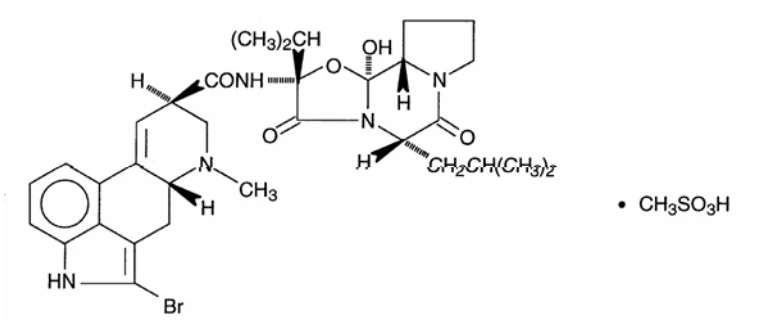
Chemical name: 2-bromo-α-ergocryptine mesylate
Molecular formula and molecular mass: C32H40BrN5O5 ●CH4O3S and 750.70 g/mol
Structural formula:
Physicochemical properties:
Description: Bromocriptine mesylate is a grey-tinged, white, or light yellow fine crystalline powder, odourless or with a weak characteristic odour.
Solubility: Insoluble in water, soluble in ethanol, freely soluble in methanol, very slightly soluble in chloroform.
14 CLINICAL TRIALS
14.2 Comparative Bioavailability Studies
A comparative bioavailability study was performed using normal healthy human volunteers. The rate and extent of absorption after a single 7.5 mg dose of BROMOCRIPTINE 2.5 mg tablets and PARLODEL 2.5 mg tablets was measured and compared. The results are summarized as follows:
| Bromocriptine | ParlodelŦ | Percentage of Parlodel | |
|---|---|---|---|
AUCT* (ng·hr/mL) | 5.66 (16) | 5.46 (23) | 103.7 |
AUCI* (ng·hr/mL) | 7.00 (15) | 6.72 (22) | 104.2 |
Cmax* (ng/mL) | 0.99 (14) | 0.99 (16) | 100.0 |
Tmax** (hr) | 1.18 (0.33) | 1.18 (0.35) | - |
t1/2 ** (hr) | 6.09 (1.00) | 5.95 (1.44) | - |
* Geometric means (CV)
** Arithmetic means (SD)
Ŧ Parlodel (Sandoz) from a Canadian pharmacy
A second bioavailability study was performed using normal healthy human volunteers. The rate and extent of absorption after a single 10 mg dose of BROMOCRIPTINE 5 mg capsules and PARLODEL 5 mg capsules was measured and compared. The potency corrected results are summarized as follows:
| Bromocriptine | ParlodelŦ | Ratio of Geometric Means (%) | |
|---|---|---|---|
AUCT (pg·hr/mL) | 511* 586 (51)** | 514* 582 (47)** | 99 |
AUCI (pg·hr/mL) | 618* 696 (48)** | 610* 672 (43)** | 101 |
Cmax (pg/mL) | 208* 224 (39)** | 207* 227 (46)** | 100 |
Tmax (hr) | 1.39 (34)** | 1.29 (43)** | - |
t 1/2 (hr) | 2.44 (65)** | 2.21 (53)** | - |
* Geometric means
** Arithmetic means (CV)
Ŧ Parlodel (Sandoz) from a Canadian pharmacy
Note: The two summary tables simply serve as a convenient way of comparing the bioavailability of BROMOCRIPTINE and Parlodel within each study, not between studies. Due to advancement of analytical technology, the radioimmunoassay used in the capsule study for measuring plasma drug concentrations is evidently more selective and sensitive than the one used in the tablet study. This results in differences in observed pharmacokinetic parameter values between the two studies. Therefore, the results from these two studies should not be used as a basis for dose adjustment when switching between tablets and capsules.
15 MICROBIOLOGY
No microbiological information is required for this drug product.
16 NON-CLINICAL TOXICOLOGY
General Toxicology: Acute Toxicity Studies:
| LD50 (mg/kg ± SD) | ||||||
| i.v. | p.o. | |||||
| Mouse | 190 ± 9.3 | 2620 ± 604 | ||||
| Rat | 72 ± 3.5 | ~2000 | ||||
| Rabbit | 12.5 ± 3.6 | ~1000 | ||||
It was possible to calculate an oral LD50 only for mice, and even here the limits of confidence had to be extrapolated since at the highest dose that it was possible to administer, mortality was only 80%. In rats and rabbits, no deaths occurred at the highest dose possible (2000 and 1000 mg/kg respectively).
Chronic Toxicity Studies
Rats: Bromocriptine, mixed in food, was given to rats at dose levels of 5, 20 and 82 mg/kg/day for 53 weeks. At the 5 mg level, no in-life drug effects were noted, but postmortem revealed increased adrenal weights and decreased pituitary weights in females. An increase in the number of cystic follicles with decreased luteal tissue in the ovaries was associated with some squamous metaplasia of the endometrium and indicated a drug effect on the pituitary gonadotrophic axis resulting in a picture of estrogen dominance. Similar endometrial changes were observed at the two higher dose levels but were more pronounced.
A subsequent two-year toxicity study in rats showed that bromocriptine treatment at doses of 1.7 to 44 mg/kg/day again caused endometrial squamous metaplasia, and that malignant neoplasms of the endometrium and myometrium occurred in a few animals. In aging female rats, the cyclicity of reproductive function is lost due to hypothalamic changes in the presence of responsive ovaries, and one of two stable conditions result: pseudopregnancy (progesterone dominance), which is a prolactin-dependent state, or continuous estrus (estrogen dominance), which occurs because of ovulation failure. The former is obviously prevented from occurring by the prolactin-inhibitory action of bromocriptine, so that nearly all bromocriptine-treated rats are brought to a continuous estrus. Both the metaplastic and the neoplastic endometrial changes are directly related to a situation of unopposed estrogen dominance peculiar to this species, and did not occur in similar studies carried out in the mouse and dog.
Dogs: Bromocriptine was given in gelatin capsules once daily to dogs 7 days a week for 62 weeks. Initial doses were small (0.1 mg/kg/day) because of emesis, but were escalated for the first ten weeks until dose levels of 1, 3 and 10 mg/kg/day were obtained and subsequently maintained for 52 weeks. During full dosage the following effects were observed: slight mydriasis, slight sedation, superficial epithelial necrosis of dependent ear margins characteristic of overdosage with ergot derivatives in dogs with low-hanging external ears, small cystic follicles and poorly formed or cystic corpora lutea in the ovaries, morphological evidence of thyroid hyperactivity, as well as non-specific pathologic changes in various organs. The above changes are all considered to be an expression of exaggerated pharmacodynamic effects. The macroscopic and microscopic appearance of the uteri of treated dogs was completely normal.
Monkeys: Bromocriptine was also given as a suspension by gavage to Rhesus monkeys, 7 days a week, for 13 weeks at doses of 2, 8 and 32 mg/kg/day. At the low and mid-dose levels, neither in-life examinations nor postmortem studies revealed drug related effects. At the high dose level of 32 mg/kg/day some swollen basophils in the anterior pituitaries of 2/4 monkeys were found. No specific toxic effects of bromocriptine emerged in this study. Eight mg/kg/day can be regarded as an oral non-toxic effect level for the Rhesus monkey.
Carcinogenicity:
Bromocriptine has been subjected to prolonged toxicity studies (life time in rats and mice, 62 weeks in dogs, 13 weeks in primates) – (See 16 NON-CLINICAL TOXICOLOGY, General Toxicology).
Genotoxicity:
Mutagenicity: Bromocriptine has been tested in the following systems: The Ames test, using Salmonella typhimurium bacteria; micronucleus test in mice, the dominant lethal test in male mice and a cytogenetic analysis of Chinese hamster bone marrow cells (all tests for chromosome damaging potential). In none of these test systems did bromocriptine prove to be mutagenic.
Reproductive and Developmental Toxicology:
Teratology: Bromocriptine was given to pregnant rats at 3, 10 and 30 mg/kg/day from days 6 to 15 and 6 to 18 postcoitum, administered in 2% gelatin by gavage. Bromocriptine demonstrated no embryolethal or teratogenic effect at any of the dose levels used. When the drug was given during the period of implantation, inhibition of implantation was observed with 10 and 30 mg/kg/day. Because this effect was not observed when the drug was administered later, it is most probably attributable to the prolactin-inhibiting action of bromocriptine in this species.
Bromocriptine was given to pregnant rabbits at 3, 10, 30 and 100 mg/kg/day for days 16 to 18 postcoitum, administered in 2% gelatin by gavage. Two additional doses of 300 and 1000 mg/kg/day were given to characterize the toxic effects of bromocriptine on pregnant females, so that findings in the fetuses could be set in relation to maternal toxicity. Doses of 3 and 10 mg/kg/day were well tolerated by the dams whereas higher doses were toxic. Only at doses which produced maternal toxicity did questionable increases in prenatal mortality and the incidence of fetal abnormalities occur. It is concluded that bromocriptine does not exert any embryolethal or teratogenic activity in the rabbit when given in non-toxic doses. Female rats were given bromocriptine orally at doses of 1 and 3 mg/kg/day during the entire test period. After 14 days they were mated. Half of the animals were killed 13 days post-coitum; the other half were allowed to deliver and rear their offspring until 21 days postpartum. Bromocriptine was found to have no effects on the fertility of the dams, embryonic development or postnatal viability of the offspring.
Special Toxicology:
Information is not available.
Juvenile Toxicity:
Information is not available.