


Product Monograph - Neupro
Recent Major Label Changes
| None at the time of the most recent authorization |
|---|
Table of Contents
Certain sections or subsections that are not applicable at the time of the preparation of the most recent authorized product monograph are not listed.
Recent Major Label Changes ................................................................................................... 2
Table of Contents ................................................................................................................... 2
Part 1: Healthcare Professional Information ........................................................................... 4
- 1.
Indications ....................................................................................................................... 4
1.1. Pediatrics .................................................................................................................. 4
1.2. Geriatrics .................................................................................................................. 4
- 2. Contraindications ............................................................................................................ 4
- 3. Serious Warnings and Precautions Box ............................................................................ 4
- 4.
Dosage and Administration ............................................................................................. 5
4.1. Dosing Considerations .............................................................................................. 5
4.2. Recommended Dose and Dosage Adjustment ......................................................... 5
4.2.1. Discontinuing Treatment ................................................................................. 6
4.4. Administration .......................................................................................................... 6
4.5. Missed Dose ............................................................................................................. 7
- 5. Overdose ......................................................................................................................... 7
- 6. Dosage Forms, Strengths, Composition, and Packaging ................................................... 7
- 7.
Warnings and Precautions ............................................................................................... 9
Cardiovascular ...................................................................................................................... 9
Neurologic .......................................................................................................................... 10
Ophthalmologic .................................................................................................................. 11
Perioperative Considerations ............................................................................................. 11
Psychiatric ........................................................................................................................... 11
Sensitivity/Resistance ......................................................................................................... 12
Skin ..................................................................................................................................... 13
7.1. Special Populations ................................................................................................ 13
7.1.1. Pregnancy ...................................................................................................... 13
7.1.2. Breastfeeding ................................................................................................ 14
7.1.3. Pediatrics ....................................................................................................... 14
7.1.4. Geriatrics ....................................................................................................... 14
- 8.
Adverse Reactions ......................................................................................................... 14
8.1. Adverse Reaction Overview .................................................................................... 14
8.2. Clinical Trial Adverse Reactions .............................................................................. 14
8.5. Post-Market Adverse Reactions ............................................................................. 21
- 9.
Drug Interactions ........................................................................................................... 22
9.2. Drug Interactions Overview .................................................................................... 22
9.3. Drug-Behaviour Interactions .................................................................................. 22
9.4. Drug-Drug Interactions ........................................................................................... 22
9.5. Drug-Food Interactions........................................................................................... 23
9.6. Drug-Herb Interactions ........................................................................................... 23
9.7. Drug-Laboratory Test Interactions ......................................................................... 23
- 10.
Clinical Pharmacology ................................................................................................... 23
10.1. Mechanism of Action .............................................................................................. 23
10.2. Pharmacodynamics ................................................................................................ 23
10.3. Pharmacokinetics ................................................................................................... 24
- 11. Storage, Stability, and Disposal ...................................................................................... 26
- 12. Special Handling Instructions ......................................................................................... 26
Part 2: Scientific Information ................................................................................................ 27
- 13. Pharmaceutical Information .......................................................................................... 27
- 14.
Clinical Trials .................................................................................................................. 27
14.1. Clinical Trials by Indication ..................................................................................... 27
Parkinson’s Disease ....................................................................................................... 27
Restless Leg Syndrome .................................................................................................. 31
- 16. Non-Clinical Toxicology .................................................................................................. 35
Patient Medication Information ........................................................................................... 38
Part 1: Healthcare Professional Information
1. Indications
NEUPRO (rotigotine) is indicated in adults (≥18 year of age) for:
- The treatment of the signs and symptoms of idiopathic Parkinson’s disease. NEUPRO may be used both as early therapy, without concomitant levodopa, and as an adjunct to levodopa.
- The symptomatic treatment of moderate to severe idiopathic Restless Legs Syndrome (RLS)
1.1. Pediatrics
The safety and efficacy of NEUPRO have not been studied in children less than 18 years of age, therefore NEUPRO is not recommended in this patient population (see 7 Warnings and Precautions, Special Populations, Pediatrics).
1.2. Geriatrics
Patients above the age of 65 were included in the clinical trials for NEUPRO. NEUPRO dosing can be titrated in the normal manner but may be individualized to accommodate advanced age and potential age-related comorbidity.
2. Contraindications
- Hypersensitivity to the active substance or to any of the excipients. For a complete listing, see 6 Dosage Forms, Strengths, Composition, and Packaging.
3. Serious Warnings and Precautions Box
Sudden Onset of Sleep
Patients receiving treatment with NEUPRO (rotigotine) and other dopaminergic agents have reported suddenly falling asleep while engaged in activities of daily living, including operating a motor vehicle, which has sometimes resulted in accidents. Although some of the patients reported somnolence while on NEUPRO, others perceived that they had no warning signs, such as excessive drowsiness, and believed that they were alert immediately prior to the event.
Physicians should alert patients of the reported cases of sudden onset of sleep, bearing in mind that these events are NOT limited to initiation of therapy. Patients should also be advised that sudden onset of sleep has occurred without warning signs. If drowsiness or sudden onset of sleep should occur, patients should immediately contact their physician.
Until further information is available on the management of this unpredictable and serious adverse event, patients should be warned not to drive or engage in other activities where impaired alertness could put themselves and others at risk of serious injury or death (e.g., operating machines). Episodes of falling asleep while engaged in activities of daily living have also been reported in patients taking other dopaminergic agents, therefore, symptoms may not be alleviated by substituting these products.
Currently, the precise cause of this event is unknown. It is known that patients with Parkinson's disease and Restless Legs Syndrome experience alterations in sleep architecture, which results in excessive daytime sleepiness or spontaneous dozing, and that dopaminergic agents can also induce sleepiness.
4. Dosage and Administration
4.1. Dosing Considerations
NEUPRO (rotigotine) is applied once a day.
NEUPRO should be initiated at a low dose and titrated up gradually to clinical tolerability to obtain the optimum therapeutic effect.
The patch should be applied at approximately the same time every day, but at a different location on the abdomen, shoulder, upper arm, thigh, hip, or flank. The patch remains on the skin for 24 hours and is then to be replaced by a new one at a different site of application. The used patches should be disposed of securely.
4.2. Recommended Dose and Dosage Adjustment
Dosage
The dose recommendations made are in nominal dose.
Parkinson’s disease
Dosing in patients with early-stage Parkinson’s disease:
A single daily dose should be initiated at 2 mg/24h and then increased in weekly increments of 2 mg/24h to an effective dose up to a maximal dose of 8 mg/24h.
In some patients, 4 mg/24h may be an effective dose. For most patients an effective dose is reached within 3 or 4 weeks at doses of 6 mg/24h up to a maximal dose of 8 mg/24h, respectively. When necessary, back titration is recommended in 2 mg/24h steps every 2 days.
Dosing in patients with advanced-stage Parkinson’s disease:
A single daily dose should be initiated at 4 mg/24h and then increased in weekly increments of 2 mg/24h to an effective dose up to a maximal dose of 16 mg/24h.
In some patients, 4 mg/24h or 6 mg/24h may be effective doses. For most patients an effective dose is reached within 3 to 7 weeks at doses of 8 mg/24h up to a maximum dose of 16 mg/24h. When necessary, back titration is recommended in 2 mg/24h steps every 2 days.
For doses higher than 8 mg/24h multiple patches may be used to achieve the final dose (e.g. 10 mg/24h may be reached by combination of a 6 mg/24h and a 4 mg/24h patch).
Restless Legs Syndrome
A single daily dose should be initiated at 1 mg/24h. Depending on the individual response, the dose may be increased in weekly increments of 1 mg/24h up to a maximal dose of 3 mg/24h. When necessary, back titration is recommended in 1 mg/24h steps every 2 days.
4.2.1. Discontinuing Treatment
Parkinson’s Disease
The dose of NEUPRO should be tapered, when treatment discontinuation is necessary. The daily dose should be reduced in steps of 2 mg/24h with a dose reduction preferably every other day, until complete discontinuation of NEUPRO. Prior to tapering or discontinuation, patients should be informed about potential withdrawal symptoms and closely monitored thereafter (see 7 Warnings and Precautions, Neurologic, Neuroleptic Malignant Syndrome and 7 Warnings and Precautions, Psychiatric, Dopamine agonist withdrawal syndrome).
Restless Legs Syndrome
The dose of NEUPRO should be tapered, when treatment discontinuation is necessary. The daily dose should be reduced in steps of 1 mg/24h with a dose reduction preferably every other day, until complete discontinuation of NEUPRO. Prior to tapering or discontinuation, patients should be informed about potential withdrawal symptoms and closely monitored thereafter (see 7 Warnings and Precautions, Neurologic, Neuroleptic Malignant Syndrome and 7 Warnings and Precautions, Psychiatric, Dopamine agonist withdrawal syndrome).
Special Populations
Hepatic impairment
Adjustment of the dose is not necessary in patients with mild to moderate hepatic impairment. NEUPRO has not been investigated in patients with severe hepatic impairment (see 10 Clinical Pharmacology, Pharmacokinetics, Special Populations and Conditions, Hepatic Insufficiency).
Renal impairment
Adjustment of the dose is not necessary in patients with mild to severe renal impairment including those requiring dialysis (see 10 Clinical Pharmacology, Pharmacokinetics, Special Populations and Conditions, Renal Insufficiency). For patients with severe renal impairment, exposure to the inactive conjugates of rotigotine is doubled based on single-dose studies, while rotigotine exposure remains comparable to subjects without renal impairment. Rotigotine is not eliminated through dialysis.
Pediatrics
The safety and efficacy of NEUPRO have not been studied in children less than 18 years of age, therefore NEUPRO is not recommended in this patient population (see 1 Indications, Pediatrics and 7 Warnings and Precautions, Special Populations, Pediatrics).
4.4. Administration
The NEUPRO transdermal system should be applied to clean, dry, intact healthy skin on the abdomen, thigh, hip, flank, shoulder, or upper arm. Reapplication to the same site within 14 days should be avoided. NEUPRO should not be placed on skin that is red, irritated or damaged (see 7 Warnings and Precautions, Skin, Application Site Reactions).
Use and handling
Each NEUPRO transdermal system is packed in a pouch and should be applied directly after the pouch has been opened. One half of the release liner should be removed and the sticky side should be applied and pressed firmly to the skin. Then, the patch is folded back and the second part of the release liner is removed. The sticky side of the patch should not be touched. The patch should be pressed down firmly with the palm of the hand for 30 seconds, so that it sticks well.
The patch should not be cut into pieces as a way to achieve dose reduction.
4.5. Missed Dose
If the patient forgets to change the patch at the usual time of the day the change should be carried out and a new patch should be applied for the remainder of the 24 hour dosing interval.
In the event that a patch should fall off, a new patch should be applied for the remainder of the 24 hour dosing interval.
5. Overdose
Symptoms
The most likely adverse reactions would be those related to the pharmacodynamic profile of a dopamine agonist, including nausea, vomiting, hypotension, involuntary movements, hallucinations, confusion, convulsions and other signs of central dopaminergic stimulation.
Management
There is no known antidote for overdose of dopamine agonists. In case of suspected overdose, the NEUPRO (rotigotine) transdermal system(s) should be removed. After removal of the NEUPRO transdermal system(s), the drug input is stopped and the plasma concentration of rotigotine decreases rapidly. The patient should be monitored closely, including heart rate, heart rhythm and blood pressure. Treatment of overdose may require general supportive measures to maintain the vital signs. Dialysis would not be expected to be beneficial as rotigotine is not eliminated by dialysis.
If it is necessary to discontinue NEUPRO, this should be done gradually to prevent neuroleptic malignant syndrome (see 7 Warnings and Precautions, Neurologic, Neuroleptic Malignant Syndrome and 4 Dosage and Administration, Recommended Dose and Dosage Adjustment, Treatment Discontinuation).
For the most recent information in the management of a suspected drug overdose, contact your regional poison control centre or Health Canada’s toll-free number, 1-844 POISON-X (1-844-764-7669).
- 6. Dosage Forms, Strengths, Composition, and Packaging
Table 1 - Dosage Forms, Strengths, and Composition
| Route of Administration | Dosage Form/ Strength/Composition | Non-Medicinal Ingredients |
| Transdermal use | NEUPRO (rotigotine) patch: | Backing layer: |
Description
NEUPRO (rotigotine) is a transdermal patch that provides rotigotine, a non-ergolinic dopamine agonist. When applied to intact skin, NEUPRO is designed to continuously deliver rotigotine over a 24 hour period.
NEUPRO is available in six strengths: 1 mg/24h, 2 mg/24h, 3 mg/24h, 4 mg/24h, 6 mg/24h, and 8 mg/24h. Each transdermal system has a release surface area of 5, 10, 15, 20, 30, and 40 cm2 and contains 2.25, 4.5, 6.75, 9.0, 13.5, and 18.0 mg rotigotine, respectively. The composition of the transdermal patch per area unit is identical.
The patches are imprinted with “Neupro 1 mg/24h”, “Neupro 2 mg/24h”, “Neupro 3 mg/24h”, “Neupro 4 mg/24h”, “Neupro 6 mg/24h” or “Neupro 8 mg/24h”.
Components and Structure
NEUPRO is a thin, matrix-type square-shaped with rounded edges, transdermal patch composed of three layers:
- 1. Flexible beige to light brown coloured backing layer, which is printed with an identification mark
- 2. Self adhesive, drug-loaded silicone matrix
- 3. Release liner
| Route of Administration | Dosage Form/ Strength/Composition | Non-Medicinal Ingredients | |
| Six strengths delivering a nominal dose per 24 hours and containing rotigotine per patch as follows: | |||
| NEUPRO Nominal Dose | Rotigotine Content per Patch | NEUPRO Patch Size |
|---|---|---|
| 1 mg/24 hours | 2.25 mg | 5 cm2 |
| 2 mg/24 hours | 4.5 mg | 10 cm2 |
| 3 mg/24 hours | 6.75 mg | 15 cm2 |
| 4 mg/24 hours | 9 mg | 20 cm2 |
| 6 mg/24 hours | 13.5 mg | 30 cm2 |
| 8 mg/24 hours | 18 mg | 40 cm2 |
Polyester film, siliconized, aluminized, colour coated with a pigment (titanium dioxide (E171), pigment yellow 95, pigment red 166) layer and imprinted (pigment red 144, pigment yellow 95, pigment black 7). Self adhesive drug-loaded silicone matrix layer: Ascorbyl palmitate (E304), DL-alpha tocopherol (E307), poly(dimethylsiloxane, trimethylsilyl silicate)-copolymerisate, Povidone K90 and sodium metabisulfite (E223). Release liner: Transparent fluoropolymer coated polyester film. |
Packaging
Each transdermal patch is packaged in a separate pouch.
Each strength is available in cartons of 7, 20, 28, 30, 42, 50, 84 (2 x 42), 100 (2 x 50), 56, 60, or 90 transdermal patches.
7. Warnings and Precautions
See 3 Serious Warnings and Precautions Box.
Cardiovascular
Cardiopulmonary: Fibrotic complications
Cases of retroperitoneal fibrosis, pulmonary infiltrates, pleural effusion, pleural thickening, pericarditis and cardiac valvulopathy have been reported in some patients treated with ergot-derived dopaminergic agents. While these complications may resolve when the drug is discontinued, complete resolution does not always occur.
Although these adverse events are believed to be related to the ergoline structure of these compounds, whether other, non-ergot derived dopamine agonists can cause them is unknown.
Elevation of Blood Pressure and Heart Rate
Some patients treated with NEUPRO exhibited moderately severe increases in systolic blood pressure (> 180 mm Hg) and/or in diastolic blood pressure (> 105 mm Hg) while supine and/or standing. In patients with advanced-stage Parkinson's disease, there was an increased incidence of increased systolic blood pressure > 180 mm Hg and increased diastolic blood pressure > 105 mm Hg in patients treated with NEUPRO compared to patients treated with placebo. In patients with Restless Legs Syndrome, there was an increased incidence of increased diastolic blood pressure > 105 mm Hg in patients treated with NEUPRO compared to patients treated with placebo.
Mild-moderate increases in systolic blood pressure (> 20 mm Hg) and in diastolic blood pressure (> 10 mm Hg) and more severe increases in systolic blood pressure (> 40 mm Hg) and in diastolic blood pressure (> 20 mm Hg) occurred more frequently in all patients (i.e., early and advanced-stage Parkinson's disease and Restless Legs Syndrome) treated with NEUPRO compared to patients treated with placebo. These increases in systolic and diastolic blood pressure were observed when supine, standing, and changing from supine to standing position. Some threshold increases in blood pressure appeared to be dependent on the dose of NEUPRO and were also observed at the final study visit.
In the placebo-controlled trials, there was an increased incidence of hypertension as an adverse event in patients treated with NEUPRO for advanced-stage Parkinson's disease (NEUPRO 2.9% versus placebo 1.9%) and for Restless Legs Syndrome (NEUPRO 2.3% versus placebo 0.0%).
Some patients with advanced-stage Parkinson's disease and Restless Legs Syndrome treated with NEUPRO exhibited moderately increased pulse-rate (> 100 beats per minute) while supine and/or standing compared to patients treated with placebo.
These findings of blood pressure and heart rate elevations should be considered in patient follow-ups, especially when treating patients with cardiovascular disease.
Orthostatic Hypotension
Dopaminergic agonists, including NEUPRO, appear to impair the systemic regulation of blood pressure, resulting in postural/orthostatic hypotension, especially during dose escalation. Parkinson's disease and Restless Legs Syndrome patients being treated with dopaminergic agonists require careful monitoring for signs and symptoms of postural hypotension, especially during dose escalation, and should be informed of this risk. Particular caution is recommended in patients with Parkinson's disease because of an impaired capacity to respond to postural challenge (see 10 Clinical Pharmacology, Pharmacodynamics, Electrocardiography and Orthostatic Hypotension).
Syncope
Dopamine agonists, including NEUPRO, have been associated with syncope. Particular caution is advised in patients with a history of orthostatic hypotension, syncope, or severe cardiovascular disease. In clinical trials with NEUPRO, syncope has been observed at a rate that was similar to that observed in patients treated with placebo. Because patients with clinically relevant cardiovascular disease were excluded in these studies, patients with severe cardiovascular disease should be asked about symptoms of syncope and pre-syncope.
Fluid Retention and Weight Gain
In the placebo-controlled clinical trial database, peripheral edema was reported at a higher incidence in patients with Parkinson’s disease and Restless Legs Syndrome treated with NEUPRO. The incidence increased to 12.4 – 18.7% in long-term open-label studies for patients with Parkinson’s disease and 2.6% in long-term open-label studies for patients with Restless Legs Syndrome.
Patients taking NEUPRO for Parkinson’s disease had a higher incidence of substantial weight gain (more than 10% of baseline weight) than patients taking placebo. This weight gain was frequently associated with the development of peripheral edema in patients with Parkinson’s disease, suggesting that NEUPRO may cause substantial fluid retention in some Parkinson’s patients. Although the weight gain was usually well-tolerated in patients observed in the Parkinson’s clinical studies, it could cause greater difficulty in patients who may be especially vulnerable to negative clinical consequences from fluid retention such as those with significant congestive heart failure or renal insufficiency.
Neurologic
Augmentation
Augmentation is a worsening of Restless Legs Syndrome symptoms during treatment, leading to an increase in overall symptom severity or earlier time of symptom onset each day compared to before initiation of treatment. Dopaminergic medicinal products, including NEUPRO, may result in augmentation. Based on two 6-month, double-blind, placebo-controlled phase 3 Restless Legs Syndrome studies, clinically relevant augmentation was observed in 1.5% of NEUPRO-treated patients versus 0.5% of placebo-treated patients. In two open-label, follow-up studies over a subsequent 12 months, the rate of clinically relevant augmentation was 2.9%. None of these patients discontinued therapy because of augmentation. Analysis of a 5-year open-label treatment study showed that augmentation occurred in 11.9% of patients treated with the approved dosages for RLS (1-3 mg/24 h), and that 5.1% were considered clinically significant. The majority of augmentation episodes occurred in the first and second years of treatment.
Dyskinesia
NEUPRO may potentiate the dopaminergic side effects of levodopa and may cause and/or exacerbate pre-existing dyskinesia. The incidence of dyskinesia in patients with advanced-stage Parkinson’s disease (i.e. receiving concomitant levodopa) was higher in patients treated with NEUPRO than in those treated with placebo and this incidence increased with increasing dose. There was also an increase in discontinuation from the study because of dyskinesia for these same patients treated with NEUPRO.
Neuroleptic Malignant Syndrome
Symptoms resembling neuroleptic malignant syndrome have been reported with abrupt withdrawal of dopaminergic therapy. Therefore, it is recommended to taper treatment during treatment discontinuation (see 4 Dosage and Administration, Recommended Dose and Dosage Adjustment, Treatment Discontinuation).
Rebound
Rebound, an exacerbation of Restless Legs Syndrome symptoms, is considered to be an end of dose effect, related to the half-life of the therapeutic agent. Reports in the published literature indicate discontinuation or wearing off of dopaminergic medications can result in rebound. In placebo-controlled trials and long-term open-label studies, rebound was not reported.
Ophthalmologic
Retinal Pathology: Albino rats
Retinal degeneration was observed in rats. The potential significance of this effect in humans has not been established, but cannot be disregarded because disruption of a mechanism that is universally present in vertebrates (i.e., disk shedding) may be involved (See 16 Non-Clinical Toxicology, Special Toxicology).
Perioperative Considerations
Studies in patients with Parkinson’s disease and Restless Legs Syndrome undergoing surgery have shown that NEUPRO can be administered in the peri-operative period to provide continuous treatment when oral administration of medication is limited or contraindicated.
Psychiatric
Hallucinations / Abnormal Thinking and Behavior
There was an increased incidence of hallucinations in patients with advanced-stage Parkinson's disease treated with NEUPRO (4.0%) compared with patients treated with placebo (1.3%) and this incidence increased with increasing dose. Hallucinations were of sufficient severity to cause a higher incidence of discontinuation of treatment (mainly during the dose escalation/titration period) in advanced-stage Parkinson’s disease patients treated with NEUPRO (1.7%) compared with placebo-treated patients (<0.5%). Hallucinations have also been reported in post-marketing reports.
Post-marketing reports indicate that patients may experience new or worsening mental status and behavioral changes, which may be severe, including psychotic-like behavior during NEUPRO treatment or after starting or increasing the dose of NEUPRO. Other drugs prescribed to improve the symptoms of Parkinson’s disease can have similar effects on thinking and behavior. This abnormal thinking and behavior can consist of one or more of a variety of manifestations including paranoid ideation, delusions, hallucinations, confusion, psychotic-like behavior, disorientation, aggressive behavior, agitation, and delirium. These various manifestations of psychotic-like behavior were also observed during the clinical development of NEUPRO for early and advanced-stage Parkinson's disease and Restless Legs Syndrome.
Patients with a major psychotic disorder should not be treated with NEUPRO because of the risk of exacerbating psychosis. In addition, certain medications used to treat psychosis may exacerbate the symptoms of Parkinson's disease and may decrease the effectiveness of NEUPRO (see 9 Drug Interactions, Drug-Drug Interactions).
Impulse Control and other related Disorders
Impulse control disorders including compulsive behaviours such as intense urges to gamble, increased sexual urges, intense urges to spend money, binge eating, compulsive eating, punding and/or other intense urges have been reported in Parkinson’s disease and Restless Legs Syndrome patients treated with dopamine agonists, including NEUPRO. In some patients, dopamine dysregulation syndrome, an intense desire or drive to take more medication than is necessary, was observed during treatment with rotigotine. Because patients may not recognize these behaviors as abnormal, it is important for physicians to specifically ask patients and caregivers to identify new behaviour patterns. If a patient develops such urges while taking NEUPRO, physicians should consider dose reduction or stopping the medication based on the patient’s response and potential withdrawal symptoms (see 7 Warnings and Precautions, Psychiatric, Dopamine agonist withdrawal syndrome). The incidence of compulsive-impulsive behaviours is lower in Restless Legs Syndrome patients treated with NEUPRO than in Parkinson’s disease patients treated with NEUPRO.
In the NEUPRO clinical trial safety database, the incidence of reported compulsive-impulsive behaviours was higher in patients treated with NEUPRO compared with patients treated with placebo. The incidence increased in long-term open-label studies (see 8 Adverse Reactions, Other Clinical Trial Adverse Events, Impulse control disorders).
Dopamine agonist withdrawal syndrome (DAWS)
A drug withdrawal syndrome has been reported during tapering or after discontinuation of dopamine agonists including rotigotine. Limited data suggest that patients with impulse control disorders and those receiving high daily dose and/or high cumulative doses of a dopamine agonist (DA) may be at higher risk for developing DAWS. Withdrawal symptoms do not respond to levodopa, and may include apathy, anxiety, depression, fatigue, sweating, panic attacks, insomnia, irritability and pain. Prior to discontinuation, patients should be informed about potential withdrawal symptoms, and closely monitored during tapering and after discontinuation. In case of severe withdrawal symptoms, temporary re-administration of NEUPRO at the lowest effective dose to manage these symptoms may be considered.
Sensitivity/Resistance
Sulfite Sensitivity
NEUPRO contains sodium metabisulfite, a sulfite that may cause allergic-type reactions including anaphylactic symptoms and life threatening or less severe asthmatic episodes in certain susceptible people. The overall prevalence of sulfite sensitivity in the general population is unknown. Sulfite sensitivity is seen more frequently in asthmatic than in nonasthmatic people.
Skin
Application Site Reactions
Application site skin reactions may occur and are usually mild or moderate in intensity. It is recommended that the application site be rotated on a daily basis. The same site should not be used within 14 days. If application site reactions occur which last for more than a few days or are persistent, if there is an increase in severity, or if the skin reaction spreads outside the application site, an assessment of the risk/benefit balance for the individual patient should be conducted.
If there is a skin rash or irritation from the transdermal system, direct sunlight on the area should be avoided until the skin heals. Exposure could lead to changes in the skin color.
If a generalized skin reaction associated with the use of NEUPRO is observed, NEUPRO should be discontinued.
Heat Application
The effect of application of heat to the NEUPRO transdermal system has not been studied in vivo. However, heat application has been shown to increase absorption several fold with other transdermal products, and in in vitro release studies with the NEUPRO transdermal system. Patients should be advised to avoid exposing the applied NEUPRO transdermal system to external sources of direct heat, such as heating pads or electric blankets, heat lamps, saunas, hot tubs, heated water beds, and prolonged direct sunlight.
Magnetic Resonance Imaging and Cardioversion
The backing layer of NEUPRO contains aluminum. To avoid skin burns, NEUPRO should be removed if the patient has to undergo magnetic resonance imaging (MRI) or cardioversion.
Melanoma
Epidemiological studies have shown that patients with Parkinson’s disease have a higher risk (approximately 6-fold higher) of developing melanoma than the general population. Whether the increased risk observed was due to Parkinson’s disease or other factors, such as drugs used to treat Parkinson’s disease, is unclear. Although no cases of melanoma were reported during the placebo-controlled studies, six cases (0.3%) were reported during long-term open-label studies for NEUPRO in patients with Parkinson’s disease.
For the reasons stated above, patients and providers are advised to monitor for melanomas frequently and on a regular basis when using NEUPRO for any indication. Ideally, periodic skin examinations should be performed by appropriately qualified individuals (e.g., dermatologists).
7.1. Special Populations
7.1.1. Pregnancy
NEUPRO is not recommended during pregnancy as there are no adequate data from the use of NEUPRO in pregnant women. In studies conducted in mice, rats, and rabbits, rotigotine was shown to have adverse effects on embryo-fetal development when administered during pregnancy at doses similar to or lower than those used clinically (see 16 Non-Clinical Toxicology, Reproductive and developmental toxicology).
7.1.2. Breastfeeding
NEUPRO is not recommended during breastfeeding. Should NEUPRO therapy be considered necessary, breastfeeding should be discontinued. Because rotigotine decreases prolactin secretion in humans, inhibition of lactation is expected. Studies in rats have shown that rotigotine and/or its metabolite(s) are excreted in breast milk.
7.1.3. Pediatrics
The safety and efficacy of NEUPRO have not been studied in children less than 18 years of age, therefore NEUPRO is not recommended in this patient population.
7.1.4. Geriatrics
No overall differences in plasma levels of rotigotine were observed between patients who were 65 to 80 years old compared with younger patients approximately 40 to 64 years of age, receiving the same NEUPRO doses. Although not studied, exposures in older subjects (>80 years) may be higher due to skin changes with aging (see 10 Clinical Pharmacology, Pharmacokinetics, Special Populations and Conditions, Geriatrics). Mild to moderate renal impairment has little effect on the pharmacokinetics of rotigotine.
Of subjects treated with NEUPRO in clinical studies for the treatment of Parkinson’s disease, approximately 50% were 65 years old and older, and approximately 11% were 75 and older. Among subjects treated with NEUPRO in clinical studies for the treatment of Restless Legs Syndrome, 26% were 65 years and older. In clinical trials, a titration period was included to initiate NEUPRO treatment at a low dose and titrate up gradually to clinical tolerability to obtain the optimum therapeutic effect.
8. Adverse Reactions
8.1. Adverse Reaction Overview
Treatment emergent adverse events (TEAEs) reported in more than 10% of patients treated with NEUPRO (rotigotine) transdermal system for Parkinson’s disease included nausea, vomiting, dizziness, somnolence, application site reactions and headache. Treatment emergent adverse events reported in more than 10% of patients treated with NEUPRO (rotigotine) transdermal system for Restless Legs Syndrome, included nausea, application site reactions, fatigue and headache.
At the beginning of therapy, dopaminergic adverse reactions such as nausea and vomiting may occur. In clinical trials, these adverse reactions had a higher incidence during titration than during maintenance treatment. These adverse reactions are usually mild or moderate in intensity and transient even if treatment is continued.
In clinical trials, patients were instructed to rotate the application sites. The majority of the application site reactions were mild or moderate in intensity and were limited to the application areas.
8.2. Clinical Trial Adverse Reactions
Clinical trials are conducted under very specific conditions. Therefore, the frequencies of adverse reactions observed in the clinical trials may not reflect frequencies observed in clinical practice and should not be compared to frequencies reported in clinical trials of another drug.
Incidence of Treatment Emergent Adverse Events in Controlled Clinical Trials in Early-Stage Parkinson’s disease
The safety of NEUPRO was evaluated in 649 patients with early-stage Parkinson’s disease in three double-blind, placebo-controlled trials with durations of 3 to 9 months. These trials included one fixed-dose, dose-response double-blind, placebo-controlled phase 2 trial and two flexible-dose, double-blind, placebo-controlled phase 3 trials. Patients received NEUPRO doses ranging from 2 mg/24h to 8 mg/24h or placebo once daily.
The most commonly observed treatment emergent adverse events (incidence ≥5%) that appeared more frequently in the NEUPRO groups than in the placebo groups were nausea, application and instillation site reactions, somnolence, dizziness, headache, vomiting, fatigue, insomnia, peripheral edema and constipation.
Approximately 6.8% of NEUPRO-treated patients reported serious adverse events, versus 5.9% of patients on placebo. The most frequent serious adverse event was application site reactions (0.5% on NEUPRO versus 0.0% on placebo).
Approximately 13% of 649 NEUPRO-treated patients discontinued treatment because of adverse events, compared with 6% of 290 patients who received placebo. The adverse events most commonly causing discontinuation of treatment were: application site reaction, nausea, and vomiting.
Table 2 lists treatment emergent adverse events from the three double-blind, placebo-controlled trials in early-stage Parkinson’s disease that occurred in ≥ 2% of the patients treated with NEUPRO and that were proportionally more frequent than in the placebo group. In these trials, patients did not receive concomitant levodopa.
Table 2 - Incidence (%) of Treatment Emergent Adverse Events in Three Double-Blind, Placebo-Controlled Early-Stage Parkinson’s disease Trials (events in ≥2% of subjects treated with NEUPRO (rotigotine) and numerically more frequent than in the placebo group)
| System Organ Class/Preferred or High Level Term | Placebo N=290 % | Total rotigotine N=649 % | |||
|---|---|---|---|---|---|
| System Organ Class/Preferred or High Level Term | Placebo N=290 % | Total rotigotine N=649 % | |||
| Ear and labyrinth disorders | |||||
| Vertigo | 1.4 | 2.0 | |||
| Gastrointestinal disorders | |||||
| Nausea | 15.5 | 37.3 | |||
| Vomiting | 2.1 | 12.5 | |||
| Constipation | 3.8 | 5.5 | |||
| Diarrhoea | 3.8 | 3.9 | |||
| Dyspepsia | 1.4 | 3.1 | |||
| Dry mouth | 1.7 | 3.1 | |||
| General disorders and administration site conditions | |||||
| Application and instillation site reactionsa | 13.8 | 36.2 | |||
| Fatigue | 6.9 | 7.6 | |||
| Peripheral edema | 5.5 | 5.9 | |||
| Asthenia | 2.1 | 2.2 | |||
| Infections and Infestations | |||||
| Nasopharyngitis | 3.8 | 3.9 | |||
| Urinary tract infection | 1.4 | 2.8 | |||
| Influenza | 0.7 | 2.0 | |||
| Musculoskeletal and connective tissue disorders | |||||
| Back Pain | 4.5 | 4.8 | |||
| Muscle spasms | 1.7 | 3.2 | |||
| Arthralgia | 2.4 | 2.9 | |||
| Nervous system disorders | |||||
| Somnolence | 14.5 | 23.0 | |||
| Dizziness | 10.7 | 17.4 | |||
| Headache | 10.3 | 13.6 | |||
| Psychiatric disorders | |||||
| Insomnia | 3.8 | 7.4 | |||
| Abnormal dreams | 0.3 | 3.5 | |||
| Depression | 2.1 | 2.6 | |||
| Skin and subcutaneous tissue disorders | |||||
| Hyperhidrosis | 2.4 | 3.4 | |||
| Erythema | 1.0 | 2.5 | |||
| Vascular disorders | |||||
| Hypertension | 2.1 | 2.9 | |||
a High Level Term
Dose-Related Adverse Reactions
Many adverse reactions appeared to be dose-related. Dose-related adverse drug reactions included nausea, application site reactions, dizziness, vomiting, somnolence, asthenic conditions (including fatigue and asthenia), insomnia, abnormal dreams, and peripheral edema.
Incidence of Treatment Emergent Adverse Events in Controlled Clinical Trials in Advanced-Stage Parkinson’s disease
The safety of NEUPRO was evaluated in 658 patients with advanced-stage Parkinson’s disease in 3 double-blind, placebo-controlled trials with durations of 3 to 7 months. These trials included one fixed dose, dose-response, double-blind, placebo-controlled phase 2 trial, one fixed-dose, double-blind, placebo-controlled phase 3 trial and one flexible-dose, double-blind, placebo-controlled phase 3 trial. Subjects received concomitant levodopa in these trials. Patients received NEUPRO doses ranging from 4 mg/24h to 16 mg/24h or placebo once daily.
The most commonly observed treatment emergent adverse events (incidence ≥5%) that appeared more frequently in the NEUPRO groups than in the placebo groups were application and instillation site reactions, nausea, somnolence, dyskinesia, dizziness, vomiting, insomnia and peripheral edema.
Approximately 7.4% of NEUPRO-treated patients reported serious adverse events versus 6.9% of patients on placebo. The most frequent serious adverse events included nausea and application site dermatitis (both 0.6% on NEUPRO versus 0.0% on placebo).
Approximately 11% of 658 NEUPRO-treated patients discontinued treatment because of adverse events, compared with 8% of patients who received placebo. The adverse events most commonly causing discontinuation of treatment were: nausea, vomiting, dizziness, and application site reactions.
Table 3 lists treatment emergent adverse events from the three double-blind, placebo-controlled trials in advanced-stage Parkinson’s disease that occurred in ≥ 2% of the patients treated with NEUPRO and that were proportionally more frequent than in the placebo group.
Table 3 - Incidence (%) of Treatment Emergent Adverse Events in Three Double-Blind, Placebo-Controlled Advanced-Stage Parkinson’s disease Trials (events ≥2% of subjects treated with NEUPRO (rotigotine) and numerically more frequent than in the placebo group)
| System Organ Class/Preferred or High Level Term | Placebo N=317 % | Total rotigotine N=658 % | |||
|---|---|---|---|---|---|
| System Organ Class/Preferred or High Level Term | Placebo N=317 % | Total rotigotine N=658 % | |||
| Gastrointestinal disorders | |||||
| Nausea | 14.2 | 22.2 | |||
| Vomiting | 4.4 | 8.8 | |||
| Constipation | 3.5 | 3.8 | |||
| Diarrhoea | 2.8 | 3.5 | |||
| General disorders and administration site conditions | |||||
| Application and instillation site reactionsa | 11.4 | 25.8 | |||
| Peripheral edema | 0.9 | 5.3 | |||
| Asthenia | 1.9 | 2.3 | |||
| Infections and infestations | |||||
| Nasopharyngitis | 2.2 | 3.8 | |||
| Musculoskeletal and connective tissue disorders | |||||
| Arthralgia | 3.2 | 4.4 | |||
| Back Pain | 4.1 | 4.3 | |||
| Muscle spasms | 1.9 | 2.6 | |||
| Nervous system disorders | |||||
| Somnolence | 13.6 | 16.0 | |||
| Dyskinesia | 5.0 | 12.5 | |||
| Dizziness | 7.6 | 11.6 | |||
| Headache | 6.6 | 7.3 | |||
| Psychiatric disorders | |||||
| Insomnia | 5.0 | 6.2 | |||
| Hallucination | 1.3 | 4.0 | |||
| Skin and subcutaneous tissue disorders | |||||
| Rash | 1.6 | 2.6 | |||
| Pruritus | 1.6 | 2.0 | |||
| Vascular disorders | |||||
| Hypertension | 1.9 | 2.9 | |||
a High Level Term
Dose-Related Adverse Reactions
Dose-related adverse drug reactions included application site reactions, somnolence, dizziness, dyskinesia, insomnia, perception disturbances (including hallucinations), headache and peripheral edema.
Incidence of Treatment Emergent Adverse Events in Controlled Clinical Studies in Restless Legs Syndrome
The safety of NEUPRO was evaluated in 748 NEUPRO-treated subjects with Restless Legs Syndrome who participated in 2 fixed-dose, double-blind, placebo-controlled phase 3 trials with maintenance durations of 6 months. Patients received NEUPRO doses ranging from 0.5 mg/24h to 3 mg/24h or placebo once daily.
The most commonly observed treatment emergent adverse events (incidence ≥5%) that appeared more frequently in the NEUPRO groups than in the placebo groups were application and instillation site reactions, nausea, headache, fatigue, nasopharyngitis, somnolence, dizziness, and pruritus.
Approximately 5.6% of NEUPRO-treated patients reported serious adverse events versus 4.1% of patients on placebo. The most frequent serious adverse event was application site and instillation reactions (0.8% on NEUPRO versus 0.0% on placebo).
Approximately 18% of 748 NEUPRO-treated patients discontinued treatment because of adverse events, compared with 6% of patients who received placebo. The adverse events most commonly causing discontinuation of treatment were: application site reactions, dizziness, and nausea.
Table 4 lists treatment emergent adverse events from the two double-blind, placebo-controlled trials in Restless Legs Syndrome that occurred in ≥2% of the patients treated with NEUPRO and that were proportionally more frequent than in the placebo group.
Table 4 - Incidence (%) of Treatment Emergent Adverse Events in Two Double-Blind, Placebo-Controlled Restless Legs Syndrome Phase 3 Trials (events ≥2% of subjects treated with NEUPRO (rotigotine) and numerically more frequent than in the placebo group)
| System Organ Class/Preferred or High Level Term | Placebo N=214 % | Total rotigotine N=748 % | |||
|---|---|---|---|---|---|
| System Organ Class/Preferred or High Level Term | Placebo N=214 % | Total rotigotine N=748 % | |||
| Ear and labyrinth disorders | |||||
| Vertigo | 1.4 | 2.3 | |||
| Gastrointestinal disorders | |||||
| Nausea | 9.3 | 19.3 | |||
| Dry mouth | 3.7 | 4.4 | |||
| Diarrhoea | 4.2 | 4.4 | |||
| Constipation | 3.3 | 3.5 | |||
| Vomiting | 0.9 | 3.3 | |||
| Dyspepsia | 0.9 | 2.1 | |||
| General disorders and administration site conditions | |||||
| Application and instillation site reactionsa | 3.3 | 34.2 | |||
| Fatigue | 7.5 | 10.6 | |||
| Infections and infestations | |||||
| Nasopharyngitis | 7.0 | 7.9 | |||
| Urinary tract infection | 1.9 | 2.4 | |||
| Musculoskeletal and connective tissue disorders | |||||
| Pain in extremity | 1.9 | 2.7 | |||
| Muscle spasms | 1.4 | 2.0 | |||
| Nervous system disorders | |||||
| Headache | 11.2 | 16.7 | |||
| Somnolence | 4.2 | 7.5 | |||
| Dizziness | 5.6 | 6.6 | |||
| Psychiatric disorders | |||||
| Insomnia | 3.3 | 4.4 | |||
| Sleep disorder | 0.9 | 2.1 | |||
| Respiratory, thoracic and mediastinal disorders | |||||
| Cough | 1.9 | 2.0 | |||
| Skin and subcutaneous tissue disorders | |||||
| Pruritus | 3.3 | 5.3 | |||
| Hyperhidrosis | 2.3 | 3.5 | |||
| Vascular disorders | |||||
| Hypertension | 0.0 | 2.3 | |||
a High Level Term
Dose-Related Adverse Reactions
Dose-related adverse drug reactions included application site reactions, nausea and somnolence.
Other Clinical Trial Adverse Events
NEUPRO was administered to 4089 subjects with Parkinson’s disease and Restless Legs Syndrome in placebo-controlled and open-label clinical trials. In addition to the treatment emergent adverse events reported during the clinical trials specified above, the following treatment emergent adverse events have also been reported. In the absence of appropriate controls in some of the studies, a causal relationship between these events and treatment with NEUPRO cannot be determined. Events are classified within System Organ Class and enumerated in order of decreasing frequency using the following definitions: frequent adverse events are defined as those occurring in at least 1/100 patients; infrequent adverse events are those occurring in 1/100 to 1/1000 patients; and rare events are those occurring in fewer than 1/1000 patients.
Cardiac disorders: frequent – atrial fibrillation, infrequent – supraventricular tachycardia, palpitations, heart failure
Eye disorders: frequent – vision blurred, infrequent – visual disturbances, photopsia
Gastrointestinal disorders: frequent – abdominal pain, rare – intestinal obstruction
General disorders and administration site conditions: frequent – asthenic conditionsa (incl. fatigue, asthenia, malaise), infrequent – irritability
Immune system disorders: infrequent – hypersensitivity, which may include angioedema
Injury, poisoning and procedural complications: frequent – fall
Investigations: frequent – weight increased, weight decreased, CPK increased, infrequent – hepatic enzyme increaseda (incl. AST, ALT, GGT), heart rate increased, hyperglycaemia
Nervous system disorders: frequent – disturbances in consciousnessa (incl. syncope, syncope vasovagal, loss of consciousness) dizziness postural, infrequent – lethargy, convulsion, rare – cerebral ischemia
Psychiatric disorders: frequent – perception disturbancesa (incl. hallucination, visual; hallucination, auditory; illusion), sleep attacks, nightmare, confusional state, impulse control disorders (incl. pathological gambling, punding, binge-eating and compulsive eating), sexual desire disordersa (incl. hypersexuality, libido increased); obsessive-compulsive disorder, infrequent – paranoia, psychotic disorder, agitation, disorientation, rare – suicide ideation, suicide attempt, completed suicide, delusions, delirium
Reproductive system and breast disorders: frequent – erectile dysfunction
Respiratory, thoracic and mediastinal disorders: infrequent – hiccups
Skin and subcutaneous tissue disorders: frequent – dermatitis contact, skin irritation, infrequent – rash generalized, skin malignancy, melanoma
Urinary disorders: frequent – urinary infection, infrequent – urinary retention
Vascular disorders: frequent – orthostatic hypotension, hypotension
a=High Level Term
Sudden onset of sleep and somnolence:
NEUPRO has been associated with somnolence including excessive daytime somnolence and episodes of sudden onset of sleep. Sudden onset of sleep was reported in placebo-controlled trials of Parkinson’s disease and Restless Legs Syndrome. The incidences ranged from 0% to 0.33% for patients on placebo and 0.2% to 1.2 for patients on NEUPRO. In long-term open-label trials, the incidences ranged from 1.2% to 1.8%. (see 3 Serious Warnings and Precautions Box, Sudden Onset of Sleep).
Impulse control disorders:
Pathological gambling, increased libido, hypersexuality, compulsive spending or buying, binge eating and compulsive eating can occur in patients treated with dopamine agonists, including NEUPRO. In the NEUPRO clinical trial safety database, the incidence of reported compulsive-impulsive behaviours ranged from 0 to 0.3%, with higher rates reported in patients treated with NEUPRO compared to patients treated with placebo. In long-term open-label studies, the incidence increased to 5.6% in patients with early-stage Parkinson’s disease, 3.2% in patients with advanced-stage Parkinson’s disease, and 0.4% in patients with Restless Legs Syndrome (see 7 Warnings and Precautions, Psychiatric, Impulse Control and other related Disorders).
8.5. Post-Market Adverse Reactions
The post-marketing experience has been consistent with the adverse effect profile observed in the clinical trials. In addition to the adverse events reported during clinical trials, the following adverse events have been identified during post-marketing use of NEUPRO. Because these events are reported voluntarily from a population of uncertain size, it is not always possible to reliably estimate their frequency or establish a causal relationship to drug exposure.
Immune system disorders: hypersensitivity, which may include lip edema and tongue edema
Gastrointestinal disorders: diarrhoea
Musculoskeletal and connective tissue disorders: rhabdomyolysis
Nervous system disorders: dropped head syndromea
Psychiatric disorders: aggression, dopamine dysregulation syndrome
Skin and subcutaneous tissue disorders: pruritus generalized
Drug Withdrawal Syndrome:
A cluster of symptoms, such as anxiety, fatigue, sweating, insomnia, panic attacks, depression, apathy, irritability and pain, have been reported during dose reduction/ tapered discontinuation (see 7 Warnings and Precautions, Psychiatric, Dopamine agonist withdrawal syndrome (DAWS)).
a=Only observed in Parkinson’s disease patients
9. Drug Interactions
9.2. Drug Interactions Overview
Receptor Binding Studies
In functional assays, rotigotine was characterized as a dopamine receptor agonist, acting as a D2 and D3 receptor agonist and also on D1, D4 and D5 receptors. Rotigotine also shows affinities and activities at some non-dopaminergic receptors, notably antagonism at alpha2B and agonism at 5HT1A receptor subtypes. The significance of these non-dopaminergic interactions to its efficacy profile in vivo is unknown. There is no affinity of rotigotine for the 5HT2B receptor.
Rotigotine was shown not to interact with enzymes of dopamine metabolism or with catecholamine transporters at clinically relevant doses.
9.3. Drug-Behaviour Interactions
The interaction of NEUPRO with individual behavioural risks (e.g. cigarette smoking, cannabis use, and/or alcohol consumption) has not been studied.
9.4. Drug-Drug Interactions
The drugs listed below are based on either drug interaction case reports or studies, or potential interactions due to the expected magnitude and seriousness of the interaction.
Dopamine antagonists
Because rotigotine is a dopamine agonist, it is not recommended to be used as a concomitant medication with dopamine antagonists, such as neuroleptics (e.g. phenothiazines, butyrophenones, thioxanthenes) or metoclopramide.
Sedating medicinal products
Because of possible additive effects, caution should be advised when patients are taking sedating medicinal products or other CNS (central nervous system) depressants (e.g. benzodiazepines, antipsychotics, antidepressants) or alcohol in combination with rotigotine.
Levodopa and carbidopa
Co-administration of levodopa and carbidopa with rotigotine had no effect on the pharmacokinetics of rotigotine, and rotigotine had no effect on the pharmacokinetics of levodopa and carbidopa.
The incidence of some dopaminergic adverse events, such as hallucinations, dyskinesia, and peripheral edema generally is higher when given in combination with levodopa.
Domperidone
Co-administration of domperidone with rotigotine had no effect on the pharmacokinetics of rotigotine. It is recommended to consult the product monograph for domperidone for the most up-to-date safety warnings when considering co-administration with NEUPRO.
Oral contraceptives
Co-administration of rotigotine 3 mg/24 h did not affect the pharmacodynamics and pharmacokinetics of oral contraceptives (0.03 mg ethinylestradiol, 0.15 mg levonorgestrel).
Omeprazole
Co-administration of 40 mg/day omeprazole (inhibitor CYP2C19) had no effect on the steady-state pharmacokinetics of rotigotine (4 mg/24 h).
9.5. Drug-Food Interactions
Because the patch is administered transdermally, no effect of food and gastrointestinal conditions is expected.
9.6. Drug-Herb Interactions
Interactions with herb products have not been established.
9.7. Drug-Laboratory Test Interactions
There have been no known interactions between NEUPRO (rotigotine) and laboratory tests.
10. Clinical Pharmacology
10.1. Mechanism of Action
Rotigotine is a non-ergolinic dopamine agonist for the treatment of signs and symptoms of Parkinson’s disease and idiopathic Restless Legs Syndrome.
Experimental data demonstrate that rotigotine is a D2 and D3 receptor agonist, acting also on D1, D4 and D5 receptors. Among non-dopaminergic receptors, rotigotine showed antagonism at alpha2B and agonism at 5HT1A receptors. There is no activity of rotigotine on the 5HT2B receptor.
The precise mechanisms of action of rotigotine as a treatment for Parkinson’s disease or Restless Legs Syndrome are unknown. Rotigotine is believed to reduce the symptoms of Parkinson’s disease by increasing the activities of the D3, D2 and D1 receptors of the caudate-putamen in the brain. The therapeutic effect of rotigotine for Restless Legs Syndrome is thought to be related to its activity on the dopamine receptors.
10.2. Pharmacodynamics
Electrocardiography and Orthostatic Hypotension
A double-blind, randomized, placebo- and positive-controlled, parallel-group, dose escalation trial was performed to assess the potential electrocardiographic effects of NEUPRO (rotigotine). The study was performed in patients with advanced-stage idiopathic Parkinson’s disease who were assigned to receive treatment with either NEUPRO (N=66) or placebo patch (N=64). NEUPRO was administered as ascending nominal doses ranging from 4 mg/24h to 24 mg/24h over a 43 day dose escalation period, with incremental increases of 4 mg/24h every 7 days. No treatment-related effects on the QTc interval were observed with NEUPRO doses up to 24 mg/24h. A modest increase from baseline in placebo-adjusted heart rate of about 2 beats per minute was observed throughout the NEUPRO dose range studied.
In this study, orthostatic hypotension was assessed at baseline and weeks 1, 2, 3, 4, 5, and 6. After measurement of blood pressure in the supine position, the subjects were asked to stand, and blood pressure was measured 1 minute and 3 minutes after standing. A persistent drop in systolic blood pressure (BP) of ≥20 mm Hg and/or a drop of ≥10 mm Hg in diastolic BP measured at 1 and/or 3 minutes on standing was indicative of orthostatic hypotension. At week 1 (4 mg/24h) and week 2 (8 mg/24h) of treatment, the proportion of subjects with orthostatic hypotension was higher in the NEUPRO group than in the placebo group. At week 1, 12 hours after patch application, the proportion of subjects demonstrating orthostatic hypotension was 6.1% in the placebo group and 27.5% in the NEUPRO group. At week 2, 12 hours after patch application, the proportion of subjects demonstrating orthostatic hypotension was 4.0% in the placebo group and 19.6% in the NEUPRO group. At later time points, there was no consistent difference between the NEUPRO and placebo groups in terms of the proportion of subjects exhibiting orthostatic hypotension, suggesting that a degree of tolerance develops to this effect with continued treatment.
10.3. Pharmacokinetics
On average, approximately 45% of the rotigotine from the patch is released within 24 hours (0.2 mg/cm2). Rotigotine is primarily eliminated in the urine as inactive conjugates.
Absorption
When single doses of 8 mg/24 hours are applied to the trunk, there is an average lag time of approximately 3 hours until drug is detected in plasma (range 1 to 8 hours). Tmax typically occurs between 15 to 18 hours post dose but can occur from 4 to 27 hours post dose. However, there is no characteristic peak concentration observed. Rotigotine displays dose-proportionality over a daily dose range of 1 mg/24 hours to 24mg/24 hours. In the clinical studies of rotigotine effectiveness, the transdermal system application site was rotated from day to day (abdomen, thigh, hip, flank, shoulder, or upper arm) and the mean measured plasma concentrations of rotigotine were stable over the six months of maintenance treatment. Relative bioavailability for the different application sites at steady-state was evaluated in subjects with Parkinson’s disease. In a single trial conducted in patients with early-stage Parkinson’s disease differences in bioavailability ranged from less than 1% (abdomen vs hip) to 46% (shoulder vs thigh) with shoulder application showing higher bioavailability.
Because rotigotine is administered transdermally, food should not affect absorption, and the product may be administered without regard to the timing of meals.
In a 14-day clinical study with rotigotine administered to healthy subjects, steady-state plasma concentrations were achieved within 2 to 3 days of daily dosing.
Distribution
The weight normalized apparent volume of distribution, (Vd/F), in humans is approximately 84 L/kg after repeated dose administration.
The binding of rotigotine to human plasma proteins is approximately 92% in vitro and 89.5% in vivo.
Metabolism
Rotigotine is extensively metabolized by conjugation and N-dealkylation. After intravenous dosing the predominant metabolites in human plasma are sulfate conjugates of rotigotine, glucuronide conjugates of rotigotine, sulfate conjugates of the N-despropyl-rotigotine and conjugates of N-desthienylethyl -rotigotine. Multiple CYP isoenzymes, sulfotransferases and two UDP-glucuronosyltransferases catalyze the metabolism of rotigotine.
Elimination
After removal of the patch, plasma levels decreased with a terminal half-life of 5 to 7 hours. The pharmacokinetic profile showed a biphasic elimination with an initial half-life of 3 hours.
Rotigotine is primarily excreted in urine (~71%) as inactive conjugates of the parent compound and N-desalkyl metabolites. A smaller proportion is excreted in feces (~23%). The major metabolites found in urine were rotigotine sulfate (16% to 22% of the absorbed dose), rotigotine glucuronide (11% to 15%), and N-despropyl-rotigotine sulfate metabolite (14% to 20%) and N-desthienylethyl-rotigotine sulfate metabolite (10% to 21%). Approximately 11% is renally eliminated as other metabolites. A small amount of unconjugated rotigotine is renally eliminated (<1% of the absorbed dose).
Special populations and conditions
- Pediatrics: The pharmacokinetics of rotigotine in subjects below the age of 18 years has not been established.
- Geriatrics: Plasma concentrations of rotigotine in patients 65 to 80 years of age were similar to those in younger patients, approximately 40 to 64 years of age. Although not studied, exposures in older subjects (>80 years) may be higher due to skin changes with aging (see 7 Warnings and Precautions, Special Populations, Geriatrics).
- Sex: Female and male subjects and patients had similar plasma concentrations (body weight normalized).
- Ethnic origin: The pharmacokinetic profile was similar in Caucasians, Blacks, and Asians. No dose adjustment is necessary based on ethnicity.
- Hepatic Insufficiency: There were no relevant changes in rotigotine plasma concentrations in subjects with moderate hepatic impairment (Child Pugh classification – Grade B). No information is available on subjects with severe impairment of hepatic function.
- Renal Insufficiency: There were no relevant changes in rotigotine plasma concentrations (up to end stage renal disease requiring hemodialysis). In subjects with severe renal impairment not on dialysis, (i.e., creatinine clearance 15 to <30 ml/min), exposure to inactive conjugated rotigotine metabolites was doubled based on single-dose studies, while rotigotine exposure remained comparable to subjects without renal impairment.
Effects on Early Morning Motor Symptoms in Parkinson’s disease Patients:
A double-blind study was conducted in 287 patients with early or advanced stages of Parkinson´s disease who had unsatisfactory early morning motor symptom control with 81.5% of these patients on concomitant levodopa therapy. A total of 190 patients received NEUPRO, and 97 received placebo. The patients were titrated to their optimal dose of NEUPRO or placebo in weekly increments of 2 mg/24h starting at 2 mg/24h to a maximum dose of 16 mg/24h over 8 weeks. Patients in both treatment groups were maintained at their optimal dose for 4 weeks. Early morning motor symptoms were assessed with UPDRS Part III. At the end of maintenance of 4 weeks, the mean UPDRS part III score had improved by 7.0 points in NEUPRO-treated patients (baseline 29.6), and by 3.9 points in the placebo-group (baseline 32.0). This treatment effect was statistically significant.
- 11. Storage, Stability, and Disposal
Store at room temperature (15 – 30°C).
NEUPRO (rotigotine) should be stored in the original pouch. Do not store outside of pouch.
Apply the transdermal system immediately upon removal from the pouch.
After use, NEUPRO should be disposed in an empty pouch. See 12 Special Handling instructions for additional details.
12. Special Handling Instructions
After use, NEUPRO (rotigotine) transdermal system still contains active substance. After removal, the used patch should be folded in half, adhesive side inwards so that the matrix layer is not exposed, placed in an empty pouch and then discarded out of the reach of children.
Part 2: Scientific Information
13. Pharmaceutical Information
Drug Substance
Non-proprietary name of the drug substance: rotigotine
Chemical name: (6S)-6-{propyl[2-(2-thienyl)ethyl]amino}-5,6,7,8-tetrahydro-1-naphthalenol
Molecular formula and molecular mass: C19H25NOS / The molecular weight is 315.48
Structural formula:
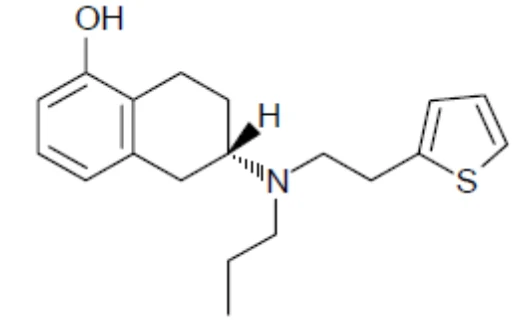
Physicochemical properties: Rotigotine is a white to light-brownish powder. It is freely soluble in acetone, acetic acid, ethyl acetate, soluble in ethanol, methanol, 2-propanol, toluene, sparingly to slightly soluble in acetonitrile, hydrochloric acid and at buffer of low pH, propylene glycol, practically insoluble in water and buffer at pH 7.0 and higher. The melting point is between 94 – 100°C. The specific optical rotation in ethanol 96% (c = 10 mg/mL) at 25°C is between -39° and -42°. The pH in water is about 8. The pKa 1 (acidic phenolic hydroxy group) is 10.77 pKa 2 (basic amino group) is 8.93.
14. Clinical Trials
14.1. Clinical Trials by Indication
Parkinson’s Disease
The effectiveness of NEUPRO (rotigotine) in the treatment of Parkinson's disease was evaluated in a multinational drug development program consisting of four randomized, double-blind placebo-controlled phase 3 trials. Two trials were conducted in patients with early-stage Parkinson's disease who were not receiving concomitant levodopa, and two were conducted in patients with advanced-stage Parkinson's disease who were receiving concomitant levodopa. In all trials, patients underwent a weekly titration of NEUPRO in 2 mg/24h increments to the assigned or optimal dose. Back titrations by 2 mg/24h decrement of NEUPRO were permitted for intolerable adverse events. Patch application sites were changed on a daily basis.
Early-stage Parkinson’s Disease
Patients in the two trials of early-stage Parkinson’s disease had limited or no prior exposure to levodopa (off levodopa for at least 28 days prior to baseline or levodopa use for no more than 6 months). Patients were excluded from the trials if they had a history of pallidotomy, thalamotomy, deep brain stimulation, or fetal tissue transplant. Patients receiving selegiline, anticholinergic agents, or amantadine must have been on a stable dose and able to maintain that dose for the duration of the trial. A total of 396 patients were treated with NEUPRO in these two trials.
Change from baseline in the Unified Parkinson's Disease Rating Scale (UPDRS), parts II (Activities of Daily Living) + III (Motor Examination), served as the primary outcome measure in the early-stage Parkinson’s disease trials.
Table 5 - Summary of Patient Demographics for Clinical Trials in in Patients with Early-stage Parkinson’s disease
| Study # | Study design | Dosage, route of administration and duration | Study subjects (n) | Mean Age (range) | Sex |
| North American Trial | Double-blind, randomized, placebo-controlled | NEUPRO, patch: 2 mg/24h, 4 mg/24h, or 6 mg/24h Placebo: patch 27 weeks | Neupro: 181 Placebo: 96 | 63 years (32-86) | 65% male 35% female |
| Multinational Trial | NEUPRO, patch: 2 mg/24h, 4 mg/24h, 6 mg/24h, or 8 mg/24h Ropinirole, oral tablet: 0.75-24.0 mg Placebo: patch Up to 37 weeks | Neupro: 215 Ropinirole: 228 Placebo: 118 | 61 years (30-86) | 58% male 42% female |
North American Trial
This trial was a multinational, flexible NEUPRO dose (2 mg/24h, 4 mg/24h, or 6 mg/24h), parallel group trial in which 277 patients with early-stage Parkinson’s disease were assigned (2:1 ratio) to treatment with NEUPRO or placebo for a period up to about 28 weeks. Patients underwent a weekly titration over 3 weeks to a maximal dose of 6 mg/24h depending on efficacy and tolerability, and then received treatment over a 24 week maintenance phase, followed by a de-escalation over a period up to 4 days. This study was conducted in 47 sites in North America (U.S. and Canada).
Mean baseline combined UPDRS (Parts II + III) was similar in both groups (29.9 NEUPRO group, 30.0 placebo).
NEUPRO-treated patients experienced a mean change in the combined UPDRS (Parts II + III) from baseline to end of treatment of 4.0 (Table 6), and the difference from placebo was statistically significant. Symptomatic improvement started to appear as titration progressed. The responder rates, based on a 20% reduction on the primary endpoint UPDRS (Part II + III), were 48% of the patients on NEUPRO versus 19% on placebo.
Table 6 - North American Trial: ANCOVA Results for UPDRS (Parts II + III) from Baseline at End of Treatment for Intent-to-Treat Population
| Treatment | Mean Change from Baseline at endpoint | Difference from placebo |
| Placebo (n=96) | +1.3 | NA |
| NEUPRO up to 6 mg/24h (n=177) | -4.0 | -5.3* |
* p<0.0001
Multinational Trial
This trial was a multinational, flexible NEUPRO dose (2 mg/24h, 4 mg/24h, 6 mg/24h, or 8 mg/24h), three-arm, parallel group, trial using a double-dummy treatment in which 561 patients with early-stage Parkinson’s disease were assigned to treatment with either placebo or NEUPRO or active oral comparator in a ratio of 1: 2: 2 for a period up to about 39 weeks. Patients underwent a weekly titration over 4 weeks to a maximal NEUPRO dose of 8 mg/24h depending on efficacy and tolerability, and then received treatment over a 24 week maintenance phase, followed by a de-escalation over a period up to 12 days. This trial was conducted in up to 81 sites in countries outside North America.
Mean baseline combined UPDRS (Parts II + III) was similar across all groups (33.2 NEUPRO, 31.3 placebo, 32.2 active comparator).
NEUPRO-treated patients experienced a mean change in the combined UPDRS (Parts II + III) from baseline to end of treatment of -6.8 (Table 7), and the difference from placebo was statistically significant. Symptomatic improvement started to appear as titration progressed. The responder rates, based on a 20% reduction on the primary endpoint UPDRS (Part II + III), were 52% of the patients on NEUPRO versus 30% on placebo. The active comparator performed as expected.
Table 7 - Multinational Trial: ANCOVA Results for UPDRS (Parts II + III) from Baseline at End of Treatment for Intent-to-Treat Population
| Treatment | Mean change from baseline | Difference from placebo |
| Placebo (n=117) | -2.3 | NA |
| NEUPRO up to 8 mg/24h (n=213) | -6.8 | -4.5* |
*p<0.0001
Advanced-stage Parkinson’s Disease
Patients in the two phase 3 trials of NEUPRO in advanced-stage Parkinson’s disease had to be experiencing “on-off” periods at baseline, despite treatment with optimal doses of levodopa. Patients continued concomitant levodopa during the trial; however, reductions in the dosage of levodopa were allowed if patients experienced adverse events that the investigator considered related to dopaminergic therapy. Patients were excluded from the trials if they had a history of pallidotomy, thalamotomy, deep brain stimulation, or fetal tissue transplant. Patients receiving selegiline, anticholinergic agents, or amantadine must have been on a stable dose and able to maintain that dose for the duration of the study. In the North American trial, COMT-inhibitors were not permitted. A total of 434 patients were treated with NEUPRO in these two trials.
Change from baseline in time spent “off” (hours) based on daily diaries was the primary outcome assessment in the two trials of advanced-stage Parkinson’s disease (with levodopa).
Table 8 – Summary of Patient Demographics for Clinical Trials in Patients with Advanced-stage Parkinson’s disease
| Study # | Study design | Dosage, route of administration and duration | Study subjects (n) | Mean Age (range) | Sex |
| North America n Trial | Double-blind, placebo-controlled, parallel, fixed dose, dose ranging | NEUPRO, patch: 8mg/24h or 12 mg/24h Placebo: patch 30 weeks | NEUPRO: 229 Placebo: 120 | 66 years (33-87) | 64% male 36% female |
| Multinati onal Trial | NEUPRO, patch: Up to 16 mg/24h Pramipexole, oral tablet: Up to 4.5mg/day Placebo: patch 24 weeks | NEUPRO: 205 Pramipexole: 202 Placebo: 99 | 64 years (36-84) | 63% male 37% female |
North American Trial
This trial was a multinational, three-arm, parallel group study in which 349 patients with advanced-stage Parkinson’s disease were titrated over 5 weeks to treatment with either placebo or NEUPRO (8 mg/24h or 12 mg/24h) and maintained treatment for 24 weeks, followed by a down titration over the last week. This trial was conducted in 55 sites in North America (U.S. and Canada).
Mean baseline “off” times were similar among all treatment groups (6.4, 6.8, and 6.3 hours for the placebo, NEUPRO 8 mg/24h and 12 mg/24h treatment groups, respectively).
NEUPRO-treated patients experienced a mean change in “off” time from baseline to end of treatment of -2.7 hours for the 8 mg/24h treatment arm and -2.1 hours for the 12 mg/24h treatment arm (Table 9), and the difference from placebo was statistically significant for both NEUPRO doses (8 mg/24h, 12 mg/24h). Symptomatic improvement started to appear as titration progressed. The responder rates, based on a 30% reduction on the primary endpoint (“off” time at the end of treatment) were 57% and 55% for the NEUPRO 8mg/24h and 12mg/24h groups respectively versus 34% on placebo.
Table 9 - North American Trial: ANCOVA Results for “off” time (hours) from Baseline at End of Treatment for Intent-to-Treat Population
| Treatment | Mean Change From Baseline | Difference from placebo |
| Placebo (n=119) | -0.9 | NA |
| NEUPRO 8 mg/24h (n=113) | -2.7 | -1.8* |
| NEUPRO 12 mg/24h (n=109) | -2.1 | -1.2** |
*p<0.001; **p=0.003
Multinational Trial
This trial was a multinational, three-arm, parallel group trial using a double-dummy treatment in which 506 advanced-stage Parkinson’s disease patients were titrated over 7 weeks to treatment with either NEUPRO up to a maximal dose of 16 mg/24h, active oral comparator, or placebo and maintained treatment for 16 weeks followed by a down titration over 6 days. This trial was conducted in 77 sites in many countries outside of North America.
Mean baseline “off” times were similar among all treatment groups (6.6, 6.2, and 6.0 hours for the placebo, NEUPRO, and comparator treatment groups, respectively).
NEUPRO-treated patients experienced a mean 2.5 hour decrease change in “off” time from baseline to end of treatment (Table 10), and the difference from placebo was statistically significant. Symptomatic improvement started to appear as titration progressed. The responder rates, based on a 30% reduction on the primary endpoint (“off” time at the end of treatment) were 60% of the patients on NEUPRO versus 35% on placebo.
Table 10 - Multinational Trial: ANCOVA Results for “off” time (hours) from Baseline at End of Treatment for Intent-to-Treat Population
| Treatment | Mean Change From Baseline | Difference from placebo |
| Placebo (n=100) | -0.9 | NA |
| NEUPRO Up to 16 mg/24h (n=201) | -2.5 | -1.6* |
*p<0.001
Restless Leg Syndrome
The efficacy of NEUPRO in the treatment of Restless Legs Syndrome (RLS) was evaluated in two fixed-dose, randomized, double-blind, placebo-controlled phase 3 trials with maintenance periods of 6 months duration. Patients received NEUPRO doses ranging from 0.5 mg/24h to 3 mg/24h or placebo once daily. In both trials, patches were applied to different application sites including the abdomen, thigh, hip, flank, shoulder, and/or upper arm and patch application sites were rotated on a daily basis.
The two outcome measures used to assess the effect of treatment were the International RLS Rating Scale (IRLS Scale) and a Clinical Global Impression - Improvement (CGI-I) assessment. The IRLS Scale contains 10 items designed to assess the severity of sensory and motor symptoms, sleep disturbance, daytime somnolence, and impact on activities of daily living and mood associated with RLS. The range of scores is 0 to 40, with 0 being absence of RLS symptoms and 40 the most severe symptoms. The CGI-I is designed to assess clinical progress (global improvement) on a 7-point scale.
Table 11 - Summary of Patient Demographics for Clinical Trials in Patients with Restless Legs Syndrome
| Study # | Study design | Dosage, route of administration and duration | Study subjects (n) | Mean Age (range) | Sex |
| North American Trial | Multicenter, randomized, double-blind, placebo-controlled, 5-arm, parallel-group, fixed-dose | NEUPRO, patch: 0.5mg/24h, 1 mg/24h, 2 mg/24h, 3 mg/24h Placebo: Patch 29 weeks | NEUPRO: 405 Placebo: 100 | 52 years (19-77) | 39% male 61% female |
| Multinational Trial | Multicenter, multinational, randomized, double-blind, placebo-controlled, 4-arm, parallel-group, fixed-dose | NEUPRO, patch: 1 mg/24h, 2 mg/24h, and 3 mg/24h Placebo: Patch 28 weeks | NEUPRO: 341 Placebo: 117 | 58 years (23-78) | 27% male 73% female |
Across the two studies, the mean duration of RLS was 2.1 to 3.1 years, mean age was approximately 55 years (range of 19 to 78 years), approximately 67% were women, and 97% were Caucasian. A total of 746 patients were treated with NEUPRO in these two studies.
North American Trial
This trial was a multicenter, 5-arm, parallel-group fixed-dose trial of NEUPRO in subjects with moderate-to-severe RLS. A total of 505 subjects were randomized in this trial, participating at approximately 50 sites in the U.S. Subjects received placebo or NEUPRO (0.5 mg/24h, 1 mg/24h, 2 mg/24h, 3 mg/24h). Subjects began treatment at a daily dosage of 0.5 mg/24 h NEUPRO and were titrated over a 4 week period to their assigned daily dose followed by a 6 month maintenance period and 7 day down titration period.
Mean baseline IRLS sum scores were similar among all treatment groups (23.5, 23.1, 23.2, 23.3, and 23.6 for the placebo, NEUPRO 0.5 mg/24h, 1 mg/24h, 2 mg/24h, and 3 mg/24h groups, respectively).
Patients experienced a mean change in the IRLS sum score from baseline to the end of treatment for each of the 4 NEUPRO dose groups. The mean changes from baseline and differences from placebo in IRLS sum score are shown for each treatment group in Table 12. The difference between the 2 highest treatment groups (2 mg/24h and 3 mg/24h) and placebo were statistically significant. Symptomatic improvement started to appear as titration progressed. The CGI-I results were consistent with the IRLS sum score results. The IRLS responder rates, based on a 50% reduction on the primary endpoint ranged from 48% - 67% for the groups on NEUPRO versus 37% on placebo.
Table 12 - North American Trial: ANCOVA Results for Co-Primary Endpoint: Change from Baseline to End of Maintenance Period (FAS with LOCF)
| Variable | Treatment | Mean Change From Baseline | Difference from placebo |
| IRLS sum score | Placebo (n=99) | -9.0 | NA |
| 0.5 mg/24h (n=98) | -11.1 | -2.2 | |
| 1 mg/24h (n=99) | -11.2 | -2.3 | |
| 2 mg/24h (n=95) | -13.5 | -4.5* | |
| 3 mg/24h (n=103) | -14.2 | -5.2** | |
*p=0.0002; **p<0.0001
Multinational Trial
This trial was a multicenter, 4 arm, parallel-group trial of NEUPRO in subjects with moderate-to-severe RLS. A total of 458 subjects were randomized in this trial, participating at approximately 50 sites in 8 European countries. Subjects received placebo or NEUPRO (1 mg/24h, 2 mg/24h, 3 mg/24h). Subjects began treatment at a daily dosage of 1 mg/24h NEUPRO and were titrated over a 3 week period to their assigned daily dose followed by a 6 month maintenance period and 7 day down-titration period.
Mean baseline IRLS sum scores were similar among all treatment groups (28.1, 28.1, 28.2, and 28.0 for the placebo, NEUPRO 1 mg/24h, 2 mg/24h, and 3 mg/24h groups, respectively).
Patients experienced a mean change in the IRLS sum score from baseline to the end of treatment for each of the 3 NEUPRO dose groups. The mean changes from baseline and differences from placebo in IRLS sum score are shown for each treatment group in Table 13. The difference between all 3 treatment groups (1 mg/24h, 2 mg/24h, and 3 mg/24h) and placebo were statistically significant (p<0.0001). Symptomatic improvement started to appear as titration progressed. The CGI-I results were consistent with the IRLS sum score results. The IRLS responder rates, based on a 50% reduction on the primary endpoint ranged from 52% - 55% for the groups on NEUPRO versus 25% on placebo.
Table 13 - Multinational Trial: ANCOVA Results for Co-Primary Endpoint: Change from Baseline to End of Maintenance Period (FAS with LOCF)
| Variable | Treatment | Mean Change From Baseline | Difference from placebo |
| IRLS sum score | Placebo (n=114) | -8.6 | NA |
| 1 mg/24h (n=112) | -13.7 | -5.1* | |
| 2 mg/24h (n=109) | -16.2 | -7.5* | |
| 3 mg/24h (n=112) | -16.8 | -8.2* | |
*p<0.0001
16. Non-Clinical Toxicology
General toxicology
Safety pharmacology studies have been conducted in the central nervous, cardiovascular and respiratory systems. In addition to the core battery of studies, supplemental safety pharmacology studies have been performed in the renal and gastrointestinal systems.
Rotigotine induced dose-dependent effects on neurobehavior, spontaneous motility and nociception in mice and rats. Rotigotine tended to facilitate proconvulsive effects and showed no anticonvulsive activity.
The influence of rotigotine on hemodynamic and electrocardiograph (ECG) parameters has been investigated in animal studies with anesthetized and conscious rats and monkeys. Rotigotine appeared to have relatively little or no consistent effects on blood pressure and heart rate.
In rats, a decrease in urinary volume was observed after subcutaneous administration at doses of 0.1, 0.5 and 1mg/kg and a reduction in electrolyte excretion at doses of 0.5 and 1mg/kg. In mice, there was no compound-related effect on intestinal transit time and in the guinea pig isolated ileum, rotigotine exerted nonspecific antagonistic effects against several neurotransmitters and barium chloride at micromolar concentrations.
As has been reported with other dopamine agonists, binding to melanin-containing tissues (i.e. eyes) in the pigmented rat and monkey was evident after a single dose of rotigotine, but was slowly cleared over the 14-day observation period.
Repeat Dose Studies
In repeated dose and long-term toxicity studies with rotigotine, conducted in mice, rats and monkeys with duration up to 3 months in mice, 6 months in rats and 12 months in monkeys, major effects were associated with dopamine agonist related pharmacodynamic effects including the decrease of prolactin secretion. The major effects of rotigotine included behavioral changes, such as restlessness or changes in motility, and rough fur. Additionally, body weight was significantly reduced, but was not dose-related and food consumption was increased in the same manner.
Genotoxicity
Rotigotine was not mutagenic in the in vitro Ames test or the in vivo Unscheduled DNA Synthesis test in hepatocytes from male Fisher rats. In the in vitro mouse lymphoma assay, rotigotine was mutagenic and clastogenic in the presence and absence of metabolic activation. Rotigotine was not clastogenic in the in vivo mouse micronucleus test.
Carcinogenicity
Two-year subcutaneous carcinogenicity studies of rotigotine were conducted in CD-1 mice at doses of 0, 3, 10 and 30 mg/kg and in Sprague-Dawley rats at doses of 0, 0.3, 1, and 3 mg/kg; in both studies rotigotine was administered once every 48 hours. No significant increases in tumors occurred in the mouse study at doses up to 9 times the maximum recommended human dose (MRHD) of 8 mg/24h for the treatment of early-stage Parkinson’s disease on a mg/m2 basis, up to 4.5 times the MRHD of 16 mg/24h for advanced-stage Parkinson’s disease and up to 48 times the MRHD of 3 mg/24h for Restless Legs Syndrome.
In rats, there were significant increases in Leydig cell tumors in males and uterine tumors (adenocarcinomas, squamous cell carcinomas) in females. The endocrine mechanisms believed to be involved in the production of Leydig cell and uterine tumors in rats are not considered relevant to humans. Therefore, there were no significant tumor findings considered relevant to humans at plasma exposures (AUC) up to 12 times the plasma AUC in humans at the MRHD of 8 mg/24h (early-stage Parkinson’s disease), up to 5.5 times the plasma AUC in humans at the MRHD of 16 mg/24h (advanced-stage Parkinson’s disease) and up to 25 times the plasma AUC in humans at the MRHD of 3 mg/24h (Restless Legs Syndrome).
Reproductive and developmental toxicology
When rotigotine was administered subcutaneously (1.5, 5, or 15 mg/kg/day) to female rats prior to and during mating and continuing through gestation day 7, an absence of implantation was observed at all doses. The lowest dose tested was 2 times the MRHD on a mg/m2 basis. In male rats treated from 70 days prior to and during mating, there was no effect on fertility; however, a decrease in epididymal sperm motility was observed at the highest dose tested. The no-effect dose (5 mg/kg/day) was 3 times the MRHD on a mg/m2 basis. When rotigotine was administered subcutaneously to female mice at doses of 10, 30, and 90 mg/kg/day from 2 weeks until 4 days before mating and then at a dose of 6 mg/kg/day (all groups) (approximately 4 times the MRHD on a mg/m2 basis) from 3 days before mating until gestation day 7, a markedly reduced (low dose) or complete absence of implantation (mid and high doses) was observed. The effects on implantation in rodents are thought to be due to the prolactin-lowering effect of rotigotine. In humans, chorionic gonadotropin, not prolactin, is essential for implantation.
In subcutaneous studies in Sprague-Dawley rats and CD-1 mice, rotigotine was shown to have adverse effects on embryo-fetal development. Rotigotine given to pregnant rats during organogenesis (0.5, 1.5 or 5 mg/kg/day on gestation days 6 through 17) resulted in increased fetal death at all doses. The lowest effect dose was 0.6 times the MRHD for early-stage Parkinson’s disease, 0.3 times the MRHD for advanced-stage Parkinson’s disease and 1.6 times the MRHD for Restless Legs Syndrome, on a mg/m2 basis. This effect is thought to be due to the prolactin-lowering effect of rotigotine. Rotigotine given to pregnant mice during organogenesis (10, 30 or 90 mg/kg/day on gestation days 6 through 15) resulted in an increased incidence of skeletal retardation at 10, 30 and 90 mg/kg/day, and an increase in fetal death at 90 mg/kg/day. There were no effects below 10 mg/kg/day (6 times the MRHD for early-stage Parkinson’s disease, 3 times the MRHD for advanced-stage Parkinson’s disease and 16.2 times the MRHD for Restless Legs Syndrome, on a mg/m2 basis). Rotigotine given to pregnant Himalayan rabbits during organogenesis (up to 30 mg/kg/day, up to 73 times the MRHD for early-stage Parkinson’s disease, 36 times the MRHD for advanced-stage Parkinson’s disease and 194 times the MRHD for Restless Legs Syndrome, on a mg/m2 basis) had no effects on embryo-fetal development. In a pre- and postnatal development study, Sprague-Dawley rats were administered 0.1, 0.3 or 1 mg/kg/day from gestation day 6 through postnatal day 21. Rotigotine impaired growth and development of offspring during lactation and produced neurobehavioral abnormalities in offspring at 1 mg/kg/day. When offspring were mated, growth and survival of their offspring were adversely affected. No adverse effects were observed at 0.3 mg/kg/day (0.4 times the MRHD for early-stage Parkinson’s disease, 0.15 times the MRHD for advanced-stage Parkinson’s disease and 1 times the MRHD for Restless Legs Syndrome, on a mg/m2 basis).
Special toxicology
Retinal degeneration was observed by transmission microscopy in albino rats at the 3-month timepoint in a 6-month toxicity study at the highest dose of rotigotine at plasma exposures at least 7 times that of the maximum recommended human dose (MRHD). Retinal degeneration was not observed in the 2-year carcinogenicity studies in albino rat or albino mouse, or in monkeys treated for 1 year (plasma exposures up to 5-14 times that of the MRHD).
The potential significance of this effect in humans has not been established, but cannot be disregarded because disruption of a mechanism that is universally present in vertebrates (i.e., disk shedding) may be involved.