


Patient Medication Information: uses, side effects, how to take - Neupro
Serious warnings and precautions box
What NEUPRO is used for:
NEUPRO is used in adults (18 years of age and older) to treat:
- the symptoms of Parkinson’s disease, with or without levodopa; and
- the symptoms of moderate to severe restless legs syndrome (RLS).
How NEUPRO works:
NEUPRO belongs to a group of medicines called ‘dopamine agonists’. It works by acting like the chemical dopamine that stimulates receptors in the brain. This helps to control movement and coordination.
The ingredients in NEUPRO are:
Medicinal ingredient(s): Rotigotine.
Non-medicinal ingredients:
- Drug-loaded layer: Ascorbyl palmitate (E304), DL-alpha tocopherol (E307), poly(dimethylsiloxane, trimethylsilyl silicate)-copolymerisate, povidone K90, and sodium metabisulfite (E223).
- Backing layer: Polyester film, siliconized, aluminized, colour coated with a pigment (titanium dioxide (E171), pigment yellow 95, pigment red 166) layer and imprinted (pigment red 144, pigment yellow 95, pigment black 7).
You may feel sleepy, drowsy, or, rarely, may suddenly fall asleep without warning (i.e., without feeling sleepy or drowsy) when taking NEUPRO. When you are taking NEUPRO, you should not drive, operate machinery, or take part in activities that require you to be alert. You may put yourself and others at risk for serious injury or death. Falling asleep suddenly without warning has also been reported in patients taking similar medicines used to treat Parkinson’s disease. Talk to your healthcare professional right away if you:
- feel drowsy, or
- suddenly fall asleep.
- Protective release liner: Transparent fluoropolymer coated polyester film.
NEUPRO comes in the following dosage form(s):
Patch delivering: 1 mg/24 hours, 2 mg/24 hours, 3 mg/24 hours, 4 mg/24 hours, 6 mg/24 hours, or 8 mg/24 hours of rotigotine.
Do not use NEUPRO if:
- you are allergic to rotigotine or any of the other ingredients in NEUPRO.
To help avoid side effects and ensure proper use, talk to your healthcare professional before you take NEUPRO. Talk about any health conditions or problems you may have, including if you:
- have heart or blood vessel problems.
- have severe liver or kidney problems.
- have a history of low blood pressure or dizziness when going from sitting to standing position.
are pregnant or plan to become pregnant.
- are breastfeeding or plan to breastfeed. NEUPRO may pass into your breast milk and affect your baby, and is likely to reduce the amount of milk you produce.
- have asthma.
- are allergic to sodium metabisulfite. NEUPRO contains sodium metabisulfite. This a substance that can cause severe allergic reactions and breathing problems.
- suffer from muscle twitching or unusual/abnormal movement of the face, arms, legs or other parts of your body (dyskinesia).
- have any mental health problems.
- are planning to have a magnetic resonance imaging (MRI; method to visualise internal organs and tissues of the body) or a cardioversion (procedure used to treat abnormal heart rhythms). You must take your NEUPRO patch off before such procedures. You can put a new patch on after the procedure.
Other warnings you should know about:
Testing and check-ups: A healthcare professional may regularly monitor your health before, during, and after your treatment. This includes monitoring your:
- blood pressure;
- eyes; however, if you notice any problems with your sight, you should contact your healthcare professional immediately;
- heart rate; and
- skin.
Withdrawal syndrome: Consult your healthcare professional on how and when to reduce your dose. If you suddenly stop taking NEUPRO, you may feel withdrawal symptoms such as pain, fatigue, depression, sweating, anxiety, panic attacks, insomnia, and irritability. If your healthcare professional decides that you should stop taking NEUPRO, your healthcare professional will slowly decrease your dose. If you feel withdrawal symptoms for more than a few weeks, your healthcare professional may need to adjust your dose.
Melanoma (skin cancer): People with Parkinson’s disease have a higher risk of developing melanoma. If you notice any signs of melanoma, tell your healthcare professional right away. This can include:
- suspicious, undiagnosed changed patches of pigmented skin;
- irritated or irregular moles; and
- moles in which you have noticed changes.
Augmentation of restless legs syndrome (RLS) symptoms: If you are taking NEUPRO for RLS, NEUPRO may cause augmentation. Augmentation is when you experience symptoms earlier in the day, increased intensity of symptoms, and spread of symptoms to other parts of your body. Your healthcare professional will monitor you to see if your symptoms become worse. They may change your dose or stop your treatment with NEUPRO. Stopping NEUPRO can also cause rebound RLS. This means your RLS symptoms can come back in the early morning and be worse than before you started taking NEUPRO.
Impulse control disorders: During treatment with NEUPRO, impulse control disorders have been observed. The signs and symptoms may include:
- developing urges or cravings to behave in ways that are unusual for you; or
- you are unable to resist the impulse, drive, or temptation to carry out certain activities that could harm yourself or others.
Tell your healthcare professional right away if you, your family, or caregiver notices that you are showing signs of impulse control disorders. This can include:
- addictive gambling;
- excessive buying or spending;
- binge eating or compulsive eating; and
- abnormally high sex drive or an increase in sexual activity.
Your healthcare professional may change your dose if you develop an impulse control disorder or signs of one.
Dopamine dysregulation syndrome: You may feel a craving to take more NEUPRO than you are supposed to take. This is called Dopamine Dysregulation Syndrome and can lead to you taking too much NEUPRO. If you feel the desire to take more NEUPRO than you are supposed to take, talk to your healthcare professional.
Mental health problems and hallucinations: NEUPRO may cause:
- hallucinations (seeing or hearing things that are not there) and confusion. This may be more likely to happen if you are in advanced stages of Parkinson’s disease.
- psychotic-like behaviour such as delusions, paranoia, and trouble thinking clearly and logically.
Tell your healthcare professional right away if you start to develop unusual behaviour, feel depressed or experience psychotic-like behaviour.
Skin reactions: NEUPRO can cause skin reactions, such as reddening and itching. They are usually mild or moderate, and only affect the area of skin the patch has been on. The reactions normally disappear after a few hours when you remove the patch. Contact your healthcare professional if you have a skin reaction which lasts for more than a few days, which is severe, or spreads outside the area of skin that was covered by the patch. Put the patch on a different area of skin every day, and only use the same area again after 14 days to avoid skin reactions.
External heat sources: Heat may increase the drug's ability to go through the skin. While wearing the patch, do NOT:
expose the patch area to sources of direct heat, such as heating pads or electric blankets, heat
- lamps, or direct sunlight;
- use a saunas;
- take a hot bath; or
- use heated water beds.
Tell your healthcare professional about all the medicines you take, including any drugs, vitamins, minerals, natural supplements or alternative medicines.
The following may interact with NEUPRO:
- levodopa, a medicine used to treat Parkinson’s disease.
- antipsychotics, medicines used to treat certain mental conditions (e.g., phenothiazines, butyrophenones, and thioxanthenes).
- metoclopramide, a medicine used to treat nausea and vomiting.
sedatives or central nervous system (CNS) depressants, medicines used to slow down brain activity, such as:
- benzodiazepines, medicines to treat certain mood disorders;
- antidepressants, medicines used to treat depression;
alcohol.
How to take NEUPRO:
- Always take NEUPRO exactly as your healthcare professional has told you. If you are unsure, ask your healthcare professional.
- NEUPRO is a patch and should only be placed on the skin.
- Do NOT stop using NEUPRO without talking to your healthcare professional. A sudden stop could cause you to develop a medical condition called neuroleptic malignant syndrome, which may represent a major health risk. Your healthcare professional will tell you how to taper your treatment and closely monitor your symptoms.
- You should change your NEUPRO patch once a day.
- NEUPRO is not affected by drinking or eating. However, you should discuss with your healthcare professional if it is safe for you to drink alcohol while using NEUPRO.
FOLLOW THESE INSTRUCTIONS WHEN USING NEUPRO:
You should stick a new NEUPRO patch onto the skin once a day. Leave the patch on your skin for 24 hours, then remove it and apply a new one. Make sure that you take the old patch off before applying a new one, and place the new patch on a different area of skin.
You should change your patch at around the same time every day.
Do not cut the NEUPRO patches into pieces.
Where to stick the patch:
Put the sticky side of the patch onto clean, dry, healthy skin on one of the following areas, as indicated by the grey areas in the picture:
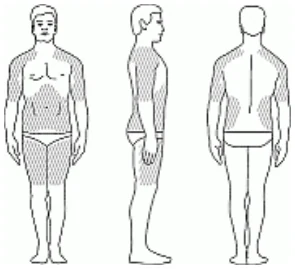
- shoulder,
- upper arm,
- belly,
- thigh,
- hip,
flank (your side, between your ribs and your hip).
Application sites
Front Side Back
To help avoid skin irritation:
- Stick the patch onto a different area of skin each day, for example on the right side of your body one day, then on the left side the next day; on your upper body one day, then on your lower body.
- Do not stick NEUPRO on the same area of skin twice within 14 days.
- Do not stick the patch on broken or damaged skin or on skin that is red or irritated.
To prevent the patch becoming loose or falling off:
- Do not put the patch in an area where it can be rubbed by tight clothing.
- Do not use creams, oils, lotions, powders or other skin products on the area of skin you will be sticking the patch on or near a patch you are already wearing.
- If you need to stick the patch to a hairy area of skin, you must shave the area at least 3 days before sticking the patch there.
- If the edges of the patch lift, the patch may be taped down with adhesive medical tape.
If the patch falls off, a new patch should be applied for the rest of the day, then replace the patch at the same time as usual.
NOTE:
- Bathing, showering and exercising should not affect how NEUPRO works. Nevertheless, check that the patch has not fallen off afterwards.
- You should avoid external heat (for example excessive sunlight, saunas, hot bath, heating pads or hot-water bottles) on the area of the patch.
- If the patch has irritated your skin, you should keep that area protected from direct sunlight, as it may cause changes in the colour of the skin.
How to use the patch:
Each patch is packed in a separate pouch. You should stick NEUPRO onto your skin as soon as you have opened the pouch and removed the protective release liner.
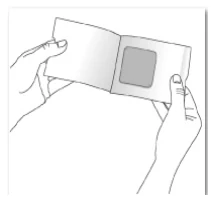
1.
To open the pouch, hold the two sides of the pouch. Peel apart the foil and open the pouch.
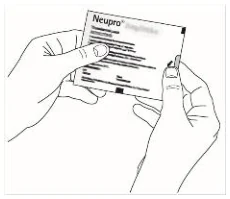
2.
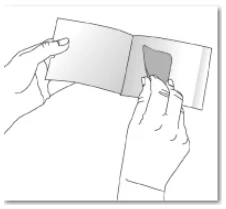
Take the patch out of the pouch.
3.
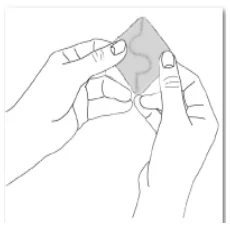
The sticky side of the patch is covered by a transparent release liner. Hold the patch in both hands with the protective release liner facing you.
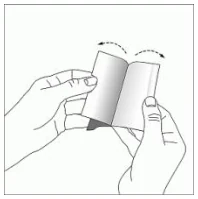
4.
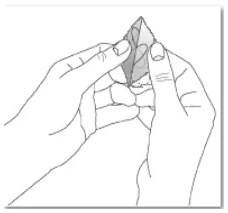
Bend the patch in half so that the S-shaped break in the release liner opens.
5.
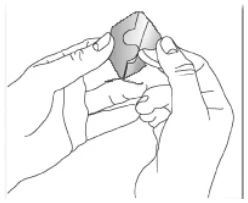
Peel off one side of the release liner. Don’t touch the sticky side of the patch with your fingers.
6.
Hold the other half of the rigid release liner and put the sticky surface of the patch onto your skin. Press the sticky side of the patch firmly into place.
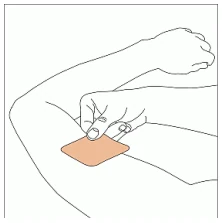
7.
Fold back the other half of the patch and remove the other side of the release liner.
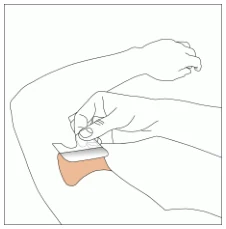
8.
Press the patch down firmly with the palm of your hand for 30 seconds to make sure the patch is touching the skin and the edges stick well.
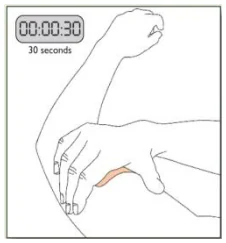
Wash your hands with soap and water immediately after handling the patch.
How to remove a used patch:
Slowly and carefully peel off the used patch.
Gently washing the area with warm water and mild soap should remove any adhesive that stays on your skin after you remove the patch. You can also use a small amount of baby oil to remove any adhesive that won’t wash off.
Do not use alcohol or other dissolving liquids such as nail polish remover as these may irritate your skin.
Choose a new area of skin where you will apply a new patch, then follow the instructions above.
Usual dose:
Your healthcare professional will decide the right dose of NEUPRO for you. This will depend on your condition, health, if you take certain medicines, and how you react to NEUPRO. You will start your treatment with a low dose and, if necessary, your healthcare professional will increase it week by week. You may need multiple patches to reach your prescribed dose.
Overdose:
The symptoms of an overdose with NEUPRO include nausea (feeling sick), vomiting, low blood pressure, hallucinations (seeing or hearing things that are not real), confusion, extreme sleepiness, involuntary movements, and convulsions.
If you think you, or a person you are caring for, have used more patches of NEUPRO than you are told, contact a healthcare professional, hospital emergency department, regional poison control centre, or Health Canada’s toll-free number, 1-844 POISON-X (1-844-764-7669) immediately, even if there are no signs or symptoms.
Missed dose:
If you forget to apply a new patch at the usual time or if a patch falls off, remove the old patch (if there is one) and apply a new one as soon as you remember. Then return to your regular schedule at the usual time on the following day. Do not use a double dose to make up for a missed dose.
Possible side effects from using NEUPRO:
These are not all the possible side effects you may have when taking NEUPRO. If you experience any side effects not listed here, tell your healthcare professional.
The side effects of NEUPRO include:
- skin irritations under the patch such as redness and itching;
- feeling sick (nausea);
- headache;
- sleepiness;
- vomiting;
- dizziness;
- trouble sleeping (insomnia);
- hands and legs swelling.
Serious side effects and what to do about them
| Frequency/Side Effect/Symptom | Talk to your healthcare professional | Stop taking this drug and get immediate medical help | |
|---|---|---|---|
| Frequency/Side Effect/Symptom | Talk to your healthcare professional | Stop taking this drug and get immediate medical help | |
| Only if severe | In all cases | ||
| Only if severe | In all cases | ||
| Common | |||
| Dyskinesia (abnormal uncontrolled movements): muscle twitching, jerking, twisting, shaking or swaying | X | ||
| Hallucinations: seeing, hearing or sensing things that are not really there | X | ||
| Hypotension (low blood pressure): feeling dizzy, fainting, sweaty, nauseous, or light-headed, blurred vision, vomiting, or fatigue when you go from lying or sitting to standing up | X | ||
Impulse control disorders (trouble stopping yourself from doing things you want to do even when you know it’s not a good idea): gambling too much, urges to overeat or spend money, increased sex drive, or repeating an action over and over | X | ||
| Sudden onset of sleep (excessive drowsiness or sleepiness): suddenly falling asleep while doing normal activities, or feeling very sleepy during the day | X | ||
| Syncope (fainting): suddenly passing out; may happen after feeling dizzy, weak or nauseous | X | ||
| Uncommon | |||
| Allergic skin reactions: generalized redness, rash, swelling, itchiness, or blistering skin under the patch | X | ||
| Unknown | |||
| Dopamine Agonist Withdrawal Syndrome (DAWS): stopping or lowering your medicine can make you feel down, depressed, worried, scared, nervous, tired, easily annoyed or upset, feel aches and | X | ||
| pains, or have trouble getting to sleep | |||
If you have a troublesome symptom or side effect that is not listed here or becomes bad enough to interfere with your daily activities, tell your healthcare professional.
Reporting side effects
You can report any suspected side effects associated with the use of health products to Health Canada by:
- Visiting the Web page on Adverse Reaction Reporting (canada.ca/drug-device-reporting) for information on how to report online, by mail or by fax; or
- Calling toll-free at 1-866-234-2345.
NOTE: Contact your healthcare professional if you need information about how to manage your side effects. The Canada Vigilance Program does not provide medical advice.
Storage:
- Store NEUPRO at room temperature, 15°C to 30°C, in the original pouch.
- Do not use NEUPRO after the expiry date which is stated on the label and carton.
- Keep out of reach and sight of children.
- Disposal: After removal, the used patch should be folded in half with the sticky side inwards. Put the patch in an empty pouch and then throw it away safely, out of reach of children.
If you want more information about NEUPRO:
- Talk to your healthcare professional.
- Find the full Product Monograph that is prepared for healthcare professionals and includes the Patient Medication Information by visiting the Health Canada Drug Product Database website (https://www.canada.ca/en/health-canada/services/drugs-health-products/drug-products/drug-product-database.html); the manufacturer’s website (http://www.ucb-canada.ca); or by calling 1-866-709-8444.
Date of Authorization: 2026-02-02
NEUPRO® is a registered trademark used under license from UCB Pharma GmbH.