


Patient Medication Information: uses, side effects, how to take - Buccolam
Serious warnings and precautions box
What BUCCOLAM is used for:
- BUCCOLAM is used in patients from 3 months to less than 18 years of age to treat unusual seizures lasting more than 5 minutes. The patient must have already been diagnosed to have epilepsy.
How BUCCOLAM works:
BUCCOLAM belongs to a group of drugs called benzodiazepines. It works by calming the brain and nerves.
The ingredients in BUCCOLAM are:
Serious Heart and Breathing Problems: Serious, and sometimes fatal, heart and breathing problems have occurred in people taking BUCCOLAM. BUCCOLAM should only be used in a healthcare setting where you can be closely monitored and where there is access to oxygen and the appropriate medication and equipment required for resuscitation.
Addiction, Abuse and Misuse: Even if you are given BUCCOLAM exactly as prescribed, you are at risk for abuse, misuse, addiction, physical dependence, and withdrawal. Abuse and misuse can result in an overdose or death, especially if you take BUCCOLAM with:
- opioids,
alcohol, or
- illicit drugs.
Your healthcare professional should:
- talk to you about the risks of treatment with BUCCOLAM as well as other treatment (including non-drug) options;
- assess your risk for these behaviours before prescribing BUCCOLAM;
- monitor you while you are taking BUCCOLAM for the signs and symptoms of misuse and abuse. If you feel like you are craving BUCCOLAM, or not using it as directed, talk to your healthcare professional right away.
Store BUCCOLAM in a secure place to avoid theft or misuse.
Withdrawal: If you suddenly stop taking BUCCOLAM, lower your dose too fast, or switch to another medication, you can experience severe or life-threatening withdrawal symptoms (see Other warnings you should know about)
- Always contact your doctor before stopping or lowering your dose of BUCCOLAM or changing your medicine.
BUCCOLAM with Opioids: Taking BUCCOLAM with opioid medicines can cause:
- severe drowsiness,
- decreased awareness,
- breathing problems,
- coma,
- death.
Medicinal ingredient(s): midazolam hydrochloride.
Non-medicinal ingredients: hydrochloric acid, sodium chloride, sodium hydroxide, and water for injection.
BUCCOLAM comes in the following dosage form(s):
Solution, 5 mg/mL of midazolam (as midazolam hydrochloride) in the following syringe sizes:
- 2.5 mg/0.5 mL,
- 5 mg/1 mL,
- 7.5 mg/1.5 mL,
- 10 mg/2 mL.
Do not use BUCCOLAM if:
- you are allergic to midazolam hydrochloride, other benzodiazepines, or any of the other ingredients in BUCCOLAM.
- you have myasthenia gravis (a disease that causes muscle weakness).
- you have severe problems breathing from chronic obstructive pulmonary disease (COPD; airways are blocked or damaged) or acute pulmonary insufficiency (lungs are unable to provide enough oxygen to the blood).
- you have sleep apnea (breathing stops and starts repeatedly while asleep).
- you have severe liver problems.
- you have acute narrow angle glaucoma (increase pressure in the eye).
To help avoid side effects and ensure proper use, talk to your healthcare professional before you take BUCCOLAM. Talk about any health conditions or problems you may have, including if you:
- have kidney problems.
- have liver problems.
- have heart problems.
- have any breathing problems.
- have a condition that causes weakness or frailty.
- have problems with your mood or mental health.
have ever had a problem with:
- substance abuse, including prescribed or illegal drugs, or
- alcohol.
are pregnant or plan to become pregnant. There are specific risks to you and your unborn baby that your healthcare professional will discuss with you.
- are breastfeeding or plan to breastfeed. BUCCOLAM can pass into breast milk.
Other warnings you should know about:
Withdrawal: BUCCOLAM is not intended to be used more frequently than every five days or five times per month. If BUCCOLAM is used more often and you suddenly stop your treatment, lower your dose too fast, or switch to another medication, you can experience withdrawal symptoms that can range from mild symptoms to severe or life threatening. Some of your withdrawal symptoms can last for months after you stop BUCCOLAM.
Your risk of going through withdrawal is higher if you are taking BUCCOLAM for a long time or at high doses. However, symptoms can still occur if you are taking BUCCOLAM as directed for a short period of time or slowly reducing the dose.
The symptoms of withdrawal often resemble the condition that you are being treated for. After stopping your treatment, it may be hard to tell if you are experiencing withdrawal or a return of your condition (relapse).
Tell your healthcare professional right away if you experience any symptoms of withdrawal after changing or stopping your treatment.
Severe symptoms of withdrawal include:
- feeling like you cannot move or respond (catatonia);
- severe confusion, shivering, irregular heartrate and excessive sweating (delirium tremens);
- feeling depressed;
- feeling disconnected from reality (dissociation);
- seeing or hearing things that are not there (hallucinations);
- overactive behavior and thoughts (mania);
- believing in things that are not true (psychosis);
- convulsions (seizures), including some that do not stop;
- thoughts or actions of suicide.
For other symptoms of withdrawal, see the Serious side effects and what to do about them table (below).
To reduce your chances of going through withdrawal:
- always talk to your healthcare professional before stopping or reducing your dose of BUCCOLAM or changing medications;
- always follow your healthcare professional’s instructions on how to reduce your dose carefully and safely;
- tell your healthcare professional right away if you experience any unusual symptoms;
- after changing or stopping your treatment.
BUCCOLAM with opioids: Taking BUCCOLAM with opioids can cause severe drowsiness and breathing problems. Tell your healthcare professional if you:
- are taking opioid medicines; or
- are prescribed an opioid medicine after you start taking BUCCOLAM.
Driving and using machines: BUCCOLAM can cause you to become sleepy, forgetful, or affect your concentration and coordination. Do NOT drive, operate heavy machinery, or do tasks that require special attention until the effects of BUCCOLAM have worn off. Please discuss with your healthcare professional if you need further advice.
Falls and fractures: Benzodiazepines, such as BUCCOLAM, can cause you to feel sleepy, dizzy, and affect your balance. This increases your risk of falling, which can cause fractures or other fall-related injuries especially if you:
- take other sedatives (medicines used to cause relaxation and sleep),
- consume alcohol, or
- have a condition that causes weakness or frailty.
Severe allergic reactions: In rare cases, BUCCOLAM may cause severe or life-threatening allergic reactions. Symptoms of a severe allergic reaction include swelling of the tongue or throat, trouble breathing, nausea, and vomiting. If you experience any of these symptoms, stop taking BUCCOLAM and tell your healthcare professional right away.
Tell your healthcare professional about all the medicines you take, including any drugs, vitamins, minerals, natural supplements or alternative medicines.
Serious drug interactions:
Serious drug interactions with BUCCOLAM include:
Taking BUCCOLAM and opioids, which may cause:
- severe drowsiness,
- trouble breathing,
- coma,
- death.
The following may also interact with BUCCOLAM:
- barbiturates, used to treat anxiety, seizures, and headaches.
- alcohol, including alcohol containing products.
- antihistamines, used to prevent and treat allergy symptoms.
- antifungals, used to treat fungal infections (e.g., itraconazole, fluconazole, voriconazole, pasocanole, and ketoconazole).
- antibiotics, used to treat bacterial infections (e.g., erythromycin, clarithromycin, and rifampicin).
- anticonvulsants, used to prevent epilepsy or seizures (e.g., carbamazepine, phenytoin and sodium valproate)
- antiretrovirals, used to treat human immunodeficiency virus (HIV) and acquired immune deficiency syndrome (AIDS) (e.g., saquinavir, ritonavir, and lopinavir).
- antiepileptics, used to prevent epilepsy or seizures (e.g., carbamazepine, phenytoin and sodium valproate)
- anti-ulcer agents, used to treat ulcers and reduce stomach acid (e.g., cimetidine, ranitidine, and omeprazole)
- calcium-channel blockers, used to treat high blood pressure (e.g., diltiazem and verapamil)
- levodopa, used to treat Parkinson’s disease.
- muscle relaxants, used to treat muscle spasms and pain (e.g., baclofen and pancuronium).
- xanthine, used to treat asthma.
- atorvastatin, used to lower cholesterol.
- grapefruit juice.
- St. John’s wort, a herbal medicine used to treat depression.
If you are unsure, ask your healthcare professional.
How to take BUCCOLAM:
- Take BUCCOLAM exactly as directed by your healthcare professional. If you are unsure or forget, contact your healthcare professional.
- Read the ‘Administration Guide and Patient Booklet’ which is available for download on the website www.pendopharm.com.
- BUCCOLAM should only be taken in the mouth between the gum and the cheek. It must not be taken using any other routes of administration. Do NOT use needles or any type of tubing.
Before preparing BUCCOLAM:
- If the child is having a seizure, allow their body to move freely, do not try to restrain them. Only move them if they are in danger from, for example, deep water, fire or sharp objects.
- Support the child’s head with something soft, such as a cushion or your lap.
- Check that the medicine is the correct dose for the child, according to their healthcare professional.
Preparing and giving BUCCOLAM:
Step 1
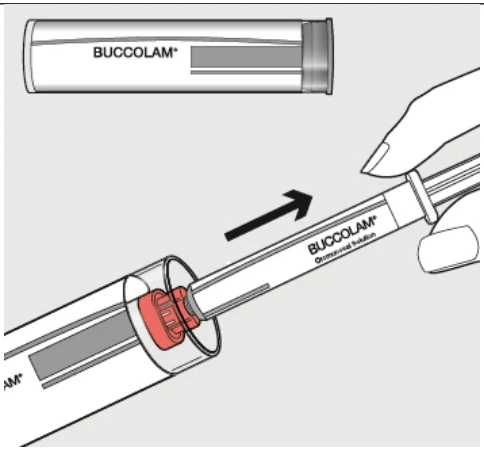 | Hold the plastic tube and pull the cap off. Take the syringe out of the tube. |
|---|
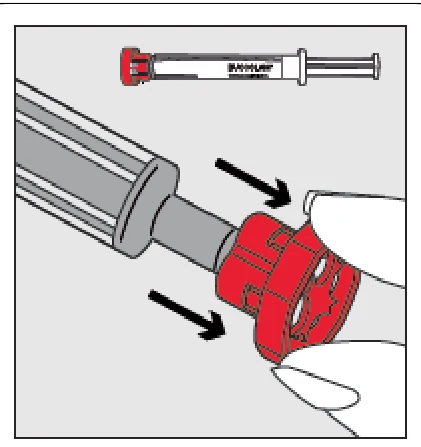
Step 2
| Pull the red cap off the tip of the syringe and dispose of it safely. |
|---|
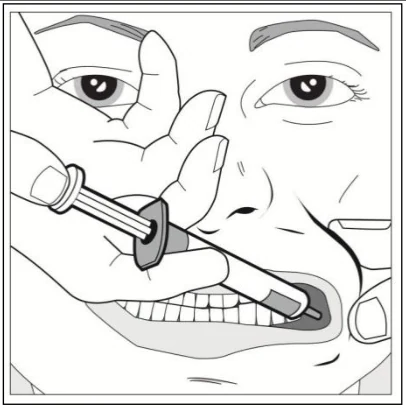
Step 3
| Using the finger and thumb gently pinch and pull back the child’s cheek. Put the tip of the syringe into the back of the space between the inside of the cheek and the lower gum. |
|---|
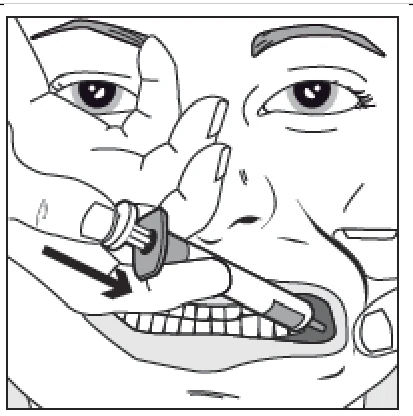
Step 4
Slowly press the syringe plunger until the plunger stops. The full amount of solution should be inserted slowly into the space between the gum and the cheek (buccal cavity). If prescribed by your healthcare professional (for larger volumes and/or smaller patients), you can give approximately half the dose slowly into one side of the mouth, then into the other side of the child’s mouth. |
|---|
 |
|---|
 |
|---|
 |
|---|
When to call for immediate medical help:
ALWAYS follow the treatment advice provided by the patient’s healthcare professional or as explained by a healthcare professional. If in any doubt, call for immediate medical help if:
- The seizure does not stop within 10 minutes.
- You’re unable to empty the syringe or you spill some of the contents.
- The child’s breathing slows down or stops (e.g., slow or shallow breathing or blue lips).
- You observe signs of a heart attack which may include chest pain or pain that spreads to the neck and shoulders and down the left arm.
- The child is sick (vomits) and the seizure does not stop within 10 minutes. Do not give the patient another dose of BUCCOLAM.
Keep the syringe to show to the ambulance staff or healthcare professional.
If you have any further questions on the use of this medicine, ask a healthcare professional.
Usual dose:
Your healthcare professional will decide the right dose for you. This will be based on age, health, and if you are taking certain medications.
The usual dose is the full contents of one syringe, as follows:
| Age Range | Dose | Label Colour |
|---|---|---|
| 3 months to less than 6 months (only in a hospital setting) | 2.5 mg | Yellow |
| 6 months to less than 1 year | 2.5 mg | Yellow |
| 1 year to less than 5 years | 5 mg | Blue |
| 5 years to less than 10 years | 7.5 mg | Purple |
| 10 years to less than 18 years | 10 mg | Orange |
Do NOT give more than one dose.
Do not take BUCCOLAM more frequently than every five days or five times per month.
Overdose:
An overdose with BUCCOLAM may cause the following:
- drowsiness;
- confusion;
- tiredness;
- fatigue;
- sleepiness;
- impaired coordination;
- reduced reflexes;
- low energy;
- reduced muscle control;
- decreased muscle tone;
- low blood pressure;
- breathing difficulties (e.g., slow or shallow breathing);
- cardiorespiratory arrest (heart and breathing stop working);
- coma.
If you think you, or a person you are caring for, have taken too much BUCCOLAM, contact a healthcare professional, hospital emergency department, regional poison control centre or Health Canada’s toll-free number, 1-844 POISON-X (1-844-764-7669) immediately, even if there are no signs or symptoms.
Possible side effects from using BUCCOLAM:
These are not all the possible side effects you may have when taking BUCCOLAM. If you experience any side effects not listed here, tell your healthcare professional.
The side effects of BUCCOLAM may include:
- falls and fractures;
- headache;
- dizziness;
- drowsiness;
- feeling agitated;
- confusion;
- nausea and vomiting;
- hiccups;
- cough;
- skin rash.
Serious side effects and what to do about them
| Frequency/Side Effect/Symptom | Talk to your healthcare professional | Stop taking the/this drug (if applicable) and get immediate medical help | |
|---|---|---|---|
| Frequency/Side Effect/Symptom | Talk to your healthcare professional | Stop taking the/this drug (if applicable) and get immediate medical help | |
| Only if severe | In all cases | ||
| Only if severe | In all cases | ||
| Uncommon | |||
| Serious allergic reaction: Swelling of the face, lips, tongue or throat which makes it difficult to swallow or breathe, or a pale skin, a weak and rapid pulse, or feeling of loss of consciousness. | √ | ||
| Very rare | |||
| Severe breathing difficulties: slow or shallow breathing or blue lips. In very rare cases breathing might stop. | √ | ||
| Heart attack: signs may include chest pain which may spread to the child’s neck and shoulders and down their left arm. | √ | ||
| Unknown | |||
| Overdose: extreme sleepiness, confusion, slurred speech, slow reflexes, slow shallow breathing, coma, loss of balance and coordination, uncontrolled rolling of the eyes, and low blood pressure. | √ | ||
| Respiratory depression: slow, shallow or weak breathing. | √ | ||
Withdrawal: Severe symptoms include: Catatonia: feeling like you cannot move or respond. Delirium tremens: severe confusion, shivering, irregular heartrate and excessive sweating. Feeling depressed Dissociation: feeling disconnected from reality. Hallucinations: seeing or hearing things that are not there. Mania: overactive behaviour and thoughts. Psychosis: believing in things that are not true Convulsions: (seizures – including some that do not stop): loss of consciousness with uncontrollable shaking. Thoughts or actions of suicide Other symptoms include: Stomach cramps; trouble remembering or concentrating; diarrhea; feeling uneasy or restless; severe anxiety or panic-attacks; headache; sensitivity to light, noise or physical contact; shaking; vomiting; trouble sleeping; feeling irritable; muscle pain or stiffness; a burning or prickling feeling in the hands, arms, legs or feet; sweating. | √ | ||
If you have a troublesome symptom or side effect that is not listed here or becomes bad enough to interfere with your daily activities, tell your healthcare professional.
Reporting side effects
You can report any suspected side effects associated with the use of health products to Health Canada by:
- Visiting the Web page on Adverse Reaction Reporting (canada.ca/drug-device-reporting) for information on how to report online, by mail or by fax; or
- Calling toll-free at 1-866-234-2345.
NOTE: Contact your healthcare professional if you need information about how to manage your side effects. The Canada Vigilance Program does not provide medical advice.
Storage:
- Store BUCCOLAM in a secure place at room temperature (15°C to 30°C). Keep the syringe in the protective plastic tube. Do not refrigerate or freeze.
- Do not use this medicine if the packaging has been opened or damaged.
- Do not give this medicine after the expiry date which is stated on the carton, tube, and syringe labels after EXP. The expiry date refers to the last day of that month.
Keep out of reach and sight of children.
If you want more information about BUCCOLAM:
- Talk to your healthcare professional.
- Find the full Product Monograph that is prepared for healthcare professionals and includes the Patient Medication Information by visiting the Health Canada Drug Product Database website (https://www.canada.ca/en/health-canada/services/drugs-health-products/drug-products/drug-product-database.html); the manufacturer’s website (www.neuraxpharm.com); or by calling 1-888-550-6060.
- Administration Guide and Patient Booklet are available for download on the website www.pendopharm.com.
Date of Authorization: 2025-07-22
BUCCOLAM® is registered trademark of NEURAXPHARM PHARMACEUTICALS, S.L.