


Product Monograph - Cabazitaxel for Injection (DR Reddy's Laboratories)
RECENT MAJOR LABEL CHANGES
| 7 WARNINGS AND PRECAUTIONS, Reproductive Health: Female and Male Potential | 06/2025 |
|---|---|
| 7 WARNINGS AND PRECAUTIONS, 7.1.1 Pregnant Women | 06/2025 |
TABLE OF CONTENTS
Sections or subsections that are not applicable at the time of authorization are not listed.
RECENT MAJOR LABEL CHANGES ..................................................................................... 2
TABLE OF CONTENTS ............................................................................................................. 2
PART I: HEALTH PROFESSIONAL INFORMATION ........................................................... 4
1 INDICATIONS ........................................................................................................................... 4
1.1 Pediatrics (< 18 years of age): ..................................................................................... 4
1.2 Geriatrics (≥ 65 years age): .......................................................................................... 4
2 CONTRAINDICATIONS .......................................................................................................... 4
3 SERIOUS WARNINGS AND PRECAUTIONS BOX .......................................................... 4
4 DOSAGE AND ADMINISTRATION ...................................................................................... 5
4.1 Dosing Considerations .................................................................................................. 5
4.2 Recommended Dose and Dosage Adjustment ......................................................... 6
4.3 Reconstitution ................................................................................................................. 7
4.4 Administration ............................................................................................................... 10
4.5 Missed Dose ................................................................................................................. 10
5 OVERDOSAGE ...................................................................................................................... 11
6 DOSAGE FORMS, STRENGTHS, COMPOSITION AND PACKAGING ..................... 11
7 WARNINGS AND PRECAUTIONS ..................................................................................... 12
7.1 Special Populations ..................................................................................................... 16
7.1.1. Pregnant Women ......................................................................................................... 16
7.1.2 Breast-feeding .............................................................................................................. 16
7.1.3 Pediatrics (< 18 years of age): ................................................................................... 16
7.1.4 Geriatrics (≥ 65 years of age): .................................................................................... 16
7.1.5 Hepatic insufficiency .................................................................................................... 16
7.1.6 Renal insufficiency ....................................................................................................... 17
8 ADVERSE REACTIONS ....................................................................................................... 17
8.1 Adverse Reaction Overview ....................................................................................... 17
8.2 Clinical Trial Adverse Reactions ................................................................................ 17
8.4 Abnormal Laboratory Findings: Hematologic, Clinical Chemistry and Other ...... Quantitative Data ......................................................................................................... 22
8.5 Post-Market Adverse Reactions ............................................................................... 23
9 DRUG INTERACTIONS ........................................................................................................ 23
9.2 Drug Interactions Overview ....................................................................................... 23
9.4 Drug-Drug Interactions ............................................................................................... 24
9.5 Drug-Food Interactions ............................................................................................... 25
9.6 Drug-Herb Interactions ............................................................................................... 25
9.7 Drug-Laboratory Test Interactions ............................................................................ 25
10 CLINICAL PHARMACOLOGY .......................................................................................... 25
10.1 Mechanism of Action .................................................................................................. 25
10.2 Pharmacodynamics .................................................................................................... 25
10.3 Pharmacokinetics ........................................................................................................ 26
11 STORAGE, STABILITY AND DISPOSAL ....................................................................... 28
12 SPECIAL HANDLING INSTRUCTIONS .......................................................................... 29
PART II: SCIENTIFIC INFORMATION ................................................................................... 30
13 PHARMACEUTICAL INFORMATION ............................................................................. 30
14 CLINICAL TRIALS .............................................................................................................. 30
14.1 Trial Design and Study Demographics .................................................................... 30
14.2 Study Results ............................................................................................................... 33
15 MICROBIOLOGY ................................................................................................................. 36
16 NON-CLINICAL TOXICOLOGY ........................................................................................ 36
17 SUPPORTING PRODUCT MONOGRAPHS ................................................................... 39
PATIENT MEDICATION INFORMATION ....................................................................... 40
PART I: HEALTH PROFESSIONAL INFORMATION
1 INDICATIONS
Cabazitaxel for Injection (cabazitaxel) in combination with prednisone or prednisolone is indicated for:
- the treatment of patients with castration resistant (hormone refractory) metastatic prostate cancer previously treated with a docetaxel containing regimen.
Cabazitaxel for Injection should only be administered by a qualified healthcare professional experienced in the use of antineoplastic therapy (see 3 SERIOUS WARNINGS AND PRECAUTIONS BOX, 4 DOSAGE AND ADMINISTRATION and 12 SPECIAL HANDLING INSTRUCTIONS).
1.1 Pediatrics (< 18 years of age):
There is no indication for the use of Cabazitaxel for Injection in the pediatric population. The safety and the efficacy of cabazitaxel in children have not been established (see 10 CLINICAL PHARMACOLOGY, Special Populations and Conditions).
1.2 Geriatrics (≥ 65 years age):
Evidence from clinical studies suggests that use in the geriatric population is associated with differences in safety and a brief discussion can be found in the appropriate sections (see , 4 DOSAGE AND ADMINISTRATION, 7_WARNINGS_AND_PRECAUTIONS, 7.1 Special Populations, 8_ADVERSE_REACTIONS, 8.2 Clinical Trial Adverse Reactions, 10 CLINICAL PHARMACOLOGY, Special Populations and Conditions).
2 CONTRAINDICATIONS
Cabazitaxel for Injection is contraindicated in patients with:
- a history of severe hypersensitivity reactions to cabazitaxel or other drugs formulated with polysorbate 80, or to any ingredient in the formulation or component of the container. For a complete listing, see 6 DOSAGE FORMS, STRENGTHS, COMPOSITION AND PACKAGING.
- neutrophil counts ≤1500/mm3;
- severe hepatic impairment (total bilirubin > 3 x Upper Limit of Normal (ULN)).
- concomitant vaccination with yellow fever vaccine (see 9 DRUG INTERACTIONS).
3 SERIOUS WARNINGS AND PRECAUTIONS BOX
Serious Warnings and Precautions
|
|---|
4 DOSAGE AND ADMINISTRATION
4.1 Dosing Considerations
- The use of Cabazitaxel for Injection should be confined to units specialized in the administration of cytotoxics and it should only be administered by a qualified healthcare professional experienced in the use of antineoplastic therapy (see 4.4 Administration and 12 SPECIAL HANDLING INSTRUCTIONS).
Premedication is recommended prior to treatment.
Premedicate prior to each administration of Cabazitaxel for Injection with the following intravenous medications to reduce the incidence and severity of a hypersensitivity reaction:
- antihistamine (diphenhydramine 25 mg or equivalent),
- corticosteroid (dexamethasone 8 mg or equivalent) and with
- H2 antagonist (ranitidine or equivalent) (see 7 WARNINGS AND PRECAUTIONS).
Antiemetics prophylaxis is recommended and can be given orally or intravenously as needed.
- Dosage modifications may be required if patients experience neutropenia, febrile neutropenia, diarrhea or peripheral neuropathy (see 7 WARNINGS AND PRECAUTIONS and 4 DOSAGE AND ADMINISTRATION, 4.2 Recommended Dose and Dosage Adjustment).
- Patients treated with Cabazitaxel for Injection may receive prophylactic G-CSF as per American Society of Clinical Oncology (ASCO) and/or current institutional guidelines, to reduce the risk or manage neutropenia complications (febrile neutropenia, prolonged neutropenia or neutropenic infection) (see 7 WARNINGS AND PRECAUTIONS, Hematologic).
- The patients may also receive antibiotics when appropriate.
Hepatic insufficiency
Cabazitaxel is extensively metabolized in the liver.
- Patients with mild hepatic impairment (total bilirubin >1 to ≤1.5 x upper limit of normal (ULN) or Aspartate Aminotransferase (AST >1.5 x ULN), should have Cabazitaxel for Injection dose reduced to 20 mg/m2. Administration of Cabazitaxel for Injection to patients with mild hepatic impairment should be undertaken with caution and close monitoring of safety.
In patients with moderate hepatic impairment (total bilirubin >1.5 to ≤ 3.0 x ULN), the maximum tolerated dose (MTD) was 15 mg/m2. If the treatment is considered in patients with moderate hepatic impairment, the dose of cabazitaxel should not exceed 15 mg/m2. However, limited efficacy data are available and the efficacy of cabazitaxel at this dose is unknown.
Patients should be treated with caution and monitored carefully during treatment.
- Cabazitaxel for Injection is contraindicated in patients with severe hepatic impairment (total bilirubin >3 x ULN) (see 2 CONTRAINDICATIONS, 7 WARNINGS AND PRECAUTIONS, 7.1 Special Populations,10 CLINICAL PHARMACOLOGY, Special Populations and Conditions).
Renal insufficiency
Cabazitaxel is minimally excreted through the kidney. No dose adjustment is necessary in patients with renal impairment not requiring hemodialysis. Patients presenting end stage renal disease (CLCR <15 mL/min/1.73m2), by their condition and the limited amount of available data; should be treated with caution and monitored carefully during treatment (see 7 WARNINGS AND PRECAUTIONS, 7.1 Special Populations, 10 CLINICAL PHARMACOLOGY, Special Populations and Conditions).
Concomitant drugs
Concomitant drugs that are CYP3A inducers or potent CYP3A inhibitors should be avoided (see 9 DRUG INTERACTIONS)
4.2 Recommended Dose and Dosage Adjustment
Recommended Dose
The recommended dose of Cabazitaxel for Injection is 20 mg/m2 administered as a 1-hour intravenous infusion every 3 weeks in combination with oral prednisone (or prednisolone) 10 mg administered daily throughout Cabazitaxel for Injection treatment (see 14 CLINICAL TRIALS, Study EFC11785 [PROSELICA]).
A dose of 25 mg/m2 can be used in select patients at the discretion of the treating healthcare provider (see 7 WARNINGS AND PRECAUTIONS, 8 ADVERSE REACTIONS, and 14 CLINICAL TRIALS, Study EFC6193 [TROPIC]).
Dosage Adjustments
Dosage modifications should be made if patients experience the following adverse reactions:
Table 1 Recommended Dosage Modifications for adverse reaction in patients treated with Cabazitaxel for Injection
| Adverse reactions | Dosage Modification |
| Prolonged grade ≥ 3 neutropenia (greater than 1 week) despite appropriate medication including G-CSF | Delay treatment until neutrophil count is >1500 cells/mm3, then reduce dosage of Cabazitaxel for Injection by one dose level. |
| Febrile neutropenia or neutropenic infection | Delay treatment until improvement or resolution, and until neutrophil count is > 1500 cells/mm3, then reduce dosage of Cabazitaxel for Injection by one dose level. |
| Grade ≥ 3 diarrhea or persisting diarrhea despite appropriate medication, fluid and electrolytes replacement | Delay treatment until improvement or resolution, then reduce dosage of Cabazitaxel for Injection by one dose level. |
| Grade > 2 peripheral neuropathy | Delay treatment until improvement, then consider a dose reduction by one dose level. |
Patients at a 20 mg/m2 dose who require dose reduction should decrease dosage of Cabazitaxel for Injection to 15 mg/m2 (see 8 ADVERSE REACTIONS).
Patients at a 25 mg/m2 dose who require dose reduction should decrease dosage of Cabazitaxel for Injection to 20 mg/m2. One additional dose reduction to 15 mg/m2 may be considered (see 8 ADVERSE REACTIONS).
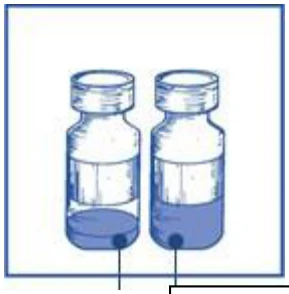
Concentrate
Diluent
Pediatrics (<18 years of age): Limited data are available on the use of cabazitaxel in pediatric patients. The safety and the efficacy of cabazitaxel in children have not been established (see 1 INDICATIONS, 1.1 Pediatrics, 10 CLINICAL PHARMACOLOGY, Special Populations and Conditions).
Geriatrics (≥ 65 years of age): No specific dose adjustment for the use of Cabazitaxel for Injection in elderly patients is recommended (see 7 WARNINGS AND PRECAUTIONS, 7.1 Special Populations, 8 ADVERSE REACTIONS, 8.2 Clinical Trial Adverse Reactions, 10 CLINICAL PHARMACOLOGY, Special Populations and Conditions).
4.3 Reconstitution
Dilution (2 steps process)
Read this ENTIRE section carefully before mixing and diluting. Cabazitaxel for Injection requires TWO dilutions prior to administration. Follow the preparation instructions provided below.
Note: Both the Cabazitaxel for Injection 60 mg/1.5 mL concentrate vial (fill volume: 73.2 mg cabazitaxel/1.83 mL) and the diluent vial (fill volume: 5.7 mL) contain an overfill to compensate for liquid loss during preparation. This overfill ensures that after dilution with the ENTIRE content of the accompanying diluent, there is an initial diluted solution containing 10 mg/ml of Cabazitaxel for Injection (see 6 DOSAGE FORMS, STRENGTHS, COMPOSITION AND PACKAGING).
The following 2-step dilution process must be carried out in an aseptic manner for preparing the infusion solution.
Step 1: Initial dilution of Cabazitaxel for Injection 60 mg/1.5 mL concentrated solution with the supplied diluent.
Step 1.1
Inspect the Cabazitaxel for Injection 60 mg/1.5 mL concentrate vial and the
supplied diluent. The concentrated solution should be clear
(see 11 STORAGE, STABILITY AND DISPOSAL).
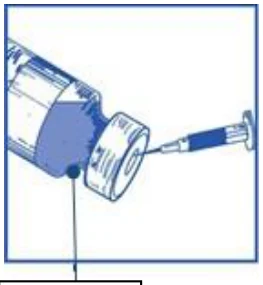
Step 1.2
Using a syringe fitted with a needle, aseptically withdraw the ENTIRE
content of supplied diluent by partially inverting the vial.
Diluent
Step 1.3
Inject the ENTIRE content into the corresponding vial of Cabazitaxel for Injection
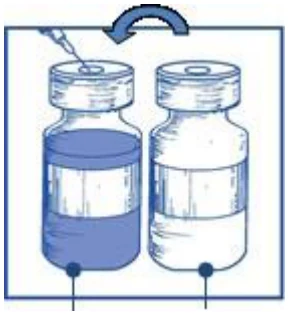
60 mg/1.5 mL concentrate.
To limit foaming as much as possible when injecting the diluent,
direct the needle onto the inside wall of the concentrate vial
and inject slowly.
Once reconstituted, the resultant solution contains 10 mg/mL
of Cabazitaxel for Injection
Step 1.4
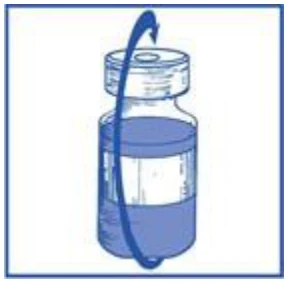
Remove the syringe and needle and mix manually and gently
by repeated inversions for at least 45 seconds until obtaining clear
and homogeneous solution. Do not shake.
Step 1.5
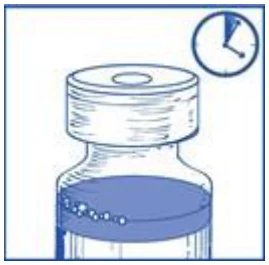
Let this solution stand for a few minutes (approximately 5 minutes)
to allow any foam to dissipate and check that the solution is
homogeneous and clear. It is normal for foam to persist after this
time period. It is not required that all foam dissipates prior to
continuing the preparation process.
This resulting concentrate-diluent solution contains 10 mg/mL of Cabazitaxel for Injection (at least 6 mL deliverable volume). It should be immediately diluted (within 1 hour) as detailed in Step 2.
The solution is stable for 1 hour if stored at room temperature (15°C to 30°C)
(see 11 STORAGE, STABILITY AND DISPOSAL).
More than 1 vial of the initial diluted solution may be necessary to administer the prescribed dose.
Discard any unused portion.
Step 2: Preparation of the dilution solution for infusion.
Step 2.1
Diluent
Aseptically withdraw the required amount of initial diluted Cabazitaxel for Injection solution (10 mg/ml of Cabazitaxel for Injection), with a graduated syringe fitted with a needle. Since foam may persist on the wall of the vial of this solution following its preparation described in Step 1, it is preferable to place the needle of the syringe in the middle when extracting the solution. As an example, a dose of 45 mg of Cabazitaxel for Injection would require 4.5 ml of the concentrate-diluent mixture prepared following Step 1. More than 1 vial of the initial diluted solution may be necessary to administer the prescribed dose. | 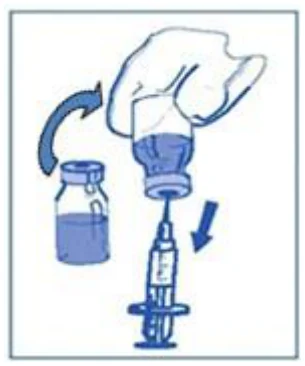 | |
Step 2.2 Inject in a sterile PVC-free container of either 5% dextrose solution or 0.9% sodium chloride solution for infusion. The concentration of the infusion solution should be between 0.10 mg/mL and 0.26 mg/mL. | 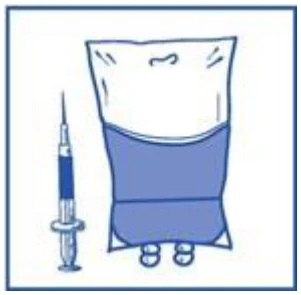 | |
Step 2.3 Remove the syringe and needle and mix the content of the infusion by gently inverting the bag or bottle. | 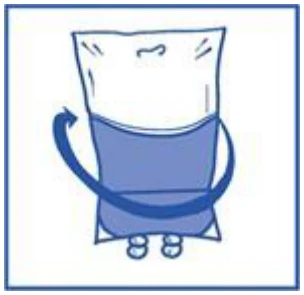 | |
Step 2.4 As with all parenteral products, the resulting infusion solution should be inspected visually for particulate matter and discoloration prior to administration. Solution containing a precipitate or that is not clear should be discarded. | 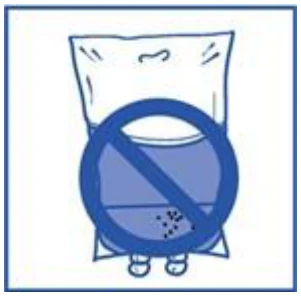 | |
| After final dilution in the infusion bag/bottle, the infusion solution may be stored up to 8 hours at room temperature (including the 1 hour infusion). Chemical and physical stability of the infusion solution has been demonstrated for 48 hours under refrigerated conditions (this includes the 1-hour infusion which should be administered at room temperature) (see 11 STORAGE, STABILITY AND DISPOSAL). | ||
Discard any unused portion.
Table 2 – Two Steps Dilution Process
| Step | Vial Size | Volume of Diluent to be Added to Vial | Approximate Available Volume | Concentration per mL |
Step 1 Initial dilution | Concentrated solution Cabazitaxel for Injection 60 mg/1.5 mL | ENTIRE content of the supplied diluent | At least 6 mL deliverable volume | 10 mg/mL of cabazitaxel |
Step 2 Preparation of the infusion solution | Solution after initial dilution 10 mg/mL of cabazitaxel (at least 6 mL deliverable volume) | 5% dextrose solution or 0.9% sodium chloride solution for infusion | Depends on the dosage | The concentration of the infusion solution should be between 0.10 mg/mL and 0.26 mg/mL |
Incompatibilities / Compatibilities
- Always dilute Cabazitaxel for Injection 60 mg/1.5 mL concentrated solution with the ENTIRE content of the supplied diluent before adding to infusion solutions.
- Cabazitaxel for Injection must not be mixed with other drugs.
- Cabazitaxel for Injection contains polysorbate 80 which is known to increase the rate of di-(2-ethylhexyl) phthalate extraction (DEHP) from polyvinyl chloride (PVC). PVC infusion containers or polyurethane infusion sets should not be used for the preparation and administration of the infusion solution.
4.4 Administration
- The final Cabazitaxel for Injection infusion solution should be administered intravenously as a 1-hour infusion at room temperature (see the two steps dilution process described below).
- Use an in-line filter of 0.22 micrometer nominal pore size (also referred to as 0.2 micrometer) during administration.
- Do not use PVC infusion containers or polyurethane infusion sets for the preparation and administration of Cabazitaxel for Injection infusion solution.
The Cabazitaxel for Injection infusion solution should be used immediately. However, in-use storage time can be longer under specific conditions mentioned in section 11 STORAGE, STABILITY AND DISPOSAL.
Inspect visually for particulate matter, any crystals and discoloration prior to administration. If the Cabazitaxel for Injection solution is not clear or appears to have precipitation, it should be discarded.
Please also refer to 12 SPECIAL HANDLING INSTRUCTIONS.
4.5 Missed Dose
This medicine needs to be given on a fixed schedule. Instruct the patient to call their doctor or nurse for instructions.
5 OVERDOSAGE
Signs and Symptoms
The anticipated complications of overdose would be exacerbation of adverse reactions as bone marrow suppression (manifested as neutropenia, anemia, thrombocytopenia, or pancytopenia) and gastrointestinal disorders.
Management
There is no known antidote to Cabazitaxel for Injection. In case of overdose, the patient should be kept in a specialized unit and closely monitored. Patients should receive therapeutic G-CSF as soon as possible after discovery of overdose. Other appropriate symptomatic measures should be taken.
| . For the most recent information in the management of a suspected drug overdose, contact your regional poison control centre or Health Canada’s toll-free number, 1-844 POISON-X (1-844-764-7669). |
|---|
6 DOSAGE FORMS, STRENGTHS, COMPOSITION AND PACKAGING
Table 3 – Dosage Forms, Strengths, Composition and Packaging
| Route of Administration | Dosage Form / Strength / Composition | All Non-medicinal Ingredients |
| Intravenous infusion | Concentrated solution / 40 mg/mL | Anhydrous citric acid, and Polysorbate 80 |
| Diluent | 13% (w/w) ethanol in water for injection |
Dosage Forms
Two-vial formulation:
- One single-use concentrate vial of Cabazitaxel for Injection 60 mg /1.5 mL (40 mg/mL). The concentrated solution is a clear yellow to brownish-yellow oily solution.
- One single-use diluent vial. The diluent is a clear and colorless solution.
Composition
Cabazitaxel for Injection 60 mg /1.5 mL Concentrated Solution
- Cabazitaxel for Injection 60 mg/1.5 mL concentrated solution contains 60 mg cabazitaxel (anhydrous and solvent free) and 1.56 g polysorbate 80 (including citric acid for pH adjustment) in a total volume of 1.5 mL (nominal volume). Preservative free.
- Each mL of the concentrated solution contains 40 mg cabazitaxel (anhydrous) and 1.04 g polysorbate 80. Preservative free.
Diluent
- The diluent for Cabazitaxel for Injection contains 13% (w/w) ethanol in water for injection, 4.5 mL (nominal volume).
Note: The Cabazitaxel for Injection 60 mg/1.5 mL concentrate vials are filled with a 22% excess (corresponding to 73.2 mg cabazitaxel for a total fill volume of 1.83 mL) and the diluent vials with a 26% excess (total fill volume 5.7 mL).
Table 4 – Nominal and actual fill volumes for Cabazitaxel for Injection diluent and concentrate vials
| Diluent vial | Concentrate vial | |
| Nominal volume | 4.5 mL | 1.5 mL (60 mg cabazitaxel) |
| Actual fill volume | 5.7 mL | 1.83 mL (73.2 mg cabazitaxel) |
This fill volume has been established during the development of Cabazitaxel for Injection to compensate for liquid loss during preparation of the initial diluted solution. This overfill ensures that after dilution with the ENTIRE content of the accompanying diluent for Cabazitaxel for Injection, there is a minimal extractable premix volume of 6 mL containing 10 mg/mL which corresponds to the labeled amount of 60 mg per vial.
Packaging
One pack contains (2 vials):
- One concentrate vial: 1.5 mL (nominal volume) of Cabazitaxel for Injection 60 mg concentrated solution in 15 mL clear glass vial (type I) closed with a grey chlorobutyl rubber closure sealed by an aluminium cap covered with an orange plastic flip-off cap. The stopper is not made with natural rubber latex.
- One diluent vial: 4.5 mL (nominal volume) of diluent in 15 mL clear glass vial (type I) closed with a grey chlorobutyl rubber closer sealed by an aluminium cap covered with a mistgrey plastic flip-off cap.
7 WARNINGS AND PRECAUTIONS
Please see 3 SERIOUS WARNINGS AND PRECAUTIONS BOX.
Cardiovascular
There is pre-clinical evidence that cabazitaxel may prolong the QT interval (see 10 CLINICAL PHARMACOLOGY, 16 NON-CLINICAL TOXICOLOGY, Cardiovascular Safety Pharmacology). To further investigate the effect of cabazitaxel on QT interval, an open-label trial was conducted. No large changes in the mean QT interval (i.e., > 20 ms) from baseline based on Fridericia correction method were detected. However, a small increase in the mean QTc interval (i.e., < 10 ms) cannot be excluded due to study design limitations.
Cardiac arrhythmias have been reported in patients treated with cabazitaxel, most commonly tachycardia and atrial fibrillation. During the randomized TROPIC clinical trial, 4 fatal cases related to cardiac events were reported, although none was considered related to cabazitaxel by the investigator (see 8 ADVERSE REACTIONS, 8.2 Clinical Trial Adverse Reactions, Study EFC6193 [TROPIC], Cardiac disorders and arrhythmias). During the randomized PROSELICA study, one death due to cardiac arrest occurred in the cabazitaxel 25 mg/m2 arm.
Driving and Operating Machinery
No studies on the effects on the ability to drive and use machines have been performed. However, based on the safety profile, cabazitaxel f may have moderate influence on the ability to drive and use machines as it may cause fatigue and dizziness. Patients should be advised not to drive or use machines if they experience these adverse reactions during treatment.
Gastrointestinal
If patients experience diarrhea following administration of Cabazitaxel for Injection they should be treated with commonly used anti-diarrheal medications. Appropriate measures should be taken to rehydrate the patients to avoid complications such as dehydration and electrolyte imbalance. Treatment delay or dosage reduction may be necessary for grade ≥3 diarrhea (see 4 DOSAGE AND ADMINISTRATION). During the randomized clinical trial, one fatal case was due to electrolyte imbalance (see 8 ADVERSE REACTIONS, 8.2 Clinical Trial Adverse Reactions, Study EFC6193 [TROPIC], Gastrointestinal).
If patients experience nausea or vomiting, they may be treated with commonly used anti-emetics.
Gastrointestinal (GI) hemorrhage and perforation, ileus, colitis, including fatal outcome, have been reported in patients treated with cabazitaxel. Caution is advised with treatment of patients most at risk of developing gastrointestinal complications: those with neutropenia, the elderly, concomitant use of NSAIDs, anti-platelet therapy or anti-coagulants, and patients with a prior history of pelvic radiotherapy, gastrointestinal disease, such as ulceration and GI bleeding.
Symptoms such as abdominal pain and tenderness, fever, persistent constipation, diarrhoea, with or without neutropenia, may be early manifestations of serious gastrointestinal toxicity and should be evaluated and treated promptly. Cabazitaxel treatment delay or discontinuation may be necessary.
Genitourinary
Cystitis due to radiation recall phenomenon has been reported with cabazitaxel therapy in patients who have previously received pelvic radiation therapy and docetaxel containing regimen (see 8 ADVERSE REACTIONS, 8.5 Post-Market Adverse Reactions). Appropriate measures should be initiated. Interruption or discontinuation of Cabazitaxel for Injection therapy may be necessary.
Hematologic
Bone marrow suppression
Bone marrow suppression manifested as neutropenia, anemia, thrombocytopenia, or pancytopenia may occur (see additional information in the Anemia and Neutropenia sections below).
Anemia
Anemia has been observed in patients receiving cabazitaxel. Hemoglobin and hematocrit should be checked before treatment with cabazitaxel and if patients exhibit signs or symptoms of anemia or blood loss (see 7 WARNINGS AND PRECAUTIONS, Monitoring and Laboratory Tests). Caution is recommended in patients with hemoglobin <10 g/dl and appropriate measures should be taken as clinically indicated.
Neutropenia
During the randomized TROPIC clinical trial, five patients experienced fatal infectious adverse events (sepsis or septic shock). All had grade 4 neutropenia and one had febrile neutropenia. One additional patient death was attributed to neutropenia without a documented infection (see 8 ADVERSE REACTIONS, 8.2 Clinical Trial Adverse Reactions, Study EFC6193
[TROPIC], 8.4 Abnormal Laboratory Findings: Hematologic, Clinical Chemistry and Other Quantitative Data).
In the randomized PROSELICA trial, 125 (21.0%) patients in the cabazitaxel 25 mg/m2 group and 37 (6.4%) patients in the cabazitaxel 20 mg/m2 group experienced at least one treatment-emergent adverse event (TEAE) of febrile neutropenia, neutropenic infection, neutropenic sepsis or Grade 4 neutropenia. Grade 4 neutropenia, febrile neutropenia, neutropenic infection, and neutropenic sepsis were all reported in more cycles in the cabazitaxel 25 mg/m2 group compared with the cabazitaxel 20 mg/m2 group, irrespective of G-CSF use, and were reported in fewer cycles for subjects who took G-CSF as prophylaxis compared with patients with no G-CSF use.
Neutropenia is the most common adverse reaction of cabazitaxel (see 8 ADVERSE REACTIONS).
Ongoing patient monitoring is required from the first cycle and throughout treatment. Monitoring of complete blood count is essential on a weekly basis during cycle 1 and before each treatment cycle and as required thereafter so that the dose can be adjusted, if needed (See Monitoring and Laboratory Tests). Reduce dose in case of febrile neutropenia, or prolonged neutropenia despite appropriate treatment (see 4 DOSAGE AND ADMINISTRATION). Re-treat only when neutrophils recover to a level >1500/mm3 (see 2 CONTRAINDICATIONS).
Patients treated with Cabazitaxel for Injection may receive prophylactic G-CSF as per American Society of Clinical Oncology (ASCO) and/or current institutional guidelines, to reduce the risk or manage neutropenia complications (febrile neutropenia, prolonged neutropenia or neutropenic infection). Patients may also receive antibiotics when appropriate. The use of G-CSF has been shown to limit the incidence and severity of neutropenia. Primary prophylaxis with G-CSF should be considered in patients with high-risk clinical features (age > 65 years, poor performance status, previous episodes of febrile neutropenia, extensive prior radiation ports, poor nutritional status, or other serious comorbidities) that predispose them to increased complications from prolonged neutropenia.
Immune
Hypersensitivity reactions
All patients should be premedicated prior to the initiation of the infusion of Cabazitaxel for Injection (see 4 DOSAGE AND ADMINISTRATION).
Patients should be observed closely for hypersensitivity reactions especially during the first and second infusions. Hypersensitivity reactions may occur within a few minutes following the initiation of the infusion of Cabazitaxel for Injection, thus facilities and equipment for the treatment of hypotension and bronchospasm should be available. Severe reactions can occur and may include generalized rash/erythema, hypotension and bronchospasm. Severe hypersensitivity reactions require immediate discontinuation of Cabazitaxel for Injection and appropriate therapy. Patients who have a history of severe hypersensitivity reactions should not be rechallenged with Cabazitaxel for Injection (see 2 CONTRAINDICATIONS).
Monitoring and Laboratory Tests
Monitoring of complete blood count (including differential and platelets) is essential on a weekly basis during cycle 1 and before each treatment cycle and as required thereafter so that the dose can be adjusted, if needed (see 7 WARNINGS AND PRECAUTIONS,
Hematologic).
Renal function should be monitored during Cabazitaxel for Injection therapy. Serum creatinine should be measured at baseline and with each blood count. Cabazitaxel for Injection treatment should be discontinued in case of renal failure ≥ grade 3 (see 7 WARNINGS AND PRECAUTIONS, Renal, Monitoring and Laboratory Tests).
Liver function tests (including AST, ALT and total bilirubin) should be measured at baseline and before each cycle of Cabazitaxel for Injection (see 2 CONTRAINDICATIONS and 7 WARNINGS AND PRECAUTIONS, Hepatic, Monitoring and Laboratory Tests).
Neurologic
Cases of peripheral neuropathy, peripheral sensory neuropathy (e.g., paraesthesias, dysaesthesias) and peripheral motor neuropathy have been observed in patients receiving cabazitaxel (see 8 ADVERSE REACTIONS).
Renal
Renal disorders have been reported in association with sepsis, severe dehydration due to diarrhea, vomiting and obstructive uropathy. Renal failure including 4 cases with fatal outcome was observed during the TROPIC randomized clinical trial; 1 fatal case of renal failure was observed in the PROSELICA trial in the cabazitaxel 20 mg/m2 arm (see 8 ADVERSE REACTIONS, 8.2 Clinical Trials Adverse Drug Reactions).
Appropriate measures should be taken to identify the cause and intensively treat the patients if this occurs.
Renal function should be monitored during Cabazitaxel for Injection therapy. Serum creatinine should be measured at baseline and with each blood count. Cabazitaxel for Injection treatment should be discontinued in case of renal failure ≥ grade 3 (see 7 WARNINGS and PRECAUTIONS, Monitoring and Laboratory tests).
Reproductive Health: Female and Male Potential
Due to potential exposure via seminal liquid, men with partners of childbearing potential should use reliable contraception throughout treatment and are recommended to continue this for up to 6 months after the last dose of Cabazitaxel for Injection. Men being treated with Cabazitaxel for Injection are advised to seek advice on conservation of sperm prior to treatment (see 7.1.1 Pregnant Women).
Fertility
The effect of cabazitaxel on human fertility is unknown. Animal studies showed that cabazitaxel affected reproductive system in male rats and dogs (see 16 NON-CLINICAL TOXICOLOGY).
Respiratory
Interstitial pneumonia/pneumonitis, interstitial lung disease and acute respiratory distress syndrome have been reported and may be associated with fatal outcome (see 8 ADVERSE REACTIONS, 8.5 Post-Market Adverse Reactions). If new or worsening pulmonary symptoms develop, patients should be closely monitored, promptly investigated, and appropriately treated. Interruption of Cabazitaxel for Injection therapy is recommended until diagnosis is available. Early use of supportive care measures may help improve the condition. The benefit of resuming Cabazitaxel for Injection treatment must be carefully evaluated.
7.1 Special Populations
7.1.1. Pregnant Women
There are no data from the use of cabazitaxel in pregnant women. Cabzaitaxel crosses the placenta barrier. Cabazitaxel has been shown to be genotoxic by an aneugenic mechanism. In non-clinical studies in rats and rabbits, cabazitaxel has also been shown to be embryotoxic, fetotoxic and abortifacient at exposures significantly lower than those expected at the recommended human dose level (see 16 NON- CLINICAL TOXICOLOGY). Cabazitaxel for Injection is not recommended for use during pregnancy in woman.
7.1.2 Breast-feeding
Nursing Women:
Available pharmacokinetics data in animals have shown excretion of cabazitaxel and its metabolites in milk (see 16 NON-CLINICAL TOXICOLOGY). Cabazitaxel for Injection should not be used during breast-feeding.
7.1.3 Pediatrics (< 18 years of age):
Limited data are available on the use of cabazitaxel in pediatric patients. The safety and the efficacy of cabazitaxel in children have not been established (see 10 CLINICAL PHARMACOLOGY, Special Populations and Conditions).
7.1.4 Geriatrics (≥ 65 years of age):
Elderly patients may be more likely to experience certain adverse reactions including neutropenia and febrile neutropenia (see 8 ADVERSE REACTIONS, 8.2 Clinical Trial Adverse Reactions). However, no specific dose adjustment for the use of Cabazitaxel for Injection in elderly patients is recommended (see 4 DOSAGE AND ADMINISTRATION, 4.2 Recommended Dose and Dosage Adjustment).
7.1.5 Hepatic insufficiency
Cabazitaxel is extensively metabolized in the liver.
- Patients with mild hepatic impairment (total bilirubin >1 to ≤1.5 x Upper Limit of Normal (ULN) or AST >1.5 x ULN), should have Cabazitaxel for Injection dose reduced to 20 mg/m2. Administration of Cabazitaxel for Injection to patients with mild hepatic impairment should be undertaken with caution and close monitoring of safety.
- In patients with moderate hepatic impairment (total bilirubin >1.5 to ≤ 3.0 x ULN), the maximum tolerated dose (MTD) was 15 mg/m2. If the treatment is considered in patients with moderate hepatic impairment, the dose of cabazitaxel should not exceed 15 mg/m2. However, limited efficacy data are available and the efficacy of cabazitaxel at this dose is unknown. Patients should be treated with caution and monitored carefully during treatment.
- Cabazitaxel for Injection is contraindicated in patients with severe hepatic impairment (total bilirubin >3 x ULN) (see 2 CONTRAINDICATIONS, 7 WARNINGS AND PRECAUTIONS, 7.1 Special Populations, 10 CLINICAL PHARMACOLOGY, Special Populations and Conditions).
- Hepatic impairment increases the risk of severe and life-threatening complications in patients receiving other drugs belonging to the same class as Cabazitaxel for Injection.
7.1.6 Renal insufficiency
Cabazitaxel is minimally excreted through the kidney. No dose adjustment is necessary in patients with renal impairment not requiring hemodialysis. Patients presenting end-stage renal failure (CLCR <15 mL/min/1.73 m2), by their condition and the limited amount of available data; should be treated with caution and monitored carefully during treatment (see 7 WARNINGS AND PRECAUTIONS, 7.1 Special Populations, 10 CLINICAL PHARMACOLOGY, Special Populations and Conditions).
8 ADVERSE REACTIONS
8.1 Adverse Reaction Overview
The Grade ≥ 3 adverse reactions reported in ≥ 5% of the patients in the phase III TROPIC study including 371 patients in the cabazitaxel group treated with cabazitaxel 25 mg/m2 were neutropenia, leucopenia, anemia, febrile neutropenia, diarrhea, fatigue, and asthenia. The most common adverse reactions leading to treatment discontinuation were neutropenia and renal failure (see 7 WARNINGS AND PRECAUTIONS and Study EFC6193 [TROPIC] below).
The Grade ≥ 3 adverse reactions occurring ≥5% more commonly in patients on the 25 mg/m2 versus 20 mg/m2 arms in the phase III PROSELICA study were leukopenia, neutropenia, and febrile neutropenia. The most common adverse reactions leading to treatment discontinuation were neutropenia/neutropenic infection/neutropenic sepsis, fatigue and hematuria on the 25 mg/m2 arm, and fatigue and neutropenia/neutropenic infection/neutropenic sepsis on the 20 mg/m2 arm (see 7 WARNINGS AND PRECAUTIONS and Study EFC11785 [PROSELICA] below).
8.2 Clinical Trial Adverse Reactions
Clinical trials are conducted under very specific conditions. The adverse reaction rates observed in the clinical trials; therefore, may not reflect the rates observed in practice and should not be compared to the rates in the clinical trials of another drug. Adverse reaction information from clinical trials may be useful in identifying and approximating rates of adverse drug reactions in real-world use.
Study EFC6193 (TROPIC)
The safety of cabazitaxel in combination with prednisone or prednisolone was evaluated in 371 patients with castration resistant (hormone refractory) metastatic prostate cancer, in a randomized open label, controlled phase III study (TROPIC), who were randomized to receive either cabazitaxel 25 mg/m2 or mitoxantrone 12 mg/m2. Patients received a median duration of 6 cycles of cabazitaxel or 4 of mitoxantrone.
Very common (≥ 10%) grade 1-4 adverse reactions were anemia, leucopenia, neutropenia, thrombocytopenia, diarrhea, fatigue, nausea, vomiting, constipation, asthenia, abdominal pain, hematuria, back pain, anorexia, peripheral neuropathy (including peripheral sensory and motor neuropathy), pyrexia, dyspnea, dysgeusia, cough, arthralgia, and alopecia (see Table 5).
The grade 3-4 adverse reactions reported in ≥ 5% of the patients who received cabazitaxel were neutropenia, leucopenia, anemia, febrile neutropenia, diarrhea, fatigue and asthenia (see Table 5).
Discontinuation of treatment due to adverse reactions occurred in 68 patients (18.3%) in the cabazitaxel group and 31 patients (8.4%) in the mitoxantrone group. The most common adverse reactions leading to treatment discontinuation in the cabazitaxel group were neutropenia and renal failure.
Deaths due to causes other than disease progression within 30 days of last study drug dose were reported in 18 (4.9%) cabazitaxel -treated patients and 3 (< 1%) mitoxantrone-treated patients. The most common fatal adverse reactions in cabazitaxel-treated patients were due to infections (n=5). The majority (4 of 5 patients) of fatal infection-related adverse reactions in the randomized clinical trial occurred after a single dose of cabazitaxel.
Table 5 provides the incidence of all adverse reactions and hematologic abnormalities occurring at higher rate (at least 2% higher) in patients receiving cabazitaxel 25 mg/m2 every 3 weeks with prednisone 10 mg daily (or prednisolone) compared to mitoxantrone 12 mg/m2 every 3 weeks with prednisone 10 mg daily (or prednisolone) [TROPIC study]. Within each MedDRA system organ class, the adverse reactions are presented in order of decreasing frequency.
Table 5 - Incidence of reported adverse reactions and hematologic abnormalities in patients receiving cabazitaxel in combination with prednisone (or prednisolone) and patients receiving mitoxantrone in combination with prednisone (or prednisolone) (at least 2% higher incidence rate in the cabazitaxel group compared to mitoxantrone) [TROPIC study]
Cabazitaxel at 25 mg/m2 every 3 weeks in combination with prednisone 10 mg daily (or prednisolone) n=371 | Mitoxantrone at 12 mg/m2 every 3 weeks in combination with prednisone 10 mg daily (or prednisolone) n=371 | |||||||||||||||||
| Body System / Preferred term | All grades n (%) | Grade 3/4 n (%) | All grades n (%) | Grade 3/4 n (%) | ||||||||||||||
| Blood and lymphatic system disorders | ||||||||||||||||||
| Neutropeniaa | 347 (93.5%) | 303 (81.7%) | 325 (87.6%) | 215 (58.0%) | ||||||||||||||
| Anemiaa | 361 (97.3%) | 39 (10.5%) | 302 (81.4%) | 18 (4.9%) | ||||||||||||||
| Leucopeniaa | 355 (95.7%) | 253 (68.2%) | 343 (92.5%) | 157 (42.3%) | ||||||||||||||
| Thrombocytopeniaa | 176 (47.4%) | 15 (4%) | 160 (43.1%) | 6 (1.6%) | ||||||||||||||
| Febrile Neutropenia | --- | 28 (7.5%) | --- | 5 (1.3%) | ||||||||||||||
| Gastrointestinal disorders | ||||||||||||||||||
| Diarrhea | 173 (46.6%) | 23 (6.2%) | 39 (10.5%) | 1 (0.3%) | ||||||||||||||
| Nausea | 127 (34.2%) | 7 (1.9%) | 85 (22.9%) | 1 (0.3%) | ||||||||||||||
| Vomiting | 84 (22.6%) | 7 (1.9%) | 38 (10.2%) | 0 | ||||||||||||||
| Constipation | 76 (20.5%) | 4 (1.1%) | 57 (15.4%) | 2 (0.5%) | ||||||||||||||
| Abdominal Pain | 43 (11.6%) | 7 (1.9%) | 13 (3.5%) | 0 | ||||||||||||||
| Dyspepsia | 25 (6.7%) | 0 | 6 (1.6%) | 0 | ||||||||||||||
| Abdominal Pain Upper | 20 (5.4%) | 0 | 5 (1.3%) | 0 | ||||||||||||||
| Hemorrhoids | 14 (3.8%) | 0 | 3 (0.8%) | 0 | ||||||||||||||
| Gastrooesophageal Reflux Disease | 12 (3.2%) | 0 | 3 (0.8%) | 0 | ||||||||||||||
| General disorders and administration site conditions | ||||||||||||||||||
| Fatigue | 136 (36.7%) | 18 (4.9%) | 102 (27.5%) | 11 (3.0%) | ||||||||||||||
| Asthenia | 76 (20.5%) | 17 (4.6%) | 46 (12.4%) | 9 (2.4%) | ||||||||||||||
| Pyrexia | 45 (12.1%) | 4 (1.1%) | 23 (6.2%) | 1 (0.3%) | ||||||||||||||
| Mucosal Inflammation | 22 (5.9%) | 1 (0.3%) | 10 (2.7%) | 1 (0.3%) | ||||||||||||||
| Infections And Infestations | ||||||||||||||||||
| Urinary Tract Infection | 27 (7.3%) | 4 (1.1%) | 11 (3.0%) | 3 (0.8%) | ||||||||||||||
| Metabolism and nutrition disorders | ||||||||||||||||||
| Anorexia | 59 (15.9%) | 3 (0.8%) | 39 (10.5%) | 3 (0.8%) | ||||||||||||||
| Dehydration | 18 (4.9%) | 8 (2.2%) | 10 (2.7%) | 3 (0.8%) | ||||||||||||||
| Musculoskeletal and connective tissue disorders | ||||||||||||||||||
| Back Pain | 60 (16.2%) | 14 (3.8%) | 45 (12.1%) | 11 (3.0%) | ||||||||||||||
| Arthralgia | 39 (10.5%) | 4 (1.1%) | 31 (8.4%) | 4 (1.1%) | ||||||||||||||
| Muscle Spasms | 27 (7.3%) | 0 | 10 (2.7%) | 0 | ||||||||||||||
| Nervous System Disorders | ||||||||||||||||||
| Dysgeusia | 41 (11.1%) | 0 | 15 (4.0%) | 0 | ||||||||||||||
| Neuropathy Peripheral | 30 (8.1%) | 2 (0.5%) | 4 (1.1%) | 1 (0.3%) | ||||||||||||||
| Dizziness | 30 (8.1%) | 0 | 21 (5.7%) | 2 (0.5%) | ||||||||||||||
| Headache | 28 (7.5%) | 0 | 19 (5.1%) | 0 | ||||||||||||||
| Peripheral Sensory Neuropathy | 20 (5.4%) | 1 (0.3%) | 5 (1.3%) | 0 | ||||||||||||||
| Renal and urinary tract disorder | ||||||||||||||||||
| Hematuria | 62 (16.7%) | 7 (1.9%) | 14 (3.8%) | 2 (0.5%) | ||||||||||||||
| Dysuria | 25 (6.7%) | 0 | 5 (1.3%) | 0 | ||||||||||||||
| Urinary Incontinence | 9 (2.4%) | 0 | 1 (0.3%) | 0 | ||||||||||||||
| Renal Failure Acute | 8 (2.2%) | 6 (1.6%) | 0 | 0 | ||||||||||||||
| Respiratory, Thoracic And Mediastinal Disorders | ||||||||||||||||||
| Dyspnea | 44 (11.9%) | 5 (1.3%) | 17 (4.6%) | 3 (0.8%) | ||||||||||||||
| Cough | 40 (10.8%) | 0 | 22 (5.9%) | 0 | ||||||||||||||
| Skin And Subcutaneous Tissue Disorders | ||||||||||||||||||
| Alopecia | 37 (10.0%) | 0 | 18 (4.9%) | 0 | ||||||||||||||
| Vascular Disorders | ||||||||||||||||||
| Hypotension | 20 (5.4%) | 2 (0.5%) | 9 (2.4%) | 1 (0.3%) | ||||||||||||||
a based on laboratory values
Cardiac disorders and arrhythmias
All grade events among cardiac disorders were more common on cabazitaxel of which 6 patients (1.6%) had grade ≥3 cardiac arrhythmias. The incidence of tachycardia on cabazitaxel was 1.6%, none of which were grade ≥3. The incidence of atrial fibrillation was 1.1% in the cabazitaxel group. Cardiac failure events were more common on cabazitaxel, the event term being reported for 2 patients (0.5%). One patient in the cabazitaxel group died from cardiac failure. Fatal ventricular fibrillation was reported in one patient (0.3%), and cardiac arrest in 2 patients (0.5%). None were considered related by the investigator.
Gastrointestinal disorders
Incidence of grade ≥ 3 diarrhea was 6.2%. No grade 4 diarrhea was reported and no fatal cases were reported. One case of grade 2 diarrhea was associated with a fatal electrolyte imbalance.
General disorders and administration site conditions
Peripheral oedema was observed at 9.2% incidence (all grades) in both groups, the incidence of grade ≥ 3 was 0.5% in cabazitaxel arm and 0.3% in mitoxantrone arm.
Pain was observed at an incidence of 5.4% and 4.9% in all grades and 1.1% and 1.9% in grades ≥ 3 in the cabazitaxel arm and mitoxantrone arm, respectively.
Investigations
Decreased weight was observed at 8.6% and 7.5% in all grades and 0% and 0.3% in grades ≥ 3 in the cabazitaxel and mitoxantrone arms, respectively.
Nervous system disorders
Grade 3-4 peripheral neuropathy was reported in 0.5% of patients.
Renal and urinary tract disorders
Renal failure was observed at 2.2% in all grades and 1.6% in grades ≥3 in the cabazitaxel arm. Four cases with fatal outcome were reported in the randomized clinical trial.
Hematuria: incidence of grade ≥3 hematuria was 1.9%. No fatal cases were reported in the cabazitaxel- treated patients.
Study EFC 11785 (PROSELICA)
EFC11785 was a non-inferiority, multicenter, multinational, randomized, open label phase III study in patients with metastatic castration resistant prostate cancer, previously treated with a docetaxel containing regimen, who were randomized to receive either cabazitaxel 25 mg/m2 (n=602) or 20 mg/m2 (n=598) dose in combination with prednisone or prednisolone.
EFC11785 study demonstrated a better safety profile for the cabazitaxel 20 mg/m2 dose. The safety profile of cabazitaxel 25 mg/m2 observed in this study was qualitatively and quantitatively similar to that observed in the study EFC6193 (TROPIC study).
The patients in the 20 mg/m2 group received a median of 6 cycles (median duration of 18 weeks), while patients in the 25 mg/m2 group received a median of 7 cycles (median duration of 21 weeks). In the 25 mg/m2 group, 128 patients (21.5%) had a dose reduced from 25 to 20 mg/m2, 19 patients (3.2%) had a dose reduced from 20 to 15 mg/m2 and 1 patient (0.2%) had a dose reduced from 15 to 12 mg/m2. In the 20 mg/m2 group, 58 patients (10.0%) had a dose reduced from 20 to 15 mg/m2 and 9 patients (1.6%) had a dose reduced from 15 to 12 mg/m2.
Treatment discontinuations due to adverse drug reactions occurred in 16% of patients in the 20 mg/m2 group and 20% of patients in the 25 mg/m2 group. The most common adverse reactions leading to treatment discontinuation were neutropenia/neutropenic infection/neutropenic sepsis, fatigue and hematuria on the 25 mg/m2 arm, and fatigue and neutropenia/neutropenic infection/neutropenic sepsis on the 20 mg/m2 arm.
Grade 1-4 adverse reactions occurring ≥5% more commonly in patients on the 25 mg/m2 versus 20 mg/m2 arms were leukopenia, neutropenia, thrombocytopenia, febrile neutropenia, decreased appetite, diarrhea, nausea, hematuria and asthenia.
Grade 3-4 adverse reactions occurring ≥5% more commonly in patients on the 25 mg/m2 versus 20 mg/m2 arms were leukopenia, neutropenia, and febrile neutropenia.
Deaths within 30 days of last study drug dose were reported in 22 (3.8%) patients in the 20 mg/m2 and 32 (5.4%) patients in the 25 mg/m2 arm. Deaths within 30 days of last study drug dose due to adverse events were reported in 3.2% on the 25 mg/m2 arm and in 2.1% on the 20 mg/m2 arm. The most common fatal adverse reactions in cabazitaxel-treated patients were related to infections, and these occurred more commonly on the 25 mg/m2 arm (n=15) than on the 20 mg/m2 arm (n=8). Other fatal adverse reactions within 30 days of last study drug dose in cabazitaxel -treated patients included cerebral hemorrhage, respiratory failure, paralytic ileus, diarrhea, acute pulmonary edema, disseminated intravascular coagulation, renal failure, sudden death, cardiac arrest, ischemic stroke, and cardiorenal syndrome.
Table 6 - Incidence of Adverse Reactions* in ≥5% of Patients Receiving Cabazitaxel 20 mg/m2 or 25 mg/m2 in Combination with Prednisone in PROSELICA Study
Primary System Organ Class / Preferred Term | Cabazitaxel 20 mg/m2 every 3 weeks with prednisone 10 mg daily n=580 | Cabazitaxel 25 mg/m2 every 3 weeks with prednisone 10 mg daily n=595 | ||
Grade 1-4 n (%) | Grade 3-4 n (%) | Grade 1-4 n (%) | Grade 3-4 n (%) | |
| Blood and Lymphatic System Disorders | ||||
| Febrile Neutropenia | 12 (2%) | 12 (2%) | 55 (9%) | 55 (9%) |
| Neutropenia† | 18 (3%) | 14 (2%) | 65 (11%) | 57 (10%) |
| Infections and Infestations | ||||
| Urinary tract infection‡ | 43 (7%) | 12 (2%) | 66 (11%) | 14 (2%) |
| Neutropenic infection§ | 15 (3%) | 13 (2%) | 42 (7%) | 36 (6%) |
| Metabolism and Nutrition Disorders | ||||
| Decreased appetite | 76 (13%) | 4 (0.7%) | 110 (19%) | 7 (1%) |
| Nervous System Disorders | ||||
| Dysgeusia | 41 (7%) | 0 | 63 (11%) | 0 |
| Peripheral sensory neuropathy | 38 (7%) | 0 | 63 (11%) | 4 (0.7%) |
| Dizziness | 24 (4%) | 0 | 32 (5%) | 0 |
| Headache | 29 (5%) | 1 (0.2%) | 24 (4%) | 1 (0.2%) |
| Respiratory, Thoracic and Mediastinal Disorders | ||||
| Dyspnea | 30 (5%) | 5 (0.9%) | 46 (8%) | 4 (0.7%) |
| Cough | 34 (6%) | 0 | 35 (6%) | 0 |
| Gastrointestinal Disorders | ||||
| Diarrhea | 178 (31%) | 8 (1%) | 237 (40%) | 24 (4%) |
| Nausea | 142 (25%) | 4 (0.7%) | 191 (32%) | 7 (1%) |
| Vomiting | 84 (15%) | 7 (1.2%) | 108 (18 %) | 8 (1%) |
| Constipation | 102 (18%) | 2 (0.3%) | 107 (18%) | 4 (0.7%) |
| Abdominal pain | 34 (6%) | 3 (0.5%) | 52 (9%) | 7 (1%) |
| Stomatitis | 27 (5%) | 0 | 30 (5%) | 2 (0.3%) |
| Skin and Subcutaneous Tissue Disorders | ||||
| Alopecia | 15 (3%) | 0 | 36 (6.1%) | 0 |
| Musculoskeletal and Connective Tissue Disorders | ||||
| Back pain | 64 (11%) | 5 (0.9%) | 83 (14%) | 7 (1%) |
| Bone pain | 46 (8%) | 10 (2%) | 50 (8%) | 13 (2 %) |
| Arthralgia | 49 (8%) | 3 (0.5%) | 41 (7%) | 5 (0.8%) |
| Pain in extremity | 30 (5%) | 1 (0.2%) | 41 (7%) | 3 (0.5%) |
| Renal and Urinary Disorders | ||||
| Hematuria | 82 (14%) | 11 (2%) | 124 (21%) | 25 (4%) |
| Dysuria | 31 (5%) | 2 (0.3%) | 24 (4%) | 0 |
| General Disorders and Administration Site Conditions | ||||
| Fatigue | 143 (25%) | 15 (3%) | 161 (27%) | 22 (4%) |
| Asthenia | 89 (15%) | 11 (2%) | 117 (20%) | 12 (2%) |
| Edema peripheral | 39 (7%) | 1 (0.2%) | 53 (9%) | 1 (0.2%) |
| Pyrexia | 27 (5%) | 1 (0.2%) | 38 (6 %) | 1 (0.2%) |
| Investigations | ||||
| Weight decreased | 24 (4%) | 1 (0.2%) | 44 (7%) | 0 |
| Injury, Poisoning and Procedural Complications | ||||
| Wrong technique in drug usage process | 2 (0.3%) | 0 | 32 (5%) | 0 |
* Grade from NCI CTCAE version 4.03.
† Based on adverse event reporting.
‡ Includes urinary tract infection staphylococcal, urinary tract infection bacterial, urinary tract infection fungal, and urosepsis.
§ Includes neutropenic sepsis.
Of the 595 patients treated with cabazitaxel 25 mg/m2 in the prostate cancer EFC11785 study, 420 patients were 65 years or over. The adverse reactions (all grades) reported at rates of at least 5% higher in patients 65 years of age or greater compared to younger patients were diarrhea (42.9% vs. 32.6%), fatigue (30.2% vs. 19.4%), asthenia (22.4% vs. 13.1%), constipation (20.2% vs. 12.6%), clinical neutropenia (12.9% vs. 6.3%), febrile neutropenia (11.2% vs. 4.6%) and dyspnea (9.5% vs. 3.4%). Of the 580 patients treated with cabazitaxel 20 mg/m2, 402 patients were 65 years or over. The adverse reactions (all grades) reported at rates of at least 5% higher in patients 65 years of age or greater compared to younger patients were diarrhea (34.3% vs. 22.5%), fatigue (27.6% vs. 18.0%), decreased appetite (15.4% vs. 7.9%), back pain (12.9% vs. 6.7%), and dysgeusia (8.7% vs. 3.4%).
8.4 Abnormal Laboratory Findings: Hematologic, Clinical Chemistry and Other Quantitative Data
Clinical Trial Findings
Neutropenia and associated clinical events
The incidence of grade ≥ 3 neutropenia based on laboratory data was 81.7%. The incidence of grade ≥ 3 clinical neutropenia and febrile neutropenia adverse reactions were respectively 21.3% and 7.5%.
Neutropenia was the most common adverse reaction leading to drug discontinuation (2.4%). Neutropenic complications included neutropenic infections (0.5%), neutropenic sepsis (0.8%), and septic shock (1.1%), which in some cases resulted in a fatal outcome (one case of fatal neutropenia, one case of fatal febrile neutropenia, 2 cases of fatal neutropenic infection).
The time to first occurrence of grade ≥ 3 neutropenia based on laboratory data showed that in most patients this event first occurred within the first 2 cycles of treatment.
The use of G-CSF has been shown to limit the incidence and severity of neutropenia (see 4 DOSAGE AND ADMINISTRATION).
Anemia
The incidence of grade ≥ 3 anemia based on laboratory abnormalities was 10.6% (54.2% of patients had any grade anemia at baseline). One fatal case was reported in the context of association with neutropenia and thrombocytopenia.
Liver function abnormalities
In the clinical study, the incidence of grade ≥3 increased AST, ALT, and bilirubin based on laboratory abnormalities were 0.7%, 0.9%, and 0.6%, respectively. Grade 4 increase in laboratory values of AST and ALT were reported in one patient each.
Table 7 - Incidence of Hematologic Laboratory Abnormalities in Patients Receiving Cabazitaxel 20 mg/m2 or 25 mg/m2 in Combination with Prednisone in PROSELICA Study
Cabazitaxel 20 mg/m2 every 3 weeks with prednisone 10 mg daily n=577 | Cabazitaxel 25 mg/m2 every 3 weeks with prednisone 10 mg daily n=590 | ||||||||||
| Laboratory Abnormality | Grade 1-4 n (%) | Grade 3-4 n (%) | Grade 1-4 n (%) | Grade 3-4 n (%) | |||||||
| Neutropenia | 384 (67%) | 241 (42%) | 522 (89%) | 432 (73%) | |||||||
| Anemia | 576 (99.8%) | 57 (10%) | 588 (99.7%) | 81 (14%) | |||||||
| Leukopenia | 461 (80%) | 167 (29%) | 560 (95%) | 351 (60%) | |||||||
| Thrombocytopenia | 202 (35%) | 15 (3%) | 251 (43%) | 25 (4%) | |||||||
8.5 Post-Market Adverse Reactions
Gastrointestinal Disorders: Colitis, enterocolitis, gastritis, neutropenic enterocolitis have been observed. Gastrointestinal hemorrhage and perforation, ileus and intestinal obstruction have also been reported.
Respiratory Disorders: Cases of interstitial pneumonia/pneumonitis, interstitial lung disease and acute respiratory distress syndrome, including cases with fatal outcome have been reported (see 7 WARNINGS AND PRECAUTIONS, Respiratory).
Renal and urinary disorders: Cystitis due to radiation recall phenomenon (see 7 WARNINGS AND PRECAUTIONS, Renal).
Vascular disorders: cases of venous thromboembolic events including pulmonary embolism have been reported.
Nail disorder: change in the colour of your nails; nails may detach
9 DRUG INTERACTIONS
9.2 Drug Interactions Overview
Cabazitaxel is extensively metabolized in the liver (≥ 95%), mainly by the CYP3A isoenzyme (80 to 90%). Therefore, concomitant drugs that are strong CYP3A inducers or inhibitors should be avoided and caution should be exercised in patients concurrently taking drugs known to be primarily metabolized through CYP3A (see 10 CLINICAL PHARMACOLOGY, 10.3 Pharmacokinetics).
In vitro studies have shown that cabazitaxel is mainly metabolized through CYP3A. The metabolism of cabazitaxel is modified by the concomitant administration of compounds which are known to be strong CYP3A inhibitors (e.g., ketoconazole, itraconazole, clarithromycin, indinavir, nelfinavir, ritonavir, saquinavir, voriconazole) or strong CYP3A inducers (e.g., rifampicin, carbamazepine, phenobarbital or phenytoin).
Co-administration with strong CYP3A inhibitors should be avoided as they may increase cabazitaxel exposure (see 9.4 Drug-Drug Interactions).
Co-administration with strong CYP3A inducers should be avoided as they may decrease cabazitaxel exposure.
A clinical drug-interaction study demonstrated that cabazitaxel (25 mg/m2 administered as a single 1- hour infusion) did not modify the plasma levels of midazolam, a probe substrate of CYP3A. Therefore, Cabazitaxel for Injection at therapeutic doses when co-administered with CYP3A substrates in patients is not expected to have any clinical impact.
However, there is no potential risk of inhibition of drugs that are substrates of other CYP enzymes (1A2, 2B6, 2C9, 2C8, 2C19, 2E1, and 2D6) as well as no potential risk of induction by cabazitaxel on drugs that are substrates of CYP1A, CYP2C9, and CYP3A.
In vitro cabazitaxel did not inhibit the multidrug resistance proteins 1 and 2 (MRP1 and MRP2) or the organic cation transporter (OCT1). Cabazitaxel inhibited the transport of P-glycoprotein (P-gp) (digoxin, vinblastine), the breast cancer resistance protein (BCRP) (methotrexate) and the organic anion transporting polypeptides (OATP1B3) (CCK8) at concentrations at least 15 fold what was observed in clinical settings while it inhibited the transport of OATP1B1 (estradiol-17β-glucuronide) at concentrations only five fold what was observed in clinical settings.
Therefore the risk of interaction with substrates of MRP, OCT1, P-gp, BCRP substrates and OATP1B3, is unlikely in vivo at the dose of 25 mg/m2. The in vitro study has demonstrated that the risk of interaction with substrates of OATP1B1 (e.g. statins, valsartan, repaglinide) is possible in vivo at the dose of 25 mg/m2. The risk of interaction with OATP1B1 transporter may be limited to the infusion duration (1 hour) and up to 20 minutes after the end of the infusion. However, this has not been confirmed by an in vivo drug-drug interaction study.
9.4 Drug-Drug Interactions
Prednisone/prednisolone administered at 10 mg daily did not affect the pharmacokinetics of cabazitaxel.
Repeated administration of ketoconazole (400 mg once daily), a strong CYP3A inhibitor, resulted in a 20% decrease in cabazitaxel clearance corresponding to a 25% increase in AUC. Concomitant administration of aprepitant, a moderate CYP3A inhibitor, had no effect on cabazitaxel clearance or exposure.
Repeated administration of rifampin (600 mg once daily), a strong CYP3A inducer, resulted in an increase in cabazitaxel clearance of 21% corresponding to a decrease in AUC of 17%.
Cabazitaxel did not inhibit in vitro the major biotransformation pathway of warfarin into 7-hydroxywarfarin, which is mediated by CYP2C9. Therefore, no pharmacokinetic interaction of cabazitaxel on warfarin is expected in vivo.
Vaccinations
Administration of live or live-attenuated vaccines in patients immunocompromised by chemotherapeutic agents may result in serious or fatal infections. Vaccination with a live attenuated vaccine should be avoided in patients receiving Cabazitaxel for Injection. Killed or inactivated vaccines may be administered; however, the response to such vaccines may be diminished.
9.5 Drug-Food Interactions
Interactions with food have not been established.
9.6 Drug-Herb Interactions
Interactions with herbal products have not been established.
9.7 Drug-Laboratory Test Interactions
Interactions with laboratory tests have not been established.
10 CLINICAL PHARMACOLOGY
10.1 Mechanism of Action
Cabazitaxel for Injection is an antineoplastic agent that acts by disrupting the microtubular network in cells.
Cabazitaxel binds to tubulin and promotes the assembly of tubulin into microtubules while simultaneously inhibiting their disassembly. This leads to the stabilization of microtubules, which results in the inhibition of mitotic and interphase cellular functions.
Cabazitaxel is a semi-synthetic taxane derived from the 10-deacetyl Baccatin III, which is extracted from European yew needles. Tubulin, the protein component of microtubules, is the main target of taxanes, such as docetaxel and paclitaxel. Cabazitaxel is as potent as docetaxel in stabilizing microtubules.
10.2 Pharmacodynamics
Cabazitaxel demonstrated a broad spectrum of antitumour activity against advanced human tumors xenografted in mice, including intracranial human glioblastomas.
Cabazitaxel is active in docetaxel-sensitive tumors. In addition, cabazitaxel demonstrated activity in tumor models resistant to chemotherapy, including docetaxel.
In vivo, cabazitaxel is as potent as docetaxel against docetaxel-sensitive tumors. It has a broad spectrum of antitumor efficacy in murine tumors (B16 melanoma, colon C51, mammary MA16/C, MA17/A) including efficacy on measurable diseases (colon C38, pancreas P03).
Cabazitaxel also has a good antitumor activity in human tumor models xenografted in nude mice, including not only prostate DU 145, but other tumor types, such as colon HCT 116, lung A549, pancreas MIA PaCa-2, head and neck SR475 and kidney Caki-1.
Finally, cabazitaxel is active in vivo in tumor models poorly or not sensitive as well as resistant to docetaxel or other chemotherapeutic agents, i.e. in 3 aggressive murine tumors (Lewis lung carcinoma, pancreas P02 adenocarcinoma and B16/TXT melanoma, a tumor model with in vivo acquired resistance to docetaxel) and also in 3 human tumor models (colon HCT-8, gastric GXF-209 and mammary UISO BCA-1).
In addition, this compound was found to penetrate the blood brain barrier and marked antitumor activity was obtained in nude mice bearing intracranial glioblastomas.
10.3 Pharmacokinetics
A population pharmacokinetic analysis was carried out in 170 patients including patients with advanced solid tumors (n=69), metastatic breast cancer (n=34) and metastatic prostate cancer (n=67). These patients received doses of cabazitaxel ranging from 10 to 30 mg/m2 weekly or every 3 weeks.
Table 8 - Summary of Cabazitaxel’s Pharmacokinetic Parameters in Patients with Metastatic Prostate Cancer
| Dosage | Cmax | t½ (h) | AUC0-∞ | Clearance | Volume of Distribution |
1-hour IV administration dose of cabazitaxel at 25 mg/m2 | 226 ng/mL (CV: 107%) | 95 hours | 991 ng•h/mL (CV: 34%) | 48.5 L/h (26.4 L/h/m² for a patient with a median BSA of 1.84 m²) | 4870 L (2640 L/m² for a patient with a median BSA of 1.84 m²) at steady state |
Absorption:
After a 1-hour IV administration dose of cabazitaxel at 25 mg/m2 in patients with metastatic prostate cancer (n=67), the mean Cmax was 226 ng/mL (coefficient of variation, CV 107%) and was reached at the end of the 1-hour infusion (Tmax). The mean AUC was 991 ng.h/mL (CV: 34%).
No major deviation to the dose proportionality was observed from 10 to 30 mg/m² in patients with advanced solid tumors (n=126).
Distribution:
The volume of distribution (Vss) was 4870 L (2640 L/m² for a patient with a median BSA of 1.84 m²) at steady state.
In vitro, the binding of cabazitaxel to human serum proteins was 89 to 92% and was not saturable up to 50 000 ng/mL, which covers the maximum concentration observed in clinical studies. Cabazitaxel is mainly bound to human serum albumin (82.1%) and lipoproteins (87.9% for HDL, 69.8% for LDL, and 55.8% for VLDL). The in vitro blood-to-plasma concentration ratios in human blood ranged from 0.90 to 0.99 indicating that cabazitaxel was equally distributed between blood and plasma.
Metabolism:
Cabazitaxel is extensively metabolized in the liver (≥ 95%), mainly by the CYP3A isoenzyme (80 to 90%). Cabazitaxel is the main circulating compound in human plasma. Seven metabolites were detected in plasma (including 3 active metabolites issued from O-demethylation), with the main one accounting for 5% of parent exposure. Around 20 metabolites of cabazitaxel are excreted into human urine and feces.
Based on in vitro studies, the potential risk of inhibition by cabazitaxel at clinically relevant concentrations is possible towards drugs that are mainly substrate of CYP3A. Cabazitaxel does not inhibit other CYP enzymes. In addition, cabazitaxel did not induce CYP isozymes (CYP1A, CYP2C, and CYP3A) in vitro.
Elimination:
After a 1-hour IV infusion [14C]-cabazitaxel at 25 mg/m2 in patients, approximately 80% of the administered dose was eliminated within 2 weeks. Cabazitaxel is mainly excreted in the feces as numerous metabolites (76% of the dose); while renal excretion of cabazitaxel and metabolites account for less than 3.7% of the dose (2.3% as unchanged drug in urine).
Following a one-hour intravenous infusion, plasma concentrations of cabazitaxel can be described by a three-compartment pharmacokinetic model characterized by rapid initial and intermediate phases with half-lives of 4 minutes and 2 hours respectively and by a long terminal phase with a half-life of 95 hours.
Cabazitaxel had a high plasma clearance of 48.5 L/h (26.4 L/h/m² for a patient with a median BSA of 1.84 m²).
Special Populations and Conditions
- Pediatrics: Limited data are available on the use of cabazitaxel in pediatric patients. Cabazitaxel was evaluated in an open label, multi-center Phase 1/2 study conducted in a total of 39 pediatric patients (aged between 4 to18 years for the phase 1 part of the study and between 3 to 16 years for the phase 2 part of the study). The phase 2 part did not demonstrate efficacy of cabazitaxel as single agent in pediatric population with recurrent or refractory diffuse intrinsic pontine glioma (DIPG) and high grade glioma (HGG).
- Geriatrics: In the population pharmacokinetic analysis, no significant difference was observed in the pharmacokinetics of cabazitaxel between patients ≤ 65 years (n=100) and older (n=70; 57 patients from 65 to 75 years and 13 patients above 75 years) (see 7 WARNINGS AND PRECAUTIONS, 7.1 Special Populations, 8 ADVERSE REACTIONS, 8.2 Clinical Trial Adverse Reactions, 4 DOSAGE AND ADMINISTRATION, 4.2 Recommended Dose and Dosage Adjustment).
Of the 371 patients treated with cabazitaxel in the prostate cancer study, 240 patients were 65 years or over including 70 patients older than 75 years. The following adverse reactions reported at rates ≥ 5% higher in patients 65 years of age or greater compared to younger patients: fatigue (40.4% vs. 29.8%), neutropenia (24.2% vs. 17.6%), asthenia (23.8% vs. 14.5%), pyrexia (14.6% vs. 7.6%), dizziness (10.0% vs. 4.6%), urinary tract infection (9.6% vs. 3.1%) and dehydration (6.7% vs. 1.5%), respectively.
The incidence of the following grade ≥ 3 adverse reactions were higher in patients ≥65 years of age compared to younger patients: neutropenia based on laboratory abnormalities (86.3% vs. 73.3%), clinical neutropenia (23.8% vs. 16.8%), febrile neutropenia (8.3% vs. 6.1%), cardiac disorders (2.9% vs 0%), infections and infestations (13.3% vs 4.6%) (see 7 WARNINGS AND PRECAUTIONS, 7.1 Special Populations and 4 DOSAGE AND ADMINISTRATION, 4.2 Recommended Dose and Dosage Adjustment).
In the randomized clinical trial, 3 of 131 (2%) patients < 65 years of age and 15 of 240 (6%) patients ≥ 65 years of age died of causes other than disease progression within 30 days of the last cabazitaxel dose.
Hepatic Insufficiency: Cabazitaxel is eliminated primarily via hepatic metabolism. A dedicated study in 43 cancer patients with hepatic impairment showed no influence of mild (total bilirubin >1 to ≤ 1.5 x ULN or AST >1.5 x ULN) or moderate (total bilirubin >1.5 to ≤3.0 x ULN) hepatic impairment on cabazitaxel pharmacokinetics. The maximum tolerated cabazitaxel dose (MTD) was 20 and 15 mg/m2, respectively.
In 3 patients with severe hepatic impairment (total bilirubin > 3 x ULN), a 39% decrease in clearance was observed when compared to patients with mild hepatic impairment, indicating some effect of severe hepatic impairment on cabazitaxel pharmacokinetics. The MTD of cabazitaxel in patients with severe hepatic impairment was not established.
Based on safety and tolerability data, cabazitaxel dose should be reduced in patients with mild and moderate hepatic impairment. Cabazitaxel is contraindicated in patients with severe hepatic impairment (see 7 WARNINGS AND PRECAUTIONS, 7.1 Special Populations, and 4 DOSAGE AND ADMINISTRATION, 4.1 Dosing Considerations).
Renal Insufficiency: Cabazitaxel is minimally excreted via the kidney (2.3% of the dose). A population pharmacokinetic analysis carried out in 170 patients that included 14 patients with moderate renal impairment (30 mL/min ≤ CLCR <50 mL/min) and 59 patients with mild renal impairment (50 mL/min ≤ CLCR ≤80 mL/min) showed that mild to moderate renal impairment did not have meaningful effects on the pharmacokinetics of cabazitaxel. This was confirmed by a dedicated comparative pharmacokinetic study in solid cancer patients with normal renal function (8 patients; CLCR > 80 mL/min/1.73m2), moderate (8 patients; 30 mL/min/1.73m2 ≤ CLCR <50 mL/min/1.73m2) and severe (9 patients; CLCR < 30 mL/min/1.73m2) renal impairment, who received several cycles of cabazitaxel in single IV infusion up to 25 mg/m2 (see 7 WARNINGS AND PRECAUTIONS, 7.1 Special Populations, 4 DOSAGE AND ADMINISTRATION, 4.1 Dosing Considerations). Limited data is available in patients with end-stage renal disease (CLCR <15 mL/min/1.73m2); therefore, these patients should be treated with caution and monitored carefully during treatment with Cabazitaxel for Injection.
No dose adjustment is necessary in patients with renal impairment not requiring hemodialysis. Patients presenting end-stage renal failure (CLCR <15 mL/min/1.73m2), by their condition and the limited amount of available data should be treated with caution and monitored carefully during treatment (see 4 DOSAGE AND ADMINISTRATION, 4.1 Dosing Considerations, 7 WARNINGS AND PRECAUTIONS, 7.1 Special Populations, 10 CLINICAL PHARMACOLOGY, Special Populations and Conditions).
11 STORAGE, STABILITY AND DISPOSAL
Before dilution
Store the unopened vials at room temperature (15°C to 30°C). Do not refrigerate.
After dilutions:
For storage conditions of the initial diluted solution (step 1) and the final infusion solution (step 2), see below.
Step 1: Stability of the initial diluted solution in the vial:
After initial dilution of Cabazitaxel for Injection 60 mg/1.5 mL concentrated solution with the diluent, the resulting concentrate-diluent solution (10 mg/mL) should be used immediately. The solution is stable for 1 hour if stored at room temperature (15°C to 30°C).
Discard any unused portion.
Step 2: Stability of the solution in the infusion bag/bottle:
After final dilution in the infusion bag/bottle (in either 0.9% sodium chloride or 5% dextrose solution), the infusion solution may be stored up to 8 hours (including the 1 hour infusion) at room temperature (15°C to 30°C).
Chemical and physical stability of the infusion solution has been demonstrated for 48 hours under refrigerated conditions (2°C to 8°C) (this includes the 1-hour infusion which should be administered at room temperature).
Discard any unused portion.
As the infusion solution is supersaturated, it may crystallize over time. In this case, the solution must not be used and should be discarded.
12 SPECIAL HANDLING INSTRUCTIONS
As for any other antineoplastic agent, caution should be exercised when handling and preparing Cabazitaxel for Injection solutions. The use of gloves is recommended.
If Cabazitaxel for Injection at any step of its handling should come into contact with the skin, wash immediately and thoroughly with soap and water. If it should come into contact with mucous membranes, wash immediately and thoroughly with water.
Cabazitaxel for Injection should only be prepared and administered by personnel trained in handling cytotoxic agents. Pregnant staff should not handle it.
Any unused product or waste material should be disposed of in accordance with local requirements.
PART II: SCIENTIFIC INFORMATION
13 PHARMACEUTICAL INFORMATION
Drug Substance
Proper name: Cabazitaxel
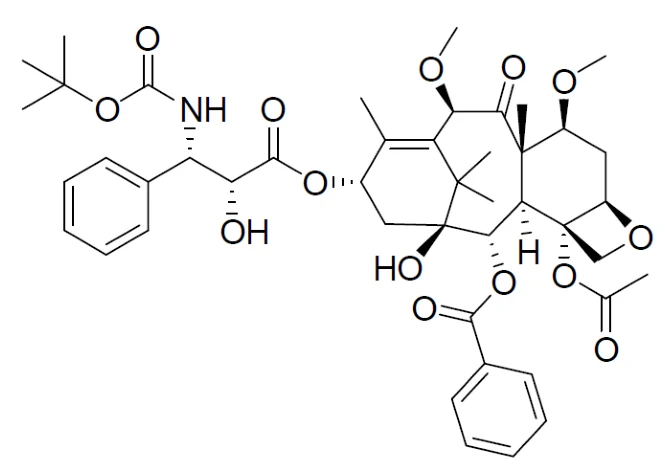
Chemical name: (2α,5β,7β,10β,13α)-4-acetoxy-13-({(2R,3S)-3-[(tertbutoxycarbonyl) amino]-2-hydroxy-3-phenylpropanoyl}oxy)-1-hydroxy-7,10-dimethoxy-9-oxo-5,20-epoxytax-11-en-2-yl benzoate
Molecular formula and molecular mass: C45H57NO14, 835.93 g / mol (solvate free)
Structural formula:
Physicochemical properties:
- White to off-white powder
- Practically insoluble in water and soluble in alcohol
- Lipophilic
14 CLINICAL TRIALS
14.1 Trial Design and Study Demographics
Study EFC6193 (TROPIC)
Study demographics and trial design
The efficacy and safety of cabazitaxel in combination with prednisone or prednisolone were evaluated in a randomized, open-label, international, multi-center, phase III study, in patients with castration resistant (hormone refractory) metastatic prostate cancer previously treated with a docetaxel-containing regimen (TROPIC study, EFC6193).
Table 9 - Summary of patient demographics for EFC6193 in patients with castration resistant metastatic prostate cancer
| Study # | Study design | Dosage, route of administration and duration | Study subjects (n) | Mean age (Range) | Sex |
| TROPIC EFC6193 | Phase III study Randomized Open-label International Multi-center | Cabazitaxel 25 mg/m2 IV every 3 weeks for a maximum of 10 cycles with prednisone or prednisolone 10 mg orally daily Mitoxantrone 12 mg/m2 IV every 3 weeks for a maximum of 10 cycles with prednisone or prednisolone 10 mg orally daily | 755 patients were randomized 378 in the cabazitaxel arm 377 in the mitoxantrone arm | 68 years (range 46-92) in the cabazitaxel arm 67 years (range 47-89) in the mitoxantrone arm | Men |
Overall survival (OS) was the primary efficacy endpoint of the study. The objective was to detect a 25% reduction in hazard rate in the cabazitaxel arm relative to the comparator with a power of 90% at a 2- sided 5% alpha level.
Secondary endpoints included:
- Progression free survival (PFS) (defined as time from randomization to tumor progression, Prostatic Specific Antigen (PSA) progression, pain progression, or death due to any cause, whichever occurred first),
- Tumor response rate based on Response Evaluation Criteria in Solid Tumors (RECIST)
- PSA progression (defined as a ≥ 25% increase or > 50% in PSA non-responders or responders respectively),
- PSA response (declines in serum PSA levels of at least 50%),
- Pain progression (assessed using the Present Pain Intensity (PPI) scale from the McGill-Melzack questionnaire and an Analgesic Score (AS) and defined as an increase of ≥1 point in the median PPI from its nadir noted on 2 consecutive three-week-apart visits or ≥25% increase in the mean analgesic score compared with the baseline score and noted on two consecutive three-week- apart visits or a requirement for local palliative radiotherapy),
- Pain response (defined as 2 point greater reduction from baseline median PPI with no concomitant increase in AS, or reduction of ≥ 50% in analgesic use from baseline mean AS with no concomitant increase in pain).
Once a patient had progressed or started another anticancer therapy, the follow-up visits were planned to be performed every 3 months until death or study cut-off for a maximum of 2 years.
A total of 755 patients were randomized to receive either cabazitaxel 25 mg/m2 intravenously every 3 weeks for a maximum of 10 cycles with prednisone or prednisolone 10 mg orally daily (n=378), or to receive mitoxantrone 12 mg/m2 intravenously every 3 weeks for a maximum of 10 cycles with prednisone or prednisolone 10 mg orally daily (n=377).
This study included patients over 18 years with castration resistant metastatic prostate cancer previously treated with docetaxel with either measurable disease with documented progression by RECIST criteria or non-measurable disease with rising PSA levels or appearance of new lesions, and Eastern Cooperative Oncology Group (ECOG) performance status 0 to 2. Patients had to have neutrophils > 1500/mm3, platelets > 100 000/mm3, hemoglobin > 10 g/dL, creatinine < 1.5 x ULN, total bilirubin < 1 x ULN, AST/SGOT < 1.5 x ULN, and ALT/SGPT < 1.5 x ULN.
Patients with a history of congestive heart failure, or myocardial infarction within last 6 months, or patients with uncontrolled cardiac arrhythmias, angina pectoris, and/or hypertension were not included in the study.
Demographics, including age, race, and ECOG performance status (0 to 2), were balanced between the treatment arms. In the cabazitaxel group, the mean age was 68 years (range 46-92 years) and the racial distribution was 83.9% Caucasian, 6.9% Asian, 5.3% Black, and 4% Others.
In the cabazitaxel group, 53.2% of the patients had a measurable disease. As for prior anticancer therapies and procedures, 25.9% and 35.4% had been previously exposed to curative and palliative radiation respectively and all patients had previously received chemotherapy regimens (68.8%, 24.9% and 6.3% for 1, 2 or ≥ 3 regimens respectively). In the cabazitaxel group, the majority of patients (66.7%) had received ≥ 450 mg/m2 (≥ 6 cycles) of prior docetaxel-based therapy and 87.5% of the patients had progressed during or within 6 months of prior docetaxel-based therapy.
Table 10 - Summary of baseline and demographic characteristics – ITT population
MTX+PRED (N=377) | CBZ+PRED (N=378) | ||||||||||||||
| Age, in years | |||||||||||||||
| Median | 67.0 | 68.0 | |||||||||||||
| Minimum | 47 | 46 | |||||||||||||
| Maximum | 89 | 92 | |||||||||||||
| Age | |||||||||||||||
| 18 to 64 | 162 (43.0%) | 133 (35.2%) | |||||||||||||
| 65 to 74 | 145 (38.5%) | 176 (46.6%) | |||||||||||||
| 75 and above | 70 (18.6%) | 69 (18.3%) | |||||||||||||
| Race | |||||||||||||||
| Caucasian/White | 314 (83.3%) | 317 (83.9%) | |||||||||||||
| 20 (5.3%) | 20 (5.3%) | ||||||||||||||
| Asian/Oriental | 32 (8.5%) | 26 (6.9%) | |||||||||||||
| Other | 11 (2.9%) | 15 (4.0%) | |||||||||||||
| ECOG PSa | |||||||||||||||
| 0 or 1 | 344 (91.2%) | 350 (92.6%) | |||||||||||||
| 0 | 120 (31.8%) | 141 (37.3%) | |||||||||||||
| 1 | 224 (59.4%) | 209 (55.3%) | |||||||||||||
| 2 | 33 (8.8%) | 28 (7.4%) | |||||||||||||
| ECG | |||||||||||||||
| Normal | 251 (66.6%) | 268 (70.9%) | |||||||||||||
| Abnormal | 98 (26.0%) | 86 (22.8%) | |||||||||||||
| Missing | 28 (7.4%) | 24 (6.3%) | |||||||||||||
| Echocardiography (Left ventricular ejection fraction) % | |||||||||||||||
| Number of patients | 243 | 235 | |||||||||||||
| Median | 64.00 | 63.00 | |||||||||||||
| Minimum | 42.0 | 38.0 | |||||||||||||
| Maximum | 80.0 | 86.0 | |||||||||||||
| Radionuclide Ventriculography (LVEF) % | |||||||||||||||
| Number of patients | 129 | 140 | |||||||||||||
| Median | 63.00 | 62.00 | |||||||||||||
| Minimum | 50.0 | 50.2 | |||||||||||||
| Maximum | 80.0 | 81.0 | |||||||||||||
| PSA (in ng/mL) | |||||||||||||||
| Number of patients | 370 | 371 | |||||||||||||
| Median | 127.5 | 143.9 | |||||||||||||
| Minimum | 2 | 2 | |||||||||||||
| Maximum | 11220 | 7842 | |||||||||||||
| Measurable Disease | |||||||||||||||
| Measurable Disease | 204 (54.1%) | 201 (53.2%) | |||||||||||||
| Not Measurable Disease | 173 (45.9%) | 177 (46.8%) | |||||||||||||
| Extent of disease | |||||||||||||||
| Metastatic | 356 (94.4%) | 364 (96.3%) | |||||||||||||
| Loco Regional Recurrence | 20 (5.3%) | 14 (3.7%) | |||||||||||||
| Missing | 1 (0.3%) | 0 | |||||||||||||
MTX+PRED: Mitoxantrone + Prednisone/Prednisolone CBZ+PRED: Cabazitaxel + Prednisone/Prednisolone a According to the protocol, patients were stratified according to ECOG PS 0 -1, versus 2. | |||||||||||||||
The median number of cycles was 6 in the cabazitaxel group and 4 in the mitoxantrone group.
The median relative dose intensity was 96.12% in the cabazitaxel group. Treatment discontinuation due to adverse reaction occurred in 18% of patients who received cabazitaxel and 8% in patients who received mitoxantrone. Among patients in the cabazitaxel arm, 9.8% of cycles were administered at a reduced level (12% of patients) compared with 5.1% on the mitoxantrone arm (4% of patients). The majority of these dose reductions were performed as planned by the study protocol (i.e., 20% dose reductions). Dose delays were reported in 28% of cabazitaxel-treated patients (9.2% of cycles) and 15% of mitoxantrone-treated patients (7.9% of cycles). The number of patients who completed the study treatment (10 cycles) was 2-fold higher in the cabazitaxel group than in the comparator group (29.4% vs. 13.5%).
Study EFC11785 (PROSELICA)
In a non-inferiority, multicenter, multinational, randomized, open label phase III study (EFC11785 study), 1200 patients with metastatic castration resistant prostate cancer, previously treated with a docetaxel containing regimen, were randomized to receive either cabazitaxel 25 mg/m2 (n=602) or 20 mg/m2 (n=598) dose IV every 3 weeks for a maximum of 10 cycles. Patients in both arms also received daily prednisone or prednisolone. Overall survival (OS) in the Intent-to-Treat (ITT) population was the primary efficacy end-point. Non-inferiority was defined as cabazitaxel 20 mg/m2 preserving at least 50% of the overall survival benefit of cabazitaxel 25 mg/m2 relative to mitoxantrone demonstrated in the TROPIC study.
14.2 Study Results
Study results (EFC6193 TROPIC study)
Overall survival was significantly longer in the cabazitaxel arm with cabazitaxel -treated patients having a 30% relative reduction in the risk of death compared to mitoxantrone [hazard ratio =0.70, 95% CI (0.59 – 0.83)] (see Table 11 and Figure 1). At 12 months and 18 months, overall survival was 64% and 39% in the cabazitaxel arm and 53% and 28% in the mitoxantrone arm.
Table 11 - Efficacy of Cabazitaxel in the treatment of patients with castration resistant metastatic prostate cancer (EFC6193 study) (Intent-to–treat analysis) – Primary Endpoint
Cabazitaxel + prednisone* n=378 | mitoxantrone + prednisone* n=377 | ||||||
| Overall Survival | |||||||
| Number of patients with deaths (%) | 234 (61.9 %) | 279 (74%) | |||||
| Median survival (months) (95% CI) | 15.1 (14.1-16.3) | 12.7 (11.6-13.7) | |||||
| Hazard Ratio (HR)1 (95% CI) | 0.70 (0.59-0.83) | ||||||
| p-value | <0.0001 | ||||||
1HR estimated using Cox model; a hazard ratio of less than 1 favors cabazitaxel
* prednisone or prednisolone
A sub-group of 59 patients received prior cumulative dose of docetaxel <225mg/m2 (29 patients in the cabazitaxel arm, 30 patients in the mitoxantrone arm). There was no significant difference in overall survival in this group of patients (HR=0.96, 95% CI 0.49-1.86).
Figure 1 – Kaplan Meier Overall Survival Curves
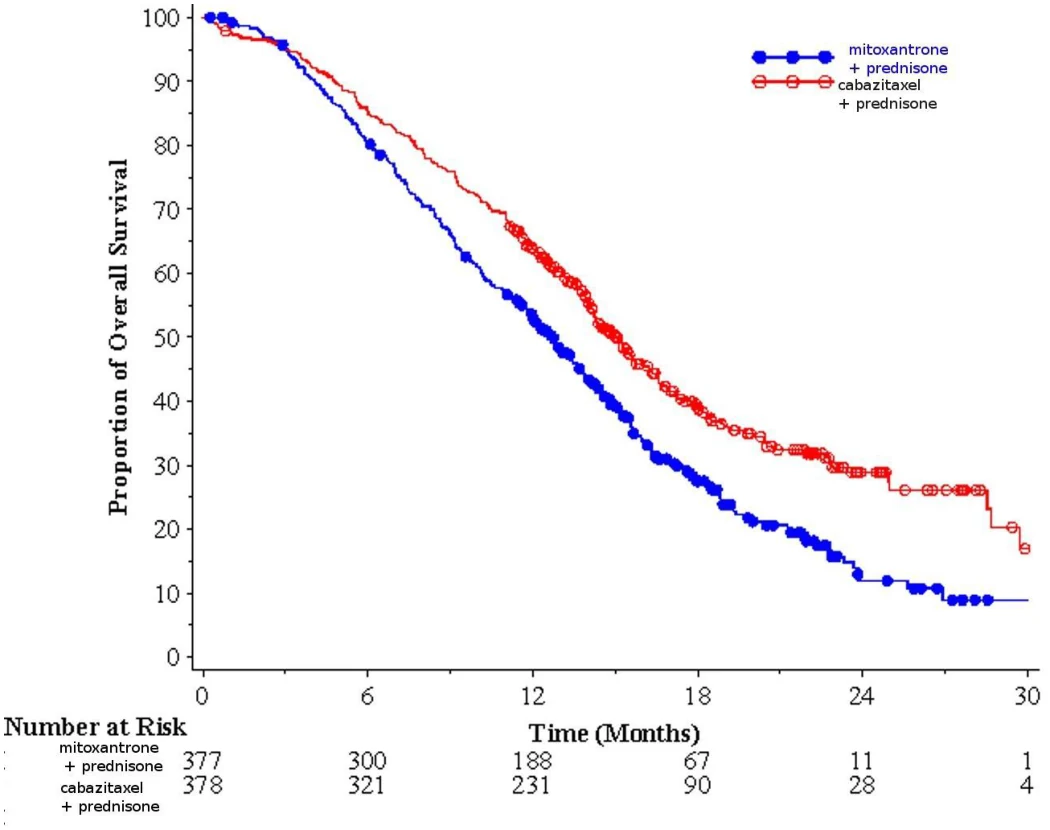
There was an improvement in PFS in the cabazitaxel arm compared to mitoxantrone arm, with a median PFS (95% CI) of 2.8 (2.4-3.0) months versus 1.4 (1.4-1.7) months respectively, and a HR (95% CI) of 0.74 (0.64-0.86), p<0.0001.
There was a significantly higher rate of overall tumor response of 14.4% (95% CI: 9.6-19.3) in patients in the cabazitaxel arm compared to 4.4% (95% CI: 1.6-7.2) for patients in the mitoxantrone arm, p=0.0005. The median time to tumor progression was 8.8 months (95% CI: 7.4 – 9.6) in the cabazitaxel arm and 5.4 months (95% CI: 4.7 – 6.5) in the mitoxantrone arm, p<0.0001.
PSA secondary endpoints were positive in the cabazitaxel arm. There was a median PSA progression free interval of 6.4 months (95% CI: 5.1-7.3) for patients in the cabazitaxel arm, compared to 3.1 months (95% CI: 2.2-4.4) in the mitoxantrone arm, HR 0.75 (95% CI 0.63-0.90), p=0.0010. The PSA response was 39.2% in patients on cabazitaxel (95% CI: 33.9-44.5) versus 17.8% in patients on mitoxantrone (95% CI: 13.7-22.0), p=0.0002. PSA-based endpoints are not validated surrogate endpoints in this patient population.
The present pain intensity (PPI) scores, evaluating time to pain progression and pain response of patients in the two treatment groups were comparable. There was no statistically significant difference between treatment arms in the time to pain progression and in pain response.
Study Results (EFC11785 PROSELICA study)
The study met its primary objective of demonstrating the non-inferiority of cabazitaxel 20 mg/m2 in comparison with 25 mg/m2 (see Table 12). The observed hazard ratio of the cabazitaxel 20 mg/m2 group compared with the cabazitaxel 25 mg/m2 group was 1.024. The 1-sided 98.89% upper bound of the confidence interval (UCI) was 1.184, below the 1.214 non-inferiority margin.
A significantly higher percentage of patients showed a PSA response in the 25 mg/m2 group (42.9%) compared to the 20 mg/m2 group (29.5%). A significantly higher risk of PSA progression in patients with the 20 mg/m2 dose with respect to the 25 mg/m2 dose was observed (HR 1.195; 95% CI: 1.025 to 1.393).
There was no significant difference with regards to other secondary endpoints (PFS, tumor and pain response, tumor and pain progression, and five subcategories of FACT-P).
Table 12 - Overall survival in EFC11785 study comparing cabazitaxel 20 mg/m2 arm versus cabazitaxel 25 mg/m2 (Intent-to-treat analysis) – Efficacy primary endpoint
CBZ20+ PRED N=598 | CBZ25+PRED N=602 | |
| Overall survival | ||
| Number of deaths, n (%) | 497 (83.1%) | 501 (83.2%) |
Median survival (95% CI) (months) | 13.4 (12.19 to 14.88) | 14.5 (13.47 to 15.28) |
| Hazard Ratioa | ||
| Versus CBZ25+PRED | 1.024 | - |
| 1-sided 98.89% UCIb | 1.184 | - |
| 1-sided 95% LCI | 0.922 | - |
CBZ20=cabazitaxel 20 mg/m2, CBZ25=cabazitaxel 25 mg/m2, PRED=prednisone/prednisolone CI=confidence interval, LCI = lower bound of the confidence interval, UCI = upper bound of the confidence interval a Hazard ratio is estimated using a Cox Proportional Hazards regression model. A hazard ratio < 1 indicates a lower risk of cabazitaxel 20 mg/m2 with respect to 25 mg/m2. b Non-inferiority margin: 1.214 | ||
Figure 2 - Kaplan-Meier Overall Survival curves (intention-to treat population) in the PROSELICA trial
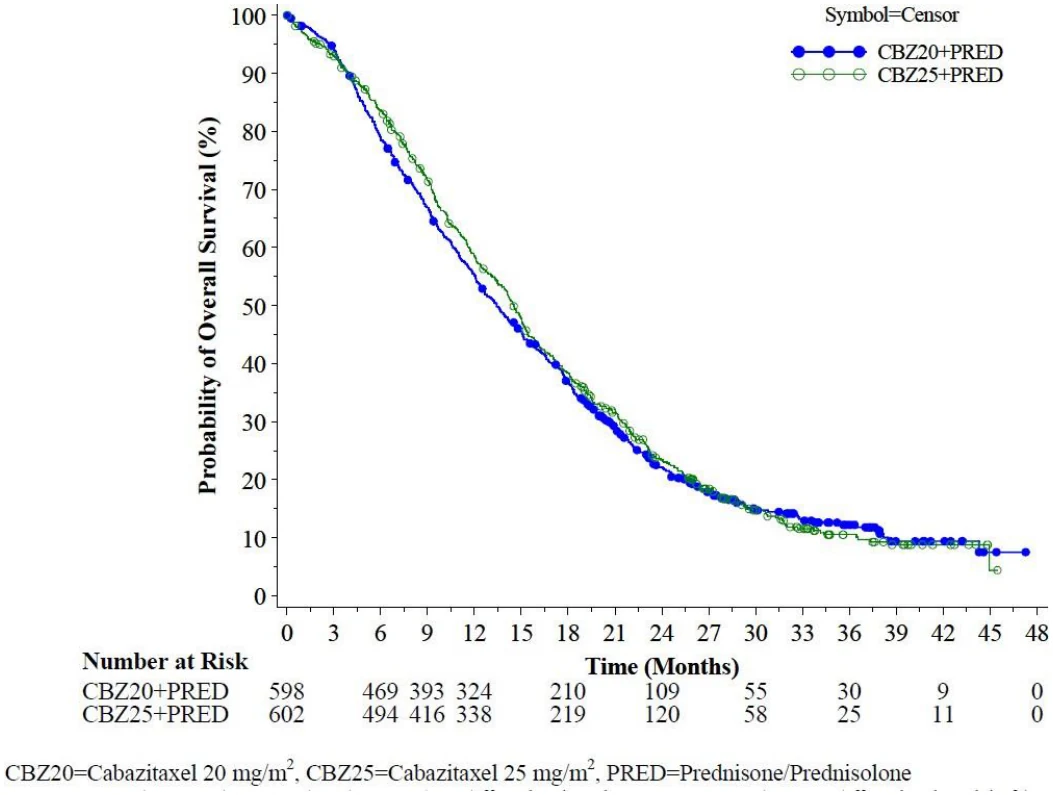
EFC11785 study demonstrated a better safety profile for the cabazitaxel 20 mg/m2 dose. The safety profile of cabazitaxel 25 mg/m2 observed in this study was qualitatively and quantitatively similar to that observed in the study EFC6193 [see 8 ADVERSE REACTIONS, 8.2 Clinical Trial Adverse Reactions, Study EFC11785 (PROSELICA)].
15 MICROBIOLOGY
No microbiological information is required for this drug product.
16 NON-CLINICAL TOXICOLOGY
Absorption
The disposition of cabazitaxel has been assessed in various animal species selected for the toxicology and pharmacology evaluation of the compound. Overall in all species, after IV administration, cabazitaxel exposure increased with dose, with no deviation from dose proportionality in mice while exposure increased in a greater than dose proportional manner in rats and dogs. No gender effect was observed in rats and dogs. No accumulation was observed in mice, rats or dogs after five-daily or weekly administrations or after administration every 3 weeks.
Distribution
Plasma protein binding of cabazitaxel was very high in mice (99.3%) and high in rats (95.5%), rabbits (91.4%), dogs (97.1%) and humans (91.9%) with no trend of saturation in the concentration range of 50 to 1000 ng/mL. At higher concentrations (up to 50 000 ng/mL) a trend toward saturation was observed in rabbits (above 1000 ng/mL), in mice (above 5000 ng/mL) and in dogs
(above 10 000 ng/mL) and not in rats and humans. A trend toward saturation was observed in rabbits (above 1000 ng/mL), in mice (above 5000 ng/mL) and in dogs (above 10 000 ng/mL) and not in rats and humans.
Cabazitaxel exhibited a large volume of distribution in mice (2.5 to 3.7 L/kg), in tumor bearing mice (8.8 L/kg), in rats (22.7 L/kg) and in dogs (3.3 to 14.5 L/kg). In tumor-free and tumor-bearing mice and in rats, cabazitaxel was rapidly and widely distributed into most organs, including brain and tumor, with no specific affinity for any organ nor for melanin. However, a slow elimination of the radioactivity from the testes was noted in rats. Low placental transfer of radioactivity (66% being cabazitaxel) was observed in rats fetuses.
Metabolism
In vitro and in vivo metabolism studies showed similar biotransformation pathways between rodent species, dogs, and humans, with quantitative differences. The metabolic pathways involved Phase I reactions including O-demethylations, hydroxylation on t-butyl group of the lateral chain, followed by a cyclization of the lateral chain and finally cleavage of cabazitaxel leading to the loss of the taxane ring. Numerous combinations of these metabolic pathways were observed. In vivo, the parent drug was the main circulating compound in mouse, rat, dog and human plasma (≥ 65% of the total radioactivity).
Metabolism was the main elimination pathway of cabazitaxel in all species and almost no parent drug was excreted in urine or feces (<2.5% dose).
Seven metabolites were detected in human plasma but none of them accounted individually for more than 10% on average of systemic exposure of parent drug. All metabolites detected in human plasma were identified and detected in plasma and/or excreta of at least one animal species.
Excretion
Cabazitaxel exhibited a high plasma clearance in rats (4.8 L/h/kg) and dogs (2.5 to 5.3 L/h/kg) and moderate clearance in normal (0.9 to 1.1 L/h/kg) and tumor bearing mice (1.7 L/h/kg).
- Following intravenous dosing in mice, rats and dogs, radioactivity was mainly excreted in the feces via the bile (≥ 87% of the dose) and urinary excretion was minimal (≤ 4% of the dose).
- Following intravenous dosing [14C]-cabazitaxel to lactating rats, a small amount of radioactivity was excreted into milk (between 0.23% and 1.5% of the dose).
General Toxicology:
Cardiovascular safety pharmacology: The effects of cabazitaxel on the cardiovascular system were evaluated in pentobarbitone-anesthetized male dogs (N=4/group) with conventional ECG leads that received single intravenous doses of either cabazitaxel at a dose of 0.45 mg/kg (corresponding to 9 mg/m2), vehicle (0.1% PS80/0.04% ethanol in 5% glucose, corresponding to the concentration of PS80 and ethanol contained in the cabazitaxel-treated group) or an aqueous solution of 5% glucose as 60 min infusions, according to a parallel group design. At the end of the 60 min infusion, heart rate was increased by 13 bpm in the vehicle control group and decreased by 29 bpm in the cabazitaxel group. At the 60 min time point, the QTc interval was increased by 12 ms in the vehicle control group and by 54 ms in the cabazitaxel group.
ECG evaluations have been performed in a 13-cycle intravenous toxicity study conducted in non anesthetized dogs (N=40) up to 0.5 mg/kg/adm (10 mg/m2/adm). There were no compound-related changes in heart rate, PR, QT corrected or not, and QRS values throughout the study at any dose level and after multiple intravenous treatments with cabazitaxel.
Effects on the liver: Bile ductule hyperplasia, arteriolar/periarteriolar necrosis, and/or hepatocellular necrosis were observed in dogs after single dose (0.25 mg/kg [5 mg/m2]), 5-day (0.2 mg/kg [4 mg/m2]) and weekly (0.325 mg/kg [6.5 mg/m2]) administration at exposure levels lower than clinical exposure levels. Kupffer cells pigmentation and bile ducts degeneration/regeneration were observed in the liver at the highest lethal dose of 10 mg/kg (60 mg/m2) in a 10-cycle study in rats.
Eye disorders: Subcapsular lens fiber swelling/degeneration was observed in rats during a 10-cycle toxicity study at 10-20 mg/kg (60-120 mg/m2 [approximately 2-fold the AUC in cancer patients at the recommended human dose]). The No-Observable Effect Level for microscopic lens findings was 5 mg/kg (30 mg/m2 [approximately the AUC in cancer patients at the recommended human dose]). These effects were not reversible after 8 weeks.
Neurotoxicity: Non-reversible peripheral neurotoxicity characterized histopathologically by degeneration in the sciatic nerves and lumbosacral nerve roots was observed in mice after 10 or 20 weeks following a single administration. The No-Observable Effect Level was 15 mg/kg (45 mg/m2) after single intravenous administration over 1 hour.
Central neurotoxicity characterized histopathologically by neuron necrosis and/or vacuolation in the brain, axonal swelling and degeneration in the cervical spinal cord was noted in mice after a single 1-hour intravenous administration at 15 mg/kg (45 mg/m2) considered sufficiently in excess of the maximum human exposure. The No-Observable Effect Level was 10 mg/kg (30 mg/m2) (approximately 7-fold the AUC in cancer patients at the recommended human dose) after single intravenous administration over 1 hour.
Mutagenicity: Cabazitaxel was found negative in the bacterial reverse mutagenic (Ames) test.
Phototoxicity: Taking into account the spectrum of ultra-violet absorption of cabazitaxel (no absorption within the 290-700 nm range) no phototoxicity study was performed.
Carcinogenicity: Long-term animal studies have not been performed to evaluate the carcinogenic potential of cabazitaxel.
Genotoxicity: Cabazitaxel was not clastogenic in an in vitro test in human lymphocytes (no induction of structural chromosomal aberration but it increased number of polyploid cells) and induced an increase of micronuclei in the in vivo test in rats at doses of 0.5, 1 and 1.5 mg/kg. However, these genotoxicity (by an aneugenic mechanism) findings are inherent to the pharmacological activity of the compound (inhibition of tubulin depolymerization) and have been observed with compounds with the same pharmacological activity.
Reproductive and Developmental Toxicology: Teratogenicity: Non-clinical studies in rats and rabbits have shown that cabazitaxel is embryotoxic, fetotoxic, and abortifacient. When female rats were given cabazitaxel intravenously once daily from gestational days 6 through 17, embryofetal toxicity was observed at exposures lower than those seen in humans receiving clinically relevant doses of cabazitaxel (at a dose of 0.16 mg/kg/day; approximately one-tenth to one-twentieth the AUC in cancer patients at the recommended human dose) consisting of fetal deaths and decreased mean fetal weight associated with a delay in skeletal ossification. Similar findings have been reported with docetaxel or paclitaxel.
Cabazitaxel did not produce fetal abnormalities in rats and rabbits. Cabazitaxel crossed the placenta barrier in rats.
After a single intravenous administration of [14C]-cabazitaxel at a dose of 0.08 mg/kg to lactating female rats, less than 1.5% of the dose was found in the maternal milk over 24 hours.
Impairment of fertility: Cabazitaxel did not affect mating performances or fertility of treated male rats at doses of 0.05, 0.1 and 0.2 mg/kg/day. However, in repeat dose toxicity studies, degeneration of seminal vesicle and seminiferous tubule atrophy in the testis were observed in rats treated intravenously with cabazitaxel at a dose of 5 mg/kg (approximately the AUC in cancer patients at the recommended human dose), and minimal testicular degeneration in dogs (minimal epithelial single cell necrosis in epididymis) treated at a dose of 0.5 mg/kg (approximately one-tenth of the AUC in cancer patients at the recommended human dose). Exposures in animals were similar or lower than those seen in humans receiving clinically relevant doses of cabazitaxel.
17 SUPPORTING PRODUCT MONOGRAPHS
- 1. JEVTANA® (Cabazitaxel for Injection, 40 mg/mL), submission control 272486, Product Monograph, Sanofi-aventis Canada Inc. (JUN 23, 2023).
- 2. Pr CABAZITAXEL FOR INJECTION (Concentrated Solution, 10 mg/mL), submission control 286854, Product Monograph, Sandoz Canada Inc. (NOV 21, 2024)