


Product Monograph - AJ-Paclitaxel
SUMMARY PRODUCT INFORMATION
Route of Administration | Dosage Form / Strength | Clinically Relevant Nonmedicinal Ingredients |
| Injection | 6 mg/mL | Anhydrous citric acid, polyoxyl 35 castor oil, dehydrated alcohol |
INDICATIONS AND CLINICAL USE
AJ- PACLITAXEL (PACLITAXEL INJECTION, USP) SHOULD BE ADMINISTERED UNDER THE SUPERVISION OF A PHYSICIAN EXPERIENCED IN THE USE OF CANCER CHEMOTHERAPEUTIC AGENTS.
PATIENTS RECEIVING AJ- PACLITAXEL SHOULD BE PRETREATED WITH CORTICOSTEROIDS, ANTIHISTAMINES, AND H2 ANTAGONISTS (SUCH AS DEXAMETHASONE, DIPHENHYDRAMINE AND CIMETIDINE OR RANITIDINE) TO MINIMIZE HYPERSENSITIVITY REACTIONS (SEE DOSAGE AND ADMINISTRATION). SEVERE HYPERSENSITIVITY REACTIONS CHARACTERIZED BY DYSPNEA AND HYPOTENSION REQUIRING TREATMENT, ANGIOEDEMA, AND GENERALIZED URTICARIA HAVE OCCURRED IN PATIENTS RECEIVING PACLITAXEL. THESE REACTIONS ARE PROBABLY HISTAMINE MEDIATED. RARE FATAL REACTIONS HAVE OCCURRED IN PATIENTS DESPITE PRE-TREATMENT. PATIENTS WHO EXPERIENCE SEVERE HYPERSENSITIVITY REACTIONS TO AJ- PACLITAXEL SHOULD NOT BE RECHALLENGED WITH THE DRUG.
AJ-PACLITAXEL (Paclitaxel Injection, USP) is indicated, alone or in combination, for the treatment of carcinoma of the:
- Ovary
- Breast
- Lung
- AIDS-related Kaposi’s sarcoma.
Ovarian Carcinoma
- First-line treatment in combination with other chemotherapeutic agents.
- Second-line treatment of metastatic carcinoma of the ovary after failure of standard therapy.
Breast Carcinoma
- Adjuvant treatment of node-positive breast cancer administered sequentially to standard combination therapy. In the clinical trial, there was an overall favorable effect on disease-free and overall survival in the total population of patients with receptor-positive and receptor-negative tumors, but the benefit has been specifically demonstrated by available data (median follow-up 30 months) only in the patients with estrogen and progesterone receptor-negative tumors. (See DETAILED PHARMACOLOGY - Clinical Trials).
- Second-line treatment of metastatic carcinoma of the breast after failure of standard therapy.
Lung Carcinoma
- First-line treatment of advanced non-small cell lung cancer.
Kaposi's Sarcoma
Treatment of advanced, liposomal anthracycline-refractory AIDS-related Kaposi's
Sarcoma.
Geriatrics:
No data is available.
Pediatrics:
The safety and effectiveness of paclitaxel in pediatric patients have not been established (see WARNINGS AND PRECAUTIONS, Special Populations, Pediatrics).
CONTRAINDICATIONS
- AJ-PACLITAXEL is contraindicated in patients who have a history of severe hypersensitivity reactions to paclitaxel or other drugs formulated in Cremophor® EL (macrogolglycerol ricinoleate). For a complete listing, see the Dosage Forms, Composition and Packaging section of the product monograph.
- AJ-PACLITAXEL should not be used in patients with severe baseline neutropenia (<1,500 cells/mm3) nor in patients with AIDS-related Kaposi's Sarcoma with baseline or subsequent neutrophil counts of <1,000 cells/mm3.
WARNINGS AND PRECAUTIONS
Serious Warnings and Precautions
AJ-PACLITAXEL SHOULD BE ADMINISTERED UNDER THE SUPERVISION OF A PHYSICIAN EXPERIENCED IN THE USE OF CANCER CHEMOTHERAPEUTIC AGENTS.
PATIENTS RECEIVING AJ-PACLITAXEL SHOULD BE PRETREATED WITH CORTICOSTEROIDS, ANTIHISTAMINES, AND H2 ANTAGONISTS (SUCH AS DEXAMETHASONE, DIPHENHYDRAMINE AND CIMETIDINE OR RANITIDINE) TO MINIMIZE HYPERSENSITIVITY REACTIONS (SEE DOSAGE AND ADMINISTRATION). ANAPHYLAXIS AND SEVERE HYPERSENSITIVITY REACTIONS CHARACTERIZED BY DYSPNEA AND HYPOTENSION REQUIRING TREATMENT, ANGIOEDEMA, OR GENERALIZED URTICARIA HAVE OCCURRED IN APPROXIMATELY 2% OF PATIENTS RECEIVING PACLITAXEL. THESE REACTIONS ARE PROBABLY HISTAMINE MEDIATED. RARE FATAL REACTIONS HAVE OCCURRED IN PATIENTS DESPITE PRE-TREATMENT. IN CASE OF A SEVERE HYPERSENSITIVITY REACTION, AJ-PACLITAXEL INFUSION SHOULD BE DISCONTINUED IMMEDIATELY AND THE PATIENT SHOULD NOT BE RECHALLENGED WITH THE DRUG (SEE ADVERSE REACTIONS).
General
AJ-PACLITAXEL should be administered as a diluted infusion.
Contact of the undiluted concentrate with plasticized polyvinyl chloride (PVC) equipment or devices used to prepare solutions for infusion is not recommended. In order to minimize patient exposure to the plasticizer DEHP [di-(2-ethylhexyl)phthalate], which may be leached from PVC infusion bags or sets, diluted AJ-PACLITAXEL solutions should preferably be stored in bottles (glass) or plastic bags (polyolefin) and administered through non-PVC administration sets.
Hypersensitivity Reactions
Patients with a history of severe hypersensitivity reactions to products containing Cremophor®EL should not be treated with AJ-PACLITAXEL (see CONTRAINDICATIONS).
Minor symptoms such as flushing, skin reactions, dyspnea, hypotension or tachycardia do not require interruption of therapy. However, severe reactions, such as hypotension requiring treatment, dyspnea requiring bronchodilators, angioedema or generalized urticaria require immediate discontinuation of AJ-PACLITAXEL and aggressive symptomatic therapy. Patients who have developed severe hypersensitivity reactions should not be re-challenged with AJ-PACLITAXEL.
Injection Site Reaction
Injection site reactions, including reactions secondary to extravasation, were usually mild and consisted of pain, erythema, tenderness, skin discoloration, or swelling at the injection site. These reactions have been observed more frequently with the 24-hour infusion than with the 3-hour infusion. Recurrence of skin reactions at a site of previous extravasation following administration of paclitaxel at a different site, i.e., “recall”, has been reported rarely.
Rare reports of more severe events such as phlebitis, cellulitis, induration, skin exfoliation, necrosis and fibrosis have been received as part of the continuing surveillance of paclitaxel safety. In some cases the onset of the injection site reaction either occurred during a prolonged infusion or was delayed by a week to ten days. Page 6
A specific treatment for extravasation reactions is unknown at this time. Given the possibility of extravasation, it is advisable to closely monitor the infusion site for possible infiltration during drug administration.
Driving/Operating Machinery
Since AJ-PACLITAXEL contains ethanol, consideration should be given to the possibility of CNS and other effects.
Cardiovascular
Severe cardiac conduction abnormalities have been reported in < 1% of patients during paclitaxel therapy. If patients develop significant conduction abnormalities during administration, appropriate therapy should be administered and continuous electrocardiographic monitoring should be performed during subsequent therapy with AJ-PACLITAXEL (see ADVERSE REACTIONS).
Hypotension, hypertension and bradycardia have been observed during paclitaxel administration; patients are usually asymptomatic and generally do not require treatment. In severe cases, paclitaxel infusions may need to be interrupted or discontinued at the discretion of the treating physician. Frequent monitoring of vital signs, particularly during the first hour of AJ-PACLITAXEL infusion, is recommended. Continuous cardiac monitoring is not required except for patients who develop serious conduction abnormalities (see ADVERSE REACTIONS).
When paclitaxel is used in combination with doxorubicin for treatment of metastatic breast cancer, monitoring of cardiac function is recommended.
Hematologic
AJ-PACLITAXEL should not be administered to patients with baseline neutrophil counts of less than 1,500 cells/mm3 (see CONTRAINDICATIONS). In order to monitor the occurrence of myelotoxicity, it is recommended that frequent peripheral blood cell counts be performed on all patients receiving AJ-PACLITAXEL. Patients should not be retreated with subsequent cycles of AJ-PACLITAXEL until neutrophils recover to a level > 1,500 cells/mm3 and platelets recover to a level >100,000 cells/mm3. In the case of severe neutropenia (< 500 cells/mm3) during a course of AJ-PACLITAXEL therapy, a 20% reduction in dose for subsequent courses of therapy is recommended. For patients with advanced HIV disease and poor-risk AIDS-related Kaposi’s sarcoma, AJ-PACLITAXEL, at the recommended dose for this disease, can be initiated and repeated if the neutrophil count is at least 1,000 cells/mm3. (See DOSAGE AND ADMINISTRATION).
Hepatic
There is evidence that the toxicity of paclitaxel is enhanced in patients with elevated liver enzymes. Patients with hepatic impairment may be at increased risk of toxicity, particularly grade III-IV myelosuppression. Caution should be exercised when administering AJ-PACLITAXEL to patients with moderate to severe hepatic impairment. Patients should be monitored closely for the development of profound myelosuppression (see ADVERSE REACTIONS).
Neurologic
Although the occurrence of peripheral neuropathy is frequent, the development of severe symptomatology is unusual. A dose reduction of 20% is recommended for all subsequent courses of AJ-PACLITAXEL for severe neuropathy (see ADVERSE REACTIONS, DOSAGE AND ADMINISTRATION).
Special Populations
Pregnant Women: AJ-PACLITAXEL may cause fetal harm when administered to a pregnant woman. Paclitaxel has been shown to be embryotoxic and fetotoxic in rabbits and to decrease fertility in rats. There are no studies in pregnant women. Women of childbearing potential should be advised to avoid becoming pregnant during therapy AJ-PACLITAXEL. If AJ-PACLITAXEL is used during pregnancy, or if the patient becomes pregnant while receiving this drug, the patient should be apprised of the potential hazard.
Nursing Women: It is not known whether paclitaxel is excreted in human milk. Breast feeding
should be discontinued for the duration of AJ-PACLITAXEL therapy.
Pediatrics: The safety and effectiveness of paclitaxel in pediatric patients have not been established. There have been reports of central nervous system (CNS) toxicity (rarely associated with death) in a clinical trial in pediatric patients in which paclitaxel was infused intravenously over 3 hours at doses ranging from 350 mg/m2 to 420 mg/m2. The toxicity is most likely attributable to the high dose of the ethanol component of the paclitaxel vehicle given over a short infusion time. The use of concomitant antihistamines may intensify this effect. Although a direct effect of the paclitaxel itself cannot be discounted, the high doses used in this study (over twice the recommended adult dosage) must be considered in assessing the safety of paclitaxel for use in this population.
AJ-PACLITAXEL contains dehydrated ethanol, 396 mg/mL; consideration should be given to possible CNS and other effects of ethanol. Children may be more sensitive than the adults to the effects of ethanol (see WARNINGS; Use in Children).
Geriatrics: No data is available.
Monitoring and Laboratory Tests
AJ-PACLITAXEL should not be administered to patients with baseline neutrophil counts of less than 1,500 cells/mm3 (<1,000 cells/mm3 for patients with Kaposi's Sarcoma). Bone marrow suppression (primarily neutropenia) is dose and schedule dependent and is the dose-limiting toxicity within a regimen. Neutrophil nadirs occurred at a median of 11 days. Frequent monitoring of blood counts should be instituted during AJ-PACLITAXEL treatment. Patients should not be retreated with subsequent cycles of AJ-PACLITAXEL until neutrophils recover to a level >1,500 cells/mm3 (>1,000 cells/mm3 for patients with Kaposi's Sarcoma) and platelets recover to a level >100,000 cells/mm 3 (see DOSAGE AND ADMINISTRATION).
ADVERSE REACTIONS
Clinical Trial Adverse Drug Reactions
Because clinical trials are conducted under very specific conditions the adverse reaction rates observed in the clinical trials may not reflect the rates observed in practice and should not be compared to the rates in the clinical trials of another drug. Adverse drug reaction information from clinical trials is useful for identifying drug-related adverse events and for approximating rates.
The frequency and severity of adverse events are generally similar between patients receiving
paclitaxel for the treatment of ovarian, breast non-small cell lung carcinoma, or Kaposi’s Sarcoma, but patients with AIDS-related Kaposi's sarcoma may have more frequent and severe hematologic toxicity, infections, and febrile neutropenia. These patients require a lower dose intensity and supportive care. (See CLINICAL TRIALS: AIDS-Related Kaposi's Sarcoma). The incidences of adverse reactions in the table that follows are derived from ten clinical trials in carcinoma of the ovary and of the breast involving 812 patients treated with single-agent paclitaxel at doses ranging from 135-300 mg/m2/day and schedules of 3 or 24 hours. Data from a subset of 181 patients treated at the recommended dose of 175 mg/m2 and a 3-hour infusion schedule is also included in the table.
135-300 mg/m2 % of Patients N=812 | 175 mg/m2 % of Patients N=181 | |
Bone Marrow Neutropenia < 2,000/mm3 < 500/mm3 Leukopenia < 4,000/mm3 < 1,000/mm3 Thrombocytopenia < 100,000/mm3 < 50,000/mm3 Anemia < 11 g/dL < 8 g/dL Infections Bleeding Red Cell Transfusions Red Cell Transfusions (normal baseline) Platelet Transfusions | 90 52 90 17 20 7 78 16 30 14 25 12 2 | 87 27 86 4 6 1 62 6 18 9 13 6 0 |
Hypersensitivity Reactions All Severe | 41 2 | 40 1 |
Cardiovascular Bradycardia (first 3 hours of infusion) Hypotension (first 3 hours of infusion) Severe events | 3 12 1 | 3 11 2 |
Abnormal ECG All Patients Patients with normal baseline | 23 14 | 13 8 |
Peripheral Neuropathy Any symptoms Severe symptoms | 60 3 | 64 4 |
| Myalgia/Arthralgia Any symptoms Severe symptoms | 60 8 | 54 12 |
135-300 mg/m2 % of Patients N=812 | 175 mg/m2 % of Patients N=181 | |
Gastrointestinal Nausea and vomiting Diarrhea Mucositis | 52 38 31 | 44 25 20 |
| Alopecia | 87 | 93 |
Hepatic (Patients with normal baseline) Bilirubin elevations Alkaline phosphatase elevations AST elevations | 7 22 19 | 4 18 18 |
| Injection site reactions | 13 | 4 |
Safety referring to a large randomized trial of paclitaxel (135 mg/m2 over 24 hours) / cisplatin (75 mg/m2) versus cyclophosphamide/cisplatin, including 410 patients (196 receiving paclitaxel), has been evaluated. The combination of paclitaxel with platinum agents has not resulted in any clinically relevant changes to the safety profile of the drug when used at the recommended dosage.
Safety data were collected for 3,121 patients in the Phase III adjuvant breast carcinoma study. The adverse event profile for the patients who received paclitaxel subsequent to cyclophosphamide and doxorubicin was consistent with that seen in the pooled analysis of data from 812 patients treated with single-agent paclitaxel in 10 clinical studies.
SUMMARY OF 3-HOUR INFUSION DATA AT A DOSE OF 175 mg/m2
Unless otherwise stated, the following safety data relate to 62 patients with ovarian cancer and 119 patients with breast cancer treated at a dose of 175 mg/m2 and a 3-hour infusion schedule, in phase III clinical trials. All patients were premedicated to minimize hypersensitivity reactions. Data from these clinical trials demonstrate that paclitaxel given at this dose and schedule is well tolerated. Bone marrow suppression and peripheral neuropathy were the principle dose-related adverse effects associated with paclitaxel. Compared to 24-hour infusion schedules, neutropenia was less common when paclitaxel was given as a 3-hour infusion. Neutropenia was generally rapidly reversible and did not worsen with cumulative exposure. The frequency of neurologic symptoms increases with repeated exposure.
None of the observed toxicities were influenced by age.
AIDS-related KAPOSI’S SARCOMA
The following table shows the frequency of important adverse events in the 85 patients with Kaposi’s Sarcoma (KS) treated with two different single-agent paclitaxel regimens.
Frequencya of Important* Adverse Events in the AIDS-Related Kaposi’s Sarcoma Studies
| Percent of Patients | ||
Study CA139-174 135/3b/3 wk (n = 29) | Study CA139-281 100/3b/2 wk (n = 56) | |
Bone Marrow Neutropenia < 2,000/mm3 < 500/mm3 Thrombocytopenia < 100,000/mm3 < 50,000/mm3 Anemia < 11 g/dL < 8 g/dL Febrile Neutropenia | 100 76 52 17 86 34 55 | 95 35 27 5 73 25 9 |
Opportunistic Infections Any Cytomegalovirus Herpes Simplex Pneumocystis carinii M. avium intracellulare Candidiasis, esophageal Cryptosporidiosis Cryptococcal meningitis Leukoencephalopathy | 76 45 38 14 24 7 7 3 — | 54 27 11 21 4 9 7 2 2 |
| Hypersensitivity Reactionc All | 14 | 9 |
| Cardiovascular Hypotension Bradycardia | 17 3 | 9 — |
Peripheral Neuropathy Any Severe** | 79 14 | 46 16 |
Myalgia/Arthralgia Any Severe** | 93 14 | 48 16 |
| Percent of Patients | ||
Study CA139-174 135/3b/3 wk (n = 29) | Study CA139-281 100/3b/2 wk (n = 56) | |
Gastrointestinal Nausea and vomiting Diarrhea Mucositis | 69 90 45 | 70 73 20 |
Renal (Creatinine elevation) Any Severe** | 34 7 | 18 5 |
| Discontinuation for drug toxicity | 7 | 16 |
a Based on worst course analysis.
b Paclitaxel dose in mg/m2/infusion duration in hours.
c All patients received premedication.
* Clinically relevant and/or possibly related.
** Severe events are defined as at least Grade III toxicity.
As demonstrated in the above table, toxicity was more pronounced in the study utilizing paclitaxel at a dose of 135 mg/m2 every 3 weeks than in the study utilizing paclitaxel at a dose of 100 mg/m2 every 2 weeks. Notably, severe neutropenia (76% versus 35%), febrile neutropenia (55% versus 9%), and opportunistic infections (76% versus 54%) were more common with the former dose and schedule. The differences between the two studies with respect to dose escalation and use of hematopoietic growth factors, as described below, should be taken into account. (See DETAILED PHARMACOLOGY: CLINICAL TRIALS: AIDS-Related Kaposi's Sarcoma).
Adverse Experiences by Body System
Unless otherwise noted, the following discussion refers to the overall safety database of 812 patients with solid tumors treated with single-agent paclitaxel in 10 clinical studies. Toxicities that occurred with greater severity or frequency in previously untreated patients with ovarian carcinoma or NSCLC who received paclitaxel in combination with cisplatin or in patients with breast cancer who received paclitaxel after doxorubicin/cyclophosphamide in the adjuvant setting, or in patients with AIDS-related Kaposi’s sarcoma, and that occurred with a difference that was clinically significant in these populations are also described. In addition, rare events have been reported from post-marketing experience or from other clinical studies.
The frequency and severity of adverse events have been generally similar for all patients receiving paclitaxel. However, patients with AIDS-related Kaposi's sarcoma may have more frequent and severe hematologic toxicity, infections, and febrile neutropenia. These patients
require a lower dose intensity and supportive care. Toxicities that were observed only in or were noted to have occurred with greater severity in the population with Kaposi's sarcoma and that occurred with a difference that was clinically significant in this population are described.
Hematologic: The most frequent significant undesirable effect of paclitaxel was bone marrow suppression. Neutropenia was dose and schedule dependent and was generally rapidly reversible. Severe neutropenia (<500 cells/mm3) occurred in 27% of patients treated at a dose of 175 mg/m2, but was not associated with febrile episodes. Only 1% of patients experienced severe neutropenia for 7 days or more. Neutropenia was not more frequent or severe in patients who received prior radiation therapy, nor did it appear to be affected by treatment duration or cumulative exposure.
When paclitaxel was administered to patients with ovarian carcinoma at a dose of 175 mg/m2/3 hours in combination with cisplatin versus the control arm of cyclophosphamide plus cisplatin, the incidences of severe neutropenia and of febrile neutropenia were similar in the paclitaxel plus cisplatin arm and in the control arm.
When paclitaxel was administered in combination with cisplatin to patients with advanced NSCLC in the Eastern Cooperative Oncology Group (ECOG) study, the incidence of neutropenia (Grade IV) was 74% (paclitaxel 135 mg/m2/24 hours plus cisplatin) and 65% (paclitaxel 250 mg/m2/24 hours plus cisplatin and G-CSF) compared with 55% in patients who received cisplatin/etoposide. Considerably less Grade IV neutropenia was observed in the European Organization for Research and Treatment of Cancer (EORTC) (28%) and CA139-208 (45%) studies for paclitaxel 175 mg/m2/3 hours plus cisplatin (without G-CSF).
Fever was frequent (12% of all treatment courses). Infectious episodes occurred in 30% of all patients and 9% of all courses; these episodes were fatal in 1% of all patients, and included sepsis, pneumonia and peritonitis. In the Phase 3 second-line ovarian study, infectious episodes were reported in 20% of the patients given 135 mg/m2 and 26% of the patients given 175 mg/m2 by a 3-hour infusion. Urinary tract infections and upper respiratory tract infections were the most frequently reported infectious complications. In the immunosuppressed patient population with advanced HIV disease and poor-risk AIDS-related Kaposi's sarcoma, 61% of the patients reported at least one opportunistic infection. The use of supportive therapy, including G-CSF, is recommended for patients who have experienced severe neutropenia. (See DOSAGE AND ADMINISTRATION).
Twenty percent of the patients experienced a drop in their platelet count below 100,000 cells/mm3 at least once while on treatment; 7% had a platelet count < 50,000 cells/mm3 at the time of their worst nadir. Bleeding episodes were reported in 4% of all courses and by 14% of all patients, but most of the hemorrhagic episodes were localized and the frequency of these
events was unrelated to the paclitaxel dose and schedule. In the Phase III second-line ovarian cancer study, bleeding episodes were reported in 10% of the patients who received study medication; however, none of the patients treated with the 3-hour infusion received platelet transfusions. In the adjuvant breast carcinoma trial, the incidence of severe thrombocytopenia and platelet transfusions increased with higher doses of doxorubicin.
Anemia (Hb<11 g/dL) was observed in 78% of all patients and was severe (Hb<8 g/dL) in 16% of the cases. No consistent relationship between dose or schedule and the frequency of anemia was observed. Among all patients with normal baseline hemoglobin, 69% became anemic on study but only 7% had severe anemia. Red cell transfusions were required in 25% of all patients and in 12% of those with normal baseline hemoglobin levels.
Hypersensitivity Reactions (HSR): All patients received premedication prior to paclitaxel (see WARNINGS AND PRECAUTIONS section). The frequency and severity of HSR were not affected by the dose or schedule of paclitaxel administration. In the Phase III second-line ovarian study, the 3-hour infusion was not associated with a greater increase in HSR when compared to the 24-hour infusion. Hypersensitivity reactions were observed in 20% of all courses and in 41% of all patients. These reactions were severe in less than 2% of the patients and 1% of the courses. No severe reactions were observed after course 3 and severe symptoms occurred generally within the first hour of paclitaxel infusion. The most frequent symptoms observed during these severe reactions were dyspnea, flushing, chest pain and tachycardia. Abdominal pain, pain in the extremities, diaphoresis, and hypertension are also noted.
The minor hypersensitivity reactions consisted mostly of flushing (28%), rash (12%), hypotension (4%), dyspnea (2%), tachycardia (2%) and hypertension (1%). The frequency of hypersensitivity reactions remained relatively stable during the entire treatment period.
Rare reports of chills and reports of back pain in association with hypersensitivity reactions have been received as part of the continuing surveillance of paclitaxel safety.
Cardiovascular: Hypotension, during the first 3 hours of infusion, occurred in 12% of all patients and 3% of all courses administered. Bradycardia, during the first 3 hours of infusion, occurred in 3% of all patients and 1% of all courses. In the Phase III second-line ovarian study, neither dose nor schedule had an effect on the frequency of hypotension and bradycardia. These vital sign changes most often caused no symptoms and required neither specific therapy nor treatment discontinuation. The frequency of hypotension and bradycardia were not influenced by prior anthracycline therapy.
Significant cardiovascular events possibly related to single-agent paclitaxel occurred in approximately 1% of all patients. These events included syncope, rhythm abnormalities,
hypertension and venous thrombosis. One of the patients with syncope treated with paclitaxel at 175 mg/m2 over 24 hours had progressive hypotension and died. The arrhythmias included asymptomatic ventricular tachycardia, bigeminy and complete AV block requiring pacemaker placement. The incidence of Grade III or greater cardiovascular events was 13% (paclitaxel 135 mg/m2/24 hours plus cisplatin), 12% (paclitaxel 250 mg/m2/24 hours plus cisplatin and G-CSF), and 6% (paclitaxel 175 mg/m2/3 hours plus cisplatin) when paclitaxel followed by cisplatin was administered to patients with advanced NSCLC; there was a similar incidence in the non-paclitaxel control arms. The apparent increase in these cardiovascular events in patients with NSCLC compared to patients with breast or ovarian cancer is possibly related to the difference in cardiovascular risk factors among patients with lung cancer.
Electrocardiogram (ECG) abnormalities were common among patients at baseline. ECG abnormalities on study did not usually result in symptoms, were not dose-limiting, and required no intervention. ECG abnormalities were noted in 23% of all patients. Among patients with a normal ECG prior to study entry, 14% of all patients developed an abnormal tracing while on study. The most frequently reported ECG modifications were non-specific repolarization abnormalities, sinus bradycardia, sinus tachycardia and premature beats. Among patients with normal ECG at baseline, prior therapy with anthracyclines did not influence the frequency of ECG abnormalities. Page 12
Cases of myocardial infarction have been reported rarely. Congestive heart failure (cardiac dysfunction and reduction of left ventricular ejection fraction or ventricular failure) has been reported typically in patients who have received other chemotherapy, notably anthracyclines. (See PRECAUTIONS: Drug Interactions)
Rare reports of atrial fibrillation and supraventricular tachycardia have been received as part of the continuing surveillance of paclitaxel safety.
Respiratory: Rare reports of interstitial pneumonia, lung fibrosis and pulmonary embolism, have been received as part of the continuing surveillance of paclitaxel safety. Rare reports of radiation pneumonitis have been received in patients receiving concurrent radiotherapy.
Neurologic: The frequency and severity of neurologic manifestations were influenced by prior and concomitant therapy with cisplatin. In general, the frequency and severity of neurologic manifestations were dose-dependent in patients receiving single-agent paclitaxel. Paresthesia commonly occurs in the form of hyperesthesia. Peripheral neuropathy was observed in 60% of all patients (3% severe) and in 52% (2% severe) of the patients without pre-existing neuropathy.
The frequency of peripheral neuropathy increased with cumulative dose. Neurologic symptoms were observed in 27% of the patients after the first course of treatment and in 34-51% from
course 2 to 10. Peripheral neuropathy was the cause of paclitaxel discontinuation in 1% of all patients. Sensory symptoms have usually improved or resolved within several months of paclitaxel discontinuation. The incidence of neurologic symptoms did not increase in the subset of patients previously treated with cisplatin. Pre-existing neuropathies resulting from prior therapies are not a contraindication for paclitaxel therapy. In the Intergroup first-line ovarian carcinoma study, the regimen with paclitaxel 175 mg/m2 by 3-hour infusion followed by cisplatin 75 mg/m2 resulted in greater incidence and severity of neurotoxicity (reported as neuromotor or neurosensory events) than the regimen containing cyclophosphamide 750 mg/m2 followed by cisplatin 75 mg/m2 , 87% (21% severe) versus 52% (2% severe), respectively. In the GOG first-line ovarian carcinoma study, the regimen with paclitaxel (135 mg/m2 over 24 hours) followed by cisplatin (75 mg/m2) resulted in an incidence of neurotoxicity (reported as peripheral neuropathy) that was similar to the regimen containing cyclophosphamide 750 mg/m2 followed by cisplatin 75 mg/m2, 25% (3% severe) versus 20% (0% severe), respectively. Cross-study comparison of neurotoxicity in Intergroup and GOG trials suggests that when paclitaxel is given in combinations with cisplatin 75 mg/m2, the incidence of severe neurotoxicity is more common at a paclitaxel dose of 175 mg/m2 given by 3-hour infusion (21%) than at a dose of 135 mg/m2 given by 24-hour infusion (3%). In patients with NSCLC, administration of paclitaxel followed by cisplatin resulted in greater incidence of severe neurotoxicity compared to the incidence in patients with ovarian or breast cancer treated with single-agent paclitaxel. Severe neurosensory symptoms were noted in 13% of NSCLC patients receiving paclitaxel 135 mg/m2 by 24-hour infusion followed by cisplatin 75 mg/m2 and 8% of NSCLC patients receiving cisplatin/etoposide.
Other than peripheral neuropathy, serious neurologic events following paclitaxel administration have been rare (<1%) and have included grand mal seizures, ataxia and encephalopathy.
Rare reports of autonomic neuropathy resulting in paralytic ileus and motor neuropathy with resultant minor distal weakness have been received as part of the continuing surveillance of paclitaxel safety. Optic nerve and/or visual disturbances (scintillating scotoma) have also been reported, particularly in patients who have received higher doses than those recommended. These effects generally have been reversible. However, rare reports in the literature of abnormal visual evoked potentials in patients have suggested persistent optic nerve damage.
Arthralgia/myalgia: There was no consistent relationship between dose or schedule of paclitaxel and the frequency or severity of arthralgia/myalgia. Sixty percent of all patients treated in single-agent trials experienced arthralgia/myalgia; 8% experienced severe symptoms. The symptoms were usually transient, occurred two or three days after paclitaxel administration, and resolved within a few days. The frequency and severity of musculoskeletal symptoms remained unchanged throughout the treatment period.
Alopecia: Alopecia was observed in almost all patients.
Gastrointestinal: Nausea/vomiting, diarrhea and mucositis were reported by 52%, 38% and 31% of all patients, respectively. These manifestations were usually mild to moderate. Mucositis was schedule dependent and occurred more frequently with the 24-hour than with the 3-hour infusion.
In the first-line Phase III ovarian carcinoma study, the incidence of nausea and vomiting when paclitaxel was administered in combination with cisplatin appeared to be greater compared with the database for single-agent paclitaxel in ovarian and breast carcinoma. In the same study, diarrhea of any grade was reported more frequently (16%) compared to the control arm (8%) (p=0.008), but there was no difference for severe diarrhea.
Rare reports of intestinal obstruction, intestinal perforation, pancreatitis, ischemic colitis, and dehydration have been received as part of the continuing surveillance of paclitaxel safety. Rare reports of neutropenic enterocolitis (typhlitis), despite the coadministration of G-CSF, were observed in patients treated with paclitaxel alone and in combination with other chemotherapeutic agents.
In patients with poor-risk AIDS-related Kaposi's sarcoma, nausea/vomiting, diarrhea, and mucositis were reported by 69%, 79% and 28% of patients, respectively. One third of patients with Kaposi's sarcoma complained of diarrhea prior to study start.
Hepatic: No relationship was observed between liver function abnormalities and either dose or schedule of paclitaxel administration. Among patients with normal baseline liver function 7%, 22% and 19% had elevations in bilirubin, alkaline phosphatase and AST (SGOT), respectively. There is no evidence that paclitaxel when given as a 3-hour infusion to patients with mildly abnormal liver function causes exacerbation of abnormal liver function. Prolonged exposure to paclitaxel was not associated with cumulative hepatic toxicity.
Rare reports of hepatic necrosis and hepatic encephalopathy leading to death have been received as part of the continuing surveillance of paclitaxel safety.
Renal: Among the patients treated for Kaposi's sarcoma with paclitaxel, five patients had renal toxicity of grade III or IV severity. One patient with suspected HIV nephropathy of grade IV severity had to discontinue therapy. The other four patients had renal insufficiency with reversible elevations of serum creatinine.
Injection Site Reactions: Injection site reactions, including reactions secondary to extravasation, were usually mild and consisted of pain, erythema, tenderness, skin discoloration,
or swelling at the injection site. These reactions have been observed more frequently with the 24-hour infusion than with the 3-hour infusion. Recurrence of skin reactions at a site of previous extravasation following administration of paclitaxel at a different site, i.e., “recall”, has been reported rarely.
Rare reports of more severe events such as phlebitis, cellulitis, induration, skin exfoliation, necrosis and fibrosis have been received as part of the continuing surveillance of paclitaxel safety. In some cases the onset of the injection site reaction either occurred during a prolonged infusion or was delayed by a week to ten days.
A specific treatment for extravasation reactions is unknown at this time. Given the possibility of extravasation, it is advisable to closely monitor the infusion site for possible infiltration during drug administration.
Other: Transient skin changes due to paclitaxel-related hypersensitivity reactions have been observed, but no other skin toxicities were significantly associated with paclitaxel administration. Nail changes (changes in pigmentation or discoloration of nail bed) were uncommon (2%). Edema was reported in 21% of all patients (17% of those without baseline edema); only 1% had severe edema and none of these patients required treatment discontinuation. Edema was most commonly focal and disease-related. Edema was observed in 5% of all courses for patients with normal baseline and did not increase with time on study.
Rare reports of skin abnormalities related to radiation recall as well as reports of maculopapular rash, pruritus, Stevens-Johnson syndrome, and toxic epidermal necrolysis have been received as part of the continuing surveillance of paclitaxel safety.
Reports of asthenia and malaise have been received as part of the continuing surveillance of paclitaxel safety. In the Phase III trial of paclitaxel 135 mg/m2 over 24 hours in combination with cisplatin as first-line therapy of ovarian cancer, asthenia was reported in 17% of the patients, significantly greater than the 10% incidence observed in the control arm of cyclophosphamide/ cisplatin.
Post-Market Adverse Drug Reactions
Unless otherwise indicated, the table below lists undesirable effects regardless of severity associated with the administration of single agent paclitaxel (812 patients treated in clinical trials) or as reported in the postmarketing surveillance* of paclitaxel.
The frequency of undesirable effects listed below is defined using the following convention: very common (≥ 1/10); common (≥ 1/100, < 1/10); uncommon (≥ 1/1,000, < 1/100); rare (≥ 1/10,000,
< 1/1,000); very rare (< 1/10,000).
| Infections and infestations: | Very common: infection Uncommon: septic shock Rare*: pneumonia, sepsis |
| Blood and the lymphatic system disorders: | Very common: myelosuppression, neutropenia, anemia, thrombocytopenia, leukopenia, fever, bleeding Rare: febrile neutropenia Very rare*: acute myeloid leukemia, myelodysplastic syndrome |
| Immune system disorders: | Very common: minor hypersensitivity reactions (mainly flushing and rash) Uncommon: significant hypersensitivity reactions requiring therapy (e.g., hypotension, angioneurotic edema, respiratory distress, generalised urticaria, edema, back pain, chills) Rare*: anaphylactic reactions (with fatal outcome) Very rare*: anaphylactic shock |
| Metabolism and nutrition disorders: | Very rare*: anorexia |
| Psychiatric disorders: | Very rare*: confusional state |
| Nervous system disorders: | Very common: neurotoxicity (mainly: peripheral neuropathy) Rare*: motor neuropathy (with resultant minor distal weakness) Very rare*: autonomic neuropathy (resulting in paralytic ileus and orthostatic hypotension), grand mal seizures, convulsions, encephalopathy, dizziness, headache, ataxia |
| Eye disorders: | Very rare*: reversible optic nerve and/or visual disturbances (scintillating scotomata), particularly in patients who have received higher doses than recommended, photopsia, visual floaters |
| Ear and labyrinth disorders: | Very rare*: hearing loss, tinnitus, vertigo, ototoxicity |
| Cardiac disorders: | Very common: abnormal ECG Common: bradycardia Uncommon: cardiomyopathy, asymptomatic ventricular tachycardia, tachycardia with bigeminy, AV block and syncope, myocardial infarction. Very rare*: atrial fibrillation, supraventricular |
| Vascular disorders: | tachycardia Very common: hypotension Uncommon: hypertension, thrombosis, thrombophlebitis Very rare*: shock |
| Respiratory, thoracic and mediastinal disorders: | Rare*: dyspnea, pleural effusion, respiratory failure, interstitial pneumonia, lung fibrosis, pulmonary embolism Very rare*: cough |
| Gastrointestinal disorders: | Very common: nausea, vomiting, diarrhea, mucosal inflammation Rare*: bowel obstruction, bowel perforation, ischemic colitis, pancreatitis Very rare*: mesenteric thrombosis, pseudomembranous colitis, esophagitis, constipation, ascites |
| Hepato-biliary disorders: | Very rare*: hepatic necrosis (with fatal outcome), hepatic encephalopathy (with fatal outcome) |
| Renal disorders: | Unknown*: renal failure |
| Skin and subcutaneous tissue disorders: | Very common: alopecia Common: transient and mild nail and skin changes Rare*: pruritus, rash, erythema, phlebitis, cellulitis, skin exfoliation, necrosis and fibrosis, radiation recall Very rare*: Stevens-Johnson syndrome, epidermal necrolysis, erythema multiforme, exfoliative dermatitis, urticaria, onycholysis (patients on therapy should wear sun protection on hands and feet), scleroderma-like changes preceded by chronic edema |
| Musculoskeletal, connective tissue and bone disorders: | Very common: arthralgia, myalgia |
DRUG INTERACTIONS
Overview
The metabolism of paclitaxel is catalyzed by cytochrome P450 isoenzymes CYP2C8 and CYP3A4. Caution should be exercised when administering paclitaxel concomitantly with known substrates, inducers or inhibitors of the cytochrome P450 isoenzymes CYP2C8 and CYP3A4. In vitro, the metabolism of paclitaxel to 6α-hydroxypaclitaxel was inhibited by a number of agents (ketoconazole, verapamil, diazepam, quinidine, dexamethasone, cyclosporine, teniposide, etoposide, and vincristine), but the concentrations used exceeded those found in vivo following normal therapeutic doses. Testosterone, 17α-ethinyl estradiol, retinoic acid, montelukast and quercetin, a specific inhibitor of CYP2C8, also inhibited the formation of 6α-hydroxypaclitaxel in vitro. The pharmacokinetics of paclitaxel may also be altered in vivo as a result of interactions with compounds that are substrates, inducers, or inhibitors of CYP2C8 and/or CYP3A4.
Potential interactions between paclitaxel, a substrate of CYP3A4, and protease inhibitors (ritonavir, saquinavir, indinavir, and nelfinavir), which are substrates and/or inhibitors of CYP3A4, have not been evaluated in clinical trials. Caution and close monitoring of liver function is required; further, no unapproved (e.g., investigational) protease inhibitor should be administered with AJ-PACLITAXEL.
Drug-Drug Interactions
Cisplatin
In a Phase I trial in which paclitaxel was administered as a 24-hour infusion and cisplatin was administered as a 1 mg/min infusion, myelosuppression was more profound when paclitaxel was given after cisplatin than with the alternate sequence (i.e. paclitaxel before cisplatin). When paclitaxel is given before cisplatin, the safety profile of paclitaxel is consistent with that reported for single-agent use. Pharmacokinetic data from these patients demonstrated a decrease in paclitaxel clearance of approximately 33% when paclitaxel was administered following cisplatin. Therefore, paclitaxel should be given before cisplatin when used in combination. Patients treated with paclitaxel and cisplatin may have an increased risk of renal failure during the combination therapy of paclitaxel and cisplatin in gynecological cancers as compared to cisplatin alone.
Cimetidine
The effect of cimetidine premedication on the metabolism of paclitaxel has been investigated; the clearance of paclitaxel was not affected by cimetidine pretreatment.
Doxorubicin
Sequence effects characterized by more profound neutropenic and stomatitis episodes, have been observed with combination use of paclitaxel and doxorubicin when paclitaxel was administered BEFORE doxorubicin and using longer than recommended infusion times (paclitaxel administered over 24 hours; doxorubicin administered over 48 hours). Plasma levels of
doxorubicin (and its active metabolite doxorubicinol) may be increased when paclitaxel and doxorubicin are used in combination. However, data from a trial using bolus doxorubicin and 3-hour paclitaxel infusion found no sequence effects on the pattern of toxicity.
Drug interactions are summarised in the following table.
Established or Potential Drug-Drug Interactions
Paclitaxel
| Ref | Effect |
Clinical comment
Cisplatin
| CT | A decrease in paclitaxel clearance when paclitaxel was administered following cisplatin. |
Paclitaxel should be given before cisplatin when used in combination.
Doxorubicin
| CT | Plasma levels of doxorubicin and its active metabolite may be increased when paclitaxel and doxorubicin are used in combination. |
Sequence effects characterized by more profound neutropenic and stomatitis episodes, have been observed with combination use of paclitaxel and doxorubicin when paclitaxel was administered BEFORE doxorubicin and using longer than recommended infusion times.
Legend: CT = Clinical Trial
Drug-Food Interactions
Interactions with food have not been established.
Drug-Herb Interactions
Interactions with herbal products have not been established.
Drug-Laboratory Interactions
Interactions with laboratory tests have not been established.
DOSAGE AND ADMINISTRATION
Dosing Considerations
Note: Undiluted concentrate should not come in contact with plasticized PVC equipment.
In order to minimize patients exposure to the plasticizer DEHP [di-(2-ethylhexyl)phthalate], which may be leached from PVC infusion bags or sets, diluted AJ-PACLITAXEL solutions should preferably be stored in bottles (glass) or plastic bag (polyolefin) and administered through non-PVC administration sets.
AJ-PACLITAXEL should be administered through an in-line filter with a microporous membrane not greater than 0.22 microns Use of filter devices which incorporate non-PVC fluid pathways.
All patients should be premedicated prior to AJ-PACLITAXEL administration in order to reduce the risk of severe hypersensitivity reactions. Such premedication may consist of dexamethasone 20 mg orally (or its equivalent) approximately 12 and 6 hours before AJ-PACLITAXEL, diphenhydramine 50 mg I.V. (or its equivalent), 30 to 60 minutes prior to AJ-PACLITAXEL, and cimetidine (300 mg) or ranitidine (50 mg) I.V. 30 to 60 minutes before AJ-PACLITAXEL.
Recommended Dose and Dosage Adjustment
Metastatic carcinoma of the ovary
The administration of AJ-PACLITAXEL at a dose of 175 mg/m2 over 3 hours in combination with cisplatin 75 mg/m2 every 3 weeks is recommended for the primary treatment of patients with advanced carcinoma of the ovary. AJ-PACLITAXEL should be given before cisplatin when used in combination.
In patients previously treated with chemotherapy, the recommended regimen is 175 mg/m2 administered intravenously over 3 hours every 3 weeks.
Carcinoma of the breast
For the adjuvant treatment of node-positive breast cancer, the recommended regimen is AJ-PACLITAXEL, at a dose of 175 mg/m2 intravenously over 3 hours every 3 weeks for four courses administered sequentially to standard combination therapy.
After failure of initial chemotherapy for metastatic disease or relapse within 6 months of adjuvant chemotherapy, paclitaxel at a dose of 175 mg/m2 administered intravenously over 3 hours every 3 weeks has been shown to be effective.
Non-small cell lung carcinoma
The recommended regimen, given every 3 weeks, is AJ-PACLITAXEL administered intravenously over 3 hours at a dose of 175 mg/m2 followed by cisplatin.
Single courses of AJ-PACLITAXEL should not be repeated until the neutrophil count is at least 1,500 cells/mm3 and the platelet count is at least 100 000 cells/mm3. Patients who experience severe neutropenia (neutrophil < 500 cells/mm3) or severe peripheral neuropathy during AJ-PACLITAXEL therapy should have the dosage reduced by 20% for subsequent courses of AJ-PACLITAXEL.
AIDS-related Kaposi's Sarcoma
Paclitaxel 135 mg/m2 administered intravenously over 3 hours with a 3 week interval between courses or 100 mg/m2 administered intravenously over 3 hours with a 2 week interval between courses (dose intensity 45-50 mg/m2/week). In the two clinical trials evaluating these schedules (see CLINICAL TRIALS: AIDS-Related Kaposi's Sarcoma), the former schedule (135 mg/m2 every 3 weeks) was more toxic than the latter. In addition, all patients with low performance status were treated with the latter schedule (100 mg/m2 every 2 weeks).
Based upon the immunosuppression observed in patients with advanced HIV disease, the following modifications are recommended in these patients.
- 1) the dose of dexamethasone as one of the three premedication drugs should be reduced to 10 mg orally.
- 2) treatment with AJ-PACLITAXEL should be initiated or repeated only if the neutrophil count is at least 1,000 cells/mm3.
- 3) the dose of subsequent courses of AJ-PACLITAXEL should be reduced by 20% for those patients who experience severe neutropenia (<500 cell/mm3 for a week or longer).
- 4) concomitant hematopoietic growth factor (G-CSF) should be initiated as clinically indicated.
Missed Dose
In the event that a dose is missed the opinion of an oncologist should be sought.
Administration
Preparation and Administration Precautions
AJ-PACLITAXEL is a cytotoxic anticancer drug and, as with other potentially toxic compounds, caution should be exercised in handling AJ-PACLITAXEL. The use of gloves is recommended. Following topical exposure, tingling, burning, redness have been observed. If AJ-PACLITAXEL solution contacts the skin, wash the skin immediately and thoroughly with soap and water.
If AJ-PACLITAXEL contacts mucous membranes, the membranes should be flushed thoroughly with water. Upon inhalation, dyspnea, chest pain, burning eyes, sore throat and nausea have
been reported. Given the possibility of extravasation, it is advisable to closely monitor the infusion site for possible infiltration during drug administration (see PRECAUTIONS and ADVERSE REACTIONS; Injection Site Reaction).
Contact of undiluted AJ-PACLITAXEL with plasticized PVC equipment or devices used to prepare solutions for infusion is not recommended (see DOSAGE AND ADMINISTRATION).
Prior to infusion, AJ-PACLITAXEL should be diluted in 0.9% Sodium Chloride Injection, 5% Dextrose Injection, 5% Dextrose and 0.9% Sodium Chloride Injection or 5% Dextrose in Ringer's Injection to a final concentration of 0.3 to 1.2 mg/mL.
As with all parenteral drug products, intravenous admixtures should be inspected visually for clarity, particulate matter, precipitate, discoloration and leakage prior to administration, whenever solution and container permit.
AJ-PACLITAXEL should be administered through an in-line filter with a microporous membrane not greater than 0.22 microns.
Preparation for Intravenous Administration
AJ-PACLITAXEL must be diluted prior to infusion. AJ-PACLITAXEL should be diluted in 0.9% Sodium Chloride Injection, 5% Dextrose Injection, 5% Dextrose and 0.9% Sodium Chloride Injection, or 5% Dextrose in Ringer's Injection to a final concentration of 0.3 to 1.2 mg/mL. The solutions are physically and chemically stable for up to 27 hours at ambient temperature (15-30oC) and room lighting conditions; infusions should be completed within this timeframe. There have been rare reports of precipitation with longer than the recommended 3-hour infusion schedules. Excessive agitation, vibration or shaking may induce precipitation and should be avoided. Infusion sets should be flushed thoroughly with a compatible diluent before use.
Upon preparation, solutions may show haziness, which is attributed to the formulation vehicle. No significant loss in potency has been noted following simulated delivery of the solution through i.v. tubing containing an in-line (0.22 micron) filter.
Data collected for the presence of the extractable plasticizer DEHP [di-(2-ethylhexyl)phthalate] show that levels increase with time and concentration when dilutions are prepared in PVC containers. Consequently, the use of plasticized PVC containers and administration sets is not recommended. AJ-PACLITAXEL solutions should be prepared and stored in glass or polyolefin containers. Non-PVC containing administration sets should be used.
Devices with spikes should not be used with vials of AJ-PACLITAXEL since they can cause the stopper to collapse resulting in loss of sterile integrity of AJ-PACLITAXEL solution.
OVERDOSAGE
For management of suspected drug overdosage, particularly accidental ingestion, please contact your regional Poison Control Centre.
There is no known antidote for paclitaxel overdosage. The primary anticipated complications of overdosage would consist of bone marrow suppression, peripheral neurotoxicity and mucositis. Overdoses in pediatric patients may be associated with acute ethanol toxicity (see PRECAUTIONS, Pediatric Use section WARNINGS, Use in Children).
ACTION AND CLINICAL PHARMACOLOGY
Mechanism of Action
AJ-PACLITAXEL (paclitaxel) is an antimicrotubule agent that promotes the assembly of microtubules from tubulin dimers and stabilizes microtubules by preventing depolymerization.
Pharmacodynamics
In vitro, paclitaxel exhibits cytotoxic activity against a wide variety of both human and rodent tumor cell lines including leukemia, non-small cell lung carcinoma, small cell lung carcinoma, colon carcinoma, CNS carcinoma, melanoma, renal carcinoma, ovarian carcinoma and breast carcinoma (see PHARMACOLOGY).
Pharmacokinetics
Absorption: The pharmacokinetics of paclitaxel have been evaluated over a wide range of doses, up to 300 mg/m2, and infusion schedules ranging from 3 to 24 hours. Following intravenous administration of paclitaxel, the drug exhibited a biphasic decline in plasma concentrations. The initial rapid decline represents distribution to the peripheral compartment and elimination of the drug. The later phase is due, in part, to a relatively slow efflux of paclitaxel from the peripheral compartment. In patients treated with doses of 135 and 175 mg/m2 given as 3 and 24 hour infusions, mean terminal half-life has ranged from 3.0 to 52.7 hours, and total body clearance has ranged from 11.6 to 24.0 L/h/m2.
Variability in systemic paclitaxel exposure, as measured by AUC0-∞ for successive treatment
courses was minimal; there was no evidence of accumulation of paclitaxel with multiple treatment courses.
The pharmacokinetics of paclitaxel have been shown to be non-linear. There is a disproportionately large increase in Cmax and AUC with increasing dose, accompanied by an apparent dose-related decrease in total body clearance. These findings are most readily observed in patients in whom high plasma concentrations of paclitaxel are achieved. Saturable processes in distribution and elimination/metabolism may account for these findings.
Distribution: The disposition of paclitaxel has not been fully elucidated in humans. Mean steady state volume of distribution has ranged from 198 to 688 L/m2, indicating extensive extravascular distribution and/or tissue binding.
In vitro studies of binding to human serum proteins, using paclitaxel concentrations ranging from 0.1 to 50 μg/mL, indicated that on average 89% of drug is bound; the presence of cimetidine, ranitidine, dexamethasone, or diphenhydramine did not affect protein binding of paclitaxel.
Metabolism: In vitro studies with human liver microsomes and tissue slices showed that paclitaxel was metabolized primarily to 6α-hydroxypaclitaxel by the cytochrome P450 isozyme CYP2C8; and to two minor metabolites, 3-p-hydroxypaclitaxel and 6α, 3'-p-dihydroxypaclitaxel by CYP3A4. In vitro, the metabolism of paclitaxel to 6α-hydroxypaclitaxel was inhibited by a number of agents (see WARNINGS AND PRECAUTIONS: Drug Interactions). The effect of renal or hepatic dysfunction on the disposition of paclitaxel has not been investigated.
Excretion: Following 3 hour infusions of 175 mg/m2, mean terminal half-life was estimated to be 9.9 hours; mean total body clearance was 12.4 L/h/m2.
After intravenous administration of paclitaxel, mean values for cumulative urinary recovery of unchanged drug ranged from 1.3 to 12.7% of the dose, indicating extensive non-renal clearance. In five patients administered a 225 or 250 mg/m2 dose of radiolabeled paclitaxel as a 3-hour infusion, 14% of the radioactivity was recovered in the urine and 71% was excreted in the feces in 120 hours. Total recovery of radioactivity ranged from 56% to 101% of the dose. Paclitaxel represented a mean of 5% of the administered radioactivity recovered in the feces while metabolites, primarily 6α-hydroxypaclitaxel, accounted for the balance.
Special Populations and Conditions
Pediatrics: The pharmacokinetics of paclitaxel in the pediatric population have not been established.
Geriatrics: The pharmacokinetics of paclitaxel in the geriatric population have not been established.
Gender: The pharmacokinetics of paclitaxel based on gender differences have not been established.
Race: The pharmacokinetics of paclitaxel based on race differences have not been established.
Hepatic Insufficiency: The effect of hepatic insufficiency on the disposition of paclitaxel has not been investigated.
Renal Insufficiency: The effect of renal insufficiency on the disposition of paclitaxel has not been investigated.
Genetic Polymorphism: The pharmacokinetics of paclitaxel based on genetic polymorphism differences have not been established.
STORAGE AND STABILITY
AJ-PACLITAXEL should be stored at room temperature (15-30oC). Retain in the original package and protect from light. Once punctured, the 5 and 16.7 mL vials of AJ-PACLITAXEL are stable for up to 28 days at room temperature. The 50 mL pharmacy bulk vial should be used within 24 hours after initial entry. The solutions (admixture) are physically and chemically stable for up to 27 hours at ambient temperature (15-30°) and room lighting conditions; infusions should be completed within this time frame.
Solutions for infusion prepared as recommended may be stored at room temperature (15-30oC) only if necessary. However, the infusion should be initiated within 24 hours of reconstitution.
If unopened vials are refrigerated, a precipitate may form which redissolves with little or no agitation upon reaching room temperature. Product quality is not affected. If the solution remains cloudy or if an insoluble precipitate is noted, the vial should be discarded.
SPECIAL HANDLING INSTRUCTIONS
- 1.
Preparation of AJ-PACLITAXEL should be done in a vertical laminar flow hood
(Biological Safety Cabinet - Class II).
- 2. Personnel preparing AJ-PACLITAXEL should wear PVC gloves, safety glasses, disposable gowns and masks.
- 3.
All needles, syringes, vials and other materials which have come in contact with AJ-
PACLITAXEL should be segregated and incinerated at 1000oC or more. Sealed containers may explode. Intact vials should be returned to the Manufacturer for destruction. Proper precautions should be taken in packaging these materials for transport.
- 4. Personnel regularly involved in the preparation and handling of AJ-PACLITAXEL should have bi-annual blood examinations.
- 5.
Directions for Dispensing from Pharmacy Bulk Vial
The use of Pharmacy Bulk Vial is restricted to hospitals with a recognized intravenous admixture program. The Pharmacy Bulk Vial is intended for single puncture, multiple dispensing and for intravenous use only. Dispensing from the Pharmacy Bulk Vial should be completed within 24 hours after initial entry.
DOSAGE FORMS, COMPOSITION AND PACKAGING
AJ-PACLITAXEL is available in multidose vials of 5 mL and 16.7 mL and pharmacy bulk vial of 50 mL containing respectively 30 mg, 100 mg and 300 mg paclitaxel at a concentration of 6 mg/mL. The flip-off cap for the 5 mL and 50 mL fills is light yellow, and the flip-off cap for the 16.7 mL fill is light blue.
Each mL of AJ-PACLITAXEL contains paclitaxel 6 mg, Anhydrous Citric Acid 2 mg, Polyoxyl 35 Castor Oil 527 mg and Dehydrated Alcohol 49.7 % v/v.
PART II: SCIENTIFIC INFORMATION
PHARMACEUTICAL INFORMATION
Drug Substance
Common name: Paclitaxel
Chemical name: (2aR,4S,4aS,6R,9S,11S,12S,12aR,12bS)-1,2a,
3,4,4a,6,9,10,11,12,12a,12b-Dodecahydro-4,6,9,11,12,12b-hexahydroxy-4a,8,13,13-tetramethyl-7,11-methano-5H-cyclodeca[3,4]benz[1,2-b]oxet-5-one 6,12b-diacetate, 12-benzoate, 9-ester with (2R,3S)-N-benzoyl-3-phenylisoserine
Molecular formula: C47H51NO14
Molecular Weight: 854
Structural Formula:
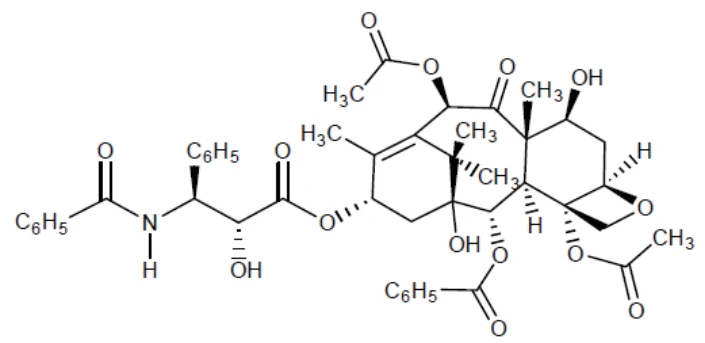
Description: Paclitaxel is a white to off-white crystalline powder with a melting point of 213.5-223°C. It is highly lipophilic and insoluble in water.
DETAILED PHARMACOLOGY
In vitro
Paclitaxel exhibits cytotoxic activity against a wide variety of both human and rodent tumor cell lines in vitro including leukemia, non-small cell lung carcinoma, small cell lung carcinoma, colon carcinoma, CNS carcinoma, melanoma, renal carcinoma, ovarian carcinoma and breast carcinoma at IC50 concentration (defined as the concentration required to inhibit cell proliferation to 50% of that of untreated control cells) in the nM range. Paclitaxel blocks cell replication in the late G2 and/or M phases of the cell cycle. Additionally, paclitaxel produces unusual cytoskeletons characterized by discrete bundles or microtubules and the formation of abnormal spindle asters during mitosis. As a consequence of the disruption of the microtubule cytoskeleton, paclitaxel inhibits a variety of cell functions including chemotaxis, migration, cell spreading, polarization, generation of hydrogen peroxide and killing of phagocytosed microorganisms.
In addition to its ability to induce microtubule polymerization, exposure of murine macrophages to paclitaxel results in the release of tumor necrosis factor-α (TNF-α) accompanied by down regulation of the receptor.
In Vivo
Paclitaxel has shown antitumor activity against many tumor models including leukemias and solid tumors and human solid xenografts. The table that follows summarizes paclitaxel's activity.
| Tumor, Site | Form | Route | Activity | ||
| MURINE LEUKEMIAS | |||||
| L1210, ip P388, ip P1534, ip | * * * | ip ip ip | Borderline ➔ modest Mild Mild ➔ substantial | ||
| MURINE SOLID TUMORS | |||||
ADJ/PC 6, ip C26,ip B16, ip M109, ip M109, ip (staged) M109, sc M109, src | * * * * ** ** ** | ip ip ip ip ip sc sc | Mild Mild Moderate ➔ potentially curative Moderate ➔ potentially curative Moderate ➔ substantial Moderate Moderate | ||
| HUMAN TUMOR XENOGRAFTS | |||||
| Tumor, Site | Form | Route | Activity |
| CX-1, src LOX, ip MX-1, src A431, src A2780, src A2780, sc H2981, src HCT-116 L2987, src LX-1, src | * * * ** ** ** ** ** ** ** | sc ip sc iv iv iv iv iv iv iv | Mild ➔ substantial Moderate ➔ potentially curative Potentially curative Substantial Substantial Moderate Substantial Moderate Moderate Moderate |
* Suspension in hydroxypropylcellulose ** Paclitaxel in ethanol/cremophor® diluted with saline
CLINICAL TRIALS Ovarian Carcinoma
| Study Design | Treatments / Doses | No. of Patients | Population | Endpoints/Conclusion |
First-Line data: Phase 3 multicenter, randomized, controlled trial conducted by GOG, comparing therapy with paclitaxel (P) in combination with cisplatin (c) to cyclophosphamide (AC) in combination with cisplatin (c) |
| 410 | Stage III or IV disease (> 1 cm residual disease after staging laparotomy or distant metastases) with no prior chemotherapy | Patients treated with P in combination with cisplatin has significantly longer time to progression (median 16.6 vs. 13.0 months, p = 0.0008) and nearly a year longer median survival time (p = 0.0002) compared with standard therapy. |
Second-Line data: Phase 3 multicenter, bifactorial, randomized trial comparing two dosage regimens of paclitaxel (P) irrespective of the schedules and two schedules irrespective of dose. |
| 407 | Patients (pts) who have failed initial or subsequent chemotherapy for metastatic carcinoma of the ovary. | Pts receiving the 175 mg/m2 dose had a response rate (RR) similar to that for those receiving the 135 mg/m2 dose: 18% vs. 14% (p=0.28). No difference in RR was detected when comparing the 3-hr with the 24-hr infusion: 15% vs. 17% (p=0.50). Pts receiving the 175 mg/m2 dose of P had a longer time to progression (TTP) than those receiving the 135 mg/m2 dose: median 4.2 vs. 3.1 months (p=0.03). The median TTP for pts receiving the 3-hour vs. the 24-hr infusion were 4.0 months vs. 3.7 months, respectively. Median survival was 11.6 months in pts receiving the 175 mg/m2 dose of P and 11.0 months in pts receiving the 135 mg/m2 dose (p=0.92). Median survival was 11.7 months for pts receiving the 3-hr infusion of P and 11.2 months for pts receiving the 24-hr infusion (p=0.91). |
First-Line data: The adverse event profile for patients receiving paclitaxel in combination with cisplatin was consistent with that seen in previous clinical studies (see ADVERSE REACTIONS).
Second -Line data: In addition to the Phase 3 trial described above, data from five Phase 1 and 2 clinical studies as well as an interim analysis of data from more than 300 patients enrolled in a treatment referral center program were used in support of the use of paclitaxel in patients who have failed initial or subsequent chemotherapy for metastatic carcinoma of the ovary. Paclitaxel remained active in patients who had developed resistance to platinum-containing therapy (defined as tumor progression while on, or tumor relapse within 6 months from completion of, a platinum containing regimen) with response rates of 14% in the Phase 3 study and 31% in the Phase 1 & 2 clinical studies. The adverse event profile in this Phase 3 study was consistent with that seen in previous clinical studies (see ADVERSE REACTIONS).
The results of this randomized study support the use of paclitaxel at doses of 135 to 175 mg/m2 , administered by a 3-hour intravenous infusion. The same doses administered by 24-hour infusion were more toxic.
Breast Carcinoma
| Study Design | Treatments / Doses | No. of Patients | Population | Endpoints/Conclusion |
Adjuvant Breast Carcinoma Study: Phase 3 multicenter, 3x2 factorial, randomized trial, conducted by CALGB, ECOG, NCCTG and SWOG, comparing adjuvant therapy with paclitaxel (P) to no further chemotherapy following four courses of doxorubicin (A) and cyclophosphamide (C) | 600 mg/m2 of C + A at doses of either
every 3 weeks for four courses and either
Patients (pts) whose tumors were +ve were to receive subsequent tamoxifen (20 mg daily for 5 years); patients who received segmental mastectomies prior to study were to receive breast irradiation after recovery from treatment-related toxicities. | 3170 | Node-positive breast carcinoma following either mastectomy or segmental mastectomy and nodal dissections. | Median follow-up was 30.1 months. Of 2066 pts who were hormone receptor positive, 93% received tamoxifen. Based on a multivariate Cox model for disease- free survival, pts on AC+P had 22% risk reduction of disease recurrence compared to pts on AC (Hazard Ratio [HR] = 0.78, 95% CI 0.67-0.91, p = 0.0022) and 26% reduction in the risk of death (HR = 0.74, 95% CI 0.60-0.92, p = 0.0065). Increasing the dose of A higher than 60 mg/m2 had no effect on either disease-free survival or overall survival. Subset analyses including number of positive lymph nodes, tumor size, hormone receptor status, and menopausal status showed a reduction in hazard similar to above for disease-free and overall survival in all larger subsets with one exception; pts with receptor-positive tumors had a smaller reduction in hazard (HR = 0.92) for disease-free survival with P than other groups. |
| Study Design | Treatments / Doses | No. of Patients | Population | Endpoints/Conclusion |
After Failure of Initial Chemotherapy: Phase 3 multicenter, randomized trial comparing two dosage regimens of paclitaxel (P). |
| 471 | Patients (pts) who failed chemotherapy either in the adjuvant (30%) or metastatic (39%) setting or both (31%). At study entry, 60% had symptomatic disease with impaired performance status and 73% had visceral metastases. | The overall response rate was 26% (95% Cl: 22 to 30%), with 17 complete and 99 partial responses. The median duration of response, measured from the first day of treatment, was 8.1 months (range: 3.4-18.1 + months). Overall, the median time to progression was 3.5 months (range: 0.03-17.1 months). Median survival was 11.7 months (range: 0-18.9 months). |
Adjuvant Breast Carcinoma Study: The adverse event profile for patients receiving paclitaxel subsequent to AC was consistent with that seen in previous clinical studies (see ADVERSE REACTIONS).
After Failure of Initial Chemotherapy: In addition to the Phase 3 trial described above, data from three Phase 2 clinical studies were used in support of the use of paclitaxel in patients with metastatic breast carcinoma. The adverse event profile for patients receiving paclitaxel subsequent to AC was consistent with that seen in previous clinical studies (see ADVERSE REACTIONS).
Non-Small Cell Lung Carcinoma (NSCLC)
| Study Design | Treatments / Doses | No. of Patients | Population | Endpoints/Conclusion |
| Phase 3 multicenter, open label, randomized trial conducted by ECOG, comparing two dosage regimens of paclitaxel (P) in combination with cisplatin (c) to cisplatin (c) followed by etoposide (VP) |
| 599 | Non-Small Cell Lung Cancer | There were statistically significant differences favoring each of the P plus c arms for response rate and time to tumor progression. There was no statistically significant difference in survival between either P plus c arm and the c plus VP arm. In this study, the Functional Assessment of Cancer Therapy-Lung (FACT-L) questionnaire had seven subscales that measured subjective assessment of treatment. Of the seven, the Lung Cancer Specific Symptoms subscale favored P at 135 mg/m2 of P as a 24-hr infusion + 75 mg/m2 of c. For all other factors, there was no difference in the treatment groups. |
The adverse event profile for patients who received paclitaxel in combination with cisplatin was consistent with that seen in previous clinical studies (see ADVERSE REACTIONS).
AIDS-Related Kaposi’s Sarcoma
| Study Design | Treatments / Doses | No. of Patients | Population | Endpoints/Conclusion |
| CA139-174: Phase 2 single-centre, open-label, non-randomized study to assess the activity of paclitaxel (P) against AIDS-related Kaposi’s Sarcoma. | 135 mg/m2 of P over 3 hrs every 3 weeks (intended dose intensity 45 mg/m2/wk). If no dose-limiting toxicity was observed, subjects were to receive 155 mg/m2/ and 175 mg/m2 in subsequent courses. Hematopoietic growth factors were not to be used initially. | 29 | AIDS-related Kaposi's sarcoma for which systemic chemotherapy was warranted | Objective response rate was 69%, including two complete responses (CR) and 18 partial responses (PR). An additional 28% of patients achieved stabilization of disease. Response rate for patients receiving prior systemic therapy was 79% (including 2 CRs and 13 Prs). Median time to response was 11.9 wks (range: 2.9 to 19.0 wks). Median duration of response was 7.0 months (range 3.5 to 29.2 months). |
CA139-281: Phase 2, two-centre, open-label, non-randomized study to assess the efficacy and safety of paclitaxel (P) in patients with advanced AIDS-related Kaposi’s Sarcoma. | 100 mg/m2 of P over 3 hrs every 2 weeks (intended dose intensity 50 mg/m2/wk). Patients could be receiving hematopoietic growth factors before the start of paclitaxel therapy or this support was to be initiated as indicated; the dose of paclitaxel was not increased. | 56 | Objective response rate was 59% (95% C.I.: 45% to 77%), including one complete response (CR) and 32 partial responses (PR). An additional 25% of patients achieved stabilization of disease. Response rate for patients receiving prior systemic therapy was 55% (22 PRs). Median time to response was 6.1 wks (range: 4.0 to 36.0 wks). Median duration of response was 10.4 months (range 2.8 to 18+ months). |
All patients had widespread and poor-risk disease. Applying the ACTG staging criteria to patients with prior systemic therapy, 93% were poor risk for extent of disease (T1), 88% had a CD4 count <200 cells/mm3 (I1), and 97% had poor risk considering their systemic illness (S1).
All patients in Study CA139-174 had a Karnofsky performance status of 80 or 90 at baseline; in Study CA139-281, there were 26 (46%) patients with a Karnofsky performance status of 70 or worse at baseline.
Although the planned dose intensity in the two studies was slightly different (45 mg/m2 /week in Study CA139-174 and 50 mg/m2 /week in Study CA139-281), delivered dose intensity was 38-39 mg/m2 /week in both studies, with a similar range (20-24 to 51-61).
Efficacy: The efficacy of paclitaxel was evaluated by assessing cutaneous tumor response according to the amended ACTG criteria and by seeking evidence of clinical benefit in patients in six domains of symptoms and/or conditions that are commonly related to AIDS-related Kaposi's sarcoma.
Cutaneous Tumor Response (Amended ACTG Criteria): The objective response rate was 63% (95% CI: 49% to 75%) (37 of 59 patients) in patients with prior systemic therapy. Cutaneous responses were primarily defined as flattening of more than 50% of previously raised lesions.
The median time to response was 8.1 weeks and the median duration of response measured from the first day of treatment was 9.1 months (95% CI: 6.9 - 11.0 months) for the patients who had previously received systemic therapy. The median time to progression was 6.2 months (95% CI: 4.6 to 8.7 months).
Additional Clinical Benefit: Most data on patient benefit were assessed retrospectively (plans for such analyses were not included in the study protocols). Nonetheless, clinical descriptions and photographs indicated clear benefit in some patients, including instances of improved pulmonary function in patients with pulmonary involvement, improved ambulation, resolution of ulcers, and decreased analgesic requirements in patients with KS involving the feet and resolution of facial lesions and edema in patients with KS involving the face, extremities, and genitalia.
Safety: The adverse event profile of paclitaxel administered to patients with advanced HIV disease and poor-risk AIDS-related Kaposi's sarcoma was generally similar to that seen in a pooled analysis of data from 812 patients with solid tumors (See ADVERSE REACTIONS). In this immunosuppressed patient population, however, a lower dose intensity of paclitaxel and supportive therapy including hematopoietic growth factors in patients with severe neutropenia are recommended. (See DOSAGE AND ADMINISTRATION). Patients with AIDS-related Kaposi's sarcoma may have more severe hematologic toxicities than patients with solid tumors (See ADVERSE REACTIONS).
TOXICOLOGY
ACUTE TOXICITY
| Species / Strain | No. / Sex / Group | Route | LD50 (mg/kg) |
| Rat/Sprague-Dawley | 5 M/F (RF)a 10 M/F (L)b | ip ip | 34 (combined) |
| Rat/Sprague-Dawley | 10 M/F | ip | M: 32 F: 36 |
| Rat/Sprague-Dawley | 5 M/F | iv | >85 |
| Dog/Beagle | 1 M/F | iv | >9 |
a Range-Finding phase
b Lethality phase
Signs of toxicity in rats were lethargy, rough coat, thinness, hunched posture, neck abscesses, soft stool, decreased body weight, squinted eyes, alopecia.
Signs of toxicity in dogs were decreased body weight.
SUBACUTE TOXICITY
| Species/Strain | No./ Group | Sex | Dose Rangea mg/kg/day | Route | Duration | Drug Related Findings |
| Mouse/CD2F1 | 5 5 | M F | 0, 1-15 | iv | 5 Days | No drug related toxicities. |
| Mouse/CD2F1 | 5 5 15 15 | M F M F | 0, 1-15* 0, 21-43** | ip ip | 5 Days 5 Days | 20 and 45 mg/kg/day: Decreased body weight >10% 45 mg/kg/day: Rough coat, thin/hunched posture. All died. $24 mg/kg/day: Dose-related decreased body weight, rough coat, thin/hunched posture, ataxia, hypothermia, squinted eyes and dyspnea, deaths (74/88 M, 56/90 F). |
| Rat/Sprague-Dawley | 5 5 10 10 | M F M F | 0, 5-45* 0, 5.3-14.2** | ip ip | 5 Days 5 Days | $8.66 mg/kg/day: Dose-related decreased body weight, rough coat, thin/hunched posture, stool changes, soiling, hypothermia, eye tearing and squinting, abscesses, deaths [(19/20 M, 18/20 F)*; (44/70 M at all doses, 26/40 F)**]. |
| Species/Strain | No./ Group | Sex | Dose Rangea mg/kg/day | Route | Duration | Drug Related Findings |
| Mouse/CD2F1 | 10 10 10 10 10 10 10 10 10 10 | M F M F M F M F M F | Negativeb Control Vehicle Control 1/2 LD10 10.79 13.05 LD10 21.57 26.09 LD50 25.50 29.52 | ip | 5 Days | 1/2 LD10, LD10 and LD50 dose groups: Necrosis of developing spermatocytes. Giant cell formation. LD10 and LD50 dose groups: Decrease in reticulocyte and neutrophil values. Lower liver and testicular weights. Moderate to severe thymic cortical lymphoid depletion. Necrosis or atrophy of small intestinal mucosa and crypt cell hypoplasia. Neurophilic hyperplasia, eosinopenia, lymphoid hypoplasia and atypical megakaryocytes, deaths (2/10 M, 8/10 F at LD10; 8/10 M, 9/9 F at LD50). All dose groups: Dose-related decreased body weight, lethargy, rapid respiration, rough coat, thin/hunched posture, hypothermia, squinted eyes with exudate. |
| Species/Strain | No./ Group | Sex | Dose Rangea mg/kg/day | Route | Duration | Drug Related Findings |
| Rat/Sprague-Dawley | 10 10 10 10 10 10 10 10 10 10 | M F M F M F M F M F | Negativeb control Vehicle Control 1/2 LD10 2.55 4.29 LD10 5.11 8.58 LD50 7.47 9.99 | ip | 5 Days | LD50 dose group: Testicular necrosis, visceral peritoneum inflammation (F only), deaths (3/10 M, 3/10 F). LD10 and LD50 dose groups: Markedly decreased leukocyte and platelet counts. Weight loss, bone marrow hypoplasia, deaths (1/10 M, 3/10 F at LD10). All dose groups: Dose related thymic and splenic lymphoid depletion, rough coat, thin/hunched posture, lethargy, soft stool, neck abscesses. Decreased reticulocycte counts, white foci in submandibular lymph nodes and/or salivary glands. |
| Species/Strain | No./ Group | Sex | Dose Rangea mg/kg/day | Route | Duration | Drug Related Findings |
| Dog/Beagle | 1 1 | M F | 0, 0.375, 0.75, 1.5, 3.0, 6.0 | iv | 5 Days | All doses: Decreased body weight. Increased ALT, cholesterol, triglycerides and total lipids. Intestinal hemorrhage or agonal changes. Lymphoid depletion of tonsils and/or bronchial lymph node. ≥ 1.5 mg/kg/day: Marked decreases in leukocyte, reticulocyte, platelet, and erythrocyte counts. ≤ 1.5 mg/kg/day: Moderate to severe bone marrow hematopoietic hypoplasia. 3.0 to 6.0 mg/kg/day: Deaths (All) |
* Range Finding phase
** Lethality phase
a Paclitaxel dissolved in Cremophor® EL (50%): ethanol (50%) and then diluted with saline to provide dosing solutions b Untreated
CHRONIC TOXICITY
| Species/ Strain | No./ Group | Sex | Dose* (mg/kg/day) | Route | Duration | Drug Related Findings |
| Rat/Sprague-Dawley | 10 10 10 10 10 10 | M F M F M F | Neg. Cont., saline Vehicle Control 1, 3.3, 10 | iv | 1 Month | 3.3 mg/kg/day: Slight decreases in erythrocyte, neutrophil and platelet counts and hemoglobin and hematocrit values; moderate decreases in leukocyte counts. Increased splenic extramedullary hematopoiesis and bone marrow hypoplasia. Moderate to severe decrease in reticulocyte counts. Minimal increase in lymphocyte counts. 10 mg/kg/day: Rough coat, alopecia, decreased body weight/weight gain and food and water intakes. Slight decreases in erythrocyte and neutrophil counts, hemoglobin and hemocrit values; moderate to severe decreases in reticulocyte count and slight increases in platelet and relative lymphocyte counts. Decreased weight of thymus, testes and seminal vesicles. Lower weights of testes and epididymides present at end of observation period. Microspopically, increased splenic extra medullary hematopoiesis and lymphoid depletion, thymic atrophy and lymphoid depletion, mandibular lymph node atrophy of lymph follicle, and lymphadenitis; bone marrow hypoplasia; hypospermatogenesis and atrophy of seminiferous tubules; glandular atrophy in seminal vesicle and prostate and giant cell formation in the epididymides. |
| Dog/Beagle | 5 5 3 3 3 3 5 5 | M F M F M F M F | Neg. Cont., saline Vehicle Control 0.3, 1 3 | iv | 1 Month | 0.3 and 1 mg/kg/day: Reversible minimal decreases in bone marrow cellularity. 3 mg/kg/day: Interdigital cysts, swollen infusion sites, and transient decreased weight gain and food intake. Decreased erythrocyte numbers, hemoglobin concentration and hemocrit (M/F) and decreased leucocyte (severe neutropenia) counts in individual females. Lymphoid depletion of spleen or lymph nodes, duodenal inflammation and crypt dilation, decreased bone marrow cellularity, skin lesions and giant cell formation in the testes and epididymides. Residual drug-effects present in some lymphoid organs, duodenum, testes and skin at the end of recovery period. |
* Paclitaxel in Cremophor® EL: ethanol (50/50) diluted with saline for dosing solutions
REPRODUCTION AND TERATOLOGY
| Species/ Strain | No./ Group | Sex | Route | Dose* and Frequency | Drug Related Findings |
| SEGMENT I Rat/Sprague-Dawley | 20 20 20 | M F F | iv | 0 (vehicle), 0 (saline) 0.1, 0.3, 1.0 mg/kg M: 63 days prior to mating and during mating F: During mating and through day 7 of gestation 0 (Non-treated) | Body weight gain and food intake were lower in F0 males and females Days 25-63 and Days 28-62, respectively, of premating period. Body weight gain and food intake were lower in F0 females during Days 2-20 of gestation at the high dose level. Fertility indices in the F0 generation were lower at 1 mg/kg/day compared to saline and vehicle control groups. Copulation indices were similar to control. Adrenal, uterine and ovarian weights lower in F0 dams compared to controls. Numbers of corpora lutea, implantations and live fetuses were decreased, and numbers of empty implantation sites and fetal deaths were increased at 1 mg/kg/day. The no-effect dose was 0.3 mg/kg/day in both F0 and F1 generations. |
| SEGMENT II Rabbit/New Zealand White | 20 | F | iv | 0 (saline), 0 (vehicle), 0.3, 1, 3 mg/kg, Days 6-18 of presumed gestation. | Twelve of 20 does given the high dose died or were sacrificed as moribund. Clinical signs of toxicity in the does that died included red excreta, stool consistency changes, decreased activity, food intake decreases and body weight loss. Liver and kidney weights were increased and ovary weights were decreased in the does given the high dose. Litter group mean values for corpora lutea, litter size, live fetuses and the number of does with viable fetuses in the high dose group were reduced. Litter group mean values for resorption (total or early), percentage of dead or resorbed conceptuses and the number of does with all conceptuses dead or resorbed were increased in the high dose group. In summary, paclitaxel at 3 mg/kg/day caused severe maternal toxicity (mortality, abortions, clinical signs and reduced organ weights, body weights and food consumption) and severe developmental toxicity (reduced corpora lutea, litter size and live fetuses and increased resorption). Paclitaxel doses as high as 1 mg/kg/day did not cause any maternal or fetal toxicity. |
* Paclitaxel in Cremophor® EL: ethanol 50/50 diluted with saline for dosing solutions.
MUTAGENECITY AND GENOTOXICITY
Paclitaxel was not mutagenic in the Ames/Salmonella and Escherichia Coli WP2 reverse mutation assays but was found to be clastogenic, in the in vitro cytogenetics assay in primary human lymphocytes.
Paclitaxel was genotoxic in vivo on the mouse erythropoietic system in the mouse bone marrow erythrocyte micronucleus assay.
REFERENCES
- 1.
Berg S.L., Cowan K.H., Balis F.M., et al
Pharmacokinetics of Taxol and doxorubicin administered alone and in combination by continuous 72-hour infusion.
J Nat Can Inst 1994; 86:143-145
- 2.
Brown T., Havlin K., Weiss G., Cagnola J., Kuhn J., Rizzo J., Craig J., Phillips J., and
Van Hoff D.
A phase I trial of taxol given by a 6-hour intravenous infusion.
J Clin Oncol 1991; 9: 1261-1267.
- 3.
Cabral F.R., Wible L., Brenner S., and Brinkley B.R.
Taxol-requiring mutant of Chinese hamster ovary cells with impaired mitotic spindle assembly.
J Cell Biol 1983; 97: 30-39.
- 4.
Capri G., Munzone E., Tarenzi E., et al
Optic nerve disturbances: A new form of paclitaxel neurotoxicity.
J Nat Cancer Inst. 1994; 86: 1099-1101.
- 5.
DeBrabander M.
A model for the microtubule organizing activity of the centrosomes and kinetochores in mammalian cells.
Cell Biol Int Rep 1982; 6: 901-915.
- 6.
Donehower R.C., Rowinsky E.K., Grochow L.B., et al.
Phase I trial of taxol in patients with advanced cancer.
Cancer Treat Reports 1987; 71(12): 1171-1177.
- 7.
Dorr R.T., Snead K., Liddil, J.D.
Skin Ulceration Potential of Paclitaxel in a Mouse Skin Model In Vivo. Cancer 1996; 78(1): 152-156.
- 8.
Einzig A.I., Wiernik P.H., and Schwartz E.L.
Taxol: A new agent active in melanoma and ovarian cancer.
In New Drugs, Concepts and Results in Cancer Chemotherapy, FM Muggia (ed.), pp. 89-100. Kluwer Academic Publishers, Inc. (1992).
- 9.
Gianni L., Kearns C.M., Giani A., et al
Nonlinear pharmacokentics and metabolism of paclitaxel and its pharmacokinetic/ pharmacodynamic relationships in humans.
J Clin Oncol 1995; 13: 180-190
- 10.
Grem T.L., Tutsch K.D., Simon K.J., Alberti D.B., Willson J.K.V., Tormey D.C.,
Swaminathan S., Trump D.L.
Phase I study of taxol administered as a short iv infusion daily for 5 days. Cancer Treat Reports 1987; 71(12): 1179-1184.
- 11.
Harris J.W., Rahman A., Kim B.-R., et al
Metabolism of TAXOL by human hepatic microsomes and liver slices: Participation of cytochrome P450 3A4 and an unknown P450 enzyme.
Cancer Res 1994; 54: 4026-4035.
- 12.
Kecker R.W., Jamis-Dow C.A., Egorin M.J., et al
Effect of cimetidine, probenecid, and ketoconazole on the distribution, biliary secretion, and metabolism of [3H] TAXOL in the Sprague-Dawley rat.
Drug Metab Disposit 1994; 22; 254-258
- 13.
Kelly K., Crowley J., Bunn P.A., et al
A Randomized Phase III Trial of Paclitaxel Plus Carboplatin (PC) Versus Vinorelbine Plus Cisplatin (VC) in Untreated Advanced Non-Small Cell Lung Cancer (NSCLC): A Southwest Oncology Group (SWOG) Trial.
- 14.
Legha S.S., Tenney D.M., Krakoff I.R.
Phase I study of taxol using a 5-day intermittent schedule.
J Clin Oncol 1986; 4(5): 762-766.
- 15.
Manfredi J.J. and Horwitz S.B.
An antimitotic agent with a new mechanism of action.
Pharmacol Ther 1984; 25: 83-125.
- 16.
Manfredi J.J., Parness J., and Horwitz S.B.
Taxol binds to cellular microtubules.
J Cell Biol 1982; 94: 688-696.
- 17.
McGuire W.P., Rowinsky E.K., Rosenshein N.B., Grumbine F.C., Ettinger D.S.,
Armstrong D.K., and Donehower R.C.
Taxol: A unique antineoplastic agent with significant activity in advanced ovarian epithelial neoplasms. Ann Int Med 1989; 111: 273-279.
- 18.
McGuire W.P., Hoskins W.J., Brady M.F., Kugera P.R., Partridge E.E., Look K.Y.,
Clarke-Pearson D.L. and Davidson M.
Cyclophosphamide and cisplatin compared with paclitaxel and cisplatin in patients with stage III and stage IV ovarian cancer.
New Eng J Med 1996; 334: 1-6.
- 19.
Mole-Bajer J. and Bajer A.S.
Action of taxol on mitosis: modification of microtubule arrangements and function of the mitotic spindle in Haemanthus endosperm.
J Cell Biol 1983; 96: 527-540.
- 20.
Norton L., Slamon D., Leyland-Jones B., et al
Overall Survival (OS) Advantage to Simultaneous Chemotherapy (Crx) Plus the Humanized Anti-HER2 Monoclonal Antibody Herceptin (H) in HER2-Overexpressing (HER2+) Metastatic Breast Cancer (MBC).
- 21.
O’Shaghnessy J.A., Fisherman J.S., Cowan K.H.
Combination paclitaxel (TAXOL) and doxorubicin therapy for metastatic breast cancer. Sem Oncol 1994; 21(suppl 8): 19-23.
- 22.
Roberts L.P., Nath J., Friedman M.M. and Gallin J.I.
Effects of taxol on human neutrophils.
J Immunol 1982; 129: 2134-2141.
- 23.
Rowinsky E.K., Burke P.J., Karp J.E., Tucker R.W. Ettinger D.S., and Donehower R.C.
Phase I and pharmacodynamic study of taxol in refractory acute leukemias. Cancer res 1989 49: 4640-4647.
- 24.
Rowinsky E.K., Cazenave L.A., and Donehower R.C.
Taxol: a novel investigational antimicrotubule agent.
J Natl Canc Inst 1990; 82: 1247-1259.
- 25.
Rowinsky E.K., Gilbert M.R., McGuire W.P., Noe D.A., Grochow L.B., Forastiere A.A.,
Erringer D.S., Lubejko B.G. Clark B., Sartorius S.E., Cornblath D.R., Hendricks C.B. and Donehower R.C.
Sequences of taxol and cisplatin: A Phase I and pharmacologic study. J Clin Oncol 1991; 9(9): 1692-1703.
- 26.
Sarosy G., Kohn E., Stone D.A., Rothenberg M., Jacob J., Adamo D.O., Ognibene F.P.,
Cunnoin R.E. and Reed E.
Phase I study of taxol and granulocyte colony-stimulating factor in patients with refractory ovarian cancer.
J Clin Oncol 1992; 10(7): 1165-1170.
- 27.
Schiff P.B. and Horwitz S.B.
Taxol stabilizes microtubules in mouse fibroblast cells. Proc Natl Acad Sci, USA 1980; 77: 1561-1565.
- 28.
Seidman A.D., Barrett S., Canezo S.
Photopsia during 3-hour paclitaxel administration at doses ≥ 250 mg/m2. J Clin Oncol 1994; 12: 1741-1742.
- 29.
Slichenmyer W.J., and Von Hoff D.D.
Taxol: A new and effective anti-cancer drug.
Anti-Cancer Drugs 1991; 2: 519-530.
- 30.
Turner P.F. and Margolis R.L.
Taxol-induced bundling of brain-derived microtubules. J Cell Biol 1984; 99: 940-946.
- 31.
Venook A.P., Egorin M., Brown T.D., et al
Paclitaxel (Taxol) in patients with liver dysfunction (CALGB 9264). pROC asco 1994; 13: 139 (Abstract #350).
- 32.
Walsky R.L., Gaman E.A., and Obach R.S.
Examination of 209 Drugs for inhibition of cytochrome P450 2C8. J Clin Pharmacol 2005; 45:68-78.
- 33.
Walsky R.L., Obach R.S., Gaman E.A., et al
Selective inhibition of human cytochrome P450 2C8 by montelukast. Drug Metabolism and Distribution. 2005; 33(3): 413-418.
- 34.
Waugh W.N., Trissel L.A., and Stella V.J.
Stability, compatibility and plasticizer extraction of taxol injection diluted in infusion solutions and stored in various containers.
Am J Hosp Pharm 1991; 48: 1520-1524.
- 35.
Weiss R.B., Donehower R.C., Wiernik P.H. et al.
Hypersensitivity reactions from taxol.
J Clin Oncol 1990; 8: 1263-1268.
- 36.
Wiernik P.H., Schwartz E.L., Strauman J.J., Dutcher J.P., Lipton R.B., and Einzig A.
Phase I trial of taxol given as a 24-hour infusion every 21 days: Responses observed in metastatic melanoma.
J Clin Oncol 1987; 5(8): 1232-1239.
- 37.
Wiernik P.H., Schwartz E.L., Strauman J.J., Dutcher J.P., Lipton R.B., and Paietta E.
Phase I clinical and pharmacokinetic study of taxol.
Cancer Res 1987; 47: 2486-2493.
- 38.
Wright M., Monsarrat B., Alvinerie P., et al
Hepatic metabolism and biliary excretion of taxol. Second National Cancer Institute Workshop on Taxol and Toxus. Alexandria, Virginia (1992).
- 39.
Product Monograph for Taxol® (paclitaxel) Bristol-Myers Squibb Canada
Pharmaceutical Group, Montreal, Canada. Control No. 134380, Date of Revision: February 22, 2010.
- 40. US Prescribing Information for Taxol® (paclitaxel) Bristol-Myers Squibb Company, Princeton, New Jersey, 08543. Date of Preparation: March 2003.