


Product Monograph - Carbaglu
RECENT MAJOR LABEL CHANGES
| Section | Date |
|---|---|
| 4 DOSAGE AND ADMINISTRATION, 4.1 Dosing Considerations | AUG 2024 |
| 4 DOSAGE AND ADMINISTRATION, 4.2 Recommended Dose and Dosage Adjustment | AUG 2024 |
| 7 WARNINGS AND PRECAUTIONS | AUG 2024 |
TABLE OF CONTENTS
RECENT MAJOR LABEL CHANGES ............................................................................................ 2
TABLE OF CONTENTS .............................................................................................................. 2
PART I: HEALTH PROFESSIONAL INFORMATION ...................................................................... 4
1 INDICATIONS ............................................................................................................... 4
1.1 Pediatrics ................................................................................................................ 4
1.2 Geriatrics ................................................................................................................ 4
2 CONTRAINDICATIONS ................................................................................................. 4
4 DOSAGE AND ADMINISTRATION ................................................................................. 5
4.1 Dosing Considerations ............................................................................................ 5
4.2 Recommended Dose and Dosage Adjustment ....................................................... 5
4.4 Administration ........................................................................................................ 7
4.5 Missed Dose ........................................................................................................... 8
5 OVERDOSAGE .............................................................................................................. 8
6 DOSAGE FORMS, STRENGTHS, COMPOSITION AND PACKAGING ................................. 9
7 WARNINGS AND PRECAUTIONS .................................................................................. 9
7.1 Special Populations............................................................................................... 10
7.1.1 Pregnant Women ........................................................................................... 10
7.1.2 Breast-feeding ................................................................................................ 10
7.1.3 Pediatrics ........................................................................................................ 10
7.1.4 Geriatrics ........................................................................................................ 10
8 ADVERSE REACTIONS ................................................................................................ 11
8.1 Adverse Reaction Overview .................................................................................. 11
8.2 Clinical Trial Adverse Reactions ............................................................................ 11
8.2.1 Clinical Trial Adverse Reactions – Pediatrics ................................................... 15
8.5 Post-Market Adverse Reactions ........................................................................... 15
9 DRUG INTERACTIONS ................................................................................................ 15
9.2 Drug Interactions Overview .................................................................................. 15
9.3 Drug-Behavioural Interactions .............................................................................. 16
9.4 Drug-Drug Interactions ......................................................................................... 16
9.5 Drug-Food Interactions ......................................................................................... 16
9.6 Drug-Herb Interactions ......................................................................................... 16
9.7 Drug-Laboratory Test Interactions ........................................................................ 16
10 CLINICAL PHARMACOLOGY ....................................................................................... 16
10.1 Mechanism of Action ...................................................................................... 16
10.2 Pharmacodynamics ........................................................................................ 16
10.3 Pharmacokinetics ........................................................................................... 17
11 STORAGE, STABILITY AND DISPOSAL ......................................................................... 19
12 SPECIAL HANDLING INSTRUCTIONS ........................................................................... 19
PART II: SCIENTIFIC INFORMATION ....................................................................................... 19
13 PHARMACEUTICAL INFORMATION ............................................................................ 19
14 CLINICAL TRIALS ........................................................................................................ 20
14.1 Clinical Trials by Indication ............................................................................. 20
15 MICROBIOLOGY ........................................................................................................ 26
16 NON-CLINICAL TOXICOLOGY ..................................................................................... 26
PATIENT MEDICATION INFORMATION .................................................................................. 29
PART I: HEALTH PROFESSIONAL INFORMATION
1 INDICATIONS
CARBAGLU (Carglumic acid dispersible tablets) is indicated for:
- Acute hyperammonemia in patients with NAGS deficiency: CARBAGLU is indicated as an adjunctive therapy in pediatric and adult patients for the treatment of acute hyperammonemia due to the deficiency of the hepatic enzyme N-acetylglutamate synthase (NAGS). During acute hyperammonemic episodes, concomitant administration of CARBAGLU with other ammonia lowering therapies such as alternate pathway medications, hemodialysis, and dietary protein restriction are recommended.
- Maintenance therapy for chronic hyperammonemia in patients with NAGS deficiency: CARBAGLU is indicated for maintenance therapy in pediatric and adult patients for chronic hyperammonemia due to the deficiency of the hepatic enzyme N-acetylglutamate synthase (NAGS). During maintenance therapy, the concomitant use of other ammonia lowering therapies and protein restriction may be reduced or discontinued based on plasma ammonia levels.
- Acute hyperammonemia due to Propionic Acidemia (PA): CARBAGLU is indicated, in pediatric and adult patients, for the treatment of acute hyperammonemic episodes due to propionic acidemia (PA), as an adjunctive treatment to other ammonia lowering therapies.
- Acute hyperammonemia due to Methylmalonic Acidemia (MMA): CARBAGLU is indicated, in pediatric and adult patients, for the treatment of acute hyperammonemic episodes due to methylmalonic acidemia (MMA), as an adjunctive treatment to other ammonia lowering therapies.
1.1 Pediatrics
Pediatrics (≤ 18 years of age): Based on the data submitted and reviewed by Health Canada, the safety and efficacy of CARBAGLU in pediatric patients has been established. Therefore, Health Canada has authorized an indication for pediatric use (See 7.1.3 Pediatrics).
1.2 Geriatrics
Geriatrics (≥ 65 years of age): No data are available to Health Canada; therefore, the safety and effectiveness in geriatric patients have not been established (See 7.1.4 Geriatrics).
2 CONTRAINDICATIONS
CARBAGLU (carglumic acid) is contraindicated:
- In patients with known hypersensitivity to carglumic acid or to any ingredient in the formulation, including any non-medicinal ingredient, or component of the container. For a complete listing, see 6 DOSAGE FORMS, STRENGTHS, COMPOSITION AND PACKAGING.
- During breastfeeding (see 7.1.2 Breast-feeding).
4 DOSAGE AND ADMINISTRATION
4.1 Dosing Considerations
- Based on clinical experience, the treatment may be started as early as the first day of life.
- Acute hyperammonemia in patients with NAGS deficiency: During acute hyperammonemic episodes, concomitant administration of CARBAGLU with other ammonia lowering therapies such as alternate pathway medications, hemodialysis, and dietary protein restriction is recommended.
- Maintenance therapy for chronic hyperammonemia in patients with NAGS deficiency: During maintenance therapy, the concomitant use of other ammonia lowering therapies and protein restriction may be reduced or discontinued based on plasma ammonia levels.
Acute hyperammonemia due to Propionic Acidemia (PA) or Methylmalonic Acidemia (MMA):
CARBAGLU is to be used as an adjunctive treatment with standard of care for metabolic decompensation, including other ammonia lowering therapies such as alternate pathway medications, hemodialysis and protein restriction.
- Renal Impairment: Caution is advised when administering CARBAGLU to patients with impaired renal function. A dose adjustment is required for patients with moderate renal impairment (eGFR 30-59 mL/min/1.73 m2) or severe renal impairment (eGFR 15-29 mL/min/1.73 m2), as shown in Table 1. No dosage adjustment is warranted in patients with mild renal impairment (eGFR 60-89 mL/min/1.73 m2). The pharmacokinetics of carglumic acid have not been evaluated in patients with end stage renal disease (< 15 mL/min/1.73 m2). See 4.2 Recommended Dose and Dosage Adjustment, 7 WARNINGS AND PRECAUTIONS, and 10.3 Pharmacokinetics.
4.2 Recommended Dose and Dosage Adjustment
NAGS Deficiency
- Acute treatment of hyperammonemia in NAGS deficiency: The recommended initial and subsequent daily dosage in pediatric and adult patients is 100 mg/kg, up to 250 mg/kg, divided into 2 to 4 doses. Concomitant administration of other ammonia lowering therapies is recommended.
Chronic treatment of hyperammonemia in NAGS deficiency: The recommended maintenance dose should be titrated to target normal plasma ammonia level for age. It should be adjusted individually (see 7 WARNINGS AND PRECAUTIONS) based on individual plasma ammonia levels and clinical symptoms. The recommended daily maintenance dosage of CARBAGLU in pediatric and adult patients is 10 mg/kg to 100 mg/kg divided into 2 to 4 doses.
In the long term, it may not be necessary to increase the dose according to body weight as long as adequate metabolic control is achieved; doses range from 10 mg/kg/day to 100 mg/kg/day.
CARBAGLU responsiveness test: It is recommended to test individual responsiveness to CARBAGLU before initiating any long-term treatment. For example:
In a comatose child, start with a dose of 100 to 250 mg/kg/day and measure ammonia plasma concentration at least before each administration; it should normalise within a few hours after starting CARBAGLU.
In a patient with moderate hyperammonemia, administer a test dose of 100 to 200 mg/kg/day for 3 days with a constant protein intake and perform repeated determinations of ammonia plasma concentration (before and 1 hour after a meal); adjust the dose in order to maintain normal ammonia plasma levels.
PA and MMA
Acute treatment of hyperammonemia associated with PA and MMA: The recommended dosage in pediatric and adult patients is 150 mg/kg/day divided into two equal doses administered orally including oral syringe or enterally 12 hours apart by nasogastric (NG) tube and gastrostomy (G) tube. CARBAGLU is to be used as an adjunctive treatment to other ammonia lowering therapies (see 1 INDICATIONS).
A dose range of 100 to 250 mg/kg divided into 2-4 doses, has been studied and may be considered on an individual patient basis, as guided by severity of hyperammonemia, tolerability and response to available treatments (see 7 WARNINGS AND PRECAUTIONS and 8 ADVERSE REACTIONS).
Continue treatment until the patient’s ammonia level is less than 50 μmol/L and for a maximum duration of 7 days. See 14 CLINICAL TRIALS.
Renal Impairment
No dosage adjustment is warranted in patients with mild renal impairment (eGFR 60-89 mL/min/1.73 m2). The recommended dosage of CARBAGLU in patients with moderate or severe renal impairment is shown below.
Table 1: Dosage Adjustment for Moderate and Severe Renal Impairment
Moderate Renal Impairment (eGFR 30-59 mL/min/1.73 m2) | Severe Renal Impairment (eGFR ≤29 mL/min/1.73 m2) | |
|---|---|---|
| Acute Hyperammonemia due to NAGS Deficiency | 50 mg/kg/day to 125 mg/kg/day divided into 2 to 4 doses and rounded to the nearest 50 mg (i.e., one-quarter of a CARBAGLU tablet) | 15 mg/kg/day to 40 mg/kg/day divided into 2 to 4 doses and rounded to the nearest 50 mg (i.e., one-quarter of a CARBAGLU tablet) |
| Chronic Hyperammonemia due to NAGS Deficiency | 5 mg/kg/day to 50 mg/kg/day divided into 2 to 4 doses and rounded to the nearest 50 mg (i.e., one-quarter of a CARBAGLU tablet) | 2 mg/kg/day to 20 mg/kg/day divided into 2 to 4 doses and rounded to the nearest 50 mg (i.e., one-quarter of a CARBAGLU tablet) |
| Acute Hyperammonemia due to PA or MMA | 75 mg/kg/day divided into two equal doses. A dose up to 125 mg/kg divided into 2-4 doses, may be considered on an individual patient basis, as guided by severity of hyperammonemia, tolerability and response to available treatments. | 25 mg/kg/day divided into two equal doses. A dose up to 40 mg/kg divided into 2-4 doses, may be considered on an individual patient basis, as guided by severity of hyperammonemia, tolerability and response to available treatments. |
4.4 Administration
Oral Administration
CARBAGLU tablets should not be swallowed whole or crushed.
CARBAGLU tablets is for oral use ONLY (ingestion by mouth or an oral syringe or via a nasogastric tube or gastrostomy tube).
Based on pharmacokinetic data and clinical experience, it is recommended to divide the total daily dose into two to four doses to be given before meals or feedings. The breaking of the tablets in halves allows most of the required posology adjustments. Occasionally, the use of quarter tablets may also be useful to adjust the posology prescribed by the physician.
Each 200 mg tablet should be dispersed in a minimum of 2.5 ml of water and ingested immediately. Use in other foods or liquids has not been studied clinically and therefore is not recommended.
CARBAGLU tablets do not dissolve completely in water and undissolved particles of the tablet may remain in the mixing container. To ensure complete delivery of the dose, the mixing container should be rinsed with additional volumes of water and the contents swallowed immediately.
The suspension has a slightly acidic taste.
Oral Administration Using an Oral Syringe in Pediatric Patients:
- Mix each 200 mg tablet in 2.5 ml of water to yield a concentration of 80 mg/ml in a mixing container. Shake gently to allow for quick dispersal;
- Draw up the mixture in an oral syringe and administer immediately. Pieces of the tablet may remain in the oral syringe.
- Refill the oral syringe with a minimum volume of water (1 to 2 mL) and administer immediately.
- Flush the oral syringe again, as needed, until no pieces of the tablet are left in the syringe.
Nasogastric (NG tube) or Gastrostomy (G-tube) administration: It is recommended to divide the total daily dose into two to four doses to be given before feedings. For patients who have a NG tube or G-tube in place, CARBAGLU should be administered as follows:
Adults
- Mix each 200 mg tablet in a minimum of 2.5 ml of water. Shake gently to allow for quick dispersal;
- Administer the dispersion immediately through the nasogastric tube;
- Flush with additional water to clear the NG tube or G-tube.
Pediatrics
- Mix each 200 mg tablet in 2.5 ml of water to yield a concentration of 80 mg/ml in a mixing container. Shake gently to allow for quick dispersal;
- Draw up the appropriate volume of dispersion and administer immediately through the NG tube or G-tube. Discard the unused portion;
- Flush with additional water to clear the NG tube or G-tube.
4.5 Missed Dose
In the event a dose is missed, the dose should not be doubled to make up for the forgotten doses. The next dose should be taken according to the regular dosing interval.
5 OVERDOSAGE
One patient treated with a dose increased up to 750 mg/kg/day of carglumic acid developed symptoms of intoxication characterized as a sympathomimetic reaction: tachycardia, profuse sweating, increased bronchial secretion, increased body temperature and restlessness. These symptoms resolved upon reduction of the dose.
| For management of a suspected drug overdose, contact your regional poison control centre. |
6 DOSAGE FORMS, STRENGTHS, COMPOSITION AND PACKAGING
Table 2: Dosage Forms, Strengths, Composition and Packaging
| Route of Administration | Dosage Form / Strength/Composition | Non-medicinal Ingredients |
| Oral | Dispersible tablets / 200 mg | Croscarmellose sodium, hypromellose, microcrystalline cellulose, silica colloidal anhydrous, sodium lauryl sulfate, sodium stearyl fumarate. |
Description CARBAGLU is a white and elongated dispersible tablet with three score marks and engraved “C” on one side. The tablet can be divided into equal portions.
Each tablet contains 200 mg of carglumic acid.
CARBAGLU is available as 5 and 60 tablets in a high density polyethylene bottle with a child resistant polypropylene cap and desiccant unit.
7 WARNINGS AND PRECAUTIONS
General Any episode of acute symptomatic hyperammonemia should be treated as a life-threatening emergency. Uncontrolled hyperammonemia can rapidly result in brain injury/damage or death, and prompt use of all therapies necessary to reduce plasma ammonia levels is essential, including the concomitant use of other ammonia lowering therapies such as alternate pathway medications and protein restriction.
Treatment of hyperammonemia may require dialysis, preferably hemodialysis, to remove a large burden of ammonia.
Management of hyperammonemia due to NAGS deficiency, PA, and MMA should be done in coordination with medical personnel experienced in metabolic disorders.
Monitoring and Laboratory Tests Ongoing monitoring of plasma ammonia levels, neurological status, growth parameters, protein intake/nutritional status, and relevant laboratory tests and clinical responses in patients receiving CARBAGLU is crucial to assess patient response to treatment. Plasma ammonia levels should be maintained within normal range for age through individual dose adjustment.
Monitoring of liver, renal, cardiac and hematological parameters is recommended due to the limited safety data available. See 4.2 Recommended Dose and Dosage Adjustment.
Neurologic Uncontrolled hyperammonemia can rapidly result in brain injury/damage or death.
Renal Plasma concentrations of carglumic acid are increased in patients with renal impairment (see 10.3 Pharmacokinetics). The dose of CARBAGLU must be reduced in patients with moderate or severe renal impairment (see 4.2 Recommended Dose and Dosage Adjustment). The pharmacokinetics of carglumic acid have not been evaluated in patients with end stage renal disease.
7.1 Special Populations
7.1.1 Pregnant Women
There are no adequate and well controlled studies or available human data with CARBAGLU in pregnant women. The limited available information on CARBAGLU use during pregnancy is not sufficient to inform a drug-associated risk of major birth defects or miscarriage. The benefits of treatment with CARBAGLU during pregnancy should be carefully weighed against the potential risks.
In animal reproduction studies, maternal toxicity along with decreased survival of offspring occurred in animals that received carglumic acid at a dose approximately 1.3 times the maximum recommended human dose (MRHD) (see 16 NON-CLINICAL TOXICOLOGY).
7.1.2 Breast-feeding
Because of the potential for serious adverse reactions in nursing infants from CARBAGLU, breastfeeding is contraindicated. It is unknown if CARBAGLU is excreted in human milk. Carglumic acid is excreted in rat milk, and an increase in mortality and impairment of body weight gain occurred in neonatal rats nursed by mothers receiving carglumic acid (see 2 CONTRAINDICATIONS and 16 NON-CLINICAL TOXICOLOGY).
7.1.3 Pediatrics
The safety and effectiveness of CARBAGLU for the treatment of pediatric patients (<18 years of age) with acute or chronic hyperammonemia due to NAGS deficiency and acute hyperammonemia due to PA or MMA have been established. There are insufficient data to determine if there is a difference in clinical or biochemical responses between adult and pediatric patients treated with CARBAGLU.
7.1.4 Geriatrics
CARBAGLU has not been studied in the geriatric population (≥ 65 years of age). Therefore, the safety and effectiveness in geriatric patients have not been established.
8 ADVERSE REACTIONS
8.1 Adverse Reaction Overview
The most common adverse reactions (occurring in >3% of patients) were: pyrexia, vomiting, diarrhea, abdominal pain, tonsillitis, anemia, ear infection, infections, nasopharyngitis, headache, increased liver function tests.
The most common serious adverse events (SAEs) were vomiting, somnolence, pneumonia, encephalopathy, enterocolitis infection, seizure and apnea. There were two deaths in NAGS deficiency patients treated chronically with CARBAGLU. The causes of death were multi-organ failure with encephalopathy in one patient and severe hyperammonemia following pneumonia in the second patient. There was one death (due to apnea and encephalopathy) in a patient with PA which occurred after short-term exposure to CARBAGLU.
8.2 Clinical Trial Adverse Reactions
Because a very limited number of patients were studied and the data were collected retrospectively, the adverse events reported may not provide a reliable reflection of potential adverse reactions associated with CARBAGLU.
In a study of CARBAGLU in the Treatment of Acute Hyperammonemia due to PA and MMA, 35 patients (15 with PA, 9 with MMA), received at least one dose of assigned treatment in a double-blinded, placebo-controlled, randomized clinical study. Twenty-four of the enrolled participants with PA/MMA contributed a total of 90 hyperammonemic episodes, of which 42 episodes were treated with CARBAGLU. CARBAGLU was administered at a dose of 150 mg/kg/day for patients ≤15 kg or 3.3 g/m2/day for patients >15 kg, divided into 2 doses, for 7 days or until hospital discharge. The median duration of CARBAGLU treatment was 5 days. At least 1 adverse reaction was reported in participants with PA/MMA during the course of hyperammonemic episodes (i.e., the time from the first day of hospital admission for a hyperammonemic episode to 72 hours following episode treatment completion) in 47.6% of episodes, treated with CARBAGLU, compared to 37.5% of episodes treated with placebo.
Table 3 summarizes adverse events occurring in ≥2% hyperammonemic episodes in patients with PA and MMA treated with CARBAGLU in the prospective placebo-controlled study.
Table 3: Adverse Events During Hyperammonemic Episodes (Incidence ≥2% Episodes Treated with CARBAGLU) in Patients with PA and MMA
| Total PA/MMA | |||||||||
| CARBAGLU | PLACEBO | ||||||||
| n (%) | n (%) | ||||||||
| Total Episodes in which Participants: | 42 | 48 | |||||||
| experienced one or more adverse events | 20 (47.6) | 18 (37.5) | |||||||
| Total PA/MMA | ||||||
| CARBAGLU | PLACEBO | |||||
| n (%) | n (%) | |||||
| Neutropenia | 6 (14.3) | 4 (8.3) | ||||
| Anemia | 5 (11.9) | 4 (8.3) | ||||
| Electrolyte imbalance | 3 (7.1) | 2 (4.2) | ||||
| Vomiting | 3 (7.1) | 1 (2.1) | ||||
| Decreased appetite | 2 (4.8) | 1 (2.1) | ||||
| Hypoglycemia | 2 (4.8) | 1 (2.1) | ||||
| Lethargy/Stupor | 2 (4.8) | 1 (2.1) | ||||
| Encephalopathy | 2 (4.8) | 0 (0.0) | ||||
| Diarrhea | 1 (2.4) | 1 (2.1) | ||||
| Pancreatitis | 1 (2.4) | 1 (2.1) | ||||
| Alanine aminotransferase increased | 1 (2.4) | 0 (0.0) | ||||
| Aspartate aminotransferase increased | 1 (2.4) | 0 (0.0) | ||||
| Upper respiratory tract infection | 1 (2.4) | 0 (0.0) | ||||
| Coma | 1 (2.4) | 0 (0.0) | ||||
| Seizure | 1 (2.4) | 0 (0.0) | ||||
| Cardiomyopathy | 1 (2.4) | 0 (0.0) | ||||
| Infusion site extravasation | 1 (2.4) | 0 (0.0) | ||||
| Enterocolitis infection | 1 (2.4) | 0 (0.0) | ||||
| Lipase increased | 1 (2.4) | 0 (0.0) | ||||
| White blood cell count, increased | 1 (2.4) | 0 (0.0) | ||||
| Behaviour disorder | 1 (2.4) | 0 (0.0) | ||||
| Sleep disorder | 1 (2.4) | 0 (0.0) | ||||
| Apnea | 1 (2.4) | 0 (0.0) | ||||
| Hyperventilation | 1 (2.4) | 0 (0.0) | ||||
The most commonly reported adverse events (≥2%) in PA and MMA patients that occurred between hyperammonemic episodes were vomiting and upper respiratory tract infections.
A retrospective, non-comparative, descriptive review of data collected from NAGS deficiency patients treated with carglumic acid on a long-term basis was conducted to review the clinical and biological response of NAGS deficiency patients to carglumic acid within the first 7 days of treatment (short-term) and at the last report (long-term). A total of 23 confirmed NAGS deficiency patients (4 were determined to have a heterozygous NAGS gene mutation) were identified. Seventeen out of the 23 patients had an adverse event (AE) reported (note: not all AEs may have been reported due to reliance on retrospective review of medical records for data collection). Two patients died due to an AE (a multi-organ failure with encephalopathy for the first one; a severe episode of hyperammonemia following a pneumonia for the other). In addition to the 2 above-mentioned patients, 9 other patients experienced a serious adverse event (SAE). In total, these non-fatal AEs were related mostly to two System Organ Classes (SOC): 10 SAEs came from the gastrointestinal disorders SOC (the most frequent AE is “vomiting”, reported 6 times) and 10 SAEs came from the nervous system disorders SOC. In total, 118 AEs were reported, including 35 SAEs and 83 non-serious AEs. These AEs are mainly related to 3 SOC: 21% in gastrointestinal disorders, 19% in infections and infestations and 14% in nervous system disorders. The most common AEs (occurring in ≥ 13% of patients) were anemia, vomiting, abdominal pain, pyrexia, tonsillitis, diarrhea, ear infection, headache, infections, and nasopharyngitis. Patients with NAGS deficiency were < 30 days old to 13 years old at initiation of treatment; the mean (SD) age was 2(4) years. Sixty-one percent (61%) of patients were male and 39% of patients were female.
Adverse events occurring in 2 or more patients treated with CARBAGLU in the retrospective case series are shown in Table 4.
Table 4: Adverse Events Reported in ≥ 2 patients with NAGS treated with CARBAGLU in the Retrospective Case Series
System Organ Class Preferred term | Number of patients (%) |
|---|---|
| TOTAL | 23 (100) |
| Blood and lymphatic system disorders | |
| Anemia | 6 (26) |
| Ear and labyrinth disorders | |
| Ear infection | 3 (13) |
| Gastrointestinal disorders | |
| Abdominal pain | 4 (17) |
| Diarrhea | 3 (13) |
| Vomiting | 6 (26) |
| Dysgeusia | 2 (9) |
| General disorders and administration site conditions | |
| Asthenia | 2 (9) |
System Organ Class Preferred term | Number of patients (%) |
|---|---|
| Hyperhidrosis | 2 (9) |
| Pyrexia | 4 (17) |
| Infection and infestations | |
| Infection | 3 (13) |
| Influenza | 2 (9) |
| Nasopharyngitis | 3 (13) |
| Pneumonia | 2 (9) |
| Tonsillitis | 4 (17) |
| Investigations | |
| Weight decreased | 2 (9) |
| Metabolism and nutrition disorders | |
| Anorexia | 2 (9) |
| Nervous system disorders | |
| Headache | 3 (13) |
| Somnolence | 2 (9) |
| Skin and subcutaneous tissue disorders | |
| Rash | 2 (9) |
In patients with PA or MMA in the retrospective studies (49% male and 51% female), 55% of decompensation episodes occurred during the first 4 weeks after birth (neonates), and 45% of decompensation episodes occurred beyond the neonatal period. The median age at the start of the decompensation episode was 18.5 days. Adverse reactions occurring in patients treated with CARBAGLU in the retrospective studies are shown in Table 5.
Table 5: Adverse Reactions Reported in ≥ 2 patients with PA and MMA treated with CARBAGLU in the Observational, Retrospective Studies
System Organ Class Preferred Term | CARBAGLU ± NH3 Scavengers | ||
| Number of events | Episodes (N=65) | Patients (N=56) | |
| Gastrointestinal disorders | |||
| Diarrhoea | 2 | 2 (3.1%) | 2 (3.6%) |
| General disorders and administration site conditions | |||
System Organ Class Preferred Term | CARBAGLU ± NH3 Scavengers | ||
| Number of events | Episodes (N=65) | Patients (N=56) | |
| Pyrexia | 2 | 2 (3.1%) | 2 (3.6%) |
8.2.1 Clinical Trial Adverse Reactions – Pediatrics
Please see 8.2 Clinical Trial Adverse Reactions for information on pediatric clinical trial adverse reactions. The results in Table 3 - Table 5 provide data on both pediatric and adult patients.
8.5 Post-Market Adverse Reactions
The following adverse events have been reported during post-marketing experience with CARBAGLU. Because these events are reported voluntarily from a small patient population it is not always possible to reliably establish a causal relationship to drug exposure.
Blood and lymphatic systems disorders: eosinophilia, thrombocytopenia, WBC decreased;
Cardiac disorders: restrictive cardiomyopathy, cardiac arrest, coagulopathy;
Ear and labyrinth disorders: otitis media;
Gastrointestinal disorders: diarrhea, nausea, vomiting;
Hepatobiliary disorders: ammonia increased, hepatic enzymes increased, hyperammonemia;
Infections and infestations: pneumonia, sepsis;
Investigations: serum ferritin decreased, haemoglobin decreased, transaminase increased (aspartate aminotransferase, alanine aminotransferase);
Metabolism and nutrition disorder: acidosis, feeding disorder, hyponatremia, lactic acidosis;
Neoplasms benign, malignant and unspecified: Ewing’s sarcoma;
Nervous system disorders: brain injury, brain oedema, coma, convulsion, dysgeusia, encephalopathy, epilepsy, headache, intracranial pressure increased, lethargy, meningeal disorder, motor developmental delay, nervous system disorder;
Psychiatric disorders: mania;
Respiratory: respiratory failure, respiratory arrest;
Skin and subcutaneous tissue disorders: dry skin, pruritus, rash (including rash erythematous, rash maculopapular, rash pustular);
Vascular disorders: vasoplegia syndrome.
9 DRUG INTERACTIONS
9.2 Drug Interactions Overview
No clinical drug interaction studies have been performed with CARBAGLU.
Based on in-vitro studies, CARBAGLU is not an inducer of CYP1A1/2, CYP2B6, CYP2C, and CYP3A4/5 enzymes and not an inhibitor of CYP1A2, CYP2A6, CYP2B6, CYP2C8, CYP2C9, CYP2C19, CYP2D6, CYP2E1, and CYP3A4/5 enzymes. Also, CARBAGLU is not an inhibitor of human BSEP, BCRP, MDR1 efflux (ABC) transporters or of human MATE1, MATE2-K, OAT1, OAT3, OATP1B1, OATP1B3, OCT1, and OCT2 uptake transporters. CARBAGLU is a substrate of the human OAT1 transporter which may contribute to an active excretion in the kidneys.
9.3 Drug-Behavioural Interactions
Effects of CARBAGLU on the ability to drive and use machines are not known.
9.4 Drug-Drug Interactions
Administration of agents that may cause hyperammonemia through pharmacodynamic interactions include valproate, carbamazepine, phenobarbital, topiramate, corticosteroids and haloperidol. Caution is recommended when these agents are co-administered with CARBAGLU.
9.5 Drug-Food Interactions
Interactions with food have not been established.
9.6 Drug-Herb Interactions
Interactions with herbal products have not been established.
9.7 Drug-Laboratory Test Interactions
Interactions with laboratory tests have not been established.
10 CLINICAL PHARMACOLOGY
10.1 Mechanism of Action
Carglumic acid is a synthetic structural analogue of N-acetylglutamate (NAG), which is the essential allosteric activator of carbamoyl phosphate synthetase 1 (CPS1) in liver mitochondria. CPS 1 is the first enzyme of the urea cycle, which converts ammonia into urea. NAG is the product of NAGS, a mitochondrial enzyme. In PA and MMA, accumulation of propionyl-CoA and methylmalonyl-CoA in cell mitochondria inhibits NAGS activity, leading to secondary deficiency of NAG and hyperammonemia.
Propionyl-CoA and methylmalonyl-CoA also inhibit the pathway by depleting hepatic acetyl-CoA, which is required for NAG synthesis. Carglumic acid acts as replacement for NAG in NAGS deficiency, PA, and MMA patients by activating CPS 1.
10.2 Pharmacodynamics
In a retrospective review of the clinical course in 23 patients with NAGS deficiency, carglumic acid reduced plasma ammonia levels within 24 hours when administered with and without concomitant ammonia lowering therapies. No dose-response relationship was identified.
10.3 Pharmacokinetics
The pharmacokinetics of carglumic acid has been studied in healthy male volunteers using carglumic acid dispersible tablets at 100 mg/kg.
Table 6: Summary of CARBAGLU’s Pharmacokinetic Parameters in Healthy Male Volunteers
| Cmax | t½ (h) | AUC0-inf | Clearance | Volume of distribution | |
|---|---|---|---|---|---|
Mean S.D. Range | 2.7 µg/mL ± 0.8 1.8-4.8 | 6 h ± 2 3-10 | 22.56 µg/mL/h ± 7.02 12.44-38.43 | 5.78L/min ± 1.74 2.96-9.70 | 2783 L ± 1107 1616-5797 |
Absorption
The median Tmax of CARBAGLU was 3 hours (range: 2-4 hours). Absolute bioavailability has not been determined.
Distribution
The apparent volume of distribution, determined after oral administration, is a median of 2657 L (range: 1616-5797 L) corresponding to 35.9 L/kg. The parent product is not bound to plasma protein. Diffusion into erythrocytes is non-existent.
Metabolism
The product is predominantly excreted by the kidneys as unchanged product, only a minor part is metabolized. A proportion of carglumic acid may be metabolized by the intestinal bacterial flora. One metabolite that has been identified in the feces is glutamic acid. Metabolites are detectable in plasma with a peak at 36-48 hours and a very slow decline (half-life approximately 100 hours.
The likely end product of carglumic acid metabolism is carbon dioxide, which is eliminated through the lungs.
In vitro hepatic metabolism has not been observed.
Elimination
After oral administration, the initial half-life is approximately 5.6 hours (4.3-9.5). The median apparent total clearance is 5.7 L/min (3.0 to 9.7 L/min), median renal clearance is 290 mL/min (204 to 445 mL/min), and 4.5% of the dose (3.5 to 7.5%) is excreted in the urine over 24 hours. Following oral administration of a single radiolabeled CARBAGLU oral dose of 100 mg/kg of body weight, 9% of the dose is excreted unchanged in the urine and up to 60% of dose is recovered unchanged in the feces.
The plasma elimination curve of carglumic acid is biphasic with a rapid phase over the first 12 hours after administration followed by a slow phase (terminal half-life up to 28 hours).
Special Populations and Conditions
- Pediatrics (≤ 18 years of age): There are no apparent differences in clinical response between adults and pediatric NAGS deficiency patients treated with CARBAGLU.
There are no apparent differences in plasma ammonia level reduction between pediatric (all patients were under 16 years of age) and adult patients with PA and MMA.
- Geriatrics (≥ 65 years of age): CARBAGLU has not been studied in the geriatric population. Therefore, the safety and effectiveness in geriatric patients have not been established.
- Sex: Influence of sex on the pharmacokinetics of CARBAGLU have not been evaluated.
- Hepatic Insufficiency: The pharmacokinetics of CARBAGLU has not been evaluated in hepatic impaired patients.
- Renal Insufficiency: The pharmacokinetics of carglumic acid in subjects with renal impairment were compared with healthy subjects with normal renal function following oral administration of a single dose of CARBAGLU 40 mg/kg or 80 mg/kg. The Cmax and AUC0-t of carglumic acid are summarized in Table 7. The geometric mean ratio (90% CI) of AUC0-t in subjects with mild, moderate, and severe renal impairment relative to those in their matched control subjects with normal renal function were approximately 1.4 (1.09, 1.73), 2.8 (2.27, 3.47), and 6.9 (5.21, 9.24) respectively (see 4.2 Recommended Dose and Dosage Adjustment). There were no data in patients with end stage renal disease.
Table 7: Mean (SD) Cmax and AUC0-t of CARBAGLU Following Single Oral Dose Administration of CARBAGLU 80 mg/kg or 40 mg/kg in Subjects with Renal Impairment and Matched Healthy Control Subjects with Normal Renal Function.
| PK Parame ters | Normal Renal Function (1a)1: eGFR ≥ 90 mL/min/1. 73 m2 (N=8) | Mild Renal Impairment: eGFR 60-89 mL/min/1. 73 m2 (N=8) | Moderate Renal Impairment: eGFR 30-59 mL/min/1. 73 m2 (N=8) | Normal Renal Function (1b)1 : eGFR ≥90 mL/min/1. 73 m2 (N=8) | Severe Renal Impairment : eGFR ≤29 mL/min/1.7 3 m2 (N=8) | ||||||||
| 80 mg/kg | 40 mg/kg | ||||||||||||
| Cmax (ng/mL) | 2983 (552) | 4310 (1937) | 6129 (1854) | 1890 (901) | 8377 (3815) | ||||||||
| AUC0-t (ng*hr/ mL) | 28313 (6204) | 39545 (12109) | 79766 (19708) | 20212 (6186) | 143075 (55910) | ||||||||
| 1 Treatment groups 1a and 1b represent two separate matched control groups of healthy subjects with normal renal function. | |||||||||||||
- Genetic polymorphism: Influence of genetic polymorphisms on the pharmacokinetics of CARBAGLU have not been evaluated.
11 STORAGE, STABILITY AND DISPOSAL
Store under refrigeration (2 - 8° C).
After first opening of the tablet container:
- Keep the container tightly closed in order to protect from moisture.
- Discard one month after first opening.
12 SPECIAL HANDLING INSTRUCTIONS
Not applicable.
PART II: SCIENTIFIC INFORMATION
13 PHARMACEUTICAL INFORMATION
Drug Substance
Proper name: Carglumic acid
Chemical name: N-carbamoyl-L-glutamic acid or (2S)-2-(carbamoylamino) pentanedioic acid
Molecular formula and molecular mass: C6H10N2O5
190.16
Structural Formula:
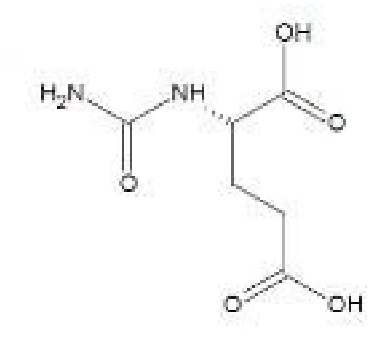
Physicochemical properties: Carglumic acid is a white crystalline powder which is soluble in boiling water, slightly soluble in cold water, and practically insoluble in organic solvents such as cyclohexane, dichloromethane and ether. The pH of a 0.5% aqueous solution is between 2.2 and 3.2 and its melting point is 159°C to 163°C. pKa values of 2.50, 3.55, 8.60 have been determined for carglumic acid.
14 CLINICAL TRIALS
14.1 Clinical Trials by Indication
Acute Hyperammonemia In Patients With NAGS Deficiency
The efficacy of CARBAGLU in the treatment of hyperammonemia due to NAGS deficiency was evaluated in a retrospective review of the clinical course of 23 NAGS deficiency patients who received CARBAGLU treatment for a median of 7.9 years (range 0.6 to 20.8 years).
The demographics characteristics of the patient population are shown in Table 8.
Table 8: Baseline Characteristics of 23 NAGS deficiency Patients treated with CARBAGLU in a Retrospective Case Series
Patients N=23 | ||
|---|---|---|
| Gender | Male | 14 (61%) |
| Female | 9 (39%) | |
| Age at initiation of CARBAGLU therapy (years) | Mean (SD) | 2 (4) |
| Min–Max | 0-13 | |
| Age groups at initiation of CARBAGLU therapy | <30 days | 9 (39%) |
| >30 days - 11 month | 9 (39%) | |
| >1- 13 years | 5 (22%) | |
| NAGS gene mutations by DNA testing | Homozygous | 14 (61%) |
| Heterozygous | 4 (17%) | |
| Not available | 5 (22%) | |
| Patients current treatment status | On-going | 18 (78%) |
| Discontinued | 5 (22%) |
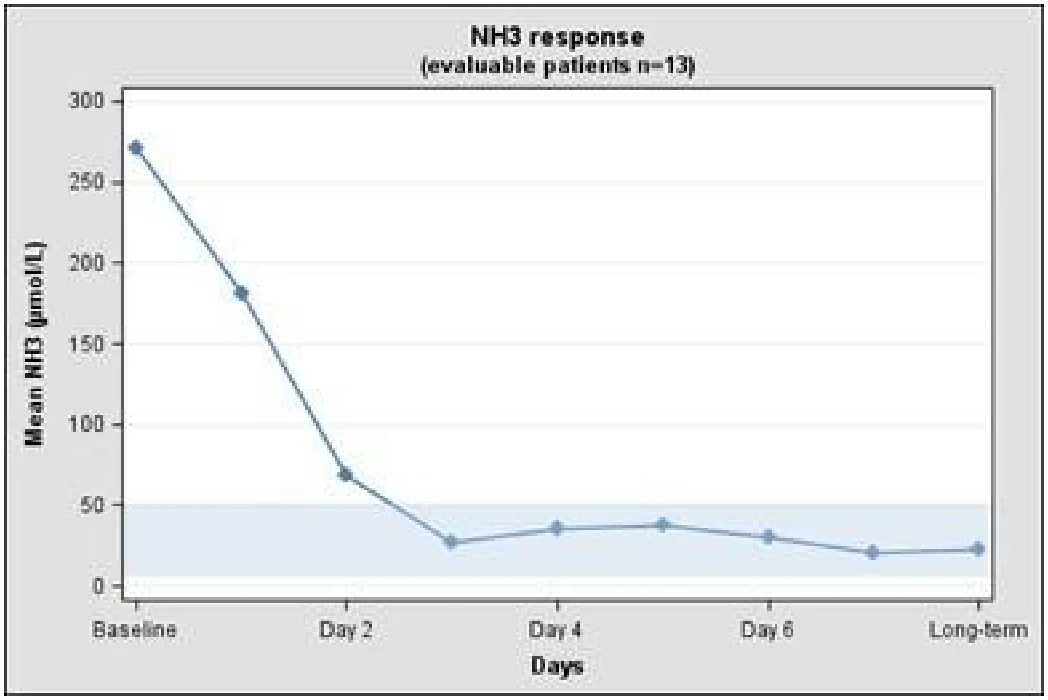
The clinical observations in the 23-patient case series were retrospective, unblinded and uncontrolled and preclude any meaningful formal statistical analyses of the data. However, Short-term efficacy was evaluated using mean and median change in plasma ammonia levels from baseline to days 1 to 3. Persistence of efficacy was evaluated using long-term mean and median change in plasma ammonia level. Table 9 summarizes the plasma ammonia levels at baseline, days 1 to 3 post-CARBAGLU treatment, and long-term CARBAGLU treatment (mean 8 years) for 13 evaluable patients. Of the 23 NAGS deficiency patients who received treatment with CARBAGLU, a subset of 13 patients who had both well documented plasma ammonia levels prior to CARBAGLU treatment and after long-term treatment with CARBAGLU were selected for analysis.
All 13 patients had abnormal plasma ammonia levels at baseline. The overall mean baseline plasma ammonia level was 271 μmol/L. By day 3, normal plasma ammonia levels were attained in patients for whom data were available. Long-term efficacy was measured using the last reported plasma ammonia level for each of the 13 patients analyzed (median length of treatment was 6 years; range 1 to 16 years). The mean and median plasma ammonia levels were 23 μmol/L and 24 μmol/L, respectively, after a mean treatment duration of 8 years.
Table 9: Plasma Ammonia Levels at Baseline and After Treatment with CARBAGLU (NAGS deficiency patients)
| Timepoint | Statistics (N = 131) | Ammonia2 (µmol/L) |
| Baseline (prior to first treatment with CARBAGLU) | N (patients) | 13 |
| Mean (SD) | 271 (359) | |
| Median | 157 | |
| Range | 72-1428 | |
| Missing Data | 0 | |
| Day 1 | N | 10 |
| Mean (SD) | 181 (358) | |
| Median | 65 | |
| Range | 25-1190 | |
| Missing Data | 3 | |
| Day 2 | N | 8 |
| Mean (SD) | 69 (78) | |
| Median | 44 | |
| Range | 11-255 | |
| Missing Data | 5 | |
| Day 3 | N | 5 |
| Mean (SD) | 27 (11) | |
| Median | 25 | |
| Range | 12-42 | |
| Missing Data | 8 | |
Long-term Mean: 8 years Median: 6 years | N | 13 |
| Mean (SD) | 23 (7) | |
| Median | 24 | |
| Range | 9-34 |
| Timepoint | Statistics (N = 131) | Ammonia2 (µmol/L) |
1 to 16 years (last available value on CARBAGLU treatment) | Missing Data | 0 |
1 13/23 patients with complete short-term and long-term plasma ammonia documentation 2 Mean plasma ammonia normal range: 5 to 50 μmol/L | ||
The mean plasma ammonia level at baseline and the decline that is observed after treatment with CARBAGLU in 13 evaluable patients with NAGS deficiency is illustrated in Figure 1.
Figure 1: Ammonia Response for 13 Evaluable NAGS Deficiency Patients at Baseline and After Treatment with CARBAGLU
Acute Hyperammonemia Due To PA And MMA
Trial 2894: Double-blinded, placebo-controlled, randomized, prospective, multicenter clinical trial evaluated the efficacy of CARBAGLU in the treatment of acute hyperammonemia due to PA and MMA.
The unit of randomization and analysis was the occurrence of hyperammonemic episodes in enrolled participants. At each hyperammonemic episode, defined as an admission to the hospital with a plasma ammonia level ≥ 70 μmol/L, participants were block randomized in a 1:1 ratio to either CARBAGLU plus standard therapy or placebo plus standard therapy. Background standard therapy, included but was not limited to intravenous fluids, dextrose, intralipids, biotin, hydroxocobalamin, levocarnitine, metronidazole, and metabolic specialty formulas were allowed. Hemodialysis or hemofiltration was permitted as determined by the treating physician. The use of alternative pathway medications such as sodium benzoate and any medication with phenylacetate as an active metabolite were prohibited. CARBAGLU was dosed at 150 mg/kg/day for participants ≤ 15 kg or 3.3 g/m2/day for participants > 15 kg, divided into 2 equal doses and administered enterally 12 hours apart by nasogastric (NG) tube, gastrostomy (G) tube, or oral syringe. CARBAGLU/placebo was administered for metabolic decompensation for 7 days or until hospital discharge, whichever was earlier.
The primary efficacy outcome of this study was the elapsed time from the first dose of study treatment to the earlier of the participant reaching an ammonia level ≤ 50 μmol/L or hospital discharge. Secondary efficacy outcomes included the trajectory (slope) of change in ammonia levels during hyperammonemic episodes and the trajectory (slope) of change in Functional Status Scale (FSS) scores.
The baseline demographics of patients with PA or MMA are shown in Table 10.
Table 10: Demographics (N = 90 Hyperammonemic Episodes)
| Characteristic | PA/MMA1 | ||
| CARBAGLU | PLACEBO | ||
| Number of Episodes (%) | Number of Episodes (%) | ||
| Total Episodes | 42 (100) | 48 (100) | |
| Gender | |||
| Female | 26 (61.9) | 29 (60.4) | |
| Male | 16 (38.1) | 19 (39.6) | |
| Age | |||
| 0-<5 | 15 (35.7) | 21 (43.8) | |
| 5-<10 | 19 (45.2) | 15 (31.2) | |
| 10-<15 | 0 (0.0) | 0 (0.0) | |
| 15-<18 | 3 (7.1) | 6 (12.5) | |
| 18+ | 5 (11.9) | 6 (12.5) | |
| 1 MMA=methylmalonic acidemia; PA=propionic acidemia. | |||
The efficacy analysis included 90 hyperammonemic episodes, of which 42 episodes were treated with CARBAGLU. In PA and MMA patients, when all episodes were analyzed, the estimated relative benefit of CARBAGLU treatment over placebo (1.34) showed a favourable trend but failed to reach statistical significance. When post hoc analyses focused on those episodes with pre-treatment ammonia levels greater than the median of all pre-treatment ammonia levels (120 μmol/L), there was a statistically significant (4.1-fold, p<0.001) CARBAGLU benefit over placebo in terms of earlier time to reach the primary outcome. (Table 11, Figure 2).
In PA and MMA patients, when all episodes were analyzed, the median time of the primary outcome (time to the Earlier of Ammonia ≤50 μmol/L or Hospital Discharge) for CARBAGLU was 30.6 hours and for placebo was 38.8 hours (median time [95% CI]: CARBAGLU = 30.6 [18.7;42.4]; placebo = 38.8 [24.5; 53.1]) (Table 12).
Table 11: Primary Outcome Analysis of Time to the Earlier of Ammonia ≤ 50 µmol/L or Hospital Discharge for the PA and MMA Subgroup1,2
| PA/MMA Analyses | Number of Episodes | Outcome Ratio CARBAGLU/ PLACEBO3 | 95% CI | p-value | Figure |
| Analysis of Time to the Earlier of Ammonia ≤50 µmol/L or Hospital Discharge | |||||
| Baseline Ammonia - all values | 90 | 1.34 | 0.86, 2.08 | 0.19 | Figure 2 |
| Baseline Ammonia >Median (120 µmol/L) | 46 | 4.13 | 1.94, 8.79 | <0.001 | Figure 2 |
1 Higher ratios reflect an advantage in CARBAGLU-treated episodes. 2 CI=confidence interval; MMA=methylmalonic acidemia; PA=propionic acidemia. 3 Post hoc analyses. | |||||
Table 12: Primary Outcome Analysis of Median Time (hrs) to the Earlier of Ammonia ≤50 µmol/L or Hospital Discharge for the PA and MMA Subgroup1
CARBAGLU Median time – hours (95% CI) | PLACEBO Median time – hours (95% CI) | |
| All PA and MMA | ||
| Primary Outcome | 30.6 (18.7, 42.4) | 38.8 (24.5, 53.1) |
| NH3 ≤50 µmol/L | 22.4 (6.6, 38.2) | 34.6 (10.5, 58.7) |
| Baseline Ammonia >Median (120 µmol/L) | ||
| Primary Outcome | 29.9 (18.7, 41.2) | 46.0 (27.0, 64.9) |
| NH3 ≤50 µmol/L | 29.0 (12.4, 45.7) | 52.3 (18.6, 86.0) |
| 1 Post hoc analyses. | ||
Figure 2: Time to Reach Primary Outcome by Treatment Arm - Intention-To-Treat Population
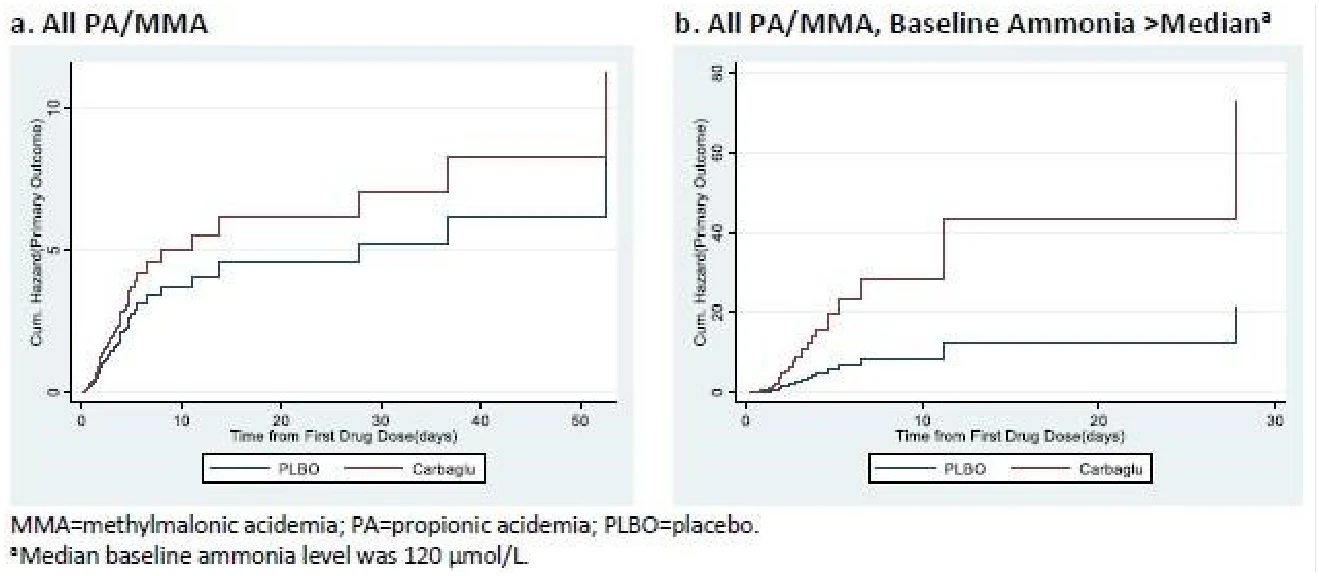
Results of the secondary outcomes showed a trend suggesting a CARBAGLU advantage in episodes with pre-treatment ammonia levels above the median (120 μmol/L), but failed to reach statistical significance.
Retrospective Observational Studies of CARBAGLU in the Treatment of Acute Hyperammonemia in PA and MMA.
The efficacy of CARBAGLU for the treatment of hyperammonemia in patients with PA and MMA during decompensation episodes, was assessed in a descriptive comparison of two observational, retrospective studies; the “Carglumic acid group” comprised one observational dataset (Study 2009) and the “ammonia (NH3) scavengers group” (oral or I.V.) was in another observational dataset (Study 2012). Patients took 100 to 250 mg/kg of CARBAGLU per day administered in 2 to 4 divided doses; the mean (SD) dose of CARBAGLU during the first 24 hours of treatment was 158.8 (111.4) mg/kg. The median duration of treatment in both groups was 4 days. CARBAGLU was used to treat hyperammonemia in addition to standard of care treatments aimed to reverse catabolism and promote metabolism. The median age at the start of the episode was 0.4 month (13 days) in the carglumic acid group and 2.2 months (68 days) in the NH3 scavengers (NH3 Scav) group. Thirty-eight episodes were treated with carglumic acid, 27 episodes with carglumic acid and NH3 scavenger, 18 episodes treated with just one NH3 scavenger and 15 patients who received two NH3 scavengers.
When differences in mean baseline ammonia levels (319.1 μmol/L carglumic acid vs 244.7 μmol/L NH3 scavengers), time, and time by treatment were controlled in the pre-specified primary efficacy analysis ‘plasma NH3 level over time’, the treatment effect was not statistically significant (p=0.412). Propensity matching scores (PMS) analyses, which addressed the issue of non-comparable baseline ammonia levels, showed a faster decrease in ammonia levels in the carglumic acid group, compared to the NH3 scavengers group.
The PMS data represented 31% of the carglumic acid episodes and 36% of the NH3 Scav episodes collected from the observational studies.
Cardiac Electrophysiology: The potential effects of CARBAGLU on the QTc interval were examined with the use of concentrationresponse modelling of the QTc data. The model was built on a randomized three part (Part A, B and C) data set based on 76 healthy adults receiving either IV (between 2.0-7.5 mg/kg) and/or oral (100 mg/kg) dose of CARBAGLU. The model did not predict any clinically relevant QTc interval at concentrations of CARBAGLU up to 7.5 mg/kg IV dose (which is approximately 4.7 times of the orally administered clinical exposure at MRHD, based on Cmax).
15 MICROBIOLOGY
No microbiological information is required for this drug product.
16 NON-CLINICAL TOXICOLOGY
General Toxicology
Pharmacodynamics Carglumic acid is an amino acid and a structural analogue of NAG. NAGS, a mitochondrial enzyme, catalyzes the formation of NAG, an essential, allosteric activator of CPS1, the first enzyme of the urea cycle. Carglumic acid acts as a replacement for NAG in NAGS deficiency patients by activating CPS1. In patients with NAG deficiency, carglumic acid was shown to induce a rapid normalisation of plasma ammonia levels, usually within 24 hours. When the treatment was instituted before any permanent brain damage, patients exhibited normal growth and psychomotor development.
Other studies have been conducted in rats under different experimental conditions leading to increased ammonia availability (starvation, protein-free or high-protein diet). Carglumic acid was shown to decrease blood ammonia levels and increase urea levels in blood and urine, whereas the liver content of carbamoyl phosphate synthetase activators was significantly increased.
Safety Pharmacology Carglumic acid administered orally in rats at doses up to 1000 mg/kg (up to approximately 0.6 times MRHD based on body surface area [mg/m2]) had no statistically significant effect on central nervous system and respiratory functions.
In isolated canine Purkinje fibers, carglumic acid had no statistically significant effect on action potential at concentrations up to19 μg/ml. There were also no changes in blood pressure, heart rate and cardiac conduction times (ECG) including QT interval and QTc in conscious dogs after oral administration of up to 1000 mg/kg carglumic acid (up to approximately 2.2 times MRHD based on body surface area [mg/m2]).
Acute Toxicity Single doses of carglumic acid of up to 2800 mg/kg orally (approximately 1.8 times MRHD based on body surface area [mg/m2]) did not induce any mortality or abnormal clinical signs in adult rats.
Subchronic and Chronic Toxicity In a 2-week repeat-dose toxicity study in newborn rats, carglumic acid was administered orally from day 4 to day 21 post-partum at 250, 500, 1000 and 2000 mg/kg/day. The high dose of 2000 mg/kg/day induced the death of all pups; no cause of death was identified. At 1000 mg/kg/day, orange colored feces, a slight reduction of body weight gain, decreased thymus weight, and dilated kidney pelvis were observed. The non-observed-adverse effect level (NOAEL) was 500 mg/kg/day (approximately 0.3 times the MRHD based on body surface area [mg/m2]).
In a 26-week repeat-dose toxicity study, carglumic acid was administered orally to young rats (4 weeks old at the start of the treatment) at 500 and 1000 mg/kg/day. There was no treatment-related effect on teeth, body length, ophthalmoscopy, and bone mineral density. Increased incidences of histopathological findings in the harderian gland (necrotizing inflammation), kidney (pelvis and tubular dilatation), and liver (multifocal coagulative hepatocellular necrosis) were observed at 1000 mg/kg/day. In addition, ptyalism (excess salivation), a slight reduction in body weight gain, decreased urine pH, and elevated liver weights were seen at this dose level (1000 mg/kg/day). The NOAEL for general toxicity was 500 mg/kg/day (approximately 0.3 times MRHD based on body surface area [mg/m2]). In this study, carglumic acid did not induce immunotoxicity up to 1000 mg/kg/day (up to approximately 0.6 times MRHD based on body surface area [mg/m2]).
Carcinogenicity The carcinogenic potential of carglumic acid was assessed in a 2-year carcinogenicity study in rats. Carglumic acid was not tumorigenic at oral doses up to 1000 mg/kg/day (approximately 0.6 times the MHRD based on body surface area [mg/m2]).
Genotoxicity Carglumic acid showed no significant mutagenic activity in a battery of genotoxicity studies performed in vitro and in vivo.
Carglumic acid was negative in the Ames test, chromosomal aberration assay in human lymphocytes, and the in vivo micronucleus assay in rats.
Reproductive and Developmental Toxicology In the 26-week repeat-dose study in young rats, treated males were mated with additional untreated virgin females from week 26. No adverse effects on mating and fertility were observed at oral doses up to 1000 mg/kg/day (up to approximately 0.6 times MRHD based on body surface area [mg/m2]).
In a combined fertility and embryo-fetal development study, female rats were orally administered 500 or 2000 mg/kg/day carglumic acid 15 days prior to mating through gestation day 17. No adverse effects on mating, fertility, and embryo-fetal development were observed at the doses tested, although signs of maternal toxicity occurred at the high dose of 2000 mg/kg/day. The NOAEL for female fertility and embryo-fetal development in rats was 2000 mg/kg/day (approximately 1.3 times MRHD based on body surface area [mg/m2]). The NOAEL for maternal toxicity in rats was 500 mg/kg/day (approximately 0.3 times MRHD based on body surface area [mg/m2]).
Carglumic acid administered to pregnant rabbits during organogenesis was not embryo-fetal toxic or teratogenic at oral doses of 500 and 1000 mg/kg/day. Maternal toxicity occurred at the high dose of 1000 mg/kg/day. The NOAEL for embryo-fetal development in rabbits was 1000 mg/kg/day (approximately 1.3 times MRHD based on body surface area [mg/m2]). The NOAEL for maternal toxicity in rabbits was 250 mg/kg/day (approximately 0.3 times MRHD based on body surface area [mg/m2]).
In a pre- and postnatal developmental toxicity study in rats, carglumic acid was administered to F0 female rats from implantation up to weaning of the progeny at oral doses of 500 and 2000 mg/kg/day. Carglumic acid was secreted in the milk of lactating rats. Reduced pup survival during the first four postnatal days was observed at 2000 mg/kg/day and reductions in offspring body weight/body weight gains were observed at 500 and 2000 mg/kg/day (approximately 0.3 and 1.3 times MRHD based on body surface area [mg/m2] respectively). Maternal toxicity was observed at both dose levels in F0 females.