


Product Monograph - Cystadane
SUMMARY PRODUCT INFORMATION
| Route of Administration | Dosage Form / Strength | Clinically Relevant Nonmedicinal Ingredients |
| oral | 1 g per 1.7 cc scoop | none For a complete listing see Dosage Forms, Composition and Packaging section |
INDICATIONS AND CLINICAL USE
CYSTADANE (betaine anhydrous powder for oral solution) is indicated for the treatment of homocystinuria to decrease elevated homocysteine blood levels. Included within the category of homocystinuria are deficiencies or defects in:
- 1. cystathionine beta-synthase (CBS),
- 2. 5,10-methylenetetrahydrofolate reductase (MTHFR),
- 3. cobalamin cofactor metabolism (cbl).
Patient response to CYSTADANE can be monitored by homocysteine and methionine plasma levels (See DOSAGE AND ADMINISTRATION). Response usually occurs within a week and maximum response within four to six weeks.
CYSTADANE has been administered concomitantly with vitamin B6 (pyridoxine), B12 (cobalamin), and folate.
Geriatrics:
Clinical data differentiating younger adults and adults >65 years are not available.
Pediatrics:
Homocystinuria in its most severe form can be manifested within the first months or years of life by lethargy, failure to thrive, developmental delays, seizures, or optic lens displacement.
Patients have been treated successfully with CYSTADANE. Dosage titration is preferable in the pediatric population. See WARNINGS AND PRECAUTIONS, Pediatric Use, and DOSAGE AND ADMINISTRATION.
CONTRAINDICATIONS
There are no known contraindications for CYSTADANE (betaine anhydrous powder for oral solution).
WARNINGS AND PRECAUTIONS
General
Therapy with CYSTADANE (betaine anhydrous powder for oral solution) should be directed by physicians knowledgeable in the management of patients with homocystinuria.
Carcinogenesis and Mutagenesis
Long-term carcinogenicity and fertility studies have not been conducted on betaine. No evidence of genotoxicity was demonstrated in the following tests: Metaphase Analysis of Human Lymphocytes; Bacterial Reverse Mutation Assay; and Mouse Micronucleus Test.
Endocrine and Metabolism
Hypermethioninemia: Patients with homocystinuria due to cystathionine beta-synthase (CBS) deficiency may also have elevated plasma methionine concentrations. Treatment with CYSTADANE may further increase methionine concentrations due to the remethylation of homocysteine to methionine. Cerebral edema has been reported in patients with hypermethioninemia, including a few patients treated with CYSTADANE. Plasma methionine concentrations should be monitored in patients with CBS deficiency. Plasma methionine concentrations should be kept below 1,000 µmol/L through dietary modification and, if necessary, a reduction of CYSTADANE dose.
Special Populations
Pregnant Women: Animal reproduction studies have not been conducted with betaine. It is also not known whether betaine can cause fetal harm when administered to a pregnant woman or can affect reproductive capacity. CYSTADANE should be given to a pregnant woman only if clearly needed.
Nursing Women: It is not known whether betaine is excreted in human milk (although its metabolic precursor, choline, occurs at high levels in human milk). Because many drugs are excreted in human milk, caution should be exercised when CYSTADANE is administered to a nursing woman.
Pediatrics: The majority of case studies of homocystinuria patients treated with betaine have been pediatric patients. The disorder, in its most severe form, can be manifested within the first months or years of life by lethargy, failure to thrive, developmental delays, seizures, or optic lens displacement. Patients have been treated successfully with betaine within the first months or years of life, without adverse effects. Dosage titration is recommended in pediatric patients (See DOSAGE AND ADMINISTRATION).
Geriatrics (> 65 years of age): Clinical data is not available.
Monitoring and Laboratory Tests
Plasma homocysteine levels should be monitored in patients treated with CYSTADANE. In patients with CBS deficiency, plasma methionine concentrations should be monitored and kept below 1,000 µmol/L. See WARNINGS AND PRECAUTIONS, Endocrine and Metabolism - Hypermethioninemia.
ADVERSE REACTIONS
Adverse Drug Reaction Overview
Adverse reactions to betaine have been minimal. In a survey study of physicians who had treated a total of 111 homocystinuria patients with betaine, the types of adverse effects and the number of patients experiencing them were as follows:
| Nausea | 2 |
| GI distress | 2 |
| Diarrhea | 1 |
| “Caused odour” | 1 |
| Questionable psychological changes | 1 |
| “Aspirated the powder” | 1 |
| Unspecified problem | 1 |
Post-Market Adverse Drug Reactions
A few cases of cerebral edema have been reported secondary to severe hypermethioninemia in patients with cystathionine beta-synthase (CBS) deficiency treated with CYSTADANE. See WARNINGS AND PRECAUTIONS, Endocrine and Metabolism - Hypermethioninemia.
DRUG INTERACTIONS
Overview
There are no known interactions with CYSTADANE. CYSTADANE has been administered concomitantly with vitamin B6 (pyridoxine), B12 (cobalamin), and folate.
Because of the potential for CYSTADANE to further increase plasma methionine concentrations in patients with cystathionine beta-synthase (CBS) deficiency, plasma methionine concentrations should be monitored in these patients and kept below 1,000 µmol/L, through dietary modification and, if necessary, a reduction of CYSTADANE dose.
DOSAGE AND ADMINISTRATION
Dosing Considerations
Dose titration is recommended in the pediatric population. See below.
In patients with CBS deficiency, plasma methionine concentrations should be monitored and kept below 1,000 µmol/L, through dietary modification, and if necessary, a reduction in CYSTADANE dose.
Recommended Dose and Dosage Adjustment
The usual dosage in adult patients is 6 grams per day administered orally in divided doses of 3 grams two times per day. Dosages of up to 20 grams per day have been necessary to control homocysteine levels in some patients.
In pediatric patients, dosage may be started at 100 mg/kg/day and then increased once by a 50 mg/kg increment after four to six weeks. In one study, pharmacokinetic and pharmacodynamic simulation indicated minimal benefit from exceeding a twice-daily dosing schedule and a 150 mg/kg/day dosage for betaine. The maximum amount of dosage in children must not exceed 6 grams per day.
Plasma total homocysteine and methionine concentrations should be monitored in patients with CBS deficiency. See WARNINGS AND PRECAUTIONS, Endocrine and Metabolism - Hypermethioninemia.
Missed Dose
A missed dose should be taken as soon as possible. However, if it is almost time for the next dose, the missed dose should be skipped and the patient resume their regular dosing schedule.
Administration
The prescribed amount of CYSTADANE (betaine anhydrous powder for oral solution) should be measured with the measuring scoop provided (one level 1.7 cc scoop is equal to 1 gram of betaine anhydrous powder) and then dissolved in 4 to 6 ounces (120 to 180 mL) of water, juice, milk, or formula, or mixed with food for immediate ingestion.
OVERDOSAGE
Treatment with CYSTADANE may further increase methionine concentrations due to the remethylation of homocysteine to methionine. Cerebral edema has been reported in patients with hypermethioninemia, including a few patients treated with CYSTADANE. Plasma methionine concentrations should be monitored in patients with CBS deficiency. Plasma methionine concentrations should be kept below 1,000 µmol/L through dietary modification and, if necessary, a reduction of CYSTADANE dose. In the pediatric population, there appears to be only a marginal benefit from exceeding 150 mg/kg/day.
ACTION AND CLINICAL PHARMACOLOGY
Mechanism of Action
CYSTADANE (betaine anhydrous powder for oral solution) is an agent for the treatment of homocystinuria. When administered in recommended oral dosage to children or adults, CYSTADANE acts as a methyl group donor in the remethylation of homocysteine to methionine in patients with homocystinuria. As a result, toxic blood levels of homocysteine are reduced in these patients, usually to 20-30 percent or less of pre-treatment levels.
Pharmacodynamics
Elevated homocysteine blood levels are associated with clinical problems such as cardiovascular thrombosis, osteoporosis, skeletal abnormalities, and optic lens dislocation. Plasma levels of homocysteine were decreased in nearly all patients treated with betaine, usually to 20-30 percent or less of pre-treatment levels. The maximum reduction in plasma levels of homocysteine was achieved in several weeks.
Betaine was observed to lower plasma homocysteine levels in the three types of homocystinuria, i.e., cystationine beta-synthase (CBS) deficiency; 5,10-methylenetetrahydrofolate reductase (MTHFR) deficiency; and cobalamin cofactor metabolism (cbl) defect.
Betaine has also been demonstrated to increase low plasma methionine and S-adenosylmethionine (SAM) levels in patients with MTHFR deficiency and cbl defect.
In CBS-deficient patients, large increases in methionine over baseline levels have been observed.
Pharmacokinetics
Betaine occurs naturally in the body. It is a metabolite of choline and is present in small amounts in foods such as beets, spinach, cereals, and seafood. However, the amount of betaine available from these sources is insufficient to control the greatly elevated plasma levels present in patients with homocystinuria.
Pharmacokinetic studies of betaine are not available. Plasma levels of betaine have not been measured in patients and have not been correlated to homocysteine levels. However, pharmacodynamic measurements, i.e., monitoring of plasma homocysteine levels, have demonstrated that the onset of action of betaine is within several days and the maximum response to dosage is achieved within several weeks. Patients have taken betaine for many years without evidence of tolerance.
STORAGE AND STABILITY
Store at room temperature, 15° - 30°C (59° - 86°F). Protect from moisture.
Replace the cap tightly after using.
SPECIAL HANDLING INSTRUCTIONS
One level scoop (1.7 cc) is equivalent to 1 gram of betaine anhydrous powder. Measure the number of scoops your physician has prescribed. Mix with 4 to 6 ounces (120 to 180 mL) of water, juice, milk, or formula until completely dissolved, or mix with food, then ingest immediately.
DOSAGE FORMS, COMPOSITION AND PACKAGING
Active Ingredient: betaine anhydrous
Non-medicinal Ingredients: There are no non-medicinal ingredients.
CYSTADANE (betaine anhydrous powder for oral solution) is available in plastic bottles containing of 180 grams of betaine anhydrous. Each bottle is equipped with a child-resistant cap and is supplied with a polypropylene measuring scoop. One level (1.7 cc) is equal to 1 gram of betaine anhydrous powder.
CYSTADANE is available through a specialty distribution system. Please call 905-827-1300 or your wholesaler for ordering information.
PART II: SCIENTIFIC INFORMATION
PHARMACEUTICAL INFORMATION
Drug Substance
Proper name: betaine anhydrous
Chemical name: trimethylglycine
Molecular formula and molecular mass: C5H11NO2 117.15
Structural formula:
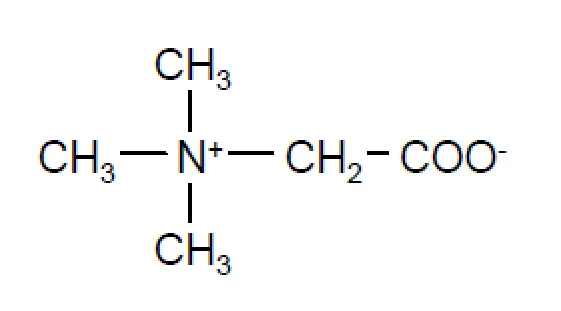
Physicochemical properties: CYSTADANE is a white granular, hygroscopic powder. Betaine anhydrous powder is very soluble in water, soluble in methanol and ethanol, and sparingly soluble in ether.
CLINICAL TRIALS
Clinical trial data is not available.
DETAILED PHARMACOLOGY
Betaine decreases plasma homocysteine levels by serving as a methyl donor for the remethylation of homocysteine to methionine in an important alternative pathway. The reaction is catalyzed by betaine-homocysteine methyltransferase which does not require the cofactors 5-methyltetrahydrofolate or methylcobalamin for the conversion of homocysteine to methionine.
Since it is not dependent on the cofactors, betaine is effective in the treatment of all three primary types of homocystinuria. Betaine has also been demonstrated to increase low plasma methionine and S-adenosylmethionine (SAM) levels in the 5,10-methylenetetrahydrofolate reductase (MTHFR) deficiency and cobalamin cofactor metabolism (cbl) defect types of homocystinuria.
Betaine is available in small quantities in foods such as beets, spinach, cereals, and seafood. It is also available as a metabolite of choline, another dietary component. However, the amount of betaine available from these sources is insufficient to control the greatly elevated plasma levels present in patients with homocystinuria.
When pharmacologic doses of betaine are given to patients with homocystinuria, elevated levels of homocysteine are decreased. Plasma levels of homocysteine were decreased in nearly all patients treated with betaine.
TOXICOLOGY
The acute oral toxicity of betaine anhydrous was investigated in five groups of five male and five female CD rats. The animals were starved overnight prior to dosing. The test material was administered on Day 1 at dosages in the range of 5,000 - 20,000 mg/kg, at a volume-dosage of 40 mL/kg in distilled water.
The acute oral median lethal dosage (LD50), 95% confidence limits and slope of the dose response curve were:
| LD50 (mg/kg) | 95% CI | Slope (degrees) | |
| Male | 11,204 | 8,616-13,792 | 88 |
| Female | 11,148 | 9,929-12,367 | 83 |
| Combined | 11,179 | 10,454-11,904 | 85 |
Signs of toxicity included lethargy, decreased motor activity, prone posture, ataxia, muscle tremor, breathing irregularities, piloerection, ungroomed appearance, salivation, hunched posture and diarrhea.
A dose rangefinder was carried out on betaine monohydrate using concentrations up to 10,000 µg/mL. Based on the results obtained, concentrations of 1,000, 3,333 and 10,000 µg/mL in the absence and presence of S-9 were selected for a cytogenetic study of metaphase analysis of human lymphocytes. Betaine monohydrate caused no statistically significant increases in chromosome aberrations, nor did the aberrations scored from a dose response relationship in either the absence or presence of S-9. It was concluded that betaine monohydrate was not a clastogen to human lymphocytes under the conditions of this study.
Betaine monohydrate was tested in vitro by the Ames plate incorporation method for its ability to induce mutations in five histidine dependent auxotrophic mutants of Salmonella typhimurium strains TA1535, TA1537, TA1538, TA98 and TA100. Two independent mutations tests were performed, each in both the presence and absence of a metabolic activation system (S-9) at the following dosages: 5,000, 1,000, 200, 40 and 8 µg/plate. Betaine monohydrate produced no significant increases in the number of revertants, with any of the tester strains, in either of the two experiments performed. It was concluded that betaine monohydrate was not mutagenic in the above test.
A mouse micronucleus test was conducted at dosages of 0.5, 1, 1.5 and 2 g/kg using betaine monohydrate. Toxicity of betaine monohydrate to the bone marrow, measured by reduced PCE/NCE (polychromatic erythrocytes/normochromatic erythrocytes) ratios, was not observed. Compared to the appropriate control groups, no significant increases in micronucleated PCE were seen for any group of animals dosed with betaine monohydrate. The numbers of micronuclei scored in treated animals showed normal variation about the control animals. It was concluded that betaine monohydrate does not induce micronuclei in the bone marrow of mice dosed at levels up to a dose of 2 g/kg by the oral route.
REFERENCES
Bartholomew DW, Batshaw ML, Allen RH, et al. Therapeutic approaches to cobalamin-C methylmalonic acidemia and homocystinuria. J Pediatr 1988; 112:32-39.
Berlow S, Bachman RP, Berry GT, et al. Betaine therapy in homocystinemia. Brain Dysfunct 1989; 2:10-24.
Carmel R, Watkins D, Goodman SI, Rosenblatt DS. Hereditary defect of cobalamin metabolism (cb/G mutation) presenting as a neurologic disorder in adulthood. N Engl J Med 1988; 318:1738-1741.
Cochran FB, Sweetman L, Schmidt K, Barsh G, Kraus J, Packman S. Pyridoxine-unresponsive homocystinuria with an unusual clinical course. Am J Med Genetics 1990; 35:519-522.
Devlin AM, Hajipour L, Gholkar A, Fernandes H, Ramesh V, Morris AAM. Cerebral edema associated with betaine treatment in classical homocystinuria. J Pediatr 2004; 144(4):545-548.
Gahl WA, Bernardini I, Chen S, Kurtz D, Horvath K. The effect of oral betaine on vertebral body bone density in pyridoxine-non-responsive homocystinuria. J Inher Metab Dis 1988;
11:291-298.
Haworth JC, Dilling LA, Surtees LE, et al. Symptomatic and asymptomatic methylenetetrahydrofolate reductase deficiency in two adult brothers. Am J Med Genetics 1993;
45:572-576.
Holme E, Kjellman B, Ronge E. Betaine for treatment of homocystinuria caused by methylenetetrahydrofolate reductase deficiency. Arch Dis Child 1989; 64:1061-1064.
Hyland K, Smith I, Bottiglieri T, et al. Demyelination and decreased S-adenosylmethionine in 5,10-methylenetetrahydrofolate reductase deficiency. Neurology 1988; 38:459-462.
Ilan Y, Eid A, Rivkind AI, Weiss D, Dubin Z, Yatziv S. Gastrointestinal involvement in homocystinuria. J Gastroenterology and Hepatology 1993; 8:60-62.
Kishi T, Kawamura I, Harada Y, et al. Effect of betaine on s-adenosylmethionine levels in the cerebrospinal fluid in a patient with methylenetetrahydrofolate reductase deficiency and peripheral neuropathy. J Inher Metab Dis 1994; 17:560-565.
Matthews A, Johnson TN, Rostami-Hodjegan A, Chakrapani A, et al. An indirect response model of homocysteine suppression by betaine: optimizing the dosage regimen of betaine in homocystinuria. Br J Clin Pharmacol 2002; 54 :140-46.
Ribes A, Briones P. Vilaseca MA, et al. Methylmalonic aciduria with homocystinuria: biochemical studies, treatment, and clinical course of a Cb1-C patient. Eur J Pediatr 1990; 149:412-415.
Smolin LA, Benevenga NJ, Berlow S. The use of betaine for the treatment of homocystinuria. J Pediatr 1981; 99(3):467-472.
Wendel U, Bremer HJ. Betaine in the treatment of homocystinuria due to 5,10- methylenetetrahydrofolate reductase deficiency. Eur J Pediatr 1984; 142:147-150.
Wilcken DEL, Wilcken B, Dudman NPB, Tyrrell PA. Homocystinuria - the effects of betaine in the treatment of patients not responsive to pyridoxine. N Engl J Med 1983; 309(8):448-453.
Wilcken DEL, Dudman NPB, Tyrrell PA. Homocystinuria due to cystathionine beta-synthase deficiency - the effects of betaine treatment in pyridoxine-responsive patients. Metabolism 1985; 34(12):1115-1121.
Wiley VC, Dudman NPB, Wilcken DEL. Free and protein-bound homocysteine and cysteine in cystathionine beta-synthase deficiency: interrelations during short and long-term changes in plasma concentrations. Metabolism 1989; 38(8):734-739.