


Product Monograph - Carboplatin Injection, BP
ACTIONS AND CLINICAL PHARMACOLOGY
Carboplatin has biochemical properties similar to that of cisplatin, thus producing predominantly interstrand DNA, crosslinks. In patients with creatinine clearances of 60 mL/min or greater given Carboplatin injection at doses of 300 to 500 mg/m2, the plasma concentrations of Carboplatin decline in a biphasic manner with mean alpha and beta half-lives of 1.6 h and 3.0 h. respectively. The total body clearance, apparent volume of distribution, and mean residence time for Carboplatin is 73 mL/min, 16 L, and 3.5 h. respectively. The Cmax and AUC increase linearly with dose. Therefore, over the range of doses studied, Carboplatin exhibits linear, pharmacokinetics in patients with creatinine clearances ≥ 60 mL /min.
Repeated dosing during four consecutive days did not produce an accumulation of platinum in plasma. Following administration of carboplatin, reported values for the terminal elimination half-lives of free ultrafilterable platinum and carboplatin in man are approximately 6 hours and 1.5 hours respectively. During the initial phase, most of the free ultrafilterable platinum is present as carboplatin. The terminal half-life for total plasma platinum is 24 hours. Approximately 87% of plasma platinum is protein bound within 24 hours following administration and is slowly eliminated with a minimum half-life of 5 days.
The major route of elimination of Carboplatin is renal excretion Patients with creatinine clearances of about 60 mL/min or greater excrete 70% of the dose of carboplatin in the urine with most of this occurring within 12 to 16 hours. All of the platinum in 24 h urine is present as Carboplatin, and only 3 to 5% of the dose is excreted between 24 and 96 hours.
3
Total body and renal clearances of free ultrafilterable platinum correlate with the rate of glomerular filtration, but not tubular secretion.
In patients with creatinine clearances of less than 60 mL/min, Carboplatin renal and total body clearances decrease with decreases in creatinine clearance. Doses of Carboplatin Injection therefore, should be reduced in patients with creatinine clearance < 60 mL/min (see DOSAGE AND ADMINISTRATION).
INDICATIONS AND CLINICAL USE
Carboplatin Injection is indicated for the treatment of advanced ovarian carcinoma of epithelial origin in:
- a) First line therapy
- b) Second line therapy, after other treatments have failed.
CONTRAINDICATIONS
Carboplatin Injection is contraindicated in patients with pre-existing severe renal impairment unless in the judgement of the physician and patient, the possible benefits of treatment outweigh the risks. Carboplatin Injection should not be employed in severely myelosuppressed patients and/or in patients with bleeding tumors. Carboplatin Injection is also contraindicated in patients with a history of severe allergic reactions to carboplatin, other platinum containing compounds, or mannitol.
WARNINGS
Carboplatin Injection should be used only by physicians experienced with cancer chemotherapeutic drugs. Blood counts as well as renal and hepatic function tests must be done regularly and the drug should be discontinued if abnormal depression of the bone marrow or abnormal renal or hepatic function is seen.
Its carcinogenic potential has not been studied, but compounds with similar mechanisms of action and mutagenicity have been reported to be carcinogenic.
Hematologic Toxicity
Leukopenia, neutropenia and thrombocytopenia are dose-dependent and dose-limiting. Peripheral blood counts should be monitored during carboplatin treatment frequently and, in case of toxicity, until recovery is achieved.
Severity of myelosuppression is increased in patients with prior treatment (in particular with cisplatin) and/or impaired kidney function. Initial Carboplatin Injection dosages in these groups should be appropriately reduced (see DOSAGE AND ADMINISTRATION) and the
4
effects carefully monitored through frequent blood counts between courses. Carboplatin Injection courses should not be repeated more frequently than monthly under normal circumstances. Administration of Carboplatin Injection in combination with other myelosuppressive compounds must be planned very carefully with respect to dosages and timing in order to minimize additive effects.
Anemia is frequent and cumulative. Transfusional support is often needed during treatment, particularly in patients receiving prolonged therapy.
Neurologic Toxicity
Although peripheral neurologic toxicity is generally rare and mild, its frequency is increased in patients older than 65 years and/or in patients previously treated with cisplatin. Stabilization or amelioration of pre-existing cisplatin-induced neurotoxicity has occurred in about half the patients receiving carboplatin as secondary treatment.
Visual disturbances, including loss of vision, have been reported rarely after the use of carboplatin, in doses higher than those recommended in patients with renal impairment. Vision appears to recover totally or to a significant extent within weeks of stopping these high doses.
Use in Pregnancy
Carboplatin Injection can cause fetal harm when administered to a pregnant woman. Carboplatin has been shown to be embryotoxic and teratogenic in rats receiving the drug during organogenesis as well as mutagenic in several experimental systems. No controlled studies in pregnant women have been conducted. If this drug is used during pregnancy, or if the patient becomes pregnant while taking this drug, the patient should be apprised of the potential hazard to the fetus. Women with child-bearing potential should be advised to avoid becoming pregnant.
Other
Although carboplatin has limited nephrotoxic potential, concomitant treatment with aminoglycosides has resulted in episodes of increased renal and audiologic toxicity. Clinically significant hearing loss has been reported to occur in pediatric patients when carboplatin was administered at higher than recommended doses in combination with other ototoxic agents. Very high dosages of carboplatin (up to five times the single agent recommended dose or more) has resulted in severe abnormalities in hepatic and renal function.
As with other platinum compounds, allergic reactions to carboplatin have been reported. These may occur within minutes of administration and should be managed with appropriate supportive therapy.
5
Carboplatin can induce nausea and vomiting, which can be more severe in previously treated patients (particularly in patients previously pretreated with cisplatin). Premedication with antiemetics and prolongation of time of carboplatin administration by continuous infusion or over five consecutive days have been reported to be useful in reducing the incidence and intensity of this adverse event.
PRECAUTIONS
Peripheral blood counts, renal and hepatic function tests should be monitored closely. Blood counts are recommended at the beginning of the therapy and weekly to assess hematologic nadir for subsequent dose adjustments. Leukopenia and thrombocytopenia are at their lowest levels between days 14 and 28 and 14 and 21, respectively, after initial therapy. Should the white blood cell count fall below 2,000 cells/mm3 or the platelet count fall below 50,000 cells/mm3, consideration should be given to discontinuation of Carboplatin Injection treatment until bone marrow recovery, which usually occurs in 5 to 6 weeks.
Renal toxicity is usually not dose-limiting in patients receiving carboplatin nor does it require preventive measures such as high-volume fluid hydration or forced diuresis. Nevertheless, increasing blood urea or serum creatinine levels can occur in about 6 to 14% of the patients. Renal function impairment, as defined by a decrease in the creatinine clearance below 60 mL/min, may be observed in about 27% of the patients. The incidence and severity of nephrotoxicity may increase in patients who have impaired kidney function before carboplatin treatment. It is not clear whether an appropriate hydration program might overcome such effect. Dosage reduction or discontinuation of therapy is required in the presence of severe alteration of renal function.
Neurotoxicity is usually limited to paresthesias and decreased deep tendon reflexes. The frequency and intensity of this side effect increase in patients previously treated with cisplatin. Thus neurologic evaluations should be performed on a regular basis.
After reconstitution, Carboplatin Injection is physically incompatible with any I.V. set, needle and syringe containing aluminum. An interaction will occur between aluminum and platinum from carboplatin causing a black precipitate which is visible in the solution. (see PHARMACEUTICAL INFORMATION - Reconstituted Solution).
Carboplatin can induce nausea and vomiting, which can be more severe in previously treated patients (particularly in patients previously pretreated with cisplatin). Premedication with antiemetics and prolongation of time of carboplatin administration by continuous infusion or over five consecutive days have been reported to be useful in reducing the incidence and intensity of this adverse event.
6
Pediatric Use
Safety and effectiveness in pediatric patients have not been systematically studied.
Nursing Mothers
It is not known whether this drug is excreted in human milk. Because many drugs are excreted in human milk and because of the potential for serious adverse reactions in nursing infants from carboplatin, nursing should be discontinued.
Drug Interactions:
The use of Carboplatin Injection with nephrotoxic compounds is not recommended.
ADVERSE REACTIONS
The frequency of adverse reactions in the table that follows are derived from a cumulative database of 1893 patients receiving single agent carboplatin injection, including post marketing experience.
SUMMARY OF ADVERSE EVENTS IN 1893 PATIENTS RECEIVING CARBOPLATIN INJECTION | |
| % INCIDENCE | |
Bone Marrow in Patients with Normal Baseline Values Thrombocytopenia <50,000/mm3 Neutropenia <1,000/mm3 Leukopenia <2,000/mm3 Anemiae <11 g/dL Infections Bleeding Transfusions | 25 18 14 71 4 5 26 |
Gastrointestinal Vomiting Nausea Pain Diarrhea Constipation | 64 15 17 6 6 |
Neurologic Peripheral Neuropathy CNS Symptoms Clinical Ototoxicity and other sensory disturbances | 4 5 1 |
7
SUMMARY OF ADVERSE EVENTS IN 1893 PATIENTS RECEIVING CARBOPLATIN INJECTION | |
| % INCIDENCE | |
Renal ↓in Creatinine Clearance (Patients with baseline creatinine clearance, ≥60 mL/min) ↑in Serum Creatinine ↑in Blood Urea Nitrogen ↑in Uric Acid | 27 6 14 5 |
Electrolytes ↓in Serum Sodium ↓in Serum Potassium ↓in Serum Calcium ↓in Serum Magnesium | 29 20 22 29 |
Hepatic (Patients with normal baseline) ↑in Alkaline Phosphatase ↑in AST ↑in Total Bilirubin Hypersensitivity Reaction All | 24 15 5 2 |
Other Asthenia Alopecia | 8 3 |
Hematologic
Myelosuppression is the dose-limiting toxicity of carboplatin. In patients with normal baseline values, thrombocytopenia with platelet counts below 50,000/mm3 occurs in 25% of patients, neutropenia with granulocyte counts below 1,000/mm3 in 18% of patients, and leukopenia with WBC counts below 2,000/mm3 in 14% of patients. The nadir usually occurs on day 21 (on day 15 in patients receiving carboplatin in combination). By day 28, recovery of platelet counts above 100,000/mm3 occurs in 90% of patients, recovery of neutrophils above 2,000/mm3 occurs in 74% and recovery of leukocytes above 4,000/mm3 occurs in 67% of patients. Febrile neutropenia has also been reported in post-marketing experience.
Myelotoxicity is more severe in previously treated patients (in particular in patients previously treated with cisplatin) and in patients with impaired kidney function. Patients with poor performance status have also experienced increased leukopenia and thrombocytopenia. These effects, although usually reversible, have resulted in infectious and hemorrhagic complications in 4% and 5% of patients given carboplatin, respectively. These complications have led to death in less than 1% of patients.
8
Anemia with hemoglobin values below 11 g/dL, has been observed in 71% of patients with normal baseline values. The incidence of anemia is increased with increasing exposure to carboplatin. Transfusional support has been administered to 26% of patients given carboplatin. Myelosuppression can be worsened by combination of carboplatin with other myelosuppressive compounds or other forms of treatment.
Gastrointestinal
Vomiting occurs in 64% of patients, in one-third of whom it is severe. Nausea occurs in an additional 15%. Previously treated patients (in particular patients previously treated with cisplatin) appear to be more prone to vomiting. These effects usually disappear within 24 hours after treatment and are generally responsive to (or prevented by) antiemetic medication. A prolonged administration time for carboplatin (i.e. by continuous infusion or daily doses administered over five consecutive days) can decrease the likelihood of vomiting. Vomiting is more likely when carboplatin is given in combination with other emetogenic compounds. Other gastrointestinal side effects consist of pain (17%); diarrhea, (6%), and constipation, (6%). Cases of anorexia have been reported in the post-marketing experience. The relationship of carboplatin to these events is unclear.
Neurologic
Peripheral neuropathy (mainly paresthesias) has occurred in 4% of patients administered carboplatin. Patients older than 65 years and patients previously treated with cisplatin, as well as those receiving prolonged treatment with carboplatin, appear to be at increased risk. In half the patients who have pre-existing, cisplatin-induced peripheral neurotoxicity, there is no further aggravation of symptoms during therapy with carboplatin. Subclinical decrease in hearing acuity, consisting of high-frequency (4000-8000 Hz) hearing loss as determined by audiogram, has been reported in 15% of patients. Clinically significant ototoxicity, manifested in the majority of cases by tinnitus, and other sensory disturbances ( i.e. visual disturbances and taste modifications) have occurred in 1% of patients. In patients who have been previously treated with cisplatin and have developed hearing loss related to such treatment, the hearing impairment may persist or worsen. Central nervous symptoms have been reported in 5% of patients and often appear to be related to
the use of antiemetics.
The overall frequency of neurologic side effects seems to be increased in patients receiving carboplatin in combination. This may also be related to longer cumulative exposure.
Renal
When given in usual doses, development of abnormal renal function has been uncommon, despite the fact that carboplatin has been administered without high-volume fluid hydration and/or forced diuresis. Elevation of serum creatinine occurs in 6% of patients, elevation of
9
blood urea nitrogen in 14% and of uric acid in 5% of patients. These are usually mild and are reversible in about one-half of the patients. Creatinine clearance has proven to be the most sensitive renal function measure in patients receiving carboplatin. Twenty-seven percent of patients who have a baseline value of 60 mL/min or greater, experience a reduction in creatinine clearance during carboplatin therapy.
Electrolytes
Decreases in serum sodium, potassium, calcium and magnesium occur in 29%, 20%, 22% and 29% of patients respectively. Electrolyte supplementation was not administered together with carboplatin. Combination chemotherapy has not increased the incidence of these electrolyte changes. Spontaneous reports of early hyponatremia have been received. While the relationship to carboplatin is not clear in light of other contributory factors (diuresis, respiratory dysfunction, malignancy, etc) the possibility of hyponatremia should be considered especially for patients with other risk factors, such as concurrent diuretic therapy. Sodium replacement or free water restriction generally reversed the hyponatremia.
Hepatic
Modification of liver function in patients with normal baseline values was observed including elevation of total bilirubin is 5%, AST in 15% and alkaline phosphatase in 24% of patients. These modifications were generally mild and reversible in about half the patients. In a limited series of patients receiving very high dosages of carboplatin and autologous bone marrow transplantation, severe elevation of liver function tests has occurred.
Allergy
Hypersensitivity to carboplatin has been reported in 2% of patients. These allergic reactions are comparable in characteristics and outcome to those been reported with other platinum-containing compounds (i.e. rash, urticaria, erythema, fever with no apparent cause, pruritus, rarely bronchospasm and hypotension). Anaphylactic-type reactions have occurred within minutes of administration. Hypersensitivity reactions have been successfully treated with standard epinephrine, corticosteroid and antihistamine therapy.
Other:
Second malignancies have been reported in association with multi-drug therapy, however the relationship to carboplatin is unclear.
Respiratory, cardiovascular, mucosal, genitourinary, cutaneous and musculoskeletal side effects have occurred in 5% or fewer patients. Fever and chills without evidence of infection or allergic reaction has occurred in 2% of patients. Deaths have occurred from cardiovascular events (cardiac failure, embolism, cerebrovascular accident) in less than one percent of
10
patients. It is unclear whether these deaths were related to chemotherapy or concomitant illness. Hypertension has been reported in post-marketing experience.
Asthenia (8%) and alopecia (3%) have also been reported. Their frequency is greatly increased in patients receiving carboplatin in combination. Hemolytic-uremic syndrome has been reported rarely.
Reporting Side Effects
You can report any suspected side effects associated with the use of health products to Health Canada by:
- Visiting the Web page on Adverse Reaction Reporting (http://www.hc-sc.gc.ca/dhp-mps/medeff/report-declaration/index-eng.php) for information on how to report online, by mail or by fax; or
- Calling toll-free at 1-866-234-2345.
NOTE: Contact your health professional if you need information about how to manage your side effects. The Canada Vigilance Program does not provide medical advice.
SYMPTOMS AND TREATMENT OF OVERDOSE
| For management of a suspected drug overdose, contact your regional Poison Control Centre. |
There is no known antidote for carboplatin overdosage. No overdosage occurred during clinical trials, but should it occur, symptomatic measures should be taken to sustain the patient through any period of toxicity that might occur. The anticipated complications of overdosage would be related to myelosuppression as well as impairment of renal and hepatic function. Use of higher than recommended doses of carboplatin injection has been associated with loss of vision (see WARNINGS).
DOSAGE AND ADMINISTRATION
Needles or intravenous sets containing aluminum parts that may come in contact with Carboplatin Injection should not be used for preparation or administration. Aluminum reacts with carboplatin causing precipitate formation and/or loss of potency.
Carboplatin Injection should be used by the intravenous route only. The recommended dosage of Carboplatin Injection in previously untreated adult patients with normal kidney function is 400 mg/m2 as a single I.V. dose administered by a short term (15 to 60 minutes) infusion. Therapy should not be repeated until four weeks after the previous Carboplatin
11
Injection course and/or until the neutrophil count is at least 2000 cells/mm3 and the platelet count is at least 100,000 cells/m3.
Reduction of the initial dosage by 20 - 25% is recommended for those patients who present with risk factors such as prior myelosuppressive treatment and low performance status (ECOG- Zubrod 2-4 or Karnofsky below 80). For patients aged 65 and over, dosage adjustment, initially or subsequently, may be necessary depending on the physical condition of the patient.
Determination of the hematologic nadir by weekly blood counts during initial courses of treatment with Carboplatin Injection is recommended for dosage adjustments for subsequent courses of therapy.
Patients with impaired Renal Function
The optimal use of Carboplatin Injection in patients presenting with impaired renal function requires adequate dosage adjustments and frequent monitoring of both hematologic nadirs and renal function.
Patients with creatinine clearance values below 60 mL/min are at increased risk of severe myelosuppression. The frequency of severe leukopenia, neutropenia, or thrombocytopenia has been maintained at about 25% with the following dosages:
Carboplatin Injection 250 mg/m2 I.V. on day 1 in patients with baseline creatinine clearance values between 41-59 mL/min.
Carboplatin Injection 200 mg/m2 I.V. on day 1 in patients with baseline creatinine clearance values between 16-40 mL/min.
Insufficient data exist on the use of carboplatin in patients with creatinine clearance of 15 mL/min or less to permit a recommendation for treatment.
All of the above dosing recommendations apply to the initial course of treatment subsequent dosages should be adjusted according to the patient’s tolerance and to the acceptable level of myelosuppression.
Combination therapy
The optimal use of Carboplatin Injection in combination with other myelosuppressive agents requires dosage adjustments according to the regimen schedule to be adopted.
Procedures for proper handling and disposal of anti-cancer drugs should implemented (See
Pharmaceutical Information).
12
PHARMACEUTICAL INFORMATION
DRUG SUBSTANCE
Common Name: Carboplatin
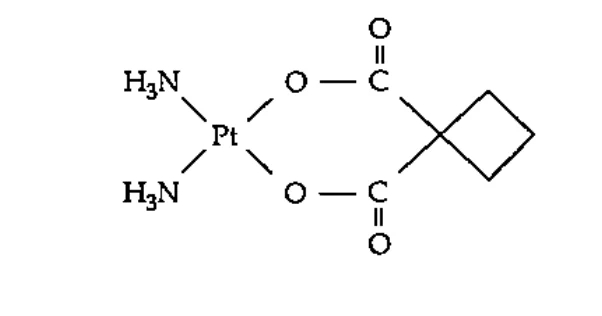
Chemical Name: Cis-diammine (1,1-cyclobutane - dicarboxylato) platinum
Empirical Formula: C6H12N2O4 Pt
Structural formula:
Molecular Weight: 371.26 g/mol
Description: Carboplatin is comprised of white/off-white crystals that decompose without melting at approximately 200°C. Carboplatin is soluble in water at concentrations below 15mg/mL. The pH is approximately 5.5 at l0mg/mL.
Carboplatin is highly insoluble in organic solvents as ethanol, acetonitrile, acetone, and dimethylacetamide.
13
DRUG PRODUCT
Trade Name: Carboplatin Injection, BP
COMPOSITION
Aqueous Solution
Each milliliter of Carboplatin Injection contains 10 mg of carboplatin in water for injection.
Diluted Solution
Carboplatin Injection may be further diluted to 0.5 mg/mL, (500µg/mL) with 5% dextrose injection or 0.9% Sodium Chloride injection. When diluted as directed the resulting solutions are stable for 8 hours at 15°C - 30°C
The diluted solution must be used intravenously only and should be administered by short-term (15 to 60 minutes) intravenous infusion.
Parenteral Products
Intravenous needles, syringes or sets having aluminum components should not be employed in preparation or administration of Carboplatin Injection solutions. An interaction will occur between aluminum and platinum from carboplatin causing a black precipitate which is visible in the reconstituted solution.
As with all parenteral drug products, intravenous admixtures should be inspected visually for clarity, particulate matter, precipitate, discolouration and leakage prior to administration whenever solution and container permit. Solutions showing haziness, particulate matter, precipitate, discolouration or leakage should not be used. Discard unused portions.
Stability and Storage Recommendations
Carboplatin injection prior to dilution is stable for 24 months when stored between 15°C to 25°C and protected from light and freezing.
The diluted solution must be used intravenously only and should be administered by short-term (15-60 minutes) intravenous infusion
14
SPECIAL INSTRUCTIONS
Handling and Disposal
- 1. Preparation of Carboplatin Injection should be done in a vertical laminar flow hood (Biological Safety Cabinet-Class II).
- 2. Personnel preparing Carboplatin Injection should wear PVC gloves, safety glasses, disposable gowns and masks.
- 3. All needles, syringes, vials and other materials which have come in contact Carboplatin Injection should be segregated and incinerated at 1000°C or more. Sealed containers may explode. Intact vials should be returned to be to the manufacturer for destruction. Proper precautions should be taken in packaging these materials for transport.
- 4.
Personnel regularly involved in the preparation and handling of Carboplatin Injection should have bi-annual blood examination.
AVAILABILITY OF DOSAGE FORMS
Carboplatin Injection 10 mg/mL, is supplied in 5 mL, 15 mL, 45 mL and 60 mL, amber glass single use vials, one per carton.
PHARMACOLOGY
In vitro, carboplatin has demonstrated slight cytotoxic activity against C26 colorectal, M109 lung, RCA colorectal and to a lesser degree against B16-F10 melanoma, Moser colorectal and KB nasapharyngeal cell lines. When carboplatin was tested against human and hamster pancreatic adenocarcinoma cell lines, it was found to be active against COLO 357, WD Pa Ca and PD Pa Ca. It was also active against Novikoff hepatoma cells. Carboplatin has shown activity, upon prolonged exposure, against a cisplatin-sensitive human ovarian cancer cell line (NCI-H2780).
In vivo, carboplatin demonstrated antitumour activity against the following tumours: B16 melanoma, C26 colon carcinoma, C38 colon carcinoma, M5076 reticulum cell sarcoma, Lewis lung carcinoma, L1210/CDDP, P388 murine leukemia, P388 murine leukemia/CDDP, ADJ/PC6A plasmacytoma, Yoshida ascites sarcoma, CD8F mammary and Xeno mammary MXI.
One hour after administration of carboplatin to New Zealand rabbits, the concentrations of total platinum were highest in the kidneys, followed by skin, plasma, liver, testes and duodenum. Concentrations were present only in kidneys and liver 4 days post treatment.
Following intravenous injections of carboplatin in dogs, the terminal, elimination half-life was about 1 hour. A mean of 46% of the dose was recovered as carboplatin in 24 hour urine. A mean of 70% of the dosed platinum was excreted in 72 hours with most of this being excreted within the first 24 hours.
15
TOXICOLOGY
Subacute toxicity:
The LD10, LD50 and LD90 were determined following single doses in mice and rats and 5 daily doses in mice (see Table 1).
Table 1
| Lethality | Mice, CDF (M & F) | Rats, F344 (M) | Rat,Sprague- Dawley (M&F) | |
| Single Dose mg/kg (mg/m2) | 5 Daily Doses mg/kg (mg/m2)/day | Single Dose mg/kg (mg/m2) | Single Dose mg/kg (mg/m2) | |
| LD10 | 122.9 (369) | 37.7 (113) | 52.5 (313) | 83.6 (502) |
| LD50 | 149.5 (448) | 46.3 (139) | 60.9 (365) | 102.2 (613) |
| LD90 | 181.7 (545) | 56.9 (171) | 70.9 (425) | 124.8 (749) |
Mice-Single Dose
Carboplatin was administered intravenously at doses of 61, 123 and 149 mg/kg to six groups of 6 male and 6 female mice. Reticulocytopenia was noted in all male groups and in the low and intermediate female groups. Complete recovery was observed on Day 29. Decreased testicular weights were evident in the low and intermediate dose groups.
Mice - Five Daily Doses
Carboplatin was given intravenously at doses of 16.2, 32.5 and 39.5 mg/kg/day for 5 consecutive days to four groups of 10 male and 10 female mice. Reticulocytopenia was observed in all groups, leukopenia in high dose males and all females and thrombocytopenia in high and intermediate dose males and high and low dose females. All blood counts returned to normal by the end of the study. Drug-related histopathological findings included lymphoid depletion of the thymus, mucosal necrosis of the colon, hematopoietic hypoplasia, atrophy of the ovaries, necrosis at injection site and lymphoid depletion of the spleen. These findings were evident only on Day 7. Testicular atrophy was noted in one intermediate dose male on Day 33.
Rats-Single Dose
Carboplatin was administered intravenously at single doses of 44, 52 and 61 mg/kg to groups of 15 male rats. Neutropenia and anemia were evident in all groups after Day 9, Slight elevations in BUN occurred in all groups on Day 10 and on Day 6 in the high dose group. Increased M:E (myeloid:erythroid) ratios were evident in all groups on Days 3 and 6 and at the end of the study in the high dose group.
16
Rats-Multiple Dose/Multiple Course
Carboplatin was administered intravenously at doses of 3.0, 9.0 and 18.0 mg/kg/day for 5 consecutive days to groups of 10 male and 10 female rats. These doses were repeated every 16 days for a total of three courses. At 9.0 mg/kg/day, mild toxicity including decreased body weight gain, reduced food consumption and hematologic toxicity characterized by reduction in platelets, hematocrit, hemoglobin and red cell counts was observed. Recovery occurred 1 to 3 weeks after cessation of dosing. At 18.0 mg/kg/day, moderate to severe hematologic toxicity including thrombocytopenia, leukopenia and anemia occurred 1 to 3 weeks after cessation of dosing. Death attributed to gastric hemorrhage was also reported. In addition to bone marrow hypocellularity, degeneration and necrosis of the stomach mucosa was observed at 9.0 and 18.0 mg/kg/day.
Dogs-Single Dose
Single doses of 15.6, 21.8 and 31.2 mg/kg of carboplatin were administered intravenously to groups of one male and one female dog. Sporadic anorexia or decreased food consumption and/or slight body weight loss were noted in all groups, as well as leukopenia, thyombocytopenia and anemia. Emesis occurred in the high dose groups and renal toxicity was observed in the intermediate dose group.
Dogs - Single Dose/Multiple Course
Three single intravenous bolus injections of carboplatin were administered at 12 mg/kg to groups of 3 dogs. These doses were given every 3 weeks with the exception of one dog which received its last injection after about 6 weeks. Leukopenia and thrombocytopenia occurred after the first injection. Decreases in red cell counts were also observed after the first injection. Histopathologic findings included slight myelocytic hyperplasia involving the bone marrow, slight lymphocytic depletion in the spleen, regenerative changes in the mucosal crypts of the ileum and tubular changes in the kidneys.
Dogs - Five Daily Doses
Carboplatin was administered intravenously at doses of 1.5, 3.0, 6.0 and 12.0 mg/kg/day for 5 consecutive days to groups of 2 male and 2 female dogs. At 1.5 mg/kg/day, emesis, anorexia and diarrhea or loose feces were observed. Leukopenia was also noted. At 3.0 mg/kg/day, the same reactions were reported as with the low dose group. However, reticulopenia and thrombocytopenia were also reported. Mild decreases in hematocrit, hemoglobin and erythrocytes were noted. At 6.0 mg/kg/day toxicity consisted of the same effects as those in the 3.0 mg/kg/day group. In addition, diarrhea, blood, bile or mucous in the feces, anorexia and loss of body weight were reported. One dog had significant elevations in SGPT. Moderate periportal hepatocellular vacuolization was observed in both dogs. At 12
17
mg/kg/day, reticulocytpenia and leukopenia were noted. Both dogs had diarrhea, blood, bile or mucous in the feces, anorexia and loss of body weight. One female dog had significant increases in BUN levels and both dogs had significant elevations in SGPT. Mild to moderate renal tubular necrosis was observed in the female. Gastrointestinal lesions characterized by degeneration of crypt epithelial cells, lymphoid depletion of Peyer’s patches and to lesser extent ulceration and mucosal erosion were apparent in both dogs. Bone marrow hypocellularity and elevated M:E ratios were also observed. Centrilobular congestion and marked ovarian atrophy was noted in the female.
Dogs-Multiple Dose/Multiple Course
Carboplatin was administered intravenously at doses of 0.75, 3.00 and 6.00 mg/kg/day for 5 consecutive days to groups of 3 male and 3 female dogs. These doses were repeated every 23 days for a total of 3 courses. No significant toxicity was noted at 0.75 mg/kg/day, with the exception of a single episode of overnight emesis. These episodes were also observed at 3.0 mg/kg/day and 6.0 mg/kg/day. Mild thrombocytopenia and leukopenia were major findings at 3.0 mg/kg/day. Severe thrombocytopenia and leukopenia occurred at 6.0 mg/kg/day. Histopathologic findings, in this latter group, included pulmonary hemorrhage with edema, congestion, bacteria colonization, necrotizing bronchitis and bronchiolitis, tonsillar necrosis, multiple hemorrhages, systemic lymphoid depletion, prostatic atrophy in one male and cecal hemorrhage and necrosis in one female. These findings were only observed in dogs that died or were sacrificed moribund. No drug related findings were noted after the 6 week recovery period in the remaining dogs except for slight testicular atrophy.
Mutagenicity
Carboplatin has been shown to be mutagenic in the Ames test and in human lymphoblastoid cells at both the thymidine kinase and hypoxanthine guanine phosphoribosyl transferase loci. It was also shown to be clastogenic in an in vitro Chinese hamster bone marrow cytogenetics assay. Carboplatin induced a positive response in the in vitro Syrian hamster embryo cell neoplastic transformation assay.
Reproduction and Teratology
Carboplatin produced embryotoxicity and teratogenicity in the offspring of pregnant rats.
18
BIBLIOGRAPHY
- 1. Calvert AN, Newell DR, Gubrell LA et al. Carboplatin Dosage: Prospective evaluation, of a simple formula based on renal function J Clin Oncol 1989; 7:1748-1756.
- 2.
Gaver RC et al. The disposition of carboplatin in ovarian cancer patients Cancer
Chemothar Pharmacol 1988; 22:263-270.
- 3.
Hardy JR, Tan S, Fryatt I and Wiltshaw E How nephrotoxic is carboplatin Br J Cancer
1990: 61:644.
- 4. Hendrik AM, Simmons D and Cantwell BMJ Allergic reactions to carboplatin Annal of Oncol 1992; 3:239-240.
- 5. Lee EJ et al. Phase I and pharmacokinetic trial of carboplatin in refractory adult leukemia J Natl Cancer Ins 1988; 80(2):131-135
- 6. Martinez JA et al. A phase II clinical trial of carboplatin infusion in high-risk acute nonlymphoblastic leukemia J Clin 0ncol 1991; 9(1):39-43.
- 7. Metz-Kurschel U et al. Investigations on the acute and chronic nephrotoxicity of the new platinum analogue carboplatin. J Cancer Res Clin Oncol 1990; 116:203-206,
- 8. Meyers FJ et al. Infusion carboplatin treatment of relapsed and refractory acute leukemia. Evidence of efficacy with minimal extramedullary toxicity at intermediate doses J Clin Oncol 1989; 7(2):173-178.
- 9.
O'Brien MER et al. Blindness associated with high dose carboplatin Lancet Feb. 29,
1992; 339:558.
- 10. Shea TC et al. A phase I clinical and pharmacokinetic study of carboplatin and autologous bone marrow support J Clin Oncol l989; 7(5);651-661.
- 11.
Sleijfer DTh et al. Acute and cumulative effects of carbuplatin on renal function Br J
Cancer 1989; 60:116-120.
- 12.
Van der Vijgh WJ. Clinical pharmacokinetics of carboplatin Clin Pharmacokinet
1991; 21(4):242-261.
- 13. Walker RW et al. Carboplatin-associated thrombotic microangiopathic hemolytic anemia Cancer 1989; 64:1017-1020.
- 14. Windom H, McGuire P et al. Anaphylaxis to carboplatin - A new platinum chemotherapeutic agent J Clin Allergy Clin Immunol 1992; 90(4) Part 1:681-683.
- 15.
PARAPLATIN*-AQ® Product Monograph by Bristol-Myers Squibb Canada Inc.,
Montreal, Canada. Date of Preparation: January 8 1990, Date of Revision: August 1998.
- 16.
Product Monograph. Carboplatin Injection, Antineoplastic Agent; Teva Canada
Limited. Toronto, Ontario, Canada. Date of Preparation: November 5, 2013. Control # 168612.