


Product Monograph - Cisplatin Injection (Omega Laboratories)
INDICATIONS AND CLINICAL USE
Cisplatin is indicated as palliative therapy, to be employed in addition to other modalities, or in established combination therapy with other chemotherapeutic agents in the following:
Metastatic Testicular Tumors: In patients who have already received appropriate surgical and/or radiotherapeutic and/or chemotherapeutic procedures.
Metastatic Ovarian Tumors: As secondary therapy in patients refractory to standard chemotherapy.
Advanced Bladder Cancer: As a single agent for patients with transitional cell bladder cancer.
CONTRAINDICATIONS
Cisplatin is contraindicated in patients with pre-existing renal impairment and hearing impairment, unless in the judgement of the physician and patient, the possible benefits of treatment outweigh the risks.
Cisplatin should not be employed in myelosuppressed patients and is contraindicated in individuals who have demonstrated a previous hypersensitivity to it or other platinum-containing compounds.
When used as indicated, the physician must carefully weigh the therapeutic benefit versus risk of toxicity which may occur.
WARNINGS
Cisplatin produces cumulative nephrotoxicity which can be potentiated by aminoglycoside antibiotics (see PRECAUTIONS).
Anaphylactic-like reactions to cisplatin have been reported and include facial edema, bronchoconstriction, tachycardia and hypotension. These reactions have occurred within minutes of administration to patients with prior exposure to cisplatin and have been alleviated by administration of epinephrine, corticosteroids and antihistamines.
There are reports of severe neuropathies in patients in whom regimens are employed using higher doses of cisplatin or greater dose frequencies than those recommended. These neuropathies may be irreversible and are seen as paresthesia in a stocking-glove distribution, areflexia, and loss of proprioception and vibratory sensation. Loss of motor function has also been reported.
Ototoxicity, which is significant and may be more pronounced in children, is manifested by tinnitus and/or loss of high frequency hearing and occasionally deafness. Since ototoxicity is cumulative, audiometric testing should be performed prior to initiating therapy and prior to each subsequent dose of drug (see ADVERSE REACTIONS).
Cisplatin can cause fetal harm when administered to a pregnant woman. Cisplatin is mutagenic in bacteria, produces chromosome aberrations in animal cells in tissue culture and is teratogenic and embryotoxic in mice. Patients should be advised to avoid becoming pregnant. If this drug is used during pregnancy or if the patient becomes pregnant while taking this drug, the patient should be apprised of the potential hazard to the fetus.
Cisplatin has been found to have carcinogenic potential in laboratory animals. The development of acute leukemia coincident with the use of cisplatin has been reported rarely in humans. In these reports cisplatin was generally given in combination with other leukemogenic agents.
As with any potent antineoplastic drug, the benefit to patient versus risk of toxicity must be carefully weighed.
PRECAUTIONS
Cisplatin should be administered under the supervision of a qualified physician experienced with the use of antineoplastic therapy. Appropriate management of therapy and complications is possible only when adequate diagnostic and treatment facilities are readily available.
Cisplatin produces cumulative nephrotoxicity which can be potentiated by aminoglycoside antibiotics. Serum creatinine, BUN, creatinine clearance, magnesium, sodium, potassium and calcium levels should be measured prior to initiating therapy and prior to each subsequent course. At the recommended dosage, cisplatin should not be given more frequently than once every 3 to 4 weeks (see ADVERSE REACTIONS). Pretreatment hydration with 1 or 2 liters of fluid infused to 8 to 12 hours prior to a cisplatin dose is recommended to minimize nephrotoxicity.
Since ototoxicity of cisplatin is cumulative, audiometric testing should be performed prior to initiating therapy and prior to each subsequent dose of drug (see ADVERSE REACTIONS).
Peripheral blood counts should be monitored weekly. Liver function should be monitored periodically. Neurologic examinations should also be performed regularly (see ADVERSE REACTIONS).
Drug Interactions
Plasma levels of anticonvulsants may become subtherapeutic during cisplatin therapy. In a randomized trial in advanced ovarian cancer, response duration was adversely affected when pyridoxine was used with altretamine (hexamethylmelamine) and cisplatin.
Use in Pregnancy
(see WARNINGS)
Nursing Mothers
Cisplatin has been reported to be excreted in human milk; patients receiving cisplatin should not breast-feed.
After reconstitution, Cisplatin Injection is physically incompatible with any IV set, needle and syringe containing aluminum. An interaction will occur between aluminum and platinum from cisplatin, causing a black precipitate which is visible in the solution (See Preparation of intravenous solutions).
As with other potentially toxic compounds, caution should be exercised in handling the solution of cisplatin. Skin reactions associated with accidental exposure to cisplatin may occur. The use of gloves is recommended. If cisplatin solution contacts the skin, immediately wash thoroughly with soap and water. If cisplatin solution contacts mucous membranes, flush thoroughly with water.
ADVERSE REACTIONS
Nephrotoxicity
Dose-related and cumulative renal insufficiency is the major dose-limiting toxicity of cisplatin. Renal toxicity has been noted in 28 - 36% of patients treated with a single dose of 50 mg/ m2. It is first noted during the second week after a dose and is manifested by elevations in BUN and creatinine, serum uric acid and/or a decrease in creatinine clearance. Renal toxicity becomes more prolonged and severe with repeated courses of the drug. Renal function must return to normal before another dose of cisplatin can be given.
Renal function impairment has been associated with renal tubular damage. The administration of cisplatin with a 6 - 8 hour infusion with intravenous hydration and mannitol diuresis has been used to reduce nephrotoxicity. However, renal toxicity still can occur after utilization of these procedures.
Ototoxicity
Ototoxicity has been observed in up to 31% of patients treated with a single dose of cisplatin, 50 mg/m2, and is manifested by tinnitus and/or hearing loss in the high frequency range (4,000 to
Reporting Suspected Side Effects
You can report any suspected adverse reactions associated with the use of health products to the Canada Vigilance Program by one of the following 3 ways:
----------------------------------------------------------------------
- Report online at www.healthcanada.gc.ca/medeffect
- Call toll-free at 1-866-234-2345
- Complete a Canada Vigilance Reporting Form and:
- Fax toll-free to 1-866-678-6789, or
Mail to: Canada Vigilance Program
Health Canada
Postal Locator 0701E
Ottawa, Ontario, K1A 0K9
Postage paid labels, Canada Vigilance Reporting Form and the adverse reaction reporting guidelines are available on the MedEffectTM Canada Web site at www.healthcanada.gc.ca/medeffect.
NOTE: Should you require information related to the management of side effects, contact your health professional. The Canada Vigilance Program does not provide medical advice.
8,000 Hz). Decreased ability to hear normal conversational tones may occur occasionally. Ototoxic effects may be more severe in children receiving cisplatin. Hearing loss can be unilateral or bilateral and tends to become more frequent and severe with repeated doses; however, deafness after the initial dose of cisplatin has been reported rarely. Ototoxicity may be enhanced with prior or simultaneous cranial irradiation and may be related to peak plasma concentration of cisplatin. It is unclear whether cisplatin-induced ototoxicity is reversible. Careful monitoring of audiometry should be performed prior to initiation of therapy and prior to subsequent doses of cisplatin. Vestibular toxicity has also been reported.
Hematologic
Myelosuppression occurs in 25 to 30% of patients treated with cisplatin. The nadirs in circulating platelets and leukocytes occur between days 18 and 23 (range 7.5 to 45), with most patients recovering by day 39 (range 13 to 62). Leukopenia and thrombocytopenia are more pronounced at higher doses (>50 mg/m2). Anemia (decrease of 2 g hemoglobin/100 mL) occurs at approximately the same frequency and with the same timing as leukopenia and thrombocytopenia. Cisplatin has been shown to sensitize red blood cells, sometimes resulting in a direct Coombs’ positive hemolytic anemia. The incidence, severity and relative importance of this effect in relation to other hematologic toxicity has not been established, but the possibility of a hemolytic process should be considered in any person who is receiving cisplatin and has an unexplained fall in hemoglobin. The hemolytic process reverses on cessation of therapy.
The development of acute leukemia coincident with the use of cisplatin has been reported rarely in humans. In these reports, cisplatin was generally given in combination with other leukemogenic agents.
Gastrointestinal
Marked nausea and vomiting occur in almost all patients treated with cisplatin, and are occasionally so severe that the drug must be discontinued. Nausea and vomiting usually begin within one to four hours after treatment and last up to 24 hours. Various degrees of vomiting, nausea and/or anorexia may persist for up to one week after treatment.
Delayed nausea and vomiting (beginning or persisting 24 hours or more after chemotherapy) has occurred in patients attaining complete emetic control on the day of cisplatin therapy.
Diarrhea has also been reported.
Hyperuricemia
Hyperuricemia has been reported to occur at approximately the same frequency as increases in BUN and serum creatinine. It is more pronounced after doses greater than 50 mg/m2, and peak levels of uric acid generally occur between 3 to 5 days after the dose. Allopurinol therapy for hyperuricemia effectively reduces uric acid levels.
Serum Electrolyte Disturbances
Hypomagnesemia, hypocalcemia, hyponatremia, hypokalemia and hypophosphatemia have been reported to occur in patients treated with cisplatin and are probably related to renal tubular damage. Tetany has occasionally been reported in those patients with hypocalcemia and hypomagnesemia. Generally, normal serum electrolyte levels are restored by administering supplemental electrolytes and discontinuing cisplatin. Inappropriate antidiuretic hormone syndrome has also been reported.
Neurotoxicity
Neurotoxicity, usually characterized by peripheral neuropathies, has occurred in some patients. Neuropathies resulting from cisplatin treatment may occur after prolonged therapy (4 to 7 months), however, neurologic symptoms have been reported to occur after a single dose. Although symptoms and signs usually develop during treatment, they may rarely begin after the last dose of cisplatin. The neuropathy may progress after stopping the treatment. Lhermitte’s sign, dorsal column myelopathy and autonomic neuropathy have also been reported.
Cisplatin therapy should be discontinued when symptoms are first observed. Preliminary evidence suggests peripheral neuropathy may be irreversible in some patients.
Muscle cramps of sudden onset and short duration have been reported. These were usually observed in patients who had received a relatively high cumulative dose of cisplatin, and who had a relatively advanced stage of peripheral neuropathy.
Loss of taste and seizures have also been reported.
Ocular Toxicity
Optic neuritis, papilledema and cerebral blindness have been reported infrequently in patients receiving standard recommended doses of cisplatin. Improvement and/or total recovery usually occurs after discontinuing cisplatin. Steroids, with or without mannitol, have been used, however, efficacy has not been established.
Blurred vision and altered color perception have been reported after the use of regimens with higher doses of cisplatin or greater dose frequencies than those recommended. The altered color perception manifests as a loss of color discrimination, particularly in the blue-yellow axis. The only finding on funduscopic exam is irregular retinal pigmentation of the macular area.
Anaphylactic-like Reactions
Anaphylactic-like reactions have been occasionally reported in patients previously exposed to cisplatin. The reactions consist of facial edema, wheezing, tachycardia and hypotension within a few minutes of drug administration. Reactions may be controlled by intravenous epinephrine, corticosteroids or antihistamines. Patients receiving cisplatin should be observed carefully for possible anaphylactic-type reactions and supportive equipment and medication should be available to treat such a complication.
Hepatic
Transient elevation of hepatic enzymes and bilirubin can occur when cisplatin is administered in recommended doses.
Other toxicities
Vascular toxicities coincident with the use of cisplatin in combination with other antineoplastic agents have been reported rarely. The events are clinically heterogeneous and may include myocardial infarction, cerebrovascular accident, thrombotic microangiopathy (hemolytic uremic syndrome) or cerebral arteritis. Various mechanisms have been proposed for these vascular complications. There are also reports of Raynaud’s phenomenon occurring in patients treated with the combination of bleomycin, vinblastine with or without cisplatin. It has been suggested that hypomagnesemia developing coincident with the use of cisplatin may be an added, although not essential, factor associated with this event. However, it is currently unknown if the cause of Raynaud’s phenomenon in these cases is the disease, underlying vascular compromise, bleomycin, vinblastine, hypomagnesemia or a combination of any of these factors.
Other toxicities reported to occur infrequently are cardiac abnormalities, hiccups, elevated serum amylase and rash. Alopecia has also been reported.
Local soft tissue toxicity has rarely been reported following extravasation of cisplatin. Infiltration of solutions of cisplatin may result in tissue cellulitis, fibrosis and necrosis.
SYMPTOMS AND TREATMENT OF OVERDOSAGE
CAUTION SHOULD BE USED TO PREVENT INADVERTENT OVERDOSAGE WITH CISPLATIN INJECTION.
Acute overdosage with this drug may result in kidney failure, liver failure, deafness, ocular toxicity (including detachment of the retina), significant myelosuppression, intractable nausea and vomiting and/or neuritis. In addition, death can occur following overdosage.
No proven antidote has been established for cisplatin overdosage. Hemodialysis, even when initiated for hours after overdosage, appears to have little effect on removing platinum from the body because of rapid and high degree of protein binding of cisplatin. Management of overdosage should include general supportive measures to sustain the patient through the period of toxicity that may occur. Patients should be monitored for 3-4 weeks in case of delayed toxicity.
| For management of a suspected drug overdose, contact your regional Poison Control Centre immediately. |
DOSAGE AND ADMINISTRATION
The recommended dose of Cisplatin Injection in adults and children as single-agent therapy is 50 to 75 mg/m2 as a single intravenous dose every 3 to 4 weeks, or 15 to 20 mg/m2 intravenous daily for 5 days, every 3 to 4 weeks.
A repeat course of Cisplatin Injection should not be given until the serum creatinine is below 1.5 mg/100 mL and/or the BUN is below 25 mg/100 mL. A repeat course should not be given until circulating blood elements are at an acceptable level (platelets ≥100,000 cells/mm3, WBC ≥4,000 cells/mm3). Subsequent dose of Cisplatin Injection should not be given until an audiometric analysis indicates that auditory acuity is within normal limits.
When employed in combination with other antitumor drugs, the dose of Cisplatin Injection should be adjusted appropriately.
Pre-treatment hydration with 1 to 2 L of fluid infused for 8 to 12 hours prior to a cisplatin dose is recommended. The drug is then diluted in 2 litres of 5% Dextrose in 1/2 or 1/3 normal saline containing 37.5 g of mannitol, and infused over a 6 to 8-hour period. Adequate hydration and urinary output must be maintained during the following 24 hours.
Caution should be exercised in handling and preparing the solution of cisplatin (see SPECIAL INSTRUCTIONS). If cisplatin solution contacts the skin, immediately wash thoroughly with soap and water. If cisplatin solution contacts mucous membranes, flush thoroughly with water.
PHARMACEUTICAL INFORMATION
Drug Substance:
Proper Name: Cisplatin
Chemical Name: (1) Platinum, diamminedichloro-(SP-4-2)
(2) cis-diamminedichloroplatinum
Structure
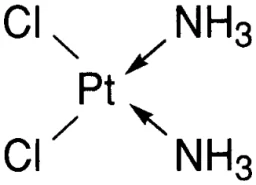
Molecular formula: PtN2H6Cl2
Molecular weight: 300.06
Description: Cisplatin is a heavy metal complex containing a central atom of platinum surrounded by two chlorine and two ammonia molecules in this cis position. It occurs as a fine yellow powder and is soluble in dimethylacetamide to an extent of 1% maximum.
Composition: Cisplatin Injection is supplied as a sterile solution, containing 1 mg/mL of Cisplatin with 9 mg/mL of Sodium Chloride and 1 mg/mL of Mannitol in Water for Injection. Hydrochloric Acid is added as a pH adjuster.
Stability and Storage Recommendations
Unopened vials of Cisplatin Injection are stored at room temperature between 15ºC and 25ºC. Do not refrigerate or freeze cisplatin solutions since a precipitate will form. Protect from light.
Reconstitution
Preparation of intravenous solutions
IV needles, syringes or sets having aluminum components should not be employed in preparation or administration of Cisplatin Injection solutions. An interaction will occur between aluminum and platinum from Cisplatin, causing a black precipitate, which is visible in the reconstituted solution, and a loss of potency.
Dilute the prepared Cisplatin Injection in 2L of 5% dextrose in one half or one third normal saline, containing 37.5 g of mannitol.
Diluted Cisplatin Injection solution is suitable for intravenous infusion. This solution is not preserved and it should be used within 24 hours. Any unused portion should be discarded after that time, in order to avoid risk of microbial contamination.
As with all parenteral drug products, intravenous admixtures should be inspected visually for clarity, particulate matter, precipitate, discoloration and leakage prior to administration, whenever solution and container permit. Solutions showing haziness, particulate matter, precipitate, discoloration or leakage should not be used.
SPECIAL INSTRUCTIONS
- 1. Preparation of Cisplatin Injection should be done in a vertical laminar flow hood. (Biological Safety Cabinet - Class II).
- 2. Personnel preparing Cisplatin Injection should wear PVC gloves, safety glasses, disposable gowns, and masks.
- 3. All needles, syringes, vials and other materials which have come in contact with Cisplatin Injection should be segregated and incinerated at 1000ºC or more. Sealed containers may explode if tightly sealed. Intact vials should be returned to the manufacturer for destruction. Proper precautions should be taken in packaging these materials for transport.
- 4.
Personnel regularly involved in the preparation and handling of Cisplatin Injection should have bi-annual blood examination.
AVAILABILITY OF DOSAGE FORMS
Cisplatin Injection (1.0 mg/mL) is supplied as a sterile unpreserved solution in 50 mL and 100 mL single use glass vials, containing 50 mg and 100 mg of cisplatin, respectively (single packs).
PHARMACOLOGY
Cisplatin causes immunosuppression, which is short-lived (18 - 72 hours) and followed by a rapid increase in host immune response. This increase in the host immune response has been postulated to cause tumor regression in animals.
Antitumor activity of cisplatin was first demonstrated against sarcoma 180 and L1210 leukemia. Subsequent investigations have shown significant activity of cisplatin I.P. as single agent in several experimental tumors, as follows:
(1) Transplantable animal tumors, including Walker 256 carcinosarcoma, Dunning ascetic
- leukemia, Lewis lung carcinoma, Ehrlich ascites tumor, P-388 leukemia, B-16 melanoma, and the intracerebrally implanted ependymoblastoma tumor in mice.
- (2) Chemically-induced primary tumors, including the 7, 12-di-methylbenzanthracene (DMBA)-induced mammary tumors in rats and the N-[4-(5-nitro-2-furyl)-2-thiazolyl)] formamide (FANFT)-induced murine bladder cancer.
- (3) The virally-induced Rous sarcoma.
Cisplatin has demonstrated synergism in activity against L1210 leukemia when combined with other chemotherapeutic agents including cyclophosphamide, ICRF-159, ifosfamide, cytosine arabinoside, hydroxyurea, phosphoramide mustard, azacytidine, 5-fluorouracil, emetine, adriamycin and methotrexate. No apparent synergism was noted with BCNU.
Cisplatin was distributed in highest concentrations in kidney, liver, gonads, spleen and adrenals at early times (1-2 hours) after IV injection into dogs, but remained significantly elevated only in kidney, liver, ovary and uterus for up to six days post-treatment. The tissue: plasma ratio of platinum was 3:1 and 4:1 for liver and kidney, respectively, at 6 days post-treatment.
After a single IV injection of cisplatin in dogs, the rapid-phase half-time was less than one hour and the slow-phase half-time was approximately 5 days. Approximately 60-70% of the dose was recovered in the urine in the first four hours after treatment.
TOXICOLOGY
Toxicological Parameters of Cisplatin
Intravenous Route
| Mice | Dogs | Monkeys | ||||||||||||||||||||||
| Single Dose | Single Dose | QD x 5 days | QD x 5 days | |||||||||||||||||||||
| mg/kg | mg/m2 | mg/kg | mg/m2 | mg/kg | mg/m2 | mg/kg | mg/m2 | |||||||||||||||||
| Highest non-toxic dose | -- | -- | 0.625 | 13.2 | 0.187 | 3.75 | 0.156 | 1.94 | ||||||||||||||||
| Toxic dose low (TDL) | -- | -- | 1.25 | 22.5 | 0.375 | 7.75 | 0.313 | 8.0 | ||||||||||||||||
| Toxic dose high (TDH) | -- | -- | 2.5 | 47.3 | 0.75 | 14.9 | 1.25 | 15.9 | ||||||||||||||||
| Lethal dose (LD) | -- | -- | 5.0 | 105.7 | 1.5 | 31.1 | 2.5 | 33.6 | ||||||||||||||||
| LD50 | 13.38 | 40.15 | -- | -- | -- | -- | -- | -- | ||||||||||||||||
Acute Toxicity
At lethal dose or LD50, death occurred in mice, dogs and monkeys within 2 to 8 days. Dogs showed severe, mostly hemorrhagic enterocolitis, severe or marked hypoplasia of the bone marrow, moderate or marked hypocellularity of the lymphoid tissues, marked or moderate renal tubular necrosis, together with azotemia, marked or moderate necrosis of the peripancreatic and omental fat tissue and pancreatitis. Monkeys exhibited severe enterocolitis or colitis, severe atrophy of the lymphoid tissues and moderate to severe hypoplasia of the bone marrow. One of the two monkeys furthermore exhibited severe nephrosis, marked focal myocardial necrosis, myocarditis, severe pancreas atrophy and marked atrophy of prostatic gland and testes.
Subacute Toxicity
Surviving dogs and monkeys showed reversible toxic signs, including dose-related emesis, anorexia, dehydration, weakness, leukocytosis, anemia, hypochloremia, proteinuria and appearance of leukocytes, erythrocytes and casts in the urine. Monkeys showed temporary azotemia and sporadic elevation of the transaminases.
Toxic signs disappeared within two weeks following treatment, and dogs and monkeys did not exhibit histopathology after an observation period from 61 to 129 days, with the exception of one dog that showed marked atrophy of the prostatic gland and one monkey that exhibited possible drug-related interstitial nephritis.
Mutagenicity
Cisplatin has been shown to be mutagenic in E. coli after prolonged cultivation of cells with sublethal levels of cisplatin.
Chromosome aberrations were observed in Chinese hamster bone marrow cells after an 8 mg/kg treatment of cisplatin.
In the Ames test, cisplatin was shown to be a mild to moderate mutagen.
REFERENCES
- 1. Kelman AD et al. An analysis of the modes of binding of antitumor platinum complexes to DNA. Wadely Med Bull 1976;7(1):440-448.
- 2. Litterst CL et al. Distribution and disposition of platinum following intravenous administration of cis-Diamminodichloroplatinum (II) (NSC 119875) to dogs. Cancer Res 1976;36:2340-2344.
- 3. Beck, D.J. and Brubaker, R.R. Mutagenic properties of cis-platinum (II) diamninodichloride in Escherichia Coli. Mutation Res. 1975;27: 181-189.
- 4. Fremuth F et al. Chromosome aberrations and radioprotection. Proc Intern Congr Chemo (Prague) 1971;2:827-828.
- 5. Monti-Bragadin C et al. Mutagenic activity of platinum and ruthenium complexes. Chem Biol Interactions 1975; 11:469-472.
- 6. Bruckner, H.W. et al. Chemotherapy of gynecological tumors with platinum II. J. Clin Hematol Oncol 1977;7 (2): 619-633.
- 7. Einhorn, L.H., and Donahue, J.P. Improved chemotherapy in disseminated testicular cancer. J Urol 1977;117: 65-69.
- 8. Higby, D.J. et al. Diamminodichloroplatinum in the chemotherapy of testicular tumors. J. Urol 1974;112: 100-104.
- 9. Merrin, C. A New Method to prevent toxicity with high doses of cis-Diammine platinum (Therapeutic efficacy in previously treated widespread and recurrent testicular tumors). Proc Amer Soc Clin Oncol 1976;17: 243.
- 10. Wiltshaw, E. and Kroner, T. Phase II Study of cis-Dichloro-diammineplatinum (II) (NSC- 119875) in advanced adenocarcinoma of the ovary. Cancer Treat Rep 1976;60(l): 55-60.
- 11. Herr HW. Cis-Diamminedichloride platinum II in the treatment of advanced bladder cancer. J Urol 1980; 123:853-955.
- 12. Merrin C. Treatment of advanced bladder cancer with cis-Diamminedichloroplatin (II) (NCS 119875): A pilot study. J Urol 1978; 119:493-495.
- 13. Hospira Healthcare Corporation, Product Monograph, Cisplatin Injection BP, June 5, 2007, Control No. 114555.
- 14. Sandoz Canada Inc., Product Monograph, Cisplatin Injection BP, April 3, 2011, Control No. 130628