


Product Monograph - Cefuroxime for Injection, USP (Fresenius Kabi Canada, 750 mg, 1.5 G)
RECENT MAJOR LABEL CHANGES
None at the time of the most recent authorization.
TABLE OF CONTENTS
Sections or subsections that are not applicable at the time of authorization are not listed.
RECENT MAJOR LABEL CHANGES .......................................................................................... 2
TABLE OF CONTENTS ............................................................................................................ 2
PART I: HEALTH PROFESSIONAL INFORMATION .................................................................... 4
1 INDICATIONS ............................................................................................................. 4
1.3 Pediatrics .................................................................................................................. 5
1.4 Geriatrics .................................................................................................................. 5
2 CONTRAINDICATIONS ................................................................................................ 5
4 DOSAGE AND ADMINISTRATION ................................................................................ 5
4.1 Dosing Considerations .............................................................................................. 5
4.2 Recommended Dose and Dosage Adjustment ........................................................ 6
4.3 Reconstitution .......................................................................................................... 8
4.4 Administration .......................................................................................................... 8
4.5 Missed Dose ............................................................................................................. 8
5 OVERDOSAGE ............................................................................................................ 9
6 DOSAGE FORMS, STRENGTHS, COMPOSITION AND PACKAGING ................................ 9
7 WARNINGS AND PRECAUTIONS ................................................................................. 9
7.3 Special Populations ................................................................................................ 11
7.3.1 Pregnant Women .............................................................................................. 11
7.3.2 Breast-feeding ................................................................................................... 11
7.3.3 Pediatrics ........................................................................................................... 11
7.3.4 Geriatrics ........................................................................................................... 11
8 ADVERSE REACTIONS............................................................................................... 11
8.3 Adverse Reaction Overview ................................................................................... 11
9 DRUG INTERACTIONS .............................................................................................. 12
9.4 Drug-Drug Interactions ........................................................................................... 12
9.5 Drug-Food Interactions .......................................................................................... 12
9.6 Drug-Herb Interactions .......................................................................................... 12
9.7 Drug-Laboratory Test Interactions ......................................................................... 12
10 CLINICAL PHARMACOLOGY ...................................................................................... 12
10.1 Mechanism of Action ............................................................................................. 12
10.2 Pharmacodynamics ................................................................................................ 13
10.3 Pharmacokinetics ................................................................................................... 13
11 STORAGE, STABILITY AND DISPOSAL ........................................................................ 17
12 SPECIAL HANDLING INSTRUCTIONS .......................................................................... 17
PART II: SCIENTIFIC INFORMATION ..................................................................................... 18
13 PHARMACEUTICAL INFORMATION .......................................................................... 18
14 CLINICAL TRIALS ...................................................................................................... 18
15 MICROBIOLOGY ...................................................................................................... 19
16 NON-CLINICAL TOXICOLOGY .................................................................................... 24
17 SUPPORTING PRODUCT MONOGRAPHS ................................................................... 28
PATIENT MEDICATION INFORMATION ................................................................................ 29
PART I: HEALTH PROFESSIONAL INFORMATION
1 INDICATIONS
CEFUROXIME FOR INJECTION, USP (Cefuroxime for Injection) is indicated for:
Treatment
Cefuroxime for Injection, USP may be indicated for the treatment of patients with infections caused by susceptible strains of the designated organisms in the following diseases:
Lower Respiratory Tract Infections:
Pneumonia caused by Streptococcus pneumoniae, Haemophilus influenzae including ampicillin-resistant strains, Klebsiella species, Staphylococcus aureus including ampicillin-resistant (but not methicillin-resistant) strains, Streptococcus pyogenes, and Escherichia coli.
Urinary Tract Infections:
Caused by Escherichia coli, and Klebsiella species.
Soft Tissue Infections:
Caused by Staphylococcus aureus, including ampicillin-resistant (but not methicillin-resistant) strains, Streptococcus pyogenes, Escherichia coli, and Klebsiella species.
Meningitis:
Caused by Staphylococcus aureus including ampicillin-resistant (but not methicillin-resistant) strains, Streptococcus pneumoniae, Haemophilus influenzae, and Neisseria meningitidis.
Gonorrhea:
Caused by Neisseria gonorrhoeae including ampicillin-resistant strains.
Bone and Joint Infections:
Caused by Staphylococcus aureus (penicillinase and non-penicillinase producing strains).
To reduce the development of drug-resistant bacteria and maintain the effectiveness of Cefuroxime for Injection, USP and other antibacterial drugs, Cefuroxime for Injection, USP should be used only to treat infections that are proven or strongly suspected to be caused by susceptible bacteria. When culture and susceptibility information are available, they should be considered in selecting or modifying antibacterial therapy. In the absence of such data, local epidemiology and susceptibility patterns may contribute to the empiric selection of therapy.
Specimens for bacteriologic culture should be obtained prior to therapy in order to identify the causative organisms and to determine their susceptibility to cefuroxime. Therapy may be instituted before results of susceptibility testing are known. However, modification of the treatment may be required once these results become available.
Prevention
The preoperative prophylactic administration of Cefuroxime for Injection, USP may prevent the growth of susceptible disease-causing bacteria and thereby may decrease the incidence of certain postoperative infections:
- in patients undergoing surgical procedures (e.g., vaginal hysterectomy) that are classified as clean contaminated or potentially contaminated;
- in patients undergoing open heart surgery in whom infections at the operative site would present a serious risk.
If signs of infection occur postoperatively, culture specimens should be obtained for identification of the causative organism and appropriate antimicrobial therapy should be instituted.
1.3 Pediatrics
Pediatrics (< 1 month): The safety of the use of Cefuroxime for Injection, USP in prematures and infants under one month of age has not been established.
1.4 Geriatrics
No data are available to Health Canada; therefore, Health Canada has not authorized an indication for geriatric use.
2 CONTRAINDICATIONS
- Cefuroxime for Injection, USP (Cefuroxime for Injection) is contraindicated for patients who have shown Type I hypersensitivity to cefuroxime or to the cephalosporin group of antibiotics, or to any ingredient in the formulation, including any non-medicinal ingredient, or component of the container. For a complete listing, see 6 DOSAGE FORMS, STRENGTHS, COMPOSITION AND PACKAGING.
4 DOSAGE AND ADMINISTRATION
4.1 Dosing Considerations
Cefuroxime for Injection, USP (sterile cefuroxime sodium) may be administered intravenously after reconstitution.
Dosage and route of administration should be determined by severity of infection, susceptibility of the causative organism(s), and condition of the patient. The intravenous route is preferable for patients with severe or life-threatening infections.
The usual duration of treatment is 5 to 14 days. For β-hemolytic streptococcal infections, therapy should be continued for at least 10 days.
4.2 Recommended Dose and Dosage Adjustment
Treatment:
Adults
For most infections, the usual recommended dosage is 750 mg every 8 hours (2.25 g / day), administered intravenously. For severe or life-threatening infections, and for Gram-negative infections of the lower respiratory tract, a dosage of 1.5 g intravenous every 8 hours (4.5 g / day) is recommended.
For treatment of bacterial meningitis, a dosage of 3 g intravenous every 8 hours (9 g / day) should be used.
For bone and joint infections, a dosage of 1.5 g intravenous every 8 hours (4.5 g / day) is recommended. Surgical intervention should be performed when indicated as an adjunct to cefuroxime therapy. A course of oral antibiotics should be administered when appropriate following the completion of parenteral administration of Cefuroxime for Injection, USP.
Infants and Children (1 month to 12 years)
The usual dosage range is 30 to 100 mg / kg / day in 3 or 4 equally divided doses. A dose of 60 mg / kg / day is appropriate for most infections.
In cases of bacterial meningitis*, a dosage of 200 to 240 mg / kg / day intravenous in 3 or 4 equally divided doses should be used.
For bone and joint infections, a dosage of 70 to 150 mg / kg / day administered intravenously every 8 hours is recommended. In clinical trials, a course of oral antibiotics was administered to children following the completion of parenteral administration of Cefuroxime for Injection, USP.
Doses in excess of the maximum adult dose should not be used in infants and children.
Neonates (up to 1 month)
In the first few weeks of life, the serum half-life of cefuroxime can be 3 to 5 times that in adults. Infections in neonates should be treated with dosages in the range of 30 to 100 mg / kg / day in 2 or 3 equally divided doses.
For bacterial meningitis,* a dosage of 100 mg / kg / day intravenous in 2 or 3 equally divided doses should be used.
* Delayed sterilization of cerebral spinal fluid has been reported in a few children treated with cefuroxime for bacterial meningitis. Hearing impairment has occasionally occurred as a complication of meningitis in children treated with cefuroxime.
Prevention:
Clean contaminated or potentially contaminated surgical procedures.
The recommended dose is 1.5 g of Cefuroxime for Injection, USP administered intravenously just prior to surgery.
This may be supplemented with 750 mg at 8 and 16 hours when surgery is prolonged.
In general, prophylactic administration is normally not required after the end of surgical procedures, however, intraoperative administrations should be considered if the surgical procedure is lengthy.
In many surgical procedures, continuing prophylactic administration of any antibiotic does not appear to be related with a decreased incidence of subsequent infection, but will increase the possibility of adverse reactions and the development of bacterial resistance.
Open Heart Surgery:
The recommended dosage is 1.5 g of Cefuroxime for Injection, USP administered intravenously at the induction of anesthesia and every 12 hours thereafter for 48 hours.
Dosage in Patients with Impaired Renal Function:
For patients with markedly impaired renal function, a reduced dosage of Cefuroxime for Injection, USP must be used. For adult patients with moderate infections, dosage adjustment may be made according to the guidelines listed in Table 1.
Table 1 - Dosage Adjustment For Adults with Renal Insufficiency
| Creatinine Clearance | Unit Dose | Dosing Frequency |
| mL / min / 1.73 m2 | mL / s / 1.73 m2 | |
> 20 10 - 20 < 10 | ||
> 0.33 0.17 - 0.33 < 0.17 | ||
750 mg - 1.5 g 750 mg 750 mg | q8h q12h q24h | |
For adults with severe infections who require doses higher than those recommended in Table 1, serum levels of cefuroxime should be monitored and dosage adjusted accordingly.
Studies in children with renal impairment are not sufficient to recommend specific dosages. If it is necessary to administer Cefuroxime for Injection, USP to a child with such impairment, consideration should be given to modifying the frequency of drug administration consistent with the recommendations for adults with renal impairment as indicated in Table 1.
When only serum creatinine levels are known, the following formulas may be used to estimate creatinine clearance. The serum creatinine must represent a steady state of renal function.
Males:
| creatinine clearance (mL / min) = | weight (kg) x (140 - age) |
|---|---|
| 72 x serum creatinine (mg / dL) |
OR
| creatinine clearance (mL / s) = | weight (kg) x (140 - age) |
|---|---|
| 49 x serum creatinine (mcmol / L) |
Females: 0.85 x male value
For patients on hemodialysis, a further 750 mg dose of Cefuroxime for Injection, USP should be administered at the end of each dialysis treatment.
4.3 Reconstitution
For Intravenous Use
Reconstitute with Sterile Water for Injection.
Table 2 - Reconstitution
| Vial Size | Volume of Diluent to be Added to Vial | Approximate Available Volume | Concentration per mL |
| 750 mg / 15 mL vial | 8.0 mL | Total | 90 mg / mL |
| 1.5 g / 50 mL vial | 16.0 mL | Total | 90 mg / mL |
| Shake well until dissolved. | |||
The reconstituted solution may be further diluted with Sodium Chloride Injection 0.9% w / v, or 5% w / v Dextrose Injection. For short intravenous infusion, 1.5 g of Cefuroxime for Injection, USP is dissolved in 49 mL of Sterile Water for Injection, resulting in an approximate volume of 50 mL i.e., 30 mg / mL.
Cefuroxime for Injection, USP does not contain any preservatives. Following reconstitution with Sterile Water for Injection, the solution should be dispensed for further dilution within four hours. Any unused portion of the reconstituted solution should be discarded.
As with all parenteral drug products, intravenous admixtures should be inspected visually for clarity, particulate matter, precipitate, discolouration, and leakage prior to administration, whenever solution and container permit. Solutions showing haziness, particulate matter, precipitate, discolouration, or leakage should not be used.
4.4 Administration
Intravenous:
Cefuroxime for Injection may be administered intravenously either by a bolus injection or by a short intravenous infusion over a period of approximately 30 minutes.
For continuous intravenous infusions, a solution of Cefuroxime for Injection, USP (1.5 g dissolved in 16 mL of Water for Injection) may be added to a suitable bottle containing an appropriate intravenous infusion fluid in the amount calculated to give the desired antibiotic dose.
4.5 Missed Dose
If you miss an appointment to receive an injection of Cefuroxime for Injection, USP contact your healthcare professional as soon as possible.
5 OVERDOSAGE
Overdosage of cephalosporins can cause cerebral irritation leading to convulsions. Other than general supportive treatment, no specific antidote is known. Excessive serum levels of cefuroxime can be reduced by dialysis. For treatment of hypersensitivity reactions, see 7 WARNINGS AND PRECAUTIONS, Immune.
| For management of a suspected drug overdose, contact your regional poison control centre. |
|---|
6 DOSAGE FORMS, STRENGTHS, COMPOSITION AND PACKAGING
Table 3– Dosage Forms, Strengths, Composition and Packaging
Cefuroxime for Injection, USP (sterile cefuroxime sodium) is available as follows:
- 15 mL vials containing cefuroxime sodium powder equivalent to 750 mg of cefuroxime in packages of 10 vials.
- 50 mL vials containing cefuroxime sodium powder equivalent to 1.5 g of cefuroxime, in packages of 10 vials.
7 WARNINGS AND PRECAUTIONS
Gastrointestinal
Cefuroxime for Injection, USP should be administered with caution to individuals with a history of gastrointestinal disease, particularly colitis.
Pseudomembranous colitis has been reported to be associated with cefuroxime therapy (and other broad-spectrum antibiotics). Therefore, it is important to consider its diagnosis in patients administered Cefuroxime for Injection, USP who develop diarrhea. Treatment with broad-spectrum antibiotics, including cefuroxime, changes the normal flora of the colon and may permit overgrowth of Clostridia. Studies indicate that a toxin produced by Clostridium difficile is one primary cause of antibiotic-associated colitis. Mild cases of colitis may respond to drug discontinuance alone. Moderate to severe cases should be managed with fluid, electrolyte, and protein supplementation as needed. When the colitis is not relieved by discontinuance of Cefuroxime for Injection, USP administration or when it is severe, consideration should be given to the administration of vancomycin or other suitable therapy. Other possible causes of colitis should also be considered.
| Route of Administration | Dosage Form / Strength/Composition | Non-medicinal Ingredients |
| Intravenous | Powder for solution, 750 mg / vial and 1.5 g / vial | None |
Immune
Before therapy with Cefuroxime for Injection, USP is instituted, careful enquiry should be made to determine whether the patient has had previous hypersensitivity reactions to cefuroxime, cephalosporins, penicillins, or other drugs. Cefuroxime for Injection, USP should be administered with caution to any patient who has shown some form of allergy, particularly to drugs. There is some clinical and laboratory evidence of partial cross-allergenicity of the cephalosporins and penicillins. If an allergic reaction to Cefuroxime for Injection, USP occurs, treatment should be discontinued and standard agents (e.g., epinephrine, antihistamines, corticosteroids) administered as required.
Monitoring and Laboratory Tests
Cefuroxime may interfere with Benedict's and Fehling's tests for glycosuria. It may cause false-negative reactions in the ferricyanide test, and therefore it is recommended that either the glucose oxidase or hexokinase methods be used to determine blood / plasma glucose levels in patients receiving cefuroxime. Cefuroxime does not interfere with the assay of serum and urine creatinine by the alkaline picrate method.
Renal
Patients with markedly impaired renal function (i.e., creatinine clearance of 20 mL / min / 1.73 m2 or less) should be placed on the special dosage schedule for cefuroxime recommended under 4.2 Recommended Dose and Dosage Adjustment. Normal dosages in these individuals are likely to produce excessive serum concentrations of cefuroxime.
The concomitant administration of aminoglycosides and some cephalosporins has caused nephrotoxicity. Although transient elevations of BUN and serum creatinine have been seen in clinical studies, there is no evidence that cefuroxime when administered alone, is significantly nephrotoxic.
Studies suggest that the concurrent use of potent diuretics, such as furosemide and ethacrynic acid, may increase the risk of renal toxicity with cephalosporins.
Sensitivity/Resistance
Development of Drug Resistant Bacteria.
Prescribing Cefuroxime for Injection, USP in the absence of a proven or strongly suspected bacterial infection is unlikely to provide benefit to the patient and risks the development of drug-resistant bacteria.
Prolonged treatment with cefuroxime may result in the overgrowth of nonsusceptible organisms, including species originally sensitive to the drug. Repeated evaluation of the patient's condition is required. If superinfection occurs during therapy, appropriate measures should be taken. Should an organism become resistant during antibiotic therapy, another antibiotic should be substituted.
Skin
Severe cutaneous adverse reactions (SCAR) such as acute generalized exanthematous pustulosis (AGEP), drug reaction with eosinophilia and systemic symptoms (DRESS), Stevens-Johnson syndrome (SJS), and toxic epidermal necrolysis (FEN) have been reported in association with beta-lactam treatment. When SCAR is suspected, Cefuroxime for Injection, USP should be discontinued and appropriate therapy and/or measures should be taken.
7.1 Special Populations
7.1.1 Pregnant Women
The safety of Cefuroxime for Injection, USP in pregnancy has not been established. The use of cefuroxime in pregnant women requires that the potential benefit from the drug be weighed against the possible risk to the mother and fetus. Animal studies have shown cefuroxime to affect bone calcification in the fetus and to show maternal toxicity in the rabbit.
7.1.2 Breast-feeding
Cefuroxime is excreted in human milk in low concentrations (0.5 mg / L). The clinical significance of this is unknown; therefore, caution should be exercised when Cefuroxime for Injection, USP is administered to a nursing mother.
7.1.3 Pediatrics
As with other therapeutic regimens used in the treatment of meningitis, hearing loss has been reported in a few pediatric patients treated with cefuroxime. Persistence of positive CSF cultures of Haemophilus influenzae at 18 - 36 hours has been noted with cefuroxime. The safety of the use of Cefuroxime for Injection, USP in prematures and infants under one month of age has not been established (See 1.1 Pediatrics).
7.1.4 Geriatrics
The elimination of cefuroxime may be decreased due to impairment of renal function. Health Canada has not authorized an indication for geriatric use (see 1.2 Geriatrics).
8 ADVERSE REACTIONS
8.3 Adverse Reaction Overview
The following reactions have been observed during treatment with Cefuroxime for Injection, USP.
Hypersensitivity
Rash, and eosinophilia. Anaphylaxis, urticaria, pruritus and drug fever have also been observed with cephalosporin treatment. Like other cephalosporins, there have been rare reports of erythema multiforme, Stevens-Johnson syndrome and toxic epidermal necrolysis (exanthematic necrolysis).
Local reactions
Thrombophlebitis, stiffness at the site of injection, and inflammatory reactions at the site of injection; some degree of pain, after intramuscular injections when using water as diluent, has been observed.
Blood
Increased erythrocyte sedimentation rate and decreased hemoglobin; eosinophilia, leukopenia and neutropenia; some patients developed a positive direct Coombs’ test.
Renal
Increases in BUN and serum creatinine.
Hepatic
Transient increases in serum bilirubin, transaminases and alkaline phosphatase.
Others
Drowsiness, loose stools, faint feeling, sweating, palpitations and Candida intertrigo.
9 DRUG INTERACTIONS
9.4 Drug-Drug Interactions
Cefuroxime for Injection, USP should not be mixed in the syringe with aminoglycoside antibiotics (e.g., gentamicin sulfate, tobramycin sulfate, amikacin sulfate) due to potential interaction.
9.5 Drug-Food Interactions
Interactions with food have not been established.
9.6 Drug-Herb Interactions
Interactions with herbal products have not been established.
9.7 Drug-Laboratory Test Interactions
Cefuroxime may interfere with Benedict's and Fehling's tests for glycosuria. Cefuroxime does not interfere with the assay of serum and urine creatinine by the alkaline picrate method (See 7 WARNINGS AND PRECAUTIONS, Monitoring and Laboratory Tests).
10 CLINICAL PHARMACOLOGY
10.1 Mechanism of Action
In vitro studies demonstrate that the bactericidal action of cefuroxime results from inhibition of bacterial cell wall synthesis by inhibiting the transpeptidase and carboxypeptidase enzymes.
10.2 Pharmacodynamics
Subcutaneous administration of cefuroxime to mice at a dose of 4 g / kg had no significant effect on the central nervous system, on spontaneous locomotor activity or motor co-ordination and no anticonvulsant, analgesic, tranquilizing or antidepressant properties. Doses of up to and including 300 mg / kg cefuroxime given intravenously to cats and dogs produced no pharmacodynamic effects on the cardiovascular or respiratory systems other than small variations in blood pressure and heart rate in the cat, which were not dose-related. However, doses of 1 and 3 g / kg produced an initial transitory tachycardia, a decrease in blood pressure followed by bradycardia and an increase in blood pressure. In neither species did cefuroxime affect the responses of the cardiovascular system to intravenously-injected neurohumoral agents. Ganglionic transmission was not affected in the cat.
Cefuroxime had no effect on isolated smooth muscle preparations at a concentration in the bathing fluid of 10-5M. Only minor increases in contractile force and rate of contraction of the isolated rabbit heart (Langendorff preparation) were observed when the concentration in the perfusing fluid was increased to 10-2M. A 30% solution of cefuroxime in 0.9% saline had no local anaesthetic activity nor any irritant effect to the cornea of the rabbit eye.
Cefuroxime had no significant effect on the cortical EEG of rats.
10.3 Pharmacokinetics
Absorption
Cefuroxime is poorly absorbed when given orally; following a 1 g dose, serum concentrations of less than 1.2mcg / mL were noted and only between 1 and 1.3% of the administered dose was excreted in the urine. Cefuroxime, therefore, is used by the intravenous route.
Distribution
Intravenous Administration:
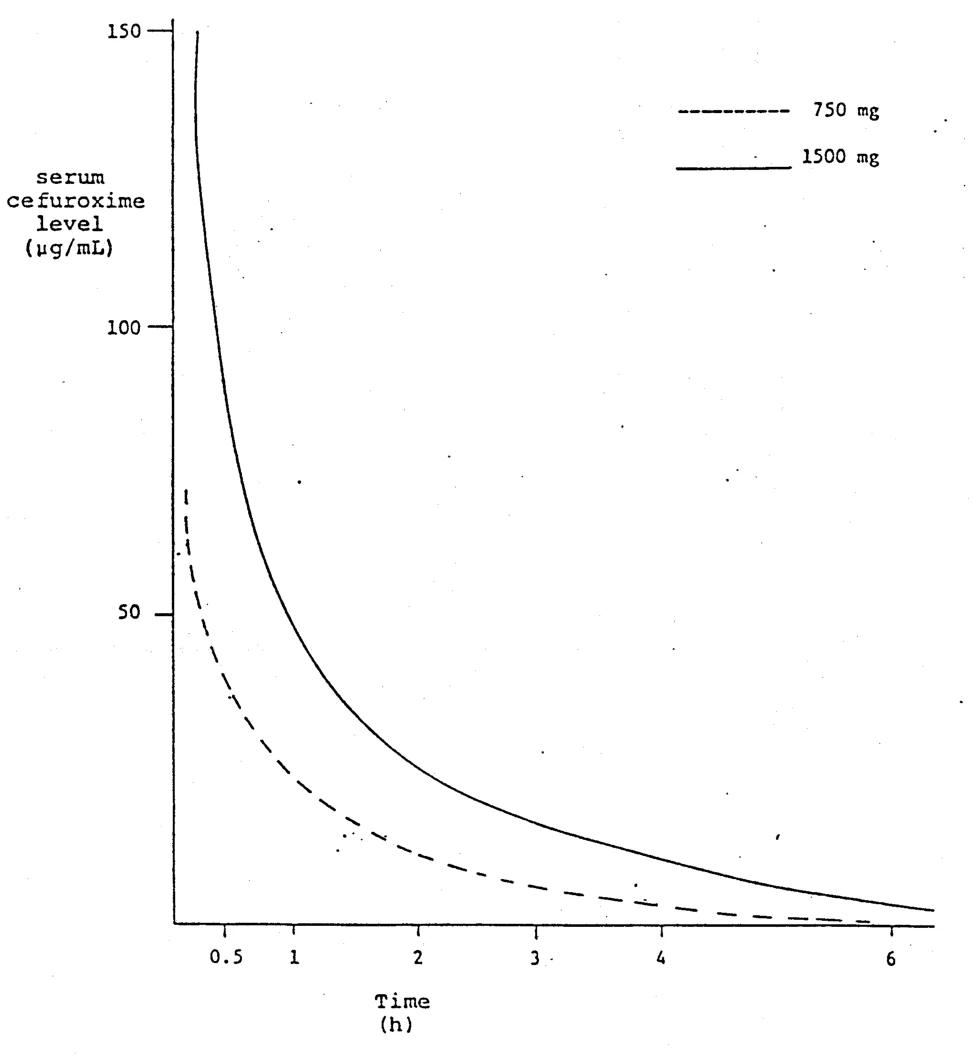
Administration of cefuroxime sodium 750 mg and 1.5 g resulted in blood levels of 73 mcg / mL and 151 mcg / mL respectively (Figure 1), 5 minutes after the initiation of the injection.
Intravenous infusion of 750 mg cefuroxime over a 30 minute period resulted in a serum level of 51 mcg / mL at the end of the infusion. Intravenous administration of 1.5 g over a 20 minute period, produced a drug concentration of 146 mcg / mL at the end of the infusion.
Figure 1: Serum cefuroxime levels following intravenous injection.
Fluid and Tissue Levels:
Cefuroxime was detected in certain fluids and tissues as indicated in Table 4.
| Table 4 - Concentrations of cefuroxime in different tissues | |||
| Site | Dose given (mg) | Route | Concentration (mcg / mL) |
| Sputum | 750 t.i.d. for 2 days | intramuscular | 2.0 |
| 1500 t.i.d. for 4 days | intramuscular | 7.8 | |
| Bone | 750 t.i.d. for 4 days | intramuscular | 3.9* |
| 1500 t.i.d. for 4 days | intramuscular | 13.5* | |
| Skin blister | 750 single | intramuscular | 9.4 |
| Bile | 750 single | intramuscular | 8.6 |
| 1500 single | intramuscular | 22.0 | |
| Aqueous humor | 1500 single | intravenous | 1.6 |
| * mc / g | |||
An intravenous dose of 750 mg of cefuroxime produced biliary concentrations which varied considerably between 1.3 and 26 mcg / mL. Biliary levels appear to be lowest in patients with a non-functioning gallbladder.
Following a 750 mg intramuscular dose to 6 women in labour, average concentrations of cefuroxime in amniotic fluid (18.6 mcg / mL) were comparable to those in maternal serum; average peak maternal serum concentrations of 19.2 mcg / mL were achieved after 1.2 hours, while in umbilical cord blood, the average peaks were one-third of those in the mothers.
Protein Binding:
The extent of cefuroxime bound to protein in the serum was approximately 33%.
Elimination
Following intravenous administration, more than 95% of cefuroxime was excreted unchanged by the kidneys (Table 5) with excretion evenly divided between glomerular filtration and tubular secretion. The half-life of cefuroxime following intravenous injection was approximately 65 minutes.
Table 5 - Mean urinary recoveries after parenteral cefuroxime
| Route and dose (g) | Mean % urinary recovery at hours after injection | Total mean ± SD | ||||||
| 0-1 | 1-2 | 2-3 | 3-4 | 4-6 | 6-12 | 12-24 | ||
| Intravenous | ||||||||
| 0.25 | 60.2 | 23.2 | 14.2 | 6.1 | 6.3 | 3.6 | 0.5 | 114.1 ± 6.1 |
| 0.5 | 41.3 | 23.6 | 13.1 | 6.9 | 5.6 | 4.0 | 0.6 | 95.1 ± 4.4 |
| 1.0 | 53.6 | 21.5 | 12 | 5.2 | 4.1 | 2.5 | 0.2 | 99.1 ± 0.2 |
The effect of probenecid on the pharmacokinetics of cefuroxime is shown in Table 6.
Table 6 - Effect of probenecid (0.5 g given orally two hours before and one hour after cefuroxime) on the pharmacokinetics of intramuscular cefuroxime 500 mg
| Pharmacokinetic variable | With probenecid | Without probenecid | Percentage change | |
| Peak serum concentration (mcg / mL) | 29.4 | 22.7 | + 30 | |
| Ultimate serum half-life (min) | 101 | 76.6 | + 32 | |
| Area under curve (mcg / mL / h) | 94.4 | 56.8 | + 56 | |
| Apparent volume of distribution (L / 1.73m2) | 11.7 | 14.8 |
| |
| Urinary recovery: | 0 - 2h (%) | 47 | 60.4 |
|
| 0 - 24h | 95.6 | 100.2 |
| |
| Renal clearance (mL / min / 1.73m2) | 79.6 | 133.8 |
| |
| Cefuroxime / creatinine clearance ratio | 0.74 | 1.25 | -40 | |
Special Populations and Conditions
- Renal Insufficiency
Patients With Renal Impairment:
The effect of various degrees of renal impairment on the pharmacokinetics of cefuroxime is shown in Table 7.
Table 7 - Pharmacokinetics of cefuroxime (750 mg) in patients with varying degrees of renal impairment
Patient No. | Mean Creatinine Clearance (mL / min) | Serum Concentration (mcg / mL) | Serum Half-Life (h) | Urinary Concentrations (mcg / mL) | ||||
| peak | trough | 0 - 2h | 2 - 4h | 4 - 6h | 6 - 10h | |||
| 1 | 21.0 (± 1.8) | 101.0 - 62.4 | 9.2 - 8.0 | 4.3 (± 0.08) | 150 | 177 | 145 | 135 |
| 2 | 23.0 (± 2.6) | 80.3 - 72.6 | 9.7 - 8.0 | 4.2 (± 0.21) | 180 | 225 | 102 | 85 |
| 3 | 12.1 - 17.8 (no mean available) | 65.7 - 55.4 | 7.1 - 1.1 | 6.5 (± 0.37) | 100 | 99 | 63 | 113 |
| 4 | 10.0 (± 1.4) | 90.0 - 75.6 | 15.1 - 10.6 | 8.4 (± 0.41) | 57 | 59 | 45 | 79 |
| 5 | 5.0 (± 2.0) | 125.0 - 52.2 | 28.6 - 24.2 | 22.3 (± 2.03) | 41 | 25 | 17 | 37 |
11 STORAGE, STABILITY AND DISPOSAL
Cefuroxime for Injection, USP in the dry state should be stored between 15 °C and 30 °C and protected from light.
Reconstituted solution for intravenous injection should be used within 4 hours if kept between 15 °C and 25 °C or 48 hours if stored under refrigeration.
The further diluted solutions (1 to 30 mg / mL) for intravenous infusion should be used immediately after dilution or stored for up to 36 hours under refrigeration in the dark. Some increase in colour intensity may occur on storage.
NOTE: The pH of 2.74% w / v Sodium Bicarbonate Injection considerably affects the colour of the solution; therefore, this solution is not recommended for the dilution of Cefuroxime for Injection, USP. However, if needed, for patients receiving Sodium Bicarbonate Injection by infusion, the cefuroxime dose may be introduced into the tube of the set.
12 SPECIAL HANDLING INSTRUCTIONS
Not applicable.
PART II: SCIENTIFIC INFORMATION
13 PHARMACEUTICAL INFORMATION
Drug Substance
| Proper name: | Sterile cefuroxime sodium |
|---|---|
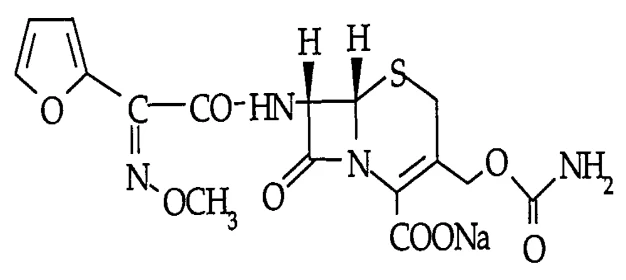
| Chemical name: | 5-Thia-1-azabicyclo [4.2.0] oct-2-ene-2 carboxylic acid, 3-[[(aminocarbonyl)oxy]methyl]-7-[[2-furanyl(methoxy-imino) acetyl]amino]-8-oxo-, monosodium salt [6R-[6α, 7β (Z)]] |
| Molecular formula and molecular mass: | C16H15N4NaO8S, 446.4 g / mol |
| Structural formula: | |
| Physicochemical properties: | Cefuroxime sodium is a white to faintly yellow crystalline powder, soluble in water (15% w / v at 25 °C), sparingly soluble in ethanol and insoluble in chloroform, toluene, ether, ethyl acetate and acetone. |
Product Characteristics:
Cefuroxime for Injection, USP vials contain cefuroxime sodium (expressed in terms of free acid). Freshly prepared solutions of cefuroxime are yellowish in colour, with some variations in intensity. The pH of freshly constituted solutions range from 6.0 to 8.5.
14 CLINICAL TRIALS
Clinical trial information is not available.
 |
15 MICROBIOLOGY
Cefuroxime has been shown to be active against the following organisms in vitro:
Gram-positive: Streptococcus pyogenes, S. viridans and S. pneumoniae. (Most strains of Streptococcus faecalis are resistant.) Staphylococcus aureus, both penicillin-sensitive and beta-lactamase-producing. (Some strains of methicillin-resistant Staphylococci have been found to be resistant to cefuroxime.) Clostridia.
Gram-negative: Escherichia coli (including beta-lactamase-producing strains), Klebsiella, Enterobacter, Haemophilus influenzae, Proteus mirabilis, Salmonella, Shigella spp., Neisseria gonorrhoeae, and N. meningitidis.
The following organisms are not susceptible to cefuroxime: Clostridium difficile, Pseudomonas spp., Campylobacter spp., Acinetobacter calcoaecetius, Methicillin resistant strains of Staphylococcus aureus, Methicillin resistant strains of Staphylococcus epidermidis, and Legionella spp. Some strains of the following genera are not susceptible to cefuroxime: Streptococcus faecalis, Morganella morganii, Proteus vulgaris, Enterobacter spp. Citrobacter spp., Serratia spp., and Bacteroides fragilis.
The minimum inhibitory concentrations against various organisms are shown in Tables 8, 9, and 10.
Table 8 - In vitro activity of cefuroxime against Gram-positive bacteria
| Organism | No. of Strains | Inoculum size (CFU / mL) | Cumulative percent of strains sensitive at indicated conc. (mcg / mL) | ||||||||||
| < 0.005 | 0.01 | 0.03 | 0.06 | 0.12 | 0.25 | 0.5 | 1.0 | 2.0 | 4.0 | > 4.0 | |||
| Staphylococcus aureus | |||||||||||||
| penicillin-sensitive | 12 | 103 | 58 | 100 | |||||||||
| penicillin-resistant | 28 | 103 | 14 | 68 | 100 | ||||||||
| methicillin-resistant | 40 | 103 | 5 | 25 | 33 | ||||||||
| coagulase-negative | 39 | 103 | 3 | 10 | 28 | 54 | 79 | 85 | |||||
| alpha- and non-hemolytic Streptococci | 20 | 103 | 15 | 35 | 55 | 70 | 75 | 85 | 100 | ||||
| beta-hemolytic Streptococci | 40 | 103 | 8 | 50 | 80 | 95 | 98 | 100 | |||||
| Streptococcus pneumoniae | 19 | 103 | 53 | 100 | |||||||||
| Clostridium spp. | 7 | 103 | 13 | 26 | 86 | 100 | |||||||
Table 9 - In vitro activity of cefuroxime against Gram-negative bacteria
| Organism | No. of Strains | Inoculum size (CFU / mL) | Cumulative percent of strains sensitive at indicated conc. (mcg / mL) | |||||
| < 0.125 | 0.25 - 0.5 | 1 - 4 | 8 - 16 | 32 - 62 | > 125 | |||
| E. coli | 129 | 105 | 5 | 89 | 98 | 100 | 100 | |
| Klebsiella spp. | 73 | 105 | 51 | 81 | 99 | 100 | ||
| Acinetobacter | 6 | 105 | 17 | 67 | 83 | 100 | ||
| Enterobacter spp. | 138 | 105 | 22 | 88 | 94 | 100 | ||
| Serratia spp. | 8 | 105 | 13 | 25 | 75 | |||
| Proteus mirabilis | 27 | 105 | 89 | 96 | 100 | |||
| Proteus rettgeri | 4 | 105 | 25 | 50 | 75 | 100 | ||
| Proteus vulgaris | 21 | 105 | 29 | 86 | 100 | |||
| Morganella morganii | 9 | 105 | 11 | 44 | 78 | 100 | ||
| Salmonella spp. | 40 | 105 | 95 | 98 | 100 | |||
| Shigella spp. | 10 | 105 | 90 | 100 | ||||
| B. fragilis | 16 | 105 | 6 | 31 | 100 | |||
| H. influenzae | ||||||||
| ampicillin-sensitive | 16 | 105 | 100 | |||||
| ampicillin-resistant | 15 | 105 | 100 | |||||
Table 10 - In vitro activity of cefuroxime against gonococci
| Organism | No. of Strains | Inoculum size (CFU / mL) | Cumulative percent of strains sensitive at indicated conc. (mcg / mL) | ||||
| < 0.03 | 0.06 - 0.25 | 0.5 - 2.0 | > 2.0 | ||||
| N. gonorrhoeae | |||||||
| beta-lactamase positive | 110 | 103 | 72 | 94 | 100 | ||
| beta-lactamase negative | 752 | 103 | 60 | 92 | 97 | 100 | |
Although cefuroxime is resistant to hydrolysis by most beta-lactamases, these enzymes from certain species (Bacteroides fragilis, Enterobacter and indole-positive Proteus spp.) have been shown to produce hydrolysis. Table 11 indicates the degree of resistance of cefuroxime to beta-lactamase inactivation.
Table 11 - Hydrolysis of cefuroxime by a range of beta-lactamases
| Source of enzyme | Enzyme Class | µg of cefuroxime hydrolyzed / minute |
Escherichia coli (R+tem) E. coli (R+GN238) E. coli D31 Proteus mirabilis Klebsiella aerogenes K1 Enterobacter cloacae P99 Proteus vulgaris Bacteroides fragilis 1600 Pseudomonas aeruginosa 1822 Bacillus cereus 659 / H9 Staphylococcus aureus PC1* | III V I III IV I I I I | < 1 4.5 < 1 < 1 54 < 1 < 1 112 < 1 72 < 1 |
| * Activity is expressed as micrograms hydrolyzed per hour. | ||
Mice, rats, and rabbits were inoculated intraperitoneally with a variety of Gram-positive and Gram-negative microbes (such as Staphylococcus aureus, E. coli, Proteus mirabilis, Klebsiella). Animals administered cefuroxime intramuscularly, showed resistance to all of these test organisms at doses from 1 to 32 mg / kg. Doses of cefuroxime ranging from 35 to 133 mg / kg / dose were needed for protection against infections from two strains of Proteus vulgaris and one strain of beta-lactamase-producing E. coli.
Susceptibility Testing
The results of susceptibility testing, by either disk-diffusion or tube-dilution techniques, should be interpreted according to the criteria shown in Table 12.
Table 12
zone diameter (30 mcg cefuroxime disk) | Approximate MIC correlate | |
| SUSCEPTIBLE (susceptible to the usual doses) | ≥ 18 mm | ≤ 8 mcg / mL |
| INTERMEDIATE (moderately susceptible)* | 15 - 17 mm | 16mcg / mL |
| RESISTANT | ≤ 14 mm | ≥ 32 mcg / mL |
| CONTROL STAINS | ||
| S. aureus ATCC 25923 | 27 - 35 mm | 0.5 - 2mcg / mL |
| E. coli ATCC 25922 | 20 - 26 mm | 2 - 8 mcg / mL |
| *Organisms that produce zones of 15 to 17 mm may be susceptible if the infection is confined to tissues and fluids (e.g., urine) in which high antibiotic concentrations are attained. | ||
Only cefuroxime disks should be used, since cefuroxime has been shown by in vitro tests to be active against certain strains found resistant when other beta-lactamase disks are used.
16 NON-CLINICAL TOXICOLOGY
General Toxicology:
Acute Toxicity
Table 13
| Species | No. of animals | Dose (g / kg) | Route | Deaths |
| Mouse | 10 | 11 | intravenous | 5 |
| Rat | 6 | 4 | intravenous | 3 |
| Cat | 4 | 2 | intramuscular | 2 |
| Monkey | 4 | 2 | intramuscular | 2 |
| Dog | 4 | 2 | intramuscular | 2 |
Symptoms of toxicity immediately following intravenous administration in the rat included collapse and tachypnea. During the follow-up observation period (7 days), soft feces and a slight loss of body weight were noted in rats, while monkeys displayed diarrhea, accompanied by weight loss.
Subacute Toxicity
Rat:
When rats were treated for a month with daily subcutaneous doses of 100 mg / kg of cefuroxime, the serum potassium was increased on day 34. With doses of 200 mg / kg / day, peripheral erythrocyte values were somewhat decreased in males and with 400 mg / kg / day doses in females. Daily doses of 800 mg / kg produced moderate reactions at the injection site, forming subcutaneous lumps and occasionally ulcers. The ulcerations normally resolved within 10 days. There was also evidence of mild colitis. Rats were administered subcutaneous doses of 1.25, 2.5 and 5.0 mg / kg / day of cefuroxime for 14 days. All of the animals displayed symptoms of extreme discomfort during and immediately after injection. During autopsy, necrotic patches were noted at the injection sites of the rats administered the highest dose. All rats had watery feces, increased leukocyte count, and a dose-related reduction in hemoglobin concentration.
Rats treated with cefuroxime 50, 100, 200 and 400 mg / kg / day intravenously, for one month resulted in increased packed cell volume in all groups, increased urine output in the 200 mg / kg group and embolic reactions in many lungs, in both control and drug-treated animals. At doses of 100 and 400 mg / kg / day, a small but statistically significant reduction in spleen weights was seen.
Dog:
Administration of cefuroxime at daily intramuscular doses of 60, 180 and 540 mg / kg for 11 days produced increased kidney and liver weights. In two male dogs, this was 1.5 times the weight of the controls.
Monkey:
Cefuroxime administered intramuscularly for 29 days at doses of 150 and 450 mg / kg /day, produced a moderate reduction in erythrocytes, leukocytosis with neutrophilia, eosinophilia and soft stools.
A slight-to-moderate dose-related inflammatory reaction around the subcutaneous and intramuscular injection sites were seen in all subacute tests. Hemorrhage at the injection sites was sometimes noted, occurring more frequently at high doses.
Chronic Toxicity
Rat - Three-month, subcutaneous study:
In rats administered cefuroxime at 100, 300 and 900 mg / kg / day, a dose- and duration-related mild-to-marked subcutaneous reaction with hemorrhage at injection sites was seen at all 3 dose levels. Slight decrease in erythrocytes with mild reticulocytosis and slight decrease of serum calcium were seen at both 300 mg and 900 mg / kg dose levels. Increased prothrombin time was noted in males dosed at 300 mg / kg / day, and in both sexes at 900 mg / kg / day.
At 900 mg / kg / day an increased total leukocyte count, decreased serum albumin and gamma-globulin, increased serum potassium (females on day 56), marginally increased blood glucose (females on day 56) and decreased alkaline phosphatase (males on day 28) were seen. There was an increase in relative weights of the liver, the kidney and the spleen in all females. Increased excretion of electrolytes and increased urinary volume in both sexes were noted at the high dose level after 77 days.
Rat - Six-month, subcutaneous study:
Rats were studied at cefuroxime doses of 50, 150 or 450 mg / kg / day. No mortality was observed. Dilatation of the lymphatics and enlargement of the spleen were seen at the higher doses. There was a statistically significant decrease in packed cell volume and hemoglobin, accompanied by reticulocytosis of a similar degree at 150 mg / kg / day. A decrease in serum alanine transaminase activity in both sexes as well as of pituitary weights in females were seen at the highest dose. A significant increase in serum cholesterol was observed in females at all dose levels while serum calcium levels were marginally decreased in males at high dose levels.
An increase in excretion of sodium and potassium was seen, however, statistically significant changes were observed in the excretion of potassium in the high dose male animals only. Other abnormalities included hyaline granular casts and erythrocytes in the urine in addition to increased urinary protein content. The incidence and severity of these changes were greatest at high dose levels.
The mean kidney weights (absolute and relative) in both sexes were increased 10 to 15% at high doses.
Dog - Six-month, toxicity study:
Dogs were administered cefuroxime for 6 months at doses of 50 mg / kg / day intramuscularly, and at doses of 150 and 450 mg / kg / day subcutaneously. Dose-related subcutaneous hemorrhage was observed at the injection site with higher doses of cefuroxime. In the group treated with the highest dose, hypochromia and increased serum iron binding capacity were seen. Serum triglyceride concentrations were increased after 20 weeks in animals given 150 and 450 mg / kg cefuroxime. Blood urea nitrogen was decreased and serum potassium was increased in the high dosage group. One dog in the 450 mg group developed Heinz body anaemia after 12 weeks, however, the causative agent was not identified.
Nephrotoxicity Studies
Mouse:
Mice were given single subcutaneous doses of cefuroxime (10 g / kg) alone or in combination with furosemide (50 mg / kg) or furosemide plus glycerol (5.4 mL / kg). Cefuroxime alone produced no nephrotoxicity; together with furosemide, proximal tubular necrosis was observed in two out of nine animals. Administration of furosemide and glycerol resulted in tubular necrosis in 5 of 8 animals but this was not affected by the addition of cefuroxime.
Rat - Single dose study:
Cefuroxime at doses up to 10 g / kg was administered either alone or together with furosemide (100 mg / kg) or furosemide plus glycerol (3.15 mL / kg). Three of 6 animals had proximal tubular necrosis of the inner cortex when given 4 g of cefuroxime alone. The frequency and severity was observed to increase with increasing doses. The frequency of tubular necrosis also increased with increasing doses. The incidence of tubular necrosis was increased when furosemide or furosemide plus glycerol were given concomitantly. Cefuroxime at 1 g / kg increased the severity of the furosemide-glycerol-included necrosis in the outer cortex. Furosemide plus glycerol therapy also decreased the dosage of cefuroxime (to 2 g / kg) needed to cause necrosis of the inner cortex.
Rat - Repeated dose study:
Rats were given cefuroxime at doses ranging from 1 to 5 g / kg / day subcutaneously for 10 days. Histological evidence of tubular necrosis were not seen at 5 g / kg, however, transient increases in urine volume, protein and enzymes, which peaked at days 2 - 3 were noted. A significant decrease in body weight of the animals was observed in the high dose group.
Combination with aminoglycosides:
Rats were administered gentamicin (35 mg / kg) for 10 days. Cefuroxime was administered either concomitantly during the 10 days or as a single dose with the ninth dose of gentamicin. Gentamicin-induced tubular necrosis was not increased by the administration of single doses of cefuroxime up to 6 g / kg / day. Protection of rats against gentamicin-induced nephrotoxicity was seen with multiple cefuroxime doses of up to 4 g / kg, but at cefuroxime doses of 6 g / kg / day, severe tubular necrosis was seen after 4 days of treatment. Similar findings were observed with amikacin and tobramycin.
Reproductive and Developmental Toxicology:
Teratogenicity Studies
Mouse:
Cefuroxime was administered subcutaneously at doses of 800, 1600, 3200 and 6400 mg / kg / day from day 6 to day 15 of pregnancy. With the exception of the 3200 mg dose, there was a 15 to 21% incidence of bone immaturity at all doses tested as evidenced by a reduction in the calcification of various ossification centres of the offspring. Based on historical controls, the untreated animals had a 7% incidence of bone immaturity.
Rabbit:
Cefuroxime was administered intramuscularly at doses of 50, 100, 200 and 400 mg / kg / day from day 6 to day 18 of pregnancy. Four rabbits given 400 mg / kg, one rabbit given 200 mg / kg and one rabbit given 100 mg / kg / day, died during the experiment. The offspring had an 8, 17, 25, and 10% incidence of bone immaturity and the incidence of bone abnormalities was 8, 21, 0 and 30% at the 50, 100, 200 and 400 mg / kg dose levels, respectively.
Fertility and Reproduction Studies
Male and female mice were administered daily subcutaneous doses of 800, 1600 or 3200 mg / kg of cefuroxime prior to mating (males for 60 days and females for 14 days). The pregnant females were continued on treatment with cefuroxime until the 17th day of pregnancy. A few of their offspring were later mated to produce a second generation. Therapy had no apparent effect on gametogenesis. The fertility of the second generation was also unaffected.
Perinatal and Postnatal Studies
Mouse:
Daily subcutaneous doses of 800, 1600, or 3200 mg / kg of cefuroxime from day 16 of pregnancy until the weaning of the litters, had no effect on gestation, parturition, lactation or the health of the dams or the pups.
Rabbit:
Daily administration of 50, 100 or 200 mg / kg of cefuroxime from day 19 of pregnancy through lactation (at least 50 doses) had no effect on the litters or the development and health of the pups. Treatment related deaths were seen in 10 rabbits before parturition and one died after it had littered. Mortality was dose-related, and although believed to be the result of enteritis, a direct toxic effect could not be ruled out.
17 SUPPORTING PRODUCT MONOGRAPHS
- 1. PrZINACEF® for Injection (Powder for Solution, 750 mg / vial, 1.5 g/vial, 7.5 g pharmacy bulk vial), submission control 108749, Product Monograph, GlaxoSmithKline Inc. DEC 19, 2006