


Product Monograph - Celontin Cap 300mg
ACTION AND CLINICAL PHARMACOLOGY
CELONTIN (methsuximide) elevates the seizure threshold in the cortex and basal ganglia and reduces synaptic response to low frequency repetitive stimulation. The paroxysmal spike and wave pattern of the EEG, common in petit mal seizure, is suppressed.
Methsuximide suppresses the paroxysmal three cycles per second spike and wave activity associated with lapses of consciousness which is common in absence (petit mal) seizures. The frequency of epileptiform attacks is reduced, apparently by depression of the motor cortex and elevation of the threshold of the central nervous system to convulsive stimuli.
Limited studies indicate that the drug is metabolized via N-demethylation to N-demethylmethsuximide (NDM). Profound CNS depression following methsuximide overdose has been attributed to this metabolite, and it is probable that the anticonvulsant effects of the drug are due to NDM. In one study, which measured methsuximide and NDM levels simultaneously in plasma of patients who were receiving methsuximide chronically, the concentration of NDM was 700 times greater than the concentration of methsuximide. On the basis of this study, a tentative therapeutic plasma level of 10 to 40 µg/ml of NDM has been proposed.
Less than 1% of a dose of methsuximide is excreted unchanged in the urine; although a number of as yet unidentified metabolites are excreted in urine.
INDICATIONS AND CLINICAL USAGE
CELONTIN (methsuximide) is used for the control of absence (petit mal) seizures refractory to other drugs.
CONTRAINDICATIONS
Methsuximide should not be used in patients with a history of hypersensitivity to succinimides, methsuximide or any component of this medication.
WARNINGS
General
Proceed slowly when increasing or decreasing dosage, as well as when adding or eliminating other medication. Abrupt withdrawal of anticonvulsant medications may precipitate petit mal status.
Methsuximide, when used alone in mixed types of epilepsy, may increase the frequency of grand mal seizures in some patients.
Hematopoietic Effect
Blood dyscrasias, including some with fatal outcome, have been reported to be associated with the use of succinimides; therefore, periodic blood counts should be performed. Patients should be instructed to promptly contact their physician if they develop signs and/or symptoms suggesting an infection (eg. Sore throat, fever); blood counts should be considered at that point.
Hepatic/Renal Impairment
It has been reported that succinimides, including methsuximide, have produced morphological and functional changes in animal liver. For this reason, administer methsuximide with extreme caution to patients with known liver or renal disease. Periodic urinalysis and liver function studies are advised for all patients receiving the drug.
Autoimmune Disorders
Cases of systemic lupus erythematosus have been reported with the use of methsuximide. The physician should be alerted to this possibility.
Psychiatric
It is recommended that the physician withdraw the drug slowly on the appearance of unusual depression, aggression, or other behavioral alterations.
Lamotrigine: Methsuximide may lower the serum concentrations of lamotrigine. When methsuximide is used in combination with lamotrigine, adjustment of the lamotrigine dose may be necessary when methsuximide is started or stopped.
Pregnancy: Recent reports indicate an association between the use of anticonvulsant drugs and an elevated incidence of birth defects in children born to epileptic women taking such medications during pregnancy. The incidence of congenital malformations in the general population is regarded to be approximately 2%; in children of treated epileptic women this incidence may be increased 2- to 3-fold. The increase is largely due to specific defects, e.g., congenital malformations of the heart, and cleft lip and/or palate. Nevertheless, the great majority of mothers receiving anticonvulsant medications deliver normal infants.
Data are more extensive with respect to phenytoin and phenobarbital, but these drugs are also the most commonly prescribed anticonvulsants. Some reports indicate a possible similar association with the use of other anticonvulsants, including trimethadione and paramethadione. However, the possibility also exists that other factors, e.g., genetic predisposition or the epileptic condition itself may contribute to or may be mainly responsible for the higher incidence of birth defects.
Anticonvulsant drugs should not be discontinued in patients in whom the drug is administered to prevent major seizures, because of the strong possibility of precipitating status epilepticus with attendant hypoxia and risk to both the mother and the unborn child. With regard to drugs given for minor seizures, the risk of discontinuing medications prior to or during pregnancy should be weighed against the risk of congenital defects in the particular case and with the particular family history.
Epileptic women of childbearing age should be encouraged to seek professional counsel and should report the onset of pregnancy promptly to their physician. Where the necessity for continued use of the antiepileptic medication is in doubt, appropriate consultation might be indicated.
The preceding considerations should be borne in mind and methsuximide should be used in women of childbearing potential only when the expected benefits to the patients warrant the possible risk to a fetus.
Lactation: Methsuximide is excreted in human breast milk. Because the effects of methsuximide on the nursing infant are unknown, caution should be exercised when methsuximide is administered to a nursing mother. Methsuximide should be used in nursing mothers only if the benefits clearly outweigh the risks.
Suicidal Ideation and Behavior
Suicidal ideation and behavior have been reported in patients treated with antiepileptic agents in several indications.
All patients treated with antiepileptic drugs, irrespective of indication, should be monitored for sign of suicidal ideation and behavior and appropriate treatment should be considered.
Patients (and caregivers of patients) should be advised to seek medical advice should signs of suicidal ideation or behavior emerge.
An FDA meta-analysis of randomized placebo controlled trials, in which antiepileptic drugs were used for various indications, has shown a small increased risk of suicidal ideation and behavior in patients treated with these drugs. The mechanism of this risk is not known.
There were 43892 patients treated in the placebo controlled clinical trials that were included in the meta-analysis. Approximately 75% of patients in these clinical trials were treated for indications other than epilepsy and, for the majority of non-epilepsy indications the treatment (antiepileptic drug or placebo) was administered as monotherapy. Patients with epilepsy represented approximately 25% of the total number of patients treated in the placebo controlled clinical trials and, for the majority of epilepsy
patients, treatment (antiepileptic drug or placebo) was administered as adjunct to other antiepileptic agents (i.e., patients in both treatment arms were being treated with one or more antiepileptic drug). Therefore, the small increased risk of suicidal ideation and behavior reported from the metanalysis (0.43% for patients on antiepileptic drugs compared to 0.24% for patients on placebo) is based largely on patients that received monotherapy treatment (antiepileptic drug or placebo) for non-epilepsy indications. The study design does not allow an estimation of the risk of suicidal ideation and behavior for patients with epilepsy that are taking antiepileptic drugs, due both to this population being the minority in the study, and the drug-placebo comparison in this population being confounded by the presence of adjunct antiepileptic drug treatment in both arms.
PRECAUTIONS
Information for Patients
Occupational Hazards:
Methsuximide may impair the mental and/or physical abilities required for the performance of potentially hazardous tasks, such as driving a motor vehicle or other such activity requiring alertness; therefore the patient should be cautioned accordingly.
Patients taking methsuximide should be advised of the importance of adhering strictly to the prescribed dosage regimen.
Patients should be instructed to promptly contact their physician if they develop signs and/or symptoms (e.g., sore throat, fever) suggesting an infection.
Drug Interactions: Since CELONTIN (methsuximide) may interact with concurrently administered antiepileptic drugs, periodic serum level determinations of these drugs may be necessary (eg, methsuximide may increase the plasma concentrations of phenytoin and phenobarbital).
ADVICE TO THE PHARMACIST AND PATIENT: Since methsuximide has a relatively low melting temperature (51.1 °C), storage conditions which may promote high temperatures (closed cars, delivery vans, or storage near steam pipes) should be avoided. Do not dispense or use capsules that are not full or in which contents have melted. Effectiveness may be reduced. Protect from excessive heat (40.0 °C).
ADVERSE REACTIONS
Body as a Whole: Abdominal pain, fever, headache and systemic lupus erythematosus (see PRECAUTIONS, Autoimmune Disorders).
Digestive System: Anorexia, constipation, diarrhea, epigastric pain, nausea, vomiting.
Hemic and Lymphatic System: Eosinophilia, leukopenia, monocytosis, pancytopenia with or without bone marrow suppression (see PRECAUTIONS, Hematopoietic Effect).
Metabolism and Nutrition: Porphyria, weight loss.
Nervous System: Aggression, ataxia, auditory hallucinations, depression, dizziness, drowsiness, insomnia, irritability, nervousness, psychosis.
Drowsiness, ataxia, and dizziness have been the most frequent adverse effects noted.
Psychological abnormalities have included confusion, instability, mental slowness, depression, hypochondriacal behavior, and aggression. There have been rare reports of psychosis, suicidal behavior and auditory hallucinations (see PRECAUTIONS, Psychiatric).
Respiratory System: Hiccups
Skin/Appendages: Rash, Stevens-Johnson syndrome, urticaria.
Special Senses: Blurred vision, photophobia.
Urogenital: Microscopic hematuria, proteinuria.
Miscellaneous: Periorbital edema, hyperemia.
SYMPTOMS AND TREATMENT OF OVERDOSAGE
Acute overdoses may produce nausea, vomiting, and CNS depression including coma with respiratory depression. Methsuximide poisoning may follow a biphasic course. Following an initial comatose state, patients have awakened and then relapsed into a
coma within 24 hours. It is believed that an active metabolite of methsuximide, N-desmethylmethsuximide, is responsible for this biphasic profile. It is important to follow plasma levels of N-desmethylmethsuximide in methsuximide poisonings. Levels greater than 40 mcg/ml have caused toxicity, and coma has been seen at levels of 150 mcg/ml. (see ACTION AND CLINICAL PHARMACOLOGY)
Treatment: Treatment should include emesis (unless the patient is or could rapidly become obtunded, comatose, or convulsing) or gastric lavage, activated charcoal, cathartics, and general supportive measures. Charcoal hemoperfusion may be useful in removing the N-desmethyl metabolite of methsuximide. Forced diuresis and exchange transfusions are ineffective.
DOSAGE AND ADMINISTRATION
Optimal dosage (that which is just sufficient to control seizures without causing disturbing side effects) must be determined by trial and should be individualized according to the needs of each patient. A suggested schedule is 300 mg daily for the first week. If required, the daily dosage may be increased at weekly intervals by 300 mg/day for the 3 weeks following to a daily dosage of 1200 mg.
Capsule Composition
Each yellow capsule with orange cap contains: methsuximide 300 mg. Nonmedicinal ingredients: cornstarch; capsule shell: D&C Yellow No. 10, FD&C Red No. 3, FD&C Yellow No. 6 and gelatin. Energy: 1.57 kJ (0.38 kcal). Gluten-, lactose-, paraben-, sodium-, sulfite- and tartrazine-free.
Stability and Storage Recommendation
Store CELONTIN (methsuximide) between 15 and 30°C. Protect from light, moisture and excessive heat.
AVAILABILITY OF DOSAGE FORMS
CELONTIN (methsuximide) capsules are available in the dosage strength of 300 mg per capsule.
Each capsule with yellow body and orange cap is imprinted with “Parke-Davis”. Available in bottles of 100.
PHARMACEUTICAL INFORMATION
Drug Substance
Proper Name: Methsuximide
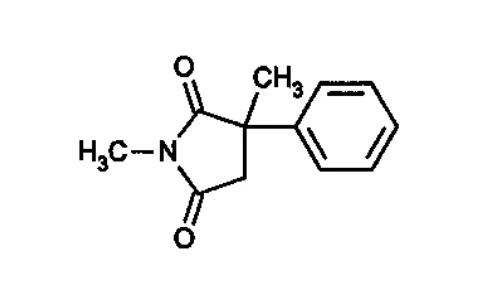
Chemical Name: (±)-1,3-dimethyl-3-phenylpyrrolidine-2,5-dione
Empirical Formula: C12H13NO2
Molecular Weight: 203.24
Structural Formula:
Melting Range: 50o to 56oC