


Product Monograph - Cervidil
RECENT MAJOR LABEL CHANGES
| 2 CONTRAINDICATIONS | 08/2022 |
| 4 DOSAGE AND ADMINISTRATION | 08/2022 |
| 7 WARNINGS AND PRECAUTIONS, General | 08/2022 |
TABLE OF CONTENTS
Sections or subsections that are not applicable at the time of authorization are not listed.
RECENT MAJOR LABEL CHANGES............................................................................................ 2
TABLE OF CONTENTS .............................................................................................................. 2
PART I: HEALTH PROFESSIONAL INFORMATION ..................................................................... 4
1 INDICATIONS .............................................................................................................. 4
1.1 Pediatrics .......................................................................................................... 4
1.2 Geriatrics........................................................................................................... 4
2 CONTRAINDICATIONS ................................................................................................. 4
3 SERIOUS WARNINGS AND PRECAUTIONS BOX ............................................................ 5
4 DOSAGE AND ADMINISTRATION................................................................................. 5
4.1 Dosing Considerations ....................................................................................... 5
4.2 Recommended Dose and Dosage Adjustment..................................................... 5
4.3 Reconstitution ................................................................................................... 5
4.4 Administration................................................................................................... 5
4.5 Missed Dose ...................................................................................................... 8
5 OVERDOSAGE ............................................................................................................. 8
6 DOSAGE FORMS, STRENGTHS, COMPOSITION AND PACKAGING ................................. 8
7 WARNINGS AND PRECAUTIONS .................................................................................. 9
7.1 Special Populations .......................................................................................... 11
7.1.1 Pregnant Women ....................................................................................... 11
7.1.2 Breast-feeding............................................................................................ 11
7.1.3 Pediatrics ................................................................................................... 11
7.1.4 Geriatrics ................................................................................................... 11
8 ADVERSE REACTIONS ................................................................................................ 11
8.2 Clinical Trial Adverse Reactions ........................................................................ 11
8.3 Less Common Clinical Trial Adverse Reactions .................................................. 13
8.4 Abnormal Laboratory Findings: Hematologic, Clinical Chemistry and Other Quantitative Data ...................................................................................................... 13
8.5 Post-Market Adverse Reactions........................................................................ 13
9 DRUG INTERACTIONS................................................................................................ 14
9.4 Drug-Drug Interactions .................................................................................... 14
9.5 Drug-Food Interactions .................................................................................... 14
9.6 Drug-Herb Interactions .................................................................................... 14
9.7 Drug-Laboratory Test Interactions .................................................................... 14
10 CLINICAL PHARMACOLOGY ....................................................................................... 14
10.1 Mechanism of Action.................................................................................. 14
10.2 Pharmacodynamics .................................................................................... 15
10.3 Pharmacokinetics ....................................................................................... 15
11 STORAGE, STABILITY AND DISPOSAL ......................................................................... 16
12 Special Handling Instructions .................................................................................... 16
PART II: SCIENTIFIC INFORMATION ...................................................................................... 17
13 PHARMACEUTICAL INFORMATION............................................................................ 17
14 CLINICAL TRIALS........................................................................................................ 17
14.1 Trial Design and Study Demographics ......................................................... 17
14.2 Study Results ............................................................................................. 17
16 NON-CLINICAL TOXICOLOGY ..................................................................................... 18
PATIENT MEDICATION INFORMATION ................................................................................. 19
PART I: HEALTH PROFESSIONAL INFORMATION
1 INDICATIONS
CERVIDIL® (dinoprostone vaginal insert) is indicated for:
- Initiation and/or continuation of cervical ripening in patients at or near term in whom there is a medical or obstetrical indication for the induction of labour.
1.1 Pediatrics
Pediatrics (<18 years of age):
CERVIDIL has not been studied in this patient population and is not recommended for use.
1.2 Geriatrics
Geriatrics (> 65 years of age):
CERVIDIL has not been studied in this patient population and is not recommended for use.
2 CONTRAINDICATIONS
CERVIDIL is contraindicated in:
- Patients who are hypersensitive to this drug or to any ingredient in the formulation, including any non-medicinal ingredient, or component of the container. For a complete listing, see 0
- DOSAGE FORMS, STRENGTHS, COMPOSITION AND PACKAGING.
- Patients when labour has started.
- Patients in whom there is clinical suspicion or definite evidence of fetal distress where delivery is not imminent.
- Patients with placenta previa or unexplained vaginal bleeding during this pregnancy.
- Patients in whom there is evidence or strong suspicion of marked cephalopelvic disproportion.
- Patients in whom uterotonic drugs are contraindicated or when prolonged contraction of the uterus may be detrimental to fetal safety or uterine integrity (previous caesarean section or major uterine surgery) (see 7 WARNINGS AND PRECAUTIONS, and 8 ADVERSE REACTIONS).
- Patients who have had previous major uterine cervix surgery (e.g. other than biopsies and cervical abrasion) or rupture of the uterine cervix.
- Multipara with 6 or more previous term pregnancies.
- Patients with a history of difficult labour and/or traumatic delivery.
- Patients with overdistension of uterus (multiple pregnancy, polyhydramnios).
- Patients with fetal malpresentation.
- Patients with a history of epilepsy whose seizures are poorly controlled.
- CERVIDIL should not be used simultaneously with other uterotonic drugs and/or other labour induction agents (See 7 WARNINGS AND PRECAUTIONS).
- CERVIDIL should not be used when there is a history of, or current pelvic inflammatory disease, unless adequate prior treatment has been instituted.
3 SERIOUS WARNINGS AND PRECAUTIONS BOX
Serious Warnings and Precautions
For Hospital Use Only: CERVIDIL should be administered only by trained obstetrical personnel in a hospital setting with appropriate obstetrical care facilities. |
4 DOSAGE AND ADMINISTRATION
4.1 Dosing Considerations
- In case of subsequent administration of uterotonic drugs, a dosing interval of at least 30 minutes is recommended following the removal of the vaginal delivery system.
4.2 Recommended Dose and Dosage Adjustment
- CERVIDIL is used as a single dosage in a single application. The dosage of dinoprostone in the vaginal insert is 10 mg designed to be released at approximately 0.3 mg/hour over a 12 hour period. CERVIDIL should be removed upon onset of active labour, 12 hours after insertion, or in the event of an adverse reaction, e.g., uterine hyperstimulation.
4.3 Reconstitution
CERVIDIL requires no reconstitution prior to use.
4.4 Administration
CERVIDIL should be removed from the freezer just prior to the insertion. No thawing is required prior to use.
To remove CERVIDIL from the packaging, first tear the foil along the top of the sachet. Do not use scissors or sharp implements to cut the foil as this may damage the product. Use the retrieval system to gently pull the product out of the sachet.
CERVIDIL is a thin, flat, semi-transparent polymeric slab which is rectangular in shape with rounded corners contained within a knitted polyester retrieval system.
Insertion
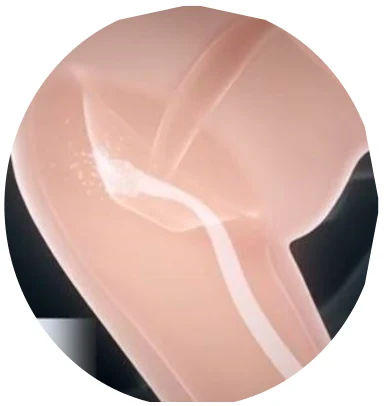
One CERVIDIL is placed transversely high in the posterior fornix of the vagina immediately after removal from its foil package. The insertion of the vaginal insert does not require sterile conditions. The vaginal insert must not be used without its retrieval system. There is no need for previous warming of the product. A minimal amount of water-miscible lubricant may be used to assist in insertion of CERVIDIL. Care should be taken not to permit excess contact or coating with the lubricant and thus prevent optimal swelling and release of dinoprostone from the vaginal insert. Patients should remain in the supine position for 2 hours following insertion, but thereafter may be ambulatory. It is important to monitor uterine contractions and fetal condition at frequent regular intervals.
How to properly insert CERVIDIL
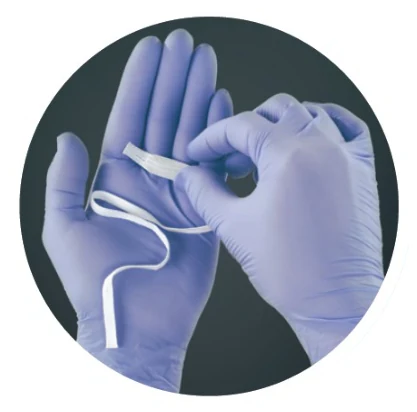 | 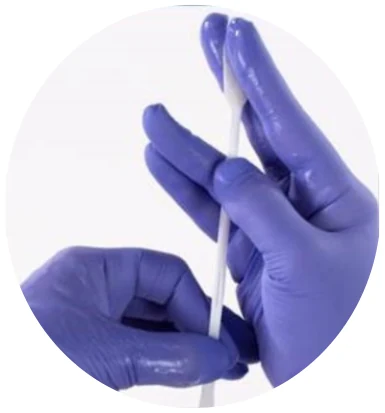 | 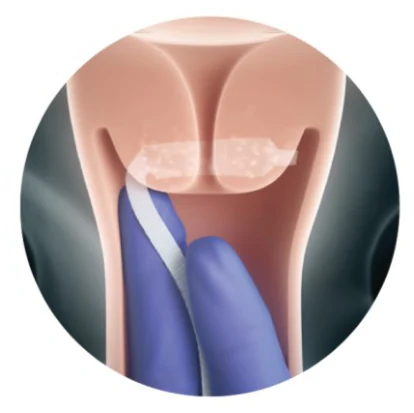 |
Start Pick up the insert between 2 fingers, positioning the slab end to be inserted first, and extend the tape | Prepare Apply a minimal amount of water-miscible lubricant to 2 fingers (not to the slab itself) | Insert Gently place your 2 fingers with the insert into the vagina |
Properly Position Insert Position the insert transversely (like a boomerang) high in the posterior vaginal fornix | Secure After inserting, the retrieval tape may be cut with scissors, leaving a small portion of the tail outside of the vagina to allow for removal | Don’t Do not wrap the tape around the insert or cut the tape from the slab |
Removal
The retrieval system consists of a one-piece knitted polyester pouch and retrieval tape. This ensures easy and reliable removal of the insert when the patient’s requirement for PGE2 has been fulfilled or an obstetric event makes it necessary to stop further drug administration.
CERVIDIL can be removed quickly and easily by pulling gently on the retrieval tape. On removal of the product from the vagina, the vaginal delivery system will have swollen to 2-3 times its original size and be pliable.
After removal from the patient, ensure that the entire product (vaginal delivery system and retrieval system) has been removed from the vagina.
It is necessary to remove the vaginal delivery system to terminate drug administration when cervical ripening is judged to be complete or for any of the reasons listed below.
- 1.
Onset of labour. For the purposes of induction of labour with CERVIDIL, the onset of labour is defined as the presence of regular painful uterine contractions occurring every 3 minutes irrespective of any cervical change. There are two important points to note:
- (i) Once regular, painful contractions have been established with CERVIDIL, they will not reduce in frequency or intensity as long as CERVIDIL remains in situ because dinoprostone is still being administered.
- (ii) Patients, particularly multigravidae, may develop regular painful contractions without any apparent cervical change. Effacement and dilatation of the cervix may
 | 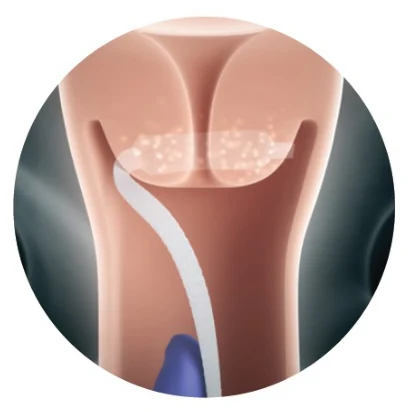 |  |
- not occur until uterine activity is established. Because of this, once regular painful uterine activity is established with CERVIDIL in-situ, the vaginal delivery system should be removed irrespective of cervical state to avoid the risk of uterine hyperstimulation.
- Spontaneous rupture of the membranes or amniotomy.
- Any suggestion of uterine hyperstimulation or hypertonic uterine contractions.
- Evidence of fetal distress.
- Evidence of maternal systemic adverse dinoprostone effects such as nausea, vomiting, hypotension or tachycardia.
- At least 30 minutes prior to starting an intravenous infusion of uterotonic drugs.
4.5 Missed Dose
Not applicable. CERVIDIL is only used once.
5 OVERDOSAGE
Overdosage is usually manifested by uterine hyperstimulation which may be accompanied by fetal distress and is responsive to removal of the insert. Other treatment must be symptomatic, since to date, clinical experience with prostaglandin antagonists is insufficient.
The use of beta-adrenergic agents should be considered in the event of undesirable increased uterine activity.
| For management of a suspected drug overdose, contact your regional poison control centre. |
6 DOSAGE FORMS, STRENGTHS, COMPOSITION AND PACKAGING
Table 1 – Dosage Forms, Strengths, Composition and Packaging
CERVIDIL is available in a carton containing 1 insert within a retrieval system, enclosed in foil (aluminium/polyethylene) pack.
Each insert contains 10 mg of dinoprostone. The insert and its retrieval system are non-toxic
| Route of Administration | Dosage Form / Strength/Composition | Non-medicinal Ingredients |
| Vaginal | Insert / 10 mg dinoprostone | Insert: Cross-linked polyethylene oxide / urethane polymer slab Retrieval system: Polyester yarn |
and when placed in a moist environment, absorbs water, swells, and releases dinoprostone.
7 WARNINGS AND PRECAUTIONS
Please see 3 SERIOUS WARNINGS AND PRECAUTIONS BOX.
General
The condition of the cervix should be assessed carefully before CERVIDIL is used. After insertion, uterine activity and fetal condition must be monitored carefully and regularly by a qualified healthcare professional. If there is any suggestion of maternal or fetal complications or if adverse effects occur, the vaginal delivery system should be removed from the vagina.
Since prostaglandins potentiate the effect of uterotonic drugs, CERVIDIL must be removed before uterotonics administration is initiated and the patient's uterine activity carefully monitored for uterine hyperstimulation.
If uterine hyperstimulation is encountered or if labour commences, the vaginal insert should be removed. CERVIDIL should also be removed prior to amniotomy. The vaginal insert should be removed if there is evidence of maternal systemic adverse PGE2 effects such as nausea, vomiting, hypotension or tachycardia.
The experience of CERVIDIL in patients with ruptured membranes is limited. Therefore, CERVIDIL should be used with caution in those patients. Since the release of dinoprostone from the insert can be affected in the presence of amniotic fluid, special attention should be given to uterine activity and fetal condition.
Caution should be exercised in the administration of CERVIDIL for cervical ripening in patients with a history of previous uterine hypertonicity, glaucoma, or a history of childhood asthma, even though there have been no asthma attacks in adulthood or unexplained genital bleeding during the current pregnancy.
CERVIDIL should be used with caution when there is a multiple pregnancy. No studies in multiple pregnancy have been performed.
CERVIDIL should be used with caution when the woman has had more than three full term deliveries. No studies in woman with more than three full term deliveries have been performed.
A second dose of CERVIDIL is not recommended, as the effects of a second dose have not been studied.
The use of the product in patients with diseases which could affect the metabolism or excretion of dinoprostone, e.g. lung, liver or renal disease, has not been specifically studied. The use of the product in such patients is not recommended.
Women aged 35 and over, women with complications during pregnancy, such as gestational diabetes, arterial hypertension and hypothyroidism, and women at gestational age above 40 weeks, have a higher postpartum risk for developing disseminated intravascular coagulation (DIC). These factors may additionally enhance the risk of disseminated intravascular coagulation in women with pharmacologically induced labour (see 8 ADVERSE REACTIONS). Therefore, dinoprostone should be used with caution in these women. In the immediate postpartum phase, the physician should look carefully for early signs of developing DIC (e.g. fibrinolysis).
Uterine activity, fetal status and the progression of cervical dilatation and effacement should be carefully monitored whenever the dinoprostone vaginal insert is in place. Any evidence of uterine hyperstimulation, sustained uterine contractions, fetal distress, or other fetal or maternal adverse reactions, should be a cause for consideration of removal of the insert. The possibility of uterine rupture and/or cervical laceration should be born in mind where hypertonic myometrial contractions are sustained.
Uterine rupture has been reported in association with the use of CERVIDIL, mainly in patients with contraindicated conditions (see 2 CONTRAINDICATIONS). Therefore, CERVIDIL should not be administered to patients with a history of previous caesarean section or uterine surgery given the potential risk for uterine rupture and associated obstetrical complications.
If uterine contractions are prolonged or excessive, there is possibility of uterine hypertonus or rupture and the vaginal delivery system should be removed immediately.
Cephalopelvic relationships should be carefully evaluated before the use of CERVIDIL.
Prolonged treatment of newborn infants with prostaglandin E1 can induce proliferation of bone. There is no evidence that short term administration of prostaglandin E2 can cause similar bone effects.
Patients with severe renal disease and/or severe hepatic disease accompanied by metabolic aberrations should be dosed with caution.
The qualified healthcare professional should be alert that, as with other labour induction methods, use of dinoprostone may result in inadvertent abruption of placenta and subsequent embolization of antigenic tissue causing in rare circumstances the development of Anaphylactoid Syndrome of Pregnancy (Amniotic Fluid Embolism).
Carcinogenesis and Mutagenesis
Long-term carcinogenicity and fertility studies have not been conducted with CERVIDIL (dinoprostone vaginal insert). No evidence of mutagenicity has been observed with prostaglandin E2 in the Unscheduled DNA Synthesis Assay, the Micronucleus Test, or Ames Assay.
Monitoring and Laboratory Tests
After insertion, the patient should remain supine and monitored for 2 hours for any evidence of uterine hyperstimulation, change in fetal heart rate or maternal blood pressure or heart rate.
If any of these changes occur, removal of CERVIDIL should be considered.
7.1 Special Populations
7.1.1 Pregnant Women
Animal studies indicate that the prostaglandins may be teratogenic. No effect would be expected clinically, when used as indicated, since CERVIDIL (dinoprostone vaginal insert) is administered after the period of organogenesis. Any dose of the drug that produces sustained increased uterine tone could put the embryo or fetus at risk.
7.1.2 Breast-feeding
CERVIDIL is not indicated for use during early or other phases of pregnancy or during lactation.
7.1.3 Pediatrics
Pediatrics (< 18 years): CERVIDIL has not been studied in this patient population and is not recommended for use.
7.1.4 Geriatrics
Geriatrics (> 65 years): CERVIDIL has not been studied in this patient population and is not recommended for use.
8 ADVERSE REACTIONS
8.2 Clinical Trial Adverse Reactions
Controlled Studies and Study 101-801
Because clinical trials are conducted under very specific conditions, the adverse reaction rates observed in the clinical trials may not reflect the rates observed in practice and should not be compared to the rates in the clinical trials of another drug. Adverse reaction information from clinical trials is useful for identifying drug-related adverse events and for approximating rates.
CERVIDIL is well tolerated. In placebo-controlled trials in which 658 women were entered and 320 received active therapy (218 without retrieval system, 102 with retrieval system), the following events were reported. See Error! Reference source not found..
Miso-Obs Studies
The most commonly reported adverse drug reactions in placebo-controlled and active comparator efficacy clinical trials (N=1116) were “fetal heart rate disorder” (6.9 %), “uterine contractions abnormal” (6.2 %) and “abnormal labour affecting fetus” (2.6 %).
Table 1 – Total Drug Related Adverse Events (Controlled Studies and Study 101-801)
| Controlled Studies1 | Study 101-8012 | |||||||||
|---|---|---|---|---|---|---|---|---|---|---|
| Active | Placebo | Active | Placebo | |||||||
| Uterine hyperstimulation with fetal distress | 2.8% | 0.3% | 2.9% | 0% | ||||||
| Uterine hyperstimulation without fetal distress | 4.7% | 0% | 2.0% | 0% | ||||||
| Fetal Distress without uterine hyperstimulation | 3.8% | 1.2% | 2.9% | 1.0% | ||||||
| N | 320 | 338 | 102 | 104 | ||||||
1 Controlled Studies (with and without retrieval system) 2 Controlled Study (with retrieval system) | ||||||||||
Drug related fever, nausea, vomiting, diarrhea, and abdominal pain were noted in less than 1% of patients who received CERVIDIL.
The table below displays the main ADRs distributed by system organ classes (SOC) and frequency:
Table 2 – Frequency of reported adverse reactions (Miso-Obs Studies)
| System organ class | Common (≥ 1/100 to < 1/10) | Uncommon (≥ 1/1000 to < 1/100) |
|---|---|---|
| Immune system disorders | ||
| Nervous system disorders | Headache | |
| Cardiac disorders | Fetal heart rate disorder 1* | |
| Vascular disorders | Hypotension | |
| Respiratory, thoracic and mediastinal disorders | Neonatal respiratory distress related conditions | |
| Hepatobiliary disorders | Neonatal hyperbilirubinemia | |
| Skin and subcutaneous tissue disorders | Pruritus | |
| Pregnancy, puerperium and perinatal conditions | Abnormal labour affecting fetus 2* Uterine contractions abnormal, uterine tachysystole, uterine hyperstimulation, uterine hypertonus 3* Meconium in amniotic fluid | Postpartum haemorrhage, Premature separation of placenta, Apgar score low Arrested labour Chorioamnionitis Uterine atony |
| Reproductive system and breast disorders | Vulvovaginal burning sensation | |
| General disorders and administration site conditions | Febrile disorders | |
| 1* “Fetal heart rate disorder” was in clinical studies reported as “fetal heart rate | ||
| System organ class | Common (≥ 1/100 to < 1/10) | Uncommon (≥ 1/1000 to < 1/100) |
|---|---|---|
abnormalities”, “fetal bradycardia”, “fetal tachycardia”, “unexplained absence of normal variability”, “fetal heart rate decreased”, “fetal heart rate deceleration”, “early or late decelerations”, “variable decelerations”, “prolonged decelerations”. 2* “Abnormal labour affecting fetus” as expression for hyperstimulation syndrome was in clinical studies reported as “uterine tachysystole” combined with “late decelerations”, “fetal bradycardia”, or “prolonged decelerations”. 3* Fetal death, stillbirth, and neonatal death have been reported after application of dinoprostone, especially following the occurrence of serious events such as uterine rupture (see 2 CONTRAINDICATIONS, 4 DOSAGE AND ADMINISTRATION, and 7 WARNINGS AND PRECAUTIONS). | ||
8.3 Less Common Clinical Trial Adverse Reactions
An increased risk of post-partum disseminated intravascular coagulation has been reported in patients whose labour was induced by pharmacological means, either with dinoprostone or oxytocin. The frequency of this adverse event, however, appears to be rare (<1 per 1,000 pregnancies).
Very rare cases of anaphylactic reactions have been reported with the use of dinoprostone.
In Study 101-801 (with the retrieval system) all cases of hyperstimulation reversed within 2 to 13 minutes of removal of the product. Tocolytics were required in one of the five cases.
In cases of fetal distress, when product removal was thought advisable, there was a return to normal rhythm and no neonatal sequelae.
Five minute Apgar scores were 7 or above in 98.2% (646/658) of studied neonates whose mothers participated in placebo-controlled studies with CERVIDIL. A 3 year pediatric follow-up study in 121 infants whose mothers received PGE2, found no significant differences from a control group on physical examination or psychomotor evaluation.
8.4 Abnormal Laboratory Findings: Hematologic, Clinical Chemistry and Other Quantitative Data
No information is available.
8.5 Post-Market Adverse Reactions
The ADRs seen during post-marketing experience are listed below with unknown frequency by system organ class followed by adverse reactions.
Immune system disorders: Hypersensitivity
Gastrointestinal disorders: Abdominal pain, Nausea, vomiting, diarrhea
Pregnancy, puerperium and perinatal conditions: Anaphylactoid syndrome of pregnancy, Fetal distress syndrome *
Reproductive system and breast disorders: Genital edema
Injury, poisoning and procedural complications: Uterine rupture
* “Fetal distress syndrome” was also reported as “fetal acidosis”, “pathological CTG”, “fetal heart rate abnormalities”, “intrauterine hypoxia” or “threatening asphyxia”. The term itself is unspecific, has a low positive predictive value and is often associated with an infant who is in good condition at birth.
9 DRUG INTERACTIONS
9.4 Drug-Drug Interactions
CERVIDIL may augment the activity of oxytocic agents and their concomitant use is not recommended. A dosing interval of at least 30 minutes is recommended for the sequential use of oxytocin following the removal of the dinoprostone vaginal insert. No other drug interactions have been identified.
Medication with non-steroidal anti-inflammatory drugs, including acetylsalicylic acid, should be stopped before administration of dinoprostone.
9.5 Drug-Food Interactions
Interactions with food have not been established.
9.6 Drug-Herb Interactions
Interactions with herbal products have not been established.
9.7 Drug-Laboratory Test Interactions
Interactions with laboratory tests have not been established.
10 CLINICAL PHARMACOLOGY
10.1 Mechanism of Action
Dinoprostone (PGE2) is a naturally-occurring biomolecule. It is found in low concentrations in most tissues of the body and functions as a local hormone. As with any local hormone, it is very rapidly metabolized in the tissues of synthesis. The rate limiting step for inactivation is regulated by the enzyme 15-hydroxyprostaglandin dehydrogenase (PGDH). Any PGE2 that escapes local inactivation is rapidly cleared to the extent of 95% on the first pass through the pulmonary circulation.
In pregnancy, PGE2 is secreted continuously by the fetal membranes and placenta and plays an important role in the final events leading to the initiation of labour. It is known that PGE2 stimulates the production of PGF2α which in turn sensitizes the myometrium to endogenous or exogenously administrated oxytocin. Although PGE2 is capable of initiating uterine contractions and may interact with oxytocin to increase uterine contractility, the available evidence indicates, that in the concentrations found during the early part of labour, PGE2 plays an important role in cervical ripening without affecting uterine contractions. This distinction serves as the basis for considering cervical ripening and induction of labour, usually by the use of oxytocin, as two separate processes.
PGE2 plays an important role in the complex set of biochemical and structural alterations involved in cervical ripening. Cervical ripening involves a marked relaxation of the cervical smooth muscle fibers of the uterine cervix which must be transformed from a rigid structure to a softened, yielding and dilated configuration to allow passage of the fetus through the birth canal. This process involves activation of the enzyme collagenase, which is responsible for digestion of some of the structural collagen network of the cervix. This is associated with a concomitant increase in the amount of hydrophilic glycosaminoglycan, hyaluronic acid, and a decrease in dermatan sulfate. Failure of the cervix to undergo these natural physiologic changes, usually assessed by the method described by Bishop, prior to the onset of effective uterine contractions, results in an unfavourable outcome for successful vaginal delivery and may result in fetal compromise. It is estimated that in approximately 5% of the pregnancies the cervix does not ripen normally. In an additional 10-11% of pregnancies, labour must be induced for medical or obstetric reasons prior to the time of cervical ripening.
10.2 Pharmacodynamics
Prostaglandin E2 (PGE2) is a naturally occurring compound found in low concentrations in most tissues of the body. It functions as a local hormone.
Prostaglandin E2 plays an important role in the complex set of biochemical and structural alterations involved in cervical ripening. Cervical ripening involves a marked relaxation of the cervical smooth muscle fibres of the uterine cervix which must be transformed from a rigid structure to a soft, dilated configuration to allow passage of the fetus through the birth canal. This process involves activation of the enzyme collagenase which is responsible for the breakdown of the collagen.
Local administration of dinoprostone to the cervix results in cervical ripening which then induces the subsequent events which complete labour.
10.3 Pharmacokinetics
PGE2 is rapidly metabolised primarily in the tissue of synthesis.
No correlation could be established between PGE2 release and plasma concentrations of its metabolite, PGEm. The relative contributions of endogenously and exogenously released PGE2 to the plasma levels of the metabolite PGEm could not be determined.
The reservoir of 10 mg dinoprostone serves to maintain a controlled and constant release. The release rate is approximately 0.3 mg per hour over 12 hours in women with intact membranes whereas release is higher and more variable in women with premature rupture of membranes. CERVIDIL releases dinoprostone to the cervical tissue continuously at a rate which allows cervical ripening to progress until complete, and with the facility to remove the dinoprostone source when the clinician decides that cervical ripening is complete or labour has started, at which point no further dinoprostone is required.
11 STORAGE, STABILITY AND DISPOSAL
Store in a freezer between -20°C and -10°C.
Store in the original container in order to protect from moisture. No thawing is required prior to use.
12 SPECIAL HANDLING INSTRUCTIONS
CERVIDIL should be removed from the freezer just prior to the insertion.
Any unused medicinal product or waste material should be disposed of in accordance with local requirements.
PART II: SCIENTIFIC INFORMATION
13 PHARMACEUTICAL INFORMATION
Drug Substance
Proper name: Dinoprostone
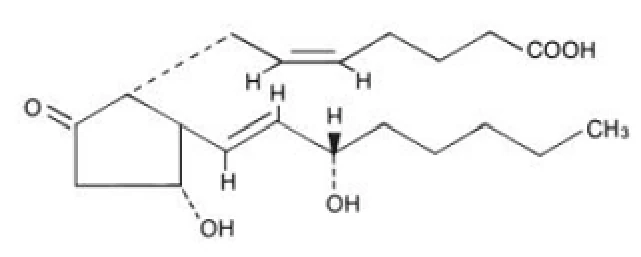
- (1) Chemical name: Prosta-5,13-dien-1-oic acid, 11,15-dihydroxy-9-oxo-,(5Z,11α,13E,-15S)-
- (2) (E,Z)-(1R,2R,3R)-7-[3-Hydroxy-2-[(3S)-(3-hydroxy-1-octenyl)]-5-oxocyclopentyl]-5-heptenoic acid
- (3) Prostaglandin E2
Molecular formula and molecular mass: C20H32O5 and 352.47
Structural formula:
Physicochemical properties:
Dinoprostone occurs as a white to off-white crystalline powder. It has a melting point within the range of 65° to 68°C. Dinoprostone is freely soluble in ethanol, methylene chloride, ethyl acetate and chloroform, and very slightly soluble in n-hexane. Aqueous solubility is 1.05 mg/mL at 25°C.
14 CLINICAL TRIALS
14.1 Trial Design and Study Demographics
The clinical subjects were primiparous and multiparous.
14.2 Study Results
Treatment success in three double-blind, placebo-controlled studies was defined as Bishop score increase at 12 hours of ≥3, vaginal delivery within 12 hours or Bishop score at 12 hours ≥6. Results in a total of 603 (283 active, 320 placebo) qualified patients demonstrated success rates of 69.4% and 71.7% for primiparous and multiparous, respectively compared to placebo values of 29.7% for both groups.
Of the 658 patients evaluable for safety in the double-blind trials (320 active, 338 placebo), 9 patients (2.8%) who received the active insert experienced tachysystole associated with fetal distress, while 15 patients (4.7%) experienced hyperstimulation without fetal distress. Removal of the insert resulted in relief of the symptomatology and in no case was there evidence of a neonatal adverse event.
16 NON-CLINICAL TOXICOLOGY
Toxicology studies have been conducted on PGE2, on the hydrogel polymer and on the insert retrieval system.
There is little information specifically related to PGE2 toxicity because of its rapid inactivation in the body. A study in chicken embryos and newly hatched chicks showed that there was no discernable PGE2-related lethality following administration of doses between 10-5 and 10-8 M to embryos and proportionally larger doses to chicks.
The hydrogel polymer showed no evidence of toxicity in a cytotoxicity study in mouse fibroblast cultures or in an intramuscular implantation test in rabbits. Dietary and oral toxicity studies of the hydrogel polymer in rats and dogs were conducted for periods between 10 and 36 days and showed no evidence of toxicity.
In vitro unscheduled DNA synthesis assays on primary rat hepatocytes showed no evidence of mutagenicity for PGE2 at doses up to 5,000 mcg/mL.
PGE2 administered subcutaneously to female mice at doses up to 50 mcg/kg/day during days 11 to 17 of pregnancy had a masculinizing effect on the genital tract of female fetuses. The results of this study and a related in vitro study using female genital duct cultures suggest that PGE2 plays a role in androgen-dependent masculine differentiation.
The insert retrieval system which is composed of the polyester material Dacron T56 and the material itself were evaluated in in vitro cytotoxicity tests, systemic toxicity tests in mice, intramuscular implantation tests in rabbits, hemolysis tests, pyrogenicity tests, intracutaneous reactivity tests in rabbits, skin irritation tests in guinea pigs and vaginal irritation tests in rabbits. There was no evidence of toxicity in any of the studies.
The results of an in vitro test using Staphylococcus aureus predict no association between the use of the hydrogel insert and toxic shock syndrome.