


Product Monograph - Chloramphenicol (Steri-Med Pharma)
ACTION AND CLINICAL PHARMACOLOGY
Chloramphenicol is a broad-spectrum antibiotic originally isolated from Streptomyces venezuelae. It is primarily bacteriostatic and acts by blocking protein synthesis via inhibition of peptidyl transferase within the 50S ribosomal subunit. This inhibition blocks peptide bond formation, thereby preventing the transfer of amino acids to the growing polypeptide chains. Development of resistance to chloramphenicol can be regarded as minimal for staphylococci and many other species of bacteria.
INDICATIONS
This product is indicated for the treatment of superficial ocular infections involving the conjunctiva and/or cornea caused by chloramphenicol-susceptible organisms. Bacteriological studies should be performed to determine the causative organisms and their sensitivity to chloramphenicol.
Chloramphenicol Ophthalmic Ointment does not provide adequate coverage against Pseudomonas aeruginosa and Serratia marcescens.
To reduce the development of drug-resistant bacteria and maintain the effectiveness of CHLORAMPHENICOL and other antibacterial drugs, CHLORAMPHENICOL should be used only to treat infections that are proven or strongly suspected to be caused by bacteria.
CONTRAINDICATIONS
- Hypersensitivity to the active substance or to any of its components.
- Patients who have experienced myelosuppression during previous exposure to chloramphenicol.
- Family or personal history of blood disorders including aplastic anaemia.
WARNINGS AND PRECAUTIONS
Chloramphenicol is absorbed systemically from the eye and toxicity has been reported following chronic exposure.
Bone marrow hypoplasia, including aplastic anaemia and death, has been reported following topical use of chloramphenicol. Where Chloramphenicol antibiotic eye ointment is used on a long-term or intermittent basis, it may be advisable to perform a routine blood profile before therapy and at appropriate intervals thereafter to detect haemopoietic abnormalities.
In cases of severe infection, the topical use of chloramphenicol should be supplemented by appropriate systemic treatment.
Prolonged use of chloramphenicol ophthalmic ointment should be avoided as it may increase the likelihood of sensitization and emergence of resistant organisms. If any new infection appears during the treatment, the antibiotic should be discontinued, and appropriate measures taken. Chloramphenicol should be reserved for use only in infections for which it is specifically indicated.
Sensitivity/Resistance
Development of Drug Resistant Bacteria
Prescribing CHLORAMPHENICOL in the absence of a proven or strongly suspected bacterial infection is unlikely to provide benefit to the patient and risks the development of drug-resistant organisms.
Potential for Microbial Overgrowth
Prolonged use of CHLORAMPHENICOL may result in overgrowth of non-susceptible bacteria and fungi. If the infection is not improved following 2 days of treatment, cultures should be obtained to guide further treatment. If such infections occur, discontinue use and institute alternative therapy.
Pregnancy and Breastfeeding
The safety of topical chloramphenicol use during pregnancy and breastfeeding has not been established. Chloramphenicol may be absorbed systemically following the use of the eye ointment and has been shown to cross the placenta and enter breast milk. Therefore, pregnant and breastfeeding women should use only when the potential benefit to the mother outweighs the potential risk to the fetus or breastfed infant.
Driving and Operating Machinery
May cause transient blurring of vision on instillation of the ointment. The user should not drive or operate hazardous machinery unless vision is clear.
ADVERSE REACTIONS
Eye disorders
Transient irritation, burning, stinging and sensitivity reactions, such as itching and dermatitis.
Immune system disorders
Hypersensitivity reactions including angioedema, anaphylaxis, urticaria, fever, vesicular and maculopapular dermatitis.
Blood and lymphatic system disorders
Bone marrow depression and rarely aplastic anaemia has been reported following topical use of chloramphenicol. While the hazard is a rare one, it should be borne in mind when assessing the benefits expected from the use of this compound.
OVERDOSE
For the most recent information in the management of a suspected drug overdose, contact your regional poison control centre or Health Canada’s toll-free number, 1-844 POISON-X (1-844-764-7669).
DRUG INTERACTIONS
The concomitant administration of Chloramphenicol with other drugs liable to depress bone marrow function should be avoided.
DOSAGE AND ADMINISTRATION
Adults (including the elderly) and children aged 2 years and over:
Instruct patient to apply a small amount (about 1 cm) of the ointment into the space between the lower eyelid and the eye 3 to 4 times daily.
The course of treatment is 5 days.
Contact lenses should not be worn in an infected eye. Contact lenses should be removed during the period of treatment.
AVAILABILITY
Each gram of sterile ophthalmic ointment contains: Chloramphenicol USP 1% (10 mg/g); and the following non-medicinal ingredients: mineral oil, polysorbate 60 and white petrolatum.
Available in 3.5 gram tubes.
STORAGE CONDITIONS
Store between 15°C and 30°C. Keep container tightly closed. Keep out of reach and sight of children.
PHARMACEUTICAL INFORMATION
Structural Formula:
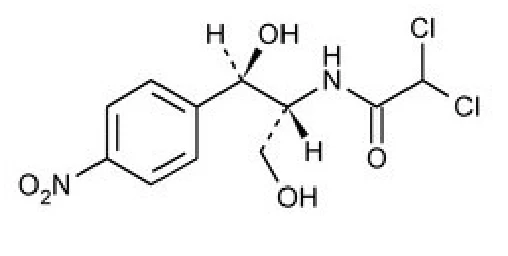
Chemical Name: 2,2-dichloro-N-[2-hydroxy-1-(hydroxymethyl)-2-(4- nitrophenyl)ethyl]-, [R- (R*,R*)]-acetamide
Molecular Formula: C11H12Cl2N2O5
Molecular Weight: 323.13
Description: Fine, white to grayish-white or yellowish-white, needle-like crystals or elongated plates. Freely soluble in alcohol, in propylene glycol, in acetone, and in ethyl acetate; slightly soluble in water.