


Product Monograph - Sandoz Tobramycin
INDICATIONS AND CLINICAL USE
Sandoz Tobramycin (Tobramycin Ophthalmic Solution, USP) is topical antibiotic preparation indicated in the treatment of external infections of the eye and its adnexa caused by susceptible bacteria. Appropriate monitoring of bacterial response to topical antibiotic therapy should accompany the use of Sandoz Tobramycin.
To reduce the development of drug-resistant bacteria and maintain the effectiveness of tobramycin and other antibacterial drugs, Sandoz Tobramycin should be used only to treat infections that are proven or strongly suspected to be caused by susceptible bacteria.
CONTRAINDICATIONS
Sandoz Tobramycin is contraindicated in:
Patients who are hypersensitive to tobramycin or any ingredient in the formulation (see
PHARMACEUTICAL INFORMATION).
- Patients with a known hypersensitivity to any aminoglycoside.
WARNINGS AND PRECAUTIONS
NOT FOR INJECTION INTO THE EYE.
Sensitivity to topically applied aminoglycosides may occur in some patients. The severity of hypersensitivity reactions may vary from local effects to generalized reactions, such as erythema, itching, urticaria, skin rash, anaphylaxis, anaphylactoid reactions, or bullous reactions. If a hypersensitivity reaction to tobramycin occurs, discontinue use.
Cross hypersensitivity to other aminoglycosides can occur, and the possibility that patients who become sensitized to topical ocular tobramycin may also be sensitive to other topical and/or systemic aminoglycosides should be considered.
Serious adverse reactions including neurotoxicity, ototoxicity and nephrotoxicity have occurred in patients receiving systemic aminoglycoside therapy, including tobramycin. Caution should be exercised if Sandoz Tobramycin is administered with systemic aminoglycosides or other drugs that have neurotoxic, ototoxic, or nephrotoxic effects, particularly in patients with known or suspected renal, auditory, vestibular, or neuromuscular dysfunction. If Sandoz Tobramycin is administered concomitantly with systemic aminoglycoside antibiotics, care should be taken to monitor the total aminoglycoside serum concentration.
Caution should be exercised when prescribing Sandoz Tobramycin to patients with known or suspected neuromuscular disorders such as myasthenia gravis or Parkinson’s disease. Aminoglycosides, including tobramycin, may aggravate muscle weakness because of their known effect on neuromuscular function and potential to produce neuromuscular blockade.
If irritation or sensitization to any of the other components of Sandoz Tobramycin develops, treatment should be discontinued and appropriate therapy should be initiated.
Sandoz Tobramycin Ophthalmic Solution is not approved for intraocular and/or subconjunctival use. Ocular side effects beyond the external eye, e.g. macular infarction/necrosis have been reported following administration of aminoglycosides, including tobramycin, by these routes.
Susceptibility/Resistance:
Development of Drug-Resistant Bacteria
Prescribing Sandoz Tobramycin in the absence of a proven or strongly suspected bacterial infection is unlikely to provide benefit to the patient and risks the development of drug-resistant bacteria.
Potential for Microbial Overgrowth
As with other antibiotic preparations, prolonged use may result in overgrowth of non-susceptible organisms, including fungi. If superinfection or drug resistance occurs, treatment with Sandoz Tobramycin should be discontinued and appropriate therapy should be initiated. Patients should be advised to consult a physician if improvement fails to occur, or if signs of superinfection occur. Patients should also be advised to avoid contamination of the dropper tip by the eye, or other objects.
Sandoz Tobramycin solution contains the preservative benzalkonium chloride. Benzalkonium chloride has been reported to cause punctate keratopathy and/or toxic ulcerative keratopathy. Contact lens wear is not recommended during treatment of ocular inflammation or infection. Benzalkonium chloride may cause eye irritation and is known to discolour soft contact lenses. Avoid contact with soft contact lenses. In case patients are allowed to wear contact lenses, they must be instructed to remove contact lenses prior to application of Sandoz Tobramycin solution and wait at least 15 minutes before re-insertion.
Temporary blurred vision or other visual disturbances may affect the ability to drive or use machines. If blurred vision occurs at application, the patient must wait until the vision clears before driving or using machinery.
Studies have not been performed to evaluate the effect of topical ocular administration of Sandoz Tobramycin solution on human fertility.
Pregnant Women: Reproduction studies in three types of animals at doses up to thirty three times the normal human systemic dose have revealed no evidence of impaired fertility or harm to the fetus due to tobramycin. There are, however, no adequate and well controlled studies in pregnant women. Because animal studies are not always predictive of human response, Sandoz Tobramycin should be used during pregnancy only if clearly needed.
Nursing Women: It is unknown whether tobramycin is excreted in human milk following topical ocular administration. Tobramycin is excreted in human milk after systemic administration. Because of the potential for adverse reactions in nursing infants from tobramycin,
a decision should be made whether to discontinue nursing the infant or to discontinue the drug, taking into consideration the importance of the drug to the mother.
ADVERSE REACTIONS
Clinical Trial Adverse Drug Reactions
The most frequent adverse reactions to tobramycin are localized ocular toxicity and hypersensitivity, including lid itching and swelling and conjunctival erythema. These reactions occur in approximately 3% of patients treated with tobramycin.
Post-Market Adverse Drug Reactions
Adverse reactions identified in subsequent clinical trials with tobramycin that have not been previously reported include the following:
Eye disorders: conjunctival edema, corneal abrasion, dry eye, erythema of eyelid, eye discharge, eyelid edema, eye pain, eye pruritus, keratitis, lacrimation increased, ocular discomfort, ocular hyperemia, vision blurred, visual impairment;
Immune system disorders: hypersensitivity;
Nervous system disorders: headache
Skin and subcutaneous tissue disorders: dermatitis, dry skin, madarosis, leukoderma, pruritus, urticaria.
Additional adverse reactions identified via spontaneous reporting include: Eye disorders: eye allergy, eye irritation (including localized ocular toxicity), eyelid pruritus; Immune system disorders: anaphylactic reaction;
Skin and subcutaneous tissue disorders: Stevens-Johnson syndrome, erythema multiforme, rash.
SYMPTOMS AND TREATMENT OF OVERDOSAGE
Clinically apparent signs and symptoms of an overdose of Sandoz Tobramycin (punctate keratitis, erythema, increased lacrimation, edema and lid itching) may be similar to adverse reaction effects in some patients.
In case of dramatic systemic overdose, serum concentrations should be monitored and prolonged levels above 12 μg/mL should be avoided. Hemodialysis will help remove tobramycin from the blood. Such reactions and the necessity for counter measures are not expected from the use of Sandoz Tobramycin.
For management of a suspected drug overdose, contact your regional Poison Control Centre.
DOSAGE AND ADMINISTRATION
Sandoz Tobramycin Solution (Adults and Children - above the age of 1 year)
In mild to moderate disease, instill one or two drops into the affected eye(s) every four hours. In severe infections, instill two drops into the eye(s) hourly until improvement, following which treatment should be reduced prior to discontinuation.
Sandoz Tobramycin Solution:
In case of concomitant therapy with other topical ocular medicinal products, an interval of 5 minutes should be allowed between successive applications. Eye Ointments should be administered last.
Missed dose:
In the case of a missed dose, a patient should take the missed dose as soon as possible. If it is almost time for the next dose, the patient should be instructed to skip the missed dose and return to their regular schedule as planned. Patients should not use a double dose to make up for the missed dose.
Special Instructions:
Patients should be advised to avoid contamination of the dispensing tip, by avoiding contact with the eye, skin or other surfaces. Keep tightly closed.
PHARMACEUTICAL INFORMATION
Drug Substance: Tobramycin
Structural Formula:
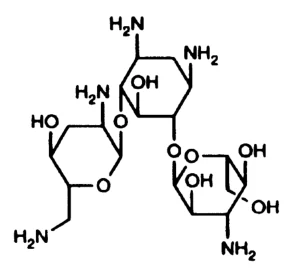
Molecular Formula: C18H37N5O9
Molecular Weight: 467.54
Chemical Name: 0-3-amino-3-deoxy-∀-D-glucopyranosyl-(1→4)-0-[2,6-diamino-2,3,6-trideoxy-α-D-ribohexopyranosyl-(1→6)]-2-deoxy-L-streptamine.
Composition:
Sandoz Tobramycin solution is a sterile ophthalmic solution of tobramycin. Each mL contains: Medicinal ingredient: tobramycin 0.3% w/v (3 mg/mL)
Preservative: benzalkonium chloride 0.01% w/v
Non-medicinal ingredients: boric acid, sodium sulfate, sodium chloride, tyloxapol, sulfuric acid and/or sodium hydroxide (to adjust pH) and purified water.
Storage: Store at room temperature (15ºC - 30ºC). Discard 28 days after initial opening. Keep tightly closed. Keep out of the reach and sight of children.
DOSAGE FORM
Sandoz Tobramycin solution is available in 5mL opaque plastic DROP-TAINER® dispensers.
PHARMACOLOGY
Animal Pharmacokinetics:
Ocular tissue concentrations were determined in pigmented rabbits following a single bilateral dose of 50 µL administration of tobramycin (Tobramycin Ophthalmic Solution, 0.3% w/v). Results of tobramycin concentrations reached in the rabbit tear from the single administration of the marketed tobramycin (Tobramycin Ophthalmic Solution, 0.3% w/v) are shown in the table below.
Concentration of Tobramycin in rabbit tear after single administration
| Treatment | Time (min) | Mean (µg/mL) ± SD | n |
| tobramycin (Tobramycin Ophthalmic Solution, 0.3% w/v) | 0 | 1841 ± 485 | 6 |
| 5 | 202 ± 388 | 12 | |
| 10 | 212 ± 371 | 12 | |
| 30 | 39 ± 39 | 24 | |
| 60 | 14 ± 15 | 36 | |
| 120 | 18 ± 26 | 24 |
Ocular tissue concentrations were also determined in pigmented rabbits following repeated bilateral dosing of 50 µL administration of tobramycin (Tobramycin Ophthalmic Solution, 0.3% w/v). Three doses were administered at 2 hour intervals and the quantity of tobramycin was determined. The results are shown in the table below.
Concentration of Tobramycin in rabbit tear after repeated administration
| Treatment | Time (min) | Mean (µg/mL) ± SD | n |
| tobramycin (Tobramycin Ophthalmic Solution, 0.3% w/v) | 60 | 65 ± 99 | 12 |
| 120 | 34 ± 44 | 18 |
Human Pharmacokinetics:
Tear film concentrations were studied in sixteen (16) healthy male and female subjects who were administered one drop of tobramycin (Tobramycin Ophthalmic Solution, 0.3% w/v) in each eye daily for nine (9) consecutive days. To allow enough time for tear sampling, dosing of the two eyes was separated by 20 minutes. Under direct visualisation (slit-lamp biomicroscopy), glass capillary tubes were used to collect tear samples at a predetermined time following dosing (ie. 1, 2, 3, 5, 10, 20, 40, 120 and 240 minutes postdose). LC-MS analyses of tobramycin in tear film were carried out.
The area under the tobramycin tear fluid concentration versus time curve (AUCI) of tobramycin (Tobramycin Ophthalmic Solution, 0.3% w/v) was 3494.27 minΧ:gΧmL-1. The area within the tobramycin tear fluid concentration versus time curve, exceeding the minimal inhibitory concentration90 (AUC over MIC90) was obtained as 2282.47 minΧ:gΧmL-1 following single administration of tobramycin (Tobramycin Ophthalmic Solution, 0.3% w/v). The duration of time over which the tobramycin tear fluid concentrations remained above MIC90 was 25.1
minutes after single administration of tobramycin (Tobramycin Ophthalmic Solution, 0.3% w/v) solution.
Human Pharmacodynamics:
In a randomized, masked, multicentre controlled study 204 per protocol patients were treated withone drop of tobramycin (Tobramycin Ophthalmic Solution, 0.3% w/v) four times a day for 7±1 days. In patients who were culture positive for bacteria on Day 1, 99% treated with tobramycin (Tobramycin Ophthalmic Solution, 0.3% w/v) were categorized as having sustained cure/presumed eradication.
MICROBIOLOGY
In vitro tests demonstrate that tobramycin is bactericidal and that it acts by inhibiting the synthesis of protein in bacterial cells.
Tobramycin is active against most strains of the following organisms:
Pseudomonas aeruginosa
Proteus sp. (indole-positive and indole-negative), including Pr. mirabilis, Pr. morganii, Pr. rettgeri and Pr. vulgaris
Escherichia coli
Klebsiella-Enterobacter-Serratia species
Citrobacter species
Providencia species
Staphylococci, including Staphylococcus aureus (coagulase-positive and coagulase-negative)
Although most strains of group D streptococci demonstrate in vitro resistance, some strains in this group are susceptible. In vitro studies have shown that an aminoglycoside combined with an antibiotic which interferes with cell wall synthesis affects some group D streptococcal strains synergistically. The combination of penicillin G and tobramycin results in a synergistic bactericidal effect in vitro against certain strains of Streptococcus faecalis. However, this combination is not synergistic against other closely related organisms, e.g. Streptococcus faecium. Speciation of group D streptococci alone cannot be used to predict susceptibility. Susceptibility testing and tests for antibiotic synergism are required.
Susceptibility Plate Tests
If the Bauer-Kirby-Sherris-Turck method of disc susceptibility testing is used (Am J Clin Pathol 45:493, 1966), a disc containing 10 μg tobramycin should give a zone of inhibition of at least 14 mm when tested against a tobramycin-susceptible bacterial strain and a zone of inhibition of 13 mm or less with resistant organisms.
The in vitro susceptibility of microorganisms to tobramycin is shown in the following tables.
In vitro Susceptibility of Clinical Isolates to Tobramycin (1976-1987) Cumulative Percent of Strains Inhibited in Broth or Agar Dilution Studies
| Tobramycin (μg/ml) | |||||||||||
| Cumulative Percent | |||||||||||
| Bacteria | # strains | <0.06 | 0.06-0.12 | 0.13-0.25 | 0.26-0.5 | 0.51-0.78 | 0.79-1.56 | 1.6-3.12 | 3.2-6.25 | 6.3-12.5 | 12.5-25 |
| Citrobacter sp. | 167 | 1 | 5 | 19 | 19 | 73 | 93 | 98 | 98 | 99 | |
| Enterobacter sp. | 1126 | 1 | 4 | 15 | 36 | 39 | 81 | 91 | 97 | 99 | 99 |
| Escherichia coli | 2117 | 1 | 4 | 18 | 21 | 58 | 78 | 92 | 97 | 98 | |
| Herellea | 206 | 4 | 8 | 25 | 26 | 76 | 91 | 97 | 99 | 100 | |
| Klebsiella sp. Klebsiella - | 1244 | 3 | 5 | 20 | 47 | 50 | 86 | 94 | 97 | 99 | 99 |
| Enterobacter | 721 | 3 | 22 | 48 | 54 | 83 | 94 | 97 | 98 | 99 | |
| Paracolons | 113 | 2 | 4 | 4 | 12 | 28 | 51 | 68 | 81 | ||
| Proteus mirabilis (indole -) | 1675 | 1 | 5 | 8 | 37 | 60 | 81 | 96 | 99 | ||
| Proteus sp. (indole +) | 1213 | 2 | 4 | 16 | 20 | 51 | 71 | 83 | 92 | 96 | |
| Pseudomonas | 2880 | 6 | 18 | 40 | 63 | 70 | 91 | 96 | 97 | 98 | 99 |
| Pseudomonas (gentamicin resistant) | 153 | 12 | 18 | 27 | 30 | 35 | 46 | 59 | 71 | 80 | |
| Salmonella sp. | 123 | 2 | 13 | 13 | 42 | 70 | 85 | 94 | 96 | ||
| Serratia sp. | 546 | 3 | 5 | 28 | 53 | 73 | 88 | 94 | |||
| Shigella sp. | 194 | 2 | 3 | 75 | 96 | 98 | 100 | ||||
| Staphylococcus aureus | 2013 | 11 | 28 | 42 | 70 | 73 | 87 | 93 | 96 | 99 | 99 |
| Streptococcus faecalis | 448 | 1 | 2 | 2 | 3 | 4 | 14 | 38 | 61 | ||
| Streptococcus pyrogenes | 177 | 7 | 13 | 15 | 18 | 18 | 27 | 43 | 65 | 87 | 95 |
* (Providencia, Bethesda-Ballerup, Arizona sp)
Data from published sources: 103 - 105 cells/mL inoculum in broth or agar dilution assays
Susceptibility of Pre-therapy Ocular Isolates to Tobramycin (Clinical Study C-99-98)
| Tobramycin (μg/ml) | ||||||||
| Cumulative Percent | ||||||||
| Bacteria | Number of Strains1 | 0.016 - 0.06 | 0.13 - 0.25 | 0.50 - 1.0 | 2.0 - 4.0 | 8.0 - 16 | 32 - 64 | 128 or greater |
| Acinetobacter calcoaceticus | 3 | 0.0 | 0.0 | 100.0 | ||||
| Acinetobacter genospecies 9 | 2 | 0.0 | 50.0 | 100.0 | ||||
| Acinetobacter ursingii | 3 | 0.0 | 0.0 | 100.0 | ||||
| Chryseobacterium indologenes | 2 | 0.0 | 0.0 | 0.0 | 0.0 | 0.0 | 0.0 | 100.0 |
| Corynebacterium accolens | 2 | 100.0 | ||||||
| Corynebacterium macginleyi | 3 | 66.6 | 66.6 | 66.6 | 66.6 | 66.6 | 100.0 | |
| Corynebacterium pseudodiphtheriticum | 3 | 33.0 | 100.0 | |||||
| Escherichia coli | 5 | 0.0 | 0.0 | 20.0 | 100.0 | |||
| Haemophilus influenzae | 28 | 0.0 | 0.0 | 0.0 | 17.9 | 100.0 | ||
| Klebsiella oxytoca | 2 | 0.0 | 0.0 | 50.0 | 100.0 | |||
| Morganella morganii | 2 | 0.0 | 0.0 | 0.0 | 100.0 | |||
| Proteus mirabilis | 4 | 0.0 | 0.0 | 50.0 | 100.0 | |||
| Pseudomonas aeruginosa | 5 | 0.0 | 0.0 | 100.0 | ||||
| Serratia liquefaciens | 2 | 0.0 | 0.0 | 50.0 | 100.0 | |||
| Serratia marcescens | 4 | 0.0 | 0.0 | 25.0 | 100.0 | |||
| Staphylococcus aureus | 52 | 1.9 | 15.4 | 88.5 | 90.4 | 90.4 | 96.2 | 100.0 |
| Staphylococcus caprae | 2 | 100.0 | ||||||
| Staphylococcus epidermidis | 197 | 28.4 | 69.0 | 70.5 | 78.6 | 94.3 | 98.9 | 100.0 |
| Staphylococcus haemolyticus | 4 | 0.0 | 0.0 | 0.0 | 0.0 | 100.0 | ||
| Staphylococcus hominis | 5 | 40.0 | 40.0 | 80.0 | 100.0 | |||
| Staphylococcus lugdunensis | 5 | 40.0 | 100.0 | |||||
| Staphylococcus warneri | 9 | 55.6 | 66.7 | 66.7 | 100.0 | |||
| Stenotrophomonas maltophilia | 2 | 0.0 | 0.0 | 0.0 | 0.0 | 0.0 | 50.0 | 100.0 |
| Streptococcus mitis | 8 | 0.0 | 0.0 | 0.0 | 0.0 | 50.0 | 100.0 | |
| Streptococcus pneumoniae | 36 | 0.0 | 0.0 | 0.0 | 0.0 | 61.1 | 100.0 | |
| Streptococcus sanguis | 2 | 0.0 | 0.0 | 0.0 | 0.0 | 100.0 | ||
1 Excludes cases of only 1 isolate
TOXICOLOGY
Acute Toxicity:
The acute toxicity of parenterally administered tobramycin was related to immediate CNS effects. Death often occurred within a few minutes after an intravenous dose and 20 minutes to 2 hours after a subcutaneous administration. In a few rats and one guinea pig, delayed deaths were attributed to renal injury.
The intravenous LD50 values ranged from 53 to 107 mg/kg for mice and 131 to 134 mg/kg for rats, while the subcutaneous LD50 values were 416 to 484 mg/kg for mice and 928 to 1028 mg/kg for rats.
Tobramycin was no more toxic in the newborn rats than in rats 5 to 6 weeks of age, but it was slightly more toxic to 3 month old animals.
Two dogs were treated with subcutaneous doses of 100 and 200 mg/kg. No effect was observed with the 100 mg dose. Retching and tremors occurred after the administration of the 200 mg dose. The animals appeared normal after 3 hours. Two dogs tolerated single intravenous doses of 100 mg/kg with emesis as the only observed signs of toxicity.
Two cats received subcutaneous doses of 200 mg/kg of tobramycin which produced marked CNS effects that persisted for more than 5 hours. Both animals appeared normal on the following day.
An intravenous dose of 50 mg/kg in three cats produced a short-term ataxia. A dosage of 100 mg/kg caused convulsions and death.
Subacute Toxicity:
Rats: In a study using 10 animals/sex/dose, rats given 30 daily subcutaneous doses of 30, 60, or 120 mg/kg of tobramycin survived, with the exception of 1 of 20 of the 120 mg/kg dosage group. There were no significant changes in appearance or behaviour. The 120 mg/kg regimen caused a slight retardation of growth in the females. A slight renal toxicity was noted at all doses by virtue of increases in SGOT, increased renal weights, and the histologic finding of a slight to moderate regeneration of renal cortical tubular epithelium. These effects were dose dependent.
In a similar study, rats tolerated 14 daily intravenous doses of 20-80 mg/kg of tobramycin with no adverse effects other than those associated with CNS effects after rapid injection. Six of the ten animals of the 80 mg/kg group died shortly after tobramycin administration. The hematologic and blood chemistry data of the surviving animals were unaffected. The relative renal weights of the tobramycin-dosed animals were significantly greater than control. The effect was dose dependent.
No drug-related tissue changes were noted in rats of the 20 mg/kg group. A slight regeneration of renal cortical tubular epithelium was detected in 1 of 20 animals given 40 mg/kg and most of those given 80 mg/kg. It was concluded that the only hazard in administration of tobramycin by
the intravenous route rather than by the subcutaneous route is that a too rapid intravenous injection can cause convulsions and death.
Dogs: A study using 4 dogs for each daily intramuscular dose was carried out for 28 days. The appearance, behaviour, hematology, and blood chemistry were unaffected by doses of 3.75 to 15 mg/kg. Histologic examination of the tissue revealed that a slight renal injury, as evidenced by the finding of a mild regeneration of the cortical tubular epithelium, had occurred at the upper dose.
In a further study with 4 dogs, a daily dose of 30 mg/kg was tolerated for 2 weeks with no apparent ill effects; but thereafter, anorexia, weight loss, hypoactivity and a general CNS depression were noted. Two animals were killed during the fourth week because of morbidity. Renal tubular necrosis accompanied by regeneration of the tubular epithelium was noted in all animals of the 30 mg/kg group.
Dogs had a reduced tolerance for tobramycin dosage regimens of longer duration. In a study using 2 dogs/sex/dose for 90 days, a daily intramuscular dose of 3.75 or 7.5 mg/kg of tobramycin caused no changes in appearance, behaviour or body weight, but 2 of 4 dogs on the 7.5 mg/kg dose had a mild degree of renal cortical tubular epithelial regeneration or a mild reparative nephrosis. A daily dose of 15 mg/kg of tobramycin was well tolerated by 2 of 4 dogs. The other 2 dogs of this group had marked appetite suppression, weight loss and marked elevations in BUN and SGOT. One of these dogs became deaf on Day 49. This dog also showed evidence of tobramycin accumulation. A mild to moderate reparative nephrosis and inflammatory reactions at the injection sites represented the only histologic evidence of injury.
The daily intravenous administration of 7.5, 15 or 30 mg/kg of tobramycin for 2 dogs/sex/dose over 14 days caused no changes in appearance or behaviour except for a single emetic episode in one dog of the 30 mg/kg group. Blood serum concentrations of tobramycin one hour after intravenous injection were similar to those found one hour after intramuscular administration. The hematologic and blood chemistry parameters were not altered significantly. A slight to moderate proteinuria was detected in one or two dogs of each dosage regimen, and a slight glucosuria occurred in one animal of the 15 mg/kg group. There was no histologic evidence of tissue injury. It seems probable, however, on the basis of the results of intramuscular administration of similar doses, that renal injury would occur with more prolonged intravenous dosage.
Cats: In a study using 2 animals/sex/dose, cats were given daily subcutaneous doses of 25 or 50 mg/kg. The 25 mg/kg dose was tolerated by 4 cats for 65 doses with no apparent vestibular injury. Hemorrhagic cystitis and urinary tract blockage due to urolithiasis in one male cat were considered unrelated to the drug, but co-existent renal cortical tubular necrosis with epithelial regeneration in the same cat were probably drug-related. One other cat had slight regeneration of renal cortical tubular epithelium. The 50 mg/kg/day dosage was poorly tolerated by all 4 cats. One cat was sacrificed after 25 doses, and another after 40 doses, because of poor physical condition. Tobramycin administration was terminated for the other 2 cats of this group on day
- 40. All 4 animals had severe vestibular injury. The 2 cats sacrificed during treatment had moderate renal tubular necrosis. A lack of histological evidence of renal injury in the 2 cats that
were sacrificed 34 days after a 40 dose treatment, plus the finding of regenerative cortical tubular epithelium in animals killed during treatment suggested that moderate renal injury, occurring as the result of tobramycin administration may be reversible.
In a second study, 6 cats received tobramycin in a dosage of 35 mg/kg/day causing a marked reduction in post rotatory nystagmus (PRN) times in all 6 cats within 20 to 47 days.
Guinea Pigs: In a study using guinea pigs, a daily 50 mg/kg dose of tobramycin had no effect on growth or on auditory function in a 4-week period. A 100 mg/kg dose caused a 25% retardation of growth, as compared to controls. No hearing impairment was noted at 2 weeks, but some loss was detected at 4 weeks.
In a further study, daily doses of 150 to 200 mg/kg markedly depressed growth and was lethal to 40% of the animals within 6 weeks. Cochlear injury that occurred in 40% of the surviving animals was verified by electrophysiologic and histopathologic methods.
Rabbits: A four week topical ocular irritation study of an ophthalmic vehicle with xanthan gum at concentrations of 0.6% and 1.0% and four times daily (QID) ocular dosing, showed no relevant clinically signs of toxicity. Biomicroscopic observations were limited to minimal conjunctival congestion (hyperemia) similar in frequency with the ophthalmic vehicle with 0.6% xanthan gum, Lacryvisc (with viscosizing agent Carbomer 934P) and untreated control animals.
Teratology and Reproduction:
Daily subcutaneous administration of tobramycin given in 50 and 100 mg/kg doses to rats (30 animals/sex/dose) during all phases of the reproductive cycle, had no adverse effect on fertility or reproductive performance, nor did it affect the progeny.
In a further study, pregnant rats were given subcutaneous doses of 50 and 100 mg/kg of tobramycin from gestation days 14 through 20. Reparative nephrosis was detected in 6 of 25 of the 50 mg/kg group and 22 of 25 of the 100 mg/kg group at necropsy. There was no adverse effect on reproduction indices, nor on the growth of the progeny.
Daily subcutaneous doses of 20 or 40 mg/kg of tobramycin were given to pregnant rabbits (15 animals/dose) during organogenesis and early fetal development (gestation days 6-18). A marked anorexia and weight loss occurred in several animals; 3 of the 20 mg/kg group and 13 of the 40 mg/kg group died or aborted prior to gestation day 28. Drug-induced renal injury was evident in most of the animals that received the antibiotic. Fetal development appeared normal in all of the dams, including those that died or aborted. No drug-related abnormalities were detected in any of the progeny. It was concluded that daily subcutaneous doses as great as 40 mg/kg were not teratogenic in the rabbit, despite marked maternal toxicity.
Daily doses of tobramycin 100 mg/kg/day administered to pregnant guinea pigs in early gestation, from the beginning of the second week to the end of the fifth week, resulted in hearing loss and histologic damage to the six mothers. The litters born to these females, however, showed no hearing loss or damage to the inner ear. In contrast, when tobramycin was administered at 50 or 100 mg/kg daily to females in the terminal 4 weeks of gestation, 1 of 18
newborn animals had pinna reflex loss at 20,000 Hz and 4 of 38 had unilateral incomplete loss of outer hair cells at the basal end of the cochlea.
A 25 to 100 mg/kg daily dose of tobramycin to mice during the period of organogenesis produced no embryocidal or teratogenic effect.
BIBLIOGRAPHY
- 1. Belfort, R., Smolin, G., Okumoto, M., et Kim, H.B. Nebcin in the treatment of experimental Pseudomonas keratitis. Brit. J. Ophthal. 1975; 59:725-729
- 2. Bennett, T.O. et Peyman, G.A. Use of tobramycin in eradicating experimental bacterial endophthalmitis. Albrecht v Graefes Arch. klin exp. Ophthal. 1974; 191:93-107.
- 3. Cagle G, Davis S, Rosenthal A, Smith J. Topical tobramycin and gentamicin sulfate in the treatment of ocular infection. Curr Eye Res 1981-82; 1: 523-534.
- 4.
Davis, S.D., Sarff, L.D., et Hyndiuk, R.A. Topical tobramycin therapy of experimental
Pseudomonas keratitis. Arch. Ophthalmol. 1978; 96:123-125.
- 5.
Furgiuele, F.P., Smith, J.P. et Baron, J.G. Tobramycin levels in human eyes. Am. J.
Ophthal. 1978; 85:121-123.
- 6. Gross RD, Hoffman RO, Lindsay RN. A comparison of ciprofloxacin and tobramycin in bacterial conjunctivitis in children. Clinical Pediatrics 1997; 36: 435-444.
- 7.
Leibowitz HM, Hyndiuk RA, Smolin GR, Nozik RA, Hunter GJ, Cagle GD, Davis DS.
Tobramycin in external eye disease: a double masked study vs gentamicin. Curr Eye Res 1981; 1: 259-266.
- 8. Neu, H.C. Tobramycin: an overview. J. Infect. Dis. 1976; 134-513-519.
- 9. Purnell, W.D. et McPherson, S.D. Jr. An evaluation of tobramycin in experimental corneal ulcers. Am. J. Ophthal. 1974; 77:578-582.
- 10.
Purnell, W.D. et McPherson, S.D. Jr. The effects of tobramycin on rabbit eyes. Am J.
Ophthal. 1974; 77:578-582.
- 11. Smolin, G. Okumoto, M. et Wilson, F.M. The effect of tobramycin on Pseudomonas keratitis. Am. J. Ophthal. 1973; 76:555-560.
- 12. Smolin, G. Okumoto, M. et Wilson, F.M. The effect of tobramycin on gentamicin-resistant strains in Pseudomonas keratitis. Am. J. Ophthal. 1974; 77:583-588.
- 13.
Stainer, G.A. et coll. Toxicity of selected antibiotics in vitreous replacement fluid. Ann.
Ophthalmol. 1977; 9:615-618.
- 14. Stewart RH, Smith RE, Cagle GD, Rosenthal AL. Tobramycin in the treatment of external ocular infections: a clinical study. Ocul Ther & Surgery Jan-Feb 1982; 72-78.
- 15. Timewell RM, Rosenthal AL, Smith JP, Cagle GD. Safey and efficacy of tobramycin and gentamicin sulfate in the treatment of external ocular infections of children. J Ped Ophthalmol & Strabismus 1983; 20: 22-26.
- 16.
Welles, J.S., Emmerson, J.L., Gibson, W.R., Nickander, R., Owen, N.V. et Anderson,
R.C. Preclinical toxicology studies with tobramycin. Toxicol. Appl. Pharmacol. 1973; 25:398-409.
- 17.
Wilhelmus, KR, Gilbert ML, Osato MS. Tobramycin in Ophthalmology. Surv
Ophthalmol 1987; 32:111-122.
- 18. Wilson LA, Weinstein AJ, Wood TO, Lindsey C, Davis DS. Treatment of external eye infections: a double masked trial of tobramycin and gentamicin. Ocul Ther & Surgery Nov-Dec 1982; 364-367
19 Novartis Pharmaceuticals Canada Inc. Product Monograph, Tobrex. Control # 233358.
Date of revision: February 12, 2020.