


Product Monograph - Comirnaty Original/Omicron Ba.1
RECENT MAJOR LABEL CHANGES
None
TABLE OF CONTENTS
Sections or subsections that are not applicable at the time of authorization are not listed.
RECENT MAJOR LABEL CHANGES .......................................................................................... 2
TABLE OF CONTENTS ............................................................................................................ 2
PART I: HEALTH PROFESSIONAL INFORMATION .................................................................... 4
1 INDICATIONS .................................................................................................................. 4
1.1 Pediatrics ......................................................................................................................... 4
1.2 Geriatrics ......................................................................................................................... 4
2 CONTRAINDICATIONS ..................................................................................................... 4
3 SERIOUS WARNINGS AND PRECAUTIONS ........................................................................ 4
4 DOSAGE AND ADMINISTRATION ..................................................................................... 4
4.1 Dosing Considerations ..................................................................................................... 4
4.2 Recommended Dose and Dosage Adjustment ............................................................... 4
4.3 Reconstitution ................................................................................................................. 5
4.3.1 For 12 Years of Age and Older: DO NOT DILUTE (Vials with Gray Cap and Gray Label Border) ...................................................................................................................... 5
4.4 Administration ................................................................................................................. 8
4.4.1 For 12 Years of Age and Older ........................................................................... 8
5 OVERDOSAGE ................................................................................................................. 8
6 DOSAGE FORMS, STRENGTHS, COMPOSITION AND PACKAGING ...................................... 8
7 WARNINGS AND PRECAUTIONS ...................................................................................... 9
7.1 Special Populations ....................................................................................................... 11
7.1.1 Pregnant Women ............................................................................................ 11
7.1.2 Breast-feeding ................................................................................................. 11
7.1.3 Pediatrics ......................................................................................................... 11
7.1.4 Geriatrics ......................................................................................................... 11
8 ADVERSE REACTIONS .................................................................................................... 11
8.1 Adverse Reaction Overview .......................................................................................... 11
8.2 Clinical Trial Adverse Reactions..................................................................................... 14
8.3 Post-Market Adverse Reactions .................................................................................... 24
9 DRUG INTERACTIONS .................................................................................................... 25
10 CLINICAL PHARMACOLOGY ...................................................................................... 25
10.1 Mechanism of Action .................................................................................................. 25
11 STORAGE, STABILITY AND DISPOSAL ........................................................................ 25
12 SPECIAL HANDLING INSTRUCTIONS .......................................................................... 26
PART II: SCIENTIFIC INFORMATION ..................................................................................... 27
13 PHARMACEUTICAL INFORMATION .......................................................................... 27
14 CLINICAL TRIALS ...................................................................................................... 27
14.1 Trial Design and Study Demographics ........................................................................ 27
14.2 Study Results ............................................................................................................... 29
14.2.1 Relative Vaccine Immunogenicity in Participants older than 55 years of age – after a second Booster Dose (4th dose) of COMIRNATY Original/Omicron BA.1 ............ 29
14.2.1.1 COMIRNATY Original/Omicron BA.1 (15/15mcg) .................................... 29
14.2.2 Efficacy in Participants 16 Years of Age and Older After Two Doses .............. 31
14.2.2.1 COMIRNATY (30 mcg) .............................................................................. 31
14.2.3 Immunogenicity of COMIRNATY in Participants 18 to 55 Years of Age – After First Booster Dose (3rd Dose) ........................................................................................... 33
14.2.4 Relative Vaccine Efficacy in Participants 16 Years of Age and Older – After First Booster Dose (3rd Dose) ........................................................................................... 35
14.2.5 Efficacy and Immunogenicity in Adolescents 12 to 15 Years of Age (Based on Cut-off Date of March 13, 2021) ...................................................................................... 36
15 MICROBIOLOGY ...................................................................................................... 37
16 NON-CLINICAL TOXICOLOGY .................................................................................... 37
PATIENT MEDICATION INFORMATION ................................................................................ 38
PART I: HEALTH PROFESSIONAL INFORMATION
1 INDICATIONS
COMIRNATY Original/Omicron BA.1 (COVID-19 Vaccine, mRNA) is indicated as a booster dose for active immunization against coronavirus disease 2019 (COVID-19) caused by severe acute respiratory syndrome coronavirus 2 (SARS- CoV-2) in individuals 12 years of age and older (see 4.2 Recommended Dose and Dosage Adjustment).
1.1 Pediatrics
The safety and efficacy of COMIRNATY Original/Omicron BA.1 in children under 12 years of age have not yet been established (see 8 ADVERSE REACTIONS and 14 CLINICAL TRIALS).
1.2 Geriatrics
Clinical studies of COMIRNATY include participants 65 years of age and older and their data contributes to the overall assessment of safety and efficacy (see 8 ADVERSE REACTIONS and 14 CLINICAL TRIALS).
2 CONTRAINDICATIONS
COMIRNATY Original/Omicron BA.1 is contraindicated in individuals who are hypersensitive to the active substance or to any ingredient in the formulation. For a complete listing see 6 DOSAGE FORMS, STRENGTHS, COMPOSITION AND PACKAGING.
3 SERIOUS WARNINGS AND PRECAUTIONS
At the time of authorization, there are no known serious warnings or precautions associated with this product.
4 DOSAGE AND ADMINISTRATION
4.1 Dosing Considerations
For 12 Years of Age and Older
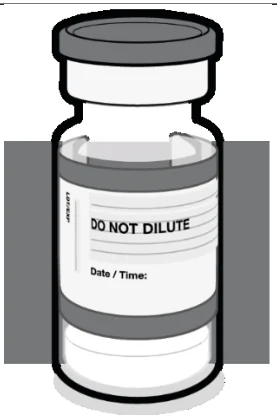
- COMIRNATY Original/Omicron BA.1 is a suspension for intramuscular injection. DO NOT DILUTE (Vials with Gray Cap and Gray Label Border)
A single dose is 0.3 mL.
4.2 Recommended Dose and Dosage Adjustment
Booster dose
A booster dose of COMIRNATY Original/Omicron BA.1 may be administered intramuscularly at least 3 to 6 months after completion of the primary course of COMIRNATY and/or a previous booster dose of COMIRNATY in individuals 12 years of age or older.
Primary vaccination course
COMIRNATY Original/Omicron BA.1 is indicated only for booster doses.
For details on the primary vaccination course for ages 12 and above, please refer to the COMIRNATY Product Monograph, section 4.2.1 Vaccination Schedule for Individuals 12 Years of Age and Older.
4.3 Reconstitution
4.3.1 For 12 Years of Age and Older: DO NOT DILUTE (Vials with Gray Cap and Gray Label Border)
The COMIRNATY Original/Omicron BA.1 multiple dose vial with a gray cap and gray label border MUST NOT BE DILUTED prior to administration. Instructions on the handling and dose preparation of the vaccine prior to administration are provided below.
Preparation for Administration
DO NOT DILUTE
- The COMIRNATY Original/Omicron BA.1 multiple dose vial with a gray cap and a gray label border contains a volume of 2.25 mL, and is supplied as a frozen suspension that does not contain preservative. Each vial must be thawed prior to administration. DO NOT DILUTE prior to use.
- Vials may be thawed in the refrigerator (2°C to 8°C [35°F to 46°F]) or at room temperature (up to 25°C [77°F]) (see 11 STORAGE, STABILITY AND DISPOSAL).
- The thawed suspension may contain white to off-white opaque amorphous particles.
- One vial contains 6† doses of 0.3 mL.
- Refer to thawing and dose preparation instructions in the panels below.
| COMIRNATY Original/Omicron BA.1 For 12 Years of Age and Older: DO NOT DILUTE (Vials with Gray Cap and Gray Label Border) | ||
|---|---|---|
| VIAL AND DOSE VERIFICATION | ||
|
| |
† Low dead-volume syringes and/or needles can be used to extract 6 doses from a single vial. If standard syringes and needles are used, there may not be sufficient volume to extract a 6th dose from a single vial.
| COMIRNATY Original/Omicron BA.1 For 12 Years of Age and Older: DO NOT DILUTE (Vials with Gray Cap and Gray Label Border) | |
|---|---|
| THAWING PRIOR TO USE | |
| |
| |
Gently × 10
 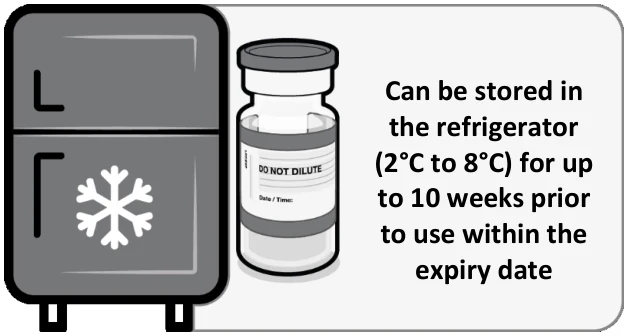 Can be stored in the refrigerator (2°C to 8°C) for up to 10 weeks prior to use within the expiry date 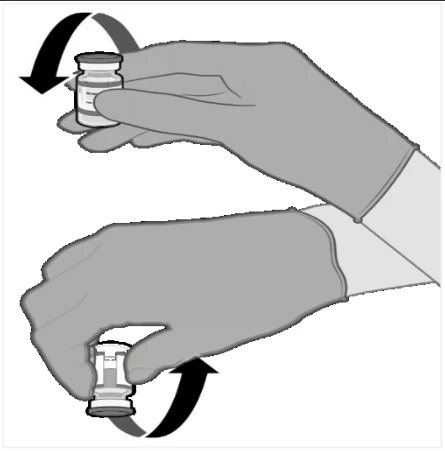 COMIRNATY Original/Omicron BA.1 For 12 Years of Age and Older: DO NOT DILUTE (Vials with Gray Cap and Gray Label Border) | ||
|---|---|---|
| PREPARATION OF INDIVIDUAL 0.3 mL DOSES | ||
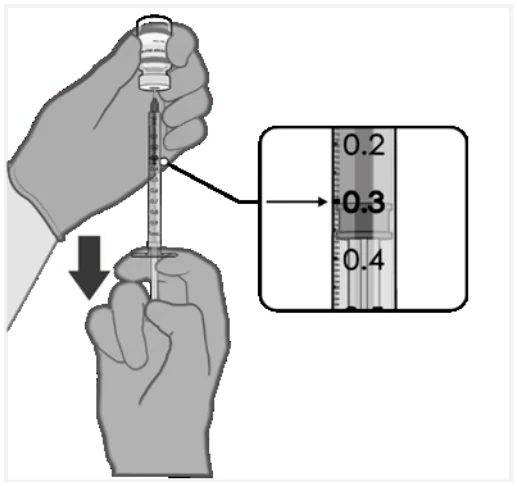 Withdraw 0.3 mL dose of vaccine |
| |
 |
| |
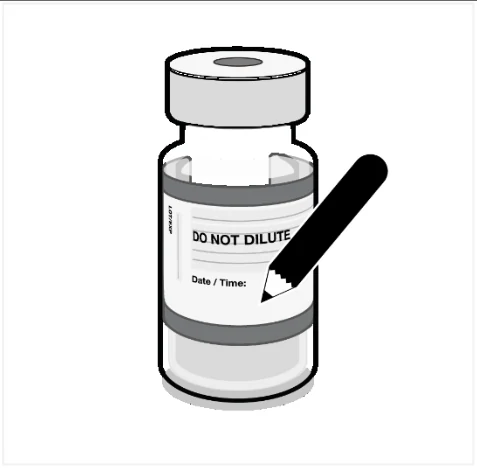
Record the date and time of first puncture
Use within 12 hours after first puncture
4.4 Administration
4.4.1 For 12 Years of Age and Older
Administer a single 0.3 mL dose of COMIRNATY Original/Omicron BA.1 intramuscularly, preferably in the deltoid muscle.
Do not inject the vaccine intravascularly, subcutaneously or intradermally.
DO NOT DILUTE (Vials with Gray Cap and Gray Label Border)
Vials of COMIRNATY Original/Omicron BA.1 with gray caps and gray label borders contain 6 doses of 0.3 mL of vaccine.
Visually inspect each dose in the dosing syringe prior to administration. The vaccine will be an off-white suspension. During the visual inspection:
- Verify the final dosing volume of 0.3 mL.
- Confirm there are no particulates and that no discolouration is observed.
- Do not administer if vaccine is discoloured or contains particulate matter.
Low dead-volume syringes and/or needles can be used to extract 6 doses from a single vial. In order to ensure consistent withdrawal of 6 doses of 0.3 mL, it is important to adhere to minimizing volume loss during dose extraction. If standard syringes and needles are used, there may not be sufficient volume to extract a 6th dose from a single vial. Irrespective of the type of syringe and needle:
- Each dose must contain 0.3 mL of vaccine.
- If the amount of vaccine remaining in the vial cannot provide a full dose of 0.3 mL, discard the vial and any excess volume.
- Do not pool excess vaccine from multiple vials.
5 OVERDOSAGE
In the event of suspected overdose, monitoring of vital functions and symptomatic treatment is recommended. Contact your regional poison control centre.
6 DOSAGE FORMS, STRENGTHS, COMPOSITION AND PACKAGING
To help ensure the traceability of vaccines for patient immunization record-keeping as well as safety monitoring, health professionals should record the time and date of administration, quantity of administered dose (if applicable), anatomical site and route of administration, brand name and generic name of the vaccine, the product lot number and expiry date (or manufacture date).
For 12 Years of Age and Older: DO NOT DILUTE (Vials with Gray Cap and Gray Label Border)
COMIRNATY Original/Omicron BA.1 is supplied as a frozen suspension in multiple dose vials. Do not dilute. Each vial contains 6† doses of 0.3 mL. Each 0.3 mL dose of COMIRNATY Original/Omicron BA.1 contains 30 mcg of a nucleoside modified messenger RNA (modRNA) – 15 mcg encoding the viral spike (S) glycoprotein of SARS-CoV-2 of the original strain and 15 mcg encoding the viral spike (S) glycoprotein of SARS-CoV-2 Omicron BA.1, and the non-medicinal ingredients listed in Table 1
† Low dead-volume syringes and/or needles can be used to extract 6 doses from a single vial. If standard syringes and needles are used, there may not be sufficient volume to extract a 6th dose from a single vial.
COMIRNATY Original/Omicron BA.1 does not contain preservative. The vial stoppers are not made with natural rubber latex.
COMIRNATY Original/Omicron BA.1multiple dose vials (with gray cap and gray label border) are supplied in a carton containing 10 multiple dose vials or 195 multiple dose vials. Not all pack sizes may be available.
7 WARNINGS AND PRECAUTIONS
General
The administration of COMIRNATY Original/Omicron BA.1 should be postponed in individuals suffering from acute severe febrile illness.
Fainting may occur in association with administration of injectable vaccines. Individuals should be advised to bring symptoms (e.g., dizziness, increases in heart rate, feeling short of breath, tingling sensations or sweating) to the attention of the vaccination provider for evaluation. Procedures should be in place to avoid injury from fainting.
As with any vaccine, vaccination with COMIRNATY Original/Omicron BA.1 may not protect all recipients.
Individuals may not be optimally protected until at least 7 days after their second dose of vaccine (see 14 CLINICAL TRIALS).
Acute Allergic Reactions
Anaphylaxis has been reported. As with all vaccines, training for immunizers, appropriate medical
| Table 1 – Dosage Forms, Strengths, Composition and Packaging of COMIRNATY Original/Omicron BA.1 (For 12 Years of Age and Older) | |||||
|---|---|---|---|---|---|
| Route of Administration | Dosage Form / Strength/Composition | Non-medicinal Ingredients | |||
| Intramuscular injection | DO NOT DILUTE (Vials with Gray Cap and Gray Label Border) Suspension (do not dilute) Tozinameran (mRNA) encodes for the viral spike (S) protein of SARS-CoV-2 Original strain and riltozinameran (mRNA) encodes for the viral spike (S) protein of SARS-CoV-2 Omicron BA.1 strain (Omicron variant B.1.1.529) Multiple dose vial (each vial contains 6† doses of 0.3 mL) |
| |||
treatment and supervision after immunization should always be readily available in case of a rare anaphylactic event following the administration of this vaccine.
Vaccine recipients should be kept under observation for at least 15 minutes after immunization; 30 minutes is a preferred interval when there is a specific concern about a possible vaccine reaction.
COMIRNATY Original/Omicron BA.1 should not be given to those who have experienced anaphylaxis after a prior dose of COMIRNATY or COMIRNATY Original/Omicron BA.1.
Cardiovascular
Myocarditis and Pericarditis
Very rare cases of myocarditis and/or pericarditis following vaccination with COMIRNATY (COVID-19 Vaccine, mRNA) have been reported during post-authorization use. These cases occurred more commonly after the second dose and in adolescents and young adults. Typically, the onset of symptoms has been within a few days following receipt of COMIRNATY. Available short-term follow-up data suggest that the symptoms resolve in most individuals, but information on long-term sequelae is lacking. The decision to administer COMIRNATY Original/Omicron BA.1 to an individual with a history of myocarditis or pericarditis should take into account the individual’s clinical circumstances.
Healthcare professionals are advised to consider the possibility of myocarditis and/or pericarditis in their differential diagnosis if individuals present with chest pain, shortness of breath, palpitations or other signs and symptoms of myocarditis and/or pericarditis following immunization with a COVID-19 vaccine. This could allow for early diagnosis and treatment. Cardiology consultation for management and follow up should be considered.
The risk of myocarditis after a third or fourth dose of COMIRNATY and COMIRNATY Original/Omicron BA.1 has not yet been characterized.
Driving and Operating Machinery
COMIRNATY Original/Omicron BA.1 has no or negligible influence on the ability to drive and use machines. However, some of the effects mentioned under 8 ADVERSE REACTIONS may temporarily affect the ability to drive or use machines.
Fertility
It is unknown whether the vaccine has an impact on fertility. Animal studies do not indicate direct or indirect harmful effects with respect to female fertility or reproductive toxicity (see 16 NON-CLINICAL TOXICOLOGY).
Hematologic
Individuals receiving anticoagulant therapy or those with a bleeding disorder that would contraindicate intramuscular injection should not be given the vaccine unless the potential benefit clearly outweighs the risk of administration.
Immune
The efficacy and safety of the vaccine has not been assessed in immunocompromised individuals, including those receiving immunosuppressant therapy. Immunocompromised persons, including individuals receiving immunosuppressant therapy, may have a diminished immune response to the vaccine.
7.1 Special Populations
7.1.1 Pregnant Women
No data are available yet regarding the use of COMIRNATY Original/Omicron BA.1 during pregnancy.
Animal studies with COMIRNATY do not indicate direct or indirect harmful effects with respect to pregnancy, embryo/ fetal development, parturition, or post-natal development (see 16 NON-CLINICAL TOXICOLOGY).
7.1.2 Breast-feeding
No data are available yet regarding the use of COMIRNATY Original/Omicron BA.1 during breast feeding.
It is unknown whether COMIRNATY Original/Omicron BA.1 is excreted in human milk. A risk to the newborns/infants cannot be excluded.
The developmental and health benefits of breastfeeding should be considered along with the mother’s clinical need for immunization against COVID-19.
7.1.3 Pediatrics
The safety and efficacy of COMIRNATY Original/Omicron BA.1 in children under 12 years of age have not yet been established.
7.1.4 Geriatrics
Clinical studies of COMIRNATY Original/Omicron BA.1 include participants ≥65 years of age, who received the primary series and a booster dose of COMIRNATY, and their data contributes to the overall assessment of safety and efficacy (See 8 ADVERSE REACTIONS and 14 CLINICAL TRIALS).
8 ADVERSE REACTIONS
8.1 Adverse Reaction Overview
COMIRNATY Original/Omicron BA.1 (15/15mcg)
The safety of the COMIRNATY Original/Omicron BA.1 is based on data from a clinical study that evaluated a booster dose of COMIRNATY Original/Omicron BA.1 and monovalent Omicron BA.1 vaccine in Substudies E and D, and safety data from clinical trials which evaluated primary and booster vaccination with COMIRNATY Original.
Safety data accrued with the COMIRNATY Original/Omicron BA.1 and with the COMIRNATY Original vaccine are relevant to the COMIRNATY Original/Omicron BA.1, because these vaccines are manufactured using the same process.
Participants >55 years of age – after a dose of COMIRNATY Original/Omicron BA.1 as a second booster (4th dose)
In a subset from Study 4 (Phase 3), 305 adults >55 years of age who had completed 3 doses of COMIRNATY, received a booster (Dose 4) of COMIRNATY Original/Omicron BA.1 (15/15 mcg) 4.7 to 11.5 months after receiving Dose 3. Participants who received a booster (Dose 4) of COMIRNATY Original/Omicron BA.1 had a median follow-up time of at least 1.7 months.
The overall safety profile for the COMIRNATY Original/Omicron BA.1 booster (Dose 4) was similar to that seen after the COMIRNATY booster (Dose 3). The most frequent adverse reactions in participants >55 years of age were pain at the injection site (58.1%), fatigue (49.2%), headache (33.6%), myalgia (22.3%), chills (13.0%) and arthralgia (11.3%). No new adverse reactions were identified for COMIRNATY Original/Omicron BA.1.
The safety of a COMIRNATY Original/Omicron BA.1 booster dose in individuals >18 - ≤ 55 years of age is extrapolated from safety data from a subset of 315 adults >18 - ≤55 years of age who received a booster (Dose 4) of Omicron BA.1 30 mcg (monovalent) after completing 3 doses of COMIRNATY Original. The most frequent adverse reactions in these participants >18 to - ≤55 years of age were pain at the injection site (77.9%), fatigue (64.3%), headache (47.6%), myalgia (33.7%%), chills (31.6%) and arthralgia (23.5%).
COMIRNATY (30 mcg)
Study BNT162-01 (Study 1) was a Phase 1/2, two-part dose-escalation trial that enrolled 60 participants 18 through 55 years of age and 36 participants 56 through 85 years of age.
Study C4591001 (Study 2) is a Phase 1/2/3, multicenter, multinational, randomized, saline placebo-controlled, observer-blind, dose-finding, vaccine candidate-selection (Phase 1) and efficacy (Phase 2/3) study that has enrolled approximately 46,000 participants, 12 years of age or older. Of these, approximately 44,047 participants (22,026 COMIRNATY; 22,021 placebo) in Phase 2/3 are 16 years of age or older (including 378 and 376 adolescents 16 and 17 years of age in the vaccine and placebo groups, respectively) and 2260 adolescents are 12 to 15 years of age (1131 and 1129 in the vaccine and placebo groups, respectively). Of the total number of COMIRNATY recipients in the study, 20.7 % were 65 years of age and older. Study 2 also included 200 participants with confirmed stable human immunodeficiency virus (HIV) infection. HIV-positive participants are included in safety population disposition but are summarized separately in safety analyses.
Additionally, 306 existing Phase 3 participants 18 through 55 years of age received a booster dose of COMIRNATY approximately 6 months (range of 4.8 to 8.0 months) after completing the second dose in the non-placebo-controlled booster dose portion of Study 2. The overall safety profile for the booster dose was similar to that seen after 2 doses.
In Study C4591031 (Study 4), a placebo-controlled booster study, 5,081 participants 16 years of age and older were recruited from Study 2 to receive a booster dose of COMIRNATY at least 6 months after the second dose. The overall safety profile for the booster dose was similar to that seen after 2 doses.
The safety evaluation of participants in Study 2 and Study 4 is ongoing. In Study 2 all participants 12 to 15 years of age and 16 years of age and older in the reactogenicity subset, and a subset of 306 participants 18 through 55 years of age who received a booster dose in Study 2, were monitored for solicited local and systemic reactions and use of antipyretic medication after each vaccination with an electronic diary during the 7 days following any dose of vaccination. Participants, including those who received a booster in Study 4, continue to be monitored for unsolicited adverse events (AEs), including serious adverse events (SAEs), throughout the study [from Dose 1 to 1 month after the last dose (all unsolicited AEs) and 6 months (SAEs) after the last vaccination].
Participants 12 Years of Age and Older
At the time of the analysis of Study 2 (data accrued through March 13, 2021), a total of 25,651 (58.2%) participants (13,031 in vaccine group and 12,620 in placebo group) 16 years of age and older had been followed up for at least 4 months, with 3,082 (7.0%) participants (1,778 in vaccine group and 1,304 in placebo group) followed up for at least 6 months after the second dose during the blinded placebo-controlled follow-up period. A total of 12,006 (54.5%) participants originally randomized to the vaccine group in Study 2 had been followed up for at least 6 months after the second dose including the blinded and open-label periods.
In further analysis of the adolescent population within Study 2, based on data up to cut-off date of September 02, 2021, a total safety population of 2260 adolescents (1131 COMIRNATY; 1129 placebo) were 12 to 15 years of age. From Dose 2 to the cut-off date most adolescent participants in the COMIRNATY group should have had ≥6 months follow-up time post dose 2; 740 (65.4%) of participants in this group had a total follow up time between ≥8 to <10 months, which was composed of blinded and unblinded exposure. For original adolescent placebo participants who received at least the first dose of COMIRNATY the median follow-up time was 3.8 months, and 65.0% of these participants had follow-up time between ≥2 to <4 months after Dose 1.
In clinical studies with a data cut-off of March 13, 2021, and where 2 doses were administered 3 weeks apart, the most common adverse reactions in the reactogenicity subset (n=4924) of participants 16 years of age and older after any dose included injection site pain (84.3%), fatigue (64.7%), headache (57.1%), muscle pain (40.2%), chills (34.7%), joint pain (25.0%), fever (15.2%), injection site swelling (11.1%), and injection site redness (9.9%). Additional AEs reported in the safety population (n=21,926) of participants 16 years of age and older from dose 1 to 1 month after dose 2 included nausea (1.2%), malaise (0.6%), lymphadenopathy (0.4%), asthenia (0.3%), decreased appetite (0.2%), hyperhidrosis (0.1%), lethargy (0.1%), and night sweats (0.1%). Adverse reactions were usually mild or moderate in intensity and resolved within a few days after vaccination.
The safety profile in 545 participants receiving COMIRNATY that were seropositive for SARS-CoV-2 at baseline was similar to that seen in the general population.
Adverse reactions after either the first or second dose in the reactogenicity subset (n=1131) of adolescents 12 to 15 years of age included injection site pain (90.5%), fatigue (77.5%), headache (75.5%), chills (49.2%), muscle pain (42.2%), fever (24.3%), joint pain (20.2%), injection site swelling (9.2%), injection site redness (8.6%), lymphadenopathy (0.8%), and nausea (0.4%)
AEs from Dose 1 to the unblinding date during the blinded placebo-controlled follow-up period reported in adolescents were similar in the COMIRNATY and placebo groups (8.4% and 10.0%, respectively). The most frequently reported AEs in the COMIRNATY group included lymphadenopathy (9 [0.8%]), injection site pain (8 [0.7%]), fatigue (8 [0.7%]), pyrexia (6 [0.5%]), depression (6 [0.5%]), nausea (5 [0.4%]), and headache (5 [0.4%]). The number of participants with psychiatric disorder AEs were comparable in the 2 groups, (17 [1.5%] in COMIRNATY group vs. 13 [1.2%] in placebo group). One (1) participant reported an SAE of myocarditis on Day 3 after Dose 2 of COMIRNATY. Review of AEs, SAEs, and events of clinical interest suggested no clear patterns or additional safety signals or concerns among adolescents. Similarly, the AE profile of new events after the original data cut-off 13 March 2021 were consistent with those observed cumulatively and did not reveal additional safety signals or concerns among adolescents.
In a clinical study of participants 18 through 55 years of age (N=306), 289 participants (94%) completed the e-diary recording adverse reactions. The most commonly reported adverse reactions (≥10%) following administration of a booster dose were pain at the injection site (83.0%), fatigue (63.7%), headache (48.4%), muscle pain (39.1%), chills (29.1%), and joint pain (25.3%).
In a clinical study of approximately 10,000 participants 16 years of age and older, unsolicited adverse reactions following administration of a booster dose included headache (5%), fever (4.8%), lymphadenopathy (2.8%), pain in extremity (1.1%), nausea (0.9%), malaise (0.7%), and decreased appetite (0.2%).
8.2 Clinical Trial Adverse Reactions
Clinical trials are conducted under very specific conditions. The adverse reaction rates observed in the clinical trials, therefore, may not reflect the rates observed in practice and should not be compared to the rates in the clinical trials of another drug. Adverse reaction information from clinical trials may be useful in identifying and approximating rates of adverse drug reactions in real-world use.
COMIRNATY Original/ Omicron BA.1
Solicited Local Adverse Reactions (AR)s
Pain at injection site was the most frequently reported local AR within 7 days after study vaccination, with swelling and redness at the injection site reported much less frequently. Local ARs are summarized in (Table 2).
| Table 2 – Solicited Local Adverse Reactions Reported for Vaccine Groups Within 7 Days After Study Vaccination | ||||||
| Pain at injection site | Swelling at injection site | Redness at injection site | ||||
| COMIRNATY 30 mcg | 60.1% | 6.0% | 6.4% | |||
| COMIRNATY Original/Omicron BA.1 30 mcg | 58.1% | 6.6% | 7.0% | |||
Most solicited local ARs were mild or moderate in severity. Severe local ARs were reported infrequently in both vaccine groups; severe events after study vaccination included injection site pain (0.3%), swelling (0.2%) and redness (0.3%). No Grade 4 local reactions were reported in either vaccine group evaluated. The median onset for all local reactions across vaccine groups evaluated was 2 days, and all events resolved within a median duration of 1 to 2 days after onset.
Solicited Systemic Adverse Reactions (ARs)
Fatigue was the most frequently reported systemic AR reported within 7 days after study vaccination, followed by headache, and less frequently chills, muscle and joint pain. Vomiting, diarrhea and fever were the least frequently reported systemic events and occurred at similar frequencies across vaccine groups. Fever >38.9 °C to 40.0 °C was reported by 4 participants in the COMIRNATY Original/BA.1 30 mcg group and 0 participants in the COMIRNATY 30mcg group.
Most frequently reported systemic events in decreasing order of frequency after study vaccination (Table 3) were:
| Table 3 - Most Frequently Reported Systemic Adverse Reactions in Decreasing Order of Frequency After Study Vaccination | ||||||||
|---|---|---|---|---|---|---|---|---|
| Fatigue | Headache | Muscle Pain | Chills | Joint Pain | Fever (≥38.0 °C) | |||
| COMIRNATY 30 mcg | 45.3% | 26.5% | 19.8% | 16.4% | 9.1% | 3.7% | ||
| Table 3 - Most Frequently Reported Systemic Adverse Reactions in Decreasing Order of Frequency After Study Vaccination | ||||||
|---|---|---|---|---|---|---|
| COMIRNATY Original/BA.1 30 mcg | 49.2% | 33.6% | 22.3% | 13.0% | 11.3% | 5.0% |
Most systemic events were mild or moderate in severity. Severe systemic events were reported infrequently in both vaccine groups. No Grade 4 systemic events were reported in any vaccine groups evaluated. The median onset for all systemic events across both vaccine groups evaluated was 2 to 3 days and all events resolved within a median duration of 1 to 2 days after onset.
Overview of Adverse Events (AEs) – From Study Vaccination to 1 Month Post-Dose
In total, 5.9% and 8.5% of participants reported any AE from study vaccination through 1 month post-dose in the COMIRNATY (30 mcg) and COMIRNATY Original/Omicron BA.1 (30 mcg), respectively. No withdrawals due to AEs or deaths were reported.
Overall, the AE profiles after study vaccination (Dose 4) with COMIRNATY (30 mcg) or COMIRNATY Original/BA.1 (30 mcg) reflected mostly reactogenicity events and did not suggest any clinically important short-term safety concerns.
Adverse Events (AEs) from Study Vaccination to Data Cut off Date
From study vaccination to the data cut-off date (16 May 2022), the proportions of participants with any AEs were generally similar. As of the data cut-off date, any related or any severe AEs were reported across the vaccine groups by ≤5.1% or ≤0.9% of participants, respectively.
Few additional AEs were reported from study vaccination from post-dose to the data cut-off date for participants in the COMIRNATY 30 mcg (6.6% vs 5.9%) group. Two additional severe AEs, also reported as SAEs (pneumonia, ischaemic stroke) were reported in the COMIRNATY 30 mcg group. No withdrawals due to AEs were reported in any of the groups beyond 1-month post-dose. No study participants died.
Overall, frequencies of any AEs reported after study vaccination up to the data cut-off date were generally similar between both vaccine groups. Many of the AEs were consistent with reactogenicity events (e.g., pyrexia and fatigue). Most of the additional AEs reported after 1 month post-dose up to the data cut-off date consisted of unrelated events such as spinal osteoarthritis, ischaemic stroke, breast tenderness and tooth extraction. Additional analyses of AEs from post-dose to the data cut-off did not suggest any meaningful differences in the safety profile.
Participants 16 Years of Age and Older – Primary Series (Two Doses)
Solicited Adverse Reactions
Tables 4 through 7 present the frequency and severity of solicited local and systemic reactions, respectively, within 7 days following each dose of COMIRNATY and placebo in the subset of participants 16 years of age and older (n=9839) in the safety population who were monitored for reactogenicity with an electronic diary.
| Table 4 - Study 2 – Frequency of Solicited Local Reactions Within 7 Days After Each Dose of COMIRNATY – Participants 16-55 Years of Age (Reactogenicity Subset of the Safety Population*) | |||||||||||||
|---|---|---|---|---|---|---|---|---|---|---|---|---|---|
| Local Reaction | Dose 1 | Dose 2 | |||||||||||
COMIRNATY Na=2899 nb (%) | Placebo Na=2908 nb (%) | COMIRNATY Na=2682 nb (%) | Placebo Na=2684 nb (%) | ||||||||||
| Redness | |||||||||||||
| Anyc | 156 (5.4) | 28 (1.0) | 151 (5.6) | 18 (0.7) | |||||||||
| Severed | 7 (0.2) | 3 (0.1) | 11 (0.4) | 0 (0.0) | |||||||||
| Swelling | |||||||||||||
| Anyc | 184 (6.3) | 16 (0.6) | 183 (6.8) | 5 (0.2) | |||||||||
| Severed | 6 (0.2) | 2 (0.1) | 7 (0.3) | 0 (0.0) | |||||||||
| Pain at the injection site | |||||||||||||
| Anyc | 2426 (83.7) | 414 (14.2) | 2101 (78.3) | 312 (11.6) | |||||||||
| Severee | 39 (1.3) | 3 (0.1) | 39 (1.5) | 0 (0.0) | |||||||||
| Any local reactionc | 2444 (84.3) | 432 (14.9) | 2108 (78.6) | 325 (12.1) | |||||||||
*Randomized participants in the safety analysis population who received at least 1 dose of the study intervention.
a. N = Number of participants reporting at least 1 yes or no response for the specified reaction after the specified dose. No Grade 4 solicited local reactions were reported in participants 16-55 years of age.
b. n = Number of participants with the specified reaction.
c. Any local reaction: any redness >2.0 cm, any swelling >2.0 cm, or any pain at the injection site.
d. Severe: >10.0 cm.
e. Severe: prevents daily activity.
| Table 5 - Study 2 – Frequency of Solicited Systemic Reactions Within 7 Days After Each Dose of COMIRNATY – Participants 16-55 Years of Age (Reactogenicity Subset of the Safety Population*) | |||||||||||||
|---|---|---|---|---|---|---|---|---|---|---|---|---|---|
| Systemic Reaction | Dose 1 | Dose 2 | |||||||||||
COMIRNATY Na=2899 nb (%) | Placebo Na=2908 nb (%) | COMIRNATY Na=2682 nb (%) | Placebo Na=2684 nb (%) | ||||||||||
| Fever | |||||||||||||
| ≥38.0°C | 119 (4.1) | 25 (0.9) | 440 (16.4) | 11 (0.4) | |||||||||
| >38.9°C | 8 (0.3) | 4 (0.1) | 40 (1.5) | 2 (0.1) | |||||||||
| Fatigue | |||||||||||||
| Any | 1431 (49.4) | 960 (33.0) | 1649 (61.5) | 614 (22.9) | |||||||||
| Severed | 41 (1.4) | 18 (0.6) | 142 (5.3) | 14 (0.5) | |||||||||
| Headache | |||||||||||||
| Any | 1262 (43.5) | 975 (33.5) | 1448 (54.0) | 652 (24.3) | |||||||||
| Severed | 33 (1.1) | 24 (0.8) | 91 (3.4) | 18 (0.7) | |||||||||
| Chills | |||||||||||||
| Any | 479 (16.5) | 199 (6.8) | 1015 (37.8) | 114 (4.2) | |||||||||
| Severed | 15 (0.5) | 2 (0.1) | 69 (2.6) | 2 (0.1) | |||||||||
| Vomiting | |||||||||||||
| Any | 34 (1.2) | 36 (1.2) | 58 (2.2) | 30 (1.1) | |||||||||
| Severee | 0 (0.0) | 1 (0.0) | 4 (0.1) | 0 (0.0) | |||||||||
| Diarrhea | |||||||||||||
| Any | 309 (10.7) | 323 (11.1) | 269 (10.0) | 205 (7.6) | |||||||||
| Table 5 - Study 2 – Frequency of Solicited Systemic Reactions Within 7 Days After Each Dose of COMIRNATY – Participants 16-55 Years of Age (Reactogenicity Subset of the Safety Population*) |
|---|
| Systemic Reaction | Dose 1 | Dose 2 |
|---|
COMIRNATY Na=2899 nb (%) | Placebo Na=2908 nb (%) | COMIRNATY Na=2682 nb (%) | Placebo Na=2684 nb (%) | |
|---|---|---|---|---|
| Severef | 3 (0.1) | 1 (0.0) | 6 (0.2) | 1 (0.0) |
| New or worsened muscle pain | ||||
| Any | 664 (22.9) | 329 (11.3) | 1055 (39.3) | 237 (8.8) |
| Severed | 15 (0.5) | 2 (0.1) | 62 (2.3) | 3 (0.1) |
| New or worsened joint pain | ||||
| Any | 342 (11.8) | 168 (5.8) | 638 (23.8) | 147 (5.5) |
| Severed | 5 (0.2) | 1 (0.0) | 27 (1.0) | 4 (0.1) |
| Any systemic reactionc | 1979 (68.3) | 1559 (53.6) | 2034 (75.8) | 1026 (38.2) |
| Use of antipyretic or pain medication | 805 (27.8) | 398 (13.7) | 1213 (45.2) | 320 (11.9) |
*Randomized participants in the safety analysis population who received at least 1 dose of the study intervention.
a. N =Number of participants reporting at least 1 yes or no response for the specified reaction after the specified dose. No Grade 4 solicited systemic reactions were reported in participants 16-55 years of age.
b. n = Number of participants with the specified reaction.
c. Any systemic reaction: any fever ≥38.0°C, any fatigue, any vomiting, any chills, any diarrhea, any headache, any new or worsened muscle pain, or any new or worsened joint pain.
d. Severe: prevents daily activity.
e. Severe: requires intravenous hydration.
f. Severe: 6 or more loose stools in 24 hours.
| Table 6 - Study 2 – Frequency of Solicited Local Reactions Within 7 Days After Each Dose of COMIRNATY – Participants 56 Years of Age and Older (Reactogenicity Subset of the Safety Population*) | |||||||||||||
|---|---|---|---|---|---|---|---|---|---|---|---|---|---|
| Local Reaction | Dose 1 | Dose 2 | |||||||||||
COMIRNATY Na=2008 nb (%) | Placebo Na=1989 nb (%) | COMIRNATY Na=1860 nb (%) | Placebo Na=1833 nb (%) | ||||||||||
| Redness | |||||||||||||
| Anyc | 106 (5.3) | 20 (1.0) | 133 (7.2) | 14 (0.8) | |||||||||
| Severed | 5 (0.2) | 2 (0.1) | 10 (0.5) | 1 (0.1) | |||||||||
| Swelling | |||||||||||||
| Anyc | 141 (7.0) | 23 (1.2) | 145 (7.8) | 13 (0.7) | |||||||||
| Severed | 2 (0.1) | 0 (0.0) | 4 (0.2) | 1 (0.1) | |||||||||
| Pain at the injection site | |||||||||||||
| Anyc | 1408 (70.1) | 185 (9.3) | 1230 (66.1) | 143 (7.8) | |||||||||
| Severee | 4 (0.2) | 0 (0.0) | 10 (0.5) | 0 (0.0) | |||||||||
| Any local reactionc | 1433 (71.4) | 207 (10.4) | 1243 (66.8) | 158 (8.6) | |||||||||
*Randomized participants in the safety analysis population who received at least 1 dose of the study intervention.
a. N = Number of participants reporting at least 1 yes or no response for the specified reaction after the specified dose. No Grade 4 solicited local reactions were reported in participants 56 years of age and older.
b. n = Number of participants with the specified reaction.
c. Any local reaction: any redness >2.0 cm, any swelling >2.0 cm, or any pain at the injection site.
d. Severe: >10.0 cm.
e. Severe: prevents daily activity.
| Table 7 - Study 2 – Frequency of Solicited Systemic Reactions Within 7 Days After Each Dose of COMIRNATY – Participants 56 Years of Age and Older (Reactogenicity Subset of the Safety Population*) | |||||||||||||
|---|---|---|---|---|---|---|---|---|---|---|---|---|---|
| Systemic Reaction | Dose 1 | Dose 2 | |||||||||||
COMIRNATY Na=2008 nb (%) | Placebo Na=1989 nb (%) | COMIRNATY Na=1860 nb (%) | Placebo Na=1833 nb (%) | ||||||||||
| Fever | |||||||||||||
| ≥38.0°C | 26 (1.3) | 8 (0.4) | 219 (11.8) | 4 (0.2) | |||||||||
| >38.9°C | 1 (0.0) | 2 (0.1) | 7 (0.4) | 1 (0.1) | |||||||||
| Fatigue | |||||||||||||
| Any | 677 (33.7) | 447 (22.5) | 949 (51.0) | 306 (16.7) | |||||||||
| Severed | 3 (0.1) | 3 (0.2) | 60 (3.2) | 2 (0.1) | |||||||||
| Grade 4g | 0 (0.0) | 0 (0.0) | 1 (0.1) | 0 (0.0) | |||||||||
| Headache | |||||||||||||
| Any | 503 (25.0) | 363 (18.3) | 733 (39.4) | 259 (14.1) | |||||||||
| Severed | 2 (0.1) | 3 (0.2) | 13 (0.7) | 5 (0.3) | |||||||||
| Chills | |||||||||||||
| Any | 130 (6.5) | 69 (3.5) | 435 (23.4) | 57 (3.1) | |||||||||
| Severed | 0 (0.0) | 1 (0.1) | 21 (1.1) | 0 (0.0) | |||||||||
| Vomiting | |||||||||||||
| Any | 10 (0.5) | 9 (0.5) | 13 (0.7) | 5 (0.3) | |||||||||
| Severee | 0 (0.0) | 0 (0.0) | 2 (0.1) | 0 (0.0) | |||||||||
| Diarrhea | |||||||||||||
| Any | 168 (8.4) | 130 (6.5) | 152 (8.2) | 102 (5.6) | |||||||||
| Severef | 4 (0.2) | 1 (0.1) | 2 (0.1) | 4 (0.2) | |||||||||
| New or worsened muscle pain | |||||||||||||
| Any | 274 (13.6) | 165 (8.3) | 537 (28.9) | 99 (5.4) | |||||||||
| Severed | 1 (0.0) | 3 (0.2) | 20 (1.1) | 1 (0.1) | |||||||||
| New or worsened joint pain | |||||||||||||
| Any | 175 (8.7) | 124 (6.2) | 353 (19.0) | 72 (3.9) | |||||||||
| Severed | 3 (0.1) | 1 (0.1) | 9 (0.5) | 1 (0.1) | |||||||||
| Any systemic reactionc | 984 (49.0) | 749 (37.7) | 1203 (64.7) | 516 (28.2) | |||||||||
| Use of antipyretic or pain medication | 382 (19.0) | 224 (11.3) | 688 (37.0) | 170 (9.3) | |||||||||
*Randomized participants in the safety analysis population who received at least 1 dose of the study intervention.
a. N = Number of participants reporting at least 1 yes or no response for the specified reaction after the specified dose. The only Grade 4 solicited systemic reaction reported in participants 56 years of age and older was fatigue.
b. n = Number of participants with the specified reaction.
c. Any systemic reaction: any fever ≥38.0°C, any fatigue, any vomiting, any chills, any diarrhea, any headache, any new or worsened muscle pain, or any new or worsened joint pain.
d. Severe: prevents daily activity.
e. Severe: requires intravenous hydration.
f. Severe: 6 or more loose stools in 24 hours.
g. Grade 4: emergency room visit or hospitalization.
Study 2 also included 200 participants with confirmed stable human immunodeficiency virus
(HIV) infection. The safety profile of the participants with stable HIV infection receiving COMIRNATY (n = 100) was similar to that seen in the general population.
Unsolicited Adverse Events
The participants were unblinded to offer placebo participants COMIRNATY when they became locally eligible under regulatory approval in December 2020. A total of 25,651 (58.2%) participants (13,031 in vaccine group and 12,620 in placebo group) 16 years of age and older had been followed up for at least 4 months, with 3,082 (7.0%) participants (1,778 in vaccine group and 1,304 in placebo group) followed up for at least 6 months after the second dose during the blinded placebo-controlled follow-up period in Study 2. Adverse events detailed below for participants 16 years of age and older are for the placebo-controlled blinded follow-up period up to the participants’ unblinding dates.
Among participants 16 through 55 years of age who received at least one dose of study vaccine, 12,995 of whom received COMIRNATY and 13,026 of whom received placebo, unsolicited adverse events were reported by 4,396 (33.8%) participants in the COMIRNATY group and 2,136 (16.4%) participants in the placebo group. In a similar analysis in participants 56 years of age and older that included 8,931 COMIRNATY recipients and 8,895 placebo recipients, unsolicited adverse events were reported by 2,551 (28.6%) participants in the COMIRNATY group and 1,432 (16.1%) participants in the placebo group. Among participants with confirmed stable HIV infection that included 100 COMIRNATY recipients and 100 placebo recipients, unsolicited adverse events were reported by 29 (29%) participants in the COMIRNATY group and 15 (15%) participants in the placebo group.
Lymphadenopathy was reported in 87 (0.4%) participants in the vaccine group compared to 8 (<0.1%) participants in the placebo group. Bell’s palsy (facial paralysis and facial paresis) was reported by four participants in the vaccine group and two in the placebo group. In the four vaccinated participants, events began from 3 to 48 days after their last dose, were mild to moderate in severity, and duration ranged from 3 to 68 days. Currently available information is insufficient to determine a causal relationship with the vaccine. There were no other notable patterns or numerical imbalances between treatment groups for specific categories of non-serious adverse events (including other neurologic or neuro-inflammatory, and thrombotic events) that would suggest a causal relationship to COMIRNATY. Cumulative safety follow-up to at least 6 months after Dose 2 for approximately 12,000 participants who received COMIRNATY showed no other safety signals arising from longer-term follow-up of the study.
Serious Adverse Events
In Study 2, among participants 16 through 55 years of age who had received at least 1 dose of vaccine or placebo (COMIRNATY =12,995; placebo = 13,026), serious adverse events from Dose 1 up to the participant unblinding date in ongoing follow-up were reported by 103 (0.8%) COMIRNATY recipients and 117 (0.9%) placebo recipients. In a similar analysis, in participants 56 years of age and older (COMIRNATY = 8,931; placebo = 8,895), serious adverse events were reported by 165 (1.8%) COMIRNATY recipients and 151 (1.7%) placebo recipients who received at least 1 dose of COMIRNATY or placebo, respectively. Among participants with confirmed stable HIV infection serious adverse events from Dose 1 up to the participant unblinding date in ongoing follow-up were reported by 2 (2%) COMIRNATY recipients and 2 (2%) placebo recipients.
Pericarditis was reported for one participant in the vaccine group, and no case was reported in the placebo group. Appendicitis was reported as a serious adverse event for 27 participants, 15 vaccine participants and 12 placebo participants. Currently available information is insufficient to determine a causal relationship with the vaccine. There were no other notable patterns or numerical imbalances between treatment groups for specific categories of serious adverse events (including neurologic, neuro-inflammatory, thrombotic events, myocarditis or anaphylactic reaction to the vaccine) reported during the blinded placebo-controlled follow-up period of the study.
Participants 16 Years of Age and Older – After Booster Dose
A subset, from Study C4591001 (Study 2) Phase 2/3 participants, of 306 adults 18 through 55 years of age who completed the original COMIRNATY 2-dose series, received a booster dose of COMIRNATY approximately 6 months (range of 4.8 to 8.0 months) after receiving Dose 2.
In Study C4591031 (Study 4), a placebo-controlled booster study, participants 16 years of age and older recruited from Study C4591001 (Study 2) received a booster dose of COMIRNATY (5,081 participants), or placebo (5,044 participants) at least 6 months after the second dose of COMIRNATY. Overall, participants who received a booster dose, had a median follow-up time of 2.5 months after the booster dose to the cut-off date (5 October 2021). Among the participants, the median age was 53.0 years (range 16 through 87 years of age), including 1,175 booster dose recipients (23.1%) who were ≥65 years of age, 49.1% were male and 50.9% were female, 79.0% were White, 14.9% were Hispanic/Latino, 9.2% were Black or African American, 5.5% were Asian, and 1.7% were American Indian/Alaska Native.
Solicited Local and Systemic Adverse Reactions
Overall, among participants who received a booster dose in a subset from Study C4591001 (Study 2), the median age was 42 years (range 19 through 55 years of age), 45.8% were male and 54.2% were female, 81.4% were White, 27.8% were Hispanic/Latino, 9.2% were Black or African American, 5.2% were Asian, and 0.7% were American Indian/Alaska Native.
| Table 8 - Study 2 – Frequency and Percentages of Participants With Solicited Local Reactions, By Maximum Severity, Within 7 Days After the Booster Dose of COMIRNATY – Booster Dose Safety Population* | ||||||
| Solicited Local Reaction | COMIRNATY Booster Dose Na = 289 nb (%) | |||||
| Rednessc | ||||||
| Any (>2 cm) | 17 (5.9) | |||||
| Severe | 0 | |||||
| Swellingc | ||||||
| Any (>2 cm) | 23 (8.0) | |||||
| Severe | 1 (0.3) | |||||
| Pain at the injection sited | ||||||
| Any | 240 (83.0) | |||||
| Severe | 1 (0.3) | |||||
Note: Reactions were collected in the electronic diary (e-diary) from Day 1 to Day 7 after the booster dose. Note: No Grade 4 solicited local reactions were reported. *Participants in the safety analysis population who received the booster dose of COMIRNATY. a. N = Number of participants reporting at least 1 yes or no response for the specified reaction after the specified dose. b. n = Number of participants with the specified reaction. c. Mild: >2.0 to 5.0 cm; Moderate: >5.0 to 10.0 cm; Severe: >10.0 cm. d. Mild: does not interfere with activity; Moderate: interferes with activity; Severe: prevents daily activity. | ||||||
In participants who received a booster dose the mean duration of pain at the injection site after the booster dose was 2.6 days (range 1 to 8 days), for redness 2.2 days (range 1 to 15 days), and for swelling 2.2 days (range 1 to 8 days).
| Table 9 - Study 2 – Frequency and Percentages of Participants With Solicited Systemic Reactions, by Maximum Severity, Within 7 Days After the Booster Dose of COMIRNATY – Booster Dose Safety Population* | ||||||
| Solicited Systemic Reaction | COMIRNATY Booster Dose Na = 289 nb (%) | |||||
| Fever | ||||||
| ≥38.0℃ | 25 (8.7) | |||||
| ≥38.0℃ to 38.4℃ | 12 (4.2) | |||||
| >38.4℃ to 38.9℃ | 12 (4.2) | |||||
| >38.9℃ to 40.0℃ | 1 (0.3) | |||||
| >40.0℃ | 0 | |||||
| Fatiguec | ||||||
| Any | 184 (63.7) | |||||
| Severe | 13 (4.5) | |||||
| Headachec | ||||||
| Any | 140 (48.4) | |||||
| Severe | 3 (1.0) | |||||
| Chillsc | ||||||
| Any | 84 (29.1) | |||||
| Severe | 3 (1.0) | |||||
| Vomitingd | ||||||
| Any | 5 (1.7) | |||||
| Severe | 0 | |||||
| Diarrheae | ||||||
| Any | 25 (8.7) | |||||
| Severe | 0 | |||||
| New or worsened muscle painc | ||||||
| Any | 113 (39.1) | |||||
| Severe | 4 (1.4) | |||||
| New or worsened joint painc | ||||||
| Any | 73 (25.3) | |||||
| Severe | 1 (0.3) | |||||
| Use of antipyretic or pain medicationf | 135 (46.7) | |||||
Note: Events and use of antipyretic or pain medication were collected in the electronic diary (e-diary) from Day 1 to Day 7 after the booster dose. Note: No Grade 4 solicited systemic reactions were reported. *Randomized participants in the safety analysis population who received the booster dose of COMIRNATY. a. N = Number of participants reporting at least 1 yes or no response for the specified event after the specified dose. b. n = Number of participants with the specified reaction. c. Mild: does not interfere with activity; Moderate: some interference with activity; Severe: prevents daily activity. d. Mild: 1 to 2 times in 24 hours; Moderate: >2 times in 24 hours; Severe: requires intravenous hydration. e. Mild: 2 to 3 loose stools in 24 hours; Moderate: 4 to 5 loose stools in 24 hours; Severe: 6 or more loose stools in 24 hours. | ||||||
| f. Severity was not collected for use of antipyretic or pain medication. |
Unsolicited Adverse Events
Overall, participants who received a booster dose in Study C4591031 (Study 4), had a median follow-up time of 2.5 months after the booster dose to the cut-off date (October 5, 2021).
In an analysis of all unsolicited adverse events reported following the booster dose of COMIRNATY, through 1 month after the booster dose, in participants 16 through 87 years of age (N = 5055), adverse reactions included headache (5%), fever (4.8%), lymphadenopathy (2.8%), decreased appetite (0.2%), malaise (0.7%), nausea (0.9%), and pain in extremity (1.1%).
Serious Adverse Events
Of the participants who received a booster dose of COMIRNATY or placebo (COMIRNATY = 5055; placebo = 5020) to the cut-off date (October 5, 2021), serious adverse events were reported by 0.3% of COMIRNATY recipients and 0.5% by placebo recipients. There were no notable patterns or numerical imbalances between treatment groups for specific categories of serious adverse events that would suggest a causal relationship to COMIRNATY. A 17-year-old male in Study 2 was diagnosed with myocarditis three days after receiving the booster dose (Dose 3). The participant was treated and recovered.
Adolescents 12 to 15 Years of Age – Primary Series (Two Doses)
Solicited Adverse Reactions
Table 10 and Table 11 present the frequency and severity of solicited local and systemic reactions, respectively, within 7 days following each dose of COMIRNATY and placebo in adolescents 12 to 15 years of age included in the safety population who were monitored for reactogenicity with an electronic diary.
| Table 10 - Study 2 – Frequency of Solicited Local Reactions Within 7 Days After Each Dose of COMIRNATY – Adolescents 12 to 15 Years of Age – Safety Population* | ||||||||||||
| Local Reaction | COMIRNATY Dose 1 Na=1127 nb (%) | Placebo Dose 1 Na=1127 nb (%) | COMIRNATY Dose 2 Na=1097 nb (%) | Placebo Dose 2 Na=1078 nb (%) | ||||||||
| Redness | ||||||||||||
| Any (>2 cm) | 65 (5.8) | 12 (1.1) | 55 (5.0) | 10 (0.9) | ||||||||
| Severec | 1 (0.1) | 0 (0.0) | 0 (0.0) | 0 (0.0) | ||||||||
| Swelling | ||||||||||||
| Any (>2 cm) | 78 (6.9) | 11 (1.0) | 54 (4.9) | 6 (0.6) | ||||||||
| Severec | 0 (0.0) | 0 (0.0) | 0 (0.0) | 0 (0.0) | ||||||||
| Pain at the injection site | ||||||||||||
| Any | 971 (86.2) | 263 (23.3) | 866 (78.9) | 193 (17.9) | ||||||||
| Severed | 11 (1.0) | 0 (0.0) | 7 (0.6) | 0 (0.0) | ||||||||
| Any local reactione | 976 (86.6) | 271 (24.0) | 872 (79.5) | 198 (18.4) | ||||||||
Note: Reactions were collected in the electronic diary (e-diary) from Day 1 to Day 7 after vaccination. a. N = Number of participants reporting at least 1 yes or no response for the specified reaction after the specified dose. b. n = Number of participants with the specified reaction. c. Severe: >10.0 cm. d. Severe: prevents daily activity. | ||||||||||||
e. Any local reaction: any redness >2.0 cm, any swelling >2.0 cm, or any pain at the injection site * Randomized participants in the safety analysis population who received at least 1 dose of the study intervention. |
| Table 11 - Study 2 – Frequency of Solicited Systemic Reactions Within 7 Days After Each Dose of COMIRNATY – Adolescents 12 to 15 Years of Age – Safety Population* | ||||||||||||
| Systemic Reaction | COMIRNATY Dose 1 Na=1127 nb (%) | Placebo Dose 1 Na=1127 nb (%) | COMIRNATY Dose 2 Na=1097 nb (%) | Placebo Dose 2 Na=1078 nb (%) | ||||||||
| Fever | ||||||||||||
| ≥38.0°C | 114 (10.1) | 12 (1.1) | 215 (19.6) | 7 (0.6) | ||||||||
| >38.9°C | 11 (1.0) | 2 (0.2) | 25 (2.3) | 1 (0.1) | ||||||||
| Fatigue | ||||||||||||
| Any | 677 (60.1) | 457 (40.6) | 726 (66.2) | 264 (24.5) | ||||||||
| Severec | 15 (1.3) | 8 (0.7) | 26 (2.4) | 4 (0.4) | ||||||||
| Headache | ||||||||||||
| Any | 623 (55.3) | 396 (35.1) | 708 (64.5) | 263 (24.4) | ||||||||
| Severec | 11 (1.0) | 9 (0.8) | 22 (2.0) | 1 (0.1) | ||||||||
| Chills | ||||||||||||
| Any | 311 (27.6) | 109 (9.7) | 455 (41.5) | 73 (6.8) | ||||||||
| Severec | 5 (0.4) | 2 (0.2) | 20 (1.8) | 0 (0.0) | ||||||||
| Vomiting | ||||||||||||
| Any | 31 (2.8) | 10 (0.9) | 29 (2.6) | 12 (1.1) | ||||||||
| Severed | 1 (0.1) | 0 (0.0) | 0 (0.0) | 0 (0.0) | ||||||||
| Diarrhea | ||||||||||||
| Any | 90 (8.0) | 82 (7.3) | 65 (5.9) | 43 (4.0) | ||||||||
| Severee | 0 (0.0) | 0 (0.0) | 0 (0.0) | 0 (0.0) | ||||||||
| New or worsened muscle pain | ||||||||||||
| Any | 272 (24.1) | 148 (13.1) | 355 (32.4) | 90 (8.3) | ||||||||
| Severec | 2 (0.2) | 0 (0.0) | 6 (0.5) | 2 (0.2) | ||||||||
| New or worsened joint pain | ||||||||||||
| Any | 109 (9.7) | 77 (6.8) | 173 (15.8) | 51 (4.7) | ||||||||
| Severec | 1 (0.1) | 0 (0.0) | 4 (0.4) | 0 (0.0) | ||||||||
| Any systemic reactionsf | 877 (77.8) | 636 (56.4) | 904 (82.4) | 439 (40.7) | ||||||||
| Use of antipyretic or pain medication | 413 (36.6) | 111 (9.8) | 557 (50.8) | 95 (8.8) | ||||||||
Note: Events and use of antipyretic or pain medication were collected in the electronic diary (e-diary) from Day 1 to Day 7 after each dose. a. N = Number of participants reporting at least 1 yes or no response for the specified event after the specified dose. b. n = Number of participants with the specified reaction. c. Severe: prevents daily activity. d. Severe: requires intravenous hydration. e. Severe: 6 or more loose stools in 24 hours. f. Any systemic reaction: any fever ≥38.0°C, any fatigue, any vomiting, any chills, any diarrhea, any headache, any new or worsened muscle pain, or any new or worsened joint pain * Randomized participants in the safety analysis population who received at least 1 dose of the study intervention. | ||||||||||||
Unsolicited Adverse Events
In the analysis of Study 2 of all unsolicited adverse events reported following any dose, through 1 month after Dose 2, in adolescents 12 to 15 years of age (N=2260; 1,131 COMIRNATY group vs. 1,129 placebo group), those assessed as adverse reactions not already captured by solicited local and systemic reactions were lymphadenopathy (9 (0.8%) vs. 2 (0.2%)), and nausea (5 (0.4%) vs. 1 (0.1%)).
In analyses of all unsolicited adverse events in Study 2 from Dose 1 up to the participant unblinding date, 69.0% of study participants 12 through 15 years of age had at least 4 months of follow-up after Dose 2. Among participants 12 through 15 years of age who received at least one dose of study vaccine, 1,131 of whom received COMIRNATY and 1,129 of whom received placebo, unsolicited adverse events were reported by 95 (8.4%) participants in the COMIRNATY group and 113 (10.0%) participants in the placebo group.
Non-serious adverse events from Dose 1 through up to 30 days after Dose 2 in ongoing follow-up were reported by 5.8% of COMIRNATY recipients and by 5.8% of placebo recipients. From Dose 1 through 30 days after Dose 2, reports of lymphadenopathy plausibly related to the study intervention were imbalanced, with notably more cases in the COMIRNATY group (7) vs. the placebo group (1). In the analysis of blinded, placebo-controlled follow-up, there were no other notable patterns or numerical imbalances between treatment groups for specific categories of non-serious adverse events (including other neurologic or neuro-inflammatory, and thrombotic events) that would suggest a causal relationship to COMIRNATY. In the analysis of unblinded follow-up, there were no notable patterns of specific categories of non-serious adverse events that would suggest a causal relationship to COMIRNATY.
Serious Adverse Events
In Study 2, among participants 12 through 15 years of age who had received at least 1 dose of vaccine or placebo (COMIRNATY = 1,131; placebo = 1,129), serious adverse events from Dose 1 up to the participant unblinding date in ongoing follow-up were reported by 10 (0.9%) COMIRNATY recipients and 2 (0.2%) placebo recipients. In these analyses, 69.0% (786 COMIRNATY and 773 placebo) of study participants had at least 4 months of follow-up after Dose 2. In the analysis of blinded, placebo-controlled follow-up, there were no notable patterns between treatment groups for specific categories of serious adverse events (including neurologic, neuro-inflammatory, and thrombotic events) that would suggest a causal relationship to COMIRNATY. In the analysis of unblinded follow-up, there were no notable patterns of specific categories of serious adverse events that would suggest a causal relationship to COMIRNATY. In study 2, a 16-year-old male was diagnosed with myopericarditis 3 days after his 2nd dose. The participant was treated and recovered.
8.3 Post-Market Adverse Reactions
The following adverse reactions have been identified during post authorization use of COMIRNATY.
Cardiac Disorders: myocarditis and/or pericarditis (see WARNING AND PRECAUTIONS section)
Immune System Disorders: severe allergic reactions, including anaphylaxis
Musculoskeletal and Connective Tissue Disorders: pain in extremity (arm)
Nervous System Disorders: Facial paralysis / Bell’s Palsy, hypoesthesia, paresthesia
Skin and subcutaneous tissue disorders and other hypersensitivity reactions: skin rash, pruritus, urticaria, angioedema, erythema multiforme
Because these reactions are reported voluntarily from a population of uncertain size, it is not always possible to reliably estimate their frequency or establish a causal relationship to product exposure. They are included because: a) they represent reactions that are known to occur following immunizations generally; b) they are potentially serious; or c) on the basis of their frequency of reporting.
9 DRUG INTERACTIONS
No interaction studies have been performed. There is no information on the co-administration of COMIRNATY Original/Omicron BA.1 with other vaccines.
Do not mix COMIRNATY Original/Omicron BA.1 with other vaccines/products in the same syringe.
10 CLINICAL PHARMACOLOGY
10.1 Mechanism of Action
The nucleoside-modified messenger RNA in tozinameran encodes for the viral spike (S) protein of SARS-CoV-2 Original strain and riltozinameran (mRNA) encodes for the viral spike (S) protein of SARS-CoV-2 Omicron BA.1 strain (Omicron B.1.1.529). The mRNAs are formulated in lipid nanoparticles, which enable delivery of the RNA into host cells to allow expression of the SARS-CoV-2 S antigen. The vaccine elicits both neutralizing antibody and cellular immune responses to the spike (S) antigen, which may contribute to protection against COVID-19 disease.
11 STORAGE, STABILITY AND DISPOSAL
During storage, minimize exposure to room light, and avoid exposure to direct sunlight and ultraviolet light.
Do not refreeze thawed vials.
For 12 Years and Older: DO NOT DILUTE (Vials with Gray Cap and Gray Label Border)
Vial Storage Prior to Use
Cartons of COMIRNATY Original/Omicron BA.1 multiple dose vials (for 12 years and older: DO NOT DILUTE) may arrive frozen at ultra-cold conditions in thermal containers with dry ice.
Once received, frozen vials may be immediately transferred to the refrigerator [2°C to 8°C (35°F to 46°F)], thawed and stored for a single period of up to 10 weeks within the 12-month shelf-life. The 10-week refrigerated expiry date should be recorded on the carton at the time of transfer. A carton of 10 vials may take up to 6 hours to thaw at this temperature.
Alternatively, frozen vials may be stored in an ultra-low temperature freezer at -90°C to -60°C (-130°F to -76°F). Do not store vials at -25°C to -15°C (-13°F to 5°F). Once vials are thawed they should not be refrozen.
Cartons of COMIRNATY Original/Omicron BA.1 multiple dose vials (for 12 years and older: DO NOT DILUTE) may also arrive at 2°C to 8°C. If received at 2°C to 8°C, they should be stored at 2°C to 8°C. Check that the carton has been updated to reflect the 10-week refrigerated expiry date.
Regardless of storage condition, vaccine should not be used after 12 months from the date of manufacture printed on the vial and cartons.
Vial Storage During Use
If not previously thawed at 2°C to 8°C (35°F to 46°F), allow vials to thaw at room temperature [up to 25°C (77°F)] for 30 minutes.
COMIRNATY Original/Omicron BA.1 multiple dose vials (for 12 years and older: DO NOT DILUTE) may be stored at room temperature up to 25°C (77°F) for a total of 12 hours prior to the first puncture.
DO NOT DILUTE PRIOR TO USE.
After first puncture, the vial should be stored at 2°C to 25°C (35°F to 77°F). Vials should be discarded 12 hours after first puncture. Vial labels and cartons may state that a vial should be discarded 6 hours after the first puncture. The information in this Product Monograph supersedes the number of hours printed on vial labels and cartons.
Thawed vials can be handled in room light conditions.
Transportation of Vials
If local redistribution is needed, full cartons containing unpunctured vials may be transported at -90°C to -60°C (-130°F to -76°F); full cartons or individual unpunctured vials may also be transported at 2°C to 8°C (35°F to 46°F).
12 SPECIAL HANDLING INSTRUCTIONS
COMIRNATY Original/Omicron BA.1 multiple dose vials contain a frozen suspension that does not contain preservative and must be thawed prior to administration.
Careful attention should be paid to the vial cap colour and label border and the appropriate corresponding instructions must be followed. For important information on handling and preparation for administration, please refer to 11 STORAGE, STABILITY AND DISPOSAL and 4 DOSAGE AND ADMINISTRATION.
PART II: SCIENTIFIC INFORMATION
13 PHARMACEUTICAL INFORMATION
Drug Substance:
Proper name: COVID-19 Vaccine, mRNA
International Nonproprietary Name (INN): tozinameran and riltozinameran
Product Characteristics:
COMIRNATY Original/Omicron BA.1 (COVID-19 Vaccine, mRNA) contains two highly purified single-stranded, 5’-capped messenger RNAs (mRNA) produced using a cell-free in vitro transcription from the corresponding DNA templates, encoding the viral spike (S) protein of SARS-CoV-2 Original strain (tozinameran) and the viral spike (S) protein of SARS-CoV-2 Omicron BA.1 strain (riltozinameran), respectively.
This vaccine is a white to off-white frozen suspension provided as a multiple dose vial which does not require dilution prior to use.
For 12 Years and Older: DO NOT DILUTE (Vials with Gray Cap and Gray Label Border)
One vial (2.25 mL) contains 61 doses of 0.3 mL. Do not dilute prior to use. One dose (0.3 mL) contains 30 micrograms of COVID-19 mRNA Vaccine (15 mcg of Original and 15 mcg of Omicron BA.1) embedded in lipid nanoparticles.
14 CLINICAL TRIALS
14.1 Trial Design and Study Demographics
COMIRNATY Original/Omicron BA.1 (15/15mcg)
Relative vaccine immunogenicity in participants greater than 55 years of age – after a second booster dose of COMIRNATY bivalent vaccine
The safety, reactogenicity, and immunogenicity of COMIRNATY Original/Omicron BA.1 booster dose are evaluated in an ongoing Phase 3 randomized observer-blinded Substudy in participants >55 years of age (Study 4). In this study, 305 participants received COMIRNATY Original/Omicron BA.1 30 mcg booster dose and 305 participants received the COMIRNATY original 30 mcg booster dose. Overall, of the COMIRNATY Original/Omicron BA.1 group, 46.9% were female, 53.1% were male, 89.8% were White, and 14.8% were Hispanic or Latino. The median age was 67 years (range: 56 to 85 years). Demographic and baseline characteristics were similar between COMIRNATY Original/Omicron BA.1 30 mcg and COMIRNATY 30 mcg groups.
In Study 4, COMIRNATY Original/Omicron BA.1 was administered as a second booster dose. The median time between a first booster dose and the second booster dose with COMIRNATY Original/Omicron BA.1 was 6.3 months (range: 4.7 to 11.5 months).
COMIRNATY (30 mcg)
The safety and efficacy of COMIRNATY were evaluated in Study 2, a multicenter, multinational, Phase 1/2/3, randomized, placebo-controlled, observer-blind, dose-finding, vaccine candidate-selection and
1 Low dead-volume syringes and/or needles can be used to extract 6 doses from a single vial. If standard syringes and needles are used, there may not be sufficient volume to extract a 6th dose from a single vial.
efficacy study in participants 12 years of age and older. Randomization was stratified by age: 12 through 15 years of age, 16 through 55 years of age, or 56 years of age and older, with a minimum of 40% of participants in the ≥56 year stratum. The study excluded participants who were immunocompromised and those who had previous clinical or microbiological diagnosis of COVID-19. Participants with pre-existing stable disease, defined as disease not requiring significant change in therapy or hospitalization for worsening disease during the 6 weeks before enrollment, were included as were participants with known stable infection with human immunodeficiency virus (HIV), hepatitis C virus (HCV), or hepatitis B virus (HBV).
In the Phase 2/3 portion of Study 2, based on data accrued through November 14, 2020, approximately 44,000 participants 12 years of age and older were randomized equally and received 2 doses of COMIRNATY or placebo. The efficacy analyses included participants that received their second vaccination within 19 to 42 days after their first vaccination. The majority (93.1%) of vaccine recipients received the second dose 19 days to 23 days after Dose 1. Participants are planned to be followed for up to 24 months, for assessments of safety and efficacy against COVID-19.
The population for the analysis of the primary efficacy endpoint included 36,621 participants 12 years of age and older (18,242 in the COMIRNATY group and 18,379 in the placebo group) who did not have evidence of prior infection with SARS-CoV-2 through 7 days after the second dose. Table 12 presents the specific demographic characteristics in the studied population.
| Table 12 - Demographics (Population for the Primary Efficacy Endpoint)a (Data Accrued Through November 14, 2020) | |||||||||
|---|---|---|---|---|---|---|---|---|---|
| COMIRNATY (N=18,242) n (%) | Placebo (N=18,379) n (%) | ||||||||
| Sex | |||||||||
| Male | 9318 (51.1) | 9225 (50.2) | |||||||
| Female | 8924 (48.9) | 9154 (49.8) | |||||||
| Age (years) | |||||||||
| Mean (SD) | 50.6 (15.70) | 50.4 (15.81) | |||||||
| Median | 52.0 | 52.0 | |||||||
| Min, max | (12, 89) | (12, 91) | |||||||
| Age group | |||||||||
| 12 to 15 years | 46 (0.3) | 42 (0.2) | |||||||
| 16 to 64 years | 14,216 (77.9) | 14,299 (77.8) | |||||||
| 65 to 74 years | 3176 (17.4) | 3226 (17.6) | |||||||
| ≥75 years | 804 (4.4) | 812 (4.4) | |||||||
| Race | |||||||||
| White | 15,110 (82.8) | 15,301 (83.3) | |||||||
| Black or African American | 1617 (8.9) | 1617 (8.8) | |||||||
| American Indian or Alaska Native | 118 (0.6) | 106 (0.6) | |||||||
| Asian | 815 (4.5) | 810 (4.4) | |||||||
| Native Hawaiian or other Pacific Islander | 48 (0.3) | 29 (0.2) | |||||||
| Otherb | 534 (2.9) | 516 (2.8) | |||||||
| Table 12 - Demographics (Population for the Primary Efficacy Endpoint)a (Data Accrued Through November 14, 2020) |
|---|
| COMIRNATY (N=18,242) n (%) | Placebo (N=18,379) n (%) | ||||||
|---|---|---|---|---|---|---|---|
| Ethnicity | |||||||
| Hispanic or Latino | 4886 (26.8) | 4857 (26.4) | |||||
| Not Hispanic or Latino | 13,253 (72.7) | 13,412 (73.0) | |||||
| Not reported | 103 (0.6) | 110 (0.6) | |||||
| Comorbiditiesc | |||||||
| Yes | 8432 (46.2) | 8450 (46.0) | |||||
| No | 9810 (53.8) | 9929 (54.0) | |||||
a. All eligible randomized participants who receive all vaccination(s) as randomized within the predefined window, have no other important protocol deviations as determined by the clinician, and have no evidence of SARS-CoV-2 infection prior to 7 days after Dose 2. b. Includes multiracial and not reported. c. Number of participants who have 1 or more comorbidities that increase the risk of severe COVID-19 disease.
| |||||||
To assess boostability, a subset of Study 2 participants were enrolled in selected sites, and 306 participants aged 18 to 55 years were re-randomized to receive a booster dose approximately 6 months after completion of the two-dose regimen (median interval between dose 2 and booster dose – 6.8 months; range 4.8 to 8.0 months). The median age at the time of booster vaccination was 42.0 years, and 46.3% of participants were male.
In Study 4, a placebo-controlled booster study, 5,081 participants 16 years of age and older were recruited from Study 2 to receive a booster dose of COMIRNATY at least 6 months after the second dose. The median age at the time of booster vaccination was 53 years, and 49% of the participants were male.
14.2 Study Results
14.2.1 Relative Vaccine Immunogenicity in Participants older than 55 years of age – after a second Booster Dose (4th dose) of COMIRNATY Original/Omicron BA.1
14.2.1.1 COMIRNATY Original/Omicron BA.1 (15/15mcg)
The safety, reactogenicity, and immunogenicity of COMIRNATY Original/Omicron BA.1 booster dose are evaluated in an ongoing Phase 3 randomized observer-blinded study in participants >55 years of age (Study 4). In Substudy E, the vaccine test group (bivalent vaccine) consisted of participants that were administered the COMIRNATY Original/Omicron BA.1 vaccine as a second booster dose (30 mcg, COMIRNATY Original/Omicron BA.1 [15 mcg and 15 mcg]) and the comparator group (COMIRNATY) were administered COMIRNATY (30 mcg) as a second booster dose.
Immunobridging analyses compared the neutralizing antibody titers 1 month following the second booster dose with COMIRNATY Original/ Omicron BA.1 (N = 177) to the corresponding titers 1 month following the second booster dose with COMIRNATY (N = 167) against the Omicron BA.1 subvariant.
In Substudy E, the primary analysis was based on the immunogenicity set (a random sample of 230 participants in each vaccine group selected from the expanded cohort), which included participants with no evidence of SARS-CoV-2 infection up to 1 month after Dose 4.
The Substudy E met its co-primary objectives of superiority and non-inferiority. Superiority of COMIRNATY Original/Omicron BA.1 to COMIRNATY, was achieved as the lower bound of the 2-sided 95% CI for GMR was >1. The estimated 1 month neutralizing antibody GMTs against Omicron BA.1 were 711.0 (95%CI: 588.3, 859.2) and 455.8 (95%CI: 365.9, 567.6) in the COMIRNATY Original/Omicron BA.1 and COMIRNATY second booster groups, respectively, and the GMR was 1.56 (95%CI: 1.17, 2.08). Noninferiority with respect to seroresponse rate (SRR) of COMIRNATY Original/Omicron BA.1 to COMIRNATY was also met as the lower bound of the 2-sided 95% CI for the difference in seroresponse rates was greater than the prespecified noninferiority margin of -5%. The Omicron BA.1 SRRs were 71.6% (95%CI: 64.2, 78.3) and 57.0% (95%CI: 48.7, 65.1), 1 month post vaccination in the COMIRNATY Original/Omicron BA.1, and COMIRNATY, respectively, and the SRR difference was 14.6% (95%CI: 4.0, 24.9). The findings are summarized in Table 13 and Table 14.
| Table 13 - Substudy E - Geometric mean ratios for between vaccine group comparison – participants without evidence of infection up to 1 month after Dose 4 – expanded cohort – immunogenicity subset – participants older than 55 years of age – evaluable immunogenicity population | |||||||||
|---|---|---|---|---|---|---|---|---|---|
| Assay | Vaccine group (as randomized) | Sampling time pointa | Nb | GMT (95% CIc) | GMR (95% CId) | ||||
| SARS-CoV-2 neutralization assay - Omicron BA.1 - NT50 (titre) | COMIRNATY (30 mcg) | 1 month | 163 | 455.8 (365.9, 567.6) | |||||
| COMIRNATY bivalent (COMIRNATY Original 15 mcg + COMIRNATY Omicron BA.1 15 mcg) | 1 month | 178 | 711.0 (588.3, 859.2) | 1.56 (1.17, 2.08) | |||||
Abbreviations: GMR = geometric mean ratio; GMT = geometric mean titre; LLOQ = lower limit of quantitation; N-binding = SARS-CoV-2 nucleoprotein–binding; NAAT = nucleic acid amplification test; NT50 = 50% neutralizing titre; SARS-CoV-2 = severe acute respiratory syndrome coronavirus 2. Note: Immunogenicity subset = a random sample of 230 participants in each vaccine group selected from the expanded cohort. Note: Participants who had no serological or virological evidence (prior to the 1 month post–study vaccination blood sample collection) of past SARS-CoV-2 infection (i.e. N-binding antibody [serum] result negative at the study vaccination and the 1 month post–study vaccination visits, negative NAAT [nasal swab] result at the study vaccination visit, and any unscheduled visit prior to the 1 month post–study vaccination blood sample collection) and had no medical history of COVID-19 were included in the analysis. a. Protocol-specified timing for blood sample collection. b. n = number of participants with valid and determinate assay results for the specified assay at the given sampling time point. c. GMTs and 2-sided 95% CIs were calculated by exponentiating the mean logarithm of the titres and the corresponding CIs (based on the Student t distribution). Assay results below the LLOQ were set to 0.5 × LLOQ. d. GMRs and 2-sided 95% CIs were calculated by exponentiating the mean difference of the logarithms of the titres (vaccine group in the corresponding row - Comirnaty [30 mcg]) and the corresponding CI (based on the Student t distribution). | |||||||||
| Table 14 - Substudy E - Number (%) of participants achieving seroresponse – participants without evidence of infection up to 1 month after Dose 4 – expanded cohort – immunogenicity subset – participants greater than 55 years of age – evaluable immunogenicity population | ||||||||||
| Assay | Vaccine group (as randomized) | Sampling time pointa | Nb | nc (%) (95% CId) | Difference %e (95% CIf) | |||||
| SARS-CoV-2 neutralization assay - Omicron BA.1 - NT50 (titre) | COMIRNATY (30 mcg) | 1 month | 149 | 85 (57.0) (48.7, 65.1) | ||||||
| COMIRNATY bivalent (Original 15 mcg + Omicron BA.1 15 mcg) | 1 month | 169 | 121 (71.6) (64.2, 78.3) | 14.6 (4.0, 24.9) | ||||||
Abbreviations: LLOQ = lower limit of quantitation; N-binding = SARS-CoV-2 nucleoprotein–binding; NAAT = nucleic acid amplification test; NT50 = 50% neutralizing titre; SARS-CoV-2 = severe acute respiratory syndrome coronavirus 2. Note: Immunogenicity subset = a random sample of 230 participants in each vaccine group selected from the expanded cohort. Note: Seroresponse is defined as achieving ≥ 4-fold rise from baseline (before the study vaccination). If the baseline measurement is below the LLOQ, the postvaccination measure of ≥ 4 × LLOQ is considered a seroresponse. Note: Participants who had no serological or virological evidence (prior to the 1 month post–study vaccination blood sample collection) of past SARS-CoV-2 infection (i.e. N-binding antibody [serum] result negative at the study vaccination and the 1 month post–study vaccination visits, negative NAAT [nasal swab] result at the study vaccination visit, and any unscheduled visit prior to the 1 month post–study vaccination blood sample collection) and had no medical history of COVID-19 were included in the analysis. a. Protocol-specified timing for blood sample collection. b. N = number of participants with valid and determinate assay results for the specified assay at both the pre-vaccination time point and the given sampling time point. This value is the denominator for the percentage calculation. c. n = Number of participants with seroresponse at 1 month after vaccination for the given assay. d. Exact 2-sided CI based on the Clopper and Pearson method. e. Difference in proportions, expressed as a percentage (vaccine group in the corresponding row - Comirnaty [30 mcg]). f. 2-sided CI based on the Miettinen and Nurminen method for the difference in proportions, expressed as a percentage. | ||||||||||
14.2.2 Efficacy in Participants 16 Years of Age and Older After Two Doses
14.2.2.1 COMIRNATY (30 mcg)
Primary Vaccine Efficacy Analysis (Based on Cut-off Date of November 14, 2020)
At the time of the primary efficacy analysis, participants had been followed for symptomatic COVID-19 for at least 2214 person-years in the COMIRNATY group and at least 2222 person-years in the placebo group.
There were no meaningful clinical differences in overall vaccine efficacy in participants who were at risk of severe COVID-19 including those with 1 or more comorbidities that increase the risk of severe COVID-19 [e.g., asthma, body mass index (BMI) ≥30 kg/m2, chronic pulmonary disease, diabetes mellitus, hypertension]. The primary endpoint was defined as any symptomatic COVID-19 case1 confirmed by Reverse Transcription-Polymerase Chain Reaction (RT-PCR). The population for the
1 Case definition defined by Study 2 protocol: (at least 1 of) fever, new or increased cough, new or increased shortness of breath, chills, new or increased muscle pain, new loss of taste or smell, sore throat, diarrhea or vomiting.
analysis of the primary efficacy endpoint included participants who did not have evidence of prior infection with SARS-CoV-2 through 7 days after the second dose (first primary efficacy endpoint), as well as participants with and without evidence of prior infections with SARS-CoV-2 through 7 days after the second dose (second primary efficacy endpoint). The pre-specified success criterion for vaccine efficacy was met. The vaccine efficacy information is presented in Table 15.
| Table 15 - Vaccine Efficacy of COMIRNATY – First COVID19 Occurrence From 7 Days After Dose 2, by Age Subgroup – Participants Without Evidence of Infection and Participants With or Without Evidence of Infection Prior to 7 Days After Dose 2 – Evaluable Efficacy (7 Days) Population (Data Accrued Through November 14, 2020) | |||||||||||
| First COVID-19 occurrence from 7 days after Dose 2 in participants without evidence of prior SARS-CoV-2 infection* | |||||||||||
| Subgroup | COMIRNATY Na=18,198 Cases (n1b) Surveillance Timec (n2d) | Placebo Na=18,325 Cases (n1b) Surveillance Timec (n2d) | Vaccine Efficacy % (95% CI) | ||||||||
| All participantse | 8 2.214 (17,411) | 162 2.222 (17,511) | 95.0 (90.3, 97.6)f | ||||||||
| 16 through 64 years | 7 1.706 (13,549) | 143 1.710 (13,618) | 95.1 (89.6, 98.1)g | ||||||||
| 65 years and older | 1 0.508 (3848) | 19 0.511 (3880) | 94.7 (66.7, 99.9)g | ||||||||
| First COVID-19 occurrence from 7 days after Dose 2 in participants with or without* evidence of prior SARS-CoV-2 infection | |||||||||||
| Subgroup | COMIRNATY Na=19,965 Cases (n1b) Surveillance Timec (n2d) | Placebo Na=20,172 Cases (n1b) Surveillance Timec (n2d) | Vaccine Efficacy % (95% CI) | ||||||||
| All participantse | 9 2.332 (18,559) | 169 2.345 (18,708) | 94.6 (89.9, 97.3)f | ||||||||
| 16 through 64 years | 8 1.802 (14,501) | 150 1.814 (14,627) | 94.6 (89.1, 97.7)g | ||||||||
| 65 years and older | 1 0.530 (4044) | 19 0.532 (4067) | 94.7 (66.8, 99.9)g | ||||||||
Note: Confirmed cases were determined by Reverse Transcription-Polymerase Chain Reaction (RT-PCR) and at least 1 symptom consistent with COVID-19 (symptoms included: fever; new or increased cough; new or increased shortness of breath; chills; new or increased muscle pain; new loss of taste or smell; sore throat; diarrhea; vomiting). Abbreviations: NAAT = nucleic acid amplification test; SARS-CoV-2 = severe acute respiratory syndrome coronavirus 2; VE = vaccine efficacy. * Participants who had no evidence of past SARS-CoV-2 infection (i.e., N-binding antibody [serum] negative at Visit 1 and SARS-CoV-2 not detected by NAAT [nasal swab] at Visits 1 and 2), and had negative NAAT (nasal swab) at any unscheduled visit prior to 7 days after Dose 2 were included in the analysis. a. N = number of participants in the specified group. b. n1 = Number of participants meeting the endpoint definition. c. Total surveillance time in 1000 person-years for the given endpoint across all participants within each group at risk for the endpoint. Time period for COVID-19 case accrual is from 7 days after Dose 2 to the end of the surveillance period. d. n2 = Number of participants at risk for the endpoint. e. No confirmed cases were identified in adolescents 12 to 15 years of age. | |||||||||||
f. Two-sided credible interval for vaccine efficacy (VE) was calculated using a beta-binomial model with a beta (0.700102, 1) prior for θ=r(1-VE)/(1+r(1-VE)), where r is the ratio of surveillance time in the active vaccine group over that in the placebo group. g. Two-sided confidence interval (CI) for VE is derived based on the Clopper and Pearson method adjusted to the surveillance time. |
Updated Vaccine Efficacy (Based on Cut-off Date of March 13, 2021)
Updated efficacy analyses were performed with additional confirmed COVID-19 cases accrued during blinded placebo-controlled follow-up through March 13, 2021, representing up to 6 months of follow-up after Dose 2 for participants in the efficacy population. There were 77 confirmed COVID-19 cases identified in the COMIRNATY and 850 in the placebo groups, respectively. In this analysis, compared to placebo, the vaccine efficacy of COMIRNATY in participants without evidence of SARS-CoV-2 infection prior to 7 days after Dose 2 was 91.3% (95% confidence interval of 89.0% to 93.2%); in participants 65 years of age and older without evidence of prior infection vaccine efficacy was 94.5% (two-sided 95% confidence interval 88.3% to 97.8%). The vaccine efficacy of COMIRNATY in participants with or without evidence of prior infection was 91.1% (95% confidence interval: 88.8% to 93.0%) with 81 COVID-19 cases in the COMIRNATY group compared to 873 cases in the placebo group.
Efficacy Against Severe COVID-19 (Based on Cut-off Date of March 13, 2021)
Secondary efficacy analyses in Study 2 supported benefit of COMIRNATY in preventing severe COVID-19. During blinded placebo-controlled follow-up through March 13, 2021, the vaccine efficacy against severe COVID 19 (as defined by the study protocol) in participants with or without evidence of SARS-CoV-2 infection prior to 7 days after Dose 2 was 95.3% (95% CI: 70.9%, 99.9%) with 1 and 21 cases in the vaccine and placebo groups, respectively. The COVID-19 case counts in participants without prior SARS-CoV-2 infection were the same as those in participants with or without prior SARS-CoV-2 infection in both the COMIRNATY and placebo groups.
14.2.3 Immunogenicity of COMIRNATY in Participants 18 to 55 Years of Age – After First Booster Dose (3rd Dose)
Noninferiority of immune responses 1 month after the first COMIRNATY booster dose compared to 1 month after completion of the primary 2-dose series was assessed, in a subset of participants enrolled at selected sites in the US, by evaluating SARS-CoV-2 50% neutralizing titers (NT50) against the reference strain. Immunogenicity was evaluated in subjects who had no serological or virological evidence of past SARS-CoV-2 infection up to 1 month after the booster vaccination. The analysis demonstrated noninferior immune responses 1 month after a booster dose compared to 1 month after Dose 2 in individuals 18 through 55 years of age (Table 16).
| Table 16 - SARS-CoV-2 neutralization assay - NT50 (titer)† – GMT and seroresponse rate comparison of 1 month after first booster dose to 1 month after primary series – participants without evidence of infection up to 1 month after booster dose* – booster dose evaluable immunogenicity population± | ||||||||||
| Assay | n | COMIRNATY Sampling Time Point | 1 month after first booster dose/
| Met noninferiority objective (Y/N) | ||||||
1 month after first booster dose (95% CI) | 1 month after Dose 2 (95% CI) | |||||||||
| Geometric mean 50% neutralizing titer (GMTb) | 210a | 2476.4b (2210.1, 2774.9) | 753.7 b (658.2, 863.1) | 3.29c (2.76, 3.91) | Yd | |||||
| Seroresponse rate (%) for 50% neutralizing titer | 198e | 197f 99.5% (97.2%, 100.0%) | 194f 98.0% (94.4%, 99.4%) | 1.5%g (-0.7%, 3.7%h) | Yi | |||||
Abbreviations: CI = confidence interval; GMR = geometric mean ratio; GMT = geometric mean titer; LLOQ = lower limit of quantitation; N-binding = SARS-CoV-2 nucleoprotein-binding; NAAT = nucleic acid amplification test; NT50 = 50% neutralizing titer; SARS-CoV-2 = severe acute respiratory syndrome coronavirus 2; Y/N = yes/no. †SARS-CoV-2 NT50 were determined using the SARS-CoV-2 mNeonGreen Virus Microneutralization Assay. The assay uses a fluorescent reporter virus derived from the USA_WA1/2020 strain and virus neutralization is read on Vero cell monolayers. The sample NT50 is defined as the reciprocal serum dilution at which 50% of the virus is neutralized. *Participants who had no serological or virological evidence (up to 1 month after receipt of a booster dose of COMIRNATY) of past SARS-CoV-2 infection (i.e., N-binding antibody [serum] negative and SARS-CoV-2 not detected by NAAT [nasal swab]) and had a negative NAAT (nasal swab) at any unscheduled visit up to 1 month after the booster dose were included in the analysis. a. n = Number of participants with valid and determinate assay results at both sampling time points within specified window. b. GMTs and 2-sided 95% CIs were calculated by exponentiating the mean logarithm of the titers and the corresponding CIs (based on the Student t distribution). Assay results below the LLOQ were set to 0.5 × LLOQ. c. GMRs and 2-sided 97.5% CIs were calculated by exponentiating the mean differences in the logarithms of the assay and the corresponding CIs (based on the Student t distribution). d. Noninferiority is declared if the lower bound of the 2-sided 97.5% CI for the GMR is >0.67 and the point estimate of the GMR is ≥0.80. e. n = Number of participants with valid and determinate assay results for the specified assay at baseline, 1 month after Dose 2 and 1 month after the booster dose within specified window. These values are the denominators for the percentage calculations. f. Number of participants with seroresponse for the given assay at the given dose/sampling time point. Exact 2-sided CI based on the Clopper and Pearson method. Note: Seroresponse is defined as achieving a ≥4-fold rise from baseline (before Dose 1). If the baseline measurement is below the LLOQ, a postvaccination assay result ≥4 × LLOQ is considered a seroresponse. g. Difference in proportions, expressed as a percentage (1 month after booster dose – 1 month after Dose 2). h. Adjusted Wald 2-sided CI for the difference in proportions, expressed as a percentage. i. Noninferiority is declared if the lower bound of the 2-sided 97.5% CI for the percentage difference is >-10%. | ||||||||||
14.2.4 Relative Vaccine Efficacy in Participants 16 Years of Age and Older – After First Booster Dose (3rd Dose)
An interim efficacy analysis of Study 4, a placebo-controlled booster (3rd dose) study was performed in approximately 10,000 participants 16 years of age and older who were recruited from Study 2 and evaluated confirmed COVID-19 cases accrued from at least 7 days after booster vaccination up to a data cut-off date of 5 October 2021, which represents a median of 2.5 months post-booster follow-up. Vaccine efficacy of the COMIRNATY booster dose after the primary series relative to the placebo booster group who only received the primary series dose was assessed. The relative vaccine efficacy information for participants 16 years of age and older is presented in Table 17.
| Table 17 - Vaccine Efficacy – First COVID-19 Occurrence From 7 Days After First Booster Vaccination with COMIRNATY – Participants 16 Years of Age and Older Without Evidence of Infection and Participants With or Without Evidence of Infection Prior to 7 Days After Booster Vaccination – Evaluable Efficacy Population | ||||||||
| First COVID-19 occurrence from 7 days after booster dose in participants without evidence of prior SARS-CoV-2 infection* | ||||||||
Comirnaty Na=4695 Cases n1b Surveillance Timec (n2d) | Placebo Na=4671 Cases n1b Surveillance Timec (n2d) | Relative Vaccine Efficacye % (95% CIf) | ||||||
| First COVID-19 occurrence from 7 days after first booster vaccination | 6 0.823 (4659) | 123 0.792 (4614) | 95.3 (89.5, 98.3) | |||||
| First COVID-19 occurrence from 7 days after first booster dose in participants with or without evidence of prior SARS-CoV-2 infection | ||||||||
COMIRNATY Na=4993 Cases n1b Surveillance Timec (n2d) | Placebo Na=4952 Cases n1b Surveillance Timec (n2d) | Relative Vaccine Efficacye % (95% CIf) | ||||||
| First COVID-19 occurrence from 7 days after first booster vaccination | 7 0.871 (4934) | 124 0.835 (4863) | 94.6 (88.5, 97.9) | |||||
Note: Confirmed cases were determined by Reverse Transcription-Polymerase Chain Reaction (RT-PCR) and at least 1 symptom consistent with COVID-19 (symptoms included: fever; new or increased cough; new or increased shortness of breath; chills; new or increased muscle pain; new loss of taste or smell; sore throat; diarrhea; vomiting). * Participants who had no serological or virological evidence (prior to 7 days after receipt of the booster vaccination) of past SARS-CoV-2 infection (i.e., N-binding antibody [serum] negative at Visit 1 and SARS-CoV-2 not detected by NAAT [nasal swab] at Visit 1, and had a negative NAAT [nasal swab] at any unscheduled visit prior to 7 days after booster vaccination) were included in the analysis. a. N = Number of participants in the specified group. b. n1 = Number of participants meeting the endpoint definition. | ||||||||
c. Total surveillance time in 1000 person-years for the given endpoint across all participants within each group at risk for the endpoint. Time period for COVID-19 case accrual is from 7 days after the booster vaccination to the end of the surveillance period. d. n2 = Number of participants at risk for the endpoint. e. Relative vaccine efficacy of the COMIRNATY booster group relative to the placebo group (non-booster). f. Two-sided confidence interval (CI) for relative vaccine efficacy is derived based on the Clopper and Pearson method adjusted for surveillance time. |
14.2.5 Efficacy and Immunogenicity in Adolescents 12 to 15 Years of Age (Based on Cut-off Date of March 13, 2021)
Efficacy
The vaccine efficacy in participants 12 to 15 years of age was evaluated on a subgroup analysis of Study 2 based on a cut-off date of March 13, 2021 (Table 18).
| Table 18 - Vaccine Efficacy – First COVID-19 Occurrence From 7 Days After Dose 2, Without Evidence of Infection and With or Without Evidence of Infection Prior to 7 Days After Dose 2 – Blinded Placebo-Controlled Follow-up Period (Data Accrued Through March 13, 2021), Adolescents 12 to 15 Years of Age Evaluable Efficacy (7 Days) Population | |||||||
| First COVID-19 occurrence from 7 days after Dose 2 in adolescents 12 to 15 years of age without evidence of prior SARS-CoV-2 infection* | |||||||
COMIRNATY Na=1005 Cases (n1b) Surveillance Timec (n2d) | Placebo Na=978 Cases (n1b) Surveillance Timec (n2d) | Vaccine Efficacy % (95% CIe) | |||||
| Adolescents 12 to 15 Years of Age | 0 0.154 (1001) | 16 0.147 (972) | 100.0 (75.3, 100.0) | ||||
| First COVID-19 occurrence from 7 days after Dose 2 in adolescents 12 to 15 years of age with or without* evidence of prior SARS-CoV-2 infection | |||||||
COMIRNATY Na=1119 Cases (n1b) Surveillance Timec (n2d) | Placebo Na=1110 Cases (n1b) Surveillance Timec (n2d) | Vaccine Efficacy % (95% CIe) | |||||
| Adolescents 12 to 15 Years of Age | 0 0.170 (1109) | 18 0.163 (1094) | 100.0 (78.1, 100.0) | ||||
Note: Confirmed cases were determined by Reverse Transcription-Polymerase Chain Reaction (RT-PCR) and at least 1 symptom consistent with COVID-19 (symptoms included: fever; new or increased cough; new or increased shortness of breath; chills; new or increased muscle pain; new loss of taste or smell; sore throat; diarrhea; vomiting). * Participants who had no evidence of past SARS-CoV-2 infection (i.e., N-binding antibody [serum] negative at Visit 1 and SARS-CoV-2 not detected by NAAT [nasal swab] at Visits 1 and 2), and had negative NAAT (nasal swab) at any unscheduled visit prior to 7 days after Dose 2 were included in the analysis. a. N = Number of participants in the specified group. b. n1 = Number of participants meeting the endpoint definition. c. Total surveillance time in 1000 person-years for the given endpoint across all participants within each group at risk for the endpoint. Time period for COVID-19 case accrual is from 7 days after Dose 2 to the end of the surveillance period. d. n2 = Number of participants at risk for the endpoint. e. Confidence interval (CI) for vaccine efficacy is derived based on the Clopper and Pearson method adjusted for surveillance time. | |||||||
Immunogenicity – After Two Doses
In Study 2 an analysis of SARS-CoV-2 neutralizing titers in a randomly selected subset of participants was performed to demonstrate non-inferior immune responses (within 1.5-fold) comparing adolescents 12 to 15 years of age to participants 16 to 25 years of age who had no serological or virological evidence of past SARS-CoV-2 infection. The immune response to COMIRNATY in adolescents 12 to 15 years of age (n=190) was noninferior to the immune response in participants 16 to 25 years of age (n=170), based on results for SARS-CoV-2 neutralizing titers at 1 month after Dose 2. The geometric mean titers (GMT) ratio of the adolescents 12 to 15 years of age group to the participants 16 to 25 years of age group was 1.76, with a 2-sided 95% CI of 1.47 to 2.10, meeting the 1.5-fold noninferiority criterion (the lower bound of the 2-sided 95% CI for the geometric mean ratio [GMR] >0.67).
15 MICROBIOLOGY
No microbiological information is required for this product.
16 NON-CLINICAL TOXICOLOGY
Non-clinical data reveal no special hazard for humans based on conventional studies of repeat dose toxicity.
General Toxicology:
In a repeat-dose toxicity study, rats were administered three once weekly doses of 30 mcg/animal (0.06 mL of a vaccine formulation containing the same quantity of nucleoside-modified messenger ribonucleic acid (mRNA) and other ingredients included in a single human dose) of COMIRNATY by intramuscular injection. Vaccine administration resulted in transient erythema and edema at the site of injection, as well as increased cellularity in draining and inguinal lymph nodes, spleen, and bone marrow, along with transiently increased body temperature, increased white blood counts, and decreased reticulocyte counts coupled with decreased red blood cell mass. Clinical chemistry changes (e.g., increased acute phase protein levels) indicated an acute phase response. These changes are consistent with an expected immunostimulatory response following intramuscular administration of a vaccine. Transient periportal hepatocyte vacuolation was also observed without evidence of liver injury. Full or partial recovery from all findings was observed following a 3-week recovery period.
Carcinogenicity:
Carcinogenic potential was not assessed, as carcinogenicity studies were not considered relevant to this vaccine.
Genotoxicity:
Genotoxic potential was not assessed, as genotoxicity studies were not considered relevant to this vaccine.
Reproductive and Developmental Toxicology:
In a reproductive and developmental toxicity study, 30 mcg/animal (0.06 mL of a vaccine formulation containing the same quantity of nucleoside-modified messenger ribonucleic acid (mRNA) and other ingredients included in a single human dose) of COMIRNATY was administered to female rats by the intramuscular route on four occasions: 21 and 14 days prior to mating, and on gestation days 9 and 20. No vaccine-related adverse effects on female fertility, fetal development, or postnatal development were reported in the study.