


Product Monograph - Dapagliflozin
RECENT MAJOR LABEL CHANGES
| 2 CONTRAINDICATIONS | 09/2025 |
|---|---|
| 4 DOSAGE AND ADMINISTRATION, 4.1 Dosing Considerations | 09/2025 |
| 4 DOSAGE AND ADMINISTRATION, 4.2 Recommended Dose and Dosage Adjustment | 09/2025 |
| 7 WARNINGS AND PRECAUTIONS | 09/2025 |
| 7 WARNINGS AND PRECAUTIONS, Endocrine and Metabolism | 09/2025 |
| 7 WARNINGS AND PRECAUTIONS, Peri-Operative Considerations | 09/2025 |
TABLE OF CONTENTS
Certain sections or subsections that are not applicable at the time of the preparation of the most recent authorized product monograph are not listed.
RECENT MAJOR LABEL CHANGES ........................................................................................... 2
TABLE OF CONTENTS ............................................................................................................. 2
PART I: HEALTH PROFESSIONAL INFORMATION .................................................................... 4
1 INDICATIONS ...................................................................................................................... 4
1.1 Pediatrics .......................................................................................................................... 4
1.2 Geriatrics .......................................................................................................................... 4
2 CONTRAINDICATIONS ......................................................................................................... 5
3 SERIOUS WARNINGS AND PRECAUTIONS BOX .................................................................... 5
4 DOSAGE AND ADMINISTRATION ........................................................................................ 5
4.1 Dosing Considerations ................................................................................................................. 5
4.2 Recommended Dose and Dosage Adjustment ........................................................................ 6
4.5 Missed Dose .................................................................................................................................. 7
5 OVERDOSAGE ..................................................................................................................... 7
6 DOSAGE FORMS, STRENGTHS, COMPOSITION AND PACKAGING ........................................ 7
7 WARNINGS AND PRECAUTIONS .......................................................................................... 8
7.1 Special Populations .................................................................................................................... 12
7.1.1 Pregnant Women .................................................................................................................... 12
7.1.2 Breast-feeding ......................................................................................................................... 12
7.1.3 Pediatrics .................................................................................................................................. 13
7.1.4 Geriatrics .................................................................................................................................. 13
8 ADVERSE REACTIONS ........................................................................................................ 13
8.1 Adverse Reaction Overview ............................................................................................... 13
8.2 Clinical Trial Adverse Reactions ......................................................................................... 14
8.3 Less Common Clinical Trial Adverse Reactions ................................................................. 22
8.4 Abnormal Laboratory Findings: Hematologic, Clinical Chemistry and Other Quantitative Data .................................................................................................................................. 22
8.5 Post-Market Adverse Reactions ......................................................................................... 25
9 DRUG INTERACTIONS ....................................................................................................... 25
9.2 Drug Interactions Overview ...................................................................................................... 25
9.3 Drug-Behavioural Interactions ................................................................................................. 26
9.4 Drug-Drug Interactions .............................................................................................................. 26
9.5 Drug-Food Interactions ............................................................................................................. 29
9.6 Drug-Herb Interactions .............................................................................................................. 29
9.7 Drug-Laboratory Test Interactions .......................................................................................... 29
10 CLINICAL PHARMACOLOGY ............................................................................................. 29
10.1 Mechanism of Action .............................................................................................................. 29
10.2 Pharmacodynamics .................................................................................................................. 30
10.3 Pharmacokinetics ..................................................................................................................... 30
11 STORAGE, STABILITY AND DISPOSAL ............................................................................... 33
12 SPECIAL HANDLING INSTRUCTIONS ................................................................................ 33
PART II: SCIENTIFIC INFORMATION ...................................................................................... 34
13 PHARMACEUTICAL INFORMATION ................................................................................. 34
14 CLINICAL TRIALS.............................................................................................................. 35
14.1 Trial Design and Study Demographics................................................................................... 35
14.2 Study Results ............................................................................................................................ 37
14.3 Comparative Bioavailability Studies ...................................................................................... 54
15 MICROBIOLOGY .............................................................................................................. 55
16 NON-CLINICAL TOXICOLOGY ........................................................................................... 55
17 SUPPORTING PRODUCT MONOGRAPHS ......................................................................... 56
PATIENT MEDICATION INFORMATION ................................................................................ 57
PART I: HEALTH PROFESSIONAL INFORMATION
1 INDICATIONS
Type 2 Diabetes Mellitus (T2DM)
Monotherapy: DAPAGLIFLOZIN (dapagliflozin tablets) is indicated for use as an adjunct to diet and exercise to improve glycemic control in adult patients with T2DM for whom metformin is inappropriate due to contraindications or intolerance.
Add-on combination: DAPAGLIFLOZIN is indicated in adult patients with T2DM to improve glycemic control in combination with
- metformin
- a sulfonylurea
- metformin and a sulfonylurea
- sitagliptin (alone or with metformin)
- insulin (alone or with metformin)
when metformin alone or the existing therapy listed above, along with diet and exercise, do not provide adequate glycemic control.
Add-On Combination in Patients with Cardiovascular Risk Factors or Established Cardiovascular Disease: DAPAGLIFLOZIN is indicated as an adjunct to diet, exercise, and standard of care therapy to reduce the risk of hospitalization for heart failure in adults with type 2 diabetes mellitus and CV risk factors or established CV disease.
1.1 Pediatrics
Pediatrics (<18 years of age): Safety and efficacy of dapagliflozin have not been established in patients under 18 years of age; therefore, Health Canada has not authorized an indication for pediatric use.
1.2 Geriatrics
Type 2 Diabetes Mellitus (T2DM)
Geriatrics (≥65 years of age): DAPAGLIFLOZIN should be used with caution in this population as a higher proportion of patients ≥65 years of age treated with dapagliflozin tablets had adverse reactions related to volume depletion and renal impairment or failure, compared to patients treated with placebo. See 7.1.4 Geriatrics and 8 ADVERSE REACTIONS.
2 CONTRAINDICATIONS
- DAPAGLIFLOZIN is contraindicated in patients who are hypersensitive to this drug or to any ingredient in the formulation, including any non-medicinal ingredient, or component of the container. For a complete listing, see 6 DOSAGE FORMS, STRENGTHS, COMPOSITION AND PACKAGING.
- DAPAGLIFLOZIN is contraindicated in patients with an eGFR less than 30 mL/min/1.73m2, end-stage renal disease (ESRD), or patients on dialysis. See 7 WARNINGS AND PRECAUTIONS, Renal.
3 SERIOUS WARNINGS AND PRECAUTIONS BOX
Serious Warnings and Precautions
Diabetic Ketoacidosis in Patients with Diabetes
- Clinical trial and post-market cases of diabetic ketoacidosis (DKA), a serious life-threatening condition requiring urgent hospitalization, have been reported in patients with T2DM treated with dapagliflozin and other sodium-glucose co-transporter 2 (SGLT2) inhibitors. A number of these cases have been atypical with blood glucose values below 13.9 mmol/L (250 mg/dL). Some cases of DKA have been fatal. See 8 ADVERSE REACTIONS.
- Patients should be assessed for DKA immediately if non-specific symptoms such as difficulty breathing, nausea, vomiting, abdominal pain, confusion, anorexia, excessive thirst and unusual fatigue or sleepiness occur, regardless of blood glucose level. If DKA is suspected or diagnosed, DAPAGLIFLOZIN should be discontinued immediately.
- DAPAGLIFLOZIN should not be used for the treatment of DKA or in patients with a history of DKA.
- DAPAGLIFLOZIN is not indicated, and should not be used, in patients with type 1 diabetes.
4 DOSAGE AND ADMINISTRATION
4.1 Dosing Considerations
- DAPAGLIFLOZIN may be taken at any time of the day with or without food.
- Assess renal function prior to initiation of DAPAGLIFLOZIN therapy and regularly thereafter. See 7 WARNINGS AND PRECAUTIONS.
- Assess volume status and, if necessary, correct volume depletion prior to initiation of DAPAGLIFLOZIN therapy. See 7 WARNINGS AND PRECAUTIONS.
Concomitant use with insulin or an insulin secretagogue (e.g., sulfonylurea): When DAPAGLIFLOZIN is used as add-on therapy with insulin or an insulin secretagogue (e.g., sulfonylurea), a lower dose of insulin or the insulin secretagogue may be considered to reduce the risk of hypoglycemia. See 7 WARNINGS AND PRECAUTIONS and 8 ADVERSE REACTIONS.
- Temporary interruption for surgery: DAPAGLIFLOZIN treatment should be interrupted for a minimum of 3 days, when possible, prior to major surgical procedures or procedures associated with prolonged fasting. Monitor for DKA in the post-procedural period. Ensure risk factors for ketoacidosis are resolved and that the patient is clinically stable and has resumed oral intake before considering DAPAGLIFLOZIN treatment re-initiation. See Endocrine and Metabolism.
4.2 Recommended Dose and Dosage Adjustment
Type 2 Diabetes Mellitus (T2DM)
To improve glycemic control, the recommended starting dose of DAPAGLIFLOZIN is 5 mg taken orally once daily. In patients tolerating DAPAGLIFLOZIN 5 mg once daily and who require additional glycemic control, the dose can be increased to 10 mg daily.
To reduce the risk of hospitalization due to HF, the recommended dose of DAPAGLIFLOZIN is 10 mg once daily.
Considerations for Special Populations
Renal impairment:
The glycemic efficacy of DAPAGLIFLOZIN is dependent on renal function and declines with decreasing renal function. Renal function should be assessed prior to initiation of DAPAGLIFLOZIN therapy and periodically thereafter, with more intensive monitoring of glycemic and renal biomarkers, and signs and symptoms of renal dysfunction in patients whose decreases < 60 mL/min/1.73 m2.
No dosage adjustment for DAPAGLIFLOZIN is required in T2DM patients, who are being treated for glycemic control, with mild to moderate (CKD 3A) renal impairment (eGFR ≥45 mL/min/1.73m2).
DAPAGLIFLOZIN is not recommended for use in patients with T2DM, being treated for glycemic control, with an eGFR persistently <45 mL/min/1.73m2, severe renal impairment, ESRD, or patients on dialysis as the glycemic efficacy of dapagliflozin is dependent on renal function (see 8 ADVERSE REACTIONS and 14 CLINICAL TRIALS).
DAPAGLIFLOZIN is contraindicated in patients with an eGFR less than 30 mL/min/1.73m2, end-stage renal disease (ESRD), or patients on dialysis (see 2 CONTRAINDICATIONS).
Hepatic impairment: No dosage adjustment for DAPAGLIFLOZIN is required for patients with mild or moderate hepatic impairment. DAPAGLIFLOZIN exposure is increased in patients with severe hepatic impairment. See 10 CLINICAL PHARMACOLOGY. Therefore, DAPAGLIFLOZIN is not recommended for use in this population.
Pediatrics (<18 years of age): Safety and effectiveness of dapagliflozin tablets in pediatric and adolescent patients have not been established; therefore, Health Canada has not authorized an indication for pediatric use.
Geriatrics (≥65 years of age): No dosage adjustment for DAPAGLIFLOZIN is required based on age; however renal function and risk of volume depletion should be taken into account. See 7.1.4 Geriatrics.
4.5 Missed Dose
If a dose of DAPAGLIFLOZIN is missed, it should be taken as soon as the patient remembers. A double dose of DAPAGLIFLOZIN should not be taken on the same day.
5 OVERDOSAGE
It is reasonable to employ supportive measures, as dictated by the patient’s clinical status. The removal of dapagliflozin by hemodialysis has not been studied.
For the most recent information in the management of a suspected drug overdose, contact your regional poison control centre or Health Canada’s toll-free number, 1-844 POISON-X (1-844-764-7669).
6 DOSAGE FORMS, STRENGTHS, COMPOSITION AND PACKAGING
Table 1 Dosage Forms, Strengths, Composition and Packaging
Route of Administration | Dosage Form / Strength / Composition | All Non-medicinal Ingredients |
|---|---|---|
| Oral | Tablets 5 mg, 10 mg | Colloidal anhydrous silica, croscarmellose sodium, hydroxypropyl cellulose, mannitol and microcrystalline cellulose, sodium stearyl fumarate and Coating agent: Opadry® AMB II high performance moisture barrier film coating 88A520049 yellow contains polyvinyl alcohol, talc, titanium dioxide, sodium lauryl sulfate, iron oxide yellow and glyceryl monocaprylocaprate. |
DAPAGLIFLOZIN is available as a film-coated tablet for oral administration containing 5 mg or 10 mg dapagliflozin.
DAPAGLIFLOZIN 5 mg tablets are yellow, biconvex, approximately 7.2 mm, round-shaped, film- coated tablets with “W” engraved on one side and “5” engraved on the other side.
DAPAGLIFLOZIN (dapagliflozin) 10 mg tablets are yellow, biconvex, approximately 11.0 mm, diamond-shaped, film coated tablets with “W” engraved on one side and “10” engraved on the other side.
The 5 mg tablets are provided HDPE bottles of 100 tablets.
The 10 mg tablets are provided HDPE bottles of 500 tablets.
7 WARNINGS AND PRECAUTIONS
Please see 3 SERIOUS WARNINGS AND PRECAUTIONS BOX.
Cardiovascular
Use in patients at risk for volume depletion, hypotension and/or electrolyte imbalances: Due to its mechanism of action, dapagliflozin causes osmotic diuresis that may be associated with decreases in blood pressure, which may be more pronounced in patients with high blood glucose concentrations.
Dapagliflozin is not recommended for use in patients who are volume depleted.
Caution should be exercised in patients for whom a dapagliflozin induced drop in blood pressure could pose a risk, such as elderly patients, patients with low systolic blood pressure or moderate renal impairment, or in case of intercurrent conditions that may lead to volume depletion (such as gastrointestinal illness).
Careful monitoring of volume status is recommended. Temporary interruption of DAPAGLIFLOZIN may be considered for patients who develop volume depletion until the depletion is corrected. See 7 WARNINGS AND PRECAUTIONS, Monitoring and Laboratory Tests, and 8 ADVERSE REACTIONS.
Driving and Operating Machinery
No studies on the effects on the ability to drive and use machines have been performed. However, patients should be advised to take precautions when driving or operating a vehicle or potentially dangerous machinery due to the elevated risk of adverse reactions related to reduced intravascular volume, such as postural dizziness, and to the risk of hypoglycemia when DAPAGLIFLOZIN is used as add-on therapy with insulin or an insulin secretagogue.
Endocrine and Metabolism
Diabetic ketoacidosis (DKA) in patients with diabetes: Clinical trial and post-market cases of DKA, a serious life-threatening condition requiring urgent hospitalization, have been reported in patients with T2DM treated with dapagliflozin tablets and other SGLT2 inhibitors. In a number of reported cases, the presentation of the condition was atypical with only moderately increased blood glucose values below 13.9 mmol/L (250 mg/dL). Some cases of DKA have been fatal. See 8 ADVERSE REACTIONS.
DAPAGLIFLOZIN is not indicated, and should not be used, in patients with type 1 diabetes. The diagnosis of T2DM should therefore be confirmed before initiating DAPAGLIFLOZIN as a treatment to improve glycemic control.
DKA must be considered in the event of non-specific symptoms such as difficulty breathing, nausea, vomiting, abdominal pain, confusion, anorexia, excessive thirst, and unusual fatigue or sleepiness. If DKA is suspected, regardless of blood glucose level, patients should discontinue DAPAGLIFLOZIN treatment and be assessed for DKA immediately.
Conditions that can precipitate DKA while taking DAPAGLIFLOZIN include a very low carbohydrate diet (as the combination may further increase ketone body production), dehydration, high alcohol consumption and a low beta-cell function reserve. These patients should be monitored closely. Caution should also be taken when reducing the insulin dose in patients requiring insulin. See 4 DOSAGE AND ADMINISTRATION.
Prolonged diabetic ketoacidosis: Diabetic ketoacidosis may be prolonged in some patients. In most post-marketing adverse event reports where dapagliflozin treatment was stopped at or before diagnosis, ketoacidosis lasted for 3 days or more despite dapagliflozin tablets discontinuation and standard treatment of diabetic ketoacidosis.
Treatment interruption considerations: Temporarily discontinue treatment with DAPAGLIFLOZIN in T2DM patients who are hospitalized for major surgical procedures, or will undergo scheduled surgery, and in patients who are hospitalized for serious infections or acute serious medical illnesses. Withhold DAPAGLIFLOZIN treatment for at least 3 days, if possible, prior to major surgery or any other procedures associated with prolonged fasting, when, based on the drug pharmacology, most of dapagliflozin would be expected to be eliminated. Monitoring for DKA is recommended in these patients even if drug treatment has been interrupted or discontinued. Ensure risk factors for ketoacidosis are resolved prior to considering DAPAGLIFLOZIN treatment re- initiation. See 4.1 Dosing Considerations.
Use with medications known to cause hypoglycemia: Insulin and insulin secretagogues, such as sulfonylureas, cause hypoglycemia. Therefore, a lower dose of insulin or the insulin secretagogue may be required to reduce the risk of hypoglycemia when used in combination with DAPAGLIFLOZIN. See 4 DOSAGE AND ADMINISTRATION and 8 ADVERSE REACTIONS.
Increases in Low-Density Lipoprotein (LDL-C): Dose-related increases in LDL-C are seen with dapagliflozin treatment. See 8 ADVERSE REACTIONS. LDL-C levels should be monitored.
Genitourinary
Genital mycotic infections: Patients, particularly those with a history of genital mycotic infections, should be advised that DAPAGLIFLOZIN increases the risk of genital mycotic infections. See 8 ADVERSE REACTIONS.
Urinary tract infections (including urosepsis and pyelonephritis): Treatment with DAPAGLIFLOZIN increases the risk for urinary tract infections. See 8 ADVERSE REACTIONS.
There have been post-marketing reports of serious urinary tract infections, including urosepsis and pyelonephritis, requiring hospitalization in patients treated with dapagliflozin tablets. Evaluate patients for signs and symptoms of urinary tract infections and treat promptly, if indicated.
Necrotizing fasciitis of the perineum (Fournier’s gangrene): Post-marketing cases of necrotizing fasciitis of perineum (Fournier’s gangrene), a rare but serious and potentially life-threatening necrotizing infection requiring urgent surgical intervention, have been reported in female and male patients with diabetes mellitus receiving SGLT2 inhibitors, including dapagliflozin tablets. Serious outcomes have included hospitalization, multiple surgeries, and death. See 8.5 Post-Market Adverse Reactions.
Patients treated with DAPAGLIFLOZIN who present with pain or tenderness, erythema, or swelling in the genital or perineal area, with or without fever or malaise, should be evaluated for necrotizing fasciitis. If suspected, DAPAGLIFLOZIN should be discontinued and prompt treatment should be instituted (including broad-spectrum antibiotics and surgical debridement if necessary).
Hematologic
Elevated hemoglobin and hematocrit: Mean hemoglobin and hematocrit increased in patients administered dapagliflozin, as did the number of patients with abnormally elevated values for hemoglobin/hematocrit. See 8 ADVERSE REACTIONS.
DAPAGLIFLOZIN should be used with caution in patients with an elevated hematocrit.
Hepatic/Biliary/Pancreatic
Elevations in hepatic transaminases have been reported in dapagliflozin treated patients in clinical trials; however, a causal relationship with dapagliflozin has not been established. DAPAGLIFLOZIN exposure is increased in patients with severe hepatic impairment. Use of DAPAGLIFLOZIN is not recommended in patients with severe hepatic impairment. See 4 DOSAGE AND ADMINISTRATION and 10 CLINICAL PHARMACOLOGY.
Monitoring and Laboratory Tests
Blood glucose and HbA1c: Response to DAPAGLIFLOZIN treatment in T2DM patients should be monitored by periodic measurements of blood glucose and HbA1c levels.
Due to its mechanism of action, patients taking DAPAGLIFLOZIN will test positive for glucose in their urine. See 9.7 Drug-Laboratory Test Interactions.
Renal function: Renal function should be assessed prior to initiation of DAPAGLIFLOZIN therapy and regularly thereafter (see 4.2 Recommended Dose and Dosage Adjustment, Renal Impairment, and 7 WARNINGS AND PRECAUTIONS, Renal). DAPAGLIFLOZIN is not recommended for use in patients with T2DM, being treated for glycemic control, with an eGFR persistently <45 mL/min/1.73m2, severe renal impairment, ESRD, or patients on dialysis as the glycemic efficacy of dapagliflozin is dependent on renal function (see 4.2 Recommended Dose and Dosage Adjustment, Renal Impairment, 8 ADVERSE REACTIONS, and 14 CLINICAL TRIALS). DAPAGLIFLOZIN is contraindicated in patients with an eGFR less than 30 mL/min/1.73m2, ESRD, or patients on dialysis (see 2 CONTRAINDICATIONS).
Reduced intravascular volume: DAPAGLIFLOZIN is not recommended for use in patients who are volume depleted. Before initiating DAPAGLIFLOZIN, assess volume status, particularly in patients at risk as well as in case of intercurrent conditions that may lead to fluid loss (such as a gastrointestinal illness) for patients already taking DAPAGLIFLOZIN.
In these patients, careful monitoring of volume status (e.g., physical examination, blood pressure measurements, laboratory tests, including hematocrit, serum electrolytes and renal function tests) is recommended. If volume depletion develops, temporary interruption of treatment with DAPAGLIFLOZIN may be considered until fluid loss is corrected.
LDL-cholesterol: LDL-C levels should be measured at baseline and at regular intervals during treatment with DAPAGLIFLOZIN due to dose-dependent increases in LDL-C seen with therapy.
Peri-Operative Considerations
Temporarily discontinue treatment with DAPAGLIFLOZIN in T2DM patients who are hospitalized for major surgical procedures, or will undergo scheduled surgery. Ensure risk factors for ketoacidosis are resolved and that the patient is clinically stable and has resumed oral intake before considering DAPAGLIFLOZIN treatment re-initiation. Monitoring for DKA is recommended in these patients. See Endocrine and Metabolism, 4.1 Dosing Considerations.
Renal
Initiation of DAPAGLIFLOZIN may transiently increase serum creatinine and decreases eGFR in a dose dependent fashion. In clinical trials, renal function abnormalities have occurred after initiating dapagliflozin.
Type 2 Diabetes Mellitus (T2DM)
Post-marketing cases of acute kidney injury, including acute renal failure, shortly after the initiation of dapagliflozin treatment have been reported in T2DM patients. See 8.5 Post-Market Adverse Reactions. Patients with hypovolemia may be more susceptible to these changes. See 8 ADVERSE REACTIONS.
Renal function should be assessed prior to initiation of DAPAGLIFLOZIN and regularly thereafter, with more frequent monitoring in patients whose eGFR decreases to <60 mL/min/1.73m2.
DAPAGLIFLOZIN is not recommended for use in patients with T2DM, being treated for glycemic control, with an eGFR persistently <45 mL/min/1.73m2, severe renal impairment, ESRD, or patients on dialysis as the glycemic efficacy of dapagliflozin is dependent on renal function (see 4.2 Recommended Dose and Dosage Adjustment, Renal Impairment, 8 ADVERSE REACTIONS, and 14 CLINICAL TRIALS). In such patients, dapagliflozin did not improve glycemic control and adverse reactions were more frequent (see 8 ADVERSE REACTIONS). DAPAGLIFLOZIN is contraindicated in patients with an eGFR less than 30 mL/min/1.73m2, ESRD, or patients on dialysis (see 2 CONTRAINDICATIONS).
Before initiating DAPAGLIFLOZIN, consider factors that may predispose patients to acute kidney injury including hypovolemia, chronic renal insufficiency, congestive heart failure and concomitant medications (diuretics, ACE inhibitors, ARBs, NSAIDs). Consider temporarily discontinuing DAPAGLIFLOZIN in any setting of reduced oral intake (such as acute illness or fasting) or fluid losses (such as gastrointestinal illness or excessive heat exposure); monitor patients for signs and symptoms of acute kidney injury. If acute kidney injury occurs, discontinue DAPAGLIFLOZIN promptly and institute treatment.
7.1 Special Populations
7.1.1 Pregnant Women
DAPAGLIFLOZIN must not be used in pregnancy. In the time period corresponding to second and third trimesters of pregnancy with respect to human renal maturation, maternal exposure to dapagliflozin in rat studies was associated with increased incidence and/or severity of renal pelvic and tubular dilatations in progeny. See 16 NON-CLINICAL TOXICOLOGY.
The extent of exposure in pregnancy during clinical trials is very limited.
There are no adequate and well-controlled studies of dapagliflozin in pregnant women. When pregnancy is detected, DAPAGLIFLOZIN should be discontinued.
7.1.2 Breast-feeding
DAPAGLIFLOZIN must not be used by a nursing woman. Studies in rats have shown excretion of dapagliflozin in milk. Direct and indirect exposure of dapagliflozin to weanling juvenile rats and during late pregnancy are each associated with increased incidence and/or severity of renal pelvic and tubular dilatations in progeny, although the long-term functional consequences of these effects are unknown. These periods of exposure coincide with a critical window of renal maturation in rats. As functional maturation of the kidneys in humans continues in the first 2 years of life, dapagliflozin-associated dilated renal pelvis and tubules noted in juvenile rats could constitute potential risk for human renal maturation during the first 2 years of life. Additionally, the negative effects on body weight gain associated with lactational exposure in weanling juvenile rats suggest that DAPAGLIFLOZIN must be avoided during the first 2 years of life. See 16 NON-CLINICAL TOXICOLOGY.
It is unknown whether dapagliflozin and/or its metabolite are excreted in human milk. Precaution should be exercised because many drugs can be excreted in human milk.
7.1.3 Pediatrics
Pediatrics (<18 years of age): Safety and effectiveness of dapagliflozin tablets in pediatric patients have not been established; therefore, Health Canada has not authorized an indication for pediatric use.
7.1.4 Geriatrics
Geriatrics (≥65 years of age): A total of 2403 (26%) of the 9339 treated patients were 65 years and over and 327 (3.5%) patients were 75 years and over in the pool of 21 double-blind, controlled clinical safety and efficacy studies of dapagliflozin tablets in patients with T2DM for improving glycemic control. After controlling for renal function (eGFR), there was no conclusive evidence suggesting that age is an independent factor affecting efficacy. No dosage adjustment is required in patients ≥65 years of age. However, in patients ≥65 years of age, a higher proportion of patients treated with dapagliflozin tablets had adverse events related to volume depletion and renal impairment or failure compared with placebo. The most commonly reported adverse events related to renal impairment or failure in patients ≥65 years of age in any treatment group were creatinine renal clearance decreased, renal impairment, and increased blood creatinine.
Older patients are more likely to have impaired renal function. See 7 WARNINGS AND PRECAUTIONS, Monitoring and Laboratory Tests and 8 ADVERSE REACTIONS.
8 ADVERSE REACTIONS
8.1 Adverse Reaction Overview
Clinical trials of dapagliflozin tablets to improve glycemic control
The overall incidence of adverse events in a 12-study, short-term, placebo-controlled pool (short-term treatment) in T2DM patients treated with dapagliflozin tablets 5 mg and 10 mg for glycemic control was 61.9% and 61.5%, respectively compared to 56.9% for the placebo group.
The most commonly reported adverse events during treatment with dapagliflozin tablets 5 mg or 10 mg (≥5%) were female genital mycotic infections, nasopharyngitis and urinary tract infections. Discontinuation of therapy due to adverse events in patients who received dapagliflozin tablets 5 mg and 10 mg was 2.8% and 3.2%, respectively, compared to 2.5% for the placebo group. The most commonly reported events leading to discontinuation and reported in at least three (3) dapagliflozin tablets 10 mg-treated patients were renal impairment (0.8%), decrease in creatinine clearance (0.6%), increased blood creatinine (0.3%), urinary tract infections (0.2%), and vulvovaginal mycotic infection (0.1%).
A total of 10 serious adverse drug events, assessed as related by the investigator, were reported in 9 patients in the short-term, placebo-controlled pool: 2 reports from patients taking dapagliflozin tablets 5 mg daily (change of bowel habit, hypoglycemia), 2 reports from patients taking dapagliflozin tablets 10 mg daily (constipation, rotator cuff syndrome) and 6 reports from patients in the placebo group (thrombocytopenia, acute myocardial infarction, cystitis, pyelonephritis, overdose and loss of consciousness).
Cardiovascular outcomes trial (DECLARE-TIMI 58)
The overall incidence of serious adverse events (SAEs) in DECLARE-TIMI 58 was 34.1% in the dapagliflozin group and 36.2% in the placebo group. The most commonly reported SAEs were angina unstable (2.8% dapagliflozin vs 2.8% placebo), acute myocardial infarction (2.7% vs 2.3%), and pneumonia (1.9% vs 2.1%). Discontinuations of study drug due to an AE were reported in 8.1% and 6.9% of patients in the dapagliflozin tablets and placebo groups, respectively. The most common events leading to discontinuation were urinary tract infection (0.5% vs 0.3%), balanoposthitis (0.3% vs <0.1%), and pollakiuria (0.2% vs 0.2%).
8.2 Clinical Trial Adverse Reactions
Clinical trials are conducted under very specific conditions. The adverse reaction rates observed in the clinical trials; therefore, may not reflect the rates observed in practice and should not be compared to the rates in the clinical trials of another drug. Adverse reaction information from clinical trials may be useful in identifying and approximating rates of adverse drug reactions in real-world use.
Dapagliflozin tablets has been evaluated in clinical trials in patients with T2DM. The overall safety profile of dapagliflozin tablets was consistent across the studies. DKA was observed in patients with T2DM.
Clinical Trials in Patients with T2DM Treated for Glycemic Control
Three major pools of patients with T2DM, who were being treated for glycemic control, were used to evaluate adverse reactions with dapagliflozin tablets 5 mg and 10 mg versus control, including two placebo-controlled study pools and a larger pool of active- and placebo-controlled studies. In addition, adverse reactions were evaluated with dapagliflozin tablets 10 mg versus placebo in a dedicated CV outcomes trial (DECLARE-TIMI 58).
Placebo-Controlled Studies for dapagliflozin tablets 5 mg and 10 mg: The first pool of patients was derived from 12 placebo-controlled studies ranging from 12 to 24 weeks. In 4 studies dapagliflozin tablets was used as monotherapy, and in 8 studies dapagliflozin tablets was used as add-on to background antidiabetic therapy or as combination therapy with metformin. These data reflect exposure of 2338 patients to dapagliflozin tablets with a mean exposure duration of 21 weeks. Patients received placebo (N=1393), dapagliflozin tablets 5 mg (N=1145), or dapagliflozin tablets 10 mg (N=1193) once daily.
Pool of 13 Placebo-Controlled Studies for dapagliflozin 10 mg: The safety and tolerability of dapagliflozin tablets 10 mg was also evaluated in a larger placebo-controlled study pool. This pool combined 13 placebo- controlled studies, including 3 monotherapy studies, 9 add-on to background antidiabetic therapy studies, and an initial combination with metformin study. Across these 13 studies, 2360 patients were treated once daily with dapagliflozin tablets 10 mg for a mean duration of exposure of 22 weeks.
Active- and Placebo-Controlled Studies: The third pool of patients was derived from 21 active- and placebo-controlled studies used to evaluate and present data for malignancies and liver tests. In this pool, 5936 patients were treated with dapagliflozin tablets and 3403 were treated with control (either as monotherapy or in combination with other antidiabetic therapies).
Cardiovascular Outcomes Trial (DECLARE-TIMI 58): The safety and tolerability of dapagliflozin tablets 10 mg, as add-on to standard of care therapy, was also evaluated in a dedicated CV outcomes study in adult patients with T2DM and CV risk factors or established cardiovascular disease. In this study, 8574 patients received dapagliflozin tablets 10 mg and 8569 received placebo for a mean exposure time of 42 months.
The adverse events in the 12-study placebo-controlled pooled analysis reported in ≥2% of T2DM patients treated with dapagliflozin tablets 5 mg or 10 mg for glycemic control, and occurring more frequently than in patients treated with placebo, are shown in Table 2.
Table 2 Adverse Events Reported in ≥2% of T2DM Patients Treated for Glycemic Control with Dapagliflozin tablets 5 mg or 10 mg and More Frequently than in Patients Treated with Placebo
System organ class Preferred term | % of Patients (Pool of 12 Placebo-controlled Studies) | ||
|---|---|---|---|
Dapagliflozin tablets 5 mg N=1145 | Dapagliflozin tablets 10 mg N=1193 | Placebo N=1393 | |
| Gastrointestinal disorders | |||
| Constipation | 2.2 | 1.9 | 1.5 |
| Nausea | 2.8 | 2.5 | 2.4 |
| Infections and infestations | |||
| Influenza | 2.7 | 2.3 | 2.3 |
| Nasopharyngitis | 6.6 | 6.3 | 6.2 |
| Female genital mycotic infection† | 8.4 | 6.9 | 1.5 |
| Male genital mycotic infection‡ | 2.8 | 2.7 | 0.3 |
| Urinary Tract Infection§ | 5.7 | 4.3 | 3.7 |
| Metabolism and nutrition disorders | |||
| Dyslipidemia | 2.1 | 2.5 | 1.5 |
| Musculoskeletal and Connective Tissue Disorders | |||
| Back pain | 3.1 | 4.2 | 3.2 |
| Pain in extremity | 2.0 | 1.7 | 1.4 |
| Renal and Urinary disorders | |||
| Increased urination¶ | 2.9 | 3.8 | 1.7 |
| Discomfort with urination | 1.6 | 2.1 | 0.7 |
† Genital mycotic infections include the following preferred terms, listed in order of frequency reported for females: vulvovaginal mycotic infection, vaginal infection, vulvovaginal candidiasis, vulvovaginitis, genital infection, genital candidiasis, fungal genital infection, vulvitis, genitourinary tract infection, vulval abscess, and vaginitis bacterial (N for females: dapagliflozin tablets 5 mg=581, dapagliflozin tablets 10 mg=598, Placebo=677).
‡ Genital mycotic infections include the following preferred terms, listed in order of frequency reported for males: balanitis, fungal genital infection, balanitis candida, genital candidiasis, genital infection male, penile infection, balanoposthitis, balanoposthitis infective, genital infection and posthitis (N for males: dapagliflozin tablets 5 mg=564, dapagliflozin tablets 10 mg=595, Placebo=716).
§ Urinary tract infections include the following preferred terms, listed in order of frequency reported: urinary tract infection, cystitis, Escherichia urinary tract infection, genitourinary tract infection, pyelonephritis, trigonitis, urethritis, kidney infection, and prostatitis.
¶ Increased urination includes the following preferred terms, listed in order of frequency reported: pollakiuria, polyuria, and urine output increased.
Additional adverse events in ≥5% of T2DM patients, treated with dapagliflozin tablets for glycemic control, seen more frequently than in patients in the placebo/comparator group, and reported in at least three or more patients treated with dapagliflozin tablets 5 mg or 10 mg are described below by treatment regimen.
Table 3 Adverse Events Reported in ≥5% of T2DM Patients Treated with Dapagliflozin tablets 5 mg or 10 mg for Glycemic Control and Observed More Frequently than in Patients Treated with Placebo/Comparator and Reported in at least Three or More Patients Treated with Dapagliflozin 5 mg or 10 mg
Treatment Regimen
Adverse Event (Preferred term)
n (%) of Patients
Dapagliflozin tablets
5 mg
Dapagliflozin tablets
10 mg
Placebo/ Comparator
Monotherapy
N=132
N=146
N=75
Diarrhea
8 (6.1)
4 (2.7)
1 (1.3)
Upper respiratory infection
2 (1.5)
9 (6.2)
1 (1.3)
Arthralgia
8 (6.1)
7 (4.8)
1 (1.3)
Headache
12 (9.1)
13 (8.9)
5 (6.7)
Add-on to Metformin
N=137
N=135
N=137
Diarrhea
5 (3.6)
10 (7.4)
7 (5.1)
Headache
10 (7.3)
11 (8.1)
6 (4.4)
Add-on to Metformin versus Glipizide
Dapagliflozin tablets (any dose)
N=406
N=408
Headache
21 (5.2)
17 (4.2)
Description of Selected Adverse Reactions in T2DM Patients Being Treated for Glycemic Control:
Volume Depletion and Hypotension
Events related to volume depletion (including reports of dehydration, hypovolemia, orthostatic hypotension, or hypotension) were reported in 0.6%, 0.8% and 0.4% of patients who received dapagliflozin tablets 5 mg, dapagliflozin tablets 10 mg and placebo, respectively, in the 12-study, short-term, placebo-controlled pool. Serious events occurred in ≤0.2% of patients across the 21 active- and placebo-controlled studies and were balanced between dapagliflozin tablets 10 mg and comparator.
Postural blood pressure measurement revealed orthostatic hypotension in 13.1% of patients treated with dapagliflozin tablets 10 mg vs. 11.3% of patients treated with placebo over the 24-week treatment period. In addition, in two studies with patients with T2DM and hypertension, postural blood pressure measurement revealed orthostatic hypotension in 3.2% of dapagliflozin tablets 10 mg-treated patients vs. 1.7% of placebo-treated patients across the two studies over the 12-week treatment period.
Genital Mycotic Infections
Events of genital mycotic infections were reported in 5.7% (65/1145), 4.8% (57/1193) and 0.9% (12/1393) of patients who received dapagliflozin tablets 5 mg, dapagliflozin tablets 10 mg and placebo, respectively, in the 12- study, short-term, placebo-controlled pool. Infections were more frequently reported in females (8.4% [49/581], 6.9% [41/598] dapagliflozin tablets 5 mg and 10 mg, respectively, vs. 1.5% [10/677] placebo) than in males (2.8% [16/564], 2.7% [16/595] dapagliflozin tablets 5 mg and 10 mg, respectively vs. 0.3% [2/716] placebo).
The most frequently reported genital infections were vulvovaginal mycotic infections in females, and balanitis in males (see Table 2).
Patients who had a previous history of recurrent genital mycotic infections, were more likely to have an event of genital infection during the study than those without a history of infection (23.1%, [3/13] 25.0% [3/12] and 10.0% [1/10] versus 5.9% [60/1013], 5.0% [53/1053] and 0.8% [10/1247] on dapagliflozin 5 mg, dapagliflozin 10 mg and placebo, respectively).
Urinary Tract Infections
Events of urinary tract infections (UTI) were reported in 5.7% (65/1145), 4.3% (51/1193), and 3.7% (52/1393) of patients who received dapagliflozin tablets 5 mg, dapagliflozin tablets 10 mg and placebo, respectively, in the 12- study, short term, placebo-controlled pool. Infections were more frequently reported in females (9.6% [56/581] and 7.7% [46/598] dapagliflozin tablets 5 mg and 10 mg, respectively, vs. 6.6% [45/677] placebo) than in males (1.6% [9/564] and 0.8% [5/595] dapagliflozin tablets 5 mg and 10 mg, respectively, vs. 1.0% [7/716] placebo).
In 9 of the 13 studies in the dapagliflozin tablets 10 mg placebo-controlled pool for which long-term treatment data were available (mean duration of treatment 439.5 days for dapagliflozin tablets 10 mg and 419.0 days for placebo), of the 174 patients treated with dapagliflozin tablets 10 mg who experienced an infection, 135 (77.6%) had only one and 11 (6.3%) had 3 or more. Of the 121 patients treated with placebo who experienced an infection, 94 (77.7%) had only one and 12 (9.9%) had 3 or more.
In the 13-study, short-term, placebo-controlled pool, patients who had a previous history of recurrent urinary tract infection, were more likely to have an event of urinary tract infection (6.0% [26/436] of patients with history of infection treated with dapagliflozin tablets 10 mg and 5.9% [24/407] of patients with history of infection on placebo) during the study than those without a history of infection (4.4% [84/1924] on dapagliflozin tablets 10 mg and 3.0% [57/1888] on placebo).
Hypoglycemia
The frequency of hypoglycemia depended on the type of background therapy used in each study (see Table 4). Studies of dapagliflozin tablets as an add-on to sulfonylurea or as an add-on to insulin therapy had higher rates of hypoglycemia with dapagliflozin tablets treatment than with placebo treatment. See 7 WARNINGS AND PRECAUTIONS.
Table 4 Incidence of Major* and Minor† Hypoglycemia in Placebo-Controlled Studies in T2DM Patients Being Treated for Glycemic Control
Dapagliflozin tablets 5 mg
Dapagliflozin tablets 10 mg
Placebo
Monotherapy (24 weeks)
N=64
N=70
N=75
Major [n (%)]
0
0
0
Minor [n (%)]
0
0
0
Add-on to Metformin (24 weeks)
N=137
N=135
N=137
Major [n (%)]
0
0
0
Minor [n (%)]
2 (1.5)
1 (0.7)
0
Active Control Add-on to Metformin vs. Glipizide (52 weeks)
-
N=406
N=408
Major [n (%)]
-
0
3 (0.7)
Minor [n (%)]
-
7 (1.7)
147 (36.0)
Add-on to Glimepiride (24 weeks)
N=145
N=151
N=146
Major [n (%)]
0
0
0
Dapagliflozin tablets 5 mg
Dapagliflozin tablets 10 mg
Placebo
Minor [n (%)]
8 (5.5)
9 (6.0)
3 (2.1)
Add-on to Metformin and Sulfonylurea (24 weeks)
-
N=109
N=109
Major [n (%)]
-
0
0
Minor [n (%)]
-
14 (12.8)
4 (3.7)
Add-on to Sitagliptin alone or with metformin (24 weeks)
-
N=225
N=226
Major [n (%)]
-
1 (0.4)
0
Minor [n (%)]
-
4 (1.8)
3 (1.3)
Add-on to Insulin with or without other OADs (24 weeks)
N=212
N=196
N=197
Major [n (%)]
1 (0.5)
1 (0.5)
1 (0.5)
Minor [n (%)]
92 (43.4)
79 (40.3)
67 (34.0)
CV outcomes study (42 months mean exposure) §
All Patients
-
N=8574
N=8569
Major [n (%)]
-
58 (0.7)
83 (1.0)
Minor [n (%)]
-
Not collected
Not collected
Patients treated with Insulin
-
N=4177
N=4606
Major [n (%)]
-
52 (1.2)
64 (1.4)
Patients treated with a Sulfonylurea
-
N=4118
N=4521
Major [n (%)]
-
14 (0.3)
23 (0.5)
* Major episodes of hypoglycemia were defined as symptomatic episodes requiring external (third party) assistance due to severe impairment in consciousness or behavior with a capillary or plasma glucose value <3 mmol/L and prompt recovery after glucose or glucagon administration.
† Minor episodes of hypoglycemia were defined as either a symptomatic episode with a capillary or plasma glucose measurement <3.5 mmol/L regardless of need for external assistance or an asymptomatic capillary or plasma glucose measurement <3.5 mmol/L which did not qualify as a major episode.
‡ OAD = oral antidiabetic therapy.
§ Patients were on treatment at the time of the events.
Monotherapy and add-on to metformin: In studies with dapagliflozin tablets used as monotherapy, add-on to metformin, and initial combination with metformin for up to 102 weeks, there were no major episodes of hypoglycemia reported. In these studies, the frequency of minor episodes of hypoglycemia was similar (<5%) across the treatment groups, including placebo.
In an add-on to metformin study that compared dapagliflozin tablets to glipizide up to 104 weeks, there were 3 episodes (0.7%) of major hypoglycemia in patients treated with glipizide plus metformin and none in patients treated with dapagliflozin tablets plus metformin. Minor episodes of hypoglycemia were reported in 2.5% of patients treated with dapagliflozin tablets plus metformin and 42.4% of patients treated with glipizide plus metformin.
Add-on to sulfonylureas: In a study with dapagliflozin tablets added on to glimepiride for up to 48 weeks there was one episode of major hypoglycemia reported in a patient treated with dapagliflozin 2.5 mg plus glimepiride. Minor episodes of hypoglycemia were reported in 8.3% and 7.9% of patients treated with dapagliflozin tablets 5 mg and 10 mg plus glimepiride, respectively, and 2.1% of patients treated with placebo plus glimepiride.
Add-on to metformin and to a sulfonylurea: In the add-on to combination study with metformin and a sulfonylurea up to 52 weeks, there were no episodes of major hypoglycemia reported. Minor episodes of hypoglycemia were reported for 15.6% of patients treated with dapagliflozin tablets 10 mg plus metformin and a sulfonylurea and 4.6% of patients treated with placebo plus metformin and a sulfonylurea.
Add-on to sitagliptin alone or with metformin: In a study of dapagliflozin tablets 10 mg added on to sitagliptin (with or without metformin) for up to 48 weeks, one major episode of hypoglycemia was reported in a patient treated with dapagliflozin tablets 10 mg plus sitagliptin (without metformin). Minor episodes of hypoglycemia were reported in 2.2% and 1.3% of patients treated with dapagliflozin tablets 10 mg or placebo added on to sitagliptin (with or without metformin), respectively.
Add-on to insulin: At Week 104, major episodes of hypoglycemia were reported in 1.4%, 1.0% and 0.5% of patients treated with dapagliflozin tablets 5 mg and 10 mg or placebo added on to insulin, respectively. Minor episodes were reported in 52.8%, 53.1% and 41.6% of patients treated with dapagliflozin tablets 5 mg or 10 mg or placebo added on to insulin, respectively. In two additional studies that also included a large proportion of patients who received insulin as background therapy (alone or with one or more oral antidiabetic treatments), the rate of minor episodes of hypoglycemia was also increased in patients treated with dapagliflozin tablets 10 mg compared with those treated with placebo. See 14 CLINICAL TRIALS.
CV outcomes study (DECLARE-TIMI 58): Major events of hypoglycemia were reported in 58 patients (0.7%) treated with dapagliflozin tablets 10 mg and 83 (1.0%) patients treated with placebo. Major events of hypoglycemia were reported in 52 patients (1.2%) and 64 patients (1.4%) treated with dapagliflozin tablets 10 mg or placebo added on to insulin, respectively. Major events of hypoglycemia were reported in 14 patients (0.3%) and 23 patients (0.5%) treated with dapagliflozin tablets or placebo added on to sulfonylurea, respectively. Major events of hypoglycemia leading to hospitalization occurred in 13 patients (0.2%) and 22 patients (0.3%) treated with dapagliflozin tablets or placebo, respectively.
Patients with Renal Impairment
Safety was also assessed in two dedicated studies of T2DM patients being treated for glycemic control, with moderate renal impairment (eGFR ≥45 to <60 mL/min/1.73 m2 and eGFR ≥30 to <60 mL/min/1.73 m2, respectively).
In the study of patients with eGFR ≥45 to <60 mL/min/1.73 m2, at Week 24, dapagliflozin tablets was associated with changes in mean eGFR (dapagliflozin tablets: -3.39 mL/min/1.73 m2 and placebo: -0.90 mL/min/1.73 m2). The mean eGFR in the dapagliflozin group decreased initially (during the first 4 weeks of treatment) and remained steady for the remaining 20 weeks of treatment. At 3 weeks after termination of dapagliflozin, the mean change from baseline in eGFR in the dapagliflozin group was similar to the mean change in the placebo group (dapagliflozin tablets: 0.57 mL/min/1.73 m2 and placebo: -0.04 mL/min/1.73 m2). A higher proportion of subjects treated with dapagliflozin had adverse reactions of hypotension, compared with placebo.
In the study of patients with eGFR ≥30 to <60 mL/min/1.73 m2, at Week 52, dapagliflozin tablets was associated with changes from baseline in mean eGFR (eGFR: dapagliflozin tablets 5 mg: -2.08 mL/min/1.73 m2, dapagliflozin tablets 10 mg -4.46 mL/min/1.73 m2 and placebo -2.58 mL/min/1.73 m2). At Week 104, these changes persisted (eGFR: dapagliflozin tablets 5 mg -1.71 mL/min/1.73 m2, dapagliflozin tablets 10 mg -3.50 mL/min/1.73 m2 and placebo -2.38 mL/min/1.73 m2). With dapagliflozin tablets 5 mg and 10 mg, these eGFR reductions were evident at Week 1 while placebo treated patients had a slow continuous decline through Week 104.
Diabetic Ketoacidosis (DKA) in Patients with Diabetes
Cases of DKA, a serious life-threatening condition requiring urgent hospitalization, have been reported in patients with T2DM treated with dapagliflozin tablets and other SGLT2 inhibitors. Some cases of DKA have been fatal. DAPAGLIFLOZIN is not indicated, and should not be used, in patients with type 1 diabetes. In some cases, the presentation of the condition was atypical, with blood glucose values only moderately elevated (<13.9 mmol/L (250 mg/dL). See 7 WARNINGS AND PRECAUTIONS.
Cardiovascular Outcomes Study (DECLARE-TIMI 58)
DECLARE-TIMI 58 evaluated the safety and tolerability of dapagliflozin tablets 10 mg (n=8574) versus placebo (n=8569) in adult patients with T2DM and CV risk factors or established cardiovascular disease. The mean exposure time was 42 months. In total, there were 30623 patient-years of exposure to dapagliflozin tablets. The safety variables collected in DECLARE-TIMI 58 included: serious adverse events (SAE), adverse events leading to discontinuation of study drug (DAE), CV events, amputation events, DKA events, and adverse events of special interest. Adverse events of special interest consisted of: malignancies, hepatic events, major hypoglycemic events, fractures, renal events, symptoms of volume depletion, hypersensitivity reactions, urinary tract infections, and genital infections.
Events related to volume depletion were reported in 2.5% and 2.4% of patients in the dapagliflozin tablets and placebo groups, respectively. Serious adverse events (SAE) of volume depletion were reported in 0.9% and 0.8% of patients in the dapagliflozin tablets and placebo groups, respectively. In patients with eGFR <60mL/min/1.73 m2 at baseline, SAEs were reported in 3.1% and 2.0% of patients in the dapagliflozin tablets and placebo groups, respectively. In patients ≥65 years, SAEs were reported in 1.3% and 1.1% of patients in the dapagliflozin tablets and placebo groups, respectively.
Events of genital infection leading to discontinuation of study drug occurred in 0.9% and <0.1% of patients in the dapagliflozin tablets and placebo groups, respectively. SAEs of genital infection occurred in 2 patients (<0.1%) in each of the dapagliflozin tablets and placebo groups.
Events of UTI leading to discontinuation of study drug occurred in 0.7% and 0.4% of patients in the dapagliflozin tablets and placebo groups, respectively. SAEs of UTI occurred 0.9% and 1.3% of patients in the dapagliflozin tablets and placebo groups, respectively. In patients ≥75 years of age, events of UTI leading to discontinuation of study drug occurred in 1.7% and 0.4% of patients in the dapagliflozin tablets and placebo groups, respectively; SAEs of UTI occurred in 2.0% and 1.4% of patients in the dapagliflozin tablets and placebo groups, respectively.
Adjudicated events of DKA were reported in 27 patients (0.3%) in the dapagliflozin tablets 10 mg group and 12 patients (0.1%) in the placebo groups (0.04 and 0.09 events per 100 patient-years, respectively). The events were evenly distributed throughout the study period. Of the 27 patients with DKA events in the dapagliflozin tablets group, 22 had concomitant insulin treatment at the time of the event.
Renal events (e.g., decreased renal creatinine clearance, renal impairment, increased blood creatinine, and decreased glomerular filtration rate) were reported in 4.9% and 6.1% of patients in the dapagliflozin tablets and placebo groups, respectively.
Events of acute kidney injury were reported in 1.5% and 2.0% of patients in the dapagliflozin tablets and placebo groups, respectively. SAEs of renal events occurred in 0.9% and 1.6% of patients in the dapagliflozin tablets and placebo groups, respectively.
Events of fractures occurred in 7.4% and 5.8% of patients ≥75 years of age in the dapagliflozin tablets and placebo groups, respectively.
8.3 Less Common Clinical Trial Adverse Reactions
Patients with T2DM Being Treated for Glycemic Control (<2%)1
Gastrointestinal disorder: dry mouth
Investigations: weight decreased
Metabolism and nutrition disorders: dehydration, hypotension, thirst
Renal and urinary disorders: glomerular filtration rate decreased, nocturia
Reproductive and breast disorders: pruritus genital, vulvovaginal pruritus
8.4 Abnormal Laboratory Findings: Hematologic, Clinical Chemistry and Other Quantitative Data
1 Based on medical assessment (including biological plausibility/mechanism of action) of adverse events reported in <2% of subjects in the 12- study placebo-controlled pool.
Patients with T2DM Being Treated for Glycemic Control
Increases in Serum Creatinine, Blood Urea Nitrogen (BUN) and Decreased eGFR
In the pool of 13 placebo-controlled studies, in dapagliflozin-treated patients, mean eGFR decreased by Week 1 and then increased toward eGFR baseline values over time to Week 24.
Changes from baseline in serum creatinine were consistent with changes in eGFR. Mean serum creatinine levels increased at Week 1 and decreased toward baseline at Week 24. There were small increases in BUN. Mean BUN levels increased at Week 1 and values remained stable through Weeks 24 and 102.
Table 5 Mean Changes from Baseline for Serum Creatinine and eGFR at Week 1 and Week 24
| Study Week/ Treatment Group | Week 1* | Week 24* | |||||||||||
|---|---|---|---|---|---|---|---|---|---|---|---|---|---|
Dapagliflozin tablets 10 mg | Placebo | Dapagliflozin tablets 10 mg | Placebo | ||||||||||
| Serum creatinine, μmol/L (mg/dL) | |||||||||||||
| Mean Changes from | -3.62 | -0.71 | 1.68 | 0.71 | |||||||||
| Baseline | (-0.041) | (-0.008) | (0.019) | (0.008) | |||||||||
| N=1112 | N=1057 | N=1954 | N=1844 | ||||||||||
| eGFR, mL/min/1.73 m2 | |||||||||||||
| Mean Changes from | -4.174 | 0.490 | -1.446 | -0.665 | |||||||||
| Baseline | N=1102 | N=1048 | N=1954 | N=1844 | |||||||||
* Pool of 13 placebo-controlled studies in patients with T2DM being treated for glycemic control.
Increases in Hemoglobin/Hematocrit
In the pool of 13 placebo-controlled studies, increases from baseline in mean hemoglobin values were observed and increases from baseline in mean hematocrit values were observed in dapagliflozin tablets-treated patients starting at Week 1 and continuing up to Week 16, when the maximum mean difference from baseline was observed. The mean changes from baseline in hemoglobin and hematocrit at Weeks 24 and 102 are presented below.
Table 6 Mean Changes from Baseline for Hemoglobin and Hematocrit at Week 24 and Week 102
| Study Week/ Treatment Group | Week 24* | Week 102** | |||||||||||
|---|---|---|---|---|---|---|---|---|---|---|---|---|---|
Dapagliflozin tablets 10 mg | Placebo | Dapagliflozin tablets 10 mg | Placebo | ||||||||||
| Hemoglobin, g/L (g/dL) | |||||||||||||
| Mean Changes from | 6.21 |
| 7.0 | -2.1 | |||||||||
| Baseline | (0.621) | (-0.138) | (0.70) | (-0.21) | |||||||||
| N=1934 | N=1828 | N=621 | N=515 | ||||||||||
| Hematocrit, % | |||||||||||||
| Mean Changes from Baseline | 2.30 N=1908 | -0.33 N=1796 | 2.68 N=616 | -0.46 N=510 | |||||||||
* Pool of 13 placebo-controlled studies in patients with T2DM being treated for glycemic control.
** Pool of 9 placebo-controlled studies in patients with T2DM being treated for glycemic control.
By Week 24, hematocrit values >55% were reported in 1.3% of dapagliflozin tablets 10 mg-treated patients vs. 0.4% of placebo-treated patients. Results were similar during the short-term plus long-term phase (the majority of patients were exposed to treatment for more than one year).
Increases in Serum Inorganic Phosphorus
In the pool of 13 placebo-controlled studies, increases from baseline in mean serum phosphorus levels were reported at Week 24 in dapagliflozin 10 mg-treated patients compared with placebo-treated patients. Similar results were seen at Week 102 (see below). Higher proportions of patients with marked laboratory abnormalities of hyperphosphatemia were reported in dapagliflozin tablets 10 mg group vs. placebo at Week 24 and during the short-term plus long-term phase. The clinical relevance of these findings is unknown.
Table 7 Mean Changes from Baseline for Serum Inorganic Phosphorus and Proportion of Patients with Hyperphosphatemia at Week 24 and Week 102
| Study Week/ Treatment Group | Week 24* | Week 102** | ||
|---|---|---|---|---|
Dapagliflozin tablets 10 mg | Placebo | Dapagliflozin tablets 10 mg | Placebo | |
| Serum Inorganic Phosphorus, µmol/L (mg/dL) | ||||
| Mean Changes from Baseline | 42.0 (0.13) N=1954 | -12.9 (-0.04) N=1844 | 38.7 (0.12) N=627 | 6.5 (0.02) N=522 |
| Hyperphosphatemia† | ||||
| Proportion of Patients | 1.7% N=1178 | 0.7% N=1381 | 3.0% N=2001 | 1.6% N=1940 |
* Pool of 13 placebo-controlled studies in patients with T2DM being treated for glycemic control.
** Pool of 9 placebo-controlled studies in patients with T2DM being treated for glycemic control.
† Defined as ≥1.81 mmol/L (≥5.6 mg/dL) if age 17-65 or ≥1.65 mmol/L (≥5.1 mg/dL) if ≥ age 66.
Lipids
In the pool of 13 placebo-controlled studies, increases from baseline were noted in levels of total cholesterol, LDL- and HDL-cholesterol, and decreases from baseline were noted for triglycerides at Week 24 and Week 102 in dapagliflozin tablets 10 mg-treated patients compared with placebo-treated patients (see below).
Table 8 Mean Changes from Baseline for Lipid Parameters at Week 24 and Week 102
| Study Week/ Treatment Group | Week 24* | Week 102** | |||||||||
|---|---|---|---|---|---|---|---|---|---|---|---|
| Dapagliflozin tablets | Placebo | Dapagliflozin tablets | Placebo | ||||||||
| 10 mg | 10 mg | ||||||||||
| Mean Percent Changes from Baseline | |||||||||||
| Total Cholesterol | 2.5% N=1851 | 0.0% N=1747 | 2.1% N=550 | -1.5% N=446 | |||||||
| HDL-cholesterol | 6.0% N=1851 | 2.7% N=1748 | 6.6% N=549 | 2.1% N=447 | |||||||
| LDL-cholesterol | 2.9% N=1840 | -1.0% N=1736 | 2.9% N=542 | -2.2% N=442 | |||||||
| Triglycerides | -2.7% N=1844 | -0.7% N=1736 | -1.8% N=545 | -1.8% N=444 | |||||||
* Pool of 13 placebo-controlled studies in patients with T2DM being treated for glycemic control.
** Pool of 9 placebo-controlled studies in patients with T2DM being treated for glycemic control.
The ratio between LDL-cholesterol and HDL-cholesterol decreased for both treatment groups at Week 24 and at Week 102.
8.5 Post-Market Adverse Reactions
The following adverse reactions have been identified during post-approval use of dapagliflozin tablets in patients with T2DM. Because these reactions are reported voluntarily from a population of uncertain size, it is generally not possible to reliably estimate their frequency or establish a causal relationship to drug exposure.
Genitourinary: severe urinary tract infections; urosepsis and pyelonephritis
Hepatic/Biliary/Pancreatic: acute pancreatitis
Infection and Infestations: necrotizing fasciitis of the perineum (Fournier’s gangrene). See 7 WARNINGS AND PRECAUTIONS.
Metabolism: diabetic ketoacidosis
Renal and Urinary Disorders: acute kidney injury, including acute renal failure
Skin and Subcutaneous Tissue Disorders: rash (including rash generalized, rash pruritic, rash macular, rash macular-papular, rash pustular and rash vesicular)
9 DRUG INTERACTIONS
9.2 Drug Interactions Overview
In vitro assessment of interactions
The metabolism of dapagliflozin is primarily mediated by UGT1A9-dependent glucuronide conjugation. The major metabolite, dapagliflozin 3-O-glucuronide, is not an SGLT2 inhibitor.
In in vitro studies, dapagliflozin and dapagliflozin 3-O-glucuronide neither inhibited CYP 1A2, 2C9, 2C19, 2D6, 3A4, nor induced CYP1A2, 2B6 or 3A4. Dapagliflozin is a weak substrate of the P-glycoprotein (P-gp) active transporter and dapagliflozin 3-O-glucuronide is a substrate for the OAT3 active transporter. Dapagliflozin or dapagliflozin 3-O-glucuronide did not meaningfully inhibit P-gp, OCT2, OAT1, or OAT3 active transporters. Overall, dapagliflozin is unlikely to affect the pharmacokinetics of concurrently administered medications that are P-gp, OCT2, OAT1, or OAT3 substrates.
9.3 Drug-Behavioural Interactions
The effects of smoking, diet, and alcohol use on the pharmacokinetics of dapagliflozin have not been specifically studied.
9.4 Drug-Drug Interactions
Pharmacokinetic Interactions
Effect of other drugs on dapagliflozin: In studies conducted in healthy subjects, the pharmacokinetics of dapagliflozin were not altered by the coadministered drugs (see Table 9).
Table 9 Effects of Coadministered Drugs on Dapagliflozin Systemic Exposure
Coadministered Drug
(Dose Regimen)*
Dapagliflozin
(Dose Regimen)*
Effect on Dapagliflozin Exposure Ratio of Adjusted Geometric
Means (90% CI)
Clinical Comment
Cmax
AUC†
Oral Antidiabetic Agents
Metformin (1000 mg)
20 mg
0.932
0.995
No dosing
(0.848, 1.024)
(0.945, 1.053)
adjustment required
Pioglitazone (45 mg)
50 mg
1.09
1.03
No dosing
(1.00, 1.18)
(0.98, 1.08)
adjustment required
Sitagliptin (100 mg)
20 mg
0.958
1.081
No dosing
(0.875, 1.049)
(1.031, 1.133)
adjustment required
Glimepiride (4 mg)
20 mg
1.006
0.989
No dosing
(0.921, 1.097)
(0.958, 1.020)
adjustment required
Voglibose (0.2 mg three
10 mg
1.040
1.009
No dosing times daily)
(0.899, 1.204)
(0.954, 1.067)
adjustment required
Other Medications
Hydrochlorothiazide (25
50 mg
NC
1.07
No dosing
Coadministered Drug
(Dose Regimen)*
Dapagliflozin
(Dose Regimen)*
Effect on Dapagliflozin Exposure Ratio of Adjusted Geometric
Means (90% CI)
Clinical Comment
Cmax
AUC†
mg)
(1.04, 1.11)
adjustment required
Bumetanide (1 mg)
10 mg once daily
for 7 – 14 days
1.080
(0.953, 1.222)
1.047
(0.991, 1.106)
No dosing adjustment required
Valsartan (320 mg)
20 mg
0.881
1.024
No dosing
(0.796, 0.975)
(1.000, 1.049)
adjustment required
Simvastatin (40 mg)
20 mg
0.978
(0.887, 1.078)
0.986
(0.957, 1.017)
No dosing adjustment required
Mefenamic acid (250 mg every 6 hours)
10 mg
1.13
(1.03, 1.24)
1.51
(1.44, 1.58)
No dosing adjustment required
Anti-infective Agent
Rifampin (600 mg once daily for 6 days)**
10 mg
0.931
(0.779, 1.112)
0.780
(0.731, 0.832)
No dosing adjustment required
* Single dose unless otherwise noted.
NC No apparent change, ratio and 90% CI were not calculated.
† AUC = AUC(INF) for drugs given as single dose and AUC = AUC(TAU) for drugs given in multiple doses.
** The mean amount of glucose excreted in the urine over 24 h following administration of dapagliflozin alone (51 g) was not markedly affected by rifampin coadministration (45 g).
Effect of dapagliflozin on other drugs: In studies conducted in healthy subjects, as described below, dapagliflozin did not alter the pharmacokinetics of the coadministered drugs (see Table 10).
Table 10 Effects of Dapagliflozin on the Systemic Exposures of Coadministered Drugs
Coadministered Drug
(Dose Regimen)*
Dapagliflozin
(Dose Regimen)*
Effect on Coadministered Drug Exposure
Ratio of Adjusted Geometric Means
(90% CI)
Clinical Comment
Cmax
AUC†
Oral Antidiabetic Agents
Metformin (1000 mg)
20 mg
0.953
(0.866, 1.049)
1.001
(0.933, 1.075)
No dosing adjustment required
Pioglitazone (45 mg)
50 mg
0.93
(0.75, 1.15)
1.00
(0.90, 1.13)
No dosing adjustment
* Single dose unless otherwise noted.
NC No apparent change, ratio and 90% CI were not calculated.
† AUC = AUC(INF) for drugs given as single dose and AUC = AUC(TAU) for drugs given in multiple doses.
** Coadministration of dapagliflozin did not meaningfully alter the steady-state pharmacodynamic responses (urinary sodium excretion, urine volume) to bumetanide in healthy subjects.
Coadministered Drug
(Dose Regimen)*
Dapagliflozin
(Dose Regimen)*
Effect on Coadministered Drug Exposure
Ratio of Adjusted Geometric Means
(90% CI)
Clinical Comment
Cmax
AUC†
required
Sitagliptin (100 mg)
20 mg
0.887
(0.807, 0.974)
1.012
(0.985, 1.040)
No dosing adjustment required
Glimepiride (4 mg)
20 mg
1.043
(0.905, 1.201)
1.132
(0.996, 1.287)
No dosing adjustment required
Other Medications
Hydrochlorothiazide
(25 mg)
50 mg
NC
0.99
(0.95, 1.04)
No dosing adjustment required
Bumetanide (1 mg)**
10 mg once daily for 7 days
1.132
(0.979, 1.310)
1.132
(0.985, 1.302)
No dosing adjustment required
Valsartan (320 mg)
20 mg
0.938
(0.762, 1.156)
1.046
(0.850, 1.286)
No dosing adjustment required
Simvastatin (40 mg)
20 mg
0.936
(0.816, 1.073)
1.193
(1.018, 1.399)
No dosing adjustment required
Digoxin (0.25 mg)
20 mg loading dose then 10 mg once daily for 7 days
0.990
(0.843, 1.162)
1.002
(0.860, 1.167)
No dosing adjustment required
Warfarin (25 mg)***
20 mg loading dose then 10 mg once daily for 7 days
S-warfarin
No dosing adjustment required
1.030
(0.994, 1.124)
1.068
(1.002, 1.138)
R-warfarin
1.057
(0.977, 1.145)
1.079
(1.030, 1.130)
*** Dapagliflozin also did not affect the anticoagulant activity of warfarin as measured by the prothrombin time (International Normalized Ratio; [INR]).
Effect of dapagliflozin on other drugs: Concomitant use of dapagliflozin and lithium may lead to a reduction in serum lithium concentrations due to a possible increased urinary clearance of lithium. The dose of lithium may need to be adjusted.
Pharmacodynamic Interactions
Diuretics: Dapagliflozin may add to the diuretic effect of loop diuretics and may increase the risk of dehydration and hypotension. See 7 WARNINGS AND PRECAUTIONS.
9.5 Drug-Food Interactions
Interactions with food have not been studied.
9.6 Drug-Herb Interactions
The effects of herbal products on the pharmacokinetics of dapagliflozin have not been studied.
9.7 Drug-Laboratory Test Interactions
Due to its mechanism of action, patients taking DAPAGLIFLOZIN will test positive for glucose in their urine. Monitoring glycemic control with 1,5-AG assay is not recommended as measurements of 1,5-AG are unreliable in assessing glycemic control in patients taking SGLT2 inhibitors. Use alternative methods to monitor glycemic control.
10 CLINICAL PHARMACOLOGY
10.1 Mechanism of Action
Dapagliflozin has been shown in vitro to be a potent, competitive and reversible inhibitor of sodium- glucose co-transporter 2 (SGLT2). Dapagliflozin improves glycemic control in patients with T2DM by reducing renal glucose reabsorption leading to urinary excretion of excess glucose (glucuresis). The major human metabolite of dapagliflozin, dapagliflozin 3-O- glucuronide, is 2500-fold less active at SGLT2 and is not expected to have pharmacologic activity at clinical relevant doses.
Effect on Blood Glucose
SGLT2 is selectively expressed in the kidney. SGLT2 is the predominant transporter responsible for reabsorption of glucose from the glomerular filtrate back into the circulation. In patients with T2DM, dapagliflozin improves both fasting and post-prandial plasma glucose levels by reducing renal glucose reabsorption leading to urinary excretion of excess glucose. The amount of glucose removed by the kidney through this mechanism is dependent upon the blood glucose concentration and GFR. Dapagliflozin does not impair normal endogenous glucose production in response to hypoglycemia. Dapagliflozin acts independently of insulin secretion and insulin action.
Urinary glucose excretion (glucuresis) induced by dapagliflozin is associated with caloric loss and reduction in weight. Inhibition of glucose and sodium co-transport by dapagliflozin is also associated with mild diuresis and transient natriuresis.
The Ki (inhibition constant) value for human SGLT2 is 0.2 nM. Dapagliflozin does not inhibit other glucose transporters important for glucose transport into peripheral tissues and is greater than 1400 times more selective for SGLT2 vs. SGLT1, the major transporter in the gut responsible for glucose absorption. Dapagliflozin is also highly selective for SGLT2 vs. the facilitative glucose transporters GLUT1, GLUT2 and GLUT4.
10.2 Pharmacodynamics
Increases in the amount of glucose excreted in the urine were observed in healthy subjects and in patients with T2DM following the administration of dapagliflozin. Approximately 70 g of glucose was excreted in the urine per day (corresponding to 280 kcal/day) at a dapagliflozin dose of 10 mg/day in patients with T2DM for 12 weeks. This glucose elimination rate approached the maximum glucose excretion observed at 20 mg/day of dapagliflozin. Evidence of sustained glucose excretion was seen in patients with T2DM given dapagliflozin 10 mg/day for up to 2 years.
This urinary glucose excretion with dapagliflozin also results in osmotic diuresis and increases in urinary volume. Urinary volume increases in patients with T2DM treated with dapagliflozin tablets 10 mg were sustained at 12 weeks and amounted to approximately 375 mL/day. The increase in urinary volume was associated with a small and transient increase in urinary sodium excretion that was not associated with changes in serum sodium concentrations.
Urinary uric acid excretion was also increased transiently (for 3-7 days) and accompanied by a reduction in serum uric acid concentration. At 24 weeks, reductions in serum uric acid concentrations ranged from 18.3 to 48.3 μmol/L (0.33 mg/dL to 0.87 mg/dL).
Cardiac electrophysiology: In a double-blind, randomized, placebo- and positive-controlled crossover study, single oral doses of dapagliflozin 20 mg and 150 mg were not associated with clinically or statistically significant effects on the QTc interval, the QRS duration, the PR interval, or heart rate in healthy subjects (n=36).
10.3 Pharmacokinetics
Absorption: Dapagliflozin was rapidly and well absorbed after oral administration and can be administered with or without food. Geometric mean steady-state dapagliflozin Cmax and AUCτ values following once daily 10 mg doses of dapagliflozin were 158 ng/mL and 628 ng.h/mL, respectively. Maximum dapagliflozin plasma concentrations (Cmax) were usually attained within 2 hours after administration in the fasted state. The Cmax and AUC values increased proportionally to the increment in dapagliflozin dose. The absolute oral bioavailability of dapagliflozin following the administration of a 10 mg dose is 78%. Food had relatively modest effects on the pharmacokinetics of dapagliflozin in healthy subjects. Administration with a high-fat meal decreased dapagliflozin Cmax by up to 50% and prolonged Tmax by approximately 1 hour, but did not alter AUC as compared with the fasted state. These changes are not considered to be clinically meaningful.
Distribution: Dapagliflozin is approximately 91% protein bound. Protein binding was not altered in various disease states (e.g., renal or hepatic impairment).
Metabolism: Dapagliflozin is a C-linked glucoside, meaning the aglycone component is attached to glucose by a carbon-carbon bond, thereby conferring stability against glucosidase enzymes. The mean plasma terminal half-life (t1/2) for dapagliflozin was 12.9 hours following a single oral dose of dapagliflozin tablets 10 mg to healthy subjects. Dapagliflozin is extensively metabolized, primarily to yield dapagliflozin 3-O- glucuronide, which is an inactive metabolite. Dapagliflozin 3-O-glucuronide accounted for 61% of a 50 mg [14C]-dapagliflozin dose and was the predominant drug-related component in human plasma, accounting for 42% (based on AUC [0-12 h]) of total plasma radioactivity, similar to the 39% contribution by parent drug. Based on AUC, no other metabolite accounted for >5% of the total plasma radioactivity at any time point measured. Dapagliflozin 3-O-glucuronide or other metabolites do not contribute to the glucose-lowering effects. The formation of dapagliflozin 3-O-glucuronide is mediated by UGT1A9, an enzyme present in the liver and kidney, and CYP-mediated metabolism was a minor clearance pathway in humans.
Excretion: Dapagliflozin and related metabolites are primarily eliminated via urinary excretion, of which less than 2% is unchanged dapagliflozin. After administration of 50 mg [14C]-dapagliflozin dose, 96% was recovered, 75% in urine and 21% in feces. In feces, approximately 15% of the dose was excreted as parent drug.
Special Populations and Conditions
- Pediatrics: Pharmacokinetics in the pediatric and adolescent population have not been studied.
- Age/Geriatrics: No dosage adjustment for dapagliflozin is recommended on the basis of age. The effect of age (young: ≥18 to <40 years [n=105] and elderly: ≥65 years [n=224]) was evaluated as a covariate in a population pharmacokinetic model and compared to patients ≥40 to <65 years using data from healthy subject and T2DM patient studies). The mean dapagliflozin systemic exposure (AUC) in young patients was estimated to be 10.4% lower than in the reference group (90% CI: 87.9, 92.2%) and 25% higher in elderly patients compared to the reference group (90% CI: 123, 129%). These differences in systemic exposure were considered not to be clinically meaningful.
- Gender: No dosage adjustment is recommended for dapagliflozin on the basis of gender. Gender was evaluated as a covariate in a population pharmacokinetic model using data from healthy subject and T2DM patient studies. The mean dapagliflozin AUCss in females (n=619) was estimated to be 22% higher than in males (n=634) (90% CI: 117,124).
- Ethnic origin: No dosage adjustment is recommended on the basis of race. Race (white, black or Asian) was evaluated as a covariate in a population pharmacokinetic model using data from healthy subject and T2DM patient studies. Differences in systemic exposures between these races were small. Compared to whites (n=1147), Asian subjects (n=47) had no difference in estimated mean dapagliflozin systemic exposures (90% CI range 3.7% lower, 1% higher). Compared to whites, black subjects (n=43) had 4.9% lower estimated mean dapagliflozin systemic exposures (90% CI range 7.7% lower, 3.7% lower).
- Body weight: No dose adjustment is recommended on the basis of weight. In a population pharmacokinetic analysis using data from healthy subject and T2DM patient studies, systemic exposures in high body weight subjects (≥120 kg, n=91) were estimated to be 78.3% (90% CI: 78.2, 83.2%) of those of reference subjects with body weight between 75 and 100 kg. No dose adjustment from the proposed dose of 10 mg dapagliflozin once daily in T2DM patients with high body weight (≥120 kg) is recommended. Subjects with low body weights (<50 kg) were not well represented in the healthy subject and patient studies used in the population pharmacokinetic analysis. Therefore, dapagliflozin systemic exposures were simulated with a large number of subjects. The simulated mean dapagliflozin systemic exposures in low body weight subjects were estimated to be 29% higher than subjects with the reference group body weight. Based on these findings no dose adjustment from the proposed dose of 10 mg dapagliflozin once daily in T2DM patients with low body weight (<50 kg) is recommended.
- Renal insufficiency: At steady-state (20 mg once-daily dapagliflozin for 7 days), patients with T2DM and mild, moderate or severe renal impairment (as determined by iohexol clearance) had mean systemic exposures of dapagliflozin that were 32%, 60% and 87% higher, respectively, than those of patients with T2DM and normal renal function. Higher systemic exposures to dapagliflozin in patients with T2DM and renal impairment did not result in a correspondingly higher renal glucose clearance or total cumulative glucose excretion. The renal glucose clearance and 24-hour glucose excretion were lower in patients with moderate or severe renal impairment as compared to patients with normal and mild renal impairment. The steady-state 24-hour urinary glucose excretion was highly dependent on renal function and 85, 52, 18 and 11 g of glucose/day was excreted by patients with T2DM and normal renal function or mild, moderate or severe renal impairment, respectively. There were no differences in the protein binding of dapagliflozin between renal impairment groups or compared to healthy subjects. The impact of hemodialysis on dapagliflozin exposure is not known.
Hepatic insufficiency: A single dose (10 mg) dapagliflozin clinical pharmacology study was conducted in patients with mild, moderate or severe hepatic impairment (Child-Pugh classes A, B, and C, respectively) and healthy matched controls. There were no differences in the protein binding of dapagliflozin between patients with hepatic impairment
- compared to healthy subjects. In patients with mild or moderate hepatic impairment mean Cmax and AUC of dapagliflozin were up to 12% and 36% higher, respectively, compared to healthy matched control subjects. In patients with severe hepatic impairment (Child-Pugh class C) mean Cmax and AUC of dapagliflozin were up to 40% and 67% higher than matched healthy controls, respectively.
11 STORAGE, STABILITY AND DISPOSAL
Store at room temperature (15°C to 30°C).
12 SPECIAL HANDLING INSTRUCTIONS
Store in a safe place and out of the reach of children.
PART II: SCIENTIFIC INFORMATION
13 PHARMACEUTICAL INFORMATION
Drug Substance
Proper name: dapagliflozin
Chemical name: (2S,3R,4R,5S,6R)-2-[3-(4-ETHOXYBENZYL)-4-CHLOROPHENYL]-6-(HYDROXYMETHYL) TETRAHYDRO-2H-PYRAN-3,4,5-TRIOL
Molecular formula and molecular mass: C21H25ClO6; 408.88 g/ mol (dapagliflozin)
Structural formula:
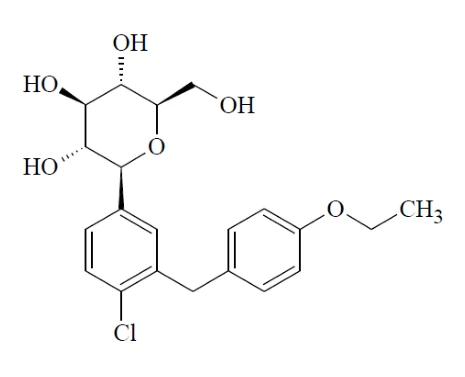
Physicochemical properties: Dapagliflozin is a white to off-white amorphous powder. Freely soluble in Methanol and Methyl tert-butyl ether; slightly soluble in water and practically insoluble in n-Heptane
14 CLINICAL TRIALS
14.1 Trial Design and Study Demographics
Table 11 Summary of patient demographics for clinical trials in specific indications
Study #
Trial design
Dosage, route of administration and duration
N per group/ N treated with dapagliflozin/
Total
Mean age
Gender (% M/F)
Clinical Trials in Patients with T2DM Treated for Glycemic Control
Monotherapy
1
Multicentre,
randomized,
double-blind,
placebo-
controlled
Group 1: dapagliflozin 2.5,
5 or 10 mg, QAM or QPM,
vs. placebo
Oral, 24 weeks + 78 weeks
Group 2: dapagliflozin 5 or
10 mg, QAM
Oral, 24 weeks + 78 weeks
64 - 76/
410/
485 (ST)
34, 39/
73/
73 (ST)
52.6
48.1
Add-on Combination Therapy with Metformin
2
Multicentre,
4 groups: dapagliflozin 2.5,
135 - 137/
53.9 randomized,
5, or 10 mg or placebo
409/
double-blind,
Background therapy:
546 (ST)
placebo-
metformin ≥ 1500 mg/day
controlled
Oral, 24 weeks + 78 weeks
3
Multicentre,
2 groups: dapagliflozin
406 - 408/
58.4 randomized,
titrated dose of 2.5, 5, or
406/
double-blind,
10 mg or glipizide titrated
814 (ST)
active-controlled
dose of 5, 10, or 20 mg
Background therapy:
metformin ≥1500 mg
Oral, 52 weeks + 52 weeks
+ 52 weeks
Add-on Combination Therapy with a Sulfonylurea
4
Multicentre,
4 groups: dapagliflozin 2.5, 5, or 10 mg or placebo Background therapy: glimepiride 4 mg/day
Oral, 24 weeks + 24 weeks
146 - 154/
59.8 randomized,
450/
double-blind,
596 (ST)
placebo-
controlled
Add-on Combination Therapy with Metformin and a Sulfonylurea
5
Multicentre,
2 groups: dapagliflozin 10
109/
61.0 randomized,
mg or placebo
109/
double-blind,
Background therapy:
218 (ST)
placebo-
controlled
metformin ≥1500 mg and a sulfonylurea (at maximum tolerated dose and ≥50% of maximum recommended dose)
Study #
Trial design
Dosage, route of administration and duration
N per group/ N treated with dapagliflozin/
Total
Mean age
Gender (% M/F)
Oral, 24 weeks + 28 weeks
Add-on Combination Therapy with Sitagliptin Alone or with Metformin
6
Multicentre,
2 groups: dapagliflozin 10
225 - 226/
55.0
randomized,
mg or placebo
225/
double-blind,
Background therapy:
451 (ST)
placebo-
Sitagliptin 100 mg/day (+/-
controlled
metformin ≥1500 mg)
Oral, 24 weeks + 24 weeks
Add-on Combination Therapy with Insulin
7
Multicentre, randomized, double-blind, placebo- controlled
4 groups: dapagliflozin 2.5, 5, or 10 mg or placebo Background therapy: insulin ≥30 IU/day ± maximum 2 OAD
In LT, forced titration of dapagliflozin 5 mg to 10 mg
Oral, 24 weeks + 24 weeks
+ 56 weeks
196 - 212/
610/
807 (ST)
59.3
Cardiovascular Outcomes in Patients with T2DM
8
Multicentre,
2 groups: dapagliflozin 10
8578-8582/
63.9
randomized,
mg or placebo
8582/
double-blind, placebo- controlled
Oral, mean follow-up time of 4.1 years
17160
LT = long-term; OAD = oral anti-diabetic drug; QAM = once in the morning; QPM = once in the evening; ST = short-term.
Clinical Trials in Patients with T2DM Treated for Glycemic Control
Dapagliflozin tablets was studied as monotherapy and in combination with other antidiabetic medications, including metformin, glimepiride, or insulin. Dapagliflozin tablets was also studied in patients with T2DM and CV disease and in patients with mild to moderate renal impairment.
Treatment with dapagliflozin tablets as monotherapy and in combination with metformin, glimepiride, or insulin produced clinically relevant and statistically significant improvements in mean change from baseline at Week 24 in HbA1c, fasting plasma glucose (FPG), and 2-hour post-prandial glucose (PPG) (where measured), compared to placebo or control. The estimated, placebo-adjusted, HbA1c reduction across trials and doses ranged from 0.40% to 0.84%. These glycemic effects were sustained in long-term extensions up to 104 weeks. HbA1c reductions were seen across subgroups including gender, age, race, duration of disease, and baseline body mass index (BMI). In addition, patients treated with dapagliflozin tablets compared to placebo or control achieved greater HbA1c reductions in patients with a baseline HbA1c ≥9%.
Cardiovascular Outcomes Trial in Patients with T2DM
A large CV outcomes study (DECLARE-TIMI 58) assessed the effect of dapagliflozin on CV outcomes in patients with T2DM with and without established CV disease. Treatment with dapagliflozin 10 mg once daily resulted in a statistically significant and clinically relevant reduction in the risk of hospitalization for HF in patients with type 2 diabetes with and without established CV disease.
14.2 Study Results
Clinical Trials in Patients with T2DM Treated for Glycemic Control
Monotherapy (Study 1)
The efficacy and safety of dapagliflozin tablets as monotherapy was evaluated in a double-blind, placebo-controlled study of 24 weeks duration in treatment-naïve patients. Following a 2-week diet and exercise placebo lead-in period, 485 patients with HbA1c ≥7% and ≤10% were randomized to dapagliflozin 2.5 mg, dapagliflozin tablets 5 mg, or 10 mg once daily in either the morning (QAM, main cohort) or evening (QPM), or placebo in the morning only.
As shown in Table 12, statistically significant reductions (p<0.001) in HbA1c and FPG relative to placebo were observed with dapagliflozin tablets 5 mg and 10 mg QAM at Week 24 which were sustained long term.
Overall, the PM administration of dapagliflozin tablets had a comparable safety and efficacy profile to dapagliflozin tablets administered in the AM.
Table 12 Results at Week 24 (LOCF*) in a Placebo-Controlled Study of Dapagliflozin tablets Monotherapy in Patients with Type 2 Diabetes (Main Cohort AM Doses)
| Efficacy Parameter | Dapagliflozin tablets 5 mg N=64† | Dapagliflozin tablets 10 mg N=70† | Placebo N=75† |
|---|---|---|---|
| Efficacy Parameter | Dapagliflozin tablets 5 mg N=64† | Dapagliflozin tablets 10 mg N=70† | Placebo N=75† |
| HbA1c (%) | |||
| Baseline (mean) | 7.83 | 8.01 | 7.79 |
| Change from baseline (adjusted mean‡) | −0.77 | −0.89 | −0.23 |
Difference from placebo (adjusted mean‡) (95% CI) | −0.54§ (−0.84, −0.24) | −0.66§ (−0.96, −0.36) | |
| Patients (%) achieving HbA1c <7% adjusted for baseline | 44.2¶ | 50.8¶ | 31.6 |
| FPG (mmol/L) | |||
| Baseline (mean) | 8.7 | 9.3 | 8.9 |
| Change from baseline (adjusted mean‡) | −1.3 | −1.6 | −0.2 |
Difference from placebo (adjusted mean‡) (95% CI) | −1.1§ (−1.7, −0.5) | −1.4§ (−2.0, −0.8) | |
| Body Weight (kg) | |||
| Baseline (mean) | 87.17 | 94.13 | 88.77 |
| Change from baseline (adjusted mean‡) | −2.83 | −3.16 | −2.19 |
Difference from placebo (adjusted mean‡) (95% CI) | −0.65 (−1.90, 0.61) | −0.97 (−2.20, 0.25) | |
* LOCF: last observation (prior to rescue for rescued patients) carried forward.
† All randomized patients who took at least one dose of double-blind study medication during the short-term double- blind period.
‡ Least squares mean adjusted for baseline value.
§ p-value <0.001 vs. placebo.
¶ Not evaluated for statistical significance as a result of the sequential testing procedure for the secondary endpoints.
Combination Therapy:
Add-On Therapy with Metformin (Study 2)
A 24-week double-blind, placebo-controlled study was conducted to evaluate dapagliflozin tablets in combination with metformin in patients with T2DM with inadequate glycemic control (HbA1c ≥7% and ≤10%). Patients on metformin at a dose of at least 1500 mg per day were randomized after completing a 2- week single-blind placebo lead-in period. Following the lead-in period, eligible patients were randomized to dapagliflozin 2.5 mg, dapagliflozin tablets 5 mg, or 10 mg, or placebo in addition to their current dose of metformin.
As shown in Table 13, statistically significant (p<0.0001) reductions in HbA1c, FPG and body weight relative to placebo were observed with dapagliflozin tablets 5 mg and 10 mg at Week 24 which were sustained long term.
Table 13 Results of a 24-Week (LOCF*) Placebo-Controlled Study of Dapagliflozin tablets in Add-On Combination with Metformin
| Efficacy Parameter | Dapagliflozin tablets 5 mg + Metformin N=137† | Dapagliflozin tablets 10 mg + Metformin N=135† | Placebo + Metformin N=137† |
|---|---|---|---|
| HbA1c (%) | |||
| Baseline mean | 8.17 | 7.92 | 8.11 |
| Change from baseline (adjusted mean‡) | −0.70 | −0.84 | −0.30 |
Difference from placebo (adjusted mean‡) (95% CI) | −0.41§ (−0.61, −0.21) | −0.54§ (−0.74, −0.34) | |
| Patients (%) achieving HbA1c <7% adjusted for baseline | 37.5¶ | 40.6¶ | 25.9 |
| FPG (mmol/L) | |||
| Baseline mean | 9.4 | 8.7 | 9.2 |
| Change from baseline at week 24 (adjusted mean‡) | −1.2 | −1.3 | −0.3 |
| Difference from placebo (adjusted mean‡) (95% CI) | −0.9§ (−1.3, −0.5) | −1.0§ (−1.4, −0.6) | |
| Body Weight (kg) | |||
| Baseline mean | 84.73 | 86.28 | 87.74 |
| Change from baseline (adjusted mean‡) | −3.04 | −2.86 | −0.89 |
| Difference from placebo (adjusted mean‡) (95% CI) | −2.16§ (−2.81, −1.50) | −1.97§ (−2.63, −1.31) | |
* LOCF: last observation (prior to rescue for rescued patients) carried forward.
† All randomized patients who took at least one dose of double-blind study medication during the short-term double- blind period.
‡ Least squares mean adjusted for baseline value.
§ p-value <0.0001 vs. placebo + metformin.
¶ p-value <0.05 vs. placebo + metformin.
Add-On Therapy with Metformin – Active-Controlled Study versus Glipizide (Study 3)
Patients with T2DM with inadequate glycemic control (HbA1c >6.5% and ≤10%) were randomized in a 52-week, double-blind, glipizide-controlled non-inferiority study to evaluate dapagliflozin tablets as add-on therapy to metformin. Patients on metformin at a dose of at least 1500 mg per day were randomized following a 2-week placebo lead-in period to glipizide or dapagliflozin (5 mg or 2.5 mg, respectively) and were up- titrated over 18 weeks to optimal glycemic effect (FPG <110 mg/dL, <6.1 mmol/L) or to the highest dose level (up to glipizide 20 mg and dapagliflozin tablets 10 mg) as tolerated by patients. Thereafter, doses were kept constant, except for down-titration to prevent hypoglycemia.
At the end of the titration period, 87% of patients treated with dapagliflozin tablets had been titrated to the maximum study dose (10 mg), versus 73% treated with glipizide (20 mg). As shown in Table 14, treatment with dapagliflozin tablets provided similar reductions in HbA1c from baseline compared to glipizide (with the upper bound of the 95% confidence interval around the between-group difference less than the pre- specified non-inferiority margin of 0.35%). Statistically significant (p<0.0001) reductions in body weight were observed with dapagliflozin tablets compared to glipizide.
Table 14 Results at Week 52 (LOCF*) in an Active-Controlled Study comparing Dapagliflozin tablets to Glipizide as Add-on to Metformin
| Efficacy Parameter | Dapagliflozin tablets + Metformin N=400† | Glipizide + Metformin N=401† |
|---|---|---|
| HbA1c (%) | ||
| Baseline (mean) | 7.69 | 7.74 |
| Change from baseline (adjusted mean‡) | −0.52 | −0.52 |
| Difference from Glipizide+Metformin (adjusted mean‡) | 0.00¶ | |
| (95% CI) | (−0.11, 0.11) | |
| Body Weight (kg) | ||
| Baseline (mean) | 88.44 | 87.60 |
| Change from baseline (adjusted mean‡) | −3.22 | 1.44 |
| Difference from Glipizide+Metformin (adjusted mean‡) | −4.65§ | |
| (95% CI) | (−5.14, −4.17) | |
* LOCF: last observation carried forward.
† Randomized and treated patients with baseline and at least 1 post-baseline efficacy measurement.
‡ Least squares mean adjusted for baseline value.
§ p-value <0.0001.
¶ non-inferior to glipizide + metformin.
Add-On Therapy with a Sulfonylurea (Study 4)
Patients with T2DM and inadequate glycemic control (HbA1c ≥7% and ≤10%) were randomized in a 24- week, double-blind, placebo-controlled study to evaluate dapagliflozin tablets in combination with glimepiride (a sulfonylurea). Patients on at least half the maximum recommended dose of a glimepiride as monotherapy (4 mg) for at least 8 weeks lead-in were randomized to dapagliflozin 2.5 mg, dapagliflozin tablets 5 mg, or 10 mg or placebo in addition to glimepiride 4 mg per day. Down-titration of glimepiride to 2 mg or 0 mg was allowed for hypoglycemia during the treatment period; no up-titration of glimepiride was allowed.
As shown in Table 15, treatment with dapagliflozin tablets 5 mg and 10 mg in combination with glimepiride provided significant reductions in HbA1c, FPG, 2-hour PPG, and body weight relative to placebo plus glimepiride at Week 24 which were sustained long term.
Table 15 Results of 24 Week (LOCF*) Placebo-Controlled Study of Dapagliflozin tablets in Combination with a Sulfonylurea (Glimepiride)
| Efficacy Parameter | Dapagliflozin tablets | Dapagliflozin tablets | Placebo + Glimepiride |
|---|---|---|---|
5 mg + Glimepiride N=142† | 10 mg + Glimepiride N=151† | N=145† | |
| HbA1c (%) | |||
| Baseline mean | 8.12 | 8.07 | 8.15 |
| Change from baseline (adjusted mean‡) | −0.63 | −0.82 | −0.13 |
| Difference from placebo + glimepiride (adjusted mean‡) (95% CI) | −0.49§ (−0.67, −0.32) | −0.68§ (−0.86, −0.51) | |
| Patients (%) achieving HbA1c <7% adjusted for baseline | 30.3§ | 31.7§ | 13.0 |
| FPG (mmol/L) | |||
| Baseline mean | 9.7 | 9.6 | 9.6 |
| Change from baseline (adjusted mean‡) | −1.2 | −1.6 | −0.1 |
| Difference from placebo + glimepiride (adjusted mean‡) (95% CI) | −1.1§ (−1.5, −0.7) | −1.5§ (−1.9, −1.1) | |
| 2-hour PPG¶ (mmol/L) | |||
| Baseline (mean) | 17.9 | 18.3 | 18.0 |
| Change from baseline (adjusted mean‡) | −3.0 | −3.4 | −0.6 |
| Difference from placebo + glimepiride (adjusted mean‡) (95% CI) | −2.4§ (−3.2, −1.5) | −2.7§ (−3.6, −1.9) | |
| Body Weight (kg) | |||
| Baseline mean | 81.00 | 80.56 | 80.94 |
| Change from baseline (adjusted mean‡) | −1.56 | −2.26 | −0.72 |
| Difference from placebo + glimepiride (adjusted mean‡) (95% CI) | −0.84§§ (−1.47, −0.21) | −1.54§ (−2.17, −0.92) | |
* LOCF: last observation (prior to rescue for rescued patients) carried forward.
† Randomized and treated patients with baseline and at least 1 post-baseline efficacy measurement.
‡ Least squares mean adjusted for baseline value.
§ p-value <0.0001 versus placebo.
§§ p-value 0.0091 versus placebo.
¶ 2-hour PPG level as a response to a 75 g oral glucose tolerance test (OGTT).
Add-On Therapy with Metformin and a Sulfonylurea (Study 5)
Patients with T2DM and inadequate glycemic control (HbA1c ≥7% and ≤10.5%) participated in a 24- week, double-blind, placebo-controlled study to evaluate dapagliflozin tablets in combination with metformin and a sulfonylurea. Patients on a stable dose of metformin (immediate- or extended-release formulations) ≥1500 mg/day plus maximum tolerated dose, which must be at least half maximum dose, of a sulfonylurea for at least 8 weeks prior to enrolment were randomized after an 8-week placebo lead-in period to dapagliflozin tablets 10 mg or placebo. Dose-titration of dapagliflozin tablets or metformin was not permitted during the 24-week treatment period. Down-titration of sulfonylurea was permitted to prevent hypoglycemia during the treatment period; no up-titration of sulfonylurea was allowed.
As shown in Table 16, treatment with dapagliflozin tablets 10 mg in combination with metformin and a sulfonylurea provided significant reductions in HbA1c, FPG and body weight relative to placebo at Week 24 which were sustained long term. At Week 8, statistically significant changes from baseline in systolic blood pressure (SBP, mmHg) of -4.0, and -0.3 were observed for dapagliflozin tablets 10 mg, and placebo, respectively (p<0.05).
Table 16 Results of 24-Week (LOCF*) Placebo-Controlled Study of Dapagliflozin tablets in Combination with Metformin and Sulfonylurea
| Efficacy Parameter | Dapagliflozin tablets 10 mg + Metformin + Sulphonylurea N=108† | Placebo + Metformin + Sulphonylurea N=108† |
|---|---|---|
| HbA1c (%) | ||
| Baseline mean | 8.08 | 8.24 |
| Change from baseline (adjusted mean‡,‡‡) | −0.86 | −0.17 |
Difference from placebo (adjusted mean‡,‡‡) (95% CI) | −0.69§ (−0.89, −0.49) | |
| Patients (%) achieving HbA1c <7% adjusted for baseline | 31.8§ | 11.1 |
| FPG (mmol/L) | ||
| Baseline mean | 9.3 | 10.0 |
| Change from baseline at Week 24 (adjusted mean‡) | −1.9 | −0.04 |
Difference from placebo (adjusted mean‡) (95% CI) | −1.86§ (−2.4, −1.3) | |
| Body Weight (kg) | ||
| Baseline mean | 88.57 | 90.07 |
| Change from baseline (adjusted mean‡) | −2.65 | −0.58 |
Difference from placebo (adjusted mean‡) (95% CI) | −2.07§ (−2.79, −1.35) | |
* LOCF: last observation (prior to rescue for rescued patients) carried forward.
† Randomized and treated patients with baseline and at least 1 post-baseline efficacy measurement.
‡ Least squares mean adjusted for baseline value based on ANCOVA model.
‡‡ Least squares mean adjusted for baseline value based on a longitudinal repeated measures model
§ p-value <0.0001 versus placebo.
Add-On Combination Therapy with Sitagliptin Alone or in Combination with Metformin (Study 6)
A total of 452 patients with T2DM who were drug naive, or who were treated at entry with metformin or sitagliptin alone or in combination, and had inadequate glycemic control (HbA1c ≥7.0% and ≤10.0% at randomization), participated in a 24-week, placebo-controlled study with a 24-week extension.
Patients were stratified based on background metformin use (≥1500 mg/day) and within each stratum were randomized to either dapagliflozin tablets 10 mg plus sitagliptin 100 mg once daily or placebo plus sitaglipitin 100 mg once daily. Endpoints were tested for dapagliflozin tablets 10 mg versus placebo for the total study group (sitagliptin with and without metformin) and for each stratum (sitagliptin alone or sitagliptin with metformin).
As shown in Table 17, statistically significant (p<0.0001) reductions in HbA1c, FPG and body weight relative to placebo were observed with dapagliflozin tablets 10 mg treatment for the total study group (sitagliptin with and without metformin) and for each stratum (sitagliptin alone or sitagliptin with metformin) at Week 24.
Table 17 Results of a 24-Week (LOCF*) Placebo-Controlled Study of Dapagliflozin tablets in Add-On Combination with Sitagliptin with or without Metformin (Full Analysis Set and Strata without or with Metformin)
| Efficacy Parameter | Dapagliflozin tablets 10 mg + Sitagliptin + or –Met N=223† | Placebo + Sitagliptin + or –Met N=224† | Dapagliflozin tablets 10 mg + Sitagliptin N=110† | Placebo + Sitagliptin N=111† | Dapagliflozin tablets 10 mg + Sitagliptin +Met N=113† | Placebo + Sitagliptin +Met N=113† |
|---|---|---|---|---|---|---|
| Efficacy Parameter | Dapagliflozin tablets 10 mg + Sitagliptin + or –Met N=223† | Placebo + Sitagliptin + or –Met N=224† | Dapagliflozin tablets 10 mg + Sitagliptin N=110† | Placebo + Sitagliptin N=111† | Dapagliflozin tablets 10 mg + Sitagliptin +Met N=113† | Placebo + Sitagliptin +Met N=113† |
| HbA1c (%) | N=223 | N=223 | N=110 | N=110 | N=113 | N=113 |
| Baseline (mean) | 7.90 | 7.97 | 7.99 | 8.07 | 7.80 | 7.87 |
| Change from baseline (adjusted mean‡) | −0.45 | 0.04 | −0.47 | 0.10 | −0.43 | −0.02 |
Difference from placebo (adjusted mean‡) (95% CI) | −0.48§ (−0.62, −0.34) | −0.56§ (−0.79, −0.34) | −0.40§ (−0.58, −0.23) | |||
| FPG (mmol/L) | N=222 | N=222 | N=110 | N=110 | N=112 | N=112 |
| Baseline (mean) | 8.97 | 9.05 | 8.73 | 8.96 | 9.21 | 9.14 |
| Change from baseline at Week 24 (adjusted mean‡) | −1.34 | 0.21 | −1.22 | 0.26 | −1.45 | 0.17 |
Difference from placebo (adjusted mean‡) (95% CI) | −1.55§ (−1.91, −1.19) | −1.47§ (−2.01, −0.94) | −1.62§ (−2.11, −1.13) | |||
| Body Weight (kg) | N=223 | N=224 | N=110 | N=111 | N=113 | N=113 |
| Baseline (mean) | 91.02 | 89.23 | 88.01 | 84.20 | 93.95 | 94.17 |
| Change from baseline (adjusted mean‡) | −2.14 | −0.26 | −1.91 | −0.06 | −2.35 | −0.47 |
Difference from placebo (adjusted mean‡) (95% CI) | −1.89§ (−2.37, −1.40) | −1.85§ (−2.47, −1.23) | −1.87§ (−2.61, −1.13) |
* LOCF: last observation (prior to rescue for rescued patients) carried forward.
† Randomized and treated patients with baseline and at least 1 post-baseline efficacy measurement.
‡ Least squares mean adjusted for baseline value.
§ p-value <0.0001 versus placebo.
Add-On Therapy with Insulin (Study 7)
Patients with T2DM who had inadequate glycemic control (HbA1c ≥7.5% and ≤10.5%) were randomized in a 24-week, double-blind, placebo-controlled study to evaluate dapagliflozin tablets as add-on therapy to insulin. Patients on a stable insulin regimen, with a mean dose of at least 30 IU of injectable insulin per day, for a period of at least 8 weeks prior and on a maximum of two oral antidiabetic medications (OADs) were randomized after completing a 2-week enrolment period to receive dapagliflozin 2.5 mg, dapagliflozin tablets 5 mg, or 10 mg, or placebo in addition to their current dose of insulin and other OADs, if applicable. Patients were stratified according to the presence or absence of background OADs. Up- or down-titration of insulin was only permitted during the treatment phase in patients who failed to meet specific glycemic goals. Subjects on metformin were to be on ≥1500 mg/day.
In this study, 50% (N=392) of patients were on insulin monotherapy at baseline, while 50% were on 1 or 2 OADs in addition to insulin. Of the latter, 80% (N=319) were on a background of insulin and metformin dual therapy. An inadequate number of patients on other OAD combinations were included for evaluative purposes; therefore, use with OAD combinations other than metformin alone is not indicated. In the overall patient sample 48% of patients were taking sliding scale and basal insulin, 35% were taking sliding scale insulin alone and 17% were taking basal insulin. Approximately 88% of patients completed up to Week 24. At Week 24, dapagliflozin tablets 5 mg and 10 mg doses provided significant improvement in HbA1c and mean insulin dose, and a significant reduction in body weight compared with placebo (Table 18); the effect of dapagliflozin tablets on HbA1c was similar in patients in both strata.
Table 18 Results of 24 Week (LOCF*) Placebo-Controlled Study of Dapagliflozin tablets in Combination with Insulin with or without up to 2 Oral Antidiabetic Therapies§§
| Efficacy Parameter | Dapagliflozin tablets 5 mg + Insulin N=211† | Dapagliflozin tablets 10 mg + Insulin N=194† | Placebo + Insulin N=193† | ||||||||||
|---|---|---|---|---|---|---|---|---|---|---|---|---|---|
| HbA1c (%) | |||||||||||||
Baseline mean Change from baseline (adjusted mean‡) Difference from placebo (adjusted mean‡) (95% CI) | 8.61 −0.82 −0.52§ (−0.66, −0.38) | 8.58 −0.90 −0.60§ (−0.74, −0.45) | 8.46 −0.30 | ||||||||||
| FPG (mmol/L) | |||||||||||||
| Baseline mean | 10.3 | 9.6 | 9.4 | ||||||||||
| Change from baseline (adjusted mean‡) | −1.0 | −1.2 | 0.2 | ||||||||||
| Difference from placebo (adjusted mean‡) | −1.2 | −1.4§ | |||||||||||
| (95% CI) | (−1.7, −0.7) | (−1.9, −0.9) | |||||||||||
| Body Weight (kg) | |||||||||||||
| Baseline mean | 93.20 | 94.63 | 94.21 | ||||||||||
| Change from baseline (adjusted mean‡) | −0.98 | −1.67 | 0.02 | ||||||||||
| Difference from placebo (adjusted mean‡) | −1.00§ | −1.68§ | |||||||||||
| (95% CI) | (−1.50, −0.50) | (−2.19, −1.18) | |||||||||||
* LOCF: last observation (prior to rescue for rescued patients) carried forward.
† Randomized and treated patients with baseline and at least 1 post-baseline efficacy measurement.
‡ Least squares mean adjusted for baseline value.
§ p-value <0.0001 versus placebo.
§§ Use with oral antidiabetic combinations other than metformin alone is not indicated.
Cardiovascular Outcomes Trial in Patients with T2DM
DECLARE-TIMI 58 (Study 8)
Dapagliflozin Effect on Cardiovascular Events-Thrombolysis in Myocardial Infarction 58 (DECLARE-TIMI 58) was an international, multicentre, randomized, double-blind, placebo-controlled, event-driven clinical study conducted to evaluate the effect of dapagliflozin tablets compared with placebo on CV outcomes when added to current background therapy in patients with T2DM and either CV risk factors or established CV disease. The objective was to be evaluated in two steps. First, non-inferiority between dapagliflozin tablets and placebo was evaluated for the primary safety composite endpoint of CV death, myocardial infarction, and ischemic stroke, referred to as Major Adverse Cardiovascular Events (MACE). If non- inferiority for MACE was demonstrated, the study then tested superiority of the dual primary efficacy endpoints of MACE and the composite of hospitalization for heart failure or cardiovascular death, in parallel2.
2 Dual primary efficacy endpoints may be used when success on either endpoint could independently support a conclusion of effectiveness. The dual primary efficacy endpoints in DECLARE-TIMI 58 were tested independently and in parallel. Type I error was controlled by splitting the α between the dual primary endpoints.
All patients had T2DM and either multiple risk factors (at least two additional CV risk factors [age ≥55 years in men or ≥60 years in women and one or more of dyslipidemia, hypertension, or current tobacco use]) without having had a CV event at baseline (primary prevention) or established CV disease (secondary prevention). DECLARE-TIMI 58 was designed to ensure inclusion of a broad patient population. Concomitant antidiabetic and atherosclerotic therapies could be adjusted at the discretion of investigators according to the standard care for these diseases.
Of 17160 randomized patients, 10186 (59.4%) did not have established CV disease and 6974 (40.6%) had established CV disease. A total of 8582 patients were randomized to dapagliflozin tablets 10 mg, 8578 to placebo, and patients were followed for a mean of 4.1 years. The study was completed by 98.5% of subjects with vital status available for 99.3%, and 13181 (76.8%) subjects completed the study on study drug.
The mean age of the study population was 63.9 years, 37.4% were female, 79.6% were White, 3.5% Black or African-American, and 13.4% Asian. Approximately 46% of patients treated with dapagliflozin tablets were 65 years and older and 6.3% were 75 years and older. In total, 22.4% had had diabetes for ≤5 years, and the mean duration of diabetes was 11.9 years. Mean HbA1c was 8.3% and mean BMI was 32.0 kg/ m2. At baseline, 10.0% of patients had a history of HF. Mean eGFR was 85.2 mL/min/1.73 m2, 7.4% of patients had eGFR <60 mL/min/1.73 m2 and 45.1% had eGFR ≥60 to <90 mL/min/1.73 m2. At baseline, 30.3% of patients had micro- or macroalbuminuria (urine albumin to creatinine ratio ≥3.39 to ≤33.9 mg/mmol or >33.9 mg/mmol, respectively). Most patients (98.1%) used one or more diabetic medications at baseline: 82.0% of the patients were being treated with metformin, 40.9% with insulin, 42.7% with a sulfonylurea, 16.8% with a DPP-4 inhibitor, and 4.4% with a GLP-1 receptor agonist. Approximately 81.3% of patients were treated with angiotensin-converting enzyme (ACE) inhibitors or angiotensin receptor blocker (ARB), 75.0% with statins, 61.1% with antiplatelet therapy, 55.5% with acetylsalicylic acid, 52.6% with beta-blockers, 34.9% with calcium channel blockers, 22.0% with thiazide diuretics, and 10.5% with loop diuretics.
Dapagliflozin tablets demonstrated CV safety (tested against a non-inferiority margin of 1.3 versus placebo for the composite of CV death, MI or ischemic stroke [MACE]; one-sided p<0.001).
Dapagliflozin tablets was superior to placebo in reducing the incidence of the primary composite endpoint of hospitalization for HF or CV death, representing a 17% reduction in risk (HR 0.83 [95% CI 0.73, 0.95]; p=0.005) (Figure 1). Analyses of the single components suggest that the difference in treatment effect was driven by hospitalization for HF (HR 0.73 [95% CI 0.61, 0.88]), with no clear difference in CV death (HR 0.98 [95% CI 0.82 to 1.17]) (Figure 2).
Figure 1 Time to First Occurrence of Hospitalization for Heart Failure or Cardiovascular Death in the DECLARE-TIMI 58 Study
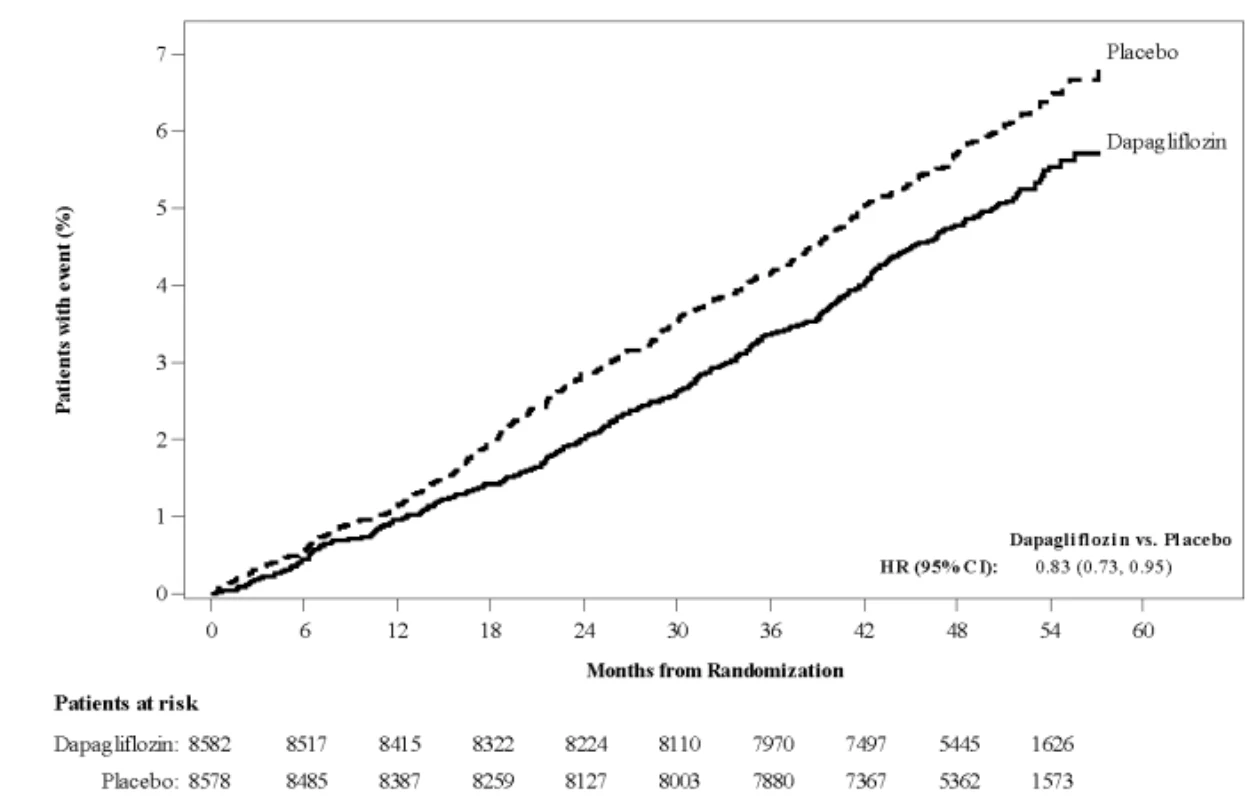
Patients at risk is the number of patients at risk at the beginning of the period.
CI = confidence interval; HR = hazard ratio.
Figure 2 Time to First Occurrence of Hospitalization for Heart Failure in the DECLARE-TIMI 58 Study
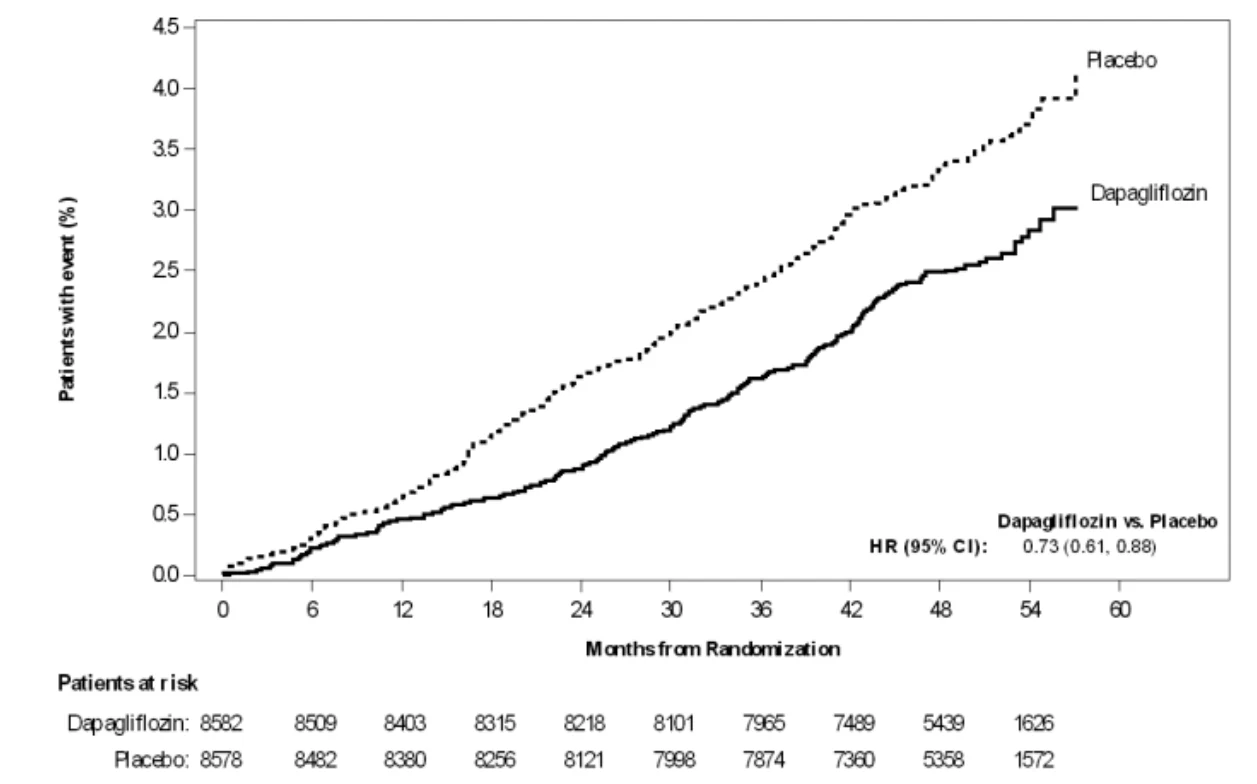
Patients at risk is the number of patients at risk at the beginning of the period.
CI = confidence interval; HR = hazard ratio.
Superiority of dapagliflozin tablets over placebo was not demonstrated for MACE (HR 0.93 [95% CI 0.84, 1.03]; p=0.172) (Figure 3, Table 19). Analyses of the single components of MACE show that the incidence of MI was numerically lower in the dapagliflozin group compared with the placebo group (HR 0.89 [95% CI 0.77 to 1.01]), with no clear difference observed for CV death or ischemic stroke.
Figure 3 Time to First Occurrence of MACE in the DECLARE-TIMI 58 Study
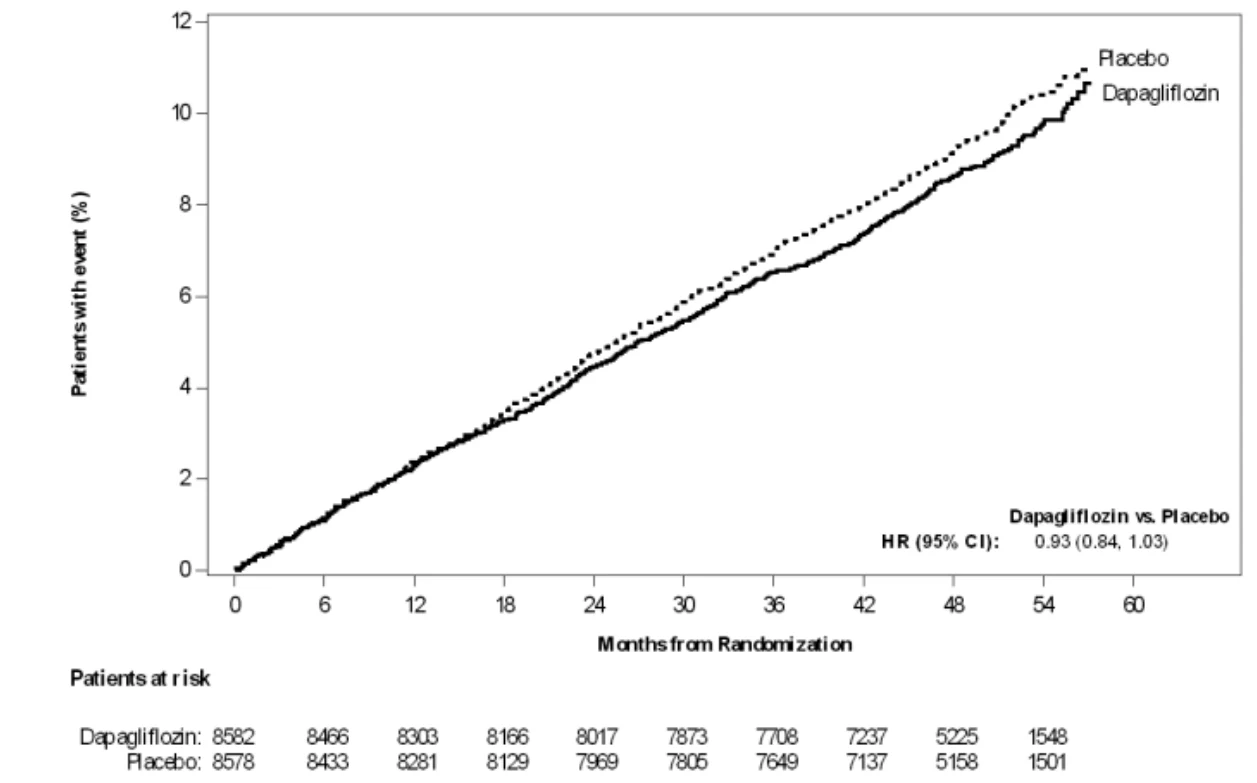
Patients at risk is the number of patients at risk at the beginning of the period.
CI = confidence interval; HR = hazard ratio.
As MACE was not statistically significant, the secondary endpoints renal composite (time to first confirmed sustained eGFR decrease, ESKD, renal or CV death) and all-cause mortality were not tested as part of the confirmatory testing.
Table 19 Treatment Effects for the Composite Endpoints* and Their Components in the DECLARE-TIMI 58 Study
Patients with events, n (%) | ||||||||||
|---|---|---|---|---|---|---|---|---|---|---|
Patients with events, n (%) | ||||||||||
| Efficacy Parameter | Dapagliflozin tablets 10 mg N=8582 | Placebo N=8578 | Hazard ratio (95% CI)† | p- value‡ | ||||||
| Efficacy Parameter | Dapagliflozin tablets 10 mg N=8582 | Placebo N=8578 | Hazard ratio (95% CI)† | p- value‡ | ||||||
| Composite of Hospitalization for HF, CV | 417 (4.9) | 496 (5.8) | 0.83 | 0.005 | ||||||
| Death | (0.73, 0.95) | |||||||||
| Hospitalization for HF§ | 212 (2.5) | 286 (3.3) | 0.73 | <0.001 | ||||||
| (0.61, 0.88) | ||||||||||
| CV Death§ | 245 (2.9) | 249 (2.9) | 0.98 | 0.830 | ||||||
| (0.82, 1.17) | ||||||||||
| Composite Endpoint of CV Death, MI, | 756 (8.8) | 803 (9.4) | 0.93 | 0.172 | ||||||
| Ischemic Stroke | (0.84, 1.03) | |||||||||
| CV Death§ | 245 (2.9) | 249 (2.9) | 0.98 | 0.830 | ||||||
| (0.82, 1.17) | ||||||||||
| Myocardial Infarction§ | 393 (4.6) | 441 (5.1) | 0.89 (0.77, 1.01) | 0.080 | ||||||
| Ischemic Stroke§ | 235 (2.7) | 231 (2.7) | 1.01 | 0.916 | ||||||
| (0.84, 1.21) | ||||||||||
| Renal Composite Endpoint§§ | 370 (4.3) | 480 (5.6) | 0.76 (0.67, 0.87) | |||||||
| All-Cause Mortality | 529 (6.2) | 570 (6.6) | 0.93 (0.82, 1.04) | |||||||
N = number of patients; CI = confidence interval; HF = heart failure; CV = cardiovascular; MI = myocardial infarction; eGFR = estimated glomerular filtration rate; ESKD=End stage kidney disease.
* Full analysis set.
† Hazard ratio, CI, and p-values for each efficacy parameter calculated from Cox proportional hazards model (Wald test) based on time to first occurrence, stratified by baseline CV risk and hematuria with treatment as a model term.
‡ Superiority versus placebo for hospitalization for heart failure or CV death, and superiority versus placebo for MACE were tested in parallel following closed testing procedure at α=0.0231 (two-sided). As the composite of hospitalization for heart failure and CV was statistically significant, the full α was recycled to test MACE at α=0.0462 (two-sided). As MACE was not statistically significant, the secondary endpoints of renal composite and all-cause mortality were not tested as part of the confirmatory testing procedure.
§ The components of the composite endpoints were exploratory variables.
§§ Confirmed sustained ≥40% decrease in eGFR to eGFR <60 mL/min/1.73 m2, ESKD (dialysis ≥90 days or kidney transplantation, confirmed sustained eGFR <15 mL/min/1.73 m2), renal or CV death.
Patients in DECLARE-TIMI 58 were stratified by CV risk category (CV risk factors or established CV disease). The benefit of dapagliflozin tablets over placebo in reducing the risk of hospitalization for heart failure was observed both in patients with and without established CV disease (Figure 4) and was consistent across key subgroups including age (>65 and ≥65 years, and <75 and ≥75 years), gender, renal function (eGFR), and region. There was a trend towards an effect of dapagliflozin on MACE in patients with established CV disease at baseline and neutral results in patients with CV risk factors (Figure 4).
Figure 4 Cardiovascular Outcomes in Patients with and without Established CV Disease in the DECLARE-TIMI 58 Study
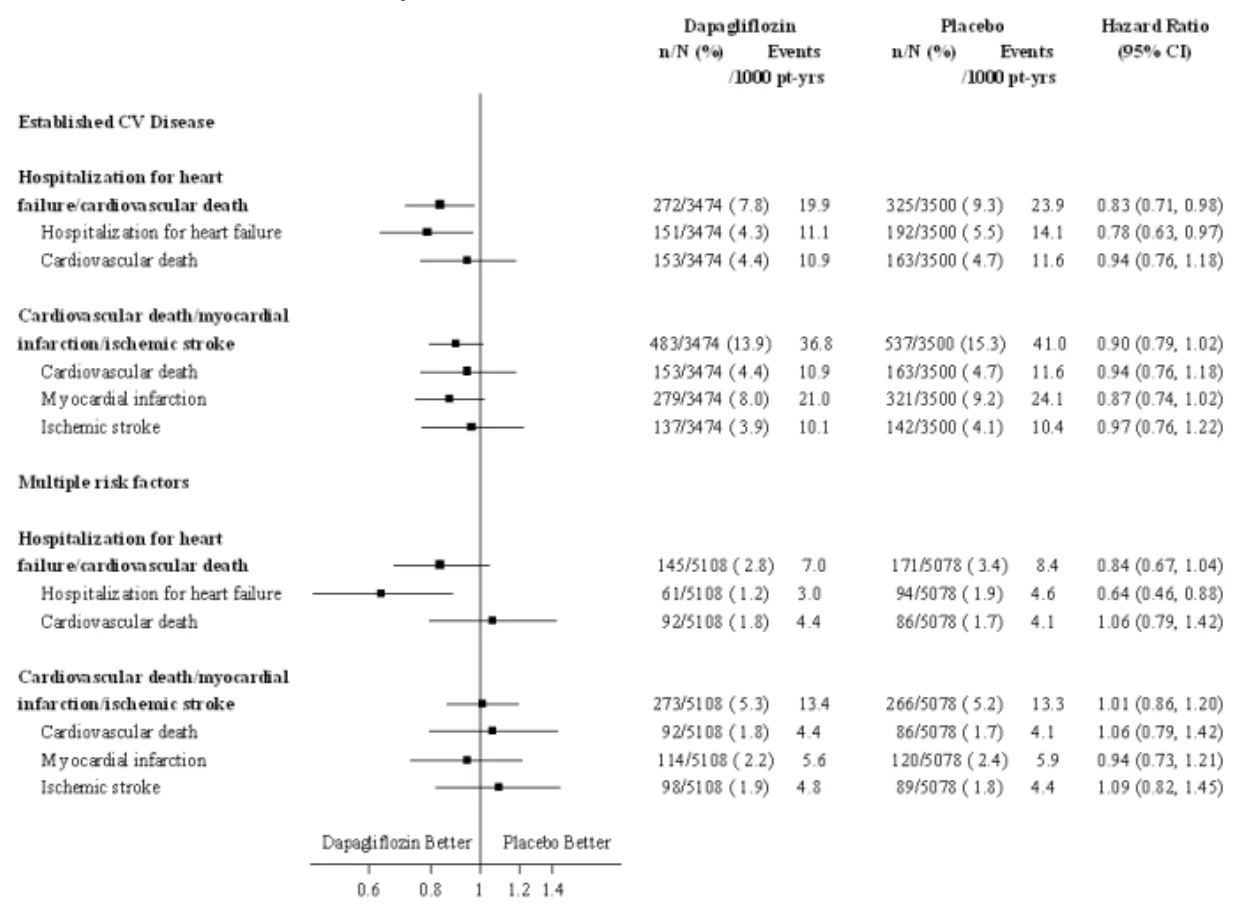
Time to first event was analysed in a Cox proportional hazards model.
CI = confidence interval.
Other Studies in Patients with T2DM Treated for Glycemic Control
Use in Patients with Type 2 Diabetes and Renal Impairment
Mild renal impairment (eGFR ≥60 to <90 mL/min/1.73 m2): Efficacy was assessed in a pooled analysis across 9 clinical studies consisting of 2226 patients with mild renal impairment. The mean change from baseline in HbA1c and the placebo-corrected mean HbA1c reduction at 24 weeks was -1.03% and - 0.54%, respectively for dapagliflozin tablets 5 mg (n=545) and -1.03% and -0.54%, respectively for dapagliflozin tablets 10 mg (n=562). The safety profile in patients with mild renal impairment is similar to that in the overall population.
The efficacy of dapagliflozin tablets was assessed in two dedicated studies of patients with moderate renal impairment and in a pooled analysis.
Moderate renal impairment CKD 3A (eGFR ≥45 to <60 mL/min/1.73 m2): The efficacy of dapagliflozin was assessed in a dedicated study in diabetic patients with an eGFR ≥45 to <60 mL/min/1.73 m2 who had inadequate glycemic control. In a randomized, double blind, placebo-controlled trial a total of 321 adult patients with T2DM and eGFR ≥45 to <60 mL/min/1.73 m2 (moderate renal impairment subgroup CKD 3A), with inadequate glycemic control, were treated with dapagliflozin tablets 10 mg or placebo. At Week 24, dapagliflozin tablets 10 mg (n=159) resulted in statistically significant reductions in HbA1c and body weight compared with placebo (n=161) (Table 20).
Table 20 Results at Week 24 in a Placebo-Controlled Study of Dapagliflozin tablets Treatment in Diabetic Patients with Moderate Renal Impairment (CKD 3A, eGFR ≥45 to <60 mL/min/1.73 m2)
Efficacy Parameter
Dapagliflozin tablets
10 mg
N=159
Placebo
N=161
HbA1c (%)
Baseline (mean)
8.35
8.03
Change from baseline (adjusted mean*)
-0.37§
-0.03
Difference from placebo (adjusted mean*)
-0.34§
(95% CI)
(-0.53, -0.15)
Body Weight (kg)
Baseline (mean)
92.51
88.30
% Change from baseline (adjusted mean*)
-3.42§
-2.02
Difference from placebo (adjusted mean*)
-1.43§
(95% CI)
(-2.15, -0.69)
* Least squares mean adjusted for baseline value.
§ p-value <0.001.
Moderate renal impairment (eGFR ≥30 to <60 mL/min/1.73 m2): The efficacy of dapagliflozin tablets was assessed in a study of 252 diabetic patients with eGFR ≥30 to <60 mL/min/1.73 m2. Dapagliflozin tablets treatment did not show a significant placebo corrected change in HbA1c in the overall study population at 24 weeks. In an additional analysis of the subgroup CKD 3A (eGFR ≥45 to <60 mL/min/1.73 m2), dapagliflozin tablets 5 mg (n=35) provided a placebo-corrected mean HbA1c change at 24 weeks of -0.37% (95% CI: -0.83, 0.10), and dapagliflozin tablets 10 mg (n=32) provided a placebo-corrected mean HbA1c change at 24 weeks of -0.33% (95% CI: -0.80, 0.14).
Efficacy in patients with moderate renal impairment was assessed in a pooled analysis across 9 clinical studies (366 patients, 87% with eGFR ≥45 to <60 mL/min/1.73 m2); this pool did not include the two dedicated studies of diabetic patients with moderate renal impairment. The mean change from baseline in HbA1c and the placebo-corrected mean HbA1c reduction at 24 weeks was -0.71% (95% CI: -0.89, -0.53) and -0.23% (95% CI: -0.47, 0.02), respectively, for dapagliflozin tablets 5 mg (n=102) and -0.87% (95% CI: -1.07, -0.68) and -0.39% (95% CI: -0.65, -0.14), respectively, for dapagliflozin tablets 10 mg (n=85).
Use in Patients with Type 2 Diabetes and Cardiovascular Disease (CVD)
In two 24-week, placebo-controlled studies with 80-week extension periods, a total of 1876 patients with T2DM and CVD were randomized and treated with dapagliflozin tablets 10 mg (N=935) or placebo (N=941).
Patients had established CVD and inadequate glycemic control (HbA1c ≥7.0% and ≤10.0%), despite stable treatment with OADs and/or insulin. Ninety-six percent of patients treated with dapagliflozin tablets 10 mg had hypertension at entry, and the most common qualifying CV events were coronary heart disease (76%) or stroke (20%). Approximately 19% of patients received loop diuretics during the studies and 14% had congestive heart failure (1% had NYHA Class III). Approximately 37% of patients received metformin plus one additional OAD (sulfonylurea, thiazolidinedione, DPP4-inhibitor, or other OAD with or without insulin at entry), 38% received insulin plus at least one OAD, and 18% received insulin alone.
For both studies, at Week 24 treatment with dapagliflozin tablets 10 mg provided significant improvement in HbA1c compared with placebo (Table 21). Significant reductions in total body weight and seated systolic blood pressure were also seen in patients treated with dapagliflozin tablets 10 mg compared with placebo. For both studies, reductions in HbA1c and body weight were generally maintained at Week 52 and Week 104.
Table 21 Results at Week 24 (LOCF*) in Two Placebo-Controlled Studies Comparing Dapagliflozin tablets to Placebo in Patients with Type 2 Diabetes and Cardiovascular Disease
| Study 8 | Study 9 | ||||||||||
|---|---|---|---|---|---|---|---|---|---|---|---|
| Efficacy Parameter | Dapagliflozin tablets 10 mg + Usual Treatment N=455† | Placebo + Usual Treatment N=459† | Dapagliflozin tablets 10 mg + Usual Treatment N=480† | Placebo + Usual Treatment N=482† | |||||||
| HbA1c (%) | |||||||||||
| Baseline mean | 8.18 | 8.08 | 8.04 | 8.07 | |||||||
| Change from baseline (adjusted mean‡) | −0.38 | 0.08 | −0.33 | 0.07 | |||||||
| Difference from placebo (adjusted mean‡) (95% CI) | −0.46§ | −0.40§ | |||||||||
| (−0.56, −0.37) | (−0.50, −0.30) | ||||||||||
| Body Weight (kg) | |||||||||||
| Baseline mean | 92.63 | 93.59 | 94.53 | 93.22 | |||||||
| Change from baseline (adjusted percent‡) | −2.56 | −0.30 | −2.53 | −0.61 | |||||||
Difference from placebo (adjusted percent‡) (95% CI) | −2.27§ (−2.64, −1.89) | ||||||||||
* LOCF: last observation carried forward.
† Randomized and treated patients with baseline and at least 1 post-baseline efficacy measurement.
‡ Least squares mean adjusted for baseline value.
§ p-value <0.0001.
Blood Pressure
At Week 24 across 11 clinical studies, treatment with dapagliflozin tablets 10 mg decreased the placebo-corrected systolic blood pressure an average of -1.3 to -5.3 mmHg from baseline in all of the monotherapy and placebo-controlled add-on combination therapy studies.
Bone Mineral Density and Body Composition in Type 2 Diabetic Patients
A 24-week study (n=182) found a greater reduction in total body weight from baseline to Week 24 in patients taking dapagliflozin tablets 10 mg plus metformin (-2.96 kg), versus placebo plus metformin (-0.88 kg), with a significant interaction for gender [greater weight loss for males (-2.76 kg) than females (-1.22 kg)]. The reduction in total body fat mass from baseline to Week 24 was -2.22 kg for dapagliflozin tablets and -0.74 kg for placebo with a reduction in percentage total body fat mass from baseline to Week 24 in the dapagliflozin group of 1%, whereas there was little change in the placebo group, as evaluated by dual energy x-ray absorptiometry (DXA).
In an extension of this study to week 102 there was no change in bone mineral density for the lumbar spine, femoral neck, or total hip seen in either treatment group (mean decrease from baseline for all anatomical regions <0.5%).
14.3 Comparative Bioavailability Studies
A randomized, single-dose, two-way crossover comparative bioavailability study of DAPAGLIFLOZIN 10 mg tablets (Sanis Health Inc.) with FORXIGA 10 mg tablets (AstraZeneca Canada Inc.) was conducted in 40 healthy, adult, human subjects under fasting conditions. Comparative bioavailability data from 35 subjects that were included in the statistical analysis are presented in the following table:
SUMMARY TABLE OF THE COMPARATIVE BIOAVAILABILITY DATA
Dapagliflozin (1 x 10 mg) Geometric Mean Arithmetic Mean (CV %) | ||||
| Parameter | Test1 | Reference2 | % Ratio of Geometric Means | 90% Confidence Interval |
AUCT (ng⋅h/mL) | 640.9 657.1 (24.7) | 639.3 658.7 (24.6) | 100.2 | 98.4 - 102.1 |
AUCI (ng⋅h/mL) | 672.2 688.5 (24.3) | 674.2 694.3 (24.9) | 99.7 | 97.8 - 101.7 |
Cmax (ng/mL) | 148.9 159.8 (45.1) | 153.7 163.5 (39.5) | 96.9 | 87.8 - 106.9 |
Tmax3 (h) | 1.00 (0.25 - 3.00) | 1.25 (0.50 - 2.50) | ||
T½4 (h) | 6.6 (59.0) | 6.5 (46.5) | ||
1 DAPAGLIFLOZIN (dapagliflozin) tablets, 10 mg (Sanis Health Inc.)
2 FORXIGA (dapagliflozin as dapagliflozin propanediol monohydrate) tablets, 10 mg (AstraZeneca Canada Inc.)
3 Expressed as the median (range) only
4 Expressed as the arithmetic mean (CV %) only
15 MICROBIOLOGY
No microbiological information is required for this drug product.
16 NON-CLINICAL TOXICOLOGY
General Toxicology
Acute and repeat-dose toxicity: Dapagliflozin demonstrated low acute toxicity. The minimum lethal doses of dapagliflozin following single oral administration were 750 mg/kg in rats and 3000 mg/kg in mice.
Dapagliflozin was well tolerated when given orally to rats for up to 6 months at doses of ≤25 mg/kg/day (up to 340× the human exposures (AUC) at the maximum recommended human dose (MRHD) of 10 mg/day resulting in AUC 0.465 μg.h/mL, and in dogs for up to 12 months at doses of ≤120 mg/kg/day (up to 3300× the MRHD). In rats, renal lesions (mainly cortical tubular dilatation, medullary tubular dilatation, degeneration, necrosis, mineralization, and reactive hyperplasia, and exacerbation of chronic progressive nephropathy), increased trabecular bone, and tissue mineralization (associated with increased serum calcium), were observed at high-exposure multiples (≥2100× the MRHD). Despite achieving exposure multiples of ≥3200× the human exposure at the MRHD, there was no dose-limiting or target organ toxicities identified in the 12-month dog study.
Carcinogenicity
Dapagliflozin did not induce tumors in either mice or rats at any of the doses evaluated in two-year carcinogenicity studies. Oral doses in mice consisted of 5, 15, and 40 mg/kg/day in males and 2, 10, and 20 mg/kg/day in females, and oral doses in rats were 0.5, 2, and 10 mg/kg/day for both males and females. The highest doses evaluated in mice were equivalent to AUC exposure multiples of approximately 72× (males) and 105× (females) the human AUC at the MRHD. In rats, AUC exposures were approximately 131× (males) and 186× (females) the human AUC at the MRHD. In a 6-month bladder tumour initiation-promotion study in rats with dapagliflozin (7 times MRHD), the results showed that dapagliflozin does not act as promoter or progressor of bladder cancer.
Genetoxicity
Dapagliflozin was negative in the Ames mutagenicity assay, and was positive in in vitro clastogenicity assays but only in the presence of S9 activation and at concentrations ≥100 μg/mL. Dapagliflozin was negative for clastogenicity in vivo in a series of studies evaluating micronuclei or DNA repair in rats at exposure multiples >2100× the human exposure at the MRHD. These studies, along with the absence of tumor findings in the rat and mouse carcinogenicity studies, support that dapagliflozin does not represent a genotoxic risk to humans.
Reproductive and Developmental Toxicology
In a study of fertility and early embryonic development in rats, dapagliflozin had no effects on mating, fertility, or early embryonic development in treated males or females at exposure multiples up to 1708x and 998x the MHRD in males and females, respectively.
In a pre- and postnatal development study, maternal rats were dosed from gestation day (GD) 6 through lactation day 21 at 1, 15, or 75 mg/kg/day, and pups were indirectly exposed in utero and throughout lactation. Increased incidence or severity of renal pelvic dilatation was observed in adult offspring of treated dams, at 75 mg/kg/day (maternal and pup dapagliflozin exposures were 1415× and 137×, respectively, the human values at the MHRD). Dose-related reductions in pup body weights were observed at doses ≥15 mg/kg/day (pup exposures were ≥29× the human values at the MRHD). Maternal toxicity was evident only at 75 mg/kg/day, and limited to transient reductions in body weight and food consumption at dose initiation. The no-adverse-effect level (NOAEL) for developmental toxicity was 1 mg/kg/day (maternal exposure was 19× the human value at the MRHD).
In embryo-fetal development studies in rats and rabbits, dapagliflozin was administered for intervals coinciding with the major periods of organogenesis in each species. Neither maternal nor developmental toxicities were observed in rabbits up to the highest dose of 180 mg/kg/day (184× the MRHD). In rats, dapagliflozin was not teratogenic at doses up to 75 mg/kg/day (1441× the MRHD). Doses ≥150 mg/kg/day (≥2344× the MRHD) were associated with both maternal and developmental toxicities. Developmental toxicity consisted of reduced fetal body weights, increased embryo-fetal lethality, and increased incidences of fetal malformations and skeletal variations. Malformations included great vessel malformations, fused ribs and vertebral centras, and duplicated manubria and sternal centra. Variations were primarily reduced ossifications.
Juvenile Toxicity
In a juvenile toxicity study, when dapagliflozin was dosed directly to young rats from postnatal day (PND) 21 until PND 90 at doses of 1, 15, or 75 mg/kg/day, increased kidney weights and renal pelvic and tubular dilatations were reported at all dose levels; pup exposures at the lowest dose tested were ≥15× the MRHD. The renal pelvic and tubular dilatations observed in juvenile animals did not fully reverse within the approximate 1-month recovery period.
17 SUPPORTING PRODUCT MONOGRAPHS
- 1. PrFORXIGA®, Tablets, 5 mg and 10 mg, control 288938, product monograph, AstraZeneca Canada Inc. (January 22, 2025)