


Patient Medication Information: uses, side effects, how to take - Ddavp Spray
ABOUT THIS MEDICATION
What the medication is used for:
DDAVP® Spray and Rhinyle is used to prevent or control the frequent urination, extreme thirst, and loss of water associated with Diabetes Insipidus (water diabetes), following head trauma and surgery in the pituitary gland.
Diabetes Insipidus (DI) is a medical condition in which your kidneys are unable to retain water. This results in the production of large volumes of urine which in turn makes you feel dry and very thirsty.
It is important to point out that DI is not related to the type of diabetes most people have heard of, Diabetes Mellitus (sugar diabetes).
In DI, there is no problem with the sugar in the blood or urine.
What it does:
DDAVP® Spray and Rhinyle contains desmopressin, an antidiuretic hormone. DDAVP® Spray and Rhinyle reduces the amount of urine that the body makes, thereby reducing symptoms of DI such as thirst and passing a lot of urine.
When it should not be used:
Do not take DDAVP® Spray and Rhinyle if any of the following conditions applies to you or your child:
- Allergic reaction to desmopressin acetate or any of the other ingredients in DDAVP® Spray and Rhinyle
- Bleeding problems such as Type II B or platelet-type (pseudo) von Willebrand’s disease
- Excess fluid consumption
- Heart failure or other conditions requiring treatment with diuretics (water pills)
- Kidney problems or failure
- Hyponatremia (low blood sodium levels)
Primary nocturnal enuresis (bedwetting)
- Syndrome of inappropriate ADH secretion (SIADH)
What the medicinal ingredient is:
Desmopressin acetate.
What the nonmedicinal ingredients are:
The nonmedicinal ingredients are:
DDAVP® Spray: sodium chloride, citric acid monohydrate, disodium hydrogen phosphate dihydrate and benzalkonium chloride.
DDAVP® Rhinyle: sodium chloride, hydrochloric acid and chlorobutanol.
What dosage forms it comes in:
DDAVP® Spray comes in a metered dose spray pump. The spray pump is constructed to administer 100 µL solution, equal to 10 µg desmopressin acetate. DDAVP ® Spray comes in bottles of 2.5 mL containing 25 doses and 5 mL bottles containing 50 doses.
DDAVP® Rhinyle comes in a bottle with a plastic administration tube. Two precalibrated and marked plastic administration tubes are included with each bottle. One mark of the Rhinyle tube (0.05 mL) corresponds to 5 µg desmopressin acetate.
WARNING AND PRECAUTIONS
BEFORE you use DDAVP® Spray and Rhinyle talk to your doctor or pharmacist if you are:
Breast-feeding
- Pregnant or think you might be pregnant
And/or if you have:
- hyponatremia (low blood sodium level)
- heart problems
- liver disease
- kidney problems
- bleeding problems
- fever
- cystic fibrosis
- any allergies to desmopressin acetate or any of the ingredients listed in “What the nonmedicinal ingredients are”
Before you commence treatment with this medicine, you should receive appropriate advice concerning fluid intake from your doctor. Excessive fluid intake may lead to a build up of water in the body resulting in water intoxication and hyponatremia.
Talk to your doctor if you develop conditions associated with fluid and electrolyte imbalance, such as infections, gastroenteritis, diarrhea and vomiting because these patients are prone to hyponatremia.
DDAVP® Spray and Rhinyle should not be given to dehydrated patients until water balance is adequately restored. Talk to your doctor before stopping or interrupting treatment with DDAVP® Spray and Rhinyle.
Treatment should be stopped or carefully adjusted during any other acute illnesses characterised by fluid and/or electrolyte imbalance (such as systemic infections, fever, stomach flu/infectious diarrhea).
DDAVP Nasal spray may cause narrowing of the airways.
INTERACTIONS WITH THIS MEDICATION
Drugs that may interact with DDAVP® Spray and Rhinyle include:
- Tricyclic antidepressants (amitriptyline, nortriptyline)
- Serotonin reuptake inhibitors (for example, fluoxetine or Prozac®, paroxetine or Paxil®, sertraline or Zoloft®, fluvoxamine or Luvox®, citalopram or Celexa®,venlafaxine or Effexor® XR, and risperidone or Risperdal®)
- Nonsteroidal anti-inflammatory drugs (NSAIDs such as etodolac or Ultradol®, ibuprofen or Advil® or Motrin®, naproxen or Naprosyn® ; celecoxib or Celebrex®)
- Chlorpromazine
- Carbamazepine
- Diuretics (water pills)
- Loperamide or Imodium®
- Clofibrate
- Chlorpropamide
- Demeclocyclin
- Lithium
- Norepinephrine
If you are taking any of these drugs, please talk to your doctor or pharmacist before taking DDAVP® Spray and Rhinyle.
PROPER USE OF THIS MEDICATION
How to Take DDAVP® Spray:
DDAVP® Spray does NOT work like other nasal sprays. It is NOT supposed to be sniffed like cold or allergy sprays.
If it is sniffed up the nose, it will not work. The spray ONLY works when it is absorbed inside the nose.
Getting ready to use DDAVP® Spray:
Gently blow the nose. If the nose is blocked because of a cold or allergies, DDAVP® may not work as well.
Using Your DDAVP® Nasal Spray:
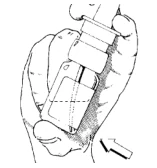
- 1. Do NOT shake the bottle.
- 2. Remove protective cap.
- 3.
The spray pump must be primed prior to the first use. To prime pump, press down 4 times.
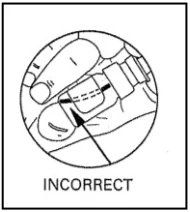
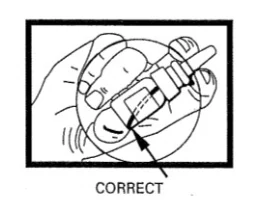
- 4. Once primed, the spray pump delivers 10 micrograms of medication each time it is pressed. To ensure dosing accuracy, tilt bottle so that dip tube inside the bottle draws from the deepest portion of the medication.
To administer one 10-microgram dose, place the spray nozzle in nostril and press the spray pump once. If a higher dose has been prescribed, spray half the dose in each nostril. The spray pump cannot be used for doses less than 10 micrograms or doses other than multiples of 10 micrograms.
- 5. Replace the protective cap on bottle after use. The pump will stay primed for up to one week. If the product has not been used for a period of one week, re-prime the pump by pressing once.
Using DDAVP® Spray for your child:
DDAVP® Spray should only be used in children who require a dose of 10 µg DDAVP® taken 1, 2 or 3 times daily.
Ask your child to gently blow his/her nose. If the nose is blocked because of a cold or allergies, DDAVP® may not work as well.
- 1. Do NOT shake the bottle.
- 2. Remove protective cap.
- 3. The spray pump must be primed prior to the first use. To prime pump, press down 4 times.
- 4. Once primed, the spray pump delivers 10 micrograms of medication each time it is pressed. To ensure dosing accuracy, tilt bottle so that dip tube inside the bottle draws from the deepest portion of the medication.
5 Always keep the bottle upright so the tube stays in the liquid and no air gets inside the tube. If an air bubble forms, the right amount of spray will not come out.
- 6.
Tilt the child’s head back a little bit and insert the nozzle into one nostril.
Ask the child to take a deep breath in and hold his/her breath only while you spray DDAVP® into the nostril.
For each spray, press down firmly on the white collar using your index and middle fingers. Support the base of the bottle with your thumb.
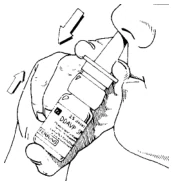
- 7. Remove the nozzle from the child’s nostril.
- 8. Have your child place one finger on the outside of the nostril you just sprayed.
- 9. Slowly count to 10 out loud. As you count, the child should hold the nostril closed so the spray will not drip out.
- 10. When you reach 10, the child can release the finger and breathe normally.
- 11. Replace the protective cap on bottle after use. The pump will stay primed for up to one week. If the product has not been used for a period of one week, re-prime the pump by pressing once.
Using DDAVP® Rhinyle:
Note: 0.05 mL solution contains 5 µg
0.1 mL solution contains 10 µg
0.2 mL solution contains 20 µg
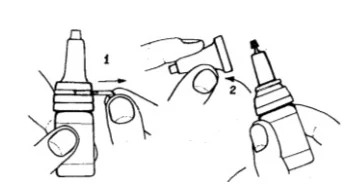
- 1. Pull plastic tag on neck of bottle and tear off security seal.
- 2. Remove plastic cap and retain for reclosure.
- 3.
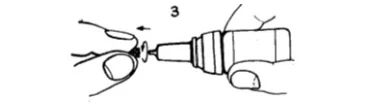
Twist-off the inner seal at the tip of the plastic teat and retain for reclosure.
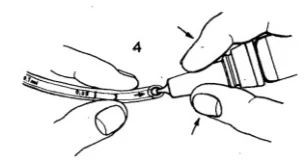
Take the arrow marked end of the rhinyle in one hand and place the finger and thumb of the other hand around the plastic teat.
Insert the tip of the plastic teat in a downward position into the arrow marked end of the rhinyle and gently squeeze the teat until the solution has reached the desired graduation mark. N.B. In order to prevent air bubbles forming in the rhinyle, maintain steady pressure on the plastic teat.
If difficulty filling the rhinyle is experience, a diabetic or tuberculin syringe may be used to draw up the dose and load the rhinyle tube.
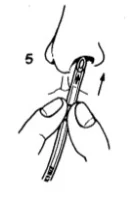
- 4. Hold the rhinyle with the tips of finger and thumb 1 ½-2 cm from the arrow marked end and insert it into a nostril until the finger tips touch the nostril.
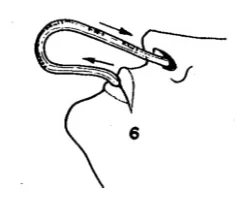
- 5. Place the other end of the rhinyle in the mouth. Hold the breath, tilt back the head and then blow with a short strong puff through rhinyle so that the solution reaches the right place in the nasal cavity. Through this procedure, medication is limited to the nasal cavity and the solution does not pass down the pharynx.
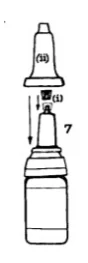
- 6. After use, close the bottle using both the inner plastic tip seal (i) and the outer plastic cap (ii). The use of both seals prevents wasteful loss by evaporation during refrigeration storage.
- 7. Rinse the rhinyle under running water and shake thoroughly until no more water is left. The rhinyle can then be used for the next application
Using DDAVP® Rhinyle for your child:
Follow DDAVP® Rhinyle instructions Steps 1 to 7.
Note: Step 5 for children unable to perform the step on their own, place the other end of the Rhinyle in your mouth. Tilt back your child’s head and then blow with a short puff through rhinyle so that the solution reaches the right place in the nasal cavity.
Usual Dose
Take the medication only as directed by your doctor.
The doctor will prescribe the dose most suitable for you or your child. The most commonly used doses are:
Children (3 months to 12 years):
5–30 µg daily given as a single dose or divided into two or three doses.
Adults:
10-40 µg daily given as a single evening dose or divided into two or three doses.
Overdose:
If you or your child take too much of the medication, you should immediately contact your doctor and/or the emergency room of the nearest hospital and the local poison center. Symptoms of overdose may include headache, nausea, vomiting, abdominal cramps, facial flushing and weight gain due to water retention and, in severe cases, convulsions.
Missed dose:
If you miss a dose of DDAVP® Spray and Rhinyle, take the missed dose as soon as possible. Then go back to your regular dosing schedule. However, if it is almost time for your next dose, skip the missed dose and go back to your regular dosing schedule. Do not double dose.
SIDE EFFECTS AND WHAT TO DO ABOUT THEM
As with all medicines, side effects may be experienced. With DDAVP® Spray and Rhinyle, these may include:
Common Side Effects
Headache, nausea, mild abdominal pain, cramps or discomfort, stuffy nose, nasal irritation, facial flushing and nose bleed.
Uncommon Side Effects
Dizziness, feeling cold, wheezing, rash, swelling in the face and hands, constipation, anorexia (obsession with thinness generally sought through self-starvation), increased appetite (excessive desire for food), conjunctivitis (pink eye or red eye) and an after-taste in the mouth.
Rare Side Effects
Emotional problems in children and allergic skin reactions.
Severe general allergic reactions have been reported.
Other adverse events reported include: high blood pressure, shortness of breath, diarrhea, itchiness, rash and hives.
These have occurred usually when the medication is being adjusted. Once you are taking the right amount of medicine for your condition, these side effects will usually go away. Tell your doctor about any side effects you experience.
Excessive fluid intake may lead to a build up of water which dilutes the salt in the body in severe cases. This can become a serious problem and may lead to convulsions. Early symptoms may include an unusually bad or prolonged headache, confusion, unexplained weight gain, nausea and vomiting. If you experience one or more of these symptoms, stop taking this medicine. Tell your doctor immediately or go to the nearest emergency hospital.
| SERIOUS SIDE EFFECTS, HOW OFTEN THEY HAPPEN AND WHAT TO DO ABOUT THEM | |||||||
|---|---|---|---|---|---|---|---|
| Symptoms / effect | Talk with your doctor or pharmacist | Stop taking drug and call your doctor or pharmacist | |||||
| Only if severe | In all cases | ||||||
| Rare | hyponatremia (low blood sodium level) | Τ | Τ | ||||
| Very Rare | allergic reaction | Τ | Τ | ||||
This is not a complete list of side effects. For any unexpected effects while taking DDAVP® Spray and Rhinyle, contact your doctor or pharmacist.
HOW TO STORE IT
DDAVP® Spray should be stored at room temperature, 15-30º C. Do not freeze. Store in upright position.
Keep out of reach of children.
DDAVP® Rhinyle should be stored in refrigerator at 2 to 8º C. Keep out of reach of children.
REPORTING SUSPECTED SIDE EFFECTS
To monitor drug safety, Health Canada through the Canada Vigilance Program collects information on serious and unexpected side effects of drugs. If you suspect you have had a serious or unexpected reaction to this drug you may notify Canada Vigilance:
By toll-free telephone: 866-234-2345
By toll-free fax: 866-678-6789
Online: www.healthcanada.gc.ca/medeffect
By email: CanadaVigilance@hc-sc.gc.ca
By regular mail:
Canada Vigilance National Office
Marketed Health Products Safety and Effectiveness Information Division
Marketed Health Products Directorate
Health Products and Food Branch
Health Canada
Tunney’s Pasture, AL 1980C
Ottawa ON K1A 0K9
NOTE: Should you require information related to the management of the side effect, please contact your health care provider before contacting Canada Vigilance. The Canada Vigilance Program does not provide medical advice
MORE INFORMATION
For more information or help, call 1-866-384-1314
® Registered Trademark of Ferring BV

Ferring Inc., Toronto, Ontario