


Product Monograph - Ddavp Spray
SUMMARY PRODUCT INFORMATION
| Route of Administration | Dosage Form / Strength | Clinically Relevant Nonmedicinal Ingredients |
| Intranasal | Spray 10 μg/metered dose Solution 0.1 mg/mL | DDAVP Spray: sodium chloride citric acid monohydrate, disodium hydrogen phosphate dihydrate, benzalkonium chloride DDAVP Rhinyle: sodium chloride, hydrochloric acid, chlorobutanol For a complete listing see Dosage Forms, Composition and Packaging section. |
INDICATIONS AND CLINICAL USE
Diabetes Insipidus
DDAVP (desmopressin acetate) is indicated for the management of vasopressin sensitive central diabetes insipidus and for the control of temporary polyuria and polydipsia following head trauma, hypophysectomy or surgery in the pituitary region.
CONTRAINDICATIONS
- Hypersensitivity to desmopressin acetate or to any of the constituents.
- Type IIB or platelet-type (pseudo) von Willebrand's disease.
- Habitual or psychogenic polydipsia.
- Cardiac insufficiency or other conditions requiring treatment with diuretics.
- Moderate or severe renal insufficiency.
- Known hyponatremia.
- Primary Nocturnal Enuresis (PNE).
- Syndrome of inappropriate ADH secretion (SIADH)
Worldwide post-marketing data indicate a higher incidence of hyponatremia in patients being treated with the desmopressin intranasal formulations compared to the oral formulations (DDAVP Tablet and DDAVP Melt). Since safer formulations are available, intranasal formulations are contraindicated for use in primary nocturnal enuresis.
WARNINGS AND PRECAUTIONS
Hyponatremia is the most serious adverse event reported for desmopressin, resulting from water retention caused by the potent antidiuretic effect of desmopressin. Desmopressin may lead to water intoxication and/or hyponatremia. Unless properly diagnosed and treated, hyponatremia can be fatal. Therefore, fluid restriction is recommended and should be discussed with the patient and/or guardian. Careful medical supervision is required.
For intranasal use only. DDAVP (desmopressin acetate) is not effective in controlling polyuria caused by renal disease, nephrogenic diabetes insipidus, psychogenic diabetes insipidus, hypokalemia or hypercalcemia.
Fluid intake or desmopressin dosage should be adjusted in order to reduce the possibility of water retention and hyponatremia especially in very young and elderly patients or when significant daily variables occur such as hot climate conditions, intense exercise or other situations where increased water intake can be expected (see Dosage and Administration). Particular attention should be paid to the risk of an extreme decrease in plasma osmolality and resulting seizures in young children. Should prodromal symptoms of water retention occur (e.g. headache, nausea / vomiting, weight gain and, in severe cases, convulsions), which may herald impending hyponatraemia, treatment should be discontinued immediately and the patient should seek medical assessment.
Severe bladder dysfunction and outlet obstruction should be ruled out before starting treatment.
Changes in the nasal mucosa resulting from rhinitis, scarring, edema or other disease may cause erratic, unreliable absorption in which case intranasal desmopressin should not be used. In the case of temporary rhinitis, consideration should be given to using an injectable form of desmopressin, until the nasal mucosa returns to normal.
General
Desmopressin acetate at high dosage (40 μg or more) has very occasionally produced a slight elevation of blood pressure, which disappeared with a reduction in dosage. The drug should be used with caution in patients with coronary artery insufficiency and/or hypertensive cardiovascular disease because of possible tachycardia and changes in blood pressure.
In the control of diabetes insipidus, the lowest effective dose should be used and the effective dosage, as determined by urine volume and osmolality and, in some cases, plasma osmolality, should be assessed periodically.
Desmopressin should not be administered to dehydrated patients until water balance has been adequately restored.
Desmopressin should be used with caution in patients with conditions associated with fluid and electrolyte imbalance such as cystic fibrosis, heart failure, and renal disorders because these patients are prone to hyponatremia. Treatment should be interrupted or carefully adjusted during acute intercurrent illnesses characterised by fluid and/or electrolyte imbalance (such as systemic infections, fever, gastroenteritis). When restarting treatment strict fluid restriction should be enforced.
Desmopressin should also be used with caution in patients at risk for increased intracranial pressure.
Children and geriatric patients should be closely observed for possible water retention due to over-ingestion of fluids. When fluid intake is not excessive, there is little danger of water intoxication and hyponatremia with the usual intranasal doses of desmopressin used to control diabetes insipidus. Fluid intake should be carefully adjusted to prevent over hydration.
There are reports of changes in response over time, usually when the drug has been administered for periods longer than 6 months. Some patients may show decreased responsiveness, others a shortened duration of effect. There is no evidence that this effect is due to the development of binding antibodies, but may be due to local inactivation of the peptide.
There is some evidence from post-marketing data for the occurrence of severe hyponatremia in association with the nasal spray formulation of desmopressin, when it is used in the treatment of cranial diabetes insipidus. DDAVP nasal spray should only be used in patients where orally administered formulations are not feasible.
Children, elderly and patients with serum sodium levels in the lower range of normal may have an increased risk of hyponatraemia. The hyponatraemia is reversible and in children it is often seen to occur in relation to changes in daily routines affecting fluid intake and/or perspiration.
Due to the presence of benzalkonium chloride DDAVP Nasal spray may cause bronchospasm.
Special Populations
Pregnant Women
Reproductive studies performed in rats and rabbits have revealed no evidence of harm to the fetus by desmopressin. The use of desmopressin in pregnant women with no harm to the fetus has been reported. However, no controlled studies in pregnant women have been carried out.
One investigator has reported three cases of malformations in children born to mothers suffering from diabetes insipidus and receiving desmopressin during pregnancy. However, several other published reports comprising more than 120 cases showed that women treated with desmopressin during pregnancy have given birth to normal children. Furthermore, a review of a very large data set identifying 29 children who were exposed to desmopressin during the entire pregnancy showed no increase in the malformation rate in the children born. Unlike preparations containing the natural hormone, DDAVP in antidiuretic doses has no uterotonic action, but the physician should weigh possible therapeutic advantages against potential risks in each case.
Nursing Women
There have been no controlled studies in nursing mothers. A single study on a post-partum woman demonstrated a marked change in maternal plasma desmopressin level following an intranasal dose of 10 μg, but little desmopressin was detectable in breast milk. Results from analysis of milk from nursing mothers receiving high doses of desmopressin (300 μg intranasal), indicate that the amounts of desmopressin that may be transferred to the child are considerably less than the amounts required to influence diuresis.
Pediatrics
DDAVP (desmopressin acetate) has been used in children with diabetes insipidus. The dose must be individually adjusted to the patient with attention in the very young to the danger of an extreme decrease of plasma osmolality with resulting convulsions. Dosage in infants younger than 3 months has not been established. Dose should start at 5 μg or less. Use of desmopressin in infants and children will require careful fluid intake restriction to prevent possible hyponatremia and water intoxication.
Administration of DDAVP nasal spray or solution in children should occur under adult supervision, in order to ensure the correct dosage intake.
Geriatrics
Older patients may be more sensitive to the antidiuretic effect of the usual adult dose of DDAVP. Patients over the age of 65 should be closely observed for possible water retention due to over-ingestion of fluids. Fluid intake should be carefully adjusted to prevent over-hydration.
Monitoring and Laboratory Tests
Diagnosis of Central Diabetes Insipidus
Central diabetes insipidus may be demonstrated by the inability to produce urine of osmolality above 175 mOsm/kg with dehydration severe enough to cause a loss of greater than 2% of body weight.
Patients are selected for therapy by establishing a diagnosis by means of a water deprivation test, the hypertonic saline infusion test, and/or response to 5 units arginine vasopressin given s.c. after dehydration. Continued response to DDAVP can be monitored by urine volume and osmolality. In cases of severe dehydration, plasma osmolality determination may be required.
ADVERSE REACTIONS
Adverse Drug Reaction Overview
The most serious adverse reaction with desmopressin is hyponatraemia/water retention, which is associated with headache, nausea, vomiting, decreased serum sodium, weight increase, malaise, muscle cramps, confusion, and in severe cases convulsions and coma.
High doses of desmopressin have produced transient headache and nausea. Nasal congestion, rhinitis, high body temperature, flushing, and mild abdominal cramps have also been reported. These symptoms disappeared with reduction in dosage.
Very rare cases of emotional disturbances (affect lability, nightmare, nervousness and aggression) in children have been reported. Isolated cases of allergic skin reactions and more serious general allergic reactions have been reported.
Other common adverse reactions were upper respiratory tract infection and gastroenteritis.
Side effects reported from controlled clinical trials involving 638 subjects included headache (2 %), rhinitis (1%), nasal discomfort (1%), epistaxis (1%) and abdominal pain (1%). Other effects, reported at a frequency of less than 1%, included dizziness, chills, wheezing, rash, edema of face and hands, nausea, constipation, anorexia, increased appetite, conjunctivitis and after taste in the mouth. These symptoms disappeared with reduction of dosage or withdrawal of drug. Adverse effects rarely necessitated discontinuance of the drug.
Post-Market Adverse Drug Reactions
Desmopressin is a potent antidiuretic, which may lead to water intoxication and/or hyponatremia. Hyponatremia has been reported at an approximate rate of 5 cases per 10 million doses from worldwide post marketing experience in patients treated with DDAVP intranasal formulations. The reported rate for DDAVP oral formulations worldwide is considerably less at about 1 case per 10 million doses. Patients are recommended to take the oral formulations (e.g., DDAVP Melt) which are available for children with PNE.
Unless properly diagnosed and treated, hyponatremia can be fatal. Therefore, fluid restriction is recommended and should be discussed with the patient and/or guardian. Careful medical supervision is required.
Severe general allergic reactions have been reported.
Other adverse events reported include: dehydration, somnolence, fatigue, hypertension, dyspnea, diarrhea, pruritis, muscle spasms, rash and urticaria, peripheral edema, chest pain and chills.
DRUG INTERACTIONS
Overview
Clofibrate, chlorpropamide) and carbamazepine) are known to potentiate the antidiuretic activity of desmopressin leading to an increased risk of water retention/hyponatremia, while demeclocycline, lithium and norepinephrine may decrease its activity. Indomethacin increases the urine concentrating effect of desmopressin without influencing the duration. The effect is probably without any clinical significance.
Although the pressor activity of desmopressin is very low compared with the antidiuretic activity, use of large doses of desmopressin with other pressor agents should be done only with careful patient monitoring.
Precautions to avoid hyponatraemia, including careful attention to fluid restriction and more frequent monitoring of serum sodium, must be taken in case of concomitant treatment with drugs, which are known to induce SIADH, e.g. tricyclic antidepressants, selective serotonin reuptake inhibitors, such as chlorpromazine, and carbamazepine, and some antidiabetics of the sulfonylurea group particularly chlorpropamide, and in case of concomitant treatment with NSAIDs, since these may cause an additive antidiuretic effect leading to an increased risk of fluid water retention/hyponatraemia.
The selective serotonin reuptake inhibitors (SSRIs, venlafaxine and citalopram), and the neuroleptic risperidone have been associated with water intoxication and hyponatremia in rare cases.
DOSAGE AND ADMINISTRATION
Central Diabetes Insipidus
Central diabetes insipidus may be demonstrated by the inability to produce urine of osmolality above 175 mOsm/kg with dehydration severe enough to cause a loss of greater than 2% of body weight (see Laboratory Tests).
Dosing Considerations
Dosage must be individualized but clinical experience has shown that the average daily dose for adults is 10 μg to 40 μg DDAVP (desmopressin acetate) and for children 3 months to 12 years of age, 5 μg to 30 μg. This may be given as a single dose or divided into two or three doses. About one third of patients can be treated with a single daily dose. Geriatric patients may be more sensitive to the antidiuretic effect of the usual adult dose of DDAVP.
Dosage in children with central diabetes insipidus up to 3 months of age has not been established.
DDAVP Spray is not indicated for use in children with Primary Nocturnal Enuresis (PNE).
Dosage
Children (3 months to 12 years)
The usual dose range is 5 µg to 30 µg daily either as a single dose or divided into two doses. About 1/3 of patients can be controlled by a single dose daily dose of DDAVP administered intransally.
DDAVP Spray pump can only deliver 0.1 ml (10 µg) or multiples of 0.1 ml. In those children who require less than 10 μg, the rhinyle presentation should be used. In some patients, better control of polyuria is attained with smaller doses given at 6 to 8 hour intervals.
DDAVP Spray should be used in children who only require a single dose of 10 µg or more. The spray pump must be primed prior to use. To prime pump, press down four times. The bottle will now deliver 10 µg of drug.
Adult
Average daily dose is 10 µg to 40 µg. Most adults require 20 μg daily, administered in two divided doses (in the morning and the evening). Initially, therapy should be directed to control nocturia with a single evening dose. Response to therapy can be measured by the volume and frequency of urination and duration of uninterrupted sleep. The dosage of DDAVP should be adjusted according to the diurnal pattern of response, with the morning and evening doses being adjusted separately. Patients being switched from parenteral to intranasal administration generally require 10 times their maintenance intravenous dose intranasally.
In order to minimize the risk of hyponatremia, the following should be considered a part of individualized dosage titration;
- Desmopressin should be given with caution and the dosage adjusted as necessary during acute illness, febrile episodes, hot days and other conditions with increased water intake.
To institute therapy with DDAVP, patients should be withdrawn from previous medication and allowed to establish a baseline polyuria to permit determination of the magnitude and duration of the response to medication. In less severe cases, prior water loading may be desirable to establish a vigorous flow of urine. When the urine osmolality reaches a plateau at low level (in most cases, less than 100 mOsm/kg), the first dose of DDAVP (10 μg) is administered intranasally. A urine sample is obtained after two hours and hourly thereafter following DDAVP administration. Urine volume and osmolality are measured. When the patient has reached the previous baseline urine osmolality and urine flow, the drug effect has ceased and the next dose of DDAVP is administered. The cycle is then repeated until the patient has reached a stable condition.
In the event of signs of water retention/hyponatremia, treatment should be interrupted and the dose should be adjusted. When restarting treatment strict fluid restriction should be enforced.
OVERDOSAGE
Overdose of DDAVP nasal spray or nasal drops solution leads to a prolonged duration of action with an increased risk of water retention and hyponatraemia. Overdose symptoms include headaches, abdominal cramps, nausea, and facial flushing. There is no known antidote. However, the following general recommendations can be provided. Asymptomatic hyponatremia is treated by discontinuing the desmopressin treatment and fluid restriction. Infusion of isotonic or hypertonic sodium chloride may be added in cases with symptoms. When the water retention is severe (convulsions and unconsciousness) treatment with furosemide should be added.
For management of a suspected drug overdose, contact your regional Poison Control Centre.
ACTION AND CLINICAL PHARMACOLOGY
Mechanism of Action
Desmopressin is a synthetic structural analogue of the antidiuretic hormone, arginine vasopressin, which alters the permeability of the renal tubule to increase resorption of water. The increase in the permeability of both the distal tubules and collecting ducts appears to be mediated by a stimulation of the adenylcyclase activity in the renal tubules.
Approximately 10 to 20% of the dose of desmopressin solution administered intranasally is absorbed through the nasal mucosa. Antidiuretic effects occur within 1 hour, peak in 1 to 5 hours, persist for 8 to 20 hours and then abruptly end over a period of 60 to 90 minutes. Duration of action varies greatly among individuals and is dependent upon the rate of absorption from the nasal mucosa, persistence in plasma, and effect on renal tubules.
Pharmacodynamics
Maximum urine concentration was studied in 10 healthy adults (24 to 37 years of age) after administration of 20, 40 and 80 μg DDAVP intranasally with one week between each administration. Maximum effect on urine osmolality occurred between 3 and 5 hours (Figure 1), and the 20 μg dose was as effective as the higher doses. There were no side effects and mean body weight increase during the 24 hours after DDAVP administration did not exceed 0.5 kg after any dose.
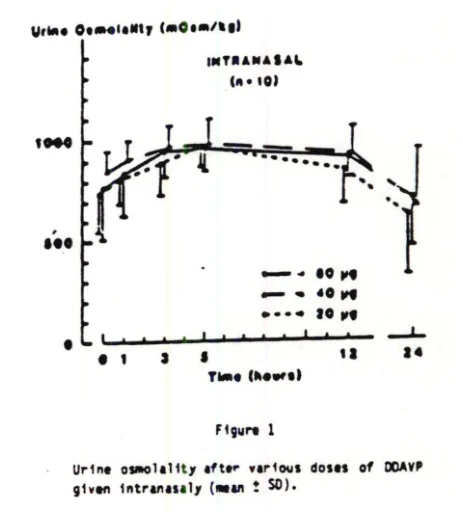
The use of DDAVP (desmopressin acetate) in patients with an established diagnosis of central diabetes insipidus will result in a reduction in urinary output with concomitant increase in urine osmolality and decrease in plasma osmolality. This will allow the resumption of a more normal lifestyle with a decrease in urinary frequency.
DDAVP does not directly affect urinary sodium or potassium excretion, or serum sodium, potassium, or creatinine concentrations. DDAVP does not stimulate uterine contractions, adrenocorticotropic hormone release or increase plasma cortisol concentrations. In children, intranasal administration of DDAVP has no effect on growth hormone, prolactin, or luteinizing hormone concentration. Intranasal doses of 20 μg of DDAVP have no effect on blood pressure or pulse rate, but mean arterial pressure may increase as much as 15 mm Hg with doses of 40 μg or more.
Pharmacokinetics
Absorption
Following intranasal administration of DDAVP, approximately 10-20% of a dose is absorbed through the nasal mucosa. Patients with nasal congestion may require an increased dosage. Following intranasal administration of usual doses of DDAVP in patients with neurohypophyseal diabetes insipidus, antidiuretic effects occur within 1 hour, peak in 1-5 hours, persist for 8-20 hours, and then abruptly end over a period of 60-90 minutes. Duration of action varies among individuals with a specific dose. The relatively prolonged duration of action of DDAVP may result from slower enzymatic inactivation of desmopressin than vasopressin or from sequestration of DDAVP in a membrane compartment.
Distribution
The distribution of desmopressin has not been fully characterized. It is not known if desmopressin crosses the placenta. Some of the drug may be distributed into breast milk.
Excretion
In contrast to the elimination of DDAVP after intravenous injection, which is bi-exponential with a rapid first phase and slower second phase half-life of 7.8 minutes and 75.5-103 minutes, respectively, the disappearance of DDAVP from plasma after intranasal administration follows an exponential time course with half-lives ranging between 0.4 to 4 hours after intranasal application.
The metabolic fate of desmopressin is unknown. Unlike vasopressin, desmopressin apparently is not degraded by aminopeptidases or other peptidases that cleave oxytocin and endogenous vasopressin in the plasma during late pregnancy.
STORAGE AND STABILITY
DDAVP Spray: Store upright at room temperature, 15-30°C. Do not freeze. Store out of the reach of children.
DDAVP Rhinyle: Keep in the refrigerator at 2-8°C. Store out of the reach of children.
DOSAGE FORMS, COMPOSITION AND PACKAGING
Rhinyle
Each mL contains: desmopressin acetate 0.1 mg, equivalent to 89 mcg desmopression in an isotonic, aqueous solution containing 0.5% chlorobutanol as a preservative. Bottles with plastic administration tube (Rhinyle). Two precalibrated and marked plastic administration tubes are included with each bottle.
Spray
Each pre-compression metered dose spray pump contains: desmopressin acetate 0.1 mg/mL, equivalent to 89 mcg desmopression, in a buffered, isotonic, aqueous solution. Also contains benzalkonium chloride as a preservative. Each depression delivers desmopressin acetate 10 µg. Spray bottles of 2.5 mL containing 25 doses and 5 mL containing 50 doses.
PART II: SCIENTIFIC INFORMATION
PHARMACEUTICAL INFORMATION
Drug Substance
Proper name: Desmopressin Acetate Intranasal Solution
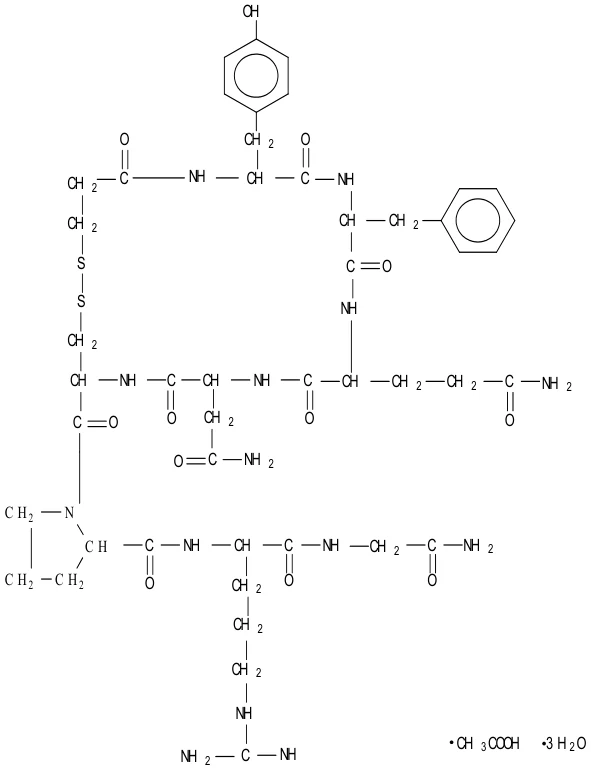
Chemical name: Desmopressin Acetate
Molecular formula and molecular mass:
(Acetate trihydrate) C48H74N14O17S2 M.W. = 1183.2
(Free Base) C46H64N14O12S2 M.W. = 1069.2
Structural formula:
Physicochemical properties: Desmopressin acetate is a white lyophilized powder. It is soluble in water, ethanol, methanol, and acetic acid, and sparingly soluble in chloroform and ethyl acetate. An aqueous solution of 1 mg/mL at 24º C has a pH of 4.8.
CLINICAL TRIALS
Diabetes Insipidus
Central diabetes insipidus (CDI), characterized by polyuria and compensatory polydipsia, results from a lack of natural antidiuretic hormone (AVP). DDAVP administered to CDI patients compensates for the lack of AVP by altering kidney tubule permeability resulting in resorption of water. Seven patients with previously untreated hereditary, hypothalamic diabetes insipidus self-administered DDAVP intranasally (Table 1). Mean urine volume during DDAVP therapy was 1.77 litres/24 hours, compared to a mean 7.11 litres/24 hours prior to treatment. All patients maintained normal values of Hb concentration, haematocrit, WBC, differential count, and serum concentrations of sodium, potassium, calcium, and creatinine. Creatinine clearances were within normal limits, as were the morning levels of plasma cortisol. All showed a normal response to ACTH. Protein-bound iodine and I-tests were normal as were determinations of 17-keto and 17-hydroxy steroids. X-ray examination of femurs and humeri, with respect to fluorosis, revealed no abnormalities. There were no reported or observed side effects.
Table 1. Daily Urine Volumes Before, During, and Immediately After Withdrawal of Therapy with DDAVP Intranasally, According to Measurements Performed by the Patients at Home (Mean of Determinations on 3 Days)
| Pat. No. | Sex | Age (yr) | Before treatment (1/24h) | DDAVP dose (μg) | During treatment (1/24h) | Treatment withdrawn (1/24h) |
1 2 3 4 5 6 7 8 | M M M F M F F F | 38 42 44 40 56 22 72 6 | 15.2 7.4 6.6 6.6 5.0 3.5 2.5 3.0 | 20 x 2 10 x 2 20 x 2 5 x 2 10 x 2 5 x 2 No treatment 3 x 2 | 2.2 2.1 2.0 1.9 1.9 1.7 No treatment 0.6 | 21.2 11.0 16.2 10.5 8.1 5.6 No treatment 4.5 |
TOXICOLOGY
Acute Toxicity
The acute toxicity of desmopressin acetate is very low (Table 2). Mice tolerate IV doses of 2 mg/kg. At IV doses of 30 μg/kg in rats and 50 μg/kg in rabbits, only transient changes in clinical behaviour were observed. Intravenous doses up to 24 μg/kg in dogs did not produce any cardiovascular changes.
Table 2. Acute Toxicity of DDAVP
| Species | Number | LD50 Dose | Route | Reference |
Mice Rats Rabbits Dogs | 10 (both sexes) 12 (both sexes) 6 (both sexes) 5 males | > 2 mg/kg > 30 μg/kg > 50 μg/kg > 24 μg/kg | IV IV IV IV | Vavra, 1968 Chau, 1982a Chau, 1982b Cort, 1978 |
Subacute Toxicity
Results from 14-day studies show that the drug given intravenously to rats at 18 μg/kg/day and to rabbits at 6 μg/kg/day caused no biologically significant changes in hematological and clinical chemistry parameters.
Rats which received 5 mg/kg/day subcutaneously for 3 weeks did not show any significant changes in weight, blood count, or organ changes.
Chronic Toxicity - (Subcutaneous Administration)
Rat Studies
In a controlled 8-week experiment, 20 rats received 2 μg/kg/day subcutaneous desmopressin acetate. No increase in blood glucose or morphological or histological pancreatic changes occurred. Rats (20 per group) which received desmopressin acetate doses of 5, 50 or 500 ng/kg/day, for 6 months did not show any significant changes in weight, blood values, or levels of transaminases. The weight of hearts, lungs, and kidneys decreased in female animals in the lower dose groups but not in the higher ones. In the male animals a decrease in non-esterifiable fatty acids was noted.
Dog Subcutaneous Studies
Dogs (3 per group) which received subcutaneous doses of 10 and 100 ng/kg/day desmopressin acetate for 6 months did not show any significant changes in comparison with control groups in blood sugar or transaminases and did not show histological or morphological organ changes.
Reproduction Studies
In teratogenicity testing in Wistar rats, no teratologic or embryotoxic effects were observed in 369 fetuses from 40 females dosed with up to 50 ng/kg/day desmopressin acetate subcutaneously on Day 1 through Day 20 of gestation.
In a study of 78 Dutch belted rabbits which received subcutaneous desmopressin acetate up to 10 μg/kg/day on Day 6 through Day 18 of pregnancy, no teratogenic or embryotoxic effects were observed in 296 fetuses. Weaning was unaffected.
REFERENCES
- 1. Andersson KE, Arner B, Furst E, and Hedner P. Antidiuretic responses to hypertonic saline infusion, water deprivation, and a synthetic analogue of vasopressin in patients with hereditary hypothalamic diabetes insipidus. Acta. Med. Scand. 195:17, 1974.
- 2. Burrow GN, Wassenaar W, Robertson GL, and Sehl H. DDAVP treatment of diabetes insipidus during pregnancy and the post-partum period. Acta. End. 97:23,1981.
- 3. Chau, R. et al., Acute intravenous toxicity of DDAVP in rats, Revlon Health Care Group, October 29, 1982a.
- 4. Chau, R. et al., Acute intravenous safety of DDAVP in rabbits, Revlon Health Care Group, November 1, 1982b.
- 5. Cort, JH, Acute cardiological toxicity of ampouled desmopressin acetate. Mount Sinai School of Medicine, New York, January 15, 1978.
6 Davis JRE et al. Iatrogenic water intoxication in psychogenic polydipsia. Scott. Med. J. 26: 148, 1981.
- 7. Ferrer J et al. Acute water intoxication after intranasal desmopressin in a patient with primary polydipsia. J. Endocrinol. Invest. 13: 663, 1990.
- 8. Hilton P, and Stanton SL. The use of desmopressin (DDAVP) in nocturnal urinary frequency in the female. Br. J. Urology 54:252, 1982.
- 9. Hilton P, Hertogs K, and Stanton SL. The use of desmopressin (DDAVP) for nocturia in women with multiple sclerosis. J. of Neur. Neurosurg. and Psychiatry 46: 854, 1983.
- 10. Hutchon DJR, VanZijl JAWM, Campbell-Brown BM, and McFayden IR. Desmopressin as a test of urinary concentrating ability in pregnancy. J. Obstet. Gyn. 2:206, 1982.
- 11. Kνllén, BAJ et al. Diabetes insipidus and use of desmopressin (Minirin) during pregnancy. Eur. J. of Endocrinol. 132: 144-6 (1995).
- 12. Linder N, Matoth I, Ohel G, Yourish D, Tamir I. L-deamino-8-d-arginine vasopressin treatment in pregnancy and neonatal outcome. A report of three cases. Am. J. Perinatol. 3: 165, 1986.
- 13. Moses MA et al. Antidiurectic response to injection desmopressin, alone and with indomethacin. J Clin. Endocrinol. Metab. 52: 8910-8913 (1981).
- 14. Ray JG. DDAVP use during pregnancy: an analysis of its safety for mother and child. Obstetrical and Gynecological Survey. 53 (7) 450-455 (1998).
- 15. Singer I, and Forrest JN. Drug-induced states of nephrogenic diabetes insipidus. Kidney Int. 10:82, 1976.
- 16. Tryding N, Sterner G, Berg B, Harris A, and Lundin S. Subcutaneous and intranasal administration of Desamino-d-arginine vasopressin in the assessment of renal concentration capacity. Nephron 45:27-30 (1987).
- 17. Vavra I, Machova A, and Cort JH. Official translation of the pharmacological and toxicological report on DDAVP for the Ministry of Health, Prague, Czechoslovakia, 1968.