


Product Monograph - Octostim Spray
SUMMARY PRODUCT INFORMATION
| Route of Administration | Dosage Form / Strength | Nonmedicinal Ingredients |
| Intravenous | 15 µg/mL | Hydrochloric acid, purified water, sodium chloride |
| Intranasal | 1.5 mg/mL (each metered dose delivers 150 µg/spray) | Benzalkonium chloride solution, citric acid monohydrate, disodium phosphate dihydrate, purified water, sodium chloride |
INDICATIONS AND CLINICAL USE
Octostim® injection and nasal spray is indicated for:
- The prevention of bleeding in patients with mild hemophilia A and mild von Willebrand’s disease Type I.
Octostim® injection is indicated for:
- The prevention or treatment of bleeding in patients with uremia.
Hemophilia A
OCTOSTIM® is indicated for patients with hemophilia A with Factor VIII levels greater than 5%.
OCTOSTIM® will often maintain hemostasis in patients with hemophilia A during surgical procedures and postoperatively, when injected 30 minutes prior to or administered by nasal spray 2 hours prior to the scheduled procedure.
OCTOSTIM® will also stop bleeding in hemophilia A patients with episodes of spontaneous or trauma-induced injuries such as hemarthroses, intramuscular hematomas or mucosal bleeding.
In certain clinical situations, it may be justified to try OCTOSTIM® in patients with Factor VIII levels between 2-5%, however, these patients should be carefully monitored.
Von Willebrand’s Disease (Type I)
OCTOSTIM® injection is indicated for patients with mild to moderate classic von Willebrand’s Disease (Type I) with Factor VIII levels greater than 5%. OCTOSTIM® will often maintain hemostasis in surgical procedures and postoperatively when administered 30 minutes prior to, or administered by nasal spray 2 hours prior to the scheduled procedure.
OCTOSTIM® will usually stop bleeding in mild to moderate von Willebrand’s patients with episodes of spontaneous or trauma-induced injuries such as hemarthroses, intramuscular hematomas or mucosal bleeding.
Those von Willebrand’s disease patients who are least likely to respond are those with severe homozygous von Willebrand’s disease with Factor VIII antigen and von Willebrand’s Factor (ristocetin cofactor) activities less than 1%. Other patients may respond in a variable fashion depending on the type of molecular defect they have. Bleeding time and Factor VIII coagulant activity, Factor VIII antigen and von Willebrand’s Factor activities should be checked during administration of OCTOSTIM® to ensure that adequate levels are being achieved.
OCTOSTIM® is not indicated for the treatment of severe classic Type I von Willebrand’s disease and Type II B and when there is evidence of an abnormal molecular form of Factor VIII antigen (See CONTRAINDICATIONS.)
Other Hemostatic Disorders
OCTOSTIM® injection is indicated for the treatment of prolonged bleeding time in patients with uremia. It will assist in the maintenance of hemostasis in such patients during surgical procedures and post operatively when administered prior to the procedure.
Therapeutic efficacy (i.e. normalization of bleeding time) should be established in individual patients at the time of diagnosis of the bleeding disorder, or at least 72 hours prior to an elective treatment, by administration of a test dose of OCTOSTIM® (see Laboratory Tests in WARNINGS AND PRECAUTIONS section).
CONTRAINDICATIONS
OCTOSTIM® is contraindicated in patients with known hypersensitivity to desmopressin acetate, the nasal spray is also contraindicated patients with known hypersensitivity to the preservative.
Because of the risk of platelet aggregation and thrombocytopenia, OCTOSTIM® should not be used patients with type II B or platelet-type (pseudo) von Willebrand’s disease.
OCTOSTIM® should not be used in patients with cardiac insufficiency, or other conditions requiring treatment with diuretic agents.
OCTOSTIM® nasal spray should not be used in cases of habitual and psychogenic polydipsia, presence or a history of hyponatremia or Syndrome of Inappropriate ADH secretion (SIADH).
WARNINGS AND PRECAUTIONS
OCTOSTIM® (desmopressin acetate) treatment without concomitant restriction of water intake may lead to water retention/hyponatremia with or without accompanying signs and symptoms (reduced serum sodium, weight gain, and, in severe cases, convulsions). Other signs include persistent headache and nausea/vomiting. If these symptoms are present, serum sodium must be checked. The fluid intake should be restricted to the least possible and the body weight should be checked regularly. Should there be a gradual increase of the body weight, a decrease of serum sodium to below 130 mmol/1 or plasma osmolality to below 270 mOsm/kg body weight, the fluid intake must be reduced drastically and the administration of OCTOSTIM® interrupted.
Precautions to prevent fluid overload must be taken in:
- the very young and elderly patients
- conditions characterized by fluid and/or electrolyte imbalance
- patients at risk for increased intracranial pressure
Children, elderly and patients with serum sodium levels in the lower range of normal may have an increased risk of hyponatraemia.
Treatment with desmopressin should be interrupted or carefully adjusted during acute intercurrent illnesses characterized by fluid and/or electrolyte imbalance (such as systemic infections, fever, gastroenteritis), and the fluid and electrolyte balance should be carefully monitored, especially in situations with excessive bleeding.
Particular attention should be paid to the possibility of the rare occurrence of an extreme decrease in plasma osmolality that may result in seizures, which could lead to coma.
OCTOSTIM® must be used with caution in patients prone to vascular headaches, and patients with coronary insufficiency and hypertensive cardiovascular diseases because of possible changes in blood pressure and tachycardia.
Rapid infusion rates may result in severe hypotension; therefore, the speed of intravenous infusion of OCTOSTIM® should not be shorter than 20-30 minutes. A maximum dose of
0.3 µg/kg should not be exceeded.
Lack of therapeutic effect has been noted in patients who have been febrile or otherwise “stressed” for several days. Whenever possible, therapeutic efficacy (i.e., Factor VIII response in hemophilia and bleeding time correction in other disorders) should be established in individual patients prior to use and followed throughout the course of treatment. The coincident use of anti-fibrinolytic agents to counteract desmopressin-induced plasminogen activator release has been recommended, however, benefit has not been clearly established.
The benefits of desmopressin versus other hemostatic therapies should be carefully assessed in situations where prolonged haemostasis is required including active postoperative bleeding and variceal bleeding in patients with cirrhosis.
Desmopressin should not be used routinely in the bleeding trauma patient (grade 2C). Desmopressin (0.3 μg/kg) can be administered in patients treated with platelet-inhibiting drugs or with von Willebrand disease (Grade 2C).
The addition of desmopressin does not improve and may worsen the efficacy of terlipressin in controlling acute variceal bleeding in cirrhotic patients.
Desmopressin use is not recommended in patients with cirrhosis undergoing elective surgery or at the time of variceal bleeding (B2). Desmopressin administration in patients with cirrhosis undergoing dental extraction may be considered (B2).
OCTOSTIM® should not be used to treat patients with Type IIB von Willebrand’s disease since platelet aggregation may be induced (see CONTRAINDICATIONS).
OCTOSTIM® should not be used in patients with Hemophilia B because it has no effect on Factor IX levels.
OCTOSTIM® has no therapeutic effect in Glazmann’s thrombaesthenia.
OCTOSTIM® does not reduce prolonged bleeding time in thrombocytopenia.
OCTOSTIM® spray should not be used when the intranasal route may be compromised. These situations include changes in the nasal mucosa such as scarring, edema, nasal congestion and blockage, nasal discharge, atrophy of nasal mucosa, and severe atrophic rhinitis. These conditions may lead to unreliable absorption. Intranasal delivery may also be inappropriate where there is an impaired level of consciousness. For such situations, OCTOSTIM® injection should be used.
Tachyphylaxis may develop with repeated use.
There have been rare reports of thrombotic events (thrombosis, cerebral thrombosis, cerebrovascular accident and disorder (stroke), acute myocardial infarction, angina pectoris and chest pain,) following desmopressin acetate injection in patients predisposed to thrombus formation. No causality has been determined; however, the drug should be used with caution in elderly patients and in patients with risk factors and history of thrombosis, thrombophilia and known cardiovascular disease.
Persistently increased endogenous Factor VIII levels are a risk factor for venous thromboembolism (VTE). The evidence for elevated vWF levels as a risk factor for VTE is less strong, but some studies have demonstrated an association.
Severe allergic reactions have been reported rarely. Fatal anaphylaxis has been reported in one patient who received intravenous OCTOSTIM®. It is not known whether antibodies to desmopressin acetate are produced after repeated administration.
OCTOSTIM® has an antidiuretic effect. Patients receiving this drug should be cautioned to reduce their ingestion of fluids for at least 6 hours after receiving the drug. Patients receiving intravenous fluids must be placed on fluid input/output monitoring.
Safety and effectiveness of OCTOSTIM® Spray in children under 11 months has not been demonstrated.
It is not known whether this drug is excreted in human milk. Because many drugs are excreted in human milk, caution should be exercised when OCTOSTIM® spray is administered to a nursing woman.
Due to the presence of benzalkonium chloride OCTOSTIM Nasal spray may cause bronchospasm, skin irritation.
General
Precautions must be taken in patients with moderate and severe renal insufficiency
(creatinine clearance below 50 ml/min).
Severe bladder dysfunction and outlet obstruction should be ruled out before starting treatment.
OCTOSTIM® (desmopressin acetate) produces changes in blood pressure; either an elevation or a decrease and a compensatory tachycardia. Subcutaneous and intranasal administration usually results in a slight change that is transient. Greater changes may occur with intravenous infusion, especially if administered rapidly (see WARNINGS). It should, therefore, be used with caution in patients with coronary artery insufficiency and/or hypertensive cardiovascular disease.
Before the initial therapeutic administration of OCTOSTIM® Spray, the physician should establish that the patient shows an appropriate change in the coagulation profile following a test dose of intranasal administration of OCTOSTIM® Spray.
OCTOSTIM® should not be administered to dehydrated patients until water balance has been adequately restored.
OCTOSTIM® should be used with caution in patients with cystic fibrosis because these patients are prone to hyponatremia. Children and geriatric patients should be closely observed for possible water retention due to over ingestion of fluids.
Special Populations
Pregnant Women:
There are no adequate and well-controlled studies in pregnant women. Published reports stress that, as opposed to preparations containing the natural hormone, desmopressin acetate in antidiuretic doses has no uterotonic action, but the physician will have to weigh the possible therapeutic advantage against potential danger in each case.
Reproduction studies performed in rats and rabbits have revealed no evidence of harm to the fetus due desmopressin acetate. Subcutaneous doses up to 4 times the human dose for Factor VIII stimulation on a mg/m2 basis (or 12.5 times the human dose on a mg/kg basis) and doses up to 4 times the human dose for diabetes insipidus on a mg/m2 basis (or 12.5 times the human dose on a mg/kg basis) were studied. There are several publications of management of diabetes insipidus in pregnant women with no harm to the fetus reported.
Published data on a limited number (n = 53) of exposed pregnancies in women with diabetes insipidus indicate no adverse effects of desmopressin on pregnancy or on the health of the foetus/newborn child. To date, no other relevant epidemiological data are available.
Animal studies do not indicate direct or indirect harmful effects with respect to pregnancy, embryonal/foetal development, parturition or postnatal development.
Caution should be exercised when prescribing to pregnant women.
Nursing Women:
There have been not controlled studies in nursing mothers. A single study on a post-partum woman demonstrated a marked change in plasma desmopressin acetate level following an intranasal dose of 10 μg, but little drug was detectable in breast milk. (See WARNINGS AND PRECAUTIONS).
Results from analyses of milk from nursing mothers receiving a high dose of desmopressin (300 μ g intranasally), indicate that the amounts of desmopressin that may be transferred to the child are considerably less than the amounts required to influence diuresis.
Pediatrics
No controlled trials have been conducted in children with renal insufficiency.
Use in infants and children will require careful fluid intake restriction to prevent possible hyponatremia and water intoxication. No controlled trials have been conducted in infants under 3 months of age with von Willebrand’s disease or Hemophilia A. The physician should weigh possible therapeutic advantages against potential risks in each case. OCTOSTIM Spray should not be used in infants younger than 11 months in the treatment of hemophilia A or von Willebrand’s disease.
Monitoring and Laboratory Tests
Hemophilia A
Laboratory tests for assessing patient status include levels of Factor VIII coagulant, Factor VIII antigen and Factor VIII ristocetin cofactor (von Willebrand factor) as well as activated partial thromboplastin time. Factor VIII coagulant activity should be determined before giving OCTOSTIM® for hemostasis. If Factor VIII coagulant activity is present at less than 5% of normal, OCTOSTIM® should not be relied upon alone.
von Willebrand’s Disease
Laboratory tests for assessing patient status include levels of Factor VIII coagulant, Factor VIII antigen and Factor VIII ristocetin cofactor (von Willebrand factor). The skin bleeding time may be helpful in following these patients and should always be assessed pre-operatively.
Uremia
A test dose of OCTOSTIM® should be administered at the time of diagnosis of the bleeding disorder, or at least 72 hours prior to an elective treatment. The skin bleeding times should be measured before and 1 hour after OCTOSTIM® administration.
ADVERSE REACTIONS
Adverse Drug Reaction Overview
The most serious adverse reaction with desmopressin is hyponatraemia/water retention, which is associated with headache, nausea, vomiting, water intoxication, decreased serum sodium, weight increase, malaise, abdominal pain, muscle cramps/spasms, dizziness, decreased consciousness, confusion, generalized or local oedemas (peripheral, face), and in severe cases brain oedema, hyponatraemic encephalopathy, convulsions and coma. Hyponatraemia is reversible in two thirds of the adult cases reported during post-marketing. In the rest of the cases, 7% are reported as not recovered at the time when the events were reported and 21% had an unknown outcome. Treatment should be individualised and rapid overcorrection should be avoided to reduce the risk of further complications.
Post-marketing hypersensitivity reactions including local allergic reactions such as dyspnoea, erythema, generalized or local oedemas (peripheral, face), pruritus, rash, rash macular, rash maculopapular, rash erythematous, skin plaque and urticaria, have been reported in association with DDAVP injection. More serious hypersensitivity reactions including anaphylactic shock and reaction, and anaphylactoid shock and reaction have also been reported in association with DDAVP injection. Allergic reactions usually occur rapidly after drug administration and may occur during first time usage or after repeated exposure of DDAVP injection.
Rare post marketing cases of deep vein thrombosis, cerebrovascular accident/disorder (stroke), cerebral thrombosis, hypertension, pulmonary embolism, myocardial infarction, angina pectoris and chest pain have been reported in patients treated with desmopressin.
Persistently increased endogenous FVIII levels are a risk factor for venous thromboembolism (VTE). The evidence for elevated vWF levels as a risk factor for VTE is less strong, but some studies have demonstrated an association.
OCTOSTIM® has produced transient headache, nausea, facial flushing, tachycardia, hypotension, oliguria, abdominal cramps and vulvar pain. Nasal congestion and rhinitis have also been reported with the nasal spray formulation. The frequency varies with the dosage and the route of administration.
See WARNINGS AND PRECAUTIONS for the possibility of water intoxication and hyponatremia. Very occasionally, intravenous injection of OCTOSTIM® has produced local erythema, swelling or burning pain along the course of the vein.
Side effects following intravenous administration to 297 patients included transient facial flushing (approximately 18%), fatigue (3%), headache (2%), and oliguria (1%). Other effects reported at a frequency of less than 1% included nausea, dizziness, syncope and abdominal cramping.
Side effects following subcutaneous administration to 190 subjects included transient facial flushing (7%). Other effects reported at a frequency of less than 1% included hypotension, transient headache, abdominal tension, nausea, tachycardia and discomfort at the injection site.
Side effects following intranasal administration to 78 patients included facial flushing and warmth (24%), dizziness or headache (13%), palpitations (9%), nausea (6%), fatigue (6%), red eyes (4%), decreased diuresis (3%), nasal congestion, rhinitis, tachycardia. Other effects reported at a frequency of less than 1% include abdominal cramps, allergic reactions both to desmopressin and to the preservative, somnolence.
Severe hypotension was observed in some patients who received OCTOSTIM® intravenously during cardiac surgical procedures and this may have resulted from rapid infusion rates. A dosage of 0.3 µg/kg should not be exceeded, and the infusion rate of 20 to 30 minutes should not be exceeded.
Additional Post-Marketing Adverse Reaction Reports
The following post-marketing events have been reported:
Respiratory, thoracic and mediastinal disorders – dyspnea
Gastrointestinal disorders – nausea, vomiting
Nervous system disorders – headache, dizziness
General disorders and administration site conditions - injection/infusion site reactions including swelling, pain, extravasation, erythema, bruising and nodules, generalized or local oedemas (peripheral, face), chills
DRUG INTERACTIONS
Overview
Although the pressor activity of desmopressin acetate is very low, its use with other pressor agents should be done only with careful patient monitoring.
DDAVP (desmopressin acetate) injection has been used with epsilon aminocaproic acid without adverse events.
Precautions to avoid hyponatraemia, including careful attention to fluid restriction and more frequent monitoring of serum sodium, must be taken in case of concomitant treatment with substances which affect water and/or sodium homeostasis, are known to release antidiuretic hormone and suspected to induce SIADH, e.g., opioids, tricyclic antidepressants, selective serotonin reuptake inhibitors, chlorpromazine, carbamazepine, antidiabetics of the sulfonylurea group particularly chlorpropamide, urea, fludrocortisone and NSAIDs, as these may cause an additive antidiuretic effect and increase the risk of water retention/hyponatraemia.
Desmopressin should be used cautiously in patients who are receiving lithium, large doses of epinephrine, demeclocycline, heparin or alcohol, because the antidiuretic response to desmopressin may be decreased.
Concurrent administration of clofibrate with desmopressin reportedly potentiates and prolongs the antidiuretic effect of desmopressin.
Indomethacin may augment the magnitude but not the duration of the response to desmopressin.
DOSAGE AND ADMINISTRATION
Administration
OCTOSTIM® injection is administered by subcutaneous injection or as an intravenous infusion over 20 to 30 minutes to provide a dose of 0.3 µg/kg. The maximum intravenous dose is 20 µg. If OCTOSTIM® injection is used pre-operatively, it should be administered 30 minutes prior to the scheduled procedure. The peak effect is obtained one hour after administration. Response is immediate for bleeding time reduction.
Dilution for Infusion
Dilute in sterile physiological saline and infuse slowly over 20 to 30 minutes. In adults and children weighing more than 10kg, 50 mL of diluent is used; in children weighing 10 kg or less, 10 mL of diluent is used.
OCTOSTIM® spray is administered by nasal inhalation, one spray per nostril, to provide a total dose of 300 µg. In patients weighing less than 50 kg, 150 µg is administered as a single spray to provide the expected effect on Factor VIII coagulant activity, Factory VIII ristocetin cofactor activity and skin bleeding time. If OCTOSTIM® spray is used pre-operatively, it should be administered 2 hours prior to the scheduled procedure.
The necessity for repeat administration of OCTOSTIM® or use of any blood products for hemostasis should be determined by laboratory response, as well as the clinical condition of the patient. The tendency toward tachyphylaxis (lessening of response) with repeated administration, given more frequently than every 48 hours should be considered in treating each patient.
OVERDOSAGE
OCTOSTIM® (desmopressin acetate) at excessive doses may cause headaches, abdominal cramps, nausea and facial flushing. In such cases the dosage should be reduced, frequency of administration decreased, or the drug withdrawn according to the severity of the condition. Rapid intravenous infusion may cause hypotension. A maximum intravenous dose of 0.3 µg/kg should not be exceeded. The infusion rate of 20 to 30 minutes should not be exceeded.
There is no known specific antidote for OCTOSTIM®. Water intoxication responds rapidly to diuretic therapy (e.g., furosemide) and appropriate replacement fluid support, without interference with hemostatic effects.
Overdosage leads to a prolonged duration of action with an increasesd risk of fluid retention and hyponatremia.
Although the treatment of hyponatremia should be individualized, the following general recommendations can be given. Asymptomatic hyponatremia is treated with discontinuation of desmopressin treatment and fluid restriction. Infusion of isotonic or hypertonic sodium chloride may be added in cases with symptoms. When fluid retention is serious (convulsions and unconsciousness), treatment with furosemide should be added.
| For up-to-date information on the management of a suspected drug overdose, contact the Regional Poison Control Center. |
ACTION AND CLINICAL PHARMACOLOGY
Mechanism of Action
OCTOSTIM® (desmopressin acetate) is a synthetic structural analogue of the natural human hormone, arginine vasopressin with deamination of 1-cysteine and substitution of 8-L-arginine by 8-D-arginine.
OCTOSTIM® administration causes a transient increase in all components of the Factor VIII complex (Factor VIII coagulant activity, Factor VIII related antigen, and ristocetin cofactor) and in plasminogen activator. Either directly or indirectly, OCTOSTIM® causes these factors to be released very rapidly from their endothelial cell storage sites. In addition, OCTOSTIM® may have a direct effect on the vessel wall, with increased platelet spreading and adhesion at injury sites.
A second dose given before endothelial cell stores are replenished will not have as great an effect as the initial dose. Responses as great as the initial one usually are seen if 48 hours or more have elapsed between doses.
The pharmacokinetic and pharmacodynamic profiles after subcutaneous or intravenous administration to healthy volunteers are equivalent. The plasma half-life following subcutaneous, intravenous and intranasal administration ranges from 3.2 to 3.6 hours.
Pharmacodynamics
Desmopressin causes a dose-dependent increase in plasma Factor VIII (antihemophilic factor), plasminogen activator, and, to a smaller degree, Factor VIII-related antigen and ristocetin cofactor activities. The mechanism by which desmopressin lowers bleeding time remains speculative.
Structural modifications of vasopressin present in desmopressin result in reduced smooth muscle contracting and vasopressor properties compared with vasopressin and lypressin. Initial studies of intranasal desmopressin at a subtherapeutic dose of 20 µg resulted in no effect on blood pressure or pulse rate, but mean arterial pressure increases as much as 15 mm Hg were observed with doses of 40 µg or more. In the therapeutic dose range, cardiovascular changes in normal, healthy volunteers were not considered to be clinically meaningful, but 27 of 32 volunteers had notable changes in systolic and/or diastolic blood pressure, and 8 had notable changes in pulse. Some volunteers experienced increases in diastolic blood pressure of greater than or equal to 20%; one volunteer experienced an increase in systolic blood pressure of 35% (40 mm Hg); and others experienced decreases in diastolic blood pressure, in some cases with compensatory tachycardia.
Desmopressin has been shown to interact with renal (V2) vasopressin receptors which mediate its antidiuretic effect on renal tubes. The extrarenal effects of Desmopressin in normal persons, which include stimulation of the release of Factor VIII coagulant and von Willebrand factory (ristocetin cofactor) and a decrease in blood pressure, may be mediated by interaction with receptors in other tissues which are similar to the renal V2 receptors.
Desmopressin has not been reported to stimulate uterine contractions.
Injection
Dose-response studies were performed in healthy persons, using doses of 0.1 to 0.4 µg/kg. OCTOSTIM® provokes an average increase in Factor VIII coagulant activity two to five times baseline levels.
Plasminogen activator activity increases about threefold, after OCTOSTIM® infusion, but is of such short duration of action that there has been no clinically significant fibrinolysis in patients treated with OCTOSTIM®. The Factor VIII related antigen and ristocetin cofactor activity were also increased to a smaller degree, but still were dose dependent. The above responses reach a maximum at a point ranging from one to two hours.
The effect of repeated OCTOSTIM® administration when doses were given every 12 to 24 hours has generally shown a gradual diminution of the Factor VIII activity increase, noted with a single dose. The initial dose is reproducible in any particular patient if there are 2 or 3 days between administration, when endothelial cell storage sites are replenished.
The percentage increase of Factor VIII levels in patient with mild haemophilia A and von Willebrand’s disease was not significantly different from that observed in normal healthy individuals when treated with 0.3 µg/kg of OCTOSTIM® infused over 10 minutes.
Desmopressin has also reportedly increased Factor VIII activity and to a lesser extent, Factor VIII related antigen and ristocetin cofactor in patients with uremia; these changes were accompanied by a shortening of bleeding time. In addition, the drug induced release into the plasma of the larger multimers of Factor VIII/von Willebrand factor in these patients.
Nasal Spray
Dose-response studies were performed in healthy persons using doses of 150 to 450 µg administered as one to three sprays. The response is dose-related, with maximal plasma levels of 150 to 250 percent of initial concentration achieved for both Factor VIII and von Willebrand factor. The increase is rapid and evident within 30 minutes, reaching a maximum at about 1.5 hours.
In patients with von Willebrand’s disease, levels of Factor VIII coagulant activity and von Willebrand’s factor antigen remained greater than 30 U/dL for 8 hours after a 300 µg dose of OCTOSTIM® spray.
After 300 µg of OCTOSTIM® spray, the percentage increase of Factor VIII and von Willebrand factor levels in patients with mild hemophilia A and von Willebrand’s disease was less than observed after 0.3 µg/kg of intravenous OCTOSTIM®.
In a trial comparing intranasal and intravenous Desmopressin in patients with mild/moderate hemophilia A or von Willebrand’s disease, an intranasal dose of 300 µg desmopressin resulted in a 54% and 75% respective increase in Factor VIII:C and von Willebrand antigen, compared to intravenous desmopressin. The mean maximum percent decrease in bleeding time following intranasal desmopressin was 1.5 times that observed following intravenous desmopressin.
Intranasal desmopressin was tested for prevention and therapy of bleeding complications in mild Factor VIII deficiency when these individuals were undergoing various procedures (surgery, dental extraction etc.), Factor VIII:C levels increased above baseline after intranasal administration of desmopressin. The change in levels was evident after 15 minutes, and peaked at 2 hours after dosing.
Desmopressin 300 µg intranasally generally leads to at least a twofold increase in plasma of factor VIII coagulant activity (VIII:C). Also the content of von Willebrand factor-antigen (vWF:Ag) increases, but to a lesser extent. At the same time there is a release of plasminogen activator (PA).
A prolonged bleeding time is shortened to the same extent after doses of either 300 µg desmopressin intranasally, or intravenous doses of 0.3 µg/kg body weight.
Pharmacokinetics
Injection
Following IV infusion of desmopressin, the increase in plasma Factor VIII activity occurs within 15-30 minutes and peaks between 90 minutes and 3 hours after administration; the increase in Factor VIII activity is dose dependent, with a 300-400% maximum increase reportedly occurring after IV infusion of 0.4 µg/kg dose. Plasma Factor VIII-related antigen activity has also been reported to peak within 3 hours after IV infusion of the drug. The subcutaneous route of OCTOSTIM® administered has been compared with the intravenous route in healthy volunteers and found to produce a bioequivalent response in terms of pharmacokinetic profile.
Desmopressin acetate was administered to 10 healthy volunteers in a randomized cross-over study at a dose of 0.4 µg/kg by intravenous infusion and subcutaneous injection. The pharmacokinetic data are summarized in Table 1.
Table 1: Pharmacokinetics of OCTOSTIM after subcutaneous and intravenous administration to 10 healthy volunteers. Mean ∀ S.D.
| Dose and route of administration | AUC (pg/h/mL-1) | Cmax (pg/mL) | Tmax (min) | Half-life (min-1) |
| 0.4µg/Kg i.v. | 3109 ± 1056 | 3.62 ± 0.42 | ||
0.4µg/Kg s.c. (4 µg/mL ampoule) | 3492 ± 659 | 568 ± 203 | 87 ± 66 | 3.50 ± 0.39 |
0.4µg/Kg s.c. (40 µg/mL ampoule) | 3164 ± 393 | 544 ± 46 | 60 ± 7 | 3.17 ± 0.33 |
Subcutaneous administration of OCTOSTIM® showed the same plasma half-life, from 3.2 to 3.6 hours, as intravenous OCTOSTIM®. The plasma profile indicates that the elimination of OCTOSTIM® from plasma follow first order kinetics. There is no significant difference in AUC between subcutaneous and intravenous OCTOSTIM®. A similar study in 14 hemophiliac patients also showed that the subcutaneous route of administration is bioequivalent to the intravenous route.
Nasal Spray
The bioavailability relative to intravenous administration is about 3-5%. Maximum plasma concentration following a dose of 300 µg is reached after approximately 1 hour and amounts to 400 pg/mL on average. The half-life of OCTOSTIM® spray was between 3.3 and 3.5 hours, over the range of intranasal doses, 150 to 450 µg. Plasma concentrations of OCTOSTIM® spray were maximal, approximately 40 to 45 minutes after dosing.
STORAGE AND STABILITY
OCTOSTIM® injection should be stored at refrigerator temperature 2-8° C. Do not freeze.
OCTOSTIM® spray should be stored in upright position at 15-25ºC. Do not freeze.
SPECIAL HANDLING INSTRUCTIONS
Diluted solutions
Continuous intravenous infusion
For intravenous infusion of OCTOSTIM® in adults and children weighing 10 kg or more, a dose of 0.3 µg/kg should be drawn up into a syringe, and added to an IV bag containing 50 mL of sterile physiological saline.
For children weighing less than 10 kg, a dose of 0.3 µg/kg should be added to 10 mL of sterile physiological saline.
It is recommended that the storage of the diluted solutions at room temperature does not exceed 24 hours.
DOSAGE FORMS, COMPOSITION AND PACKAGING
Composition
Each mL of OCTOSTIM® injection contains desmopressin acetate 15 µg, with sodium chloride and hydrochloric acid to adjust the pH to 3.5, in water for injection.
Each mL of OCTOSTIM® spray contains desmopressin acetate 1.5 mg, benzalkonium chloride, (preservative) citric acid monohydrate, disodium phosphate dihydrate purified water, and sodium chloride.
Availability
OCTOSTIM® injection is available in a 1 mL ampoule containing 15 µg desmopressin. Ampoules are clear glass with a red identification ring and a blue dot indicating the cut area.
Instructions for Opening Ampoules
- 1. Hold ampoule with blue dot pointing upwards. Shake or tap ampoule to empty the tip.
- 2. With blue dot pointing upwards, snap off tip by forcing it downwards.
OCTOSTIM® spray is available in 2.5 mL glass bottles furnished with a pre-compression pump with applicator and protection cap. The spray pump is designed to give 100 µ1 (0.1 mL or 150 µg desmopressin acetate) per activation. The nasal pump can only deliver doses of 150 µg or multiple doses of 150 µg. If doses other than these are required, OCTOSTIM® injection may be used.
PART II: SCIENTIFIC INFORMATION
PHARMACEUTICAL INFORMATION
Drug Substance
Proper name: Desmopressin Acetate
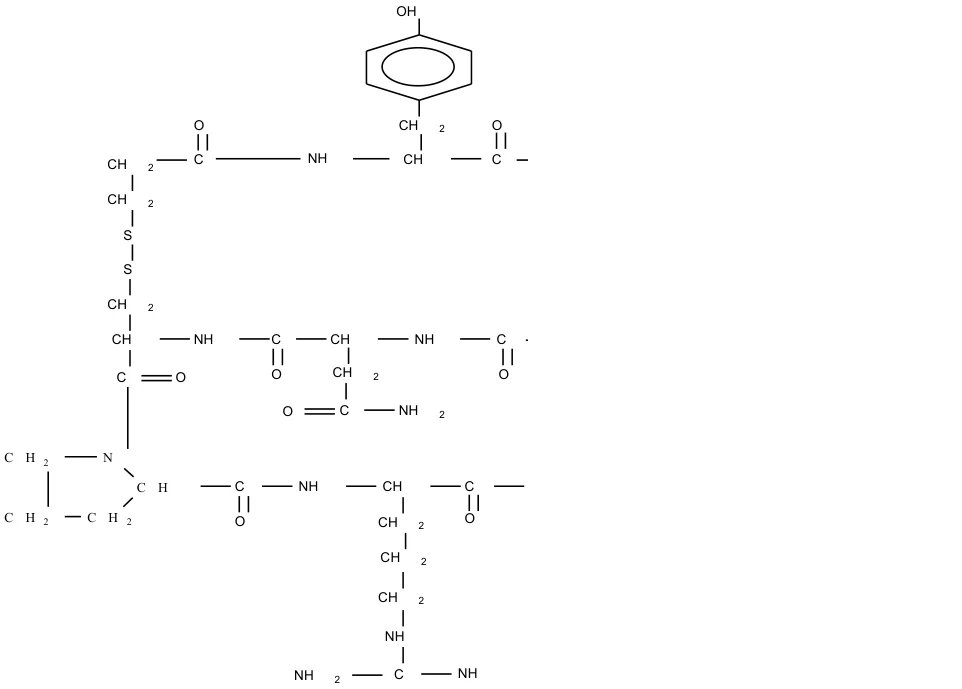
Chemical name: 1-Desamino-8-arginine-vasopressin acetate trihydrate
1-(3-mercaptopropionic acid)-8-D-arginine-vasopressin monoacetate (salt) trihydrate
Molecular formula and molecular mass:
Molecular Formula: Acetate: C48H74N14O17S2
Free Base: C46H64N14O12S2
Molecular Weight: Acetate: 1183.2
Free Base: 1069.2
Structural formula:
Physicochemical properties:
Desmopressin acetate is a white lyophilized powder which is soluble in water, methanol, ethanol, and acetic acid, and sparingly soluble in chloroform and ethyl acetate. An aqueous solution of 1 mg/mL at 24ΕC has a pH of 4.8.
CLINICAL TRIALS Pivotal Comparative Bioavailability Study
A randomized, single dose, two-way crossover comparative bioavailability study was conducted with 35 evaluable healthy male subjects. The maximal concentration and systemic exposure of desmopressin were measured and compared following an intranasal dose of desmopressin (300 µg; 150 µg in each nostril) as a spray formulation, which was either stored at room temperature or under refrigerated conditions. The results of the comparison between the two formulations are provided below.
Desmopressin (300 µg dose; 150 µg per nostril) From measured data Geometric Mean Arithmetic Mean (CV%) | ||||
|---|---|---|---|---|
| Parameter | Test* | Reference† | % Ratio of Geometric Means | 90% Confidence Interval |
AUCT (pg.h/ml) | 1364.5 1509.4 (41.2) | 1485.9 1628.9 (42.0) | 92 | 83 – 102 |
AUCInf (pg.h/mL) | 15.05.5 1673.6 (41.3) | 1651.0 1815.4 (42.5) | 91 | 82 – 101 |
Cmax (pg/mL) | 299.2 336.0 (48.4) | 312.2 347.1 (45.2) | 96 | 85 – 108 |
Tmax2 (h) | 0.75 (42.8) | 0.88 (54.8) | ||
| T½2 | 3.54 (14.1) | 3.58 (17.8) | ||
* Octostim Spray (stored at room temperature)
† Octostim Spray (stored under refrigerated conditions)
2 Expressed as the arithmetic mean (%CV) only.
TOXICOLOGY
Acute toxicity
The acute toxicity of desmopressin acetate is low (Table 2). Mice tolerate IV doses of 2 mg/kg. At IV doses of 30 µg/kg in rates and 40 µg/kg in rabbits, only transient changes in clinical behaviour were observed. Intravenous doses up to 24 µg/kg in dogs did not produce any cardiovascular changes.
Table 2
Acute Toxicity of OCTOSTIM
| Species | Number | LD50 Dose | Route |
| Mice | 10 both sexes | <2 mg/kg | IV |
| Rats | 12 both sexes | >30 µg/kg | IV |
| Dogs | 5 males | >24 µg/kg | IV |
Subacute Toxicity
Results from 14-day studies show that the drug given intravenously to rates at 18 µg//kg/day and to rabbits at 6 µg/kg/day, causes no biologically significant changes in hemotological and clinical chemistry parameters. Post-mortem examinations did not reveal any abnormalities.
Rats which received 5 mg/kg/day subcutaneously for 3 weeks did not show any significant changes in weight, blood count, or organ changes.
Chronic Toxicity
Rat Subcutaneous Studies
In a controlled 8 week experiment, 20 rats received 2 µg/kg/day SC desmopressin acetate. No increase in blood glucose nor morphological or histological pancreatic changes occurred.
Rats (20 per group) which received desmopressin acetate doses of 5, 50, or 500 ng/kg/day, for 6 months did not show any significant changes in weight, blood values, or levels of transaminases. The weight of heart, lungs, and kidneys decreased in female animals in the lower dose groups but not in the higher ones. In male animals, a decrease in non-esterifiable fatty acids was noted.
Dog Subcutaneous Studies
Dogs (3 per group) which received SC doses of 10 and 100 ng/kg/dayd esmopressin acetate for 6 months did not hsow any significant changes in comparison with control groups in blood sugar or transaminases and did not show histological or morphological organ changes.
Reproductive Studies
In teratogenicity testing in Wistar rats, no teratologic or embryotoxic effects were observed in 369 fetuses from 40 females dosed with up to 50 ng/kg/day desmopressin acetate subcutaneously on Day 1 through Day 20 of gestation.
In a study of 78 Dutch belted rabbits which received subcutaneous desmopressin acetate up to
10 µg/kg/day on Day 6 through Day 18 of pregnancy, no teratogenic or embryotoxic effects were observed in 296 fetuses. Weaning was unaffected.
There have been no long-term studies in animals to assess the impairment of fertility potential of OCTOSTIM®.
Carcinogenicity and Mutagenicity
There have been no long-term studies in animals to assess the carcinogenic or mutagenic potential of OCTOSTIM®.
REFERENCES
- 1. Bichet DG, Razi M, Lonergan M, Arthus M-F, et al. Hemodynamic and coagulation responses to I-desamino[8-D-Arginine] vasopressin in patients with congenital nephrogenic diabetes insipidus. N. Engl J Med 1988;318:881-7.
- 2. Burroughs AK, Matthews K, Qadire M, Thomas N, Kernoff P, Tuddenham E, McIntryry N. Desmopressin and bleeding time in patients with cirrhosis. Brit Med J 1985; 291:1377-81.
- 3. Burrow GN, Wassenaar W, Robertson GL, and Sehl H. DDA VP treatment of diabetes insipidus during pregnancy and the post-partum period. Acta Endocrinologica 1981;97:23.
- 4. Christolini A, Dragoni F, Ferrari A, La Verde G, et al. Intranasal DDA VP: biological and clinical evaluation in mild factor VIII deficiency. Haemostasis 1991;21:273-7.
- 5. Dilthey G, Dietrich W, Spannagl M, Richter JA. Influence of desmopressin acetate on homologous blood requirements in cardiac surgical patients pretreated with asprin. J Cardiothorac. Vasco Anesth. 1993;7(4):425-430.
- 6. Frankville DD, Harper GB, Lake CL, Johns RA. Hemodynamic consequences of desmopressin administration after cardiopulmonary bypass. Anesthesiology 1991:74:988-96.
- 7. Ghirardini A, Chistolini A, Tirindelli MC, Di Paolantonio T, Iacopine G, Mariani P, Chirletti P, Agrestini F, Mariani G. Clinical evaluation of subcutaneously administered DDA VP. Thrombosis Research 1988;49:363-72.
- 8. Gotti E, Mecca G, Valentine C, Cortinovis E, Bertani T, Remuzzi G. Renal biopsy inpatient with acute renal failure and prolonged bleeding time: A preliminary report. Amer. J of Kid Dis 1985;6(6):397-9.
- 9. Kentro TB, Lottenberg R, Kitchens CS. Clinical efficacy of desmopressin acetate for hemostatic control in patients with primary platelet disorders undergoing surgery. Am J of Hem 1987;24:215-9.
- 10. KernoffPBA, Lee CA, Karayiannis P and Thomas He. High risk of non-A non-B hepatitis after a first exposure to volunteer of commercial clotting factor concentrates: effects of prophylactic immune serum globulin. British Journal of Haematology 1985;60:469-79.
- 11. Kobrinsky N, Improved haemophilia A carrier detection by OCTOSTIM stimulation of Factor VIII. J Ped 1984;104:717-24.
- 12. Kobrinsky N. Shortening of bleeding time by I-desamino-8-arginine vasopressin in various bleeding disorders. Lancet 1984;1145-8.
- 13. Kohler M, Hellstem P, Teiter B, von Blohn G, Wenzel E. The subcutaneous administra-tion of the vasopressin analogue I-desamino-8-d-arginine vasopressin in patients with von Willebrand's disease and hemophilia. Klin Wochenschr 1984;62:543-8.
- 14. Kohlor A, Harris A. Pharmacokinetics and hematological effects of desmopressin. Eur J Clin PharmacoI1988;2:978-9.
- 15. Lethagen S, Egervall K., Bemtorp E and Bengtsson. The administration of desmopressin by nasal spray: a dose-determination study in patients with mild haemophilia A or von Willebrand's disease. Haemophilia 1995;1:97-102.
- 16. Lethagen S. Harris AS, Nilsson IM, Intranasal desmopressin (DDA VP) by spray in mild hemophilia A and von Willebrand’s disease Type 1. Blut 1990;60:187-191.
- 17. Lethagen S, Rugan P, Bergqvist D. Blood loss and safety with desmopressin or placebo during aorta-iliac graft surgery. Eur. J. Vase. Surg. 1991;5(2):173-8.
- 18. Lusher JM, Miller E, Wiseman CH, Draughn M, et al. Use of highly concentrated intranasal spray formulation of desmopressin in persons with congential bleeding disorders. In: Lusher JM, Kessler CM, eds. Hemophilia and von Willebrand's disease in the 1990's. Elsevier Science Publishers B.V. 1991; 317-24.
- 19. Lusher JM. Myocardial infarction and stroke - is the risk increased by desmopressin? In: Mariani G, Mannucci PM, Cattaneo M, eds. Desmopressin in Bleeding Disorders. New York, Plenum Press, 1993;347-53.
- 20. Lusher JM. Response to I-deamino-8-D-arginine vasopressin in von Willebrand disease. Haemostasis 1994;24:276-84.
- 21. Manucci PM, Pareti FI, Ruggeri AM and Capitano A. I-deamino-8-D-arginine vasopressin. A new pharmacological approach to the management of haemophilia and von Willebrand's disease. The Lancet 1977;(ApriI23),869-72.
- 22. Mannucci PM, Vicente V, Vianello L, Cattaneo M, Alberca I, Coccato MP, Faioni E, Mari D. Controlled trial of desmopressin in liver cirrhosis and other conditions associated with a prolonged bleeding time. Blood 1986;67:(4)1148-53.
- 23. Mannucci PM, Vicente V, Alberca I, Sacchi E, Longo G, Harris AS, Lindquist. Intra-venous and subcutaneous administration of desmopressin (DDA VP) to hemophiliacs: Pharmacokinetics and factor VIII responses. Thrombosis and Haemostasis 1987;58(4): 1037-9.
- 24. Mannucci PM, Remuzzi G, Pusineri F, Lombardi R, Valsecchi C, Mecca G, Zimmennan TS. Deamino-8-D-arginine vasopressin shortens the bleeding time in uremia. N Engl J Med 1983:308;8-12.
- 25. Nilsson IM, Lethagen S. Current status ofDDA VP fonnulations and their use. In Lusher JM, Kessler CM, eds. Hemophilia and von Willebrand's disease in the 1990's. Elsevier Science Publishers B.V. 1991;443-53.
- 26. Nilsson IM, Lethagen S. Intranasal application ofDDA VP - biological function, pharmacokinetics and reproducibility. In: Mariani G, Mannucci PM, Cattaneo M, eds. Desmopresin in Bleeding Disorders. New York:Plenum Press, 1993;309-16.
- 27. Reich DL, Hammerschlag BC, Rand JH, Weiss-Bloom L, Perucho H, Galla J, Thys DM. Desmopressin acetate is a mild vasodilator that does not reduce blood loss in uncomplicated surgical procedures. J. Cardiothorac. Vase. Anesth. 1991;5(2):142-5.
- 28. Rose EH, Aledort LM. Nasal spray desmopressin (DDA VP) for mild hemophilia A and von Willebrand's disease. Ann Int Med 1991;114:563-8.
- 29. Salmenpera M, Kuitunen A, Hynyen M, Heinonen J. Hemodynamic responses to desmopressin acetate after CABG: A double-blind trial. J. Cardiothorac. Vase. Anesth. 1991;5(2):146-9.
- 30. Schulmar S, Johnsson H, Egberg N, Bomback. DDA VP-induced correction of prolonged bleeding time in patients with congenital platelet function defects. Thrombosis Research 1987;45:165-74.
- 31. Soslau G, Schwartz AB' Putatunda B, Conroy JD, Parker J, Abel RF, Brodsky I. Desmopressin-induced improvement in bleeding times in chronic renal failure patients correlates with platelet serotonin uptake and A TP release. Am J Med Sci 1990; 300(6):372-9.
- 32. Temeck BK, Bachenheimer LC, Katz NM, Coughlin SS, Wallace RB. Desmopressin acetate in cardiac surgery. South. Med. J. 1994;87(6):611-5.
- 33. Vigano GL, Mannucci PM, Lattuada A, Harris A, Remuzzi G. Subcutaneous desmo-pressin (DDA VP) shortens the bleeding time in uremia. Am J Haemato11988;31 :32-5.
- 34. Watson AJ, Keogh JAB. I-deamino-8-D-arginine vasopressin as a therapy for the bleeding diathesis of renal failure. Am J NephroI1984;4:49-51.