


Product Monograph - Dimenhydrinate Injection USP (Sandoz Canada)
SUMMARY PRODUCT INFORMATION
| Product | Routes of Administration | Dosage Form / Strength | Nonmedicinal Ingredients |
| Dimenhydrinate Injection USP | Intramuscular injection (or IV administration if diluted) | Parenteral / 50 mg/mL 1 mL ampoules | propylene glycol 50% and water for injection. |
| Dimenhydrinate Injection USP | Intramuscular injection (or IV administration if diluted) | Parenteral/ 50 mg/mL 5 mL multidose vials | benzyl alcohol 5%, propylene glycol 50% and water for injection. |
| Dimenhydrinate Injection USP | Intravenous injection | Parenteral / 10 mg/mL 5 mL single use vials | ethyl alcohol 10% and water for injection |
| Sandoz Dimenhydrinate | Rectal | Suppositories / 50 mg | hard fat. |
| Suppositories / 100 mg | |||
INDICATIONS AND CLINICAL USE
Dimenhydrinate Injection USP and Sandoz Dimenhydrinate (dimenhydrinate) are indicated for use in the prevention and relief of nausea, vomiting and/or vertigo. These symptoms may be associated with clinical situations such as motion sickness, radiation sickness, postoperative recovery, drug-induced nausea and vomiting, Ménière's disease and other labyrinthine disturbances. Parenteral therapy is available when rectal therapy is inappropriate.
Geriatrics (> 65 years of age):
See WARNINGS AND PRECAUTIONS —Special Populations, Geriatrics.
Pediatrics:
- < 2 years of age: The safety and efficacy of Dimenhydrinate Injection USP in children under the age of 2 have not been established. Dimenhydrinate Injection USP should not be used in this population.
- < 12 years of age: The safety and efficacy of Sandoz Dimenhydrinate in children under the age of 12 have not been established. Sandoz Dimenhydrinate should not be used in this population.
CONTRAINDICATIONS
- Patients who are hypersensitive to dimenhydrinate or its components (diphenhydramine or 8-chlorotheophylline) or to any ingredient in the formulations or component of the container. For a complete listing, see the DOSAGE FORMS, COMPOSITION AND PACKAGING
- During or within two weeks following therapy with a monoamine oxidase inhibitor (see DRUG INTERACTIONS, Drugs with Anticholinergic Effects)
- Patients with glaucoma (narrow angle)
- Patients with chronic lung disease
- Patients with prostatic hypertrophy
- Patients under 2 years of age for Dimenhydrinate Injection USP
- Patients under 12 years of age for Sandoz Dimenhydrinate
WARNINGS AND PRECAUTIONS
General
Dimenhydrinate Injection USP for IM administration contains 50% (v/v) propylene glycol and is for intramuscular injection only. In exceptional circumstances, if Dimenhydrinate Injection USP for IM administration is required for intravenous use, it must be diluted at least 1:10 with a compatible physiological solution such as sterile saline or 5% dextrose in water, to prevent propylene glycol-associated cardiogenic shock (see DOSAGE AND ADMINISTRATION, Dosing Considerations).
DIMENHYDRINATE INJECTION USP AND SANDOZ DIMENHYDRINATE ARE NOT INTENDED FOR PROLONGED USE EXCEPT ON THE ADVICE OF A PHYSICIAN.
Dimenhydrinate may impair the ability to perform hazardous activities requiring mental alertness or physical coordination such as operating machinery or driving a car.
The concomitant use of alcohol or other central nervous system depressants may have an additive effect and should be avoided.
Abuse/Dependence/Tolerance
Dimenhydrinate Injection USP and Sandoz Dimenhydrinate (dimenhydrinate) have substance abuse potential due to their hallucinogenic and euphoric effects. At higher doses, confusion, hallucinations, temporary amnesia and paranoia may occur. Chronic abuse of antihistamines can lead to drug interaction accidents, overdose, and in extreme cases to death (see OVERDOSE). Withdrawal symptoms may include lethargy, agitation, hostility, clumsiness, nausea, vomiting, hallucinations, confusion and aggression.
Cardiovascular
Use with caution in patients with cardiac arrhythmias or cardiovascular disease (including hypertension and ischemic heart disease).
Ear/Nose/Throat
Dimenhydrinate may mask the presence of underlying organic abnormalities or the toxic effects of certain antibiotics and other drugs, particularly those drugs causing ototoxicity.
Endocrine and Metabolism
Use with caution in patients who are poor CYP2D6 metabolizers and in patients with thyroid dysfunction.
Gastrointestinal
Use with caution in patients with pyloroduodenal obstruction (including stenotic peptic ulcer).
Genitourinary
Dimenhydrinate Injection USP and Sandoz Dimenhydrinate are contraindicated in patients with prostatic hyperplasia (see CONTRAINDICATIONS). Use with caution in patients with other genitourinary obstruction.
Hematologic
Rarely, prolonged therapy with antihistaminic drugs can produce blood dyscrasia. Use with caution in patients with porphyria.
Hepatic/Biliary/Pancreatic
Use with caution in patients with hepatic impairment.
Neurologic
Dimenhydrinate should be used with caution in patients with seizure disorders.
Ophthalmologic
Dimenhydrinate Injection USP and Sandoz Dimenhydrinate are contraindicated in patients with increased intraocular pressure or narrow angle glaucoma (see CONTRAINDICATIONS).
Psychiatric
Dimenhydrinate may cause euphoria, hallucination, confusion, and paranoia at higher doses (see WARNINGS AND PRECAUTIONS, Abuse/Dependence/Tolerance).
Respiratory
Dimenhydrinate Injection USP and Sandoz Dimenhydrinate are contraindicated in patients with chronic lung disease such as chronic obstructive pulmonary disease (see CONTRAINDICATIONS). Use with caution in patients with a history of asthma or lower respiratory tract symptoms.
Skin
In rare cases, serious skin reactions such as Stevens-Johnson syndrome, toxic epidermal necrolysis, and erythema multiform have been associated with the use of dimenhydrinate. Because the rate of these reactions is low, they have usually been noted during post-marketing surveillance in patients taking other medications also associated with the potential development of these serious skin reactions. Thus, causality is NOT clear. These reactions are potentially life threatening but may be reversible if the causative agent is discontinued and appropriate treatment instituted. Patients should be advised that if they experience a skin rash they should discontinue dimenhydrinate and contact their physician for assessment and advice, including which additional therapies to discontinue.
Special Populations
Pregnant Women: The use of dimenhydrinate by women who are pregnant or may become pregnant requires that the potential benefits be weighed against the potential hazards. There are no adequate and well-controlled studies with dimenhydrinate in pregnant women. Reproduction studies in rats and rabbits using dimenhydrinate doses up to 20 and 25 times the human dose (mg/kg), respectively, have not revealed evidence of harm to the fetus or impaired fertility.
Nursing mothers: Small amounts of dimenhydrinate are excreted in breast milk. Because of the potential for adverse reactions in nursing infants from dimenhydrinate, a decision should be made whether to discontinue nursing or to discontinue the drug, taking into account the importance of the drug to the mother.
Labour and Delivery: The safety of dimenhydrinate injection given during labour and delivery has not been established. Reports have indicated dimenhydrinate may have oxytocic effect. Caution is advised when this effect is unwanted or in situations where it may prove detrimental.
Geriatrics: Older adults may be more sensitive to the side effects of this drug, especially drowsiness, confusion, constipation, or trouble urinating. Drowsiness and confusion can increase the risk of falling. Dimenhydrinate may be inappropriate in older adults depending on comorbidities (e.g. dementia, delirium, etc.) due to its potent anticholinergic effects.
Pediatrics (< 12 years of age): For infants and children especially, antihistamines in overdosage may cause hallucinations, convulsions, or death (see CONTRAINDICATIONS). As in adults, antihistamines may diminish mental alertness in pediatric patients. Antihistamines may also produce excitation in younger children.
Dimenhydrinate Injection USP is not recommended for children under 6 years of age.
Sandoz Dimenhydrinate is not recommended for children under 12 years of age.
Discontinue use and contact the physician if symptoms of paradoxical excitation (restlessness, nervousness, hallucinations, delirium, or seizures), especially in small children, occur.
ADVERSE REACTIONS
Drowsiness and dizziness are reported most frequently, particularly on high dosage. Pain may occur at the site of IM injection. Since dimenhydrinate contains 50% diphenhydramine, the possibility of diphenhydramine side effects must also be considered.
The following adverse reactions have also been reported:
Blood and lymphatic system disorders: anemia, thrombocytopenia, agranulocytosis, leukopenia, pancytopenia.
Body as a whole - general disorders: lassitude, fatigue, drug withdrawal syndrome, injection site inflammation.
Cardiac disorders: tachycardia, palpitations, hypotension, arrhythmia.
Ear and labyrinth disorders: tinnitus, labyrinthitis, vertigo.
Eye disorders: mydriasis, vision blurred, diplopia.
Gastrointestinal disorders: epigastric distress, nausea, dry mouth, constipation, diarrhea, vomiting
General disorders and administration site conditions: oedema.
Immune system disorders: hypersensitivity, anaphylactic reaction.
Metabolism and nutrition disorders: anorexia, decreased appetite.
Nervous system disorders: dizziness, headache, impaired coordination, somnolence, tremor, paraesthesia, ataxia, athetosis, convulsion, seizure, memory impairment, loss of consciousness.
Psychiatric disorders: depression, insomnia, hallucination, anxiety, confusional state, excitation, euphoric mood, nightmares, delirium, irritability, nervousness, restlessness, agitation.
Respiratory, thoracic, and mediastinal disorders: thickening of bronchial secretions, respiratory depression, dyspnoea.
Renal and urinary disorders: dysuria, urinary retention.
Skin and subcutaneous tissue disorders: angioedema, hyperhidrosis, rash, rash erythematous, rash maculopapular, pruritus, urticaria, fixed drug eruption, Stevens-Johnson syndrome, toxic epidermal necrolysis, erythema multiform, photosensitivity.
Vascular disorders: hypotension, hypertension, flushing.
DRUG INTERACTIONS
Drug-Drug Interactions
CNS Depressants: Dimenhydrinate may enhance the effects of alcohol, barbiturates, tranquilizers, sedatives, or hypnotics. Caution must therefore be used, to avoid overdose.
Drugs with Anticholinergic Effects: Because dimenhydrinate also has anticholinergic activity, it may potentiate the effects of other drugs with anticholinergic activity including tricyclic antidepressants, MAO inhibitors, and antihistamines. Solid potassium dose forms should be avoided as anticholinergics may slow gastrointestinal transit resulting in local exposure to high potassium concentrations.
Ototoxic Drugs: When given concurrently with aminoglycoside antibiotics or other ototoxic drugs, dimenhydrinate may mask the early symptoms of ototoxicity (see WARNINGS AND PRECAUTIONS).
Incompatibility: the incompatible substance with injectable preparations of dimenhydrinate include: phenothiazine derivatives, aminophylline, ammonium chloride, sodium amobarbital, diphenylhydantoin, sodium heparin, hydrocortisone sodium succinate, pentobarbital, phenobarbital, thiopental and certain types of antibiotics (tetracycline HCl).
Drug-Laboratory Interactions
As for other antihistamines, dimenhydrinate may inhibit the cutaneous histamine response in skin tests using allergen extracts, thus producing false-negative results. It is recommended that dimenhydrinate be discontinued at least 72 hours before testing.
DOSAGE AND ADMINISTRATION
Dosing Considerations
Dimenhydrinate Injection USP 50 mg/mL is designed for intramuscular use only and must not be used intravenously (IV) unless it has been diluted (see Intravenous Dilution Instructions below). Diluted Dimenhydrinate Injection USP, prepared for IV use, should be administered by slow intravenous injection only (over 2 minutes).
Dimenhydrinate Injection USP (10 mg/mL) for IV use is not for arterial use.
Consult physical compatibility information (see Stability and Storage Recommendations) before mixing parenteral solutions.
Dimenhydrinate Injection USP and Sandoz Dimenhydrinate are not intended for prolonged use except upon advice of the physician.
Dimenhydrinate Injection USP is not recommended for children under 6 years of age, unless directed by the physician.
Sandoz Dimenhydrinate is not recommended for children under 12 years of age, unless directed by the physician.
Intravenous Dilution Instructions
For IV administration, each 1 mL of Dimenhydrinate Injection USP 50 mg/mL must be diluted at least 1:10 with a compatible physiological solution such as sterile saline or 5% dextrose in water, to prevent propylene glycol-associated cardiogenic shock.
Diluted solutions can be stored up to 24 hours at room temperature. Dimenhydrinate Injection USP is never to be injected intra-arterially. Always inspect the solution visually for particulate matter and discolouration prior to administration. Discard any unused portions.
For IV administration, the Dimenhydrinate Injection USP (10 mg/mL) must be administered as a slow IV injection (2 to 4 minutes).
Recommended Dose and Dosage Adjustment
Motion Sickness
Adults
Rectal: 50 mg - 100 mg Sandoz Dimenhydrinate suppository every 6-8 hours as necessary. For ease and comfort, smooth any edges on suppository prior to use.
Dosage should be taken at least 30 minutes, and preferably 1 or 2 hours before travelling. Do not use more than 4 suppositories in 24 hours.
Children:
≥ 12 years of age: Rectal: 50 mg every 8 to 12 hours as necessary. Dosage should be taken at least 30 minutes, and preferably 1 or 2 hours before travelling. Do not use more than 3 suppositories in 24 hours.
Radiation Sickness
Pre-Therapy: Adults: 50 mg - 100 mg administered rectally or parenterally, 30 to 60 minutes before treatment. This dose is repeated as necessary to a maximum of 400 mg within 24 hours.
Post-therapy: Adults: 50 mg IM or IV 1½ hours post-therapy and 50 mg IM or IV 3 hours post-therapy.
To divide a suppository in two equal parts, remove from packaging and carefully cut with a sharp edge blade through the suppository.
Postoperative Nausea/Vomiting
Adults: 50 mg IM or IV as preoperative dose, to be followed postoperatively by similar doses as needed to a maximum of 400 mg within 24 hours.
Children:
- Over 12 years of age: 50 mg IM or IV two or three times daily
- 8 to 12 years of age: 25 mg - 50 mg IM or IV two or three times daily
- 6 to 7 years of age: 15 mg - 25 mg IM or IV two or three times daily
Post-surgical/Post-anesthetic
Adult: 50 mg IM or IV, immediately after surgery, then: 50 mg IM or IV, every 4 hours for 3 doses.
Children:
- Over 12 years of age: 50 mg IM or IV two or three times daily
- 8 to 12 years of age: 25 mg - 50 mg IM or IV two or three times daily
- 6 to 7 years of age: 15 mg - 25 mg IM or IV two or three times daily
Missed Dose
If a dose is missed and Dimenhydrinate Injection USP or Sandoz Dimenhydrinate are being taken regularly, they should be taken as soon as possible. However, if it is almost time for the next dose, the missed dose should be skipped. The maximum daily dose should not be exceeded.
OVERDOSE
Symptoms: Accidental antihistamine overdose occurs frequently in infants and children. Symptoms of dimenhydrinate toxicity in children may resemble atropine overdosage, and include dilated pupils, flushed face, excitation, hallucinations, confusion, ataxia, intermittent clonic convulsions, coma, cardiorespiratory collapse, and death. Symptoms may be delayed up to 2 hours after ingestion; death may occur within 18 hours.
In adults, 500 mg or more of dimenhydrinate may cause extreme difficulty in speech and swallowing, and produces a psychosis indistinguishable from that of atropine poisoning. CNS excitation may be preceded by sedation, leading to a cycle of CNS excitation, seizures, and postictal depression.
Treatment: Treatment of dimenhydrinate toxicity is symptomatic and supportive. Emetics are usually ineffective but in the absence of seizures, early gastric lavage (with an endotracheal tube with cuff inflate in place to prevent aspiration of gastric contents) may be beneficial. Patients should be kept quiet, to minimize CNS stimulation; seizures may be treated with diazepam in adults and phenobarbital in children (additional methods may include IV sodium bicarbonate, or IV physostigmine salicylate in children). Mechanical respiratory assistance may be required.
Positive and negative mode of ion mobility spectrometry (IMS) and ion mobility spectrometry/mass spectrometry (IMS/MS) have shown efficacy for the preliminary screening of emergency patients suspected of dimenhydrinate and other drug overdose.
For management of suspected drug overdose, contact your regional Poison Control Centre.
ACTION AND CLINICAL PHARMACOLOGY
Mechanism of Action
Dimenhydrinate is a theoclate salt of the ethanolamine derivative diphenhydramine. The content ratio varies from 53% - 55.5% for diphenhydramine, and 44% - 47% for 8- chlorotheophylline.
The mechanism by which dimenhydrinate exerts its antiemetic, anti-motion sickness, and antivertigo effects is not precisely known, but may possibly be related to its central anticholinergic action. Other actions may involve an effect on the medullary chemoreceptor trigger zone or dose-related inhibition of vestibular stimulation (i.e., first acting on the otolith system and in larger doses on the semicircular canals).
Pharmacokinetics
Dimenhydrinate is well absorbed after oral administration. Antiemetic effects occur almost immediately after IV administration, within 20-30 minutes after IM administration and 15-30 minutes after oral administration. In a study of 9 healthy volunteers given a single dose of each dosage form (separated by a washout period), Tmax and Cmax are given in the following table.
| Product | Tmax (h) | Cmax (ng/mL serum) |
|---|---|---|
| Dimenhydrinate film-coated tablets 50 mg | 2.7 | 72.6 |
| Dimenhydrinate long action capsules 75 mg | 4.0 | 68.4 |
| Dimenhydrinate suppositories 100 mg | 5.3 | 112.2 |
Serum concentrations (ng/mL) 1 and 2 hours after administration of a 50 mg dimenhydrinate tablet were: 3.65 and 3.15. While not directly applicable to dimenhydrinate, it is suggested that when plasma concentration of diphenhydramine exceeds 70 ng/mL, sleep may occur.
Dimenhydrinate, like diphenhydramine, is widely distributed into body tissues, and crosses the placenta. Small amounts of dimenhydrinate are distributed into milk. After oral administration of 4x50 mg dimenhydrinate tablets, a distribution volume of 3-4 L/kg, and protein binding of 70-85% for dimenhydrinate and 98-99% for diphenhydramine were reported. The duration of effect and therapeutic plasma level were respectively 4-6 hours and 0.1mcg/mL. The plasma elimination half-life was 5-8 hours.
Dimenhydrinate is metabolized by the liver, and excreted in urine. There are three known metabolites: diphenyl-methoxy-ethylamine, diphenyl-methoxy-acetic acid, and diphenyl- methoxy-N-methylamine.
DOSAGE FORMS, COMPOSITION AND PACKAGING
NMI = Non-medicinal ingredients
Dimenhydrinate Injection USP for IM administration or IV administration if diluted Ampoules 50 mg/mL
Active: 50 mg dimenhydrinate.
NMI: propylene glycol 50% and water for injection.
Dimenhydrinate Injection USP for IM administration or IV administration if diluted Multidose vials 50 mg/mL
Active: 50 mg dimenhydrinate.
NMI: benzyl alcohol 5%, propylene glycol 50% and water for injection.
Dimenhydrinate Injection USP for IV administration
Single use vials 10 mg/mL
Active: 10 mg dimenhydrinate.
NMI: ethyl alcohol 10% and water for injection
Sandoz Dimenhydrinate Suppositories 50 mg
Active: 50 mg dimenhydrinate.
NMI: hard fat.
Sandoz Dimenhydrinate Suppositories 100 mg
Active: 100 mg dimenhydrinate.
NMI: hard fat.
STORAGE AND STABILITY
Store Sandoz Dimenhydrinate (suppositories) below 25°C.
Dimenhydrinate Injection USP should be stored at controlled room temperature (15 - 30°C). Protect from freezing. Protect from light.
The chlorobutyl rubber stopper is not made with natural rubber latex.
A test of dimenhydrinate solutions at pH 2 – 10 showed no separation or precipitation at pH 5.4 – 8.6 on extended room temperature storage. Below pH 5.4, a white powdery precipitate of 8-chloro-theophylline formed within 24 hours; above pH 8.6, an oily liquid separated within 30 min. The Handbook on Injectable Drugs should be consulted prior to mixing dimenhydrinate with other drugs.
A hydromorphone – dimenhydrinate combination was compatible and stable for 24 hours; by 48 hours, 8-chlorotheophylline had precipitated and the degree of precipitation was enhanced by increasing hydromorphone concentration.
A glycopyrrolate (Robinul) injectable (IM) – dimenhydrinate injectable (for IM administration) combination showed several tiny particles at 5 minutes and remained unchanged up to 48 hours. Despite a marginal amount, Carter-Horner interpreted the result as physically incompatible.
INJECTIONS EVALUATED AT CARTER-HORNER, INC. (As of May, 1999) | POTENCY OF SOLUTION | PHYSICALLY COMPATIBLE WITH DIMENHYDRINATE INJECTABLEFOR IM ADMINISTRATION | ||||||
|---|---|---|---|---|---|---|---|---|
| Atropine sulfate | 0.4 mg/ mL | Yes | ||||||
| Buscopan (Hyoscine butyl bromide) | 20 mg/ mL | Yes | ||||||
| Calcium chloride | 1 g / 10 mL | Yes | ||||||
| Calcium gluconate | 1 g / 10 mL | Yes | ||||||
| Codeine phosphate | 30 mg/ mL | Yes | ||||||
| Codeine phosphate | 60 mg/ mL | Yes | ||||||
Demerol (Meperidine HCl Inj.) + Dextrose 5% in water + Sodium chloride 0.9% | 50 mg/ mL | Yes Yes Yes | ||||||
| Dextrose 5% in sterile water | 5% | Yes | ||||||
| Hyoscine Injection BP | 0.6 mg/ mL | Yes | ||||||
| Innovar (Fentanyl citrate) | 0.05 mg/ mL | Yes | ||||||
| Isotonic potassium chloride | 40 mEq/20 mL diluted to 0.16 mEq/mL | Yes | ||||||
| Morphine Injection USP | 15 mg/ mL | Yes | ||||||
| Nubain (Nalbuphine Inj.) | 10 mg/ mL | No | ||||||
| Nubain (Nalbuphine Inj.) | 20 mg/ mL | No | ||||||
| Pantopon Injection | 20 mg/ mL | No | ||||||
| Pentazocine lactate (base) | 30 mg/ mL | Yes | ||||||
| Phenergan | 25 mg/ mL | No | ||||||
| Ringer’s lactate | ----- | Yes | ||||||
| Sodium chloride in sterile water | 0.9% | Yes | ||||||
| Sterile water for injection USP with or without multivitamins for inj. | ----- | Yes | ||||||
| 1cc (mL) plastic syringe (single use) | ----- | Yes (not exceeding 24 hours) | ||||||
5 mL multi-dose glass vial (IM) Use under strictly aseptic conditions | 50 mg/mL | STABILITY (at 4°C, not exceeding 2 weeks) (at 21°C, not exceeding 2 weeks) | ||||||
COMPATIBLE WITH DIMENHYDRINATE INJECTABLE FOR IV ADMINISTRATION | ||||||||
Buscopan (Hyoscine butyl bromide inj.) | 20 mg/ml | Yes | ||||||
| Calcium chloride | 1 g/ 10 mL | Yes | ||||||
| Calcium gluconate | 1 g/ 10 mL | Yes | ||||||
| Demerol (Meperidine HCl) | 50 mg/ mL | Yes | ||||||
+ Dextrose 5% in water + Sodium chloride 0.9% | Yes Yes | |||||||
| Dextrose 5% in sterile water | 5% | Yes | ||||||
| Isotonic potassium chloride | 40 mEq/ 20 mL diluted to 0.16 mEq/mL | Yes | ||||||
| Ringer’s lactate | ----- | Yes | ||||||
| Sodium chloride in sterile water | 0.9% | Yes | ||||||
Sterile water for injection with or without multivitamins for injection | ----- | Yes | ||||||
AVAILABILITY OF DOSAGE FORMS
Dimenhydrinate Injection USP For IM administration or IV administration if diluted 50 mg/mL
For IM administration or IV administration if diluted.
Each mL contains dimenhydrinate 50 mg, propylene glycol 50% and water for injection. (See Dosage and Administration, if used for IV administration).
Available in ampoules of 1 mL, boxes of 10 ampoules.
Dimenhydrinate Injection USP For IM administration or IV administration if diluted 50 mg/mL
For IM administration or IV administration if diluted. Each mL contains dimenhydrinate 50 mg, benzyl alcohol 5%, propylene glycol 50% and water for injection. (See Dosage and Administration, if used for IV administration). Available in multidose vials of 5 mL, boxes of 10.
LATEX-FREE STOPPER: Stopper contains no dry natural rubber.
Dimenhydrinate Injection USP For IV administration 10 mg/mL
For IV administration only. Each mL contains: dimenhydrinate 10 mg, ethyl alcohol 10% and water for injection. Available in single use vials of 5 mL, boxes of 10.
LATEX-FREE STOPPER: Stopper contains no dry natural rubber.
Sandoz Dimenhydrinate Suppositories 50 mg
Each suppository contains 50 mg dimenhydrinate, and hard fat. Boxes of 10.
Sandoz Dimenhydrinate Suppositories 100 mg
Each suppository contains 100 mg dimenhydrinate, and fat. Boxes of 10.
PART II: SCIENTIFIC INFORMATION
PHARMACEUTICAL INFORMATION
Proper name: Dimenhydrinate
Chemical name: 8-chlorotheophyllinate of 2-[diphenylmethoxy]-n,n-dimethylethylamine
Other names: IS = Anautinum; Dommanate, Dramamine®, Gravol®
Chemical structure:
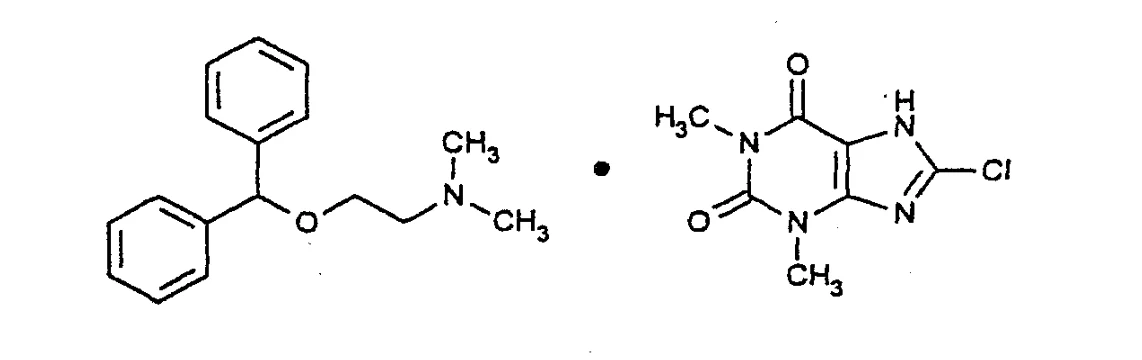
Molecular formula: C17H21NO·C7H7ClN4O2
Molecular weight: 469.98 g/mol
Physical properties:
Physical Form: White, crystalline, odorless powder
Solubility: Slightly soluble in water; freely soluble in ethanol and in chloroform; sparingly soluble in ether
pH Value: 7.1 -7.6
Melting Point Range: 102°C – 107°C
TOXICOLOGY
Acute toxicity was determined by administering dimenhydrinate to mice PO and IP, and in rats PO and IV. The results are shown in the following table.
| Species | Oral | IP | IV |
|---|---|---|---|
| Mice | 203 mg/kg | 110 mg/kg 149 mg/kg | -- |
| Rats | 831 mg/kg 1320 mg/kg | -- | 200 mg/kg |
REFERENCES
- 1. Scavone JM, Luna BG, Harmatz JS, Moltke von L, Greenblatt DJ: Diphenhydramine kinetics following intravenous, oral and sublingual dimenhydrinate administration. Biophamaceut Drug Dispos 1990, 11: 185-189
- 2. Farrell M, Heinrichs M, Tilelli JA: Response of life threatening dimenhydrinate intoxication to sodium bicarbonate administration. Clin Toxicol 1991, 29(4): 527-535
- 3. Le traitement des nausées et vomissement causés par la radiothérapie et la chimiothérapie. Gravol: p. 15, 31-33. Gouvernement du Québec 1993 ISBN 2-550-28418-6
- 4. Kovac AL: Prevention and treatment of postoperative nausea and vomiting. Dimenhydrinate p.225 Drugs 2000, 59(2): 213-243.
- 5. Albert KS, Hallmark MR, Sakmar E, Weidler DJ, Wagner JG: Pharmacokinetics of diphenhydramine in man. J Pharmacokinet Biopharm 1975, 3(3): 159-170 (168-169)
- 6. Carruthers SG, Shoeman DW, Hignite ChE, Azarnoff DL: Correlation between plasma diphenhydramine level and sedative and antihistamine effects. Clin Pharmacol Ther 1978, 23(4): 375-382.
- 7. Winn RE, McDonnell KP: Fatality secondary to massive overdose of dimenhydrinate. Ann Emerg Med 1993, 22(9): 154/1481-157/1484 (155/1482)
- 8. Craig DF, Mellor CS: Dimenhydrinate dependence and withdrawal. C M A J 1990, 142(9): 970-973
- 9. Gardner DM, Kutcher St: Dimenhydrinate abuse among adolescents. Can J Psychiatr 1993, 38: 113-116.
- 10. Rowe C, Verjee Z, Koren G: Adolescent dimenhydrinate abuse: resurgence of an old problem. J Adolescents Health 1997, 21(1): 47-49
- 11. Krenzelok EP, Anderson GM, Mirick M: Massive diphenhydramine overdose resulting in death. Ann Emerg Med 1982, 11(Apr): 212-213.
- 12. Leathem AM: Safety and efficacy of antiemetics used to treat nausea and vomiting in pregnancy. (Therapy reviews antiemetics) Clin Pharm 1986, 5: 660-668
- 13. Lemay M, Samaan M, St. Michel P, Granger L, Pigeon R: Effets immédiats du dimenhydrinate sur la contraction utérine et le rythme cardiaque foetal durant le travail. C M A J 1982, 127: 606-607
- 14. Mazzotta P, Magee LA: A risk-benefit assessment of pharmacological and nonpharmacological treatments for nausea and vomiting of pregnancy. p.785, 787, 795-796 Drugs 2000, 59(4): 781-800
- 15. Ito Sh, Blajchman A, Stephenson M, Elipoulos Ch, Koren G: Prospective follow-up of adverse reactions in breast-fed infants exposed to maternal medication. Am J Obstet Gynecol 1993, 168(5): 1393-1399
- 16. Manning C, Scandale L, Manning EJ, Gengo FM: Central nervous system effects of meclizine and dimenhydrinate: evidence of acute tolerance to antihistamines. J Clin Pharmacol 1992, 32: 996-1002
- 17. Luria SM, Kinney JAS, McKay CL, Paulson HM, Ryan AP: Effects of aspirin and dimenhydrinate (dramamine) on visual processes. Br J Clin Pharmacol 1979, 7: 585-593
- 18. Bamforth KJ, Dagliesh K, Coughtrie MWH: Inhibition of human liver steroid sulfotransferase activities by drugs: a novel mechanism of drug toxicity. (Dimenhydrinate and diphenhydramine). Eur J Pharmacol (Environ Toxicol Pharmacol Sect) 1992, 228: 15-21
- 19. Kivity S: Fixed drug eruption to multiple drugs: Clinical and laboratory investigation. Int J Dermatol 1991, 30(2): 149-150
- 20. Zavitz M, Lindsay C, McGuigan MA: Acute diphenhydramine ingestion in children. Vet Hum Toxicol 1989, 31(4): 349 Abstr.#80
- 21. Lawrence AH, Nanji AA: Ion mobility spectrometry and ion mobility spectrometry/mass spectometric characterization of dimenhydrinate. Biomed Environ Mass Spectrom 1988, 16: 345-347
- 22. Guay DRP, Meatherall RC, Macaulay PA, Yeung C: Activated charcoal adsorption of diphenhydramine. Int J Clin Pharmacol Ther Toxicol 1984, 22(8): 395-400
- 23. Federal Register V, Department of Health and Human Services, FDA 21 CFR Parts 310, 336, and 369: Antiemetic drug products for over-the-counter human use: Final Rule. Effective May 2, 1988 Federal Register 1987(30.04), 52(83): 15886-15893.
- 24. Walker SE, Iazzetta J, DeAngelis C, Lau DWC: Stability and compatibility of combinations of hydromorphone and dimenhydrinate, lorazepam or prochlorperazine. Can J Hosp Pharm 1993, 46: 61-65
- 25. Oshiro Y, Balwierz PS, Piper CE: Experimental design for the C3H/10T1/2 CL8 cell transformation assay. J Appl Toxicol 1988, 8(4): 255-260