


Product Monograph - Dixarit Tab 0.025mg
SUMMARY PRODUCT INFORMATION
Route of Administration | Dosage Form / Strength | Clinically Relevant Nonmedicinal Ingredients |
| Oral | Tablet / 0.025 mg | Lactose monohydrate, sucrose For a complete listing see Dosage Forms, Composition and Packaging section. |
INDICATIONS AND CLINICAL USE
DIXARIT (clonidine hydrochloride) is indicated for the relief of menopausal flushing in patients for whom hormonal replacement therapy is either unnecessary or not desirable.
Pediatrics (< 18 years of age):
Safety and effectiveness in children has not been established.
CONTRAINDICATIONS
DIXARIT (clonidine hydrochloride) is contraindicated in patients with the following:
known hypersensitivity to the active substance or to any of the ingredients of the product.
For a complete listing, see DOSAGE FORMS, COMPOSITION AND PACKAGING section.
- severe bradyarrhythmia resulting from either sick sinus syndrome or atrioventricular block of 2nd or 3rd degree; patients with sinus node function impairment.
rare hereditary conditions that may be incompatible with an excipient of the product (see
DOSAGE FORMS, COMPOSITION AND PACKAGING sections). This product contains 67.4 mg of lactose per maximum recommended daily dose. Patients with the rare hereditary conditions of galactose intolerance e.g. galactosaemia should not take this medicine.
This product contains 81.5 mg of sucrose per maximum recommended daily dose. Patients with the rare hereditary condition of fructose intolerance should not take this
medicine.
WARNINGS AND PRECAUTIONS
General
An abrupt withdrawal of higher doses of clonidine hydrochloride is followed in some cases by an excess of circulating catecholamines. Therefore, caution should be exercised in concomitant use of drugs which affect the metabolism, tissue uptake or pressor effects of these amines (monoamine oxidase inhibitors, tricyclic antidepressants and beta-blocking agents) (see DRUG INTERACTIONS section).
DIXARIT (clonidine hydrochloride 0.025 mg) should not be confused with Catapres (clonidine hydrochloride 0.1 mg, 0.2 mg). Catapres is a higher dosage form of the same active ingredient, clonidine hydrochloride, and is used for treating hypertension. Catapres is available as white tablets of 0.1 mg and orange tablets containing 0.2 mg of clonidine. Caution should however be exercised in patients receiving antihypertensive therapy because of the possibility of an additive effect.
Patients who engage in potentially hazardous activities such as operating machinery or driving should be warned of the possible sedative effect of clonidine hydrochloride (see WARNINGS AND PRECAUTIONS: Effects on ability to drive and use machines). Caution should be exercised in the concomitant administration of sedatives, tranquilizing drugs or alcohol (see DRUG INTERACTIONS).
Patients should be instructed not to discontinue therapy without consulting their physician (see DOSAGE AND ADMINISTRATION, Recommended Dose and Dosage Adjustment section).
Carcinogenesis and Mutagenesis
See the TOXICOLOGY section.
Cardiovascular
Blood Pressure
DIXARIT (clonidine hydrochloride) can have a hypotensive effect especially in high doses. In patients whose blood pressure decreases to an intolerable extent when taking DIXARIT, treatment should be discontinued.
An excessive rise in blood pressure following discontinuation of DIXARIT therapy can be reversed by intravenous phentolamine.
Because it can lower blood pressure at high doses, DIXARIT (clonidine hydrochloride) should
be used with caution in patients with severe coronary insufficiency, recent myocardial infarction, cerebral vascular disease, or chronic renal failure. DIXARIT should be used with caution in patients with mild to moderate bradyarrhythmia such as low sinus rhythm, with disorders of cerebral or peripheral perfusion, polyneuropathy, and constipation, patients with heart failure or severe coronary heart disease.
Heart Rate
Depending on the dose given, DIXARIT can lower the heart and pulse rate. In patients with diseases affecting the rhythmic and atrioventricular conduction system of the heart, arrhythmias have been observed after high doses.
Heart Disease
Patients with heart failure or severe coronary disease should be monitored particularly carefully when using DIXARIT.
Other
A few instances of a condition resembling Raynaud's phenomenon have been reported with the higher doses of clonidine as used in the therapy of hypertension. Caution should be observed if patients with Raynaud's disease or thromboangiitis obliterans are to be treated with DIXARIT.
Ophthalmologic
In several studies clonidine hydrochloride produced a dose-dependent increase in the incidence and severity of spontaneously occurring retinal degeneration in albino rats treated for six months or longer (see TOXICOLOGY). In view of this retinal degeneration, eye examinations were performed in 908 hypertensive patients prior to the start of clonidine hydrochloride therapy, who were then examined periodically thereafter. In 353 of these 908 patients, examinations were performed for periods of 24 months or longer. Except for the dryness of the eyes, no drug-related abnormal ophthalmologic findings were recorded and clonidine hydrochloride did not alter retinal function as shown by specialized tests such as the electroretinogram and macular dazzle.
Patients who wear contact lenses should be warned that treatment with DIXARIT may cause decreased lacrimation.
Psychiatric
Patients with a known history of depression should be carefully supervised while under treatment with clonidine as there have been occasional reports of further depressive episodes occurring in such patients.
Renal
Clonidine and its metabolites are extensively excreted with urine. As a result, DIXARIT should be used with caution in patients with renal insufficiency. Careful monitoring of blood pressure is required.
As with any drug excreted primarily in the urine, smaller doses of the drug are often effective in treating patients with a degree of renal failure. In patients exhibiting renal failure or insufficiency, periodic determination of the BUN is indicated. If, in the physician's opinion, a rising BUN is significant, the drug should be stopped.
Sexual Function/Reproduction
No clinical studies on the effect on human fertility have been conducted with clonidine. Non-clinical studies with clonidine indicate that it adversely affects fertility in female rats (see TOXICOLOGY).
Special Populations
Pregnant Women: There are no adequate and well-controlled studies in pregnant women. Thus, use of clonidine hydrochloride in pregnancy is not recommended. In case of accidental use of clonidine hydrochloride in pregnancy, careful monitoring of mother and child is recommended. There is no adequate experience regarding the long-term effects of prenatal exposure. Clonidine passes the placental barrier and may lower the heart rate of the foetus. Also in post partum a transient rise in blood pressure in the newborn cannot be excluded.
Non-clinical studies showed clonidine hydrochloride to have adverse effects with respect to reproductive toxicity at doses below the clinically administered dose (see TOXICOLOGY).
Nursing Women: Clonidine is excreted in human milk. However, there is insufficient information on the effect on newborns. The use of DIXARIT is therefore not recommended during breast feeding.
Pediatrics (<18 years of age): Safety and effectiveness in children has not been established.
Effects on ability to drive and use machines
No studies on the effects on the ability to drive and use machines have been performed. However, patients should be advised that they may experience undesirable effects such as dizziness, sedation and accommodation disorder during treatment with DIXARIT. Therefore, caution should be recommended when driving a car or operating machinery. If patients experience the above mentioned side effects they should avoid potentially hazardous tasks such as driving or operating machinery.
ADVERSE REACTIONS
Adverse Drug Reaction Overview
Most adverse reactions associated with the use of DIXARIT (clonidine hydrochloride) are mild and diminish with continued therapy.
Accumulated clinical and postmarketing data indicate provides some insight into adverse reactions. The information from this section is based on 22 clinical studies, which were published between 1968 and 1985. The studies comprised of 640 patients, which have been treated with clonidine hydrochloride. The following lists of adverse reactions have been noted with the use of DIXARIT.
Endocrine disorders:
gynaecomastia
Psychiatric disorders:
confusional state, delusional perception, depression, hallucination, libido decreased, nightmare, sleep disorder
Nervous system disorders:
dizziness, headache, paraesthesia, sedation
Eye disorder:
accommodation disorder, lacrimation decreased
Cardiac disorders:
atrioventricular block, bradyarrhythmia, sinus bradycardia
Vascular disorders:
orthostatic hypotension, Raynaud's phenomenon, reduction in blood pressure
Respiratory, thoracic and mediastinal disorders:
nasal dryness
Gastrointestinal disorders:
colonic pseudo-obstruction, constipation, dry mouth, nausea, salivary gland pain, vomiting, cramps, accelerated rate of dental caries
Skin and subcutaneous tissue disorders:
Alopecia, pruritus, rash, urticaria
Reproductive system and breast disorders:
erectile dysfunction
General disorders and administration site conditions:
fatigue, malaise, drowsiness, muscle or joint pain
Investigations:
blood glucose increased
DRUG INTERACTIONS
Drug-Drug Interactions
The drugs listed in this table are based on either drug interaction case reports or studies, or potential interactions due to the expected magnitude and seriousness of the interaction.
| Proper name | References | Effect | Clinical comment |
| Other anti-hypertensive agents such as diuretics, vasodilators, β blockers, calcium antagonists and ACE-inhibitors, but not α1-blocking agents | The reduction in blood pressure induced by clonidine can be further potentiated by concurrent administration. | ||
| β-blockers and/or cardiac glycosides | Concomitant use can further lower heart rate (bradycardia) or cause dysrhythmia (atrioventricular block) in isolated cases. | ||
| Beta-receptor blocker | It cannot be ruled out that concomitant administration will cause or potentiate peripheral vascular disorders. | ||
| Tricyclic antidepressants or neuroleptics with alpha-receptor blocking properties | The antihypertensive effect of clonidine may be reduced or abolished and orthostatic regulation disturbances may be provoked or aggravated by concomitant administration. Amitriptyline in combination with clonidine hydrochloride enhances the manifestation | If clonidine hydrochloride and tricyclic antidepressants are administered as concurrent therapy, an increase in the dosage of DIXARIT may be necessary. |
| Proper name | References | Effect | Clinical comment |
| of corneal lesions in rats (see TOXICOLOGY). | |||
| Substances with alpha2 receptor blocking properties such as phentolamine | May abolish the alpha2-receptor mediated effects of clonidine in a dose-dependent manner. | ||
Sympathomimetic amines, indomethacin and possibly other non- steroidal anti- inflammatory agents | May reduce the antihypertensive effects of clonidine hydrochloride. Substances which raise blood pressure or induce a Na+ and water retaining effect such as non steroidal anti- inflammatory agents can reduce the therapeutic effect of clonidine. | The patient should be carefully monitored to confirm that the desired effect is being obtained. | |
| Alcohol, barbiturates or other sedatives. | Clonidine hydrochloride may enhance the CNS-depressive effects | ||
Drugs which affect the metabolism, tissue uptake or pressor effects of catecholamines (monoamine oxidase (MAO) inhibitors, tricyclic antidepressants and beta blocking agents, respectively). | Withdrawal of clonidine hydrochloride may result in an excess of circulating catecholamines (see WARNINGS AND PRECAUTIONS). | Caution should be exercised in concomitant use of these drugs. | |
| Methylphenidate | Popper CW, 1995 (22) (See REFERENCES) | The concomitant use with clonidine has resulted in serious adverse reactions, including death, in children with attention-deficit/hyperactivity (ADHD). |
Drug-Food Interactions
Interactions with food have not been established.
Drug-Herb Interactions
Interactions with herbs have not been established.
Drug-Laboratory Test Interactions
In rare cases, an increase in blood glucose has occurred in clinical studies.
DOSAGE AND ADMINISTRATION
Recommended Dose and Dosage Adjustment
The recommended dose for the treatment of menopausal flushing is 0.05 mg of DIXARIT (clonidine hydrochloride) twice daily. If after two to four weeks there has been no remission, the treatment should be discontinued and the patient reassessed.
Attempts should be made to discontinue treatment at three to six month intervals for patient re-evaluation of menopausal symptoms.
Following sudden discontinuation of DIXARIT after prolonged treatment with high doses, restlessness, palpitations, rapid rise in blood pressure, nervousness, tremor, headache or nausea have been reported. When discontinuing therapy with DIXARIT, the physician should reduce the dose gradually over 2-4 days.
Missed Dose
If a dose of DIXARIT is missed, patients should take the dose as soon as possible and then return to their normal schedule.
Administration
The tablets should be swallowed whole with water.
OVERDOSAGE
The signs and symptoms of clonidine hydrochloride overdosage are due to generalised sympathetic depression and include pupillary constriction, hypotension, hypothermia, bradycardia, lethargy, irritability, weakness, somnolence including coma, diminished or absent reflexes, vomiting and hypoventilation. With large overdoses, reversible cardiac conduction defects or arrhythmias, coma, respiratory depression including apnea, seizures and transient hypertension have been reported.
In a patient who ingested 100 mg clonidine hydrochloride, plasma clonidine levels were 60 ng/mL (one hour), 190 ng/mL (1.5 hours), 370 ng/mL (two hours) and 120 ng/mL (5.5 and 6.5 hours). This patient developed hypertension followed by hypotension, bradycardia, apnea, hallucinations, semicoma, and premature ventricular contractions. The patient fully recovered after intensive treatment.
For management of a suspected drug overdose, contact your regional Poison Control Centre.
ACTION AND CLINICAL PHARMACOLOGY
Mechanism of Action
DIXARIT (clonidine hydrochloride) reduces the response of peripheral vessels to either vasoconstrictor or vasodilator stimuli. Clonidine hydrochloride, the active ingredient, is an α-adrenergic agonist which also has some α-adrenergic antagonist effects.
DIXARIT therapy has been shown to reduce the frequency, severity, and duration of flushing attacks associated with the menopausal syndrome. There is a gradual onset of therapeutic response, and a gradual return of symptoms on interruption of treatment.
DIXARIT will not correct or relieve other menopausal changes that are due to hormonal deficiencies.
Clonidine stimulates alpha-adrenoreceptors in the brain stem, resulting in reduced sympathetic outflow from the central nervous system and a decrease in peripheral resistance, renal vascular resistance, heart rate, and blood pressure. Renal blood flow and glomerular filtration rate remain essentially unchanged.
Acute studies with clonidine hydrochloride in humans have demonstrated a moderate reduction (15%-20%) of cardiac output in the supine position with no change in the peripheral resistance, at a 45o tilt there is a smaller reduction in cardiac output and a decrease in peripheral resistance. During long-term therapy, cardiac output tends to return to controlled values, while peripheral resistance remains decreased.
Slowing of the pulse rate has been observed in most patients given clonidine, but the drug does not alter normal hemodynamic response to exercise.
Other studies in patients have provided evidence of a reduction in plasma renin activity and in the excretion of aldosterone and catecholamines, but the exact relationship of these pharmacologic actions to the antihypertensive effect has not been fully elucidated.
Clonidine acutely stimulates growth hormone release in both children and adults, but does not produce a chronic elevation of growth hormone with long-term use.
Pharmacodynamics
DIXARIT (clonidine hydrochloride) acts relatively rapidly. The patient's blood pressure declines within 30 to 60 minutes after an oral dose, the maximum decrease occurring within 2 to 4 hours.
In humans, the blood pressure reduction due to higher doses of clonidine does not cause significant alterations in renal blood flow in the supine position. In the erect position, a consistent decrease in renal vascular resistance is seen.
Pharmacokinetics
Absorption: The plasma level of DIXARIT peaks in approximately 3 to 5 hours. In humans, a significant plasma level (0.20 µg% of clonidine) can be detected one hour after oral administration of a single dose of 390 µg.
Distribution: Clonidine is 30-40% bound to plasma proteins.
Metabolism: About 50% of the absorbed dose is metabolized in the liver. Four different metabolites have been detected in humans.
Excretion: Following oral administration about 40-60% of the absorbed dose is recovered in the urine as unchanged drug in 24 hours. Clonidine is exreted in human milk (see WARNINGS AND PRECAUTIONS, Special Populations, Nursing Women). However, there is insufficient information on the effect of newborns.
The terminal elimination half-life ranges from 5 to 25.5 hours, but the half-life increases up to 41 hours in patients with severe impairment of renal function. In humans, 65% of the orally administered drug is excreted in the urine, and an estimated 22% in the faeces.
STORAGE AND STABILITY
The DIXARIT tablets should be stored at room temperature (15-30°C).
DOSAGE FORMS, COMPOSITION AND PACKAGING
Dosage Forms
0.025 mg tablet: A round, blue, biconvex, sugar-coated tablet.
Composition
The DIXARIT (clonidine hydrochloride) tablet core contains clonidine HCl and the following inactive ingredients: CaHPO4, indigotindisulfonate sodium, lactose monohydrate (fine), magnesium stearate, maize starch dried, povidone, silica colloidal anhydrous, starch soluble.
The DIXARIT tablet sugar coating contains: acacia, beeswax white, carnauba wax, indigotindisulfonate sodium, macrogol 6000, povidone, sucrose, talc, titanium dioxide.
Packaging
DIXARIT 0.025 mg tablets are supplied in white plastic bottles of 100 tablets. 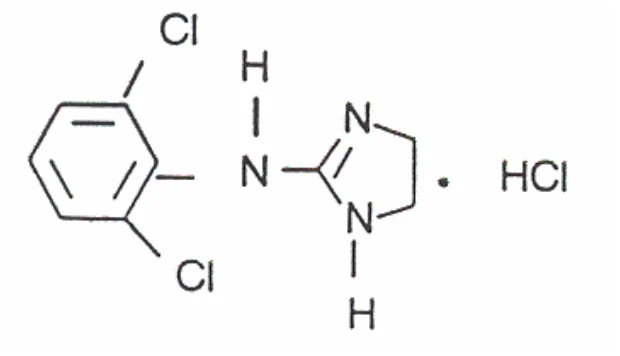
PART II: SCIENTIFIC INFORMATION
PHARMACEUTICAL INFORMATION
Drug Substance
Proper name: clonidine hydrochloride
Chemical name: 2-[(2,6-Dichlorophenyl)imino]imidazolidine Monohydrochloride
Molecular formula and molecular mass: C9H9N3Cl2 · HCl, 266.56
Structural formula:
Physicochemical properties:
A white, odorless, bitter crystalline powder. It is soluble in water and alcohol, practically insoluble in chloroform and ether. The pH of a 10% aqueous solution lies between 3 and 5.
DETAILED PHARMACOLOGY
Pharmacokinetics
Clonidine is well absorbed from the intestine in all species examined. In the dog, plasma levels can be detected one hour after administration of an oral dose of 0.52 mg/kg, and maximum plasma levels are reached after 4-8 hours. In man, a significant plasma level (0.20 µg% of clonidine) can be detected one hour after oral administration of a single dose of 390 µg. Since clonidine is approximately 50% bound, this reflects an actual free plasma level. Peak plasma levels in man and monkey occur after three hours and decline with a half-life of twenty hours. Elimination decreases after twenty-four hours and is completed only after five days.
In rats, clonidine hydrochloride tissue levels are distinctly above blood levels. They show similar distribution patterns over heart, liver, lung, spleen, testes, brain, adrenal gland, fat and muscle
after either oral or i.v. administration. The highest concentration of clonidine after oral administration is found in the kidneys and the gastrointestinal tract, but only very small amounts can be detected in these organs forty-eight hours after administration. There is a high concentration of clonidine in the lacrimal and parotid glands (40 times higher than the blood level).
The cerebrospinal fluid contains only half the plasma concentration of clonidine, which might be interpreted as an expression of affinity for brain tissue. The overall brain distribution suggests a greater affinity for noradrenergic than for other aminergic cell systems.
An enterohepatic circulation of clonidine has been described in the rat. Up to 24% of an oral dose is excreted in the bile, within the first 24-48 hours.
A large proportion (90- 95%) of the given dose is metabolized in dogs and monkeys, whereas in humans clonidine is less extensively metabolized. In dogs, after 48 hours up to 80% of the administered radioactive clonidine is excreted in the urine, and up to 18% in the feces. In man, 65% of the orally administered drug is excreted in the urine and an estimated 22% in the feces. Fifty-eight percent of the activity in human urine at 24 hours, and 44% at 48 hours is unchanged clonidine. Four different metabolites have been detected in man.
Effects on the Cardiovascular System
Clonidine has two opposing actions on the cardiovascular system. As an alpha-sympathomimetic it constricts blood vessels but, as it seems devoid of beta-stimulant action, it does not directly influence the heart. The very potent inhibitory action on central spontaneous sympathetic activity tends to reduce the peripheral resistance and to decrease cardiac output. In addition, a vagal component appears to be involved, since phentolamine or reserpine abolish the effect on blood pressure but only decrease the bradycardia produced by clonidine, while atropine decreases the hypotension and bradycardia.
Clonidine has neither a ganglionic nor a postganglionic blocking action; it is free of alpha- and beta-adrenergic blocking actions; it does not act on vagal receptors, and it does not interfere with the catecholamine content of the various tissues.
Intravenous doses (1-100 µg/kg) of clonidine given to animals of different species, either intact or in various experimental preparations, exert a biphasic cardiovascular effect: (a) an initial very brief rise of the blood pressure is followed by (b) a sustained fall.
(a) The brief vasopressor effect shows the following characteristics: (1) it is not prevented by pre-treatment with reserpine; (2) it is abolished by pretreatment with phentolamine; (3) it is reduced by cocaine; (4) it is still elicited in the spinal, decerebrated, decapitated, pithed, immunosympathectomized, bivagotomized, stellate ganglionectomized and debuffered animal; and (5) it is accompanied by bradycardia.
In addition clonidine causes direct vasoconstriction in isolated organs. In experiments with isolated smooth muscles of rabbits (non-pregnant uterus, small intestine and blood vessels of the ear), clonidine appears to compete with adrenaline and causes an adrenaline-like effect.
Contrary to the initial vasopressor effect of guanethidine and bretylium, clonidine does not interfere with the synthesis, storage, or release of catecholamines from the nerve endings. Clonidine is less depressant than guanethidine upon reflex blood pressure responses, as shown by the conservation of the normal diving reflex in ducks and by the absence of effect on the blood pressure response to vertical tilting in dogs. However, clonidine markedly enhances the pressure-induced reflex bradycardia in dogs (total heart-lung bypass); this effect is abolished by stellate ganglionectomy and bivagotomy.
Bradycardia is seen with 5 µg/kg i.v. in experimental animals, but total denervation of the heart abolishes any bradycardiac response to i.v. doses as high as 1 mg/kg. In very high doses it has been shown, however, that clonidine is depressant directly upon the myocardium.
- b)
The long-lasting, slow-recovering depressor phase of clonidine is clearly dose-dependent and shows the following characteristics:
(1) it is inhibited by pretreatment with reserpine or phentolamine; (2) it is absent in the spinal, pithed or decapitated animal; (3) it is elicited by injection of minute quantities (even 1/100 of the intravenous dose) administered directly into the central nervous system (intracisternal, intrahypothalamic or intraventricular injection, or infusion into the vertebral arteries) and (4) it is also accompanied by bradycardia which persists throughout the entire blood pressure response to clonidine.
Clonidine reduces the cardiac output in dogs and rabbits. Apparently, this is not due to a direct negative inotropic effect upon the cardiac muscle or to a local action on the pacemaker region, nor does it arise as a reflex response to a change in blood pressure. It is apparently due to a reduction in the sympathetic drive to the heart or to the systemic venodilatation caused by the drug. No change is seen in this cardiac response after vagotomy.
Clonidine decreases the neuronal traffic in the sympathetic nervous system or at least changes the pattern of sympathetic discharges, inhibiting centrally the bulbar sympathetic cardio-accelerator and vasoconstrictor mechanisms. In different animal species the impulse traffic in the renal, phrenic, cervical, splanchnic, and cardiac sympathetic nerves (pre- or postganglionic) rapidly decreases after clonidine and finally disappears. Clonidine does not reduce the discharges in all the sympathetic nerves to the same extent, the cardiac nerve being less affected. This effect is dose-dependent, lasts as long as the hypotension and the bradycardia and is not influenced by vagotomy nor by suppression of afferent input from the peripheral chemo- and baroreceptors.
The depression of the sympathetic activity is more effective on the spontaneous discharges than on reflexly or centrally evoked discharges, especially if submaximal or supramaximal stimulation at low frequencies is used. An adrenergic block is not the reason for the decrease in the sympathetic tone since low doses of clonidine potentiate and prolong the blood pressure
effect of adrenaline and prolong the responses to noradrenaline.
The biphasic change in arterial blood pressure is accompanied by a corresponding sharp increase and then a fall in total peripheral resistance. The significant reduction in the total peripheral resistance obtained in unanaesthetized rabbits by single intravenous injections of clonidine is unaffected even when the effects of the autonomic nervous system are blocked by pretreatment with phenoxybenzamine, propranolol and atropine. This indicates that clonidine may have a direct peripheral vasodilator action in addition to its effect on the CNS and its peripheral sympathomimetic effect, especially when the level of resting sympathetic activity is low. In dogs there is a decreased skin and skeletal muscle blood flow during the transient pressor phase, but the coronary blood flow is increased, indicating either a lesser degree of vasoconstriction relative to that in other vascular fields, or vasodilatation.
The depressor phase usually shows an increase in the circulatory capacity. There is a corresponding change in the regional distribution of blood in the peripheral circulation; the vascular resistance in the cutaneous and skeletal beds decreases, whereas the cerebral, pulmonary renal and splanchnic vascular fields show variable responses. A fall in the calculated coronary vascular resistance has been demonstrated in the dog heart-lung bypass preparation with separate coronary and systemic perfused circulation, even when the heart rate was maintained constant.
Effects on Vascular Reactivity
Administration of oral clonidine to cats at a dose of 10 µg/kg/day for 4 weeks or 20 µg/kg/day for seven days resulted in a reduction in vascular response to either vasoconstrictor or vasodilator stimuli. The vasoactive drugs administered under general anesthesia were epinephrine, norepinephrine, isoprenaline and angiotensin.
Reduced vascular reactivity to angiotensin, norepinephrine and vasopresin administered intravenously was observed in conscious rats, These effects were also seen after single intramuscular doses of 1, 3, or 10 µg/kg of clonidine either before or after ganglion blockade as well as after seven days of intramuscular administration of 20 µg/kg of clonidine.
Effects on the Kidney, Renal Hemodynamics and Sodium Balance
In acute studies clonidine given intravenously or by infusion into the renal artery diminishes the renal blood flow and reduces the excretion of sodium in dogs. However, the intravenous or intraperitoneal administration of clonidine to rats enhances the diuresis and produces a dose-dependent increase in the excretion of inorganic ions, their relative composition being quite uniform.
In man, the blood pressure reduction due to higher doses of clonidine does not cause significant alterations in renal blood flow in the supine position. In the erect position, a consistent decrease in renal vascular resistance is seen.
In animals, acute administration of the drug causes a dose-related increase in renal vascular
resistance without any change in glomerular filtration rate. There is correlation between these effects and increased tubular reabsorption of sodium.
Clinically there may be some sodium retention and slight weight gain during the initial three to four days of clonidine hydrochloride therapy for hypertension. Thereafter, the sodium is re-excreted and weight goes down during continued administration of the drug. These transient changes in sodium balance are rarely of clinical significance and are not seen at all if clonidine is given concomitantly with a diuretic.
Effects on the Central Nervous System
In acute experiments a dose-dependent sedative action has been demonstrated in cats and dogs receiving i.v. clonidine. In rats there is a reduction of exploratory behaviour and inhibition of pain-induced aggression in doses smaller than or equal to those effective in producing hypotension.
Mice have shown exophthalmos, horripilation and intense tremors at 1-5 mg/kg and marked aggressivity at 10 mg/kg, followed by sedation and reduction of spontaneous mobility. The conditioned avoidance behaviour of guinea pigs and rats is inhibited by clonidine, and the young chicken suffers a loss of the righting reflex. Very small doses (0.02 µg/kg) induce sleep in young chickens. The depth and the duration of sleep (either behavioural or barbital-or chloral-induced) are potentiated by clonidine in rat, mouse and cat. Given i.v., clonidine produces in rabbits a typical resting EEG. The cat EEG shows synchronization, slower waves and a decrease of faster waves.
In mice the drug has an analgesic action, as these animals do not take up their usual defence and escape reaction. A local anaesthetic action has been observed at very high doses. Clonidine closely resembles the typical local anaesthetic procaine, as shown by electrophysiological studies of intracellular action potentiates and membrane resistance and firing threshold of the crayfish stretch receptor. The local anaesthetic effect of clonidine appears to be much more potent than the effect produced by tetracaine on the rabbit cornea.
Effect on Salivation and Gastric Secretion
Clonidine greatly reduces the conditioned salivation in dogs, but has no effect upon the salivation produced either by pilocarpine or by stimulation of the chorda tympani. The most likely action of the drug is upon central nervous centers controlling salivation, and not by a peripheral effect. Given intravenously, clonidine inhibits the gastric secretion and reduces its acidity in rats, thus giving protection against stress- and reserpine-induced ulcers and gastric haemorrhage, but it is ineffective against histamine- and serotonin-provoked ulcers.
Metabolic effects
Intravenous administration of clonidine increases the pool, life and turnover of body glucose in the rat, and decreases glucose oxidation. There is no change in muscle glycogen, but liver
glycogen is lowered. A dose-dependent hyperglycemia has been described in cats receiving clonidine (infusion of 10 µg/kg. into the vertebral arteries provokes a 30% higher level than control), but this effect is less marked in adrenalectomized animals.
Rabbits show hyperglycemia with very high doses only. Normal and fasting rats also show increased plasma glucose levels after clonidine given by different routes. Clonidine does not affect the plasma level of free fatty acids, but with very high doses has increased the plasma renin level in rats.
Although single large doses of clonidine impair glucose handling, presumably because of the transient adrenergic effects described above, no effects on glucose metabolism are seen during the long term clinical use of the drug.
TOXICOLOGY
Acute Toxicity
The oral LD50 of clonidine in rats was 465 mg/kg, and in mice 206 mg/kg.
The LD50 in 24 hours when given intravenously to mice is 17.6 mg/kg; the LD50 during a 14-day observation period following a single oral dose is over 30 mg/kg in dogs.
Long Term Toxicity
Subacute (12-13 weeks) and chronic (26-78 weeks) toxicity studies have ruled out any increased morbidity or mortality due to a cumulative effect or possible organ damage. No abnormality has been recorded in blood, urine or internal organs after subacute dosages. In rats, there is a clear dose-related lag in weight gain, and sedation with a brief hyperactive phase immediately following the administration of the drug. Dogs show a dose-related restriction of growth; female dogs in subacute i.v. toxicity studies were anovulatory with high daily doses (0.5 mg/kg.). Glycosuria has been found in rabbits receiving 1 mg/kg daily for 30 days. No significant drug induced pathological or histological change in the circulatory and parenchymatous organs of the rat or in the endocrine organs of mice and rabbits has been observed.
Ophthalmological Toxicity
In several studies, clonidine hydrochloride produced a dose-dependent increase in the incidence and severity of spontaneously occurring retinal degeneration in albino rats treated for 6 months or longer. Tissue distribution studies in dogs and monkeys revealed that clonidine hydrochloride was concentrated in the choroid of the eye.
In rats, clonidine hydrochloride in combination with amitriptyline produced corneal lesions within 5 days.
Tolerance
Tolerance to clonidine has not been demonstrated in either dogs or in rats, as shown by two exactly measurable parameters (mydriasis and bradycardia).
Carcinogenesis, Mutagenesis. Impairment of Fertility
In a 132-week (fixed concentration) dietary administration study in rats, clonidine hydrochloride administered at 32 to 46 times the maximum recommended daily human dose was unassociated with evidence of carcinogenic potential. Fertility of male or female rats was unaffected by clonidine hydrochloride doses as high as 150 µg/kg or about 3 times the maximum recommended daily human dose (MRDHD). Fertility of female rats did, however, appear to be affected (in another experiment) at dose levels of 500 to 2000 µg/kg or 10 to 40 times the MRDHD.
Teratogenicity
Reproduction studies performed in rabbits of doses up to approximately 3 times the maximum recommended daily human dose (MRDHD) of clonidine hydrochloride have revealed no evidence of teratogenic or embryotoxic potential in rabbits. In rats, however, doses as low as 1/3 the MRDHD were associated with increased resorptions in a study in which dams were treated continuously from 2 months prior to mating. Increased resorptions were not associated with treatment at the same or at higher dose levels (up to 3 times the MRDHD) when dams were treated on days 6-15 of gestation. Increased resorptions were observed at much higher levels (40 times the MRDHD) in rats and mice treated on days 1-14 of gestation (lowest dose employed in that study was 500 µg/kg).
REFERENCES
- 1.
Arndts D, Doevendans J, Kirsten R, Heintz B. New Aspects of the Pharmacokinetics and
Pharmacodynamics of Clonidine in Man. Eur J Clin Pharmacol. 1983;24:21-30.
- 2. Anavekar SN, Jarrott B, Toscano M, Louis WJ. Pharmacokinetic and pharmacodynamic studies of oral clonidine in normotensive subjects. Eur J Clin Pharmacol. 1982;23:1-5.
- 3. Barr W. Problems related to post-menopausal women. S Afr Med J. 1975;49:437-39.
- 4. Bolli P, Simpson OF. Clonidine in menopausal flushing: a double-blind trial. NZ Med J. 1975;82(548):196-7.
- 5. Boutroy MJ, Gisonna C, Legagneur M, Vert P. Hypertensive crisis in infants born to clonidine treated mothers. 5th World Cong on the International Society for the Study of Hypertension in Pregnancy 1987. Clin Exp Hypertens (B). 1987;6:261.
- 6. Boutroy MJ, Gisonna CR, Legagneur M. Clonidine: placental transfer and neonatal adaption. Early Hum Dev. 1988;17:275-286.
- 7.
Broadhurst ER. Oestrogens for menopausal flushing. Reply by A Klopper. Br Med J.
1976; 2(6037):697.
- 8.
Buckingham L, et al. Menopausal flushing - an alternative to oestrogen therapy Med J
Aust. 1976;63(2):546.
- 9.
Clayden JR, et al. Menopausal flushing: double-blind trial of a non-hormonal medication.
Br Med J. 1974;1:409.
- 10. Clayden JR. Effect of clonidine on menopausal flushing. Lancet. 1972;2:1361.
- 11. Clayden JR, Bell JW. Control of menopausal flushes. Br,Med J. 1973;4:44.
- 12. Clayden JR, Bell JW. Control of menopausal flushes. Br Med J. 1974;1:113.
- 13.
Clayden JR. Dixarit and the menopause - a preliminary report. Proc Symposium,
Churchill College, Cambridge. 1972 July:92-9.
- 14.
Daviss WB, Patel NC, Robb AS, McDermott MP, Bukstein OG, Pelham WE et al.
Clonidine for attention-deficit/hyperactivity disorder: II. ECG changes and adverse events analysis. J Am Acad Child Adolesc Psychiatry. 2008;47(2):189-198.
- 15. Dollery CT, Davies DS, Draffan GH et al. Clinical pharmacology and pharmacokinetics of clonidine. Clin Pharmacol Ther. 1976;19:11-17.
- 16.
Edington RF, Chagnon JP. Clonidine (Dixarit) for menopausal flushing. Can Med Assoc
J. 1980;123:23-6.
- 17. Gaskell P, Melnyk J. The effect of clonidine on vascular reactivity to angiotensin, noradrenaline and vasopressin in conscious rats. Can J Physiol Pharm. 1978;56:23-9.
- 18. Hartikainen-Sorri AL, Heikkinen JE, Koivisto M. Pharmacokinetics of clonidine during pregnancy and nursing. Obstet Gynecol. 1987;69:598-600.
- 19.
Kowal L. Menopausal flushing - an alternative to oestrogen therapy. Med J Aust.
1976;63(2):733.
- 20. MacGregor TR, Relihan GL, Keirns JJ. Pharmacokinetics of oral sustained release clonidine in humans. Arzneimittelforschung. 1985;35:440-446.
- 21.
Lowenthal DT. Pharmacokinetics of Clonidine. J Cardiovasc Pharmacol. 1980;2:S29-
S37.
- 22. Popper CW. Combining methylphenidate and clonidine: pharmacologic questions and news reports about sudden death. J Child Adolesc Psychopharmacol. 1995;5(3):157-166.
- 23. Wing LMH, Reid JL, Davies DS, Neill EAM, Tippett P, Dollery CT. Pharmacokinetic and concentration-effect relationships of clonidine in essential hypertension. Eur J Clin Pharmacol. 1977;12:463-469.
- 24.
Ylilorkala 0. Clonidien in the treatment of menopausal symptoms. Ann Chir Gynaecol
Fenn. 1975;64(4):242-5.
- 25. Zaimis E. Possible pharmacological approach to migraine. Lancet. 1969;2:298.