


Product Monograph - Dom-Clonazepam - Tab 2mg
SUMMARY PRODUCT INFORMATION
Route of Administration | Dosage Form / Strength | Clinically Relevant Nonmedicinal Ingredients |
| Oral | Tablets 0.5 mg and 2 mg | lactose For a complete listing see Dosage Forms, Composition and Packaging section. |
INDICATIONS AND CLINICAL USE
DOM-CLONAZEPAM (clonazepam) has been found useful when used alone or as an adjunct in the management of myoclonic and akinetic seizures and petit mal variant (Lennox-Gastaut syndrome).
DOM-CLONAZEPAM may be of some value in patients with absence spells (petit mal) who have failed to respond to succinimides.
Up to nearly one-third of the patients in some studies have shown a loss of anticonvulsant activity, often within the first three months of administration of clonazepam. In some cases dosage adjustment may re-establish efficacy.
Geriatrics (>65 years of age)
There is no clinical trial experience with clonazepam in seizure disorder patients 65 years of age and older (See DOSAGE AND ADMINISTRATION).
Pediatrics (<18 years of age)
For a brief description see WARNINGS AND PRECAUTIONS, Special Populations, Pediatrics (<5 years of age) and DOSAGE AND ADMINISTRATION, Recommended Dose and Dosage Adjustment, Children.
CONTRAINDICATIONS
DOM-CLONAZEPAM (clonazepam) should not be used in patients with a history of sensitivity to benzodiazepines including clonazepam, or any of its excipients. DOM-CLONAZEPAM is
also contraindicated in patients with clinical or biochemical evidence of severe hepatic insufficiency, severe respiratory insufficiency, myasthenia gravis, sleep apnea syndrome, and in patients with narrow angle glaucoma.
WARNINGS AND PRECAUTIONS
General
A paradoxical increase in seizure activity or the appearance of new seizure types has occurred in a very few patients during treatment with clonazepam. When used in patients in whom several different types of seizures coexist, clonazepam may increase the incidence or precipitate the onset of generalized tonic-clonic seizures (grand mal). These phenomena may require the addition of appropriate anticonvulsants or an increase in their dosage. The concomitant use of valproic acid and clonazepam may produce absence status.
The abrupt withdrawal of clonazepam, particularly in those patients on long-term, high dose therapy, may precipitate status epilepticus. Therefore, as with any other anticonvulsant, gradual withdrawal is essential when discontinuing clonazepam. While clonazepam is being gradually withdrawn, the simultaneous substitution of incremental doses of another anticonvulsant may be indicated.
Clonazepam should be used only with particular caution in patients with spinal or cerebellar ataxia, and in the event of acute intoxication with alcohol or drugs.
Patients with a history of depression and/or suicide attempts should be kept under close supervision.
Anterograde amnesia may occur using therapeutic dosages of benzodiazepines, with the risk increasing at higher doses (see ADVERSE REACTIONS).
Concomitant use of alcohol/CNS depressants
The concomitant use of DOM-CLONAZEPAM with alcohol or/and CNS depressants should be avoided. Such concomitant use has the potential to increase the clinical effects of clonazepam possibly including severe sedation, clinically relevant respiratory and/or cardiovascular depression (see DRUG INTERACTIONS). Patients should be advised against the concurrent use of alcohol and other CNS depressant drugs.
Medical history of alcohol or drug abuse
DOM-CLONAZEPAM should be used with extreme caution in patients with a history of alcohol or drug abuse. Benzodiazepines have produced habituation, dependence and withdrawal symptoms similar to those noted with barbiturates and alcohol. The risk of dependence increases with dose and duration, and is greater in patients with a medical history of alcohol and drug abuse (See WARNINGS AND PRECAUTIONS, Dependence and Tolerance).
Lactose intolerance
Lactose is a non-medicinal ingredient in DOM-CLONAZEPAM. Therefore, patients with rare hereditary problems of galactose intolerance, the Lapp lactase deficiency or glucose-galactose malabsorption should not take this medicine.
Porphyria
In patients with porphyria, DOM-CLONAZEPAM has to be used with care because it may have a porphyrogenic effect.
Dependence and Tolerance
With long-term DOM-CLONAZEPAM treatment at the therapeutic doses, development of physical and psychic dependence may occur (see ADVERSE REACTIONS). The risk of dependence increases with dose and duration of treatment; it is also greater in patients with a medical history of alcohol and/or drug abuse.
Once physical dependence has developed, abrupt termination of treatment will be accompanied by withdrawal symptoms. The possibility that such effects may also occur following short-term use, especially at high doses, or if the daily dose is reduced rapidly or abruptly discontinued should be considered. Symptoms of withdrawal include tremor, sweating, agitation, sleep disturbances and anxiety, headaches, muscle pain, extreme anxiety, tension, restlessness, confusion, and irritability. In severe cases the following symptoms may occur: derealization, depersonalization, hyperacusis, numbness and tingling of the extremities, hypersensitivity to light, noise and physical contact or hallucinations. Since the risk of withdrawal symptoms is greater after abrupt discontinuation of treatment, abrupt withdrawal of the drug should be avoided and treatment - even if only of short duration - should be terminated by gradually reducing the daily dose.
Driving and Hazardous Activities
Patients receiving DOM-CLONAZEPAM should be cautioned against engaging in hazardous occupations requiring complete mental alertness, such as operating machinery or driving a motor vehicle. Sedation, amnesia and impaired muscular function are effects of benzodiazpines that can adversely affect the ability to drive or operate machinery. This effect is increased if the patient has had alcohol.
Driving, operating machinery and other hazardous activities should be avoided altogether or at least during the first few days of treatment. The decision on this question rests with the patient’s physician and should be based on the patient’s response to treatment and the dosage involved. They also should be warned against the concomitant use of alcohol and other CNS depressant drugs.
Hepatic
The safety and efficacy of clonazepam in patients with hepatic impairment has not been studied (See DOSAGE AND ADMINISTRATION, ACTION AND CLINICAL PHARMACOLOGY).
Renal.
The safety and efficacy of clonazepam in patients with renal impairment has not been studied. Clonazepam and its metabolites are excreted by the kidneys; to avoid excessive accumulation, caution should be exercised in the administration of the drug to patients with impaired renal function (See DOSAGE AND ADMINISTRATION, ACTION AND CLINICAL PHARMACOLOGY).
Respiratory
Respiratory depression may occur following administration of clonazepam. This effect may be aggravated by pre-existing airway obstruction or brain damage or if other medications which depress respiration have been given. As a rule, this effect can be avoided by careful adjustment of the dose to individual requirements.
Treatment with clonazepam should be instituted with caution in patients with chronic respiratory diseases (See CONTRAINDICATIONS).
Hypersecretion in the upper respiratory passages has at times been a troublesome adverse reaction during clonazepam therapy, especially in small mentally retarded children who ordinarily have difficultly handling secretions. Therefore special attention must be paid to maintaining patency of the airways.
Carcinogenesis
See TOXICOLOGY.
Special Populations
Pregnant Women:
In a reproductive study in rabbits, administration of clonazepam was associated with an increased incidence of cleft palate and other anomalies at two dose levels (see TOXICOLOGY: Teratogenicity).
Reports indicate an association between the use of anticonvulsant drugs and an elevated incidence of birth defects in children born to epileptic women taking such medication during pregnancy. The incidence of congenital malformations in the general population is regarded to be approximately 2%; in children of treated epileptic women this incidence may be increased two to three-fold. The increase is largely due to specific defects, e.g., congenital malformations of the heart, and cleft lip and/or palate. Nevertheless, the great majority of mothers receiving anticonvulsant medications deliver normal infants.
Data are more extensive with respect to diphenylhydantoin and phenobarbital, but these drugs are also the most commonly prescribed anticonvulsants. Some reports indicate a possible similar association with the use of other anticonvulsant drugs, including trimethadione and paramethadione. However, the possibility also exists that other factors, e.g., genetic predisposition or the epileptic condition itself may contribute to or may be mainly responsible for the higher incidence of birth defects.
The preceding considerations should be borne in mind and clonazepam should be used in women of childbearing potential only when the expected benefits to the patient warrant the possible risk to a fetus. Administration of high doses in the last trimester of pregnancy or during labour can cause irregularities in the heartbeat of the unborn child and hypothermia, hypotonia, mild respiratory depression and poor feeding in the neonate. Moreover, infants born to mothers who took benzodiazepines chronically during the later stages of pregnancy may have developed physical dependence and may be at some risk for developing withdrawal symptoms in the postnatal period.
Anticonvulsant drugs should not be discontinued in patients in whom the drug is administered to prevent major seizures, because of the strong possibility of precipitating status epilepticus with attendant hypoxia and risk to both the mother and the unborn child. With regard to drugs given for minor seizures, the risk of discontinuing medication prior to or during pregnancy should be weighed against the risk of congenital defects in the particular case and with the particular family history.
Epileptic women of childbearing age should be encouraged to seek professional counsel and should report the onset of pregnancy promptly to their physician. Where the necessity for continued use of anti-epileptic medication is in doubt, appropriate consultation might be indicated.
Nursing Women: Although the active ingredient of clonazepam has been found to pass into the maternal milk in small amounts only, mothers receiving DOM-CLONAZEPAM should not breast-feed their infants.
Pediatrics (< 5 years of age): Because of the possibility that adverse effects on physical or mental development of the child could become apparent only after years, a risk-benefit consideration of the long-term use of DOM-CLONAZEPAM is important in pediatric patients.
Geriatrics: There is no clinical trial experience with clonazepam in seizure disorder patients 65 years of age and older. In general elderly patients should be started on low doses of DOM-CLONAZEPAM and observed closely.
Monitoring and Laboratory Tests
Periodic liver function tests and blood counts are recommended during long-term therapy with clonazepam.
ADVERSE REACTIONS
Adverse Drug Reaction Overview
Most Frequent Adverse Reactions:
The most frequently occurring adverse reactions of clonazepam are referable to CNS depression. Experience to date has shown that drowsiness has occurred in approximately 50% of patients and
ataxia in approximately 30%. In some cases, these may diminish with time. Behaviour problems have been noted in approximately 25% of patients.
Somnolence, slowed reaction, muscular hypotonia, muscle weakness, dizziness, ataxia occur relatively frequently and are usually transient and generally disappear spontaneously in the course of the treatment or on reduction of the dosage. They can be partially prevented by increasing the dose slowly at the start of treatment.
Serious and Important Adverse Reactions:
An increased risk for falls and fractures has been recorded in elderly benzodiazepine users.
Allergic reactions and a very few cases of anaphylaxis have been reported to occur with benzodiazepines.
Release of hostility and other paradoxical effects such as irritability, excitability, restlessness, agitation, aggressiveness, delusion, rages, nightmares, hallucinations, psychosis, inappropriate behaviour and other adverse behavioural effects are known to occur with the use of benzodiazepines.
If these occur, use of the drug should be discontinued.
Anterograde amnesia may occur using therapeutic doses of benzodiazepines, the risk increasing with higher doses. Effects of anterograde amnesia may be associated with inappropriate behaviour.
Chronic use (even at therapeutic doses) may lead to the development of physical dependence: discontinuation of the therapy may result in withdrawal or rebound phenomena (See WARNINGS-and PRECAUTIONS-Dependence and Tolerance).
Post Market Adverse Drug Reactions
Other adverse reactions listed by system, are:
Body as Whole: Fever, coated tongue.
Cardiovascular System: Palpitations, cardiac failure including cardiac arrest.
Digestive System: increased salivation, nausea, vomiting, anorexia, constipation, diarrhea, encopresis, dry mouth, increased appetite, abdominal pain, epigastric symptoms and hepatomegaly.
Endocrine System: gynecomastia, isolated cases of reversible development of premature secondary sexual characteristics in children (incomplete precocious puberty).
Hemic and Lymphatic System: Anemia, leukopenia (WBC below 4000/cu mm), decreased platelet count, eosinophilia and lymphadenopathy.
Metabolic and Nutritional Disorders: transient elevations of transaminase and alkaline phosphatise, weight gain or loss, dehydration.
Musculoskeletal System: Low back pain.
Nervous System: Nystagmus, dysarthria, vertigo, insomnia, tiredness, lassitude, dysdiadokinesis, aphonia, withdrawal and coma. Isolated reports of akinesia, hemiparesis, tremor, headache and choreiform movements have been received. Minor changes in EEG patterns, specifically low-voltage fast activity. With certain forms of epilepsy, an increase in the frequency of seizures during long-term treatment is possible.
Impaired concentration, restlessness, confusional state, disorientation, depression, paradoxical reactions (excitability, irritability, aggression, agitation, nervousness, hostility, anxiety, sleep disturbances, nightmares and vivid dreams), loss of libido.
Respiratory System: Hypersecretion in the upper respiratory passages, rhinorrhea, dyspnea and respiratory depression.
Skin and Appendages: nonspecific erythematous, papular and maculopapular rashes, swelling of the face and eyelids, urticaria, pigmentation changes and pruritus. Hirsutism and transient hair loss have also been reported, but drug relationship has not been established.
Special Senses: Particularly in long-term or high-dose treatment, reversible disorders of vision (diplopia) may occur.
Urogenital System: Rare instances of dysuria, nocturia, urinary incontinence, urinary retention and enuresis.
DRUG INTERACTIONS
Overview
Simultaneous administration of several anticonvulsant drugs may be considered with clonazepam, however, it should be borne in mind that the use of multiple anti-convulsants may result in an increase of central depressant adverse effects. In addition, the dosage of each drug may be required to be adjusted to obtain the optimal effect.
A paradoxical increase in seizure activity or the appearance of new seizure types has occurred in a very few patients during treatment with clonazepam. When used in patients in whom several different types of seizures coexist, clonazepam may increase the incidence or precipitate the onset of generalized tonic-clonic seizures (grand mal). These phenomena may require the addition of appropriate anticonvulsants or an increase in their dosage. The concomitant use of valproic acid and clonazepam may produce absence status.
Hepatic cytochrome P-450 3A4 is implicated in the metabolism of clonazepam to pharmacologically inactive metabolites. Therefore, concomitant use of drugs that affect the activity of cytochrome P-450 3A4 may alter the pharmacokinetics of clonazepam.
Drug-Drug Interactions
Pharmacokinetic Drug-Drug Interactions (DDI): The antiepileptic drugs phenytoin, phenobarbital, carbamazepine, and valproate may increase the clearance of clonazepam thereby decreasing the plasma concentrations of the latter during combined treatment.
Clonazepam itself does not induce the enzymes responsible for its own metabolism.
The selective serotonin reuptake inhibitors sertraline and fluoxetine do not affect the pharmacokinetics of clonazepam when administered concomitantly.
Pharmacodynamic Drug-Drug Interactions(DDI):
CNS–acting drugs
Epileptic patients being treated with DOM-CLONAZEPAM must under no circumstances consume alcohol since it may alter the effect of the drug, reduce the efficacy of treatment or produce unwanted effects. Enhanced effects on sedation, respiration and hemodynamics may occur when clonazepam is coadministered with any centrally acting depressants including alcohol, narcotics, narcotic analgesics, muscle-relaxants, barbiturates, non-barbiturate hypnotics, anxiolytics/sedatives, antihistamines, phenothiazines, thioxanthene and butyrophenone classes of antipsychotic agents, monoamine oxidase inhibitors, tricyclic antidepressants, and anticonvulsants (see WARNINGS & PRECAUTIONS, Concomitant use of Alcohol/CNS Depressants; OVERDOSAGE).
In combination therapy with centrally-acting medications, the dosage of each drug must be adjusted to achieve the optimum effect. Because of the potentiation of effects that might occur, patients should be advised against the simultaneous use of other CNS depressant drugs and should be cautioned not to take alcohol during the administration of clonazepam.
Drug-Food Interactions
Interactions with food have not been established. Grapefruit juice decreases the activity of cytochrome P-450 3A4, which is implicated in the metabolism of clonazepam, and may contribute to increased plasma levels of the drug.
Drug-Herb Interactions
Interactions with herbal products have not been established.
Drug-Laboratory Interactions
Interactions with laboratory tests have not been established.
DOSAGE AND ADMINISTRATION
Dosing Considerations
Dosage of DOM-CLONAZEPAM (clonazepam) is essentially individual and depends above all on the age of the patient. Dosage must be determined in each patient according to clinical response and tolerance. The use of multiple anticonvulsants may result in an increase of depressant adverse effects. This should be borne in mind whenever DOM-CLONAZEPAM is added to an already existing anticonvulsant regimen.
Recommended Dose and Dosage Adjustment
Children: In order to minimize drowsiness, the initial dose for infants and children (up to 10 years of age or 30 kg of body weight) should be between 0.01 and 0.03 mg/kg/day and should not exceed 0.05 mg/kg/day given in two or three divided doses. Dosage should be increased by no more than 0.25 to 0.50 mg every third day until a maintenance dose of 0.1 to 0.2 mg/kg of body weight has been reached, unless seizures are controlled or side effects preclude further increase.
Adults: The initial dose for adults should not exceed 1.5 mg/day divided into three doses. Dosage may be increased in increments of 0.5 to 1 mg every three days until seizures are adequately controlled or until side effects preclude any further increase. Maintenance dosage must be individualized for each patient depending upon response. A recommended maintenance dose for adults is 8 to 10 mg/day in three divided doses. Dosages in excess of 20 mg/day should be administered with caution.
Whenever possible, the daily dose should be divided into three equal doses. If doses are not equally divided, the larger dose should be given before retiring.
Geriatrics: There is no clinical trial experience with clonazepam in seizure disorder patients 65 years of age and older. In general elderly patients should be started on low doses of DOM-CLONAZEPAM and observed closely.
Special Populations
Renal Impairment: The safety and efficacy of clonazepam in patients with renal impairment has not been studied, however based on pharmacokinetic considerations no dose adjustment is required in these patients (see ACTION AND CLINICAL PHARMACOLOGY: Special Populations and Conditions).
Hepatic Impairment: The safety and efficacy of clonazepam in patients with hepatic impairment has not been studied. No data are available on the influence of hepatic disease on clonazepam pharmacokinetics (see ACTION AND CLINICAL PHARMACOLOGY: Special Populations and Conditions).
OVERDOSAGE
Symptoms: Benzodiazepines commonly cause drowsiness, ataxia, dysarthria and nystagmus. Overdose of clonazepam is seldom life-threatening if the drug is taken alone, but may lead to areflexia, apnea, hypotension, cardiorespiratory depression and coma. Coma, if it occurs, usually lasts a few hours but it may be more protracted and cyclical, particularly in elderly patients. Benzodiazepine respiratory depressant effects are more serious in patients with respiratory disease.
Benzodiazepines increase the effects of other central nervous system depressants, including alcohol.
Treatment
In managing overdosage, consider the possibility of multiple drug involvement.
Monitor the patient’s vital signs and institute supportive measures as indicated by the patient’s clinical state. In particular, patients may require symptomatic treatment for cardio respiratory effects or central nervous system effects.
Further absorption should be prevented using an appropriate method e.g. treatment within 1-2 hours with activated charcoal. If activated charcoal is used, airway protection is imperative for drowsy patients. In case of mixed ingestion, gastric lavage may be considered, however not as a routine measure. Induction of vomiting is not generally recommended.
As in overdosage with other benzodiazepines, dialysis is of no known value in clonazepam overdosage.
If CNS depression is severe consider the use of flumazenil (ANEXATE®) a benzodiazepine receptor antagonist. The following should be kept in mind when flumazenil is used in the treatment of benzodiazepine overdosage:
- Flumazenil should only be administered under closely monitored conditions. In view of the short half life (about 1 hour) and duration of action of flumazenil, and the possible need for repeat doses, the patient should be closely monitored until all possible central benzodiazepine effects (e.g., resedation) have subsided.
- Particular caution is necessary when using flumazenil in cases of multiple drug overdosage, since the toxic effects (cardiac arrhythmias and/or convulsions) of other psychotropic drugs, especially cyclic antidepressants, may increase as the effects of benzodiazepines subside. Flumazenil is contraindicated in patients who are showing signs of serious cyclic antidepressant overdose.
Warning: The benzodiazepine receptor antagonist flumazenil is not indicated in patients with epilepsy who have been treated with benzodiazepines. Antagonism of the benzodiazepine effect in such patients may provoke seizures.
Refer to the prescribing information for flumazenil, for further information on the correct use of this drug.
| For management of a suspected drug overdose, contact your regional Poison Control Centre | ||
| immediately. |
ACTION AND CLINICAL PHARMACOLOGY
Mechanism of Action
Clonazepam has pharmacological properties characteristic of the benzodiazepine class of drugs. Clonazepam has sedative, hypnotic and anticonvulsant properties. As an anticonvulsant it is useful in the management of minor motor seizures (myoclonic seizures) and may be of some value in selected patients with absence spells (petit mal) who have failed to respond satisfactorily to the succinimides. Clonazepam is capable of suppressing the spike and wave discharge in absence seizures (petit mal) and decreasing the frequency, amplitude, duration and spread of discharge in minor motor seizures.
Absorption:
Clonazepam is rapidly and almost completely absorbed after oral administration of clonazepam tablets. Peak plasma concentrations of clonazepam are reached in 1-4 hours. The absorption half-life is around 25 minutes. The absolute bioavailability is 90%.
Plasma concentrations of clonazepam at steady state for a once-daily dosage regimen are 3-fold higher than those after a single oral dose; the predicted accumulation ratios for two times and three times daily regimens are 5 and 7, respectively. Following multiple oral doses of 2 mg three times daily steady-state pre-dose plasma concentrations of clonazepam averaged 55 ng/ml. The plasma concentration-dose relationship of clonazepam is linear. The target anticonvulsant plasma concentrations of clonazepam range from 20 to 70 ng/ml.
Distribution:
Clonazepam distributes very rapidly to various organs and body tissues with preferential uptake by brain structures.
The distribution half-life is approximately 0.5-1 hour. The volume of distribution is 3 l/kg. The plasma protein binding is 82-86%.
Metabolism:
Clonazepam is extensively metabolized by reduction to 7-amino-clonazepam and by N-acetylation to 7-acetamino-clonazepam. Hydroxylation at the C-3 position also occurs. Hepatic cytochrome P-450 3A4 is implicated in the nitroreduction of clonazepam to pharmacologically inactive metabolites.
The metabolites are present in urine both as free and conjugated (glucuronide and sulphate) compounds.
Elimination:
The mean elimination half-life is 30-40 hours. The clearance is 55 mL/min.
50-70% of the dose is excreted in the urine and 10-30% in feces as metabolites. The urinary excretion of unchanged clonazepam is usually less than 2% of the administered dose.
The elimination kinetics in children are similar to those observed in adults.
Special Populations and Conditions
Neonates: The elimination half-life and clearance values in neonates are of the same order of magnitude of those reported in adults.
Geriatrics: The pharmacokinetics of clonazepam in the elderly has not been established.
Hepatic Failure: The influence of hepatic disease on clonazepam pharmacokinetics has not been investigated.
Renal Failure: Renal disease does not affect the pharmacokinetics of clonazepam. Based on pharmacokinetic criteria, no dose adjustment is required in patients with renal disease.
STORAGE AND STABILITY
Store between 15 and 30°C. Keep in a tightly closed, light resistant container.
DOSAGE FORMS, COMPOSITION AND PACKAGING
0.5 mg Each round, orange, biconvex tablet, debossed with “Clonazepam” on one side and “pms” score “0.5” on the other side contains 0.5 mg of clonazepam and the following non medicinal ingredients: corn starch, FD&C Yellow # 6 lake, lactose, magnesium stearate, and microcrystalline cellulose.
Available in HDPE bottles of 100, 500 and 1000 tablets.
2 mg Each round, white, biplane tablet with bevelled edges, debossed with “Clonazepam” on one side and “2.0” under score line on the other side contains 2.0 mg of clonazepam and the following non medicinal ingredients: corn starch, lactose, magnesium stearate, and microcrystalline cellulose.
Available in HDPE bottles of 100, 500 and 1000 tablets.
PART II: SCIENTIFIC INFORMATION
PHARMACEUTICAL INFORMATION
Drug Substance
Proper Name: clonazepam
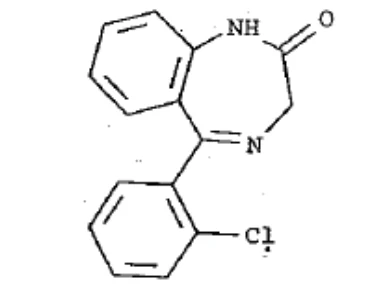
Chemical name: 5-(2-chlorophenyl)-1, 3-dihydro-7-nitro-2H-1, 4-benzodiazepin-2-one.
Molecular formula: C15H10ClN3O3
Molecular mass: 419.46 g/mol
Structural formula:
Description
Light yellow powder, having a faint odor. Melts at about 239°. Insoluble in water; sparingly soluble in acetone and in chloroform; slightly soluble in alcohol and in ether.
CLINICAL TRIALS
Single oral doses of clonazepam to healthy volunteers gives maximum blood levels of drug, in 1 to 3 hours. The half-life of the parent compound ranges from approximately 18 to 50 hours. The major route of excretion of clonazepam is the urine.
Comparative Bioavailability Studies
A comparative bioavailability study was performed using 18 normal human male volunteers. The rate and extent of absorption after a single oral dose of the test product DOM-CLONAZEPAM 2 mg manufactured by Dominion Pharmacal vs. the reference product Rivotril® 2 mg manufactured by Hoffman Laroche was measured and compared. The results can be summarized as follows:
SUMMARY OF COMPARATIVE BIOAVAILABILITY DATA
Clonazepam (1 x 2 mg)
From measured data
Geometric Mean Arithmetic Mean (CV %)
| Parameter | Test* | Reference† | % Ratio of Geometric Means | Confidence Interval (90%) |
AUCT (ng.h/mL) | 392.02 398.22 (17.48) | 364.95 372.26 (19.86) | 107.42% | 99.78 – 115.63 |
AUC (ng.h/mL) | 459.71 466.40 (16.84) | 428.70 434.63 (16.70) | 107.23% | 100.45-114.47 |
CMAX (ng/mL) | 10.56 10.71 (15.90) | 10.03 10.21 (19.19) | 105.33% | 95.57-116.08 |
| TMAX § (h) | 2.57 (1.81) | 2.56 (2.31) | ||
| T1/2el 2 (h) | 35.93 (7.32) | 34.06 (7.06) |
* DOM-CLONAZEPAM 2 mg tablets, Dominion Pharmacal Inc, Canada † Rivotril® 2 mg tablets, Hoffman-La Roche Ltd, Canada § Expressed as the arithmetic mean (CV%) only.
2 Expressed as the arithmetic mean (CV%) only.
A comparative bioavailability study of DOM-CLONAZEPAM 0.5 mg tablets was performed versus Rivotril® 0.5 mg tablets, Hoffman-La Roche Ltd., Canada, 2 mg (4 x 0.5 mg) oral administration to 26 male volunteers in the fasting state. Pharmacokinetic and bioavailability data were measured and the results are summarized in the following table:
SUMMARY TABLE OF THE COMPARATIVE BIOAVAILABILITY DATA
Clonazepam (4 x 0.5 mg)
From measured data
Geometric Mean Arithmetic Mean (CV %)
| Parameter | Test* | Reference† | % Ratio of Geometric Means | Confidence Interval (90%) |
AUC0-72h (ng.h/mL) | 272.35 276.82 (17.1) | 261.83 265.88 (18.0) | 104.0 | (98.5 - 109.8) |
AUCT (ng.h/mL) | 328.96 337.02 (20.2) | 302.50 308.80 (20.4) | 108.8 | (101.7 - 116.3) |
AUC∞ (ng.h/mL) | 410.96 421.20 (21.0) | 375.80 382.72 (19.1) | 109.4 | 101.2 - 118.1) |
| CMAX (units) | 8.64 8.74 (16.6) | 7.85 7.97 (18.4) | 110.1 | (104.5 - 115.9) |
| TMAX§ (h) | 1.94 (0.73) | 2.60 (1.42) | ||
| T½2 (h) | 47.77 (11.7) | 42.39 (16.8) |
* DOM-CLONAZEPAM 0.5 mg tablets, Dominion Pharmacal Inc, Canada † Rivotril® 0.5 mg tablets, Hoffman-La Roche Ltd, Canada § Expressed as the arithmetic mean (CV%) only.
2 Expressed as the arithmetic mean (CV%) only.
DETAILED PHARMACOLOGY
The pharmacological profile of clonazepam is the same as that of other anxiolytic sedative benzodiazepines. Its basic anticonvulsive properties are also similar to those of other diazepines.
Relative Potency of Clonazepam and Other Anticonvulsants (Experimental Tests)
The following table gives an indication of the relative potency of clonazepam and other anticonvulsants in various experimental tests in animals.
Convulsant Test Oral ED50 Values (mg/kg) in Mice and Humans
| Drug | Max. Human Therapeutic Dose (mg/kg) | Metrazol Seizures | Thiosemicarbazide Seizures | 30% Strychine Threshold | Maximum Electroshock |
| Clonazepam | 0.40 | 0.08 - 0.16 | 0.73 | 2.1 | 8.4 |
| Diazepam | 0.43 | 0.8 - 1.4 | 3.4 | 6.2 | 9.0 |
| Chlordiazepoxide | 1.43 | - | 27.0 | 22.2 | 17.2 |
| Phenobarbital | 8.5 | 8.0 - 27.0 | 63 | 37.2 | 7.3 |
| Trimethadione | 25.7 | 300 | 770 | - | 490 |
| DPH | 7.7 | - | 7800 | 7300 | 8.7 |
Clonazepam is effective in reducing photomyoclonic responses in baboons in doses under 0.5 mg/kg i.m. However, seizures evoked by local application of benzylpenicillin or strychnine do not respond well to systemic administration of clonazepam. Other CNS effects noted in several species at varying doses include taming, disinhibitory, sedative, ataxic, and hypnotic effects.
Blood pressure in dogs is lowered and vascular responses to serotonin and noradrenaline are inhibited by clonazepam in doses between 1 and 4 mg/kg i.v. There is a slight myocardial depressant action at these doses. Other pharmacologic effects occur only at higher doses in which gross CNS depressant effects are observed.
Metabolic pathways are similar in several species and the chief metabolites, 7-amino and 7-acetyl amino derivatives, have been isolated in urine of rats, dogs and humans. Hydroxylation also occurs as a prominent metabolic pathway. Metabolites are excreted primarily in urine, approximately 50% of an oral dose is excreted within seven days. Excretion of the drug plus metabolites increases as the dose increases.
TOXICOLOGY
Acute Toxicity:
The following LD50 values have been calculated for clonazepam:
| Dose (mg/kg) and Route | |||
| Species | Oral | i.p. | i.v. |
| Mouse | >4000 | >800 | 2.85±0.1 |
| Rat (adult) | >4000 | - | - |
| Rat (neonate) | 550±120 | - | - |
| Rabbit | >2000 | - | - |
Signs of toxicity include decreased motor activity, ataxia, piloerection and tremors.
Chronic Toxicity: Rats were fed clonazepam in the diet for 18 months in concentrations corresponding to 5, 20 and 50 mg/kg/day. No gross drug-related toxicity was evident. Slight and transient elevations in liver function tests appeared in high dose animals corresponding to increases in liver weights, but these findings were not accompanied by histologic evidence of liver damage.
A study in dogs was conducted in which animals received clonazepam in doses of 3, 10 and 30 mg/kg/day for 12 months. Weight gain was reduced in mid- and high-dose animals compared to controls. The following significant changes in laboratory values were noted: a decrease in hemoglobin and hematocrit values in mid- and high-dose animals, a decreased albumin/globulin ratio due to decreased albumin and increased globulins in high-dose animals, increased alkaline phosphatase and bilirubin values in high-dose animals. There was a significant increase in liver weight in high-dose animals.
Carcinogenicity: No 2-year carcinogenicity studies have been conducted with clonazepam. However, in an 18-month chronic study in rats no treatment-related histopathological changes were seen up to the highest tested dose of 300 mg/kg/day.
Mutagenicity: Genotoxicity tests using bacterial systems with in vitro or host mediated metabolic activation did not indicate a genotoxic liability for clonazepam.
Impairment of Fertility: Studies assessing fertility and general reproductive performance in rats showed a reduced pregnancy rate and impaired pup survival at doses of 10 and 100 mg/kg/day.
Teratogenicity: No adverse maternal or embryo-fetal effects were observed in either mice or rats following administration of oral clonazepam during organogenesis, at doses of up to 20 or 40 mg/kg/day, respectively.
In several rabbit studies following doses of clonazepam of up to 20 mg/kg/day, a low, non-
dose-related incidence of a similar pattern of malformations (cleft palate, open eyelids, fused sternebrae and limb defects) was observed.
REFERENCES
Preclinical
- 1.
Blum JE, et al. Pharmakologie und toxikologie des antiepileptikums clonazepam.
Arzneimittel-Forschung 1973;23:377-89.
- 2. Guerrero-Figueroa R, et al. Effects of two benzodiazepine derivatives on cortical and subcortical epileptogenic tissues in the cat and monkey. Curr Therap Res 1969;11:27-50.
- 3. Schallek W, et al. Recent developments in the pharmacology of the benzodiazepines, advances in pharmacology and chemotherapy. Academic Press, Inc., New York and London 1972;10:132-7.
- 4. Stark LG, et al. The anticonvulsant effects of phenobarbital, diphenylhydantoin and two benzodiazepines in the baboon Papio Papio. J Pharmacol Exp Therap 1970;173:125-32.
Clinical
- 5.
Barnett AM. Treatment of epilepsy with clonazepam (Ro 5-4023). S.A. Medical Journal
1973;47:1683-6.
- 6. Bergamini L et al. Elektroenzephalographische und klinische bewertung des neuen benzodiazepin Ro 5-4023. EEG-EMG 1970;1:182-8.
- 7.
Browne TR. Clonazepam: a review of a new anticonvulsant drug. Arch Neurol 1976;33:326-
32.
- 8.
Carson MJ, et al. Treatment of minor motor seizures with clonazepam. Develop Med Child
Neurology 1975;17:306-10.
- 9.
Dreifus FE, et al. Serum clonazepam concentrations in children with absence seizures.
Neurology 1975;25:255-8.
- 10. Fazio C, et al. Treatment of epileptic seizures with clonazepam. Arch Neurol 1975;32:304-7.
- 11.
Gastaut H. The exceptional antiepileptic properties of new benzodiazepine, presented at 4th
Intern Congr Neurol, New York, September 20-27, 1969.
- 12.
Gastaut H. Propriétés anti-epileptiques exceptionnelles d'une benzodiazépine nouvelle le Ro
5-4023. Vie Med 1970;51:5175-88.
- 13.
Hanson RA, et al. A new anticonvulsant in the management of minor motor seizures.
Develop Med Child Neurol 1972;14:3-14.
- 14.
Hollister LE, et al. Dose-ranging studies of clonazepam in man. Psychopharmacology
Communications 1975;1:89-92.
- 15.
Hooshmand H. Intractable seizures; treatment with a new benzodiazepine anticonvulsant.
Arch Neurol 1972;27:205-8.
- 16. Lison MP, et al. Estudo Clinico - Electrencefalografico longitudinal em pacientes epilépticos tratados. Com Ro. 5-4023, Arquiv Neurophsyquiat 1970;28:25-36.
- 17. Mekkelsen B, et al. A clinical study of benzodiazepine Ro 5-4023 (clonazepam) in the treatment of epilepsy. Acta Neurol Scand 1973;49:91-6.
- 18.
Negrin P, et al. Antiepileptic properties of Ro 5-4023 by mouth. Report of 40 cases.
Electroenceph Clin Neurophysiol 1971;31:528-34.
- 19.
Rose SW, et al. Serum clonazepam concentrations in children with absence seizures.
Neurology 1974;24:386-90.
- 20. Sjö O, et al. Pharmacokinetics and side effects of clonazepam and its 7-Amino-Metabolite in man. Eur J Clin Pharmacol 1975;8:249-54.
- 21. Turner M, et al. Clinical EEG evaluation of a new benzodiazepine derivative (Ro 5-4023) by oral administration in epileptic patients using the double-blind technique. Electroenceph Clin Neurophysiol 1971;31:628-30.
- 22.
Product Monograph: Rivotril, Hoffman Laroche, Date of revision: July 8, 2009, Control
Number 127819