


Patient Medication Information: uses, side effects, how to take - Dorzolamide (Alcon Canada)
ABOUT THIS MEDICATION
What the medication is used for:
Dorzolamide 2% ophthalmic solution is the brandname for the medication dorzolamide hydrochloride available only on prescription through your physician. Dorzolamide 2% ophthalmic solution is an ophthalmic carbonic anhydrase inhibitor. Dorzolamide 2% ophthalmic solution is prescribed to lower the raised pressure in your eye(s) because you have increased pressure in your eye(s) or glaucoma.
What it does:
Dorzolamide 2% ophthalmic solution inhibits the enzyme carbonic anhydrase to reduce the production of watery secretion of the eye, which helps reduce the pressure in your eye.
Remember – this medicine is prescribed for the particular condition that you have. Do not give this medicine to other people, nor use it for any other condition.
When it should not be used:
Do not use this medicine after the date shown on the container.
Do not use Dorzolamide 2% ophthalmic solution if you:
are allergic to any of its components (See: “What the
important nonmedicinal ingredients are”).
- have severe kidney problems.
- are taking oral carbonic anhydrase inhibitors.
What the medicinal ingredient is:
Each mL contains 20 mg dorzolamide (as dorzolamide hydrochloride), a sulfonamide-related compound.
What the important nonmedicinal ingredients are:
hydroxyethyl cellulose, mannitol, sodium citrate dihydrate, sodium hydroxide and water for injection. Benzalkonium chloride is added as a preservative.
What dosage form it comes in:
Dorzolamide 2% ophthalmic solution (as dorzolamide hydrochloride) is a sterile eye drop supplied in a white LDPE plastic DROP-TAINER® bottle, a white dropper tip and an orange polypropylene cap.
WARNINGS AND PRECAUTIONS
This medication may not be suitable for some patients. So tell your physician if you think any of the following applies to you:
If you have any medical problems now or have had any in the past, including eye (corneal) defects, or previous eye surgery while using dorzolamide;
If you are using any other medications (see
INTERACTIONS WITH THIS MEDICATION).
- If you have any allergies to any medications;
- Dorzolamide 2% ophthalmic solution contains the preservative benzalkonium chloride. If you wear contact lenses, you should consult your physician before using Dorzolamide 2% ophthalmic solution. Do not administer while wearing (soft) contact lenses. Remove lenses before application and reinsert no earlier than 15 minutes after use.
If you are pregnant or intend to become pregnant;
- If you are breast feeding or intend to breast feed;
- If you have now or have had in the past kidney or liver problems;
If any of the following occur during treatment with Dorzolamide 2% ophthalmic solution, consult your physician immediately;
- if you suspect that Dorzolamide 2% ophthalmic solution is causing an allergic reaction such as skin rash or itching or other reactions in the eye, such as conjunctivitis;
- if you develop any eye infection or any eye irritation or any new eye problem such as redness of the eye or swelling of the eyelids;
- if you have any eye surgery or suffer eye injury.
- if you have severe skin reactions with symptoms such as blisters, peeling skin, red/purple rash, skin lesions and sores, and associated fever, sore throat.
| IMPORTANT: PLEASE READ |
DORZOLAMIDE 2% OPHTHALMIC SOLUTION IS NOT RECOMMENDED FOR CHILDREN.
In studies with Dorzolamide 2% ophthalmic solution, the effect of Dorzolamide 2% ophthalmic solution was similar in both elderly and younger adult patients.
INTERACTIONS WITH THIS MEDICATION
Your physician also needs to know about drugs (including eye drops) that you are using or plan to use, including drugs obtained without a prescription, in particular, large doses of ASA (acetylsalicylic acid) or sulfa drugs.
PROPER USE OF THIS MEDICATION
Do not start taking any other medications unless you have
discussed the matter with your physician.
If more than one topical ophthalmic drug is being utilized,
the drugs should be administered at least ten minutes apart.
If your physician has recommended you use Dorzolamide
2% ophthalmic solution with a beta-blocker eye drop to lower eye pressure, then the dose is one drop of Dorzolamide 2% ophthalmic solution in the affected eye(s) in the morning and in the evening.
Do not change the dosage of the drug without consulting
your physician. If you must stop treatment, contact your physician immediately.
Do not allow the tip of the container to touch the eye or
areas around the eye. It may become contaminated with bacteria that can cause eye infections leading to serious damage of the eye, even loss of vision. To avoid possible contamination of the container, keep the tip of the container away from contact with any surface.
Usual Adult dose:
The appropriate dosage and duration of treatment will be established by your physician.
When Dorzolamide 2% ophthalmic solution is used alone, the dose is one drop in the affected eye(s) in the morning, in the afternoon and in the evening.
Missed Dose:
It is important to apply Dorzolamide 2% ophthalmic solution as prescribed by your physician. If you miss a dose, apply it as soon as possible. However, if it is almost time for the next dose skip the missed dose and go back to your regular dosing schedule.
Overdose:
For management of a suspected drug overdose, particularly oral ingestion, contact your Regional Poison Control Center even if there are no symptoms.
INSTRUCTIONS FOR USE
Dorzolamide 2% ophthalmic solution
How to Use The DROP-TAINER®* BOTTLE
The DROP-TAINER®* bottle is designed to assure the delivery of a precise dose of medication. Before using your DROP-TAINER® bottle, read the complete instructions carefully.
- 1.
If you use other topically applied
ophthalmic medications, they should be
administered at least 10 minutes before or
after Dorzolamide 2% ophthalmic solution.
- 2. Wash hands before each use.
- 3.
Before using the medication for the first
time, be sure the Safety Seal on the bottle is
unbroken.
- 4. Tear off the Safety Seal to break the seal.
- 5.
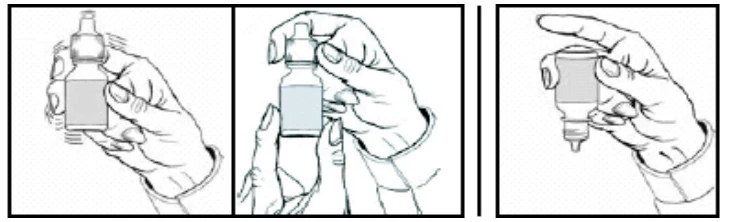
Before each use, shake once and remove the
screw cap.
- 6. Invert the bottle and hold the bottle between your thumb and middle finger, with the tips of the fingers pointing towards you.
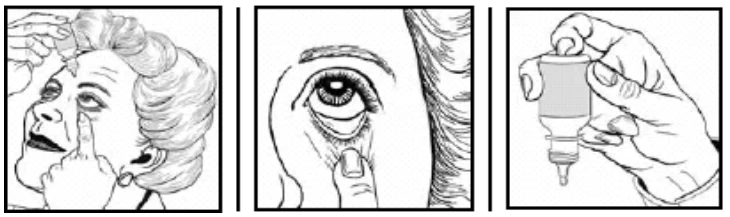
- 7. Tilt your head back
and position the bottle
above the affected eye.
- 8.
With the opposite hand, place a finger under the eye. Gently pull down until a “V” pocket is made
between your eye and lower lid.
DO NOT TOUCH THE EYE WITH THE DROPPER TIP.
- 9.
With the hand holding the bottle, place your index finger on the bottom of the bottle. Push the bottom of the bottle to dispense one drop of medication.
DO NOT SQUEEZE THE SIDES OF THE BOTTLE.
KEEP YOUR HEAD TILTED BACKWARD AND CLOSE YOUR EYE TO ALLOW ABSORPTION OF THE MEDICATION INTO THE EYE.
- 10. Repeat 6, 7, 8, & 9 with other eye if instructed to do so.
- 11. Replace screw cap by turning until firmly touching the bottle.
IMPORTANT: PLEASE READ
Ophthalmic medications, if handled improperly, can become contaminated by common bacteria known to cause eye infections. Serious damage to the eye and subsequent loss of vision may result from using contaminated ophthalmic medications. If you think that your medication may be contaminated, or if you develop an eye infection, contact your doctor immediately concerning continued use of this bottle.
The dispenser tip is designed to provide a pre-measured drop; therefore, do NOT enlarge the hole of the dispenser tip.
After you have used all doses, there will be some Dorzolamide 2% ophthalmic solution left in the bottle. You should not be concerned since an extra amount of Dorzolamide 2% ophthalmic solution has been added and you will get the full amount of Dorzolamide 2% ophthalmic solution that your doctor prescribed. Do not attempt to remove excess medicine from the bottle.
SIDE EFFECTS AND WHAT TO DO ABOUT THEM
Any medicine may have unintended or undesirable effects, so-called side effects.
You may experience eye symptoms such as burning and stinging, blurred vision, itching, tearing, redness of the eye(s), eye pain, or swelling or crusting of the eyelids. You may sense a bitter taste after putting in your eye drops.
Other side effects may include headache, nosebleed, dry mouth, nausea, tiredness, kidney stones and rarely, rash such as severe skin reactions. If you develop a severe skin reaction with symptoms such as blisters, peeling skin, red/purple rash, skin lesions and sores, and associated fever, sore throat, stop taking this medication immediately and contact your physician.
There have been post-marketing experience reports of allergic reactions to Dorzolamide 2% ophthalmic solution with symptoms such as tissue swelling, difficulty in breathing, itching, and urticaria (raised skin rash). If this occurs, stop taking this medication and contact your physician.
Your physician or pharmacist has a complete list of the possible side effects from this medication. Please tell your physician or pharmacist promptly about any unusual symptom.
Possible side effects such as visual disturbances may affect the ability to drive and use machines.
If the contents of the container are swallowed, you should contact your physician immediately.
This is not a complete list of side effects. For any unexpected effects while taking Dorzolamide 2% ophthalmic solution, contact your physician or pharmacist.
| H | OW TO STORE IT |
Dorzolamide 2% ophthalmic solution:
Store at 2°C-25°C. Protect from light.
Keep all medicines safely away from children.
REPORTING SUSPECTED SIDE EFFECTS
You can report any suspected adverse reactions associated the use of health products to the Canada Vigilance Program by one of the following 3 ways:
- Report online at www.healthcanada.gc.ca/medeffect
- Call toll-free at 1-866-234-2345
Complete a Canada Vigilance Reporting Form and: -Fax toll-free: 1-866-678-6789, or -Mail to: Canada Vigilance Program Health Canada
Postal Locator 0701C
Ottawa, ON K1A 0K9
Postage paid labels, Canada Vigilance Reporting Form and the adverse reaction reporting guidelines are available on the MedEffect™ Canada Web site at
www.healthcanada.gc.ca/medeffect.
NOTE: Should you require information related to the management of side effects, please contact your health care provider before notifying Canada Vigilance. The Canada Vigilance Program does not provide medical advice.
MORE INFORMATION
This document plus the full product monograph, prepared for health professionals can be found at:
http://www.alcon.ca
or by contacting the sponsor, ALCON Canada Inc., at 1-800-613-2245.
Date of preparation: March 2, 2011
DROP-TAINER® is a registered trademark of Alcon Manufacturing, Ltd.