


Patient Medication Information: uses, side effects, how to take - Simbrinza
What is SIMBRINZA used for?
SIMBRINZA is used to treat high pressure in the eyes of adults with open-angle glaucoma or ocular hypertension (conditions where there is increased pressure in the eyes).
How does SIMBRINZA work?
SIMBRINZA contains brinzolamide and brimonidine tartrate. These reduce the production of fluid in the eye and increases the amount of fluid coming out of the eye. This lowers high pressure in the eye.
What are the ingredients in SIMBRINZA?
Medicinal ingredients: brinzolamide and brimonidine tartrate.
Non-medicinal ingredients: Benzalkonium chloride (as preservative 0.003%), Boric acid, Carbomer 974P, Hydrochloric acid (to adjust pH), Mannitol, Propylene glycol, purified water, Sodium chloride, Sodium hydroxide (to adjust pH) and Tyloxapol.
SIMBRINZA comes in the following dosage forms:
Liquid suspension.
Do not use SIMBRINZA:
- If you are allergic to brinzolamide or brimonidine tartrate, sulfonamides, any of the other ingredients of SIMBRINZA or any parts of the container (see What are the ingredients in SIMBRINZA?).
- if you are taking monoamine oxidase (MAO) inhibitors or certain antidepressants (used to treat depression). You must tell your healthcare professional if you are taking any antidepressant drug.
- if you have severe kidney problems.
- if you have too much acidity in your blood (a condition called hyperchloraemic acidosis).
in babies and infants aged less than 2 years and in children 2 to 17 years of age.
To help avoid side effects and ensure proper use, talk to your healthcare professional before you take SIMBRINZA. Talk about any health conditions or problems you may have, including if you have or have had:
- dry eyes or problems with your cornea
- kidney problems
- previous treatment for glaucoma (a condition where there is too much pressure in the eye)
- history of using contact lens
- coronary heart disease (a condition where there is a narrowing or blocking of the blood vessels that carry blood and oxygen to the heart)
- heart failure
- high or low blood pressure
- liver problems
- depression
Other warnings you should know about:
While you are using SIMBRINZA suspension, talk to your healthcare professional immediately if you:
- develop an eye infection, swelling, red or irritated eyelid.
- suffer any eye injury or have eye surgery.
Pregnancy
If you are pregnant, or think you may be pregnant, or are planning to have a baby, talk to your healthcare professional before you use SIMBRINZA.
Women who may become pregnant are advised to use birth control while using SIMBRINZA.
SIMBRINZA use is not recommended during pregnancy. Do not use SIMBRINZA unless your healthcare professional tells you to.
Breast-feeding
If you are breast-feeding, SIMBRINZA may pass into your milk. The use of SIMBRINZA is not recommended during breast-feeding.
Contact Lenses
There is a preservative in SIMBRINZA (benzalkonium chloride) that may be absorbed by contact lenses. It can discolour soft contact lenses and may cause eye irritation. Therefore, do not wear contact lenses while using SIMBRINZA.
Wait 15 minutes after using SIMBRINZA before putting your lenses back in.
Driving and Using Machines
Using SIMBRINZA may cause fatigue, sleepiness, drowsiness and blurred vision. Do NOT drive or engage in hazardous activities until these symptoms are gone.
Tell your healthcare professional about all the medicines you take, including any drugs, vitamins, minerals, natural supplements or alternative medicines.
There have been no specific drug interaction studies done for SIMBRINZA.
Tell your healthcare professional about all medicines, including eye drops, that you are using or plan to use, including those without a prescription.
The following may interact with SIMBRINZA:
- Other eye drops for the treatment for glaucoma
- Medicines to lower blood pressure
- Medicines used to treat heart conditions (for example, digoxin)
- Medicines used to treat glaucoma and altitude sickness (for example, acetazolamide, Methazolamide and dorzolamide)
- Medicines used to treat viral infections (antivirals)
- Medicines used to treat bacterial infections (antibiotics)
- Acetylsalicylic acid, used to treat pain, fever and inflammation
- Medicines used to treat depression such as monoamine oxidates (MAO) inhibitors, or antidepressants (for example, amitriptyline, nortriptyline, clomipramine and mianserin)
- Medicine used to treat schizophrenia like chlorpromazine
- Medicine used to treat attention deficit hyperactivity disorder (ADHD) like methylphenidate
- Medicine used to treat high blood pressure like resperine
- Medicines used to treat fungal infections (for example, ketoconazole, itraconazole and clotrimazole)
- Medicines used to treat HIV/AIDS like ritonavir
- Medicine used to treat slow heart rates like isoprenaline
- Medicine used to treat high blood pressure like prazosin
- Opiates or opioids that are used to treat pain
- Sedatives, used to treat sleep disorders
- Anaesthetics, used to block pain
How to take SIMBRINZA:
Always use SIMBRINZA exactly as your healthcare professional has told you. Check with them if you are not sure.
Only use SIMBRINZA for your eyes. Do not swallow or inject SIMBRINZA.
Usual dose:
One drop in the eye or eyes, twice a day, in the morning and night. Use at the same times each day.
Only use SIMBRINZA in both eyes if your healthcare professional told you to. Take it for as long as your healthcare professional told you to.
How to use:
1 2 3
- Get the SIMBRINZA bottle and a mirror.
- Wash your hands before use
- Shake well before use.
- Twist off the bottle cap. Remove security-ring if loose.
- Hold the bottle, pointing down, between your thumb and fingers.
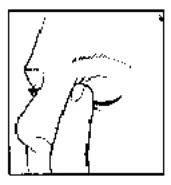
- Tilt your head back. Pull down your eyelid with a clean finger, until there is a 'pocket' between the eyelid and your eye. The drop will go in here (Picture 1).
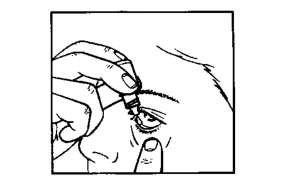
- Bring the bottle tip close to the eye. Use the mirror if it helps.
Do NOT touch your eye or eyelid, surrounding areas or other surfaces with the dropper.
- If the tip of the bottle touches the eye or surrounding structures, it can become contaminated by common bacteria known to cause eye infections. It could contaminate the drops.
- Serious damage to the eye and loss of vision may result from using contaminated eye drops.
- Gently press on the base of the bottle to release one drop of SIMBRINZA at a time.
- Do NOT squeeze the bottle: it is designed so that a gentle press on the bottom is all that it needs (Picture 2).
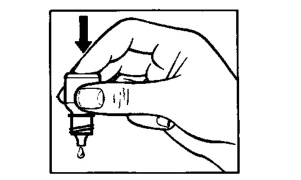
- After using SIMBRINZA, press a finger into the corner of your eye, by the nose (Picture 3) for up to 1 minute. This helps to stop SIMBRINZA getting into the rest of the body.
- If you use drops in both eyes, repeat the steps for your other eye.
- Close the bottle cap firmly immediately after use.
- Use up one bottle before opening the next bottle.
- Do NOT use for more than 125 days after opening the bottle.
- If solution changes color, do NOT use.
- Do NOT use the product after the expiration date marked on the bottle.
If a drop misses your eye, try again.
If you are using other eye drops, wait at least 5 minutes between using SIMBRINZA and the other drops.
SIMBRINZA contains a preservative called benzalkonium chloride which may discolour soft contact lenses. If you wear contact lenses, remove them before using SIMBRINZA. Wait 15 minutes after using the drops before you put your lenses back in.
Overdose:
If you use more SIMBRINZA than you should, rinse your eye(s) with warm water. Do not put in any more drops until it is time for your next regular dose.
| If you think you, or person you are caring for have taken too much SIMBRINZA, contact a healthcare professional, hospital emergency department or regional poison control centre immediately, even if there are no symptoms. |
|---|
Missed Dose:
If you forget to use SIMBRINZA, continue with the next dose as planned. Do not use a double dose to make up for the missed dose.
Do not use more than one drop in the affected eye(s) two times a day.
If you have any further questions on the use of this medicine, ask your healthcare professional.
What are possible side effects from using SIMBRINZA?
These are not all the possible side effects you may have when taking SIMBRINZA. If you experience any side effects not listed here, tell your healthcare professional.
If you get any severe allergic reaction while you are using SIMBRINZA, contact your healthcare professional immediately.
- allergic conjunctivitis (eye allergy)
- eye surface inflammation
- eye pain, eye discomfort
- blurred vision
- eye redness
- eye surface damage with loss of cells
- inflammation of the eyelid
- deposits on the eye surface
- sensitivity to light
- eye swelling
- dry eye
- eye discharge
- increased tear production
- eyelid redness
- abnormal sensation in eye
- tired eye
- Corneal oedema (a condition where there is a build up of fluid in the cornea)
- Corneal staining
- Miosis (a condition where there is excessive shrinking of the pupil)
- drowsiness
- bad taste in mouth
- dry mouth
- difficulty sleeping (insomnia)
- headache
- dizziness
- dry nose or throat
- runny nose
- stuffy nose
- indigestion, stomach-ache
- abnormal sensation in mouth
- Vertigo (a condition where this is a sensation of feeling off balance)
- Ectropion (a condition where the lower eyelid turns outward)
- Hypermetropia (a condition where it is hard to see up close)
- Hypoaesthesia oral (a condition where you have a loss of sensation in the mouth)
- Drug intolerance
- Medication residue
- Excoriation (a condition where you cannot stop picking at your skin)
- Balance disorder
- Hypersomnia (a condition that causes you to be very sleepy during the day)
- Hypotonia (a condition where you have low muscle tone)
- Sedation
- Libido increased
- Rhinalgia (a condition where you have pain in the nose)
- Hypertension (a condition where you have increased blood pressure)
- Ageusia (a condition where you have a loss of taste)
- Arrhythmia (a condition where you have an irregular heartbeat)
- Arthralgia (a condition where the joints are stiff)
- Asthma (a condition where your airways get narrow and swollen making it difficult to breathe)
- Chest pain
- Madarosis (a condition where you lose your eyebrows or eyelashes)
- Peripheral oedema (a condition where you have swelling in your lower legs or hands)
- Pollakiuria (a condition where you urinate frequently)
- Rhinitis (a condition where the passages in your nose are inflamed)
- Tachycardia (a condition where you have an increased heart rate)
- Tremor (a condition where your body shakes without your control)
- Iritis (an eye condition where your iris is swollen or irritated)
- Iridocyclitis (an eye condition where your iris and the muscles in your eye are inflamed)
- Syncope (a condition where you faint or pass out)
Serious side effects and what to do about them
| Symptom / effect | Talk to your healthcare professional | Stop taking drug and get immediate medical help | |
|---|---|---|---|
| Only if severe | In all cases | ||
| UNCOMMON | |||
| Bradycardia (heart rate decreased): fainting, dizziness, weakness, changes in breath | ✓ | ||
Hypotension (blood pressure decreased): fainting, dizziness, weakness, changes in breath | ✓ | ||
| Unusual eye symptoms: severe eye pain or sensitivity to light, or sudden decrease or loss of vision | ✓ | ||
| Hypersensitivity (allergic reaction): trouble breathing, tightness in throat or severe skin rash | ✓ | ||
| UNKNOWN | |||
| Stevens-Johnson syndrome (severe skin rash): redness, blistering and/or peeling of the skin and/or inside of the lips, eyes, mouth, nasal passages or genitals, accompanied by fever, chills, headache, cough, body aches or swollen glands. | ✓ | ||
| Toxic epidermal necrolysis (severe skin reaction): redness, blistering and/or peeling of large areas of the skin. | ✓ | ||
If you have a troublesome symptom or side effect that is not listed here or becomes bad enough to interfere with your daily activities, tell your healthcare professional.
Reporting Side Effects
You can report any suspected side effects associated with the use of health products to Health Canada by:
NOTE: Contact your health professional if you need information about how to manage your side effects. The Canada Vigilance Program does not provide medical advice. |
Storage:
Store at 2°C to 25°C.
Keep out of reach and sight of children.
Do NOT use SIMBRINZA after the expiry date which is stated on the bottle and the carton after EXP.
The expiry date refers to the last day of that month.
Throw away the bottle 125 days after first opening to prevent infections; and use a new bottle.
Write down the date of opening on the carton label in the space provided.
Do not throw away any medicines via wastewater or household waste. Ask your healthcare professional how to throw away medicines you no longer use. These measures will help protect the environment.
If you want more information about SIMBRINZA:
- Talk to your healthcare professional
- Find the full product monograph that is prepared for healthcare professionals and includes this Patient Medication Information by visiting the Health Canada website: (https://www.canada.ca/en/health-canada/services/drugs-health-products/drug-products/drug-product-database.html; the manufacturer’s website http://www.novartis.ca, or by calling 1-800-363-8883)
Last Revised DEC 23, 2022
SIMBRINZA is a registered trademark.