


Product Monograph - Simbrinza
RECENT MAJOR LABEL CHANGES
| 7 WARNINGS AND PRECAUTIONS; Hypersensitivity; Renal; Skin | 12/2022 |
|---|
TABLE OF CONTENTS
Sections or subsections that are not applicable at the time of authorization are not listed.
RECENT MAJOR LABEL CHANGES..................................................................................................2
TABLE OF CONTENTS ............................................................................................................ 2
PART I: HEALTH PROFESSIONAL INFORMATION .................................................................... 4
1 INDICATIONS ............................................................................................................. 4
1.1 Pediatrics ...................................................................................................................... 4
1.2 Geriatrics ...................................................................................................................... 4
2 CONTRAINDICATIONS ................................................................................................ 4
4 DOSAGE AND ADMINISTRATION ................................................................................ 5
4.1 Dosing Considerations ............................................................................................. 5
4.2 Recommended Dose and Dosage Adjustment ........................................................ 5
4.4 Administration ......................................................................................................... 5
4.5 Missed Dose ............................................................................................................. 5
5 OVERDOSAGE ............................................................................................................ 5
6 DOSAGE FORMS, STRENGTHS, COMPOSITION AND PACKAGING ................................ 6
7 WARNINGS AND PRECAUTIONS ................................................................................. 6
7.1 Special Populations .................................................................................................. 9
7.1.1 Pregnant Women ............................................................................................... 9
7.1.2 Breast-feeding .................................................................................................... 9
7.1.3 Pediatrics ............................................................................................................ 9
7.1.4 Geriatrics ............................................................................................................ 9
8 ADVERSE REACTIONS............................................................................................... 10
8.2 Clinical Trial Adverse Reactions ............................................................................. 10
8.3 Less Common Clinical Trial Adverse Reactions ...................................................... 11
8.5 Post-Market Adverse Reactions ............................................................................. 12
9 DRUG INTERACTIONS .............................................................................................. 13
9.2 Drug Interactions Overview ................................................................................... 13
9.3 Drug-Behavioural Interactions ............................................................................... 13
9.4 Drug-Drug Interactions .......................................................................................... 13
9.5 Drug-Food Interactions .......................................................................................... 14
9.6 Drug-Herb Interactions .......................................................................................... 14
9.7 Drug-Laboratory Interactions ................................................................................ 14
10 CLINICAL PHARMACOLOGY ...................................................................................... 14
10.1 Mechanism of Action ....................................................................................... 14
10.2 Pharmacodynamics .......................................................................................... 15
10.3 Pharmacokinetics ............................................................................................. 15
11 STORAGE, STABILITY AND DISPOSAL ........................................................................ 17
12 SPECIAL HANDLING INSTRUCTIONS .......................................................................... 17
PART II: SCIENTIFIC INFORMATION ..................................................................................... 18
13 PHARMACEUTICAL INFORMATION .......................................................................... 18
14 CLINICAL TRIALS ...................................................................................................... 19
14.1 Clinical Trials by Indication .............................................................................. 19
Intraocular Pressure (IOP) Reduction .............................................................................. 19
15 MICROBIOLOGY ...................................................................................................... 24
16 NON-CLINICAL TOXICOLOGY .................................................................................... 25
PATIENT MEDICATION INFORMATION ................................................................................ 32
PART I: HEALTH PROFESSIONAL INFORMATION
1 INDICATIONS
SIMBRINZA (brinzolamide / brimonidine tartrate ophthalmic suspension) is indicated for:
- the reduction of intraocular pressure (IOP) in adult patients with open-angle glaucoma or ocular hypertension for whom monotherapy provides insufficient IOP reduction AND when the use of SIMBRINZA is considered appropriate.
1.1 Pediatrics
Paediatrics (< 18 years of age):
The safety and efficacy of SIMBRINZA has not been established in pediatric patients; therefore, Health Canada has not authorized an indication for pediatric use. Several serious adverse reactions have been reported in association with the administration of brimonidine tartrate ophthalmic solution 0.2% in pediatric populations. (see 2 CONTRAINDICATIONS and 7.1.3, Pediatrics).
1.2 Geriatrics
Geriatrics (> 65 years of age): No overall differences in safety and effectiveness have been observed between elderly and other adult patients.
2 CONTRAINDICATIONS
Brinzolamide / Brimonidine Tartrate ophthalmic suspension is contraindicated in:
- Patients with hypersensitivity to brinzolamide, brimonidine, or to any ingredient in the formulation or component of the container. For a complete listing, see 6 DOSAGE FORMS, STRENGTHS, COMPOSITION AND PACKAGING.
- Patients with hypersensitivity to sulfonamides.
- Patients receiving monoamine oxidase (MAO) inhibitor therapy.
- Patients on antidepressants that affect noradrenergic transmission (e.g. tricyclic antidepressants and mianserin).
- Patients with severe renal impairment.
- Patients with hyperchloroaemic acidosis.
- Neonates and infants under the age of 2 years.
SIMBRINZA is not recommended in patients with hepatic impairment. SIMBRINZA has not been studied in patients with hepatic impairment.
SIMBRINZA is contraindicated in patients with severe renal impairment (CrCl<30 ml/min). SIMBRINZA has not been studied in patients with severe renal impairment (CrCl< 30 mL/min) or in patients with hyperchloroaemic acidosis. Since the brinzolamide component of SIMBRINZA and its metabolite are excreted predominantly by the kidney, SIMBRINZA is contraindicated in such patients.
4 DOSAGE AND ADMINISTRATION
4.1 Dosing Considerations
- SIMBRINZA is a carbonic anhydrase inhibitor formulated for topical ophthalmic use. With any evident signs of hypersensitivity or discomfort, SIMBRINZA must be discontinued.
Caution is advised when using SIMBRINZA in patients with mild to moderate renal impairment.
(see 7 WARNING AND PRECAUTIONS)
4.2 Recommended Dose and Dosage Adjustment
The recommended dose is one drop of SIMBRINZA in the affected eye(s) two times daily.
Health Canada has not authorized an indication for pediatric use. (see 1.1 Pediatrics and 7.1.3 Pediatrics.)
4.4 Administration
Patients should be instructed to shake the bottle well before use.
Nasolacrimal occlusion or gently closing the eyelid after instillation for up to one minute is recommended. This may reduce the systemic absorption of medications administered via the ocular route and result in a decrease in systemic adverse events.
SIMBRINZA may be used concomitantly with other topical ophthalmic drug products to lower intraocular pressure. If more than one topical ophthalmic drug is being used, the drugs should be administered at least five minutes apart.
Do not allow the dropper tip of the bottle to touch the eye or other surrounding structures, because this could cause eye injury or contaminate the tip with common bacteria known to cause eye infections. Serious damage to the eye with subsequent loss of vision may result from using contaminated eye drop solutions. Do not use suspension if the bottle is cracked or damaged in any way.
4.5 Missed Dose
If a dose is missed, treatment should be continued with the next dose as planned. The dose should not exceed one drop in the affected eye(s) two times daily.
5 OVERDOSAGE
There were no cases of overdose reported in the clinical development program for SIMBRINZA.
Although no human data are available, symptoms of brinzolamide overdose may include hypotension, electrolyte imbalance, development of an acidotic state, and possible nervous system effects may occur. Serum electrolyte levels (particularly potassium) and blood pH levels must be monitored.
Symptoms of brimonidine overdose such as apnea, bradycardia, coma, hypotension, hypothermis, hypotonia, lethargy, pallor, respiratory depression, and somnolence have been reported in neonates, infants, and children receiving brimonidine as part of medical treatment of congenital glaucoma or by accidental oral ingestion. Brimonidine toxicity resembles that of clonidine, which has been reported to cause fatigue, apnea, bradycardia, hypothermia, dizziness, hypotension and somnolence.
Oral overdoses of other alpha-2-agonists have been reported to cause symptoms such as hypotension, asthenia, vomiting, lethargy, sedation, bradycardia, arrhythmias, miosis, apnoea, hypotonia, hypothermia, respiratory depression and seizure.
Treatment of oral overdose includes supportive and symptomatic therapy; patient’s airway should be maintained.
| For management of a suspected drug overdose, contact your regional poison control centre. |
|---|
6 DOSAGE FORMS, STRENGTHS, COMPOSITION AND PACKAGING
Table 1 – Dosage Forms, Strengths, Composition and Packaging
| Route of Administration | Dosage Form / Strength/Composition | Non-medicinal Ingredients |
| Ophthalmic (topical) | Suspension/ brinzolamide 1% w/v and brimonidine tartrate 0.2% w/v | Benzalkonium chloride (as a preservative), Boric Acid, Carbomer 974P, Hydrochloric acid (to adjust pH), Mannitol, Propylene glycol, purified water, Sodium chloride, Sodium hydroxide (to adjust pH), Tyloxapol. |
Description
SIMBRINZA is a white to off-white uniform suspension containing 10 mg/mL brinzolamide and 2 mg/mL brimonidine tartrate.
SIMBRINZA is supplied in a round, white, low-density polyethylene (LDPE) bottles with a natural LDPE dispensing plug and white polypropylene screw cap containing 10 mL of suspension.
7 WARNINGS AND PRECAUTIONS
General
FOR TOPICAL OPHTHALMIC USE ONLY.
Like other topically applied ophthalmic agents, brinzolamide and brimonidine tartrate, the active ingredients of SIMBRINZA, are absorbed systemically. However, brinzolamide significantly accumulates in the blood due to extremely long half-life (see 10. CLINICAL PHARMACOLOGY).
Acid-base disturbances have been reported with oral carbonic anhydrase inhibitors.
Carcinogenicity and Mutagenesis
See 16 NON-CLINICAL TOXICOLOGY, Carcinogenicity and Genotoxicity.
Cardiovascular
Alpha 2 agonists as a class may reduce pulse and blood pressure. In clinical trials SIMBRINZA is associated with mild reduction in blood pressure in some patients. Caution is advised when using SIMBRINZA concomitantly with antihypertensives and/or cardiac glycosides or in patients with severe or unstable and uncontrolled cardiovascular disease.
Brimonidine tartrate, a component of SIMBRINZA, may potentiate syndromes associated with vascular insufficiency, therefore, caution is advised when using SIMBRINZA in patients with depression (especially those taking tricyclic antidepressants as these agents may blunt the hypotensive response), cerebral or coronary insufficiency, Raynaud's phenomenon, orthostatic hypotension or thromboangiitis obliterans.
Driving and Operating Machinery
SIMBRINZA can cause fatigue and/or drowsiness in some patients. Patients who engage in hazardous activities should be cautioned about the potential for a decrease in mental alertness.
SIMBRINZA may also cause blurred vision or visual disturbance in some patients. The patient should wait until these symptoms have cleared before driving or using machinery.
Endocrine and Metabolism
SIMBRINZA significantly increases blood glucose level and decreases blood cholesterol level when topically administrated twice daily (BID) in the eye of rabbits. These reactions have been observed with rabbits topically dosed with brimonidine alone in the eyes (see 16 NON-CLINICAL TOXICOLOGY).
Hepatic/Biliary/Pancreatic
Brinzolamide and brimonidine tartrate, components of the active ingredients of SIMBRINZA, have not been studied in patients with hepatic impairment. Use of SIMBRINZA is not recommended in patients with hepatic impairment.
Hypersensitivity
SIMBRINZA contains brinzolamide which is a sulfonamide, and although administered topically is absorbed systemically. Therefore, the same types of adverse reactions that are attributable to sulfonamides may occur with the topical administration of SIMBRINZA. Fatalities have occurred due to severe reactions to sulfonamides including Stevens Johnson Syndrome (SJS), Toxic Epidermal Necrolysis (TEN), fulminant hepatic necrosis, agranulocytosis, aplastic anemia, and other blood dyscrasias (see 8 ADVERSE REACTIONS section). Rechallenge irrespective of the route of administration should not be undertaken in patients with hypersensitivity syndrome and SJS/TEN (see 7 Warning and Precautions, Skin).
Neurologic
SIMBRINZA may cause fatigue and somnolence. Carbonic anhydrase inhibitors can impair ability to perform tasks requiring mental alertness and/or physical coordination. As SIMBRINZA is absorbed systemically, caution in advised when using SIMBRINZA in patients requiring mental alertness and/or physical coordination.
Ophthalmologic
SIMBRINZA is not recommended in patients with acute or narrow-angle glaucoma. SIMBRINZA has not been studied in patients with acute or narrow-angle glaucoma.
Carbonic anhydrase activity has been observed in both the cytoplasm and around the plasma membranes of the corneal epithelium. There is an increased potential for developing corneal edema in patients with low endothelial cell counts.
The possible role of brinzolamide on corneal endothelial function has not been investigated in patients with compromised corneas (particularly in patients with low endothelial cell count). Specifically, patients wearing contact lenses have not been studied and careful monitoring of these patients when using brinzolamide is recommended, since carbonic anhydrase inhibitors may affect corneal hydration and wearing contact lenses might increase the risk for the cornea. Careful monitoring of patients with compromised corneas, such as patients with diabetes mellitus or corneal dystrophies, is recommended.
SIMBRINZA contains benzalkonium chloride as preservative, which may cause eye irritation and is known to discolour soft contact lenses. Contact with soft contact lenses is to be avoided. Patients must be instructed to remove contact lenses prior to the instillation of SIMBRINZA and wait at least 15 minutes after dosing before contact lenses are reinserted.
Benzalkonium chloride has also been reported to cause punctate keratopathy and/or toxic ulcerative keratopathy. Close monitoring is required with frequent or prolonged use.
SIMBRINZA may cause temporary blurred vision or other visual disturbances that can affect the ability to drive or use machines. If blurred vision occurs at instillation, the patient must wait until the vision clears before driving or using machinery.
Animal studies show that brinzolamide and brimonidine significantly accumulates in iris-ciliary body, choroid and/or retina during BID topical ocular administration of SIMBRINZA (see 16 NON-CLINICAL TOXICOLOGY, Animal Pharmacokinetics).
Brimonidine tartrate may cause ocular allergic reactions. If allergic reactions are observed, treatment should be discontinued.
Psychiatric
Caution is advised with using SIMBRINZA in patients with depression.
Renal:
SIMBRINZA is contraindicated in patients with severe renal impairment. Caution is advised when using SIMBRINZA in patients with mild to moderate renal impairment because of the possible risk of metabolic acidosis.
Reproductive Health: Female and Male Potential
- Fertility
The effect of SIMBRINZA on human fertility is unknown. Nonclinical data do not suggest an effect of brinzolamide or brimonidine on fertility. In animals, developmental toxicity was observed with brinzolamide at doses that induced maternal toxicity. (see 16 NON-CLINICAL TOXICOLOGY, Reproductive and Developmental Toxicology).
Skin
SIMBRINZA should be discontinued immediately at the appearance of a skin rash, as the rash may be, in some instances, followed by dermatological reactions/hypersensitivity syndrome including SJS and TEN. At the time of prescription, patients should be informed of the signs and symptoms, and advised to monitor closely for skin reactions.
7.1 Special Populations
7.1.1 Pregnant Women
SIMBRINZA is not recommended during pregnancy or in women of child-bearing potential not using contraception.
Developmental toxicity studies with brinzolamide in rabbits at oral doses of 1, 3, and 6 mg/kg/day (43, 129, and 258 times the recommended human ophthalmic dose) produced maternal toxicity at 6 mg/kg/day and a significant increase in the number of fetal variations, such as accessory skull bones, which was only slightly higher than the historic value at 1 and 6 mg/kg. In rats, statistically decreased body weights of fetuses from dams receiving oral doses of 18 mg/kg/day (783 times the recommended human ophthalmic dose) during gestation were proportional to the reduced maternal weight gain, with no statistically significant effects on organ or tissue development. Increases in unossified sternebrae, reduced ossification of the skull, and unossified hyoid that occurred at 6 and 18 mg/kg were not statistically significant. No treatment-related malformations were seen. Following oral administration of 14C-brinzolamide to pregnant rats, radioactivity was found to cross the placenta and was present in the fetal tissues and blood.
In animal studies, brimonidine crossed the placenta and entered into the fetal circulation to a limited extent. Drug derived material was eliminated from fetal tissues by 24 hours post dose.
(See 16 NON-CLINICAL TOXICOLOGY, Reproductive and Developmental Toxicology).
7.1.2 Breast-feeding
SIMBRINZA should not be used by women nursing neonates/infants.
It is not known whether topical SIMBRINZA is excreted in human milk; however, a risk to the nursing child cannot be excluded.
Available pharmacodynamic/toxicological data in animals have shown that following oral administration, brinzolamide and brimonidine are excreted in breast milk.
7.1.3 Pediatrics
Pediatrics (< 18 years of age): SIMBRINZA is contraindicated in neonates and infants under the age of 2 years. Several serious adverse reactions have been reported in association with the administration of brimonidine tartrate to infants. (see 2. CONTRAINDICATIONS)
SIMBRINZA is not recommended in children between 2 and 18 years.
7.1.4 Geriatrics
Geriatrics (> 65 years of age): No overall differences in safety or effectiveness of SIMBRINZA have been observed between elderly and adult patients.
8 ADVERSE REACTIONS
8.1 Adverse Drug Reaction Overview
The individual active components SIMBRINZA are currently marketed as AZOPT (brinzolamide 10 mg/mL) and ALPHAGAN (brimonidine tartrate 2 mg/mL). These individual component products have well-characterized safety profiles obtained via clinical trials and post-marketing surveillance.
Adverse drug reactions (ADRs) observed with the use of SIMBRINZA in clinical trials were consistent with ADRs that have been observed with the use of one or both of the individual components. The most frequent ocular ADRs observed with the use of SIMBRINZA were nonserious local ocular side effects (e.g., hyperemia of the eye, ocular allergic type reactions, blurred vision, and ocular discomfort) Common systemic ADRs reported with its use were nonserious and included dysgeusia (bad taste), oral dryness and fatigue/drowsiness.
The majority of ADRs leading to patient discontinuation from study participation were for nonserious local ocular side effects (e.g., ocular discomfort, ocular hyperemia, and ocular allergic type reactions). The incidence of patients discontinuing due to these events was similar between SIMBRINZA and concomitant dosing with the individual components (brinzolamide 10 > mg/mL+ brimonidine tartrate 2mg/mL).
Overall, the safety profile of SIMBRINZA was similar to that of the individual components (brinzolamide 10 mg/mL and brimonidine 2 mg/mL) and did not result in additional risk to patients relative to the known risks of the individual components.
8.2 Clinical Trial Adverse Reactions
Clinical trials are conducted under very specific conditions. Therefore, the adverse reaction rates observed in the clinical trials, may not reflect the rates observed in practice and should not be compared to the rates in the clinical trials of another drug. Adverse reaction information from clinical trials may be useful in identifying and approximating rates of adverse drug reactions in real-world use.
The evaluation of the safety of a fixed combination brinzolamide/ brimonidine dosed twice daily (BID) included 2 phase III clinical studies of 6 months duration. During these clinical studies 645 patients were exposed to SIMBRINZA.
The Table below summarizes adverse events assessed by the examining physician as related to the use of SIMBRINZA e.g., ADR reported at an incidence of ≥ 1% in clinical trials (data pooled) along with the corresponding incidence of the ADRs reported for the comparator groups.
| Table 2 - Adverse Drug Reactions ≥ 1% Reported With the use of SIMBRINZA (Brinz/Brim BID) and the Corresponding Incidences Observed in the Comparator Groups C 10 040/C 10 041 | ||||||||||||
| Coded Adverse Event | Brinz/Brim BID N = 645 | Brinz+Brim BID N = 436 | Brinz BID N = 192 | Brim BID N = 175 | ||||||||
| N | % | N | % | N | % | N | % | |||||
| Eye Disorders | ||||||||||||
| Ocular hyperemia | 27 | 4.2 | 17 | 3.9 | 1 | 0.5 | 8 | 4.6 | ||||
| Vision blurred | 18 | 2.8 | 13 | 3.0 | 1 | 0.5 | 2 | 1.1 | ||||
| Eye pain | 18 | 2.8 | 8 | 1.8 | 3 | 1.6 | - | - | ||||
| Conjunctivitis allergic | 17 | 2.6 | 9 | 2.1 | - | - | 3 | 1.7 | ||||
| Eye pruritus | 14 | 2.2 | 8 | 1.8 | 3 | 1.6 | 4 | 2.3 | ||||
| Eye irritation | 14 | 2.2 | 7 | 1.6 | 4 | 2.1 | 3 | 1.7 | ||||
| Conjunctivitis | 12 | 1.9 | 5 | 1.1 | - | - | 1 | 0.6 | ||||
| Conjunctival hyperaemia | 10 | 1.6 | 13 | 3.0 | 3 | 1.6 | 4 | 2.3 | ||||
| Eye allergy | 8 | 1.2 | 6 | 1.4 | - | - | 2 | 1.1 | ||||
| Gastrointestinal Disorders | ||||||||||||
| Dry mouth | 18 | 2.8 | 14 | 3.2 | 2 | 1.0 | 9 | 5.1 | ||||
| Nervous System Disorders | ||||||||||||
| Dysgeusia | 22 | 3.4 | 16 | 3.7 | 4 | 2.1 | 2 | 1.1 | ||||
| Somnolence | 14 | 2.2 | 15 | 3.4 | - | - | 4 | 2.3 | ||||
8.3 Less Common Clinical Trial Adverse Reactions
The list below summarizes ADRs reported for the fixed combination brinzolamide/brimonidine as well as the individual components dosed either concomitantly or as monotherapy at an incidence of < 1% in clinical trials [C-10-041]and [C-10-040] (data pooled). Adverse drug reactions are presented in alphabetical order within the System Organ Classification.
Ear and labyrinth disorders: vertigo.
Eye disorders: abnormal sensation in eye, asthenopia, blepharitis allergic, blepharitis, cataract cortical, conjunctival disorder, conjunctival folliciles, conjunctival irritation, conjunctival oedema, corneal deposits, corneal erosion, corneal oedema, dry eye, ectropion, eczema eyelids, erythema of eyelid, eye discharge, eyelid margin crusting, eyelid oedema, foreign body sensation in eyes, hypermetropia, increased lacrimation, keratitis, keratoconjunctivitis sicca, meibomianitis, ocular discomfort, photophobia, punctate keratitis, visual acuity reduced, visual impairment.
Gastrointestinal disorders: abdominal discomfort, dyspepsia, hypoaesthesia oral, oral discomfort, paraesthesia oral.
General disorders and administration site conditions: asthenia, drug intolerance, exercise tolerance decreased, fatigue, medication residue, musosal dryness.
Immune system disorders: drug hypersensitivity.
Injury, poisoning and procedural complications: excoriation.
Investigations: blood pressure decreased, corneal staining.
Nervous system disorders: balance disorder, dizziness, headache, hypersomnia, hypotonia, sedation.
Psychiatric disorders: insomnia, libido increased.
Respiratory, thoracic and mediastinal disorders: dry throat, nasal dryness, nasal congestion, postnasal drip, rhinalgia, rhinorrhoea.
Skin and subcutaneous tissue disorders: blister, dermatitis, dermatitis allergic, dermatitis contact.
Vascular disorders: hypertension, hypotension.
SIMBRINZA contains the individual active components brinzolamide and brimonidine tartrate. Additional adverse events associated with the use of the individual components that may potentially occur with SIMBRINZA include:
Brinzolamide:
Adverse reactions associated with brinzolamide include gastrointestinal, nervous system, haematological, renal and metabolic effects. The same type of adverse reactions attributable to oral carbonic anhydrase inhibitors may occur with topical administration.
Fatalities have occurred due to severe reactions to sulphonamides, including Stevens-Johnson syndrome, toxic epidermal necrolysis, fulminant hepatic necrosis, agranulocytosis, aplastic anemia, and other blood dyscrasias. Sensitization may recur when a sulphonamide is re-administered irrespective of the route of administration.
Brimonidine tartrate:
Adverse reactions associated with the brimonidine tartrate include the development of ocular allergic type reactions, fatigue and/or drowsiness, and dry mouth. The use of brimonidine has been associated with minimal decreases in blood pressure.
Adverse reactions associated with the individual components of SIMBRINZA are presented within the Product Monographs for brinzolamide and brimonidine tartrate, respectively.
Abnormal Hematologic and Clinical Chemistry Findings
Clinical laboratory evaluations for the analysis of safety were performed during the pharmacokinetic clinical trial (C-10-010) involving healthy volunteers who were dosed with 1 mg of oral brinzolamide BID for 2 weeks prior to dosing topically with SIMBRINZA, dosed BID or three times a day (TID), for 13 weeks. No clinically relevant change in hematology, blood chemistry, or urinalysis parameter was reported with the use of SIMBRINZA, dosed BID or TID.
8.5 Post-Market Adverse Reactions
The following adverse reactions have been identified during post marketing use of SIMBRINZA in clinical practice. As these events are reported voluntarily from a population of unknown size, estimates of frequency cannot be made:
Blurred vision,
Dizziness,
Dry mouth,
Eye irritation, eye pain, eye pruritus,
Fatigue, foreign body sensation in eyes,
Ocular hyperaemia, and somnolence.
Overall, these events are consistent with clinical trial experience with SIMBRINZA and/or with the individual components (i.e., brinzolamide 10 mg/ml and brimonidine tartrate 2 mg/ml).
The following reactions have been identified during post marketing use of AZOPT® (brinzolamide 1%). Because these events are reported voluntarily from a population of unknown size, estimates of frequency cannot be made:
-Ageusia, arrhythmia, arthralgia, asthma, blood pressure increased, chest pain, increased heart rate corneal disorder, dermatitis, erythema, erythema of eyelid, eye allergy, eyelid disorder,
hypersensitivity, hypertension, hypoaesthesia, madarosis, malaise, medication residue,
pain in extremity, peripheral oedema, pollakiuria,
rhinitis, tachycardia, tremor, vertigo, and visual disturbance.
-Skin and subcutaneous tissue disorders: Stevens-Johnson syndrome (SJS), Toxic epidermal necrolysis (TEN), alopecia, erythema, rash
The following reactions have been identified during post marketing use of brimonidine tartrate ophthalmic solutions in clinical practice. Because these events are reported voluntarily from a population of unknown size, estimates of frequency cannot be made:
Hypersensitivity, iritis, iridocyclitis (anterior uveitis), conjunctivitis, miosis
-Syncope and hypotension
-Vision blurred, conjunctivitis, fatigue, dizziness, hypersensitivity and somnolence have also been reported in infants receiving brimonidine tartrate ophthalmic solutions.
9 DRUG INTERACTIONS
9.2 Drug Interactions Overview
No specific drug interaction studies have been performed with SIMBRINZA.
9.3 Drug-Behavioural Interactions
Not applicable.
9.4 Drug-Drug Interactions
SIMBRINZA is contraindicated in patients receiving monoamine oxidase inhibitors (which can affect the metabolism and uptake of circulating amines) and patients on antidepressants that affect noradrenergic transmission (e.g., tricyclic antidepressants and mianserin) (see 2 CONTRAINDICATIONS). Tricyclic antidepressants have been reported to blunt the hypotensive effect of systemic clonidine. It is unknown whether the concurrent use of these agents with SIMBRINZA in humans can lead to resultant interference with the IOP lowering effect of the product. Such drugs may theoretically interfere with the metabolism of brimonidine tartrate and potentially result in increased systemic side effects, such as hypotension.
The possibility of an additive or potentiating effect with CNS depressants (i.e., alcohol, barbiturates, opiates, sedatives, or anaesthetics) should be considered.
No data are available on the level of circulating catecholamines after SIMBRINZA administration; however, caution is advised in patients taking medication that can affect the metabolism and uptake of circulating amines (e.g., chlorpromazine, methylphenidate, and reserpine).
Alpha adrenergic agonists (e.g., brimonidine tartrate), as a class, may reduce pulse and blood pressure. Following administration of SIMBRINZA, small decreases in blood pressure were observed in some patients. Caution is advised when using drugs such as antihypertensives and/or cardiac glycosides concomitantly with SIMBRINZA.
Caution is advised when using a concomitant systemic agent (irrespective of pharmaceutical form) that may interact with alpha adrenergic agonists or interfere with their activity (e.g. isoprenaline, prazosin).
Brinzolamide, a component of SIMBRINZA, is a carbonic anhydrase inhibitor and, although administered topically, is absorbed systemically. Acid-base disturbances have been reported with oral carbonic anhydrase inhibitors. The potential for interactions must be considered in patients receiving SIMBRINZA. There is a potential for an additive effect on the known systemic effects of carbonic anhydrase inhibition in patients receiving an oral carbonic anhydrase inhibitor and topical brinzolamide. The concomitant administration of SIMBRINZA and oral carbonic anhydrase inhibitors is not recommended.
Concomitant use of salicylates (e.g., acetylsalicylic acid) with SIMBRINZA is not recommended, especially with high dose therapy (>1 g daily) as this may lead to decreased efficacy of the salicylate, CNS toxicity, metabolic acidosis, and other adverse reactions. These alterations were not observed in clinical trials with brinzolamide ophthalmic suspension 1%; however, in patients treated with oral carbonic anhydrase inhibitors, rare instances of acid–base alterations have occurred with high dose salicylate therapy.
The cytochrome P-450 isozymes responsible for metabolism of brinzolamide include CYP3A4 (main), CYP2A6, CYP2B6, CYP2C8 and CYP2C9. It is expected that inhibitors of CYP3A4 such as ketoconazole, itraconazole, clotrimazole, ritonavir and troleandomycin will inhibit the metabolism of brinzolamide by CYP3A4. Caution is advised if CYP3A4 inhibitors are given concomitantly. Brinzolamide is not an inhibitor of cytochrome P-450 isozymes.
9.5 Drug-Food Interactions
Interactions with food have not been established.
9.6 Drug-Herb Interactions
Interactions with herbal products have not been established.
9.7 Drug-Laboratory Interactions
Interactions with laboratory tests have not been established.
10 CLINICAL PHARMACOLOGY
10.1 Mechanism of Action
SIMBRINZA contains two active substances: brinzolamide and brimonidine tartrate. Although both brinzolamide and brimonidine lower IOP by suppressing aqueous humour formation, their mechanisms of action are different.
Brinzolamide acts by inhibiting the enzyme carbonic anhydrase (CA-II) in the ciliary epithelium, which reduces the formation of bicarbonate ions and results in a subsequent reduction in sodium and fluid transport across the ciliary epithelium, resulting in decreased aqueous humour formation.
Brimonidine tartrate, an alpha-2 adrenergic receptor agonist, inhibits the enzyme adenylate cyclase and suppresses the cAMP-dependent formation of aqueous humour. Additionally, administration of brimonidine results in an increase in uveoscleral outflow.
10.2 Pharmacodynamics
Not Available.
10.3 Pharmacokinetics
Brinzolamide pharmacokinetics are inherently non-linear due to saturable binding to carbonic anhydrase in whole blood and various tissues. Steady-state exposure does not increase in a dose-proportional manner. Brimonidine pharmacokinetics are linear and systemic exposure increases with increasing dose in an approximately proportional manner.
The pharmacokinetics and disposition of brinzolamide and brimonidine in humans have been characterized and are reported in the Product Monographs for AZOPT® (brinzolamide 10 mg/mL eye drops, suspension) and ALPHAGAN® (brimonidine tartrate 2 mg/mL eye drops, solution).
Table 3: Steady-state [trough] red blood cell and plasma concentrations of brinzolamide and N-desethyl brinzolamide following administration of brinzolamide 1%/brimonidine tartrate 0.2% (BID) in healthy subjects [Day 107]
Red Blood Cells Css (μM) | Plasma Css (ng/mL) | |
| Brinzolamide | 15.2 (3.49, 24.5) | 2.52 (1.19, 6.67) |
| N-desethyl-brinzolamide | 1.81 (0.592, 4.89) | ND |
Css and AUC15-107days data are presented as geometric means. Values in parentheses are (minimum, maximum) values for respective parameter. ND – Not detected (below 1 ng/mL limit of detection, if present). Steady-state RBC AUC not calculated since AUC would be directly proportional to Css due to rectangular concentration versus time profile across a given dosing interval.
Table 4: Brimonidine steady-state plasma pharmacokinetic parameters following administration of brinzolamide 1%/brimonidine tartrate 0.2% (BID) in healthy subjects [Day 21]
Cmax (ng/mL) | Tmax (h) | AUC0-∞ (ng*h/mL) | t½ (h) | |
| Brimonidine | 0.072 (0.023, 0.179) | 0.50 (0.25, 1.00) | 0.196 (0.058, 0.408) | 2.57 (1.37, 4.69) |
Cmax, AUC0-t[last], and t1/2 data are presented as geometric means. Tmax data is presented as median. Values in parentheses are (minimum, maximum) values for respective parameter.
Absorption:
Brinzolamide is absorbed through the cornea following topical ocular administration. The drug is also absorbed into the systemic circulation where it binds strongly to carbonic anhydrase in red blood cells (RBCs). Plasma drug concentration is low.
Whole blood elimination half-life is prolonged (>100 days) in humans due to RBC carbonic anhydrase binding, resulting in significant accumulation of brinzolamide in the blood. Plasma brimonidine levels (mean Cmax=0.06 ng/mL after 10 days treatment) peak within 1 – 4 hours and decline with a systemic half-life of approximately 3 hours.
In a topical ocular clinical study comparing the systemic pharmacokinetics of brinzolamide/brimonidine tartrate ophthalmic suspension to brinzolamide and brimonidine administered individually, the steady-state whole blood brinzolamide and N-desethylbrinzolamide pharmacokinetics were similar between the combination product and brinzolamide administered alone. Likewise, the steady-state plasma pharmacokinetics of brimonidine from the combination was similar to that observed for brimonidine administered alone.
Distribution:
Studies in rabbits showed that during a course of topical ocular BID administration, brinzolamide significantly accumulates in iris-ciliary body, choroid and especially retina, while brimonidine significantly accumulates in choroid, retina and especially in iris-ciliary body (see Animal Pharmacokinetics). Accumulation of brimonidine in iris, ciliary body, choroid/retina was also reported in cynomolgus monkeys when 0.5% brimonidine was administrated BID topically in the eye. Binding to carbonic anhydrase may be a reason for prolonged ocular retention of brinzolamide.
Metabolism:
Brinzolamide is metabolized by hepatic cytochrome P450 isozymes, specifically CYP3A4, CYP2A6, CYP2B6, CYP2C8 and CYP2C9. The primary metabolite is N-desethylbrinzolamide followed by the N-desmethoxypropyl and O-desmethyl metabolites as well as an N-propionic acid analog formed by oxidation of the N-propyl side chain of O-desmethyl brinzolamide. Brinzolamide and N-desethylbrinzolamide do not inhibit cytochrome P450 isozymes at concentrations at least 100-fold above maximum systemic levels.
Brimonidine is primarily metabolized by liver, most likely by cytochrome P450 and aldehyde oxidase. The principle metabolic pathways of brimonidine are α(N)-oxidation to 2-oxobrimonidine, 3-oxobrimonidine and 2,3-dioxobrimonidine and oxidative cleavage of the imadazoline ring to yield 5-bromo-6-guanidinoquinoxaline.
Elimination:
Brinzolamide is primarily eliminated in urine as unchanged drug. In humans, urinary brinzolamide and N-desethylbrinzolamide accounted for about 60 and 6% of the dose, respectively.
Brimonidine tartrate is eliminated rapidly via extensive systemic metabolism; there is no marked systemic accumulation after multiple dosing. Urinary excretion is the major route of elimination of the drug and its metabolites. Approximately 87% of an orally-administered radioactive dose was eliminated within 120 hours, with 74% found in the urine in the first 96 hours.
Special Populations and Conditions
Studies to determine the effects of age, race, and renal or hepatic impairment have not been conducted with the brinzolamide/brimonidine fixed combination.
A study of brinzolamide in Japanese versus non-Japanese subjects showed similar systemic pharmacokinetics between the two groups. In a study of brinzolamide in subjects with renal impairment, a 1.6- to 2.8-fold increase in the systemic exposure to brinzolamide and N-desethylbrinzolamide between normal and moderately renally-impaired subjects was demonstrated. This increase in steady-state RBC concentrations of drug-related material did not inhibit RBC carbonic anhydrase activity to levels that are associated with systemic side effects. However, the combination product is not recommended for patients with severe renal impairment (creatinine clearance < 30 mL/minute).
- Pediatrics The systemic pharmacokinetics of brinzolamide and brimonidine, alone or in combination, in paediatric patients have not been studied.
- Geriatrics No overall differences in pharmacokinetics and safety have been observed between elderly and other adult patients. The Cmax and apparent half-life of brimonidine tartrate were similar in elderly subjects (65 years or older) and younger adults, indicating that its systemic absorption and elimination are not significantly affected by age.
11 STORAGE, STABILITY AND DISPOSAL
Store SIMBRINZA at 2° to 25°C (36° - 77°F). Discard 125 days after opening the 10 mL bottle. Keep out of sight and reach of children.
12 SPECIAL HANDLING INSTRUCTIONS
Patients should be advised to avoid touching the tip of the bottle to the eye or any surface, as this may contaminate the solution. See 4.4 Administration for more detailed information.
PART II: SCIENTIFIC INFORMATION
13 PHARMACEUTICAL INFORMATION
Drug Substance
Proper name: Brinzolamide
Chemical name: (R)-4-(Ethylamino)-3,4-dihydro-2-(3-methoxypropyl)-2H-thieno[3,2-e]-1,2-thiazine-6-sulfonamide 1,1-dioxide
Molecular formula and molecular mass: C12H21N3O5S3; 383.51 g/mol
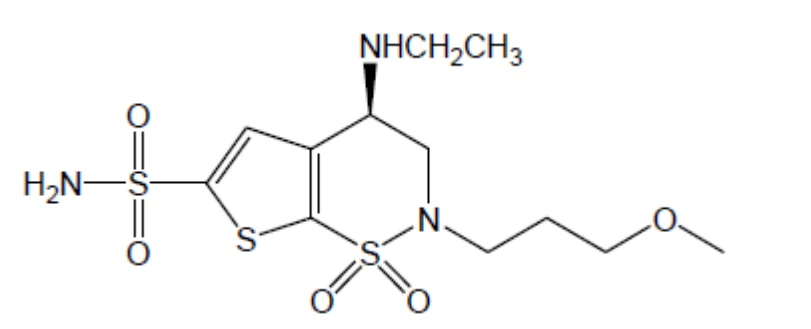
Structural formula:
Physicochemical properties: White to off-white powder or crystals. Very slightly soluble in water at pH 7, sparingly soluble in methanol and slightly soluble in ethanol; melting point of about 131oC
Proper name: Brimonidine / Brimonidine tartrate
Chemical name: 5-Bromo-6-(2-imadazolin-2-ylamino) quinoxaline L-tartrate
Molecular formula and molecular mass: C11H10BrN5 . C4H6O6; 442.22 g/mol
Structural formula:
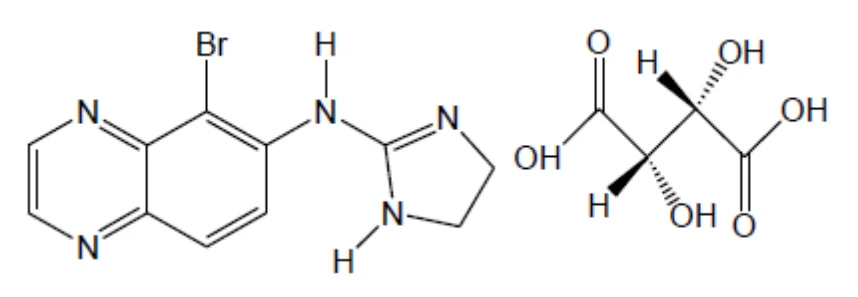
Physicochemical properties: White to off-white, pale yellow to yellow powder or crystals. Soluble in water at pH 6.35, slightly soluble in water at pH 7.49 and in methanol; melting point 200oC
14 CLINICAL TRIALS
14.1 Clinical Trials by Indication
Intraocular Pressure (IOP) Reduction
Table 5: Summary of patient demographics for clinical trials in IOP
| Study | Study design | Dosage, route of administration and duration | Study subjects (N) | Mean agea (±SD) | Sex (M/F) | Baseline IOPb (mean ± SE) [mmHg] |
| C-10-040 / Phase 3 | Multicenter, randomized, double-masked, parallel-group, active-controlled, 3-arm, parallel-group, superiority study | Brinzolamide/ Brimonidine 1%/0.2%): 1 drop in each eye BID; topical ocular; 6 months | N = 193 | 64.6 (± 12.18) | 87/106 | Diurnal: 25.9 ± 0.19 9 AM: 27.0 ± 0.18 11 AM: 25.9 ± 0.21 4 PM: 24.8 ± 0.23 |
Brinzolamide (1%): 1 drop in each eye BID; topical ocular; 6 months | N = 192 | 64.2 (± 11.26) | 90/102 | Diurnal: 25.9 ± 0.20 9 AM: 27.0 ± 0.18 11 AM: 25.9 ± 0.22 4 PM: 24.8 ± 0.24 | ||
Brimonidine (0.2%): 1 drop in each eye BID; topical ocular; 6 months | N = 175 | 64.3 (± 11.61) | 73/102 | Diurnal: 26.0 ± 0.19 9 AM: 27.0 ± 0.19 11 AM: 26.2 ± 0.22 4 PM: 24.9 ± 0.21 | ||
| C-10-041 / Phase 3 | Multicenter, randomized, double-masked, parallel-group, active-controlled, 2-arm, parallel- group, non-inferiority study | Brinzolamide/ Brimonidine 1%/0.2%): 1 drop in each eye BID; topical ocular; 6 months | N = 452 | 63.2 (± 11.87) | 200/252 | Diurnal: 26.4 ± 0.13 9 AM: 27.0 ± 0.13 11 AM: 25.8 ± 0.14 |
Brinzolamide + Brimonidine (1% + 0.2%): 1 drop in each eye BID; topical ocular; 6 months | N = 436 | 63.4 (± 12.28) | 190/246 | Diurnal: 26.5 ± 0.13 9 AM: 27.0 ± 0.13 11 AM: 25.9 ± 0.15 |
a Subjects and age for C-10-040 and C-10-041 are derived from the safety population
b Baseline IOP values for C-10-040 and C-10-041 are derived from the intent-to-treat (ITT) and per protocol (PP) populations, respectively
Two multicenter, randomized, double-masked, parallel-group, active-controlled clinical studies of 6 months duration with twice daily dosing of SIMBRINZA (brinzolamide / brimonidine tartrate ophthalmic suspension) 1% / 0.2% w/v were conducted in 1450 patients with open-angle glaucoma or ocular hypertension who, in the opinion of the investigator, were insufficiently controlled on monotherapy or already using multiple IOP-lowering medications (Table 5).
Primary and supportive efficacy endpoints:
The primary efficacy endpoint for both C-10-040 and C-10-041 was an assessment of mean diurnal IOP change from baseline at 3 months, with safety and supportive efficacy evaluated through 6 months.
The C-10-040 supportive efficacy endpoints were inclusive of 3 time points (i.e., 9am, +2hr, +7hr) whereas the C 10 041 supportive efficacy endpoints were inclusive of 2 time points (i.e., 9am, +2hr).
Select supportive efficacy endpoints included:
- Mean diurnal change from baseline at Week 2, Week 6 and Month 6
- Mean IOP change from baseline at Week 2, Week 6, Month 3, and Month 6 for each assessment time point.
- Mean IOP percent change from baseline at Week 2, Week 6, Month 3, and Month 6 for each assessment time point.
Study C-10-040
Based on clinical study C-10-040, brinzolamide/brimonidine fixed combination was superior to brinzolamide and brimonidine with respect to mean diurnal IOP reduction from baseline at all visits. The mean difference in diurnal IOP change from baseline favoured the brinzolamide/brimonidine fixed combination compared to brinzolamide or brimonidine, respectively, at all study visits. The observed magnitude of mean difference in change at all visits was statistically significant (Table 6).
Table 6: Comparison of Mean Diurnala IOP (mmHg) Change from Baseline by Visit (C-10-040) – Intent-to-treat Population
| Visit | Brinz/Brim [BID] | Brinz [BID] | Brim [BID] | Mean Differenceb (95% CI) [mmHg] | p-value |
|---|---|---|---|---|---|
| N | Mean (SE) [mmHg] | N | Mean (SE) [mmHg] | N | Mean (SE) [mmHg] |
| 2 weeks | |||||
| 191 | |||||
| -7.6 (0.22) | |||||
| 191 | |||||
| -6.1 (0.22) | -- | -- | -1.5 (-2.1, -1.0) | p<0.0001 | |
| -- | -- | 174 | -6.0 (0.23) | -1.6 (-2.1, -1.0) | p<0.0001 |
| 6 weeks | |||||
| 188 | |||||
| -7.8 (0.22) | |||||
| 189 | |||||
| -6.2 (0.22) | -- | -- | -1.6 (-2.1, -1.0) | p<0.0001 | |
| -- | -- | 172 | -6.2 (0.23) | -1.6 (-2.2, -1.1) | p<0.0001 |
| 3 monthsc | |||||
| 176 | |||||
| -7.9 (0.22) | |||||
| 182 | |||||
| -6.5 (0.23) | -- | -- | -1.4 (-1.9, -0.8) | p<0.0001 | |
| -- | -- | 161 | -6.4 (0.24) | -1.5 (-2.0, -0.9) | p<0.0001 |
| 6 months | |||||
| 160 | |||||
| -7.8 (0.23) | |||||
| 178 | |||||
| -6.7 (0.23) | -- | -- | -1.1 (-1.7, -0.6) | p=0.0001 | |
| -- | -- | 145 | -6.4 (0.24) | -1.4 (-1.9, -0.8) | p<0.0001 |
Brinz/Brim [BID] = Brinzolamide/Brimonidine 10 mg/mL + 2 mg/mL Eye Drops, Suspension [BID]
Brinz [BID] = Brinzolamide 10 mg/mL Eye Drops, Suspension [BID]
Brim [BID] = Brimonidine Tartrate 2 mg/mL Eye Drops, Solution [BID]
SE = Standard Error; CI = Confidence Interval
a Diurnal IOP change averaged over 9AM, +2 hr, and +7 hr time points.
b Estimates based on the least squares means derived from a statistical model that accounts for correlated IOP measurements within patient where site and actual 9 AM baseline IOP stratum are in the model.
c Primary efficacy endpoint.
The difference in mean IOP change from baseline (Table 7) at each time point favoured the brinzolamide/brimonidine fixed combination compared to brinzolamide and brimonidine. The observed magnitude of difference in change at all time points was statistically significant, favouring brinzolamide/brimonidine over brimonidine by at least 1 mmHg at all (12/12) time points and over brinzolamide at a majority (8/12) of time points. Mean IOP reductions from baseline with brinzolamide/brimonidine fixed combination ranged from 6.0 to 8.8 mmHg.
Table 7: Comparison of Mean IOP (mmHg) Change from Baseline by Visit and Time Point (C-10-040) - Intent-to-treat Population
| Visit | Brinz/Brim [BID] | Brinz [BID] | Brim [BID] | Mean Differencea (95% CI) [mmHg] | p-value | |||
|---|---|---|---|---|---|---|---|---|
| N | Mean (SE) [mmHg] | N | Mean (SE) [mmHg] | N | Mean (SE) [mmHg] | |||
| 2 weeks | 191 | -6.0 (0.25) | 191 | -5.0 (0.25) | -- | -- | -0.9 (-1.6, -0.3) | p=0.0036 |
| 9AM | -- | -- | 174 | -4.3 (0.26) | -1.7 (-2.3, -1.0) | p<0.0001 | ||
| +2 hr | 189 | -8.4 (0.25) | 191 | -5.9 (0.25) | -- | -- | -2.5 (-3.1, -1.8) | p<0.0001 |
| -- | -- | 174 | -7.0 (0.26) | -1.4 (-2.1, -0.8) | p<0.0001 | |||
| +7 hr | 188 | -7.3 (0.25) | 191 | -5.9 (0.25) | -- | -- | -1.4 (-2.0, -0.8) | p<0.0001 |
| -- | -- | 173 | -5.5 (0.26) | -1.8 (-2.5, -1.2) | p<0.0001 | |||
| 6 weeks | 188 | -6.2 (0.25) | 189 | -5.0 (0.25) | -- | -- | -1.2 (-1.8, -0.5) | p=0.0003 |
| 9AM | -- | -- | 172 | -4.7 (0.26) | -1.5 (-2.2, -0.9) | p<0.0001 | ||
| +2 hr | 185 | -8.6 (0.25) | 188 | -6.3 (0.25) | -- | -- | -2.3 (-3.0, -1.7) | p<0.0001 |
| -- | -- | 170 | -7.0 (0.26) | -1.6 (-2.3, -1.0) | p<0.0001 | |||
| +7 hr | 184 | -7.6 (0.25) | 188 | -6.3 (0.25) | -- | -- | -1.4 (-2.0, -0.7) | p<0.0001 |
| -- | -- | 170 | -5.8 (0.26) | -1.9 (-2.5, -1.2) | p<0.0001 | |||
| 3 months | 176 | -6.2 (0.26) | 182 | -5.4 (0.26) | -0.8 (-1.4, -0.1) | p=0.0188 | ||
| 9AM | -- | -- | 161 | -4.8 (0.27) | -1.5 (-2.1, -0.8) | p<0.0001 | ||
| 173 | -8.8 (0.25) | 182 | -6.4 (0.25) | -- | -- | -2.3 (-3.0, -1.7) | p<0.0001 | |
| +2 hr | -- | -- | 159 | -7.4 (0.27) | -1.4 (-2.0, -0.7) | p<0.0001 | ||
| +7 hr | 172 | -7.7 (0.25) | 180 | -6.4 (0.25) | -- | -- | -1.3 (-1.9, -0.7) | p<0.0001 |
| -- | -- | 159 | -5.8 (0.27) | -1.9 (-2.6, -1.3) | p<0.0001 | |||
| 6 months | 160 | -6.1 (0.26) | 178 | -5.4 (0.26) | -- | -- | -0.7 (-1.4, -0.0) | p=0.0363 |
| 9AM | -- | -- | 145 | -4.9 (0.28) | -1.3 (-1.9, -0.6) | p=0.0003 | ||
| +2 hr | 160 | -8.6 (0.26) | 178 | -6.6 (0.25) | -- | -- | -2.0 (-2.6, -1.3) | p<0.0001 |
| -- | -- | 145 | -7.0 (0.27) | -1.6 (-2.3, -0.9) | p<0.0001 | |||
| +7 hr | 160 | -7.5 (0.26) | 178 | -6.7 (0.25) | -- | -- | -0.8 (-1.5, -0.2) | p=0.0137 |
| -- | -- | 144 | -6.0 (0.27) | -1.5 (-2.1, -0.8) | p<0.0001 | |||
Brinz/Brim [BID] = Brinzolamide/Brimonidine 10 mg/mL + 2 mg/mL Eye Drops, Suspension [BID]
Brinz [BID] = Brinzolamide 10 mg/mL Eye Drops, Suspension [BID]
Brim [BID] = Brimonidine Tartrate 2 mg/mL Eye Drops, Solution [BID]
SE = Standard Error; CI = Confidence Interval
a Estimates based on the least squares means derived from a statistical model that accounts for correlated IOP measurements within patient where site and actual 9 AM baseline IOP stratum are in the model.
The difference in mean percent IOP change from baseline at each time point favoured the brinzolamide/brimonidine fixed combination compared to brinzolamide and brimonidine (Table 8). Mean percent IOP reductions from baseline with brinzolamide/brimonidine fixed combination ranged from 23 to 34%.
Table 8: Comparison of Mean IOP Percent Change from Baseline (mmHg) by Visit and Time Point (C-10-040) - Intent-to-treat Population
| Visit | Brinz/Brim [BID] | Brinz [BID] | Brim [BID] | Mean Differencea (95% CI) [%] | p-value | |||
|---|---|---|---|---|---|---|---|---|
| N | Mean (SE) [%] | N | Mean (SE) [%] | N | Mean (SE) [%] | |||
| 2 weeks | 191 | -22.9 (0.95) | 191 | -19.4 (0.96) | -- | -- | -3.5 (-5.9, -1.1) | p=0.0043 |
| 9AM | -- | -- | 174 | -16.6 (1.00) | -6.3 (-8.8, -3.9) | p<0.0001 | ||
| +2 hr | 189 | -32.4 (0.94) | 191 | -22.9 (0.94) | -- | -- | -9.5 (-11.9, -7.1) | p<0.0001 |
| -- | -- | 174 | -26.6 (0.99) | -5.8 (-8.3, -3.4) | p<0.0001 | |||
| +7 hr | 188 | -28.2 (0.94) | 191 | -22.4 (0.94) | -- | -- | -5.7 (-8.1, -3.3) | p<0.0001 |
| -- | -- | 173 | -20.9 (0.99) | -7.2 (-9.7, -4.7) | p<0.0001 | |||
| 6 weeks | 188 | -23.8 (0.96) | 189 | -19.3 (0.96) | -- | -- | -4.5 (-6.9, -2.1) | p=0.0003 |
| 9AM | -- | -- | 172 | -18.0 (1.00) | -5.8 (-8.3, -3.3) | p<0.0001 | ||
| +2 hr | 185 | -33.1 (0.95) | 188 | -23.9 (0.95) | -- | -- | -9.2 (-11.6, -6.8) | p<0.0001 |
| -- | -- | 170 | -26.7 (1.00) | -6.4 (-8.9, -3.9) | p<0.0001 | |||
| +7 hr | 184 | -29.5 (0.95) | 188 | -23.7 (0.95) | -- | -- | -5.8 (-8.3, -3.4) | p<0.0001 |
| -- | -- | 170 | -22.1 (0.99) | -7.4 (-9.9, -4.9) | p<0.0001 | |||
| 3 months | 176 | -23.9 (0.97) | 182 | -20.9 (0.97) | -- | -- | -3.0 (-5.5, -0.6) | p=0.0153 |
| 9AM | -- | -- | 161 | -18.4 (1.02) | -5.5 (-8.0, -3.0) | p<0.0001 | ||
| +2 hr | 173 | -33.8 (0.97) | 182 | -24.6 (0.96) | -- | -- | -9.2 (-11.7, -6.8) | p<0.0001 |
| -- | -- | 159 | -28.5 (1.02) | -5.3 (-7.9, -2.8) | p<0.0001 | |||
| +7 hr | 172 | -29.6 (0.96) | 180 | -24.2 (0.96) | -- | -- | -5.5 (-7.9, -3.0) | p<0.0001 |
| -- | -- | 159 | -22.1 (1.01) | -7.6 (-10.1, -5.0) | p<0.0001 | |||
| 6 months | 160 | -23.6 (1.00) | 178 | -20.8 (0.98) | -- | -- | -2.7 (-5.2, -0.2) | p=0.0318 |
| 9AM | -- | -- | 145 | -18.8 (1.05) | -4.8 (-7.4, -2.2) | p=0.0003 | ||
| +2 hr | 160 | -33.2 (0.99) | 178 | -25.4 (0.96) | -- | -- | -7.8 (-10.3, -5.3) | p<0.0001 |
| -- | -- | 145 | -26.7 (1.04) | -6.4 (-9.0, -3.8) | p<0.0001 | |||
| +7 hr | 160 | -29.0 (0.98) | 178 | -25.4 (0.96) | -- | -- | -3.5 (-6.0, -1.0) | p=0.0055 |
| -- | -- | 144 | -23.0 (1.04) | -5.9 (-8.5, -3.3) | p<0.0001 | |||
Brinz/Brim [BID] = Brinzolamide/Brimonidine 10 mg/mL + 2 mg/mL Eye Drops, Suspension [BID]
Brinz [BID] = Brinzolamide 10 mg/mL Eye Drops, Suspension [BID]
Brim [BID] = Brimonidine Tartrate 2 mg/mL Eye Drops, Solution [BID]
SE = Standard Error; CI = Confidence Interval
a Estimates based on the least squares means derived from a statistical model that accounts for correlated IOP measurements within patient where site and actual 9 AM baseline IOP stratum are in the model.
Study C-10-041
Based on clinical study C-10-041, brinzolamide/brimonidine fixed combination was non-inferior to the unfixed combination of brinzolamide plus brimonidine administered concomitantly (i.e., brinzolamide+brimonidine) with respect to mean diurnal IOP change from baseline at all visits. The upper bound of the 95% confidence interval for the treatment group difference was well below the pre-specified non-inferiority margin of 1.5 mmHg (Table 9).
Table 9: Comparison of Mean Diurnala IOP (mmHg) Change from Baseline by Visit – Study (C-10-041) – Per Protocol Population
| Visit | Brinz/Brim [BID] | Brinz+Brim [BID] | Mean Differenceb (95% CI) [mmHg] | ||
|---|---|---|---|---|---|
| N | Mean (SE) [mmHg] | N | Mean (SE) [mmHg] | ||
| 2 weeks | 394 | -8.4 (0.16) | 384 | -8.4 (0.16) | -0.0 (-0.4, 0.3) |
| 6 weeks | 384 | -8.5 (0.16) | 377 | -8.4 (0.16) | -0.1 (-0.4, 0.2) |
| 3 monthsc | 384 | -8.5 (0.16) | 373 | -8.3 (0.16) | -0.1 (-0.5, 0.2) |
| 6 months | 346 | -8.1 (0.16) | 330 | -8.2 (0.16) | 0.1 (-0.3, 0.4) |
Brinz/Brim [BID] = Brinzolamide/Brimonidine 10 mg/mL + 2 mg/mL Eye Drops, Suspension [BID]
Brinz+Brim [BID] = Brinzolamide 10 mg/mL Eye Drops, Suspension [BID] + Brimonidine Tartrate 2 mg/mL Eye Drops, Solution [BID]
SE = Standard Error; CI = Confidence Interval
a Diurnal IOP change averaged over 9AM and +2 hr time points.
b Estimates based on the least squares means derived from a statistical model that accounts for correlated IOP measurements within patient where site and actual 9 AM baseline IOP stratum are in the model.
c Primary efficacy endpoint.
Mean IOP change from baseline at each time point was similar between brinzolamide/brimonidine fixed combination and the unfixed combination of brinzolamide plus brimonidine administered concomitantly (i.e., Brinz+Brim) (Table 10). Mean IOP reductions from baseline with brinzolamide/brimonidine fixed combination ranged from 6.5 to 9.7 mmHg.
Table 10: Comparison of Mean IOP (mmHg) Change from Baseline by Visit and Time Point (C-10-041) - Per Protocol Population
| Visit | Brinz/Brim [BID] | Brinz+Brim [BID] | Mean Differencea (95% CI) [mmHg] | ||
|---|---|---|---|---|---|
| N | Mean (SE) [mmHg] | N | Mean (SE) [mmHg] | ||
| 2 weeks | |||||
| 9AM | 394 | -6.9 (0.17) | 384 | -7.0 (0.17) | 0.1 (-0.3, 0.5) |
| +2 hr | 392 | -9.6 (0.16) | 383 | -9.4 (0.16) | -0.2 (-0.6, 0.2) |
| 6 weeks | |||||
| 9AM | 384 | -6.9 (0.17) | 377 | -6.9 (0.17) | -0.0 (-0.4, 0.3) |
| +2 hr | 383 | -9.6 (0.16) | 372 | -9.5 (0.16) | -0.1 (-0.5, 0.3) |
| 3 months | |||||
| 9AM | 384 | -6.9 (0.17) | 373 | -6.8 (0.17) | -0.1 (-0.5, 0.3) |
| +2 hr | 380 | -9.7 (0.16) | 363 | -9.6 (0.17) | -0.2 (-0.6, 0.2) |
|---|---|---|---|---|---|
| 6 months | |||||
| 9AM | 345 | -6.5 (0.18) | 330 | -6.7 (0.18) | 0.2 (-0.2, 0.6) |
| +2 hr | 344 | -9.3 (0.17) | 328 | -9.2 (0.17) | -0.1 (-0.5, 0.3) |
Brinz/Brim [BID] = Brinzolamide/Brimonidine 10 mg/mL + 2 mg/mL Eye Drops, Suspension [BID]
Brinz+Brim [BID] = Brinzolamide 10 mg/mL Eye Drops, Suspension [BID] + Brimonidine Tartrate 2 mg/mL Eye Drops, Solution [BID]
SE = Standard Error; CI = Confidence Interval
a Estimates based on the least squares means derived from a statistical model that accounts for correlated IOP measurements within patient where site and actual 9 AM baseline IOP stratum are in the model.
Mean IOP percent change from baseline at each time point was similar between Brinzolamide/brimonidine fixed combination and the unfixed combination of brinzolamide plus brimonidine administered concomitantly (ie, Brinz+Brim) (Table 11). Mean percent IOP reductions from baseline with brinzolamide/brimonidine fixed combination ranged from 25 to 37%.
Table 11: Comparison of Mean IOP (mmHg) Percent Change from Baseline by Visit and Time Point (C-10-041) - Per Protocol Population
| Visit | Brinz/Brim [BID] | Brinz+Brim [BID] | Mean Differencea (95% CI) [mmHg] | ||
|---|---|---|---|---|---|
| N | Mean (SE) [mmHg] | N | Mean (SE) [mmHg] | ||
| 2 weeks | |||||
| 9AM | 394 | -26.3 (0.63) | 384 | -26.7 (0.62) | 0.4 (-1.0, 1.8) |
| +2 hr | 392 | -36.5 (0.60) | 383 | -35.6 (0.60) | -0.9 (-2.3, 0.6) |
| 6 weeks | |||||
| 9AM | 384 | -26.5 (0.63) | 377 | -26.2 (0.63) | -0.3 (-1.7, 1.2) |
| +2 hr | 383 | -36.6 (0.61) | 372 | -36.0 (0.61) | -0.5 (-2.0, 0.9) |
| 3 months | |||||
| 9AM | 384 | -26.5 (0.63) | 373 | -26.0 (0.63) | -0.5 (-1.9, 1.0) |
| +2 hr | 380 | -36.8 (0.61) | 363 | -36.1 (0.61) | -0.7 (-2.2, 0.8) |
| 6 months | |||||
| 9AM | 345 | -24.9 (0.65) | 330 | -25.7 (0.65) | 0.8 (-0.7, 2.3) |
| +2 hr | 344 | -35.2 (0.62) | 328 | -35.0 (0.63) | -0.2 (-1.7, 1.3) |
Brinz/Brim [BID] = Brinzolamide/Brimonidine 10 mg/mL + 2 mg/mL Eye Drops, Suspension [BID]
Brinz+Brim [BID] = Brinzolamide 10 mg/mL Eye Drops, Suspension [BID] + Brimonidine Tartrate 2 mg/mL Eye Drops, Solution [BID]
SE = Standard Error; CI = Confidence Interval
a Estimates based on the least squares means derived from a statistical model that accounts for correlated IOP measurements within patient where site and actual 9 AM baseline IOP stratum are in the model.
15 MICROBIOLOGY
No microbiological information is required for this drug product.
16 NON-CLINICAL TOXICOLOGY
General Toxicology:
Acute Toxicity:
Brinzolamide
Single-dose toxicity studies with brinzolamide included a 1-day topical ocular irritation evaluation in rabbits and acute oral toxicity studies in rats and mice. Exaggerated topical ocular dosing studies with a 2.0% formulation of brinzolamide indicated that ocular irritation and comfort scores were consistent with those normally observed with eye drop suspensions, and no significant clinical findings were noted.
Single-dose oral toxicity studies were conducted in rats and mice to assess the acute toxicity of brinzolamide. The oral LD50 of brinzolamide in mice was estimated to be 1,400 mg/kg, with the oral LD50 in rats estimated at 1,000 to 2,000 mg/kg.
Brimonidine
Single-dose toxicity studies showed that intravenous and oral LD50 of brimonidine was 50 mg/kg in mice and 100 mg/kg in rats. The most frequently observed clinical signs in the acute/single dose toxicity studies included sedation, ataxia, prostration, ptosis, reduced/loss of blink reflex, opacification of the cornea, hypotension, bradycardia, hypothermia, respiratory depression, respiratory arrest and circulatory collapse.
Repeat-dose Toxicity:
Brinzolamide/brimonidine fixed combination
Toxicity of brinzolamide/brimonidine tartrate was studied in rabbits that were topically administrated in the TID up to nine months.
These studies demonstrated that there was no significant ocular irritation when brinzolamide/brimonidine tartrate was administered topically. Irritation scores were unremarkable and similar to controls. Compared to the vehicle control, brinzolamide/brimonidine tartrate significantly increased corneal thickness which was more prominent in male rabbits. This finding has been observed in animal studies with 1% brinzolamide.
Brinzolamide /brimonidine tartrate caused sedation, penile erection and female urogenital swelling, significant increase in blood glucose level by about 2- to 3- fold and significant decrease in blood cholesterol level. These findings were also observed in rabbits topically administrated in the eyes with 0.2% brimonidine tartrate alone. Reduced food consumption and decreased body weight gain were consistently observed in brinzolamide/brimonidine tartrate treated rabbits compared to those in the vehicle control group in a nine-month long-term study. These effects were more prominent in male rabbits. Furthermore, mean liver weight and the mean ratio of liver weight/body weight in male rabbits were significantly higher in the brinzolamide/brimonidine tartrate study group at Day 91, but not on Day 274. Hepatocellular cytoplasmic vacuolization and concurrent hepatocellular glycogen accumulation were found in the rabbits treated with a brimonidine/brinzolamide fixed combination formulation, including brinzolamide/brimonidine tartrate, but not in the vehicle control group.
The severity and incidence of these changes increased with treatment length and were more prominent in male rabbits. There were no pathological changes (such as hepatocellular degeneration or necrosis) identified in the liver. Minimal to mild diffuse islet cell hyperplasia in pancreas was observed in male rabbits treated with brinzolamide/brimonidine tartrate.
Brinzolamide
Five repeat-dose topical ocular studies were conducted in rabbits, ranging in duration from 1 to 6 months, and a 1-year topical ocular study was conducted in nonhuman primates. These studies demonstrated that there was no significant ocular toxicity or irritation when the drug was administered topically. Irritation scores were unremarkable and similar to controls. Concentrations of brinzolamide ophthalmic suspension as high as 4.0% were administered chronically up to 4 times a day in rabbits and three times a day in monkeys without significant toxicological findings.
In repeated-dose oral toxicity studies in rats, pharmacological effects on urine volume, specific gravity, and electrolytes were observed. Increase in relative kidney weights, chronic nephritis, minimal to mild nephropathy, with crystalline material in the urine, was also observed at 8 mg/kg/day and higher. Reduction in food consumption and decrease in body weight gain were observed in higher doses. Increased incidence of chronic nephritis was observed in mice.
Brimonidine
Repeat-dose toxicity studies with brimonidine tartrate were conducted in mice, rats, rabbits, dogs and monkeys for durations of up to one year. The most notable effects seen in these studies were related to the known pharmacological effect of brimonidine.
There were no observable adverse effects in oral dosing in mice, rats, rabbits, dogs and monkeys at approximately 165, 80, 25, 55 and 33 times the recommended ocular human dose, respectively.
Orally dosed at levels of approximately 3000 times the recommended human ocular dose in chronic studies, mice showed goblet cell hyperplasia and depletion in the rectum and colon, hypertrophy of the tunica muscularis of small and large intestine, and hyperplasia of the non-glandular epithelium of the stomach. Rats dosed orally at approximately 1500 times the human ocular dose showed thickening of muscularis mucosa of small intestine, and a dose related incidence of illeal intussusception was observed in all rats, but no associated lesions or morphological changes were observed. Evidence of toxicity characterised by decreased body weight gain and/or decreased food consumption was often seen at the higher oral doses in the mouse, rat and monkey. The most notable effects seen in the subacute studies was sedation, ataxia, hypoactivity, ptosis, decreased muscle tone, hypotension and bradycardia.
Topically dosed in the eyes with a brimonidine solution (0.15% to 0.2%) three time daily for up to three months, rabbits showed sedation, penile erection, female urogenital swelling, significant increase in blood glucose level (about 2 to 3 folds) and/or significant decrease in blood cholesterol level. There was no significant effect on body weight gain and no test-article-related abnormal findings in pathological examination in all organs after three-month of the treatment.
Carcinogenicity:
Brinzolamide
An initial cell proliferation study in rats showed an absence of proliferation potential with brinzolamide. No test article-related carcinogenicity was observed in 2-year oral dosing studies in mice and rats.
Brimonidine
Carcinogenicity studies with brimonidine were conducted in mice and rats orally dosed at 2.5 mg/kg/day and 1 mg/kg/day, respectively, for 21 to 24 months. No test article-related carcinogenicity was observed.
Genotoxicity:
Brinzolamide
Two in vitro and two in vivo mutation assays were conducted with brinzolamide in order to evaluate the genotoxicity potential of the drug substance. Results of the in vitro bacterial mutation and the two in vivo assays unequivocally demonstrate a lack of mutagenicity. The in vitro mammalian cell mutation assay indicated a potential for mutagenicity. However, carcinogenic studies did not show brinzolamide-related carcinogenicity (see Carcinogenicity).
Brimonidine
Brimonidine tartrate was not mutagenic or cytogenic in a series of in vitro and in vivo studies including the Ames/Salmonella mutagenicity assay, chromosomal aberration assay in Chinese Hamster Ovary (CHO) cells, cytogenetic assay, host-mediated assay and dominant lethal assay in mice.
Reproductive and Developmental Toxicology:
Brinzolamide
Brinzolamide when given orally demonstrated no effect on male or female fertility. Brinzolamide increased the incidence of unossified sternebrae or hyoid and reduced ossification of the skull in rats at 18 mg/kg/day (783 times the recommended human ophthalmic dose) given orally. Reduced ossification was not dose-dependent. In rabbits, no malformations were observed and ossification appeared to be unaffected. In a peri- and postnatal effect study, F1 pup body weights were significantly reduced, as compared with controls, throughout the lactation period, at the 15 mg/kg/day dose level. These effects are comparable with other drugs of this class.
Brimonidine
Reproductive toxicology studies conducted with brimonidine tartrate in rats and rabbits showed that brimonidine tartrate had no adverse effects on fertility and general reproductive performance and showed no evidence of embryo lethality or teratogenicity at the dosages administered.
There were no treatment-related reproductive and teratological effects observed in the F1 rat pup group, although a reduction in body weight was observed at a dose level of 1.65 mg base/kg/day, after 14 days. Dose related reduction in body weight gains were observed in rat dams at dose levels of 0.66 and 1.65 mg base/kg/day after 15 days.
There was no evidence of treatment-related embryotoxicity, fetal toxicity, or teratogenicity in rabbits at brimonidine oral dose levels up to 3.3 mg base/kg/day at which spontaneous abortions occurred. A decrease in weight gain during the dosing period was observed.
Special Toxicology:
Brinzolamide is considered to have little or no potential to induce contact sensitisation based on a guinea pig maximisation test.
Animal Pharmacology
The pharmacology, safety pharmacology, pharmacokinetic and toxicological attributes of brinzolamide and brimonidine tartrate in nonclinical models have been extensively
characterized. The nonclinical assessment of brinzolamide/brimonidine tartrate is based upon the established nonclinical profiles of the individual active drug substances and evaluation of important aspects of the combination product.
Brinzolamide has high affinity for, and potent inhibitory activity against, human carbonic anhydrase II with a Ki of 0.13 nM and an IC50 of 3.2 nM. Carbonic anhydrase is an enzyme found in many tissues of the body, including the eye. It catalyzes the reversible reaction involving the hydration of carbon dioxide and the dehydration of carbonic acid. Inhibition of carbonic anhydrase in the ciliary processes of the eye decreases aqueous humour secretion, presumably by slowing the formation of bicarbonate ions with subsequent reduction of sodium and fluid transport. The result is a reduction in intraocular pressure (IOP). Alone, brinzolamide has a peak ocular hypotensive effect occurring at 2 to 3 hours post-dosing.
Brinzolamide lowered IOP by 20 –30% in a dose-dependent manner in lasered ocular hypertensive cynomolgus monkeys and Dutch-belted rabbits following topical ocular delivery.
Brimonidine is a potent, selective alpha-2 adrenoceptor agonist. Alpha-2 adrenoceptors have been localized to prejunctional loci in the eye where they inhibit the release of norepinephrine from nerve endings. High levels of alpha-2 adrenoceptors have been found in the iris and ciliary epithelia and lower levels in ciliary muscle and retina.
Topical ocular treatment of normal, unanesthetized cats, New Zealand albino rabbits and capucin monkeys (Cebus paella) with 0.5 µg to 5000 µg of brimonidine tartrate produces dose-related decreases in IOP and in pupil diameter. A dose of 200 µg brimonidine tartrate promotes a bilateral maximal reduction in IOP at 1 to 2 hours, followed by a gradual return to baseline after unilateral, topical ocular treatment in ketamine-anesthetized normal cynomolgus monkeys (Macaca fascicularis). The IOP-lowering effect was also observed in cynomolgus monkeys that had undergone unilateral superior cervical sympathectomy. Treatment of glaucomatous cynomolgus monkeys (rendered ocular hypertensive as a consequence of laser trabeculoplasty) for 5 days with brimonidine tartrate 5 mg/mL two times daily decreased IOP by approximately 50%. Topical ocular treatment of normal cynomolgus monkeys with brimonidine tartrate promotes a dose-dependent reduction (up to 67% below baseline for 5 mg/mL brimonidine tartrate) in aqueous humor flow without affecting total outflow measured by fluorophotometry. This suggests that the drug’s mechanism of action to lower IOP in monkeys is by reducing the production of aqueous humor.
Fluorophotometric studies in animals and humans suggest that brimonidine tartrate (alpha-2 adrenergic receptor agonist) has a dual mechanism of action by reducing aqueous humor production and increasing uveoscleral outflow. Brimonidine tartrate has a peak ocular hypotensive effect occurring at two hours post-dosing. The result is a reduction in intraocular pressure (IOP).
Nonclinical primary pharmacology studies utilizing brinzolamide/brimonidine have not been conducted in animal models.
Animal Pharmacodynamics
No non-clinical ocular or systemic pharmacodynamic studies were conducted with brinzolamide/brimonidine tartrate since the pharmacology of each active component has been well established previously in the medical and scientific literature.
Other Safety Pharmacology
An in vitro hERG channel assay was conducted with the brinzolamide/ brimonidine tartrate combination. Treatment with 0.3/0.1, 1/0.3, and 3/1 μg/mL brinzolamide/ brimonidine combinations produced no inhibition of hERG tail current in HEK293 cells stably transfected with hERG cDNA. No other safety pharmacology studies were conducted using the brinzolamide/ brimonidine combination.
Animal Pharmacokinetics
In vivo Studies
Two ocular tissue uptake studies in male rabbits with brinzolamide/brimonidine tartrate were conducted to assess potential pharmacokinetic interactions when administered by the topical ocular route.
Brinzolamide
Following a single topical ocular dose of brinzolamide/brimonidine tartrate in male rabbits, brinzolamide is readily absorbed into all internal ocular structures with Tmax in aqueous humor (AH) about 2 hours and distributed more in iris-ciliary body and choroid than other ocular structures. In a rabbit study with radiolabeled brinzolamide, half-lives (T1/2) of the radioactivity in iris-ciliary body and choroid was about 38 days and 50 days, respectively, while the T1/2 in AH was about 3.8 hours. During BID topical ocular administration in rabbits, brinzolamide significantly accumulates in iris-ciliary body, choroid and especially retina, resulting in a higher level of AUC0-12h and similar level of Cmax of brinzolamide in these ocular structures compared to those at the site of administration (i.e. Bulbar conjunctiva (BC) and cornea) (Table 12). Brinzolamide also significantly accumulates in the blood.
Similar observations are obtained for 1% brinzolamide therapy. However, the level of exposure (AUC0-12h and Cmax) to brinzolamide was somewhat lower in ICB but moderately higher in choroid after 14 days of BID topical ocular administration of brinzolamide/brimonidine tartrate compared to that in the 1% brinzolamide therapy (Table 12).
Table 12: Mean AUC0-12h and Cmax for brinzolamide in male rabbits following a single bilateral dose at Day 1, and following the last bilateral dose at Day 14 of BID topical ocular administration with 1% brinzolamide/0.2% brimonidine, or 1% brinzolamide
| Study P-11-511 (PKDM 1688) | 1% Brinzolamide/ 0.2% Brimonidine | 1% Brinzolamide | ||||||||||||
AUC0-12h (ng*h/g or mL) | Cmax (ng/g or mL) | AUC0-12h (ng*h/g or mL) | Cmax (ng/g or mL) | |||||||||||
| Day 1 | Bulbar Conjunctiva | 15800 | 11000 | 16500 | 3410 | |||||||||
| Cornea | 16200 | 4950 | 18700 | 4890 | ||||||||||
| Aqueous Humor | 1350 | 277 | 1740 | 389 | ||||||||||
| Iris Ciliary Body | 19400 | 2540 | 20900 | 2390 | ||||||||||
| Choroid | 36700 | 5030 | 25400 | 3000 | ||||||||||
| Lens | BLQ | BLQ | 374 | 45.5 | ||||||||||
| Retina | 3770 | 442 | 3210 | 333 | ||||||||||
| Blood | 16400 | 1760 | 16500 | 1640 | ||||||||||
| Day 14 | Bulbar Conjunctiva | 26600 | 8980 | 28500 | 3850 | |||||||||
| Cornea | 24000 | 5500 | 24300 | 5950 | ||||||||||
| Aqueous Humor | 1800 | 354 | 2300 | 681 | ||||||||||
| Study P-11-511 (PKDM 1688) | 1% Brinzolamide/ 0.2% Brimonidine | 1% Brinzolamide | |||||||||
AUC0-12h (ng*h/g or mL) | Cmax (ng/g or mL) | AUC0-12h (ng*h/g or mL) | Cmax (ng/g or mL) | ||||||||
| Iris Ciliary Body | 29600 | 3300 | 40400 | 5580 | |||||||
| Choroid | 89900 | 9260 | 55500 | 7630 | |||||||
| Lens | 4880 | 460 | 5490 | 493 | |||||||
| Retina | 90600 | 8220 | 87500 | 7760 | |||||||
| Blood | 62500 | 6020 | 64100 | 6140 | |||||||
Due to its high affinity for CA-II, brinzolamide distributes extensively into the RBCs and exhibits a long half-life in whole blood (approximately 111 days). N-desethyl brinzolamide also binds to CA and accumulates in RBCs. This metabolite binds mainly to CA-I in the presence of brinzolamide. Brinzolamide is eliminated predominantly in the urine as unchanged drug. N-Desethyl brinzolamide is also found in the urine along with lower concentrations of the N-desmethoxypropyl and O-desmethyl metabolites.
Brimonidine
Following topical ocular administration of brinzolamide/brimonidine tartrate in male rabbits, brimonidine is rapidly absorbed into all internal ocular structures with a Tmax ≤0.5 hour in AH and retina. Brimonidine in the eye mostly distributes into iris-ciliary body and choroid following a single dose. The apparent T1/2 in BC, cornea and AH is 1 to 3 hours, while the apparent T1/2 in iris-ciliary body, choroid and retina is more than 10 hours. During BID topical ocular administration, brimonidine significantly accumulates in choroid, retina and especially iris-ciliary body, resulting in higher AUC0-12h and Cmax in these ocular structures compared to that at the site of administration (BC and cornea). There is no significant accumulation of brimonidine in the plasma (Table 13). Similar observations were obtained for 0.2% brimonidine monotherapy. However, compared to 0.2% brimonidine, brinzolamide/brimonidine tartrate appears to result in a somewhat higher brimonidine levels in BC, cornea, AH, choroid and lens (Table 13).
Table 13: Mean AUC0-12h and Cmax for brimonidine in male rabbits following a single bilateral dose at Day 1 and following the last bilateral dose at Day 14 of BID topical ocular administration with 1% brinzolamide/0.2% brimonidine, or 0.2% brimonidine.
| Study P-11-511 (PKDM 1688) | 1% Brinzolamide/ 0.2% Brimonidine | 1% Brinzolamide | ||||||||||||||||
AUC0-12h (ng*h/g or mL) | Cmax (ng/g or mL) | AUC0-12h (ng*h/g or mL) | Cmax (ng/g or mL) | |||||||||||||||
| Day 1 | Bulbar Conjunctiva | 7470 | 2900 | 2570 | 802 | |||||||||||||
| Cornea | 3680 | 2840 | 2220 | 1480 | ||||||||||||||
| Aqueous Humor | 572 | 396 | 339 | 237 | ||||||||||||||
| Iris Ciliary Body | 98800 | 9890 | 56500 | 5940 | ||||||||||||||
| Choroid | 30000 | 2930 | 10000 | 1010 | ||||||||||||||
| Lens | 77.6 | 10 | 48.8 | 6.11 | ||||||||||||||
| Retina | 742 | 91.7 | 851 | 104 | ||||||||||||||
| Plasma | 2.03 | 1.71 | 2.47 | 1.43 | ||||||||||||||
| Day 14 | Bulbar Conjunctiva | 11400 | 3900 | 4720 | 1010 | |||||||||||||
| Cornea | 6470 | 3480 | 3420 | 1630 | ||||||||||||||
| Aqueous Humor | 1170 | 575 | 557 | 264 | ||||||||||||||
| Iris Ciliary Body | 1260000 | 136000 | 1110000 | 105000 | ||||||||||||||
| Choroid | 752000 | 75200 | 280000 | 28200 | ||||||||||||||
| Lens | 685 | 74.8 | 350 | 45.3 | ||||||||||||||
| Retina | 13300 | 2130 | 14900 | 1980 | ||||||||||||||
| Plasma | 3.82 | 2.77 | 3.35 | 2.67 | ||||||||||||||