


Patient Medication Information: uses, side effects, how to take - Sandoz Brinzolamide
What is Sandoz Brinzolamide used for?
Sandoz Brinzolamide is used to treat high pressure in the eyes (ocular hypertension) in adults with ocular hypertension or open-angle glaucoma. If this high pressure is not reduced, it could eventually damage your eyes.
How does Sandoz Brinzolamide work?
High pressure in the eye(s): Your eyes contain a clear, watery liquid, which feeds the inside of the eye. Liquid is always emptying out of the eye, and more liquid is always being produced. If the liquid fills up faster than it empties, the pressure inside the eye builds up. If the pressure gets too high, it can damage your eyesight.
Sandoz Brinzolamide contains brinzolamide, a carbonic anhydrase inhibitor. It works by reducing the production of liquid in the eyes, which lowers the pressure in the eyes.
What are the ingredients in Sandoz Brinzolamide?
Medicinal ingredients: brinzolamide, 0.1% w/v
Non-medicinal ingredients: benzalkonium chloride as a preservative, carbomer 974P, edetate disodium, mannitol, sodium chloride, tyloxapol, and purified water. Tiny amounts of hydrochloric acid or sodium hydroxide are added to maintain proper pH balance.
Sandoz Brinzolamide comes in the following dosage forms:
Liquid (eye drops) supplied in a 5, 10 and 15 mL plastic bottle
Do not use Sandoz Brinzolamide if you:
- Allergic (hypersensitive) to brinzolamide or any of the other ingredients in Sandoz Brinzolamide (see What are the ingredients in Sandoz Brinzolamide?).
- Allergic to a group of medicines called sulfonamides (used to treat diabetes and infections).
- Have severe kidney problems.
- Have too much acidity in your blood (a condition called hyperchloremic acidosis).
To help avoid side effects and ensure proper use, talk to your healthcare professional before you take Sandoz Brinzolamide. Talk about any health conditions or problems you may have, including if you:
- Have mild to moderate kidney problems.
- Have liver problems.
- Have dry eyes or problems with your cornea.
- Have a type of glaucoma known as acute angle-closure glaucoma.
- Are taking other carbonic anhydrase inhibitors.
Are pregnant, may be pregnant or planning to become pregnant.
- Are breastfeeding or planning to breast-feed.
Other warnings you should know about:
Sandoz Brinzolamide should not be used by children under 18 years of age.
If you wear contact lenses: Sandoz Brinzolamide contains benzalkonium chloride as a preservative; it may stain soft contact lenses. Do not use Sandoz Brinzolamide while wearing contact lenses. If you wear contact lenses, remove them before applying Sandoz Brinzolamide and wait at least 15 minutes after using the drops before putting your contact lenses back in.
Driving and using machines: You may find your vision is blurred for a short time just after using Sandoz Brinzolamide. Do not drive or use machines until your vision is clear.
Tell your healthcare professional about all the medicines you take, including any drugs, vitamins, minerals, natural supplements or alternative medicines.
Drug interaction studies have not been done with Sandoz Brinzolamide.
The following may interact with Sandoz Brinzolamide:
- Other carbonic anhydrase inhibitors.
- Antivirals, antifungals and antibiotics, such as ketoconazole, itraconazole, clotrimazole, ritonavir, and troleandomycin.
- Salicylates, such as acetylsalicylic acid.
How to take Sandoz Brinzolamide:
Always use Sandoz Brinzolamide exactly as your doctor has told you.
Usual adult dose:
1 drop in the eye(s) twice a day.
If needed after 4 weeks, dosing can be increased to 1 drop in the eye(s) 3 times a day.
How to use:
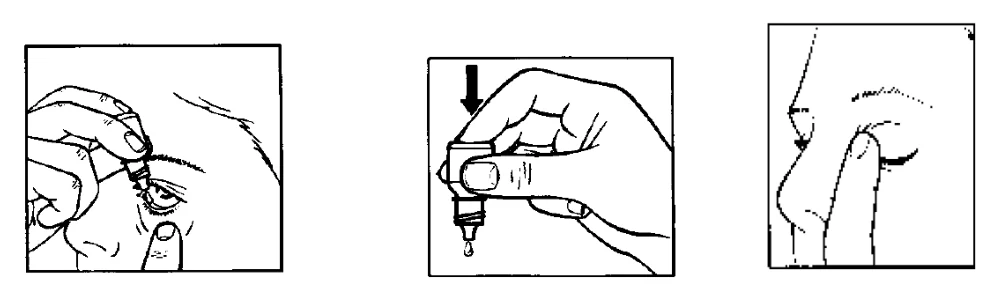
1 2 3
- Get the Sandoz Brinzolamide bottle and a mirror (if needed).
- Wash your hands.
- Shake well before use.
- Twist off the cap. If the security snap collar is loose after removing the cap, remove the snap collar before using Sandoz Brinzolamide.
- Hold the bottle, pointing down, between your thumb and fingers.
- Tilt your head back. Pull down your eyelid with a clean finger, until there is a 'pocket' between the eyelid and your eye. The drop will go in here (picture 1).
- Bring the bottle tip close to the eye. Use the mirror if it helps.
- Don't touch your eye or eyelid, surrounding areas or other surfaces with the dropper. It could contaminate the drops, cause an eye infection and damage the eyes.
- Gently press on the base of the bottle to release one drop of Sandoz Brinzolamide at a time (picture 2). Do not squeeze the bottle: it is designed so that a gentle press on the bottom of the bottle is all that it needs.
- After using Sandoz Brinzolamide, press a finger into the corner of your eye, by the nose for 2 minutes (picture 3). This helps to stop Sandoz Brinzolamide from getting into the rest of the body.
- If you miss, wipe up and try again.
- If you take drops in both eyes, repeat the steps for your other eye.
- Close the bottle cap firmly immediately after use.
If you are using other eye drops, wait at least 10 minutes between putting in Sandoz Brinzolamide and the other drops.
Overdose:
If you use more Sandoz Brinzolamide than you should, rinse your eye(s) with warm water. Do not apply any more drops until it is time for your next regular dose.
| If you think you have taken too much Sandoz Brinzolamide, contact your healthcare professional, hospital emergency department or regional Poison Control Centre immediately, even if there are no symptoms. |
Missed Dose:
If you forget to use Sandoz Brinzolamide, apply a single drop as soon as you remember. If it is close to your next regular dose, skip the missed dose. Do not use a double dose to make up the missed dose.
What are possible side effects from using Sandoz Brinzolamide?
These are not all the possible side effects you may feel when taking Sandoz Brinzolamide.
If you experience any side effects not listed here:
- Talk your healthcare professional.
- See the WARNINGS AND PRECAUTIONS section of this document.
The most common eye side effects are:
- Blurred vision.
- Eye discomfort.
- A feeling that something is in the eye.
- Dry eye.
- Red eyes.
- Eye pain.
- Headache.
- A bad taste in the mouth.
Less common side effects in the eyes include:
- Abnormal or reduced vision.
- Eyelid itching.
- Discharge.
- Fatigue.
- Crusty eyelids.
- Increased tearing.
- Damage to the eye surface (cornea).
- A sticky feeling.
- Allergy.
- Double vision.
- Numbness.
- Swelling.
- Sensitivity to light.
- Flashes of light.
Less common side effects in the rest of the body include:
- Dry mouth.
- Indigestion.
- Nausea.
- Dizziness.
- A tingling sensation.
- Depression.
- Cough.
- Difficulty breathing.
- Sore throat or throat irritation.
- Itchy or runny nose.
- Hair loss.
- Red or itchy skin, skin rash or hives.
- Irregular heart rate.
- Ringing in the ears.
- Upset stomach.
- Diarrhea.
- Lack of energy or feeling tired (fatigue).
- Feeling jittery or irritable.
- Memory loss.
- Sleepiness or inability to sleep.
- Nasal or sinus congestion.
- Dry nose.
- Loss of appetite.
- Joint pain.
- Numbness.
- Decreased blood pressure.
Serious side effects and what to do about them
| Symptom / effect | Talk to your healthcare professional | Stop taking drug and get immediate medical help |
| Only if severe | In all cases | |
UNKNOWN Heart disease (angina pectoris): feeling of pain and/or pressure in the chest | ||
| ✓ | ||
If you have a troublesome symptom or side effect that is not listed here or becomes bad enough to interfere with your daily activities, talk to your healthcare professional.
Reporting Side Effects
You can help improve the safe use of health products for Canadians by reporting serious and unexpected side effects to Health Canada. Your report may help to identify new side effects and change the product safety information. 3 ways to report:
NOTE: Contact your health professional if you need information about how to manage your side effects. The Canada Vigilance Program does not provide medical advice. |
Storage:
Store at 4-30°C. Keep bottle tightly closed when not using.
Keep out of reach and sight of children.
If you want more information about Sandoz Brinzolamide:
- Talk to your healthcare professional
- Find the full product monograph that is prepared for healthcare professionals and includes this Patient Medication Information by visiting the Health Canada website; the manufacturer’s website www.sandoz.ca or by calling 1-800-361-3062.