


Product Monograph - Dukoral
RECENT MAJOR LABEL CHANGES
| 4 DOSAGE AND ADMINISTRATION, 4.3 Reconstitution | 12/2021 |
|---|
TABLE OF CONTENTS
Sections or subsections that are not applicable at the time of authorization are not listed.
RECENT MAJOR LABEL CHANGES ............................................................................................ 2
TABLE OF CONTENTS .............................................................................................................. 2
PART I: HEALTH PROFESSIONAL INFORMATION ...................................................................... 4
1 INDICATIONS ............................................................................................................... 4
2 CONTRAINDICATIONS ................................................................................................. 4
4 DOSAGE AND ADMINISTRATION ................................................................................. 4
4.1 Dosing Considerations................................................................................................ 4
4.2 Recommended Dose and Dosage Adjustment ........................................................... 4
4.3 Reconstitution ............................................................................................................ 6
4.4 Administration ........................................................................................................... 7
4.5 Missed Dose ............................................................................................................... 7
5 OVERDOSAGE .............................................................................................................. 7
6 DOSAGE FORMS, STRENGTHS, COMPOSITION AND PACKAGING ................................. 7
Dosage Forms/Strengths .................................................................................................. 8
Table 1. Dosage Forms, Strengths, Composition and Packaging ...................................... 8
7 WARNINGS AND PRECAUTIONS .................................................................................. 8
7.1 Special Populations .................................................................................................. 10
7.1.1 Pregnant Women ........................................................................................... 10
7.1.2 Breast-feeding ................................................................................................ 10
7.1.3 Pediatrics ........................................................................................................ 10
7.1.4 Geriatrics ........................................................................................................ 10
8 ADVERSE REACTIONS ................................................................................................ 10
8.1 Adverse Reaction Overview ..................................................................................... 10
8.2 Clinical Trial Adverse Reactions ................................................................................ 11
8.2.1 Clinical Trial Adverse Reactions – Pediatrics ................................................... 11
8.3 Less Common Clinical Trial Adverse Reactions ......................................................... 11
8.5 Post-Market Adverse Reactions ............................................................................... 12
9 DRUG INTERACTIONS ................................................................................................ 12
9.2 Drug Interactions Overview ..................................................................................... 12
9.4 Drug-Drug Interactions ......................................................................................... 12
9.5 Drug-Food Interactions ............................................................................................ 13
9.6 Drug-Herb Interactions ............................................................................................ 14
9.7 Drug-Laboratory Test Interactions ........................................................................... 14
10 CLINICAL PHARMACOLOGY ....................................................................................... 14
10.1 Mechanism of Action ...................................................................................... 14
10.2 Pharmacodynamics ........................................................................................ 14
10.3 Pharmacokinetics ........................................................................................... 14
11 STORAGE, STABILITY AND DISPOSAL ......................................................................... 15
12 SPECIAL HANDLING INSTRUCTIONS ........................................................................... 15
PART II: SCIENTIFIC INFORMATION ....................................................................................... 15
13 PHARMACEUTICAL INFORMATION ............................................................................ 15
14 CLINICAL TRIALS ........................................................................................................ 16
14.1 Trial Design and Study Demographics ............................................................ 16
14.2 Study Results .................................................................................................. 18
15 MICROBIOLOGY ........................................................................................................ 20
16 NON-CLINICAL TOXICOLOGY ..................................................................................... 20
PATIENT MEDICATION INFORMATION .................................................................................. 21
PART I: HEALTH PROFESSIONAL INFORMATION
1 INDICATIONS
DUKORAL® [Oral, Inactivated Cholera and LT-producing ETEC Diarrhea Vaccine] is indicated for the prevention of and protection against cholera and diarrhea caused by heat-labile toxin producing enterotoxigenic Escherichia coli (LT-ETEC) in adults and children from 2 years of age.
2 CONTRAINDICATIONS
DUKORAL® is contraindicated in patients who are hypersensitive to this drug or to any ingredient in the formulation including any non-medicinal ingredient, or component of the container. For a complete listing, see 6 DOSAGE FORMS, STRENGTHS, COMPOSITION AND PACKAGING.
Immunization with DUKORAL® should be deferred in the presence of acute gastrointestinal illness or acute febrile illness to avoid superimposing adverse effects from the vaccine on the underlying illness or mistakenly identifying a manifestation of the underlying illness as a complication of vaccine use. A minor illness such as mild upper respiratory infection is not reason to defer immunization.
4 DOSAGE AND ADMINISTRATION
4.1 Dosing Considerations
- Do not administer the vaccine parenterally.
- The standard primary immunization with DUKORAL® against cholera consist of 2 oral doses for adults and children 6 years and older. Children from 2 to 6 years should receive 3 oral doses (see 4.3 Reconstitution for preparation of vaccine for children from 2 to 6 years).
- The standard primary immunization with DUKORAL® against LT-producing ETEC diarrhea consist of 2 oral doses for adults and children 2 years and older.
- Onset of protection against cholera and LT-producing ETEC diarrhea can be expected about one week after the primary immunization series is completed.
- DUKORAL® should not replace standard preventive hygiene measures. Rehydration measures must be taken in case of diarrhea.
- DUKORAL® should be used in accordance with official recommendations taking into account the epidemiological variability and the risk of contracting diarrheal illness in different geographical areas and in different conditions of travel.
4.2 Recommended Dose and Dosage Adjustment
TO PREVENT CHOLERA:
The vaccine is recommended for adults and children from 2 years of age who will be visiting areas with an ongoing or anticipated epidemic or who will be spending an extended period of time in areas in which cholera infection is a risk.
Primary Immunization for adults and children 6 years and older:
- 2 oral doses at least 1 week apart.
- 1st dose at least 2 weeks before departure.
- 2nd dose at least 1 week after the 1st dose and at least 1 week before departure.
- Protection against cholera starts about 1 week after the second dose and will last for about 2 years.
- If more than 6 weeks elapse between the 1st and 2nd dose, the primary immunization should be re-started.
Booster for adults and children 6 years and older:
- If the patient received the last dose between 2 and 5 years before, one booster dose will be sufficient to renew the protection.
- If the patient received the last dose more than 5 years before, a complete primary immunization (2 doses) is recommended to renew the protection.
Primary Immunization for children 2 to 6 years:
- 3 oral doses at least 1 week apart and finishing at least 1 week before departure.
- 1st dose at least 3 weeks before departure; 2nd dose at least 1 week later; 3rd dose at least 1 week later and at least 1 week before departure.
- Protection against cholera starts about 1 week after the 3rd dose and will last for about 6 months for children 2 to 6 years.
- If more than 6 weeks elapse between any of the doses, the primary immunization should be re-started.
Booster for children 2 to 6 years:
- If the patient received the last dose between 6 months and 5 years before, one booster dose will be sufficient to renew the protection.
- If the patient received the last dose more than 5 years ago, a complete primary immunization (3 doses) is recommended to renew the protection.
TO PREVENT LT-PRODUCING ETEC DIARRHEA:
The vaccine is recommended for adults and children from 2 years of age who will be visiting areas posing a risk of diarrheal illness caused by LT-producing ETEC.
Primary Immunization for adults and children 2 years and older:
- 2 oral doses at least 1 week apart.
- 1st dose at least 2 weeks before departure.
- 2nd dose at least 1 week after the 1st dose and at least 1 week before departure.
- Protection against diarrhea caused by LT-producing ETEC starts about 1 week after the 2nd dose and will last for about 3 months.
- If more than 6 weeks elapse between the 1st and 2nd dose, the primary immunization should be re-started.
Booster for adults and children 2 years and older:
- If the patient received the last dose between 3 months and 5 years before, one booster dose will be sufficient to renew the protection.
- If the patient received the last dose more than 5 years before, a complete primary immunization (2 doses) is recommended to renew the protection.
4.3 Reconstitution
How to prepare DUKORAL®:
Locate the two components: effervescent powder (sodium hydrogen carbonate) in a white sachet and the DUKORAL® vaccine vial.
Prepare the buffer solution (effervescent powder+water mixture) and add the content of the DUKORAL® vaccine vial according to the directions below:
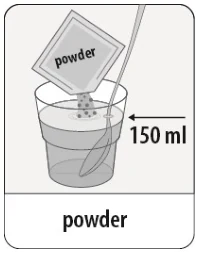 | Step 1. To prepare the buffer solution: Open the white sachet containing the effervescent powder (sodium hydrogen carbonate) and pour its content into 150 mL (approx. 5 oz) of cool water. Stir gently with a spoon to dissolve. Use only cool water to prepare the buffer solution. Do not use any other liquid. For children of 2-6 years: pour away half of the prepared buffer solution before proceeding to Step 2 (keep 75 mL, approx. 2.5 oz). |
|---|---|
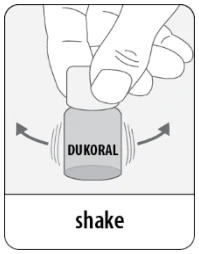 | Step 2. Shake the DUKORAL® vaccine vial (1 vial = 1 dose). |
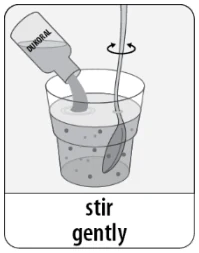 | Step 3. To prepare the vaccine mixture: Open the DUKORAL® vaccine vial (see Step 2) and pour its content into the glass of prepared buffer solution (see Step 1). Stir gently with a spoon to mix all the ingredients. |
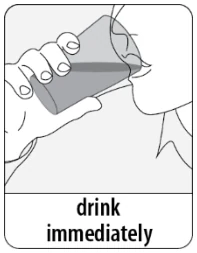
Step 4. Drink the entire vaccine mixture (see Step 3) immediately, as it should be consumed within 2 hours after its preparation. Keep the mixture at room temperature if not drunk immediately. IMPORTANT: Do not eat or drink any other liquids (including water), or take any other medication for 1 hour before and 1 hour after taking the vaccine mixture. |
4.4 Administration
The vaccine must be taken orally (by mouth) after mixing the content of the DUKORAL® vaccine vial with the buffer solution (see 4.3 Reconstitution – How to Prepare DUKORAL®).
Important information about taking DUKORAL®:
Do not eat or drink for 1 hour before and 1 hour after taking the vaccine mixture (DUKORAL® vaccine vial+buffer solution).
Do not take any other medicine for 1 hour before and 1 hour after taking the vaccine mixture (DUKORAL® vaccine vial+buffer solution).
4.5 Missed Dose
If the 2nd or 3rd dose is missed, it can be taken at any time within six weeks of the previous dose. If more than 6 weeks elapse between any of the doses, the primary immunization should be re-started.
5 OVERDOSAGE
Data on overdose are limited. Adverse reactions reported are consistent with those seen after the recommended dosing.
| For management of a suspected drug overdose, contact your regional poison control centre. |
|---|
6 DOSAGE FORMS, STRENGTHS, COMPOSITION AND PACKAGING
To help ensure the traceability of vaccines for patient immunization record-keeping as well as safety monitoring, health professionals should record the time and date of administration, quantity of administered dose (if applicable) and route of administration, brand name and generic name of the vaccine, the product lot number and expiry date.
 |
|---|
Dosage Forms/Strengths
Table 1. Dosage Forms, Strengths, Composition and Packaging
The DUKORAL® vaccine is a whitish suspension in a single-dose glass vial supplied with one sachet (5.6 g) of white effervescent powder with a raspberry flavour. DUKORAL® is available in package sizes of 1, 2 and 20 doses. One dose DUKORAL® contains approximately 1200 mg sodium.
The stopper of the DUKORAL® vaccine vial for this product does not contain natural rubber latex.
7 WARNINGS AND PRECAUTIONS
General
Before administration, take all appropriate precautions to prevent adverse reactions. This includes a review of the patient’s history concerning possible hypersensitivity to the vaccine or similar vaccines, previous immunization history, the presence of any contraindications to immunization and current health status.
DUKORAL® contains approximately 1200 mg sodium per dose, which should be taken into consideration by patients on a controlled sodium diet.
| Route of Administration | Dosage Form / Strength/Composition | Non-medicinal Ingredients | ||
| oral | DUKORAL® Vaccine Vial, one dose contains:
Total ca. 1.25 x 10¹¹ vibrios
| Disodium hydrogen phosphate, sodium chloride, sodium dihydrogen phosphate, water for injection to 3 mL. | ||
| Sodium Hydrogen Carbonate effervescent powder, one sachet (5.6 g) contains: | Sodium hydrogen carbonate, citric acid, sodium carbonate, saccharin sodium, sodium citrate, raspberry flavour. | |||
Before administration of the vaccine, health-care providers should inform the patient, parent or guardian of the benefits and risks of immunization, inquire about the recent health status of the patient and comply with any local requirements regarding information to be provided to the patient before immunization.
Populations with increased susceptibility to cholera and LT-producing ETEC diarrhea and who are at higher risk for more severe disease include persons with achlorhydia, gastrectomy, history of repeated severe diarrhea, young children > 2 years, immunosuppressed due to HIV infection with depressed CD4 count or other immunodeficiency states.
Patients should be advised on the importance of taking the vaccine correctly (mixed with buffer solution and at dosing intervals of at least one week) and completing the immunization series at least one week before departure to achieve optimal protection.
Driving and Operating Machinery
There is no evidence of an effect on the ability to drive and use machines.
Gastrointestinal
As with any vaccine, immunization with DUKORAL® [Oral, Inactivated Cholera and LT-producing ETEC Diarrhea Vaccine] may not protect 100% of susceptible persons. There are multiple aetiologies responsible for acute diarrhea in travelers. DUKORAL® can only confer protection against cholera and LT-producing ETEC. Therefore it should not replace standard preventive hygiene measures. Travellers should use care in the choice of food and water supply and use good hygienic measures. Rehydration measures must be taken in case of diarrhea.
Immune
Immunocompromised persons (whether from disease or treatment) may not obtain the expected immune response. If possible, consideration should be given to delaying vaccination until after the completion of any immunosuppressive treatment.
DUKORAL® can be given to HIV-infected persons. Clinical trials have shown no vaccine-associated adverse events and no change in disease clinical progression. Limited data are available on immunogenicity and safety of the vaccine. Vaccine protective efficacy has not been studied among HIV-infected persons. However, in a field study in Mozambique the protective efficacy was 84% in a population with approximately 25% HIV prevalence.
Formaldehyde is used during the manufacturing process and trace amounts may be present in the final product. Caution should be taken in subjects with known hypersensitivity to formaldehyde.
As with all products, the possibility of hypersensitivity reactions in persons sensitive to components of the vaccine should be evaluated.
DUKORAL® confers protection specific to Vibrio cholerae serogroup O1. DUKORAL® has not been demonstrated to protect against cholera caused by V. cholerae serogroup O139 or other species of Vibrio.
DUKORAL® confers protection specific to heat-labile enterotoxin (LT) producing ETEC (either LT alone or both LT and heat stable enterotoxin (ST). DUKORAL® has not been demonstrated to protect against ETEC strains that do not produce LT.
7.1 Special Populations
7.1.1 Pregnant Women
The effect of DUKORAL® [Oral, Inactivated Cholera and LT-producing ETEC Diarrhea Vaccine] on embryo-fetal development has not been assessed and animal studies on reproductive toxicity have not been conducted. No specific clinical studies have been performed to address this issue. The vaccine is therefore not recommended for use in pregnancy. However, DUKORAL® is an inactivated vaccine that does not replicate. DUKORAL® is also given orally and acts locally in the intestine. Therefore, in theory, DUKORAL® should not pose any risk to the human fetus. Administration of DUKORAL® to pregnant women may be considered after careful evaluation of the benefits and risks.
During a mass-vaccination campaign conducted in Zanzibar, 196 pregnant women had received at least one dose of the DUKORAL® during pregnancy. There was no statistically significant evidence of a harmful effect of DUKORAL® exposure during pregnancy.
7.1.2 Breast-feeding
DUKORAL® may be given to breast-feeding women.
7.1.3 Pediatrics
DUKORAL® has been given to children between 1 and 2 years of age in safety and immunogenicity studies, but the protective efficacy has not been studied in this age group. Therefore, DUKORAL® is not recommended for children less than 2 years of age.
7.1.4 Geriatrics
DUKORAL® has been given to persons over the age of 65 in clinical trials, but there are only very limited data on protective efficacy of the vaccine in this age group. However, this group can be expected to be at risk of more severe complications of disease if infected by cholera or LT-producing ETEC and therefore may obtain greater benefit from vaccination.
8 ADVERSE REACTIONS
8.1 Adverse Reaction Overview
In clinical trials conducted in Bangladesh, Peru and Sweden, gastrointestinal symptoms were reported with similar frequency in vaccine and placebo groups. No serious adverse reactions were reported.
The safety of DUKORAL® was assessed in clinical trials, including both adults and children from 2 years of age, conducted in endemic and non-endemic countries for cholera and LT-producing ETEC. Over 94,000 doses of DUKORAL® were administered during the clinical trials. Evaluation of safety varied between trials with respect to mode of surveillance, definition of symptoms and time of follow-up. In the majority of studies adverse events were assessed by passive surveillance. The most frequently reported adverse reactions occurred at similar frequencies in vaccine and placebo groups. These included gastrointestinal symptoms including abdominal pain, diarrhea, loose stools, nausea and vomiting.
8.2 Clinical Trial Adverse Reactions
Clinical trials are conducted under very specific conditions. The adverse reaction rates observed in the clinical trials, therefore, may not reflect the rates observed in practice and should not be compared to the rates in the clinical trials of another drug. Adverse reaction information from clinical trials may be useful in identifying and approximating rates of adverse drug reactions in real-world use.
In a clinical trial conducted in Bangladesh in adults and children above 2 years, 321 persons received three doses of DUKORAL® formulated with purified native cholera toxin B subunit (BS) and killed cholera whole cell extract (WC); and 323 persons received a control buffer without vaccine. Safety was assessed by active surveillance. Adverse events reported following the first dose are shown in Table 2. The frequency of adverse events was similar following subsequent doses. There were no significant differences between the groups. No serious adverse reactions were reported.
Table 2. Adverse Events Reported Following First Dose in adults and children above 2 years
| Symptom | Treatment Group | |
| BS 1/WC 2 (N = 321) | Control (N = 323) | |
| Gastrointestinal | ||
| Abdominal pain | 52 (16%) | 45 (14%) |
| Diarrhea | 39 (12%) | 34 (11%) |
| Nausea | 12 (4%) | 16 (5%) |
| Vomiting | 9 (3%) | 4 (1%) |
| General Disorders and Administration Site Conditions | ||
| Subjective fever | 13 (4%) | 17 (5%) |
| Other 3 | 1 (1%) | 1 (1%) |
| Immune system disorders | ||
| Hypersensitivity | 0 | 0 |
1 BS: B subunit.
2 WC: Killed cholera whole cell extract
3 Symptoms requiring bedrest. Complaints included headache and myalgias (1), generalized weakness and faintness (1), headache and coryza (1) and generalized weakness (1).
8.2.1 Clinical Trial Adverse Reactions – Pediatrics
Adverse reactions in the pediatric population have not been analyzed separately. See Table 2.
8.3 Less Common Clinical Trial Adverse Reactions
Gastrointestinal Disorders: abdominal cramps, abdominal discomfort, abdominal pain, diarrhea, dyspepsia, nausea, gas, sore throat, vomiting
General Disorders and Administration Site Conditions: fatigue, fever, malaise, shivers
Metabolism and Nutrition Disorders: dehydration, appetite lost
Musculoskeletal and Connective Tissue Disorders: joint pain
Nervous System Disorders: dizziness, drowsiness, fainting, headache, insomnia, impaired taste
Respiratory, Thoracic and Mediastinal Disorders: respiratory symptoms (including rhinitis and cough)
Skin and Subcutaneous Tissue Disorders: rash, sweating
8.5 Post-Market Adverse Reactions
Additional adverse reactions reported during post-marketing surveillance are listed below:
Blood and lymphatic system disorders: lymphadenitis
Gastrointestinal disorders: flatulence
General disorders and administration site conditions: asthenia, chills, pain
Infections and infestations: flu-like symptoms, gastroenteritis
Nervous system disorders: paraesthesia
Respiratory thoracic and mediastinal disorders: dyspnoea, sputum increased
Skin and subcutaneous tissue disorders: angioedema, pruritus, urticaria
Vascular disorders: hypertension
9 DRUG INTERACTIONS
9.2 Drug Interactions Overview
There are obvious practical advantages to giving more than one vaccine at the same time, especially in preparation for foreign travel or when there is doubt that the patient will return for further doses of vaccine. Most of the commonly used antigens can safely be given simultaneously, except for those administered orally. No increase in the frequency or severity of clinically significant side effects has been observed following such concomitant administration. The immune response to each antigen is generally adequate and comparable to that found in patients receiving these vaccines at separate times.
9.4 Drug-Drug Interactions
The drugs listed in Table 3 are based on either drug interaction case reports or studies, or potential interactions due to the expected magnitude and seriousness of the interaction (i.e., those identified as contraindicated).
Table 3. Established or Potential Drug-Drug Interactions
| [Proper/Common name] | Source of Evidence1 | Effect | Clinical comment |
| Oral administration of other vaccines and medicinal products | T | The vaccine is acid labile. Oral administration of other vaccines and medicinal products will increase acid production in the stomach and the effect of DUKORAL® may be impaired. | Oral administration of other vaccines and medicinal products should take place at least 1 hour before or at least 1 hour after DUKORAL® administration. |
| Encapsulated oral typhoid vaccine | T | A live attenuated vaccine, like the encapsulated oral typhoid vaccine, must undergo a limited replication in vivo to induce a protective immune response. Interference with this process may diminish the level of immunity. | The administration of an encapsulated oral typhoid vaccine and DUKORAL® should be separated by at least 8 hours. |
| Yellow fever vaccine | CT | DUKORAL® has been administered concomitantly with yellow fever vaccine to 55 subjects. The yellow fever antibody response was similar to that seen in the 58 subjects who received the yellow fever vaccine alone. However, no results are available to evaluate the safety of concomitant administration of the two vaccines or to evaluate the immune response to DUKORAL® when administered with yellow fever vaccine. | No effect on the antibody response to the Yellow fever vaccine has been observed when administered concomitantly with DUKORAL®. |
| Vedolizumab | CT | In a clinical study, a modest but significant inhibition of response to DUKORAL® was noted. Vedolizumab inhibited serum IgG and IgA anticholera responses at specific time points. | Immune defenses are attenuated, but not completely blocked, in response to DUKORAL® with concurrent administration of vedolizumab. |
1 C = Case Study; CT = Clinical Trial; T = Theoretical
9.5 Drug-Food Interactions
The vaccine is acid labile. Food and/or drink will increase acid production in the stomach and the effect of the vaccine may be impaired. Consequently, food and drink must be avoided for 1 hour before and for 1 hour after vaccination.
To protect DUKORAL® from the acidic stomach environment, it has to be mixed with buffer solution (supplied effervescent buffer powder dissolved in water). See 4.3 Reconsitution and 4.4 Administration.
9.6 Drug-Herb Interactions
Interactions with herbal products have not been established.
9.7 Drug-Laboratory Test Interactions
Interactions with laboratory tests have not been established.
10 CLINICAL PHARMACOLOGY
10.1 Mechanism of Action
DUKORAL® [Oral, Inactivated Cholera and LT-producing ETEC Diarrhea Vaccine] consists of killed V. cholerae and the non-toxic recombinant cholera toxin B subunit. The vaccine acts locally in the gastrointestinal tract to induce an IgA antitoxic and antibacterial response in 70-100% of vaccinated subjects, and is comparable to that induced by cholera disease itself. A booster dose elicited an anamnestic response indicative of an immune memory. The protection against cholera is specific for both Inaba and Ogawa serotypes and El Tor and Classical biotypes. O-antigens as well as toxin B subunit will induce immunity.
ETEC strains produce a heat-stable enterotoxin (ST) and/or a heat-labile enterotoxin (LT). The LT enterotoxin is structurally, pathophysiologically and immunologically similar to cholera toxin. This enterotoxin is neutralized by antibodies against cholera toxin B subunit. Hence, the vaccine confers protection against cholera and LT-producing ETEC, either ETEC synthesizing LT alone or ETEC synthesizing both heat-labile and heat-stable toxin. DUKORAL® has not been demonstrated to protect against ETEC strains that do not produce LT.
10.2 Pharmacodynamics
Protection against cholera and LT-producing ETEC diarrhea can be expected to start about one week after the primary immunization series is completed.
10.3 Pharmacokinetics
No established immunological correlates of protection against cholera after oral vaccination have been identified. There is a poor correlation between serum antibody responses, including vibriocidal antibody response and protection. Locally produced secretory IgA antibodies in the intestine of vaccinated subjects probably mediate protective immunity.
Duration of Effect
Effect on Cholera: Clinical results have revealed a protective efficacy against cholera of 80-85% for the first six months in all age categories. In adults and children over the age of 6, protective efficacy over a 3-year follow-up period averaged about 63% (without a booster dose). Children under the age of 2 were not examined, but protective efficacy in the 2-6 year age range was satisfactory for the first six months.
Effect on LT-producing ETEC diarrhea: Protective efficacy against LT-producing ETEC diarrhea lasts about 3 months.
11 STORAGE, STABILITY AND DISPOSAL
Store at 2°C to 8°C (35°F to 46°F). DO NOT FREEZE.
The DUKORAL® vaccine vial has been shown to be stable at temperatures of up to 25°C for 21 days. Cumulative multiple temperature excursions between 8°C and 25°C are permitted, as long as the total time does not exceed 21 days. These data are not recommendations for shipping or storage, but may guide decisions for use in case of temporary temperature excursions.
After mixing the content of the DUKORAL® vaccine vial with the buffer solution (effervescent powder+water mixture), the vaccine mixture should be consumed within 2 hours.
The effervescent powder (sodium hydrogen carbonate) sachet may be stored separately at room temperature (up to 25°C).
Do not use after expiration date.
12 SPECIAL HANDLING INSTRUCTIONS
For instructions on preparation and administration of DUKORAL®, see 4.3 Reconstitution and 4.4 Administration.
Any unused vaccine or waste material should be disposed of in accordance with local requirements.
PART II: SCIENTIFIC INFORMATION
13 PHARMACEUTICAL INFORMATION
Drug Substance
Proper name: Oral, Inactivated Cholera and LT-producing ETEC Diarrhea Vaccine
Product Characteristics:
DUKORAL® [Oral, Inactivated Cholera and LT-producing ETEC Diarrhea Vaccine] for oral use, is a whitish suspension consisting of four monovalent whole-cell bulks of V. cholerae O1 bacteria, either heat- or formalin-inactivated, and one monovalent bulk of the recombinant non-toxic B-subunit of the cholera toxin (rCTB). Bacterial strains of both Inaba and Ogawa serotypes and of El Tor and Classical biotypes are included in the vaccine.
The whole-cell bulks are grown in fermentors and the cells are thereafter harvested and concentrated. The concentrated suspension is then either subjected to heat inactivation or formalin inactivation. The formalin bulks are then subjected to a 2nd concentration step to remove residual formaldehyde. The gene for rCTB-213 is inserted in an expression vector in a V. cholera O1 strain. The expression of the rCTB is designed so that when the bacteria are grown the rCTB is overproduced and accumulates in the growth medium. The rCTB is isolated from the culture liquid by filtration and purified by precipitation and hydroxy apatite chromatography.
The final vaccine (DUKORAL® vaccine vial) is obtained by mixing the four monovalent cholera bulks with rCTB bulk and buffer.
Each dose of the DUKORAL® vaccine vial is formulated to contain the components listed in Table 4.
Table 4. Components in each DUKORAL® Vaccine Vial
| Quantity (per dose) | |
| V. cholerae O1 Inaba classic strain, heat inactivated | ca. 31.25 x 10⁹ vibrios |
| V. cholerae O1 Inaba El Tor strain, formalin inactivated | ca. 31.25 x 10⁹ vibrios |
| V. cholerae O1 Ogawa classic strain, heat inactivated | ca. 31.25 x 10⁹ vibrios |
| V. cholerae O1 Ogawa classic strain, formalin inactivated | ca. 31.25 x 10⁹ vibrios |
| Recombinant cholera toxin B subunit (rCTB) | 1 mg |
| Sodium dihydrogen phosphate | |
| Disodium hydrogen phosphate | |
| Sodium chloride | |
| Water for injection | to 3 mL |
Each sachet (5.6 g) of effervescent powder (sodium hydrogen carbonate) is formulated to contain the components listed in Table 5.
Table 5. Components in each sachet of effervescent powder
| Quantity (per sachet) | |
| Sodium hydrogen carbonate | 3,600 mg |
| Citric acid | 1,450 mg |
| Sodium carbonate | 400 mg |
| Saccharin sodium | 30.0 mg |
| Sodium citrate | 6.0 mg |
| Raspberry flavour | 70.0 mg |
14 CLINICAL TRIALS
14.1 Trial Design and Study Demographics
The clinical trials listed in Table 6 were conducted with an earlier composition of DUKORAL®, formulated with purified native cholera toxin B subunit (CTB; referred to as BS in the clinical trials) and killed cholera whole cell extract (WC). The current composition of DUKORAL® contains recombinant cholera toxin B (rCTB), shown to be immunologically equivalent to native CTB. Two studies conducted in a total of 107 Swedish volunteers demonstrated comparable antitoxin and vibriocidal antibody titers after immunization with either rCTB or native CTB.
In the clinical trials listed in Table 6, DUKORAL® has been shown to protect against cholera caused by V. cholerae O1 (classical and El Tor biotypes) and diarrhea caused by LT-producing enterotoxigenic E. coli.
Study 6 was an endemic field study performed in Bangladesh in adults and children aged 2 years and above. 89,152 individuals received at least one dose of study medication, of whom 63,498 received three complete doses given at 6 week intervals. Subjects in each treatment group received either killed cholera whole cells (WC), with or without the purified native form of the cholera toxin B-subunit (BS), or placebo. Protective efficacy against cholera and diarrhea caused by LT-producing ETEC was evaluated in this study.
Study 9 was a prospective study in Finnish tourists over 15 years of age travelling to Morocco. 615 individuals received two doses of either DUKORAL® (N=307) or placebo (N=308) before trip departure. Protective efficacy against diarrhea caused by LT-producing ETEC was evaluated in this study.
Table 6. Trials Design and Demographics
| Study # | Study design | Dosage, route of administration and duration | Study subjects (n) | Mean age (Range) | Sex |
| Study 6 | Randomized, double-blind field trial (Bangladesh) | 3 doses of killed whole cell + cholera toxin B-subunit (WC 1/ BS 2) oral cholera vaccine. 3 doses of whole cell-only (WC) oral cholera vaccine. 3 doses of E. coli K12 strain for the placebo. Follow-up: 3 years | n(WC/BS)= 21,141 n(WC)= 21,137 n(placebo)= 21,220 | All treatment groups: 18% of subjects were aged 2-5 years. 82% of subjects were aged ≥6 years | Female (70%) and male (30%) Male and female children aged 2-15 years. Women aged >15 years. |
| Study 9 | Prospective double blind study (Finnish tourists travelling to Morocco) | 2 oral doses of killed whole cell + cholera toxin B-subunit (WC/BS) oral cholera vaccine. 2 oral doses of E. coli K12 strain for the placebo. | n(WC/BS)= 307 n(placebo)= 308 | Travellers aged over 15 years mean age(WC/BS)= 44 years mean age(placebo) = 42.8 years | Men (40%) and women (60%) |
1 WC = Killed cholera whole cell extract
2 BS=B subunit
14.2 Study Results
Cholera
In study 6, the randomized, double blind Bangladesh field trial, the protective efficacy of DUKORAL® against cholera in the overall population was 85% in the 6 months after the 3rd dose and 57% in the second year after immunization. Protective efficacy declined over the 3-year study period, declining more rapidly in those under 6 years of age. Results are presented in Table 7.
An exploratory analysis suggested that two vaccine doses seemed as effective as three doses in adults.
The duration of the adaptive immunological memory was estimated to last for at least 2 years in adults.
Protective efficacy of DUKORAL® against cholera has not been studied following repeated booster vaccination.
Table 7. Results of Study 6 (Bangladesh field trial): Summary of vaccine efficacy against cholera after 3 doses (per-protocol) in all subjects and children <6 years of age
| Time after vaccination | WC/BS1 vaccine n=21,141 | WC2 vaccine n=21,137 | Placebo n=21,220 | ||||||||
|---|---|---|---|---|---|---|---|---|---|---|---|
| Cholera cases | Protective efficacy% (95% CI) | Cholera cases | Protective efficacy% (95% CI) | Cholera cases | |||||||
| All age groups | |||||||||||
| 6 months | 4 | 85 (56, 95) p=0.001 | 11 | 58 (14, 79) p=0.017 | 26 | ||||||
| Year 1 | 47 | 64 (50, 74) p<0.001 | 58 | 56 (39, 67) p<0.001 | 131 | ||||||
| Year 2 | 40 | 52 (30, 67) p<0.001 | 38 | 55 (33, 69) p<0.001 | 84 | ||||||
| Year 3 | 41 | 19 (-22, 46) p=0.3 | 30 | 41 (7, 62) p=0.022 | 51 | ||||||
| Children <6 years | n=3721 | n=3871 | n=3800 | ||||||||
| 6 months | 0 | 100 | 6 | 35 (-84, 77) | 9 | ||||||
| Year 1 | 27 | 44 (10, 65) p=0.016 | 32 | 36 (0, 59) p=0.049 | 49 | ||||||
| Year 2 | 17 | 33 (-23, 64) n.s. 3 | 23 | 13 (-52, 50) n.s. 3 | 26 | ||||||
| Year 3 | 23 | <0 | 16 | 13 (-71, 55) n.s. 3 | 18 | ||||||
1 WC/BS: Whole cell extract and purified native cholera toxin B-subunit (BS) 2 WC: Whole cell extract 3 n.s.: not significant
Heat-labile toxin producing enterotoxigenic Escherichia coli (LT-ETEC)
In Study 6, the randomized, double blind Bangladesh field trial described above, DUKORAL® conferred 67% protection against episodes of diarrhea caused by enterotoxigenic E. coli synthesizing heat-labile toxin (LT-producing ETEC) during the initial 3 months of follow-up, but demonstrated no protection thereafter. Protective efficacy against clinically severe episodes of LT-producing ETEC was 86%. Results are shown in Table 8.
Table 8. Results of study 6 (Bangladesh field trial): Protective efficacy against LT-ETEC diarrhea during 3 months after two or three doses
| Enteropathogen | Efficacy % (p) | CI 95% Lower Boundary |
| ETEC LT Producers | 67 (<0.01) | 30 |
| ETEC LT/ST 1 | 73 (<0.01) | 37 |
| LT-ETEC Severe | 86 (<0.05) | 35 |
1 ETEC LT/ST – ETEC synthesizing both heat-labile and heat-stable toxin.
In study 9, the prospective double-blind clinical trial done with Finnish tourists travelling to Morocco, the protection against LT-producing ETEC was 60% (CI 95%, 52:68). Results are shown in Table 9.
Table 9. Results of study 9: Protective efficacy against LT-ETEC diarrhea after two doses
| Enteropathogen | Efficacy % (p) | CI 95% (Range) |
| ETEC LT producers | 60 (0.04) | 52:68 |
| ETEC any | 52 (0.01) | 44:59 |
| ETEC plus any other pathogen | 71 (0.02) | N/A |
| ETEC plus S. enterica | 82 (0.01) | 76:88 |
| All cause diarrhea 1 | 23 (0.03) | 16:30 |
1 Protective efficacy with reference to all cause diarrhea will vary depending on the prevalence of LT producing ETEC. There are considerable variations between different seasons and geographic areas.
15 MICROBIOLOGY
No microbiological information is required for this drug product.
16 NON-CLINICAL TOXICOLOGY
General Toxicology: Formal preclinical toxicology studies have not been performed because there are no relevant animal models for studying the effects of a LT-producing ETEC diarrhea or an oral cholera vaccine.
Carcinogenicity: DUKORAL® has not been evaluated for carcinogenicity in animals, as carcinogenicity studies were not considered relevant to this vaccine.
Genotoxicity: DUKORAL® has not been evaluated for genotoxicity in animals, as genotoxicity studies were not considered relevant to this vaccine.
Reproductive and Developmental Toxicology: No animal data on reproductive and developmental toxicology are available.